Canadian Prime Minister Justin Trudeau reacted on Wednesday to the revelation that an informant for the Canadian intelligence agency was acting as a double agent when he facilitated the 2015 passage of British teenager Shamina Begum to live among Islamic State in Syria.
Trudeau seemed to suggest that, while intelligence work can be a messy business requiring both flexibility and creativity on the part of covert government agents, those agents observe rigorous rules in handling their informants, even while operating in a dangerous world.
Shamima Begum was a 15-year-old British student when she and two other girls fled London to join Islamic State. They apparently met an interlocutor at a bus station in Istanbul who facilitated their onward travel to Syria.
It was revealed on Wednesday that the interlocutor, Mohammed Al Rasheed, was providing intelligence information to the Canadian government, even while maintaining separate activities to smuggle individuals to Islamic State.
“We know we live in a particularly dangerous world. The fight against terrorism requires our intelligence services to continue to be flexible and to be creative in their approaches. But every step of the way, they are bound by strict rules by principles and values that Canadians hold dear, including the Charter of Rights and Freedoms, and we expect that those rules be followed. I know there are questions about certain incidents or operations of the past and we will ensure to follow up on this,” Trudeau said.
Former Pakistani Prime Minister Imran Khan on Monday night held a three-hour telethon to collect donations for people affected by devastating floods in the country.
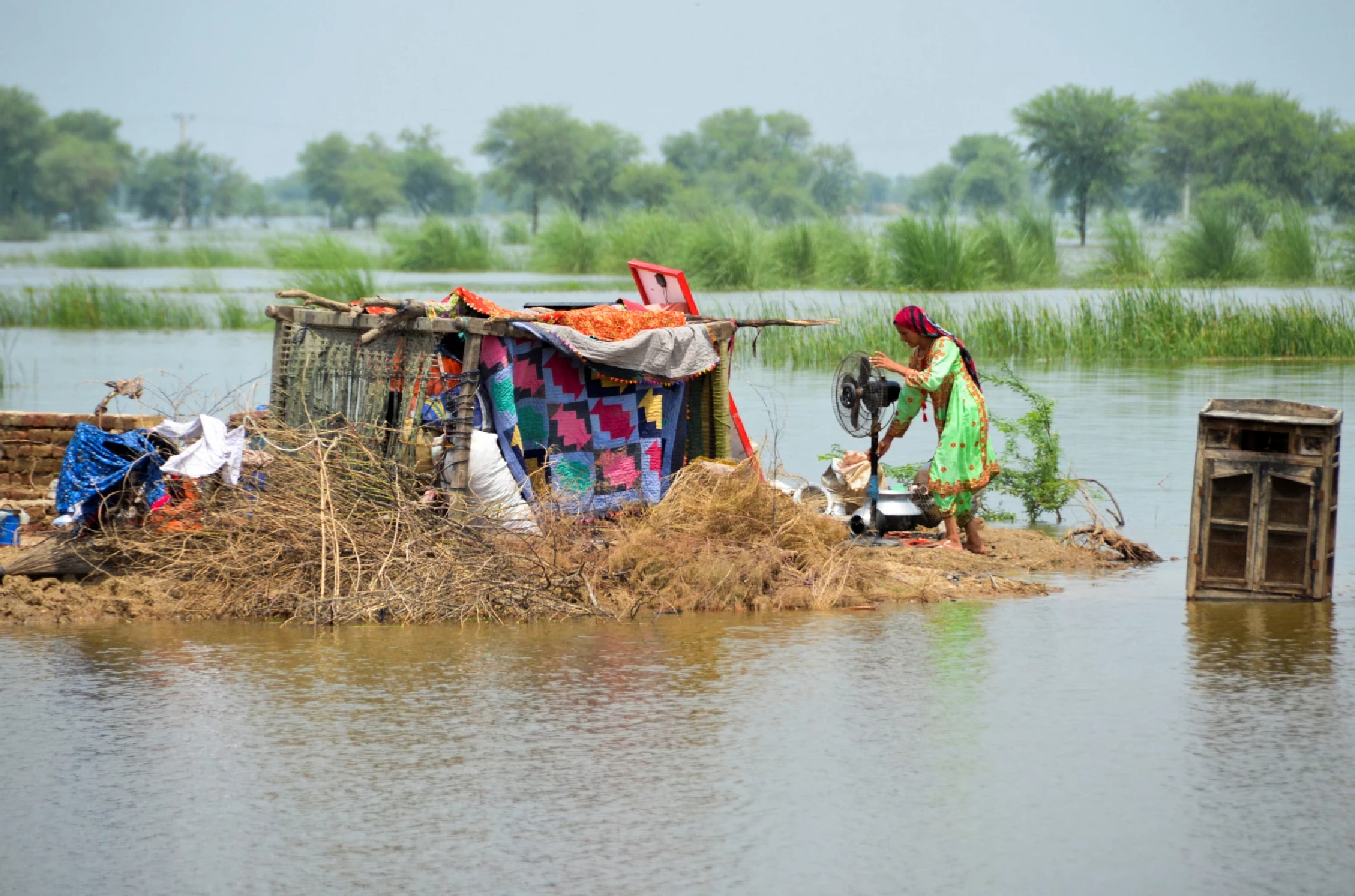
Torrential rains and flooding have killed more than 1,100 people, including 380 children, in Pakistan, where army helicopters plucked stranded families and dropped food packages to inaccessible areas while the United Nations appealed on Tuesday for $160 million in aid.
Khan appealed to viewers to actively participate in the telethon and donate.
Khan’s aide, the party spokesperson and telethon host Faisal Javed Khan, said they collected pledges of over Rs.5 billion (22.5 million USD).
The country has received nearly 190% more rain in the quarter through August this year, totalling 390.7 millimetres, than the 30-year average. Sindh province, with a population of 50 million, has been hardest hit, getting 466% more rain than the 30-year average.
The historic deluge, triggered by unusually heavy monsoon rains, has impacted 33 million people, destroying homes and businesses, infrastructure and crops.
Pakistani Prime Minister Shehbaz Sharif said on Tuesday the $160 million appeal by the U.N. for flood aid “needs to be multiplied rapidly” and pledged transparency for “every penny”.
Sharif also said he feared the devastation caused by recent floods would further derail an economy that has already been in turmoil, possibly leading to an acute food shortage and adding to skyrocketing inflation, which stood at 24.9% in July.
Wheat sowing could also be delayed by the floods and to mitigate the impact of that Pakistan is already in talks with Russia about wheat imports, he added.
Relatives of missing people in Mexico and activists protested on Tuesday to mark the International Day of the Victims of Enforced Disappearances.
Wearing T-shirts with portraits of people who disappeared, protesters blocked one of the main avenues of Mexico City as a reminder there are over 100,000 people who have officially gone missing in the country.
A map of Mexico with the searching sites pinned on was drawn on the floor, as protesters requested the government to step in to help them find their missing relatives.
Drone footage shot near the iconic Angel of Independence monument showed giant words forming a sign reading “Where are they?”
Mexican human rights groups and relatives of people who have gone missing call for authorities to take bigger steps to fight kidnappings and hold perpetrators accountable.
Mexico’s top human rights official Alejandro Encinas recognised the actions taken by the government to address this problem haven’t worked and said they will keep on cooperating with the families to improve the situation.
Meanwhile, at a panel also in Mexico City on Tuesday, victims’ relatives and agencies representatives complained about the lack of justice and ineffectiveness to address the issue.
The Founder of Fuerzas Unidas por Nuestros Desaparecidos en Nuevo Leon (FUNDEL), Leticia Hidalgo, whose son has been missing since 2011, said the government needs to work harder and take real measures in the matter.
After 11 years of searching, Maria Lidia Morales has still not found her husband, brother-in-law and cousin, who disappeared when they travelled to the U.S.
Morales, who went to the protest, said realizing she was not alone in the search for her loved ones had encouraged her to not give up hope.
Through a video message, the United Nations human rights chief Michelle Bachelet pointed out the impunity embedded in these crimes and said Mexico “needs to review its security model.”
This month has seen some progress in one of the country’s most notorious cases, as a top prosecutor was arrested and charged in connection with the disappearance of 43 students in 2014, which the government now considers a state crime.
But with 52,000 unidentified bodies and 105,000 people reported missing – 5,000 of those added since last May – activists are saying the current progress is not enough.
Mikhail Gorbachev, who ended the Cold War without bloodshed but failed to prevent the collapse of the Soviet Union, died on Tuesday at the age of 91, hospital officials in Moscow said.
Gorbachev, the last Soviet president, forged arms reduction deals with the United States and partnerships with Western powers to remove the Iron Curtain that had divided Europe since World War Two and bring about the reunification of Germany.
But his broad internal reforms helped weaken the Soviet Union to the point where it fell apart, a moment that President Vladimir Putin has called the “greatest geopolitical catastrophe” of the twentieth century.
“Mikhail Gorbachev passed away tonight after a serious and protracted disease,” Russia’s Central Clinical Hospital said in a statement.
“Tomorrow he will send a telegram of condolences to his family and friends,” he said.
Putin said in 2018 that he would reverse the collapse of the Soviet Union if he could, news agencies reported at the time.
After decades of Cold War tension and confrontation, Gorbachev brought the Soviet Union closer to the West than at any point since World War Two.
But he saw that legacy wrecked in the final months of his life, as the invasion of Ukraine brought Western sanctions crashing down on Moscow, and politicians in both Russia and the West began to speak of a new Cold War.
Gorbachev won the Nobel Peace Prize in 1990.
He will be buried in Moscow’s Novodevichy Cemetery next to his wife Raisa, who died in 1999, said Tass, citing the foundation that the ex-Soviet leader set up once he left office.
When pro-democracy protests swept across the Soviet bloc nations of communist Eastern Europe in 1989, he refrained from using force – unlike previous Kremlin leaders who had sent tanks to crush uprisings in Hungary in 1956 and Czechoslovakia in 1968.
But the protests fueled aspirations for autonomy in the 15 republics of the Soviet Union, which disintegrated over the next two years in a chaotic fashion.
Gorbachev – who was briefly deposed in an August 1991 coup by party hardliners – struggled vainly to prevent that collapse.
“The era of Gorbachev is the era of perestroika, the era of hope, the era of our entry into a missile-free world … but there was one miscalculation: we did not know our country well,” said Vladimir Shevchenko, who headed Gorbachev’s protocol office when he was Soviet leader.
“Our union fell apart, that was a tragedy and his tragedy,” RIA news agency cited him as saying.
On becoming general secretary of the Soviet Communist Party in 1985, aged just 54, he had set out to revitalize the system by introducing limited political and economic freedoms, but his reforms spun out of control.
“He was a good man – he was a decent man. I think his tragedy is in a sense that he was too decent for the country he was leading,” said Gorbachev biographer William Taubman, a professor emeritus at Amherst College in Massachusetts.
Gorbachev’s policy of “glasnost” – free speech – allowed previously unthinkable criticism of the party and the state, but also emboldened nationalists who began to press for independence in the Baltic republics of Latvia, Lithuania, Estonia and elsewhere.
Many Russians never forgave Gorbachev for the turbulence that his reforms unleashed, considering the subsequent plunge in their living standards too high a price to pay for democracy.
The US Army has temporarily grounded its fleet of about 400 Chinook helicopters due to a risk of engine fires, a spokeswoman told Reuters on Tuesday
Boeing Co makes the heavy-lift Chinook helicopters that support disaster relief operations and medical evacuation. It is used by international defence forces including those of Italy, South Korea and Canada.
“The Army has identified the root cause of fuel leaks that caused a small number of engine fires among an isolated number of H-47 helicopters, and is implementing corrective measures to resolve this issue,” U.S. Army spokeswoman Cynthia O. Smith said.
While no deaths or injuries occurred, the grounding was carried “out of an abundance of caution” until those corrective actions are complete, Smith added.
The grounding, first reported by the Wall Street Journal, was targeted at certain models with engines manufactured by Honeywell International Inc, according to report.
Boeing declined to comment and referred questions to the Army. Honeywell did not immediately respond to requests for comment.
Jackson Mayor Chokwe Antar Lumumba on Tuesday welcomed state aid as Mississippi activated its National Guard to distribute water to tens of thousands of residents after a long-troubled treatment plant broke down, leaving most of the state capital without safe running water, possibly for days.
But Lumumba’s comments further exposed a rift between the Republican state officials and the Democratic administration of a city that is more than 80% African-American.
The governor has alleged the water treatment plant suffered from years of city mismanagement, while the mayor accused the state of being absent from efforts to maintain and update the plant.
“This is a set of accumulated problems based on deferred maintenance that has not taken place over decades,” Lumumba said. “It is a lack of resources and the coordination, and that is why we are excited to have the coordination today. This is what we’ve been asking for. And so we, you know, have open arms in this process to welcome that coordination, welcome that support.”
Governor Tate Reeves declared a state of emergency for Jackson and surrounding communities, warning the area’s 180,000 people to avoid drinking tap water. He also called up the state National Guard to assist in efforts to bring relief to the city, which was battered by record rainfall and flooding over the weekend.
The breakdown occurred Monday when floodwaters seeped into the understaffed and poorly maintained O.B. Curtis treatment plant. An emergency team had the plant working at 40% capacity on Tuesday, senior state health officer Jim Craig said, and a temporary pump was expected to be installed on Wednesday and increase capacity further.
But the system was still short of sufficient water pressure to guarantee service citywide. Officials said they could not estimate how many homes were cut off.
The shutdown created havoc for businesses, and Jackson public schools, with nearly 21,000 students, were forced to move classes online as they had done during the coronavirus pandemic.
Even before the crisis, the city had been under a boil water notice for the past month due to “elevated turbidity levels,” which makes the water appear cloudy.
A pair of winter storms in February 2021 caused most residents in Jackson to briefly lose running water, and a year ago the U.S. Environmental Protection Agency issued an emergency order saying the water supply could contain E. Coli, according to Mississippi Today.
Each side had been offered differing accounts of what happened, though they came to agree on significant facts by Tuesday afternoon.
The governor, who previously blamed pump failures, on Tuesday affirmed what the mayor had said: that floodwaters entered the treatment plant, altering the chemistry of the water, rendering the existing treatment inadequate, and forcing a shutdown.
The plant sits next to a reservoir that drains into the Pearl River just north of town.
Governor Reeves also backed off his previous statement that untreated water went to customers, which Mayor Lumumba insisted was untrue. Craig, the senior state health official, said water that was “not optimally treated” got pumped into homes.
The White House said on Tuesday that President Joe Biden had been briefed on the situation, and administration officials were in contact with state and local officials.
Dutch company Carbon-Alert is working in Colombia to solve the world’s carbon problem by creating artificial peat. A new plant species is thought to be able to speed up this process to a very high degree, resulting in the storage of millions of tons of CO² underground.
How does it work?
Carbon-Alert plants so-called Juncao grass in Colombia. This plant, also called giant grass, comes from the African tropics and was modified in China.
It grows very quickly under warm conditions, up to 5 metres in 2 months.
More importantly, it absorbs an extreme amount of CO², as discovered by Chinese researcher Lei Xuejun, director of the Carbon Cycle Research Centre at the Central South University of Forestry & Technology in Hunan.
Carbon-Alert wants to partially liquefy the plant and inject it under the groundwater. As a result, all the CO² the plant takes from the air disappears into the soil.
This is an accelerated form of peat formation, as the Earth has purportedly been doing for 200 million years.
Tropical innovation
Carbon-Alert is kicking off its project with 4000 hectares of land in Colombia.
There is an important reason for this: the giant grass requires night temperatures of at least 20 degrees. This represents a huge opportunity for innovation in tropical regions. Trees were to be planted on the site, which in the long run would store about 0.5 to 1 ton of root carbon in the soil.
However, the giant grass absorbs about 200 to 300 times more CO², according to research by Lei Xuejun. Moreover, the plant does not bear seeds and is therefore not invasive.
What does it produce?
Carbon-Alert calculated that 1 million km² of grass offsets all CO² emissions worldwide. ‘An area the size of half of Europe’, explains initiator Jacobus van Merksteijn. ‘A huge area, but also a natural alternative for all the solar panels, wind turbines and electric cars in the world.
The process provides CO² storage, but it can also help fertilise desert areas, produce biomass, bioethanol and green plastic, and offset oil, coal and gas.’
CO² certificates
The injected CO² is seen as so-called CO² SINK, which can be converted into Certificates. These can be purchased by companies to offset their emissions.
The Netherlands currently sells about €1 billion worth of CO² certificates, without compensation. By converting the giant grass CO² storage in tropical areas into certificates, we are able to actually convert these amounts into valuable CO² reductions.
This generates revenue for governments and opportunities for businesses.
Carbon-Alert was founded by entrepreneur van Merksteijn and aims to effectively tackle the global climate problem by harnessing the power of nature.
Albert van den Berg, director of the nano-institute MESA+ at the University of Twente, which is part of a consortium looking for solutions to the CO² problem, says: ‘Van Merksteijn’s plan for negative-emission technology is worth studying. We have to check the calculations, but the plan is certainly an original idea. It could indeed be an option.’
Carbon-Alert works with partners such as the Swiss company aXedras and several investors including VerdorCapital.
The entire process is carried out in accordance with internationally recognised standards such as UNFCCC-CDM, VCS and Gold Standard and is audited and verified by independent external organisations.
Apec Health Week kicks off with two dialogues on family planning and cervical cancer elimination, as well as their effects on the workforce and the economy.
By Dr Pongsadhorn Pokpermdee
Thailand is the host of the Asia-Pacific Economic Cooperation (Apec) forum in 2022. It is a challenging task for many reasons, the least of which is our intent to lead in the region during a period of recovery after Covid-19. Besides recovering from the human and social costs and economic shocks, this also means ensuring that Apec economies act upon hard-won lessons from the pandemic, of which there are many.
The pandemic made us appreciate, for example, how health, economic and social policy are intertwined. Covid-19 also exposed deep inequalities, such as the troubling fact that women were disproportionately affected during the health and economic crisis. This imbalance, I believe, extends beyond the crisis, and should inform what to prioritize as we rebuild the region.
In the spirit of this—and of “Balancing in All Aspects,” one of Apec’s priorities in 2022 which emphasizes inclusive growth—Apec health officials gathered in Bangkok this August for Apec Health Week and kicked it off with two Apec Health Working Group policy dialogues last week, centred on women’s reproductive health.
True to Apec’s tradition of fostering open, multi-sectoral discussions, both dialogues convened health officials, private-sector experts, members of civil society organizations, academics, and colleagues from other international organizations.
The morning session, on “smart families,” was presided over by Deputy Public Health Minister Sathit Pitutech, who called attention to the demographic challenges, and their associated economic implications, faced by the Apec region. At least 17 of the 21 members of Apec are going through significant population-related challenges. Examples of these are the fall of total fertility rates below replacement rates—that is, the average rate of birth with which a population can maintain its number from one generation to the next—as well as the persistence of high unintended pregnancies in Apec economies. Both may have long-term, negative economic effects. On the one hand, low fertility will eventually put a strain on the workforce as the number of dependents grows by comparison. On the other, unintended pregnancies will hamper the ability of affected women to be effective participants in the workforce and economy.
The dialogue participants were called on to begin developing a menu of comprehensive, holistic policy options that will enable reproductive choice, and therefore strengthen the economic empowerment of women. They also encouraged Apec representatives to build consensus and collaborate to address these trends.
One way Thailand addresses these challenges is through its Smart Families initiative, hence the name of the dialogue. It is a comprehensive and holistic project that provides information for avoiding unintended pregnancies and fertility planning for those who want to have children. Following the policy dialogue, an expert working group will be assembled to further develop and formalize policy options over the course of three sessions between October 2022 and June 2023.
In the afternoon we held a dialogue called “Promoting Sustainable Economic Advancement for Women by Addressing Policy Barriers to Prevention, Control, and Elimination of HPV and Cervical Cancer.”
Its moderators—Dr Edward Trimble, a senior advisor at the United States National Cancer Institute, and Dr Suleeporn Sangrajrang, who is Deputy Director of Health System Development at the Thailand National Cancer Institute—convened stakeholders from different sectors and economies to exchange best practices and support policy decision-making to address barriers to cervical cancer prevention, treatment and care.
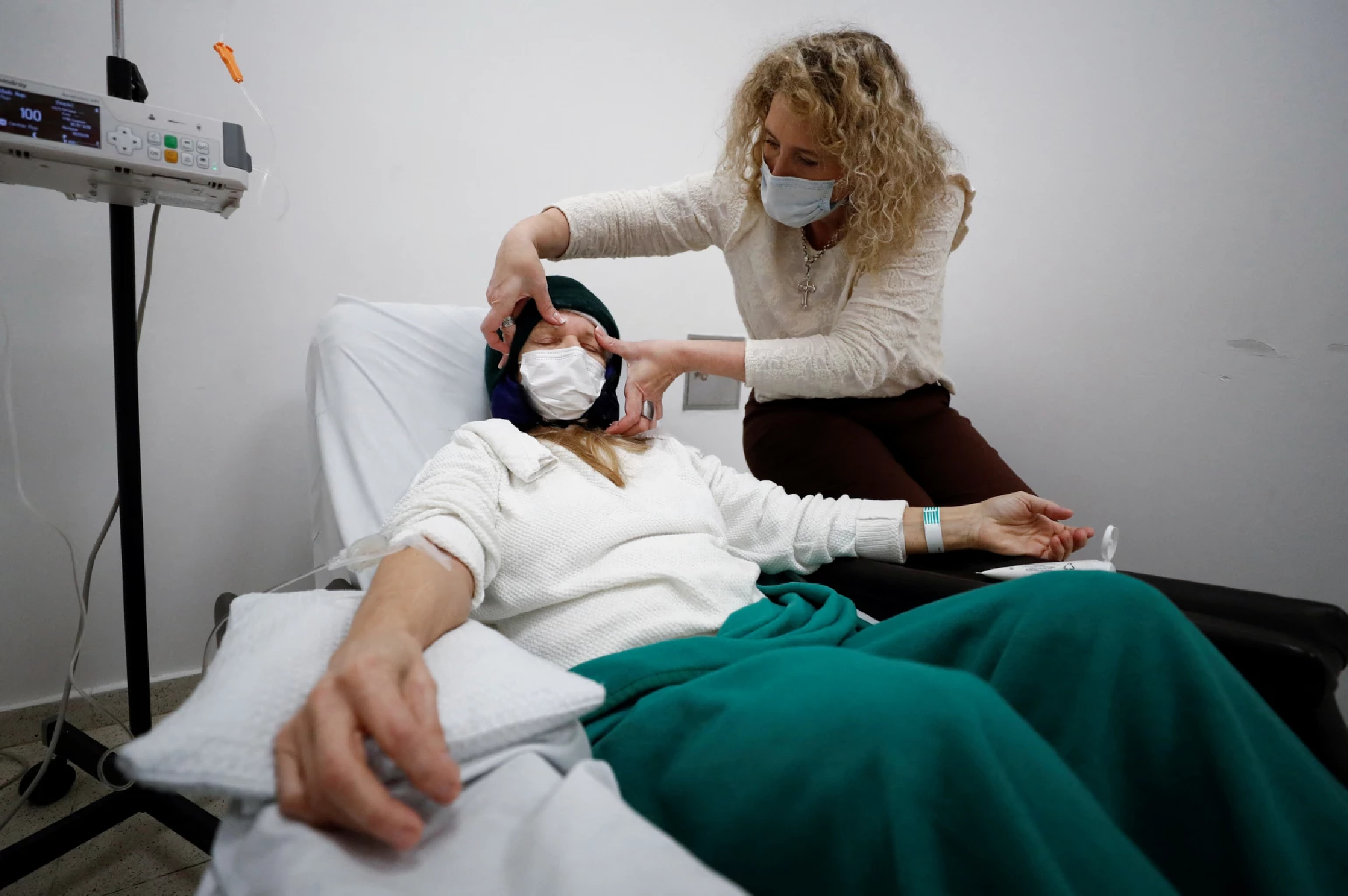
Cervical cancer is one of the most common cancers affecting women worldwide. An estimated 340,000 died of it in in 2020, 35 per cent of which were in Apec economies.
It is a problem well suited for the Apec forum—which has a diverse range of economies as members—as cervical cancer is nearly twice as prevalent in low- and middle-income economies, with mortality rates ranking three times as high. Apec has been promoting an HPV and cervical cancer prevention and care continuum since 2013 and has since put together a Roadmap to Promote Sustainable Economic Advancement for Women Through Cervical Cancer Prevention & Control, first endorsed by Apec in 2017 and again in 2021.
Cervical cancer is unique in that it is only cancer that can be eliminated from a population. However, the Covid-19 pandemic has resulted in decreasing rates of HPV vaccination, screening and treatment leading to more women presenting with late-stage cervical cancer, treatment for which is more invasive and less effective. While this hindrance in progress is unfortunate, it is also an opportunity to redouble efforts. As economies recover from the pandemic, systems and countermeasures that were designed to respond to the pandemic, including innovations in medical technologies, strengthening of population-based registries, and availability of education and access programs, can be applied to the HPV and cervical cancer prevention and control continuum.
As in the case of family planning, cervical cancer has an impact on the participation of women in the workforce. Both are issues of health, gender equality, as well as economy. It has been long established that it would be beneficial for everyone if women are more empowered to participate more in the economy.
Health ministers meet here in Bangkok last week as well—their first physical meeting since the pandemic. Given the outcomes of the meeting, we can expect their support for our commitment to increasing equity and addressing health barriers specific to women in the workforce and in business, as well as other initiatives to ensure the region’s health, safety and prosperity as we reconnect and recover.
Dr Pongsadhorn Pokpermdee is the chair of the APEC Health Working Group.
The Peak Tram, Asia’s oldest funicular railway and a must-visit attraction in Hong Kong, takes visitors on a spell-binding ride to the Peak again with a redesigned tramcar, terminus ushers and upgraded facilities starting on 27 August 2022.
The new Peak Tram will reward passengers with a mesmerising panorama of Victoria Harbour and a fresh, enhanced experience, making it one of the latest developments in the many exciting tourist attractions and experiences in Hong Kong.
The new Peak Tram dons the classic “Peak Tram Green”, in a nod to its heritage and earlier generations of tramcars in the 20th century.
It provides a 75% increase in capacity, carrying 210 passengers, and its larger windows offer an unobstructed, panoramic vista of the world-famous skyline of Hong Kong.
In addition to the modern design of the tramcar, the tram termini have been refurbished, offering an engaging and entertaining experience to passengers with five engagement zones.
As they enter the Central Terminus, visitors are welcomed by the Eye of Infinity, a 10-metre-tall sculpture featuring a constantly evolving light display that embodies Hong Kong’s spirit of ascension, while Go Wild At The Peak showcases the diverse wildlife found at the Peak with a wrap-around, full-immersion video experience.
The centennial history of the Peak Tram since 1888 comes alive in dynamic experiences at The Beating Heart, An Icon is Born, and Once Upon a Tram.
The initial economic losses from floods in Pakistan could reach at least $10 billion, Planning Minister Ahsan Iqbal told Reuters in an interview on Monday.
Unprecedented and historic flash floods caused by abnormal monsoon rains have washed away roads, crops, infrastructure and bridges, killing at least 1,000 people in recent weeks and affecting more than 33 million.
“I think it is going to be huge. So far, (a) very early, the preliminary estimate is that it is big, it is higher than $10 billion. Vey early estimate, very early estimate,” Iqbal said.
The minister said it might take five years to rebuild and rehabilitate the South Asian nation of 200 million people, which will be facing an acute challenge of food shortage.
He said 45% of cotton crops had been washed away in addition to huge damage to vegetables and fruit and rice fields.
“So far we have lost 1,000 human lives. There is damage to almost nearly one million houses,” Iqbal said at his office.
Pakistan has already sought international help to deal with the overwhelming floods, and some countries have already sent in supplies and rescue teams.
As waters receded, people affected by devastating monsoon floods in Pakistan said they had tried as best they could to save people, livestock and property as they reckoned with the effects of a disaster which has left more than 1,000 dead.
Tens of thousands of people fled their homes in northern Pakistan on Saturday after a fast-rising river destroyed a major bridge, as deadly floods cause devastation across the country.
Powerful flash floods in the northern province of Khyber Pakhtunkhwa caused the Kabul River to swell, sweeping away a large bridge overnight, and cutting off some districts from road access.
Downstream, fears of flooding around the river banks prompted around 180,000 people in the district of Charsadda to flee their homes, according to disaster officials, with some spending the night on highways with their livestock.
“When I saw water coming, I saved women and children. When I returned here there was a lot of water, then I saved cattle. After that, there was no chance to return here because there was a lot of water here,” Charsadda resident Amir Khan said.