His Majesty changes Emerald Buddha’s attire for cold season
THURSDAY, NOVEMBER 10, 2022
His Majesty King Maha Vajiralongkorn graciously changed the seasonal attire of the Emerald Buddha for the cold season in a ceremony on Wednesday evening at Wat Phra Si Rattana Satsadaram (Emerald Buddha Temple) in Bangkok’s Phra Nakhon district.
Present at the ceremony was Her Majesty Queen Suthida Bajrasudhabimalalakshana.
The ceremony is conducted by the King three times a year when the seasons change to summer, rainy and cold.
A number of people came to Wat Phra Si Rattana Satsadaram to greet Their Majesties before and after the ceremony. The King sprinkled holy water that was left from the ceremony onto the crowd, before leaving the temple in a royal car.
On Wednesday the Royal Household Bureau announced that the Grand Palace and Wat Phra Si Rattana Satsadaram will be closed for tourists on Thursday (November 10) from 2pm for the rehearsal of a ceremony where Their Majesties will graciously grant an audience to Apec leaders and their spouses attending the Apec Economic Leaders’ Meeting on November 18 and 19.
Thailand all set to host Apec Economic Leaders’ Week
THURSDAY, NOVEMBER 10, 2022
Substantive and logistical preparations are underway to welcome Apec leaders, ministers, delegates and the international media to key meetings and a summit under the theme “Open. Connect. Balance”.
From November 14 to 19, Thailand will host the first in-person Apec Economic Leaders’ Week (AELW) in four years at the Queen Sirikit National Convention Centre in Bangkok.
The AELW programme begins with a Concluding Senior Officials’ Meeting on November 15 and 16 in which top Apec officials will work together to sum up the important work since the beginning of the host year, including negotiations of the AELW draft outcome documents and prepare for the 33rd Apec Ministerial Meeting on November 17 and the 29th Apec Economic Leaders’ Meeting on November 18 and 19.
Prime Minister General Prayuth Chan-o-cha will chair this meeting in which Apec leaders will discuss how to take the Asia-Pacific region forward towards sustainable and inclusive economic recovery from Covid-19 amid ongoing global economic challenges.
International Monetary Fund Managing Director Kristalina Georgieva will also attend the meeting to share her views on the global economic outlook.
Apec leaders will meet with official guests and the business sector represented by the Apec Business Advisory Council. Thailand, as this year’s host economy, has invited special guests, namely the Cambodian prime minister as the chair of Asean, the Saudi Arabian Crown Prince and prime minister and the French president to discuss how Apec and its trading partners can work together to promote sustainable trade and investment amid economic challenges.
Two important activities involving Apec business leaders and youth will be organised in parallel with the AELW, including the Apec CEO Summit from November 16 to 18 and “Apec Voices of the Future 2022” from November 12 to 19.
On the occasion of the AELW in Bangkok this year, Their Majesties King Maha Vajiralongkorn Phra Vajiraklaochaoyuhua and Queen Suthida Bajrasudhabimalalakshana will graciously grant an audience to all Apec leaders or their representatives attending the AELM as well as official guests.
Thai cuisine and delicacies, arts and crafts as well as cultural performances will be showcased throughout the week to highlight Thailand’s cultural identity and unique hospitality.
The AELW will also adhere to the concept of a “green meeting” in line with the Bio-Circular Green Economy model, which is the overarching theme of Apec 2022.
Used Cooking Oil for a Greener Environment and Circular Economy
WEDNESDAY, NOVEMBER 09, 2022
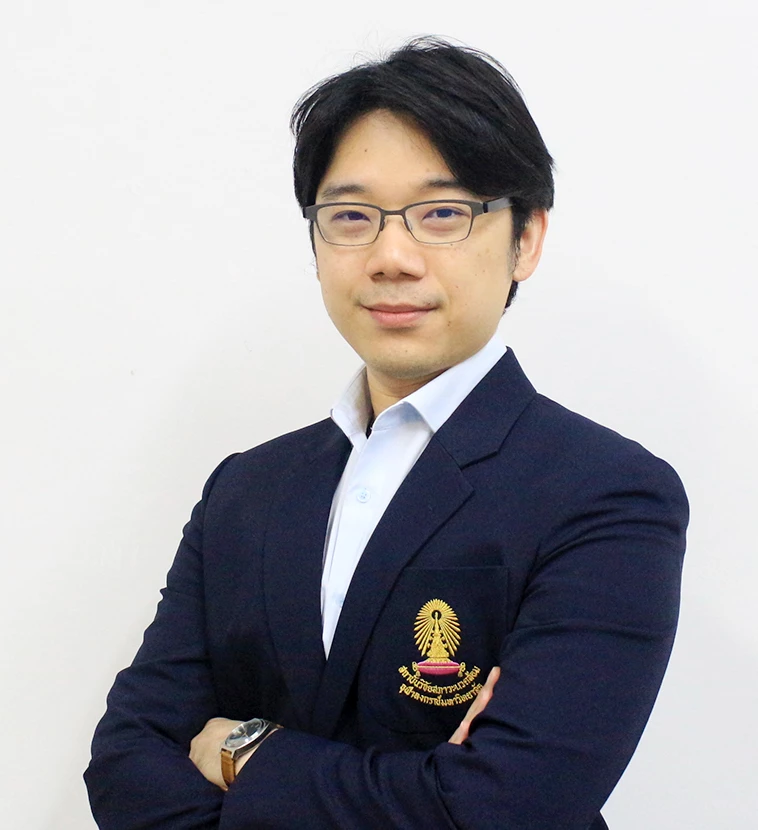
A researcher from Chulalongkorn University’s Institute for Environmental Research has made it possible to transform used vegetable oil into potassium liquid soap that cleanses effectively, is water soluble, 100% biodegradable, and safe for the wastewater treatment system.
The product can be a viable option to add value and increase community potential to handle used cooking oil. The researcher hopes that soon the product can also extend to insect control agents in organic farm plots.
Used cooking oil should not be used repeatedly since it contains carcinogens that are harmful to our health. Moreover, incorrect disposal methods can also bring about adverse public health and environmental effects. Instead, with good management, used cooking oil can become a valuable resource as is the case of vegetable oil from the industrial food sector that has been turned into biodiesel fuels.
There remain, however, large quantities of cooking oils from households and commercial establishments that require proper management. This problem is what led Nattapong Tuntiwiwattanapun, a researcher from the Environmental Research Institute to find a possible solution leading to his research work on the transformation of used vegetable oil into potassium liquid soap that each community could manufacture on their own.
The problem of what to do with used cooking oil
Used cooking oil or UCO is a form of organic waste generated in the cooking process that involves all of us either directly or indirectly. The oil may come from the food industry, restaurants, hotels, and our households which, as the sector, we should be most concerned about since no legal control or enforcement is yet available.
Statistics provided by the Energy Policy and Planning Office of the Ministry of Energy indicate that in 2017, used cooking oil in Thailand amounted to around 74 million litres which means that currently, the numbers should already have increased to around 115 million litres per year in 2022. How is this staggering amount of used oil being managed and what are their impacts?
According to Nattapong, the industrial sector already follows the legal guidelines of the Department of Industrial Works both in terms of wastewater treatment and biodiesel production. There are altogether 15 biodiesel plants in Thailand most of which are scattered around the central, eastern, and southern regions.
“Used cooking oil fetches a high price if they are sourced from areas close to the biodiesel factories. In remote places such as provinces in the north and northeast, the oil fetches a lower price since there are also transportation costs involved. This usually results in the oil being thrown out.” Nattapong enumerated the problem which worsens in the case of households that are not motivated to sell their used oil for biodiesel production. The oil gets thrown into the sewer or mixed with other forms of garbage which causes great damage to the environment.
“If used oil gets mixed with recycled waste it would lead to contamination whereby that waste cannot be used. Used oil comes in liquid form that does not dissolve in water and when mixed with plastics is extremely hard to remove.”
Moreover, when the contaminated oil gets to a landfill, it can lead to anaerobic digestion that generates methane, a greenhouse gas that affects global warming 23 times worse than carbon dioxide!
How the idea of transforming used cooking oil into potassium liquid soap was conceived
When it comes to the sorting of waste, Chula’s canteens follow the Chula Zero waste guidelines with systematic forms of waste management on campus. The remaining challenge concerns the used cooking oil and fat residue.
“Chula’s Office of Physical Resources Management came to us with the task of what to do with fat residue from the canteens on campus. There have been several research projects that mix fat residue for composting purposes. Our experiments with fat residue and used cooking oil which is water-insoluble to compost with fertilizer did not yield very good results. The next step was to make the fat residue water-soluble by turning them into potassium liquid soap that was then composted with the Chamchuree (rain tree) leaves. We were thus able to get rid of the fat residue with the added benefit of enriching the Chamchuree fertilizer with potassium.”
Potassium soap and its outstanding qualities
With its surface-active agents, Potassium or K–Soap is as effective as other cleansers on the market in removing stains on surfaces. What makes K-Soap special is its low toxin for microbes making it 100% biodegradable compared to other sulfate-based cleansers commonly used in households. Potassium soap also has disinfesting abilities at the levels permitted by organic farming standards.
Pioneering the production of K–Soap in local communities
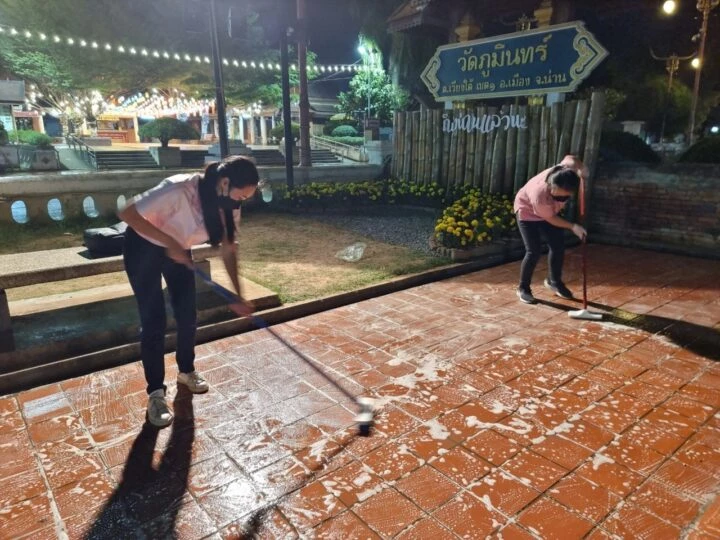
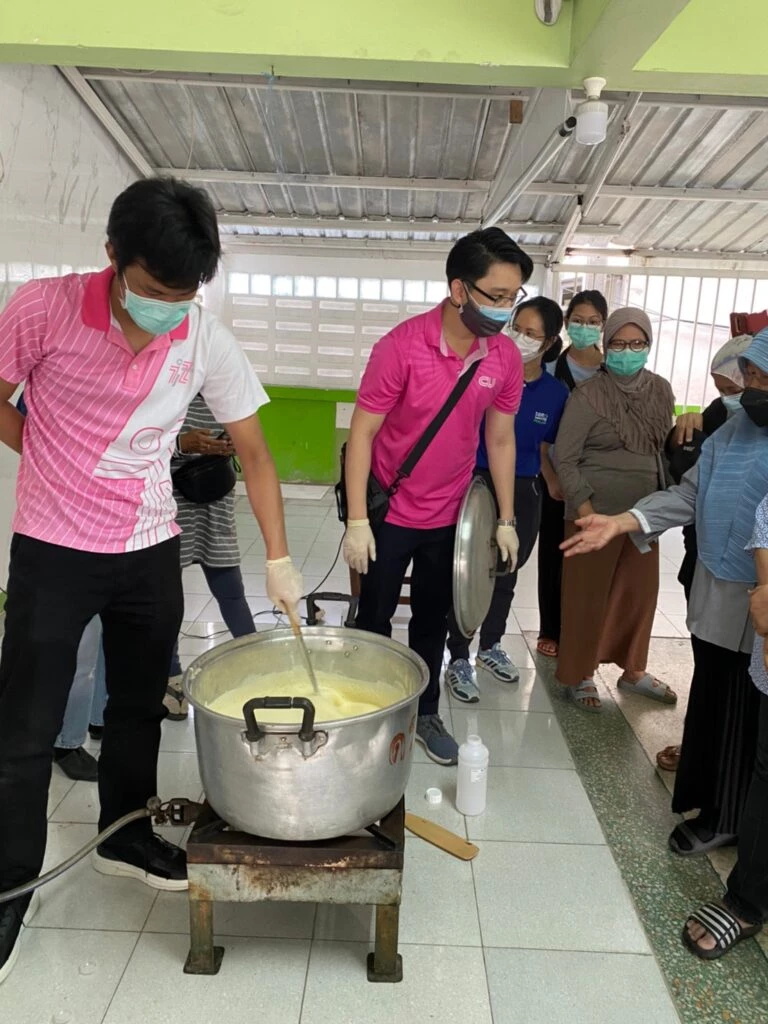
With funding from the National Higher Education, Science, Research and Innovation Policy Council, the research team started its K-Soap production with a community enterprise at Baan Phai Lueang in Nan Province as part of a project to promote environmentally friendly tourism in Nan.
“The idea was to create potassium soap that was safe and easy for members of the community to manufacture. Our main focus was to increase their potential in waste management and to be able to benefit from income-generating projects.”
The process helped create a circular economy with community enterprises purchasing the raw materials from within Nan province and manufacturing them as potassium soap. The soap was tested as a product used to clean garbage trucks belonging to Meaung Nan municipality as well as to clean road surfaces, wash rags, and clean temple restrooms, for example. The reception was good since not only was the product effective and easy to manufacture but the production cost was much lower than the cleaning products that were in use. Aside from Nan, the project has also been implemented in the Pak Lad Community of Samut Prakan Province based on the Zero-Waste concept supported by Dow Thailand Group.
Adding value to K-Soap through organic farming
Aside from its cleansing qualities, Nattapong also realizes there is a chance of a value-added K-Soap in the agricultural sector as well. Working in collaboration with Chula’s School of Agricultural Resources, the project has developed the soap so that it has surfactant qualities to boost the biopharmaceutical ingredients that control plant diseases and pests in safe and organic agriculture farming
In the future, the project hopes to experiment with using potassium liquid soaps for cleaning purposes as well as to wash off pesticide residues in fruits and vegetables from the time they are in the orchards to ensure better safety. K-soap was also given to the PGS (Participatory Guarantee System) group of organic farmers as an alternative to experiment in organic farming and found that it can effectively repel mealybugs, ants, and some worms.
“K-Soap has very low toxic levels and takes only 5 days to biodegrade after which it releases potassium to the plants.”
Chula’s potassium soap production is now based in Nan Province. The soap is ready for production for cleaning purposes and aphid control. To apply the product for agricultural use Nattapong says they need to wait for the test results from the demonstration farms. The product is expected to be ready for the agricultural sector in 2023 or 2024.
The community and waste management and the circular economy
Today, most of the garbage we generate is still scattered and collection remains a problem. Nattapong still sees waste management as an area-based matter that should draw people together to take part in solving the problem, sort their garbage and recycle or upcycle as a way to increase its benefits and generate income for the community. For a large city with a very low level of food security, we need to expand the green areas such as by planting vegetables on rooftops or in urban areas. Waste management measures that take leftover food for composts to make fertilizer or used cooking oil turned into cleaning substances helps not only to reduce garbage but also reduces environmental impact while increasing agricultural urban areas as well.”
Nattapong’s ideas also include adding value to the waste generated in various types of food products such as fat residue that isn’t so widely known, coffee grounds or plastics with oil stains, etc.
“We can eliminate all garbage if there is proper and efficient sorting so that they can be turned into raw materials to be turned into products to benefit the communities based on the circular economy concepts,” he concluded.
No Blue Line train services to Queen Sirikit Convention Centre station during Apec Summit
WEDNESDAY, NOVEMBER 09, 2022
The Mass Rapid Transit Authority of Thailand (MRTA) will close services of its Blue Line railway to the Queen Sirikit National Convention Centre (QSNCC) station during the Apec Summit next week, it announced on Wednesday.
The MRTA said on its website that the Blue Line electric train will not stop at the QSNCC station from 12.01am on November 16 until 6pm on November 19, as part of security measures during the summit in Bangkok.
It said the closure of the QSNCC station was part of resolutions of the subcommittee in charge of keeping security and management of traffic in Bangkok during the summit.
The MRTA said commuters using the Blue Line train can board and leave the trains at all other stations as usual.
Passengers who want to enter the area near the QSNCC can use shuttle buses on Ratchadapisek Road to be provided by the Foreign Ministry during the period, the MRTA announced.
It said the shuttle buses will halt at four spots:
– In front of Modena by Fraser Bangkok Hotel
– Bus stop in front of FYI Centre building
– In front of QSNCC
– In front of Exchange Tower Building.
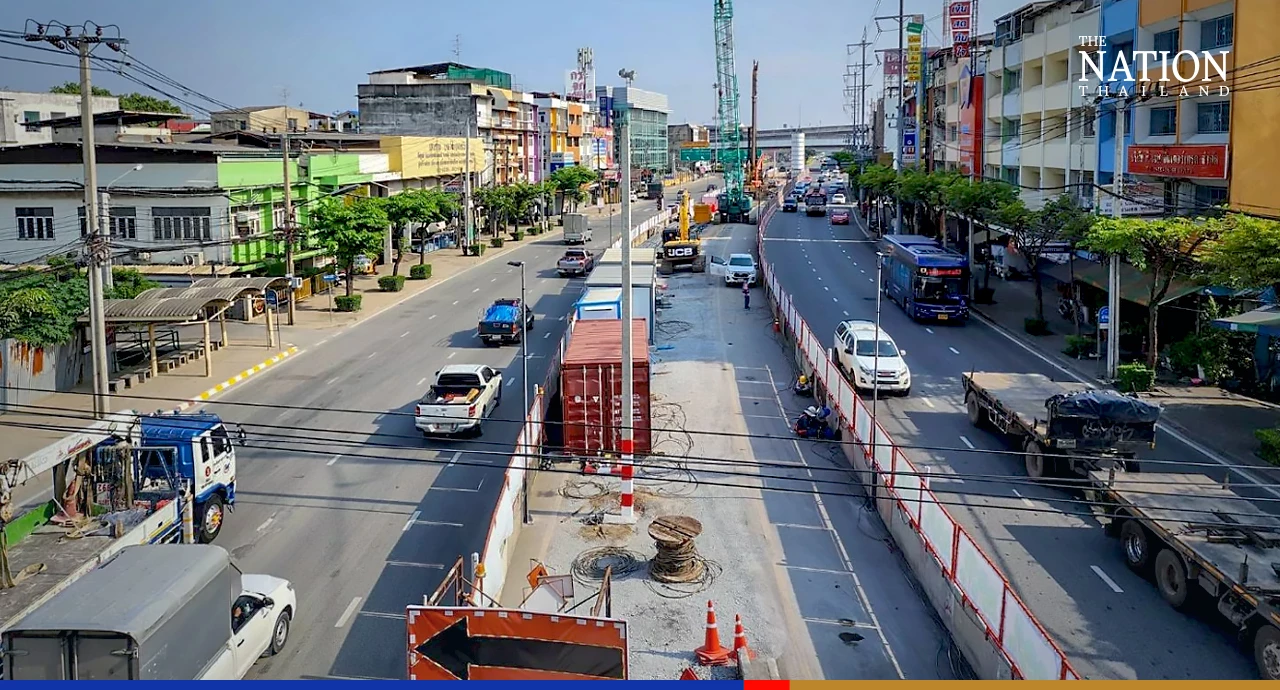
The MRTA said it will also close its parking ground near the QSNCC station from November 16 to 19.
Passengers of electric trains can park their cars at other nearby car parks of the MRTA, such as the car park at the Phetchaburi station, and the car park at the Samyan station, the MRTA added.
The MRTA added that it has instructed Bangkok Expressway and Metro Plc, the concessionaire of the Blue Line and Purple Line trains, to get ready to cope with overwhelming number of passengers during the period – especially at Lak Song, Hua Lamphong, Silom, Sukhumvit, Chatuchak, Bang Sue, Tao Poon and Bang Yai stations.
15 tonnes of krathong garbage retrieved from Chiang Mai river
WEDNESDAY, NOVEMBER 09, 2022
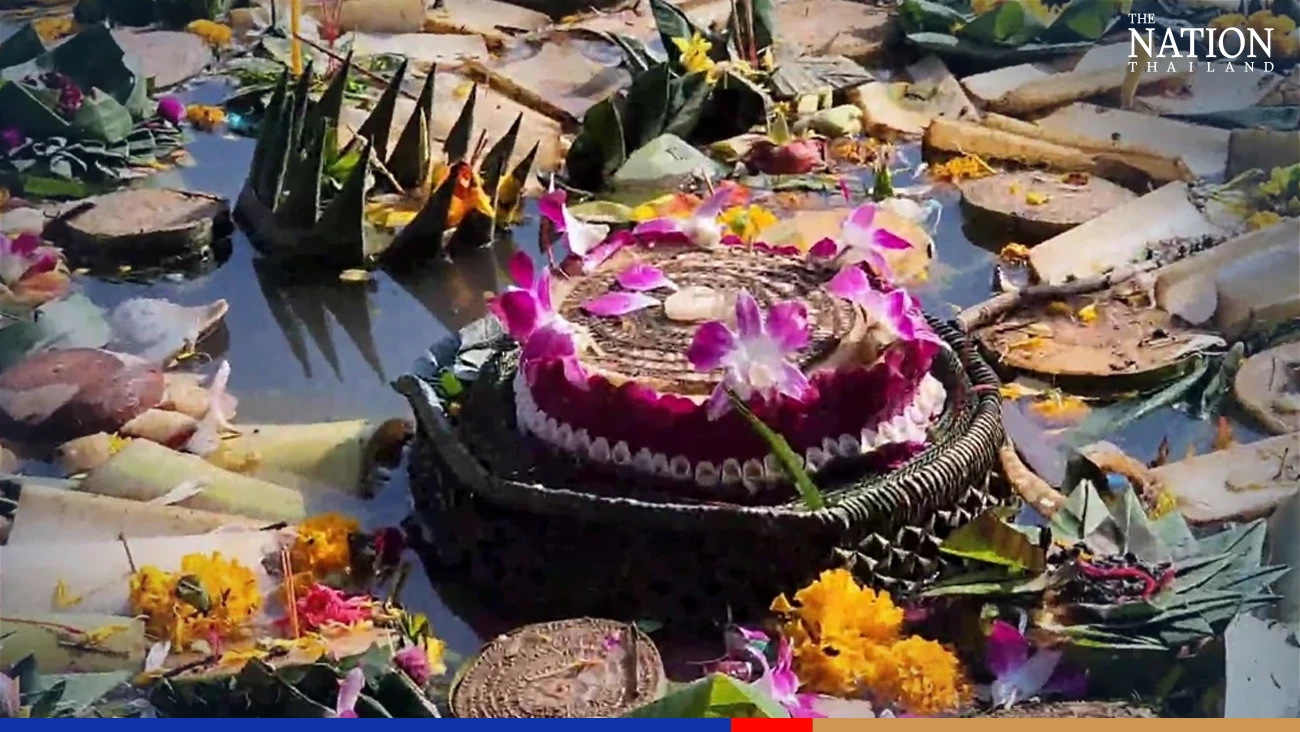
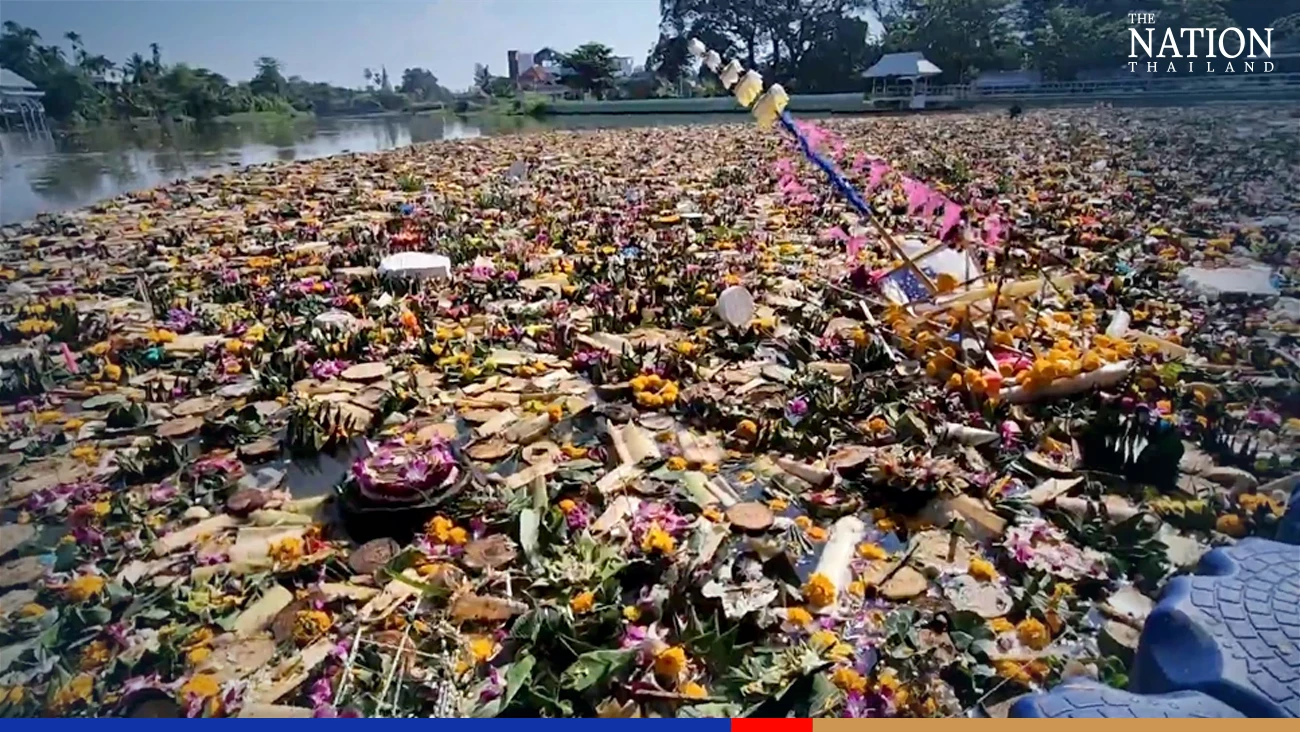
Workers of the irrigation department retrieved some 15 tonnes of krathong floats garbage from the Ping River in Chiang Mai on Wednesday, an official said.
Prompong Boriphan, head of the maintenance division of the Chiang Mai Irrigation Office, said only three per cent of the retrieved garbage were floats made of foam and the rest were degradable natural materials.
The retrieved krattong had been floated on the Ping River in Chiang Mai’s Muang district on Lok Krathong night on Tuesday.
Prompong said officials have made panels to direct all the floated krathong to flow to the Ping Pa Daed watergate to make it convenient for workers to retrieve them from the river. He said officials started pulling out garbage from the river late on Wednesday morning.
He said Chiang Mai would be celebrating another night of the Loy Krathong festival on Wednesday and his division expects 10 more tonnes of garbage to be collected on Thursday morning.
The degradable garbage would be used to make compost while the foam garbage would be disposed of separately, he said.
Thailand can reduce emissions by 40% if it receives help: ONEP deputy chief
WEDNESDAY, NOVEMBER 09, 2022
Jarupong Krisanaraj
Laws, technologies, finance and cooperation will all help Thailand achieve its net-zero carbon emissions by 2065, the Office of Natural Resources and Environmental Policy and Planning (ONEP) said on Tuesday.
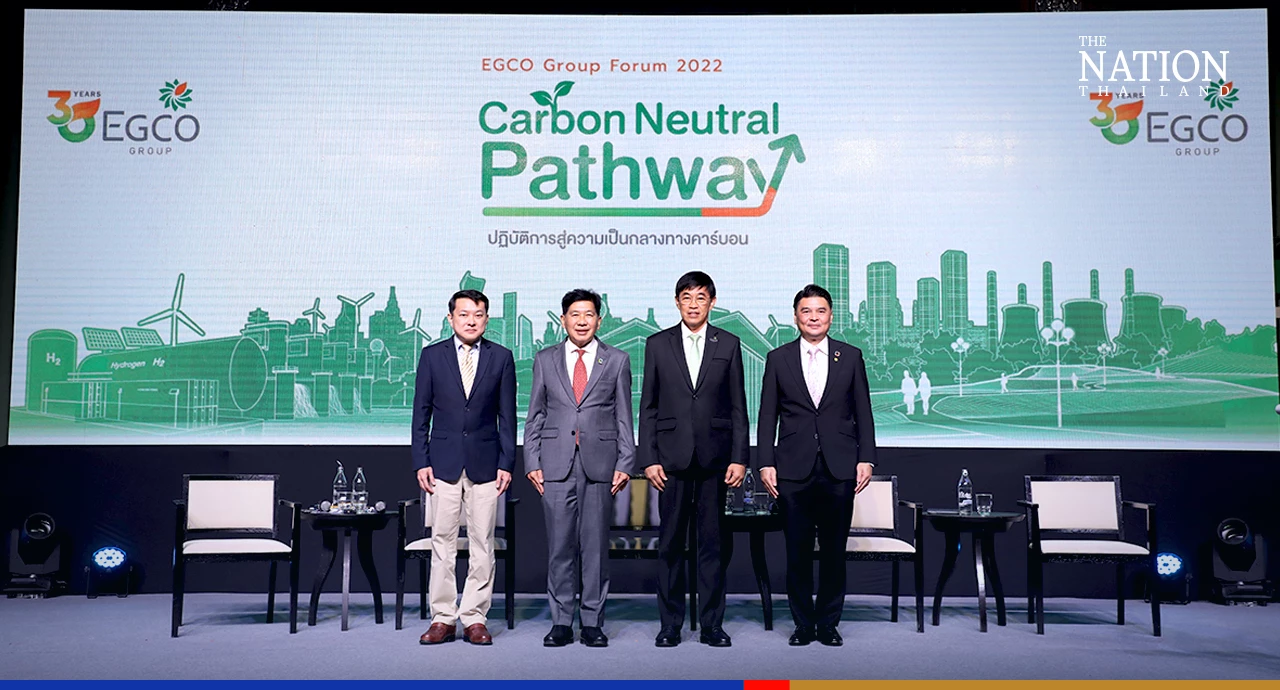
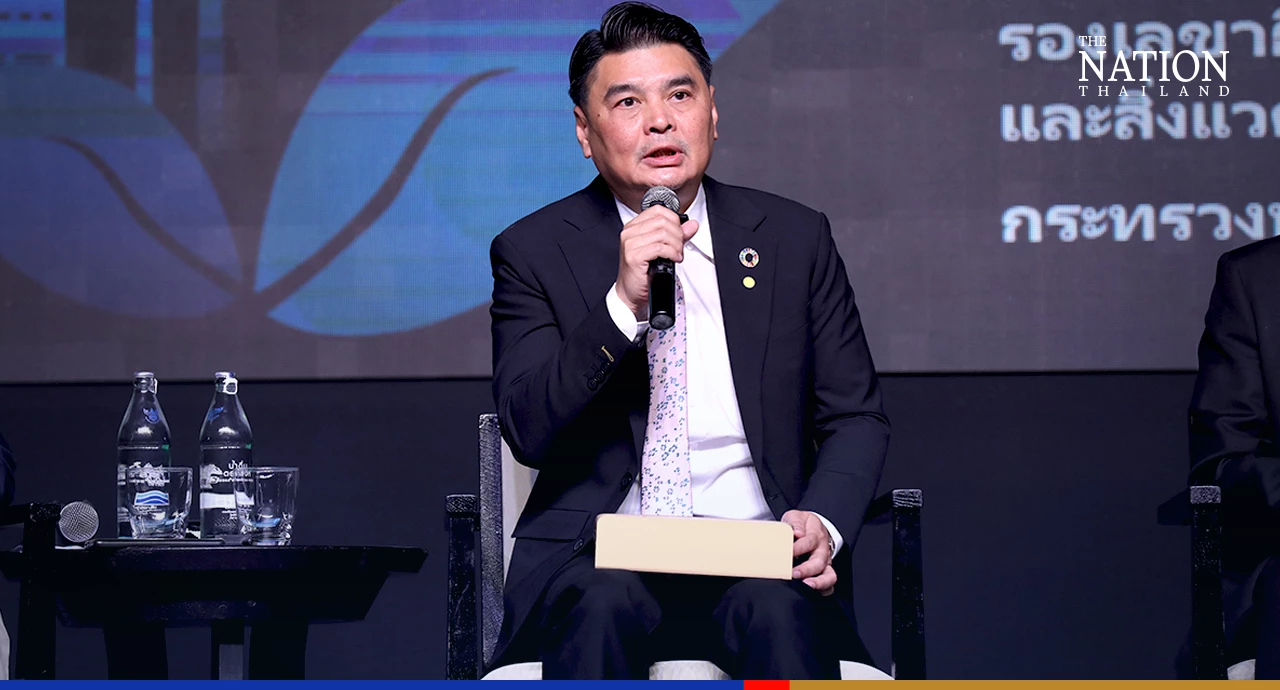
Speaking at the “EGCO Group Forum 2022: Carbon Neutrality Pathway” at Grand Hyatt Erawan Bangkok, ONEP deputy secretary-general Jiravat Ratisoontorn said agriculture, tourism, public health and natural resources have all been affected by climate change.
“Even though Thailand’s carbon emissions accounted for only 0.8 per cent of global emissions, Bangkok was ranked 9th among cities most affected by extreme weather events,” he said.
Thailand will be able to reduce greenhouse gas emissions by 40% by 2030 if it receives cooperation from other countries, Jiravat pointed out.
Jiravat Ratisoontorn
He said ONEP has drawn up a road map to enable the country to achieve net-zero carbon emissions covering renewable energy, transportation, industry, waste management, and agriculture.
The road map focuses on the implementation of policies and laws, carbon capture system development, finance and investment, carbon credit market mechanism development, increasing carbon storage facilities and promoting cooperation, he explained.
The draft act on climate change will cover greenhouse gas reduction targets, carbon credits, financial mechanisms and carbon tax, Jiravat said.
“The draft act on climate change is currently under review for regulatory impact assessment and other related issues,” he said, expecting the draft act to be proposed to the Cabinet next year.
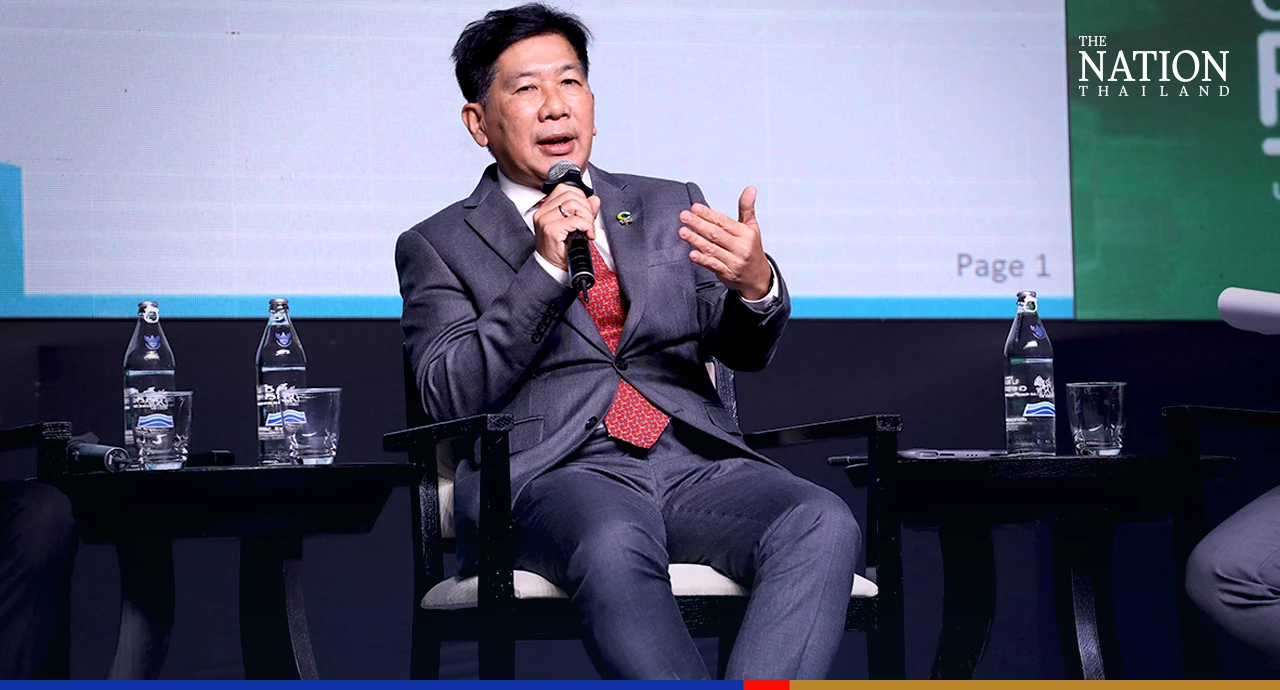
Kiatchai Maitriwong
Thailand Greenhouse Gas Management Organisation executive director Kiatchai Maitriwong said Thailand is putting all efforts into gaining momentum between greenhouse gas emissions and storage.
He expects the country’s emissions to reach its peak in 2025 before declining, adding that a new department would be set up to promote Thailand on greenhouse gas reduction and adaptation.
“Several measures are needed to reduce greenhouse gas emissions, such as promoting the use of electric vehicles, the carbon capture system and a Bio-Circular-Green economy model,” Kiatchai said.
The government is also promoting nature-based solutions by restoring forests to reduce greenhouse gas emissions, he said.
Kiatchai warned that companies that fail to undertake greenhouse gas reductions will come under pressure by consumers, investors and financial institutions as increasing attention is being paid to the issue.
“Carbon neutrality will help boost Thailand’s competitiveness in a low carbon economy,” he added.
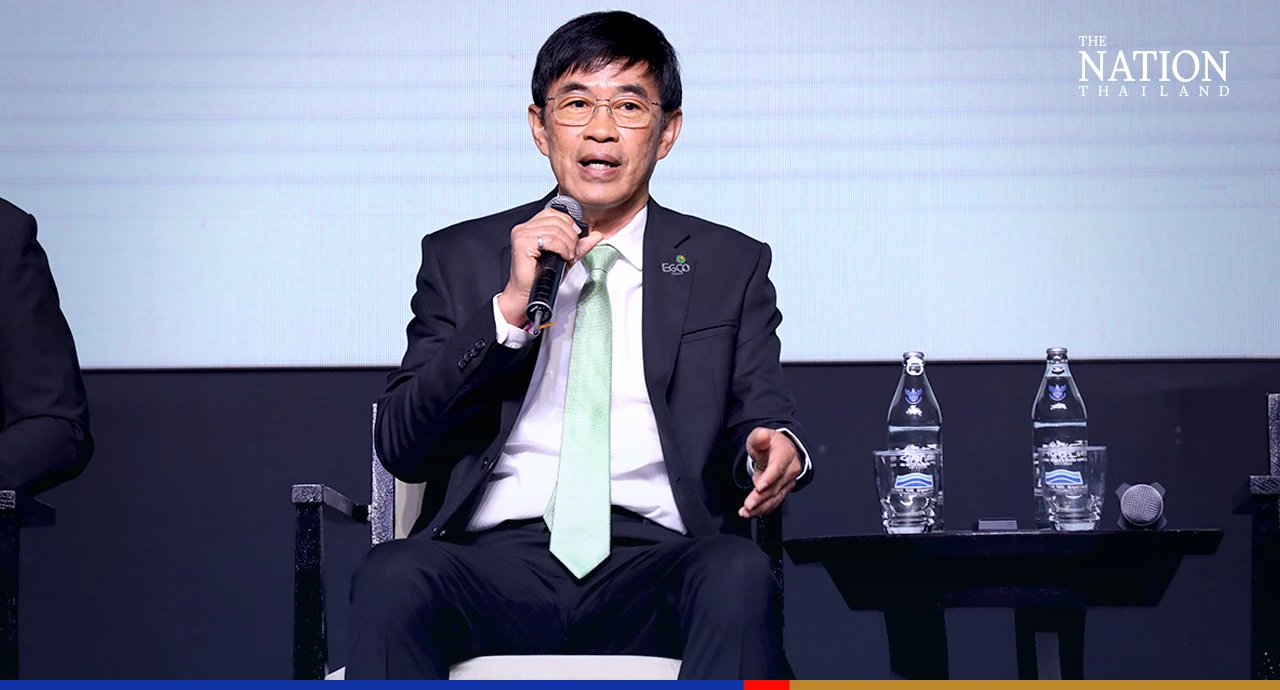
Thepparat Theppitak
Thepparat Theppitak, president of forum organiser Electricity Generating Pcl, or EGCO Group, said the company’s key drivers toward carbon neutrality include carbon tax, a carbon capture system, stakeholder sentiment and a transition to renewable energy.
EGCO’s electricity production capacity from renewable sources, such as solar, wind and hydro, is 1,424 megawatts accounting for 24% of its total production capacity of 6,079 megawatts, he said.
“The company aims to increase its electricity production capacity from renewable sources to more than 30% by 2030,” Thepparat said.
EGCO is focusing on expanding its renewable energy portfolio to work towards carbon neutrality, enhancing existing assets for sustainability, he said.
The company is also looking for alternative energy, such as hydrogen, solid oxide fuel cells, small modular reactors and wireless solar energy transmissions from space, Thepparat said.
He asked the government to support research and development of technology related to renewable energy in a bid to enable Thailand to move toward sustainability.
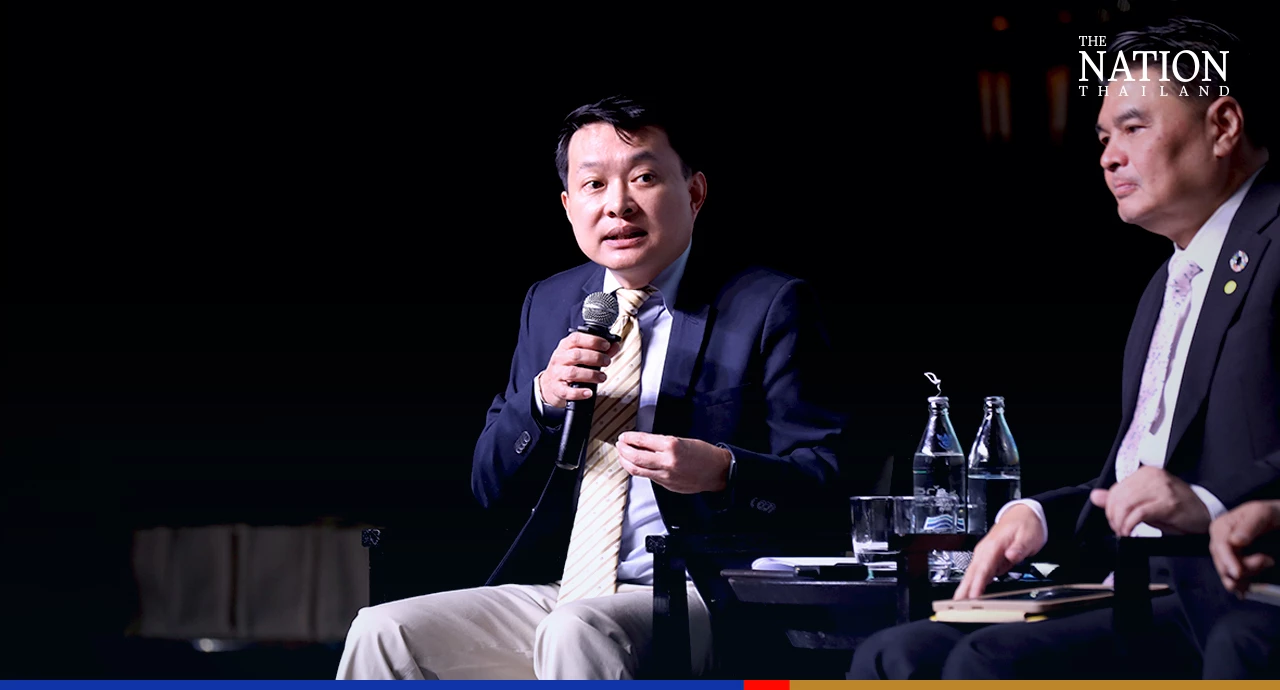
Poonsit Wongthawatchai
Krungsri executive vice president Poonsit Wongthawatchai said financial support is an important factor that encourages the business sector to work on greenhouse gas reductions.
He said the bank aims to achieve net-zero carbon emissions by 2050 and cease financial support for coal powered plants by 2030.
“The bank will increase financial support by 50,000-100,000 baht to businesses for society and sustainability within 2030,” Poonsit said.
He added that the bank would continue promoting the development of a sustainable financial market in the country.
Suvarnabhumi Airport allows free parking during long Apec weekend
WEDNESDAY, NOVEMBER 09, 2022
Suvarnabhumi Airport will allow passengers to park their vehicles at its long-term car park for seven days to encourage Bangkokians to leave the capital ahead of the Apec Summit next week.
The airport management said free parking would be provided for 718 vehicles at the Zone C long-term parking area of its car park from 12.01am on November 15 until midnight of November 21, for seven days.
The management said the free parking facility aimed to support the government’s announcement of extra holidays from November 16 to 18 in Bangkok, Nonthaburi and Samut Prakan provinces. The extra holidays are aimed at easing traffic in Bangkok during the summit.
The airport said it would provide A line shuttle buses between the Zone C parking zone and the passenger terminal around the clock.
The buses will leave Public Transport Centre every 15 minutes to the Zone C parking zone and drop passengers off at various stops including, Gate 3 on the ground floor of the passenger terminal and Gate 8 before returning to Zone C parking zone and returning to the transport centre.
The airport urged passengers of international flights to check in three hours ahead of departure and two hours ahead of departure time for domestic flights.
NBTC approves THB600 million from its fund for acquiring World Cup broadcast rights
WEDNESDAY, NOVEMBER 09, 2022
The National Broadcasting and Telecommunications Commission (NBTC) has approved a budget of 600 million baht to acquire the broadcasting rights for the 2022 Fifa World Cup, which kicks off on November 20 in Qatar.
Trairat Viriyasirikul, acting NBTC secretary-general, said that the commission met on Wednesday to consider the matter. The session approved by a majority vote a budget of 600 million baht to purchase the broadcasting rights under the “must have” rule.
Trairat said the funds will come from the NBTC’s Broadcasting and Telecommunications Research and Development Fund for Public Interest.
The “must have” rule, created by the commission in 2012, mandates that several key sporting events, including the Fifa World Cup finals, must be made available on free television.
Other sport events covered by this rule are: the Olympic Games, Paralympic Games, SEA Games, Asean Para Games, Asian Games and Asian Para Games.
The broadcasting rights for the quadrennial football extravaganza will cost 1.6 billion baht, according to media reports.
This year’s tournament is being hosted by Qatar from November 20 to December 18. Thirty-two national teams will play 64 matches in pursuit of the sport’s most prestigious trophy.
“The NBTC’s resolution by majority votes approved the purchase of live broadcast of all 64 matches of the 2022 Fifa World Cup final round, to allow all Thais to watch the matches on free TV without discrimination, especially the disabled, underprivileged people and low-income earners,” said Trairat.
A news source reported that the commissioners voted 4:2 to approve the budget. The two commissioners who voted against the move were Pirongrong Ramasoota, who opposed disbursing money from the public interest fund for a sports broadcast, and Suphat Suphachalasai, who believed the purchase should be handled by a market mechanism and not the communications watchdog.
Thai social networks and medical personnel cried foul over a video clip of a female reviewer of exotic dishes eating bats for her Facebook page and TikTok channel.
Netizens, a veterinarian and a medical technologist expressed fear that a new round of diseases might hit the country after the woman posted the clip on her Facebook page on Monday.
The woman identified herself as Khru (teacher) Jui, without saying which school she teaches at. She posted the controversial clip on her Kin Saeb Nua Nua (Eating it Delicious and Hot) Facebook page. The page had 392,000 followers as of Wednesday afternoon.
In the clip, she is seen eating an entire bat which was boiled in a spicy soup. She spread its wings before tearing it apart and eating the creature part by part.
“Jui” said it was the first time she had eaten a bat. She said she felt the nails on its feet and it smelled like a rat: the skin was quite sticky, not crispy. The taste was acceptable, she added.
She insisted she was “not introducing any coronavirus from bats to the people” as residents in her neighbourhood also ate bats.
However, many Facebook users found all this unacceptable.
In comments under the post, many criticised her strongly for risking an outbreak of new diseases from bats.
Some demanded that the Education Ministry punish her if she was indeed a school teacher.
“When you get infected and cause an outbreak who will be in trouble? Not just yourself. In China, Covid originated from this kind of dish,” a woman commented.
“If you want to die, just die alone, don’t put others in trouble as well,” another commented.
“You should have more intelligence in making video content,” yet another comment said.
“The Education Ministry and the school where this teacher belongs should conduct an investigation. Was this kind of conduct appropriate?” one Facebook user asked.
On Monday, Jui commented under her post, saying she was “still alive” and the clip was shot two days earlier.
A day later, on Tuesday, Kaset Sutecha, a lecturer at Kasetsart University’s Veterinary Faculty, said he had warned several times before against eating bats.
Kaset said such a practice could cause outbreaks of new diseases as more than 60 types of viruses have been detected in bats that can jump to humans.
He reminded everyone that the Sars-CoV-2 virus that originated in Wuhan and spread to humans also came from bats.
Moreover, the lecturer said, bats are protected under Wildlife Protection Act BE 2562 (2019).
On Tuesday, medical technician Pakpoom Deshasdin, who owns the popular Panda Lab Doctor, criticised the influencer “for not learning from the Covid pandemic”.
He said although the bats were cooked, there was still a chance the virus could spread from the winged creatures to humans.
Pakpoom said bats are known to accumulate more than 60 types of viruses. He exhorted the influencer to meet doctors and check her blood as soon as possible to see if she has caught any virus.
The strong criticism prompted the influencer to remove the clip and the post from her page. By Wednesday, the post had disappeared.
On Wednesday, popular Buri Ram property developer Kiatidamrong Pakaya, 47, who once ate bullfrogs on show, said he found it too much to eat bats.
In May, Kiartidamrong rose to fame when he ate an entire steamed bullfrog in front of the camera.
“I was startled by Khru Jui’s clip. I hold up a white flag. I dare not eat such things for fear that they could be dangerous,” Kiatidamrong said.
Many Thai and foreign devotees flocked to Erawan Shrine in Bangkok’s Pathumwan district on Wednesday to pay their respects as they marked the 66th anniversary of the enshrinement of the Hindu god of creation.
Hundreds of devotees placed offerings before the Brahma statue, such as garlands, incense, candles and fruits.
Erawan Shrine, formally the Thao Maha Phrom Shrine, was built in 1956 as part of the government-owned Erawan Hotel to eliminate bad karma after the foundation was laid on the wrong date.
The construction of the hotel was hit by a series of mishaps, including cost overruns, worker injuries and even a loss of a shipload of fine Italian marble intended for the building.
Furthermore, Ratchaprasong intersection had once been used to put criminals on public display.
After the golden Brahma statue designed and built by the Department of Fine Arts was enshrined on November 9, 1956, the hotel’s construction proceeded smoothly without any further incident.
However, in 1987, the hotel was demolished and the site used for the Grand Hyatt Erawan Hotel.
The Erawan Shrine has since become well known among Thais and foreigners.
Some pay their respects to the Brahma statue, while others visit the site to witness a dance worshipping the Hindu god of creation.
Those interested in visiting Erawan Shrine can do so from 6am to 11pm any day of the week.
To make a wish at the shrine, devotees say their name and birthdate, followed by the words: “Today I have brought (specify the name of your offerings) for Lord Brahma to ask for (specify your wish).”










 The MRTA said it will also close its parking ground near the QSNCC station from November 16 to 19.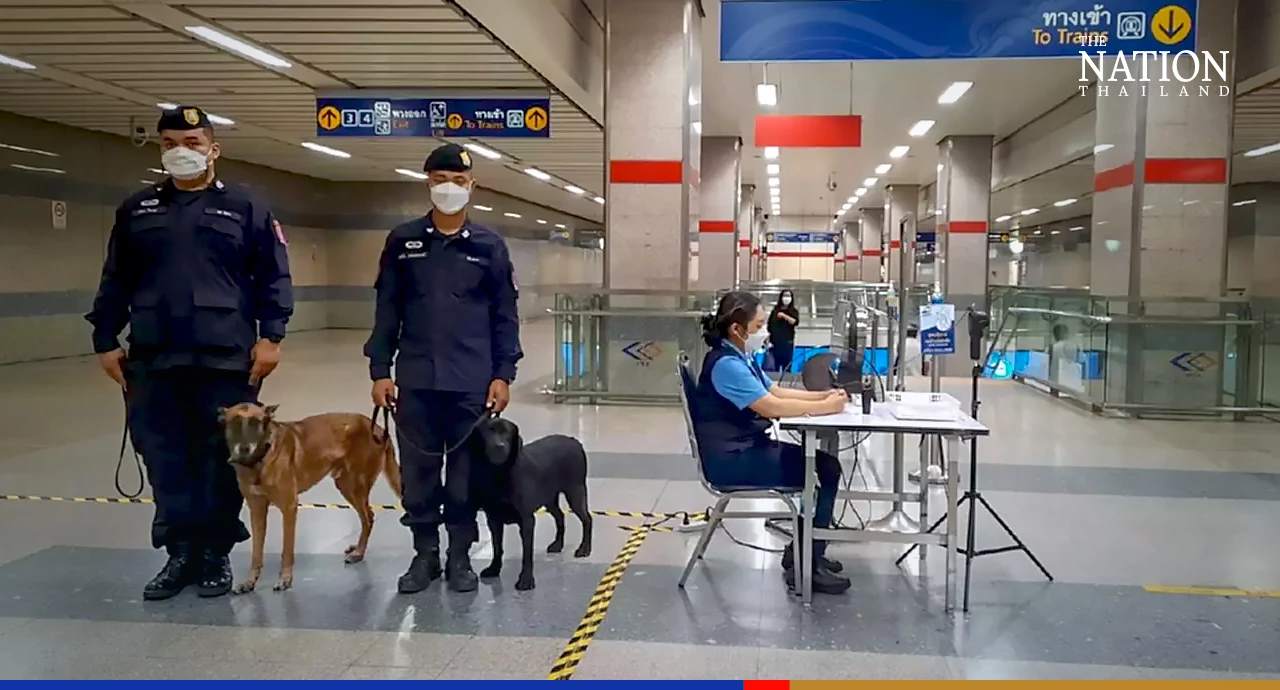

 The retrieved krattong had been floated on the Ping River in Chiang Mai’s Muang district on Lok Krathong night on Tuesday.
 He said Chiang Mai would be celebrating another night of the Loy Krathong festival on Wednesday and his division expects 10 more tonnes of garbage to be collected on Thursday morning.
 Jiravat Ratisoontorn
 Kiatchai Maitriwong
 Thepparat Theppitak
 Poonsit Wongthawatchai