The Rail Transport Department has ordered transport system operators in Bangkok to beef up security after the government declared a state of emergency on Thursday.
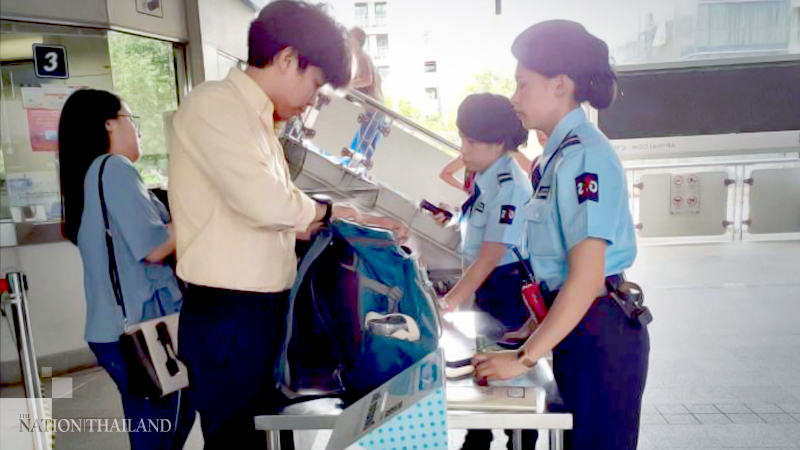
Operators have been ordered to check stations and luggage more frequently and ensure that their security cameras and communication systems are functioning round the clock.
They were also told to to be ready to evacuate passengers in case of emergency.
Prime Minister Prayut Chan-o-cha declared a state of emergency banning gatherings in Bangkok effective from 4am on Thursday, in a clampdown on escalating pro-democracy protests.
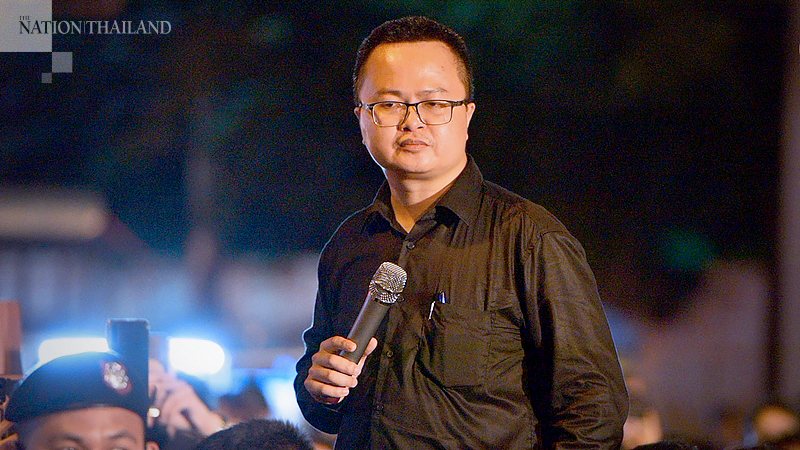
Arnon Nampa, prominent activist and human-rights lawyer, has reportedly been flown up to Chiang Mai to face sedition charges for speaking on stage about the monarchy earlier in Chiang Mai and Pathum Thani.
Sunai Phasuk, a senior researcher at Human Rights Watch, said on Twitter that Arnon had been forcibly taken by a special commando unit to the North.
The activist also said in a Facebook post that he had been denied access to a lawyer, which is in direct violation of his rights and endangered his safety.
Meanwhile, Chiang Mai University students have started gathering in the campus to show their support of the pro-democratic movement and pressure the authorities to release Arnon and activist Prasiddhi Grudharochana, who was arrested at the same time.
Emergency medical teams deployed around Ratchaprasong rally site
NationalOct 15. 2020Dr Narong Aphikulvanich, Medical Services Department deputy director-general
By The Nation
Medical teams are being posted in readiness after anti-establishment protesters announced they will rally at Bangkok’s Ratchaprasong intersection on Thursday, in defiance of the government’s overnight ban on gatherings.
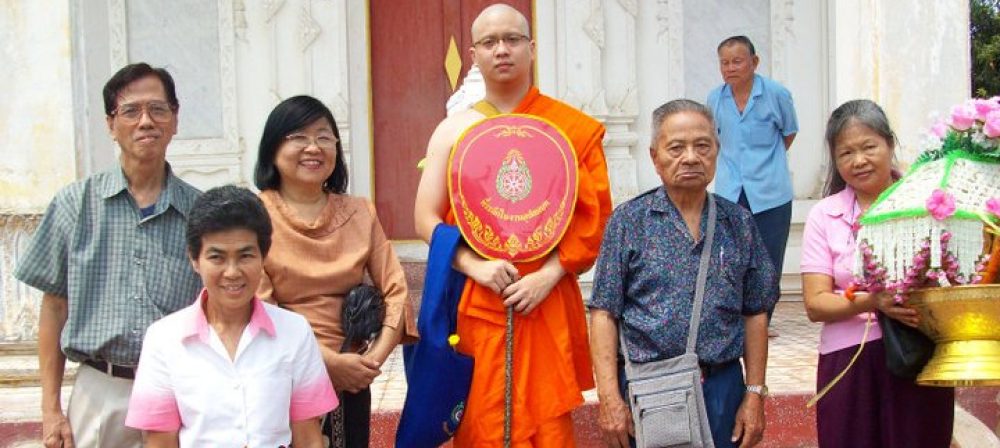
Dr Narong Aphikulvanich, Medical Services Department deputy director-general, revealed
that medical units from the Police Hospital, Chulalongkorn Hospital and Ramathibodi Hospital will be deployed to the Pathumwan Intersection, Ploenchit Intersection and Ratchaprasong Intersection to provide emergency care for illness or injuries.
He insisted the medical teams will treat all sides equally and take precautions against the spread of Covid-19 outbreak among the crowd. He advised rally participants to wear masks and keep their hands clean with alcohol gel.
Amnesty International has condemned the government’s overnight crackdown on peaceful protests, slamming its ban on gatherings as a “drastic” escalation of authorities’ onslaught on freedom of expression.
Responding to news that the Thai authorities have ordered a ban on gatherings of five or more people in Bangkok and on sharing information that “could create fear”, Amnesty International’s deputy regional director for campaigns, Ming Yu Hah, said:
“This vague, drastic order will lead to more people unfairly arrested, detained and prosecuted.
“With further public assemblies expected to happen today, we urge the Thai authorities to engage in constructive dialogue with the protesters.
“The scale of today’s early morning arrests seems completely unjustified based on yesterday’s [Wednesday] events. The assemblies were overwhelmingly peaceful. These moves are clearly designed to stamp out dissent, and sow fear in anyone who sympathises with the protesters’ views.”
He urged authorities to release the protesters immediately and unconditionally, and give those detained access to legal counsel.
“Instead of ruling by decree and mass arrests, the Thai authorities must reverse course.
They must comply with their international obligations to respect the rights of anyone who simply wishes to peacefully speak their mind, on social media or in the streets,” he said.
According to news reports, at least 20 protesters were arrested in the early hours of Thursday for allegedly violating the state of emergency ostensibly used to control Covid-19.
At least 21 more, including prominent activist Jatupat “Pai Dao Din” Boonpattararaksa, were arrested on Tuesday.
Amnesty International urged the authorities at the time not to use the state of emergency to violate human rights.
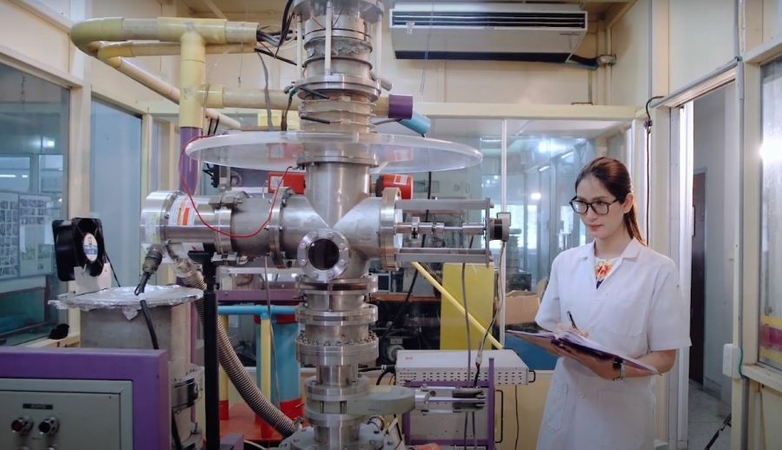
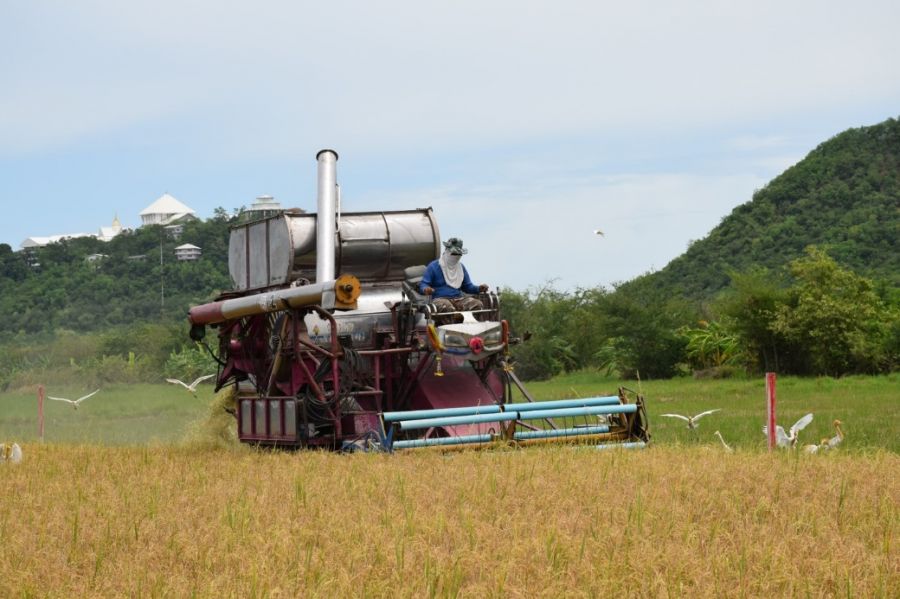
Chiang Mai University’s Institute of Scientific and Technological Research has been successful in using ion beam to induce mutation in existing rice breeds to create new ones that provide better yield and are resilient against diseases and pests, researcher Dr Boonyarak Panchaisri said.
“Our research team has been working for more than 10 years with Dr Thirapat Wilaithong from the university’s Physics Excellence Centre who developed a particle accelerator to create ion beam to induce rice mutation,” Boonyarak said.
“We were able to create three new rice breeds, namely FRK-1 fragrant rice for consumption, MYS-4 rice for the starch industry and OSSY-23 rice for animal feed. These breeds give better yield and can withstand several diseases as well as pests.”
Buoyed by this success, the university has recently signed an MoU with the Ratchaburi Farmer Council, which will test the new breeds out in the province’s Huai Phai subdistrict. If the crop is successful, then they will begin distributing seeds as well as instructions to farmers in the provinces of Kanchanaburi, Kamphaeng Phet, Chai Nat, Pathum Thani, Prachinburi, Phichit, Phitsanulok, Phrae, Lopburi, Saraburi, Singburi, Sukhothai, Ayutthaya, Ang Thong and Uttaradit.
“We hope these new rice breeds will help boost output and revenue for rice farmers, reduce disparity as well as attract new graduates to pursue careers in agriculture,” he added.
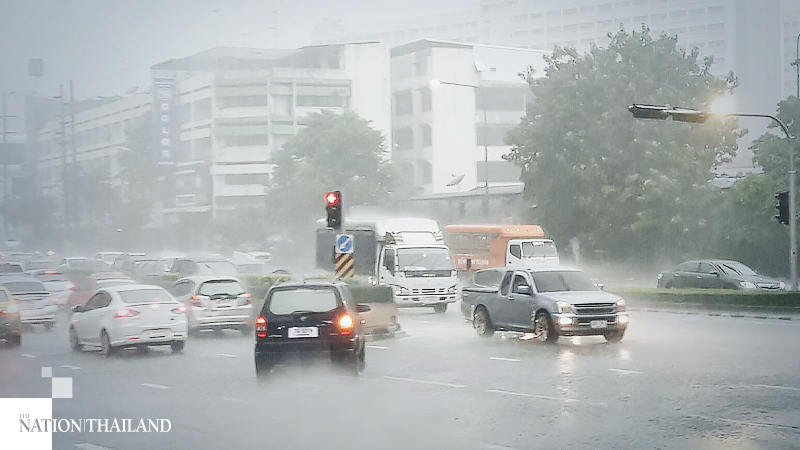
The Meteorological Department has announced that Thailand will be affected by storms until Monday.
A Category 1 active low-pressure cell east of the Philippines has intensified into a Category 2 tropical depression, and as of 10am on Thursday, it was moving slowly northwest into centre of South China Sea with maximum sustained winds at about 55 kilometres per hour.
On Saturday and Sunday, it is expected to intensify to a Category 3 tropical storm making landfall in central Vietnam.
Meanwhile, heavy to very heavy rains have been forecast in some areas in the North, Central, Northeast and East, with warnings of flash floods and runoffs.
In addition, a strong monsoon trough is lying across lower Central region, upper South and the East, while strong Southwest monsoon is covering the Andaman Sea, the South and the Gulf of Thailand. These will bring isolated heavy to very heavy rains.
Meanwhile, up to 3-metre high waves have been forecast in the Andaman Sea and the upper Gulf, which are expected to rise higher during thundershowers.
People have been warned of surf, ships have been told to proceed with caution, while small boats are advised to remain ashore.
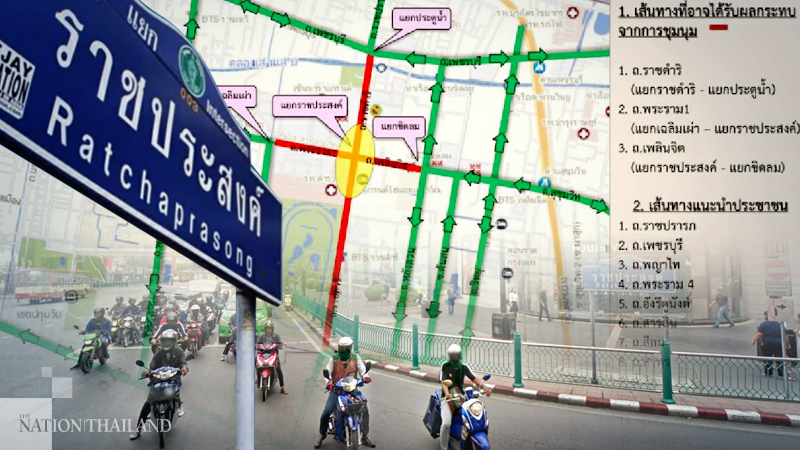
Metropolitan police have recommended 12 alternative routes for drivers to avoid the political rally at Ratchaprasong Intersection in Bangkok on Thursday.
The student-led protesters announced they would continue their rally at the intersection from 4pm today, after quitting their anti-government protest at Government House overnight.
CentralWorld staff has set up barriers around the department store, while Royal Thai Police headquarters has shut its entrance on Rama I Road.
Police advised people to avoid using roads near Ratchaprasong Intersection from 2pm onwards and recommended the following 12 alternative routes:
1. Ratchaprarop Road
2. Phetchaburi Road
3. Phaya Thai Road
4. Rama IV Road
5. Henri Dunant Road
6. Sarasin Road
7. Silom Road
8. Sathon Road
9. Witthayu Road
10. Sukhumvit Road
11. Langsuan Road
12. Soi Tonson
Police said they will monitor the situation and prepare plans in case protesters change their rally location, adding that traffic updates were available at the Traffic Police Division hotline on 1197.
Monsoon storms have triggered flash floods and landslides in 20 provinces, affecting a total of 15,740 households, the Department of Disaster Prevention and Mitigation said on Thursday.
The storms left a trail of destruction across Ratchasima, Sisaket, Sa Kaeo, Chachoengsao, Chanthaburi, Chonburi, Rayong, Kanchanaburi, Chainat, Ratchaburi, Phetchaburi, Prachuap Khiri Khan, Nakhon Ratchasima, Surat Thani, Phang Nga, Krabi, Phuket, Trang, Satun and Songkhla.
Flooding has hit six provinces – Nakhon Ratchasima, Sa Kaeo, Chachoengsao, Surat Thani, Trang and Satun – where local officials are scrambling to help victims.
An announcement published in the Government Gazette on Thursday said the state of emergency was invoked under Article 11 of the Emergency Decree on Public Administration in Emergency Situations.
Using the authority granted to him under Article 11, the premier has issued the following measures:
• Power to detain any person suspected of cooperating in an action that leads to an emergency, or any advertiser or sponsor of such actions or the concealing of information about actions that cause an emergency situation.
• Power to issue an order calling any person to report to the authorities, provide a statement or deliver any documents or evidence related to an emergency situation.
• Power to seize equipment or tools used in communication or transmission of electronic information, weapons, consumer goods, chemicals or objects have been used or will be used in actions promoting an emergency situation.
• Power to search, demolish or destroy buildings and obstacles as necessary in the performance of duties to halt a serious incident.
• Power to prohibit any citizen from actions that can be considered a threat to national security or the safety of people.
• Power to prevent any action that may block traffic or prevent the use of transportation in areas under emergency.
• Officials given these powers must take necessary and appropriate steps. The supervisor of relevant officials has the power to prescribe conditions or time for exercising the powers of competent officials as deemed appropriate.
Deputy Prime Minister General Prawit Wongsuwan is calling on administrative organisations as well as military and police officers to help volunteers provide assistance to 15,740 households in 18 provinces that were affected by floods.
The deputy PM’s spokesperson Lt-General Kongcheep Tantrawanich said on Thursday that Prawit has also instructed officials in Nakhon Ratchasima and Surat Thani to open drainage channels to reduce the water levels in the area.
“In areas where flooding has reduced, Prawit has instructed officials to repair public utilities and people’s residences, launch cleaning operations and work towards alleviating farmers’ suffering,” Kongcheep said.
“Meanwhile, he has also ordered officials to cooperate with the Office of National Water Resources to reserve water in reservoirs and solve problems in flood-prone areas.”
 Dr Narong Aphikulvanich, Medical Services Department deputy director-general
 File Photo
 General Prawit Wongsuwan

