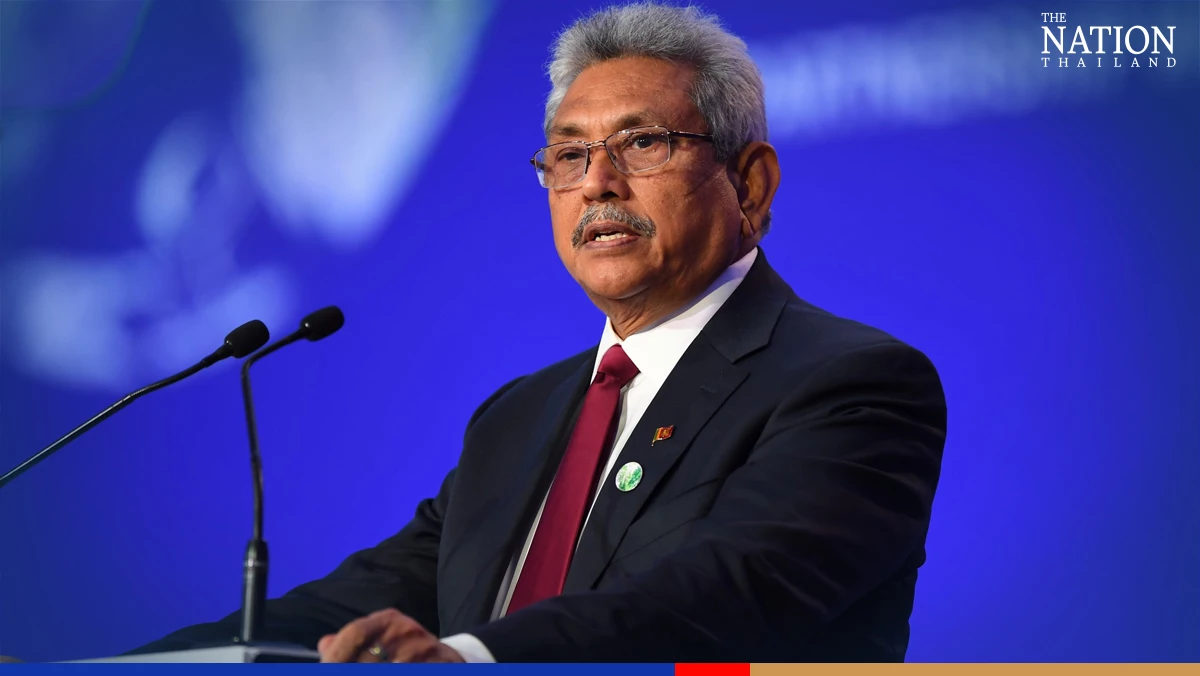
Thailand has received a request from the current Sri Lankan government to allow former president Gotabaya Rajapaksa to enter the Kingdom, Foreign Ministry spokesman Tanee Sangrat said on Wednesday.
He was responding to a news report that Rajapaksa is expected to arrive in Thailand on Thursday. He had fled the country to Singapore after mass protests in July following an economic collapse.
Tanee said Thailand has considered the request based on its relationship with Sri Lanka. He added that Rajapaksa’s move is considered a temporary stay.
“Sri Lanka’s former president does not intend to seek permanent shelter in Thailand, and he will travel to other countries soon,” he said, citing the Sri Lankan government’s remarks.
Meanwhile, Prime Minister Prayut Chan-o-cha said Rajapaksa’s move to enter Thailand is a humanitarian matter. He also confirmed that he would not be meeting the former Sri Lankan president.
Rajapaksa resigned in July after thousands of protesters stormed the president’s official residence and office due to Sri Lanka’s worst economic crisis in seven decades.
Thailand will be Rajapaksa’s second temporary shelter in Southeast Asia after he fled to Singapore on July 14, via the Maldives.
A citizens group has handed over a letter to Norway’s ambassador, asking the envoy to help stop the merger of two giant telecom operators.
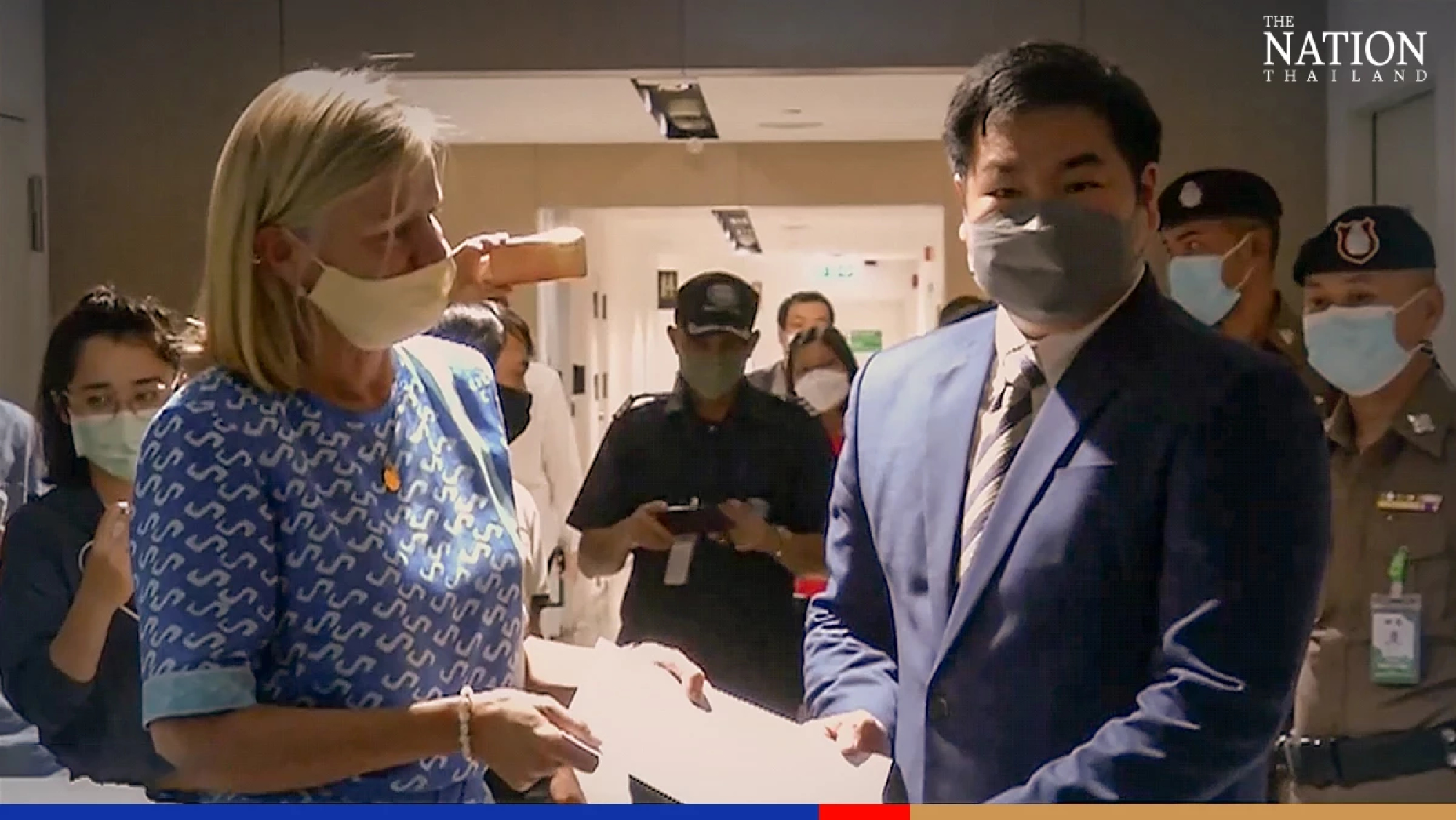
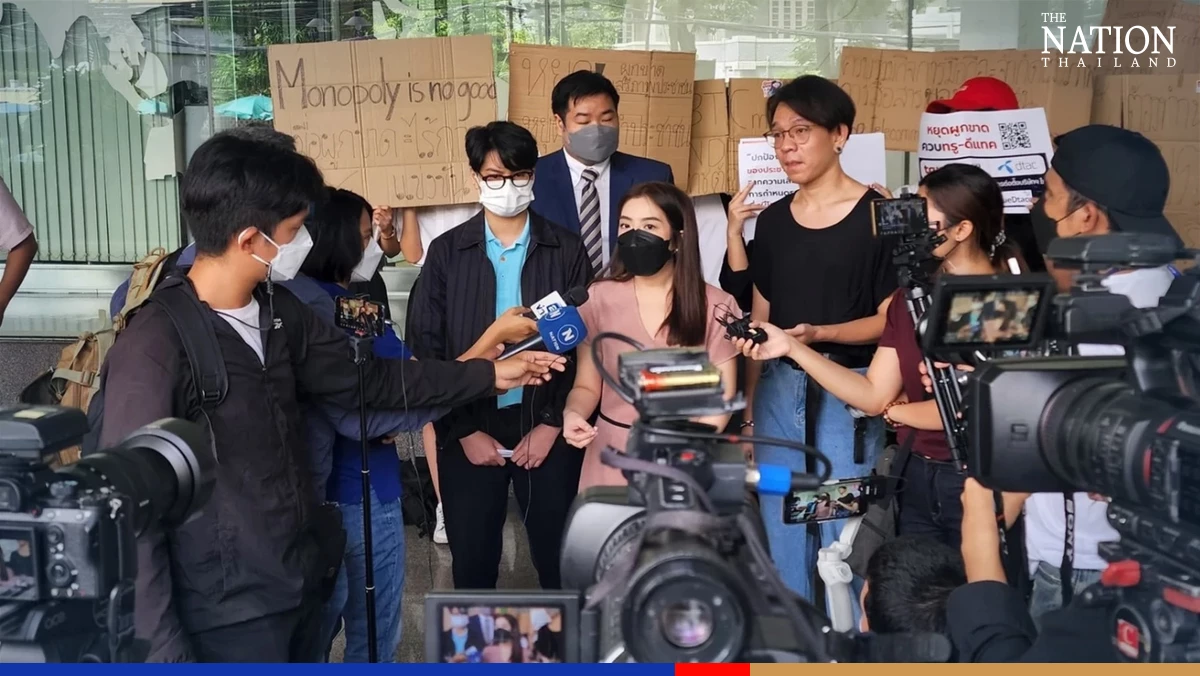
The Citizens’ Group for Freedom of Communication on Wednesday went to the Embassy of Norway in Bangkok to submit a letter to Ambassador Kjersti Rødsmoen.
The letter urged the ambassador to pressure Telenor, a Norwegian company, to stop the merger between its subsidiary, Total Access Communication (DTAC), and True Corporation. They argued that the move would create a monopoly in the Thai mobile services market, affecting consumers and their freedom as their news could be disrupted if the merger were successful.
Rødsmoen said that she understood how the merger would affect consumers and would forward the letter to Telenor and the Norwegian government.
She promised to look into the matter. She said that she would not ignore this matter if the merger was against Norway’s governance practices, because Telenor is the third biggest company in Norway. She added that the embassy would act as a medium in sending the citizens’ letter to Norway.
In the letter, the group said that the merger between these two companies was against Section 21 of the Telecommunications Business Act.
Section 21 of the Telecommunications Business Act, says:
“In the telecommunications business operation, other than being subject to the law on trade competition, the Commission shall prescribe specific measures according to the characteristics of the telecommunications business operation to prevent the licensee from carrying out any act that is monopolistic, or that reduces or limits the competition in the provision of telecommunications service in the following matters: (1) subsidisation of services; (2) holdings in businesses of the same category of service; (3) abuse of market power; (4) anti-competition behaviour; (5) protection of small entrepreneurs.”
The group cited that DTAC currently has 20 per cent of market share with 19.6 million subscribers, while True has 34 per cent with 32.2 million subscribers.
Leader Advanced Info Service has 46 per cent market share with 44.1 million subscribers.
The group is worried that the merger between True and DTAC would affect service quality and pricing, as that would leave only two players. The group explained that if a company has more than half of market share, such a company would be able to dictate to the market.
It will also be an obstacle to the development and competition in the digital economy which Thailand and several countries are focusing on for the future.
The group is also concerned that their freedom of communication could be affected as it could allow intervention by the government or a public company.
If the number of telecommunication operators reduces, it would be easier to intervene, threaten, control, or block news, especially in the current situation where the government had used spyware technology to get information on activists without permission, the group said.
The group added that private companies were also responsible for upholding human rights according to the United Nations Guiding Principles on Business and Human Rights (UNGPs).
The second pillar of UNGPs says that the responsibility of business enterprises to respect human rights applies to all enterprises regardless of their size, sector, operational context, ownership and structure.
The group said that it knew that Telenor respects governance and human rights, as the company has said that telecommunications is important in exchanging opinions and it is a part of freedom of expression including privacy rights.
The group stated that it would be more difficult if the merger was successful in a country where human rights and privacy policies were not in line with Telenor’s standards.
The citizens requested Telenor to stop the merger between DTAC and True and asked the Norwegian government to investigate if the merger met UNGP guidelines.
The Thailand Consumers Council (TCC) on Wednesday opposed the city administration’s move to start collecting fares on the Green Line’s second-phase extensions with variable rates, starting from 14 baht.
Kongsak Chuenkrailart, assistant secretary of TCC’s subcommittee on public transportation, said the announced fares between 14 to 44 baht for the second-phase extension of the Green Line would increase the transportation cost burden on consumers.
Kongsak called on the Bangkok Metropolitan Administration to use one-rate fare of between 10 to 15 baht for each side of the second-phase extension so that it would be affordable to poor commuters.
Kongsak noted that the second-phase extensions from Bearing to Samut Prakan and from Mo Chit to Khu Khot run past areas inhabited by low-income earners. Having to pay up to 44 baht for a Skytrain ride on the extension would be too high for the poor, Koongsak said.
On Monday, Deputy Bangkok governor Wisanu Subsompon said the fare for riding the Green Line train on any of these two sections alone will start from 14 baht and the fare will increase by 2 baht per station with the maximum of 44 baht within the same extension. But if the passengers travel further on the first extension and main Green Line, the entire fare will be capped at 59 baht. Fare collection on the second-phase extensions will start in mid-September, he said.
Wisanu pointed out that the rates would be the same as currently used on the Green Line’s first extensions.
The Green Line has two main routes – Silom and Sukhumvit. On the Silom route, the first extension runs from Wong Wian Yai to Bang Wa and on the Sukhumvit route, the first extension runs from On Nut to Bearing.
The main Green Line is operated by the Bangkok Mass Transit System Plc (BTSC).
Although the fare for the entire route would be capped at 59 baht, the TCC sees the rates of 14 to 44 baht as too high.
“The TCC and Bangkok residents have been placing hope on the new governor to lower the fares of the Green Line to be similar to other lines – especially because all the extensions were invested in by the government,” Kongsak said.
“The fares should be lowered so that all consumers can afford to ride the Green Line, as the governor once promised that he would not extend the concession of the Green Line.”
He said the TCC was disappointed to hear the rates of 14 to 44 baht for the extensions, which, Kongsak said, would raise the cost of transportation per round trip for a commuter to 1,118 baht per month, which would account for 36 per cent of minimum wage.
An office worker, who works in Phra Ram 9 area, said without the new fare on the extensions, he was paying about 148 baht per one-way trip to work, but if the new rates were applied on the extension, he wold have to pay about 194 baht per one-way trip.
He said the BMA should collect only 14 baht from Ku Kot to Mo Chit, which would still be acceptable.
The TCC has surveyed the opinions of some 3,204 people and found that 96 per cent of the respondents said the starting fare of 14 baht, plus 2 baht per station, would be expensive because the segment from Ku Kot to Mo Chit has 21 stations.
The Public Health Ministry is considering scrapping the hospitel and hotel isolation system for treatment of Covid-19 patients as most infected persons are now being treated as outpatient self-isolation (OPSI).
Dr Thares Krainairawiwong, director-general of the Department of Health Service Support, said on Wednesday that they planned to make the suggestion to Public Health Minister Anutin Charnvirakul and expected it to be officially announced by September 1.
Thares said the latest survey revealed that only 11 hospitels and six hotel isolation centres remain open, compared to 76 hospitels and 31 hotel isolation centres available when the outbreak had reached its peak in Thailand last year. These 17 establishments that are still open have a combined capacity of only 4,720 beds.
“Currently most of the infected patients are having mild or no symptoms and can be treated under the OPSI system or via home isolation, therefore the need for these hospitels and hotel isolation is growing smaller,” he added.
Thares added that besides OPSI, patients also have the option to receive Covid-19 treatment via the National Health Security Office (NHSO)’s telemedicine system.
Currently three applications have been commissioned by the NHSO to treat Covid patients. They are Clicknic that focuses on patients in vulnerable groups (those over 60 or suffering from any of eight underlying conditions), Good Doctor Technology, and MorDee, that only accept “green” patients or those with mild conditions.
The NHSO is also working with the Bangkok Metropolitan Administration to establish Covid-19 kiosks in shopping malls or community centres where infected persons can conveniently get diagnosed and receive prescription from doctors.
The Thai Restaurant Association has introduced a mouthwatering project to provide rice and curry meals for just 25 baht at 59 PT stations in Bangkok and its vicinity.
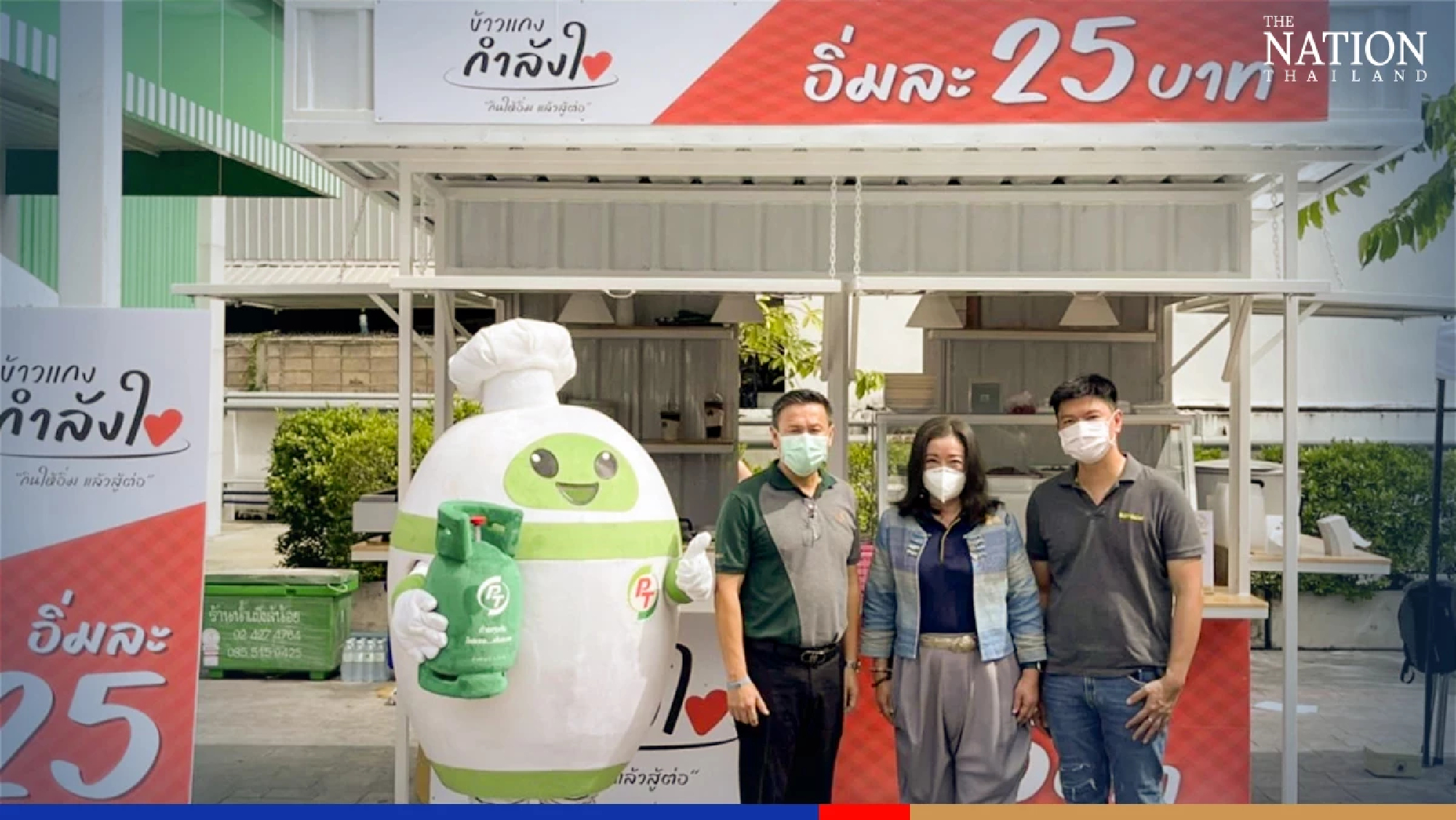
The first “Khao Kaeng Kam Lang Jai” (Providing You Support with Curry on Rice) branch was opened in a grand ceremony on Wednesday at the PT station in Soi Phutthabucha 1.
Besides getting a meal for 25 baht, customers can also purchase PT cooking gas or Meesuk palm oil at special prices.
President Thaniwan Kulmongkol said the association had teamed up with Atlas Energy and Olympus Oil to sell cooking gas and palm oil along with low-cost meals at PT stations to help those affected by the Covid-19 situation and economic downturn.
She said people can now reduce their daily expenses by having to spend only 25 baht on meals.
The first phase of the project will see the sale of meals at restaurants, food courts, kiosks, food trucks and small booths in 59 PT stations within three months.
Meanwhile, Atlas Energy and Olympus Oil managing director Suwatchai Pitakwongsaporn also said the goal of this business operation is to help reduce the cost of living.
He said PT is glad to support the project and aims to provide “100 areas” for the purpose in Bangkok, its vicinity and Chonburi.
Vendors in the project will receive a 5-baht discount from the retail price for Meesuk palm oil. They will also get the first 15kg cooking gas cylinder for free and a 20-baht discount on other cylinders.
Suwatchai expects to open 59 restaurant branches in three months and has a target of 100 branches in the future.
He is discussing with the Thai Restaurant Association the possibility of opening restaurants in other provinces.
Prime Minister Prayut Chan-o-cha on Wednesday reassured acting US Chargé d’Affaires Michael Heath that the Thai government would support and work with the incoming envoy to strengthen relations between the two countries.
Heath visited Government House on Wednesday to bid farewell to Prayut.
During the meeting, Prayut thanked Heath for his active role in deepening relations between Thailand and the United States, especially in economic cooperation that has made the US Thailand’s third biggest trading and investment partner.
The prime minister said he was confident the new chargé d’affaires would continue the mission Heath had initiated and would strengthen mutual ties between the two countries.
Prayut promised that the Thai government would work with the new chargé d’affaires “in all aspects”.
Heath thanked the government for continuing its cooperation with Untied States in economy, public health and education, which has helped US entrepreneurs continue to conduct business in Thailand during the Covid-19 pandemic.
He said new Ambassador-designate Robert Godec is a diplomat with extensive experience and expertise in the region, and he believed Godec would play an active role in boosting cooperation in other fields, such as combating human trafficking, with Thailand already being upgraded to Tier 2 status in the US Trafficking in Persons Report.
Prayut and Heath also exchanged views regarding the tensions between the US and China. The prime minister said Thailand was monitoring the situation closely, and advised all parties to seek a peaceful solution while taking into account the impact on people.
The premier conveyed his “best wishes” to US President Joe Biden through the departing chargé d’affaires, while hoping Biden would attend the Asia-Pacific Economic Cooperation summit to be held in Bangkok from November 16 to 18.
The United States is scheduled to host the summit next year.
Zone C parking at Suvarnabhumi Airport will be free from Thursday to Sunday in a bid to reduce the financial burden on travellers during Mother’s Day and the weekend.
Free parking at Zone C, which is designated for long-term parking and has a capacity for 718 vehicles, will be allowed from midnight on August 11 to midnight on August 15 – five days in total.
The airport will also provide free shuttle bus services from the parking lot to passenger terminals. A bus will leave every 15 minutes and is available 24 hours a day.
Passengers have been urged to arrive at the airport at least three hours before departure time for international flights and at least two hours before domestic flights.
For more information, contact call centre 1722 or phone 02132 9511.
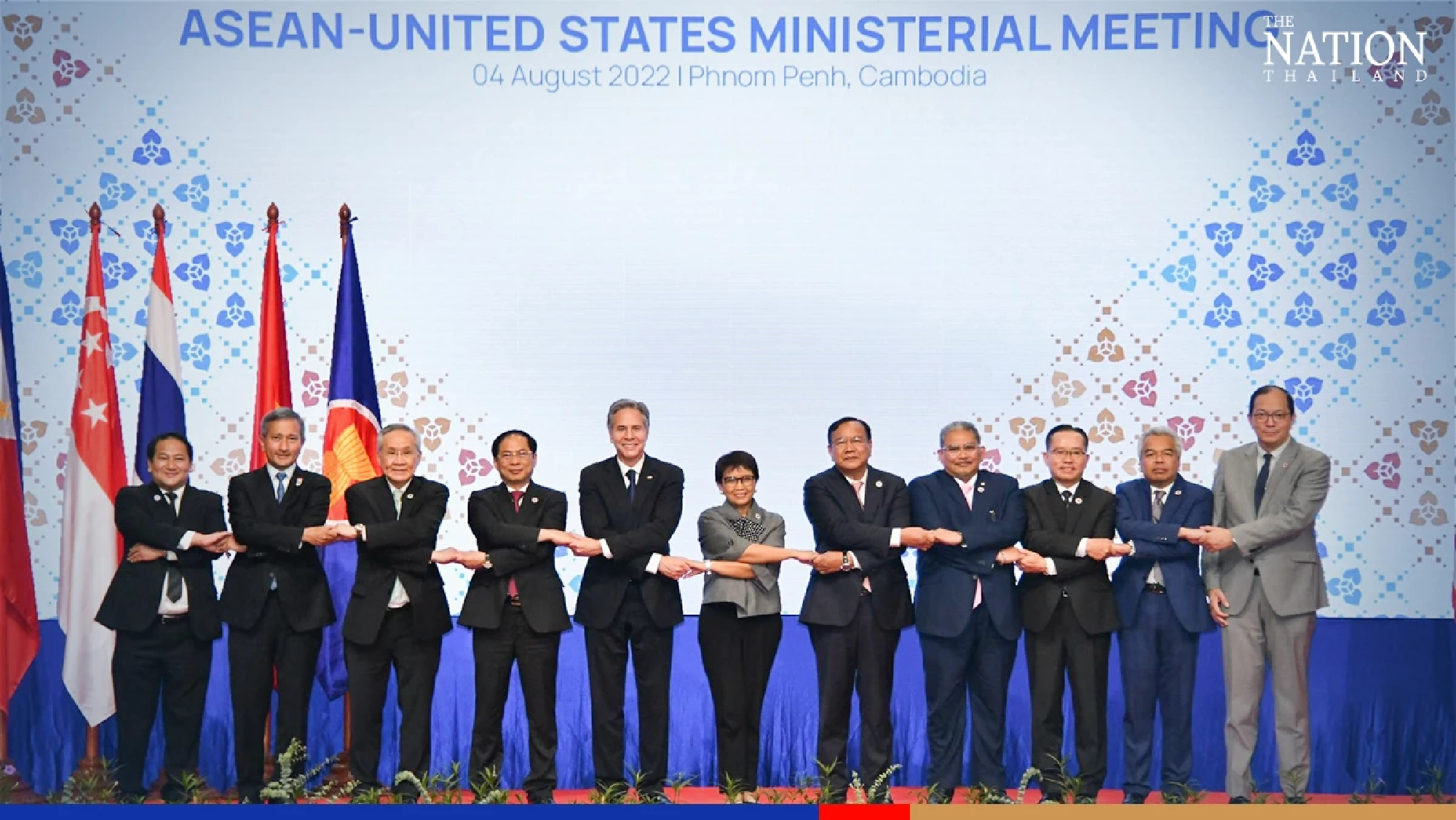
Thailand proposed a series of measures to improve bilateral and multilateral ties at the Asean Post Ministerial Conferences (PMC) earlier this week in Phnom Penh, aimed at seeking cooperation with dialogue partners for a sustainable post-pandemic economic recovery.
Thailand was represented by Foreign Affairs Minister Don Pramudwinai, the Foreign Ministry reported on its website on Wednesday. The PMC meetings were held in Phnom Penh on August 4.
Asean’s dialogue partners — Japan, South Korea, China, India, the United States, Russia, Australia, New Zealand, the European Union, Canada and the United Kingdom — took part. The Asean+3 (APT) Ministerial Meeting also was held.
The meetings aimed to strengthen the partnership and cooperation between Asean and its dialogue partners.
In the meeting with Japanese Foreign Minister Yoshimasa Hayashi, Thailand raised the way forward to enhance cooperation between Asean and Japan, especially on peace and stability, which are in line with the Asean Outlook to the Indo-Pacific.
The meeting also noted the preparations for commemoration of the 50th anniversary of Asean-Japan relations in 2023.
In the meeting with South Korea, Don highlighted cooperation in areas where Seoul has expertise, such as healthcare, economy, cultural links, and soft power. The meeting also exchanged views on regional and international issues, the Foreign Ministry said.
In the meeting with China, Don highlighted Thailand’s role in promoting sustainable development and encouraging more innovative engagement.
In the meeting with India, he proposed the Bio-Circular-Green (BCG) economy model as the way forward to enhance cooperation and promote human security, the ministry reported.
In the meeting with the US, he supported Washington’s role in the region through multilateralism which supports Asean centrality. He also highlighted the importance of advancing cooperation, especially on innovation, digital and climate action through American investment.
In the meeting with Russia, he supported the implementation of the Asean-Russia Comprehensive Plan of Action especially through the Asean-Eurasia Economic Commission (EEC).
Don also discussed ways to enhance Asean–Australia Comprehensive Strategic Partnership, the ministry said.
Don also took part in the APT Ministerial Meeting for discussing ways to cope with common current challenges and crises in the region.
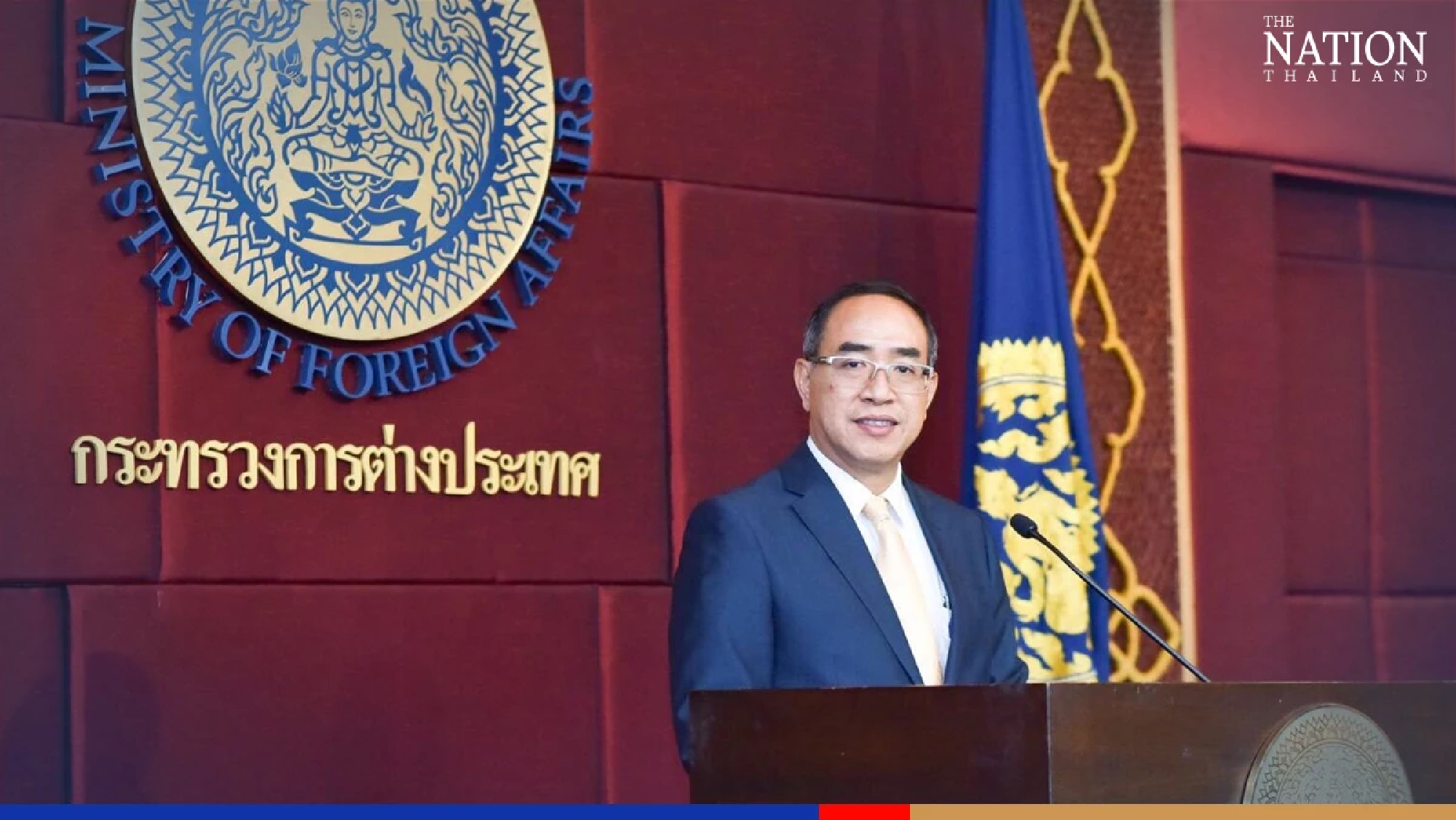
Don assigned the ministry’s permanent secretary, Thani Thongphakdi, to participate in these meetings.
Thani emphasised the importance of promoting cooperation with the EU, especially on security and peace, and also enhancing economic opportunities.
In the meeting with New Zealand, he discussed various areas of cooperation including climate change, post-pandemic economic recovery, and people-to-people exchange programmes.
He discussed with Canada improving economic opportunities through a free trade agreement and promoting the BCG economy model.
In the meeting with the UK, he called for substantial cooperation, highlighting the fostering of a conducive environment for post-pandemic recovery, digital, climate change, clean energy and sustainable development.
A host of agencies have been instructed to stand ready to tackle possible flash floods and surface water runoffs due to tropical storm Mulan, Deputy government spokeswoman Traisuree Taisaranakul said on Wednesday.
The move came after the Thailand Meteorological Department announced the storm would bring isolated heavy to very heavy rains in the North, the Northeast and the East from August 11-13.
She said Prime Minister Prayut Chan-o-cha instructed all related agencies to assist flood victims and prepare equipment and staff so they are “ready all the time”.
Agencies handling dams and reservoirs have been advised to focus on the “durability” of reservoirs and safety of residents and their property, Traisuree said.
“The premier has instructed related agencies to work together to effectively assist people and mitigate the impact from floods as much as possible,” she added.
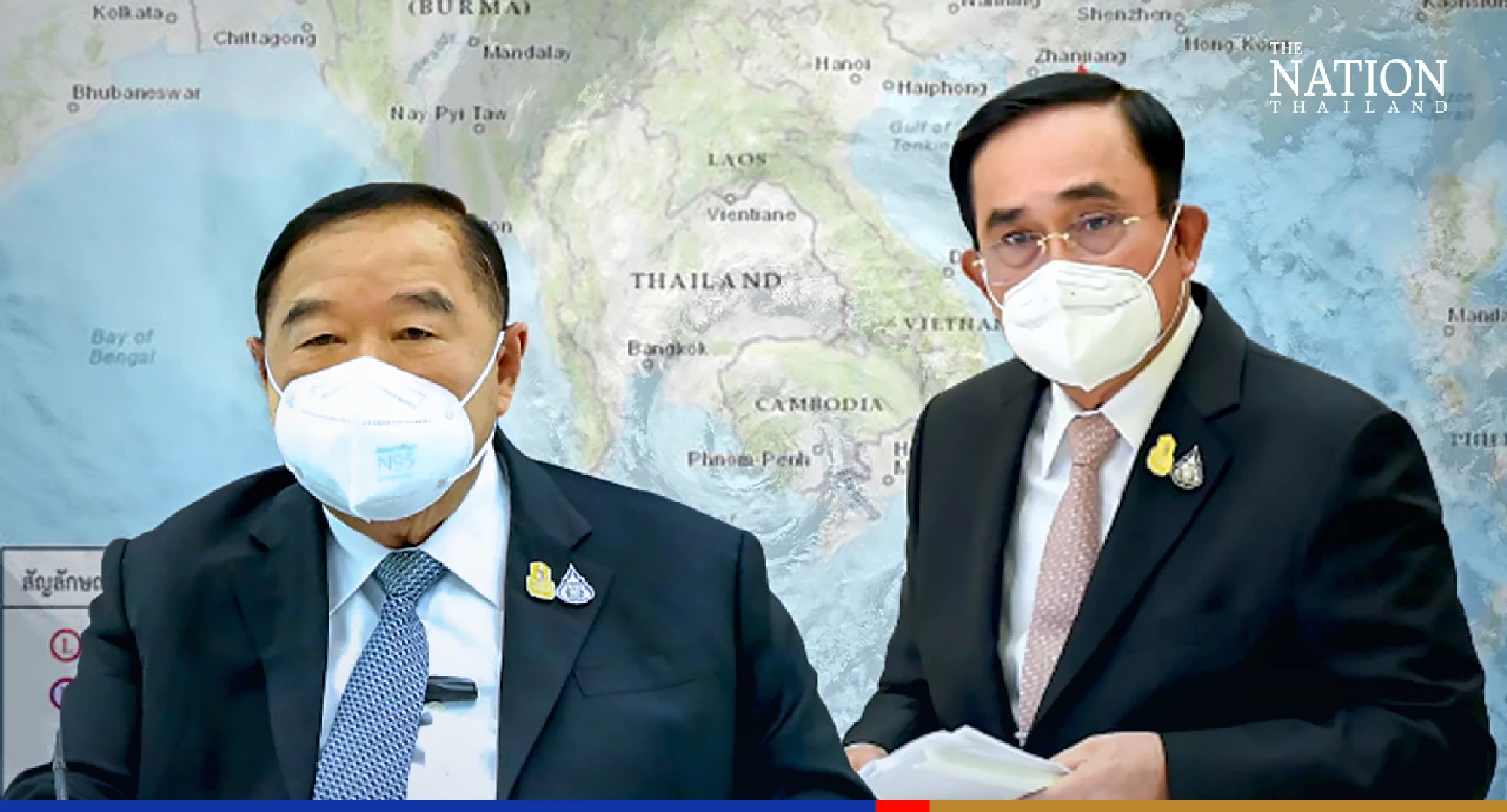
Meanwhile, Deputy Prime Minister Prawit Wongsuwan ordered the agencies to closely follow weather forecasts and be prepared for flood risks due to heavy rains nationwide.
Officials have been advised to strictly monitor rising sea levels between August 10 and 16, which could cause the Chao Phraya River to overflow and inundate nearby communities, especially those in Bangkok, Samut Prakan and Nonthaburi.
Prawit also instructed various agencies to set up flood levees, prepare water pumps and other machines to drain water into areas with a low risk of flooding, and provide assistance to flood victims.
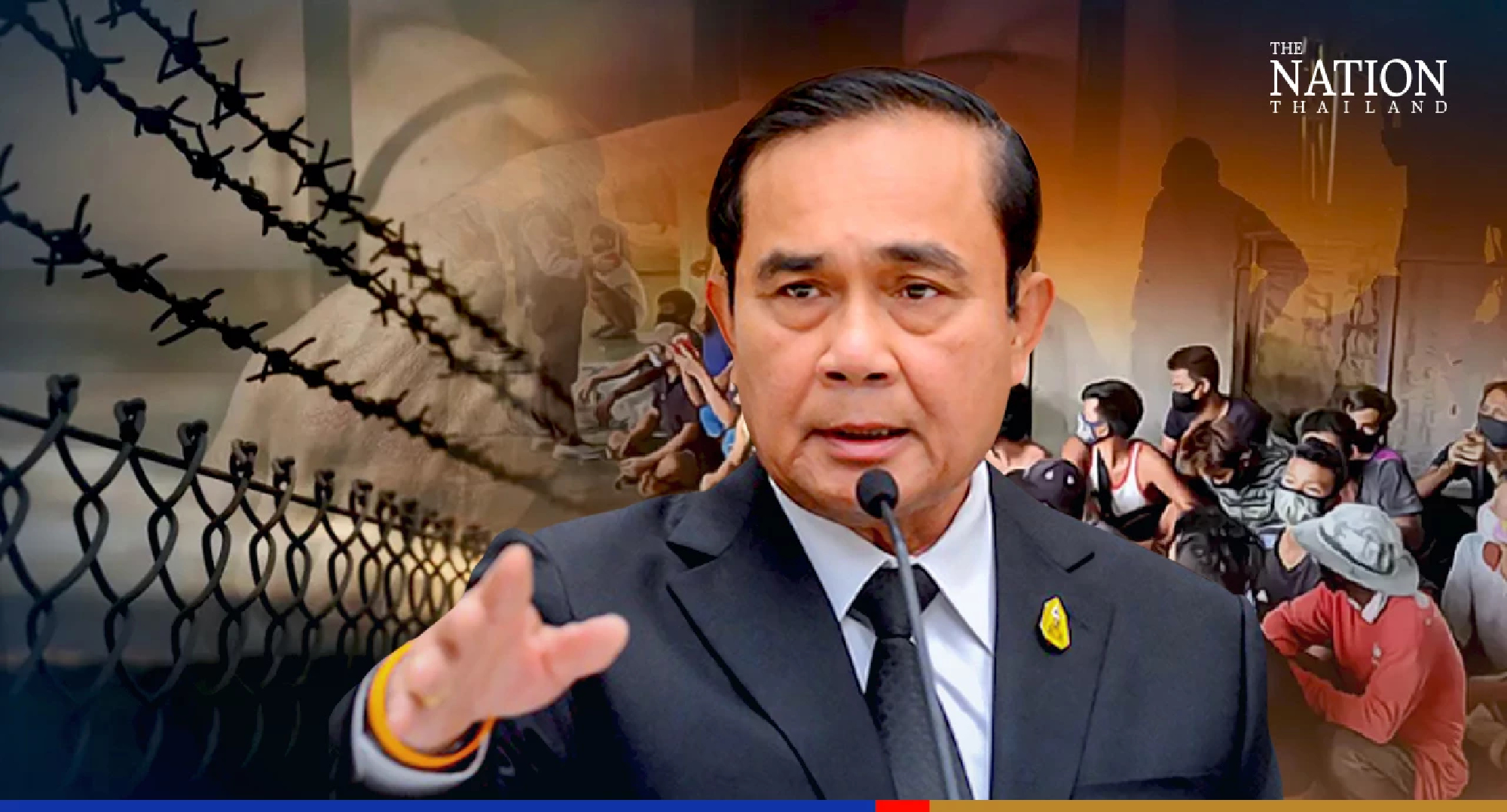
Prime Minister Prayut Chan-o-cha aims to improve the human trafficking situation in the country so that Thailand is upgraded to Tier 1 on the US State Department’s Trafficking in Persons report.
Government deputy spokeswoman Ratchada Thanadirek said Prayut expressed the wish during a weekly Cabinet meeting on Tuesday, when the Cabinet was informed about the annual human trafficking suppression and prevention report for 2021.
Last month, the US State Department upgraded Thailand from its Tier 2 Watchlist to Tier 2. The kingdom had been downgraded to the watchlist on July 1, 2021, from Tier 2 in 2020.
Ratchada said Prayut thanked all government agencies concerned for joining forces to fight human trafficking, which helped in the removal of the country from the watchlist.
She also said Prayut extended moral support to the government agencies battling the scourge and expressed hope that such crimes would be eliminated once and for all from the kingdom.
In its 2021 report, the Social Development and Human Security Ministry informed the Cabinet that human traffickers were arrested and criminal charges filed in 188 cases. The number rose by about 42 per cent from the 133 cases in 2020.
The report stated that legal action was taken against 17 government officials in 2021 for being involved in human trafficking, while 414 victims were placed under a protection programme.
The number of victims helped by the government last year rose by 79 per cent from the previous year.
Ratchada said 148 victims were placed in rehabilitation centres in 2021 and the government reduced the monitoring period in these centres from 158 days in 2020 to 143 last year.
The spokeswoman said the ministry spent 153 per cent more on operations to protect witnesses in 2021, compared to the previous year. The ministry also spent 124 per cent more to compensate victims in 2021, compared to the previous year.
Among the measures employed to increase efficiency in suppression and prevention of human trafficking, the government would recruit more officials, increase anti-human trafficking command centre powers and provide a better method to receive public complaints, Ratchada added.


 Although the fare for the entire route would be capped at 59 baht, the TCC sees the rates of 14 to 44 baht as too high.

 She said people can now reduce their daily expenses by having to spend only 25 baht on meals.