The Public Health Ministry will offer a proposal on transitioning Covid-19 from a pandemic to endemic at the Centre for Covid-19 Situation Administration (CCSA) meeting on Friday (March 18).
Government spokesman Thanakorn Wangboonkongchana said on Monday that Prime Minister Prayut Chan-o-cha is scheduled to preside over the meeting.
“According to the plan, the Public Health Ministry and related agencies will ease Covid-19 prevention measures in line with the situation so people can start leading normal lives,” he said.
Thanakorn explained that the Covid-19 transition plan will be divided into four phases:
• Phase 1 (March 12 to early April): This so-called “combatting” phase will focus on launching measures to contain the spread of the disease.
• Phase 2 (April to May): Called the “plateau” phase, it will focus on keeping the number of Covid-19 infections low.
• Phase 3 (end May to June 3): The so-called “declining” phase will focus on maintaining the number of new Covid-19 cases to below 2,000 daily.
• Phase 4 (from July onwards): Called the “post-pandemic” phase, it will focus on transitioning Covid-19 from a pandemic to endemic disease.
“The focus is still on vaccinating as many people as possible, especially the elderly and those with chronic diseases, to reduce deaths and provide treatment to vulnerable people effectively,” he added.
Thailand recorded 22,130 Covid-19 cases and 69 deaths on Monday, bringing the cumulative cases in the country since January 1 to 983,520.
Separately, the total number of Covid-19 vaccines administered nationwide stands at 126,176,878 doses, of which 54,419,126 people were given their first Covid-19 shot, 49,977,239 their second and 21,780,513 a booster.
A medical teacher at Chulalongkorn University’s Faculty of Medicine on Monday warned parents of possible long-term effects of Covid-19 on children.
Assoc Prof Dr Thira Woratanarat wrote on his Facebook wall that a recent research carried out by Sandra Lopez-Leon, a genetic pharmacoepidemiologist, and associates found that some 25.24 per cent of children and youths infected by Covid-19 could later develop long Covid.
The study found that the children and youths who got long Covid could be unstable emotionally and experience tiredness and also have difficulty in sleeping.
Compared to children not exposed to SARS-CoV-2 virus, the children who have been infected could have 2.69 times higher breathing distress.
Thira added that a recent study by the University of Malaya led by Prof Dr Moy Foong Ming found that women had a 58 per cent higher chance than men of suffering from long Covid.
The research studied 732 people who were infected by Covid-19.
Thira said Moy’s study also found that the people with moderate and severe symptoms could have a 3.6 times higher chance of getting long Covid compared to those with mild symptoms.
To avoid long Covid, Thira advised parents and Thais to strictly observe measures for protecting themselves and their children from catching the SARs-CoV-2 virus. They advised everyone to always wear face mask, maintain social distance, meet people only when necessary, and minimise time spent in the company of others.
Those who feel ill should inform close persons and should stop going to school or work, Thira added.
Fake news, rumour campaigns and naysayers have had a huge impact on the battle against Covid-19 over the past two years, top virologist Dr Yong Poovorawan said in a Facebook post on Monday.
He said fake news was published and widely shared on social media, yet it was never corrected when the truth was revealed.
“Many people believe in such fake news if they consume it frequently, especially about Covid-19 and vaccines,” he said.
Yong added that rumour campaigns, which only carry about 20 per cent truth, generally cause traumatic stress among people, resulting in an impact on society and the economy. Also, he said, bullying from naysayers is very common in social media.
“Hence, media outlets should be honest and patient as the truth will eventually surface,” he said, adding that it was a pity people had lost opportunities to battle against the disease.
The virologist added that it was necessary to make children aware that they should not believe in news that has not been proven in line with cause and effect and scientific principles.
“They should be able to tell the difference between true and false, and should ensure that the news they share comes from reliable sources,” he said.
He added that people have learned to become patient and were striving to seek knowledge on the battle against a newly emergent disease over the past two years.
Star Petroleum Refining (SPRC) is still struggling to seal two leaks in its undersea pipeline off Rayong, 49 days after it spewed more than 40,000 litres of oil into the Gulf of Thailand on January 25.
Another 5,000 litres of oil was released on February 10 during botched efforts to move the pipe.
Initial reports indicated that as much as 400,000 litres of oil may have leaked into the sea.
The pipeline is located 25-30 metres beneath the surface, 20 kilometres off Mae Ram Phueng Beach, which was blackened when the slick from the oil leak reached shore in January.
On Sunday, SPRC released further details of its mission to plug the pipe and prevent further spills. In a statement, the company said its workers were currently attempting to wrap the first leak on the top of the undersea pipe.
Fishermen and local entrepreneurs say fallout from the oil spill is still damaging their business.
A 50-year-old Rayong rubber-ring rental operator said the incident was still affecting her business as visitors were not allowed to play in the sea. She said her monthly income had halved, from Bt10,000 before the spill to Bt5,000 now.
The twin disasters triggered a clean-up operation in which more than 85,000 litres of chemical dispersant were used in a desperate effort to limit damage to coral reefs and fish stocks. That amount of dispersant would reportedly be enough to clean up at least 800,000 litres of oil.
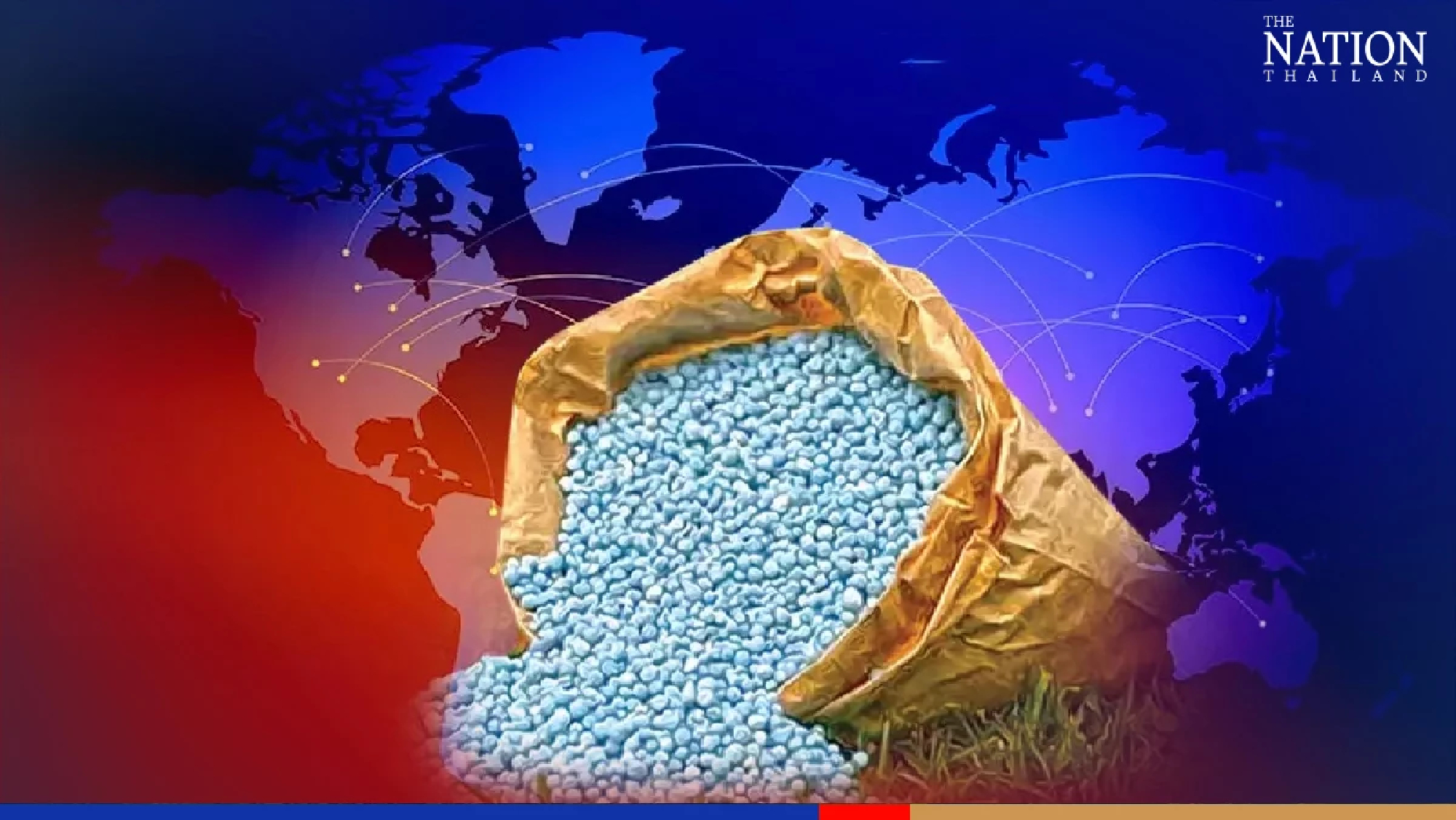
The surging price of fertiliser since Russia cut off supplies is taking a toll on Thailand, business-news outlet Thansettakij reports.
Thai wholesalers are now stockpiling fertiliser over fears of a prolonged Ukraine-Russia conflict, while China is already ordering its fertiliser factories in Laos to return their products, Thansettakij reported on Sunday.
The moves come after Russian President Vladimir Putin suspended exports of fertiliser, tightening global supply and raising prices.
Russia provided 8 per cent of Thailand’s imported fertiliser in 2021, shipping 4.45 tonnes worth Bt5.67 billion to feed the Kingdom’s agricultural sector.
The price of single-nutrient fertilisers began surging three days after Russia invade Ukraine on February 24.
The price of urea fertiliser hit US$950 per tonne last week while the price for April delivery rose above $1,000 per tonne.
Russia is among the world’s top exporters of urea fertiliser.
Meanwhile the soaring price of gas needed in fertiliser manufacturing is driving up prices of urea and nitrogen fertiliser.
Russia is also a top exporter of diammonium phosphate (DAP) fertiliser, supplies of which will be affected by the war.
Adding to market turmoil is uncertainty over China’s exports as demand increases all over the world, Thansettakij said.
The market for Muriate of Potash (MOP) fertilisers is also under pressure from sanctions against Russia as well as uncertainty over Belarus exports.
A source said supply of chemical fertilisers in Thailand is likely to be insufficient and the price of every formula may increase. Wholesalers are stockpiling fertilisers from factories to sell to farmers, the source added.
Meanwhile importers are not ordering more fertiliser as they cannot earn a profit at the price levels set by the Commerce Ministry. As the price rises, farmers will use less fertiliser, which will reduce their yields, said the source.
Recently, two Chinese fertiliser factories in Laos were ordered to send all their produce back to China. The Chinese government is reportedly worried that its 2022 GDP growth target of 5.5 per cent will be hit by fallout from the Russia-Ukraine war.
The third round of negotiations between Russia and Ukraine failed to achieve a breakthrough on March 7.
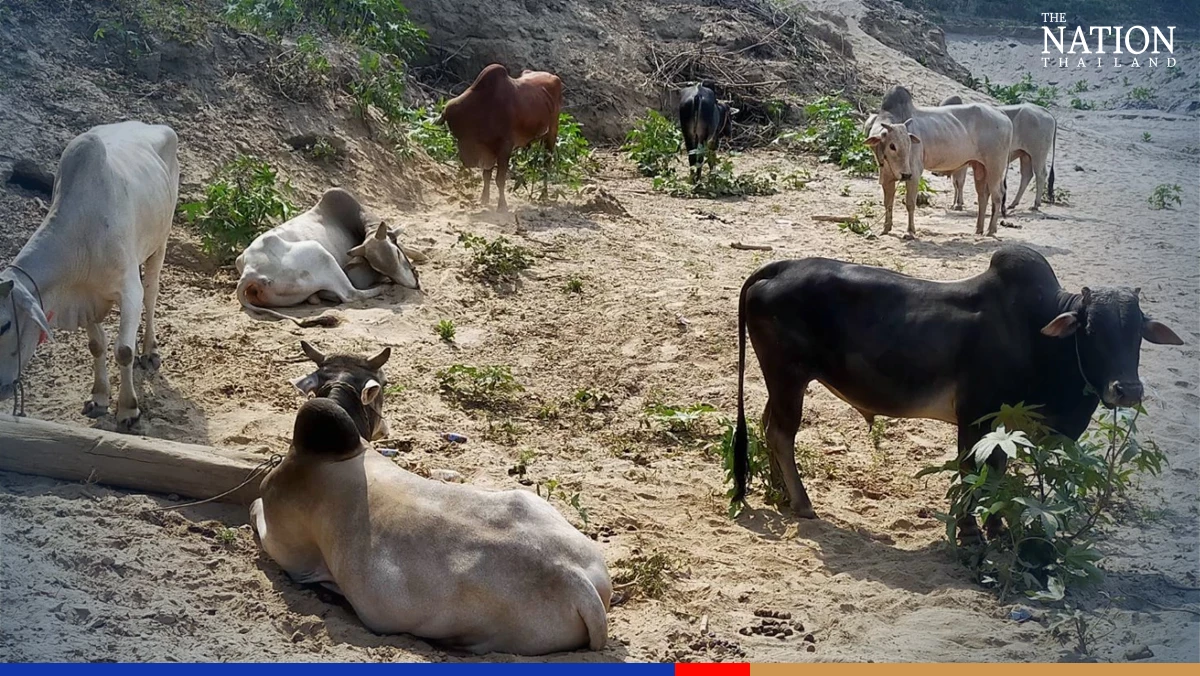
The Livestock Development Department and Mae Sariang Customs Office seized 20 cows that were being smuggled into Thailand from Myanmar on Saturday.
“Livestock and customs officials, along with the 3604th border patrol unit received a tip-off that cows were going to be smuggled across the Salawin River into Mae Hong Son,” the department’s director-general Sorawit Thaneeto said. “Officials waited on the river bank until the smugglers finished off-loading the cows before revealing themselves. The smugglers immediately jumped on their boat to flee back to Myanmar, leaving the cows behind.”
Sorawit said the officials have spread the news about the cows being seized, but nobody has shown up to claim them and take responsibility. Those behind this operation stand to face charges against Articles 242, 246 and 252 of the Customs Act, and other related laws,” he said.
The Department of Livestock Development has shifted the cows to the Mae Hong Son Animal Quarantine Station to check for diseases they may be carrying.
Half of the sausages sampled in a recent survey contained unsafe levels of nitrite, says Thailand’s Food and Drug Administration (FDA).
The FDA revealed that 22 out of 44 sausages sampled contained higher-than-permitted levels of nitrite, a preservative that is linked with bowel cancer.
The FDA began testing sausages after the Ramathibodi Poison Centre reported that 14 children had been hospitalised with methemoglobinemia – a blood disorder caused by ingesting nitrite – after eating sausages that had no FDA approval stamp.
The agency has tested sausages in eight provinces: Chiang Mai, Phetchaburi, Saraburi, Trang, Phayao, Songkhla, Nakhon Si Thammarat and Kanchanaburi.
“We collected samples from 102 brands of sausage and have tested 44 brands so far,” said FDA deputy secretary-general Weerachai Nolwachai on Sunday.
“Twenty-two samples contained levels of the food preservative nitrite that exceeded the legal limit of 80 milligrams per kilogram. All were sold without an FDA approval stamp on the packaging and came from factories which are not FDA-registered as food manufacturers,” he said.
Sodium nitrite is used to speed up the curing of meat and also to impart an attractive colour. However, nitrite in high concentration can react with the body’s haemoglobin to produce methemoglobin, which reduces the blood’s oxygen-carrying capacity in infants and young children.
The FDA has filed police complaints against the manufacturers of the 22 brands of sausage.
“Food manufacturers who add excessive amounts of nitrite face up to two years in jail, a Bt20,000 fine, or both,” he added.
Weerachai advised shoppers to check for the FDA stamp on sausage packaging, as well as labels with the following information: Name and location of manufacturer, manufacturing date, expiration date, ingredients, food additives, and net weight. “Also, avoid buying sausages that are too cheap or from unreliable stores,” he said.
Consumers can file complaints of substandard or unsafe food or drugs via the FDA hotline at 1556.
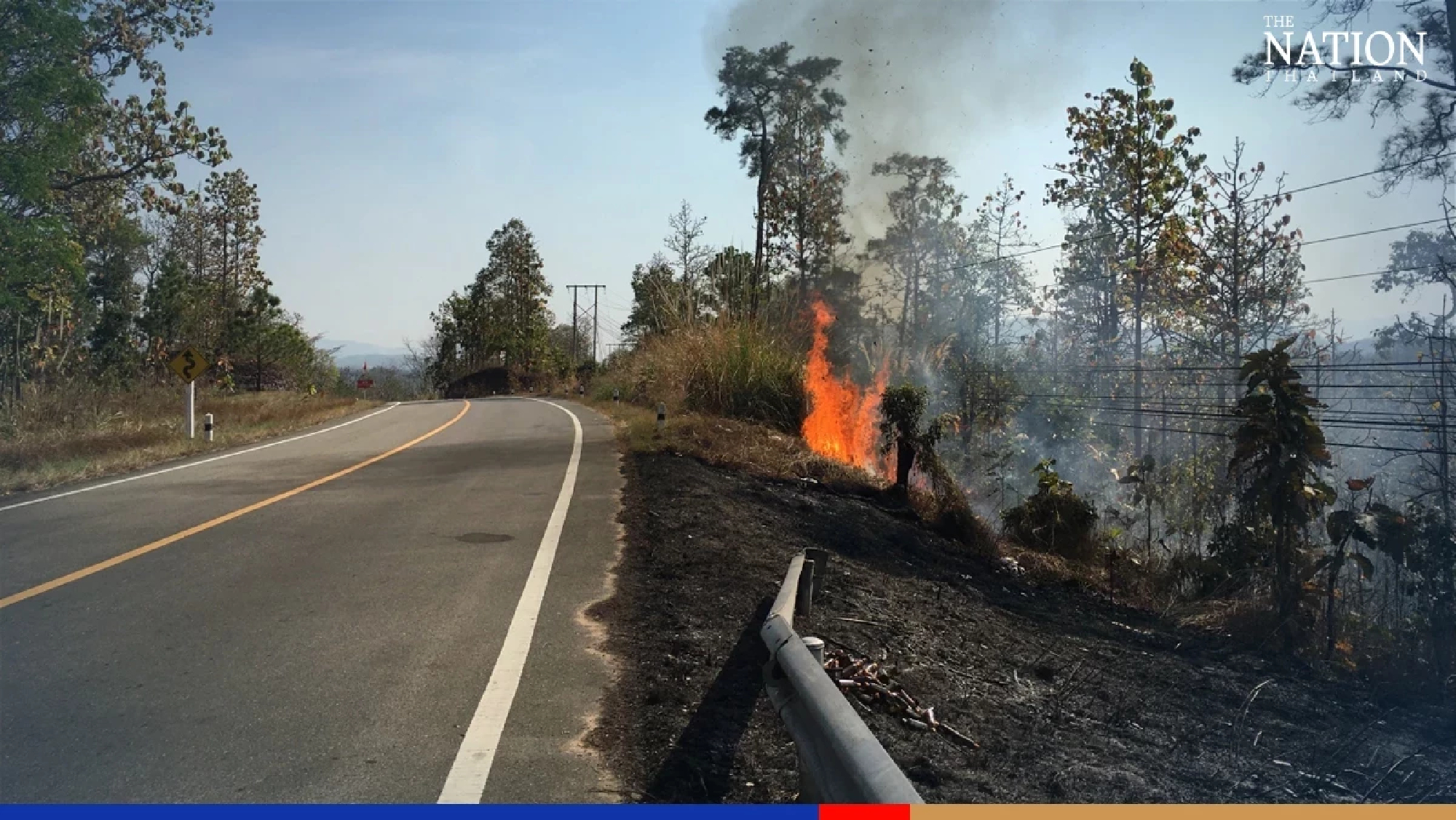
Satellite images taken on Saturday (March 12) show a total of 760 hotspots across Thailand as the January-March burning season takes its annual toll on the country.
The worst-hit province was Mae Hong Son, with 107 hotspots, said the Geo-Informatics and Space Technology Development Agency (GISTDA).
Next came Lampang and Sakon Nakhon with 53 and 40 hotspots, respectively, GISTDA said, citing images from the Suomi NPP satellite.
The satellite uses a VIIRS (Visible Infrared Imaging Radiometer Suite) sensor to detect hotspots, which are caused by either forest fires or burning of crops or weeds.
Of the total 760 hotspots, 253 were in agricultural areas, 206 in national forests, 119 in forest reservations, 94 in agricultural land reform zones, 85 in community areas and 3 were beside highways, said GISTDA.
“The expansion of hotspots in agricultural areas are due to farmers burning harvest stubble and weeds to prepare their fields for the next round of cultivation,” the space agency said.
It warned that crop burning increases the risk of forest fires and generates PM2.5 smog, adding that people in smog-affected areas should wear face masks outside of their homes.
From January 1 to March 12, the Northeast had the highest number of hotspots at 10,523, followed by the North (9,016) and Central Region (5,513).
In the past week, Myanmar has had the most hotspots among Thailand’s neighbours at 5,707, followed by Laos (2,072) and Cambodia (787).
The Thailand Meteorological Department announced on Sunday that in the next 7 days (March 13-19) Thailand will experience hot weather, thunderstorms, gusty winds and hails in some areas.
“During March 13-15, the low-pressure cell covers upper Thailand while the weak southerly and the southeasterly winds prevail over the lower North, the lower Northeast, the Central and the East. Hot weather and haze during the day will occur over the country with isolated thundershowers,” said the department. “The easterly wind prevailing over the South and the Gulf of Thailand will strengthen, while the low-pressure cell over the lower South China Sea will move through Malaysia and the lower Andaman Sea, causing more rains in the Southern region.”
The department added that during March 16-19, the weak high-pressure system from China will extend to the upper Vietnam and the South China Sea, causing the southerly and the southeasterly winds to bring humidity from the South China Sea to the lower North, the Northeast, the Central including Bangkok and its vicinity and the East. Hot weather is forecast over the upper country, while thunderstorm with gusty wind and hails are likely in upper Thailand.
The department warned that from Wednesday to Saturday, people over upper Thailand should beware of severe conditions by keeping off outdoor places, big trees and unsecured billboards. Farmers should prepare for crop damage.
The weather forecast in the next 7 days are as follows:
North: (during March 13-14, 18-19) Hot to very hot weather with haze during the day and thundershowers in 10 per cent of the areas; temperature lows of 23-26 degrees and highs of 36-40 degrees Celsius.
(During March 15-17) Thundershowers in 10-30 per cent of the areas with gusty winds and hails in some areas; temperature lows of 21-25 degrees and highs of 34-38 degrees Celsius.
Northeast: (during March 13-15, 19) Hot weather with haze during the day and thundershowers in 10 per cent of the areas; temperature lows of 23-26 degrees and highs of 34-38 degrees Celsius.
(During March 16-18) Hot weather with haze during the day and thundershowers in 20-40 per cent of the areas with gusty winds and hails in some areas; temperature lows of 22-26 degrees and highs of 32-36 degrees Celsius.
Central: (during March 13-15, 19) Hot weather with haze during the day and thundershowers in 10 per cent of the areas; temperature lows of 24-27 degrees and highs of 35-39 degrees Celsius.
(During March 16-18) Hot weather with haze during the day and thundershowers in 20-40 per cent of the areas with gusty winds; temperature lows of 23-26 degrees and highs of 34-38 degrees Celsius.
East: (during March 13-15) Hot weather with haze during the day and thundershowers in 10 per cent of the areas; temperature lows of 24-27 degrees and highs of 33-37 degrees Celsius.
(During March 16-19) Hot weather with haze during the day and thundershowers in 20-40 per cent of the areas with gusty winds; temperature lows of 23-26 degrees and highs of 31-36 degrees Celsius.
Waves less than a meter high and over 1 meter high during thundershowers.
South (east coast): Thundershowers in 40-60 per cent of the areas during March 13-15, 19 and thundershowers in 10-30 per cent of the areas during March 16-18; temperature lows of 22-26 degrees, highs of 29-35 degrees Celsius; waves a meter high and 1-2 meters high during thundershowers.
South (west coast): Thundershowers in 40-60 per cent of the areas during March 13-15, 19 and thundershowers in 10-30 per cent of the areas during March 16-18; temperature lows of 23-26 degrees, highs of 31-36 degrees Celsius; waves a meter high and 1-2 meters high during thundershowers.
Bangkok and surrounding areas: (during March 13-15) Hot weather with haze during the day and thundershowers in 10 per cent of the areas; temperature lows of 26-28 degrees and highs of 35-38 degrees Celsius.
(During March 16-19) Hot weather with haze during the day and thundershowers in 20-40 per cent of the areas with gusty winds; temperature lows of 25-27 degrees and highs of 34-37 degrees Celsius.
Prime Minister Gen Prayut Chan-o-cha will fly on the first commercial flight from Bangkok’s Don Mueang Airport to Betong Airport in Yala province today (Monday) to inaugurate the airport’s commercial operations, Government House announced on Sunday.
Prayut and Cabinet members will depart from Don Mueang on Nok Air’s DD6260 flight at 10am and touch down at Betong Airport in Yala’s Yarom subdistrict at around noon to preside over the opening ceremony.
The PM will also visit different areas of the airport, including the zone that hosts Yala’s OTOP showcase.
Prayut will also hand out survival bags to Yala locals who have been affected by recent floods, as well as discuss the current situation in Yala with community representatives.
At 4.45pm, the PM and Cabinet members will return to Don Mueang Airport.
Nok Air will fly from Don Mueang to Betong three times a week on Monday, Wednesday and Friday, using ATR-72 and Q-400, which have a capacity of 70-80 passengers.