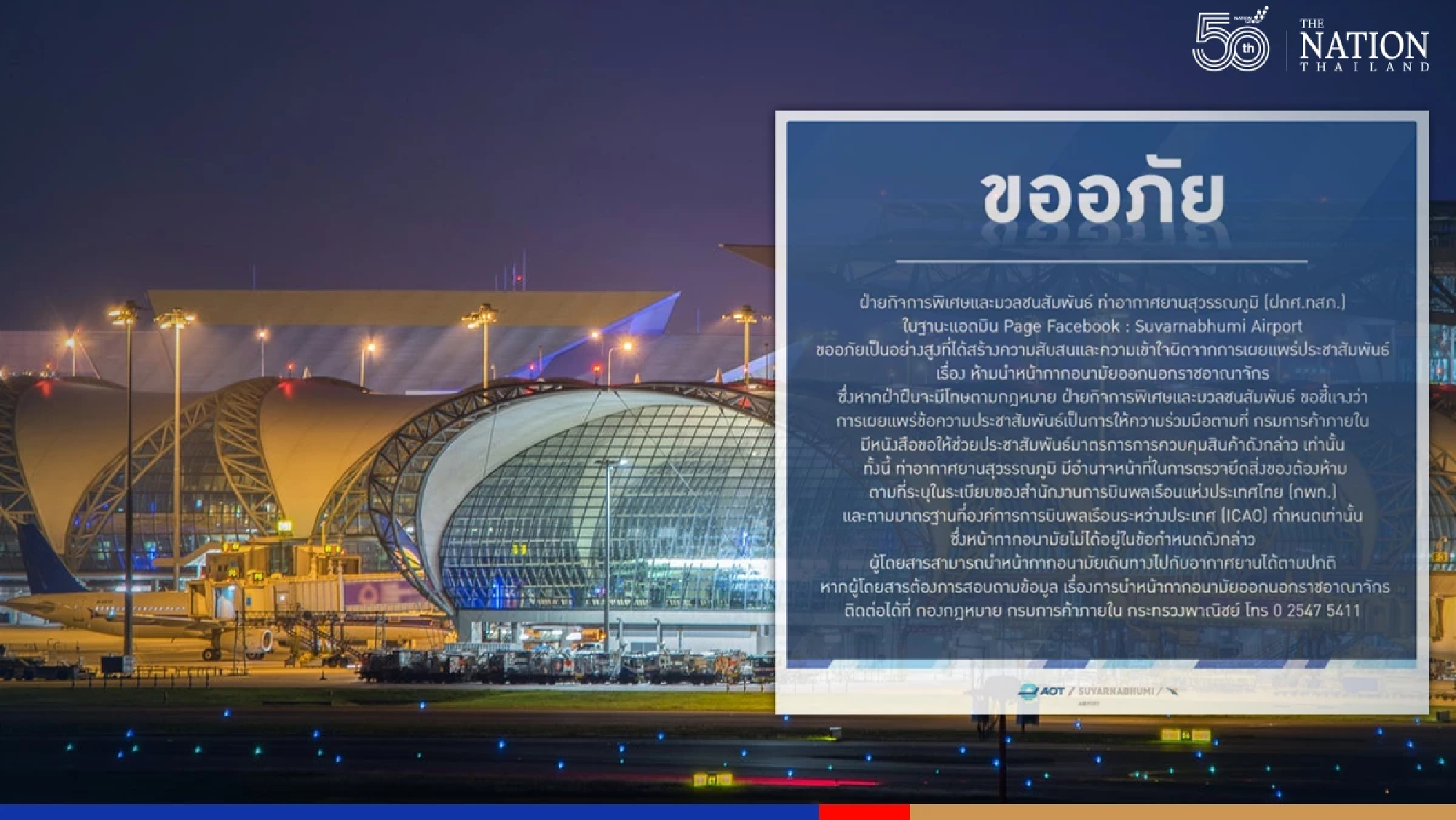
The management of Bangkok’s Suvarnabhumi Airport apologised on Saturday for the confusion an announcement caused before deleting it.
An infographic on the airport’s Facebook page forbade travellers from taking more than 30 face masks out of the country and no more than 50 with a medical certificate. The announcement said violators could face up to five years in jail and/or a fine of 100,000 baht.
The infographic was later deleted, and the airport management released a statement apologising for the misunderstanding.
It said the graphic was posted in line with a Department of Internal Trade (DIT) announcement on the movement of regulated goods. However, this announcement was made in 2020 due to a shortage of face masks in the country but was only sent to Suvarnabhumi last month.
The page now says that the airport will only check for prohibited items based on the Civil Aviation Organisation’s rules and since face masks are no longer prohibited, passengers can carry as many as they need.
Local fishermen are worried that the oil spill in Rayong will have a far-reaching impact on the marine ecosystem, especially since the area is still struggling from the aftermath of the 2013 disaster.
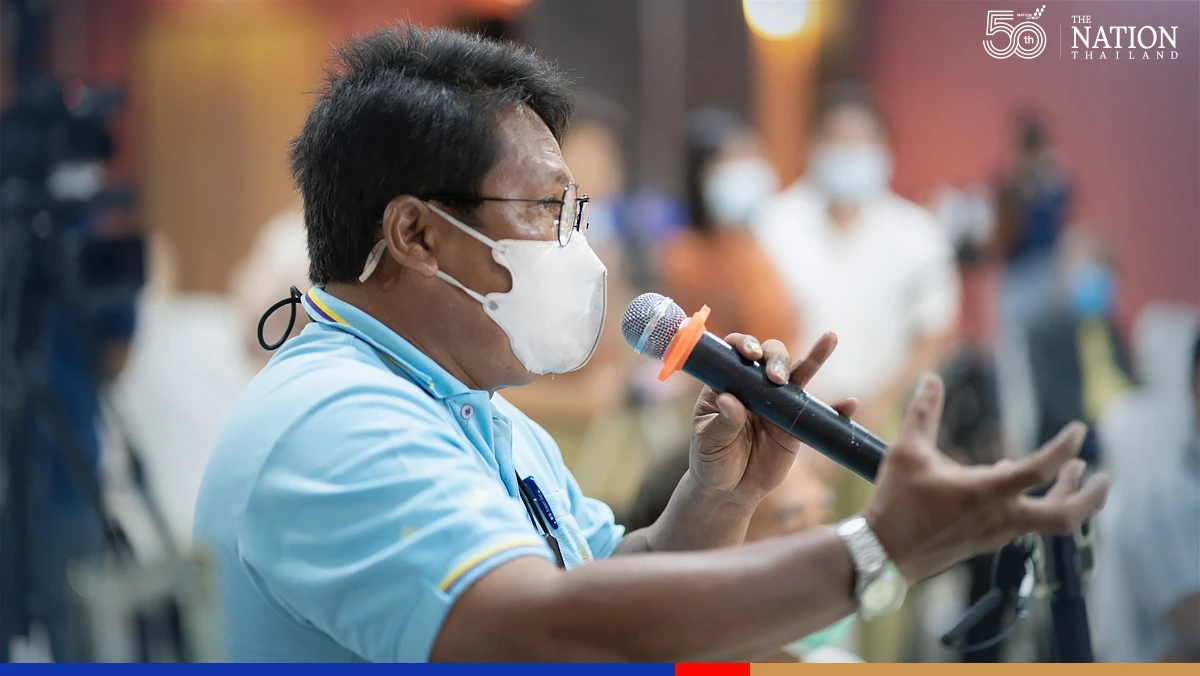
Weerasak Kongnarong, president of the Rayong fishermen association, said earlier this week that the wind and waves are pushing the slick toward Koh Samet, and it will take at least 20 years for the damage to be mitigated. He said just using dispersant chemicals is not enough.
He added that the association has also rejected the compensation offered because it’s very small and will not pay for the losses that will be incurred over the next decade or two.
Siwatt Pongpiachan, director of NIDA Centre for Research & Development of Disaster Prevention & Management, said soil samples taken from Koh Samet two years after the 2013 spill showed the presence of carcinogen polycyclic aromatic hydrocarbon. Judging by this, he said, the spill on January 25 will affect the marine ecosystem for at least another 10 years.
Phenchom Saetang, director of the Restoration Ecosystem Foundation, said apart from the damage caused in 2013, the huge amount of chemicals used to disperse the oil also caused insurmountable damage to marine life.
She said residents should get together and demand that the government set up a panel that can investigate and come up with fair compensation.
Sarinee Achavanuntakul, a co-founder of sustainable business accelerator Sal Forest, said the facts of the incident are not very clear. She said Star Petroleum Refining Company Limited (SPRC) and Chevron should release all the information and provide updates on the clean-up progress.
Tara Buakamsri, country director of Greenpeace Southeast Asia, said citizen science is lacking in Thailand as people think the issue is not related to them.
Meanwhile, Thanakrit Vorathanatchakul, a prosecutor with the Attorney General’s Office, said in a Facebook post that the government can sue for damage, while fishermen, businesses and locals should come together and demand compensation. He added that locals can also take the company to court and suggested they do it as a group to keep the court fees low.
The Gulf of Thailand was last hit by an oil spill on July 27, 2013, when a pipeline owned by PTT Global Chemical sprung a leak and spilled 50,000 litres of oil that hit the north and east of Koh Samet.
A similar accident on January 25 this year spilled more than 40,000 litres of oil off the coast of Rayong, and later hit the Mae Ram Phueng Beach.
Though the slick is being slowly dispersed, local fishermen expect the disaster to have an effect for at least another 20 years.
Since the start of this year, the price of benzene and gasohol has been raised eight times because these fuels are not regulated by the government like diesel.
Thansettakij newspaper reported that the retail price of benzene on Friday stood at 41.96 baht per litre, up 2.8 baht since January 1. Gasohol 91 and 95, meanwhile, retail at 34.28 and 34.55 baht per litre respectively, up 3.2 baht on average since New Year’s Day.
E85 is now at 26.74 baht per litre, up 2.6 baht since the start of the year.
On Tuesday, the price of benzene and gasohol 91/95 increased by 0.50 baht per litre, while E20 and E85 rose by 0.60 baht per litre.
Meanwhile, diesel B7 and B20 retail at 29.94 baht per litre, rising only 0.9 baht since the start of the year, thanks to the government’s subsidy to keep the price below 30 baht per litre.
“The Oil Fuel Fund subsidises the difference in diesel at 3.79 baht per litre to help ease the financial burden on users of diesel vehicles, which are mostly in the transport sector,” the report said.
The Covid-19 pandemic should end soon as the Omicron subvariants BA.1 and BA.2 will make it an endemic disease, respiratory specialist Dr Manoon Leechawengwongs said in a Facebook post on Friday.
An endemic disease is one that is constantly present in a greater or lesser degree among people of a certain class or living in a particular location.
“The BA.2 subvariant is now found in 57 countries, and in some areas, it has quickly become a major subvariant instead of BA.1 or the original Omicron variant,” the specialist from Vichaiyut Hospital said.
“The World Health Organisation said BA.2 is 50 per cent more transmissible than BA.1 but is not more dangerous when it comes to severe symptoms or deaths among infected patients.”
Omicron BA.2 has also been dubbed the “stealth variant” due to difficulties in telling the difference between BA.2 and Delta variants using the RT-PCR method.
Manoon added that those who have received their first two shots and a booster will have enough immunity to prevent severe symptoms and death after contracting either BA.1 or BA.2.
“The BA.2 subvariant will replace every variant of Covid-19 found earlier in almost every country,” he said. “Most people will pick up the infection faster, build herd immunity and bring an end to the pandemic. Covid-19 should become an endemic disease within this year.
“Those who have never been vaccinated or have only received their first jab should get their remaining shots. This is the only way we can end this pandemic for good,” Manoon said.
The Thai Food and Drug Administration (FDA) announced on Friday that it has approved the use of Sinovac and Sinopharm Covid-19 vaccines in children aged six and above without adjustments to the dose.
“Previously, two vaccines were approved for use in adults aged 18 and above at 0.5cc per recipient. Now children aged six and above can also get them at the same quantity,” FDA secretary-general Dr Paisan Dankhum said on Friday.
The Sinovac vaccine will be imported by the Government Pharmaceutical Organisation (GPO), while Sinopharm by Biogenetech Ltd.
“The two companies submitted documents to the FDA to expand the range of those covered by both vaccines to the ages of three to 17. The FDA committee considered the current data and agreed that the vaccines can be safely used in children as young as six,” said Paisan. “More information is needed before the committee can approve the use of two vaccines in children aged three to five, and the FDA has notified the two importers to submit necessary documents as soon as possible.”
Before Friday, the Thai FDA had only approved Pfizer’s mRNA paediatric formulation in orange-cap vials for children above the age of five.
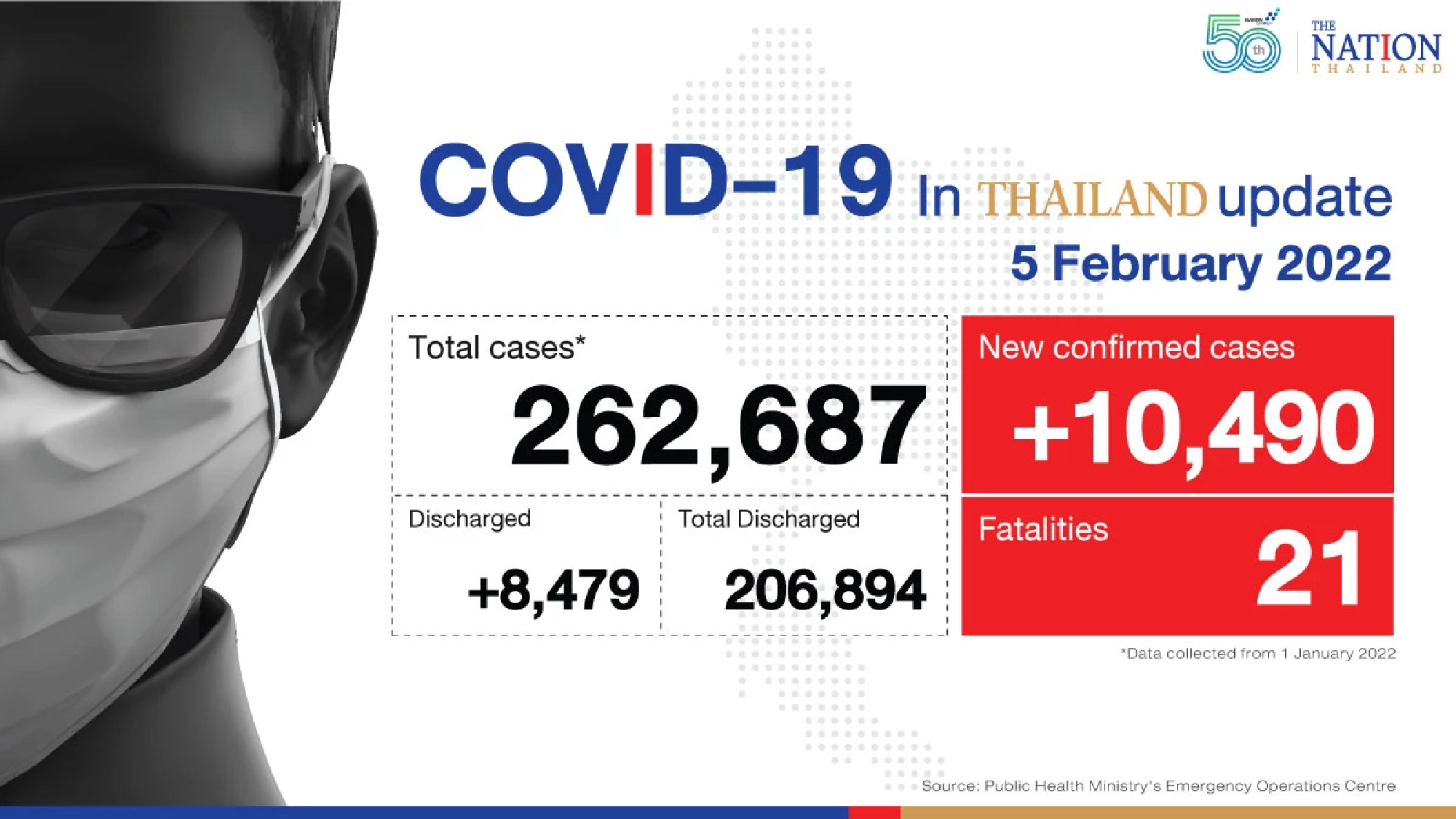
Ministry of Public Health reported on Saturday (February 5) morning that in the past 24 hours there are 10,490 new patients who tested positive for Covid-19, 217 of whom have arrived in Thailand from abroad.
Death toll increased by 21, while 8,479 patients were cured and allowed to leave hospitals.
Cumulative cases in the country since January 1, 2022 are at 262,687.
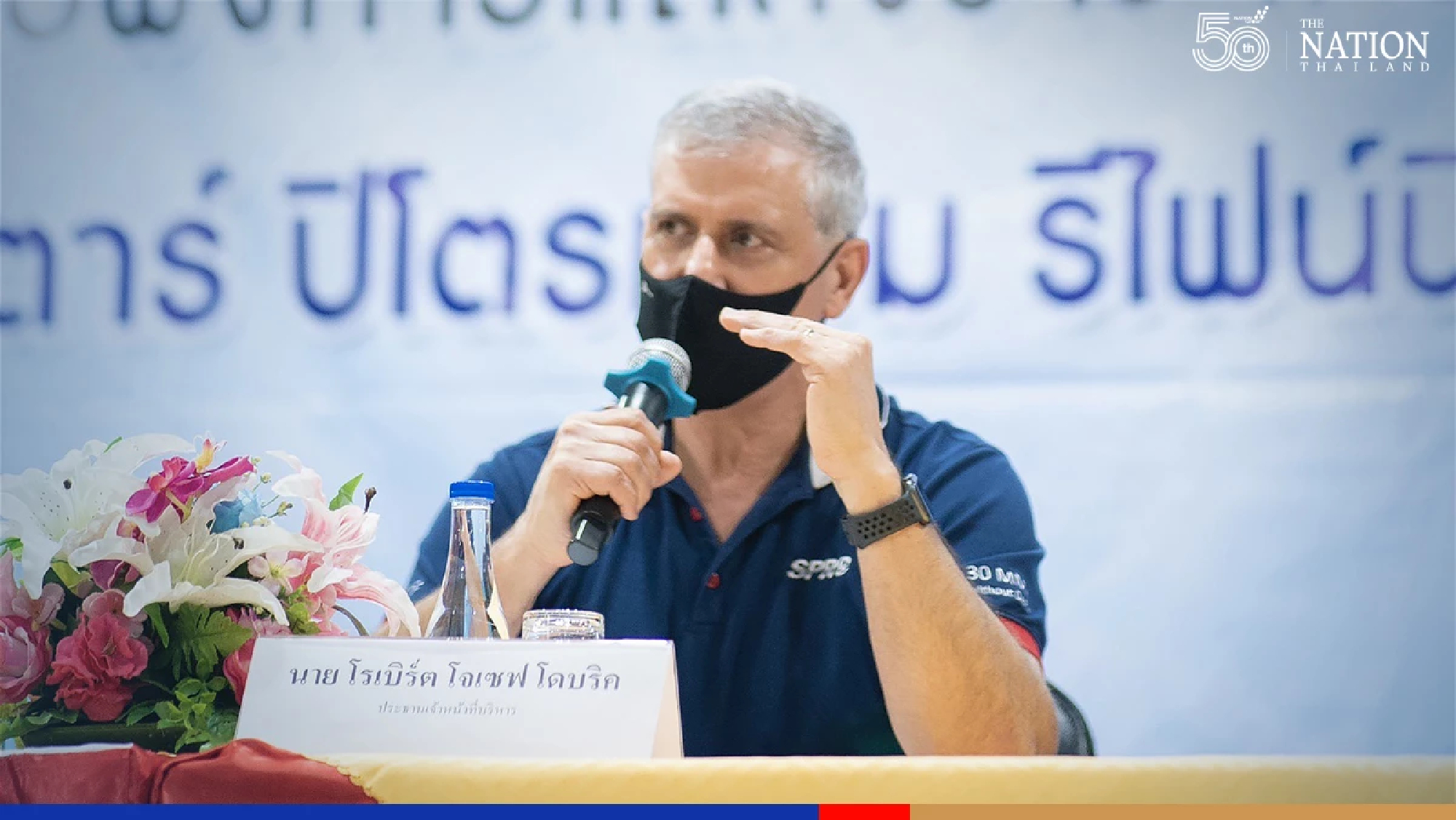
The refining company responsible for the crude oil leak in the Gulf of Thailand off the coast of Rayong last week issued an apology on Friday.
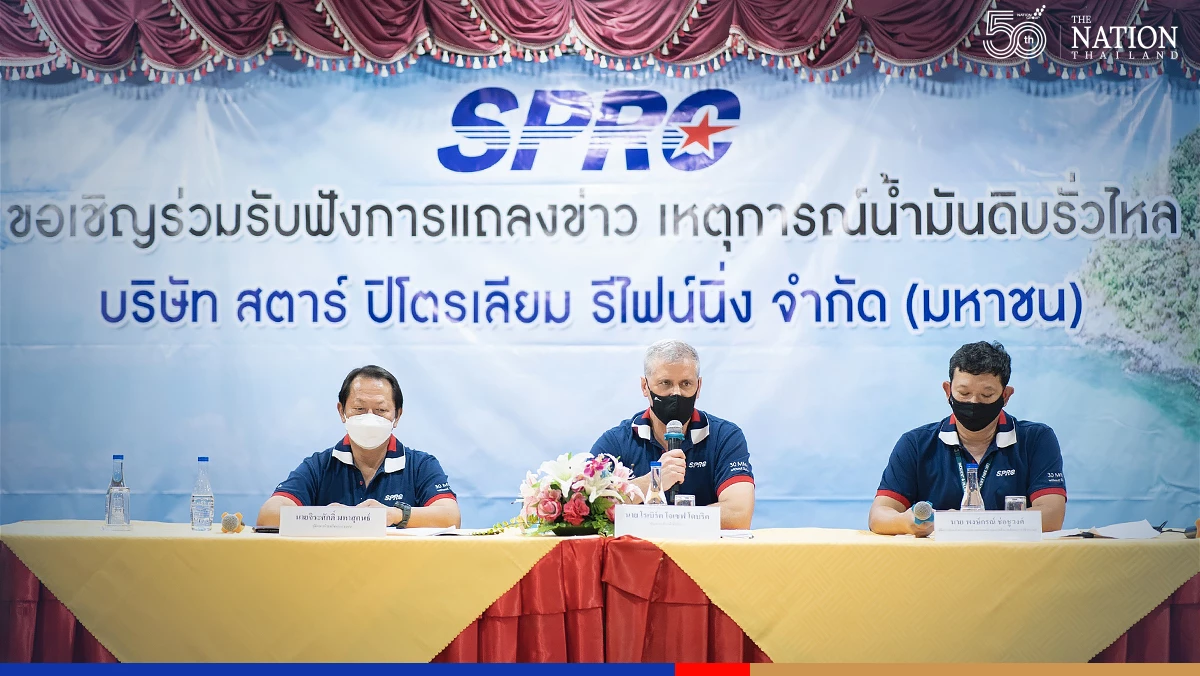
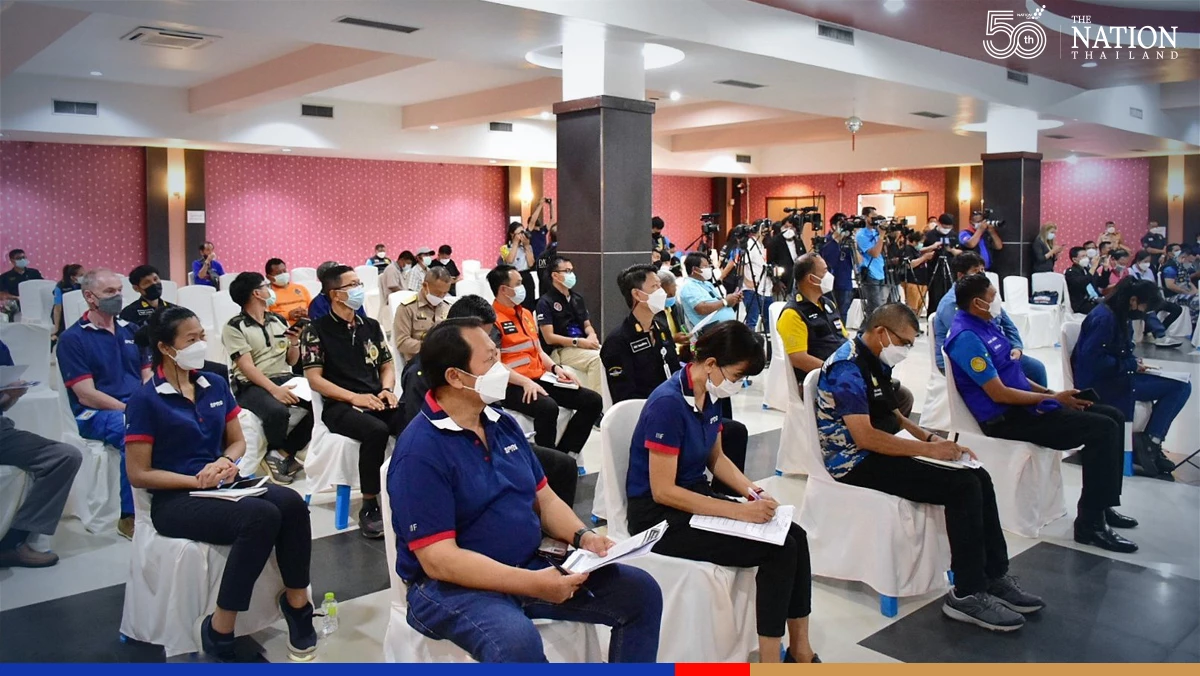
At a press conference held on Friday evening in Rayong, Star Petroleum Refining Pcl said it took full responsibility for its operations and was deeply saddened and disappointed by the impact of the spill.
The company vowed to conduct a thorough investigation into the incident to get to the root cause of the failure and said it would look to leverage external experts and cooperate with all related governments in the investigation process.
The statement, which did not address the issue of compensation to affected residents or other groups of people, said that all relevant organizations had confirmed that the oil slick in the Mae Ram Phueng area was no longer visible as of January 30.
Meanwhile, the Marine Department issued a joint statement reporting progress in oil stain disposal work which it is conducting jointly with the Royal Thai Navy and many civilian government agencies in charge of pollution control and mitigation of chemical hazards.
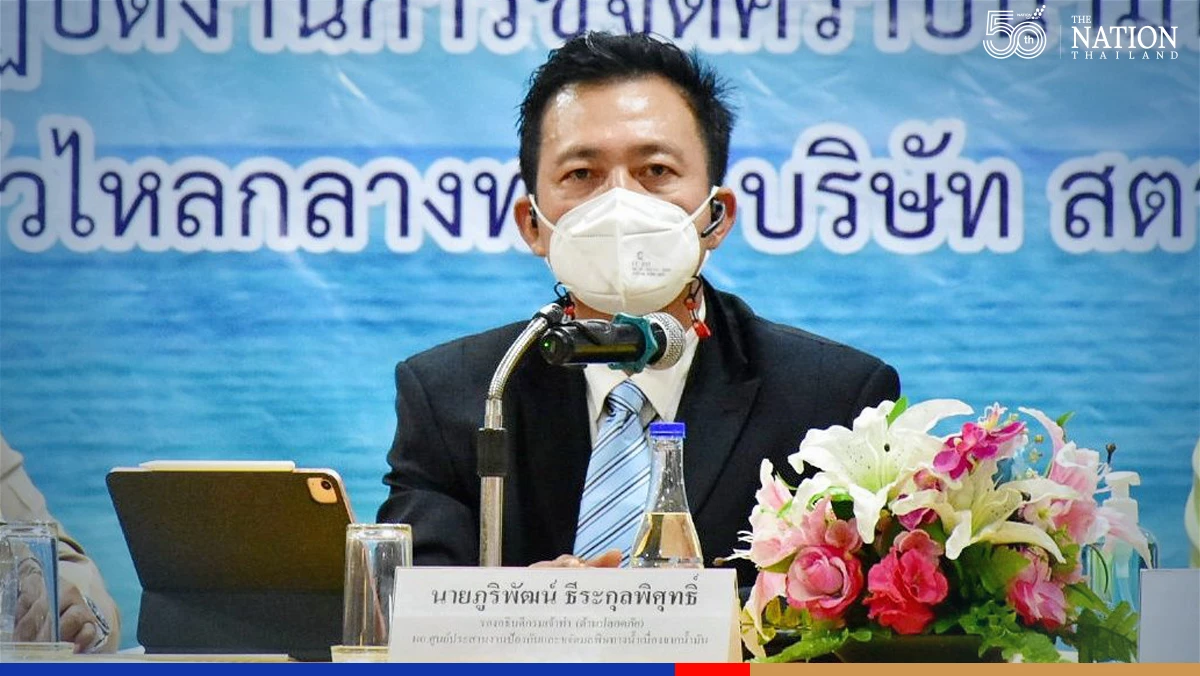
Deputy director-general Phoorithat Theerakulphisut said that the Marine Department will push for amendments to four departmental regulations to ensure better preventive measures for greater environmental safety while enforcing stricter measures against future violators.
A centre to accept complaints from the local public has been set up in addition to many other complaint-receiving channels, including the department’s 1199 hotline centre, the Interior Ministry’s central service at 1567, and the local one at 038-694-007, while the company’s centre can be reached at 081-570-1987.
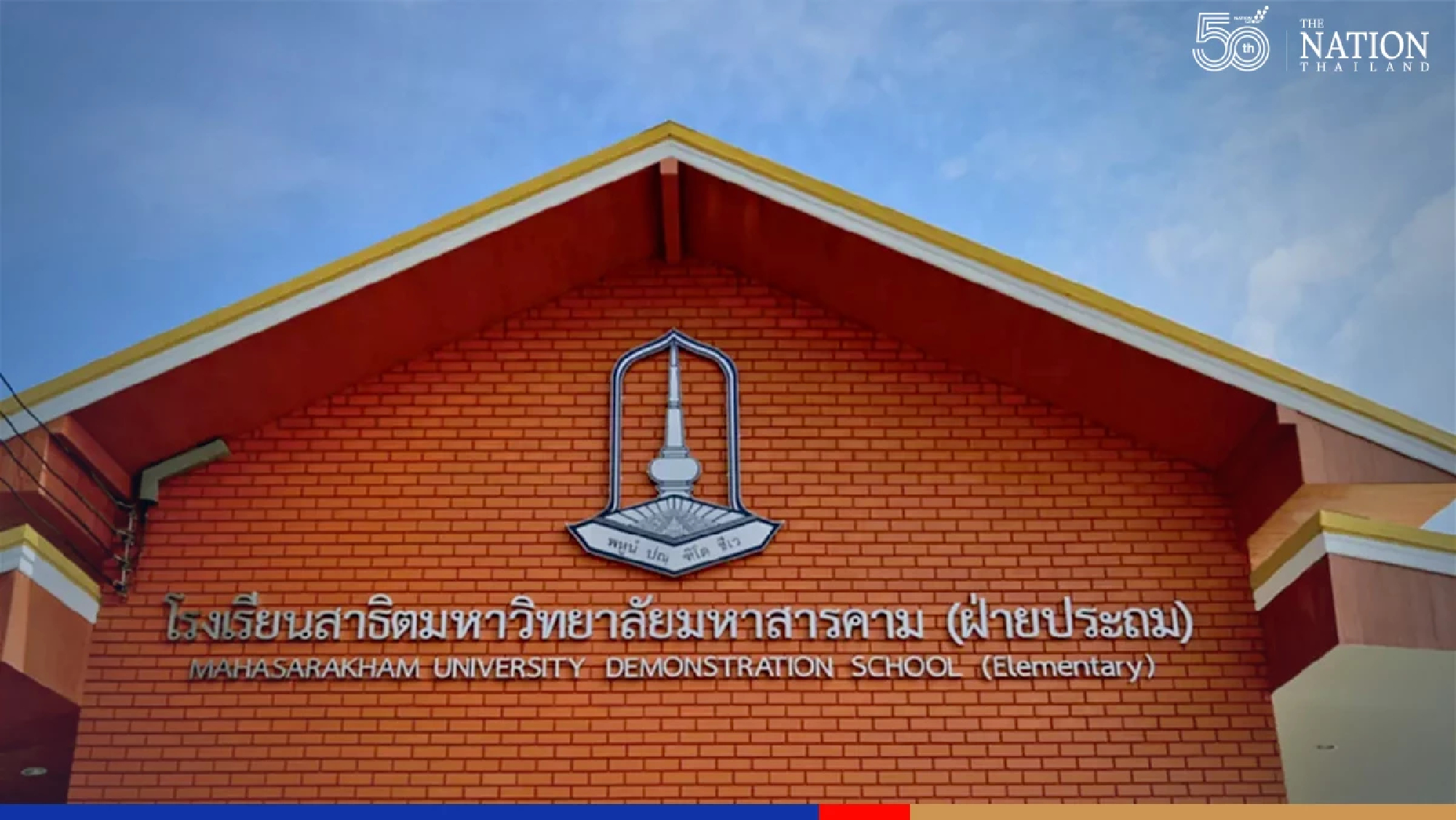
A government demonstration school has given in to scathing criticism and scrapped a policy of docking scores of kindergarten students found crying during the admission process.
The proposed policy had come in for heavy criticism online and drawn complaints from parents.
The rule was revoked on Friday afternoon by the leadership at Mahasarakham University Demonstration School’s Elementary Department. University rector Assoc Prof Prayuk Srivilai, Ph.D., apologized for the rule while admitting it “may have made parents feel uneasy”.
Under the proposed rule, toddlers seeking admission in all three kindergarten levels would have been deducted three scores out of an unspecified total if they were found crying during interviews or during an admission procedure scheduled for February 5-6.
However, other rules remain in effect, as are additional measures regarding Covid prevention.
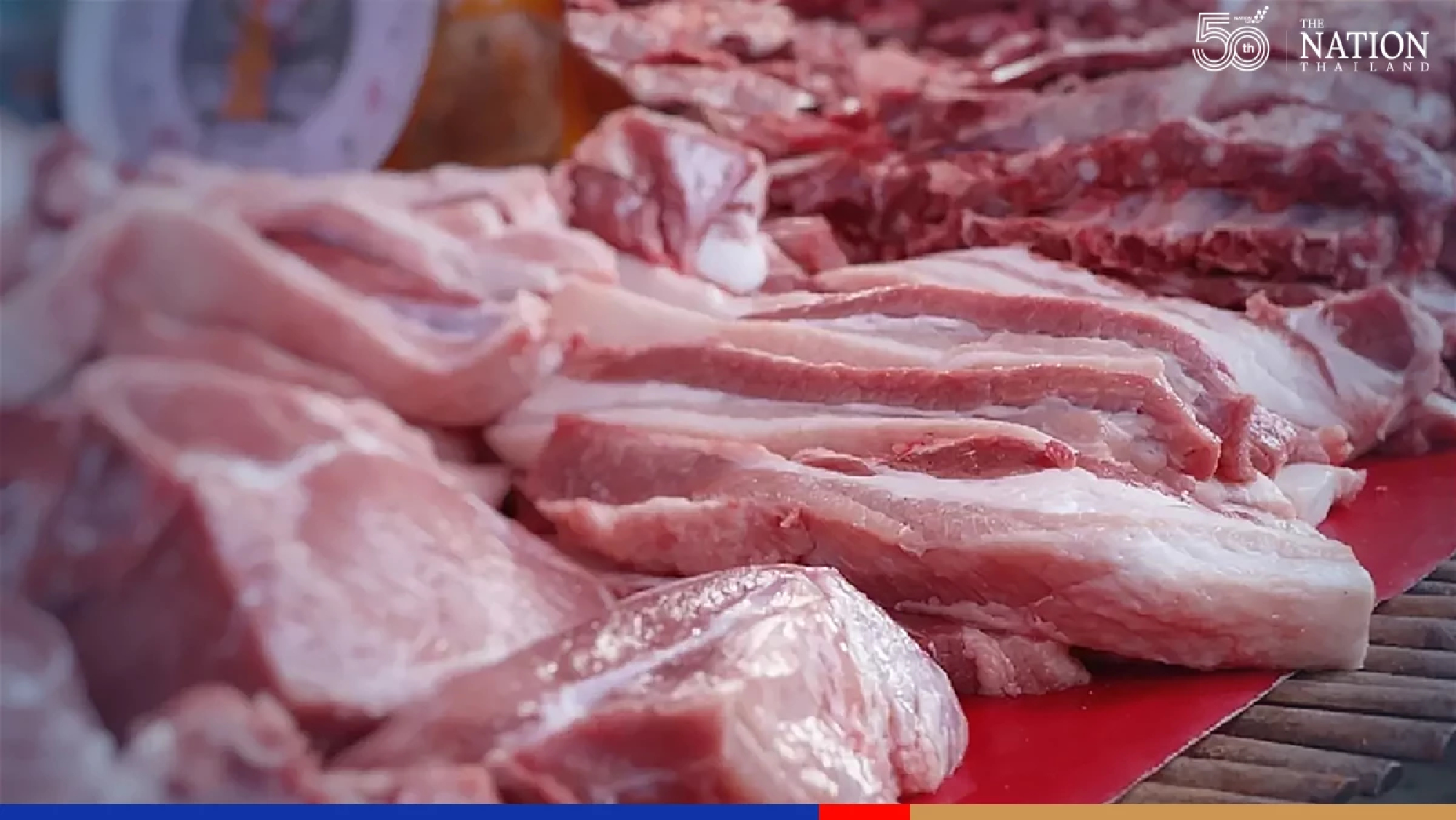
Nearly a million kilograms of allegedly illegally stored pork have been discovered at a warehouse in Nakhon Pathom province, the Department of Livestock Development said on Friday.
Of the total 1,047,600 kilograms found in the warehouse, the unnamed company could produce documents to show only 81,389kg had been legally transported and stored at this refrigerated storage, the department’s director-general, Sorrawis Thaneeto, said.
The company failed to produce certificates proving the legality of the stored pork, or any documents proving legal transport of the meat to this storage. He said the illegally stored pork would be confiscated. The alleged violator faces a heavy fine along with a possible three-year prison term.
Sorrawis said the wholesale price of pork had now gone down to an average rate of Bt100 per kilogram, while the retail price at malls had fallen to Bt166, and retail price at fresh markets was Bt198-Bt208.
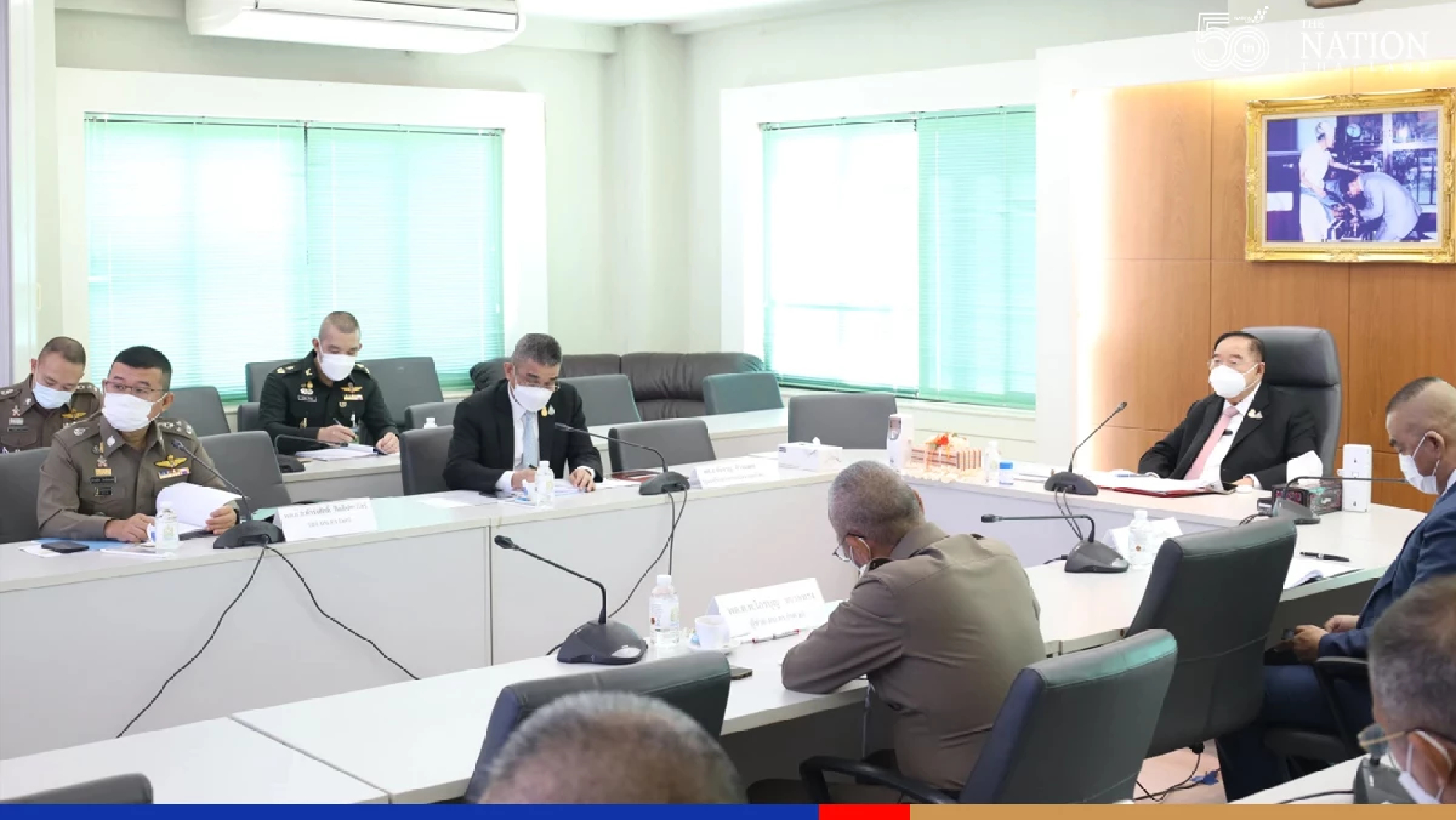
Deputy Prime Minister Prawit Wongsuwan has ordered tight health and security measures for the Asia Pacific Economic Cooperation (Apec) forum in Pattaya from Tuesday.
Thailand will host its first meeting as 2022 Apec chair from February 8-27, inviting the region to plot the road to economic recovery from Covid-19.
Apec members constitute about 60 per cent of global GDP and will hold meetings in Thailand between February and May.
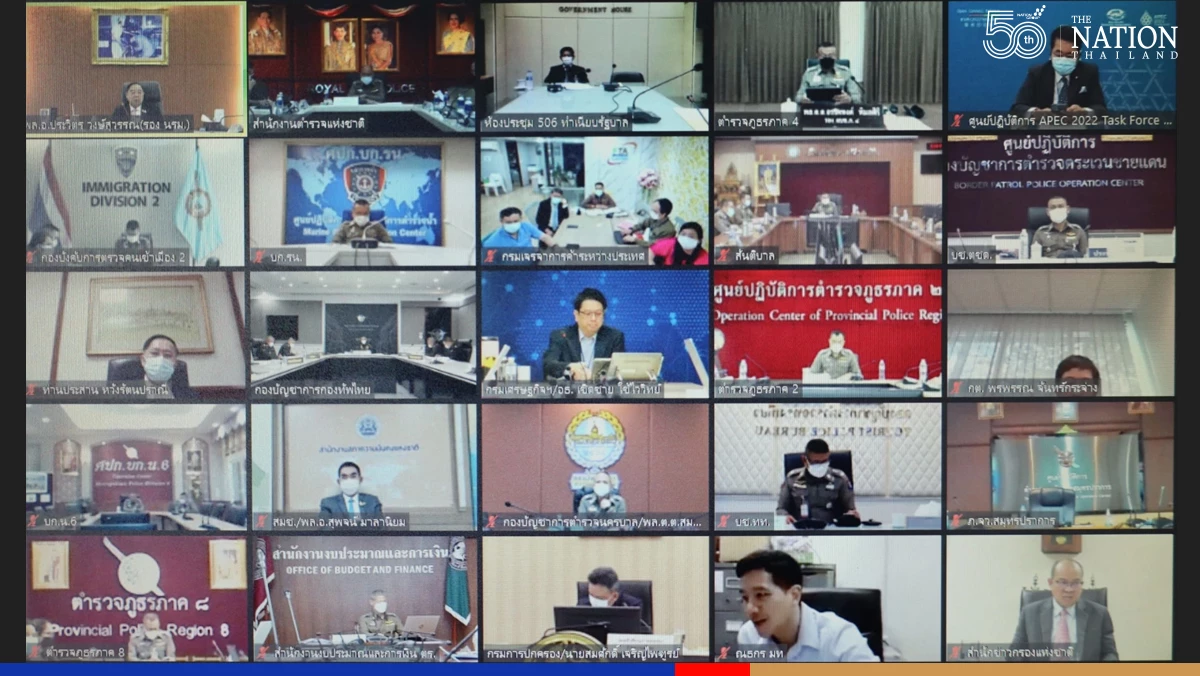
Defence Ministry spokesman General Kongcheep Tantravanich said Prawit held a video conference at the Five Provinces Bordering Forest Preservation Foundation in Bangkok on Friday to organise preparations for Apec forums.
He tasked the Army with counterterrorism security, the Public Health Ministry, Navy and Air Force with medical transportation, and the police with security and traffic plans.
Prawit emphasised that the forums were an opportunity for Thailand to build confidence with Apec members, which is crucial for the country’s recovery after the Covid-19 crisis.
Thailand took over the rotating chair of Apec from New Zealand on November 12, declaring the theme for Apec 2022 as “Open. Connect. Balance.”