Armed Forces on Covid-19 alert after soldier who visited Thong Lor restaurant tests positive #SootinClaimon.Com

#SootinClaimon.Com : ขอบคุณแหล่งข้อมูล : หนังสือพิมพ์ The Nation.

https://www.nationthailand.com/news/30404752

Armed Forces on Covid-19 alert after soldier who visited Thong Lor restaurant tests positive

NationalApr 10. 2021

By THE NATION

The Royal Thai Navy has ordered any personnel who had attended a training exercise with Army officers at the Ban Chanthakhlem training centre in Chanthaburi province from April 7 to get tested for Covid-19 and remain in self-quarantine to monitor their symptoms, a source said on Saturday.

The order was issued after a female Army lieutenant, who had gone to a restaurant in the Thong Lor area, tested positive for Covid-19.

“She attended the joint training with the Navy on April 8 and 9, whereas Army officers from her group had attended the training since April 7,” said the source.

“The training was also attended by Admiral Chatchai Sriworakhan, commander-in-chief of the Royal Thai Navy, among other high-ranking Navy officers.”

According to the source, the timeline of the infected lieutenant was as follows:

April 2: She went to a restaurant in the Thong Lor area with her civilian friends who had earlier visited entertainment venues in the area.

April 3-4: She stayed at home all day.

April 5: She went to work at Royal Thai Armed Forces Headquarters in Bangkok from 8am to 4pm.

April 6: She stayed at home all day.

April 7: She went to work at the Royal Thai Armed Forces Headquarters from 8am to 3pm, before traveling to Chanthaburi province where she stayed at Pimdara Hotel.

April 8: She went to Ban Chanthakhlem training centre at 11.30am and learned that her friend, whom she had met on April 2, had contracted Covid-19. She went to Prapokklao Hospital in Chanthaburi to get tested at 4pm before going to a restaurant in the province for dinner and went back to the hotel at 11pm.

April 9: She went to Ban Chanthakhlem training centre at 9.30am and left the centre at 2pm. At 3.40pm the hospital notified her that she had tested positive for Covid-19, prompting her to get admitted to Phramongkutklao Hospital in Bangkok at 6pm.

The source added that colleagues of the lieutenant also had participated in the ceremony to celebrate the 112th anniversary of the Army’s Command and General Staff College in Bangkok’s Dusit district on April 7, which was attended by several senior Army officers, including Military Commander-in-Chief General Chalermpol Srisawat and Army secretary-general General Nath Intharacharoen.

Maj-General Theeraphong Patthamasingh na Ayutthaya, deputy spokesman of the Royal Thai Armed Forces Headquarters, said on Saturday that the Army was investigating the timeline of all related personnel and had told four officers who had close contact with the lieutenant to get tested and remain in quarantine.

“General Chalermpol is already aware of the situation and has ordered all related units to submit the timeline of all personnel to the Centre for Covid-19 Situation Administration.

“There is no cover-up of information by the Armed Forces as rumoured on social media,” he insisted.

Governor visits field hospital in Bangkok to survey preparedness #SootinClaimon.Com

#SootinClaimon.Com : ขอบคุณแหล่งข้อมูล : หนังสือพิมพ์ The Nation.

https://www.nationthailand.com/news/30404751

Governor visits field hospital in Bangkok to survey preparedness

NationalApr 10. 2021

By THE NATION

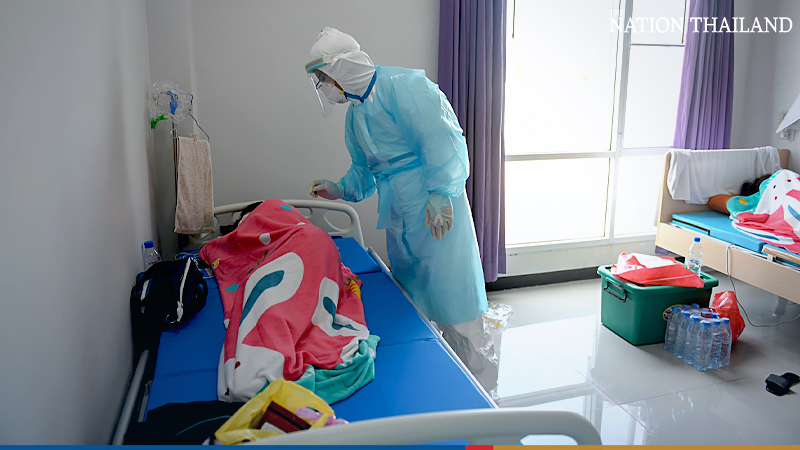
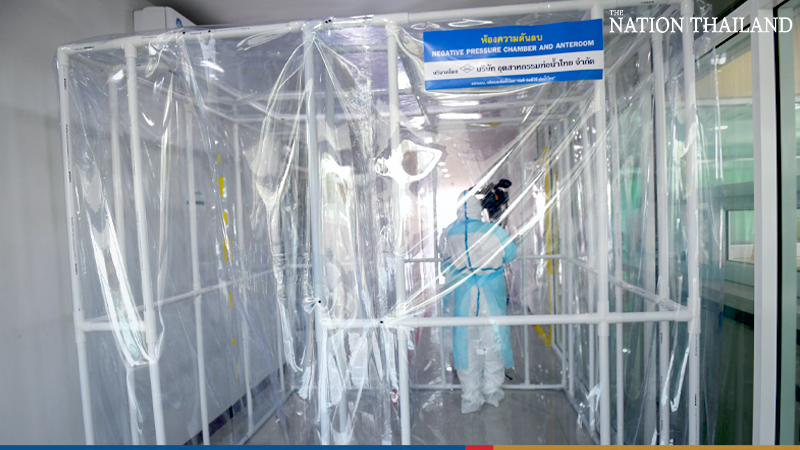
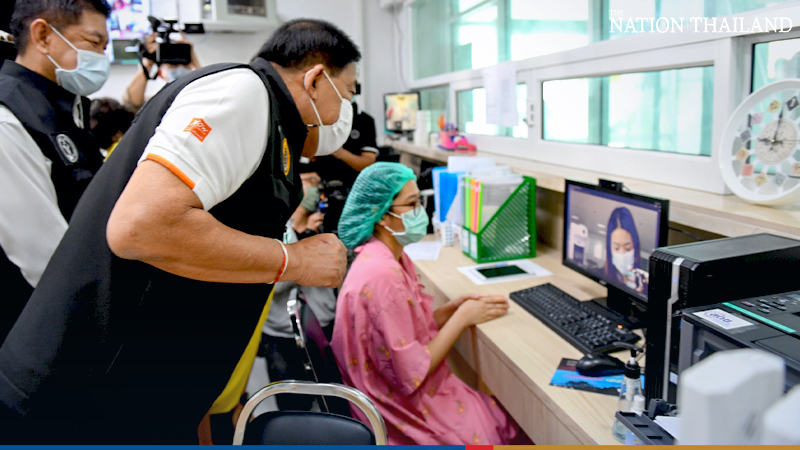
Bangkok Governor Aswin Kwanmuang on Saturday visited a field hospital, set up in Ratchaphipaht Hospital premises in the capital’s Wattana district.

According to the Bangkok Metropolitan Administration, this field hospital has been in operation since July 2020, with 200 beds. Currently, 28 patients are undergoing treatment at the facility.

Over 5,000 beds have been arranged throughout Bangkok, the governor added.

The field hospital was opened to deal with patients who had mild symptoms. Those with severe symptoms are moved to other hospitals.

Nearly half a million Thais have got first Covid-19 shot #SootinClaimon.Com

#SootinClaimon.Com : ขอบคุณแหล่งข้อมูล : หนังสือพิมพ์ The Nation.

https://www.nationthailand.com/news/30404750

Nearly half a million Thais have got first Covid-19 shot

NationalApr 10. 2021

By THE NATION

More than half a million doses of the Covid-19 vaccine have been given to Thai people across the country, a government official said on Saturday.

Government deputy spokesperson Traisuree Taisaranakul said that 1,038,256 doses of vaccine had been distributed to hospitals and medical places in the country. Of these, 952,205 doses were of AstraZeneca and the rest 86,060 Sinovac.

From February 28 to April 9, a total of 537,380 doses were administered in 77 provinces.

Of the 537,380, 470,301 people have received the first dose, while 67,079 people have got both doses. Most of the inoculated people were medical personnel.

Provinces with the most inoculations were: Bangkok (113,367), Samut Sakhon (113,111), Phuket (76,704), Surat Thani (26,735), Tak (24,030), Samut Prakan (23,646), Nonthaburi (21,621), Chonburi (14,711), Pathum Thani (14,184) and Rayong (9,288).

Public Health Minister Anutin Charnvirakul posted on his Facebook @AnutinC that 1 million doses of Sinovac vaccine had arrived in Thailand on Saturday morning, and the ministry would distribute them to the people as soon as possible.

1 million doses of Sinovac vaccine arrive #SootinClaimon.Com

#SootinClaimon.Com : ขอบคุณแหล่งข้อมูล : หนังสือพิมพ์ The Nation.

https://www.nationthailand.com/news/30404747

1 million doses of Sinovac vaccine arrive

NationalApr 10. 2021

By THE NATION

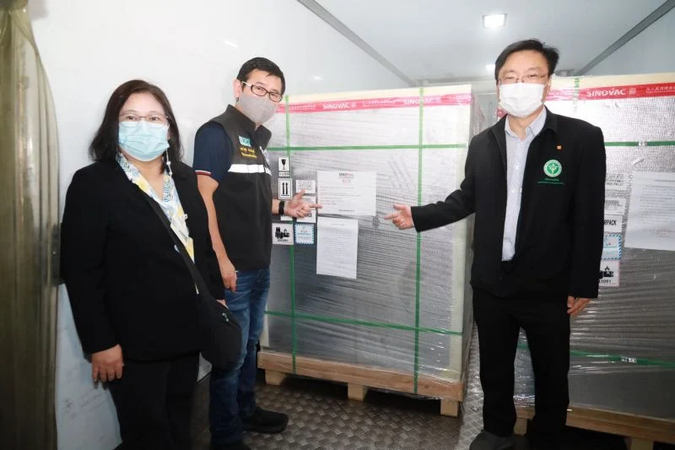
The Government Pharmaceutical Organization (GPO) on Saturday morning received 1 million doses of Sinovac Covid-19 vaccine from China.

The consignment arrived at Suvarnabhumi Airport via Air China flight CA603 departing from Beijing.

“This vaccine is the third lot from a total of 2 million doses that the GPO has purchased from Sinovac Life Sciences Co Ltd from the People’s Republic of China,” said Dr Withoon Danwiboon, GPO director.

“The first lot of 200,000 doses had arrived on February 24, and the second lot of 800,000 doses on March 22.

“All vaccines have arrived in passive cold cartons, which can keep them viable for up to 96 hours,” he added.

“After they pass the inspection, the vaccines will be transported to a vaccine warehouse of DKSH (Thailand) Ltd, which will store them at a temperature of 2-8 degrees Celsius. Then, the Department of Medical Sciences will test their quality before distributing to hospitals and vaccination units.”

Sinovac vaccine is meant for people aged 18-59 years at two doses each, at an interval of two to four weeks.

“At the end of April another lot of 500,000 doses of Sinovac vaccine will arrive. They are a part of the additional vaccines that the GPO has ordered to complement the Ministry of Public Health’s plan to inoculate target groups who are at high risk of contracting Covid-19,” he added.

As of April 2, more than 200 million doses of Sinovac vaccine have been injected globally including in China, Singapore, Brazil, Turkey, Indonesia, Cambodia, Philippines, Brunei and Thailand.

Huge increase in new Covid-19 cases, one more death #SootinClaimon.Com

#SootinClaimon.Com : ขอบคุณแหล่งข้อมูล : หนังสือพิมพ์ The Nation.

https://www.nationthailand.com/news/30404746

Huge increase in new Covid-19 cases, one more death

NationalApr 10. 2021

By THE NATION

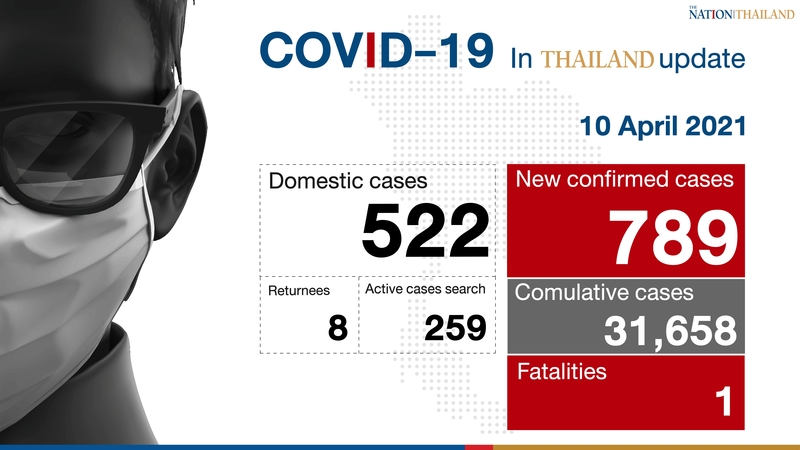
The Centre for Covid-19 Situation Administration (CCSA) on Saturday reported 789 new cases and one death.

Of the new infections, 522 had been contracted locally, 259 were found via proactive testing and eight overseas arrivals tested positive in quarantine.

The returnees included both Thais and foreigners. 3 were from Russia, while others were each one from the US, UK, Oman, Canada and India.

A 68-year-old man in Nakhon Pathom province who was infected with Covid-19 died on April 4. Doctors concluded on Friday that he died from Covid-19 and complications.
Meanwhile, 33 patients have recovered and been discharged.

As of Saturday, the number of confirmed cases in Thailand had risen to 31,658. Of these, 28,463 had been contracted locally, including 17,097 who were found via proactive testing, while 3,195 were returnees.

So far, 28,161 have recovered and been discharged, 2,645 patients are being treated, and 96 have died.

According to Worldometer, as of 10am on Saturday, the number of confirmed cases globally had risen to 135.29 million (up by 785,896), 108.86 million of whom have recovered, 23.3 million are active cases (102,033 in severe condition) and 2.92 million have died (up by 13,268).

Thailand ranks 113th on the global list of most cases, which is topped by the US with 31.8 million, followed by Brazil 13.37 million, India 13.2 million, France 4.98 million and Russia 4.62 million.

New Covid-19 wave dents TAT’s Songkran tourism targets #SootinClaimon.Com

#SootinClaimon.Com : ขอบคุณแหล่งข้อมูล : หนังสือพิมพ์ The Nation.

https://www.nationthailand.com/news/30404740

New Covid-19 wave dents TAT’s Songkran tourism targets

NationalApr 10. 2021

By THE NATION

The new Covid-19 wave has dampened the travel plans of people across the country during Songkran, dealing a setback to the Tourism Authority of Thailand (TAT)’s targets.

TAT Governor Yuthasak Supasorn said that the effect of the new Covid-19 outbreak in the short term was being estimated by his organisation.

The TAT has forecast the following scenarios during Songkran:

▪︎ People decide to return to their hometowns, despite Covid-19, as they had not gone home last year due to the nationwide lockdown.

▪︎ People decide to travel to safer cities or areas; they take their personal cars, instead of public transportation.

▪︎ People decide to stay at home during the festival time, as they are worried about getting infected by Covid-19.

Yuthasak estimated that total travellers during Songkran will not reach his organisation’s target.

Separately, the Tourism Council of Thailand (TCT) told the press that 10 to 20 per cent of people had already cancelled their room bookings during the festival holidays.

Information on preventive measures of each province was being collected, TCT president Chumnan Srisawat said.

TAT expected hotel occupancy during the Songkran holidays at 31 per cent, with 3.20 million travellers. Spending to circulate in the tourism sector was targeted at Bt12 billion.

Latest Covid-19 wave in Thailand ‘likely caused by Cambodia strain’ #SootinClaimon.Com

#SootinClaimon.Com : ขอบคุณแหล่งข้อมูล : หนังสือพิมพ์ The Nation.

https://www.nationthailand.com/news/30404739

Latest Covid-19 wave in Thailand ‘likely caused by Cambodia strain’

NationalApr 10. 2021Dr Yong PoovorawanDr Yong Poovorawan

By THE NATION

Chulalongkorn University virology specialist Dr Yong Poovorawan said on Saturday that the strain of Covid-19 recently found in Thailand among visitors to entertainment venues in Bangkok has the spike pattern that matches perfectly with the Cambodia strain.

“The latest strain found in Thailand does not match 100 per cent with the British or other strains, but displays a 100 per cent match with the Cambodia strain,” he said in his Facebook post.

Photo: Facebook @yong.poovorawan

Photo: Facebook @yong.poovorawan

“The Cambodia strain had been found spreading in Cambodia about six weeks before it was detected in Thailand.

“From this data, it is conclusive that the latest wave at entertainment venues is related to the Cambodia strain of the virus,” added Yong.

Yong had said on Friday that it was unlikely that the strain had been brought in by people coming via official channels because everybody is tested and quarantined for 14 days, but it could be from migrant workers or Thais sneaking across the border who may have been carriers of this strain, which is 1.7 times more infectious.

Need to accelerate the end of statelessness in Thailand, says study #SootinClaimon.Com

#SootinClaimon.Com : ขอบคุณแหล่งข้อมูล : หนังสือพิมพ์ The Nation.

https://www.nationthailand.com/news/30404738

Need to accelerate the end of statelessness in Thailand, says study

NationalApr 10. 2021Students at the stateless classroom in Chiang Mai's Mae Ai district take notes about the laws related to civil registration and legal status. (UNICEF Thailand 2009 - Kanoknan)Students at the stateless classroom in Chiang Mai’s Mae Ai district take notes about the laws related to civil registration and legal status. (UNICEF Thailand 2009 – Kanoknan)

By THE NATION

While significant progress has been made in addressing statelessness in Thailand, hundreds of thousands of people, including over 200,000 children, are still living without Thai or any nationality, including those without any identity documentation, a study by Legal Research and Development Centre at the Faculty of Law in Chiang Mai University said.

These people are deprived of their right to access basic services and face a higher risk of trafficking, abuse, exploitation and discrimination, the study conducted with the support of the European Union and United Nations International Children’s Emergency Fund (Unicef), said.

The study, “Invisible Life: 48 years of the situation of stateless children in Thailand (1972-2020)”, released on Saturday, provides an overview and analysis of the obstacles to obtaining legal status and nationality for stateless children in Thailand over the past decades.

The study also provides policy recommendations as well as manuals and guidelines for frontline officials to help accelerate the legal process and ensure the right to legal status, including a nationality for every child.

Supported by the EU, Unicef also launched a campaign “Lives Untold: Invisible No More”, portraying real-life situations and hardships that stateless children in Thailand are facing in everyday life. The campaign aims to raise awareness of the situation of stateless children, build widespread acceptance that every child has the right to a nationality and calls on members of the public to lend their voice in support of stateless children’s fair chance to access quality education, healthcare and protection services just like any other children.

“The rights of the child, including the right to nationality, are human rights. Every child should enjoy the same rights and live free from discrimination and intimidation of any kind. The Treaty forming the constitutional basis of the European Union – the Lisbon Treaty – which came into force in 2009, includes an explicit commitment of the EU to promote the protection of the rights of the child in Europe and across the world,” said Pirkka Tapiola, EU ambassador to Thailand.

“In partnership with Unicef, the government of Thailand, civil society organisations and other stakeholders, we are committed to support universal access to birth registration for all children. Moreover, the EU stands ready to support the capacity building of front-line officials to respond to statelessness and nationality-related challenges in the context of Covid-19.”

“Statelessness is a vicious cycle, passed on from one generation to the next,” said Kyungsun Kim, Unicef Representative to Thailand. “A life without a legal identity constrains every aspect of a child’s life. From the start, they are exceptionally vulnerable to poverty and face limited opportunities to quality education, healthcare and protection. When they reach adolescence, they are at greater risk of violence, abuse, exploitation and much more likely to enter dangerous and low-paid jobs. They will lack civil and political rights too, including voting – a human right. They will also lack travel documentation, such as a passport. Facing such tremendous challenges in life, it is extremely difficult for a stateless child to live a quality life, reach their full potential and follow their dreams.”

Thailand has one of the largest stateless populations in the world. According to data from the Ministry of Interior in 2019, Thailand is home to more than 539,000 stateless persons, of whom around 206,000, or 40 per cent, are children.

While Thailand has made great progress in legislation and policy for addressing statelessness, the challenge remains largely in translating policy into practice especially at the local level, the study noted. This includes inadequate human and financial resources, complex and overburdened procedures and negative attitudes among officials toward stateless families.

A lack of awareness among parents on how to register their child at birth or apply for legal status or a nationality, a fear of interacting with authorities and frequent movement among stateless families also contributed to the problem, the study noted.

“To end this vicious cycle, it will take strong political will, commitment and adequate human and financial resources, as well as a change in public perceptions of the stateless community,” Kim added.

“Unicef is ready to support the Royal Thai government, civil society, international organisations and neighbouring countries in accelerating efforts to ensure that every child is registered at birth and obtains a legal status including a nationality, all of which are basic rights stated in the Convention on the Rights of the Child.”

To help reduce and ultimately end statelessness in Thailand, the study provides key recommendations including:

▪︎ Develop a legal procedure along with clear directives and guidelines, stating the duties of the local authorities at every step of the birth registration process to ensure that every child born in Thailand is registered at birth and every child who missed out on birth registration has its personal information recorded in the civil registration system.

▪︎ Review certain legal criteria that are not practical to real-life situations of stateless children, such as making the academic accreditation criteria less stringent for a certain group of stateless children in applying for a legal status, including Thai nationality.

▪︎ Ensure that officials at the operational level recognise the right to a nationality for every child and have the right knowledge and skills to ensure a straightforward legal process that is fair, comprehensive and non-discriminatory.

▪︎ Develop legal criteria to ensure that children and their families who are waiting to verify their status have the right to stay in Thailand and can access basic human rights and protection.

Watch academic seminar: https://www.facebook.com/watch/?v=489686982184505

Download the report: “Invisible Life: 48 years of the situation of stateless children in Thailand”

https://www.unicef.org/thailand/reports/invisible-lives

Navy sets up 320-bed field hospital in Chonburi as Covid-19 cases surge #SootinClaimon.Com

#SootinClaimon.Com : ขอบคุณแหล่งข้อมูล : หนังสือพิมพ์ The Nation.

https://www.nationthailand.com/news/30404737

Navy sets up 320-bed field hospital in Chonburi as Covid-19 cases surge

NationalApr 10. 2021(Photo: Facebook @RoyalThaiNavyFanpage)(Photo: Facebook @RoyalThaiNavyFanpage)

By THE NATION

The Royal Thai Navy has established a 320-bed field hospital at Air and Coastal Defence Command (Kled Kaew) in the Sattahip district of Chonburi province, it announced via a Facebook post on Saturday.

(Photo: Facebook @RoyalThaiNavyFanpage)

(Photo: Facebook @RoyalThaiNavyFanpage)

“The field hospital aims to help treat Covid-19 infected persons whose numbers have been increasing after the third wave of the outbreak was reported at entertainment venues in Bangkok and other provinces,” said the post.

(Photo: Facebook @RoyalThaiNavyFanpage)

(Photo: Facebook @RoyalThaiNavyFanpage)

So far this year, the Navy has set up three field hospitals in Chonburi and Chanthaburi provinces, following the policy of Admiral Chatchai Sriworakhan, commander-in-chief of the Royal Thai Navy.

Japanese ambassador ‘contracted Covid-19 from Thong Lor hotspot club’ #SootinClaimon.Com

#SootinClaimon.Com : ขอบคุณแหล่งข้อมูล : หนังสือพิมพ์ The Nation.

https://www.nationthailand.com/news/30404731

Japanese ambassador ‘contracted Covid-19 from Thong Lor hotspot club’

NationalApr 10. 2021

By THE NATION

Japan’s ambassador to Thailand, Kazuya Nashida, on Friday informed the Centre of Economic Situation Administration (CESA) that he had been diagnosed with Covid-19 on April 3 and had since been undergoing treatment in a hospital.

“Since the case was found, the Embassy of Japan promptly contacted all those who were suspected to have had close contacts with me after 25th March, and it has been taking the necessary measures to prevent the infection of Covid-19 and to minimise the spread of the infection in accordance with the instructions by the Ministry of Public Health in Thailand,” he wrote in a letter to CESA chairman Pailin Chuchottaworn.

A news source revealed that Nashida had earlier admitted to a Japanese reporter that on March 25, he had been to Krystal Club Thong Lor, one of the 24 entertainment venues in Bangkok that are suspected of being hotspots for nearly 400 cluster cases of Covid-19.

The source added that after-hours meetings with people at informal venues is one of the duties of ambassadors and is therefore unavoidable.

“This, coupled with the fact that the ambassador is a senior, has rendered him susceptible to the infection despite him being in the club for only a short time,” said the source.