The Japan International Cooperation Agency (JICA) and Thailand’s National Health Security Office (NHSO) have expanded their collaboration on universal health coverage (UHC) and global health.
This cooperation is a part of the Partnership Project for Global Health and Universal Health Coverage Phase 2, aiming to strengthen health financing, the health workforce and the global health of Thailand and Japan as well as other countries.Under this partnership, the JICA, NHSO and the Public Health Ministry will work together to achieve three goals:1. Share experience on UHC between Thailand and Japan to improve health coverage in both countries;2. Organise capacity development for UHC implementation and global health in other countries;3. Share and promote practices and lessons learned in UHC implementation and global health, mainly from Japan and Thailand, at the national, regional and international levels.
From today until 2023, the partnership will deliver a series of capacity-building workshops, lectures, policy recommendations and study visits to Japan to learn about that country’s successful UHC system. In addition, Thailand and Japan will share lessons learned and good practices of UHC implementation with other countries, for instance, Asian and African countries which are striving for UHC, at international conferences such as the Prince Mahidol Award Conference. This is also a good opportunity to form a network for further international collaboration.The presence of Thailand and Japan in the global health arena was enhanced as both countries collaborated at a high-level meeting on UHC, drafting a political declaration, and south-south technical collaboration in essential areas of health coverage.
The Partnership Project for Global Health and Universal Health Coverage was launched four years ago and had achieved fruitful outcomes. Through a wide range of activities, Thai organisations and health officials have improved capacity on many aspects of UHC implementation, for example, healthcare finance, health information system, health workforce and UHC for children and mothers.Japan achieved UHC by expanding the public insurance to farmers in 1961, and Thailand achieved UHC in 2002 by launching its Universal Coverage Scheme.Both countries have gained a remarkable health outcome and faced similar challenges, including the increase of healthcare costs and rapid aging.
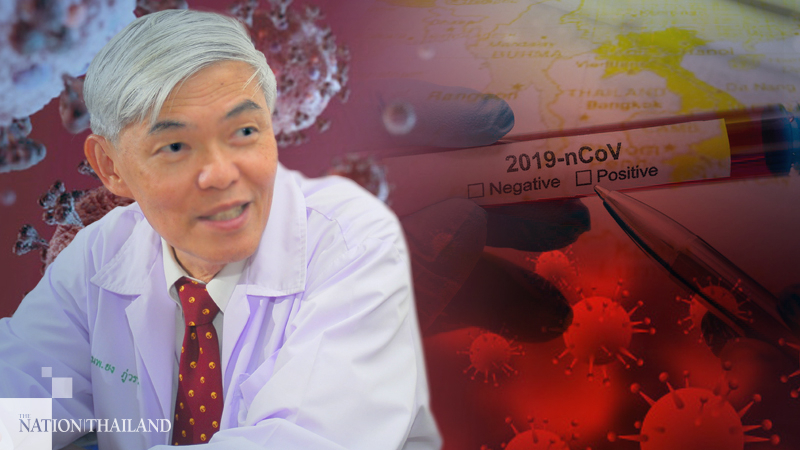
Judging by the fact that the UK strain of the Covid-19 virus has affected more than 1,500 people in Cambodia since February 20, expert virologist Dr Yong Poovorawan believes it may have been brought into Thailand by people crossing the border.
The UK strain was recently found among the recent cluster of cases that emerged in entertainment venues in Thonglor.
Dr Yong said it is unlikely that the strain had been brought in by people coming via official channels because everybody is tested and quarantined for 14 days.
He said Cambodia is still struggling with infections, and it is likely that migrant workers or Thais sneaking across the border may have been carriers of this strain, which is 1.7 times more infectious.
Chiang Mai’s Committee of Communicable Diseases decided on Wednesday that everybody travelling from the five red-zone provinces, namely Bangkok, Nonthaburi, Samut Prakan, Samut Sakhon and Nakhon Pathom, must register on the CMChana application and isolate themselves for 14 days.
After Covid-19 clusters emerged from several entertainment venues in Bangkok and its vicinity, Chiang Mai has also decided to close clubs, pubs, karaoke bars and other entertainment establishments for seven days from Friday. Venues that were open on Thursday are required to provide the committee with the names and phone numbers of all patrons.
The province has also decided to prohibit the serving of alcohol at all kinds of restaurants for seven days from Friday.
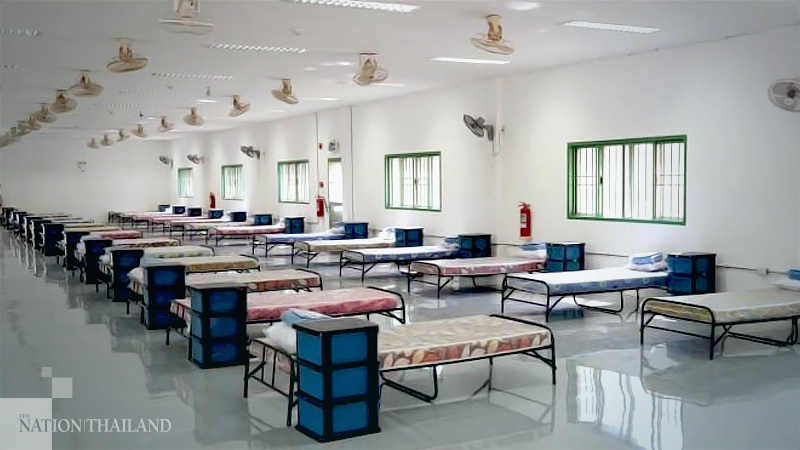
Now that Thailand faces a third wave of Covid-19 infections and many hospitals announced on Thursday that they were running out of beds, the premier instructed the Defence Ministry to set up field hospitals for more than 3,000 patients in Bangkok and its vicinity.
Defence Ministry spokesman Lt-General Kongcheep Tantrawanich said 10 military units have been provided with medical personnel to support the field hospitals.
The Army is looking into turning a military camp into a field hospital in case the situation worsens and infections expand.
The Foreign Ministry has added China’s Sinopharm jab to its list of vaccines whose recipients qualify for a reduced quarantine period of seven days in Thailand.
The ministry has also updated the application process for certificates of entry (COE) to Thailand at the website coethailand.mfa.go.th.
Thais and foreigners travelling to Thailand must apply for a COE by filling in the application form and uploading their vaccine certificate documents at the website.
The Sinopharm vaccine becomes the eighth jab accepted under the seven-day quarantine measure. All eight vaccines have been registered by Thailand or certified by the World Health Organisation.
They are:
1. Sinovac vaccine (CoronaVac)
2. AstraZeneca-Oxford University vaccine (AZD 1222)
3. AstraZeneca-Oxford University vaccine manufactured by SK Bioscience (S Korea)
4. Johnson & Johnson vaccine (Ad26.COV2.S)
5. Pfizer-BioNTech vaccine (Tozinameran)
6. Indian Serum Institute vaccine (Covishield)
7. Moderna vaccine (mRNA-1273)
8. Sinopharm vaccine (Beijing Institute of Biological Products)
Bangkok’s Ramkhamhaeng Hospital stopped offering Covid-19 tests because it does not have enough beds for patients.
The hospital’s Facebook page said the service was no longer provided for either walk in patients or for those who have made appointments.
Meanwhile, the “Mor Vain” (Doctor on Duty) Facebook page posted that Vibharam Hospital does not have beds for Covid patients, and that it along with other hospitals, was also planning to stop testing for the virus.
Plans to ease restrictions at Chatuchak Market have been postponed in response to the latest outbreak of Covid-19 in Bangkok.
As a result, Chatuchak vendors will not be allowed to sell goods on Tuesday, Wednesday and Thursday without permission, said the Bangkok Metropolitan Administration (BMA). Plans to allow vendors to stay open late until 10pm on Friday, Saturday and Sunday have also been suspended. Meanwhile, the ban on activities in the clocktower area remains in place.
“Since the number of Covid-19 cases has increased quickly, the BMA has to postpone the abovementioned measures until the situation is resolved,” said BMA deputy permanent secretary Wallaya Wattanarat.
She added that Chatuchak Market is still operating as usual.
The flower and plant market is open from Tuesday to Thursday, while the weekend market is operating from Friday to Sunday.
“To contain the spread of Covid-19, retailers and customers are required to wear face masks, maintain distance, wash hands regularly with soap or alcohol gel and use the ThaiChana app to check in,” Wallaya added.
The State Railway of Thailand (SRT) governor is the latest senior Thai official confirmed to have contracted Covid-19.
Nirut Maneephan is currently receiving medical treatment after testing positive for the virus on Thursday.
Nirut took the Covid-19 test on Wednesday after realising he was at risk of infection.
The SRT governor’s timeline is expected to be revealed soon.
Also infected by the third wave of Covid-19 sweeping across the country are Transport Minister Saksayam Chidchob and government public relations chief Lt-General Sansern Kaewkamnerd. Members of the Cabinet are currently self-isolating.
Thailand Institute of Justice (TIJ), together with Thailand Chevening Alumni Association and Rule of Law and Development Programme (RoLD 2020), organized a RoLD Virtual Forum via Facebook page entitled “Effective and Integrated Criminal Justice Responses to Violence against Women in Thailand,” where legal, public health and human rights experts and academics exchanged their views on current situation and sought solutions for gender-based violence against women in Thailand.
The forum started with an opening remark by Dr. Phiset Sa-ardyen, TIJ director,who said the justice works related to gender-based violence against women is challenging because of its link with structural obstacles related to culture and law which impede access to justice. He said TIJ’s role has been focused on pushing this issue forward through constant knowledge sharing, researches, and academic activities. He hoped that this forum would provide a clearer answer on how to solve the problem by using international approaches while taking into account Thailand’s specific context.
“Violence against women is a tough and challenging problem. TIJ has been trying to build our body of knowledge on this topic through collaboration with international experts. United Nations has always placed importance on violence against women. There are relevant standards and international benchmarks, which have been constantly updated via periodical meetings, to be used for developing a prototype strategy in solving violence against women. Solving this problem may need to take everything into account: both international approaches, especially on respect of human rights, and specific contexts, especially in social dimension. I hope that, what we would learn today will give us a better understanding on this problem,” said Dr. Phiset.
During the discussion on “Effective and Integrated Criminal Justice Responses to Violence against Women in Thailand,” Asst. Prof Dr. Pareena Sriwanich, dean of Faculty of Law, Chulalongkorn University, said the society’s perceptions of women as being physically fragile and dependent on men has led to women being at risk of sexual harassment. She pointed out flaws in traditional justice process that have heavily affected the sexually harassed women by making them feel being double harassed as it requires them to prove their disagreement to such offence.
“Once entering the justice process, Miss A, the sexually harassed victim,was required to prove herself that she didn’t agree to the harassment. She were asked to show proofs and video clips to several people. At the prosecutor level, prosecutors asked her the same questions. At the court level, same questions were asked again. Then, lawyers cross-examined her saying: ‘Didn’t you agree to it that day.’ So, how can we be certain that the mediation process beautifully stipulated in the law are understood by the practitioners?There are still many other points here. Can Miss A request that snapshots of the video clip be brought down from the internet? And who could she go to? Can it be a police station? And, if not, she may have to go to Ministry of Digital Economy and Society where she must go there herself. But, then, who will be taking care of her?” said Asst. Prof Dr. Pareena.
Ms. Bussayapa Srisompong, human rights lawyer, domestic violence researcher and founder of S-Hero, a group that has been campaigning for an end to violence against women, spoke about the myths of gender that have impeded women from seeking help in justice system and from being treated fairly.
“What hinders women’s access to justice is not only their level of legal knowledge, because they sometimes understand well the structure and know the challenges of the law. Rather, it is the voices of society and community that always impose social stigma on victims,as well as the voices of family that discourage or deter women’s courage in suing offenders. Those voices keep telling women not to sue the offenders, to be pity for them, to not destroying their future. And there are also friends who ask: ‘What did you do to him? What did you do so you were treated like that?’” said Ms. Bussayapa.
The panellists discussed victim assistance by means of survivor-centred approach – a public health-based approach that focuses on treating mental wounds of the victims of violence – which might prevent them from being double harassed by the justice process. It will also allow for options and genuine empowerment of the victims through existing stipulations in Thai laws that let the damaged persons pursue the lawsuit themselves. And, as most victims have limited budget and knowledge, building on the Centre for Protection of the Damaged Persons should provide some support to these vulnerable groups.
“Thailand is one of the countries that allow the damaged persons to pursue the lawsuit themselves. But this right has been only rarely exercised because the damaged persons have little budget to hire a lawyer and collect evidences and witnesses themselves. Using this means may increase the damaged persons’ rights and power so they can pursue the lawsuit themselves, especially in the case that all evidences are with them,” said Ms. Bussayapa.
This forum was also participated by honourable guests and experts in different fields, including Dr. Kanate Wangpaichitr, Thailand Chevening Alumni Association president; Mr. Sitthisak Wanachakit, presiding judge of the Supreme Court; Mrs. Santhanee Dissayabutr, Ayutthaya Public Prosecutor for Juvenile and Family Litigation and director and secretary-general of Nitivajra Institute; Ms. Kornwilai Theppankulngam, UN Women’s analyst for Ending Violence against Women programme and Safety and Justice programme; Dr. Panjai Woharndee, Division of Forensic Science director, Ministry of Justice’s Central Institute of Forensic Science; Mrs. Worapat Saengkaew, psychologist and head of Pathum Thani Hospital’s One Stop Crisis Centre (OSCC), Ministry of Public Health. The forum was moderated by Second Lieutenant Paramate Boonyanan, Ministry of Justice legal officer, and Ms. Chonlathit Chuenura, director of TIJ’s Office of the Bangkok Rules and Treatment of Offenders.
NationalApr 08. 2021Interior Minister Anupong Paochinda
By THE NATION
There is no need for a nationwide lockdown to tackle the latest outbreak of Covid-19, Interior Minister Anupong Paochinda said on Thursday.
He also urged people planning to travel back to their hometowns during Songkran to follow Covid-19 preventive measures and stay safe on the road.
“Prime Minister Gen Prayut Chan-o-cha has allowed governors and communicable disease committees in each province to use measures depending on the situation in their areas, which I personally think is the most suitable approach,” Anupong said.
“The outbreak situation may vary from province to province, so each governor should be able to issue measures suitable for their community while creating minimal impact to the people and the local economy.”
Announced earlier on Thursday, PM Prayut’s latest order grants provincial governors the power to issue 14-day shutdown orders for entertainment venues or restaurants where Covid-19 infection is found.
“If every citizen continues to properly protect themselves, the outbreak will soon be contained and a nationwide lockdown or strict measures that could hurt the economy will not be necessary,” added Anupong.
He also addressed the impact of the new Bangkok outbreak on the government’s plan to reopen Phuket to foreign tourists on July 1. Anupong said the Cabinet and Centre for Covid-19 Situation Administration (CCSA) would soon discuss the issue based on the current situation.
The Phuket sandbox scheme would allow foreign tourists who have proof of inoculation and test negative for Covid-19 to visit the holiday island without undergoing quarantine. Similar schemes are planned for destinations such as Pattaya, Chiang Mai, Krabi, Phang Nga and Surat Thani.




 File Photo


 Nirut Maneephan


 Interior Minister Anupong Paochinda

