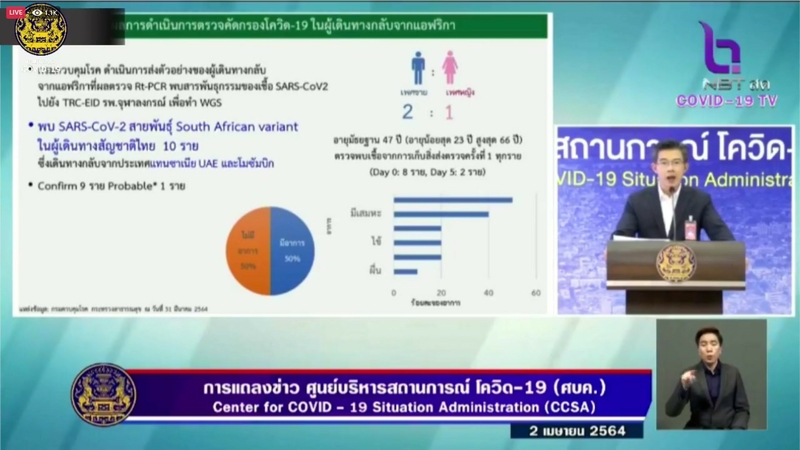
The Centre for Covid-19 Situation Administration (CCSA) said on Friday that 10 Thai returnees were found to have been infected with the South African variant of Covid-19.
CCSA spokesperson Dr Taweesin Visanuyothin said the patients had returned to Thailand from Tanzania, Mozambique and the UAE, and most were men aged between 23 and 66.
He also said that half of the patients were asymptomatic, while the other half had developed a phlegmy cough, fever and rash.
The spokesman, however, did not specify when these patients had landed on Thai soil.
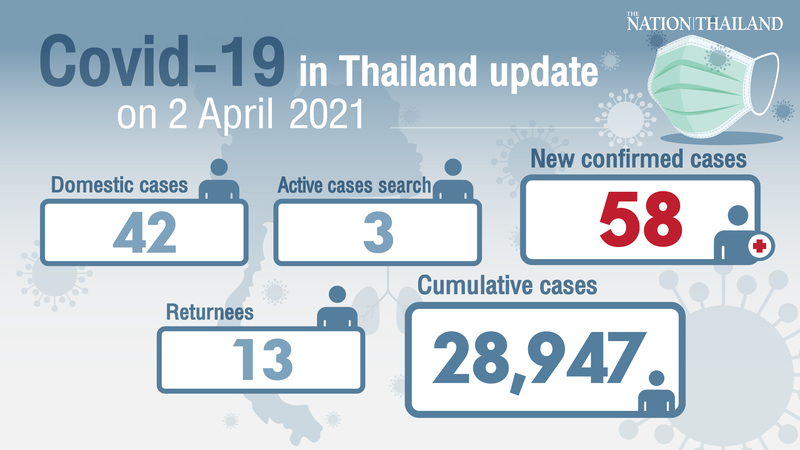
The Centre for Covid-19 Situation Administration (CCSA) reported 58 new cases on Friday, 42 of which had been contracted locally, three found via testing and 13 had been brought in from overseas.
Bangkok leads the list of local infections with 20, followed by Samut Sakhon (14), Samut Prakan (5), Nonthaburi (3), Tak (2) and Loei (1).
The 13 arrivals who tested included both Thais and foreigners from the US (7), India (2), Finland (1), United Arab Emirates (1), Belgium (1) and Madagascar (1).
Meanwhile, 58 patients have recovered and been discharged.
As of Friday, the number of confirmed cases in Thailand had risen to 28,947. Of these, 25,832 had been contracted locally, including 16,073 who were found via proactive testing, while 3,115 were returnees.
So far, 27,606 have recovered and been discharged, 1,247 patients are being treated, and 94 have died (34 in the second outbreak).
According to Worldometer, as of 11.30am on Friday, the number of confirmed cases globally had risen to 130.15 million (up by 686,498), 104.88 million of whom have recovered, 22.44 million are active cases (96,723 in severe condition) and 2.83 million have died (up by 11,522).
Thailand ranks 116th on the global list of most cases, which is topped by the US with 31.24 million, followed by Brazil 12.84 million, India 12.30 million, France 4.69 million and Russia 4.55 million.
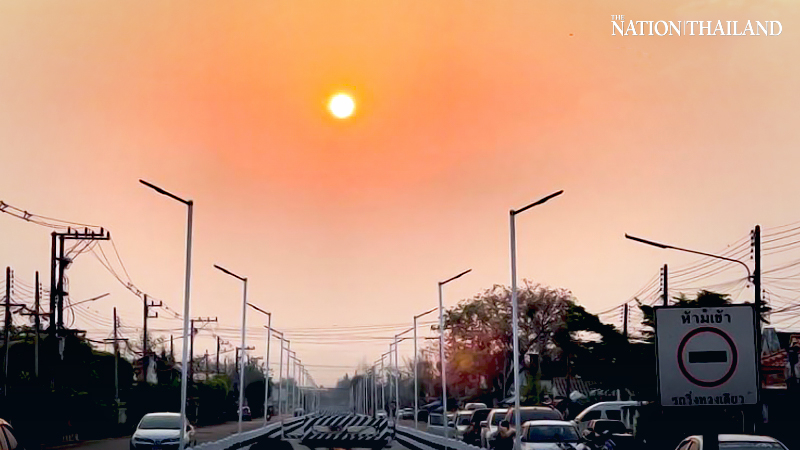
Chiang Mai once again became the world’s most polluted city on Friday due to a forest fire in Doi Suthep-Pui National Park on Thursday night.
Although government officials were able to get the forest fire under control at 2am on Friday, Chiang Mai’s air quality index (AQI) was “very unhealthy” at 284, while the province’s PM2.5 (particles less than 2.5 micrometres in diameter) reading was 184.3 micrograms per cubic metre (μg/m3), according to an IQAir report.
IQAir advised people in the province to wear a face mask outdoors, run an air purifier at home, close the windows of their house to block polluted outdoor air and avoid exercising outdoors.
Air Quality and Noise Management Bureau’s said on Friday that the country’s PM2.5 readings were in the range of 4-314 μg/m3.
Provinces where the air quality exceeded the standard were: Chiang Mai, Lampang, Nakhon Sawan, Khon Kaen, Chiang Rai, Mae Hong Son, Nan, Lamphun, Phrae, Phayao, Tak, Phitsanulok, Nakhon Phanom, Sakon Nakhon, Bueng Kan, Kamphaeng Phet, Phichit, Sukhothai and Uttaradit.
Geo-Informatics and Space Technology Development Agency said on Thursday that 1,674 hotspots were found in Thailand of which 1,311 hotspots were in the North, citing Suomi National Polar-orbiting Partnership satellite data.
A recent research has found the National Health Security Office (NHSO)’s participatory procedure inclusive and successful in empowering vulnerable groups in the Universal Coverage Scheme (UCS).
The research, conducted by King Prajadhipok’s Institute, examines the development of public hearing held under the National Health Security Act 2002, by looking at a participatory procedure run in NHSO’s cluster one that covers eight of Thailand’s northern provinces — Chiang Mai, Chiang Rai, Lamphun, Lampang, Mae Hong Song, Nan, Phayao and Phrae.
The area is home to several ethnic groups and multi-cultural populations. Local communities have experienced the challenges from socio-economic changes, resulting in rapid urbanisation and livelihood changes that leave many people vulnerable.
To hear the voices of these people, the NHSO region one (Chiang Mai) has developed an effective participatory procedure by organising provincial-level public hearings and focus-group meetings, using both traditional and online platforms.
Opinions from all platforms are gathered and analysed to make recommendations to NHSO’s headquarter office. After the hearing, NHSO staff will update a stage of policy with participants to show how their ideas are adopted at a policy level.
Moreover, NHSO practice requires all officers within its cluster office to participate in the public hearing process from the start to the end. They could be coordinators, data collectors, or presenters of recommendations.
The research finds that the hearing process emphasises vulnerable people’s voices, especially ethnic groups, the elderly, and disabled people.
Inclusive public hearings are done by tapping the resources from the networks of civil society, grassroots organisations and local communities. On the other hand, it empowers the stakeholders and creates a sense of ownership towards UCS.
For example, the past public hearing was held at Chiang Rai’s Mae Suai Hospital, a hub for ethnic maternal and child care. Local civil society groups, who work closely with the NHSO branch office staff, help organise and lead public hearings for people living in mountainous areas.
The research concludes that the participatory procedure run by NHSO region one (Chiang Mai) is successful in terms of geographic comprehensiveness and inclusion of stakeholders from all sectors.
It also allows NHSO to identify specific challenges in the area, while decentralising health policy decisions to multi-stakeholders and vulnerable groups.
“A significant push towards a real implementation of the national health security system was achieved by opening spaces for different sectors to voice their opinions in an atmosphere of learning, exchange of knowledge, and cooperation,” suggested by the research.
“This process allows knowledge building and information exchange between experts and relevant sectors, leading to the prototype national health security system and a fiscal blueprint of public health for national policy.”
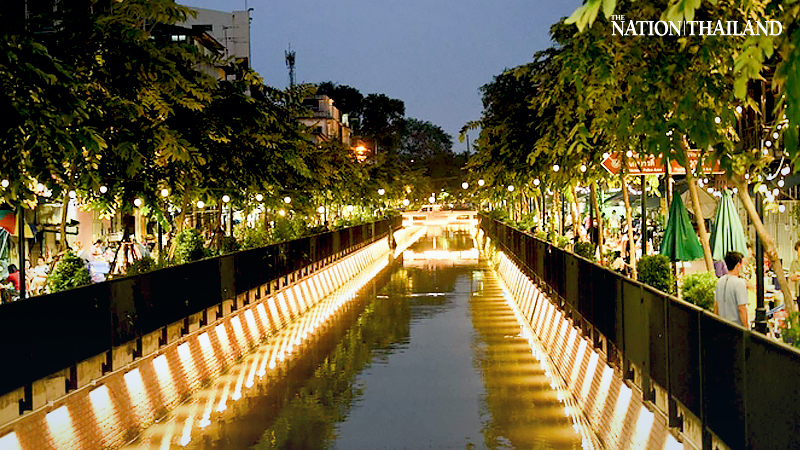
The Bangkok Metropolitan Administration (BMA) will hold a shopping fair to promote local products from 50 districts of Bangkok at Ong Ang Canal in Phra Nakhon district during Songkran from April 9-14, 4-11pm.
“More than 50 product booths will be set up in the fair, including food, beverage, herbal products, jewellery, clothes and souvenirs,” said Wanlaya Wattanarat, BMA’s deputy permanent secretary.
“On April 12, there will be a ceremony to pour water on the Buddha’s image for blessings, while on April 12-13 there will be music and cultural performances.
“Although we can’t splash water this year, merchants and tourists are encouraged to wear colourful clothes to add colour to the Songkran Festival,” she added.
The Centre for Covid-19 Situation Administration has issued a ban on all water-splashing activities during Songkran Festival to curb the outbreak for the second year running, though traditional practices like pouring water on Buddha statues and on elderly people are still allowed.
“Fair visitors should follow Covid-19 preventive measures, which include maintaining social distancing, wearing face masks, washing hands regularly and check-in and out via the Thai Chana platform,” added Wanlaya.
Recently developed to be a new tourism landmark in Bangkok, the Ong Ang Canal also features a walking street for art and cultural exhibition which opens daily, while visitors can also enjoy a kayaking trip in the 750-metre-long canal and appreciate the city landscape on Friday, Saturday and Sunday from 4pm until 10pm. Admission is free.
Tourists can reach Ong Ang Canal via MRT by getting off at Sam Yod Station or via Chao Phraya speed boat by getting off at Phra Phuttha Yodfa Bridge Pier. Public buses that pass the canal are No. 4, 5, 7, 21, 37, 40, 85 and 529.
The baht opened at 31.20 to the US dollar on Friday, strengthening from its close of 31.31 on Thursday.
The Thai currency is likely to move between 31.15 and 31.30 during the day, Krungthai Bank market strategist Poon Panichpibool said.
He explained that the baht had strengthened due to the weaker dollar and the fall in the price of gold. However, the baht could weaken if the dollar strengthened again.
Poon also predicted that several foreign currencies would be purchased in the next few months for the purpose of paying dividends, and the baht would weaken more from this financial activity.
He said that during April and May, dividend payments would total more than Bt54 billion, and the second quarter would see the baht weaken the most.
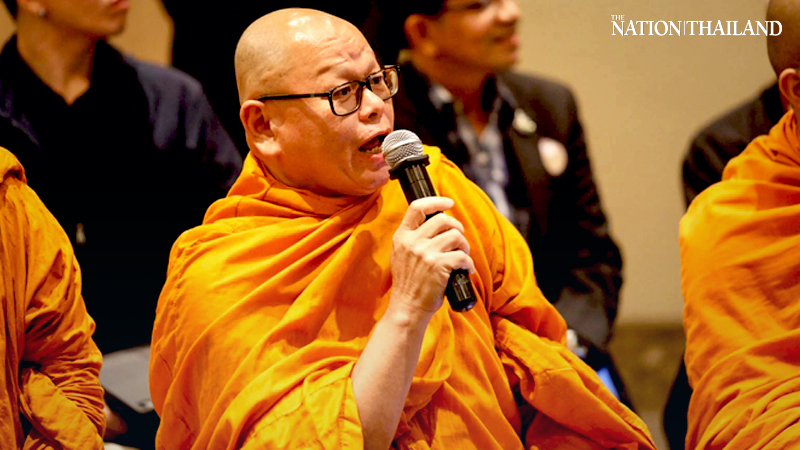
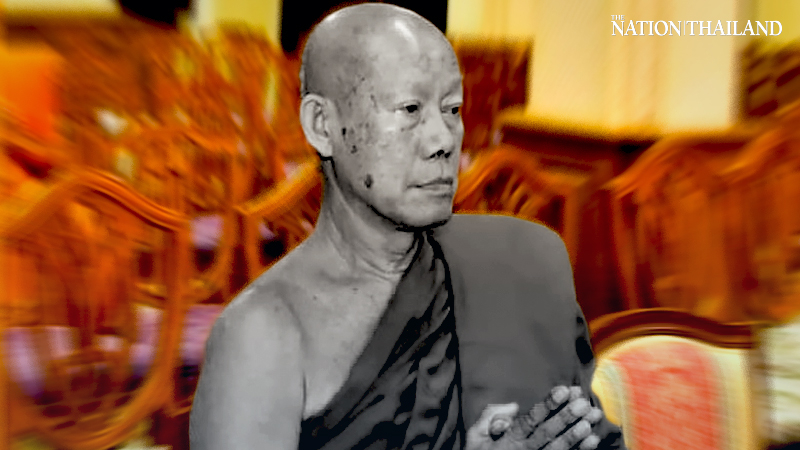
Police General Hospital is conducting an autopsy to determine the cause of death of Phra Khru Siripanyamethi, assistant abbot of Samphanthawong Temple, Bangkok, after he received the Covid-19 vaccine on March 31, Dr Opas Karnkawinpong, director-general of the Disease Control Department, said.
The monk was found dead in his residence by a disciple at 2pm after he had taken the vaccination at 10am that day. The exact cause of death is under investigation.
Dr Opas revealed that Phra Khru Siripanyamethi had diabetes and was in the sensitive patient category that received the AstraZeneca vaccine as he was 71 years old.
He said the death happening on the day of vaccination could be a coincidence. However, health officials have to wait for the Institute of Forensic Medicine, Police General Hospital, to determine the exact cause. Other monks who received the vaccine on the same day did not report any symptoms related to the vaccine, he said.
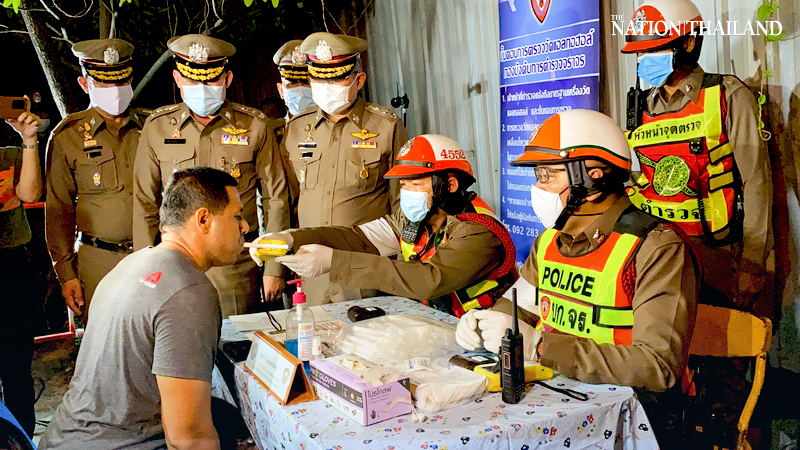
Deputy National Police chief Pol General Damrongsak Kittiprapas on Thursday night visited police checkpoints for DUI (driving under the influence) in front of a petrol station on Prasert Manukit Road in Bangkok’s Lat Phrao district to ensure the smooth and transparent conduct of officers.
April 1 is the first day that DUI checkpoints have been set up again in some provinces, after National Police chief Pol General Suwat Jangyodsuk had ordered a temporary halt to all kinds of police and security checkpoints, including alcohol testing checkpoints following several complaints against officers since October 2020.
The police have since installed CCTV cameras at the points as well as body cameras on officers to record their interaction with road users to ensure transparent operations. Checkpoints in some provinces are now ready to operate again, such as in Bangkok, Ubon Ratchathani and Nakhon Ratchasima provinces.
“Legitimate DUI checkpoints must be listed in the TPCC [Traffic Police Checkpoint Control] database, have traffic cones, and sign posts must be up 100 metres ahead of a police checkpoint with CCTV surveillance,” said Damrongsak.
“If road users suspect that any checkpoints do not comply with this rule, please notify Traffic Police Bureau at 1197 or 1599 immediately.
“Tonight we have noticed some flaws in the operation of new DUI checkpoints, such as traffic cones obstructing traffic lanes on small roads,” he added.
On the night of inspection, three motorists reportedly failed the alcohol breathalyser test, as they had more than 50 milligrams of alcohol in their body. They were brought to Khok Khram Police Station to be charged.
The Royal Irrigation Department has forecast an early start to the rainy season, in May, and it is expected to be the heaviest in 30 years.
Dr Thaweesak Thanadechopol, deputy director-general of the Royal Irrigation Department (RID), disclosed after the meeting of the subcommittee for monitoring and analysing the water situation that, according to the forecast of the Thailand Meteorological Department, this year’s rainfall would be higher than the 30-year average.
The RID has instructed every concerned agency to be prepared for the water situation, inspect the condition of reservoirs and irrigation buildings that are under the responsibility for availability to their full potential.
As of March 31, a total water volume of 38,348 million cubic metres of water was reported in large and medium reservoirs across the country, accounting for 50 per cent of lreservoir capacity. It leaves about 14,419 million cubic metres of usable water.
Currently, the entire country has used 13,871 million cubic metres of water, accounting for 73 per cent of the water management plan
The four main dams on the Chao Phraya River (Bhumibol Dam, Sirikit Dam, Khwae Noi Bamrung Dan Dam, and Pa Sak Cholasit Dam) have a total water volume of approximately 9,417 million cubic metres, or 38 per cent of the reservoir capacity, with approximately 2,748 million cubic metres of usable water.
He confirmed that overall water management during the dry season of 2020-21 had gone according to plan, with sufficient water supply until the end of this drought season, ensuring enough supply until the beginning of the rainy season.
The Thailand Meteorological Department said on Friday that a heat low covers upper Thailand, while the southerly and southeasterly winds prevail over the lower North, the Northeast, the Central and the East.
A hot to very hot day with haze has been forecast for upper Thailand, with isolated thundershowers and gusty winds expected in the areas. People in upper Thailand should beware of the severe conditions, the department said.
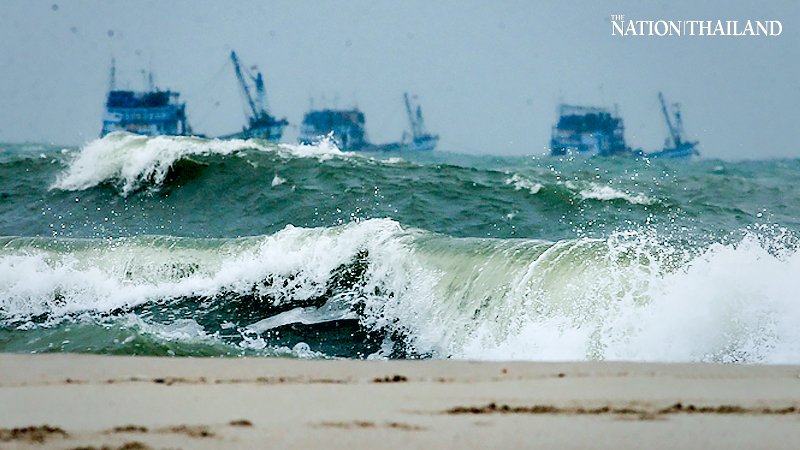
Meanwhile, an active low pressure cell covers the Andaman Sea, resulting in isolated heavy rains in the South. Waves 2-3 metres high are expected in the Andaman Sea and above three metres during thunderstorms. People in the South’s west coast should beware of heavy rain, while all ships should proceed with caution and keep off thundershower areas, while small boats should stay ashore until April 3, the department said.
The weather forecast for the next 24 hours:
North: Hot to very hot day with haze; thundershowers and gusty winds in 10 per cent of the areas; temperature lows of 20-28 degrees Celsius, highs of 37-41°C.
Northeast: Hot to very day with haze; thundershowers and gusty winds in 20 per cent of the areas; temperature lows of 23-27°C, highs of 38-40°C.
Central: Hot to very hot day with haze; thundershowers and gusty winds in 10 per cent of the areas; temperature lows of 25-28°C, highs of 37-39°C.
East: Hot day with haze; thundershowers in 10 per cent of the areas; temperature lows of 25-29°C, highs of 33-38°C; waves a metre high and 1-2 metres during thundershowers.
South (east coast): Thundershowers in 40 per cent of the areas with gusty winds and heavy rains in some areas; temperature lows of 24-27°C, highs of 32-35°C; waves a metre high and 1-2 metres during thundershowers.
South (west coast): Mostly cloudy with thundershowers in 60 per cent of the areas and heavy rains in some places; temperature lows of 23-25°C, highs of 30-36°C; waves 2-3 metres high and over three metres during thundershowers.
Bangkok and surrounding areas: Hot day with haze; isolated light rains; temperature lows of 27-28°C, highs of 33-38°C.