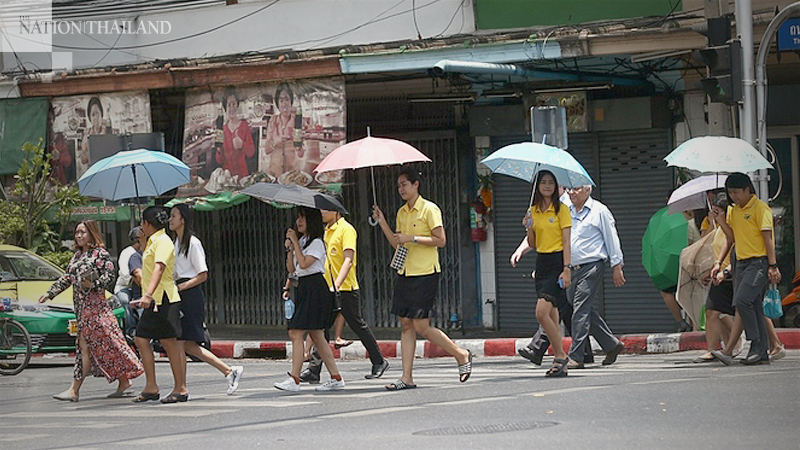
The Thailand Meteorological Department on Saturday forecast a hot to very hot day with haze due to the heat low covering upper Thailand.
Meanwhile, the easterly winds prevailing over the South and the Gulf bring isolated thundershowers to the South.
The weather forecast for the next 24 hours:
North: Hot to very hot with haze during the day; temperature lows of 17-23 degrees Celsius, highs of 34-40°C.
Northeast: Hot with haze during the day; temperature lows of 21-24 °C, highs of 34-36°C.
Central: Hot with haze during the day; temperature lows of 23-26°C, highs of 36-39°C.
East: Hot with haze during the day, isolated thundershowers with gusty winds in 10 per cent of the areas; temperature lows of 23-26°C, highs of 33-39°C; waves less than a metre high and a metre offshore.
South (east coast): Mostly cloudy with isolated thundershowers in 10 per cent of the areas; temperature lows of 19-25°C, highs of 32-36°C; waves a metre high and over a metre during thundershowers.
South (west coast): Hot during the day with isolated thundershowers in 10 per cent of the areas; temperature lows of 22-25°C, highs of 32-36°C; waves less than a metre high and a metre offshore.
Bangkok and surrounding areas: Hot with haze during the day; temperature lows of 25-27°C, highs of 33-38°C.
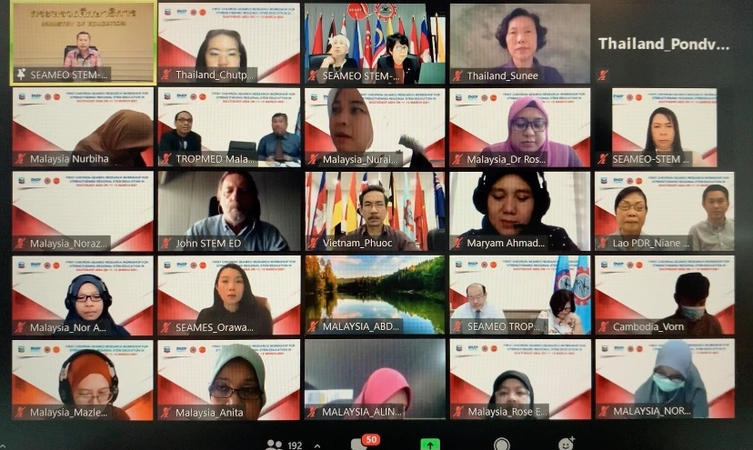
Asean governments joined hands with international researchers on Thursday in a bid to improve the region’s lagging standard of STEM education (science, technology, engineering and maths).
The researchers offered proposals to boost STEM education at an international video conference organised by the Southeast Asian Ministers of Education Organisation (SEAMOE) on Thursday.
They were also asked to develop strategies for strengthening Asean students’ STEM knowledge, which is falling victim to digital disruption, rural-urban inequality, and impacts from Covid-19.
STEM knowledge among Asean youth currently falls well below the global average.
Supat Champathong, Thailand’s permanent secretary for education, stressed the significance of research in lifting the quality of education in Asean countries hit by three challenges. These were low PISA scores, shortages of STEM teachers needed to pull these nations out of the middle-income trap, and the need to build awareness on sustainable development among the youth.
The challenges highlight the need for research to address future issues and shape national strategies to drive Asean sustainability, Supat said.
Pornpun Waitayangkoon, director of SEAMEO STEM-ED, said her organisation was focused on improving teachers’ skills and also on research to address current challenges.
The conference covered three main topics: how to create a professional learning community (PLC) among educators; provision of STEM education from kindergarten to 12th grade; and the creation of world-standard STEM vocational colleges.
Dee Bourbon, senior social investment advisor of Chevron Corp, added that Chevron is collaborating with SEAMEO STEM-ED to improve regional STEM education. She said the company had helped develop “people’s power” in Asean for six years under the “Chevron Enjoy Science” project – a model for regional education-oriented CSR activities which has now entered its second phase.
She shared lessons learnt from the project with Asean researchers, highlighting the development of teaching skills and the benefits of PLC and teacher assessment.
Proposals from the conference will be presented at the SEAMEO Congress 2021, scheduled for late April, which will be attended by the education ministers of all the Asean nations.
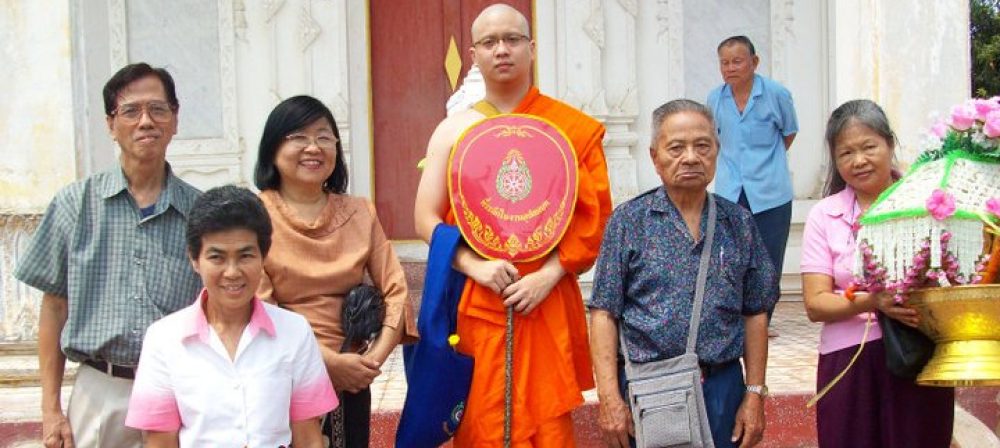
Samut Sakhon governor Verasak Vichitsangsri will be discharged from Bangkok’s Siriraj Hospital in a week because his lungs have almost completely recovered, his doctor said.
Dr Prasit Watanapa, dean of the Faculty of Medicine at Siriraj Hospital, announced on Friday that Verasak has mostly recovered and does not need to be assisted in his daily activities.
However, the doctor said that people should not visit him because he needs complete rest to fully recover.
Veerasak tested positive for Covid-19 in December and has since been hospitalised, while his province has become the country’s hot spot in the second Covid-19 wave, with a total of 16,449 positive cases reported so far.
On March 6, his daughter said in a Facebook post that her father was working on slowly rehabilitating his lungs and muscles.
Tourism and Sports Minister Phiphat Ratchakitprakarn will ask the Centre for Covid-19 Situation Administration (CCSA) to allow nationals of more than 70 medium-risk countries – including China, India, Germany and Italy – to enter Thailand from April 1.
The request will be made at a CCSA meeting chaired by PM Prayut Chan-o-cha on March 19, which will also consider a Public Health Ministry proposal to relax travel restrictions.
The Stock Exchange of Thailand (SET) Index closed at 1,568.19 on Friday, down 6.94 points or 0.44 per cent. Total transactions fell to Bt83.958 billion with an index high of 1,584.40 and a low of 1,562.90. Daily trade was subdued on Friday after rising above Bt100 billion earlier in the week.
The day’s SET fell below the 1,580-1,585 points forecast by Krungsri Securities, which expected positive investor sentiment from the European Central Bank easing monetary policy and US President Joe Biden signing a $1.9-trillion economic relief bill.
The 10 stocks with the highest trade value today were DELTA, OR, GPSC, PTT, KBANK, CPF, CPALL, IRPC, AOT and STA.
Other Asian indices were mainly up:
Japan’s Nikkei Index closed at 29,717.83, up 506.19 points or 1.73 per cent.
China’s Shang Hai SE Composite Index closed at 3,453.08, up 16.25 points or 0.47 per cent, while the Shenzhen SE Component Index closed at 13,897.02, up 30.66 points or 0.22 per cent.
Hong Kong’s Hang Seng Index closed at 28,739.72, down 645.89 points or 2.20 per cent.
South Korea’s KOSPI closed at 3,054.39, up 40.69 points or 1.35 per cent.
Taiwan’s TAIEX Index closed at 16,255.18, up 75.62 points or 0.47 per cent.
EV committee will discuss at the end of March and prepare to set carbon emission to zero with 50 per cent user to drive EV within 2030.
Kulit Sombatsiri, permanent secretary for energy, said during the launch day ceremony for EGAT EV Business Solutions on Thursday that for hundreds years car industry has evolved from a combustion engine to an electric vehicle (EV) where the combustion engine is the leading cause of 72.5 per cent CO2 emissions, airborne toxicity and the cause of PM 2.5.
Today, many countries around the world are aware of this issue and announced a clear goal for carbon neutrality, one of which is to promote the use of electric vehicles (EVs). The price of EVs predicts to be equal price to that of combustion vehicles by 2025, and by 2040, the number of EVs will be greater than that of combustion vehicles to achieve the goal of carbon neutrality.
However, for Thailand, National Electric Vehicle Policy Committee has been established which was chaired by Supatthanaphong Phanmechaow, Deputy Prime Minister and Minister of Energy.
National Electric Vehicle Policy Committee has set the goal of 2030 to produce 30 per cent of the total vehicle production or about 750,000 EVs, and by 2040 the number of EVs will increase to 2.5 million.
“At this meeting, It must be clear in what year to target carbon neutrality and the number of EV cars. The private sector offers to increase the number of EVs to 50 per cent by 2030. It is possible because all over the world are now accelerating the promotion of EVs, but we have to wait for clarity from the meeting,” said Kulit.
Yesterday (March 11), the Electricity Generating Authority of Thailand (EGAT) launched EGAT EV Business Solutions under the event name The Next Future Journey EGAT EV Business Solutions. EGAT and partners from 6 leading automobile companies including Audi, BMW, Mercedes-Benz, MG, Nissan and Porsche has signed an agreement to provide cooperation in the field of charging station, linking application data link, and promotion.
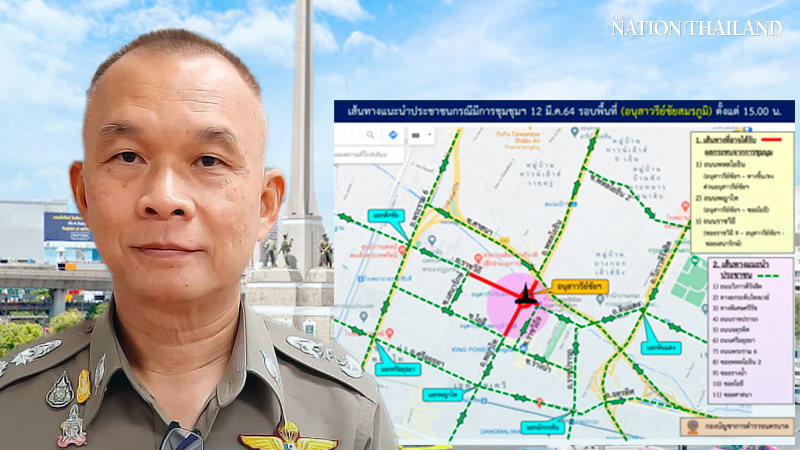
Police are urging motorists to avoid Victory Monument on Friday evening as the area will get congested once anti-government protesters begin gathering from 3pm onwards.
The Victory Monument route is taken by most Bangkok commuters as many roads connect to the intersection.
Routes that may be affected and should be avoided are:
• Phaholyothin Road (entrance/exit of the Victory Monument expressway)
• Phaya Thai Road (from Victory Monument to Soi Yothi)
• Ratchawithi Road (from Soi Ratchawithi 9 to Victory Monument – Soi Senarak)
A grieving husband in Nakhon Pathom decided to celebrate his dead wife’s birthday instead of holding somber funeral rites.
Sophon Saengwichian, 47, told reporters that his wife, Sakon, 48, succumbed to coronary complications and cancer on Wednesday, a couple of days before her birthday on Friday.
So, he decided to throw her a birthday bash instead as a final gesture of love.
In a bid to meet demands and support tourism, Thai Airways International (THAI) has launched special flights to 13 destinations in Asia and Europe, acting executive vice president Nond Kalinta said on Friday.
Some flights have started operating, while some will be launched soon.
The flights are:
• Bangkok-Tokyo (Narita) every Tuesday, Wednesday, Saturday and return flight every Wednesday, Thursday and Sunday
• Bangkok-Tokyo (Haneda)-Bangkok special flight on March 30
• Bangkok-Osaka-Bangkok every Saturday
• Bangkok-Seoul-Bangkok every Sunday, but the first flight on Wednesday, March 31
• Bangkok-Taipei-Bangkok every Friday
• Bangkok-Hong Kong-Bangkok every Wednesday
• Bangkok-Manila-Bangkok special flights on March 9, 16 and 23
• Bangkok-Kuala Lumpur-Bangkok special flights on March 16 and 31
• Bangkok-London-Bangkok every Sunday
• Bangkok-Paris-Bangkok special flight on March 25
• Bangkok-Frankfurt-Bangkok every Friday and special flight on Sunday, March 28
• Bangkok-Stockholm-Bangkok special flight on March 17
A rare disease is any disease found in a small percentage of the population. There is a lack of a sample size large enough to gain resources for research and clinical trials, making it tough for patients to access affordable rare-disease medication and treatment.
Despite the high-cost therapies, the National Health Security Office (NHSO), in 2020, introduced treatments for 24 rare diseases known as inherited metabolic disorder or inborn errors of metabolism, under the benefits package of the Universal Coverage Scheme.
A person diagnosed with one of those diseases will be transferred to one of seven tertiary hospitals with clinical genetics experts and advanced healthcare technologies.
The hospitals, mainly based in Bangkok, are: Chulalongkorn Hospital, Thammasat Hospital, Siriraj Hospital, Ramathibodi Hospital, Phramongkutklao Hospital, Queen Sirikit National Institute of Child Health, and Srinagarind Hospital in Khon Kaen province.
The move has been made possible by the collaboration among players, including patient groups, clinicians, the Public Health Ministry and the NHSO. However, there are still huge challenges as there are more than 6,000 rare diseases for which many patients still cannot access treatment.
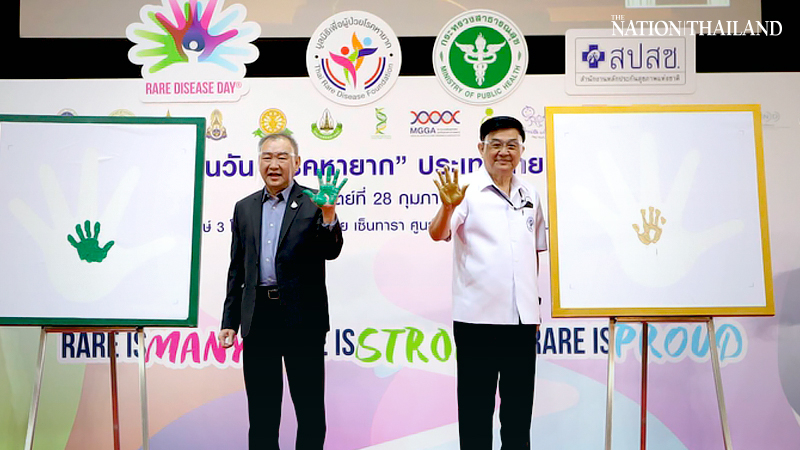
On February 28, all players joined a seminar for the recognition of Rare Disease Day at Centara Government Complex Hotel and Convention Centre in Chaeng Watthana, Nonthaburi province. The event was jointly organised by NHSO, the Public Health Ministry and Thai Rare Disease Foundation. Several experts who play vital roles in pushing forward rare-disease care at a policy level, including Prof Duangrurdee Wattanasirichaigoon from Mahidol University’s Faculty of Medicine Ramathibodi Hospital and also President of Medical Genetics Network, Genetic Society of Thailand; Prof. Kanya Suphapeetiporn from Chulalongkorn University’s Faculty of Medicine; Asst. Prof. Achara Sathienkijkanchai, and Prof. Cherdchai Nopmaneejumruslers from Mahidol University’s Faculty of Medicine Siriraj Hospital and the chairman of NHSO’s working committee on rare-disease care, took part in the seminar.
NHSO secretary-general Sakchai Kanjanawatana and Vice Minister at the Office of the Prime Minister, Prapon Tangsrikertikul, gave the opening speech at the event.
■ Gain public attention
Health experts estimate that 5 per cent of the Thai population have one of the rare diseases, meaning that three million out of more than the 65 million Thai population have some of those diseases. However, only around 20,000 of them receive treatment.
“Three million is a lot. Why aren’t rare diseases a matter of concern for most people? One of the answers is, we don’t have a good strategy to raise this issue and gain public attention,” said Somchai Jitsuchon, an economic researcher at Thailand Development Research Institute Foundation.
He admitted that if his daughter did not have a rare disease, he might not care about it like many others.
“As an economist, I’m interested in the lost opportunity cost for Thailand due to the illness caused by rare diseases. We should have more studies on that, so that society will see the need to address this issue.”
Many technocrats express concern about the financial burden on the government if it provides free treatment to patients with rare diseases. Currently, Civil Servant Medical Benefits Scheme fully covers rare-disease care costs, while there is a gap for patients under the UCS and Social Security Scheme.
Somchai believes that Thai society has the ability to handle the cost if it can have an efficient tax collection system.
■ Driving policy with data
Data on rare diseases are scarce due to inadequate research and a small number of patients.
“When there is no data, patients miss the opportunity,” said Asst. Prof. Thipwimol Tim-Aroon, a clinical geneticist from Ramathibodi Hospital. “Data is essential for convincing policymakers to address rare diseases in healthcare policy. We need the registry system for rare-disease patients.”
Empowering patient groups is the first step to collect data, as it creates a hub for data-sharing among patients, she said.
One success story is the hemophilia patient club, which gathered data and case studies from its networks and used them to convince the NHSO and the Thai government to include hemophilia treatment in the UCS benefits package.
Asst. Prof. Prapat Suriyaphol from Siriraj Hospital, Mahidol University, said during the seminar that digital technology could improve collection of data on rare diseases.
His team is adopting Fast Healthcare Interoperability Resources — a standard describing data formats, elements and an application programming interface for exchanging electronic health records — for the development of Thai patients’ dashboard containing data of their health status and medical records.
He hopes that the dashboard, expected to be launched by next year, will point out the need to address rare diseases at a policy level.
■ Patient empowerment
The voice of patients has a large influence on Thai health policy and the UCS. Genetic LSD Foundation is one of many patient groups that plays an important role in pushing the government to provide rare-disease medication and treatment.
Established in 2009, the foundation focuses on empowering patients by expanding their knowledge about Lysosomal Storage Diseases, the complex and multi-systemic genetic disorders that affect various organs throughout the body. It raises funds and organises activities in which patients can meet, comfort each other, and work together on pushing health policy.
The foundation’s president, Boon Puttipongthanachote, recalled his group’s success in 2013 in convincing the government to add Gaucher disease medication to the National List of Essential Medicines provided to patients under three healthcare schemes.
“We highlighted the fact that the drug was highly effective. Providing it to patients would help their families avoid bankruptcy,” said Boon, adding that his group is currently pushing for access to medication for Pompe disease.
■ Improve regulatory system
The regulatory system is an important component that drives the policy to develop rare disease innovations and products.
Prof John CW Lim, founding Executive Director of the Centre of Regulatory Excellence (CoRE) at Duke-National University of Singapore Medical School, raised three key challenges that regulators and governments face in the Asia Pacific region.
First is insufficient regulatory knowledge and capacity, especially in smaller developing regulatory agencies; second, fragmentation in the regulatory systems that industry faces when it tries to bring new products to the market. And thirdly, the lack of platforms for regulatory science and policy innovation.
CoRE was set up in 2014 with support from Singapore’s Ministry of Health to address the three challenges by using several approaches, including increasing institution regulatory talent, offering capacity building programmes to regulatory authorities, and establishing networks to bring together stakeholders from across government, industry, academia and research.
“At the end of the day, regulation can never exist in a vacuum. The overall government regional and global systems all come into play,” said Lim, adding that rare diseases are being discussed in regional frameworks, including the Asia-Pacific Economic Cooperation Action Plan for Rare Diseases which guides the coordination of different stakeholders across sectors.
“But ultimately, the patient’s voice and patient-centric models are not only important but will become increasingly important across all areas of health and social systems, not only in promoting regulatory agility and regulatory innovation but to make sure that the patient’s voice and the patient-centric model form the basis and are at the heart of how we approach rare diseases going forward,” Lim said.
 Verasak Vichitsangsri