Nearly 1,800 health professionals working in six districts that have high risk of infection have been inoculated with the Covid-19 vaccine since March 1, the Bangkok Metropolitan Administration (BMA) reported on Friday.
The BMA has provided inoculation to 1,790 healthcare personnel through 13 private hospitals, three public hospitals and seven public health service centres in Bang Khun Thian, Bang Bon, Nong Khaem, Bang Khae, Phasi Charoen and Jomthong districts.
BMA deputy governor Pol Lt-General Sophon Phisutthiwong said earlier this week that Bangkok had received 66,000 doses of Sinovac vaccine allotted by the government and had started inoculating the target group since Monday.
Medical professionals are the first group to receive the vaccine, while the second group will be public health volunteers who have high risk of contacting infected patients during proactive testing missions, and the third target group will be those who have chronic diseases and are therefore more vulnerable if they contract Covid-19.
The BMA also reported that of the 1,790 persons vaccinated, 11 persons were found to have non-severe side-effects, while no severe side-effects had been reported so far.
A thermal low pressure covers upper Thailand while the southerly and the southeasterly winds bring humidity from the South China Sea and the Gulf of Thailand to the lower North, the Northeast, the Central and the East.
Hot weather and haze during the day are forecast over upper Thailand. Isolated thundershowers are possible in the lower North, the Northeast, the Central and the East, the Thailand Meteorological Department forecast on Saturday.
Meanwhile, the easterly winds prevailing over the South and the Gulf bring isolated thundershowers to the areas.
The weather forecast for the next 24 hours:
North: Hot weather with haze during the day and isolated light rain; temperature lows of 15-24 degrees Celsius, highs of 36-39°C.
Northeast: Hot weather with haze during the day, isolated thundershowers in 30 per cent of the areas; temperature lows of 22-26°C, highs of 35-37°C.
Central: Hot weather with haze during the day, isolated thundershowers in 20 per cent of the areas; temperature lows of 23-25°C, highs of 36-38°C.
East: Hot weather with haze during the day, isolated thundershowers in 20 per cent of the areas; temperature lows of 23-27°C, highs of 33-37°C; waves a metre high and 1-2 metres offshore.
South (east coast): Isolated thundershowers in 10 per cent of the areas; temperature lows of 22-25°C, highs of 32-35°C; waves 1-2 metres high and two metres during thundershowers.
South (west coast): Isolated thundershowers in 10 per cent of the areas; temperature lows of 22-25°C, highs of 35-37°C; waves a metre high and over a metre offshore.
Bangkok and surrounding areas: Hot weather with haze during the day, isolated thundershowers in 10 per cent of the areas; temperature lows of 25-26°C, highs of 34-36°C.
In the last of a three-part series on social media usage, Nation Thailand takes a look at e-commerce.
Figures collected by “We Are Social” show that the biggest loser in 2020 was the travel industry.
In Thailand, spending on online travel deals fell by 43.4 per cent, with Thais spending just US$3.38 billion (Bt102.88 billion) on tourism and accommodation.
Globally, the sale of travel deals via e-commerce platforms fell by 51 per cent, with spending come in at $593.6 billion.
However, Thais spent some $2.4 billion on purchasing electronic gadgets online, up by 24.2 per cent year on year. The sale of gadgets worldwide rose by 18 per cent year on year, coming in at $501.8 billion.
The sale of food and personal products in Thailand rose by 74.3 per cent, earning the industry $2.34 billion. Globally, this industry rose by 41 per cent, earning $413.8 billion in revenue. Other big sellers via e-commerce were fashion products and toys.
Facebook user “Hla Khaing” posted a message on Thursday accusing a Thai boss of cheating his employee out of Bt6 million in lottery winnings.
The woman, a Myanmar migrant worker in Nakhon Pathom, claims she had asked her boss to purchase three lottery tickets for her, and one of the tickets won the top prize.
The employee said her boss refused to give her the winning ticket and instead cashed it in himself. She added that her boss also claimed he had not bought the tickets.
She later took this case to the police, which resulted in her getting Bt3.5 million of the winnings, while her boss pocketed the rest.
Police in Bangkok’s Pathumwan district caught a man carrying 18 pipe bombs this morning.
The suspect, aged around 40, was spotted acting suspiciously near Pathumwan intersection. A search of his bag revealed the home-made explosives.
Pathumwan police station then contacted a bomb-disposal crew and the devices were confirmed to be explosives, primed for use. The man was also caught carrying three home-made guns and small bottles of a black substance suspected to be gunpowder.
Police detained the suspect for interrogation and are investigating the origin of the bombs and their intended target.
The Stock Exchange of Thailand (SET) Index closed at 1,544.11 on Friday, up 10 points or 0.65 per cent.
Total transactions amounted to Bt104.809 billion with an index high of 1,553.92 and a low of 1,529.83.
In the morning session, Krungsri Securities expected the day’s index to move between 1,520 and 1,545 points despite support for the market from the rising oil price.
The 10 stocks with the highest trade value today were OR, KBANK, STA, PTT, PTTEP, PTTGC, CPALL, SCB, AOT and SAWAD.
Other Asian indices were on the fall:
Japan’s Nikkei Index closed at 28,864.32, down 65.79 points or 0.23 per cent.
China’s Shang Hai SE Composite Index closed at 3,501.99, down 1.50 points or 0.043 per cent, while the Shenzhen SE Component Index closed at 14,412.31, down 3.75 points or 0.026 per cent.
Hong Kong’s Hang Seng Index closed at 29,098.29, down 138.50 points or 0.47 per cent.
South Korea’s KOSPI closed at 3,026.26, down 17.23 points or 0.57 per cent.
Rare coral reef wrecked by thieves in Prachuap national park
NationalMar 05. 2021Photo credit: Department of National Parks, Wildlife and Plant Conservation
By The Nation
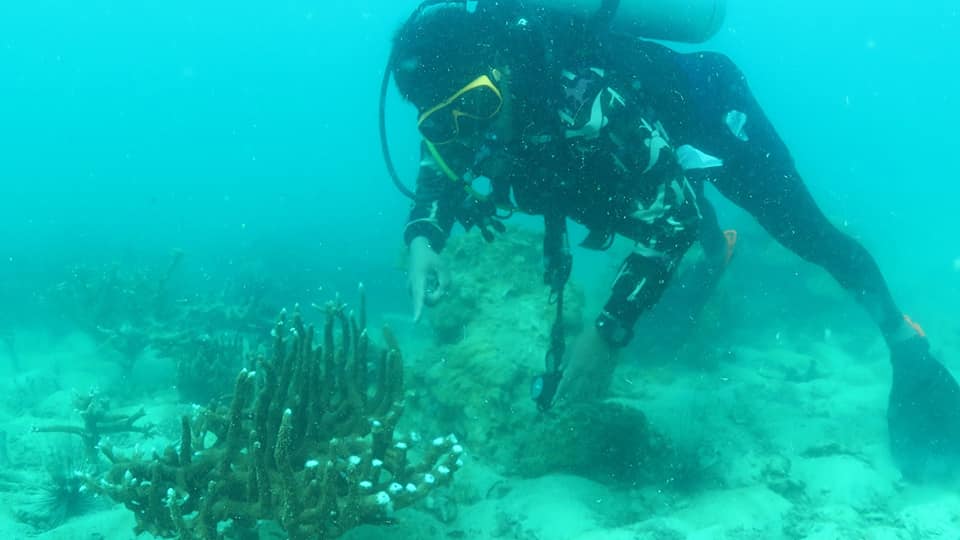
Authorities are investigating a case of marine vandalism in Prachuap Khiri Khan province after discovering a reef of protected staghorn corals has been plundered by thieves.
Alerted by the Ban Pak Klong marine conservation group, officials from Ao Siam National Park went to inspect the coral reef colony off Koh Talu Bang in Saphan Noi district.
They found more than 60 per cent of the staghorn coral had been destroyed or damaged. Path Intarapairoj, incoming Ao Siam National Park chief, said they are now seeking the culprit.
Photo credit: Department of National Parks, Wildlife and Plant Conservation
The coral was planted as part of a conservation project.
Staghorn coral is a protected species under the Wildlife Preservation and Protection Act 2019. Those caught stealing staghorn coral for sale face punishment of up to 10 years in jail and/or a fine of up to Bt1 million. Anyone causing severe damage to this precious marine resource can be jailed for up to a year and/or fined Bt100,000.
Ao Siam National Park officers have filed a police report in their bid to catch the culprit.
By Ellen Nakashima, Missy Ryan The Washington Post
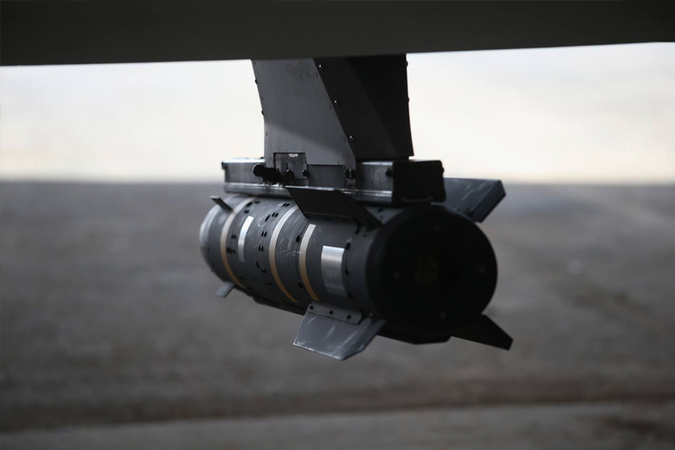
WASHINGTON – The Biden administration has imposed temporary limits on drone strikes targeting suspected terrorists outside the battlefields of Afghanistan, Syria and Iraq, tightening a Trump-era policy while officials review how much leeway to give the military and the CIA in counterterrorism operations.
The restriction was imposed on Jan. 20 – the day of President Joe Biden’s inauguration – by national security adviser Jake Sullivan, according to administration officials, who spoke on the condition of anonymity to describe internal deliberations.
The policy move comes as nearly two decades of an international war against Islamist terrorism has weakened though not vanquished al-Qaida and the Islamic State, whose affiliates maintain the capability to strike regionally and who occasionally inspire and plot attacks against the United States.
Under the temporary guidelines, the military and the CIA must seek White House approval before attempting a kill-or-capture mission against people in places where the U.S. military has few troops, such as Libya, Somalia and Yemen. During the Trump administration, they did not need such approval but still needed the go-ahead from the U.S. ambassador overseeing the country where the operation was to take place.
The shift was first reported by The New York Times.
“At the beginning of the administration, President Biden established new interim guidance concerning the United States’ use of military force and related national security operations,” National Security Council (NSC) spokeswoman Emily Horne said.
The purpose, she said, was to ensure that the president has “full visibility” on proposed, significant operations while the NSC staff leads a review of the legal and policy frameworks governing drone strikes. The review also will seek to ensure appropriate transparency measures, she said.
Republican Reps. Mike Rogers of Alabama and Michael McCaul of Texas criticized the move as “yet another bureaucratic impediment that will give our enemies an advantage.” Rogers, the ranking Republican on the Armed Services panel and McCaul, his counterpart on the Foreign Affairs Committee, said: “While our operators wait for approval from Washington, terrorists will escape to plot and fight against the United States and our allies for another day.”
The use of unmanned aircraft in counterterrorism operations stepped up under the Obama administration, which sought to kill terrorists while minimizing U.S. casualties. The strikes, including some by the CIA, stirred controversy over civilian casualties, the targeting in some cases of American citizens and a lack of transparency over the rules governing the strikes.
The Obama White House spent more than a year crafting a policy finalized in May 2013 that covered targeted strikes and commando raids, a policy which President Barack Obama discussed publicly. The policy, largely coordinated by then-NSC legal adviser Avril Haines, who is now Biden’s director of national intelligence, required a finding that a target pose a “continuing, imminent threat” to U.S. citizens. It also stated that a lethal strike was allowed only if capture was deemed infeasible and if there was “near certainty” that others would not be harmed.
Some cases required presidential approval, such as when a U.S. citizen or resident was targeted in an overseas operation. The process, which involved lawyers and policy officials across the government, was widely seen as cumbersome with an unnecessary degree of White House oversight.
The Trump administration developed its own policy, which has not been released publicly. It dropped the requirement for White House sign-off and relaxed the “near certainty” standard for men, depending on the target’s location, such as a remote area, according to a person familiar with the rules.
If the suspect were in a city, the standard remained “near certainty,” the person said. “The rules were looser in remote areas of the country where it was more likely that gatherings of military age men have no innocent purpose.” In all cases, a strike required an ambassador’s permission, the person said.
Luke Hartig, a former Obama White House counterterrorism official, said a revision is necessary, but not to 2013 levels. “We need to move past a space where the White House is signing off on a great many of the operations themselves,” he said. “That’s where I think an empowered and accountable Pentagon plays a really key role.”
With counterterrorism a lower priority than in previous administrations, he added, the White House “will not have the time to spend on terrorism” that it did in the past. “The more time you spend on reviewing operations, the less time you spend on developing preventative and nonmilitary approaches to counterterrorism.”
The Trump administration carried out more than 160 strikes each in Yemen and Somalia and about 10 in Libya since 2017, according to Long War Journal. Many were announced by the Pentagon. Often, it was not clear whether the military or the CIA launched the strikes.
Drone strikes have been “without question the most effective tool in the counterterrorism fight since 9/11,” said Marc Polymeropoulos, a retired senior CIA officer who worked on counterterrorism issues.
Polymeropoulos said he expected the administration “to find a middle ground” between the policies of the Obama and Trump eras.
– – –
The Washington Post’s Shane Harris contributed to this report.
The Energy Regulatory Commission (ERC) on Friday set aside Bt2.61 billion to maintain fuel tariff (Ft) from May to August at -15.32 satang per unit in a bid to help ease people’s financial burden.
“With Ft being maintained at this rate, users will continue paying Bt3.61 per unit for electricity for another four months,” said Komkrit Tantravanich, ERC secretary-general. “Maintaining the Ft will cost about Bt2.61 billion, and the ERC still has Bt4.12 billion available.”
The commission believes the Ft may be affected by the rising price of crude oil towards the end of the year. Crude oil has jumped from US$54.8 per barrel in February to $60 per barrel in March, and the weakening of the Thai currency from Bt30 to the US dollar in February to Bt31 to the greenback in March.
“We also believe that in the second half of the year, demand for energy globally will rise as the Covid-19 situation has started improving in many countries. Hence, we have been using a yearly average to set a suitable Ft rate for the entire year to ensure the cost of electricity remains stable,” he said.
Komkrit added that ERC has set crude oil base at $60 per barrel and exchange rate at Bt31 per dollar to calculate this year’s Ft rate, which has resulted in Ft for May through August coming in at -18.02 satang per unit and Ft for September through December at -7.95 satang per unit. Based on this, the average Ft for the entire year stands at -13.14 satang per unit.
ERC estimates that electricity usage from May to August will be at 67.88 billion units, up by 11.86 per cent from the 60.68 units estimated to be used in the January to April period.
ERC will accept public opinions on the Ft rate for May to August via its website until March 19, before it officially announces the rate later in the month.
The Mass Rapid Transit Authority (MRTA) has announced that Bangkok’s ancient Wat Iam Woranuch Temple will not be touched in the expansion of the MRT Purple Line.
The statement came in response to netizens raising concern on social media that the 237-year-old temple buildings will be torn down to make way for the new MRT Bangkunprom station.
The MRTA said the plan is to set up an entrance to the MRT station outside the temple complex near Wisutkasat intersection and that the temple has been informed of it.

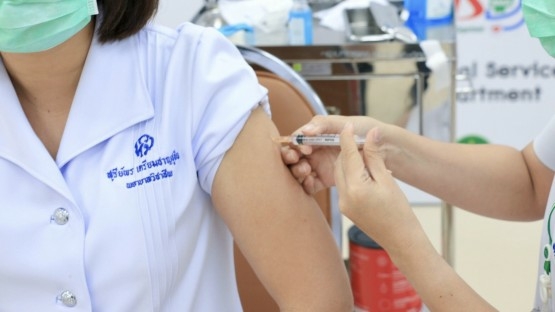
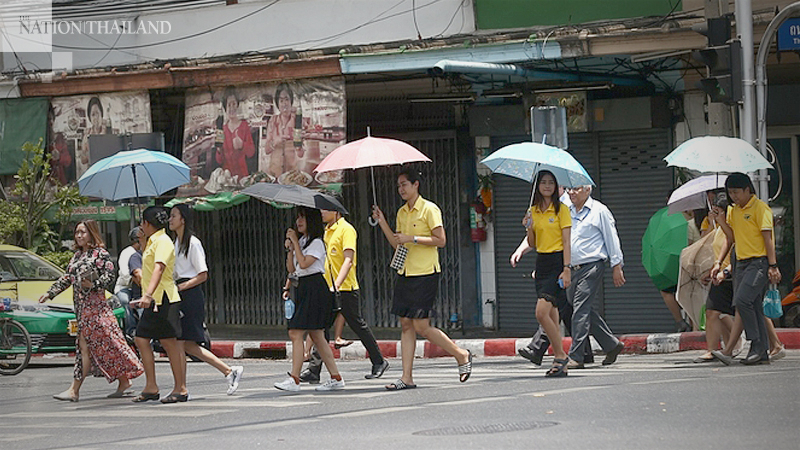


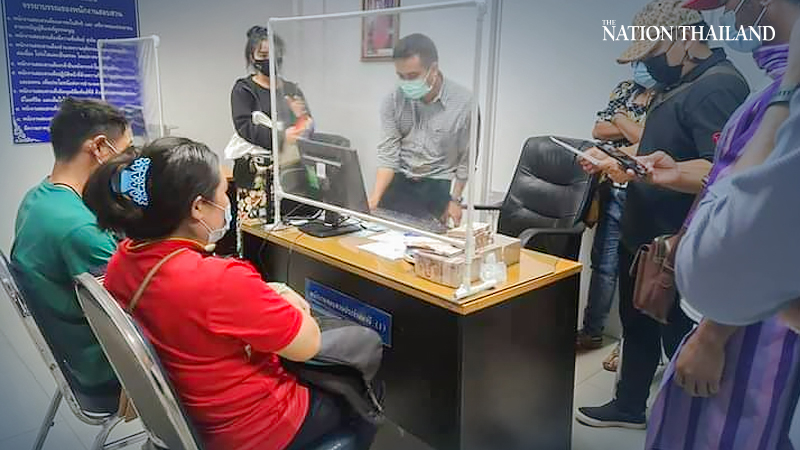
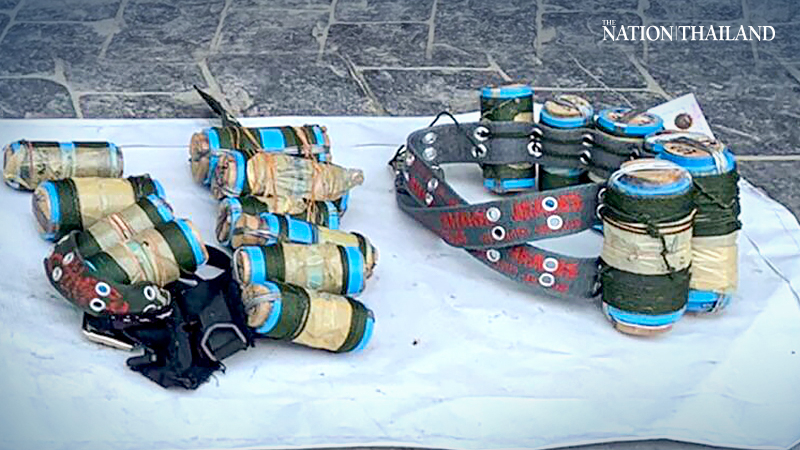



 Photo credit: Department of National Parks, Wildlife and Plant Conservation