The Department of National Parks, Wildlife and Plant Conservation (DNP) said on Tuesday that veterinarians and forest officials were successful in treating an ill elephant in Chanthaburi province.
On Sunday, veterinarians were called to help a wild elephant, who had been found lying in a rubber plantation. A younger elephant, believed to be the ill animal’s offspring, was nearby guarding its mother.
Veterinarians could only get close to the ill pachyderm after they had tranquilised the young one. But when they got to her, they managed to inject her with glucose, vitamins and medication.
According to a DNP Facebook post, officials had on Monday tried to use a winch to lift the animal, as it could not stand on its own. However, the effort was in vain as the animal would not allow the use of the equipment.
Eventually, at around 9pm, the elephant stood up on her own and walked out of the plantation.
The vets and forestry officials followed the animal and found her soaking in water before she walked into the forest to join her herd.
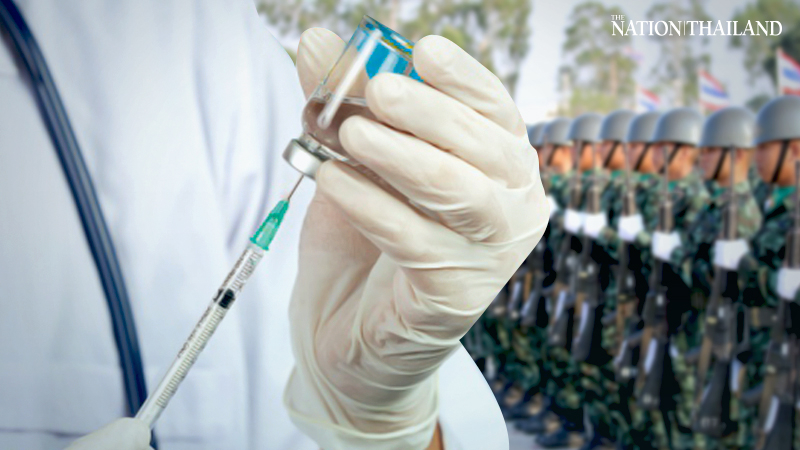
The Department of Disease Control (DDC) reported on Tuesday that more than 3,000 people have been vaccinated since Public Health Minister Anutin Charnvirakul got Thailand’s first Covid-19 shot on Sunday.
Of the 3,021 vaccinated up till Tuesday, most are medics and health volunteers (2,781), other staff exposed to Covid patients (133), people with underlying diseases (21), and people in at-risk areas (86).
DDC director-general Opas Karnkawinpong said 116,520 vaccine doses have been sent to the 13 prioritised provinces. So far, only five people had reported side effects from vaccination – nausea and swelling around the injection site.
“The first phase of vaccination will focus on medics. Then, other groups will be contacted by health officials. Reservations or walk-in vaccinations will not be available in this phase,” Opas said.
He also denied rumours that VIPs in Chiang Mai were being given the vaccine before medics. He said 140 people – 73 health officials and 67 others including soldiers – got shots on Monday, the first day of vaccination in Chiang Mai. Nobody had been given special treatment, he said, adding that an investigation team had been appointed to investigate the rumours and to boost morale and confidence among medics and the general public.
The Tourism Authority of Thailand has chosen an unusual but undeniably cute bunch of characters to front its latest campaign to boost domestic travel.
Starring in the “Himmapan Project” are five cartoon creatures inspired by iconic statues at Thai Buddhist temples around the country. The idea is to give both children and adults a fun introduction to local spiritual landmarks around the country.
The statues are based on mythical creatures from the Buddhist/Hindu legend of Himmapan, the forest that surrounds the base of Mount Meru.
Artists gave the statues new life, transforming them into cartoon cuties that quickly became social-media sensations, said Kritsana Kaewthamrong, TAT’s deputy chief of domestic marketing.
The stars of TAT’s show are five cartoon creatures created by the artist twofeetcat.
“Singha Mom” is a lion-dragon inspired by statues at Khon Kaen’s Wat Chetiyaphum.
“Phaya Naga” is a snake-dragon styled on statues at Udon Thani’s Wat Pho Si Thung.
“Gold Hera” is a crocodile-dragon creature representing Ubon Ratchathani’s Wat Chaiyaphum.
“White Hera” is another crocodile-dragon, this one inspired by Amnat Charoen’s Wat Phanthuwet.
Finally, “Singha” is a lion guardian for Lampang’s Wat Ko Walukaram.
The Himmapan Project includes tourism routes, sales promotions and a Facebook page gallery where other budding artists can show off their own Himmapan creations.
Hundreds of people flocked to Chiang Mai’s Mae Wang district to go rafting down the Wang River over the weekend now that Thailand’s cool season is finally over.
Local merchants set up booths and makeshift eateries as tourists settled down by the riverbank from dawn till dusk.
One of the vendors said the February 26-28 long weekend saw a bigger than usual crowd of people, who travelled in groups of five to 10, settling down along the 10-kilometres of the riverbank. This area doesn’t just offer beautiful scenery but is also easy to navigate on a raft.
“Raft-rental operators said they were all booked up before noon,” he said. “We expect to see more tourists in March and April when the summer heat will encourage more people to seek cooler destinations.”
Mae Wang Police Station has deployed officers to ensure traffic flow as well as put up no-swimming signs in deep areas to prevent drowning accidents.
Military commander General Chalermpol Srisawat has confirmed that a Thai Army doctor injected United Nations peacekeeping troops in South Sudan with water, claiming it was flu vaccine that can protect Covid-19. The medic injected 273 soldiers, charging each one US$20 (Bt607) for the fake vaccination.
A soldier became suspicious after noticing that the bottles used in the scam were unlabelled. He alerted his superiors, who found that the bottles contained plain water.
The UN medical representative asked Thai Army officials to send the doctor back to Thailand and also help prevent such incidents from occurring again.
The doctor returned but has absconded from duty, so the Army dismissed him and withdrew his medical licence.
Gen Chalermpol insisted the incident would not affect the UN’s confidence in the Thai military.
The vaccine scam was revealed by a Transparency International report titled “The Unspoken Covid-19 Vaccine Challenges – Distribution and Corruption”, which said the Army doctor served at a field hospital in South Sudan from December 2019 to December 2020. He was suspended from duties pending an investigation into fraud allegations.
The ex-doctor is reportedly still on the run, while his parents say he has not returned home.
The petrochemical industry is likely to continue improving in 2021, supporting the earnings recovery of Thai refinery and petrochemical companies, says Fitch Ratings.
However, the pace of recovery is likely to be slow, with challenges from the persistent oversupply in the petrochemical market and slow demand growth in some end-markets.
Fitch-rated Thai refinery and petrochemical companies’ earnings rebounded strongly in the second half of 2020, from 1H20, although the recovery pace varied, depending on the companies’ level of integration with downstream operations.
Companies with higher exposure to petrochemical businesses, such as PTT Global Chemical Pcl (PTTGC; AA+(tha)/Negative) and IRPC Pcl (A-(tha)/Stable), benefited from much stronger petrochemical margins relative to refinery margins in 2H20, compared with companies with large refinery operations, including Thai Oil Pcl (TOP, AA-(tha)/Negative) and ESSO (Thailand) Pcl (bills of exchange rated F2(tha)).
PTTGC’s 2H20 earnings before interest, tax, depreciation and amortisation (EBITDA) surged to Bt15.8 billion from Bt522 million in 1H20 while IRPC’s rebounded to Bt9.7 billion from a loss of Bt6 billion. However, their full-year EBITDA declined substantially, by 42 per cent for PTTGC and 37 per cent for IRPC in 2020, although these were far better than the negative EBITDA posted by TOP and ESSO.
Fitch expects the 2H20 improvement in the petrochemical sector to continue in 2021 as vaccinations are rolled out and industrial and business activity recover. End-market demand is likely to be the key driver of petrochemical performance in 2021.
Demand for food packaging, cleaning and hygiene products should remain strong but growth is likely to decelerate in 2021 after demand spiked in 2020, while polyethylene terephthalate bottle sales are likely to recovery slowly after plummeting in 2020 due to the shift to working from home and the cancellation of public events, Fitch said.
The rebound of the automotive and construction sectors is likely to benefit polypropylene producers.
Nevertheless, large-scale additional petrochemical capacity in 2021, mainly from China, is likely to exacerbate the existing oversupply, putting pressure on product spreads, especially for the commodity petrochemicals. As a result, Fitch expects the rebound for most product spreads in 2021 to be volatile and well below the longer-term historical average.
Thai refinery and petrochemical companies will continue to diversify their businesses into high-value products and specialty chemical businesses, which have been more insulated than commodity products during the downturn due to more resilient end-market demand, Fitch said. However, the contribution from these high-value products is likely to remain low, at least in the medium term.
Fitch forecasts Thai refinery and petrochemical companies’ leverage will improve in 2021 on stronger earnings, although the ratio will remain high compared with 2019 levels.
PTTGC and IRPC are likely to report positive free cash flow before dividends in 2021-22, as we expect their cash flow from operations to be enough to cover their moderate capex. Meanwhile, TOP’s financial leverage is likely to remain high in 2021 and 2022 due to its high committed investment in its clean-fuel project (CFP), before declining in 2023 and 2024 once the CFP starts operating fully and the company receives cash flow from the sale of the energy recovery unit, a power generation unit in the CFP, in 2023.
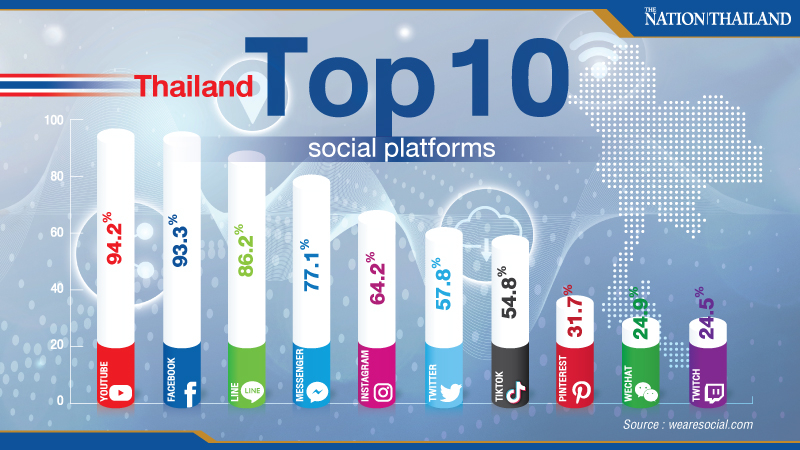
A survey learned that most Thais use Android smartphones and had logged in more than 58 billion hours of smartphone usage in 2020 alone.
Thanks to digital technology, the internet can be accessed from all kinds of gadgets, ranging from smartphones, smartwatches and computers to smart televisions.
The “We Are Social” website collects statistics globally and learned that in 2020, up to 2.33 households in Thailand had at least one smart device at home.
In 2020, Thailand’s smart device market was valued at more than Bt2 billion.
The website also learned that most people in Thailand use Android phones, with only 25 per cent using iPhones.
Globally too, 71.9 per cent of smartphone users opt for Android devices, while only 27.33 per cent use iPhones. It would be interesting to see if iPhones become more popular thanks to the social-media app “Clubhouse”, which is only applicable to Apple devices.
Meanwhile, the Thai population has spent 58.81 billion hours on smartphone devices last year, up by 25 per cent in 2019. This is mainly due to Covid-related lockdowns, which forced people to stay indoors.
The “We Are Social” website also reported that downloads of mobile apps rose by 2.15 billion times during the lockdown period, and total spending via apps in Thailand last year came in at around Bt30 billion.
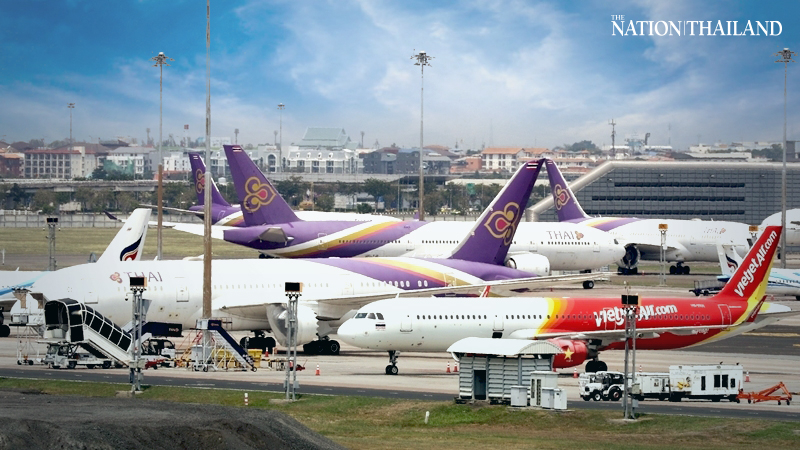
From March 1, international transit and transfer flights will be allowed to land in Thailand, the Centre for Covid-19 Situation Administration (CCSA) said.
“It is part of measures to help airlines and is based on a decision made by the CCSA on February 22,” Transport Minister Saksayam Chidchob said.
Now, passengers on transit and transfer flights will be allowed to stay in Suvarnabhumi Airport for up to 12 hours. However, they will be secluded to a specific area and will not be allowed to visit shops. Passengers are also required to wear face masks, keep their hands clean and practice social distancing while waiting for their flight.
The rising cost of living, economy and changing role of women in society have been identified as the reasons for the drop in Thailand’s birth rate.
Currently, less than 600,000 babies per year are born in Thailand.
According to the World Health Organisation (WHO) and the World Bank, the global total fertility rate (TFR) averages at 2.1. In Thailand, the TFR average is only 1.51.
The low birth rate will result in an ageing society and migrant workers, experts warn.
The Bureau of Reproductive Health said the low birth rate in Thailand could be put down to several factors, such as more single people in the country, fewer women wanting to have babies, worries over finances or life balance after having babies and infertility.
Chulalongkorn University’s lecturer on banking and finance, Prof Kanis Saengchote, offers the following reasons for the drop in birth rates:
Agricultural versus industrial economy
Thailand was initially an agricultural economy, in which labourers were very necessary and families wanted as many children as possible for economic gain.
However, when Thailand’s economy turned into an industrial economy, workers were replaced by machines. Hence, demand for children dropped significantly.
Changed role of women
In the past women were homemakers and mothers, but now they work outside and find it difficult to become working mothers.
Cost of Living
The rising cost of living has made it difficult for some people to survive, not to mention give their children a good quality of life.
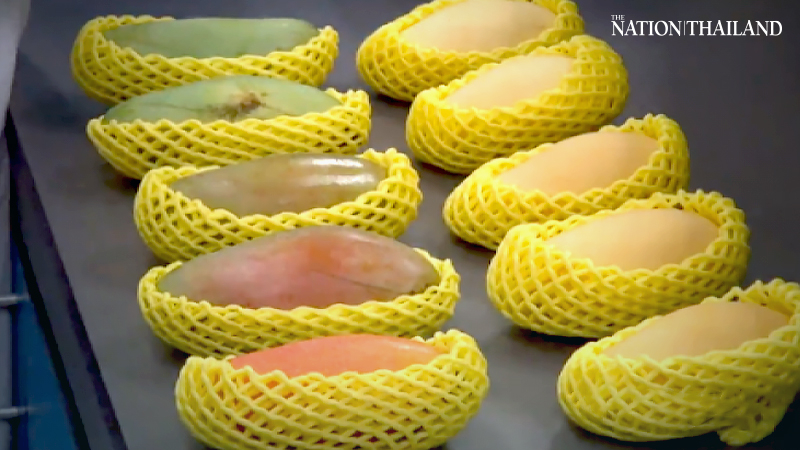
Negotiations with South Korea over the export of Mahachanok or “rainbow” mangoes, which began in 2011, were finally completed last month, Deputy Agriculture and Cooperatives Minister Mananya Thaiset said.
“Thailand began exporting three types of mango to South Korea in 2002, namely the Nam Dok Mai, Raet and Nang Klang Wan breeds,” she said. “Then in 2011, we proposed the new breed of Mahachanok mangoes, and South Korea has been revising the criteria until finally granting us approval on February 23 to import the first lot of 100 kilos of Mahachanok mangoes.”
The “rainbow” mango is a hybrid variety created from the Nang Klang Wan and sunset mango cultivars. It was named after King Rama IX’s book, “Mahajanaka”, which teaches sustainability, awareness and spirit of the country.
Usually 16 to 18 centimetres long, the multi-coloured mango with a skin of green, yellow and red are juicy, sweet and have a tropical fragrance.
To meet South Korea’s standards, mangoes from Thailand must first be steamed under 40 degrees Celsius for 20 minutes to get rid of insects.
Some 746 farmers and 12 steam-treatment facilities have expressed interest in exporting the Mahachanok variety to South Korea.
In 2020, Thailand exported 7,933 tonnes of mangoes to South Korea worth Bt739 million in total.
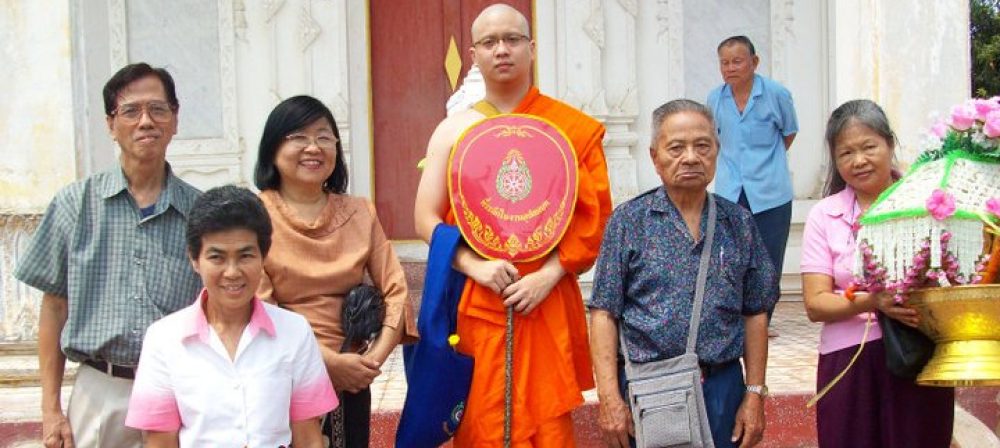

 Opas Karnkawinpong