Former acting director of the Public Warehouse Organisation Pol Colonel Roongroj Phuthiyawat faces legal proceedings for the controversial Bt112.5-billion purchase of 500 million boxes of gloves from Guardian Gloves Co last year.
Roongroj allegedly paid Bt2 billion in advance to the manufacturer, which the National Anti-Corruption Commission later froze.
Commerce Minister Jurin Laksanawisit said on Thursday he has accepted the investigation report and has instructed incumbent PWO director Kriangsak Prateepvisut to decide what action will be taken against 10 people accused in the case. Five of the suspects are PWO employees.
The Discipline Examination Board, which was appointed last week, has started the disciplinary examination of Roongroj and two PWO level eight executives, who have confessed to having a hand in the controversial deal.
All three face severe disciplinary offences and may be suspended until their criminal trial is complete.
Thailand scored 36 points and came in at 104 in among 180 countries in Transparency International (TI)’s 2020 Corruption Perceptions Index (CPI).
In 2019, Thailand ranked 101 in the index.
The 2020 list was topped by Denmark and New Zealand, winning the highest score of 88. Among Asean countries, Thailand came in sixth, with Singapore topping the list and taking the third position globally with 85 points. The second highest in the region was Brunei, with 60 points (ranking 35 globally), followed by Malaysia with 51 points (57 globally), Timor-Leste 40 points (86 globally), Indonesia 37 points (102), while Vietnam and Thailand tied with the same score.
This index is an important barometer showing that the media and public are seriously aware of corruption among government agencies, state enterprises, the private sector and civil society.9. The top-scoring countries in Asia Pacific are New Zealand (88 points), Singapore (85), and Australia (77).
Meanwhile, the lowest-scoring countries in Asia Pacific are North Korea (18), Afghanistan (19) and Cambodia (21).
The index has been released annually since 1995, with scores set between 0 and 100 points, in which 100 points means no corruption at all.
This year’s CPI showed that 120 out of 180 countries have fallen in ranking, with South Sudan and Somalia being the lowest scoring countries with just 12 points.
This index is an important barometer showing that the media and public are seriously aware of corruption among government agencies, state enterprises, private sector and civil society.
Universities can hold classes, exams as well as training sessions and activities on campus provided they strictly follow Covid-19 prevention measures, Higher Education, Science, Research and Innovation Minister Anek Laothamatas announced on Thursday.
However, universities in areas that are under maximum control are only allowed to hold online classes.
Meanwhile, students, lecturers or university personnel who are unable to travel due to Covid-19 restrictions must inform their superiors, so they are not marked absent.
The Army has joined hands with the Electricity Generating Authority of Thailand (Egat) to study development of renewable energy generating plants on Army land.
Army chief Narongphan Jitkaewthae signed the agreement with Egat governor Boonyanit Wongrukmit at the Royal Thai Army Radio and Television Station’s Benjarangsarit Building in Bangkok’s Phaya Thai district on Thursday.
The collaboration between the military and the state-owned electricity generator aims to “modify the country’s energy structure to reduce dependence on imported fuel and cut electricity bills for people”, according to the briefing.
The Army said it will identify suitable areas to locate solar-power plants on its land over the next three months.
NationalJan 28. 2021Photo credit: Mida Golf Club Kanchanaburi
By The Nation
The government has placed six golfing resorts on its list of Covid-19 quarantine facilities as Thailand eyes opportunities to reopen its international tourism sector.
Three of the resorts are in the western province of Kanchanaburi, about two hour’s drive from Bangkok. Another is in Lamphun, half an hour’s drive from Chiang Mai.
The six golfing quarantine resorts are:
1. Mida Golf Club, Kanchanaburi province
2. Evergreen Hills Golf Club & Resort, Kanchanaburi
3. Blue Star Golf Course, Kanchanaburi
4. Athitaya Golf and Resort Course, Nakhon Nayok
5. Sawang Resort Golf Club and Hotel, Phetchaburi
6. Artitaya Chiang Mai Golf club and Resort, Lamphun
Meanwhile, the government has also added the centre of excellence for elderly care at Suan Sunandha Rajabhat University in Samut Songkhram province to its list of wellness quarantine facilities.
Staff and teachers of Bangkok’s Ban Bang Kapi School got together to give the school premises a proper clean before students can return to classes on Monday (February 1).
Schools in Bangkok are allowed to reopen next month as the Bangkok Metropolitan Administration relaxes control measures that were enforced on January 4 after a new wave of Covid-19 infections hit Thailand in December.
Schools must employ Covid-19 preventive measures including enforcing the wearing of face masks, maintaining social distance practices, installing partitions in the cafeteria and organising a schedule for lunch breaks and bathroom breaks to stop students from crowding the cafeteria and toilets. Students will also be made to wash their hands every hour while in school.
By The NationAustralian analysis centre, Lowy Institute, has come up with a ranking for countries in terms of managing the Covid-19 pandemic in 36 weeks after the 100th case was confirmed.
It evaluated 98 countries based on the availability of data across six indicators that were used to construct this index.
The country topping the list as the best in controlling the outbreak is New Zealand (94.4 points), followed by Vietnam (90.8), Taiwan (86.4), Thailand (84.2) and Cyprus (83.3). Meanwhile, Brazil (4.3), followed by Mexico (6.5), Colombia (7.7), Iran (15.9) and the United States (17.3) are said to have the worst management among 98 countries.
China, where the first Covid-19 case was found in Wuhan, was excluded from the index due to the unavailability of data.
The scores were calculated from six indicators, namely confirmed cases, confirmed deaths, confirmed cases per million people, confirmed deaths per million people, confirmed cases as a proportion of tests, and tests per 1,000 people.
Lowy Institute said that despite having more resources, high-income countries’ average scores in handling the outbreak is not much higher than developing countries.
Better healthcare systems and financial ability to sustain lockdowns were beneficial to managing the pandemic, research shows. These assets were particularly important at the height of the pandemic, when the ability of governments to support or supplement citizens’ incomes during extensive lockdowns became crucial.
Yet, these factors are not a guarantee of success against Covid-19, as demonstrated by the poor performance of several advanced economies, including the US and UK. Countervailing forces were also at play — advanced economies tend to have older populations, with a greater proportion of the population vulnerable to Covid-19, and many elderly citizens living in old-age care facilities, which were particularly prone to virus outbreaks. The lead established by high-income countries narrowed significantly towards the end of 2020 prior to the unrolling of mass Covid-19 vaccination programmes.
Developing countries that had dealt with the crisis well in early stages, have now hit a wall due to their financial and resource limits. However, compared to advanced countries, the rate of fatality has been quite low even in countries like India, where the pandemic accelerated dramatically.
Despite the data being less reliable, there are possibly other variables affecting these outcomes. One factor may be that many developing countries have younger populations, who may be less prone to the worst effects of the virus.
The Covid-19 disease continues to spread worldwide with more than 100 million confirmed cases across 190 countries and 2 million deaths since January last year, after China announced the first case of “viral pneumonia” in Wuhan.
The Department of Disease Control (DDC) on Thursday called on Bangkok Metropolitan Administration (BMA) to sue Covid-19 patients who refuse to reveal information of their movements.
This move came after it was learned that three Covid-19 cases linked to a celebrity DJ’s birthday party had concealed their timelines from authorities.
The party held by DJ Matoom, aka Techin Ploypetch, on January 9 has been dubbed a super-spreader event after it spawned two dozen infections.
DDC director-general Dr Opas Karnkawinpong said concealing timelines may be considered an offence under Article 55 of the 2015 Communicable Diseases Act and Article 137 of the Criminal Code.
Article 55 of the Communicable Diseases Act states that a person who obstructs or refuses to assist a communicable disease control officer shall be liable to a fine of up to Bt20,000.
Meanwhile, Article 137 of the Criminal Code says a person who provides false information to officials and is likely to cause injury to a person or the public will face up to six months in prison and/or a fine not exceeding Bt10,000.
Dr Opas added that holding parties can be considered a violation of Article 9 of the 2005 Emergency Decree on Public Administration in Emergency Situations which refrains people from holding or attending activities where an infection may be spread. Those in violation will face two years in prison and/or up to Bt40,000 in fines or both.
Dr Opas has called on people not to conceal their information as it may result in the virus spreading further.
“Also, everyone should strictly adhere to preventive measures such as wearing a mask, maintaining distance, washing hands regularly and checking in via the ThaiChana or MorChana smartphone apps,” he added.
The Centre for Covid-19 Situation Administration (CCSA) on Thursday reported 756 new cases in 24 hours, including 10 who arrived from abroad.
Of the new cases, 22 were exposed to the virus while visiting high-risk areas. These include nine in Samut Sakhon, eight from Bangkok and three in Samut Prakan.
Proactive testing led to the discovery of 724 cases in Samut Sakhon – 710 foreigners and 14 Thai workers.
CCSA assistant spokesman Apisamai Srirangsan said such a large number in Samut Sakhon was due to a search for active cases among communities for the fourth consecutive day, aimed at containing the infection rate in the province within this week.
Apisamai said only 15 provinces reported cases in the last four days, lowering the risk of the virus spreading further in the country. A key CCSA meeting on Friday would therefore discuss relaxation of strict anti-Covid measures in each province.
However, the cluster linked to DJ Matoom’s birthday has put more people in Bangkok at risk after some patients earlier concealed details of their movements, leading to late preventive responses to the virus and causing more than 200 people to now be categorised as high-risk close contacts, Apisamai said.
Health officials are preparing to press charges against such patients who failed to reveal all details of their movements since they are an obstacle to preventing the spread of the virus, she added.
Meanwhile, of the infected returnees, five are Thai nationals who flew in from Qatar (1) and the United States (4). Also testing positive are a Portuguese woman who arrived from Brazil, two Russians, an Indonesian, and an American.
Meanwhile, 233 patients have recovered and been discharged.
As of Thursday, the number of confirmed cases in Thailand has risen to 16,221. Of these, 13,804 contracted the virus domestically, including 6,972 who were found via proactive testing, and 2,417 are returnees. So far, 11,287 have recovered and been discharged, 4,858 patients are still in hospital and the death toll remains at 76.
According to Worldometer, as of 10 am, the number of confirmed cases globally has increased to 101.43 million (rising by 590,299 in 24 hours), 73.32 million have recovered, 25.92 million are active cases (110,179 in severe condition) and 2.18 million have died (up by 16,846).
Thailand ranks 120th on the global list of most cases. The US tops the list with 26.16 million, followed by India 10.7 million, Brazil 9 million, Russia 3.77 million and the United Kingdom 3.72 million.



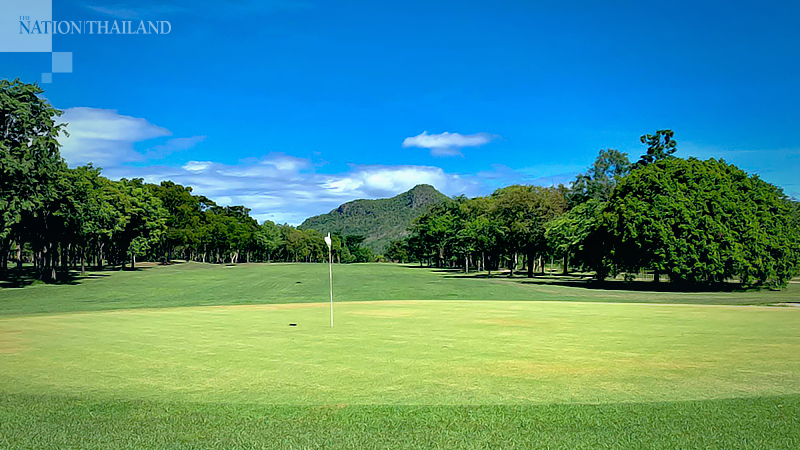 Photo credit: Mida Golf Club Kanchanaburi


 Dr Opas Karnkawinpong


