The Centre for Covid-19 Situation Administration (CCSA) is planning to remove four eastern provinces, namely Chonburi, Rayong, Chanthaburi and Trat, from the “red zone” list, the Public Health Ministry said.
Deputy Public Health Minister Satit Pitutacha said CCSA will look into this option on Thursday, and if it removes the red flag on these provinces, then Samut Sakhon will be the only red zone in the country.
Once the four provinces are given the orange flag, restaurants there will be allowed to serve until 10pm, he added.
Satit said CCSA will also study the option of allowing public consumption of alcohol and holding concerts and other gatherings.
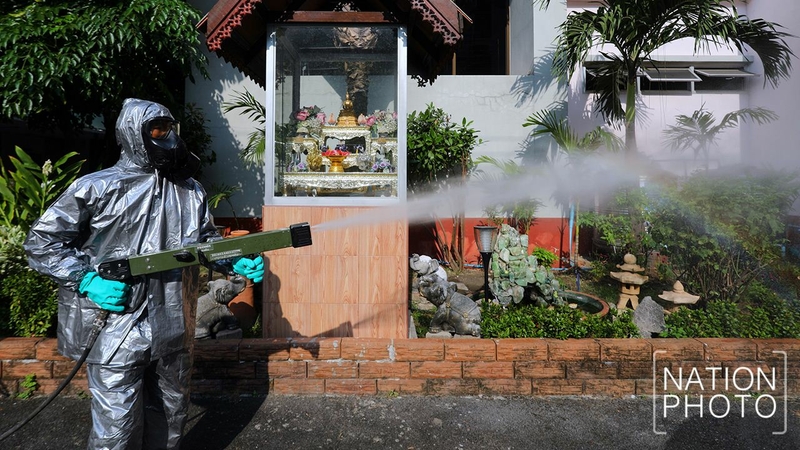
Officials from the Army’s chemical department sanitise areas inside Bangbua School in Bangkok’s Chatuchak district on Tuesday, in response to plans to reopen schools from next month.
Meanwhile, the Centre for Covid-19 Situation Administration reported 959 new cases on Tuesday, the highest number in a single day since the virus hit the country last year.
Of the new cases, 89 had been exposed to the virus by visiting high-risk areas.
Samut Sakhon had the highest number of infections with 70, followed by 17 in Bangkok, one in Samut Songkhram and one in Ubon Ratchathani.
Proactive testing led to the discovery of 848 cases – 760 foreigners and 84 Thais – in Samut Sakhon, and four Thais in Bangkok.
In response to doubts raised about the government’s Covid-19 vaccination plan, Public Health Minister Anutin Charnvirakul said in a Facebook post that the government has carefully considered every decision and was not careless as claimed by Progressive Movement leader Thanathorn Juangroongruangkit.
In a Facebook Live session on January 18, Thanathorn accused the government of being careless over negotiations for the vaccine, pointing out that discussions with AstraZeneca were only completed in October last year.
He also pointed out that the 26 million doses purchased from AstraZeneca and the 2 million from China’s Sinovac would only immunise 21.5 per cent of the population.
Thanathorn also raised concerns over transparency in the government’s decision to hand the job of local production of the vaccine to Siam Bioscience, which is owned by the King.
In response to the accusation of procuring an insufficient number of doses, Anutin said the law prohibits the government to purchase a product that has not been produced. Besides, he said, if the government paid for the vaccine in advance, it would not have been refunded in case the vaccine failed.
He added that the AstraZeneca vaccine was chosen not only because it is cheap, but also because it is more suitable for use in Thailand compared to vaccines produced by other companies.
Moreover, he said, it was AstraZeneca that chose Siam Bioscience to manufacture its products, adding that the government had no intention to only focus on a few vaccine producers.
He also said in the first phase, the government purchased 26 million doses from AstraZeneca and another 2 million from Sinovac under the advice of the national vaccine committee.
He said the committee believed the situation in Thailand was not as severe as in other countries, so the government need not purchase a huge number of doses. Besides, he said, the National Vaccine Institute has booked another 35 million doses from AstraZeneca.
“The 63 million doses should cover some 31.5 million people, or 63 per cent of the country’s population, not including pregnant women and those under 18, which will be enough to immunise the entire country,” he said.
The minister also pointed out that the inoculations will not bring life back to normal right away, adding that it was just a tool to control the virus and prevent severe cases.
The minister concluded his post by thanking Thanathorn for paying attention to the government’s work.
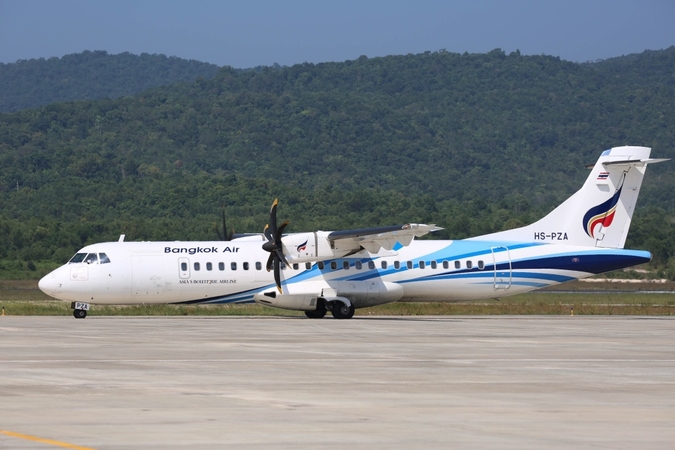
Bangkok Airways will resume its direct flights from Bangkok to Trat and Sukhothai from February 1 onwards.
The resumption of these two flights from Bangkok’s Suvarnabhumi Airport will bring the number of destinations covered by the airline to seven, including Samui, Phuket, Krabi, Lampang and Chiang Mai.
However, flights between Phuket and Hat Yai, Phuket and U-Tapao and Phuket and Samui remain suspended until March 27.
The airline will also keep its passenger lounges, airport service kiosks and its ticketing office on Bangkok’s Vibhavadi Rangsit Road closed until February 28.
In response to calls from Phuket’s tourism sector, governor Narong Woonciew agreed recently to relax quarantine measures for visitors from Bangkok and 20 other provinces.
The 14-day quarantine measure will be lifted for people from Tak, Saraburi, Pathum Thani, Ayutthaya, Suphanburi, Lopburi, Singburi, Kanchanaburi, Nakhon Nayok, Ranong, Chumphon, Prachuap Khiri Khan, Sa Kaew, Ratchaburi, Phetchaburi, Samut Songkhram, Ang Thong, Chachoengsao, Prachinburi and Samut Prakan, as well as Bangkok.
He said visitors from these provinces are required to strictly follow strict measures under the new normal, including wearing masks, avoiding crowds and observing their health.
However, travellers from the seven maximum-control provinces, namely Samut Sakhon, Nakhon Pathom, Nonthaburi, Chanthaburi, Chonburi, Rayong and Trat, will still have to undergo a 14-day quarantine.
Meanwhile, Phuket Tourist Association’s president Bhummikitti Ruktaengam said the vaccine may help the tourism industry recover, especially if foreigners are allowed in from October onwards.
He said if every foreigner entering Phuket was vaccinated and up to 70 per cent of the island’s population was inoculated, then people will be confident that tourists will not bring new infections.
He said the government should start planning to reopen the country soon and come up with clear answers for the private sector, otherwise, all tourism-related businesses will die.
A record number of leatherback turtles have hatched in Phang Nga province as the endangered species makes a dramatic comeback on southern beaches.
Marine biologist Dr Thon Thamrongnawasawat said 78 leatherback hatchlings had emerged from their nest on Bang Kwan Beach in Phang Nga province on Monday night.
“With the 305 baby turtles born earlier, we have now seen 383 leatherback hatchlings walk into the sea this season – higher than last season’s tally of 351,” he said. “This is also the highest number in the past 10 years, and it will keep growing until the season ends, as we have eggs in nine more nests waiting to hatch.”
The turtles’ egg-laying season lasts from October until March. Thon said pregnant turtles will lay eggs in a few more nests on the beach before this season ends.
Leatherbacks are protected under the Wild Animal Reservation and Protection Act, but egg-laying turtles had disappeared from Phang Nga’s beaches until six years ago.
The Department of Marine and Coastal Resources has taken measures to protect the turtles on the beach, erecting fences, monitoring nests with CCTV, and deploying patrols to ensure turtles are not disturbed.
“I want to thank everyone involved in this achievement, including the Natural Resources minister, the department chief, Phang Nga’s governor, department officials and volunteers, as well as everybody who kept the beach clean of plastic waste, which has helped bring the turtles back,” said Thon.
“This is undoubtedly the greatest marine achievement in Thailand that I have seen in my 30 years of working in the field.”
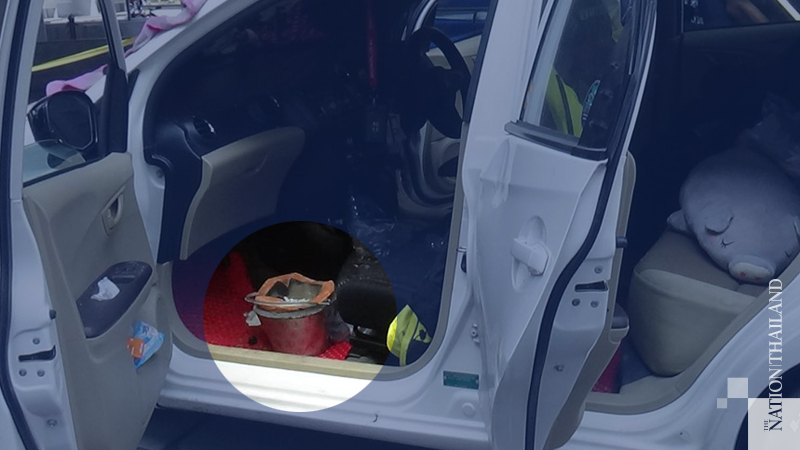
A 40-year-old was found dead in his car parked under the Talat Phlu BTS station on Tuesday morning, and police suspect he may have died from smoke inhalation.
Police found a charcoal stove inside the car and the owner, Kritikorn Meemungkra, lying down with a framed photo of his family on his lap.
The first person to spot him was 54-year-old street sweeper Sitthisa Matmongkol. She said she had noticed the car a lot earlier, but did not think it unusual, until she spotted the burning stove inside. She said she tried to wake the person in the car, and after failing to do so she called the police.
The dead man’s wife, Tharida Wattanamongkol, 27, said her husband had tried to kill himself twice before, adding that he had self-abusive tendencies. He worked in a nightclub. Police are investigating his death.
In a Facebook post at the start of this year, BioThai Foundation listed statistics showing 5,086 people had killed themselves between October 2019 to September 2020. This means 7.75 out of every 100,000 people.
BioThai said the number of suicides over the past year was the highest in 18 years, and that the number rose during Thailand’s first lockdown.
Data shows that up to 54,000 people try to kill themselves in Thailand each year, and some 4,000 are successful in the attempt on their lives.
Data for 2020 demonstrates that the economic crisis triggered by Covid-19 was a key factor in suicides.
Suicides have been on the rise since 2017, with men accounting for the highest number of deaths.
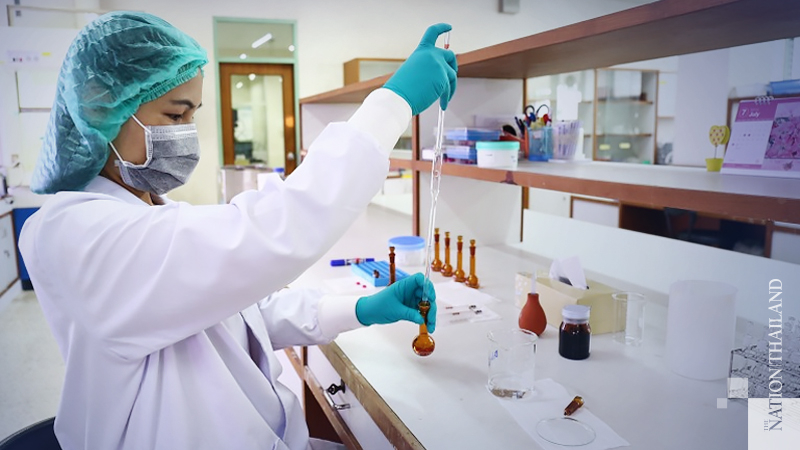
The use of medical cannabis is a key government policy and the Drug and Narcotics Bureau under the Department of Medical Sciences is testing and developing health products from cannabis and hemp, said Supakit Sirilak, the department’s director.
In August last year, a local laboratory testing active substances in cannabis plants, extracts and oil became the first lab in Thailand to be granted international standards certification.
The laboratory tests samples for strength and residues such as heavy metals, pesticides, mycotoxins, fungicides and contaminated microorganisms etc.
“Now the testing technique has been passed on to medical science centres nationwide for the analysis of vital substances and residues, and now they can develop laboratories outside the department’s jurisdiction. This will assure the quality and safety of cannabis products,” Supakit said.
The Cabinet on Tuesday approved reduction in social security contributions to Bt75 for two months.
The meeting approved measures to help the insured under Section 33 as proposed by the Ministry of Labour by reducing contributions to the Social Security Fund on the part of employees from 3 per cent, or contributions up to Bt450, to 0.5 per cent, or contributions up to Bt75, for two months (February – March)
Employers will still send their 3 per cent contribution to the Social Security Fund or up to Bt450 for three months (January – March).
Since the first Covid-19 patient was reported in China’s Wuhan city 391 days ago, the number of cases across the world hit 100 million on Monday.
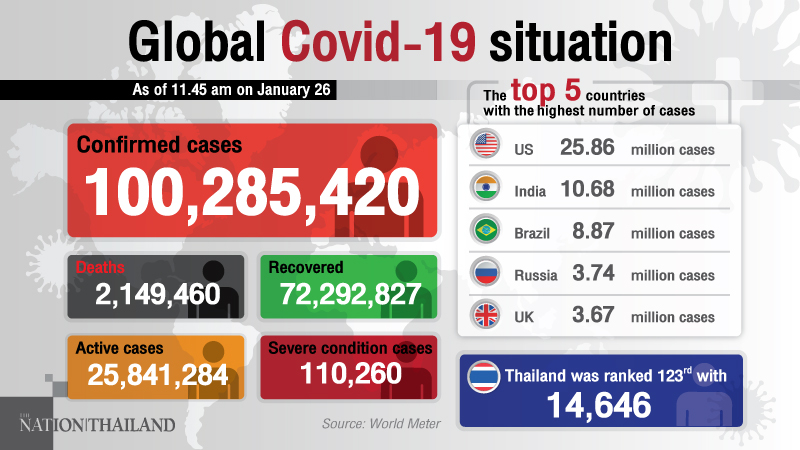
As of 11.45am on Tuesday, 100,285,420 patients were confirmed across the world, of whom 2,149,460 have died and 72,292,827 have recovered. Nearly 26 million patients are still under treatment, with 110,260 in severe condition.
The top five countries with the highest number of cases are the US with 25.86 million, India with 10.68 million, Brazil 8.87 million, Russia 3.74 million and the UK with 3.67 million cases. Thailand was ranked 123rd with 14,646 cases.
According to data released by the Higher Education, Science, Research and Innovation Ministry, the coronavirus took 311 days to infect the first 50 million people, while the remaining 50 million were infected in just 80 days. Statistics also show that some 10 million people were infected in just 16 days.
Official statements from the Chinese government to the World Health Organisation (WHO) said that the first confirmed case had been diagnosed on December 8, 2019, followed by a cluster of pneumonia cases in Wuhan.
Then several countries, including Thailand, began announcing new cases and on January 30, WHO declared the novel coronavirus outbreak a public health emergency of international concern.
WHO then named this new disease caused by the novel coronavirus Covid-19. It said this name was chosen to avoid inaccuracy and stigma, which is why it did not refer to a geographical location, an animal, an individual or group of people.
The WHO declared the Covid-19 outbreak a pandemic on March 11, 2020.

 Satit Pitutacha


 Anutin Charnvirakul
 Photos: Facebook @DMCRTH