Chart Pattana Kla Party ‘ready’ for general election as it unveils Chatichai statue
THURSDAY, OCTOBER 13, 2022
Chart Pattana Kla Party held a ceremony to unveil a statue of former prime minister and first Chart Pattana Party leader Chatichai Choonhavan at its headquarters in Nakhon Ratchasima on Wednesday.
The party said it was all set and ready to contest the general election scheduled for next year.
Chart Pattana was officially renamed Chart Pattana Kla Party on September 26 to reflect the alliance between Chart Pattana and Kla.
Chart Pattana Kla chairman Suwat Liptapanlop said Chatichai had played an important role in Thai politics from 1972 to 1991.
“Chatichai’s policies, including the one to “change the battlefield to the trade field”, and the Eastern Seaboard development had boosted Thailand’s economic growth to as high as 10 per cent of gross domestic product,” Suwat pointed out.
He said Chatichai had built strong ties with Nakhon Ratchasima locals through several projects, such as the Suranaree Industrial Zone, Suranaree University of Technology and Nakhon Ratchasima Zoo.
Suwat went on to say that the Chart Pattana Kla Party is ready for the general election after the Asia-Pacific Economic Cooperation (Apec) Summit in November.
The summit is an opportunity for Thailand to boost confidence in trade and among investors, he said.
“It is up to members whether the party will be able to make a great comeback in the upcoming general election or not,” he said matter-of-factly.
Suwat strongly believes the cooperation with former finance minister and Kla leader Korn Chatikavanij will help boost Chart Pattana Kla Party’s potential in tackling economic crises.
Meanwhile, Korn said he was “proud” to get an opportunity to attend the ceremony as Chart Pattana Kla is “playing an important role in the country’s development”.
“Suwat and I aim to enable Thailand to see prosperous trade similar to that during Chatichai’s era,” he added.
Apart from serving as Thai ambassador as well as foreign and industry ministers, Chatichai was as the prime minister from August 1988 until a coup d’état in February 1991.
He died aged 78 from liver cancer in a hospital in London on May 6, 1998.
Thaksin offers to help Prayut suppress narcotics trafficking
WEDNESDAY, OCTOBER 12, 2022
Former premier Thaksin Shinawatra, whose notorious “war on drugs” policy led to the killing of more than 2,800 people in “three months”, has offered to help Prime Minister Prayut Chan-o-cha bring an end once and for all to drug trafficking.
During his “CareTalk & Care” programme on the ClubHouse platform on Tuesday, Thaksin boasted he would need only six months to effectively end the drug problem.
“You should not have an attitude that even 100 prime ministers cannot solve the issue,” Thaksin said, directing his words at Prayut during his online talk show.
“If you don’t want to do it or are unable to do it, I can help. I’ll be in control of the issue in six months and then you can take credit. [I offer to help] out of love and concern for the country and our children because it’s uncertain how many more drug-related incidents would happen again.”
The Thaksin government launched its “war on drugs” in February 2003 to suppress drug trafficking and prevent substance abuse, much to the satisfaction of many Thais, who were naturally fed up with drug-related violence.
In the first three months of the campaign, some 2,800 extrajudicial killings took place.
In August 2007, the military-installed government of General Surayud Chalanont appointed a special committee to investigate the extrajudicial killings during the 2003 war on drugs. The committee’s report – which has never been made public – said that of 2,819 people killed between February and April 2003, more than 1,400 were unrelated to drug dealing or there had been no apparent reason for their killings.
In an article, late former senator Kraisak Choonhavan wrote that the “war on drugs” saw 2,873 Thais dead in a matter of three months – from February to April 2003. He said the victims included whole families, women, children and even the elderly.
Thaksin on Tuesday insisted that 2,000 people were killed during the period. He claimed the death toll included “unnatural deaths” and “accidents”.
“Only 80 were killed related to drugs but I did not order the killings. Of course, when the government suppressed trafficking, the traffickers killed one another to eliminate links to them because they were afraid of being arrested,” Thaksin argued.
He said after his government was toppled in a coup, the coup maker used the rhetoric of “Ka Tud Ton”, or “elimination to cut links to act against him”.
During the talk, Thaksin squarely blamed the Nong Bua Lamphu massacre by a sacked police sergeant on economic mismanagement by the Prayut government and by “politicians in power demanding money from police officers in exchange for promotions to the post of station chiefs”.
To prevent more violence, Thaksin said, the government must grant an amnesty to owners of illegal firearms to encourage them to hand over their guns to the authorities before the government cracks down.
Thaksin said Thailand is ranked 13th in the world and first in Asean as the country with the most guns. He said Thais now possess about 10.3 million guns, 40 per cent of which are illegal firearms.
According to the exiled PM, former interior minister Chavarat Charnvirakul enacted a wrong policy when he allowed law officers to buy their own guns under a welfare programme, which meant ex-officers could still hold guns.
The sacked policeman who committed the massacre used his welfare pistol during the rampage.
Thaksin said police and soldiers must be required to register all guns in their possession.
He warned the Nong Bua Lamphu violence was the tip of the iceberg as there were many drug addicts who could turn violent later.
He claimed politicians in power allegedly demanded up to 30 million baht in exchange for promoting police officers to station chiefs so these chiefs had to recoup their investments by engaging in social vices as well as selling drugs or providing protection to drug traffickers.
Thaksin said the economic slump because of mismanagement by the government also prompted “many” to become drug pushers.
Time for Prayut to turn his back on Myanmar junta and back a bolder Asean response
MONDAY, OCTOBER 10, 2022
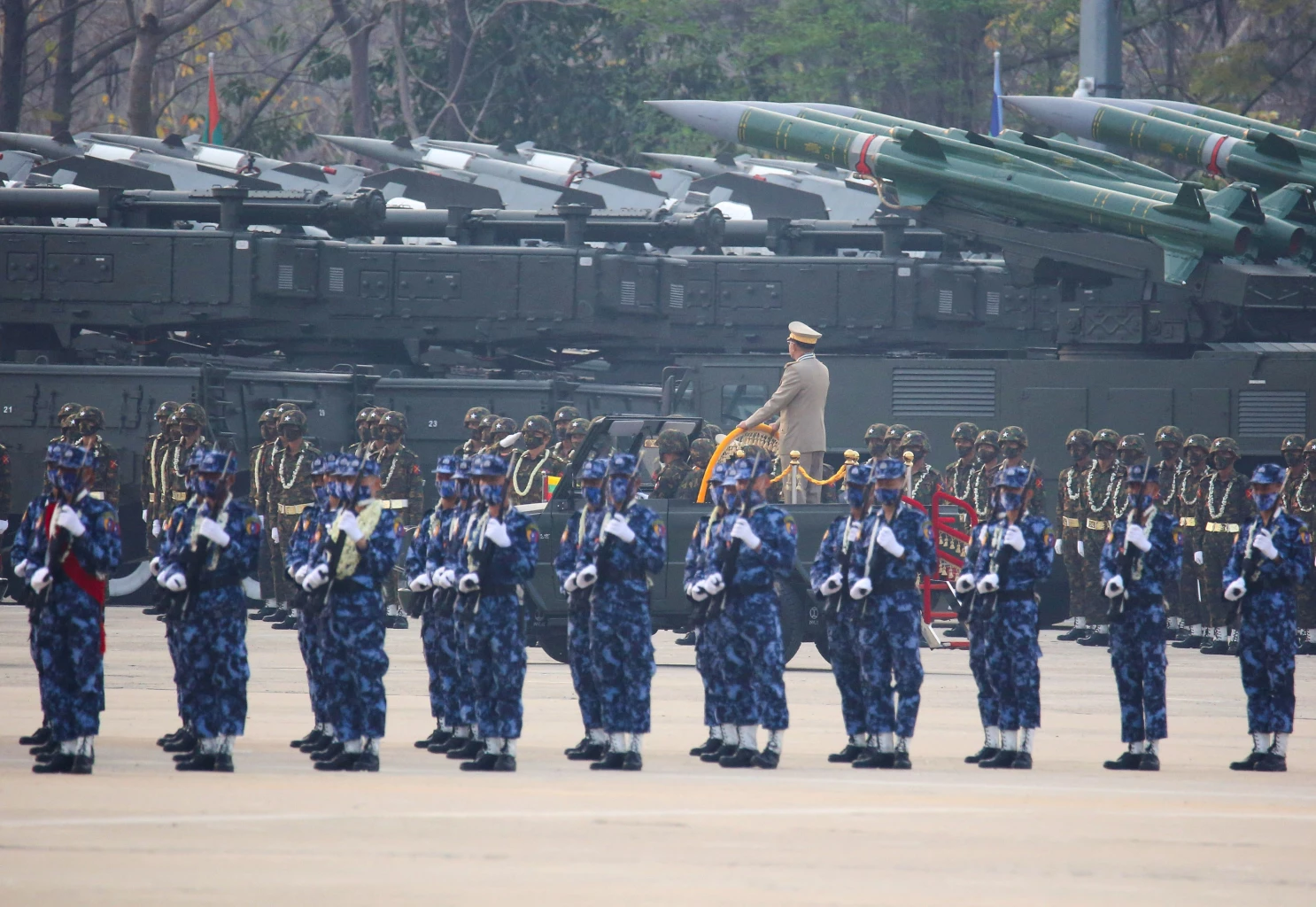
Thailand’s Prime Minister Prayut Chan-o-cha must be enthusiastic about attending the Asean leaders’ biannual summit in Phnom Penh next month, especially the session on measures to end the Myanmar junta’s killings and oppression.
Prayut’s nearly unconditional support for junta leader General Aung Min Hlaing has made it more difficult for regional leaders to reach decisive agreements because they know Prayut with come to Hlaing’s rescue.
Prayut’s failure to change his attitude will be damaging to the central role Thailand has long played in Asean. When Indonesian President Joko “Jokowi” Widodo hosted an Asean emergency summit in Jakarta on April 24, 2021, the Thai premier did not turn up, citing the Covid-19 pandemic and his busy schedule. At the summit, General Hlaing vowed to comply with a five-point consensus that included the immediate cessation of violence against civilians and a dialogue with all concerned parties in Myanmar, including Aung San Suu Kyi.
Once he arrived home, Hlaing refused to carry out his pledge. After seizing power from the democratically elected government of Suu Kyi in February 2021, Hlaing immediately contacted Prayut, seeking guidance on how to stay in power. Hlaing had come to the right person, not only because Prayut was his close friend, but also because the Thai Army general had himself toppled the elected civilian government of Yingluck Shinawatra.
Prayut holds a unique position among Asean leaders but is similar to the Myanmar’s junta leader. Prayut launched a coup against prime minister Yingluck, the sister of former PM Thaksin Shinawatra, in 2014 and appointed himself the prime minister. A questionable general election in 2019 granted him another four years of rule. Last month, the Constitutional Court rejected a petition by opposition parties on an end to Prayut’s premiership. The opposition groups had argued that the prime minister had already completed his constitutional limit of eight years in power, counting his time as coup leader. The court said the term limit law had come into force in 2017 after the Constitution was promulgated, and therefore, Prayut would reach his term limit only in 2025.
Thailand is scheduled to hold a general election next year, as does Myanmar. Thailand is very familiar with military coups and constitutional amendments. The country has seen 13 successful and nine unsuccessful coups. It has also revised its Constitution 20 times. Despite its political vulnerability, the country remains stable and its economy continues to grow.
Next month in Cambodia, Asean leaders will host meetings with their dialogue partners from China, Japan, South Korea, Australia, India and Russia. The endless atrocities in Myanmar will be an important topic of discussion. Hopefully this time around, the Thai leader will distance himself from Hlaing for the sake of Myanmar’s people and Asean unity. Several Asean leaders have expressed their intention to get tougher on the Myanmar junta, and the group has barred General Hlaing from attending next month’s summit.
Unwavering support for the Myanmar junta will cost Thailand its traditionally strong influence in the regional grouping. If that happens, it will be big a loss not just for Thailand but also Asean.
The bloc was established in Bangkok on August 8, 1967. Since then, Thailand, the only nation in the region that has never been a colony of foreign forces, has always played a decisive role in Asean. It plays the leadership role especially for the other Asean countries where the Mekong River flows: Laos, Cambodia, Myanmar and Vietnam.
Asean foreign ministers are scheduled to hold a special session this month to issue their recommendations to their leaders ahead of their summit in Phnom Penh next month. They are now closer to the opinion that tougher action against Myanmar’s military regime is unavoidable. They will no longer wait for General Hlaing to repent. These bolder measures are supported by Indonesia, Malaysia, the Philippines and Singapore, while Malaysia, Cambodia and Brunei will be unlikely to resist the initiative, as the Myanmar junta has upset them. An option to suspend Myanmar’s Asean membership is not impossible, especially if the leaders agree to amend the 2007 Asean Charter with regard to the non-interference principle.
President Jokowi, Malaysian Prime Minister Ismail Sabri Yakoob and Singaporean Prime Minister Lee Hsien Loong have openly expressed their support for dealing directly with Myanmar’s ousted leader Suu Kyi and the military. New Philippine President Ferdinand “Bongbong” Marcos Jr has also voiced a similar view.
After taking over Asean’s chairmanship from Cambodian Prime Minister Hun Sen next month, President Jokowi will be in a stronger position to facilitate more decisive action against the Myanmar junta.
Prayut can exercise his power and influence to convince Myanmar to follow Asean’s way, or face punishment from the grouping. Thailand has been generally silent about the Myanmar issue. In representing Prayut at the UN General Assembly in New York last month, Deputy Prime Minister and Foreign Minister Don Pramudwinai said in his address to the UN Assembly that as an immediate neighbour to Myanmar, Thailand had a vital interest in seeing a quick return to peace and stability in Myanmar.
“Thailand fully supports the constructive role of Asean and believes that Asean is best placed to help Myanmar through the time-tested Asean practice of consultation, cooperation and consensus. Thailand will continue to play an active and constructive role to support this Asean process,” Don said.
The statement was too general and lacked clarity as to whether Thailand would throw its weight behind bolder Asean moves against Myanmar. Thailand used to play a key role in the policy-making of Asean. During the years-long negotiations among the warring parties in Cambodia in the 1980s and early 1990s, Indonesia was the chief negotiator, but without strong support from Thailand, as well as Vietnam, long-lasting peace would never have returned to Cambodia.
Now it is time for Prayut to demonstrate his statesmanship. He must work together with other Asean leaders to help Myanmar’s people gain freedom from the military’s oppression and atrocities.
Kornelius Purba
The Jakarta Post
Asia News Network
(The writer is a senior editor at The Jakarta Post.)
Opposition seeks special Parliament session for debate on Thailand’s drugs plague
MONDAY, OCTOBER 10, 2022
THE NATION
The opposition leaders said they will seek an extraordinary Parliamentary session for an urgent debate on drug abuse and trafficking, which they blamed for the Nong Bua Lamphu massacre.
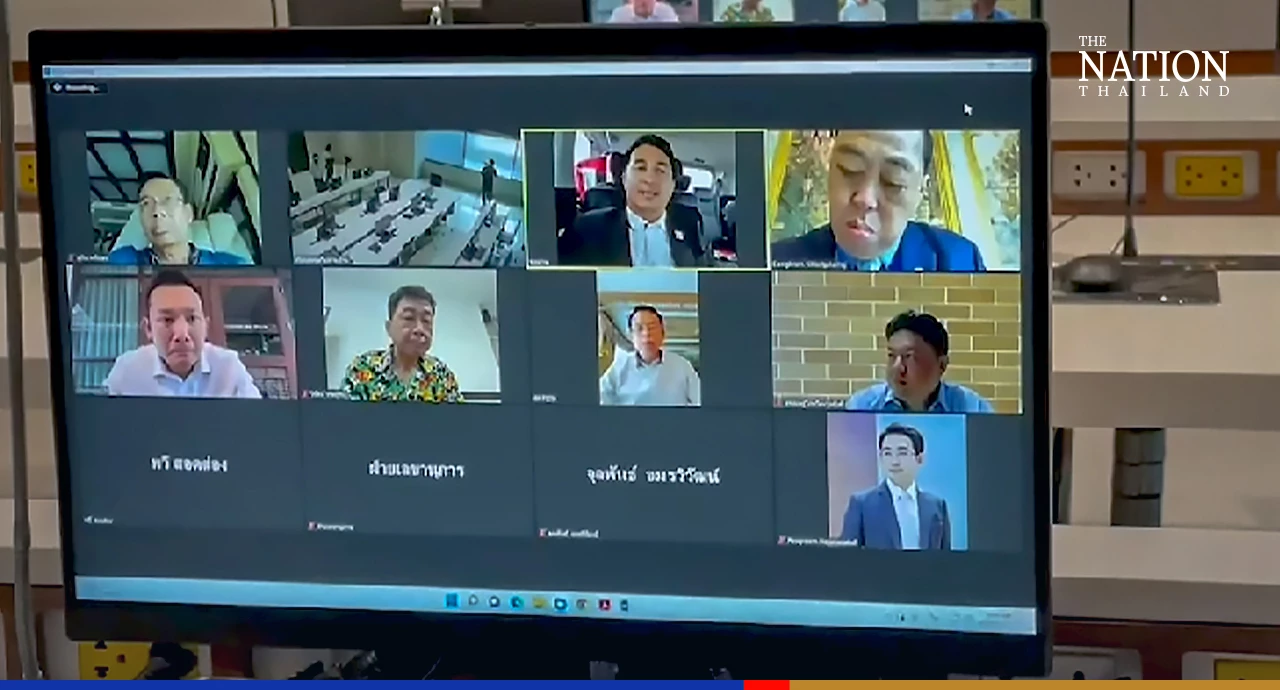
Leaders of opposition parties met on Monday virtually to discuss the issue of seeking a special Parliamentary session to discuss Thailand’s drug problems. The Parliament is in recess now.
Before starting, Pheu Thai Party leader Cholnan Srikaew asked the participants to observe a minute’s silence in memory of the Nong Bua Lamphu victims.
The opposition leaders then discussed Thailand’s scourge of drugs, which they said requires urgent attention, and agreed to submit a motion for the special session with Parliament President Chuan Leekpai.
The leaders said the number of opposition MPs may be enough to meet the quorum of a third of the members of both chambers, or 243 lawmakers, to submit the request for an extraordinary session.
Cholnan also told other parties that Pheu Thai had sent a statement to the Constitutional Court to defend draft organic laws that seek to amend the MP election and political party act.
Small parties want the court to find the two bills unconstitutional, but Pheu Thai does not believe the two bills contravene any article of the charter, Cholnan said.
It’s time for Pheu Thai to take over, says Paetongtarn as she urges Prayut to step aside
SUNDAY, OCTOBER 09, 2022
THE NATION
At an event announcing Pheu Thai Party’s key policies for the next general elections, former PM Thaksin Shinawatra’s daughter said General Prayut Chan-o-cha’s time as PM is over.
Paethongtarn Shinawatra, who oversees the Pheu Thai Party Family Programme and is expected to be the party’s top PM candidate, promised that Pheu Thai will bring economic stability after it sweeps up House seats in the next general election.
“Prayut’s time has run out. Let’s now countdown to economic strength and stability under the Pheu Thai government,” she said.
An opinion survey conducted by the National Institute of Development Administration showed that Paetongtarn was the top PM choice among voters in the Northeast.
Pheu Thai Party held an event in its headquarters on Sunday to announce its key economic policies as it prepares to contest in the next general election, which is tentatively scheduled for May 7.
In her speech, Paetongtarn said one of the key policies is to promote the “soft power” of Thai families.
She said the party’s policies came from people across the country brainstorming to come up with solutions to problems that have been plaguing the country for the eight years under Prayut’s leadership.
She pointed out that Pheu Thai has been successful in implementing economic policies in the past, such as increasing the minimum daily wage and promoting the One Tambon One Product (Otop) project. However, she said, Pheu Thai’s policies had been disrupted under Prayut’s leadership.
She added that the first step will be revising outdated laws to promote the soft power of families. The next step, she said, would be to redefine foreign policies and seek new markets and diplomatic ties while trying to create new income sources and reduce household debts.
She added that the party will also seek to amend the charter to leverage people’s power and reduce the power of senators.
In his opening speech, party leader Cholnan Srikaew said that Pheu Thai needed a landslide victory and at least 250 House seats in the next election to ensure its chance of forming a government.
He added that the party will win voters’ faith and confidence through its key economic policies.
Prommin Lertsuridej, chief of Pheu Thai’s policy committee, said if Pheu Thai wins the elections, it will focus on using technology and innovations to solve people’s problems and boost their income. It will also push for an overhaul of the agricultural sector, support small and medium enterprises, as well as create new economic zones.
He added that the Pheu Thai government will also implement a policy granting financial allowances to individuals, so they have funds to start their own businesses. The party will also promote a lifelong learning policy and transform its old Otop policy into a “one family, one soft power” policy, Prommin added.
“General Prayut’s eight years as the country’s leader has widened the economic gap. This government tackled the debt issue by creating more public debts. It took loans to distribute money. But Pheu Thai will tackle debt by creating new sources of income,” Prommin said.
“But we must first win support from the people to help us win the election so we can create solutions for the country.”
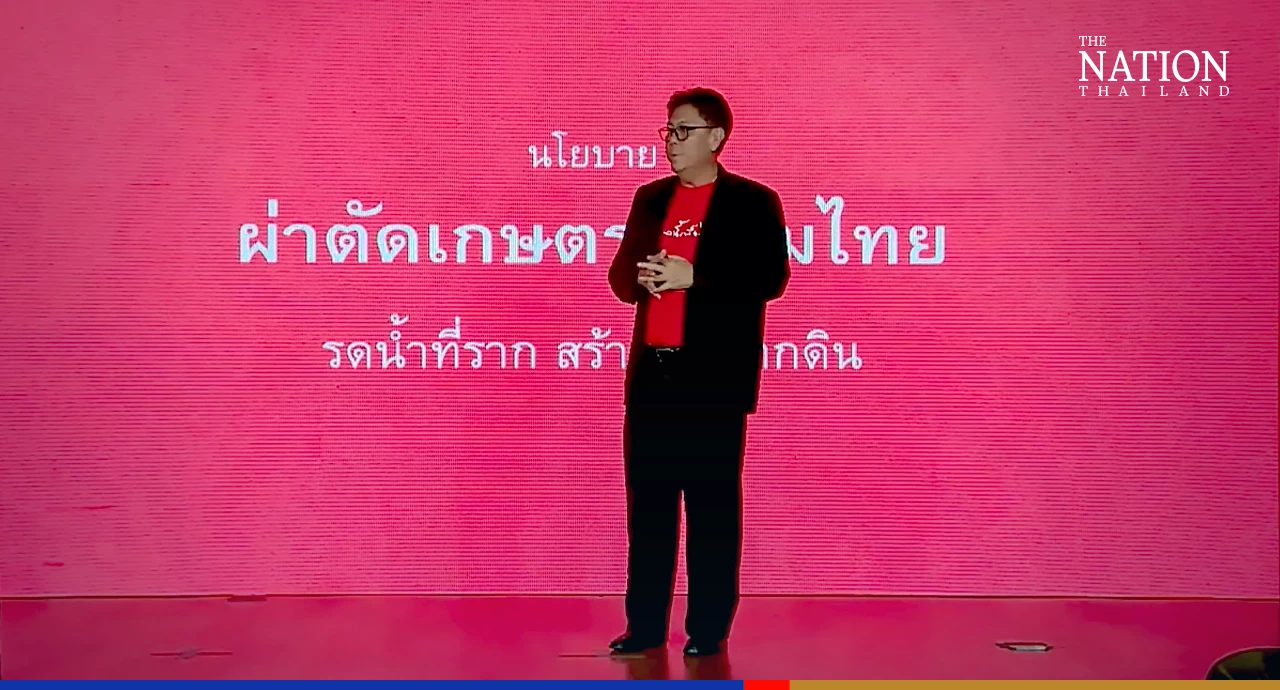
Wisut Chai-aroon, a Pheu Thai MP for Phayao, said the party aims to overhaul the agricultural sector so farmers’ yearly income can rise to at least 30,000 baht per rai. To achieve this, the party will use innovative technology to help reduce farmers’ costs and come up with marketing plans to help farmers sell their products and expand their harvests.
Pheu Thai will also implement a debt-moratorium project for farmers, Wisut added.
Paophum Rojanasakul, the party’s deputy secretary-general, said the party would try to create new self-reliant economic zones that have their own educational facilities and public utilities. This would help people and private companies to have more income.
Sutin Klungsang, Pheu Thai’s deputy leader, said the party’s policy of providing financial help to poverty-stricken people will be based on their income. He said to be eligible for the allowance, people must first prove their income is below the poverty line. The allowance will then be calculated to raise the recipient’s income and encourage them to start working to earn a sustainable income, Sutin said.
Nahathai Thewphaingarm, chair of the Pheu Thai’s education and human resources committee, said the party will implement its “lifelong learning, lifelong earning” policy if it becomes the next government.
She said the policy will bring internet connections to all communities and all children will be given tablet computers to promote lifelong learning.
Thaksin’s daughter, Pheu Thai Party top choices for Isaan voters, poll finds
SUNDAY, OCTOBER 09, 2022
THE NATION
Former PM Thaksin Shinawatra’s youngest daughter and his defacto Pheu Thai Party are the top favourites among voters in the Northeast, a recent opinion poll found.
The survey was conducted by the National Institute of Development Administration (Nida Poll) on 2,000 people in the Northeast from October 3 to 6. Respondents were at least 18 years old and came from all walks of life with different education backgrounds and income levels.
Thaksin’s daughter, Paetongtarn Shinawatra, who leads the Pheu Thai Family Programme, received overwhelming support from 36.45 per cent of the respondents, leaving the second choice – Move Forward Party leader Pita Limjaroenrat – far behind.
In response to who the Isaan people would support as the next PM, the results were:
• Paetongtarn Shinawatra: 36.45%
• Pita Limjaroenrat: 12.65%
• Khunying Sudarat Keyuraphan (Thai Sang Thai Party leader): 10.20%
• Prime Minister Prayut Chan-o-cha: 9.85%
• Sereepisuth Temeeyaves (Thai Liberal Party leader): 6.50%
• Cholnan Srikaew (Pheu Thai leader): 3.95%
• Public Health Minister Anutin Charnvirakul (Bhumjaithai Party leader): 2.80%
• Dr Somkid Jatusripitak (Sang Anakhot Thai Party’s tentative PM candidate): 1.30 per cent.
Nida Poll also found that Pheu Thai Party beat other parties in the Northeast in both constituency-based and party-list elections with support from 54.35 per cent and 51.40 per cent of respondents respectively.
When asked which party they would vote for in constituency elections, the response was:
• Pheu Thai: 54.35%
• Move Forward: 13.60%
• Bhumjaithai: 5.60%
• Palang Pracharath Party: 5.30%
• Democrat Party: 3.05%
• Thai Sang Thai: 2.55%
• Thai Liberal Party: 1.95%
• Chart Pattana Kla Party: 1.35%
• Chart Thai Pattana: 1.15%
• Sang Anakhot Thai: 1.10 per cent
Which party they would vote for in party-list elections, the response was:
PM and Cabinet members visit massacre site, offer moral support to grieving families
FRIDAY, OCTOBER 07, 2022
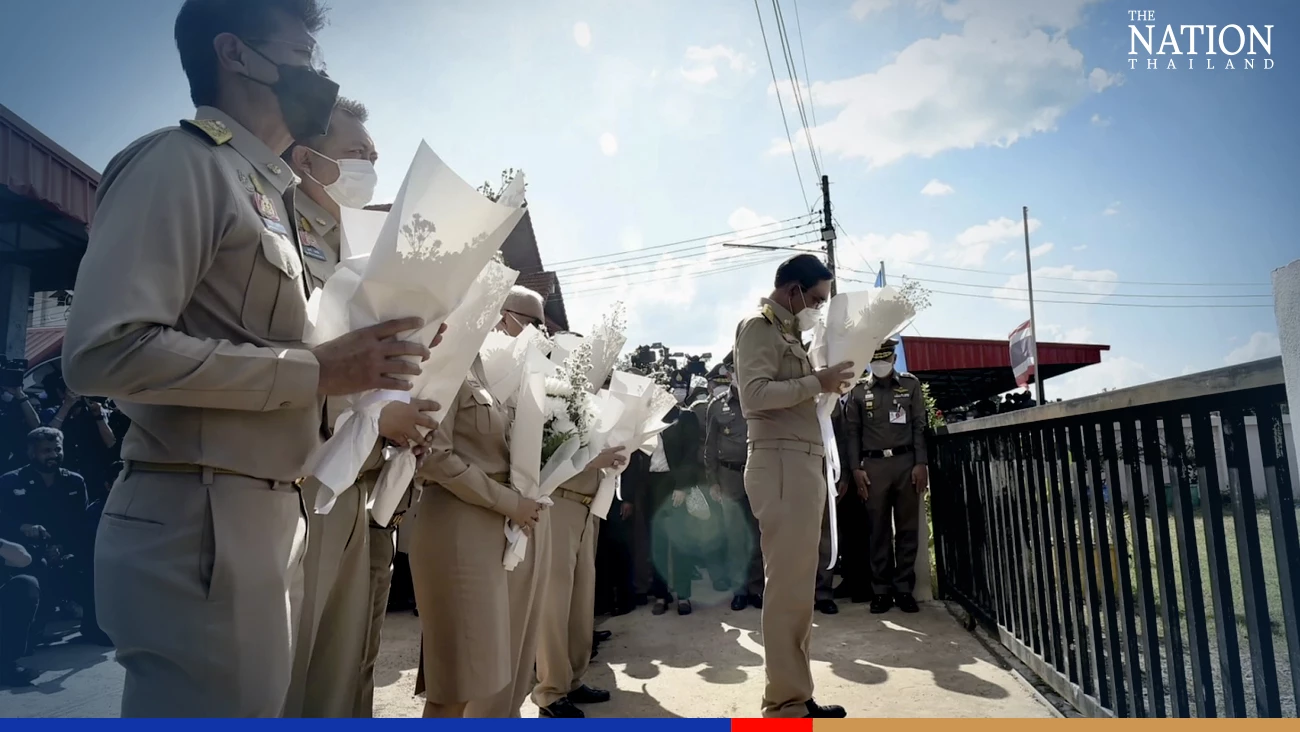
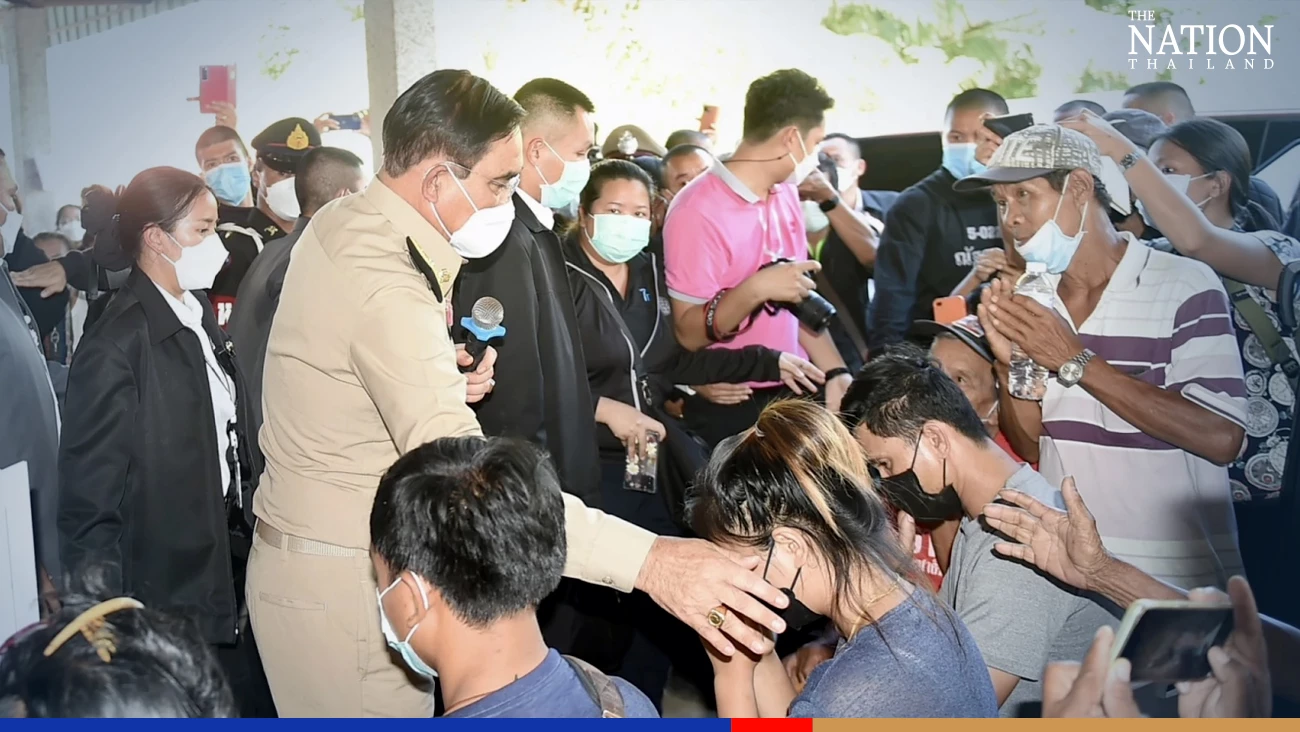
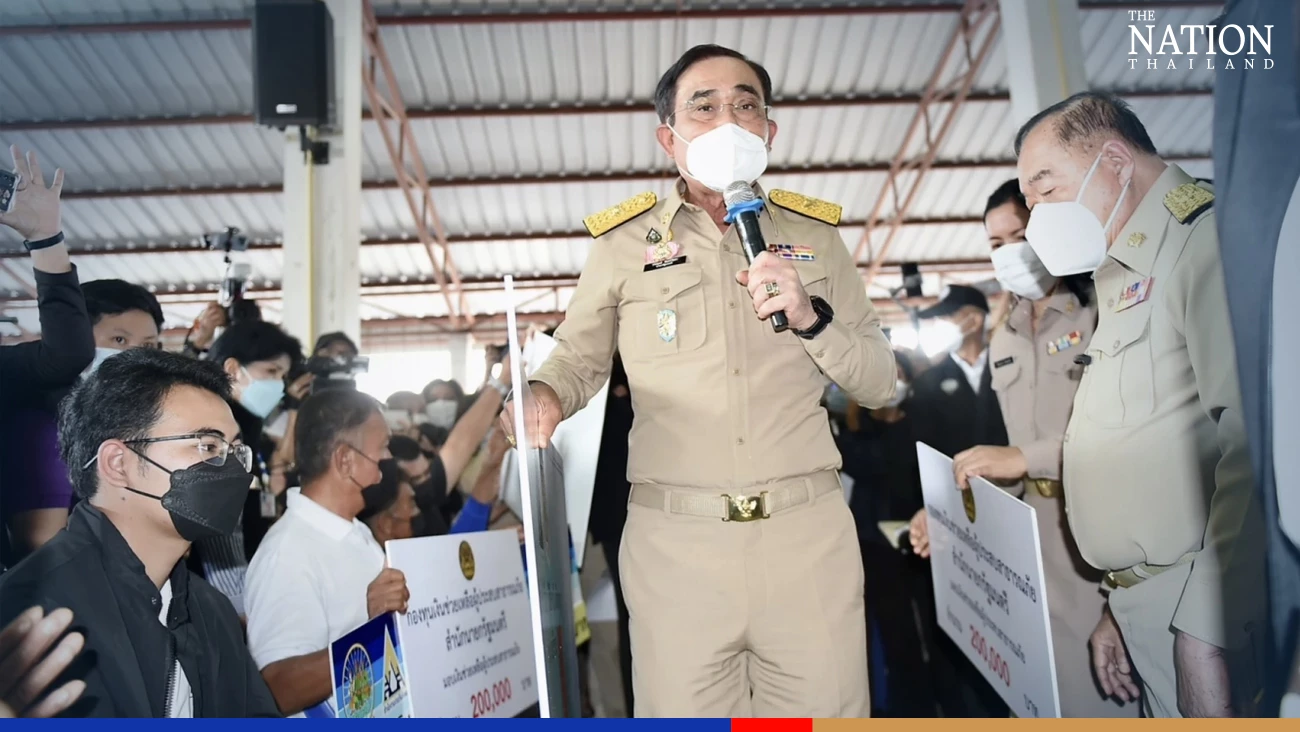
Prime Minister Prayut Chan-o-cha and his Cabinet members on Friday offered their moral support to the grieving families of the Nong Bua Lamphu massacre victims.
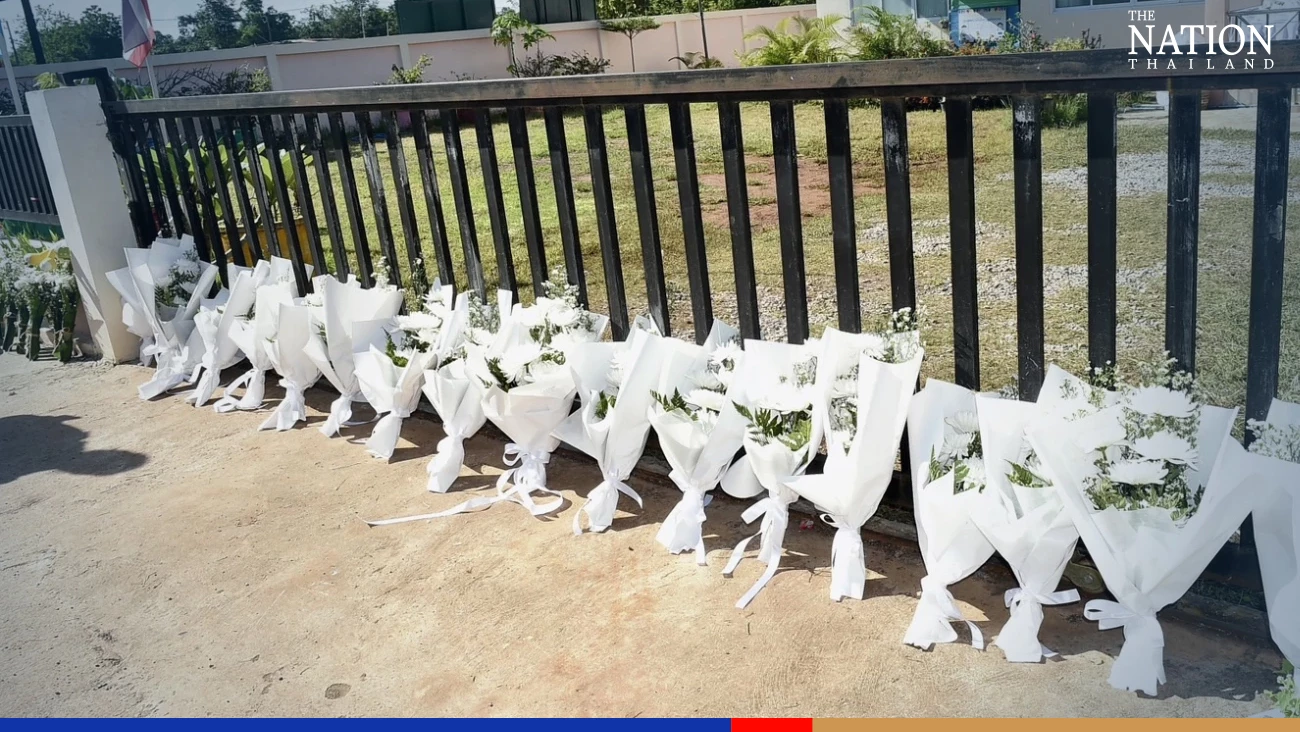
General Prayut placed a bouquet of flowers in front of the nursery gate in Na Klang district where the tragedy occurred on Thursday. Other Cabinet members followed suit.
Thirty-eight people, including 24 young children, were killed by a 34-year-old former police officer, Panya Khamrab. Ten others were injured in the attack, which involved a gun and knife.
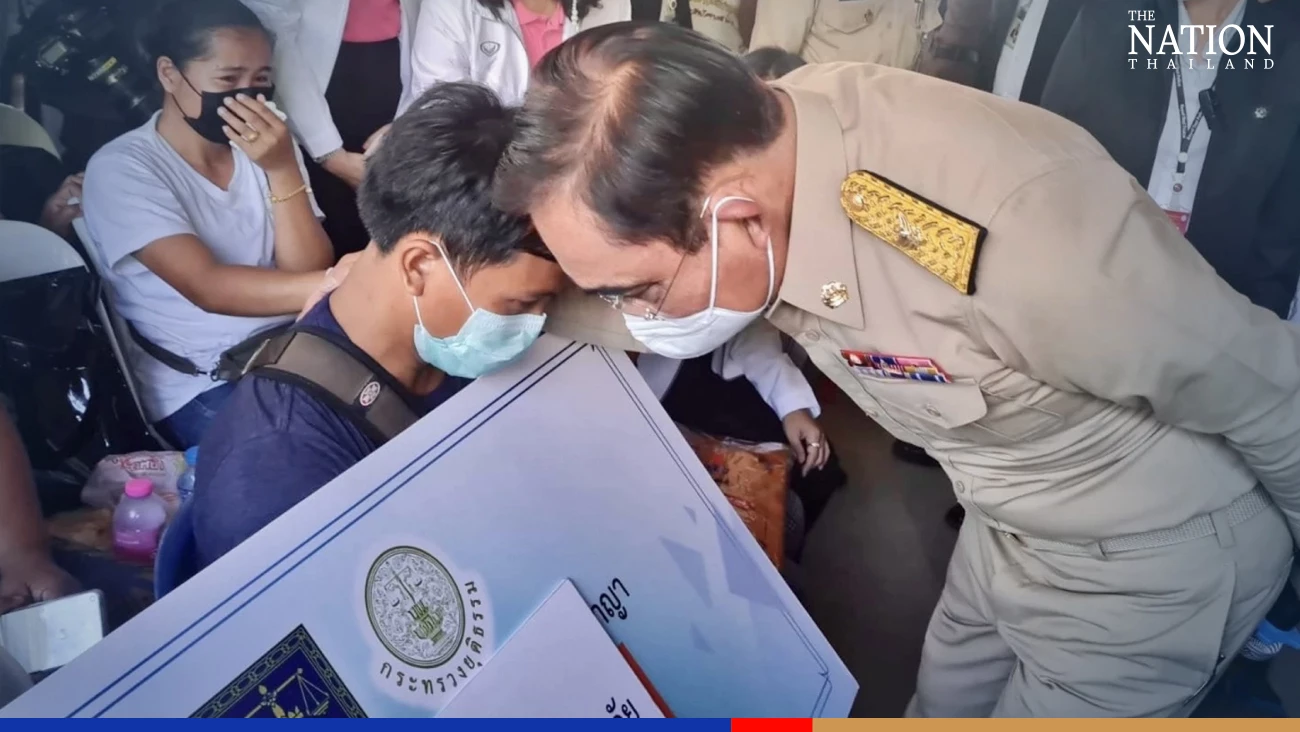
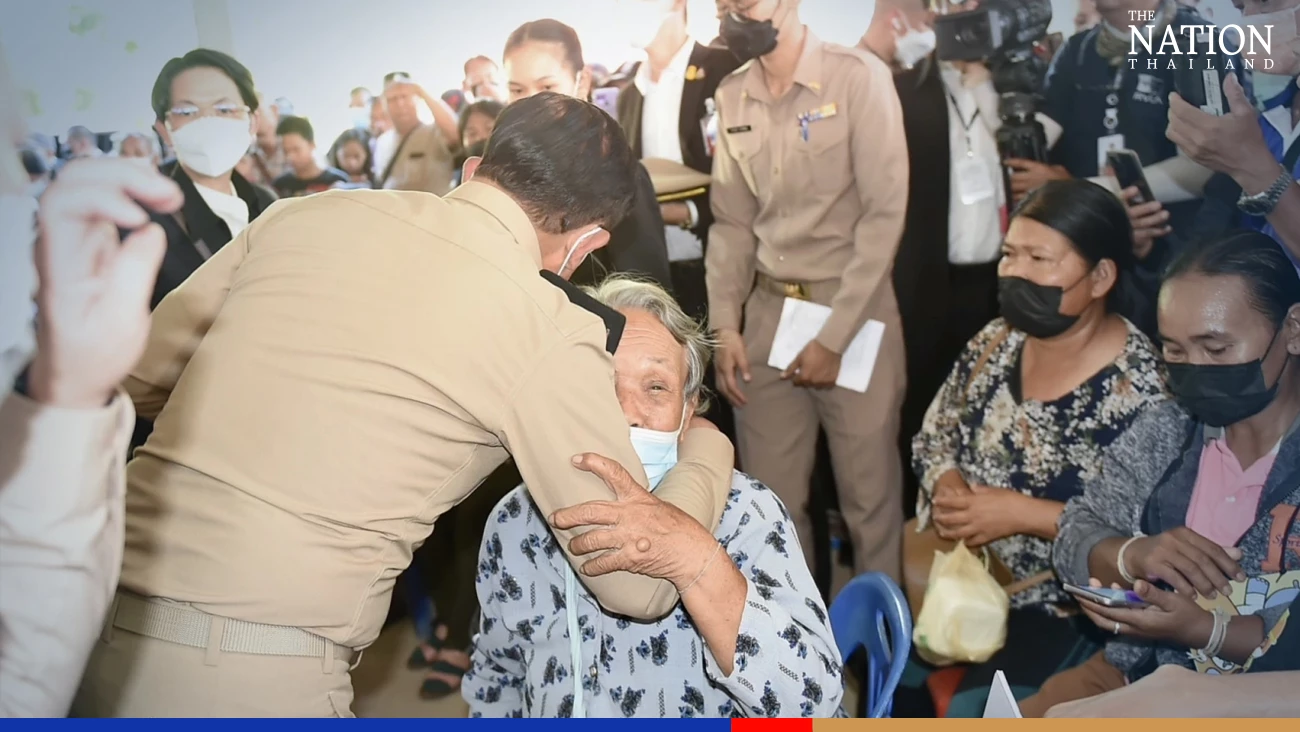
The prime minister and his Cabinet members also went to the Uthai Sawan Tambon Administrative Organisation, where grieving family members of the victims were gathering.
Prayut expressed his condolences in person and offered them his moral support for their loss.
Make controls on drugs, gun ownership part of national agenda: Madame Dear
FRIDAY, OCTOBER 07, 2022
Suppression of narcotics and firearm ownership control should be made part of the national agenda, former MP Watanaya Bunnag said on Friday.
She said these two issues came under the spotlight after the mass shooting of children and teachers at a nursery in Nong Bua Lamphu on Thursday.
“The disaster, which has saddened people across the world, reflects the malignant issues of drugs and weapons that are eating into Thai society. We have experienced unprecedented violence,” the former MP said in her Facebook post.
The politician, who is also known as “Madame Dear”, called on her compatriots to push for drug suppression and gun control to be made part of the national agenda.
She said all firearms carried by police and military officers must be returned once they are dismissed from duty, and tougher penalties must be put in place for illegal gun trade and production of homemade devices.
Watanya also pointed out that Thailand’s drug problem seems to be worsening.
“I plead for strict enforcement of drug-control laws and for relevant authorities to do their job efficiently,” she said.
Watanya recently left the ruling Palang Pracharath Party to join the coalition Democrat Party. She is set to be assigned to a key role in the Democrats’ campaigning in Bangkok in the run-up to the next general election, party leader Jurin Laksanawisit said.
Suchatchavee, ‘Madame Dear’ to play key roles in Democrats’ Bangkok campaign: Jurin
THURSDAY, OCTOBER 06, 2022
Bangkok gubernatorial candidate Suchatchavee Suwansawas and former MP Watanya Bunnag will be key figures in the Democrat Party’s election campaign in the capital, party leader Jurin Laksanawisit disclosed on Thursday.
They will be joining deputy Democrat leader Ongart Klampaiboon, who is responsible for the city, Jurin said.
Watanya, also known as “Madame Dear”, recently joined the Democrats after leaving the ruling Palang Pracharath Party. She is the wife of Nation Group CEO Shine Bunnag.
Jurin said on Thursday that the trio would lead the Democrats’ campaign in Bangkok in the run-up to the next general election, which has been tentatively scheduled for May 7. He voiced confidence in stronger support for the party, going by the response from the public.
“I am sure we can do better than the last time in Bangkok. Next week, Ongart will unveil important missions that the party assigns to Dr Ae [Suchatchavee] and Madame Dear,” Jurin said.
Suchatchavee came second in the Bangkok governor election in May although the gap between him and the winner, Chadchart Sittipunt, was over 1 million votes.
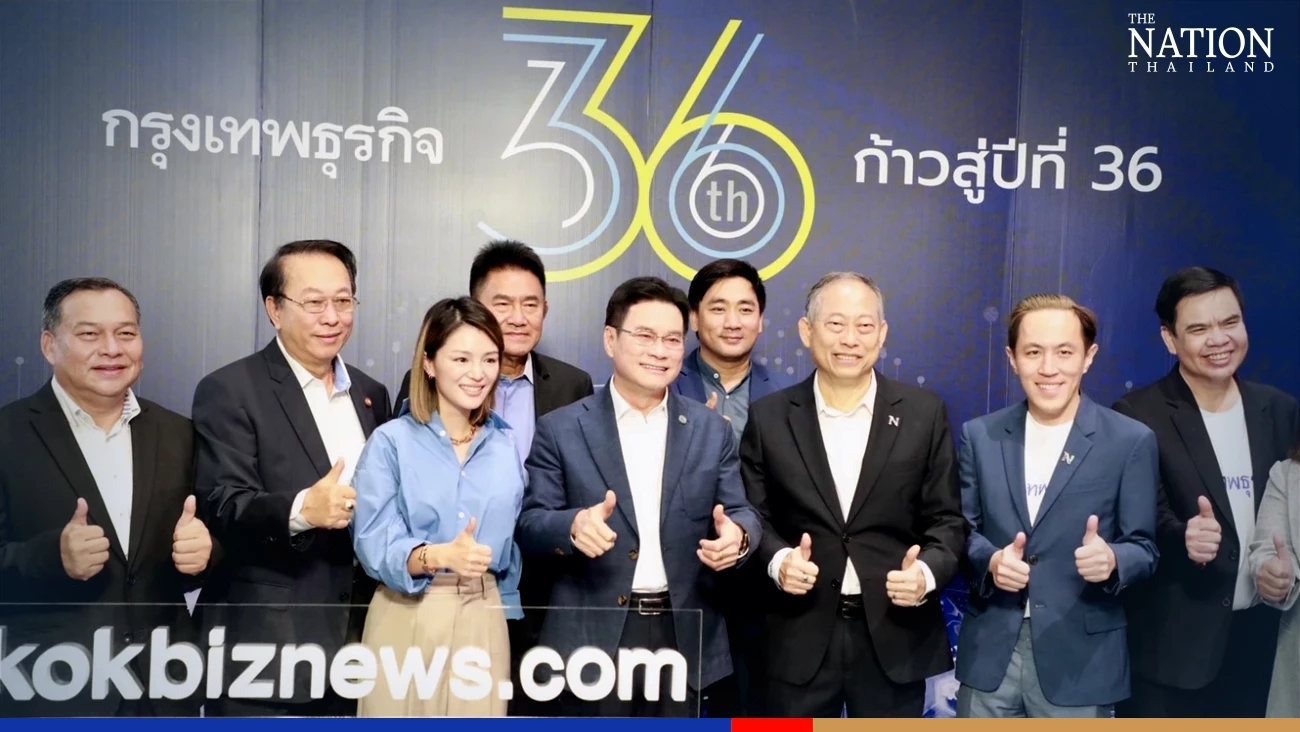
Jurin on Thursday led a group of key Democrat figures, including Watanya, to visit the office of Krungthep Turakij newspaper, which celebrates its 35th anniversary this month.
Krungthep Turakij is a Thai language publication of the Nation Group.
Anutin throws his hat into the ring for PM’s post, eyes 120 MP seats for Bhumjaithai
THURSDAY, OCTOBER 06, 2022
Anutin Charnvirakul, leader of ruling coalition member Bhumjaithai Party, reiterated his readiness on Thursday to become prime minister after the next general election.
He said that his party has the potential to win at least 120 seats in the House of Representatives, as had been predicted by its de-facto patriarch, Newin Chidchob.
“We are not kidding about this. We must be doing our best, going all out and not slowing down,” Public Health Minister Anutin told reporters.
Newin had said during his birthday celebration on Tuesday in Buri Ram province that he expected Bhumjaithai to win no fewer than 120 seats at the next national vote, which would boost the party’s position in forming the next government.
Once a political heavyweight allied with former prime minister Thaksin Shinawatra, Newin quit politics many years ago. But he has retained his influence in Bhumjaithai although he holds no executive position. His younger brother, Saksayam Chidchob, is the party’s secretary-general and serves as transport minister in the present Cabinet.
Anutin said on Thursday that all Bhumjaithai MPs and members would work hard by visiting their constituencies to “charge at the problems right away”.
He said that his party would do things that benefit people, and not just its campaign promises. “For example, free kidney dialysis was not in the party’s policy platform. Now it can be done.”
When asked if he was afraid that the PM’s seat would also bring suffering, Anutin responded: “You certainly get hurt when you enter politics. There is always criticism, but that’s understandable. The job involves the people of the whole country.”
When asked if he was worried about other parties getting upset by defections of their incumbent MPs to Bhumjaithai. Anutin said moving between parties was “something normal” for Thai politicians, noting that he had himself moved to many parties before settling with Bhumjaithai.



 Cholnan also told other parties that Pheu Thai had sent a statement to the Constitutional Court to defend draft organic laws that seek to amend the MP election and political party act.
 She added that the party will also seek to amend the charter to leverage people’s power and reduce the power of senators.
 Wisut Chai-aroon, a Pheu Thai MP for Phayao, said the party aims to overhaul the agricultural sector so farmers’ yearly income can rise to at least 30,000 baht per rai. To achieve this, the party will use innovative technology to help reduce farmers’ costs and come up with marketing plans to help farmers sell their products and expand their harvests.
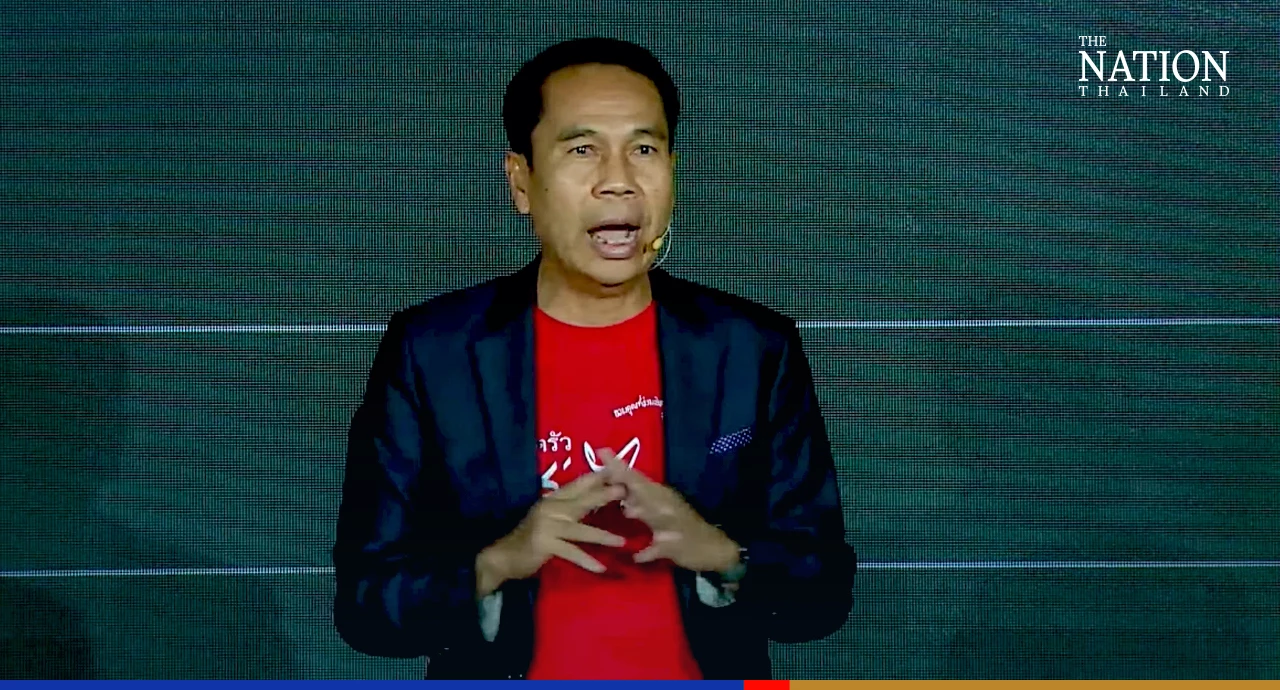 Sutin Klungsang, Pheu Thai’s deputy leader, said the party’s policy of providing financial help to poverty-stricken people will be based on their income. He said to be eligible for the allowance, people must first prove their income is below the poverty line. The allowance will then be calculated to raise the recipient’s income and encourage them to start working to earn a sustainable income, Sutin said.




 SootinClaimon.Com