Experts back village-based model to entrench democracy at grassroots level

ศาสตร์เกษตรดินปุ๋ย : ขอบคุณแหล่งข้อมูล : หนังสือพิมพ์ The Nation

http://www.nationmultimedia.com/detail/politics/30359312

x

Experts back village-based model to entrench democracy at grassroots level

Breaking News November 26, 2018 15:40

By Kornrawee Panyasuppakun
The Nation

Several thinkers have recommended “democratic reform that starts from the grassroots level”, as Thailand’s democracy has failed to blossom in 86 years ago.

On average, Thailand has had a military coup every four years since the country got its first constitution in 1932.

Anusorn Tamajai, dean of Rangsit University’s Faculty of Economics, cited this statistic as he advocated the setting up of village committees to promote democratic principles at the grassroots level.

The top-down approach to governance has clearly failed the nation, according to Anusorn and other experts at a recent academic forum.

Held by the Future Fundamental Institution of Thailand (FFIT), the event discussed the possibility of reforming Thai democracy from the bottom up.

“We should decentralise power and empower villagers. Locals in each village should vote for people they believe should sit on village committees,” Anusorn said. He expected such village committees would promote a just, fair and safe society.

Anusorn also suggested that Thailand empower community-based economic development by giving local people access to resources and curbing economic monopolies.

Seri Phongphit, president of Learning Institute for Everyone, said local people are capable of governing themselves, as evidenced by the many hilltribe villages found across the world.

“In Thailand, Khiriwong Village is proof that a self-governed community can succeed. Nestled in a mountain, it has operated independently for nearly 200 years. Its founders were commoners fleeing the nobles,” he said.

Chulalongkorn University’s political-science lecturer Pitch Pongsawat said he agreed with the idea of village-based democracy and believed Bangkok needed to embrace democratic reform.

“I must say that today’s Bangkok Metropolitan Administration is even more backward than provincial administrative organisations and even tambon administrative organisations,” he said.

Citing the potential for vote-buying, Pongsri Tarapoom, a former Democrat MP, was less committed to village-based democracy.

Institute of Human Rights and Peace Studies director Gotham Arya, meanwhile, said that fear stood in the way of democratic development in Thailand.

“Thais are afraid that bad persons will come to power. Thais are afraid that power won’t be in the hands of good guys,” he said. “But the definition of who is good may be subjective. So, it becomes more about who people like or not.”

Gothom suggested that the nation’s advancement of democracy should integrate core pillars of Thai society, namely the concepts of nationhood, religion and monarchy.

At the same seminar, FFIT chairwoman and Pheu Thai Party member Khunying Sudarat Keyuraphan encouraged political parties to put “an amended Constitution” as their top policy plank, and urged elected village representatives to participate in amending the Constitution.

Chatthaipattana Party director Nikorn Jamnong said he agreed that the Constitution should be amended, but predicted it would be very difficult to achieve.

Just beauty will not always charm the voters during the national elections

ศาสตร์เกษตรดินปุ๋ย : ขอบคุณแหล่งข้อมูล : หนังสือพิมพ์ The Nation

http://www.nationmultimedia.com/detail/politics/30359265

Just beauty will not always charm the voters during the national elections

politics November 26, 2018 01:00

By KAS CHANWANPEN
THE NATION

3,331 Viewed

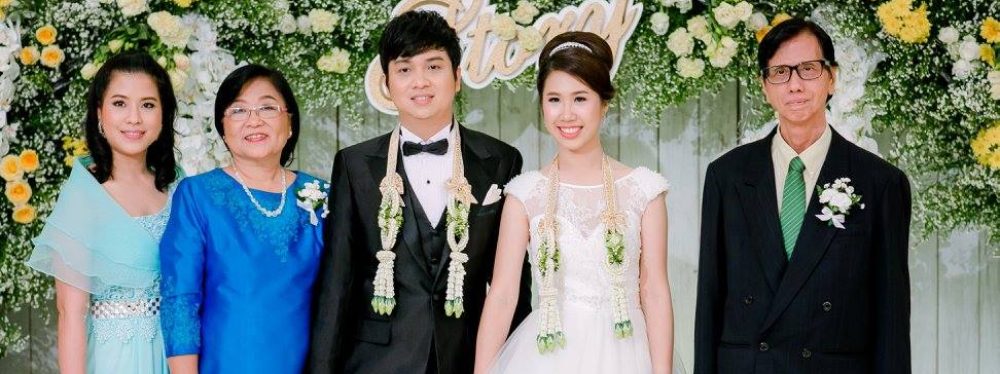
THE INTERNET began exploding with comments after Khunying Sudarat Keyuraphan showed up with her “cute” 19-year-old daughter Yossuda “Ginnie” Leelapanyalert to visit voters two weeks ago.

Many enthusiasts even came up with fictitious party names, such as Pheu Ther Party or “Party for You” and Phak Mae Yai or “Mother-in-law’s Party”.

In fact, many Facebook users also shifted their focus from the anti-junta Future Forward Party, joking they would much rather support young Ginnie’s mother Sudarat.

Many posts have mushroomed on the Internet displaying Ginnie’s photographs, while a Facebook page called “Let me know about cute politicians” has emerged, listing pictures of good-looking politicians and their equally attractive heirs and heiresses.

New Pheu Thai MP candidate Busaya Tungpakorn’s debut this month has also caught public attention, not so much for her political presence, but more for her extraordinary good looks. She is running in Nakhon Sawan province in place of her father Banyin, who is serving a political ban.

This trend is not actually new.

Former PM and Democrat leader Abhisit Vejjajiva and his nephew Parit Wacharasindhu, for instance, were widely applauded for their charm and attractiveness, and now, many celebrities have jumped on the political bandwagon, hoping their looks will take them places.

However, can beauty really offer a path to a seat in Parliament or success in politics?

The answer to this is both yes and no.

A couple of “hot” politicians in the West come to mind, such as Canadian PM Justin Trudeau and French President Emmanuel Macron. But looks can be deceptive.

Janjira Sombatpoonsiri, a political scientist from Thammasat University, said their success may have very little to do with their good looks.

“In the West, their image is not that big a deal,” she said. “Trudeau stands out because his policies are relatively progressive when compared to his neighbour, US President Donald Trump.”

However, in places such as Latin America or Southeast Asia, including Thailand, a different social context comes into play, she explained.

Don’t judge a book by its cover

In these areas, more celebrities can be seen transcending from the field of entertainment to politics, Janjira said. For instance, the Philippines’ 13th president Joseph Estrada was an actor.

As for the recent trend of good-looking politicians in Thailand, Janjira explained this craze, an effect of the “Net Idol cult”, was more prevalent online.

Of course, good looks do grab people’s attention, but it is a completely different story when it comes to actually attracting votes, she said.

She explained that there are two major points that count in Thai politics even more than looks.

“One is the patron-client system. For instance, do you know people in the community? Have you helped them?” she said, referring to politicians’ practice of supporting voters by paying for funeral rites or other occasions.

“And the second point is policies,” she added.

Some might argue that the upcoming elections will see at least 7 million voters between the ages of 18 and 25, who will vote for the first time.

These young voters might find looks more appealing and may decide to choose the best-looking politician.

However, the academic said this matter was uncertain.

Firstly, there is no certainty that all of them will show up to cast their ballot, and even if they do, will they really base their decision on the looks of the candidate?

Janjira reiterated that grabbing attention and gaining votes are two different stories.

She also advised voters to be rational when casting their ballots, because their choices would have an impact on society in the long run.

“We don’t choose our life partner based on how they look alone. So, why should we choose a politician based on their good looks?” she asked.

Meanwhile, former actor Tankhun Jitissara, who is with the Democrat Party, said good-looking people face a lot of challenges in politics.

“People have very high expectations of good-looking people, which can be very hard to match,” he said.

“When people see a beautiful or a handsome politician, they consider us like the lead characters in a Thai soap opera. They expect us to be perfect.”

Good-looking people also get branded as being snobbish or “brainless beauties”, he said.

So, when they step into the political sphere, they have to prove that they have more to offer than just being eye candy.

“You have to prove your worth.

“Show them you can solve issues ranging from poverty to community waste disposal. Your looks can draw some attention, but at the end of the day, voters will judge you more by your performance.”

Minor groups hold balance of power

ศาสตร์เกษตรดินปุ๋ย : ขอบคุณแหล่งข้อมูล : หนังสือพิมพ์ The Nation

http://www.nationmultimedia.com/detail/politics/30359268

Minor groups hold balance of power

politics November 26, 2018 01:00

By SOMROUTAI SAPSOMBOON
THE NATION

3,855 Viewed

DISPARATE PARTIES TO DECIDE AMONG ARCH RIVALS, THE JUNTA AND PHEU THAI, IN FORMING POST-ELECTION GOVERNMENT

THE POLITICAL scene in Thailand remains bipolar since the 2014 military coup, as the country heads towards a new election – the first since 2011.

Before the generals seized power in May 2014, national politics was largely divided between the side that supported fugitive former prime minister Thaksin Shinawatra and the side that opposed him. The rival group at the time was led by the Democrat Party, which served as the main opposition to pro-Thaksin governments in the pre-coup Parliaments.

Years later, Thai politics remains just as polarised, divided into a side that supports the ruling junta – National Council for Peace and Order (NCPO) – and one that opposes it.

While junta figures recently confirmed that the general election will be held on February 24 as tentatively scheduled, some political observers remain wary of the high likelihood of the date being postponed.

Prime Minister Prayut Chan-o-cha has yet to make his political intentions clear, though four of his Cabinet members have joined the newly set up Palang Pracharat Party, which is expected to propose the junta chief as the next prime minister.

The next elections will take place in completely uncharted waters for all participating political players. For the first time, a single ballot will be used to choose constituency and party-list MPs in a rare voting system known as mixed-member apportionate representation.

This will also be the first time that the Senate will join the House of Representatives to select the prime minister if the Lower House is unable to reach an accord on its own.

Hence, it is likely that even if a political party gains majority support in the 500-member Lower House, it may still end up failing to form the next government.

If the 500 MPs cannot reach an agreement, the 250-strong Senate will cast votes to select the new head of government. The winning side will need to get support from at least 376 parliamentarians to gain a majority.

That could be a really tough task, especially for a party that does not have significant backing from the senators.

All 250 Senate members will be handpicked by the NCPO, though 50 will come from short-listed candidates elected by fellow applicants.

Judging from the current scenario, there will be three major groups after the election – the pro-NCPO alliance, the junta’s opponents and the “pivotal factor” group.

Allegiance to junta

The first group will possibly consist of the 250 NCPO-appointed senators, along with the pro-junta Palang Pracharat Party and its allies, namely Action Coalition for Thailand (ACT) and People Reform.

Palang Pracharat has recruited many former MPs and veteran politicians, though believe their allegiance was won through offers of personal benefits and threats of legal action.

Observers expect the main pro-NCPO party to win about 80 House seats, though the final number will depend on General Prayut’s popularity in the run-up to the national vote.

ACT Party, led by veteran politician Suthep Thaugsuban, is expected to win no more than 10 House seats, mainly from the party-list system.

Observers suggest that People Reform Party, led by former senator Paiboon Nititawan, is likely to win just one House seat.

So, the pro-junta camp is expected to gain about 91 House seats in total. When combined with the 250 senators, it is likely to have 341 votes. However, that is still not enough to catapult their preferred candidate to the premier’s post.

The anti-junta camp comprises Pheu Thai Party, its so-called “affiliates” – Thai Raksa Chart, Prachachat and Puea Chat – and allies Future Forward and Seri Ruam Thai parties.

Observers suggest that the anti-junta camp has adopted the strategy of “reproducing affiliate parties” in order to take advantage of the new system in which “every vote counts”.

Under the new system, each vote gained in a constituency will be added up to calculate a party’s share of party-list MPs.

Many veteran politicians, including Chaturon Chaisang, recently left Pheu Thai to join Thai Raksa Chart – a move that observers see as “strategic defection”.

Chaturon said his “pro-democracy” camp aims to win as many as 251 seats to command the majority in the House of Representatives.

Pheu Thai a dominant force

Political analysts say his estimation is highly likely, considering Pheu Thai’s victories with wide margins in previous elections.

In the next national vote, Pheu Thai is expected to win about 160 seats – the largest share in the Lower House, albeit not a majority. Thai Raksa Chart is forecast to win 40 seats and Future Forward another 20, while three other anti-NCPO parties could tally 10 seats each.

So the Pheu Thai-led camp is likely to gain about 250 House seats in total. Though that is very close to a House majority, it would still remain several votes short of the 376 from both Houses that are necessary to select a premier.

The third group -– the “pivotal factors” – may prove crucial for both camps, as the rival alliances alone will be unable to form a new government by themselves.

These parties are the Democrats, Bhum Jai Thai, Chart Thai Pattana and Chart Pattana.

Judging from history, the Democrat Party is expected to win about 100 House seats, while observers see Bhum Jai Thai likely gaining 40 seats, Chart Thai 15 and Chart Pattana four.

So a total of about 159 House members spread across the parties in this third group would hold the country’s political balance in their hands.

After the election, the pro-NCPO camp may join forces with all “pivotal- factor” parties to form a new government. But, because it will not command a House majority, the coalition is likely to be unstable, as the rival Pheu Thai-led camp will have an equal number of MPs.

Another possibility is for the Pheu Thai-led camp to form a new government with the support of all “pivotal-factor” parties. Their coalition would have as many as 409 MPs in total.

But many analysts see this option as the least likely, as the Democrats refuse to work with Pheu Thai as long as it remains under Thaksin’s influence.

Pheu Thai may decide to form a coalition government without the Democrats’ help, but for that to happen, it will need a landslide victory.

Abhisit would welcome Somchai to Democrat Party

ศาสตร์เกษตรดินปุ๋ย : ขอบคุณแหล่งข้อมูล : หนังสือพิมพ์ The Nation

http://www.nationmultimedia.com/detail/politics/30359226

x

Abhisit would welcome Somchai to Democrat Party

politics November 24, 2018 12:31

By The Nation

2,174 Viewed

Democrat Party leader Abhisit Vejjajiva said on Saturday that former Election Commission member Somchai Srisutthiyakorn would be welcomed if he decides to join the Democrat Party.

Abhisit said he has seen reports that Somchai is interested in joining the Democrat Party and Somchai told him months ago, after he was removed from the EC, that he wanted to work in politics as a Democrat member.

Abhisit said he did not know who Somchai has talked to in the latest move but he would welcome the former EC member if he wanted to join the party.

Abhisit said he would discuss with Somchai his possible role in the party if he becomes a Democrat member.

Government urged to protect human rights advocates

ศาสตร์เกษตรดินปุ๋ย : ขอบคุณแหล่งข้อมูล : หนังสือพิมพ์ The Nation

http://www.nationmultimedia.com/detail/politics/30359221

Government urged to protect human rights advocates

politics November 24, 2018 10:38

By The Nation

2,890 Viewed

The government has been urged to help protect human rights advocates, particularly women, as a growing number have been prosecuted in recent years, an Amnesty International seminar heard on Friday.

The discussion was held to mark 20 years of Universal Declaration on Human Rights Defenders [HRDs] on December 9.

Angkhana Neelapaijit, a National Human Rights Commissioner (NHRC), said that in 2016, during the Universal Periodic Review (UPR), Thailand received 10 recommendations from other state parties regarding HRDs. At the time, Thailand pledged to take action and investigate the alleged enforced disappearance of HRDs and introduce measures to protect them from harassment.

“Until now, no concrete measures have been meted out. Worse, in the past three or four years, a growing number of women HRDs have been taken to court. Some have almost 10 cases,” she said.

Apart from being sued by private companies, many HRDs have been slapped with legal actions from authorities, she added.

“All these constitute an attempt to use judicial process to harass and stifle public participation, preventing them from exercising their freedom of expression and opinion,” she said.

Angkhana proposes that the laws be changed to allow courts to use their discretion to prevent the indictment of cases that do not serve public interest or cases filed simply to harass or increase the burden on HRDs.

She said the state should come up with measures to prevent any online and sexual harassment and should make an effort to resolve the cases and bring the perpetrators to justice.

Narissalawan Kaewnopparat, who has campaigned to demand justice for her uncle, said she has become an alleged offender simply because she has come out to demand her rights and has discovered many irregularities in the justice system.

Her uncle, Private Wichien Phueksom, died while being tortured by his trainer in a military camp in 2011.

“From the outset, I was told I would fight in vain. But I am determine to fight until my last breath and believe I am able to fight based on proper information and evidence,” she said at the seminar.

Rojana Kongsaen, from the Loey anti-mining network, said that as a result of the struggle to demand the right to manage their own resources, members of her community have been taken to court for violating the Public Assembly Act and the Computer Crime Act in more than a dozen cases.

They also face intimidation and are threatened, she added. Their dogs have been poisoned to death and they have been under constant surveillance.

“They use the law to silence us. We did not kill anyone. We simply work to protect our natural resources. We want the authorities to drop all charges against us,” she said.

Saengchai Rattanaseriwong, a veteran lawyer, said that a Strategic Lawsuit Against Public Participation (SLAPP), is very common now and is used by both state and private sectors behind large-scale development projects who run into opposition from the local community.

Most SLAPP cases involve less serious charges but are filed simply to stop campaigners against development projects.

He proposes that the Criminal Procedure Code be amended to allow courts to have a preliminary review of the merit of the case before any indictment and witness examination.

“I am not saying that all demonstrations are lawful. If there is any infringement, it then deserves punishment. But the laws should not be abused to serve opportunistic purposes,” he added.

Talks to lift campaigning restrictions set for December 7

ศาสตร์เกษตรดินปุ๋ย : ขอบคุณแหล่งข้อมูล : หนังสือพิมพ์ The Nation

http://www.nationmultimedia.com/detail/politics/30359177

Talks to lift campaigning restrictions set for December 7

politics November 23, 2018 18:22

By The Nation

2,124 Viewed

The government and the ruling junta will meet with political parties on December 7 to discuss lifting political restrictions and allow campaigning in the run-up to the next election, Prime Minister Prayut Chan-o-cha said on Friday.

He said the event would be held at the Royal Thai Army Club on Vibhavadi Rangsit Road.

Prayut, who also heads the National Council for Peace and Order (NCPO), said that clear regulations would be issued to lift the restrictions that have been in place since the 2014 coup.

“We will do it as soon as possible … The goal is to ensure safety for the country,” he said.

The prime minister said the tentative schedule of February 24 for the election remained unchanged.

When asked if any political parties urged the NCPO to help postpone the election, Prayut said: “I just saw this in newspapers. The NCPO has got no complaints. This is a matter for the Election Commission. I have no involvement in making a decision about this matter.”

He also declined to say whether he would join any political party or become its prime ministerial candidate in the run-up to the election.

On Thursday, a group of small political parties petitioned the EC for the election to be postponed until May 5, the latest allowed by the law on MP elections, which is to go into effect on December 11.

A rival petition was also filed by another group of small parties asking the EC to retain the tentative schedule of February 24.

The prime minister also said there was no need for a Cabinet reshuffle even if four government ministers joining the Palang Pracharat Party resign to focus on their party work.

“No more changes in the Cabinet line-up. According to the law, other Cabinet members can do the job of those who resign,” he said.

EC chief sees no reason to delay elections

ศาสตร์เกษตรดินปุ๋ย : ขอบคุณแหล่งข้อมูล : หนังสือพิมพ์ The Nation

http://www.nationmultimedia.com/detail/politics/30359127

EC chief sees no reason to delay elections

politics November 23, 2018 01:00

By THE NATION

2,577 Viewed

THE CHIEF election commissioner said yesterday that he saw no reason for the election to be delayed, though a decision on the matter will be made after the junta’s organs meet with political parties.

Ittiporn Boonpracong, president of the Election Commission (EC), also said that even if that meeting agrees on postponing the election, his agency will not take responsibility for it because it was not required to do so by any law.

“But there must be good reason and sufficient explanation for the postponement,” he added.

Ittiporn said the meeting will be scheduled after the new law on MP elections goes into effect on December 11.

The meeting is required under an order issued by the ruling National Council for Peace and Order (NCPO) last year, which has empowered itself to “work with” the EC in setting the election date.

Government figures have been repeatedly saying that the next election will be held on February 24, though politicians and critics suspect moves are being made to put the national vote off.

The EC president was responding to calls from some small political parties and groups to postpone elections, while major parties insisted yesterday that they were ready to contest for votes.

The EC held a meeting with representatives from political parties and groups applying to become political parties at the Centra Government Complex Hotel and Convention Centre on Chaeng Wattana Road.

The event, presided over by Ittiporn, was attended by 306 representatives from 72 political parties and 14 groups applying to become political parties.

At the event, election authorities explained the laws and regulations in relation to preparations for the national vote.

On the sidelines of yesterday’s meeting, Suratin Pijan, leader of the New Democracy Party, yesterday submitted a petition for the election to be held on February 24 as tentatively scheduled.

He said all 19 small parties in his group wanted the elections to be held on that day, as promised by Prime Minister Prayut Chan-o-cha.

However, another group of small parties, led by Sathu Anumothami from the Palang Thai Dee Party, handed in a written request before the meeting asking the EC to push the election to May 5, the last date allowed by law.

Sathu, claiming to represent 13 parties and groups, explained that if the election was not delayed, many “good political parties” will be prevented from offering themselves as choices to voters.

He also maintained that his group was acting independently. Once the law on MP elections goes into effect on December 11, an election must be held within 150 days.

At yesterday’s event, Democrat Party registrar Pongsri Tharaphum said the election should not be postponed, as the date has been repeatedly backed by the government, the NCPO and the EC.

A similar stance was expressed by Thai Raksa Chart Party member Pichit Chuenban, who agreed that there was no reason to delay the election and putting it off so all parties can be prepared was unreasonable.

Meanwhile, National Legislative Assembly (NLA) endorsed the last two election commissioners yesterday, resulting in all seven EC posts being filled.

The new commissioners are former Agriculture and Cooperatives Ministry’s permanent secretary Lertviroj Kowattana and Lawyers Council adviser Thitichet Nuchanart.

Both of them, who earlier were nominated by a selection committee, received support from the NLA’s majority, or at least 120 votes.

Lertviroj got 148 votes for and 28 against, while Thitichet obtained 149 votes for and 27 votes against. The NLA has 240 members.

EC under microscope for gerrymandering over designing of boundaries

ศาสตร์เกษตรดินปุ๋ย : ขอบคุณแหล่งข้อมูล : หนังสือพิมพ์ The Nation

http://www.nationmultimedia.com/detail/politics/30359125

EC under microscope for gerrymandering over designing of boundaries

politics November 23, 2018 01:00

By THE NATION

2,834 Viewed

THE ELECTION COMMISSION (EC) yesterday faced difficult questions over the design of constituency boundaries and whether boundary gerrymandering is at work after the junta issued an order allowing the agency extra time for the process.

The electoral boundary drawing was a burning question in yesterday’s meeting between the EC and political parties. The meeting’s stated aim was to guide politicians through new rules and regulations in preparation for the first election in five years.

But Chusak Sirinil, head of Pheu Thai Party’s legal team, yesterday expressed discomfort over the junta order that legalises any decisions on constituency mapping by the EC no matter whether they were in line with the existing laws.

“Pheu Thai would like answers from the EC – will you really go against the law and disregard electoral laws?” the lawyer asked. “The junta order obviously suggests and opens way for the EC to do anything.”

He went on to say that there was no other way to look at it, but as an intervention by the junta to tamper with electoral boundaries. Mapping constituencies is one of the fundamental issues in an election, Chusak said. If it is not done freely and fairly, it is impossible to believe that the whole voting process will be free and fair, he said.

‘Junta’s own political gain’

This is especially worrisome given that the National Council for Peace and Order (NCPO) has been involved with some political parties, Chusak said. All these moves could be considered something they did for their own political gain, he added.

“Pheu Thai would like an answer on how the EC will go about this. We hope you uphold justice and draw constituency boundaries according to the law,” he said.

The concern began looming after the NCPO ordered an extended timeline for the EC to design electoral constituencies and have a final say on the issue regardless of complaints. It was previously reported that the EC had already completed the task. Some politicians and critics now fear that the boundaries would be changed to favour pro-junta parties.

Pongsri Tharaphum, the Democrat Party’s registrar, chimed in yesterday to say that if the boundaries had been changed and showed irregularities, it would petition the EC to review its decision.

The EC has been working on drawing constituency boundaries over the past couple of months. The agency put three different options for each electoral area before public hearings. Since the junta order was issued, rumours are circulating that a fourth drawing had emerged in many areas.

Gerrymandering is a serious threat for political parties. If a party’s stronghold is separated into two constituencies, for instance, then that party could lose the election in one or both of those constituencies.

Prayut Siripanit, Pheu Thai Party’s head of the Northeast, has already reported an instance of what he charged amounted to gerrymandering.

The 17 sub-districts of Maha Sarakham’s Kosum Phisai cistrict, have been divided into two constituencies, he said. One had 10 sub-districts and the other had seven and the change would have impact on Pheu Thai candidates running in the area, he charged.

Prayut said he would call on the EC to look into the issue today.

Parties hit out at junta govt’s populist handouts

ศาสตร์เกษตรดินปุ๋ย : ขอบคุณแหล่งข้อมูล : หนังสือพิมพ์ The Nation

http://www.nationmultimedia.com/detail/politics/30359055

Parties hit out at junta govt’s populist handouts

Breaking News November 22, 2018 01:00

By THE NATION

3,459 Viewed

ABHISIT SAYS MEASURE IS NO DIFFERENT FROM SIMILAR POLICIES OF THE PAST; MEASURE SEEN |AS ‘SHORT-TERM’ REMEDY AND UNSUSTAINABLE

POLITICIANS FROM major parties yesterday slammed the junta over its populist package for the poor, saying the handouts were politically motivated.

Abhisit Vejjajiva, the Democrat Party leader, said the welfare scheme was no different from previous populist policies. It was baseless and emerged merely out of economic and political factors, he said.

“We expect this welfare card to be systemic, not something the government can just [use] to do whatever it wants,” Abhisit said. “These measures are not systemic. It is uncertain whether we will see the same packages next year.”

The former PM declined to speculate whether the assistance package was an attempt to gain an upper hand over other political parties ahead of the election. But he said he believed the people were aware what was going on, and the government would not win the support it hoped for by launching the aid packages.

His reaction came after a Cabinet decision on Tuesday to provide assistance by handing out extra cash of Bt500 to Bt1,000 to people via the state welfare cards held by 14.5 million low-income earners.

The whole scheme costs more than Bt38 billion. The Bt500 cash handout, framed by the government as a New Year’s gift to the people, alone costs Bt7.25 billion.

Abhisit said he agreed that the government should help those in need. But the assistance must be based on a reliable system and should be as convenient as possible, he added.

Right now the financial help comes through transfer of credit to the card, which can be used for purchases only in a limited number of Pracharat stores. Only the Bt500 “New Year gift” and Bt1,000 travel expense for the elderly visiting hospitals are in the form of cash. But these will be given out only once – in December.

Thai Raksa Chart Party spokesman Pongkasem Satayaprasert yesterday asked if the junta was exploiting the state budget to woo voters and if the move had a hidden political agenda.

He pointed to four Cabinet members, who have joined the pro-junta Palang Pracharat Party, as being connected directly to the scheme. They could be considered as having an advantage over other parties, he said.

The other parties, Pongkasem said, had their hands bound and could not even conduct political activities freely because of restrictions imposed after the 2014 coup.

In response to an argument that the assistance would at least inject money into the grassroots economy, the politician said it would only be a short-term solution.

He added that it was not sustainable and would place a burden on the future state budget.

“If the National Council for Peace and Order is sincere about tackling poverty, it can find other sustainable measures to stimulate the economy,” he said. “Not something that clearly has a political agenda like this.”

Pongkasem also called on the junta to lift the ban on political activities so other parties could also get ready for the election. Also, he urged that the four Cabinet members involved with a political party resign to ensure a fair playing field for other parties, and that they stop using the state budget to woo voters.

Government Spokesman Puttipong Punnakanta yesterday stood his ground, saying the package was not a decision that the government had made overnight.

It had gone through a long process of deliberations before it was finalised, he said, adding the criticism that they had done it for their own popularity did not do the government justice.

“Don’t say that these packages will benefit some particular party. They benefit the people,” he said.

Prawit attacks ex-NCPO member for ‘defecting’

ศาสตร์เกษตรดินปุ๋ย : ขอบคุณแหล่งข้อมูล : หนังสือพิมพ์ The Nation

http://www.nationmultimedia.com/detail/politics/30359056

Prawit attacks ex-NCPO member for ‘defecting’

politics November 22, 2018 01:00

By THE NATION

2,911 Viewed

DEPUTY PREMIER Prawit Wongsuwan yesterday described a retired senior military officer joining a new anti-junta political party as “ungrateful” and “a chameleon”.

General Prawit, who is also defence minister, hit back at General Yossanan Raicharoen, who had earlier criticised the ruling junta, for applying to join the Thai Raksa Chart Party.

Thai Raksa Chart is dominated by politicians from the previously ruling Pheu Thai Party and is viewed by some political observers as having strong links with fugitive former prime minister Thaksin Shinawatra, who has also been critical of the junta.

Prawit said yesterday that he found it “strange” for Yossanan to criticise the ruling National Council for Peace and Order (NCPO) even though he worked for it before retiring.

“He had been with us all along. Then he suddenly attacked the NCPO. He has clearly forgotten the kindness he received [from us],” Prawit said at the Defence Ministry.

Prawit added that while Yossanan was with the junta, he “supported it well” and yet he has changed. When asked if the general-turned-politician had “changed his colours like a chameleon”, Prawit responded: “Yes, just like a chameleon.”

Meanwhile, Thaksin lobbed a thinly veiled attack against Prawit in a Twitter message yesterday, saying: “Military officers who volunteer to work in politics in a straightforward manner deserve more praise than those who gain power through a coup. Don’t you think so, Pom [referring to the defence minister by his nickname]?”

On Tuesday, Yossanan said he had applied to become a member of Thai Raksa Chart, because it held the democratic ideology.

“Democracy is really important these days. It can help Thailand move forward, help the economy grow and improve the well-being of the people.

“I would like to call on all military officers to stand by the people. It’s no longer time for dictatorships to rule the country. The lesson we learned over the past four years after the coup shows that the country has not progressed, people are suffering and the economy has stopped growing,” Yossanan said.

In response to Prawit’s labelling him “ungrateful”, he said he did not want to counter-attack, adding “I believe people will understand”.