Wealthy prominent prisoners hoping for early release were left disappointed on Friday when the latest list of royal pardons was published.
Rules for royal pardons have been tightened following public criticism of reduced jail time for wealthy convicts in high-profile corruption cases.
Praising the rule change on Friday, Senator Somchai Swangkarn said it made it more difficult for inmates to be eligible for early release. To be eligible for royal pardon under the new rules, prisoners must have served at least a third of their original jail time or a minimum of eight years.
The latest pardon was published in Friday’s Royal Gazette on the occasions of HM the King’s 70th birthday on July 28 and HM the Queen Mother’s 90th birthday on August 12.
Somchai, who chairs the Senate committee on human rights, liberties and consumer protection, said that big-name inmates jailed for serious crimes were no longer eligible for royal pardons following the rule revision.
“People whose jail time was reduced last time will not be eligible for a royal pardon this time around, he wrote in a Facebook post.
“Those eligible must be inmates classified as ‘good’, and not just middle class,” he said.
Somchai said the rule changes stemmed from recommendations by a committee headed by former attorney general Khemchai Chutiwong, which was appointed by Prime Minister Prayut Chan-o-cha to look into the matter following public criticism of early release for rich inmates.
“My thanks to the prime minister, the Cabinet, the Khemchai panel, the Anti-Corruption Organisation of Thailand, the media and everyone who loves justice, for their united fight that led to the changes,” the senator said in his post.
An impromptu motion by the opposition for a parliamentary debate on Prime Minister Prayut Chan-o-cha’s eight years in office was aborted on Thursday due to a lack of quorum.
It was the 18th cancellation of a meeting during the tenure of the current Parliament, which opened in 2019.
Member of Parliament Sutin Klungsang from the opposition Pheu Thai Party proposed an emergency motion calling for a debate on whether Prayut should step down this month when he will finish serving as prime minister for eight years.
He said this was an important issue that required prompt government action to prevent any problem.
Sutin’s fellow-opposition MPs voiced support for his motion. Move Forward MP Rangsiman Rome said the issue could affect national peace and security, as the entire Cabinet would have to vacate their seats if PM Prayut is forced to step down after reaching the eight-year limit.
Coalition MPs, particularly those from the ruling Palang Pracharath Party, opposed the motion, arguing it had been agreed by the whips of both camps that Thursday’s meeting was for a debate on the issue of loan sharks.
They also accused the opposition of attempting to make damaging remarks against PM Prayut and of trying to influence judges who will have to make a verdict on the legal question.
Palang Pracharath MP Artthakorn Sirilatthayakorn said the matter should be decided by the Constitutional Court as it is beyond the Parliament’s authority.
Deputy House speaker Supachai Phosu, who chaired the meeting, suggested that opposition MPs petition the Constitutional Court for a ruling as to when the prime minister would reach his eight-year limit.
He called a count of MPs in attendance and only 124 showed up, far below 239 required to form a quorum. So, Supachai adjourned the meeting.
The Constitution, in force since April 2017, prohibits anyone from serving as prime minister for longer than eight years. However, it remains unclear when the eight-year time limit should start.
Prayut has served as prime minister since August 24, 2014, following a military coup that he led while serving as the Army commander-in-chief, while the current Constitution came into effect in 2017.
Opposition leader Cholanan Srikaew had said a petition would be filed with the Constitutional Court on August 16 or 17 for a ruling on the matter.
Parliament President Chuan Leekpai called a special House-Senate meeting on Monday in a last-ditch attempt to save the MP election bill from lapsing.
Isara Sereewattanawutthi, an aide of House Speaker Chuan, said the Parliament president scheduled the special meeting on Monday so that the bill could be passed in the final readings within the 180-day deadline, which is August 15.
The organic law governing the election of MPs has been vetted by a special House-Senate committee and sent back to the joint House-Senate meeting on Wednesday for final readings.
However, the meeting collapsed due to a lack of quorum, a tactic used by the main opposition Pheu Thai Party to reportedly derail passage of the bill.
Isara said if the bill fails to clear Parliament by Monday, the Election Commission’s (EC) original version would be used. This version uses the figure of 100 to calculate party-list House seats. But the version vetted by the ad hoc panel uses the figure of 500 instead, the number of constituency MPs and party-list MPs.
Isara said Chuan was worried about the lack of quorum since Tuesday night because he did not want parliamentarians to be criticised for failing to carry out their duty.
The House speaker, Isara said, tried to call in all sides on Tuesday night to ensure that MPs and senators attend the key meeting on Wednesday in full force.
Although the charter allows the EC’s original version to be enacted in case the bill lapses, Chuan wanted parliamentarians “to do their best to try to serve the public”, so he called the meeting on Monday at 12.30pm, Isara said.
A formal invitation to the meeting was issued on Thursday afternoon in line with regulations that MPs and senators have to be informed three days in advance before a special meeting takes place, Isara added.
Tripartite whips were urged on Thursday to reach a solution on an organic law governing MP elections so that the vetted bill can be enacted within the 180-day deadline by August 15.
House-Senate committee spokesman Somchai Srisutthiyakorn made the call after a joint meeting of MPs and senators to discuss the election bill in its final reading collapsed on Wednesday due to a lack of quorum.
The charter requires Parliament to pass the bill within 180 days after the first reading commences. The deadline is August 15.
Somchai said whips of the coalition, the opposition and the Senate must first hold a meeting and reach a consensus as to whether they want to pass the bill in the final reading.
If they want the bill to pass, Somchai said House Speaker and Parliament President Chuan Leekpai can call a special meeting from Saturday to Monday to have it discussed in the final reading.
If the whips fail to reach an agreement, it will be useless for a special joint meeting to be called to deliberate on the bill again because the opponents would use the same tactic of quorum checking to derail the enactment, Somchai pointed out.
The bone of contention is the method to calculate party-list House seats. The original bill, which was drafted by the Election Commission (EC), proposed a figure of 100 or the number of all party-list seats to divide the overall party-list votes cast by voters for allocating MP seats.
However, during the vetting, the coalition and senators flexed their majority muscle to amend the draft to change the divider to 500, which is the number of all MPs – both constituency and party-list MPs.
Micro-parties prefer the 500 divider because it would ensure they win at least one House seat. But major parties, especially opposition leader Pheu Thai, prefer 100 so they could reap a larger share of party-list House seats.
The Pheu Thai cried foul that the 500 divider was aimed at preventing it from winning a landside victory in the next election to be held after the current House completes its four-year tenure in March.
It has been reported that the ruling Palang Pracharath Party initially supported the 100-divider method but Prime Minister Prayut Chan-o-cha allegedly changed his stance over fears the Pheu Thai would win a landslide victory. It was also claimed that Prayut supported the 500-divider method in exchange for gaining votes from micro parties during the recent censure debate.
“All sides should review their stance, whether they want the vetted bill to be passed or not. In particular, the coalition must answer this question. It cannot solely blame the opposition for the lack of quorum,” said Somchai, a Seri Ruam Thai Party member and a former EC commissioner.
“The three whips must discuss this or will they leave a shameful heritage behind,” he warned.
In the scenario that the vetted bill fails to meet the deadline, the original draft must be sent to the EC for reconsideration, Somchai said.
If the original draft is considered to be good enough, it will be put on a five-day wait before being sent to the prime minister to forward it for a royal command and enactment.
If the EC sees that certain changes should be made in line with views of the vetting panel, the election watchdog can send it back to Parliament for the changes before it goes to the prime minister, Somchai said.
In the meantime, one tenth of MPs and senators can sign a petition to ask the Constitutional Court to rule whether the EC’s draft is constitutional or not. If the court rules in favour of the original draft, the dispute will be over for good. But if the court rules that the main principle of the bill is against the charter, the draft will lapse, Somchai added.
A special House committee has finished vetting the fiscal 2023 budget bill and has reallocated 7.6 billion baht to new agencies.
The committee spokesman, Banyat Jettanachan (Democrat-Rayong), said the panel held its final meeting on Tuesday and endorsed the changes made to the bill and also endorsed the minutes of the panel and its final report on the 2023 budget.
The budget bill is seeking 3.185 trillion baht for government spending.
Banyat said the ad hoc panel would submit the vetted bill back to the House speaker to put it on the agenda so that the bill would be deliberated in the second and third readings on August 17, 18 and 19.
The bill’s final reading cannot be later than August 19, because the Constitution requires the House to finish its deliberations within 105 days of the bill being sent to the House.
Banyat said the ad hoc panel has trimmed down budget requests of various government agencies with a total value of 7.644 billion baht.
The top three agencies that saw the biggest cuts to their requests were:
— Defence Ministry with a cut of 2.778 billion baht
— Local administration organisations with a budget cut of 742.2 million baht
— Education Ministry with a cut of 737.486 million baht.
Their total of 7.644 billion baht has been redistributed to 10 projects, which the panel saw as needing more budget support:
The Farmers Rehabilitation and Development Fund (500 million baht)
A project to increase services of health clinics of 49 provincial administrative organisations (1.84 billion baht)
A project to provide education subsidy to young students (2.359 billion baht)
Rice Department project for farmers to change to better rice seeds (1.02 billion baht)
Operation cost of the Office of Attorney-General (230 million baht)
Operation cost of the Courts of Justice (192.28 million baht)
Operation cost of the Office of the National Anti-Corruption Commission (154.123 million baht)
Personnel recruitment of the Office of the Election Commission (81.577 million baht)
Fund for development of officials and personnel of the Southern Border Provinces Administration Centre (8.2 million baht).
Banyat said the state agencies whose budget requests were not cut included the Foreign Ministry, the Thai Red Cross Society and the office of personal servants of His Majesty the King.
Banyat said the panel’s report noted that the government’s initial budget projections did not respond with the recovering economy of the country.
The report also recommended that the government seek more revenue channels, including collecting land and heritage taxes, taxes on stock trading and windfall taxes.
In the past, MPs were often criticised by academics for the use of budget trimming method by the budget panel to shell out money to their constituents in the provinces through various projects. Once, a charter even barred MPs from proposing or reallocating budget from the trimmed-down amount.
Government spokesman Thanakorn Wangboonkongchana urged the public to wait for a Constitutional Court ruling instead of listening to views of “certain persons” on the dispute surrounding the prime minister’s tenure.
Premier Prayut Chan-o-cha will accept the ruling no matter how it turns out, Thanakorn insisted.
The opposition Pheu Thai Party had threatened to petition the court to rule that Prayut’s premiership would end on August 24 after he reached the eight-year constitutional limit.
The Pheu Thai argued Prayut’s premiership started on the day he became the prime minister of an interim government installed after the coup.
But a House of Representatives legal team believes Prayut’s tenure technically started on June 9, 2019, when he was appointed the prime minister with a royal command under the 2017 charter. The House panel said Prayut’s term would expire in 2027 instead.
Thanakorn was apparently referring to a comment by Dr Pichai Rattanadilok Na Phuket, director of the National Institute of Development Administration’s political and strategic development programme.
Pichai took to Facebook on Tuesday night to back the Pheu Thai’s argument that Prayut’s eight-year limit will be up on August 24.
Pichai backed up his argument with a minute from the meeting of the committee that drafted the current constitution.
Pichai said both the chair and deputy chair of the panel, Meechai Ruchuphan and Supoj Khaimuk, respectively, expressed their opinions in the minute that Prayut’s premiership must be counted from the promulgation of the current charter.
In the minute dated September 7, 2018, Supoj reportedly said the prime minister, who held the post before promulgation of the 2017 constitution, must have his tenure counted from the time he held the post after the promulgation if he was continually in office.
Meechai agreed with Supoj, saying Section 264 in the provisional chapter of the charter clearly stated so.
Section 264 states: “The council of ministers administering state affairs on the day prior to the date of promulgation of this Constitution shall be the council of ministers under the provisions of this Constitution until the new council of ministers appointed subsequent to the first general election under this Constitution assumes its duties.”
But Thanakorn argued on Wednesday that the opinions of Meechai and Supoj were just personal ones and did not represent the panel’s formal stand.
Thanakorn said the meeting was held after the promulgation of the charter for the panel to draft a formal guideline on the intentions of the Constitution.
He said the final draft of the guideline did not include the opinions of Meechai and Supoj.
As a result, the issue should be based on the Constitutional Court ruling instead of being interpreted by certain persons who have no authority and true understanding of the principles of the law on their own, Thanakorn added.
“And the prime minister and defence minister will respect the ruling of the Constitutional Court and will not be above the law,” the spokesman made it clear.
Deputy Prime Minister Wissanu Krea-ngam on Tuesday dubbed the opposition’s tactic of calling for quorum checking to disrupt House meetings a political game, although the tactic does not violate political ethics.
Wissanu added that the inability of MPs to continue with meetings without disruption deserved criticism, but not a penalty as a violation of parliamentary ethics.
The deputy prime minister, who is the legal expert of the government, was commenting on the latest call by the opposition for a quorum check on August 3 to disrupt a joint House-Senate meeting to deliberate on the MPs election bill.
On July 8, the opposition had used the tactic to disrupt a House meeting that was held to acknowledge the government’s report on the progress of national reforms as required by Section 270 of the Constitution.
By February this year, four House meetings had been disrupted by the quorum checking tactic of the opposition and on one occasion, the House abruptly postponed a meeting after the coalition whips considered the number of government MPs would not make a quorum.
From 2019 to 2021, House meetings were disrupted 12 times due to lack of quorum.
At present, there are 487 MPs so at least 244 MPs are required to be present to make the House quorum. The coalition commands 275 MPs while the opposition has 212 MPs.
In the tactic, the opposition would call for a quorum check and stage a walkout. If there are not enough coalition MPs present, the meeting would be forced to end.
“It’s not as serious as to be labelled an ethical violation, because this is a weapon parliamentarians use to oppose what they disagree with,” Wissanu said.
Regarding the dispute over the tenure of Prime Minister Prayut Chan-o-cha, Wissanu said those who want to seek an interpretation from the Constitutional Court should submit their request to the Election Commission (EC).
Wissanu said if such a request was submitted to the Office of Ombudsman, the office would have to forward it to the EC anyway as the office does not have the authority to request a ruling on this issue.
On August 5, activist Srisuwan Janya filed a complaint with the ombudsman, asking its office to seek a Constitutional Court ruling on whether Prayut’s tenure should be regarded as expiring this month.
Wissanu said one-tenth of MPs or one-tenth of senators can also directly petition the Constitutional Court for such a ruling, but if the complaint is filed with the EC the election watchdog would screen it first so the complaint would have weight when it is forwarded to the court.
The opposition Pheu Thai Party has said it would petition the Constitutional Court by August 17 to seek a ruling on whether Prayut would reach his eight-year limit under the Constitution on August 24.
Section 158 of the 2017 Constitution stipulates that a politician can be the prime minister for no longer than eight years with or without intervals.
But a House of Representatives legal team argued that Prayut’s tenure technically started on June 9, 2019 when he was appointed the prime minister with a royal command under the 2017 charter. The House panel says Prayut’s term would expire in 2027.
According to another school of thought, which counts Prayut’s tenure since the enactment of the 2017 Constitution, his term is seen as expiring in 2025.
Wissanu said on Tuesday that if the Constitutional Court does not issue an order to tell Prayut to stop working as prime minister, he would be able to continue to attend to all tasks, including signing documents and reshuffling senior government officials and Cabinet members.
The opposition has threatened to file a complaint with police if Prayut continues to work as prime minister after August 24. Wissanu said such a complaint would have no effect as long as the court does not issue an order to bar Prayut from working.
Foreign Minister Don Pramudwinai said on Monday that several nations had confirmed their participation in November’s Apec summit in Bangkok – but would not say if Russia was among them.
Thailand is walking a diplomatic tightrope as this year’s chair of Apec, after May’s summit in Bangkok saw a walkout by the United States and six other countries to protest Russia’s invasion of Ukraine. The summit also ended without a joint statement.
Don said an increasing number of leaders from Apec (Asia-Pacific Economic Cooperation)’s 21 member economies had confirmed they would join November’s summit.
“But I won’t disclose the number for now. I’ll announce the final number when it is time,” he said.
The foreign minister was speaking to reporters at Government House after attending a meeting of the committee tasked with organising the Apec summit, chaired by the prime minister.
Don said preparations were on track and Thailand was now ready to host the summit.
Asked whether current global tensions would deter foreign leaders from attending the summit, Don said the international issues were discussed at the Asean foreign ministers’ meeting in Cambodia last week without any problem.
However, he expressed hope that international problems would ease before November’s Apec meet.
The foreign minister also urged cooperation from all sides in Thailand, warning that domestic political turmoil would discourage foreign leaders from participating in the summit.
Prime Minister Prayut Chan-o-cha reiterated on Monday that the Constitutional Court will decide when he will reach the eight-year limit of his premiership.
“I’ve said that this is a matter for the [Constitutional] Court,” Prayut said tersely when reporters asked him to comment on the opposition Pheu Thai Party deciding to seek a constitutional interpretation on Prayut’s tenure.
Pheu Thai said it would petition the Constitutional Court by August 17 to seek a ruling on whether Prayut would reach his eight-year limit under the Constitution on August 24.
Section 158 of the 2017 Constitution stipulates that a politician can be the prime minister for no longer than eight years with or without intervals.
Pheu Thai leader Cholnan Srikaew had said last week that Prayut’s tenure should expire on August 24 because his premiership should be regarded as having started from the day he was installed as head of the now-defunct National Council for Peace and Order following the 2014 coup.
But a House of Representatives legal team argued that Prayut’s tenure technically started on June 9, 2019 when he was appointed the prime minister with a royal command under the 2017 charter. The House panel said Prayut’s term would expire in 2027 instead.
According to another school of thought, Prayut’s term is seen as expiring in 2025 as this theory takes into account Prayut’s tenure from April 2017 when the constitution was enacted.
Prayut was approached for the comment after he chaired a meeting on preparations for the Asia-Pacific Economic Forum Summit in Bangkok in November. He said people from all sectors should behave as good hosts when delegates from 21 nations attend the summit.
He said the summit is a national matter and it would affect the country’s image so all groups should refrain from causing damage to the country’s reputation.
Prayut walked away from the press conference podium after giving a terse reply on the question about his term in office.
When reporters asked as he left whether he had assigned the Council of State, the government’s legal advisory body, to interpret the issue, Prayut simply shook his head without turning back and walked upstairs to his office on Thai Ku Fah Building.
Deputy Prime Minister and Public Health Minister Anutin Charnvirakul on Monday chided reporters who asked him about his declaration that he was ready to be the next prime minister.
Anutin gave a terse reply when reporters approached him for comment on the statement he made while campaigning in Lopburi on Sunday.
The minister used a Thai term that borrows the Chinese word sounds, “si sua ta”, and walked away. The term is defined by the Office of the Royal Society as “speaking without thinking”.
On Sunday, Anutin held a rally in Lopburi to introduce four Bhumjaithai Party MP candidates for the province. While asking for support from Lopburi locals, Anutin said he was ready to take the post of prime minister if his party received overwhelming backing from voters at the next general election.
Bhumjaithai is the second-largest party in the coalition government led by Prime Minister Prayut Chan-o-cha.
Reporters approached Anutin at Government House on Monday, where he was attending a meeting with Prayut on preparations to host November’s Asia-Pacific Economic Cooperation (Apec) summit.
According to political etiquette, the leader of a coalition partner does not publicly challenge the coalition leader for the post of prime minister while the House is still in session. The House is scheduled to complete its four-year tenure in March – the last date on which the general election can be called.

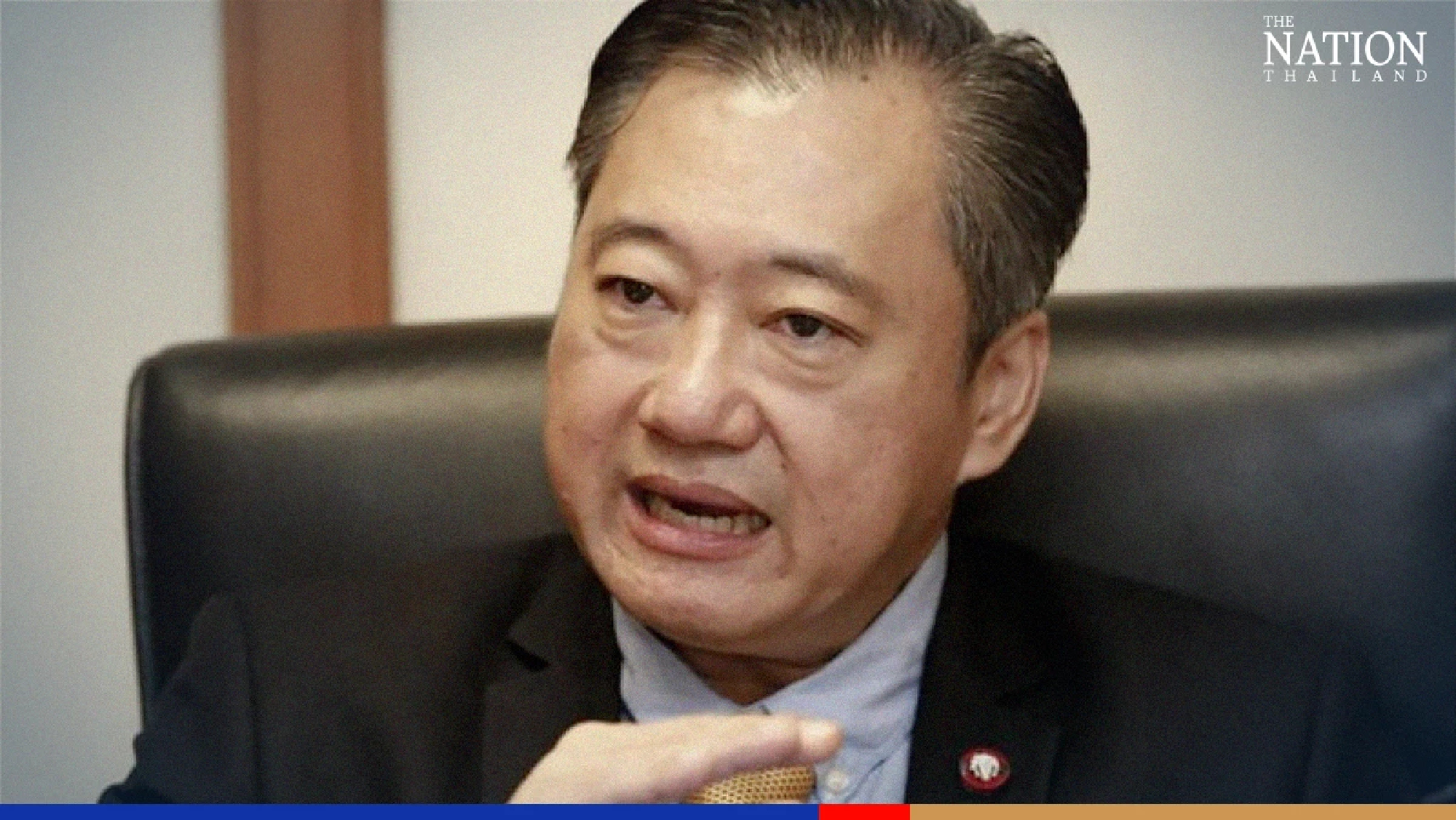


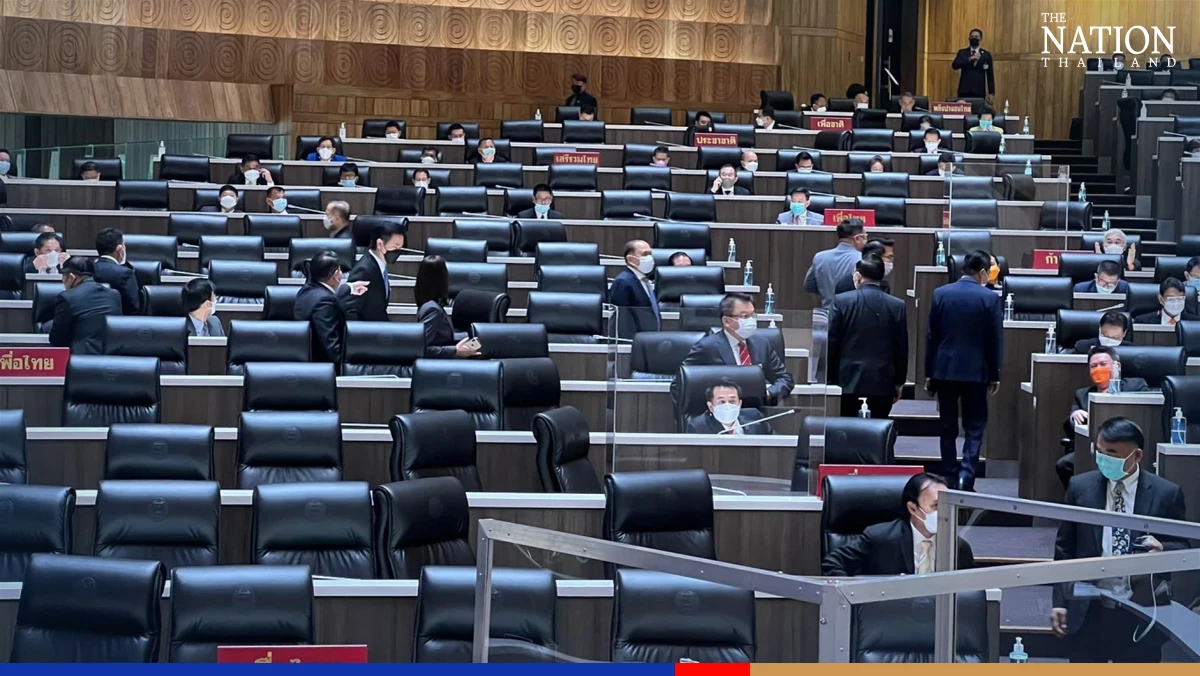 The bone of contention is the method to calculate party-list House seats. The original bill, which was drafted by the Election Commission (EC), proposed a figure of 100 or the number of all party-list seats to divide the overall party-list votes cast by voters for allocating MP seats.
 It has been reported that the ruling Palang Pracharath Party initially supported the 100-divider method but Prime Minister Prayut Chan-o-cha allegedly changed his stance over fears the Pheu Thai would win a landslide victory. It was also claimed that Prayut supported the 500-divider method in exchange for gaining votes from micro parties during the recent censure debate.
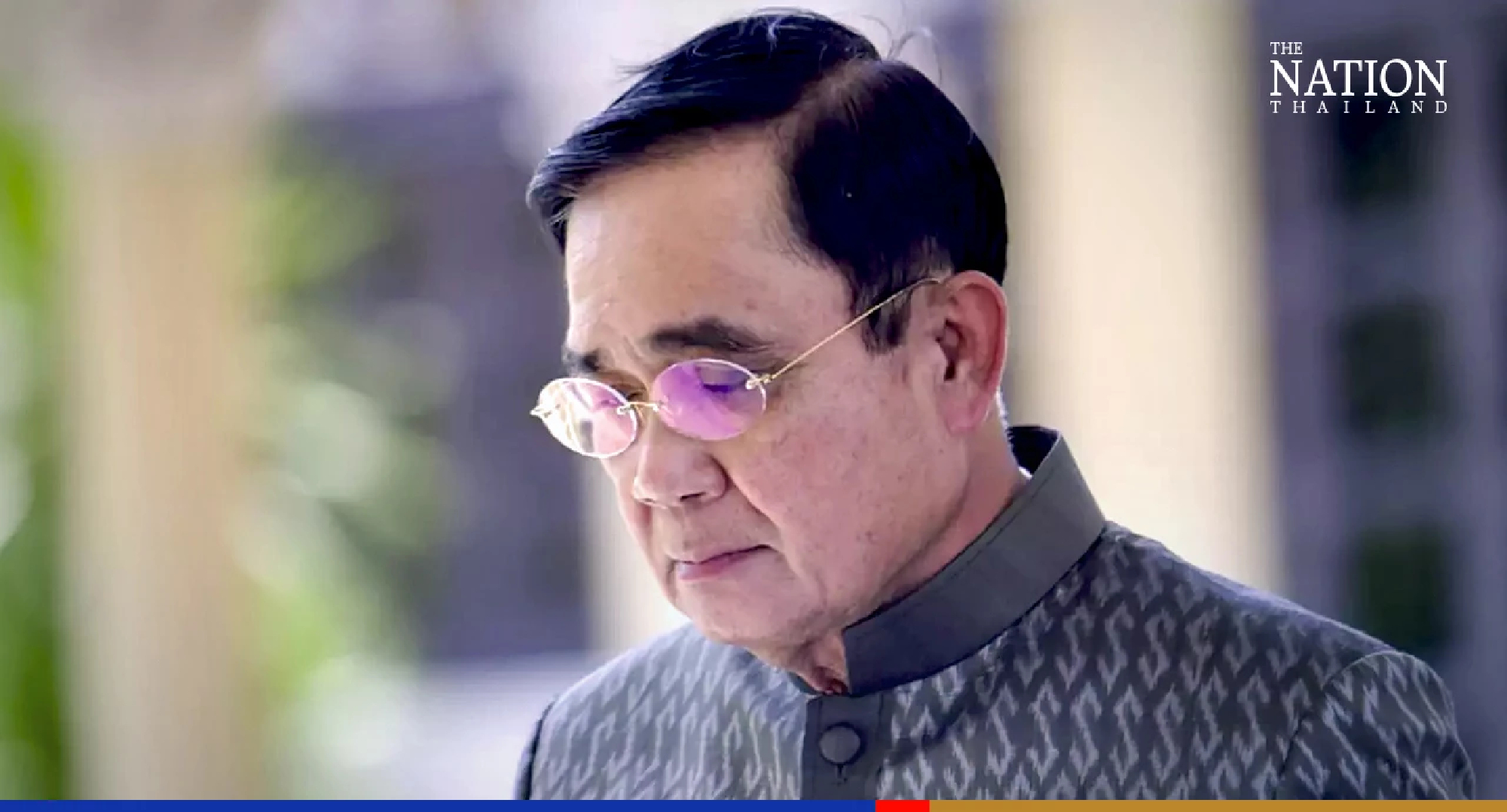

 Regarding the dispute over the tenure of Prime Minister Prayut Chan-o-cha, Wissanu said those who want to seek an interpretation from the Constitutional Court should submit their request to the Election Commission (EC).


 SootinClaimon.Com