Members of the Thai Thalugaz group on Tuesday afternoon rallied with some 300 Myanmar people in Thailand to demonstrate outside the Myanmar Embassy in Bangkok against the ruling junta following the execution of four activists.
The protest against the Myanmar government began at 1pm in front of their embassy on Sathorn Nua Road.
After the Myanmar government announced the executions on Monday, the Thalugaz posted on its Facebook wall, urging its members to join Myanmar people to protest at 1pm.
“Rise against the Min Aung Hlaing murderous regime. Join the protest on Tues 26th, at 13:00, Myanmar Embassy in Bangkok,” the Thalugaz posted in English.
Leaders of the protesters condemned the executions and strongly criticized General Min Aung Hlaing during the demonstration amid rains.
The post of the Thalugaz group drew a lot of comments in support of Myanmar people.
But some netizens said Thai activists should not get involved in the internal affairs of Myanmar. They said doing so could bring trouble to Thailand.
Some alleged that the Thalugaz was using the international event for causing disturbances in Bangkok.
The Thalugaz have also demonstrated in the past against the Prayut Chan-o-cha government.
The Pridi Banomyong Institute on Tuesday condemned the hanging of four pro-democracy activists by the Myanmar junta, saying the executions would provoke more violence in the civil war-torn neighbouring country.
Despite international pleas for clemency, the junta hanged a former National League for Democracy (NLD) lawmaker, a democracy activist and two men accused of violence.
The state-run Mirror Daily gave details of the executions on Monday, the first in Myanmar for nearly 50 years. The announcement drew international condemnation.
Put to death were Phyo Zeya Thaw, a former lawmaker in ousted leader Aung San Suu Kyi’s NLD party, Kyaw Min Yu, a 53-year-old democracy activist better known as Ko Jimmy, Hla Myo Aung and Aung Thura Zaw.
No condemnation came from the Thai government led by Prayut Chan-o-cha.
Prayut, a former Army chief, is known to have cosy ties with the Myanmar junta.
Assoc Prof Dr Anusorn Thamchai, president of the institute, said he was dismayed at news of the executions.
“I am saddened by inhumane actions of the Myanmar junta that executed pro-democracy political prisoners despite strong objections from the international community and international civil organisations,” Anusorn said.
He said the Myanmar junta also ignored pleas from Cambodian Prime Minister Hun Sen as chairman of Asean.
“So, there is no need to respect the feelings of this oppressive Myanmar regime,” Anusorn said.
He added that the Myanmar junta had even ignored pleas from its ally, China, for an alternative solution to executions.
Meanwhile, Anusorn called on the Thai armed forces to better protect the country’s sovereignty after repeated violations of Thailand’s airspace by Myanmar forces cracking down on Karen rebels along the border.
He also urged the Thai government to show the international community and Asean community that Thailand supports a peaceful and political solution to the civil war in Myanmar.
Anusorn added that Prayut’s government must call on the Myanmar junta to return democracy to its people and also provide shelter and protection for political asylum seekers from Myanmar.
He said the four “democracy heroes” were executed in a barbaric fashion without receiving transparent trials in accordance with their rights and rule of law.
“Pridi Banomyong Institute hereby condemns the executions as acts that will provoke escalation in the civil war,” Anusorn said.
“These inhumane acts will increase pressure on the military dictatorship. The executions ruled out hope of talks for peaceful solutions and the return of democracy to Myanmar.”
He said executing political opponents had no place in the 21st century and was a violation of the Universal Declaration of Human Rights and International Covenant on Civil and Political Rights.
He said the four “democracy heroes” had not died in vain as their deaths would inspire others in the fights for human rights and democracy in Asean and around the world.
A House subcommittee vetting the 2023 budget bill has voted to reject the Royal Thai Air Force’s request for Bt7.4 billion to buy two fighter jets.
Yutthapong Charassathian, deputy chairman of the subpanel on procurement, ICT, state firms and revolving funds, said on Tuesday that the air force had failed to say whether US Congress would approve the sale of two F-35A jets to Thailand.
Yutthapong said the panel found it would take up to 20 months to initiate the purchase. In the meantime, the Bt7.4 billion should be used to help people suffering hardship from the Covid-19 crisis instead, he added.
As a result, the subcommittee voted Monday to reject the request for the budget for the procurement of the two jets, he said.
On July 19, Defence Ministry permanent secretary Gen Worakiat Rattanannon testified to the House budget-vetting committee that the air force has been setting aside funds to procure new fighter jets since the 2018 budget.
Worakiat said that in previous years, the air force did not specify which models it would buy but this year it had identified the two F-35As.
He said normal practice required that an armed force was allocated budget as a backup before it could initiate a purchase order with the US government.
Worakiat added that the air force had a contingency plan in case its budget request was not approved.
A Parliamentary commission has vowed to speed up consideration of the cannabis usage draft act but dismissed doctors’ fears that legalisation is damaging children’s health.
More than 850 medics at Ramathibodi Hospital have joined a campaign to halt legalisation until controls on cannabis usage – especially among children – are implemented.
House of Representatives’ commissioners vetting the draft usage act said the campaign was in line with their own duty to maintain social order, especially by protecting children.
However, commission chairman Supachai Jaisamut claimed cannabis legalisation had not yet affected society and children. Supachai is a member of the Bhumjaithai Party, which made legalisation the core of its election campaign.
“However, the commission will accelerate consideration of the draft cannabis-hemp act for completion as soon as possible,” he said. He added that the draft should be finalised by the end of this month before being presented to the House.
Commission spokesman Panthep Puapongphan said the Public Health Ministry had implemented controls including measures to prevent businesses from processing cannabis without permission and selling the herb to children.
He also said the number of people hospitalised for cannabis intoxication was only 33 this month – an 81.66-per-cent drop from the 180 patients in June.
“This shows cannabis-legalisation rules set by the Public Health Ministry and related agencies are effective,” he said.
He urged people to have faith in the government, adding that “unlocking” cannabis enabled people to use the herb for medical benefits.
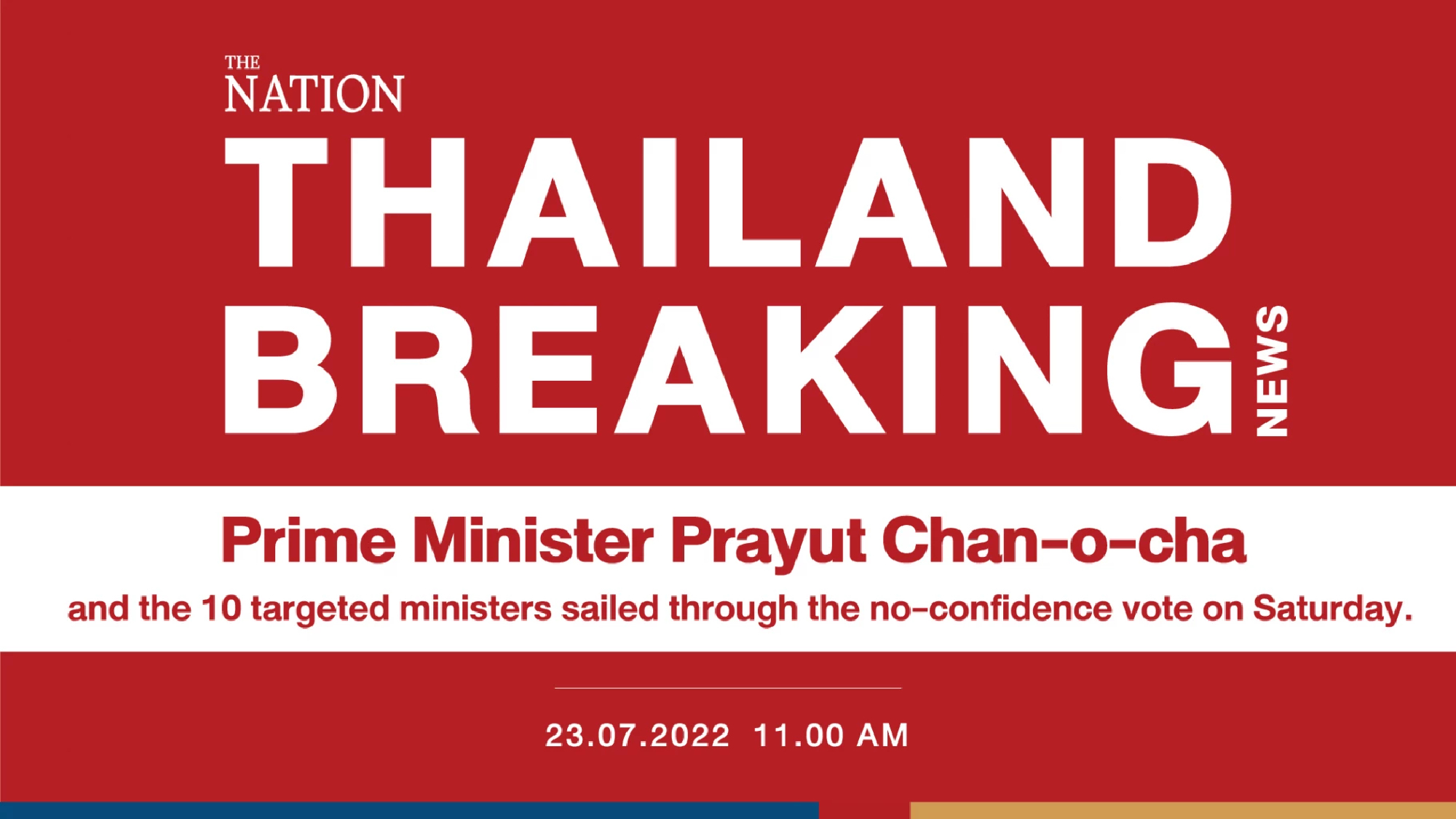
Prime Minister Prayut Chan-o-cha and 10 targeted ministers easily survived Saturday’s no-confidence vote in Parliament but failed miserably in a parallel “people’s vote”.
Here’s a comparison of the vote in Parliament and the public vote:
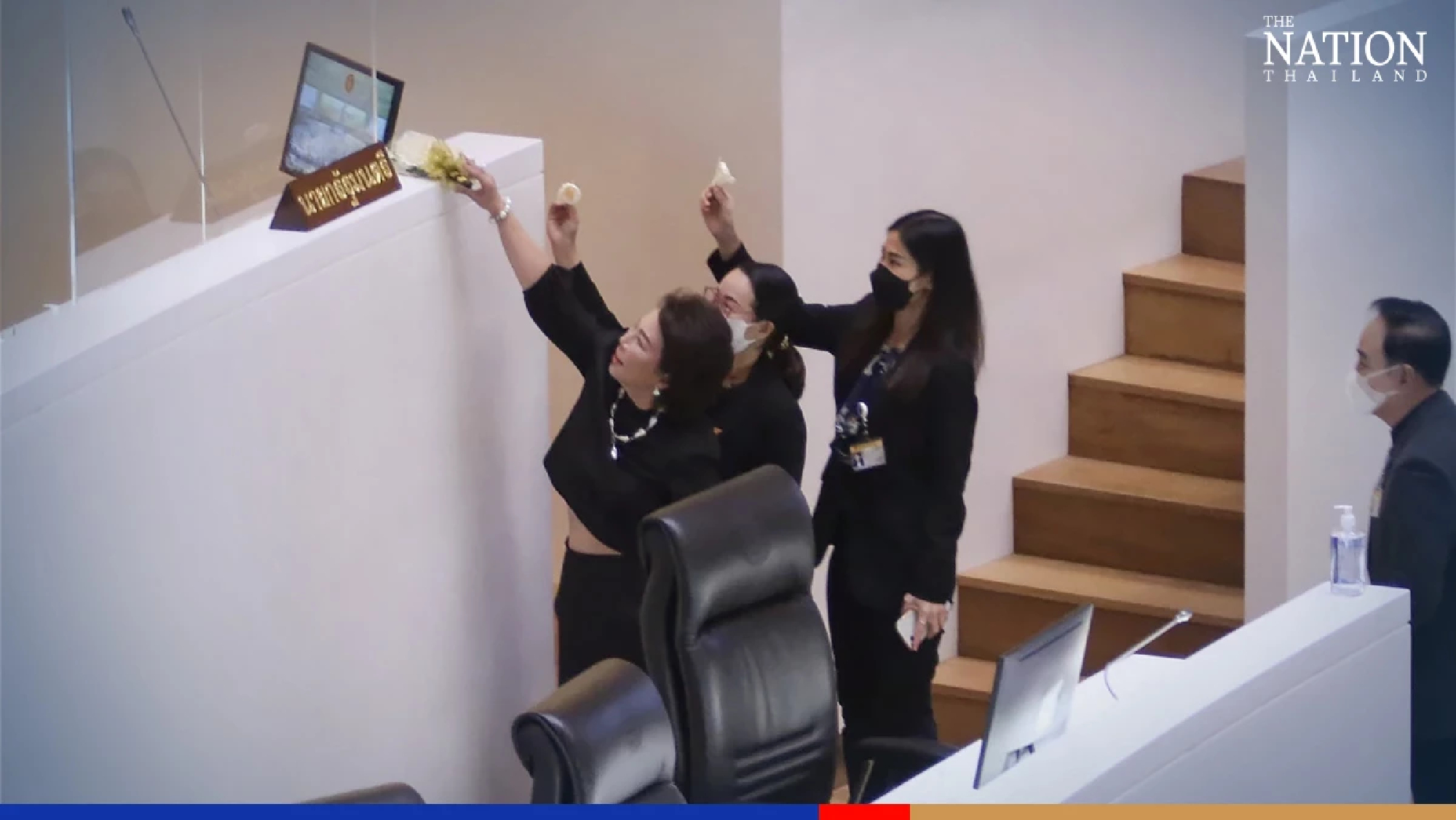
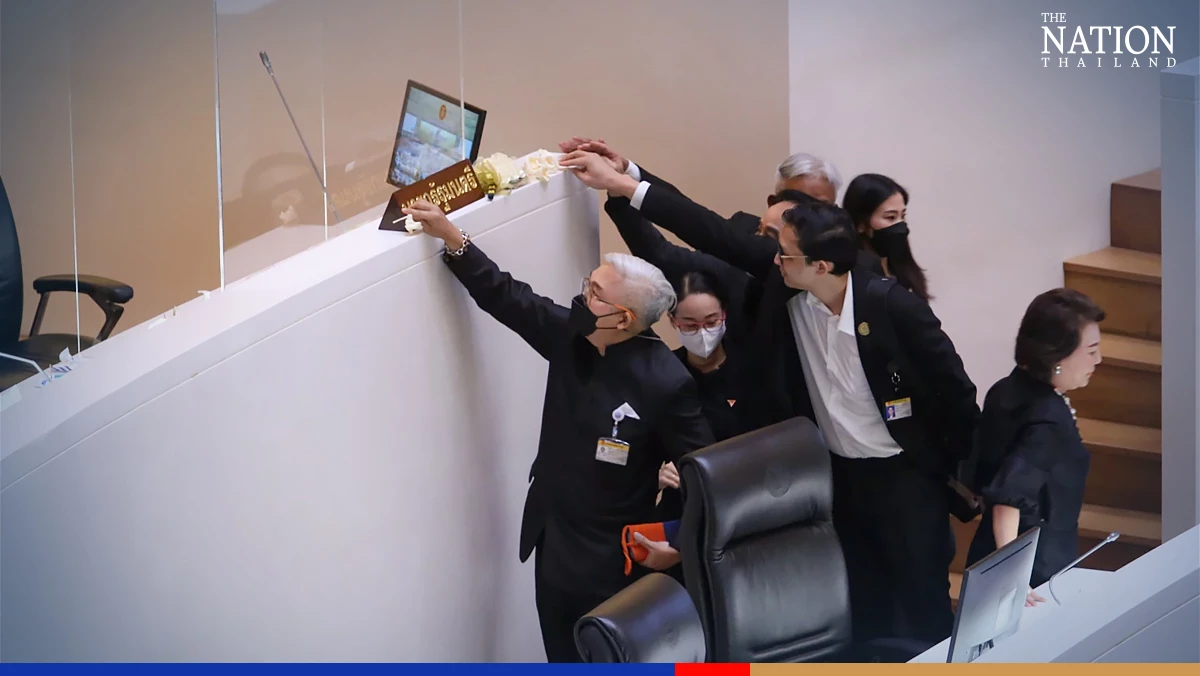
MPs from the opposition Move Forward party placed sandalwood cremation flowers at the prime minister’s podium ahead of the censure vote in the House of Representatives on Saturday.
The MPs, led by Amarat Chokepamitkul, were spotted leaving “dokmai chan” at the podium in front of the Cabinet’s bench on the government side of the House.
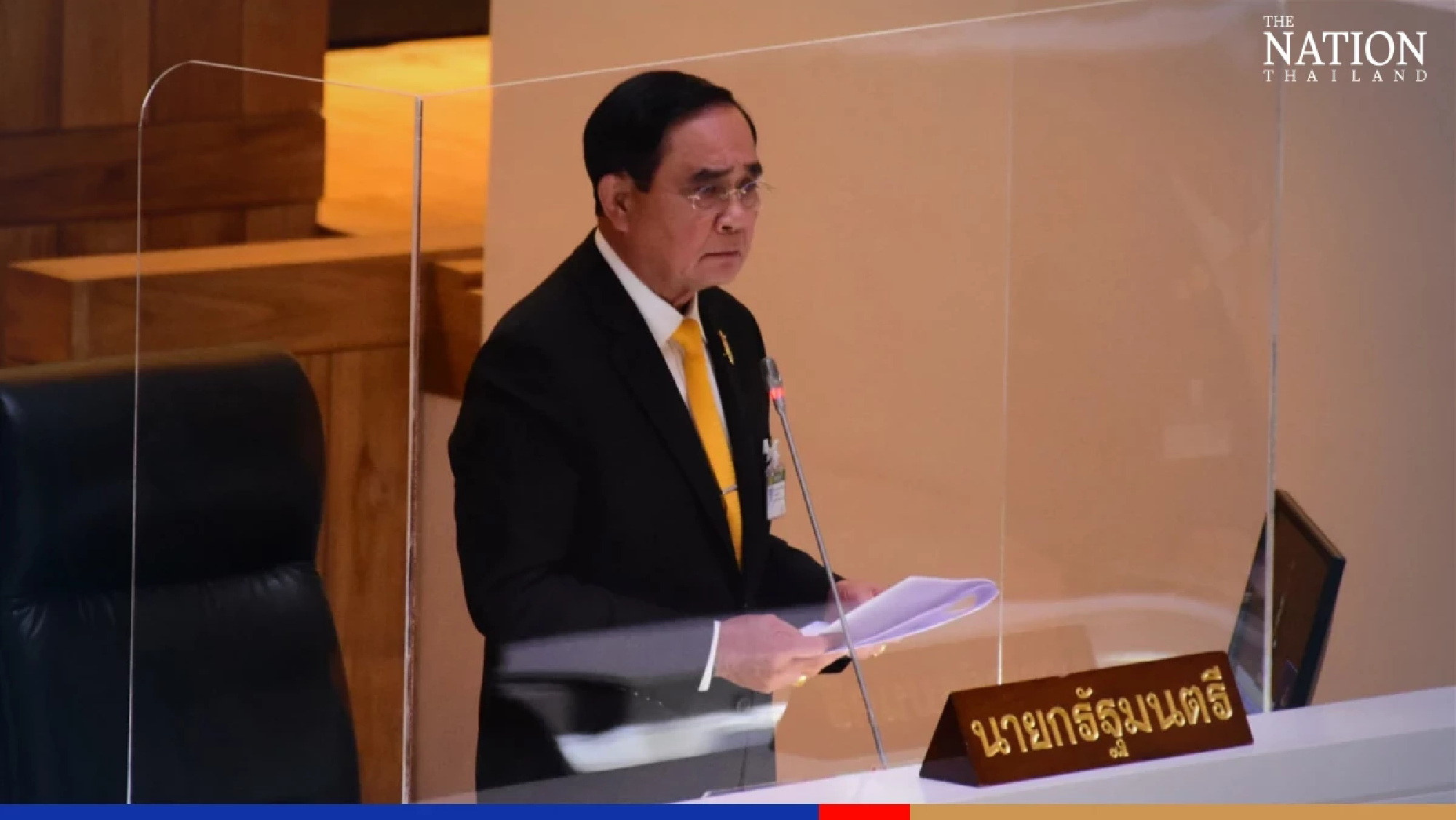
The podium, fitted with a clear plastic shield against Covid-19 and a sign that reads “Prime Minister”, was where Gen Prayut Chan-o-cha answered challenges during the censure debate earlier this week.
The funeral-style stunt drew a protest from dissident Move Forward MP Karom Polpornklang during the House session on Saturday.
Karom said MPs who had placed the crematorium flowers had dishonoured Parliament, and asked House Speaker Chuan Leekpai to restore order.
Chuan, a former PM, responded by saying that the act was not against House rules as it involved personal behaviour. “Sometimes it’s difficult to control ethical behaviour,” he added.
Move Forward had earlier promoted the no-confidence debate as a “funeral” for targeted ministers.
All 11 ministers survived the no-confidence vote – PM Prayut by 256 votes to 206 with nine abstentions.
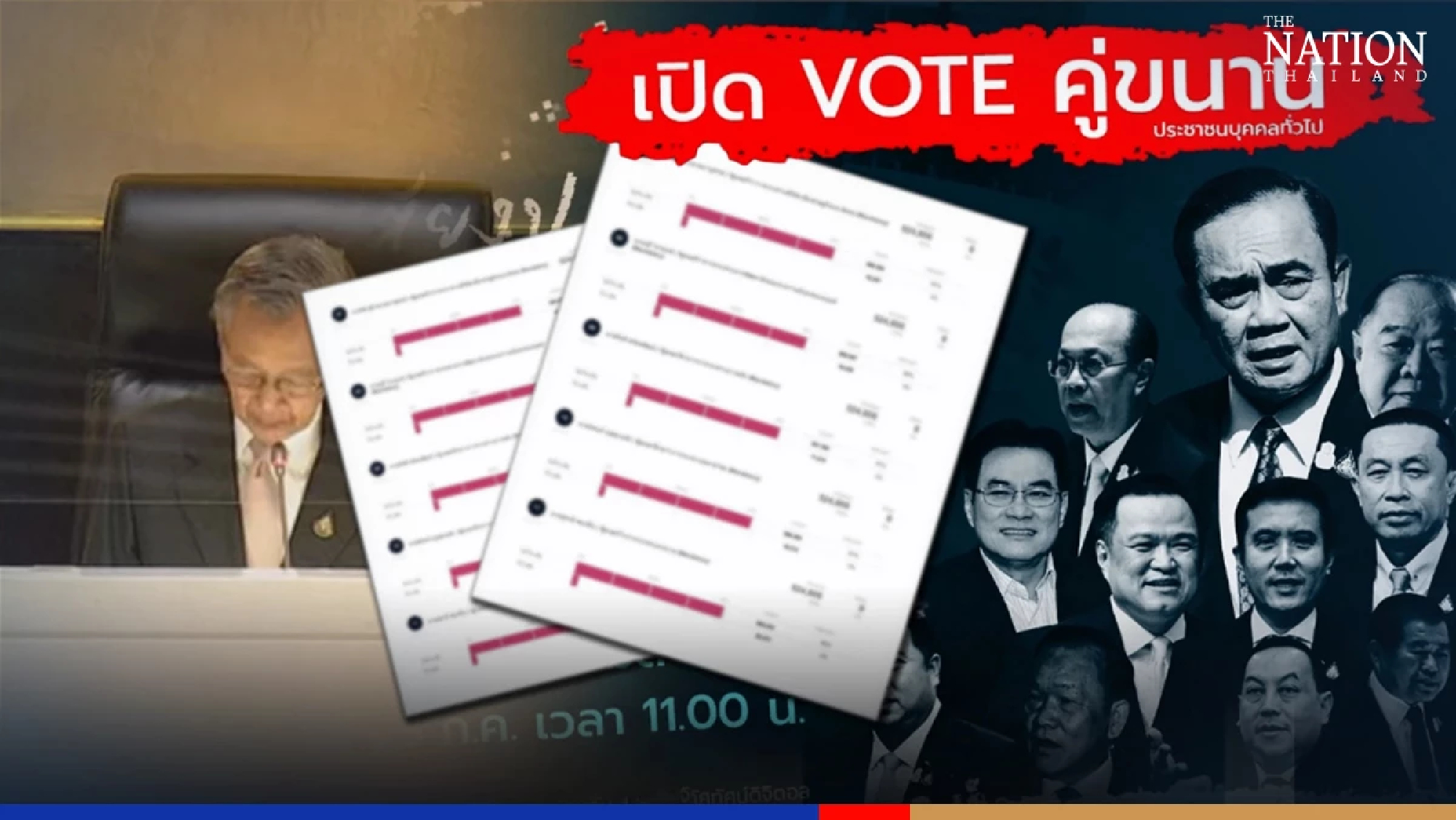
Prime Minister Gen Prayut Chan-o-cha and 10 other Cabinet members survived the censure motion in Parliament by a comfortable majority on Saturday – but failed miserably in a parallel “people’s vote”.
Of the 524,806 votes cast in the televised “Voice of the People” forum, about 95 per cent gave a thumbs-down to all 11 government ministers grilled by the opposition over the past week.
The separate “no-confidence votes” for each minister ranged from 504,197 to 510,143, compared to “confidence votes” of between 14,393 and 20,609.
Deputy Prime Minister Gen Prawit Wongsuwan received the highest no-confidence vote from members of the public, with 510,143. Prawit received only 14,393 confidence votes.
Interior Minister Gen Anupong Paochinda got off lightest with 504,197 no-confidence votes and 20,609 votes of confidence.
PM Prayut received 508,833 no-confidence votes and 15,973 confidence votes.
The trio, collectively known as the “3P brothers”, are former commanders-in-chief of the Royal Thai Army and brothers-in-arms since their days as junior officers. They were the main targets of opposition attacks during the four-day no-confidence debate that started on Tuesday.
The “Voice of the People” forum is a collaboration of academics from four universities, civil groups and four television channels including Nation TV
“The project is meant to be a platform for people, as the true owners of the country under the Constitution, to express their opinions on whether they trust the 11 targeted ministers or not,” Thammasat University law lecturer Prinya Thaewanarumitkul said on Saturday.
“Although the people’s vote has no legal status, the politicians involved should heed it,” he added.
Prime Minister Prayut Chan-o-cha held forth for more than an hour listing his government’s achievements in the final session of the censure debate on Friday night.
According to Prayut, his government has successfully achieved the following over the past eight years:
• Removed the “red flag” status given by International Civil Aviation Organisation in October 2017 by enhancing Thailand’s aviation safety and security standard.
• Upgraded from Tier 2 Watchlist to Tier 2 in the 2022 Trafficking in Persons Report due to increased efforts in tackling human-trafficking issues.
• Pulled the national carrier, Thai Airways International (THAI), from bankruptcy. The airline has been following a rehabilitation plan over the past year, and its cash flow and financial status have improved. It is believed that THAI will pull out of the rehabilitation process by 2024.
• Formed the National Land Policy Committee to allocate over 1.2 million rai of land to underprivileged people for farming and reducing land-related disputes. The committee will continue allocating land to those in need until the target of 5.7 million rai is reached.
• Built infrastructure. By the end of 2021, Thailand had 11,583 kilometres of highways and motorways, marking an increase from just 4,271km in 2014. More than 200km has been added to the railway system in the past eight years. Suvarnabhumi Airport’s capacity has been expanded to 139 million passengers from 118 million in 2018. Progress in several mega projects, including the 500km Thailand-China link and high-speed railway linking three airports.
• Developed the Eastern Economic Corridor (EEC) in 12 targeted industries, created over 100,000 jobs in the past five years and promoted investment worth more than 5.3 trillion baht since 2014.
• Set up infrastructure for a digital economy by developing financial systems such as PromptPay, 5G technology and e-services for individuals and businesses.
• Setting Thailand on the track to becoming a carbon-neutral society by promoting the electric vehicle industry, a bio-circular-green economy and moves to expand forest areas from 31.8 per cent to 40 per cent by 2036.
• Passing legislation to reduce social and economic disparity and provide assistance to vulnerable groups, especially in calculating loan interest and allowing the cultivation of 58 cash crops.
“I believe what the government has done are just first steps in a long journey. I am proud of what I have done, and I know what I’m doing,” Prayut said. “Nobody can live forever, but Thailand must always stand strong. I want every efficient person to continue these projects, work together for the sake of the country, so you can stand tall and say that ‘I am proud to be a Thai’.”
Prayut pulled through the censure debate with 256 votes.

 The post of the Thalugaz group drew a lot of comments in support of Myanmar people.
 Assoc Prof Dr Anusorn Thamchai, president of the institute, said he was dismayed at news of the executions.
 He said executing political opponents had no place in the 21st century and was a violation of the Universal Declaration of Human Rights and International Covenant on Civil and Political Rights.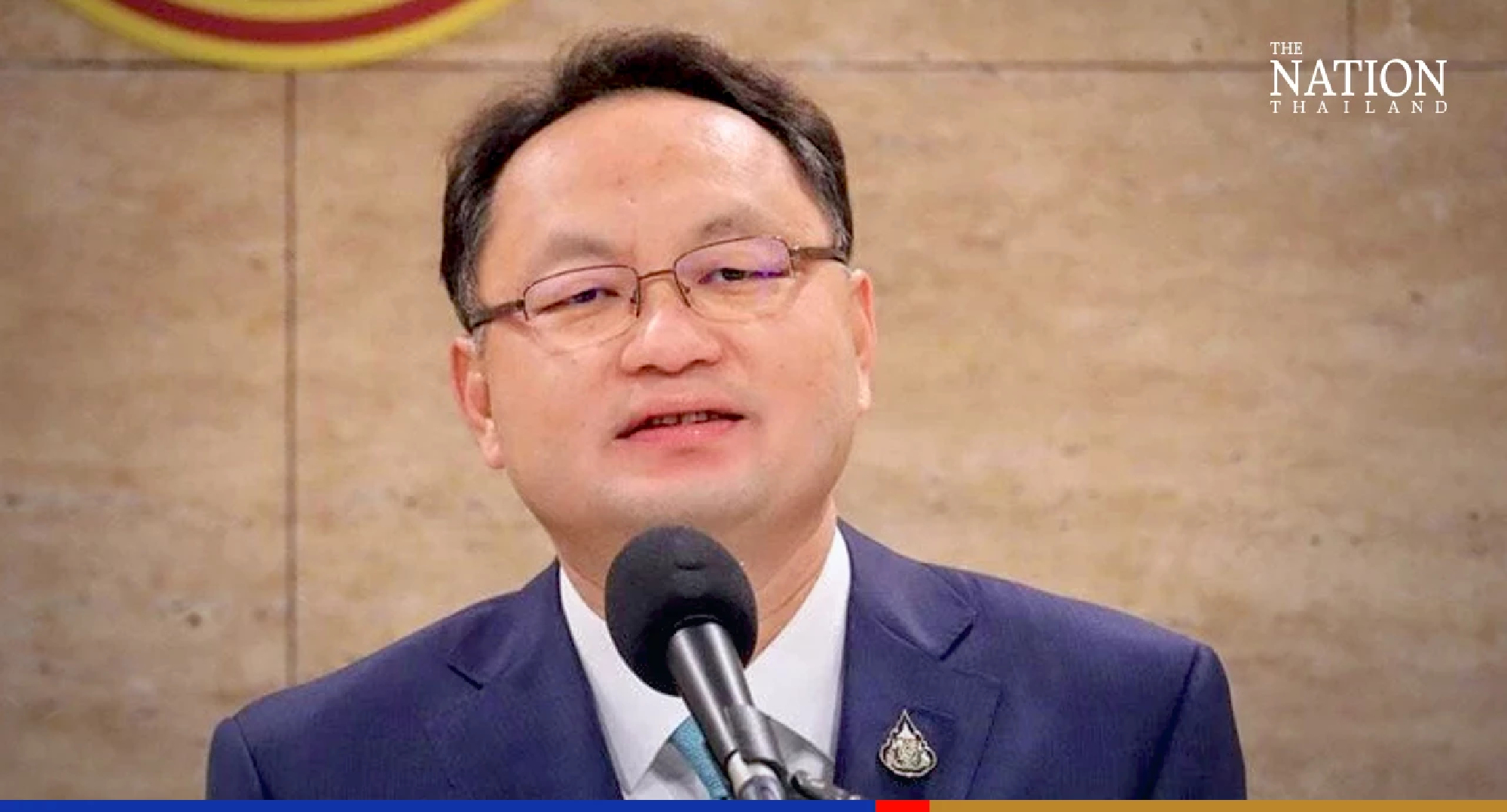

 He said normal practice required that an armed force was allocated budget as a backup before it could initiate a purchase order with the US government.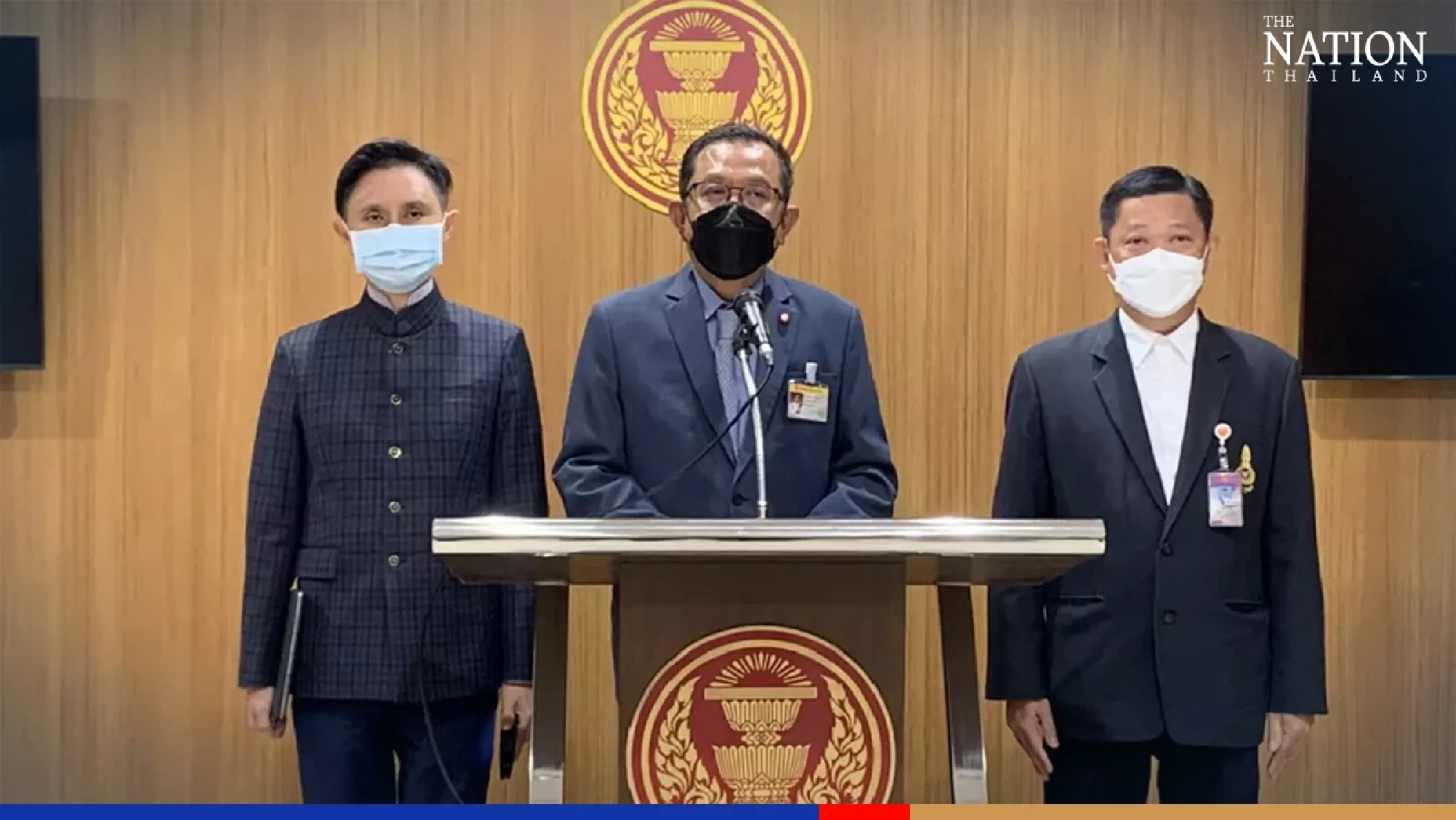



 SootinClaimon.Com