The long and controversial history of Thailand’s law against royal insults #SootinClaimon.Com

#SootinClaimon.Com : ขอบคุณแหล่งข้อมูล : หนังสือพิมพ์ The Nation.

The long and controversial history of Thailand’s law against royal insults (nationthailand.com)

The long and controversial history of Thailand’s law against royal insults
PoliticsDec 16. 2020
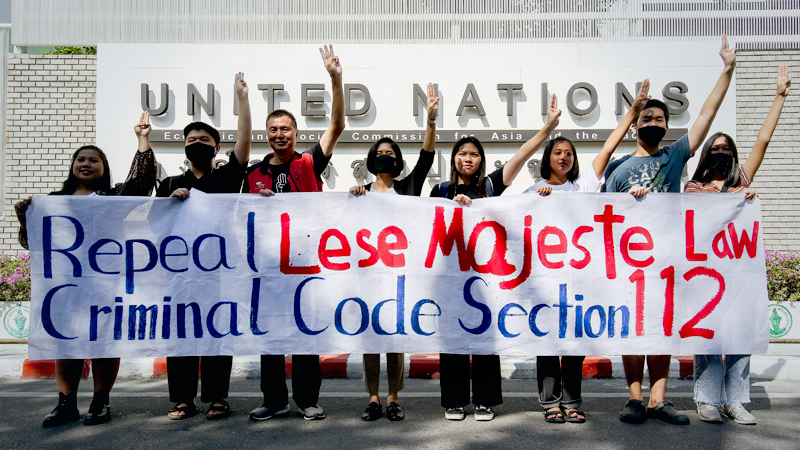
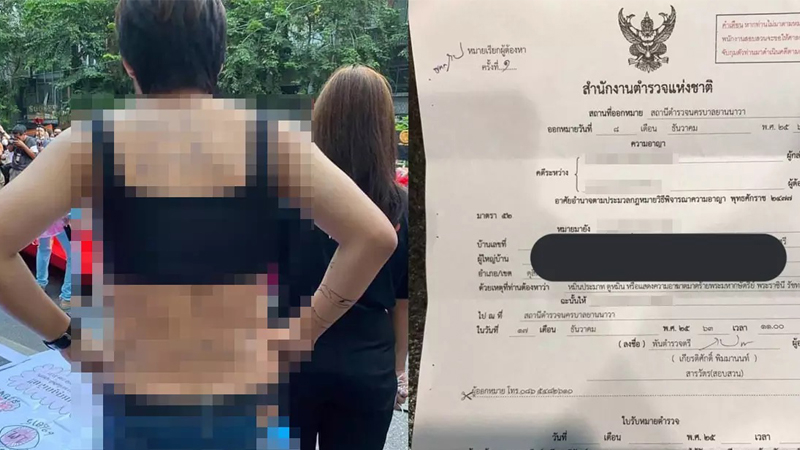
Photo credit: Thai PBS Photo

Photo credit: Thai PBS Photo

By Thai PBS World Syndicate /ANN
The draconian lèse majesté law is back in the spotlight after at least 41 people were slapped with royal defamation charges in relation to anti-establishment protests over the past few weeks.

The move to resume charging people with lese majeste after a two-year hiatus followed Prime Minister Prayut Chan-o-cha’s declaration in November that “all relevant laws and their sections” will be applied against protesters who break the law.

Leaders of the pro-democracy movement have stepped up the pressure in their push for Prayut’s resignation, a new, democratic Constitution and reform of the monarchy.

Protest leaders have broken the long-held taboo on debate of the monarchy with harsh criticism of the institution, especially the King. Meanwhile messages deemed by many as insulting to the royals were spray-painted at protest sites and posted on social media.

The protesters’ 10-point manifesto for monarchy reform includes a demand to repeal the lèse majesté offence in Article 112 of the Criminal Code, so that citizens can discuss the monarchy freely.

Lèse majesté has been an offence under Thailand’s Criminal Code since 1956. Article 112 of the law states: “Whoever defames, insults or threatens the King, the Queen, the Heir-apparent or the Regent shall be punished with imprisonment of three to 15 years.”

Debate has continued for decades as to whether the law should be repealed.

Advocates for abolition

Those who advocate the law should be abolished point to the fact that Article 112 has often been used for political purposes, to silence critics of those in power. Their argument is that the penalty is far too severe – with up to 15 years of imprisonment for each offence – and that it restricts citizens’ democratic right to free expression.

“Authorities base their decisions to enforce Article 112 on political reasons. It is used as a tool to retain political power and gag critics,” opposition Pheu Thai Party MP Somkid Chueakong said.

More than 1,000 people have been prosecuted under Article 112, according to political activist Somyot Prueksakasemsuk, who in 2013 was sentenced to 11 years in prison after being found guilty of lèse majesté.

Somyot, then editor of political journal “Voice of Taksin”, was held responsible for an article he published that was deemed to be insulting to the monarchy.

Other high-profile cases include award-winning activist Jatupat “Pai Daodin” Boonpattararaksa, who was slapped with lèse majesté charges in December 2016 for sharing a BBC biography of the King on Facebook. He was the first person to be arrested for lèse majesté in the new reign.

In November 2011, 61-year-old former truck driver Ampon Tangnoppakul was sentenced to 20 years in prison for four counts of lèse majesté and computer crime offences. A cancer patient, he died in jail while serving his sentence.

Called Akong (Grandpa) by the media, Ampon was accused of sending four short messages to a government official in 2010 containing insulting and threatening content directed at late King Bhumibol and Queen Sirikit. The defendant denied the charge, arguing that he did not know how to send a text message.

Records show lèse majesté cases soared after the 2006 military coup. The period from 1990 and 2005 brought just four to five cases per year, but the five years after the 2006 coup saw more than 400 cases.

The number of lèse majesté cases spiked again after the coup in May 2014 – to more than 350 between 2014 and 2017.

Thai Lawyers for Human Rights noted that under junta rule, courts tend to impose harsher punishments under Article 112 – up to 10 years’ imprisonment for each count. Meanwhile, defendants tried in military courts could face sentences of 50 to 70 years behind bars, the group said.

Supporters’ views

Royalists believe Article 112 is necessary to protect the King from being defamed since the monarch cannot file libel charges against his accusers, as ordinary citizens can. They argue that most countries have a similar law to protect their heads of state.

Anon Sakworawit, a lecturer at the National Institute of Development Administration, said that insults against the King “clearly increased” after Prayut revealed in June that Rama X had advised the government against enforcing Article 112.

There have also been calls for amendment of the lèse majesté law, with the most concrete and powerful coming from a group of law lecturers called Nitirat in March 2011.

Nitirat’s seven-point proposal includes removing the minimum punishment and fixing the maximum penalty to three years. It also says only the Royal Household Bureau should be allowed to file the charge – not any individual, as is the case now.

History of the law

The lèse majesté offence was first added to the Kingdom’s Penal Code in June 1908, during the reign of King Chulalongkorn (Rama V). The law prohibited insulting the king, the queen, the crown prince and the regent, as well as children of any Thai king – past or present.

For insults directed at the king, queen, crown prince and the regent, offenders faced up to seven years in prison and a hefty maximum fine of Bt5,000 – equivalent to more than Bt1 million in today’s currency.

Insulting the children of any Thai king carried a maximum penalty of three years in jail and a fine of up to Bt2,000.

In November 1956, the government of Field Marshal Plaek Phibunsongkhram promulgated a new Criminal Code which is still in force today.

The 1956 version removed the fine as well as the clause protecting the children of kings.

After the October 6, 1976 military coup, the junta issued an order to amend the Article 112 penalty from “no more than seven years” to “three to 15 years”.

This was the first time that a minimum penalty was set for lèse majesté, while the maximum term was more than doubled.

Amendment attempts

After the 2006 coup, more moves were made to amend the law through the National Legislative Assembly (NLA).

The proposed amendment called for a fine of Bt20,000 to Bt140,000, and additional protection for the King’s children, Privy Council members and the King’s representatives.

However, the NLA withdrew the amendment bill following strong opposition both at home and from the international community.

Two years later, Samak Sundaravej’s government – viewed as a proxy of former prime minister Thaksin Shinawatra – proposed a bill to amend Article 112.

The amendment called for anyone who makes lèse majesté accusations for political purposes without formally filing a police complaint, to be punished in the same way as those convicted of insulting the monarchy.

The proposal was withdrawn following criticism that it would make the lèse majesté law even more harsh.

Thaksin urges voters to back Pheu Thai’s man in Chiang Mai election #SootinClaimon.Com

#SootinClaimon.Com : ขอบคุณแหล่งข้อมูล : หนังสือพิมพ์ The Nation.

Thaksin urges voters to back Pheu Thai’s man in Chiang Mai election (nationthailand.com)

Thaksin urges voters to back Pheu Thai’s man in Chiang Mai election

PoliticsDec 16. 2020former PM Thaksin Shinawatraformer PM Thaksin Shinawatra 

By The Nation

Fugitive former PM Thaksin Shinawatra on Wednesday urged Chiang Mai residents to vote for the Pheu Thai candidate in Sunday’s local election, triggering claims from his opponents that the move violates the Constitution.

In a Facebook video posted on Wednesday, Thaksin said Pichai Lertpongadisorn had visited him in Dubai before deciding to enter the election for Chiang Mai Provincial Administrative Organisation (PAO) president.

Thaksin said he wanted Chiang Mai residents to enjoy the same quality of life as when he was prime minister, adding that he missed Thailand.

“As someone who was born in Chiang Mai, I would like to support [Pichai] because he will to put all his effort into working for the province. Hence, I would like to ask Chiang Mai people to vote for Pichai on December 20,” he said.

The former PM said he would never forget the people of Chiang Mai and that he believes they miss him, too.

Responding to the video, lawyer and social activist Srisuwan Janya submitted a petition to the Election Commission asking it to investigate whether the move violated Section 28 and 29 of the Constitution’s organic law on political parties.

Sections 28 and 29 prohibit outsiders who are not members of a party from controlling or directing the party’s activities, directly or indirectly.

“Thaksin’s move to invite Chiang Mai people to vote for Pheu Thai’s candidate in the PAO election shows a connection between him and the party which violates the abovementioned law. [This means] the Constitutional Court can rule for Pheu Thai to be dissolved,” said Srisuwan, who heads a group called the Association to Protect of the Constitution.

‘Government paranoia behind decision to halt Nakhon Ratchasima music festival’ #SootinClaimon.Com

#SootinClaimon.Com : ขอบคุณแหล่งข้อมูล : หนังสือพิมพ์ The Nation.

‘Government paranoia behind decision to halt Nakhon Ratchasima music festival’ (nationthailand.com)

‘Government paranoia behind decision to halt Nakhon Ratchasima music festival’

PoliticsDec 15. 2020

By THE NATION

The government’s move to shutter the Big Mountain Music Festival 2020 in Nakhon Ratchasima was unfair and motivated by the government’s fear of people expressing their opinions, the Move Forward Party said on Monday.

Party spokesperson Thanwarin Sukkhapisit said that the government’s order to the Nakhon Ratchasima governor to stop the event stank of double standards.

On Sunday, Nakhon Ratchasima’s governor told the organisers to call off the festival, citing lax Covid-19 preventive measures after thousands attended the festival on Saturday.

Wichian Chantaranothai said organisers had failed to limit the number of festival-goers or enforce mask-wearing, leading to shouting and singing among crowds which could transmit the virus.

“There are clearly double standards in enforcing Covid-19 prevention measures,” he said.

“There were Red Cross fairs held in several provinces in the past months with no strict preventive measures enforced. In Nakhon Ratchasima there is also the Pak Chong Winter Festival being held from December 13-24, which also has music performances on stage. After this decision, would the government shut that down as well?” he asked.

“The government should stop using fear as a compass in handling the Covid-19 situation,” he said.

“Thailand should move forward with hope. In the past year, we have learned to live with Covid-19 while our public health system is strong enough.

“Everybody can see that the festival was cancelled not because of fear of the outbreak, but because the government is afraid of the expression of opinion by the pro-democracy new generation,” he added.

Related Story: Netizens say music festival shut down for pro-democracy content, not Covid

Arnon unfazed by lese majeste charges, says rallies will get more serious in 2021 #SootinClaimon.Com

#SootinClaimon.Com : ขอบคุณแหล่งข้อมูล : หนังสือพิมพ์ The Nation.

Arnon unfazed by lese majeste charges, says rallies will get more serious in 2021 (nationthailand.com)

Arnon unfazed by lese majeste charges, says rallies will get more serious in 2021

PoliticsDec 14. 2020

By THE NATION

Human-rights lawyer Arnon Nampa, who is also one of the core protest leaders, told the press on Monday morning that pro-democracy rallies next year will focus on far more serious issues.

Arnon was at the Bang Pho Police Station in Bangkok with his lawyer to hear charges of violating the lese majeste law during a rally at Kiak Kai intersection on November 17.

He told the press that he has been charged with violating the draconian law four times now, and expects more charges to be slapped on him soon, adding that he was ready to fight.

As for rallies, he said the protest leaders are currently relaxing and preparing to address far more serious issues next year.

Arnon is also scheduled to visit the Technology Crime Suppression Division to face another charge for allegedly violating the lese majeste law while participating in a demonstration at Democracy Monument on November 8.

Leader of Thai Liberal Party announces support for amendment to lese majeste law #SootinClaimon.Com

#SootinClaimon.Com : ขอบคุณแหล่งข้อมูล : หนังสือพิมพ์ The Nation.

Leader of Thai Liberal Party announces support for amendment to lese majeste law (nationthailand.com)

Leader of Thai Liberal Party announces support for amendment to lese majeste law

PoliticsDec 14. 2020Sereepisuth TemeeyavesSereepisuth Temeeyaves 

By THE NATION

Sereepisuth Temeeyaves, leader of the Thai Liberal Party, announced on Monday that he fully supported calls for amendments to the lese majeste law, adding that the issues of “defamation” and “insult” should be removed from this law.According to the Criminal Code’s Article 112, anybody who “defames, insults or threatens the King, the Queen, the Heir-apparent or the Regent, shall be punished with imprisonment of three to 15 years”.Sereepisuth said there is no need for a separate law that covers defamation of the monarchy, when there is already Article 326, which says “whoever, imputes anything to the other person before a third person in a manner likely to impair the reputation of such other person or to expose such other person to hate or scorn, is said to commit defamation, and shall be punished with imprisonment not exceeding one year or fined not exceeding Bt20,000 or both”.However, he said, the matter of “threat” to the monarchy can remain in Article 112.

Exiled Thai academic in Japan smells a plot in latest stalking incident #SootinClaimon.Com

#SootinClaimon.Com : ขอบคุณแหล่งข้อมูล : หนังสือพิมพ์ The Nation.

Exiled Thai academic in Japan smells a plot in latest stalking incident (nationthailand.com)

Exiled Thai academic in Japan smells a plot in latest stalking incident

PoliticsDec 12. 2020

By THE NATION

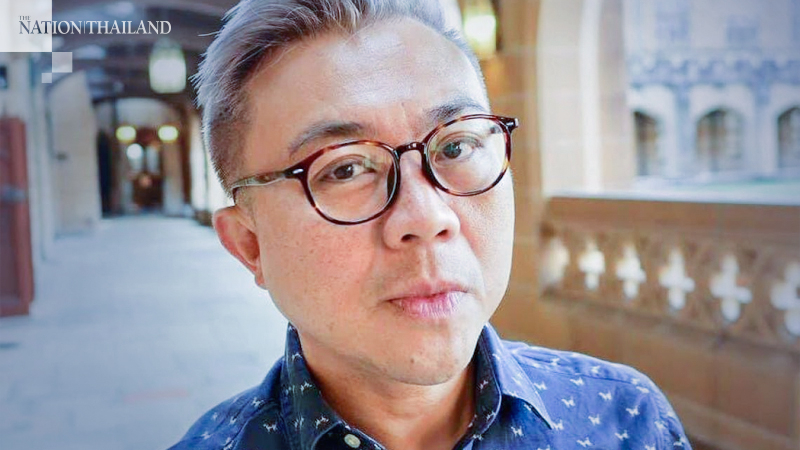
Exiled academic Pavin Chachavalpongpun on Friday revealed that he was stalked by a man to his apartment in Japan, saying it was not the first time he had the experie

In a Facebook post, Pavin said that Japanese police on December 2 had arrested a Japanese man, aged around 30, who was loitering in front of his apartment in Kyoto.

The academic said that his neighbours had spotted the man’s suspicious behaviour and called the police. After being interrogated, the man confessed that he had been “chasing/monitoring” him since November 30 on the orders of someone.

This was not the first threat he had faced, he added. Last year, someone had broken into his apartment and attacked him with a chemical spray.

“This time, an unusual thing happened. Someone turned up at my university office, pretending to be a deliveryman. When he was told that I was not in the office, he left immediately. The university alerted the police. We were able to obtain footage of him from CCTV and begin the investigation,” Pavin said.

“Around the same time, I started to receive anonymous phone calls for the entire week,” he added. “This was just like last time before I was attacked. A Japanese man pretended to call me from the post office, asking for my address. I told the police. Eventually we contacted the post office and we were told that the post office would normally never call customers and would never call a number withheld. So, these calls were fake.”

Initial suspicion on December 2 was that the arrested man could have been linked to a network in Europe, especially in the Czech Republic.

“It is not coincidental that Aum Neko [a pro-democracy activist] was attacked last year and the police were able to arrest two men who were from the Czech Republic,” he said. “So, there is surely a connection. I am in the process of connecting the Japanese and French police for further investigation.”

He added that his friend had introduced him on Friday morning to a Twitter user, which could have been created under the Thai government’s information operation. Pavin said that this Twitter user “pretended to be a student of Kyoto University and happened to ride a bicycle and see me accidentally, but was not sure if it was me”.

The exiled academic said that the user wanted to know his address, and took his photos when he was on a bicycle and at a parking lot.

“The covert photos have some connection with the suspect who was arrested on December 2. I remember well what I had worn on December 2. It was the same day when this man was arrested. So it is likely that this man hung around my place, taking my photos, sending them to Bangkok and in the evening was arrested”.

Phrae school pressured to provide names of pro-democracy students #SootinClaimon.Com

#SootinClaimon.Com : ขอบคุณแหล่งข้อมูล : หนังสือพิมพ์ The Nation.

Phrae school pressured to provide names of pro-democracy students (nationthailand.com)

Phrae school pressured to provide names of pro-democracy students

PoliticsDec 12. 2020

By THE NATION

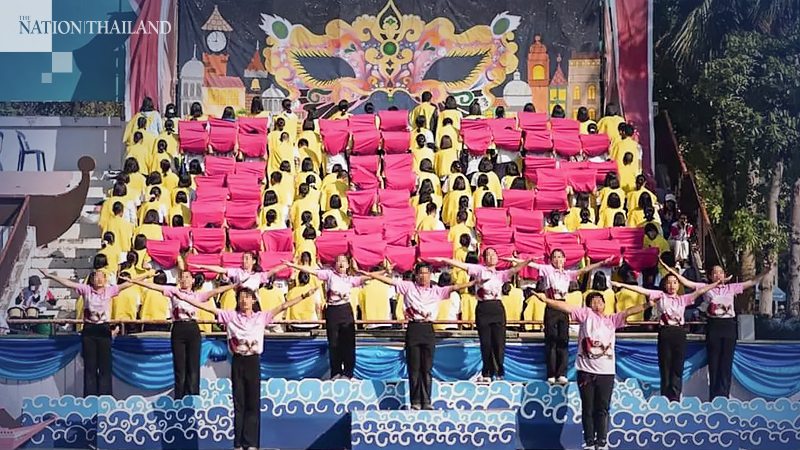
A school in Phrae province is reportedly drawing up a list of students who had participated in the school sports day recently and had raised the issue of the lese majeste law, as well as other pro-democracy issues during the event.

This week photos of the sports day were published and shared online. A parade with signs reading “for the future of the new gen” and “nation, freedom and people” had been captured. The number 112, which refers to the draconian provision in the Criminal Code, was also seen at the school’s amphitheatre.

The political statement reportedly has led to intimidation from the authorities of some staff and students. The school director has reportedly been pressured to send the students’ names to the authority.

Twitter users even created a hashtag “nrschoolfact”, and several users retweeted related posts and also expressed their support to the students.

Actor faces boycott after backing lese majeste law #SootinClaimon.Com

#SootinClaimon.Com : ขอบคุณแหล่งข้อมูล : หนังสือพิมพ์ The Nation.

Actor faces boycott after backing lese majeste law (nationthailand.com)

Actor faces boycott after backing lese majeste law

PoliticsDec 12. 2020

By THE NATION

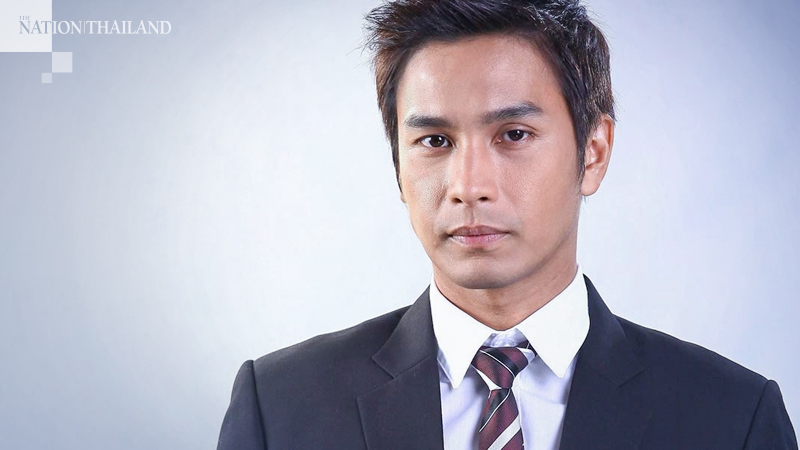
An actor has alienated a huge section of the audience by expressing his political stand supporting Section 112 of the Criminal Code, or the lese majeste law.

Recently, Anuchyd “O” Sapanphong backed the draconian law via his Twitter account, adding, “please punish severely those who violate this law”.

His post was retweeted and shared several times on social media. Pro-democracy supporters reacted angrily, and even vowed to boycott his work. They also created a hashtag “แบนโออนุชิต” (Boycotting O Anuchyd) on social media.

Anuchyd was known for the movies “The Overture” (2004) and “Malila: The Farewell Flower” (2017).

Police summon teen for questioning after lese majeste complaint filed against him #SootinClaimon.Com

#SootinClaimon.Com : ขอบคุณแหล่งข้อมูล : หนังสือพิมพ์ The Nation.

Police summon teen for questioning after lese majeste complaint filed against him (nationthailand.com)

Police summon teen for questioning after lese majeste complaint filed against him

PoliticsDec 12. 2020

By THE NATION

A 16-year-old male teenager has reportedly become the latest to be accused of committing lese majeste offences.

A Twitter user shared a photo of the teenager and an image of the summons issued by Yannawa Police Station in Bangkok, asking him to report to the investigation officer on December 17 at 11am.

The tweet added that an administrator of a famous Facebook page had filed a complaint with police against the boy.

A senior reporter of Khaosod English, Pravit Rojanaphruk, posted on his Facebook on Friday that the teen was

“likely the youngest-ever,” to be accused of the crime. “At least 24 people are now accused of defaming the Thai King,” he added.

Section 112 of the Criminal Code states that “Whoever defames, insults or threatens the King, the Queen, the Heir-apparent or the Regent, shall be punished with imprisonment of three to 15 years.”

Protest organisers to deploy professional guards instead of volunteers #SootinClaimon.Com

#SootinClaimon.Com : ขอบคุณแหล่งข้อมูล : หนังสือพิมพ์ The Nation.

Protest organisers to deploy professional guards instead of volunteers (nationthailand.com)

Protest organisers to deploy professional guards instead of volunteers

PoliticsDec 12. 2020Parit ChiwarakParit Chiwarak 

By THE NATION

Organisers of the pro-democracy movement have announced they will replace volunteer guards with trained security professionals at future protests.On Friday, protest leader Parit “Penguin” Chiwarak said that peaceful protest was an important “weapon” for the demonstrators and also acted as a shield to protect them from the regime’s powers.Posting on Facebook, Parit said that to preserve peace at protests, the pro-democracy Ratsadon group would stop using volunteer guards and employ professionals from now on. He did not say where the professional guards would come from.Parit added that the decision was made in the belief that protesters could protect themselves and the rally venues. “This duty should not be the sole responsibility of guards, as was the case before,” he said.