Prime Minister Prayut Chan-o-cha told the press on Thursday that investigators will soon find the truth about the gunshots that were fired when protesters were dispersing on Wednesday night.
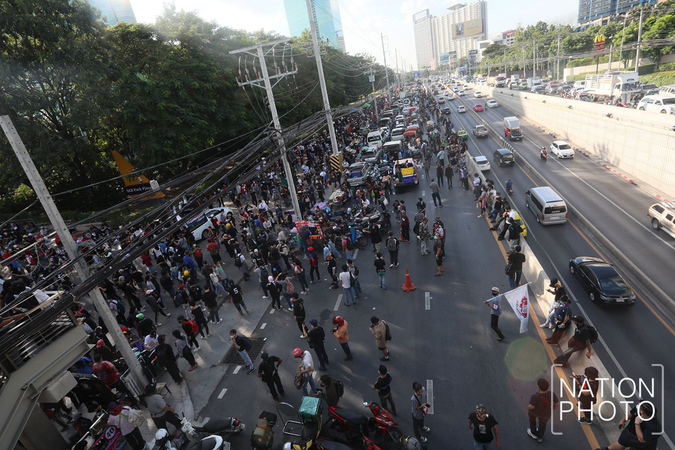
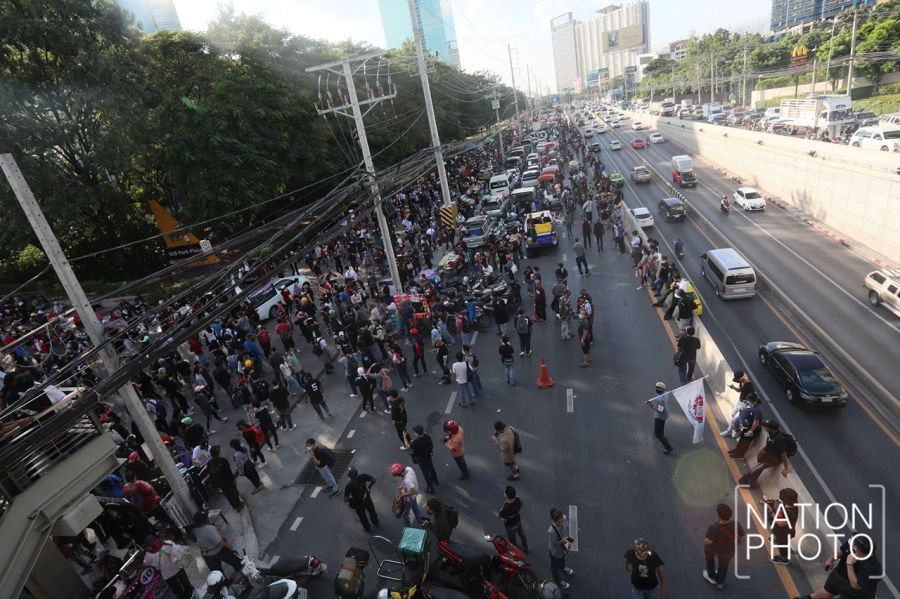
Pro-democracy protesters had gathered outside the Siam Commercial Bank (SCB) headquarters on Ratchayothin Road from Wednesday afternoon until 9.17pm, when protest leaders called on the crowd to disperse.
At around 10.10pm, while many protesters were still at the rally site, an explosion was heard followed by four to five gunshots. One of the protest security guards had been shot in the abdomen and was rushed to Rama IX Hospital, while the suspected shooter was also critically injured and sent to St Louis Hospital.
Prayut said he has ordered related officials to investigate the incident. “I see that the press has captured the scene and related situation. So, it will be possible to find the truth. The government should not be accused because it was doing its duty of ensuring security during the protest,” he said.
He also called on people to realise that the longer the protests continue, the more they will damage the economy and cause traffic jams.
“Demonstrations may be beneficial for protesters, but they can find a more peaceful and less dangerous way of rallying,” he said.
The “Gear of Red Thonburi”, the security outfit of the Ratsadon group, announced on Wednesday night that the violence at the rally site will not weaken their resolve in the battle for democracy.
Pro-democracy protesters gathered outside the Siam Commercial Bank (SCB) headquarters on Ratchayothin Road on Wednesday afternoon, until 9.17pm, when protest leaders called on the crowd to disperse.
At around 10.10pm, while many protesters were still at the site, an explosion was heard followed by four to five gunshots.
The explosion sound reportedly came from the McDonalds outlet in the SCB compound.
The security outfit reported on Twitter that one of the guards had been shot in the abdomen and was rushed to Rama IX Hospital, while the suspected shooter was also critically injured and sent to St Louis Hospital.
As of press time, the first one was reportedly in a safe condition after nearly three hours of surgery.
The Gear of Red Thonburi said in a Facebook post that “evidence shows that persons with malicious intent had disguised themselves as vocational students before creating a dangerous scene”.
The group said it will continue fighting peacefully for democracy, and demanded that those responsible for the violence should take responsibility.
In a Facebook post on Wednesday night, Thai Civilised Party leader Mongkolkit Suksintharanon said he was pulling out of the coalition because he could not tolerate Prime Minister Prayut Chan-o-cha’s moves to incite conflicts and for using the monarchy to hang on to power.
In the post, he said the November 17 clash between pro-democracy protesters and yellow-shirt royalists while the police looked on proved that the government was using double standards.
He also accused the government of coming up with policies that help big businesses exploit the people, such as the law that allows the establishment of agricultural zones, adding that none of its actions have helped resolve the country’s economic problems.
“I cannot tolerate General Prayut as prime minister or support his ‘lawfare’ using Article 112 [lese majeste law] to crack down on people. He hasn’t even tried to negotiate with the protesters, and instead has been using senators to protect himself and float above the problems,” Mongkolkit said.
He said Prayut should step down so the political unrest can come to an end and Thailand can have a new premier who will listen to the people’s demand to amend the charter.
Mongkolkit said he will continue as an independent opposition MP, adding that he was committed to his party’s policies.
An executive from the Thammasat University’s Rangsit campus advised the government on Thursday to avoid using the lese majeste law against pro-democracy protesters because this action can reflect badly on the Palace.
In a Facebook post, Prinya Thaewanarumitkul, vice rector for sustainability and administration, said the government should not be using Article 112, especially after Prime Minister Prayut Chan-o-cha said in June that the King had instructed the authorities not to invoke the law against citizens.
“If the PM announces that this law can be used to deal with protesters, then people will believe that the King has changed his mind. This belief will ignite more problems between those who want reforms and the monarchists,” he said.
Prinya said the premier should deal with the ongoing protests in other ways, not by implementing the draconian Article 112.
Prominent social critic Sulak Sivaraksa joined anti-government protesters in calling on Prime Minister Prayut Chan-o-cha to resign.
Sulak delivered his speech at the protest site in front of Siam Commercial Bank’s headquarters on Wednesday night.
“Together we have to kick Prayut out,” he said as protesters cheered him on.
He accused Prayut of going against the orders of late King Bhumibol Adulyadej the Great as well as His Majesty the King, and demanded that the government stop applying the lese-majeste defamation law against people who criticise the monarchy.
Sulak said the law has done harm to the monarchy.
His comments came after Prayut vowed to use all relevant laws in dealing with anti-government protesters. Police have also started to issue summons to protest leaders.
Human rights groups meanwhile called on the government to end its crackdown on protesters who have organised peaceful rallies. The royal defamation law, or section 112 of the penal code, imposes hash jail sentences of between three and 15 years. Police have also filed sedition charges against several protest leaders. If they are found guilty, they could be jailed for up to seven years.
In response to Sulak’s comment, Pavin Chachavalpongpun, an academic living in exile in Japan, questioned on his Facebook page whether Sulak would dare criticise how His Majesty the King was using his power.
Pro-democracy protesters have long called for the reform of the monarchy, including an amendment to section 112. They have also called for a separation between the public and personal wealth of the King in order to ensure royal transparency and accountability.
By Syndication Washington Post, Bloomberg · Randy Thanthong-Knight · WORLD, ASIA-PACIFIC Thousands of pro-democracy protesters in Thailand gathered Wednesday outside the main office of the nation’s most valuable lender, in which King Maha Vajiralongkorn is the biggest shareholder, as they push for more transparency and accountability from the monarchy.
The demonstration outside Siam Commercial Bank was organized to “reclaim the assets that should belong to the people and the nation,” Free Youth, one of the protest groups, said on Twitter. The bank closed its headquarters as protesters shifted the venue last-minute following a police ban on gatherings within 150 meters (500 feet) of the Crown Property Bureau office, the original site of the rally.
King Vajiralongkorn’s wealth has become a key focus for protesters following legal changes after he ascended the throne in 2016 gave him the power to put his name on the assets of the Crown Property Bureau, which included holdings of prime properties in Bangkok and shares in major listed companies, including Siam Commercial Bank. They also consolidated management of the assets and eliminated the finance minister’s role as the agency’s ex-officio chairman.
The protesters have demanded those changes be revoked to make a clear division between the king’s personal assets and other palace property they want under the control of the Finance Ministry. They also want the national budget allocated to the monarchy be reduced in line with growth in Thailand’s tourism-reliant economy, which has been hard hit by the pandemic.
The Bureau of the Royal Household declined to comment, and the Crown Property Bureau didn’t answer calls seeking comment on Wednesday. Hundreds of pro-royalist supporters have also gathered on Wednesday in another part of the capital.
Hundreds of pro-royalist supporters also held a counter demonstration in another part of the capital.
Prime Minister Prayuth Chan-Ocha, who has repeatedly rejected calls to quit, toughened his stance on demonstrators last week. The government and security agencies “will now enforce all laws available to deal with protesters who break the law and ignore other people’s rights and freedom,” he said last week.
At least 12 protest leaders received summonses from police on charges of royal defamation, according to the Thai Lawyers for Human Rights. It’s the first time police are using the lese majeste law, which can lead to lengthy jail sentences, against protesters since the movement began in July.
The youth-led protest movement is calling for a more equal and democratic society with a more accountable monarchy and an end to military coups. They’re also seeking the resignation of Prayuth, a former army chief who led a 2014 coup, and a rewriting of the constitution that helped Prayuth retain his power after elections.
The protesters earlier chose to hold a rally in front of the Crown Property Bureau because they “want to strike a blow to the financial basis for the king’s power and wealth,” said Tamara Loos, a professor of history and Thai studies at Cornell University in Ithaca, New York.
“These young protesters have permanently transformed public culture regarding the monarchy, which will be subject to continued critique,” she said. “Cracking down on protesters now only delays a future conflict between those who want genuine change in Thailand’s political institutions and the military.”
Last week, the king appointed one his close aides, former army chief Apirat Kongsompong, as deputy head of the Crown Property Bureau. During his time as army chief, Apirat was vocal in his attacks on the opposition and pledged to defend the monarchy.
Lawmakers last week voted on a pathway to set up a charter rewriting committee but rejected any amendments to the monarchy-related section of constitution.
International rights groups have condemned the violent crackdown on Thai pro-democracy demonstrators and urged the government to respect the right to peaceful protest enshrined in international law, of which Thailand is a signatory.
A statement signed by 13 rights groups condemned police for firing water cannon and tear gas at demonstrators on November 17 while expressing concern for the fate of protesters at Wednesday’s rally outside SCB headquarters in Bangkok. They also accused police of failing to prevent violence between pro-democracy protesters and yellow shirt royalists at Kiak Klai intersection on November 17.
The statement notes that the police crackdown and clashes left 55 protesters injured, mostly from inhaling tear gas, with a kindergartener and elementary school students among those wounded. It also resulted in six protesters suffering gunshot wounds.
The rights groups condemned what they said was “Thai police’s unnecessary and excessive use of force against peaceful protesters marching to Parliament”. They added that video posted on social media later showed police officers informing the royalist protesters that they would withdraw before seconds later abandoning their position between the two groups.
They acknowledged that some pro-democracy protesters engaged in violent conduct in responding to royalist protesters, but emphasised that the overwhelming number of protesters were entirely peaceful.
International human rights law, as expressed in the International Covenant on Civil and Political Rights (ICCPR), which Thailand acceded to in 1996, protects the rights to freedom of expression (article 19) and peaceful assembly (article 21). However, Thai authorities have routinely enforced censorship and stifled public assemblies, meetings, and discussions about human rights, political reforms, and the monarchy’s role in society, said the rights groups.
They note that the 2020 United Nations guidance on less-lethal weapons in law enforcement states that “water cannons should only be used in situations of serious public disorder where there is a significant likelihood of loss of life, serious injury, or the widespread destruction of property.” On the use of teargas, international standards say it should only be employed when necessary to prevent further physical harm and should not be used to disperse nonviolent demonstrations.
The rights groups also cited a November 18 statement by spokesperson for United Nations Secretary-General António Guterres, who “expressed concern about the [human rights] situation in Thailand … it’s disturbing to see the repeated use of less lethal weapons against peaceful protesters, including water cannons … it’s very important that the government of Thailand refrain from the use of force and ensures the full protection of all people in Thailand who are exercising a fundamental peaceful right to protest.”
The rights groups’ joint statement was signed by Amnesty International, Article 19, ASEAN Parliamentarians for Human Rights, Asia Democracy Network, Asian Forum for Human Rights and Development (FORUM-ASIA), Asian Network for Free Elections (ANFREL), CIVICUS: World Alliance for Citizen Participation, Civil Rights Defenders, FIDH – International Federation for Human Rights, Fortify Rights, Human Rights Watch, the International Commission of Jurists and the Manushaya Foundation.
Protesters gather at SCB headquarters, armed with ‘duck’ currency
PoliticsNov 25. 2020Pro-democracy movement leader Parit “Penguin” Chiwarak arrived for Wednesday’s demonstration dressed in a yellow duck costume, to symbolise the creativity and peacefulness of the protests.
By THE NATION
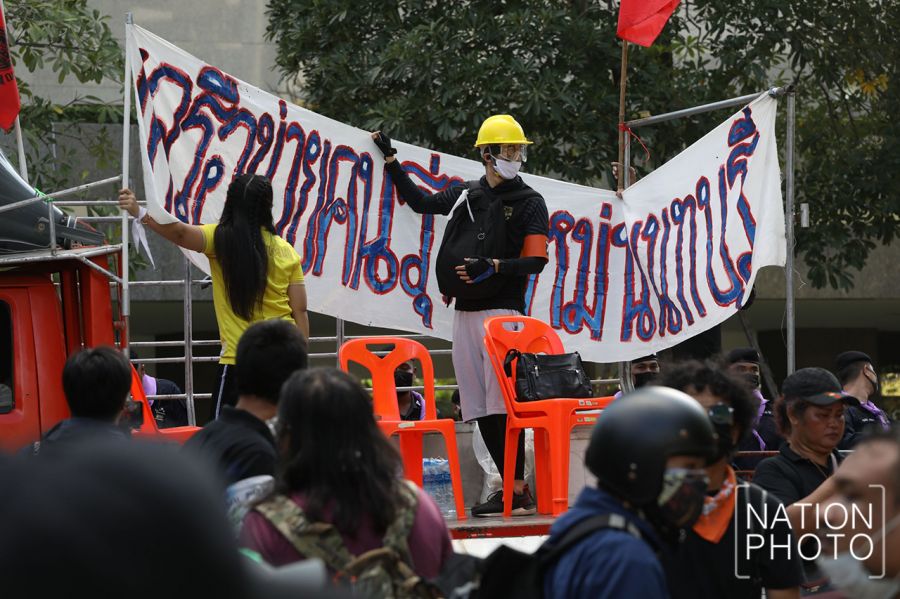
Pro-democracy protests began gathering at Siam Commercial Bank (SCB) headquarters on Ratchadapisek Road as scheduled at 3pm on Wednesday.Protest leader Panupong “Mike” Jadnok announced the demonstration would end at around 10pm on Wednesday. The pro-democracy movement also urged supporters to cancel their SCB accounts, credit cards and investments.
The protesters were greeted by a heavy police presence and barriers ahead of their latest push for monarchy reform. Police began fortifying the area from the midnight, after protest organisers announced on Tuesday night that the demonstration venue had been shifted from the Crown Property Bureau to SCB headquarters.
The organisers have reportedly handed fake banknotes with a ‘king duck’ logo to protesters as part of demonstration.
Protesters gather at SCB headquartersPosted by The Nation Thailand on Wednesday, November 25, 2020
The fake banknotes will be used to buy food from traders stationed in front of the bank headquarters, said protesters.Yellow rubber ducks have become an emblem of the protests, which are seeking reforms to make the monarchy more accountable and transparent.Protesters also reported that police targeted them with a Long-Range Acoustic Device (LRAD) or sound cannon at around 3pm.
Containers placed by police to block pro-democracy protesters from holding a rally at the Crown Property Bureau in Dusit district caused a traffic jam on Wednesday even though the political rally was shifted to Siam Commercial Bank headquarters in Chatuchak district.
The photos of the container barriers causing a traffic jam during rush hour were shared widely on social media on Wednesday.
The hashtag #รถติด (traffic jam) became the top three trending topics on Twitter in the morning (as of 11am).
At 10.25pm on Tuesday, the Free Youth group posted a message on social media saying “BREAKING: The Nov 25th rally will take place at SCB headquarters!
Containers placed by police to block pro-democracy protesters from holding a rally at the Crown Property Bureau in Dusit district, even though the political rally was shifted to Siam Commercial Bank headquarters in Chatuchak district.Posted by The Nation Thailand on Wednesday, November 25, 2020
“This move is to avoid clashing with an organised mob and avoid playing the tyrant’s game,” the post said. “Meet us there at 3pm to claim back the property that should have been the people’s.”
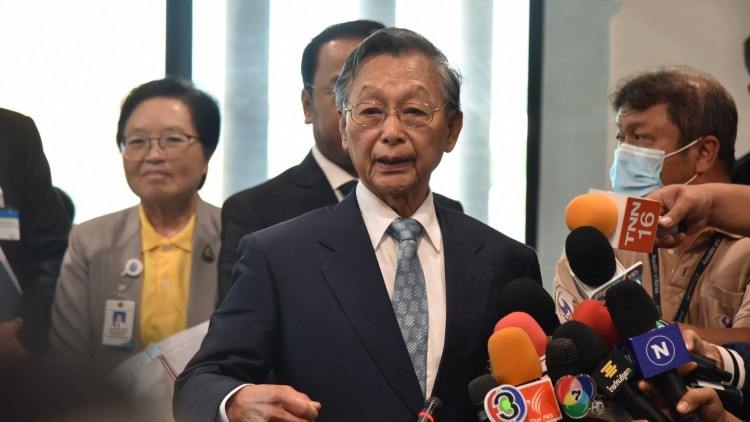
A meeting between the House speaker, the chief government whip and the chief opposition whip on Tuesday agreed that 21 commissioners would form a reconciliation panel, two of whom would represent pro-democracy protester groups, House Speaker Chuan Leekpai said.
“Two persons will be representatives of groups that disagree with the government [protesters], two will represent the government, two will be MPs from the government coalition, two MPs from the opposition, two from the Senate, two from groups that agree with the government, and the remaining nine will be experts in related fields,” Chuan said.
The experts will come from the Council of University President of Thailand (three persons), Rajabhat University (one), Rajamangala University of Technology (one), and the other four will be selected from a list of those who have experience in political reconciliation.
“The panel will have as its secretary the deputy secretary-general of the House of Representatives, while four officials from the Office of the Secretary-General will act as assistant secretaries,” Chuan said.
“The president of the committee will be selected by its members.”
When asked about his expectations on the reconciliation panel, Chuan said he did not expect an excellent resolution but a concrete one that could be implemented instantly to solve the current problems.
“If the protesters refuse to join the panel, we will continue working with what we have, and will try to invite all parties to take part in the reconciliation,” he added.
Meanwhile, chief Pheu Thai whip Suthin Klungsaeng said the opposition would later discuss whether or not it would have its representatives join the panel.
“It is a good sign that the first step towards reconciling political problems has been jointly put in motion by the government, the opposition and the Senate,” he said.
House of Representatives deputy secretary-general Khunnawut Tantrakul, who will serve as the reconciliation panel secretary, said that after this he would send formal letters to six authorities (the government, chief government whip, chief opposition whip, Council of University President, Rajabhat University and Rajamangala University of Technology) to select representatives to join the panel as per their quota.
“We will not post a deadline for representative nominations, but will arrange a meeting as soon as we receive all the names required by the quota,” he added.
 Prayut Chan-o-cha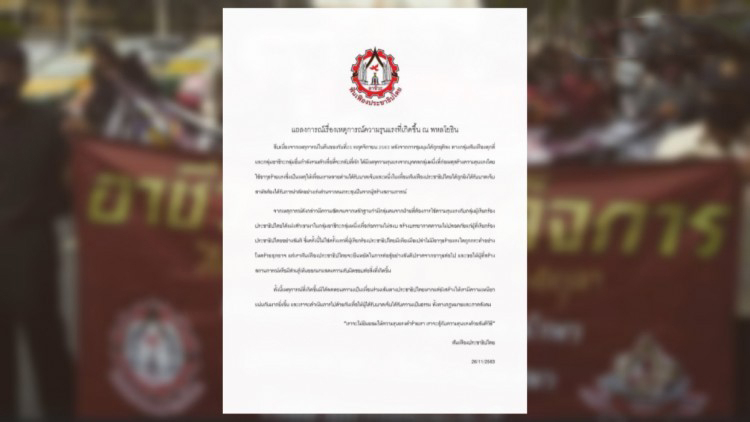
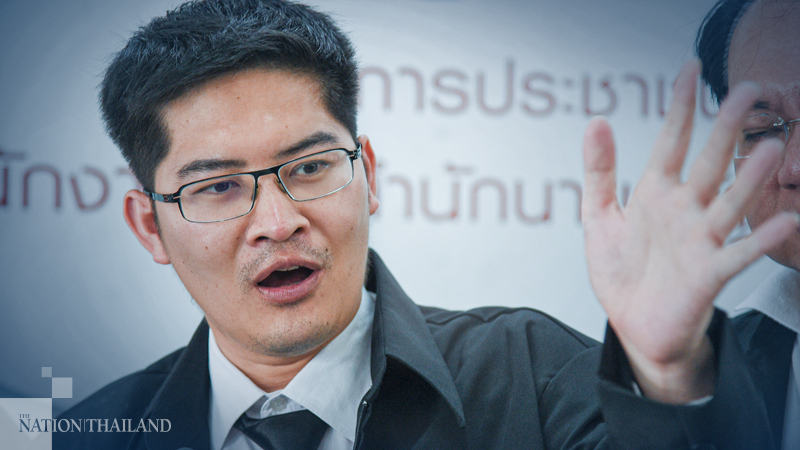
 Prinya Thaewanarumitkul
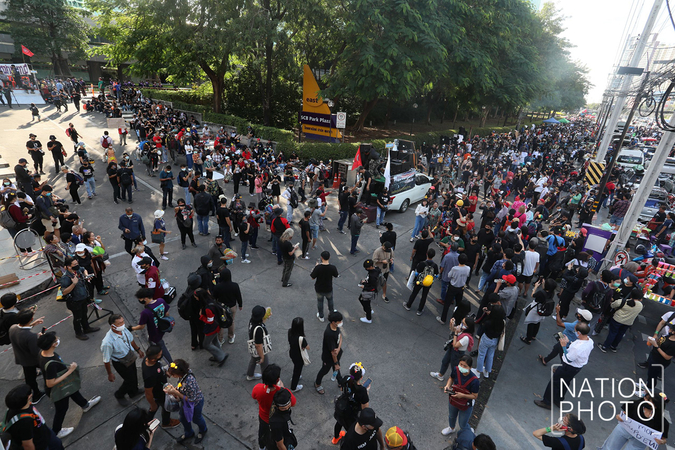
 Pro-democracy movement leader Parit “Penguin” Chiwarak arrived for Wednesday’s demonstration dressed in a yellow duck costume, to symbolise the creativity and peacefulness of the protests.

 Yellow rubber ducks have become an emblem of the protests, which are seeking reforms to make the monarchy more accountable and transparent.Protesters also reported that police targeted them with a Long-Range Acoustic Device (LRAD) or sound cannon at around 3pm.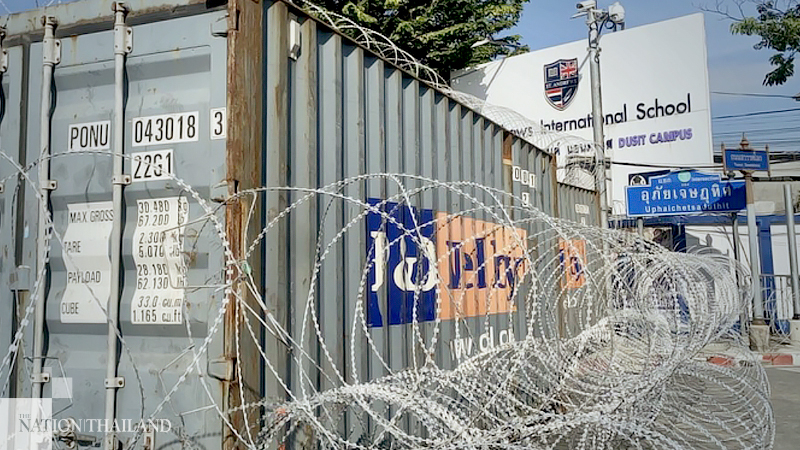
 SootinClaimon.Com