By The Washington Post · Lori Aratani · NATIONAL, WORLD, HEALTH, SCIENCE-ENVIRONMENT, TRANSPORTATION, TRAVEL, HEALTH-NEWS
WASHINGTON – The Centers for Disease Control and Prevention is recommending that those planning to travel internationally this season get tested for the novel coronavirus before and then again after their flights.
The new advice, released Saturday evening, comes just days after officials at the agency “strongly recommended” that people avoid traveling during the upcoming Thanksgiving holiday. The United States is grappling with a dramatic spike in infections, and health officials fear that holiday travel could dramatically worsen the current situation. Total coronavirus infections in the United States have topped 12 million, and cases are approaching 200,000 in a day.
However, in an acknowledgment that some might still travel, the CDC says those who plan to fly internationally should consider getting tested one to three days before their flights and again three to five days after travel. In addition to getting tested after they’ve completed their travels, the CDC said, people should stay home for seven days – even if they test negative.
The agency however, did not address whether testing is recommended for those who are flying domestically.
While the CDC has previously encouraged people planning to fly to take steps to protect themselves and others, including washing their hands frequently, wearing masks and practicing social distancing, this is the first time the CDC has encouraged them to get tested.
“Testing before and after travel can reduce the risk of spreading COVID-19,” the agency said in the new recommendation. Travelers should take a viral test and not travel until they’ve received their results. If they test positive, they should immediately isolate, the agency said.
“Testing does not eliminate all risk, but when paired with a period of staying at home and everyday precautions like wearing masks and social distancing, it can make travel safer by reducing spread on planes, in airports, and at destinations,” the recommendation said.
The use of preflight testing is growing. More than 100 countries currently require proof of a negative coronavirus test for entry.
The International Civil Aviation Organization, the United Nations body that oversees aviation, issued new recommendations earlier this month that acknowledged the potential of preflight testing programs.
In the United States, a growing number of states, including Hawaii, Alaska and Connecticut, are allowing travelers to skip quarantine requirements with proof of a negative test. As a result, more airlines and airports are now offering travelers the option of taking a test before they board the flight. Even so, there is no common standard, so it has been left to airlines and airports to design their own testing programs and for travelers to sort out requirements for their particular destination.
Even for those who take precautions, the CDC warns that air travel during the current pandemic does pose risks.
“Air travel requires spending time in security lines and airport terminals, which can bring you in close contact with other people and frequently touched surfaces,” the agency said. “Social distancing is difficult in busy airports and on crowded flights, and sitting within 6 feet of others, sometimes for hours, may increase your risk of getting COVID-19. How you get to and from the airport, such as with public transportation and ridesharing, can also increase your chances of being exposed to the virus.”
While surveys show that fewer people are planning to travel during the Thanksgiving holiday, many are still on the move. The Transportation Security Administration said that on Friday more than a million people passed through airport security checkpoints. It’s only the second time since the pandemic began that the number has been more than 1 million.
Said Erin Sauber-Schatz, head of the CDC’s Community Intervention and Critical Population Task Force during a briefing held Thursday: “The safest way to celebrate Thanksgiving this year is at home with the people in your household.”
Worst may be ahead as D.C. region’s infections spike
Health & BeautyNov 22. 2020A line for coronavirus tests at the Angarai Testing Center in Silver Spring, Md., on Nov. 18. Experts say the winter is expected to bring a spike in virus cases much higher than seen the beginning of the pandemic. MUST CREDIT: Washington Post photo by Toni L. Sandys
By The Washington Post · Erin Cox, Julie Zauzmer · NATIONAL, HEALTH, HEALTH-NEWS A spike in coronavirus cases has brought the Washington, D.C., region to the brink of the toughest season of the pandemic so far, experts say, with the coming winter poised to eclipse the virus’s impact in the spring.
“This is probably the worst” of the pandemic, Joshua Sharfstein, a former top FDA official and Johns Hopkins University public health professor, said of the next three months. “We’re staring at the big battle with covid right now.”
Already, the past two weeks brought record caseloads and a test positivity rate that climbed well past 5 percent and into territory that experts consider widespread community transmission of the virus.
Public health experts and hospital administrators say the abrupt rise in new cases is unlikely to abate in the next few weeks and couldforeshadow a more difficult December, followed by an even rougher January and a darker February.
“We’re starting to see the spike that the rest of the country saw a week or two weeks ago. That steep climb is what’s really worrying,” said Neil Sehgal, an assistant professor of public health at the University of Maryland.
“At this point, there are not a lot of people in public health who think we’re not going to spike dramatically,” Sehgal said of the region. “We think everyone needs to hunker down and brace for what’s going to be a precipitous increase.”
Hospitals in some parts of the region already are nearing capacity, while others are beginning to execute contingency plans to care for the sick: setting up tents in parking lots, scrounging for staffers and reallocating resources.
The daily case rates in Maryland, D.C. and Virginia are better than the rates in at least 36 other states in the country, according to Friday’s numbers, but public health experts say the region’s recent rapid ascent in cases could put it on course to join some of the nation’s hardest-hit areas.
Part of the surge was expected, as colder weather pushed people indoors into environments more hospitable to spreading the virus. But small social gatherings – places where people may feel lax about distancing or mask-wearing – have become a primary source of transmission, according to contact tracing data. Governors, county executives, and city leaders either have implemented new restrictions to curb the spread or have warned that they may do so.
The record numbers the region posted over the past few weeks suggest a large amount of the virus is coursing through the area undetected, experts said.
“Even if everybody immediately – today – complied with everything the governor said … we’d still see several weeks of increases,” said Clifford Mitchell, the director of Maryland’s Environmental Health Bureau.
“Obviously, holidays have some impact, but honestly, much more of it has to do with everyday activity that people are doing,” Mitchell said. “That’s the thing that day after day is driving transmission.”
Local leaders fear that residents are insufficiently cautious in the face of the high but not-yet-astronomical infection rates. Virginia Gov. Ralph Northam, a Democrat, emotionally pleaded with residents to take precautions this week and Maryland Gov. Larry Hogan, a Republican, earlier this month implored people to “just wear the damn mask.”
Alexandria, Va., health officials urged residents who insist on gathering for the holidays to stay 10 feet apart from others, more than the Centers for Disease Control and Prevention’s recommended six feet.
“You’re going to have your mask off when you’re eating,” said Stephen Haering, the city’s health director. “We also know that the holidays are a time when people are raising their voices. They are laughing. And that joviality is more likely to express the aerosolization of the virus.”
Health officials say a desensitized public could become the virus’s ally.
“There’s a great deal of fatigue. People are worn out. There’s now a degree of complacency,” said Theodore Delbridge, the executive director of the Maryland Institute for Emergency Medical Services System. His organization helps distribute patients and resources so that hospitals do not run out of space, and, he said, all the scenarios seem bleak.
“The models seem to agree that we’re at the beginning of a wave that’s going to affect us for a couple of months,” he said. “Hospitals are near capacity this time of year anyway with seasonal illnesses.”
In the District of Columbia, hospitals that once were more than one-third empty have steadily filled up in recent weeks; in the second week of November, more than 90 percent of the city’s hospital beds were full, the first time during the entire pandemic that the city had reached this marker. The city Department of Health labeled that threshold an indicator that residents’ activities may need to be restricted. D.C. Mayor Muriel Bowser, a Democrat, has said she will add restrictions in the weeks to come.
The doctors who run the city’s hospitals and public health system are thinking ahead to the next step – what they will do if they run out of beds.
Health director LaQuandra Nesbitt said last week that personnel from the U.S. Army Corps of Engineers have walked through each hospital top-to-bottom, looking for spaces such as cafeterias and auditoriums that could be quickly transformed into covid units if the need were to arise.
If those surge spaces were to be filled, too, the city would start housing patients in the emergency beds in the Walter E. Washington Convention Center, which were set up months ago but have not been used.
In Maryland, the Baltimore Convention Center and two other outpatient hospitals had been converted to house coronavirus patients in the spring. They largely went unused then, but they have been kept intact as field hospitals in anticipation of the winter surge.
The coronavirus pandemic has caused such upheaval in the region’s hospital network that 30-year-olds now are being admitted to the region’s preeminent children’s hospital to help lighten the load.
When other hospitals’ intensive care units became overwhelmed in late spring, Children’s National Hospital – which typically treats patients up to about age 21 – started accepting ambulances carrying extremely ill coronavirus patients up to age 30 to reduce the burden on neighboring hospitals. The children’s hospital developed a list of its pediatricians who also have training in adult medicine and kept them on call to care for 20-somethings with covid-19.
Joelle Simpson, the hospital’s chief of emergency medicine and its medical director for emergency preparedness, said that though she hopes that mask-wearing and hand-washing by the public will blunt the surges in winter illnesses such as the flu that normally fill beds at her hospital, the virus also has taken a significant toll on children’s mental health. Psychiatric admissions have been rising, and Simpson fears they could spike this winter, too.
After scrambling for supplies in the spring, medical leaders in the region say they are well-stocked with all of the personal protective equipment, ventilators and other equipment they might need. But a new shortage has emerged: Staffing has become the most pressing concern at hospitals.
Already, doctors and pharmacy workers at Children’s National have been asked to take on some of the tasks typically performed by nurses, who are in short supply across the nation. The Johns Hopkins health system tried to hire more than 100 nurses to help the hospital through the coming months, said Jennifer Abele, the chief medical officer at Sibley Memorial Hospital, which belongs to the Johns Hopkins system. But competition has been fierce as almost every hospital in the country recognizes that it needs more medical professionals to handle the virus. Many nurses have chosen to travel to regions that offer higher pay for their work.
“There’s not a large excess number of nurses in the area that we can pull from,” Abele said.
To prevent a nightmare scenario in which hospitals are overflowing, she said Sibley is considering voluntarily canceling elective and semi-elective procedures at the hospital, a measure the health department had ordered for all hospitals at the start of the pandemic to free up staff.
“Everyone is looking at their contingency plans. We need those staff members to take care of covid patients,” Abele said.
At MedStar Washington Hospital Center, head of infectious diseases Glenn William Wortmann said nurses who typically work three to four shifts a week may be asked to work five or six shifts if the trajectory of the pandemic continues.
“A very important message that we’re trying to pound out there is that the people in the community can influence this. I cannot influence the numbers here in the hospital, but people in the community can control this,” Wortmann said.
Howard University Hospital chief executive Anita Jenkins said the hospital can now test patients for coronavirus on-site and get results within hours instead of a week and has an abundant supply of the drug remdesivir, which seems to help some covid-19 patients.
With more knowledge of the virus, treatments have improved and the proportion of covid-19 patients requiring intensive care has dropped, and their stays in the hospital are shorter, she said. A student group donated iPads so that every coronavirus patient has a device to conduct FaceTime calls with family members without risking exposure.
Meanwhile, Jenkins said she hopes the end is in sight – Howard just ordered a new subzero freezer to hold upward of 1,000 vials of an eventual coronavirus vaccine.
Doctors and nurses want more data before championing vaccines to end the pandemic
Health & BeautyNov 22. 2020Jeffrey A. Hirschfield, a pediatrician in St. Petersburg, Fla., has shared his reservations about a coronavirus vaccine on Twitter. “It typically takes five to 10 years to successfully develop and vet vaccine candidates, especially those relying on new technologies,” he said. MUST CREDIT: photo for The Washington Post by Octavio Jones.
By The Washington Post · Christopher Rowland · NATIONAL, HEALTH, HEALTH-NEWS Doctors and nurses, coping with the daily risk of coronavirus exposure, are expected to get top priority to receive vaccines that could become available as soon as next month. But it’s an open question how many will seize their place at the front of the line.
Large health systems, medical societies and the federal government are launching an effort to persuade front-line health care providers to take novel vaccines that were developed, and are likely to be granted emergency approval, in record time.
In Boston, major teaching hospitals are rolling out educational videos aimed at assuring medical staff the process of developing coronavirus vaccines will result in safe and effective shots. At New York’s Mount Sinai Health System, a leading infectious disease doctor said he likely will distribute photos of himself getting a shot in a bid to build confidence in front-line staff.
Hospitals in urban areas are taking additional measures to make sure ethnic and racial minority members, who form a large percentage of their front line nursing and support staffs, receive rapid information about the safety and effectiveness of the new vaccines.
Winning buy-in from doctors and nurses is crucial to gaining broader public support for the vaccines, based on the high degree of trust placed in them by patients. The hesitancy of some health care workers is attracting attention as the first two vaccines, from Pfizer and Moderna, near deployment. Pfizer and its partner, BioNTech, filed their Food and Drug Administration application for emergency use on Friday.
Polling last month showed that 58% of U.S. adults were willing to get vaccinated against the coronavirus. A Pew Research Center poll in September found 51% of Americans said they would definitely or probably get a coronavirus vaccine.
Medical experts said attitudes among doctors, nurses and the public could shift quickly as new data are revealed. But government, academic, and health-care officials say that significant numbers of providers want more data about the vaccine before it is deployed. Some of the information is expected to be released next month by the FDA.
A report released Thursday by University of California Los Angeles researchers said that 66% of Los Angeles health care workers who responded to an online questionnaire (not a randomized sample) said they would delay taking a vaccine. The American Nurses Association, a national union, said one-third of its members do not intend to take the vaccine and another third are undecided.
New Jersey said last week that its data showed that 66% of the state’s doctors planned to receive the vaccine. Among professionals contacted by the state, “some did not want to be in the first round, so they could wait and see if there are potential side effects,” New Jersey Health Commissioner Judith M. Persichilli said at a Nov. 9 news briefing.
“Of those who said they would not take the vaccine, many said they would be more than willing to get the vaccine at a later date when more data is available.”
The hesitancy among doctors and nurses is not the same as the anti-vaccine movement, which medical experts consider a fringe trend fueled by misinformation and conspiracy theories on social media. Health professionals tend to be advocates of vaccines, including seasonal flu shots, shingles vaccines, and childhood inoculations for measles, mumps and rubella.
But in the case of coronavirus shots, health care leaders say President Donald Trump’s frequent promises about vaccines have raised doubts about the objectivity of agency reviews, as have the speed of the manufacturers’ clinical trials, and unfamiliarity with the novel techniques used by the Pfizer and Moderna vaccines to trigger natural antibodies.
“We are vaccines’ greatest champions, but this is the first time that a new vaccine has been developed at a rapid pace in the middle of a pandemic, as opposed to a much longer timeline,” Susan Bailey, a physician in Forth Worth and president of the American Medical Association, said in an interview.
“What I hear from physicians is some of the same concerns that are expressed by everyone. They worry the process has been politicized. They are concerned because they haven’t see any published data yet. And they don’t feel comfortable making the decision one way or another until they see the evidence,” Bailey said.
Medical professionals are “the most trusted source for health information,” the Centers for Disease Control and Prevention said late last month during a meeting to discuss national distribution plans. “Concerns among health-care providers is a risk for overall vaccine confidence.” The CDC did not respond to a request for comment.
After the fastest development ever, the Food and Drug Administration could grant emergency authorization for the two vaccines as soon as December. That would begin an immediate push to vaccinate 20 million people before the end of the year and hundreds of millions in 2021.
Health professionals must quickly learn the science behind a pair of mRNA vaccines that work differently from traditional vaccines and will need to help convince the public that the vaccines are safe and effective, said Howard Koh, a professor at the Harvard T.H. Chan School of Public Health and a U.S. assistant secretary of health during the Obama administration.
“A doctor who can’t commit to a vaccine personally may find it difficult, if not impossible, to advise their patients to do so,” he said.
“Operation Warp Speed – just that name connotes urgency and timeliness, but could bring to mind for many a fear of the process being rushed,” Koh said. “And we have seen the administration contradicting their own top public health officials and trying to accelerate a process that we know has to be done with all deliberate speed.”
Pfizer and Moderna have provided data from their large-scale Phase 3 trials only via news releases, which contained the highly promising news that both vaccines were 90% effective or more and have not presented any serious safety concerns.
Bailey, Koh and other leaders said it is crucial for the companies to publish full trial results as soon as possible to win approval from physicians.
In coming weeks, the FDA and the companies will be analyzing data from the trials in more detail. The agency has said it will require two months of follow-up safety analysis in trial participants before it will consider issuing emergency-use authorizations – still much faster than the typical minimum follow-up of six months. An FDA committee of independent advisors also will review available efficacy and safety evidence in a public hearing before the EUA is issued. Pfizer did not respond to requests for comment. Moderna said it plans to release more data that should satisfy concerns.
“We believe that transparency with respect to mRNA-1273 scientific results (especially as increasing amounts of data become available) will be the strongest antidote over time to individual uncertainties or anxieties,” Ray Jordan, Moderna’s chief corporate affairs officer, said in an email. “We expect to publish results in peer-reviewed journals as data sufficiently mature over time, just as we have with the multiple evaluated outcomes from our Phase I trial.”
Bailey, the AMA president, said that as an allergist and immunologist, she frequently receives questions about the new vaccines.
“When my patients ask me, I say once I’ve seen the studies and feel confident that no corners have been cut, and no steps have been skipped, and we have a safe and effective vaccine, I’ll be the first in line,” she said.
In an AMA video released on Nov. 2, Bailey said the number of physicians expressing hesitancy was “unprecedented” and said it posed “real risk” to public confidence in vaccines. Since the video was released, President Trump was defeated in his bid for a second term, and Pfizer and Moderna reported that their vaccines worked in more than 90% of people who received them.
Once full data sets are available, if they show a sound safety profile, doctors will come around, Bailey said in an interview. “Most of us are not sitting around reading journals right now. We’re literally trying to save lives,” she said, “but when that data is available, I think the uptake will be quite rapid.”
At the Association of American Medical Colleges, Chief Scientific Officer Ross McKinney said many questions remain about the effectiveness of the vaccines, and how long immunity will last. But the promising Pfizer and Moderna results, plus the outcome of the presidential election, will rapidly shift the landscape, he predicted.
“We’re past November 3, and the perception that the vaccine was being force-fed for an election win is no longer an issue,” McKinney said. “I suspect you are going to see very different numbers on hesitancy. I think you are going to see a huge change in the perceived reluctance to get vaccinated.”
The CDC said 98% of doctors and 92% of nurses were vaccinated for influenza during last winter’s flu season. Many hospital systems mandate staff receive flu shots, but similar directives are not expected for coronavirus vaccines — at least not immediately — because they will still be considered experimental.
Introducing new vaccines is not easy during a global health emergency and a national political debate stoked by a president known to frequently distort, discredit and make false claims about science. The national pandemic response has been marked by emotional and confusing political battles.
In New York, Democratic Gov. Andrew Cuomo formed his own panel of experts to review vaccines that are authorized by the FDA, saying in September, “I’m not going to trust the federal government’s opinion, and I wouldn’t recommend to New Yorkers based on the federal government’s opinion.” Trump responded by saying that the federal government will not send a coronavirus vaccine to New York when it becomes available.
The president repeatedly promised during his reelection campaign that a vaccine would be approved for the United States before the Nov. 3 election. That did not happen. Now, convincing Americans and the medical community that the first vaccines are safe and effective will fall to Trump’s lame-duck administration and then to President-elect Joe Biden.
“These mRNA vaccinations have never been approved before, so there is no reliable track record of safety. We should expect to set the bar higher for safety,” said Jeffrey A. Hirschfield, a pediatrician in St. Petersburg, Fla., who has discussed his reservations on Twitter. “It typically takes five to 10 years to successfully develop and vet vaccine candidates, especially those relying on new technologies.”
Marie Ritacco, a longtime nurse at St. Vincent Hospital in Worcester, Mass., and vice president of a state nurses union, said many nurses will continue to rely on personal protective equipment and strict anti-infection procedures rather than be in the first wave of health-care workers receiving coronavirus vaccines.
“I’m not an anti-vaxxer. I believe in vaccinations. But I’ve never seen a process this fast,” she said. “I don’t think we have enough data to show that it is safe, will not cause harm and will be highly effective. We drive all these decisions on data, and the data is just not there yet.”
Vaccines that use mRNA, or messenger RNA, work by carrying a genetic message into the body that signals cells to produce the coronavirus’s distinctive spike protein, triggering an immune response that creates specific antibodies. Traditional vaccines depend on inactivated virus to accomplish that mission, or some use a viral vector such as a harmless cold virus engineered to contain the genetic instructions for the spike protein.
Health systems nationwide are preparing to distribute the vaccine, and some are beginning to prepare their workforces.
Marci Drees, the infection prevention officer and hospital epidemiologist at ChristianaCare, a hospital system based in Wilmington, Del., said rank-and-file workers will need to be reassured about the safety and efficacy of vaccine from within their own systems. Guidance from the CDC and the FDA will be helpful, but faith in government reviews has been shaken and cannot be the sole source of information, she said.
“A lot of it will be on the ground level, because there has been so much distrust in general,” Drees said. “Being very transparent about what we know, and what we don’t know, is really important.”
She said she receives frequent questions from ChristianaCare medical staff about the two-month safety follow-up window that FDA is relying on to assess the risk of adverse events.
“We are not going to have long-term safety data on these vaccines, but we do know that most side effects occur within the first few weeks after vaccination,” so the FDA’s two-month threshold should give people confidence, Drees said.
In Boston, the large Mass General Brigham health system, which encompasses large academic medical centers including Massachusetts General Hospital and Brigham and Women’s Hospital, as well as community hospitals, has produced videos for its 80,000 employees.
The videos feature assurances from some of the system’s physicians that a vaccine will not be released unless it is known to be safe after thorough reviews by FDA scientists, as well as those outside the government who serve on independent advisory committees.
“We know there are concerns about whether politics played a role in vaccine approval, and we wanted to clearly communicate that there are independent groups that participate in the process that we trust and respect,” said Paul Biddinger, a Mass General physician and the director of emergency preparedness for the broader Mass General Brigham system.
Academic medical centers are expected to be the earliest sites for distribution of mRNA vaccines because they have enough of the ultracold freezers required for their storage, as well as research scientists who can help interpret clinical trial data for their communities.
It is vital that physicians and nurses at these institutions show that they are willing to take the vaccines first, not just to reduce the spread of the coronavirus in a high-risk environment, but also to demonstrate to the community that they stand behind the vaccines, Biddinger said.
That is especially true for vulnerable groups that have been hit hardest by the coronavirus, including African Americans, he said, who may mistrust the U.S. health-care system, given historical examples of unethical medical experiments that targeted Black people and caused harm.
Initial scarcity of supply will result in a gradual escalation of experience with the vaccines. By the time hundreds of millions of doses are available for everyone in the nation, Biddinger said, health systems should be ready to strongly recommend they be used more broadly.
“We think it will snowball with increasing availability of product,” he said, “and people can look back, and we can say we have vaccinated hundreds of thousands, millions of people, and we have not seen adverse events, and therefore we should do this because we want to save lives and get us out of the pandemic.”
At Mount Sinai in New York, Bernard Camins, an infectious disease doctor who is Mount Sinai’s director of prevention and is helping coordinate the hospital system’s vaccine distribution, said the coronavirus vaccination for medical workers will be modeled on efforts to push the annual influenza vaccine.
“I’m surprised considering how bad this pandemic has been that (vaccine hestiancy) is equivalent to 50%” among Mount Sinai health care staff, Camins said during a webiner Thursday sponsored by national healthcare provider EHE Health, calling that a “pessimistic” estimate based on his anecdotal conversations. “Unfortunately, it’s the mixed messages they have gotten.”
By The Washington Post · Laurie McGinley, Carolyn Y. Johnson · NATIONAL, HEALTH, POLITICS, SCIENCE-ENVIRONMENT, HEALTH-NEWS · WASHINGTON – The Food and Drug Administration on Saturday granted emergency authorization to the experimental antibody treatment given to President Donald Trump last month when he developed covid-19, the disease caused by the coronavirus.
The drug, made by Regeneron Pharmaceuticals, is designed to prevent infected people from developing severe illness. Instead of waiting for the body to develop its own protective immune response, the drug imitates the body’s natural defenses. It is the second drug of this type – called a monoclonal antibody – to be cleared for covid-19. The FDA authorized Eli Lilly & Co.’s drug on Nov. 9.
Regeneron’s drug is a cocktail of two monoclonal antibodies, called casirivimab and imdevimab. The FDA said in authorizing the cocktail that it may be effective treating mild to moderate covid-19 in adults and children aged 12 or older, and is indicated for those at high risk of developing severe illness. Doctors hope the drugs will keep those patients from being hospitalized.
But as with the Lilly treatment, the Regeneron drug is a biological product that is complicated and time-consuming to make; initially, it will be in short supply. The shortages, coupled with the complexities of administering the intravenous medication, have raised concerns about whether people with the greatest need will be able to get it.
Regeneron executives said on the company’s earnings call in early November that they project having enough doses for 80,000 patients by the end of November, and 300,000 total doses by the end of January.
Trump received an infusion of Regeneron’s investigational drug – a cocktail of two antibodies – on Oct. 2 after he was diagnosed with covid-19 and began showing symptoms. He received the drug through a compassionate use program that allows people to get unapproved drugs. Housing and Urban Development Secretary Ben Carson disclosed on Facebook Friday that he had also been cleared to receive the Regeneron drug for covid-19, through Trump’s intervention, “which I am convinced saved my life.”Chris Christie, the former Republican governor of New Jersey who also had covid-19, received access to the Lilly drug.
In tweets and videos after Trump was released from the hospital, the president inaccurately described the Regeneron drug as a cure and pressed the FDA to quickly clear the medication. It was several weeks, however, before the agency took action.
Monoclonal antibodies, which are concocted in laboratories, are proteins that mimic the immune system’s ability to attack the virus. Regeneron’s covid-19 drug is manufactured in cells from genetically engineered hamsters cells.
In a clinical trial, the Regeneron drug reduced hospitalizations or emergency room visits when given to people at high risk of developing severe disease. It was also shown to reduce the amount of virus in people’s bodies. The safety and effectiveness of the drug will continue to be studied. It is not authorized for use in hospitalized patients.
In a study published on Oct. 28 in the New England Journal of Medicine, researchers said the Lilly cocktail lowered the risk of follow-up medical visits and reduced levels of virus in people with mild to moderate symptoms for covid-19.
The progress on monoclonal antibodies comes as pharmaceutical and biotech companies are racing to produce coronavirus vaccines. Pfizer and Moderna might get emergency clearance for their vaccines by year’s end; Pfizer applied for FDA authorization on Friday. But it will take months to vaccinate the population of the United States, much less the world, and the shots may not work for everyone. The antibody treatments can play an important role in making the disease less dangerous.
Still, if the pandemic keeps raging, the treatments will be in short supply. Unlike conventional pills, these drugs are synthesized by living organisms in specialized reactors, at a biological pace that can’t be rushed. A worldwide scramble to find capacity to make the drugs is underway, with companies striking deals with competitors to increase their manufacturing capabilities.
Through Operation Warp Speed, the Trump administration effort to speed up treatments and vaccines, the government has bought 300,000 doses each from Lilly and Regeneron at a cost of about $1,250 and $1,500 per dose, respectively, with an option to buy hundreds of thousands more. But that comes as the nation is approaching 200,000 new coronavirus cases each day.
In a sign of how quickly the supply could be used up as the pandemic surges across the country, 40 percent of the doses of Lilly’s bamlanivimab has already been allocated to states.
Because of the limited supply, the number of doses each state receives will be determined by the number of confirmed cases and hospitalizations in a given week, federal officials said.
In a recent briefing, Health and Human Services Secretary Alex Azar said the antibody treatments have “the potential to save thousands of lives and significantly reduce the disease’s burden on the health-care system.”
Where the antibody drugs will be administered is not clear, particularly because covid-19 patients are contagious and can’t be given the drug at established infusion clinics alongside those with compromised immune systems.
“You can’t send them to places where cancer patients are being treated,” said Mark McClellan, director of the Duke-Margolis Center for Health Policy and a former FDA commissioner. He said that many hospital systems have extra space they could dedicate to the antibody treatments, or could set up pop-up centers. Home-infusion providers such as CVS could administer the drug in nursing homes and people’s residences, he said.
Because of the expected shortages, doctors have expressed concerns that the medicines won’t find their way to patients who need them the most, especially in disadvantaged communities.
Trump administration officials, at the recent briefing, promised to fairly and swiftly distribute the treatment, basing distribution on a strategy similar to what is used for remdesivir, an antiviral drug for hospitalized patients. The administration’s rollout of remdesivir was plagued by problems in its early phases, but officials said they had learned from those mistakes.
National Harbor curfew issued for minors as D.C. region sets coronavirus record for 17th day
Health & BeautyNov 21. 2020People have their temperature taken as they wait to be checked in to receive a coronavirus test Wednesday in Silver Spring, Md. MUST CREDIT: Washington Post photo by Toni L. Sandys
By The Washington Post · Rachel Chason, Dana Hedgpeth, Fenit Nirappil · NATIONAL, HEALTH, HEALTH-NEWS
The rate of coronavirus spread across the greater Washington, D.C., region has doubled since the start of November, pushing the number of average daily cases to a record Friday for a 17th consecutive day.
The continued surge prompted Prince George’s County, Md., to issue a curfew for unaccompanied minors that begins this weekend in its waterfront entertainment and dining district. It follows several new restrictions added across the region’s jurisdictions this month as coronavirus cases have exploded.
Virginia, Maryland and D.C. recorded 5,027 new daily infections Friday, lifting the rolling seven-day average of cases to 4,361 – a number that has risen each day since Nov. 3.
Prince George’s County cited the rise in cases in deciding to impose a weekend curfew at National Harbor beginning at 5 p.m. Friday for unaccompanied minors. County Executive Angela Alsobrooks, a Democrat, has said large groups of young people are gathering in the area, including at hotels where parents have rented rooms for their children to host parties.
She previously warned that those events have upset business owners and posed a threat to public safety.
“We are required to take this necessary action to limit the spread of the virus,” she said in a statement late Thursday announcing the curfew.
The curfew will be in effect starting at 5 p.m. on Fridays, Saturdays and Sundays – continuing until 6 a.m. the next morning – for those 17 and under who are without an adult. Minors accompanied by adults are still allowed to shop and dine in the area.
County Health Officer Ernest Carter said contact tracing shows most people in Prince George’s who are contracting the virus recently have attended a large party or gathering.
“We know covid-19 is spreading due to people engaging in these high-risk activities, and it needs to stop or more Prince Georgians will get sick and die,” he said.
Those who violate the curfew, including their parents or guardians, could face a $1,000 fine or a misdemeanor, officials said, noting that it is parents’ responsibility to ensure their children do not violate the curfew.
Prince George’s, like the rest of the region, is seeing a marked uptick in coronavirus cases. The county last week reported 2,087 new cases – a 50 percent increase from the week before. The county’s test positivity rate has increased to 8.5 percent, doubling in the past month.
Across the state, Maryland reported 2,353 new cases Friday, lifting its seven-day average of daily cases to 2,188 – its 17th consecutive daily record. Maryland also reported 26 additional deaths, which ties for the most in a single day since June 16.
A new order from Gov. Larry Hogan, a Republican, went into effect Friday that clamps down on the hours restaurants and bars can operate and the number of people allowed in retail stores and at religious facilities.
The order, which Hogan announced Tuesday, requires bars and restaurants in Maryland to close at 10 p.m. for indoor service and reduces capacity allowed in retail stores, religious facilities, fitness centers, personal service facilities and bowling alleys to 50 percent. It also rescinded an earlier order that allowed fans at racetracks and at college and professional football stadiums.
The statewide order only minimally changed conditions in Montgomery and Prince George’s counties, which generally have opted to reopen at a slower pace than state guidelines allow.
In Virginia, state health officials reported 2,544 new cases Friday, sending the seven-day average number of new infections above 2,000 for the first time since the start of the pandemic. The state also recorded 16 new fatalities.
D.C.’s 130 new infections Friday puts its seven-day average at 163 daily cases – double the average of early November. The city also reported two new fatalities.
New D.C. cases in recent weeks have disproportionately originated from Wards 4, 5 and 6, in some of the city’s most gentrifying neighborhoods.
Areas near Union Station, as well as Adams Morgan and U Street, are in the middle of the pack among D.C. neighborhoods for their number of cases since the start of the pandemic, but among the biggest drivers of new cases in the city, according to an analysis of city data by The Washington Post.
Foggy Botton, Capitol Hill and the Southwest Waterfront – which haven’t traditionally been among the city’s hardest-hit areas – have seen the highest rates of increase since late September.
D.C. Mayor Muriel Bowser, a Democrat, hasn’t added new restrictions amid the latest jump in cases but said this week she would do so “soon.” Virginia and Maryland – as well as several of Maryland’s most populous jurisdictions – have reimposed several pandemic-related restrictions in recent days.
The number of fatalities connected to the coronavirus has risen along with case counts in recent weeks. The greater Washington region is averaging 38 virus-related deaths each day, the most since Sept. 22.
By The Washington Post · Carolyn Y. Johnson · NATIONAL, HEALTH, HEALTH-NEWS
Pfizer and its German partner BioNTech applied Friday for emergency authorization of their coronavirus vaccine, a landmark moment and a signal that a powerful tool to help control the pandemic could begin to be available by late December.
The U.S. race to develop a vaccine has set scientific speed records since it launched in January, and the submission of a first application to regulators cements that. Now, that effort will move to its next, deliberative phase – a weeks-long process in which career scientists at the FDA to scrutinize the data and determine whether the vaccine is safe and effective to be used in a broad population.
“It is with great pride and joy, and even a little relief that I can say our request for emergency use authorization for a covid-19 vaccine is now in the FDA’s hands,” Pfizer chief executive Albert Bourla said in a video message shared by the company. “This is a historic day – a historic day for science and for all of us.”
Only after the FDA has given the green light will a first, limited group of high-risk people be able to access the shots. Government officials anticipate having enough vaccine to inoculate about 20 million people with the two-dose regimen in the United States in December, between Pfizer and BioNTech’s vaccine and a second shot likely to be considered for emergency authorization soon, from biotechnology company Moderna. The United States will receive about half of the 50 million doses Pfizer is aiming to produce by the end of the year.
There will probably be enough vaccine for 25 million to 30 million people a month in early 2021, according to Moncef Slaoui, chief scientific adviser of Operation Warp Speed, the federal government initiative to speed up vaccine development. He did not specify how many doses each company would contribute.
Glimpses of the Pfizer data through news releases have so far exceeded expectations: The two-dose vaccine regimen was 95% effective at preventing disease in clinical trials and had no major safety problems, according to the company. It was 94% effective in people older than 65, a group of critical concern because older people are more likely to develop life-threatening illness after contracting the virus. The companies are also submitting two months of follow-up data on 38,000 people of the 44,000 in the trial. They will present safety data on 100 children between 12 and 15 years old, a group they only recently began to include in their trial.
Those findings will be scrutinized by regulators – including at a full-day advisory committee meeting in which external scientists will meet to make recommendations to the agency on whether it should clear the vaccine for broader use.
The companies have started applications that are updated continuously with other regulators, including regulators for the European Union and the United Kingdom. The drugmakers said they will submit applications in other countries within days. They are poised to distribute the first doses of vaccine within hours of a regulatory decision.
The hope that many scientists and physicians feel about unprecedented scientific success in developing a remarkably effective vaccine has been tempered by a grim reality. No vaccine will arrive in time to alter the current surge of virus, as hospitals are overwhelmed, testing capacity is stretched and intensive care units fill with sick people – right before holidays that may seed even more outbreaks.
“My message to the American people is to hang in there with us. Take the simple steps that the doctors have talked about today because there is a light at the end of the tunnel. This isn’t forever,” Health and Human Services Secretary Alex Azar said in a briefing Thursday.
On Wednesday, Pfizer announced its 44,000-person vaccine trial had hit the necessary endpoints for safety and efficacy and that it could file for emergency authorization within days. The vaccine was 95% effective at preventing disease in the large clinical trial, and Pfizer and BioNTech had gathered sufficient safety data to support an application, with no major safety problems identified.
Half of the participants in Pfizer’s trial received two doses of the study vaccine, and half received two shots of saline. Then, the investigators waited to see which participants fell ill as they were exposed to the virus in their normal lives.
Out of 170 cases of covid-19 so far, 162 were in the placebo group – a strong signal the vaccine protected people. Nine in 10 cases of severe illness were in the placebo group, another strong sign the vaccine protected against mild and serious cases. The most common adverse event rated as “severe” in the trial was fatigue, in 3.7% of participants after the second dose.
An emergency authorization for a vaccine is typically a lower standard than full approval. Still, FDA guidelines sought to set a high standard for a vaccine, even under emergency authorization. That guidance required a vaccine be at least 50% effective, with a minimum of two months of safety data on half the participants.
There are concerns the encouraging news on a vaccine could backfire and make it harder to persuade people to participate in ongoing clinical trials that are needed to test other vaccine candidates, which will be critical in making enough vaccine for the entire population.
William Hartman, an anesthesiologist running a trial of the vaccine being developed by AstraZeneca at UW Health in Madison, Wis., said that about 20 times a day, he and others working on the trial are asked whether a volunteer could receive a different vaccine that receives authorization sooner. Recently, staff have had to scramble to fill slots that have opened because of last-minute cancellations.
Hartman said he fears that convincing people to volunteer for a trial in which they have a 50-50 chance of receiving a placebo could become even harder once any vaccine receives authorization.
“I do worry about the numbers declining, because it’s going to take way more than one vaccine or two vaccines to cover the population of the world,” Hartman said. “We’re going to need several of these candidates to come forward.”
Hartman is also worried that people hearing good news about a vaccine won’t be prepared for what is coming. In Dane County, Wisconsin, where he works, coronavirus cases have exploded, matching in one month the total in the previous eight months. His hospital hasn’t run out of capacity, but it is a constant concern, particularly with Thanksgiving, Christmas and New Year’s likely to seed a new surge of cases.
“Even with this exciting news of these vaccines, it’s still going to be a dark couple of months here,” Hartman said. “There’s a lot of people who are going to be celebrating with their families and other people outside of their immediate bubble, and I think that a vaccine, in no way is going to help with that right now.”
Hogan’s first batch of coronavirus tests from South Korea were flawed, never used
Health & BeautyNov 21. 2020Gov. Larry Hogan, with his wife, Yumi Hogan, right, announces the initial purchase of 500,000 coronavirus tests from South Korea. MUST CREDIT: Washington Post photo by Michael Robinson Chavez.
By The Washington Post · Steve Thompson · NATIONAL, HEALTH, POLITICS, HEALTH-NEWS
Maryland Republican Gov. Larry Hogan spent $9.46 million in state funding to import 500,000 coronavirus tests from South Korea that turned out to be flawed and weren’t used, emails, documents and interviews show.
As it became clear that the much-touted tests could not help detect which Maryland residents had contracted the novel coronavirus, the Hogan administration quietly paid the same South Korean company $2.5 million for 500,000 replacement tests.
The state offered the tests free to two private labs, one of which declined because the tests took much longer to process than U.S. versions, records and interviews show.
The University of Maryland, which had spent months equipping its lab in Baltimore to process coronavirus tests, abandoned the replacement South Korean tests this fall after a spate of suspected false positives. But the other private lab continues to use them; a state official said Wednesday that 370,000 of the replacement tests have been used.
Hogan heralded the initial purchase as “an exponential, game-changing step forward” and featured it as the climax of his political memoir, published this summer.
“No one knew how many lives those 500,000 tests might save, but it would be a lot,” he wrote of their arrival in April at Baltimore-Washington International Marshall Airport. “The successful mission got tons of attention in the national media.”
Local officials in Maryland hoped that the purchase would make screening in the state more widely available. When the tests were not quickly deployed, they – and state lawmakers – began asking what was going on.
But Hogan and his top health and procurement officials withheld the tests’ flaws from the legislature, state spending authorities and the public, according to a review of public testimony and hundreds of pages of emails and other records.
In response to queries from lawmakers, Hogan’s top officials repeatedly said they did not know how many tests had been used.
Hogan declined requests to discuss the tests for this article. Responding to written questions, spokesman Mike Ricci said the governor and his aides have kept Marylanders “updated often on the progress we are making in our long-term testing strategy.”
Ricci said the original tests “could have been used through a custom lab process, but this would have taken longer than purchasing the upgraded kits.”
Told of The Washington Post’s findings, state lawmakers said they felt misled by the Hogan administration.
“It’s incredibly frustrating that the administration seems to have taken very obvious measures to avoid accountability and oversight of these tests,” said Sen. Clarence Lam, D-Howard, the Senate’s lone physician. “We spent a lot of money on these tests, and to not be able to have forthcoming answers as to how they were used while people were dying is just unconscionable.”
– – –
As the coronavirus made its initial dash across the United States, scientists and health specialists recognized the need to massively expand testing capacity.
The most widely used type of screening – called a polymerase chain reaction (PCR) test – diagnoses infections by looking for specific genes within small bits of genetic material collected from nasal swabs. Those specimens are processed in laboratories, using PCR test kits and chemical compounds called reagents.
By mid-March, U.S. manufacturers were able to ship PCR tests by the millions to domestic labs. But testing remained scarce because of limitations in how many kits labs could process, as well as shortages of swabs and reagents.
Hogan, at the time the chairman of the National Governors Association, urged President Donald Trump to help expand testing. But the federal government left it to the states to lead the effort, and they were forced to scramble for supplies amid the crisis. Meanwhile, South Korea was drawing worldwide attention for its effective handling of the virus through large-scale testing.
Hogan began considering whether his Korean-born wife, Yumi, could help acquire tests from her native country. Emails obtained by The Post through the Maryland Public Information Act show that he directed procurement and health officials to vet various South Korean test makers, focusing on them rather than U.S. suppliers.
On March 28, Hogan asked Yumi to join him on a call with Lee Soo-hyuck, the South Korean ambassador to the United States. The conversation, Hogan said, set in motion negotiations with the South Korean company LabGenomics.
The state soon sent a letter of intent to buy 500,000 LabGenomics PCR tests – branded LabGun – and scheduled the first of several wire transfers that would total $9 million for the tests and $464,389 in shipping costs.
That amounted to almost $19 per test, more expensive than some tests that had become available domestically. At the same time, emails show, some U.S. companies were starting to contact state officials with their own offers.
An executive at Thermo Fisher Scientific, one of the nation’s leading PCR test providers, contacted Hogan’s office the same week that the state sent its letter of intent to South Korea. Noting inefficiencies in other states’ approaches to testing, the company offered to help Maryland, saying it had relationships with private labs across the state and would expedite sending testing supplies to whichever labs state officials chose to process their coronavirus tests.
Matthew Clark, Hogan’s chief of staff at the time, said he would contact some of the labs, but made clear that acquiring test kits was not his first concern.
“The key question will be availability of reagent and swabs,” he said in an email to Thermo Fisher executives on April 5. “Obviously test cartridges/kits are needed but we don’t have the same shortages there.” Clark, who left Hogan’s administration at the end of May, referred questions to current administration officials.
Over the next two weeks, state officials moved forward with importing the South Korean tests – an effort that Hogan repeatedly described as immensely complicated.
“It took dozens and dozens of phone calls, night after night, sometimes it seemed like all night, working through language barriers and the 13-hour time difference,” the governor would write in his book.
– – –
On Saturday, April 18, the first of two chartered Korean Air flights arrived at BWI airport, its belly loaded with 350,000 LabGun tests packed in dry ice. A second shipment of 150,000 tests would arrive a few days later.
At a news conference that Monday, Hogan announced his test purchase to the world, boasting that what “we have just acquired is equal to the total amount of testing that has been completed by four of the top five states in America combined.”
But the tests required labs to process them. From a list supplied by Thermo Fisher, Hogan administration officials selected two: Integrated Cellular and Molecular Diagnostics (ICMD), based in Greenbelt, and CIAN Diagnostics, based in Frederick. The private labs would test specimens from nursing homes and community sites on behalf of the state, records show.
According to a copy of CIAN’s contract and an interview with an ICMD executive, the state agreed to pay the companies $98 per test, regardless of whether the labs used the Korean test kits, which the state would provide free, or purchased Thermo Fisher tests, called TaqPaths.
Asked why Hogan’s administration agreed to pay the labs the same fee when the state also had to provide the test kit, Ricci referred The Post to health officials. Dennis Schrader, the health department’s chief operating officer, told The Post he didn’t know.
ICMD discovered problems with the LabGun kits, just as University of Maryland scientists would. “We couldn’t reproduce what the literature was saying,” said Richard Puritz, a company vice president, referring to documentation that came with the tests.
Fran Phillips, who retired in July as deputy health secretary, said the problems reported by ICMD prompted her to ask Robert Myers, director of the state’s public health lab, to look at the test kits. He realized that materials in the kits didn’t match those the test maker had submitted to the Food and Drug Administration for authorization weeks earlier.
“He said, ‘There’s no point in going through with the validation study. We just don’t have the right stuff here,’ ” Phillips said in an interview Wednesday.
State officials alerted CIAN to the problems. “The state said do not use them, so we didn’t use them,” CIAN principal Sam Mullapudi said.
Emails exchanged later between a scientist at the University of Maryland at Baltimore and the school’s president also detail problems with the LabGuns.
The test kit’s instructions on how to interpret results were, in some ways, the opposite of what LabGenomics had submitted to the FDA, according to a May 19 email from professor Jacques Ravel to the university’s president, Bruce Jarrell. The email, obtained this month through a Public Information Act request, said required steps were given in a different order.
LabGenomics officials did not respond to multiple requests for comment about the test kits.
“Because this is a sensitive issue, we would like to discuss the matter with you first and strategize on how to proceed with bringing this up to the State,” Ravel wrote in an email to Jarrell.
During a phone call with state officials, Jarrell learned they already were arranging to replace all the tests with new shipments of LabGun tests from South Korea. The first shipment arrived May 21, records show. University scientists confirmed the replacement tests matched what the FDA had authorized, according to an email from Ravel to Jarrell.
Still, the LabGun test, by design, took longer than Thermo Fisher’s TaqPath tests to process in large batches.
“The LabGun basically takes twice as long,” said Puritz of ICMD. Rather than continuing to try to use the free LabGuns, the company kept buying TaqPaths, which Puritz said had not been in short supply.
CIAN and the University of Maryland lab, however, began “bridging studies” that FDA regulations required to ensure the LabGun tests could be used with those labs’ instruments.
– – –
The hype around Hogan’s test purchase had raised expectations among nursing homes, county governments and others that their arrival would quickly expand the state’s testing capacity. But as the weeks passed with no sign of them, lawmakers – both Republicans and Democrats – grew impatient.
Sen. Paul Pinsky, D-Prince George’s, who chairs the Education, Health and Environmental Affairs Committee, asked Hogan to send someone from his office to the panel’s meeting on May 27, noting that the test purchase was made “outside of normal procurement channels.”
At that meeting, Pinsky and Lam pressed General Services Secretary Ellington Churchill Jr. about reports that the tests were not being used. They repeatedly asked whether the state had all the supplies it needed and, if not, what was missing.
“For two weeks, we saw on national TV that Santa Claus had landed in Maryland, and you had procured 500,000 tests with the administration to save our lives,” Pinsky said.
Churchill, whom Hogan had thanked when announcing the initial test purchase and whose name appeared on the invoice for the replacement tests, disclosed nothing about the problems with the tests, repeatedly referring lawmakers’ questions to the state health department.
“I’m going to try not to sound like a broken record,” he told the lawmakers.
Asked by The Post about his responses to lawmakers, Churchill said in a statement that he was proud of the state’s procurement officers for their “unprecedented effort to secure large quantities of medical commodities.”
A week later, Phillips and Health Secretary Robert Neall attended a meeting of the Covid-19 Response Legislative Work Group. Again, Lam and other lawmakers pressed for answers.
Lam grew frustrated as Phillips, who gave the presentation, spoke at length but did not respond to inquiries about how many of the tests from South Korea had been used or whether there were any problems.
“It’s a very simple question,” Lam said, interrupting her. “How many of those tests have been used to date?”
Phillips avoided answering, saying the LabGun tests were part of a long-term strategy as the state planned for the fall.
In a briefing memo to the governor, Hogan adviser Keiffer Mitchell Jr. said the health officials “stuck to their talking points and the hearing went well.”
Phillips said Wednesday that she didn’t think the work group session was the right place to detail the state’s testing challenges.
“As I remember, I didn’t feel like it was the situation to get into all of the problems that go into the fact that we couldn’t get to the testing goals that we were aiming toward,” she said. “I thought that the information we did convey was complete, and it was thorough, and it was truthful.”
– – –
Unlike with the initial purchase of tests from South Korea, Hogan and his top officials kept the arrival of the replacement tests quiet.
“There shall be no media, no publicity, and no pictures for this flight,” Ricky Smith, the Hogan-appointed executive director of BWI, told subordinates in an email before the shipment.
The governor first mentioned them publicly nearly two months later, while being interviewed on Washington Post Live about his memoir, “Still Standing.” The pandemic delayed publication of the book, which details Hogan’s tenure as the highly popular Republican leader of a blue state. Hogan added several chapters about his actions in the coronavirus crisis, culminating in his purchase of the first South Korean tests.
“We’re actually getting, you know, upgraded and new and improved testing from South Korea,” the governor told Post interviewer Frances Stead Sellers on July 16.
Asked about the new tests later that day by Jayne Miller, an investigative reporter for WBAL-TV in Baltimore, he again described the purchase as an upgrade.
“They were swapped out, like you trade in your iPhone, for faster, better tests . . . at a couple dollars more per kit,” Hogan said, according to the news report. Miller reported that Hogan said no one had raised concerns about the original batch of tests.
Hogan administration officials also referred to the tests as “upgrades” when submitting information on Aug. 28 to the Board of Public Works, which authorizes state expenditures. Paperwork provided to the board said the new tests cost the state $2,514,265.
Hogan officials did not respond to questions about why the state had to pay to replace the flawed tests.
The state also spent $2.5 million to create a robotic lab at the University of Maryland at Baltimore, which a news release said would become “the backbone of the state’s testing strategy.”
Deborah Kotz, a spokeswoman for the University of Maryland School of Medicine, said university labs began to process LabGun tests on June 10. By late summer, the university was processing a few thousand tests a day, far short of the 20,000 officials had hoped for.
In mid-July, state officials told nursing homes that they would have to begin arranging their own weekly testing for employees, after the state had provided testing for months. Officials said the university lab would provide the tests for $40 per specimen, about half the going rate.
The university entered arrangements with 23 nursing homes on Aug. 14, but turned away dozens more. As capacity expanded in later weeks, Kotz said, the university added 49 more nursing facilities.
At a meeting of the House health committee in late August, lawmakers again grilled Neall and Schrader, who accompanied him. This time, the impatience was evident on both sides of the aisle.
“I hate to belabor this point, but I know I share the frustration with many of the delegates that I talk to on the question of the Korean tests,” said Brian Chisholm, R-Anne Arundel. “Did we really use the original Korean tests that we showed all over the media?”
Schrader said he didn’t know.
Committee Chair Shane Pendergrass, D-Howard, asked for an accounting of how many of the original and replacement South Korean tests had been used.
“I don’t know whether we have that information, Madam Chair. I will inquire,” replied Neall, a former state senator.
“How could you not know what tests you’re giving to the lab?” Pendergrass said. “Don’t you know whether the tests were swapped out or they weren’t swapped out?”
“I do not know,” Neall said.
“Well who would know?” Pendergrass asked.
“Well, I’ll try to get the answer for you,” Neall replied. “The only thing that I’m saying is that those tests came at a time when the world didn’t have any tests, and we were damn glad to get them. And the fact that we got them saved a lot of lives, because we were able to test when other people were not able to test.”
Schrader told The Post on Thursday that he only became involved in testing issues in June, after the replacements had arrived.
Neall, who plans to retire Dec. 1, did not respond to a request for comment about his statements.
– – –
Days after the August meeting, in early September, health officials in Howard County received word of an apparent coronavirus outbreak at Lorien Columbia nursing home, a 205-bed facility that had about 90 cases among patients and staff members during the first months of the pandemic.
About 30 Lorien employees had just tested positive, according to the University of Maryland lab. They were ordered to isolate, meaning they could not go to work.
“That was just mouth-dropping,” recalled Lisa de Hernandez, a spokeswoman for the Howard County Health Department.
But several of the workers soon were tested again, and this time the results were negative, according to county health officials. When the others were retested, those results, too, were negative.
Health officials soon learned that between Sept. 2 and Sept. 8, the university lab had also given dozens of people at several other facilities suspected false positive results.
The lab’s director, Jeffrey Parker, sent an email to nursing homes, saying it was investigating test results. He added that the lab had stopped using the LabGun tests and was moving to a test that could check for both the coronavirus and influenza.
Soon afterward, Jarrell, the university’s president, released a statement saying the lab had been “planning for some time” to make the switch.
Ricci, the governor’s spokesman, declined to say whether those plans were a reversal of assertions by Hogan and Phillips that the LabGun tests were a key part of the state’s strategy for the fall.
The state’s Office of Health Care Quality inspected the university lab in response to the suspected false positives and found shortcomings in how the lab ensured specimens were properly transported and stored. The report did not identify a cause of the suspected false positives, and LabGenomics officials did not return requests for information.
Kotz, the university spokeswoman, said scientists and inspectors found no evidence showing the results were false positives. She declined to say whether the LabGun tests were involved. Although “a few nursing homes” had an increase in positive results, she said in an email, the university reported results during that time to “several other nursing homes where no increase in positivity was observed.”
Kotz said the university has used 129,000 of the LabGun tests. But she declined to say how many results from those tests were reported to patients. She said the figure “includes tests used in our validation and tests used for repeat testing when [the] first test is undetermined.”
CIAN, the private lab located in Frederick, is still using the LabGun tests, Mullapudi said. State records indicate that the lab was using about 1,300 per day in mid-September. On Wednesday, Schrader told the state Board of Public Works that, so far, 370,000 of the LabGun tests had been used, a figure that includes the tests processed at the university lab as well.
The board – which is chaired by Hogan and includes Democrats Comptroller Peter Franchot and Treasurer Nancy Kopp – accepted increasing the state’s testing contract with CIAN to $45 million, which includes tests given at the governor’s mansion and State House complex for state employees.
Hogan said he expects to have used all of the LabGun tests by the end of the year.
Franchot replied that he was glad to hear it, noting that the purchase had prompted some criticism.
“That was a bunch of nonsense,” Hogan said. He described the tests as the “backbone of our testing strategy,” adding that he bought them “at a time where there were no tests available in America.”
Oxford study confirms Astra covid shot’s response in elderly
Health & BeautyNov 20. 2020Signs stand near the Jenner Institute, the home of a University of Oxford human trial into a coronavirus vaccine, in Oxford, England, on July 20, 2020. MUST CREDIT: Bloomberg photo by David Levenson.
By Syndication Washington Post, Bloomberg · James Paton, Suzi Ring · BUSINESS, WORLD, HEALTH, EUROPE, HEALTH-NEWS
The University of Oxford confirmed that the covid-19 vaccine it is developing with AstraZeneca produced strong immune responses in older adults in an early study, with key findings from the last phase of tests expected in the coming weeks.
The results, published Thursday in The Lancet medical journal, shed more light on preliminary data released in recent months showing the experimental shot generated an immune response in the elderly, who are at highest risk of severe illness.
“This is a very important step, because the big worry with any vaccine is that it doesn’t work so well in older people,” Richard Horton, The Lancet’s editor-in-chief, said in an interview with Bloomberg Television. The data is “another brick in the house that we’re trying to build for this vaccine.”
Researchers still await late-stage trial results that will show whether the vaccine can meet the high bar set by front-runners Pfizer and Moderna. The Astra-Oxford data readout will come after there have been 53 confirmed cases of covid-19 in the trial, Andrew Pollard, Oxford’s chief trial investigator, said at a press briefing.
Pollard also said Astra and Oxford will release the “high-level” results of the trials once they pass the infection benchmark immediately, followed by a more detailed, peer-reviewed data analysis in a scientific journal weeks later.
AstraZeneca shares were little changed in London trading after rising as much as 1.7% earlier Thursday.
The past two weeks have brought a flurry of promising vaccine news. Pfizer, working with Germany’s BioNTech, said Wednesday that its shot was 95% effective in a final analysis of trial data, paving the way for the company to apply for U.S. regulatory clearance. Moderna’s vaccine appears equally effective.
The results of Oxford’s phase 2 study show that the vaccine is better tolerated in older people and produces a similar immune response in old and young adults.
The study involved 560 adults, including 240 over the age of 70. Older patients have been hardest hit by the pandemic, with the vast majority of deaths occurring in those over 60. Data released in July showed the vaccine generated robust immune responses in adults aged 18 to 55.
“Inducing robust immune responses in older adults has been a long-standing challenge,” Angela Minassian, an investigator at Oxford, wrote in a statement. “To show this vaccine technology is able to induce these responses — in the age group most at risk from severe Covid-19 disease — offers hope that vaccine efficacy will be similar in younger and older adults.”
Oxford expects final-stage efficacy results in the coming weeks.
The study shows the vaccine causes few side effects and provokes a response in T-cells that target the virus within 14 days of the first dose and a protective antibody response within 28 days of the booster dose. Neutralizing levels were achieved by 14 days after a boost vaccination in 208 of 209 patients.
The two-dose regimen required for the leading vaccine candidates mean that about 15 billion doses could be required to inoculate the global population. Distribution and the anti-vaccination movement are now the two biggest challenges facing the vaccine effort, according to The Lancet’s Horton.
“The responsibility of our political leaders is to really build trust with the public,” said Horton. “We have to protect the progress we’ve made and the anti-vaccination movement is a threat to that progress.”
Smithsonian museums, zoo to close as coronavirus caseload in D.C. region hits record for 16th day
Health & BeautyNov 20. 2020The Judiciary Square testing site in Washington had lengthy waits Nov. 18 for people seeking coronavirus tests. MUST CREDIT: Washington Post photo by Sarah L. Voisin
By The Washington Post · Dana Hedgpeth, Ovetta Wiggins, Peter Hermann · NATIONAL, HEALTH, SCIENCE-ENVIRONMENT, HEALTH-NEWS
The greater Washington region reported more than 5,000 new coronavirus infections Thursday – a record for a single day – with weeks of sustained increases prompting the Smithsonian Institution to close facilities that had reopened to the public.
The Judiciary Square testing site in Washington D.C. was extremely busy on Nov. 18. People exiting reported wait times of two and a half hours. MUST CREDIT: Washington Post photo by Sarah L. Voisin
Maryland, Virginia and D.C. reported 5,077 new cases Thursday amid a national surge that has seen several states set records in recent days. It lifted the Washington region’s seven-day average number of cases to 4,109 – about twice the number being reported at the end of October.
It’s the 16th straight day that the region’s average daily number of cases has hit a record.
The Smithsonian Institution cited the caseload rise Thursday while announcing it will temporarily close eight facilities in the Washington region that had reopened. It did not announce a reopening date, but officials said the closure will last at least through January.
Smithsonian Secretary Lonnie Bunch III said the decision to close the museums and National Zoo was a precaution, adding that caseloads are projected to rise after Thanksgiving, typically a busy time for the museums.
The Smithsonian began reopening July 24, when the National Zoo and the National Air and Space Museum’s Steven F. Udvar-Hazy Center in Chantilly, Va., welcomed back visitors after four months.
The closure is the latest in new restrictions added across the Washington region as caseloads have jumped. D.C. Democratic Mayor Muriel Bowser said Wednesday that she would impose new restrictions “soon” to combat the rise in cases.
Virginia and Maryland – as well as several of Maryland’s most populous jurisdictions – also have reimposed pandemic-related restrictions in recent days.
Maryland reported a record 2,910 new cases Thursday, shattering the previous high set five days before. It lifted the seven-day average number of cases in the state to 2,119 – the 16th consecutive daily record – which is triple the average of the final days of October. Maryland also reported 21 additional deaths.
Virginia reported 1,954 new cases Thursday, sending its seven-day average to a record 1,823 daily infections. The state also recorded 36 new fatalities.
D.C.’s 213 new infections Thursday lifted its seven-day average to 167 daily cases, approaching the record of 194, set May 6. The city also reported two new fatalities.
D.C. police this week said they have asked all members of the department who worked during demonstrations in the city Saturday to get tested for the coronavirus. A department spokesman said Wednesday it is too early to know of any spikes in positive cases tied to the event.
Thousands of people in support of President Donald Trump – many not wearing masks or distancing themselves from others – gathered and marched at a rally that started Saturday afternoon and went into the night.
Counterdemonstrators also attended, with the two sides engaged in yelling and fights that police were forced to break up.
Police say 302 sworn officers in the 3,800-member department have tested positive for the coronavirus since March 24. One officer has died. As of Tuesday, 38 officers were out with positive coronavirus tests, and an additional 85 were quarantined out of precaution.
While coronavirus infections continue to rise in the Washington region, the spike in cases has been lower than in much of the country. On Thursday, only Vermont, Maine and Hawaii had a seven-day average caseload lower than that of Virginia and D.C., although Maryland’s rate was higher.
Amanda Castel, a professor of epidemiology at George Washington University Milken Institute School of Public Health, said current successes are partly the result of measures for travel, mask-wearing and testing that were put in place earlier in the pandemic.
Maine, for example, did well controlling the virus over the summer and required quarantining with ample testing available, she said. Hawaii had strict travel measures, Castel said.
In the Washington region, she credited state and local health officials with generally moving slowly in lifting restrictions.
“They were conservative in their phasing and reopening and watching their numbers before making a decision to reopen in phases,” Castel said. “That probably made a difference in keeping our rates lower for a longer period of time.”
Still, she said the region is seeing a spike that she expects will continue as the holidays approach and people increasingly move activities indoors. She urged the public to avoid travel and to spend Thanksgiving only with those in one’s own household.
Castel blamed part of the recent rise in cases on fatigue with following safety protocols such as social distancing, wearing masks and staying at home. The national curve of new cases is far from flat – mostly turning vertical, she noted – and the Washington region is “unfortunately catching up with other states.”
“Our numbers are trending in the wrong direction,” she said. “We’re in a worse place than we were even back in March. It’s time to start scaling back activities so we can control it as much as we can.”
The pandemic is continuing to ravage rural areas that often were spared during the earliest days of the pandemic. In Western Maryland, 10 employees at a youth-detention center have tested positive for the coronavirus in the past 24 hours, a state union representing the workers said Thursday.
Union leaders say the state is not responding quickly enough to the outbreak at Backbone Youth Center in Garrett County. They are urging Maryland’s Republican Gov. Larry Hogan and Department of Juvenile Services Secretary Sam Abed to provide resources to slow the spread of the virus, including personal protective equipment for staff and a location for the youth to quarantine.
Garrett County, with fewer than 30,000 residents, is a recent hotspot for the virus. The county’s seven-day average number of new infections stood Thursday at 28, up from three at the start of the month. While the state’s seven-day test positivity rate has jumped to 6.82%, the rate is more than double in Garrett, at 14.2%.
The employees who are positive represent nearly one-third of the workers the union represents at the facility.
“The lack of action is only worsening the outbreak and risking unnecessary death of the youth and our members,” AFSCME Council 3 President Patrick Moran said in a statement.
Moran called on Abed to reopen the Garrett Children’s Center to provide space for youth to quarantine during the outbreak.
Due to the outbreak, there are no supervisors at the site and six front line workers in charge of 14 youth, according to the union. Union officials said youth at the facility were scheduled to be tested Thursday and 20 workers are awaiting results.
A spokesman for the Department of Juvenile Services did not immediately respond to a request for comment.
During a Tuesday news conference, Hogan said the hospitals in Western Maryland have reached capacity. He announced the state Department of Health issued an order allowing hospitals to transfer patients to hospitals with more beds available.
America’s 250,000 covid deaths: People die, but little changes
Health & BeautyNov 19. 2020Twenty thousand chairs, each representing 10 deaths from the coronavirus pandemic in the United States, are lined up on the Ellipse for the first National covid-19 Remembrance on Oct. 4, in Washington, D.C. MUST CREDIT: Washington Post photo by Katherine Frey
By The Washington Post · Marc Fisher, Shayna Jacobs, Pam Kelley · NATIONAL, HEALTH, POLITICS, SCIENCE-ENVIRONMENT, HEALTH-NEWS Most everybody in town knows that Gladys Maull has been battered this year: Her father, her sister, an aunt, a great-aunt, all dead from covid-19. Maull keeps a sign on her front door: “Please do not come in my house due to covid-19. Thank you.”
Some people just step on in, maskless.
They mean no harm, but masks never caught on in rural Lowndes County, which has Alabama’s highest rate of coronavirus infections. In a place that gave 73% of its vote to Joe Biden, the sheriff and the coroner agree that although cases are spiking and deaths are rising, most people share President Donald Trump’s view that masks are a matter of personal choice and that the end of the pandemic is just around the corner.
“I don’t see people taking it seriously enough,” Maull said. “They still have their yard parties, yard cookouts. They’re back inside the church. This is just too much.”
From the start of the pandemic, public health officials and many political leaders hoped that covid’s frightening lethality – the death toll will hit 250,000 this week – might unite the country in common cause against the virus’s spread.
But the nation’s deep divisions – political and cultural – as well as the virus’s concentrated impact on crowded urban areas in the early months set the country on a different path.
Now, more than eight months into a pandemic that shows no sign of abating, it has become clear that although close experiences with covid-19 do change some people’s attitudes, many Americans stick to their original notions, no matter what sorrows they’ve seen, no matter where they live.
In Huntsville, Ala., 200 miles north of Maull’s house, when Tommy Battle lost his wife, Eula, to cancer last month, there was never any question that the funeral would be private, tiny and entirely masked.
That’s the message Battle, Huntsville’s fourth-term mayor, has been hammering since February, weeks before most governors and the federal government raised the alarm about the coronavirus.
Madison County now has one of Alabama’s lowest covid rates, and Battle, a Republican mayor in a jurisdiction that voted 53% for Trump, takes pride in the prevalence of masks around town.
The mayor is enforcing a state requirement that bars close at 11 p.m. because if you go out that late, “you have more propensity not to separate from other people,” he said.
But Battle said enforcement is not the best path to prevention. Huntsville, home to major biotech employers and a big NASA installation, has a highly educated population, which the mayor said helped create consensus on mask-wearing and social distancing. But he contends that the city’s success in keeping covid deaths relatively low stemmed largely from health officials, politicians and news media urging people to do right by their older, vulnerable relatives and neighbors.
“The whole idea is educate, educate, educate – repetition works,” he said.
– – –
About three-fifths of U.S. deaths from the virus have occurred in the 28 states and territories where President-elect Biden won. Yet there is no automatic correlation between the politics of a place and how people react to the death toll in their community.
In Lowndes County, where more than 70% of the residents are Black, there’s no love lost for Trump. Yet no amount of urging from local officials seems to change people’s behavior during the pandemic, said Terrell Means, the elected coroner.
“The president’s right, we have turned the corner – turned for the worse,” Means said. “It’s crazy out here. People are not being cautious at all. I stop people and say, ‘I can’t make you wear this mask, but I’m asking you, sir, please consider putting this on.’ They know it’s real and they don’t care.”
Means, who is 30 and has a second full-time job as a security guard in the Montgomery public schools, has had to declare 32 people in his county of 9,700 dead from covid. He knew many of the families. His cousin and two friends died.
“I signed up for this, but I question my decision every day,” Means said. “I’m praying and hoping that I can keep my strength and keep doing it. But it’s challenging, it really is.”
In the county’s small towns, a certain silence surrounds covid-19. People hear about who is ill and who has died, yet “everybody’s kind of secretive about it,” Means said.
“They tell me they don’t want people to know because they’re going to look at you funny,” he said. “Then you have people who say they’d just rather not know if they have it. Some have been through it, but they say, ‘We can’t stay home forever.’ But if we don’t care for each other, we won’t have each other.”
Gladys Maull’s covid year began in May, when her father, Dizzie Dean Maull, woke up one morning and couldn’t draw air. Three days later, alone in a hospital in the next county over, he died from covid-19.
That week, Gladys, who is 60, tested positive for the coronavirus. Her sister did, too, and two weeks later, she died in the same hospital as her father had. Week after week, the virus attacked the family: Dizzie’s sister died. And an aunt.
“It’s just a domino effect,” Gladys said.
She became an evangelist for covid caution. She’s open about her family’s story. When she sees people in the grocery store with their masks pulled down, she nudges them to put it right. She says none of it matters: People don’t change.
Getting sick in Lowndes County can be especially scary. The county has no hospital, no urgent-care clinic, just a health services office that is closed evenings and weekends.
Yet county authorities have been pushing prevention all year. The sheriff and his 25 deputies keep stocks of masks in their patrol cars and hand them out wherever they go.
But the stories of loved ones who never got to say goodbye have made little dent in how people live, said Sheriff Stuart West. When tragedy strikes, families feed and house each other and share a lot of love, West said, but then time passes, and people want to enjoy themselves, forget about things for a bit.
“Bonfires are very popular now,” he said. “People invite people and they pay a fee at the gate and they bring four-wheelers, horses, dirt bikes. They have a big party in a field. In essence, all they are is covid spreader events, but the law doesn’t prevent it on private property. All we can do is be around the area to cut down on drinking and driving.”
“We live in a free country, man, and it’s hard,” West said. “You can’t take a deer that’s been raised as a deer and put him in a fence. That’s just the way it is.”
– – –
Rural Alexander County, N.C., in the foothills of the Appalachians an hour’s drive from Charlotte, is the political opposite of Lowndes County. Seventy-nine percent of voters stuck with Trump this month.
Like Lowndes, Alexander has one of the highest rates of new coronavirus cases in its state.
Also like Lowndes, Alexander, population 37,000, is a county where deaths from covid-19 have had little impact on many residents’ attitudes toward the pandemic.
People still chafe at the idea that masks are a must, still hang out together, still gather much as they always have when it’s time to say goodbye to a loved one.
“There’s a lot of resentment” about masks, said Monte Sherrill, 55, whose father died this summer of covid. Most people in shops and restaurants don’t cover their faces, Sherrill and two of his brothers said. Neither do they. All Trump supporters, they said they value their right not to wear a mask.
“If someone can choose to have an abortion and end a human life, then I should be able to choose to wear a mask or not,” said Kevin Sherrill, 48. If someone is vulnerable, he said, “they should be the one to wear a mask.”
In all his 84 years, their father, Troy “Jeep” Sherrill, had been in the hospital just once, after cutting two fingers in an accident. “Teflon man,” Monte, the oldest son, called him.
But one morning in early August, Jeep Sherrill, who had worked until he was 79 as a master wood carver at a furniture company, woke with a fever of 102 degrees. At an urgent-care clinic, a doctor diagnosed a sinus infection but didn’t test for the coronavirus. The positive test came two days later, at the hospital.
Jeep did wear a mask where it was mandated – at supermarkets and such – but not around friends or family, his sons said. After he became ill, his wife of 65 years, Nancy, contracted a relatively mild case.
At the hospital, Monte, covered with protective gear, pulled up to about three inches from his father’s nose, and “the Lord opened up a window for about a minute” for a last exchange.
“I love you and Mom loves you, too,” the son said.
“I love you, too,” the father replied.
Monte told his father that his severely mentally disabled brother, Brian, needed him: “You got to get home for Brian.’ “
And his father said, “Got to get home.”
After 19 days on a ventilator, Jeep Sherrill died Aug. 29. In his obituary, the family listed covid as the cause.
“My dad would never sugarcoat anything,” said Monte, a college softball coach and retired teacher.
About 250 people attended Sherrill’s graveside service. There was never any doubt that the funeral would proceed, covid or not.
As the three brothers chatted the other day in their mother’s living room, Kevin, who donates blood regularly, checked his American Red Cross phone app to see if his latest donation had been tested for covid antibodies.
“Whoa,” he said. “I got my antibody test back and it says positive. . . . I never even felt sick.”
Kevin figured he must have been exposed sometime since August, because he had tested negative when he donated blood before his father fell ill.
Maybe his father caught the virus from him. Maybe Kevin caught the virus from his father. There’s no way to know. For the Sherrill family, it doesn’t matter.
“We’re more of the faith that the Lord predestined him,” Monte said. “He was going to pass at this age and for this reason, and we don’t question why it happened.”
– – –
The statistics show that this virus hits some places and some people harder than others. Black people, for example, are more than twice as likely as White people to die from covid. Yet the virus’s impact on the families of its victims is searing no matter where it hits.
New York state’s hardest-hit counties include the suburbs close to New York City, such as Westchester, where the pandemic has claimed 1,490 lives.
In Buchanan, a riverfront village 40 miles north of the city, seven months after her husband, Jeffrey, died of covid, Taina Scalf can’t bring herself to sleep in their bedroom. His Z-Pak antibiotics and ibuprofen remain on the nightstand. Taina passes restless nights on the living room couch. She still feels him in their home.
At the opposite end of the state, by the Canadian border, Clinton County has one of the state’s lowest infection rates; five people have died in the mostly rural county of dark forests and sparkling lakes.
Seven months after her husband, Donovan Clay, died of covid, Kellie Patrick-Clay held a celebration-of-life ceremony for him on Saturday. More than 40 people, wearing masks and remaining six feet apart, passed through a building in a park in Plattsburgh to honor Clay, a New Orleans native who loved music, pranks and Saints football.
Kellie, now 43, and Donovan started dating after a Fourth of July party in 2018. They were married the next June. Ten months later, he was gone.
Covid deaths are often lonely, distant partings.
Back in April, Taina, who spent 17 years working in management at NewYork-Presbyterian Hudson Valley Hospital, sat on a wall outside the hospital while nurses and doctors tried to save Jeff. She found a partial view of his second-floor room and for more than a week, she traded texts and calls with the medical staff, many of them her friends and former colleagues.
Taina, 44, had contracted the virus, too, and she fought her own less-serious symptoms as Jeff, 46, a New York City police gang squad detective, declined. On the morning he died, his fever had reached an inconceivable 110.3 degrees. Taina, standing in the rain in front of her car, knew Jeff was dying from the sight of staff rushing to his room.
She had been begging to get inside to see him and was finally allowed. As doctors and nurses tried to resuscitate him, “I just stood at the foot of his bed, quietly rubbing his legs,” Taina said. “I just knew that our lives were over.”
Around the same time, 275 miles to the north, Kellie and Donovan had both contracted covid. Kellie, like Taina, was able to muddle through. Donovan, like Jeff, faded quickly.
Kellie, a certified nurse’s assistant, wasn’t allowed into the hospital to see her husband. She planned to wait for him out in the parking lot, but she got a call letting her know that he was in intensive care, being placed on a ventilator.
She never heard his voice or saw his smile again. After Donovan spent more than two weeks on the ventilator, Kellie and her husband’s brother made the wrenching decision to end treatment. On April 10, with Kellie’s own recovery complete, they were finally allowed inside to be with Donovan in his final hours.
The ventilator was removed, Donovan reflexively opened his eyes for a second, and a few minutes later, his heart stopped. He was the second person in Clinton County to succumb to the illness.
This month, Clinton County stuck with Trump, delivering a 52% majority for the president.
Kellie, a registered Democrat who cast her last ballot for President Barack Obama in 2012, was troubled by Trump’s inaction at the start of the pandemic.
“Why did it take so long?” she said. “What were we waiting for?” But she said she “didn’t have a liking for” Biden either.
So she didn’t vote.
Westchester County was solid Biden country in this month’s election, giving the Democrat 64% of the vote.
Taina said she was “very unhappy” with Trump’s performance throughout the covid crisis. She called him “embarrassing” but doesn’t blame him for the severity of the pandemic. And she couldn’t shake the sense that Biden and Kamala Harris don’t support law enforcement.
She didn’t vote either.
The futures they might have voted for were stolen from them.
Taina and Jeff had planned to move back to his native Tennessee when he retired in three years. Jeff retained his Southern accent through decades of patrolling and working cases in the Bronx and living in the suburbs with Taina and their three children. A month before he died, the couple had traveled to Tennessee to scout houses, ideally something on a lake so he could go fishing.
Donovan, who was 51, had just turned his life back onto a solid path, getting sober after a stint in jail. He’d returned to his Christian faith, started going to the gym, and earned his driver’s license. Three days after he died, the final materials needed to get his GED arrived in the mail.
“Sometimes I feel guilty,” Kellie said. “Like, how am I so lucky? I thank God every day that he allowed me to still be here. But why?”

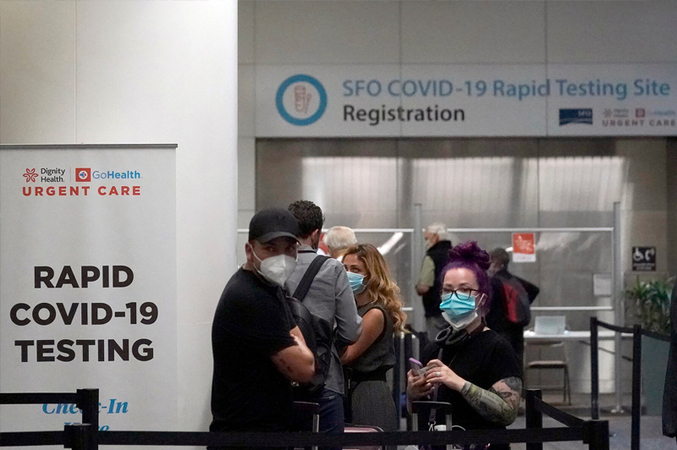
 A line for coronavirus tests at the Angarai Testing Center in Silver Spring, Md., on Nov. 18. Experts say the winter is expected to bring a spike in virus cases much higher than seen the beginning of the pandemic. MUST CREDIT: Washington Post photo by Toni L. Sandys
  Jeffrey A. Hirschfield, a pediatrician in St. Petersburg, Fla., has shared his reservations about a coronavirus vaccine on Twitter. “It typically takes five to 10 years to successfully develop and vet vaccine candidates, especially those relying on new technologies,” he said. MUST CREDIT: photo for The Washington Post by Octavio Jones.
 People have their temperature taken as they wait to be checked in to receive a coronavirus test Wednesday in Silver Spring, Md. MUST CREDIT: Washington Post photo by Toni L. Sandys
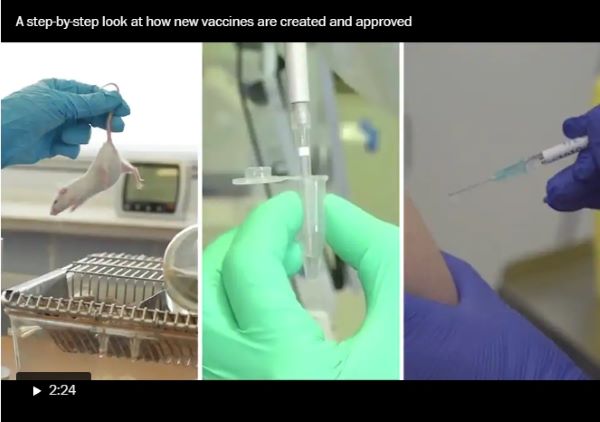
 Gov. Larry Hogan, with his wife, Yumi Hogan, right, announces the initial purchase of 500,000 coronavirus tests from South Korea. MUST CREDIT: Washington Post photo by Michael Robinson Chavez.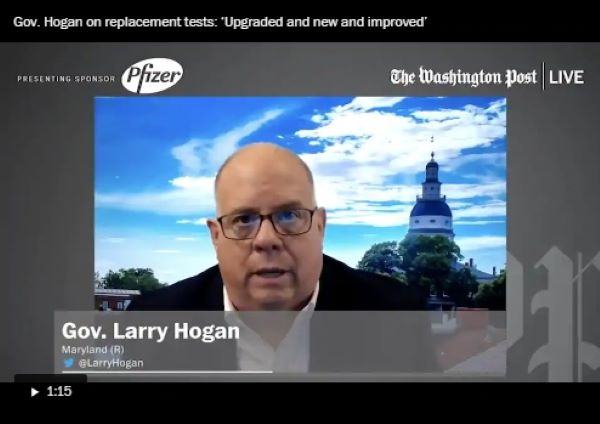
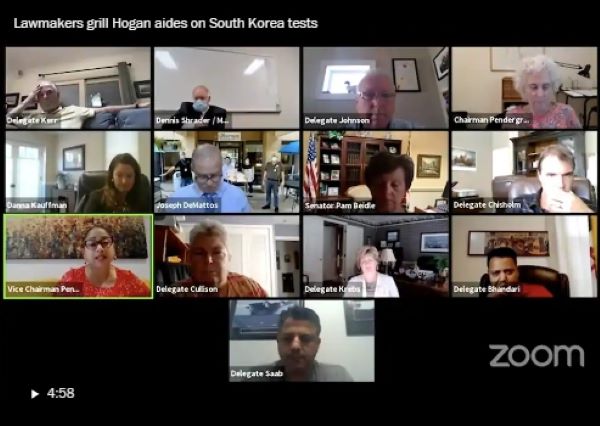
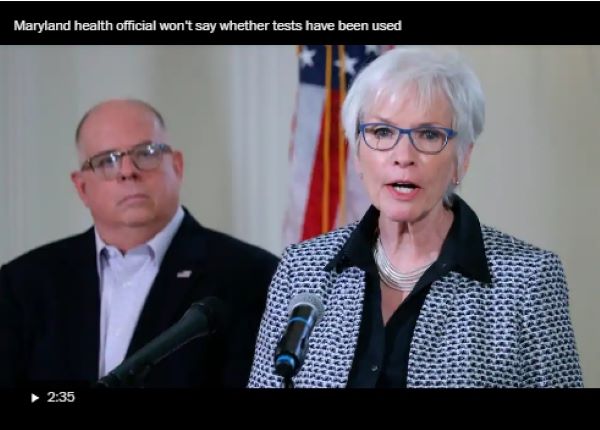
 Signs stand near the Jenner Institute, the home of a University of Oxford human trial into a coronavirus vaccine, in Oxford, England, on July 20, 2020. MUST CREDIT: Bloomberg photo by David Levenson.
  The Judiciary Square testing site in Washington had lengthy waits Nov. 18 for people seeking coronavirus tests. MUST CREDIT: Washington Post photo by Sarah L. Voisin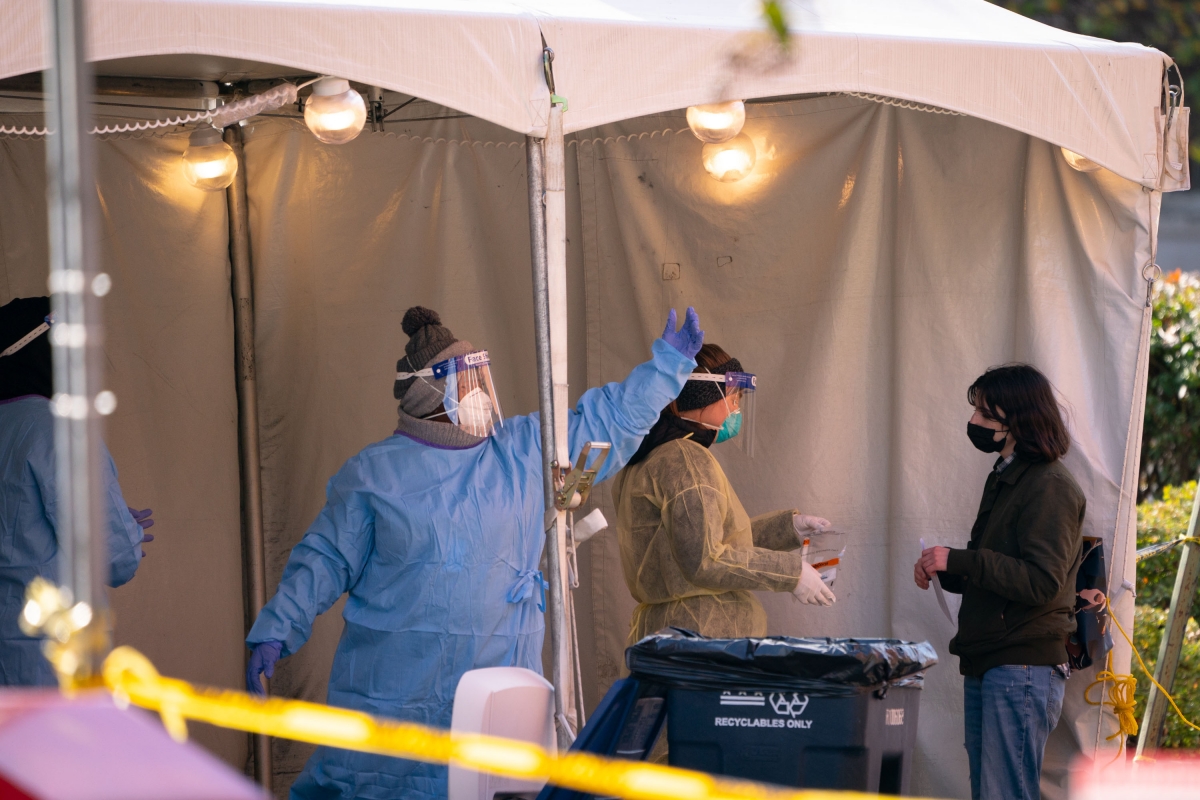
 Twenty thousand chairs, each representing 10 deaths from the coronavirus pandemic in the United States, are lined up on the Ellipse for the first National covid-19 Remembrance on Oct. 4, in Washington, D.C. MUST CREDIT: Washington Post photo by Katherine Frey
  SootinClaimon.Com