
Hotel boom moving past Prague fuels deals across east europe #ศาสตร์เกษตรดินปุ๋ย

#ศาสตร์เกษตรดินปุ๋ย : ขอบคุณแหล่งข้อมูล : หนังสือพิมพ์ The Nation

https://www.nationthailand.com/travel/30381844?utm_source=category&utm_medium=internal_referral

Hotel boom moving past Prague fuels deals across east europe
Feb 08. 2020
By Syndication Washington Post, Bloomberg · Veronika Gulyas

From refurbished palaces in Budapest and Bucharest to gems on the Baltic coast, hoteliers who are seeking higher returns in eastern Europe are venturing outside the region’s saturated hubs.

With yields in Prague and the business districts of Warsaw dropping close to levels in Germany’s largest cities, it’s the capitals of Romania, Hungary and Serbia — as well as large secondary cities in Poland — that are increasingly attracting developers and investors, hotel executives said.

“Bucharest is what Warsaw was 10-15 years ago,” Adam Konieczny, development director for Europe at Paris-based Louvre Hotels Group, said at a recent hotel-industry conference in Budapest.

Goldman Sachs was among the sellers of a portfolio of 10 hotels, including four-stars in Budapest and Prague, to Indian conglomerate InterGlobe last year. There were 4.2 billion euros ($4.6 billion) in hotel deals in the region’s six main markets in the past five years, a third of it in 2019, according to CMS and Cushman & Wakefield.

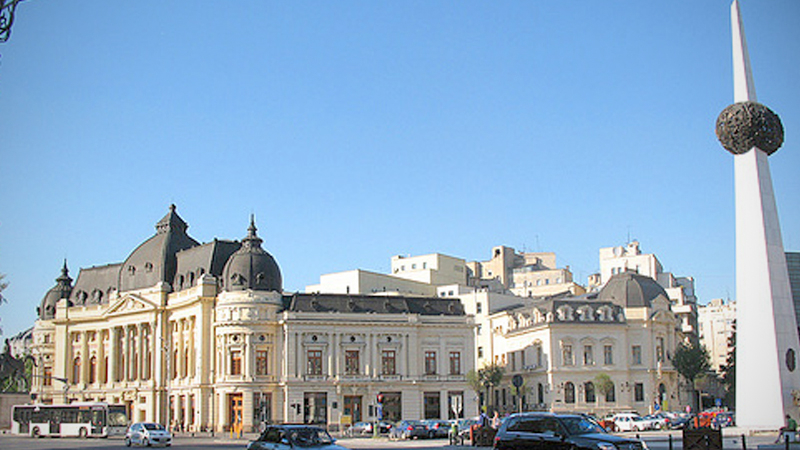
Cranes dot the skyline in the Romanian capital, with projects including two Ibis hotels by Warsaw-listed Orbis. Apex Alliance, a Lithuania-based independent operator, recently completed a four-star Marriott in Bucharest and it has been turning an iconic bank building in the city’s Old Town into a five-star asset.

Major Polish cities outside of Warsaw are also booming. Over the next three years, nine hotels with a total of 1,900 rooms are scheduled to open in the Tricity area that includes Gdansk, Gdynia and Sopot on the Baltic Sea, increasing the local stock by 30%.

Bialystok, a university town in eastern Poland, is meanwhile a favored location for Warimpex, another major developer, because it has more fresh workforce available than Warsaw, CEO Franz Jurkowitsch said.

Krakow, Poland’s second-biggest city, has for long been a popular tourist destination though a surge in business centers there and across the region has also boosted demand for hotels.

“Poland and Romania are key because these are the two countries in eastern Europe which have strong domestic markets,” said Gilles Clavie, chief executive officer of Orbis, which develops hotels in the region under Accor SA’s brands such as Sofitel.

“Economic growth over the coming years is expected to stay bullish in the region; if not for any serious geopolitical issues, I can’t see investment activity slowing down,” he said.

There is ample room to boost the presence of international brands. The share of hotel chains is just 15% of the total in Hungary, 14% in Poland and 6% in Serbia, compared with more than 20% in many western European countries, advisory firm Horwath HTL said in a 2019 report.

Al Habtoor Group on Wednesday announced it would set up a regional office in Budapest to service its existing European operations, which include The Ritz-Carlton and InterContinental in the Hungarian capital in addition to hotels in London and Vienna.

“The less-explored markets in Europe are now gaining momentum, offering a competitive edge, an attractive investment climate and higher yield possibilities for foreign players,” Al Habtoor said in a statement on its website.

Budapest has about 3,000 new rooms scheduled for completion by the end of 2021. The Hyatt Regency will occupy a former post office building dating to the 1870s and W Budapest by Marriott will open in a palace that used to house Hungary’s state ballet school.

Last month, French real estate investment trust Covivio bought the iconic five-star New York Palace hotel in Budapest, part of a $685 million acquisition blitz of eight emblematic hotels across Europe, including the Carlo IV in Prague.

The group in November also purchased three hotels in Lodz, Warsaw and Krakow in Poland from B&B Hotels. Apex Alliance meanwhile is looking to buy in the Hungarian capital.

“There are three or four opportunities for us in Budapest, if I look at what we potentially have in the pipeline,” said Apex Alliance CEO Gerhard Erasmus.

Prague and Warsaw are far from losing all their allure.

Czech wealth manager R2G acquired InterContinental Prague for an estimated 225 million euros in January 2019, and U.K.-based private equity fund Patron Capital and U.S. hotel chain Marriott International bought the Sheraton Warsaw Hotel in February.

Patron Capital, which is mainly focused on western Europe and the U.K., has been attracted by the extra yield of as much as 2 percentage points in Poland, along with brisk economic growth and consumer spending across the region, Vice President Wiktor Lesinski said.

“Poland is especially attractive in this respect,” Lesinski said. “We continue to review opportunities in the region. We’re yet to see further yield contraction.”

Korat readies fragrant field of mums for annual festival #ศาสตร์เกษตรดินปุ๋ย

#ศาสตร์เกษตรดินปุ๋ย : ขอบคุณแหล่งข้อมูล : หนังสือพิมพ์ The Nation

https://www.nationthailand.com/travel/30381778?utm_source=category&utm_medium=internal_referral

Korat readies fragrant field of mums for annual festival

Feb 07. 2020
By THE NATION

The head of Wang Nam Khiao district in Nakhon Ratchasima unveiled a 40-rai chrysanthemum garden on Friday (February 7), ready for the 18th Chrysanthemum in the Mist Fair from February 13-23.

Joining Pornthep Watchakeekul as he took a deep breath of the glorious earthy aroma were the mayor of the Thai Samakkhi sub-district administrative organisation and the president of the Wang Nam Khieo Tourism Promotion Association.

Southerners recall sad legend of Lim Ko Niao #ศาสตร์เกษตรดินปุ๋ย

#ศาสตร์เกษตรดินปุ๋ย : ขอบคุณแหล่งข้อมูล : หนังสือพิมพ์ The Nation

https://www.nationthailand.com/travel/30381759?utm_source=category&utm_medium=internal_referral

Southerners recall sad legend of Lim Ko Niao

Feb 07. 2020
By THE NATION

Wooden statues of Chinese deities were carried on litters through the streets of communities in Yala province on Friday (February 7) as part of the annual Chao Mae Lim Ko Niao festival.

Thais of Chinese ancestry celebrate the occasion honouring the goddess Lim Ko Niao – a tragic figure in Pattani lore – and other deities depicted in statues carried by staff of the Mae Ko Niao Foundation.

The occasion also features fire-walking rituals.

Lim Ko Niao supposedly travelled from China to Pattani to fetch her brother home because their mother was dying, but he refused to go, having married a daughter of Phraya Tani and converted to Islam.

Distraught, Lim Ko Niao hanged herself from a cashew tree, only to be subsequently mourned and honoured with a statue and shrine.

The annual celebration comes two weeks into the Lunar New Year.


Ryanair says coronavirus could keep Europeans closer to home #ศาสตร์เกษตรดินปุ๋ย

#ศาสตร์เกษตรดินปุ๋ย : ขอบคุณแหล่งข้อมูล : หนังสือพิมพ์ The Nation

https://www.nationthailand.com/travel/30381539?utm_source=category&utm_medium=internal_referral

Ryanair says coronavirus could keep Europeans closer to home

Feb 04. 2020
By Syndication Washington Post, Bloomberg · Siddharth Philip, Manus Cranny, Nejra Cehic

Ryanair Holdings said demand for air travel within Europe could receive an unlikely boost if the Chinese coronavirus epidemic persists, prompting people to holiday closer to home.

Trends from 2003, when travelers shunned Asia after the Severe Acute Respiratory Syndrome outbreak, suggest consumers may begin to alter their travel habits, Ryanair Chief Financial Officer Neil Sorahan said in an interview.

“People tended to stay close to home,” Sorahan told Bloomberg Television on Monday. “They holidayed in Europe as opposed to heading as far afield as Asia and elsewhere.”

The coronavirus that spread from Wuhan in recent weeks has killed more than 360 people and infected 17,000. Dozens of nations and airlines are restricting travel, with almost 10,000 flights canceled through Jan. 31, according to data provider Cirium, even though the World Health Organization has so far said that such limits aren’t needed to control the advance.

SARS affected 26 countries, resulting in close to 800 deaths from about 8,000 cases, according to the WHO. Fitch Group said in a note that a prolonged outbreak of the coronavirus would weigh on the tourist economy in Thailand, affecting not only Chinese demand but travel from elsewhere. As of Monday the Southeast Asian country had 19 confirmed cases, Fitch said.

For Ryanair, a surge in European travel would bolster margins as it grapples with the grounding of Boeing Co.’s 737 Max jet. The discount giant reaffirmed that deliveries from a 200-strong order won’t commence until September or October, so that fuel-efficiency savings won’t be realized until late in the fiscal year starting in April.

Chief Executive Officer Michael O’Leary said he expects Boeing to compensate Ryanair for lost revenue from the Max both this fiscal year and next, and that the focus will be on revising the order price. The carrier has specified a high-capacity variant that will take longer to certify than the baseline model.

Ryanair has also issued proposals for the purchase of bigger Max 10 jets seating up to 230 people, O’Leary said, while adding that it may be too early for Boeing to give the matter serious consideration. He said the planemaker needs to target orders from major clients such as his own company and Southwest Airlines Co. to rein in Airbus SE’s lead in the narrow-body sector.

Ryanair posted net income of 88 million euros ($98 million) for the third quarter through December from a year-ago loss, aided by last-minute sales over the Christmas holidays. Bookings are 1% up on last year, with planes 96% full, so an increase in regional travel would push up fares.

Shares of Europe’s biggest low-cost carrier were trading 5.2% higher at 15.68 euros as of 1:11 p.m. in Dublin, where it is based.

The joy of the Tat Wiman Thip waterfall in Bueng Kan #ศาสตร์เกษตรดินปุ๋ย

#ศาสตร์เกษตรดินปุ๋ย : ขอบคุณแหล่งข้อมูล : หนังสือพิมพ์ The Nation

https://www.nationthailand.com/travel/30381500?utm_source=category&utm_medium=internal_referral

The joy of the Tat Wiman Thip waterfall in Bueng Kan

Feb 03. 2020
By THE NATION

The Tat Wiman Thip waterfall situated in Phu Langka National Park is one of the major tourist attractions in Bueng Kan province, which is under the management of the Department of National Parks, Wildlife and Plant Conservation.

The rich white waterfall cascading down a large cliff is also made memorable by the resonance of the water pouring onto the rocks below.

Apart from its pristine beauty, the experience is made wonderful by the coolness of the water. People can splash about in the pool and have a good time in the lap of nature.

Generally, the weather in the national park is similar to other areas in the northeastern region of Thailand. The temperature on the park’s hilltops is around 0 to 5 degrees Celsius in winter, with an average of 25 to 36 degrees Celsius throughout the year.

Those interested in visiting the Phu Langka National Park and its attractions can take Highway No 212. The place is about 220 kilometres from Nong Khai province and six kilometres from Ban Phaeng district of Nakhon Pathom province.

Tourism businesses worldwide brace for a hit worse than SARS #ศาสตร์เกษตรดินปุ๋ย

#ศาสตร์เกษตรดินปุ๋ย : ขอบคุณแหล่งข้อมูล : หนังสือพิมพ์ The Nation

https://www.nationthailand.com/travel/30381410?utm_source=category&utm_medium=internal_referral

Tourism businesses worldwide brace for a hit worse than SARS

Feb 01. 2020
Passengers wear surgical masks at the check-in terminal at the Hong Kong International Airport in Hong Kong on Jan. 30, 2020. MUST CREDIT: Bloomberg photo by Ivan Abreu.

Passengers wear surgical masks at the check-in terminal at the Hong Kong International Airport in Hong Kong on Jan. 30, 2020. MUST CREDIT: Bloomberg photo by Ivan Abreu.
By Syndication Washington Post, Bloomberg · K. Oanh Ha · BUSINESS, WORLD, FEATURES, HEALTH, TRAVEL

Hotels, luxury shops and attractions around the world that came to rely on a flood of Chinese tourists are facing an even bigger crisis than during the SARS outbreak as the new viral outbreak infects more people than the 2003 pandemic.

From Tokyo to London, hotels, casinos, airlines and retailers are already recording a downturn and are bracing for weeks, if not months, of plummeting spending after China curbed outbound travel and governments tightened border controls.

About 163 million Chinese tourists made overseas trips in 2018 — more people than Russia’s population — accounting for more than 30% of travel retail sales worldwide. In 2003 when SARS broke out, only 20 million Chinese travelers went abroad. China’s increased affluence and consumption since SARS have made many international cities, luxury brands and retail industry groups more reliant than ever on Chinese travelers.

“It’s a triple whammy — Chinese travel more, they spend more and they spend more on beauty products,” said Stephanie Wissink, a Jefferies consumer analyst who recently issued a report on the virus’ impact on travel spending. “Chinese travelers are the most significant and most important customers for growth in the travel retail industry.”

The virus adds a new level of uncertainty to a global industry that was already suffering the effects of China’s economic slowdown.

“The benchmark everyone is comparing this to is SARS in 2003,” said Luya You, a Hong Kong-based transportation analyst at Bocom International. “The actual cost and negative impact of this virus could be greater because more Chinese are traveling than before. The cost of preventing travel, grounding flights is magnitudes higher than what it was in 2003.”

Chinese tourists spent $150 billion on purchases during last year’s Lunar New Year holiday, according to Jefferies. The travel retail industry, a segment that includes duty-free shopping and retail at airports and other transportation hubs, was a $79 billion business in 2018 and saw the biggest growth in Asia, according to research firm Generation Research.

Just before this year’s Lunar New Year holiday, when hundreds of millions of people in China visit family or take vacations, authorities locked down Wuhan, the city of 11 million people where the virus originated. Travel has been restricted from much of the surrounding Hubei province, home to about 50 million inhabitants.

Hong Kong, Singapore and Malaysia have tightened borders to restrict inbound travel from China as the number of infected people is on pace to surpass 10,000. Russia closed its border with China to most passenger travel, while the U.S. and Japan advised their citizens against traveling to the country. In China, at least 213 people have died from the coronavirus and cases of infection have been reported in more than a dozen other countries. During the SARS epidemic, there were 8,096 officially reported cases, according to the World Health Organization.

Carriers including British Airways, Cathay Pacific Airways, Delta Air Lines and American Airlines have suspended or reduced flights to and from destinations in China. Carnival Corp. and Royal Caribbean Cruises have suspended cruises departing from China.

“When airlines are cutting flights, that has impact on ports of entry that affects not just airports and shops, but surrounding nodes too,” said Jefferies’ Wissink. “It’s an entire ecosystem that’s being disrupted, with lots of spillover effects.”

Two of the hardest-hit cities are Hong Kong and Macau.

Hong Kong’s shops and hotels were already being clobbered by months of civil unrest that deterred mainland visitors and pushed the economy into recession. The virus is a further blow to the all-important retail sales and tourism from mainland visitors who come to the territory with empty suitcases to fill up with luxury and consumer goods.

In Macau, China’s gambling enclave, new travel restrictions and the growing fear of crowds, have slashed visitor numbers from the mainland by 83% so far during this year’s Lunar New Year holiday.

Las Vegas Sands Corp. Chief Executive Officer Sheldon Adelson said on Wednesday that employees of the casino operator are wearing protective masks and are checking the temperatures of guests.

“When I walk in there I think I’m going into an operating room,” Adelson told investors on a call. “Everybody’s got masks.”

Even if the virus outbreak is contained, the knock to China’s GDP may be significant, with repercussions felt across the world, according to analysis from Bloomberg Economics.

In Japan, the Wuhan virus may dent Prime Minister Shinzo Abe’s goal of attracting 40 million visitors this year as his country hosts the summer Olympic Games.

“Japan’s tourism industry, like many in the region, looks set to be clobbered by China’s suspension of package tour sales as it battles to curb the spread of the new coronavirus,” said Bloomberg economist Yuki Masujima. If Japan’s tourism industry is affected to the extent it was during SARS, it could cost the nation’s economy about 611 billion yen ($5.6 billion), he said.

Japanese consumer brands favored by Chinese buyers lowered their outlooks as the ban on Chinese outbound tour groups dealt a blow. Cosmetics maker Kose Corp. cut its full-year profit outlook by 19%, while retailer Isetan Mitsukoshi Holdings Ltd. slashed its full-year net income guidance by 50%.

Last year, almost 9.6 million Chinese tourists visited Japan and spent about $16.2 billion, according to the Japan Tourism Agency, which said hotels are reporting cancellations by Chinese tourists.

In South Korea, another hotspot for Chinese tourists, businesses such as duty-free sales and casinos are being affected, said Jun Young-hyun, an analyst at SK Securities Co. in Seoul. “Korea’s dependence on China has increased,” said Jun.

The economic impact could be much broader given that China is the nation’s largest trading partner.

Lotte Group, which runs shopping malls and hotels, has seen some hotel reservations canceled, but a representative said it’s too early to gauge the full impact of the virus.

Many analysts are warning that the toll on the tourism and hospitality industry could be worse than during the SARS epidemic, when Chinese travelers were a smaller group than they are today. “Global hotel giants are now more exposed to Asia, meaning any downfall in revenue could hurt deeper,” wrote Natixis SA economists Alicia Garcia Herrero and Gary Ng in a report Thursday. “Even without being certain about the extent and duration of the new virus, the impact of the novel coronavirus on Asian and global hospitality will be worse than in the past.”

Hotels across Southeast Asia have recorded cancellations after China banned outbound group tours. Tourism accounts for more than a fifth of gross domestic product in countries like Thailand and the Philippines, twice the global average.

Thailand, the most popular destination in the region for Chinese visitors, has been hardest hit in Southeast Asia, with at least 2 million fewer visitors expected from China this year, according to the Tourism Authority of Thailand. The nation is bracing for tourism revenue losses of as much as 50 billion baht ($1.6 billion) if China’s curbs remain in place for three months, and the government lowered its 2020 GDP forecast on Wednesday, in part because of the outbreak.

Last year, 11 million Chinese visitors spent almost $18 billion, more than a quarter of all foreign tourism receipts, according to government data. The Southeast Asian nation has 13 confirmed cases of Chinese nationals infected with the virus and one Thai who returned from Wuhan with the disease.

At Bangkok’s Suvarnabumhi Airport most travelers were wearing surgical masks during the Lunar New Year holiday and anyone coughing was given a wide berth. Hotels in the city offered masks to guests, but many of the local pharmacies had sold out.

In the Philippines, the Hotel Sales and Marketing Association said about 30 hotels have reported cancellations involving 600 hotel rooms in the Manila area. The government said it would stop issuing visas-on-arrival to Chinese groups.

Singapore, where 13 cases of the virus have been confirmed, said that from Wednesday it would stop allowing entry or transit of Chinese travelers with passports issued in Hubei.

China’s ban on tour groups will have a “direct impact on tourism arrivals and revenue,” said Terrence Voon, director of communications at the Singapore Tourism Board. “The situation is expected to persist.”

Shanghai-based Trip.com, which runs the popular Ctrip flight and hotel booking platform, said it has established a 200 million yuan ($29 million) fund to cover customers who booked trips but can’t travel. It extended waivers to about 30,000 hotels outside of China for voluntary cancellations of reservations booked on Ctrip before Jan. 24 with a check-in date through Feb. 8.

Trip.com Group Ltd. CEO Jane Sun said she’s confident of a rebound once the virus is contained.

“When SARS came under control, we saw double, triple demand,” said Sun. As long as “we can control this virus, the demand and buying power will be there.

Jewish family kicked off flight over ‘body odor’ sues American Airlines for discrimination #ศาสตร์เกษตรดินปุ๋ย

#ศาสตร์เกษตรดินปุ๋ย : ขอบคุณแหล่งข้อมูล : หนังสือพิมพ์ The Nation

https://www.nationthailand.com/travel/30381407?utm_source=category&utm_medium=internal_referral

Jewish family kicked off flight over ‘body odor’ sues American Airlines for discrimination

Feb 01. 2020
By  The Washington Post · Lateshia Beachum
An Orthodox Jewish couple is suing American Airlines for discrimination after being kicked off a flight over body-odor complaints – and, they say, being humiliated by a gate agent on their way off the plane.

Jennie and Yehuda Yosef Adler and their 19-month-old daughter were booked on an American flight from Miami to Detroit on Jan. 23, 2019, but were deplaned before departure over complaints about offensive body odor, according to a federal lawsuit filed this week in the Southern District of Texas.

About five minutes after the Adlers took their seats, an American Airlines gate agent approached the family, saying there was an emergency and that they needed to get off the plane, court records show.

Yehuda Adler, of Southfield, Michigan, told The Washington Post last year that he and his wife were concerned that something had happened with their eight other children, who were at home. He said that after they got off the plane they were told that they had been removed because of a stench. Adler told The Post that the couple was “humiliated,” “frustrated” and left wondering about the real reason they were told to deplane.

“Obviously, there was a reason,” Adler, who is Jewish, told The Post at the time. “But I think it was an anti-Semitic reason.”

The family is now suing the airline for racial and religious discrimination and equal rights violations. The family is seeking a jury trial and $75,000.

American Airlines disputed the claim that its employees discriminated against the Adlers, saying in a statement that “none of the decisions made by our team in handling this sensitive situation were based on the Adlers’ religion.”

The statement said that “the Adler family was asked to deplane after multiple passengers and our crew members complained about Mr. Adler’s body odor.” The airline said it provided the family with hotel accommodations and meals and rebooked them on a flight to Detroit the next morning.

Yehuda Adler told The Post last year that the alleged odor was “a fairy tale and cover for the reprehensible discrimination exhibited to myself and the insensitive treatment I and my family received by AA staff.”

A person who spoke to The Post last year agreed with the airline that there was a “stench,” and a woman who claimed to have been on the plane tweeted her agreement about the odor and said “it had nothing to do with religion.”

According to the lawsuit, the Adlers were among the last people to board American Airlines Flight 1023, and they claim they encountered hostility almost immediately after stepping aboard the plane.

The flight’s pilot told the family that nothing on the plane was complimentary after yarmulke-wearing Yehuda Adler asked a stewardess for headphones, according to the complaint.

The comment was “nasty and humiliating,” but Yehuda Adler ignored the pilot’s vitriol and made his way to his assigned seat with his wife, who was wearing a sheitel, or wig, the complaint said.

The gate agent then approached the family to tell them there was an emergency and they needed to exit the plane, according to the lawsuit.

Once off the plane, the gate agent allegedly drove insult deeper by telling the family he knew that Orthodox Jews bathed once a week, according to the complaint.

American Airlines declined to comment on the action of the gate agent.

The family left the plane and was told they were taken off because of “extremely offensive body odor,” according to the lawsuits. The family was stunned. They had never been subject to complaints about body odor on a plane before.

The mortified husband and wife surveyed more than 20 people in the airport to ask if they did have a bad smell and they all answered “no,” according to the lawsuit.

The flight took off without them with their luggage, diapers, car seat and stroller still onboard, according to the complaint.

According to the court records, the pilot violated the Adlers’ contractual right to flight all because the couple and their child were “flying while Orthodox Jews [ . . .] and having the guts to make a complimentary request.”

The lawsuit said that the publicly humiliating event has caused severe emotional stress and suffering. It said the Adler name was defamed after American Airlines released a statement that the family had body odor, resulting in online searches that yield “body odor” along with “Adler,” according to the complaint.

A Google search for “Adler” and “body odor” yielded pages of articles about last year’s event and American Airlines stating the family had body odor.

The enduring lure of Fukuoka and Oita #ศาสตร์เกษตรดินปุ๋ย

#ศาสตร์เกษตรดินปุ๋ย : ขอบคุณแหล่งข้อมูล : หนังสือพิมพ์ The Nation

https://www.nationthailand.com/travel/30381367?utm_source=category&utm_medium=internal_referral

The enduring lure of Fukuoka and Oita

Feb 01. 2020
By THE NATION

One of the most popular destinations for Thai people visiting Japan is the Fukuoka prefecture. It is a place famous for its tourist attractions, shopping areas and cool weather.

Fukuoka is a populous prefecture situated on the northern shore of Japan’s Kyushu island, where Kumamoto, Nagasaki, Miyazaki, Kagoshima, Saga and Oita prefectures also located.

One of its tourist attractions was the “Dazaifu Tenmagu” shrine, visited frequently by Japanese students and their parents to pray for success in educational tests.

Some 700,000 people visit this shrine every year. The shrine is also home to more than 6,000 Chinese plum trees, whose flowers bloom in spring.

The Tenjin shopping area of Fukuoka has numerous shopping malls for high-end products, as well as local bars and stores, to lure shopaholics and those seeking unique products.

Apart from Fukuoka, the nearby prefecture of Oita is also worth a visit.

Oita was an agricultural prefecture, where the One Village One Product movement originally began in 1979, and helped enrich it after being the poorest prefecture in Japan.

The must-visit city in Oita is Beppu, where most of the hot springs in Japan are situated. Some of the springs are open to people for bathing while bathing is prohibited in some.

“Umi Jigoku” and “Chinoike Jigoku” are two springs where bathing is not allowed. “Umi Jigoku” is blue due to the cobalt in the water, while “Chinoike Jigoku” is red because of the numerous natural minerals.

In addition, there is a shopping area in Yufuin city in the prefecture. Shops located in this place sell cute souvenirs and local products.

Another highlight of Oita is the Kokonoe Yume Otsurihasi, or Kokonoe Suspension Bridge. The bridge opened in 2006 and is the highest in Japan at 173 metres above sea level.

The bridge’s length spans 390 metres, and along its two sides are beautiful valleys, including the “Shindo no taki” and “Medaki” waterfalls.


On Europe’s slow trains, the rewards are right outside your window #ศาสตร์เกษตรดินปุ๋ย

#ศาสตร์เกษตรดินปุ๋ย : ขอบคุณแหล่งข้อมูล : หนังสือพิมพ์ The Nation

https://www.nationthailand.com/travel/30381335?utm_source=category&utm_medium=internal_referral

On Europe’s slow trains, the rewards are right outside your window

Jan 31. 2020
The Glacier express makes it's way across a snowy landscape. MUST CREDIT: Glacier Express AG.

The Glacier express makes it’s way across a snowy landscape. MUST CREDIT: Glacier Express AG.
By Special To The Washington Post · Will Hawkes · FEATURES, TRAVEL

The day before our vacation in France, I asked my three children what they were most looking forward to. Was it the swimming, the sunshine, the beach or – and I would have put my house on this – eating ice cream every day? “The sleeper train,” said the oldest. His brother quickly concurred. And the 3-year-old? Also the train.

In this, they’re model Europeans. According to European Union statistics, rail use grew for the sixth consecutive year in 2018, the most recent year for which figures are available. The Eurostar, which links London to Paris, Brussels and Amsterdam, recorded a 7 percent year-on-year rise in passenger numbers in 2018. Trains are popular in Europe, and increasingly so.

Growing public awareness of air travel’s environmental cost is clearly a factor, but more important is the extent of Europe’s rail network. The continent is a complex tangle of train tracks. Among the very best services, in my view, are those that are genuinely slow. Trundling across Europe at a snail’s pace offers many simple pleasures: the landscape gradually opening up in front of you, a warm summer breeze blowing through an open window, and clocking each sleepy provincial station as they come and go.

I haven’t been on all of Europe’s rail lines, but I’ve experienced enough to know what a pleasure it can be. Here are 10 of my favorite slow-train journeys through Europe.

– Bilbao to San Sebastian, Spain. When you go online to book transport between Bilbao and San Sebastian, two of the Spanish Basque Country’s major cities, you will be directed toward a coach that takes just over an hour. It’s tempting – more time in San Sebastian means more pintxos, Spain’s tastiest tapas – but you should resist. Rail (about $7.20 each way) takes the best part of three hours, but it’s time well spent.

The service – a simple commuter shuttle – dives southward out of Bilbao into the lush, deep-green mountains of the Basque Country, before turning north to run along the coast toward San Sebastian. The highlight comes after Deba, where the train hugs the coast for a few miles. On one side, deep blue; on the other, steep descending Basque hills.

– Ceske Budejovice to Cesky Krumlov, Czech Republic. The Czech Republic has a comprehensive and cheap rail network. From Prague, you can reach much of the country, but you’ll have to change if you want to take one of its most charming journeys (about $1.75 one way; the journey takes 45 minutes). Ceske Budejovice is the home of Czechvar (the Czechs call it Budweiser, though it’s different from Budweiser in the United States), one of the country’s most famous beers, while Cesky Krumlov is among its most beautiful towns. The gently rolling south Bohemian landscape, with its low-slung farmsteads and forests, is equally beguiling.

– Copenhagen to Malmo, Sweden. There’s something thrilling about a bridge that not only crosses a huge expanse of water but also connects two nations. Copenhagen, the Danish capital, has been linked to Malmo in Sweden by the Oresund Bridge since 2000. (The 40-minute journey costs about $13.)

The train descends into a tunnel after Copenhagen Airport station, emerging on Peberholm island, where the five-mile bridge begins. You can see Malmo in the distance, particularly the 623-foot-tall Turning Torso, Scandinavia’s biggest skyscraper. In summer, sailboats skip and race across the water; in the colder months, there are miles of foam-flecked gray-blue ocean to admire.

– The Glacier Express, Switzerland. Most of the trips on this list are ordinary passenger services, but the Glacier Express is a tourist train. Sometimes billed as the “slowest express train in the world,” it runs between St. Moritz and Zermatt in Switzerland. It’s not cheap (prices start around $157, one-way, plus a seat reservation fee; journey time 7½ hours), but the traveling conditions are superb: huge windows, plenty of space and good food.

Watch out for the six-arch, 213-foot-high Landwasser Viaduct, which curves across the Landwasser river; the ascent from Chur up the Rhine Valley to the highest point, at 6,673 feet above sea level; and the steep rock walls of the Matter Valley, before you arrive in Zermatt.

– Lille, France, to Roeselare, Belgium. One of the beauties of Europe is that sometimes you’re not quite sure which country you’re in. Traveling from Lille, the capital of French Flanders, into Belgian Flanders can be like that, particularly if you take the wrong train, as I and a group of friends did a few years back (Lille to Roeselare, about $13.70 one way; change at Courtrai).

We found ourselves on the desolate concrete platform at Froyennes, in French-speaking Wallonia rather than Flemish-speaking Flanders. No matter: There was a connecting train heading north, toward Roeselare, arriving on the other platform. A one-hour journey took two, but no one cared.

– Marktredwitz to Regensburg, Germany. The Upper Palatinate, Bavaria’s northeastern corner, is perhaps Germany’s sleepiest region. It’s served by hourly trains that run from Marktredwitz in the north down to Regensburg. (A Bayern Ticket, which allows 24 hours of unlimited travel on all except high-speed trains in the state of Bavaria, costs about $27.50.)

The trains themselves are sparklingly modern, but everything else has a timeless charm: the decrepit stations at Marktredwitz and Windischeschenbach, the soft, heavily wooded countryside, and the fact that the line hugs the gently flowing river Naab for much of the 1½-hour journey.

– Paris to Portbou, Spain. This Intercités de Nuit sleeper service starts with a typically unruly French line at Paris’s Gare d’Austerlitz, but that’s soon forgotten. The bunks are not plush, but they’re comfortable, and prices are low (singles from about $38.50, with an additional fee if you want the compartment to yourself).

The train pulls out of Paris at just after 10 p.m. and the first stop, announced over the loudspeaker, is Toulouse at 6 a.m. From there, the train heads down the Mediterranean coast, skirting the Étang de Leucate, a huge and placid lagoon, and ends in the cavernous terminus in the border town of Portbou, a relic of a time when this was the main route from France to Spain.

– The Rhondda Line, Wales. There’s cause to pity regular travelers on the Rhondda Line between the Rhondda Valley town of Treherbert and the Welsh capital, Cardiff: The Pacer trains that serve this route are outdated, cramped and noisy.

But then, they have the Rhondda Valley to enjoy. Earlier this year, I took a late-morning train from Cardiff to Treorchy, one stop short of Treherbert (about $10.80 round trip; trains every half-hour; journey time just over an hour). Brooding gray summer clouds hung over hills decorated in a hundred shades of green; at Treorchy, where the line is single-track, grass was sprouting long and green between the sleepers. (Additional pleasure: The Rhondda Valley accent, soft and mellifluous, is Britain’s loveliest.)

– Tren de Sóller, Mallorca, Spain. To take the train from Palma de Mallorca to Sóller, on the north coast of this Mediterranean island, is to travel into the past. The wood-upholstered electric trains, built in the 1920s, glide through the backstreets of Palma and then past orange and lemon groves before climbing – via tunnels, bridges and switchbacks – up and down the Sierra de Alfabia mountain range en route to Sóller, a beautiful seaside town on Mallorca’s north coast (about $27.50 round-trip; tickets must be bought on the day, cash only).

– West Highland Line, Scotland. The West Highland Line (about $52 round-trip; journey takes five hours), which connects Glasgow with Mallaig in the Western Highlands, is memorable in two ways: for the views, from bleak Rannoch Moor to the elegant arches of Glenfinnan Viaduct, and for the people on board. It’s a sociable ride, partly because conditions are cramped and partly because the locals love a chat. On my last trip, the conductor sat down for a 10-minute talk with some regular customers, and a fellow passenger recommended the best station to get off for a smoke. (I don’t smoke, but it’s the thought that counts.)

RailEurope.com is a good resource for buying tickets on all but the Tren de Sóller, where tickets must be bought on the day. For the best in-depth information on rail travel in Europe, visit the regularly updated, comprehensive website seat61.com.

Pattaya to get new viewpoint #ศาสตร์เกษตรดินปุ๋ย

#ศาสตร์เกษตรดินปุ๋ย : ขอบคุณแหล่งข้อมูล : หนังสือพิมพ์ The Nation

https://www.nationthailand.com/travel/30381133?utm_source=category&utm_medium=internal_referral

Pattaya to get new viewpoint

Jan 27. 2020
By The Nation

Pattaya City plans to improve the scenery at Bali Hai Cape to make it a sunset viewpoint after the public area was reclaimed from entrepreneurs.

Pattaya City Mayor Pattana Bunsawat said that several entrepreneurs had intruded on Bali Hai Cape to make use of the land. Authorities have negotiated with them to improve the area so that it can become a sunset viewpoint to attract tourists.

“After the demolition of buildings is completed, we will coordinate with Nongnooch Garden Pattaya to improve the scenery of this cape so it becomes a new checkpoint of Pattaya,” he said.

Meanwhile, Nongnooch Garden director Kampol Tansajja said that after they have surveyed the area, he plans to plant sugar palm trees to improve the landscape.

“The reason we chose sugar palm trees is because they can grow in saline soil, especially at the seaside. In addition, this tree is durable, easy to take care of and will not obscure the scenery,” he said.

“If possible, we will grow 78 sugar palm trees to make the scenery as beautiful as Promthep Cape in Phuket,” Kampol added.