Trash problem chokes tourist attraction – again #ศาสตร์เกษตรดินปุ๋ย

#ศาสตร์เกษตรดินปุ๋ย : ขอบคุณแหล่งข้อมูล : หนังสือพิมพ์ The Nation

https://www.nationthailand.com/travel/30381125?utm_source=category&utm_medium=internal_referral

Trash problem chokes tourist attraction – again

Jan 27. 2020
By The Nation

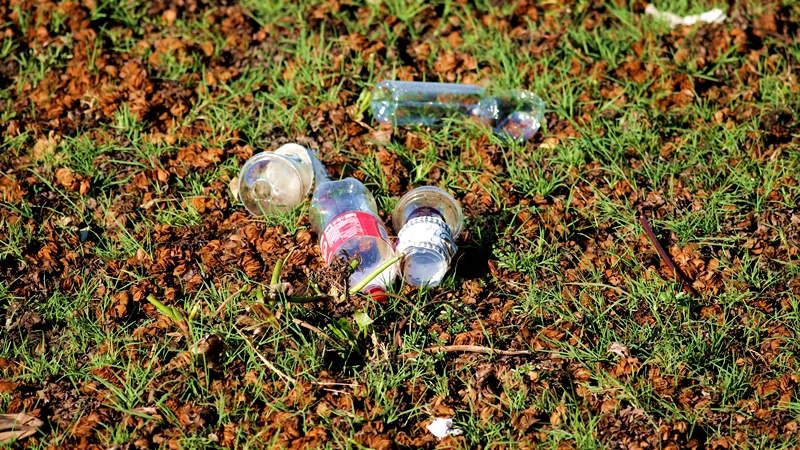
The viewpoint at Ekkachai Bridge connecting Phatthalung’s Khuan Khanun district and Songkhla’s Ranod district has become a garbage dump as trash left by travellers piles up – yet again.

Tourists from other provinces have been drawn to the area’s beautiful scenery of forest, farms and a lake along the two sides of the 6-kilometre bridge.

The trash problem has hit this tourist attraction several times.

Clean-up campaigns have been held to solve the problem but the area always turns dirty again as more and more tourists visit.

Second hoar frost delights tourists at Ban Mai Rong Kla #ศาสตร์เกษตรดินปุ๋ย

#ศาสตร์เกษตรดินปุ๋ย : ขอบคุณแหล่งข้อมูล : หนังสือพิมพ์ The Nation

https://www.nationthailand.com/travel/30381126?utm_source=category&utm_medium=internal_referral

Second hoar frost delights tourists at Ban Mai Rong Kla

Jan 27. 2020
By The Nation

A cold spell gripped Phitsanulok’s Ban Mai Rong Kla, the heart of Phu Hin Rong Kla National Park, this morning (January 27) again as the temperature averaged 5 degrees Celsius, with the lowest being minus 1 degree Celsius.

Hoar frost painted the grass, leaves and rooftops white, creating a spectacular view, with visitors excitedly capturing photos.

Ban Mai Rong Kla village is located at an altitude of 1,400 metres above sea level. In the winter, the village normally witnesses frost, much to the delight of tourists.

Locals are inviting tourists to visit the area right now and shop for fresh vegetables.

If the winter lingers a bit longer, it might lead to more frost.

A Civil War-era ‘witch bottle’ may have been found on a Virginia highway, archaeologists say #ศาสตร์เกษตรดินปุ๋ย

#ศาสตร์เกษตรดินปุ๋ย : ขอบคุณแหล่งข้อมูล : หนังสือพิมพ์ The Nation

https://www.nationthailand.com/travel/30381059?utm_source=category&utm_medium=internal_referral

A Civil War-era ‘witch bottle’ may have been found on a Virginia highway, archaeologists say

Jan 26. 2020
Researchers at the College of William and Mary believe a piece of Civil War-era glassware found at the site of an old fort in York County, Va., may have been a

Researchers at the College of William and Mary believe a piece of Civil War-era glassware found at the site of an old fort in York County, Va., may have been a “witch bottle” used to ward off evil spirits. must credit: Robert Hunter of the William and Mary Center for Archaeological Research Photo by: Robert Hunter of the William and Mary Center for Archaeological Research — Handout
By  The Washington Post · Peter Jamison · FEATURES

When archaeologists digging between busy lanes of traffic on Virginia’s Interstate 64 unearthed a broken bottle filled with nails, they weren’t sure exactly what they had found.

The glass vessel discovered at an old Civil War fortification east of Williamsburg might simply have been an ad hoc toolbox for troops garrisoned at the site nearly 160 years ago. But researchers at the Center for Archaeological Research at the College of William & Mary advanced a far more intriguing theory this week.

The artifact may in fact be a “witch bottle,” they say, one of only a handful that have been found in the United States.

What’s a witch bottle? For centuries, they were used as occult countermeasures to the mischief of suspected sorceresses in England and America.

The evidence of a superstitious purpose is circumstantial but compelling, according to Joe Jones, the center’s director.

The bottle, which is jade blue and less than half a foot in height, was plucked in 2016 from the soil dividing traffic on Interstate 64 between exits 238 and 242 in York County. William & Mary archaeologists were inspecting the area for any remaining artifacts in advance of a highway-widening project by the Virginia Department of Transportation.

Known as Redoubt 9, the site was part of a string of fortifications between the James and York Rivers, originally built by Confederates to repel Union troops advancing on Richmond. But Redoubt 9 was taken over by Union forces after the Battle of Williamsburg in 1862, and the bottle – which carries the name of a manufacturer in eastern Pennsylvania – is probably a relic of those soldiers, Jones said.

Far from home, occupying enemy territory in a bloody and unpredictable conflict, some might have felt the need to keep evil at bay.

Witch bottles can be traced to the East Anglia region of England in the late Middle Ages, according to a summary of research on the subject by JSTOR Daily. The bottles typically included human urine, hair or fingernail clippings and sharp objects such as nails, pins or thorns.

The objects worked by luring witches or malevolent spirits with the urine, hair or fingernail clippings, then trapping them with nails or pins – a low-tech witch hunt. Nearly 200 have been found in Britain, where researchers have launched a multiyear survey and study of witch bottles, complete with a social media-aided #WitchBottleHunt campaign to educate the public on identifying the artifacts. Last year, contractors razing an old pub found a suspected witch bottle containing fish hooks, teeth and a mysterious liquid.

The situation on the I-64 median is less clear-cut. While its resting place was undisturbed, the neck of the bottle had been broken open – probably from the weight of accumulated soil, Jones said – at the time it was uncovered.

Was there urine?

“That’s the first question that people who know about witch bottles would ask,” Jones acknowledged. However, with an unsealed interior, the vessel could not be accurately tested, he said.

But other factors point to the superstitious purpose first suggested by two of Jones’s colleagues, Oliver Mueller-Heubach and Robert Hunter. The bottle was found next to what archaeologists think are the remains of a hearth or fire pit, a common spot for witch bottles. And the historical context of Redoubt 9 is compatible with the use of such a talisman.

“If you read the literature about witch bottles and what they are to the people who believe in them or use them,” Jones said, “they’re more abundant during periods of political turmoil, or drought, or bad harvests – general periods when people think there are bad spirits.” A lonely outpost of Union soldiers in the midst of the Civil War fits the bill.

The remnants of that outpost are gone, Redoubt 9′s earthworks graded to expand the interstate. And were this a tale told by M.R. James, the renowned British writer of ghost stories, the outcome would be predictable: Malignant spirits, up to and including long-confined witches, would emerge to torment the curious scholars who disturbed the bottle.

Asked whether any such adversity had befallen the archaeologists of William & Mary since the object’s discovery in 2016, Jones laughed, then thought for a moment.

“It would probably be easy to blame all kinds of things on the bottle,” he said.

Islands off Trang popular with tourists, divers #ศาสตร์เกษตรดินปุ๋ย

#ศาสตร์เกษตรดินปุ๋ย : ขอบคุณแหล่งข้อมูล : หนังสือพิมพ์ The Nation

https://www.nationthailand.com/travel/30381034?utm_source=category&utm_medium=internal_referral

Islands off Trang popular with tourists, divers

Jan 25. 2020
By THE NATION

Lao Liang and Changkap islands sit on the opposing side of Trang province in southern Thailand, known for the abundance of anemones, gorgonians, and soft corals.

Both islands, in the southern part of the sea off Trang and close to Satun province, are under the supervision of the Mu Ko Phetra National Park.

Many tourists visit the islands during the New Year period and the Songkran festival.

Preuk Ubonkerd, manager of Modtanoy Resort in Trang, said the islands were popular with tourists, especially Lao Liang which consists of Lao Liang Pi (the big one) and ‘Lao Liang Nong’ (the small one).

An major attraction of Lao Liang is its colorful anemones and soft corals under the sea.

“There are about ten days in a month when the sea is safe for diving” he added.

The ‘Changkap’ island is small, shaped like a pile of rocks in the middle of sea. It is located near ‘Phetra’ island, a attractive diving site with a large population of gorgonians in shallow water.

“In one month, there are about eight or ten days when conditions are right for diving activities at Changkap island, However, diving time is limited to two hours at the most as strong currents make it dangerous for divers in shallow water” he said.

Climate change is killing Alpine skiing as we know it #ศาสตร์เกษตรดินปุ๋ย

#ศาสตร์เกษตรดินปุ๋ย : ขอบคุณแหล่งข้อมูล : หนังสือพิมพ์ The Nation

https://www.nationthailand.com/travel/30380844?utm_source=category&utm_medium=internal_referral

Climate change is killing Alpine skiing as we know it

Jan 21. 2020
Snow covered jump seen in Olympic Stadium in Garmisch-Partenkirchen, Germany, on Wednesday, January 8, 2020. MUJST CREDIT: Bloomberg photo by Michaela Handrek-Rehle.

Snow covered jump seen in Olympic Stadium in Garmisch-Partenkirchen, Germany, on Wednesday, January 8, 2020. MUJST CREDIT: Bloomberg photo by Michaela Handrek-Rehle.
By Syndication Washington Post, Bloomberg · Catherine Bosley, Boris Groendahl

At the northern edge of the Alps, ski runs near the foot of Germany’s highest mountain snake down the greenish-brown slopes in narrow white ribbons of artificial snow.

Like other resorts at relatively low altitude, global warming has left its mark on Garmisch-Partenkirchen – the site of the 1936 Winter Olympics-putting the town’s identity and affluence at risk. It’s January, and there’s so little natural snow that anxiety is building whether upcoming ski races can go ahead.

A strip of artificial snow on a ski slope at the Alpine skiing resort in Garmisch-Partenkirchen, Germany, on Jan. 8, 2020. MUST CREDIT: Bloomberg photo by Michaela Handrek-Rehle.

A strip of artificial snow on a ski slope at the Alpine skiing resort in Garmisch-Partenkirchen, Germany, on Jan. 8, 2020. MUST CREDIT: Bloomberg photo by Michaela Handrek-Rehle.

In Garmisch and across the Alps, tourism is a key support for local economies. In neighboring Austria, it makes up just over 6% of economic output, while in the mountainous region of Tyrol the share is more like 18%. The ratio is similar for the Swiss canton of Graubünden, thanks to resorts like St. Moritz, Klosters and Davos.

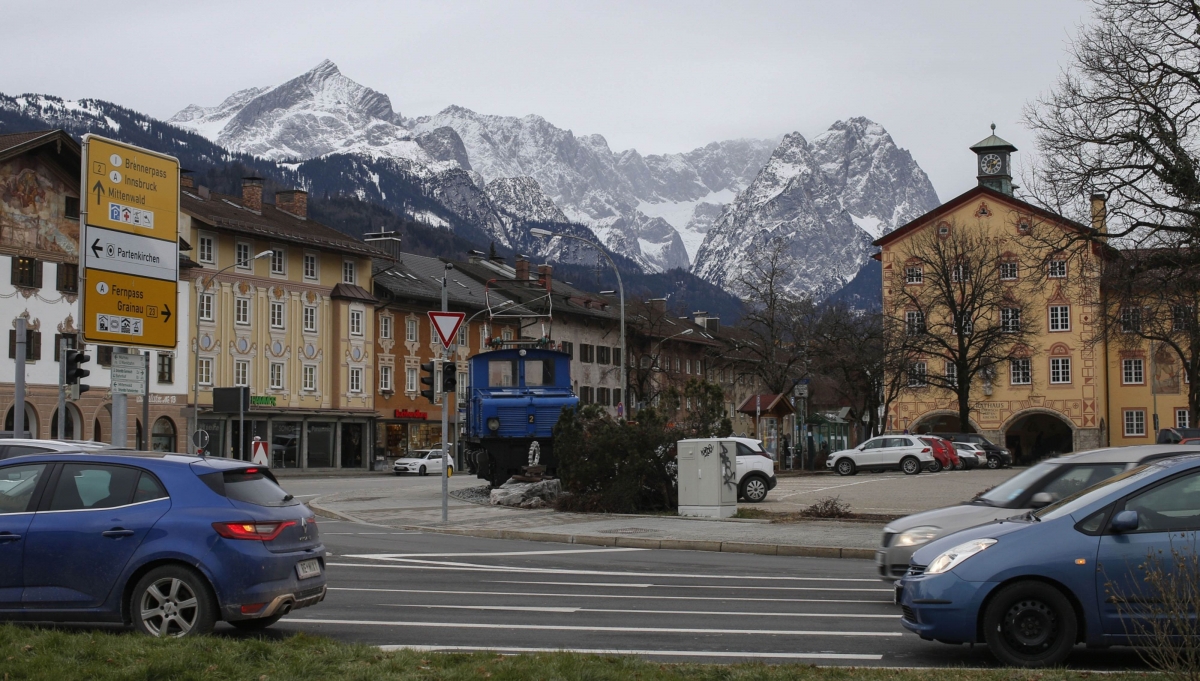
Automobiles sit at an intersection near the town hall and Alpine mountain range in Garmisch-Partenkirchen, Germany, on Jan. 8, 2020. MUST CREDIT: Bloomberg photo by Michaela Handrek-Rehle.

Automobiles sit at an intersection near the town hall and Alpine mountain range in Garmisch-Partenkirchen, Germany, on Jan. 8, 2020. MUST CREDIT: Bloomberg photo by Michaela Handrek-Rehle.

In France’s Auvergne-Rhone-Alpes region, home to Courchevel and Val d’Isere, tourist spending totaled 21 billion euros ($23 billion) in 2018, generating nearly a 10th of gross domestic product and 171,000 jobs.

That source of income is under genuine threat. Climate change is expected to cost Austrian tourism 300 million euros a year, according to one of the country’s leading environmental protection organizations. In France, authorities in Tignes delayed the start of the ski season by several weeks, citing the effects of global warming on the Grande Motte glacier.

“If greenhouse-gas emissions continue at the same level, snow will almost disappear at lower levels by the end of the century,” said Marc Olefs, head of department for climate research at Vienna’s Central Institute for Meteorology and Geodynamics.

At an elevation of 800 meters, Garmisch-known for its landmark ski jump-has little prospect of maintaining its status as a winter-sports mecca.

Among visitors, the changing conditions are accepted with quiet resignation.

Juergen Hilla, a school teacher from near Frankfurt, predicted that skiing and other winter sports may not be viable in Garmisch in the longer term and that he and his wife may have to consider alternatives for their ski vacation.

“Probably in 20 or 30 years, it won’t have the same role as it does now,” he added after a day on the slopes. The higher runs were in good shape but the lower ones needed cannons spraying artificial snow to keep them passable, Hilla said.

To make up for a lack of natural snowfall, resorts switch on the cannons, although they’re energy intensive and unpopular with environmentalists. Producing artificial snow will get harder as temperatures rise, Olefs predicted.

The practice didn’t start because of climate change originally-it was meant to make ski resorts less dependent on the whims of nature, according to Robert Steiger, an assistant professor at the University of Innsbruck. But it’s become unavoidable to cope with global warming.

“Some regions and areas will lose ski tourism by the mid of the century, or even earlier,” said Steiger, who has studied the impact of climate change on tourism. “Higher areas will survive, but they will have to invest more in snowmaking and to cope with the additional tourist inflow.”

Another option is snow farming, where mounds of the precious white flakes are collected in spring and covered with sawdust for use later in the year.

Areas most affected by warming are on the outskirts of the Alps-in Austria’s east, the foothills in France and Italy and in Germany. They were never as dependent on ski tourism as some regions in the central Alps, and are more attuned to welcoming guests around the year, Steiger said.

Already, the summer generates 60% of the tourism intake, according to Garmisch Mayor Sigrid Meierhofer. That’s a development seen elsewhere. In Switzerland, summer overnight hotel stays were a third higher than the winter of 2018-2019.

Summer bookings overtook winter in Austria as well a few years ago, even as revenue is still higher in the winter months because of equipment purchases and lift fees.

“Summer tourism growth is highest in the mountains,” according to Ulrike Proebstl-Haider, a professor at Vienna’s University of Natural Resources and Life Sciences. “That’s also partly driven by climate change, for instance because it’s helped make the autumn more attractive.”

In Saalbach-Hinterglemm in Austria, ski runs are transformed into tracks for summer mountain bikers, and cable cars are remodeled to accommodate the muddy riders on their way up.

Swiss towns are picking up on the trend. Both Gstaad and Verbier host concerts of classical music in the summer, while Davos also offers summer conferences, expanding its schedule beyond January’s World Economic Forum.

At Garmisch City Hall, Meierhofer is putting on a brave face, citing the town’s brisk conference business.

“Of course, we have to come up with concepts to maintain the winter tourism that we still have,” she said. “You say it’s brown-I say the hiking paths are open.”

As the National Zoo’s ‘queen,’ other elephants age, keepers make plan to deal with death #ศาสตร์เกษตรดินปุ๋ย

#ศาสตร์เกษตรดินปุ๋ย : ขอบคุณแหล่งข้อมูล : หนังสือพิมพ์ The Nation

https://www.nationthailand.com/travel/30380790?utm_source=category&utm_medium=internal_referral

As the National Zoo’s ‘queen,’ other elephants age, keepers make plan to deal with death

Jan 19. 2020
Ambika is pictured with Elephant Manager Marie Galloway at the National Zoo. Galloway and Ambika have been together more than 30 years. MUST CREDIT: Photo for The Washington Post by Evelyn Hockstein

Ambika is pictured with Elephant Manager Marie Galloway at the National Zoo. Galloway and Ambika have been together more than 30 years. MUST CREDIT: Photo for The Washington Post by Evelyn Hockstein
By The Washington Post · Michael E. Ruane · FEATURES, ANIMALS 

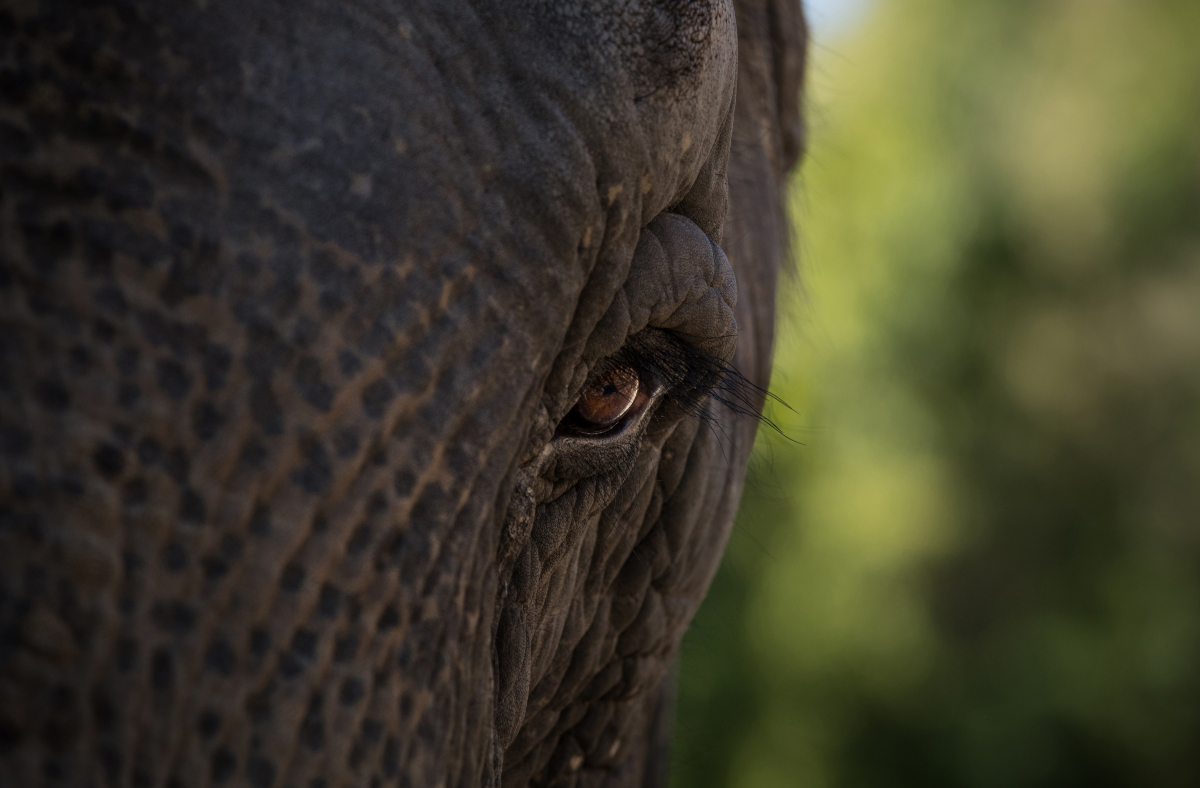
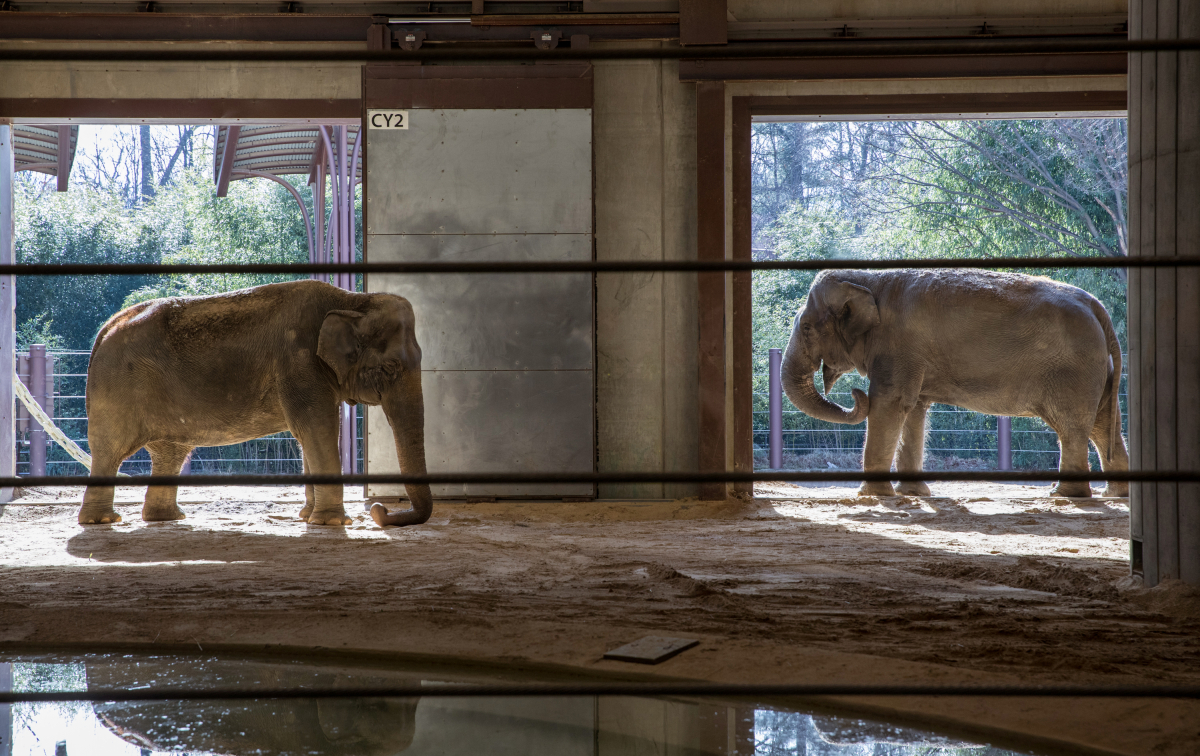
WASHINGTON – The elderly Asian elephant stands dozing in her compound at the National Zoo. The bottom of her trunk is curled on the sand floor. And morning sun streams in through an open door.

Keepers call her “The Queen.”

Her name is Ambika, and she is 72, which is about 100 in human years. She’s had a long life. Captured in India at 8, she worked for years as a logging elephant. She came to the zoo in 1961 and is now in the twilight of her days.

Ambika, a 72-year-old elephant, is the third-oldest Asian elephant in human care at the National Zoo in Washington, D.C. MUST CREDIT: Photo for The Washington Post by Evelyn Hockstein

Ambika, a 72-year-old elephant, is the third-oldest Asian elephant in human care at the National Zoo in Washington, D.C. MUST CREDIT: Photo for The Washington Post by Evelyn Hockstein

And while she snoozed one recent morning, and birds chirped in the compound, zoo officials said they have made plans for her death.

What happens when a zoo elephant dies? Especially one who has been on her throne, so to speak, for almost 60 years?

Ambika is pictured in the elephant enclosure at the National Zoo. MUST CREDIT: Photo for The Washington Post by Evelyn Hockstein

Ambika is pictured in the elephant enclosure at the National Zoo. MUST CREDIT: Photo for The Washington Post by Evelyn Hockstein

The British have a detailed plan, code-named “London Bridge,” for when Queen Elizabeth II dies.

The zoo has no code name for its Queen, but the process is an emotional, physical and logistical ordeal, the zoo’s chief veterinarian, Don Neiffer, and senior curator and elephant specialist, Bryan Amaral, said last week.

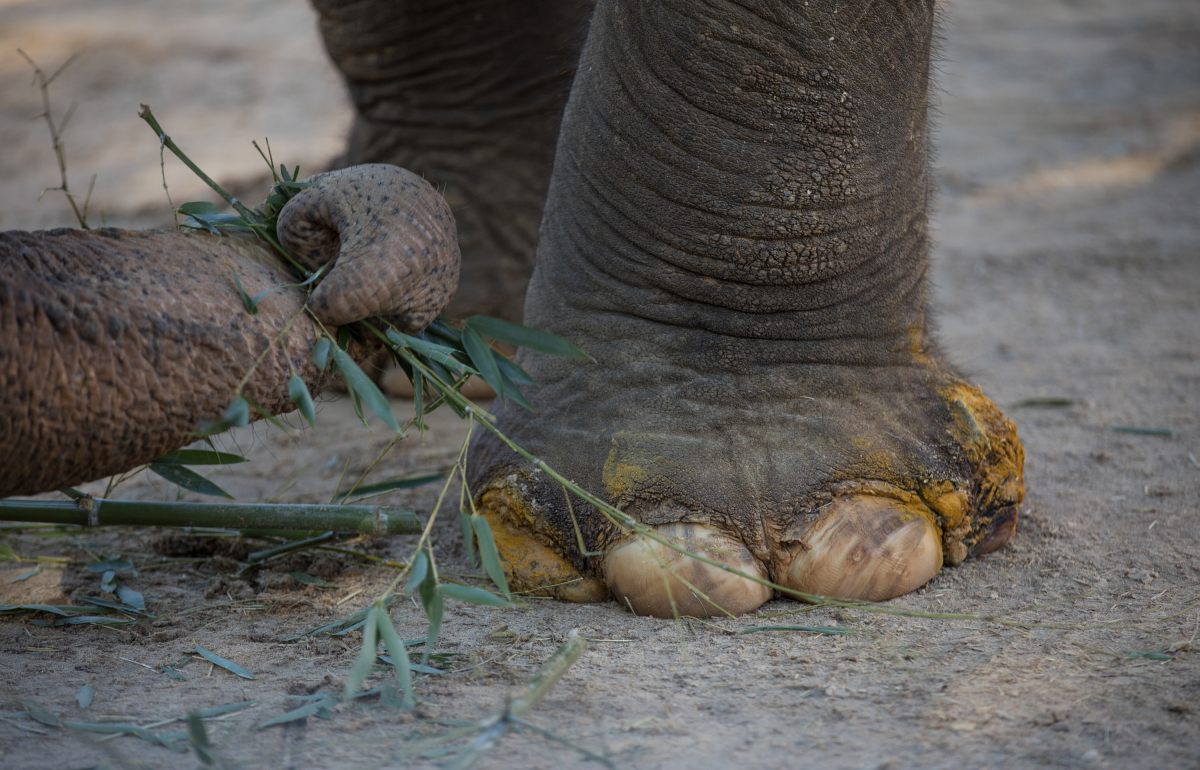
A turmeric poultice has been placed on Ambika's feet at the National Zoo. MUST CREDIT: Photo for The Washington Post by Evelyn Hockstein

A turmeric poultice has been placed on Ambika’s feet at the National Zoo. MUST CREDIT: Photo for The Washington Post by Evelyn Hockstein

Ambika is in decent health, despite some dental issues. But the zoo has been focused on such end-of-life issues because of the advanced age of its herd.

Ambika looks out on the grounds at the National Zoo. MUST CREDIT: Photo for The Washington Post by Evelyn Hockstein

Ambika looks out on the grounds at the National Zoo. MUST CREDIT: Photo for The Washington Post by Evelyn Hockstein

Aside from Ambika, the zoo has four other elephants in their mid-40s. The median life expectancy for Asian elephants in zoos is 46.9, the equivalent of about 77 in humans, Amaral said.

Ambika, left, and Shanti, in the elephant compound. MUST CREDIT: Photo for The Washington Post by Evelyn Hockstein

Ambika, left, and Shanti, in the elephant compound. MUST CREDIT: Photo for The Washington Post by Evelyn Hockstein

So the zoo is planning.

What happens if Ambika has to be put down – euthanized?

How is that done?

What happens afterward?

Would the other elephants mourn?

It is, of course, dire for the elephant and can be wrenching for the staff. Some of Ambika’s keepers have been with her for decades.

The decision to put an elephant down is made with deliberation and only when the zoo concludes that there is nothing more it can do to keep the animal from suffering, Neiffer said.

Extensive consultations with the staff must take place. A day and time must be picked and the appropriate drugs administered. The other elephants will have a few moments with the deceased.

Arrangements must then be made for the removal of the body by truck from the zoo to a facility where a necropsy – an autopsy for animals -takes place. (Ambika, for example, weighs 6,500 pounds, and the zoo would prefer to do the necropsy off-site.) The zoo has three veterinary pathologists who would help with the job.

The remains will then be “disarticulated” and incinerated. Physical specimens can be retained for research purposes.

No ashes will be kept for sentimental reasons, the zoo said. It declined to say where the incineration facility is.

The zoo has seven elephants – six females and a male. Females Swarna, Kamala and Bozie are about 45, and Shanthi is 44. Female Maharani is 29, and the male, Spike, is 38.

“A good component of our elephants are geriatric,” Neiffer said.

Elephants of advancing age can suffer from serious dental and foot problems, arthritis and gastrointestinal issues. (In 2014, Bozie was almost killed by a mysterious infection, from which she seems to have recovered.)

Crippling arthritis, for example, can be a cause for euthanasia, Neiffer said.

“When you get to the point when the animal can’t be made comfortable, can’t interact with its herd mates, can’t move around its enclosure . . . honestly, we shouldn’t even be at that point,” he said. “We should have made our call well before that.”

“We expect that at some point in time to have the fortunate burden of giving them the last gift we can give them, which is a humane passing,” he said.

Fortunate, “because it means we’ve done our job right.”

But death can also come to younger elephants.

In 1995, the zoo’s 16-month-old female elephant, Kumari, died unexpectedly. A post-mortem investigation by the zoo showed that she had a previously unknown strain of herpes virus that had also killed other elephants.

Earlier this year, the deadly virus, known as elephant endotheliotropic herpes virus (EEHV), killed two young African elephants at the Indianapolis Zoo.

There is no cure. But the National Zoo has a special lab that studies the malady and has discovered that intense treatment can sometimes save an infected elephant, a spokeswoman said.

Elephants are tough but social and intelligent animals that can size up a keeper in seconds, Amaral said. They have quirks and personalities. They can be contrary and aggressive with one another. They can also be stoic about health problems.

The object is to intervene before a sick animal is in extremis.

“Death with dignity,” Neiffer said. “I’ve seen animals down . . . [and] to see an animal that was mobile and is down and is struggling” is awful.

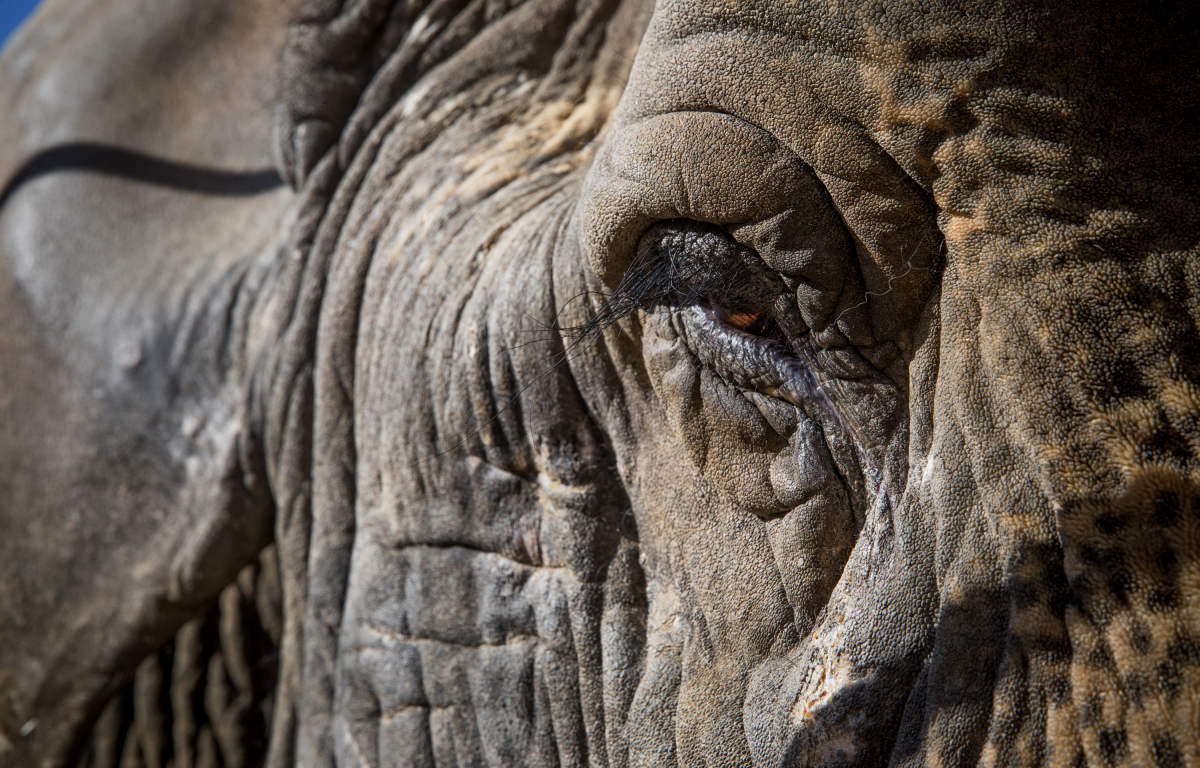
Suffering elephants can get a look in their eyes that is unnerving.

“It’s the white of the eye,” he said, when it looks like a hard-boiled egg. “There’s something about it. When they’re giving you that stare . . . it’s something you don’t forget. So I don’t ever want to see one of our elephants down on the ground with that eye.”

The difficulty is trying to figure out when an elephant is seriously ailing.

Amaral said they are often described as a huge black box. “You can get [information] from the toes to the elbows and the nose to the edge of their face, and the tail.”

Because of their size, the rest can be a mystery. “Something as simple as an X-ray is impossible on parts of an elephant,” he said.

Once the decision is made, ideally, the animal is shifted into an area of the zoo where it can be euthanized and easily removed from the compound. If the elephant can’t be shifted, the procedure would take place wherever the animal is.

“One thing we’re not going to do in her eleventh hour is pressure her and freak her out and push her,” he said. “We’ll go to her.”

The animal would first be sedated. Then the euthanasia drugs would be injected via catheters in veins in the elephant’s ears or legs. A ladder might be used to reach the ears.

The same drugs are used that are used to put down a pet dog, Neiffer said.

“It’s a hard thing to watch,” he said. “Even though the animal is anesthetized . . . you’re watching your elephant fall 0ver.”

At that point, other elephants could be given access to the body.

“This sort of emulates what elephants would do in the wild,” Amaral said. “They’re social. They usually investigate . . . Some will ignore [the body]. Some might give it a nudge, ‘Hey, you going to get up?’ or whatever.”

Do they mourn?

“I think they do to a point,” he said. “But they also move on pretty quickly. Generally speaking, the elephants have moved on before the staff.”

The necropsy, which can take an entire day, would involve several experts and perhaps observers for educational purposes. “It’s not every day you get to necropsy an elephant,” Neiffer said.

He said the goal is to look for a cause of the animal’s disease, for things you didn’t expect, and for broader knowledge to better the lives of elephants.

Afterward, grief counselors are available for the staff.

“We see it all the time,” Neiffer said. “People are fine. The moment that euthanasia solution goes in . . . the teargates open. They did their job. They kept it together . . . until somebody said, ‘It’s OK to be human again.’ ”

On the tourist trail in Iowa #ศาสตร์เกษตรดินปุ๋ย

#ศาสตร์เกษตรดินปุ๋ย : ขอบคุณแหล่งข้อมูล : หนังสือพิมพ์ The Nation

https://www.nationthailand.com/travel/30380732?utm_source=category&utm_medium=internal_referral

On the tourist trail in Iowa

Jan 18. 2020
A bluff view of the Mississippi River and Lock and Dam No. 12 from Bellevue State Park in Bellevue, Iowa, in Jan. 8, 2020. In the winter, bird watchers can often see bald eagles hunting for fish by the lock and dam. MUST CREDIT: Washington Post photo by Andrea Sachs

A bluff view of the Mississippi River and Lock and Dam No. 12 from Bellevue State Park in Bellevue, Iowa, in Jan. 8, 2020. In the winter, bird watchers can often see bald eagles hunting for fish by the lock and dam. MUST CREDIT: Washington Post photo by Andrea Sachs
By The Washington Post · Andrea Sachs · FEATURES, TRAVEL

In the first weekend of 2020, seven Democratic presidential candidates blew through Iowa like a snow squall. Elizabeth Warren appeared in Manchester, Maquoketa, Davenport and Dubuque. Bernie Sanders also stopped by Dubuque, in addition to Grundy Center, Mason City and Boone. Joe Biden logged significant miles around the Hawkeye State as well, visiting Waterloo, Davenport, Grinnell, Vinton and Des Moines.

I landed in the state capital at the same time as John Delaney’s Sunday event in Sheldon and checked into my room while Biden was speaking in Davenport. If I had unpacked a little faster, I could have caught the tail end of Tom Steyer’s talk in Newton. But after the flight, I just wanted a drink, without the politicking.

CEDAR RAPIDS, IA - JANUARY 10: Vendor booths stand inside the Newbo City Market in Cedar Rapids, Iowa on January 10, 2020. (Photo by Daniel Acker for The Washington Post)

CEDAR RAPIDS, IA – JANUARY 10: Vendor booths stand inside the Newbo City Market in Cedar Rapids, Iowa on January 10, 2020. (Photo by Daniel Acker for The Washington Post)

Over the next few weeks, all eyes will bore into Iowa, the first state in the country to hold a caucus or primary. The Democratic candidates – 12 at the time of publishing, 14 during my visit – are blanketing the Midwestern state, jockeying for supporters before the Feb. 3 caucuses. (A few Republicans challenging President Trump, such as Bill Weld and Joe Walsh, are also popping up in Iowa.) The politically minded will focus on the policies, positions and personalities of the POTUS hopefuls, but I was more interested in the datelines – the destinations and attractions that will be here long after the politicians have moved on to another state, another election. While the candidates come to Iowa for votes, I came to Iowa for Iowa.
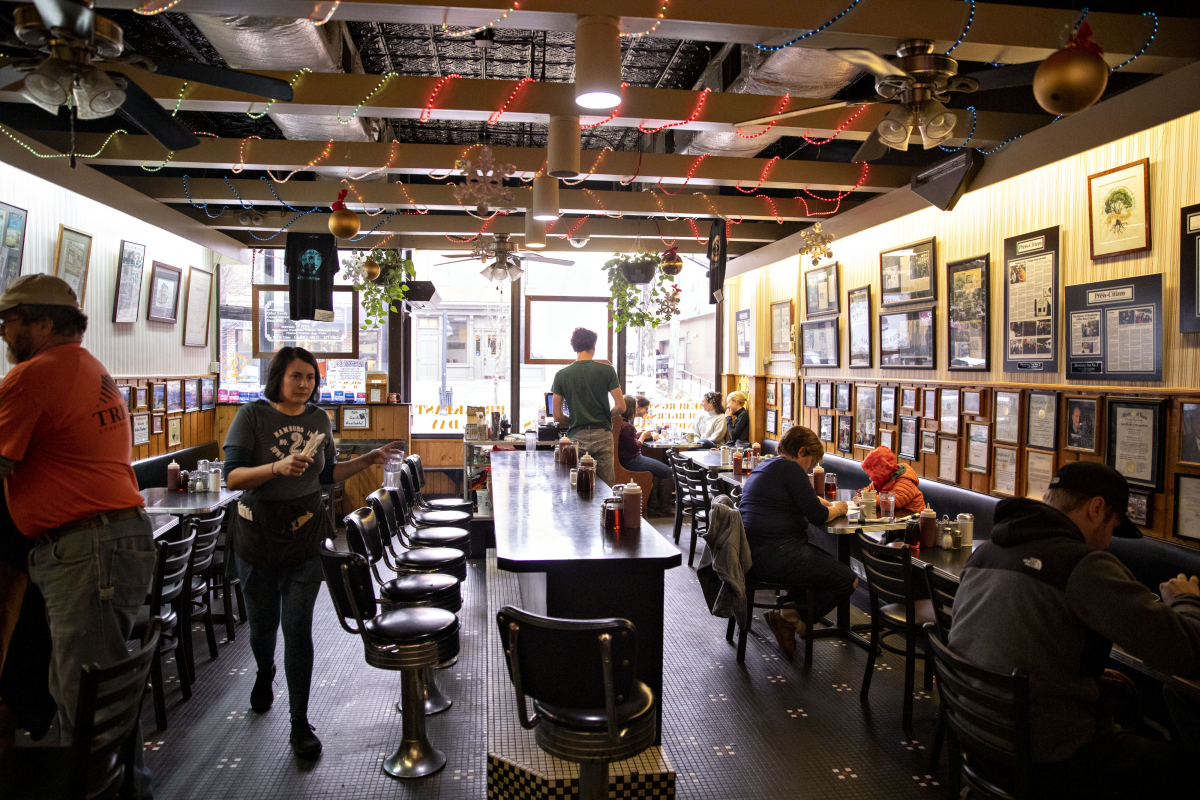
Hamburg Inn No. 2 holds a Coffee Bean Caucus, in which one person gets one vote and everyone participates. The restaurant, where Ronald Reagan once ate, is shown Jan. 10, 2020, in Iowa City. MUST CREDIT: Photo for The Washington Post by Daniel Acker

Hamburg Inn No. 2 holds a Coffee Bean Caucus, in which one person gets one vote and everyone participates. The restaurant, where Ronald Reagan once ate, is shown Jan. 10, 2020, in Iowa City. MUST CREDIT: Photo for The Washington Post by Daniel Acker

For three out of every four years, Iowa is relegated to flyover status. So, you can’t blame the state of corn, Hawkeyes and Herbert Hoover for basking in the spotlight while it can.

As a resident of Washington, D.C., my ears have been rubbed raw by political talk. But in Iowa, the topic seemed refreshing and new. Like the time I spotted my college professor on a beach in Rhode Island. I found her more compelling in a different environment.

The Amana Colonies is home to Iowa's only remaining woolen mill, which has been in continuous operation since 1857. At the mill's shop, visitors can pick up textiles and other gifts. Photographed Jan. 6, 2020. MUST CREDIT: Washington Post photo by Andrea Sachs

The Amana Colonies is home to Iowa’s only remaining woolen mill, which has been in continuous operation since 1857. At the mill’s shop, visitors can pick up textiles and other gifts. Photographed Jan. 6, 2020. MUST CREDIT: Washington Post photo by Andrea Sachs

Businesses around the state are capitalizing on this moment. Sock Spot, a vendor in the NewBo City Market in Cedar Rapids, carries election-themed sport socks with candidates’ names (Mayor Pete [Buttigieg], Warren), public service announcements (“Do the right thing 2020”) and unifying slogans (“I vote for snacks”). The store’s owner, who was wearing chihuahua-print socks, said the Bernie and Trump styles with unruly hair (comb included, to tame the locks) were doing well. But if votes were based on sales, Kansas City Chiefs quarterback Patrick Mahomes would become the next POTUS.
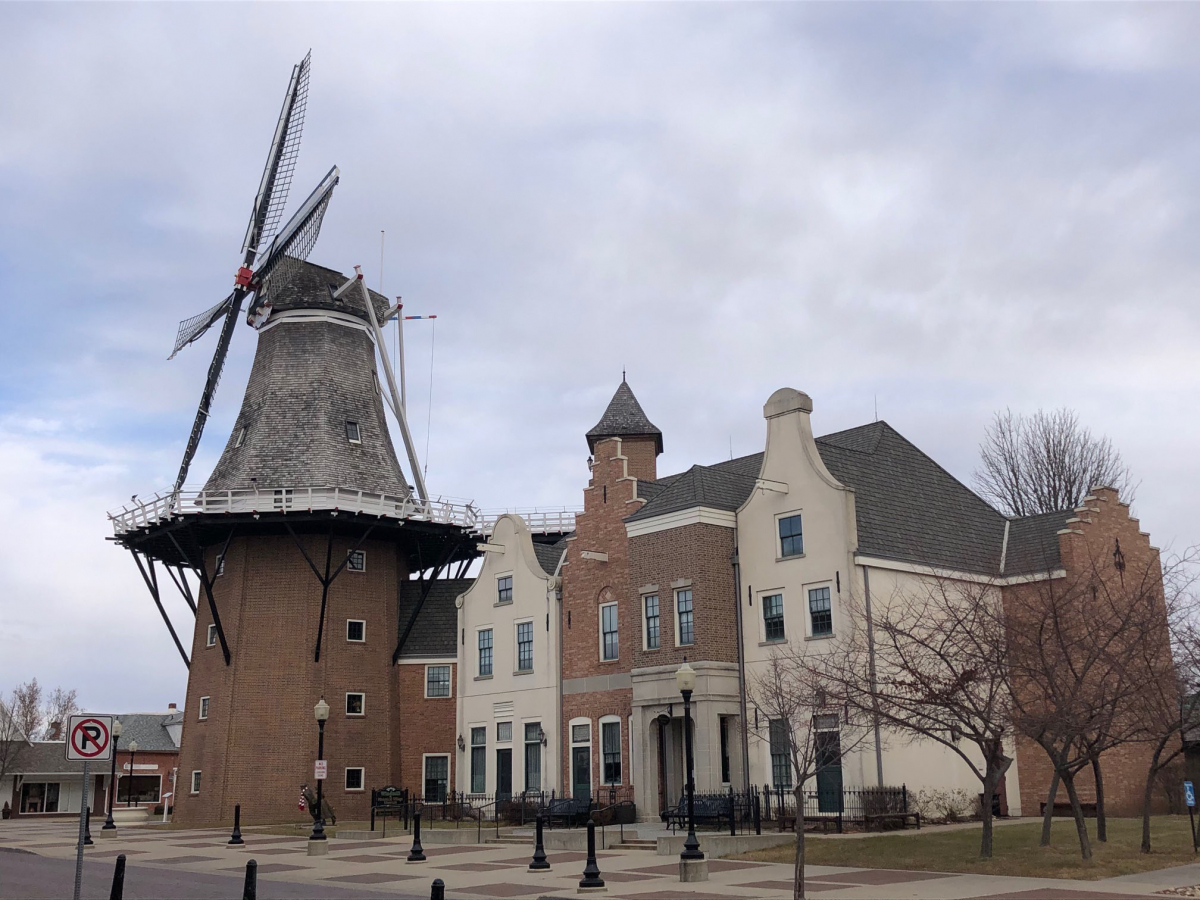
The town of Pella, which Dutch immigrants established in the mid-1800s, celebrates its Dutch traditions including a tulip festival and the Vermeer Windmill, at nearly 125 feet the tallest working windmill in North America. It is shown Jan. 6, 2020. MUST CREDIT: Washington Post photo by Andrea Sachs

The town of Pella, which Dutch immigrants established in the mid-1800s, celebrates its Dutch traditions including a tulip festival and the Vermeer Windmill, at nearly 125 feet the tallest working windmill in North America. It is shown Jan. 6, 2020. MUST CREDIT: Washington Post photo by Andrea Sachs

Raygun, a printing, clothing and novelty retailer with several locations around the state, slaps a crooked smile on the straight face of such serious subjects as politics, social causes and Iowa stereotypes. The company, which leans left, has created islands of candidate-related merchandise within its stores. Here, you can pick up books by Warren, Sanders and Biden, among others; T-shirts (“Give Pete a chance!”); and laser-cut ornaments (Warren hanging with Lizzo and a gun-toting cat). If you have lost track of which candidates have dropped out of the race, check the discounted rack: The “Iowa for Beto” shirts are on sale.

The 1989 movie "Field of Dreams" plays continuously in the farmhouse in Dyersville, Iowa, shown Jan. 7, 2020. MUST CREDIT: Washington Post photo by Andrea Sachs (Andrea Sachs/The Washinton Post)

The 1989 movie “Field of Dreams” plays continuously in the farmhouse in Dyersville, Iowa, shown Jan. 7, 2020. MUST CREDIT: Washington Post photo by Andrea Sachs (Andrea Sachs/The Washinton Post)

On weekends, diners, including many Drake University students nursing hangovers, stand in line for breakfast at Waveland Cafe in Des Moines. The place is packed; the clamoring for hash browns loud. But on a Monday morning, I had many seating choices: counter or booth, by the photo montage of regulars or the wall of signatures by journalists and politicians. Two bites into my rye toast, I noticed a familiar face with a Ned Flanders mustache and a Hawaiian shirt. I dropped my slice to say hello to Waveland owner David Stone. I asked him how the cafe had become a campaign and press stop during the caucuses. He said it gained national attention in 2000, when Tom Brokaw reported live from the 54-seat diner. This year, CNN wanted to set up operations inside, but Stone declined: feeding frenzy before media frenzy.
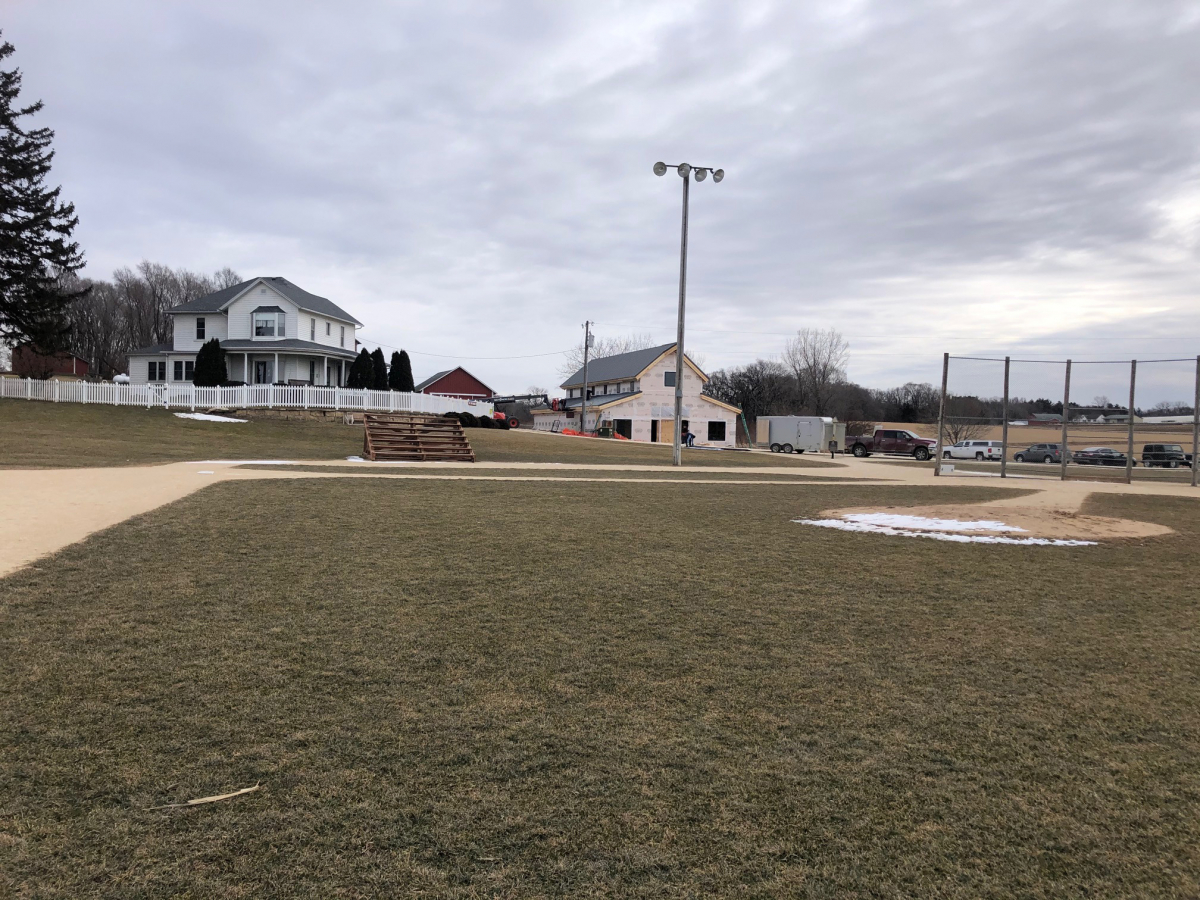
n Dyersville, Iowa, fans of the 1989 movie "Field of Dreams" can run the bases and tour the white clapboard farmhouse occupied by the fictional Kinsella family. Photographed Jan. 7, 2020. MUST CREDIT: Washington Post photo by Andrea Sachs

n Dyersville, Iowa, fans of the 1989 movie “Field of Dreams” can run the bases and tour the white clapboard farmhouse occupied by the fictional Kinsella family. Photographed Jan. 7, 2020. MUST CREDIT: Washington Post photo by Andrea Sachs

“They can’t take over the restaurant on a weekend,” he said. “We are extremely busy, and I can’t have cameras getting in the way of my customers.”

Not even Aquaman could move the mountain of eggs and potatoes. When Jason Momoa, a native Iowan, wanted to hold a family reunion at the diner last year, Stone agreed, but only if his party arrived at 7 a.m. and cleaned their plates before the official opening hour of 8. “He complied,” Stone said of the herculean actor.

Merchandise by Raygun, a novelty retailer with several locations around Iowa, is shown in an Iowa City store on Jan. 10, 2020. MUST CREDIT: Photo for The Washington Post by Daniel Acker

Merchandise by Raygun, a novelty retailer with several locations around Iowa, is shown in an Iowa City store on Jan. 10, 2020. MUST CREDIT: Photo for The Washington Post by Daniel Acker

Since 2004, the Hamburg Inn No. 2 in Iowa City has held the Coffee Bean Caucus. The process is much easier than the actual Iowa caucuses. At the front counter, guests take a bean from a jar and drop it into a smaller container (a paper-clip holder?) embellished with the name of their preferred candidate. At the end of the day, the staff transfers the beans to the larger Mason jars lined up on a shelf near the front door. The policy is one person/one vote, but everyone can participate, including non-natives (often called “captives” in Iowa-speak), children and foreigners.

“This gives us a really good sense of what the consensus in Iowa City is,” said Elise Prendergast, the front house manager, adding that Bernie Sanders won in 2016.

On the Tuesday morning I stopped by, Buttigieg and Sanders were bean-to-bean, and Mike Bloomberg’s canister was empty. Elise said the numbers are always in flux, however. After the December debate, Amy Klobuchar’s bean count rose.

The restaurant is lined with press clippings, and toward the back, you can genuflect before a shrine to past candidates and ex-presidents. In 1992, three years after leaving office, Ronald Reagan visited the Hamburg Inn and sat at what is now the Presidential Table. According to the menu from his visit, he ordered meatloaf, french fries, green beans, a roll with butter and apple pie a la mode, which he ate first.

Of course, tastes and diets have changed since the Reagan years, so I asked Elise for her menu picks. She recommended the hamburgers and pie shakes, a blend of vanilla ice cream and pie – America in a glass.

At Eatery A in Des Moines, I ordered a Moscow mule and chatted with the mustachioed bartender about the restaurant’s former occupants, first a Blockbuster Video store and later Barack Obama’s caucus headquarters. I had read that a few campaign offices were nearby – Delaney’s is a few blocks away – and wondered if he had a Spidey sense about the diners’ identities. With the excitement of a wildlife enthusiast on safari, I asked him if he could point to any campaign workers.

“They wear buttons,” he answered, scanning the establishment.

We didn’t see any lapel accessories, but he did notice a man and woman of distinction in the booth behind me.

“Are you guys with the Well Pennies?” he gushed to the Des Moines-based folk-pop band. “I love your song ‘Ooh La La.’ ”

That night at the hotel, I fell asleep to the duo’s music and not the news headlines.

In Pella, a Dutch-accented town about an hour east of Des Moines, the woman in the white bonnet didn’t want to talk politics. She had more pressing matters to discuss: pastries.

Bakeries all over town post signs in their windows for Dutch letter cookies. However, the employee at Jaarsma Bakery explained that the S-shaped sweets are traditionally baked for Sinterklaasavond, or Dutch Santa Claus Day, on Dec. 6. For more seasonally correct snacking, she suggested an almond banket, a pastry similar to a letter cookie but with more almond paste and shaped like a flagpole.

Jaarsma Bakery opened in 1898, about 50 years after the Dutch immigrants arrived in Iowa seeking religious freedom. The Old World traditions still run deep. Since 1935, the town has held Tulip Time, a springtime festival celebrating the Netherlands’ flower power. The Vermeer Windmill, the tallest working mill in North America, soars nearly 125 feet high, its 82-foot-long blades whirring like a lazy fan. Five times a day, the Klokkenspel stirs to life with chiming bells and lively characters. There’s Dominie Hendrik Pieter Scholte, who led the 800 newcomers to the City of Refuge, and his wife, Maria, who is in tears after all but one of her good dishes shattered during the crossing. (She is also upset about her new digs, a log cabin.) Wyatt Earp earned a spot on the musical clock because the gunslinger grew up here. His childhood home is part the Historical Village, a collection of 22 buildings including the Werkplaats, where wooden shoes are made, and the Delft House, which contains vintage pieces of the famous pottery.

Continuing east, I left Pella’s self-described “Touch of Holland,” for the Willkommen mat of the Amana Colonies, a National Historic Landmark. Starting in 1855, German immigrants fleeing religious persecution (see Pella, with a Deutschland twist) established seven villages on 26,000 acres of land in central Iowa. They lived communally until the Great Change of 1932, when they split the shared nest for a more independent lifestyle. Today, about 1,600 people reside in the colonies, including 300 adherents of the Amana church, a breakaway sect of the Lutheran Church.

During the winter months, the historical buildings keep limited hours, but Jon M. Childers, executive director of the Amana Heritage Society, held the keys to the colonies. We visited the communal kitchen and the church in Middle Amana, and toured the exhibits at the heritage museum, which included the world’s first microwave and (empty) buckets of lard and barrels of pickled German cut beans from the subsistence days. Jon drove me by the 163-year-old Amana Woolen Mill, Iowa’s oldest and only working woolen mill, the site of a new boutique hotel that is scheduled to open in the fall. In between stops, he told me how as a Boy Scout, he provided “security” for Ted Kennedy, who visited during his 1979-80 run for president. (The boys encircled the former Massachusetts senator.) More recently, Obama and Hillary Clinton spoke at the Festhalle Barn about a month apart in 2007; a year later, Bill Clinton stumped for his wife at the Amana RV Park. He also picked up a blanket from a shop Jon had set up in the registration office, for those chilly nights in Chappaqua, New York. I asked Jon what could politicians learn from the Amana colonists.

“Amana is inclusive,” he said. “People sit and listen. It feels like a big family.”

In the fantasy baseball movie “Field of Dreams,” the voice said, “If you build it, he will come.” Meanwhile, the voice in my head said: “If you offer a house tour that doesn’t involve standing outside in freezing cold, she will come.” Someone clearly heard me.

I recognized the two-story clapboard farmhouse in Dyersville from a corn field away. It sat above the baseball field, which looked smaller in person. I buzzed the doorbell and a guide ushered me inside. After putting on protective booties, I followed her through the kitchen, where a photo of Ray and Annie Kinsella, the fictional field-builders, sat on the counter. In the living room, the 1989 film played on a boxy TV, the sound off to prevent the tour guides from going mad.

I learned all sorts of movie trivia, such as the actor who played the “voice” remains a mystery (maybe Ray Liotta or Ed Harris, the husband of Amy “Annie” Madigan?) and the corn grew so high, thanks to human intervention, that Kevin “Ray” Costner had to stand on a 12-inch platform. I stared out the bay window, a renovation care of Universal Studios, but didn’t see any ghost players emerge. Maybe they are waiting for Major League Baseball to finish building its regulation field adjacent to the FOD. On Aug. 13, the New York Yankees and White Sox will compete in Iowa’s first regular-season game to a crowd of 8,000. On this January morning, I had zero fans to cheer me. But I did have the voice in my head reminding me that the sooner I rounded those bases, the quicker I could return to my heated car.

Winter is prime time for viewing bald eagles in the Midwest. The birds of prey, which start arriving in September, hunt for food along Iowa’s major rivers. I started my search for the country’s emblem in the cafeteria of the National Mississippi River Museum & Aquarium in Dubuque. The restaurant overlooks Ice Harbor, a man-made offshoot of the Upper Mississippi. No luck on the birds, but even better, I found Jared McGovern, the museum’s curator of conservation programs, eating a chicken sandwich. Jared told me to look by the lock-and-dam systems along the Mississippi River, where eagles often feast on the fish uprooted by the rushing water. Plan B: Check the fields, in the off chance a farmer tossed a dead pig. Like many of us, eagles prefer fast food to a more labor-intensive meal made from scratch.

I followed Jared’s instructions, driving out to Lock and Dam No. 11 (nothing) and Eagle Point Park (maybe something) in Dubuque. Standing on the lip of the park above the Mississippi, I caught a glimpse of two dark-feathered birds (juveniles?) and a third with a white head (mom or dad?). I tried to snap a photo to send to Jared for confirmation but couldn’t free my hand from my mitten in time. Back in the car, I continued south on the Great River Road National Scenic Byway to Bellevue (Lock and Dam No. 12 and Bellevue State Park), Green Island and Sabula, the state’s only island city. In Davenport, seagulls circled Lock and Dam No. 13 and Canada geese pecked at the frozen banks.

The next day, I had moved on from the bald eagles; I now only cared about blankets. I had returned to Amana and was walking down the street when a mother exclaimed to her son, “Bald eagle,” and pointed at the sky. The little boy and I both looked up and watched the bird soar toward the setting sun. Tinted in golden light, the bald eagle looked regal and proud, even if he was just going to freeload in a farmer’s field.

I also spotted my button. A few hours before my flight back to Washington, I was drinking coffee at the Scenic Route Bakery in Des Moines when Jackson Boaz walked in wearing a “Students for Warren” pin on his wool jacket. The 15-year-old high school freshman from Northern California started every morning at the cafe with a cup of oatmeal. Iowa in January, he said, was “too cold for parfait.” The young campaign volunteer shared his impressions of the state with me.

“I love the energy here in Des Moines and in Iowa as a whole,” he said. “They have this sacred role as the first in the country. It’s like the political Super Bowl.” Anything else? “The food has been pretty dang good.”

Jackson was leaving in mid-January but hoped to return to Iowa for the caucuses – and maybe the oatmeal, too.


– Where to stay

Graduate Iowa City

210 S. Dubuque St., Iowa City

319-337-4058

graduatehotels.com/iowa-city

The downtown hotel celebrates Iowa City’s status as a literary powerhouse – the city is a UNESCO City of Literature and home of the Iowa Writers’ Workshop and the Literary Walk – with stacks of books in the lobby and handwritten writings on the walls by local author Tim Taranto. The decor also incorporates other Iowa hallmarks, such as “Field of Dreams” and the Hawkeyes. Grab breakfast at Poindexter’s, a coffeehouse covered in more than 180,000 No. 2 pencils, or dinner and drinks at Gene’s, which is named after University of Iowa alum Gene Wilder. Rates from $119 a night include a coffee at Poindexter’s and discounted self-parking.


Hotel Julien Dubuque

200 Main St., Dubuque

563-556-4200

hoteljuliendubuque.com

The 19th-century hotel near the Mississippi River has hosted many storied guests, including Abraham Lincoln, Mark Twain and Joe Biden, back when he was vice president. Al Capone also hid out here. The hotel feels like a period piece but with modern amenities, such as an indoor pool, spa, fitness center and the restaurant Caroline’s, which serves three meals a day plus happy hour specials. Rates from $94, with free parking.


The Current Iowa, Autograph Collection

215 N. Main St., Davenport

563-231-9555

thecurrentiowa.com

The hotel, part of the Marriott family, is the cool, artsy sister property to the sophisticated Blackhawk Hotel, where the Obamas stayed during a 2011 visit to Davenport. A gallery’s worth of contemporary art fills the hotel, including a giant cow named Betsy and a sculpture of a dog in a Batman costume. Stay put for meals and drinks: Try Viva Baja Mexican Bar and Restaurant in the lobby or the rooftop lounge, Up, which overlooks the Mississippi. Rates from $136, with free parking.


Where to eat

Eatery A

2932 Ingersoll Ave., Des Moines

515-282-8085

eateryadsm.com

The restaurant, which occupies the former space of Obama’s 2008 caucus headquarters, serves Mediterranean-influenced dishes, such as Spanish octopus, cauliflower and chickpea falafel, and pizzas baked in a wood-burning oven. Sit at the U-shaped bar and talk politics with the bartenders or settle into a booth surrounded by reclaimed wood from central Iowa. Small plates from $5; pizzas cost about $18.


Jaarsma Bakery

727 Franklin St., Pella

641-628-2940

jaarsmabakery.com

Stock up on Dutch pastries, breads, cakes and cookies, including Dutch letters, almond bankets and Dutch apple bread. The family-run bakery, open since the late 1800s, also sells Dutch products and souvenirs, such as Delftware and mouse-size wooden clogs. Danish pastries start at $1.15 each; Dutch letters cost $2.65 each.


Waveland Cafe

4708 University Ave., Des Moines

515-279-4341

wavelandcafe.com

The breakfast hot spot attracts a cross-section of Des Moines locals, including students, retirees and businessfolk, as well as politicians and journalists in town for the caucuses. Eat big with one of the skillets: The Waveland’s Best Skillet, for example, comes with ham, mushrooms, green peppers and hot peppers topped with melted cheese and served over hash browns with toast. Weekends are busy, so don’t press snooze on the alarm clock. Most dishes cost about $10.


What to do

Amana Colonies

622 46th Ave., Amana

319-622-7622

amanacolonies.com

Explore the seven villages, which offer a peek into the former communal society founded by German immigrants in the mid-1800s. Start with the Amana Heritage Society, which holds exhibits in a trio of 19th-century buildings. Then fan out to the shops (woolen mill textiles, brooms and baskets, and furniture and clocks), restaurants and outdoor activities, including a golf course and 3.1-mile bike trail connecting Amana and Middle Amana. There is also a brewery (not surprising) and a winery (surprising). Hours vary based on seasons and attraction.


Herbert Hoover Presidential Library and Museum

210 Parkside Dr., West Branch

319-643-5301

hoover.archives.gov

The Herbert Hoover Presidential Library and Museum, one of 14 presidential libraries run by the National Archives and Records Administration, honors the life and achievements of the only president from Iowa. The visitors center and historic site, which includes his two-room childhood home, a blacksmith shop and the Friends Meetinghouse, are free. The museum, which costs $10, covers his years before, during and after his presidency. Open daily from 9 a.m. to 5 p.m. Follow the loop road from the library and museum to the gravesite of Hoover and his wife, Lou Henry Hoover. The grounds are open 24 hours a day.


Field of Dreams

28995 Lansing Rd., Dyersville

888-875-8404

fieldofdreamsmoviesite.com

Chase your own Ghost Players around the bases on the “Field of Dreams” site of the 1989 film. For movie trivia and other behind-the-scenes tidbits, take the half-hour tour of the 1906 farmhouse that Kevin Costner made famous. From December through February, you must book the house tour at least 48 hours in advance. Admission: $20. The ballfield is free and open during daylight hours.

Feathers fly in Nakhon Sawan’s Boraphet Marsh #ศาสตร์เกษตรดินปุ๋ย

#ศาสตร์เกษตรดินปุ๋ย : ขอบคุณแหล่งข้อมูล : หนังสือพิมพ์ The Nation

https://www.nationthailand.com/travel/30380723?utm_source=category&utm_medium=internal_referral

Feathers fly in Nakhon Sawan’s Boraphet Marsh

Jan 18. 2020
Oriental Darter

Oriental Darter
By Arthid Nima
Special to The Nation

Birdwatchers were delighted this month to come across a variety of migrating birds having a “party” at Bueng Boraphet (Boraphet Marsh), a semi-natural lake in Nakhon Sawan.

With swampy fringes, Bueng Boraphet is Thailand’s largest freshwater lake at more than 200 square kilometres and an obvious draw for almost 200 species of wild animals, birds and plants.

Eastern Marsh Harrier

Eastern Marsh Harrier

Purple Heron

Purple Heron

Pied Kingfisher

Pied Kingfisher

There to greet the visiting birds are 16 local species, such as the kingfisher, a resident of Thailand that’s not easily spotted and even less frequently seen up close.

 Small Pratincole

Small Pratincole

The “foreigners” in their midst at this time of year include the small pratincole, a grey-brown combination of dove, swallow and plover with a tan wash at the throat and chest.  It’s rare to see this bird even at its preferred beaches and swamps since its migrations never end.

Garganey

Garganey

The garganey, a small, shy dabbling duck, gathers in flocks of more than a thousand birds, though its numbers seem to be decreasing lately.

Eurasian Kestrel

Eurasian Kestrel

The Eurasian kestrel is a small falcon distinguished by its plumage – the male’s grey head, rusty back and grey tail with a broad black tip, and the female’s brownish above feathers and a bar on the back, wings and tail.

A quite common visitor to Boraphet Marsh, they can be spotted scouring growths of pampas field and amid farm crops.

Black Winged Stilt

Black Winged Stilt

The black-winged stilt is a large black-and-white wader prowling shorelines on long orange-red legs and a straight black bill. The best place to see them is in wetlands with open shallow water.

Black Winged Stilt

Black Winged Stilt

Northern treks: Chiang Mai’s gorgeous Wat Chan forest #ศาสตร์เกษตรดินปุ๋ย

#ศาสตร์เกษตรดินปุ๋ย : ขอบคุณแหล่งข้อมูล : หนังสือพิมพ์ The Nation

https://www.nationthailand.com/travel/30380722?utm_source=category&utm_medium=internal_referral

Northern treks: Chiang Mai’s gorgeous Wat Chan forest

Jan 17. 2020
By Supachai Petchtewee
The Nation

Few Thais have heard of the Wat Chan pine forest in Chiang Mai’s Kalayaniwattana district, but it’s a key supplier of farm goods used in the Royal Initiative Project founded by His Majesty the late King Bhumibol.

The Wat Chan Royal Project Development Centre in Ban Chan grows mainly fruits and vegetables specifically acclimatised to the area.

They’ve been carefully studied and developed to assure a match for the growing conditions before being sent to the Wat Chan Royal Project Foundation and introduced to growers, who also submit their own produce to the centre for quality assessment.

Unlike the foundation, the centre is under the supervision of the Royal Forest Department.

While my first visit to the pine forest at Wat Chan in 2018 was fleeting, I arrived this year planning to camp overnight. The temperature was cool even in the daytime, the wind constantly rustling leaves. I was 900 metres above sea level and quickly being charmed by the local people’s simple way of life and innate friendliness to travellers.

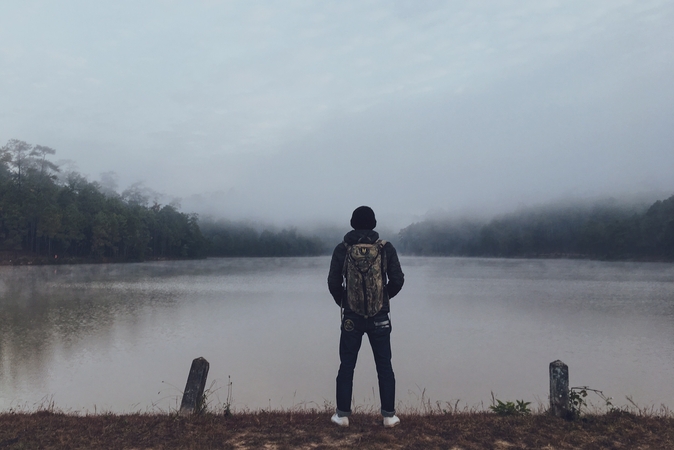
A sight not to be missed is the sun rising over a reservoir, and soon its beams slicing through the fog and striking the water, to be reflected among the trees.

There are several ways to reach Wat Chan, including private vans and minibuses that take four to five hours to get there from downtown Chiang Mai. You can find them parked at Chang Peuk Station.

More popular is the route from Pai in Mae Hong Son, right across the provincial border from Kalayaniwattana. It passes lovely strawberry fields.

If you have your own car, there are two routes to Kalayaniwattana, the first from urban Chiang Mai along Highway 107 to the Mae Malai-Pai intersection, left onto Highway 1095 and continuing about 15 kilometres into Pai district, then Kalayaniwattana for another 40km.

The other route runs from Chiang Mai to Samoeng district, then via Highway 1349 to Ban Chan sub-district, and you’ll see the pine forest.

I’ve travelled both routes and found them equally convenient and the experiences equally pleasant, with gorgeous views on both sides of the well-maintained roads.

Citybook eases the hassles of travellers across cities #ศาสตร์เกษตรดินปุ๋ย

#ศาสตร์เกษตรดินปุ๋ย : ขอบคุณแหล่งข้อมูล : หนังสือพิมพ์ The Nation

https://www.nationthailand.com/travel/30380664?utm_source=category&utm_medium=internal_referral

Citybook eases the hassles of travellers across cities

Jan 16. 2020
By THE NATION

Booking.com has unveiled its new pilot product, CityBook – a responsive digital guide for cities that seamlessly combines inspiration, planning, navigation and experience all in one place.

The international digital travel company launched the pilot project of CityBook in Paris, London and Amsterdam on Thursday (January 16).

CityBook will be fully focused on helping travellers once they have arrived in their destination by providing curated recommendations on things to do, showcasing local offers and discounts, providing content to help travellers get a feel for the city to help them make decisions, all with the purpose of helping Booking.com better understand most relevant issues for consumers in-destination.

The CityBook products, content and features that consumers like best will then be rolled into the core Booking.com app, furthering Booking.com’s vision to help customers in making decisions and provide simplicity throughout their entire travel journey.

Leveraging machine learning models that take into accounts a traveller’s location, the makeup of their group (family, couple or solo traveller), where they’re in their trip (first day vs the last day of the trip), as well as the weather and real-time availability, CityBook makes contextually-based recommendations to help travellers get the most out of their trip, including how to get back to their accommodation from any spot in the city.

The technology that powers CityBook brings together powerful trip research all into one place with instant recommendations, so there is limited need to plan extensively in advance.

“With CityBook, we want to put all the best possibilities for experiencing a city in the palm of your hand,” said Ram Papatla, Vice President of Experiences at Booking.com.

“Bouncing between dozens of sites and apps to get the best information and then still having to book everything separately is not the most enjoyable or seamless process. We want to help people focus on the fun part of travel planning – inspiration – and make the booking and organisation for a trip a snap, with actionable content that’s all bookable in a couple of taps and all conveniently organized in one place”.

“Based on how travelers engage with CityBook, it will evolve further with various features potentially being incorporated into the core Booking.com app.”

Whatever device or platform customers prefer, their trip experience is completely synced. Whether downloading the app for Android or iOS or simply visiting the web version of the CityBook site on desktop or mobile, once a customer has logged in with their Booking.com account details, they are set to discover, make plans and experience the city – all on their own terms.

CityBook is currently available in English for Amsterdam, London and Paris, with Tokyo, Paris, New York City, Berlin, Barcelona and Rome scheduled for launch over the coming months.