Ignore the myths and just get to Nepal

ศาสตร์เกษตรดินปุ๋ย : ขอบคุณแหล่งข้อมูล : หนังสือพิมพ์ The Nation

https://www.nationthailand.com/travel/30373422

Ignore the myths and just get to Nepal
Jul 23. 2019
By The Nation

417 Viewed

With so many people around the world keen to experience the wonders of Nepal, the multitude of myths about the country that keep others away is perhaps a blessing.

But be smart, advise trip guide Traveloka: “Avoid the myths and just go. You will love it!”

Here are some of the myths about Nepal that need shattering.

Nepal is too dangerous for trekking

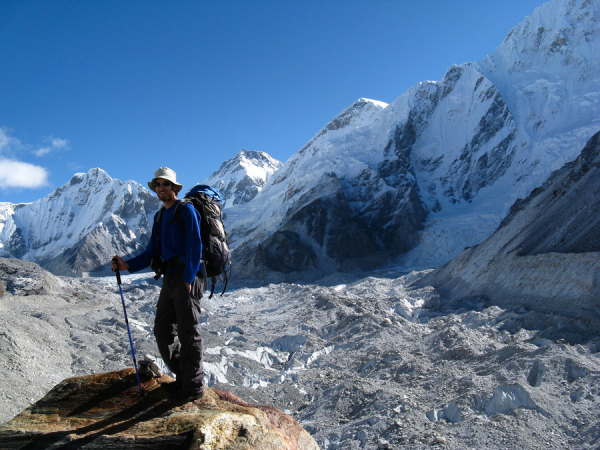
Only a few groups handle trekking (or “mountaineering”) in Nepal. The two most popular treks – Everest Base Camp and the Jomsom Trek, both in eastern Nepal, are not really mountaineering expeditions in the usual sense but more aptly described as “teahouse treks”.

On the trek from Pokhara to Jomsom, a four- to five-day trip, you “hike” (a walk in the park compared to a real trek). You don’t really exert yourself. You can rest at numerous outposts between villages, enjoy delicious home cooking and relax with other travellers and at countless guesthouses.

One couple “trekking” near Ghorapani, north of Pokhara, hired a team of guides to escort them on the same hike.

The Maoist insurgency

The Maoist insurgency actually ended in 2006. It was a decade-long tragedy in which thousands were killed, but even during that time, the direct impact on the safety and security of travellers in cities and the countryside was marginal.

If a hiker met a Maoist guerrilla during this period, it would involve not weapons or violence but a “thank-you” cash demand, usually around Bt300, for which an actual receipt would be offered. The peace deal was signed and the war ended 13 years ago.

Nepal is too risky for women

Actually, women of all ages, nationalities and ethnicities are welcomed and treated respectfully and compassionately. This equally applies to solo female travellers.

Nepalese are inherently soft-spoken, modest, gentle and very receptive to diversity in numbers, regardless of your faith or country of origin. They treat all people as equals without any prejudice or disdain.

Travellers to Nepal are welcomed as visitors – in homes, villages, mountain passes, day and night – and even around-the-clock in the larger, more densely populated urban areas.

Nepal is dirty and unhygienic  

Nepal is undeveloped as measured by GDP per capita and among the poorest countries in South Asia. However, it has taken huge and important steps in its development over the years with thousands lifted out of poverty in the process.

Clean bottled water is readily available everywhere and food storage, refrigeration and preparation standards have greatly improved.

The number and geographic spread of higher-class health facilities are improving. Perhaps the most common illness encountered by tourists is among those who aspire to climb too high, too fast.

For first-time travellers to Nepal, it’s important to know about acclimatisation, which is a process of slowly adjusting your body and reduced oxygen flows to your brain at high altitudes. Acute mountain sickness (AMS) can set in above 2,500 metres.

Your body can adapt, or acclimatise, but too often impatient travellers-trekkers just don’t get it. Remember, a gradual approach is best. AMS has nothing to with cleanliness or hygiene or land or seaborne diseases. It is sadly all about the impatience of so many travellers to achieve too much too quickly. Go slow and stay healthy if you do decide to climb above these heights.

The shopping is terrible

Nepal is not home to heavy industry or high-end luxury goods. Buyers in the market for premium cars or chic, brand-name clothing, handbags or perfumes should probably give this agrarian country a miss. The same would apply to your last-minute opportunity at airport duty-free shops, which are no match for those in developed countries around the world. People who spend US$100,000 in Nepal are probably not shopping but joining an excursion to ascend Mount Everest – yes, that is the going rate.

And yet, Nepal is a different shopper’s paradise even among those who never thought of buying a thing there in advance of the trip.

The emphasis with most purchases of choice is clearly not AI-supported machine output or 4.0 technologies and systems, but rather cottage industries that consistently showcase handmade work that is stunningly beautiful, durable and refined.

Some of the finest Pashimina shawls and scarves in Asia are made by hundreds of skilled designers in Nepal. Richly textured, rainbow-coloured paper dolls and masks, stone and bead jewellery remain immensely popular among shoppers. Locally produced coffees, teas and exotics spices are found in most restaurants and cafes and consistently rank among Nepal’s highest export earners.

So, while few travellers would say without teasing that they went to Nepal “to shop”, most would pick up some of these and many other treasures for themselves or as very well-received gifts.

“For anyone travelling in Asia, we would certainly recommend exploring the many wonders of Nepal – all so easily accessible for outdoors lovers of all ages and physical well-being,” says Tee Chayakul, Traveloka’s country manager for Thailand.

“You don’t have to take even one step to see and feel at close range the stunning immensity and splendour of the Himalayas. The unrivalled scenery, eager and welcome hosts, rich cultural heritage and passively inviting religions and cuisines all prove winners in tourist diaries. There are very few one-time-only visitors to Nepal, and with good reason.

“Nepal is an under-the-radar location for most Thais despite its close proximity – just three hours and 20 minutes – so it’s ripe for discovery. And nothing is better than going to a new destination with hardly any expectations and coming away hugely impressed. Thais will be pleased to discover the warmth and friendliness of the Nepalese people in addition to the many temples, shrines, great food and of course the stunning natural beauty.”

Check out www.traveloka.com/en-my.

Bangka Belitung eyes sports tourism to lure foreign tourists

ศาสตร์เกษตรดินปุ๋ย : ขอบคุณแหล่งข้อมูล : หนังสือพิมพ์ The Nation

https://www.nationthailand.com/travel/30373341

Bangka Belitung eyes sports tourism to lure foreign tourists

Jul 22. 2019
Picturesque Tanjung Kerasak Beach in South Bangka, Bangka Belitung Island regency (Shutterstock/Sony Herdiana)

Picturesque Tanjung Kerasak Beach in South Bangka, Bangka Belitung Island regency (Shutterstock/Sony Herdiana)
By THE JAKARTA POST
Asia News Network

160 Viewed

The annual Toboali City On Fire tourism festival in South Bangka regency, Bangka Belitung Islands, is set to return on July 25 to 28 with a variety of programs combining culture, tourism and sports.

The festival is among Bangka Belitung’s three highlighted tourism events included in this year’s 100 Calendar of Events. The other two are the Bangka Cultural Wave Festival in Sungai Liat and Tanjung Kelayang Festival in Belitung.

Among the activities planned are the Bikepacker Tour de Habang, Toboali Fashion Carnival, Toboali Photo Competition, Regional Dance Festival, painting contest, Toboali Mural Festival, Habang Band Festival, kite festival, Telok Serujo Festival, culinary festival, Buang Jung ritual, motorcycle community tour, micro, small and medium enterprises (MSME) exhibition, fishing competition, photography competition, photo exhibition, fish cooking contest and Toboali Food Street Festival.

Bangka Belitung Governor Erzaldi Rosman said sports tourism was among ways the administration would focus on to increase foreign tourist arrivals.

As quoted by tempo.co on Thursday, he added that related to the sports tourism plan, discussion was ongoing with the Tourism Ministry to make Bangka Belitung a venue for the Formula 1 Powerboat World Championship, also known as H2O Racing or F1H2O.

“While Lombok [Mandalika] hosts F1 on the land, we’ll host F1H2O on the water,” Erzaldi said. (dmy/kes)

Shanghai, in a parallel universe

ศาสตร์เกษตรดินปุ๋ย : ขอบคุณแหล่งข้อมูล : หนังสือพิมพ์ The Nation

https://www.nationthailand.com/travel/30373306

Shanghai, in a parallel universe

Jul 20. 2019
Mark Siegemund's photo: Lights On shows buildings in Lujiazui during the National Day holiday.[Photo provided to China Daily]

Mark Siegemund’s photo: Lights On shows buildings in Lujiazui during the National Day holiday.[Photo provided to China Daily]
By China Daily
Asia News Network  

264 Viewed

German architect and photographer Mark Siegemund turns his adopted city into a land of fantasy through his creative visual works that aim to stir the imagination, Alywin Chew reports.

Mark Siegemund’s photo: Anticipation, a photo taken in one of the busiest streets in Yuyuan Garden Malls at night.[Photo provided to China Daily]

In early May, Shanghai was transformed into a frozen landscape. The Huangpu River was frozen over, the buildings caked in snow and a towering wall of ice could be seen rising above the ground in the Lujiazui financial area.

A man with a long sword ambled toward the edge of a cliff located across the river in Puxi. As he surveyed the desolate landscape, three dragons emerged from behind the Shanghai Tower, their screeches reverberating through the city.

This was, of course, nothing more than a fantasy, Game of Thrones-inspired world that only existed in an image created by rising Instagram star Mark Siegemund. The 34-year-old German, who has been living and working in Shanghai since 2012, has also caught the attention of Chinese netizens in recent months. His works have been shared on Chinese social networking platforms, with many people praising his creative renditions of the city.

In his other works, Shanghai is transformed into Gotham City, the fictional place where the comic character Batman resides. Sun Wukong, also known as the Monkey King, can be found standing atop a temple.

Mark Siegemund's photo: One Thousand and One Nights, an image of the Shanghai World Financial Center seen from above the clouds at night.[Photo provided to China Daily]

Mark Siegemund’s photo: One Thousand and One Nights, an image of the Shanghai World Financial Center seen from above the clouds at night.[Photo provided to China Daily]

“My photography is not just about showing reality. It’s about art. It’s about showing a fantasy world. It’s about an escape from reality,” says Siegemund, the designing director at Ete Lee and Associated Urban Architects, in Shanghai.

“For me, a photo truly becomes a work of art when I do the editing. Everyone can take photos. Some can take good photos. But it is the editing process that helps you to stand out from others because it allows you to input your personal voice.”

Despite his talent for photography, the German insists that he is still very much an architect at heart.

Born in Leipzig, Siegemund says that he has been fascinated by architecture since he was a child. The fact that his father was an engineer who would gladly entertain his questions about how buildings worked also flamed his interest in the field. Such was his interest that Siegemund would secretly draw blueprints for planes and buildings during lessons. He also frequently followed his father to construction sites.

“I was in awe every time I entered a building. I would be examining all the details of the space. I just could not understand why others did not feel the same way,” he quips. “I knew that I wanted to study architecture when I was 16.”

Siegemund first arrived in Shanghai in 2011 when he was an architecture student at the Bauhaus University Weimar. During his time in the city, he participated in an exchange program with the China Academy of Art which also included a short stint with an architecture firm called Spark.

Mark Siegemund's photo: Center Piece, Huxinting Teahouse at Yuyuan Garden in autumn.[Photo provided to China Daily]

Mark Siegemund’s photo: Center Piece, Huxinting Teahouse at Yuyuan Garden in autumn.[Photo provided to China Daily]

He still vividly remembers how amazed he was at the city when he first laid eyes on it, saying that the reality was nothing like what he expected.

“I was surprised that the city was so modern. My impression of China before I came was that it was this ‘romanticized’ land that was filled with rickshaws and traditional Chinese things. Many people in Germany still think that China is like that today,” he laughs.

“In Germany, there’s more uniformity in the style of the buildings located along the same street,” he adds.

“Here in Shanghai, the landscape is just so dense, and the buildings differ so much from one another. Things are a little messy but it is also this mess that makes the scene so vibrant. There’s a charm to this organized chaos.”

Mark Siegemund's photo: Rising Dragon, the Yan'an Elevated Road with its famous "dragon pillar".[Photo provided to China Daily]

Mark Siegemund’s photo: Rising Dragon, the Yan’an Elevated Road with its famous “dragon pillar”.[Photo provided to China Daily]

Captivated by the vibrant nature of the city, he returned to Shanghai in 2012 after graduating, starting his career at an architecture firm that allowed him to travel around China to places like Dalian in Liaoning province, Guilin in Guangxi Zhuang autonomous region and Haikou in Hainan province. Back then, photography was just a means of helping him to document the unique architecture of Shanghai.

It wasn’t until three years ago that he started an Instagram account and took his photography to another level by adding a touch of flair through editing software. Slowly but surely, his works won him a legion of fans on Instagram-he currently has about 45,000 followers.

His photos also caught the eye of design firms that later commissioned him to do interior and architecture photography. Even major labels such as luxury fashion house Burberry have hired him to shoot a brand campaign. One of the memorable assignments he has undertaken was documenting a new car transport vessel that was berthed in Shanghai.

When asked to name one of his favorite photos of Shanghai, Siegemund singled out the image which features a section of the Yan’an Elevated Road. Shot at night, the image depicts a series of roads criss-crossing one another, with skyscrapers set against a backdrop of an illuminated sky.

The urban legend behind this section of the Yan’an Elevated Road, he explains, was what compelled him to shoot the photo.

According to the urban legend, engineers once faced a problem installing a new concrete pillar along the expressway because they could not drill to the required depth. A monk who was invited to perform religious rites at the location said that the drilling attempts were unsuccessful because the site was where the city’s guardian dragon rested. He then told the construction company that the pillar must be adorned with nine dragons before it could be installed.

The engineers were able to install the required pillars in the location after following the monk’s instructions. When the monk died a few days later, many people attributed the cause of death to him revealing the secret location of the dragon’s abode.

“I hope that my photos can stir people’s imagination. The thing about Instagram is that people view your photo for only a second before swiping to the next one on their feed. I want my photos to be those where people can stop and wonder. I think my best pictures have this quality,” he says, referring to the image.

While dramatic night shots like this particular image of the highway account for a considerable portion of his works, Siegemund says that night shoots take place out of necessity.

“If you look at the trend of shooting night urban images, it’s really because most of the photographers have day jobs. They can only shoot at night after work,” he says.

“Photography is still more like a hobby to me. I like being behind a desk doing architecture work. I like being able to choose what photography projects I want to embark on.”

Siegemund adds that he expects himself to be working in the architecture field for the foreseeable future. Shanghai, too, will also remain his home for the coming decade.

“I can imagine staying here for another eight to 10 years. The problem with Europe is that people deliberate too much. Things move so slowly. To decide on something takes such a long time that so many things already pass,” he explains.

Mark Siegemund's photo: Anticipation, a photo taken in one of the busiest streets in Yuyuan Garden Malls at night.[Photo provided to China Daily]

Mark Siegemund’s photo: Anticipation, a photo taken in one of the busiest streets in Yuyuan Garden Malls at night.[Photo provided to China Daily]

“Here in Shanghai, something new is always happening. Things are always changing. I also like how the Chinese learn by mistakes. They dare to try and fail. This kind of attitude is good and will help the country forge a better future. You can build your dreams here.”

Palaces, fortress and historic sites at night

ศาสตร์เกษตรดินปุ๋ย : ขอบคุณแหล่งข้อมูล : หนังสือพิมพ์ The Nation

https://www.nationthailand.com/travel/30373301

Palaces, fortress and historic sites at night

Jul 20. 2019
Gyeongbokgung’s magnificent main hall, Geunjeongjeon, is lit up to welcome nighttime visitors to the palace. (Cultural Heritage Administration) 

Gyeongbokgung’s magnificent main hall, Geunjeongjeon, is lit up to welcome nighttime visitors to the palace. (Cultural Heritage Administration)
By The Korea Herald
Asia News Network

258 Viewed

Seoul’s royal palaces are beautiful by day but they are even more stunning by night.

On top of the beauty of centuries-old architecture majestically illuminated in darkness, the serene atmosphere in contrast to the modern skyscrapers beyond the palace walls offers a surreal experience.

Nighttime visits are only allowed on selected dates and for a limited number of people at some of Seoul’s five palaces from the Joseon era (1392-1910).

Gyeongbokgung, the most popular of the five, will remain open until 10 p.m. for two weeks starting Monday. A total of 4,500 visitors are allowed per day, with tickets at 3,000 won each.

Admission is free for people dressed in hanbok — Korean traditional costume — but under new rules, they must reserve free passes online and meet guidelines on their attire. Five hundred tickets are reserved onsite for foreign visitors. For more information, visit http://www.royalpalace.go.kr/.

The most popular nighttime program, Changdeokgung’s Moonlight Tour, will resume Aug. 22 and continue through October. Tickets go on sale Aug. 7 and are likely to sell out fast, as previous editions sold out in minutes. Only 100 visitors are allowed for each guided two-hour tour.

For those who do not want the hassle of booking in advance, Deoksugung and Changgyeonggung light up their paths till 9 p.m. every day, except Mondays. Admission is 1,000 won, and no reservations are needed.

On July 31, there will be a free, one-hour classical music concert at Deoksugung’s Western-style building Seokjojeon. Reservations are recommended.

The first 100 visitors at Changgyeonggung during the extended hours are provided with traditional handheld lanterns that have to be returned at the end of the stroll.

Meanwhile, BaekInje’s House in Seoul’s picturesque Bukchon area remains open until 9 p.m. on Wednesdays and Saturdays — extended opening hours for summer. A well-preserved example of modern hanok built during the Japanese colonial era (1910-1945), the house, now a museum, has been featured in a number of Korean historic films. Call 02) 724-0200 for more information.

Outside Seoul, Suwon, a city in Gyeonggi Province, will hold a three-day festival from Aug. 9-11 around Suwon Hwaseong Fortress, designated as a UNESCO World Heritage site.

Built in the late 18th century, the stonewall fortress and the king’s temporary palace will be illuminated, with the facade adorned with media art. They will remain open until 11 p.m. during the festival.

A variety of events are also planned for the surrounding area, including a helium balloon ride over the fortress and cultural performances. Nighttime viewing of the fortress and palace and a docent tour are free of charge, but require booking.

The “Flying Suwon” balloon ride costs 18,000 won for adults and 12,000 won for children. For more information on the Suwon festival, visit http://www.swcf.or.kr/english/?p=66.

Tokyo DisneySea unveils new attraction

ศาสตร์เกษตรดินปุ๋ย : ขอบคุณแหล่งข้อมูล : หนังสือพิมพ์ The Nation

https://www.nationthailand.com/travel/30373297

Tokyo DisneySea unveils new attraction

Jul 19. 2019
Tokyo DisneySea is a 176-acre (71.22 ha) theme park at the Tokyo Disney Resort located in Urayasu, Chiba, Japan, just outside Tokyo (Shutterstock/Andreas H)

Tokyo DisneySea is a 176-acre (71.22 ha) theme park at the Tokyo Disney Resort located in Urayasu, Chiba, Japan, just outside Tokyo (Shutterstock/Andreas H)
By THE JAPAN NEWS
ASIA NEWS NETWORK

222 Viewed

The Tokyo DisneySea theme park will open on Tuesday its new motion-simulator attraction “Soaring: Fantastic Flight,” in which guests feel as if they are traveling in the air.

It unveiled the attraction to the press on Wednesday.

The ride lasts about five minutes. Guests can see images of the pyramids in Egypt, the Great Wall of China and the savannah in Kenya on a large hemispherical screen. Winds blow and smells change along with the scenery. Guests feel as if they are actually flying through the sky through the images and movements of the ride.

Oriental Land Co., which operates Tokyo DisneySea, invested about ¥18 billion in the new attraction. “We want everyone from children to adults to enjoy it,” a company official said.

Guests must be at least 1.02 meters or taller to experience “Soaring.”

Indonesia, Australia to open registration for working holiday visas

ศาสตร์เกษตรดินปุ๋ย : ขอบคุณแหล่งข้อมูล : หนังสือพิมพ์ The Nation

https://www.nationthailand.com/travel/30373059

Indonesia, Australia to open registration for working holiday visas

Jul 16. 2019
Indonesians who are interested in applying must first obtain an Issuance of Indonesian Government Recommendation Letters (SRPI), a document issued by the Immigration Directorate General.  (Shutterstock/Dolores Giraldez Alonso)

Indonesians who are interested in applying must first obtain an Issuance of Indonesian Government Recommendation Letters (SRPI), a document issued by the Immigration Directorate General. (Shutterstock/Dolores Giraldez Alonso)
By The Jakarta Post
Asia News Network

358 Viewed

The government will be continuing its bilateral partnership on immigration with Australia by issuing working holiday visas (WHV).

The Immigration Directorate General revealed on its official Instagram account @ditjen_imigrasi on Monday that both governments were preparing to open registration for the program, which was first commenced in 2009, this year.

To be eligible for the WHV, applicants must be Australian and Indonesian citizens aged between 18 and 30 years old. The visa would allow them to stay in the other country for up to 12 months for various purposes, such as education and part-time employment.

Indonesians who are interested in applying must first obtain an Issuance of Indonesian Government Recommendation Letters (SRPI), a document issued by the Immigration Directorate General.

The office has yet to announce the dates of the registration.

The government has established a quota of 1,000 applicants who will be selected through both online and face-to-face administrative processes, a spike from the previous 100 applicant quota regulated during its early commencement.

There are also terms and conditions for getting the visa that are in accordance with agreements made between the two countries.

The visas are being promoted as part of an effort to encourage and boost cultural exchanges as well as to maintain relations, especially among the youths of the two countries. (ars/kes)

Immersed in Catalan modernism

ศาสตร์เกษตรดินปุ๋ย : ขอบคุณแหล่งข้อมูล : หนังสือพิมพ์ The Nation

https://www.nationthailand.com/travel/30373046

Immersed in Catalan modernism

Jul 16. 2019
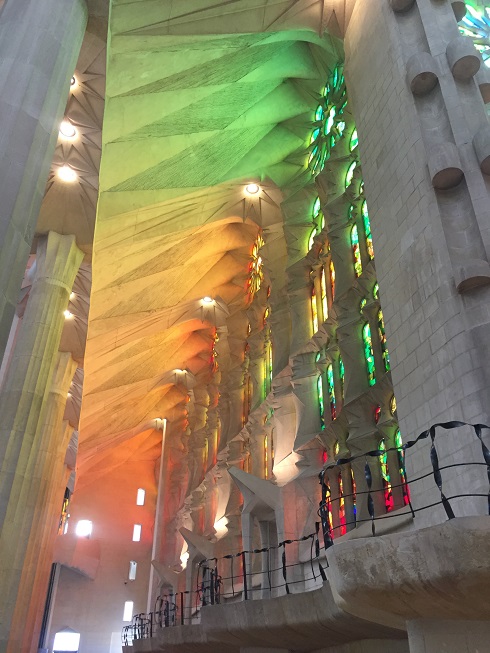
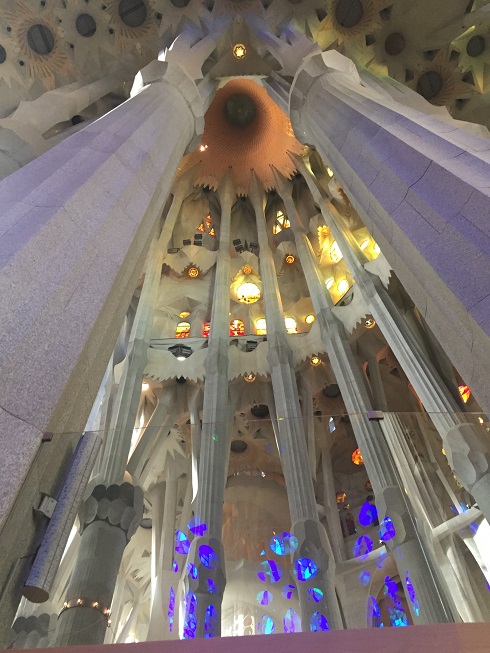
Nature light through colored mirrors

Nature light through colored mirrors
By Somluck Srimalee
The Nation
Barcelona, Spain

414 Viewed

In “Origins”, the latest novel by popular American novelist Dan Brown featuring Robert Langdon, a professor of religious symbology, two main questions are posed: “Where did we come from?” and “Where are we going?” They, as well as the setting, have inspired thousands of readers, myself included, to visit Spain, and more specifically Barcelona, home to many of the architectural works of Antoni Gaudi, among them his most famous, the church of the Sagrada Família.

My first visit after checking into my hotel is Casa Mila in Passeig de Gracia. Built between 1906 and 1912 as a residence for a very wealthy family, Casa Mila is a testament to Gaudi’s modernist architecture and was recognised by Unesco as a World Heritage in 1984.

Referred to as “La Pedrera”, which translates as the stone quarry, it stands out amongst other buildings in the area for its façade of undulating stone that, along with its forged iron balconies, explores the irregularities of the natural world.

La Pedrera

La Pedrera

From the outside it looks a little like a mountain. Enter the doors and you could easily be in a cave or forest. And while the entire building is worthy of admiration, one of its most iconic spaces is its spectacular roof terrace.

The next day, I head to Parc Guell in Carretera del Carmel, about 90 minutes from downtown Barcelona and a pleasant ride by both car and bus. Another Unesco World Heritage site and located on Carmel Hill, it is designed as a garden complex and houses a series of dynamically designed buildings including Gaudi’s own home. It was built between 1900 and 1914 for one of Gaudi’s biggest clients, Eusebi Guell I Bacigalupi, the count of Guell.

Spread over 42 acres, Gaudi’s landscape was greatly inspired by organic shapes. Most buildings boast “trencadis” (surfaces covered with irregular ceramic pieces) that are characteristic of Gaudí and Art Nouveau.

Shaped like a dragon, the long terrace is the best vantage point over Barcelona and covered in colorful mosaics. The museum, Casa del Guarda or the Caretaker’s House, hosts a permanent exhibition on Gaudí and Barcelona.

But the highlight of my trip was my visit to La Sagrada Familia on Carrer Mallorca. This is the most famous of Gaudí’s works – his masterpiece. Most tourists and residents refer to La Sagrada Familia as the ‘under construction’ church – and indeed Gaudi commenced construction of it back in 1892. It’s not expected to be finished until 2026 — to commemorate the centenary of Gaudí’s death.


The church was in fact started by architect Francisco de Paula del Villar in 1882. He resigned in 1883 giving Gaudí the opportunity to take over as chief architect. He immediately transformed the project from a typical cathedral to the masterpiece the world knows today, combining Gothic principles with curvilinear Art Nouveau forms and his own geometric style.

Designed with nature in mind, coloured mirrors around the church represent earth, sky, ocean, and forest.


The church’s pillars are inspired by trees and the overall effect is one of being in a forest. Experts describe it as an excellent depiction of the relationship between man, nature, and religion and it’s easy to see why. It’s also imposingly tall, measuring 170 metres, just one metre less than the peak of the city’s Montjuic hill.

Gaudí devoted the remainder of his life to the project. At the time of his death, less than a quarter of the project was complete. Gaudí died at age 73 in 1926 after being run down by a tram. He is buried in Sagrada Familia’s crypt.

After Gaudí’s death, construction progressed slowly and was halted several times by events like the Spanish Civil War and revolutionaries partially destroying Gaudí’s original plans, among others.

While construction is now going at a faster pace, 10 more spires are still to be completed, each symbolizing an important Biblical figure in the New Testament.

Gaudí believed that his creation should not surpass God’s creation.

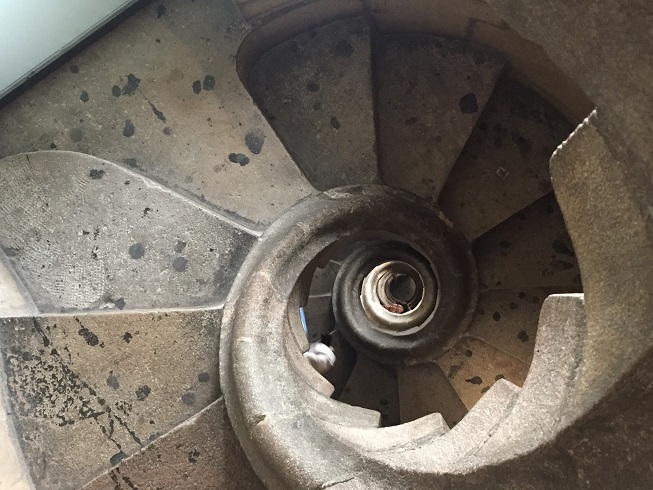
Sagrada Familia is the venue for one of the most important scenes in “Origin” – the staircase scuffle, which sees Landon fighting one of people who wants to kill him.

As yet, there are no indications that “Origin” will be turned into a movie and even it if were, it’s doubtful that the staircase shuffle could be filmed inside the cathedral.


For that reason, I would advise anyone, whether or not they love the book, to take time out and spend time getting up close and cosy with Gaudi’s architecture and the hospitable city of Barcelona.

BOX

IF YOU GO

Several airlines offer flights from Bangkok to Barcelona. Journey time is about 11 hours.

To visit Parc Güell, either take a tour (most hotels will arrange these) or board a city bus. Numbers 24, 31, 32, H6 92 run from Placa Catalunya to Parc Guell. It takes 90 minutes to two hours.

An online solution to easy management

ศาสตร์เกษตรดินปุ๋ย : ขอบคุณแหล่งข้อมูล : หนังสือพิมพ์ The Nation

https://www.nationthailand.com/travel/30373044

An online solution to easy management

Jul 16. 2019
A small hostel Pick Baan in Lamphun where visitors from all around the world can revel in the ambience of a local home.

A small hostel Pick Baan in Lamphun where visitors from all around the world can revel in the ambience of a local home.
By Parinyaporn Pajee
The Nation

118 Viewed

Leading accommodation site Booking.com offers more 98,000 listings of alternative accommodation such as homes, apartments and unique places to stay across Thailand, among them Pickbaan, a small hostel in Lamphun where visitors from all around the world can revel in the ambience of a local home.

 Offering 2 dormtype rooms with bunk beds and one private room with twin beds, Pickbaan is the perfect place to enjoy a delicious taste of local life.

Lamphun is the smallest province in Thailand’s north and because it’s located just 20 km from Chiang Mai, is often overlooked by tourists. Nowadays, thanks to the secondary destinations campaign being promoted by the Tourism Authority of Thailand, new guesthouses and cafes are opening across the town and more tourists are stopping off for a night and sometimes or longer.

Situated in the heart of the city not far from the City Hall, Pick Baan is a Thai style wooden house – raised on stilts and with an open space underneath.

Pickbaan owner Uraiwan Chaipipat spotted the classic house not long after she and her family moved from Bangkok to Lamphun. Having closed the family restaurant and trying unsuccessfully her hand at vegetable farming, she was looking for a new project to occupy her time.

“Running the food shop was our family business and everyone helped with the cooking, waitressing and cleaning. But my parents were old and finding it difficult to cope. When I saw the house, I thought it would be perfect for a hostel even though Lamphun had few tourists at the time,” says the former event organiser who decided to start a new life in order to have more time to take care of her parents.

Uraiwan’s first step was to inform the provincial authority about her plans. That done and approval granted, she set about to run her own business in a way that wouldn’t stretch her capabilities while also not costing her too much money. That, philosophy, she says, is very much in line with the selfsufficiency economy, which she learned from taking part in the “Phor Laew Deethe Creator” project that selects young entrepreneurs to find the true definition of sufficiency (phor phiang) through their own endeavours.

Uraiwan runs the hostel very much in her own way. She doesn’t have time to stick around at the front desk nor does she want to hire staff. “I don’t live there either, so I needed to find a solution to handling reservations and Booking.com was the answer,” she says.

“I am not a tech geek. I’m online via my phone and I don’t have a computerBooking.com has an application that helps me to run the reservation system as well as respond to customers,” she says.


Pickbaan has partnered with Booking.com since the end of 2015 and bookings started coming in not long after the agreement was signed. At that time, Pickbaan had just 3 beds but more have been gradually added. And while Pickbaan worked with a few platforms early in its life, the others have all been dropped in favour of Booking.com which, Uraiwan says, is the best fit for her lifestyle.

“Booking.com has a great mobile application that makes my life easier. It’s easy to use and I can check it anytime, anywhere. Other applications tend to be more complicated,” she adds.

Each room in the Pickbaan’s wooden house has a shared bathroom and toilet. The common area is equipped with a microwave, a toaster oven and a

refrigeratorGuests are asked to keep the place clean and quiet. Alcohol and cigarettes are not allowed on the premises and guests are requested to turn off lights to save energy. Breakfast is prepared by her family and features simple dishes like congee with minced pork prepared to traditional recipes for a true homely feel.

“We take care of our guests the way we like to be treated and in our own style,” she says.

She contacts her clients through the app and adds her guests to the hostel’s Line group once when they check in. Guests will experience the traditional way of living as part of the local community, chatting with neighbors and wandering around town and Uraiwan can come to their help through Line if they happen to get lost. Travelers can also ride a bicycle around town and book trips to Li, Mae Tha, and Pa Sang districts.

And, best of all, Uraiwan has plenty of time to look after her other guesthouse Baan Kai Muan, which is also on Booking.com, and her recently opened coffee shop in front of Pickbaan.

“She is able to make the most of the benefits offered by Booking.com, and particularly the Booking assistant, which helps to deal with customers. We provide the guest’s contact information to the owner and we also help to deal with requests from customers because Booking.com is available in 43 languages,” says Parichat Haehne, regional manager for Thailand and Indochina at Booking.com.

The room rate is cheap at only Bt750 for the private twin bedroom and Bt500 for a bunk bed including breakfast cooked and free wifi. The shared toilet is in the house itself while the bathroom is downstairs like in old style Thai housesGuests get a towel, a pha khao ma for man and pha thung (Thai style sarong) for woman.  

Since using Booking.com, Pickbaaan has been attracting more visitors from overseas with occupancy now roughly equally divided between Thais and foreigners though the latter tend to dominate during the low season (May to September).


Most of the guests stay one night before moving to the next destination, usually Lampang.  There’s a bus stop in front of the guest house where visitors can board a bus to Chiang Mai, a mere 40-minute ride on the old road which goes through beautiful scenery on what is called the Rubber Tree Road for its hundreds of rubber trees on the sides.

With Lamphun one of the 55 provinces being promoted as the secondary destination by TAT, competition has become higher. A new guesthouse nearby with more rooms and modern facilities has opened but Uraiwan works closely with the owners, with referrals between the two now common.

“We talked and decided we are not rivals, but neighbours. I’ll send guests to them when they might not feel comfortable at Pickbaan guesthouse or when it’s fullThey do the same,” she explains.

Even though Pickbaan is now recognised among travelers, Uraiwan says that she doesn’t have a plan to expand her business although she is planning renovations based on comments from the guests on Booking.com.  And even when travellers try to book direct, she refers them to Booking.com

“Even though I have to pay commission for Booking. Com, I think it’s worth it. Being in Booking.com helps to promote Pickbaan to a wider group of tourists in the meantime, their system helps me a lot in running the business.  They even notify me when I should run promotions. For example, during Golden Week in Japan, they suggested I offer a campaign for Japanese tourists.”

Reservations can be made at www.booking.com/hotel/th/pickbaanpikbaan.th.html.

Uraiwan Chaipipat, right, and Parichat Haehne, left, regional manager for Thailand and Indochina at Booking.com.

Uraiwan Chaipipat, right, and Parichat Haehne, left, regional manager for Thailand and Indochina at Booking.com.

Welcoming Vassa

ศาสตร์เกษตรดินปุ๋ย : ขอบคุณแหล่งข้อมูล : หนังสือพิมพ์ The Nation

https://www.nationthailand.com/travel/30373041

Welcoming Vassa

Jul 16. 2019
Ubon Ratchathani province is famous for its extravagant candle processions.

Ubon Ratchathani province is famous for its extravagant candle processions.
By The Nation

154 Viewed

Today is the start of Buddhist Lent or Vassa and Thais around the country are taking part in rituals and cultural activities to mark as this annual retreat. We take a look at the major events.

Bangkok

Buddhists are invited to take part in candlelit processions around the ubosot of Wat Ratchabophit Sathit Maha Simaram Ratcha Wora Maha Wihan today, Asarnha Bucha Day, from 9am to 8pm while tomorrow they can join an alms-giving from 4 to 6.30pm during which colourful flowers rather than rice are offered to the monks.

The temple is also holding an exhibition of religious icons and a showcase of flowers and unique wicker works crafted by local artisans.

Families can enjoy a puppet show, Thai musical performances, workshops on traditional fragrant lotions and perfumes from several kinds of Thai flowers, and also learn how to create paper and fresh flower garlands as well as floral jellies.

Boats parade along a canal in Ayutthaya carrying Lenten candles to Lat Chado Temple.


Ayutthaya

Today, the Ayutthaya Aquatic Phansa Festival returns to Phak Hai district of the old capital and visitors can dress in traditional costumes to celebrate Buddhist Lent Day just like their ancestors did.

Like every year, the residents carry the wax candles by boat along Lat Chao canal to the temple. During the day, visitors can enjoy a variety of local delicacies and sweets as well as fun folk games at the Lat Chado Market.


Saraburi

Wat Phra Phutthabat Ratchaworamahawihan in Saraburi maintains its traditional alms-giving ritual with pilgrims invited to offer flowers to the monks today and tomorrow.

This year, the much-loved event travels back to the past by reenacting the royal processions of the Ayutthaya period, when the kings were carried on a palanquin to the temple to pay their respect to the footprint of Lord Buddha. Also on view is an exhibition of Dok Khoa Phansa flowers, handcrafted products, the Royal Candle procession and various cultural performances.

Royal processions from the Ayutthaya period will be reenacted at Wat Phra Phutthabat Ratchaworamahawihan in Saraburi.

Ubon Ratchathani

In the northeastern province of Ubon Ratchathani, craftsmen young and old show off their creativity in the annual candle festival that wraps tomorrow.

Twenty-metre-high carved candles and wax creations relating scenes from Buddhist mythology and folklore will be paraded around the city pillar shrine and this year visitors can also enjoy a light and sound show, a night candle procession, folk dancing and a food and craft fair.


Nong Khai

Sitting on the banks of the Mekong River, the town of Nong Khai welcomes Buddhists from both Thailand and Laos with processions of colourful wax creations tomorrow night.

Running from 6pm to 10pm, Prajak Road will be turned into an entertainment venue with many cultural performances and folk dances, the processions themselves and an extravagant light and sound show.


Roi Et

Today, students and local residents join candle processions from 14 temples to celebrate Buddhist Lent Day.

The festival starts with the daily ritual of alms-giving to the monks and a showcase of beautifully carved candles in different sizes and designs.

The only way to travel

ศาสตร์เกษตรดินปุ๋ย : ขอบคุณแหล่งข้อมูล : หนังสือพิมพ์ The Nation

https://www.nationthailand.com/travel/30372783

The only way to travel

Jul 11. 2019
The Shwedagon Pagoda is a must-see for every visitor to Yangon.

The Shwedagon Pagoda is a must-see for every visitor to Yangon.
By Kitchana Lersakvanitchakul
THE NATION
Yangon, Myanmar

522 Viewed

I wasn’t quite sure what to expect on my first trip to Yangon in Myanmar but I certainly didn’t anticipate feeling special and unique throughout the trip. That feeling started from the moment I walked out of my front door to a limousine that would take me from my home not far from Don Mueang International Airport to Suvarnabhumi Airport. The driver was impeccably dressed even though the sun had yet to rise and apart from a few polite words, left me alone to ponder my upcoming journey.

The Shwedagon Pagoda is a must-see for every visitor to Yangon.

A smooth one-hour flight later, my fellow travellers and I arrived later that morning in Yangon where we were welcomed by a female official from World Rewards Solutions from Thailand, our hosts from this trip, who introduces herself as our butler.

The Shwedagon Pagoda is a must-see for every visitor to Yangon.

Our first stop was Le Planteur, a high-end traditional French restaurant and one of the most luxurious places to dine on European cuisine in Yangon. Set in a heritage house built in 1902, it overlooks a beautiful garden on the banks of Inya Lake. Lunch over, we were taken to stretch our legs with a trip to view Yangon’s stunning heritage buildings with their colonial architecture and observe life around the city.

Pigeons hover around the telephone wires in front of a pink colonial building in downtown Yangon.

Our walking tour started on Strand Road then turned right at the Myanmar Port Authority where we came face to face with the three octagonal towers that make up the Accountant General Building, one of the city’s most photographed heritage edifices, which is partially occupied by Yangon Divisional Court and Department of Pensions. We continued along the road to the Yangon Heritage Trust, which is used to promote and protect Yangon’s past and also to create a plan for Yangon to be one of the most livable cities in Southeast Asia.

The Accountant General Building with its three octagonal towers and the Myanmar Port Authority make for a good photo.

At the intersection of Mahabandoola and Pansodan roads, we stopped to photograph a large flock of pigeons sitting on and flying around the telephone wires in front of a colonial building painted a pretty pale pink. Further along the street, local residents are having a late lunch at the several food stalls but still full from lunch, we continued along the road to admire Immanuel Baptist Church built in 1885, Yangon City Hall built in 1927 and a fine example of Burmese colonial architecture, and the Ayeyarwady Bank, which formerly served as the Rowe & Co Department Store. Here too is the Sule Pagoda, a Burmese stupa right at the heart of downtown Yangon.

The Burmese-style Sule Pagoda in the heart of downtown Yangon

Across the street from the City Hall is Mahabandula Park, home to the Independent Monument and also dozens of food stalls alone the fence. On the east side of the park is the former High Court, one of the most iconic buildings in Yangon. Dressed in jeans, I felt decidedly out of place alongside the local men who were all wearing the traditional longyi.

Myanmar people tuck into street food.

Our tour into the history of Yangon ended, we moved to The Strand, one of the most iconic 5-star hotels in Asia and our home for the night. It is here that World Reward Solutions chose to celebrate its first anniversary with a sit-down dinner and launch its new service Silver Voyage.

The Yangon Heritage Trust is now used to promote and protect Yangon’s past and also to create a plan for Yangon to be one of the most livable cities in Southeast Asia.

World Reward Solutions is an innovative solutions platform that promises corporate organisations personalised rewards and loyalty programmes. It offers three signature services, all of them so prestigious that the firm is already recognised as one of the best loyalty programme providers in Thailand. The first signature service is “Infinity Rewards” offering digital redemption, privilege concierge, gift vouchers and SMS verification for each rewards programme to be tailored and customized.

The Ayeyarwady Bank was the former Rowe & Co Department Store building.

The second service is the new “Silver Voyage” offering point-to-point VIP transfers in Thailand, Singapore, Hong Kong as well as its alliance network in other major cities in the world, and a personalised butler service, where customers are assisted seamlessly from the time they step out from their door to the airport check-in counter. The last signature service is “Airport Assist” and, with today’s crowded airports and long queues, turns a test of endurance into a seamless VIP indulgence.

Built in 1927, Yangon City Hall is a fine example of Burmese colonial architecture.

“World Reward Solutions consists of two brands: World Reward, which is a digital platform we use to create reward programmes for our corporate customers and Silver Voyage, which allows our customers to experience seamless travel with a butler and limousine,” says Jakkapan “Keng” Rattanapet, managing director of World Reward Solutions, who has more than 15 years of experience working with top concierge companies in Thailand, Singapore and the UK.

Le Planteur offers a breathtaking view of a beautiful garden by Inya Lake.

“Our customers are mainly involved in private banking, insurance, luxury cars, and real estate, and of course all have the money for our CRM or customer relation management programme. Our challenge is to come up with innovative rewards to engage them.”

Immanuel Baptist Church was built in 1885.

Jakkapan describes the trips created by World Reward Solutions as a “money can’t buy” experience and notes that he has arranged a private dinner for 50 customers with a menu designed by a Michelin chef at a part of trip to Angkor Wat as well as afternoon tea with a member of Bhutan’s royal family member.

The Police Commissioner’s Building is one of the most imposing structures in Yangon.

Our second day is Yangon is highlighted by a visit to the stunningly beautiful Shwedagon Pagoda and a tour of Bogyoke Aung San Market, which was formerly known as Scott’s Market, where we stock up on thanaka, the powder derived from the wood, bark and roots of the Limonia acidissima tree, which is used all over Myanmar.

World Reward Solutions’ Jakkapan Rattanapet caters to the well-helled with a lifestyle management experience called “money can’t buy”.

GO ON, SPOIL YOURSELVES

A limousine pick to/from the airport is a part of the Silver Voyage programme.

Find out about the “money can’t buy” experience at World Reward Solutions (02) 016 9998, (097) 235 2895, or visit http://www.worldrewardsolutions.com and https://www.facebook.com/worldrewardsolutions/