‘Glamping’ in the desert

ศาสตร์เกษตรดินปุ๋ย : ขอบคุณแหล่งข้อมูล : หนังสือพิมพ์ The Nation

http://www.nationmultimedia.com/detail/world/30365895

‘Glamping’ in the desert

World March 16, 2019 01:00

By Agence France-Presse

2,504 Viewed

Dubai offers all the comforts of home at luxury campsite in Hatta

JUST OVER 100 kilometres from Dubai’s skyscrapers, Mohammed al-Kaabi strolls through the tranquil desert with his friends as the sun sets.

Kaabi, 27, hails from a long line of Emiratis, a people with a centuries-old bedouin history tied inextricably to the local desert.

Today, he is among a fast-growing group drawn to a new wave of a tradition of desert camping but with all the trappings of comfort, style and modernity.

With “glamping”, short for “glamorous camping”, Dubai aims to expand on its renown for luxurious city living and its tradition of camping.

Some 100 kilometres from Dubai’s skyscrapers, “glamping” in luxurious trailerstyle setups and mountainside lodgings is the next big thing in the desert country. 

Betting on tourism at a time of low oil prices, Dubai is now offering stays in chic desert trailers, in plush mountainside lodgings and beach camps, as it seeks to put its own mark on the glamping trend that has swept world tourism destinations.

“This place is far from the cities and the high-rises,” says Kaabi, sporting the traditional full-length white Emirati robe worn by men.

“Camping is very popular in the UAE, but when you want to bring the family it becomes more complicated,” he added, at a campsite in Hatta, near the Omani border.

“But here, safety and comfort are provided for.”

Camping is still a beloved way of life for many Emiratis, who take their equipment and head for the desert from the fall months onwards, when the scorching summer heat has faded.

Tourists and expat residents also increasingly opt to escape the hustle and bustle of the city.

Dubai welcomed a record 15.9 million visitors in 2018, many of whom were drawn to its mega malls, luxurious hotels and pristine beaches.

It hopes to push the figure up to 20 million visitors annually by next year, when it hosts the six-month global trade fair, Expo 2020.

The mountainous eastern Hatta desert has lots to offer “glampers” with a taste for adventure but also for their home comforts.

Near the Hatta dam, campers have a choice between a trailer, caravan or five-star lodge fully equipped with TVs and power points for charging a smartphone.

Seated outside a trailer, Jamil Fahmy, a Dubai resident from Saudi Arabia, says glamping is the perfect way to escape the city without compromising on hygiene.

“It’s fun, with the fire and hanging with friends and all that, but I personally prefer to sleep in a room with a bed and a private bathroom, and that’s what we get here,” he says.

“It’s great to be an adventurer and explore and cook fireside, and that’s what we do.

“But when the time comes, we retreated into the beautiful room and slept on a bed.”

Rooms with modern amenities, including bathrooms and beds, start from 400 dirhams (Bt3,450) per night at the Hatta site, which opened in October.

Boats and kayaks cruises in the reservoir at the Hatta Dam, in the Dubai emirate’s exclave of Hatta, near the Omani border. 

The Hatta camping project, part of Dubai’s plan to use tourism to diversify revenues, is also home to a 350-metre zip wire.

Last year, Dubai faced a downturn in the real-estate market due to a supply glut, while oil prices also dropped, affecting the UAE as a whole.

Several glamping sites, some on the beach, have popped up across the UAE in recent years, with options to participate in yoga classes, star gazing or kayaking.

For Jay, a 37-year-old Briton, glamping offers a new experience after a decade in the UAE.

“We’re fairly outdoorsy, we came here kayaking before, we did the big zip line,” he says referring to the Hatta zip wire.

But, he adds with a laugh that with the usual no-frills style of camping “you haven’t got a shower or all the facilities” so glamping is a welcome step-up.

“You get the outdoors and all of that, and nature, and you can barbecue – but you can also have a shower and get clean!

“It’s not five-star hoteling, but five-star camping.”

THAI Smile kicks off new route, flying directly from Bangkok to Kolkata

ศาสตร์เกษตรดินปุ๋ย : ขอบคุณแหล่งข้อมูล : หนังสือพิมพ์ The Nation

http://www.nationmultimedia.com/detail/Tourism/30365750

THAI Smile kicks off new route, flying directly from Bangkok to Kolkata

Tourism March 13, 2019 17:44

By The Nation

7,799 Viewed

THAI Smile Airways has launched the latest route from Bangkok to Kolkata (BKK-CCU), the gateway to East India from the Suvarnabhumi Airport to Netaji Subhash Chandra Bose International Airport, Kolkata, India.

The service operates five flights per week (Tuesday, Thursday, Friday, Saturday and Sunday) which is in line with the business plan to expand more destinations as to facilitate travelers continuously, according to its press release.

Bangkok-Kolkata route is operated both Smile Plus (Premium Economy) and Smile Class (Economy

class). Passengers will get in-flight meal and beverage service, seat selection, free baggage allowance


up to 40 kg.

THAI Smile offers special discount for tickets on the inauguration of the new route, Bangkok- Kolkata (BKK-CCU) with a starting price of Bt3,740/ person/one way (all inclusive) for travelling from March 31

onwards.

In addition, for TPI Summer (schedule starts on 31 March), THAI Smile has updated the flights in India with three routes: Lucknow (LKO), 3 flights/ week, Mumbai (BOM), 7 flights / week and Kolkata (CCU) 5 flights / week.

Tickets are available at http://www.thaismileair.com, Call Center 1181 or 02-118-8888, Smile Service Center and THAI Smile Agents nationwide

Fairytales in the hills

ศาสตร์เกษตรดินปุ๋ย : ขอบคุณแหล่งข้อมูล : หนังสือพิมพ์ The Nation

http://www.nationmultimedia.com/detail/sleep/30365636

Fairytales in the hills

sleep March 13, 2019 01:00

By THE NATION

Taking its name from the word labyrinth, Hotel Labaris Khao Yai is a new themed hotel with castle-like architecture in the Khao Yai hills.

The marble buildings with spires hide within the meadow. The play of space and terrain creates a strange view as if the hill is set inside a land of imagination. Labaris is divided into five chapters, as if one is flipping through a fairytale book. Each chapter comes with its own concept that is reflected in its building and garden. The architecture and landscape mix elements of Western and local descent that contradict yet fit together perfectly.

Set amidst beautiful garden and flowerbeds is Chapter 1, home to the Rabbit Cafe, a cute coffee shop. Warmth seeps in through natural light from big windows that go together with white interior and simple furniture made out of wood. A cup of special coffee with Thai coffee beans makes up the musttry House Blend Coffee that goes perfectly well with fresh bakery items.


Chapter 2 sits on the large lawn and serves as the lobby. A guide will lead guests through a maze to their rooms within two castles; Starry Castle and Midnight Castle. There are 60 rooms in total, divided into three types including Duplex, Grand Deluxe, and Deluxe. Each room is equipped with unlimited free wifi, free mini bar, a refrigerator, a large smart TV with cable channels. Guests can have a drink and enjoy the scenery at Roof Top Bar or Diren’s Deck, both of which are scheduled to open in October.

Chapter 3 is a mysterious place that houses the Laughing Stone Garden. It leads to the infinite Forest Mirror garden that will take guests to 10 Pool Villas. Each villa comes with a private pool and big living room, making it a perfect fit for couples and families.

Labaris Restaurant is in Chapter 4 and serves Thai, Western and fusion foods with high-quality ingredients sourced from all over the world. The special Western menus include Grilled Lamb Rack and Grilled Australian Angus Rib Eye while Thai traditional dishes such as ranjuan curry and mussaman lamb curry are also presented. Its bar also offers wines from around the world and signature cocktails. Nearby, there is a space for conference and event at Labaris Town Hall, a large ballroom that fits 120 guests. The room comes equipped and can be adjusted to suit different purposes. An outdoor area surrounded by lawn is also another venue that can house an intimate concert and romantic wedding in the garden.


Chapter 5 is the Meander Wanderer, a garden space with a pool called the Creek designed in the style of Loop Pool. There are both pool for adults (Nomadic Creek) and kids (Cub’s Creek) filled with fun rides. It’s a space for fun and learning for young explorers. The playground is made from special material that minimises injury from falling and slipping.

The hotel is on Thanarat Road, at KM 16 in Khao Yai, Nakhon Ratchasima.

Call (063) 1900 1900 or visit http://www.HotelLabaris.com.

An event not to be missed for boxing aficionados

ศาสตร์เกษตรดินปุ๋ย : ขอบคุณแหล่งข้อมูล : หนังสือพิมพ์ The Nation

http://www.nationmultimedia.com/detail/Travel_log/30365150

Photo: Tourism Authority of Thailand

An event not to be missed for boxing aficionados

Travel log March 12, 2019 01:00

2,910 Viewed

The World Wai Kru Muay Thai Ceremony, held annually at the Ayutthaya Historical Park, allows the opportunity for hundreds of Muay Thai practitioners from around the world to express their gratitude to their masters in the time-honoured tradition known as the Wai Kru ceremony, as well as to celebrate the aged-old martial art of Muay Thai.

This year, the event’s 15th edition, the ceremony will be held during March 16-17. The two-day event will include the Miracle Muay Thai Festival at Wat Langkha Khao (opposite Wat Maha That), organised by the Professional Boxing Association of Thailand and the Tourism Authority of Thailand (TAT), held on both days.

Demonstrations of Thai handicrafts will also be organized, including Yantra tattooing, Yantra writing, Aranyik sword making, Thai martial art performances, and energy testing through ancient Muay Thai boxing drills; such as, kicking a banana tree, punching limes, chopping water, etc., Thai food stalls, and Muay Thai boxing souvenirs. The Thai martial art performances include pole, and sword fighting. Visitors will also have a chance to meet and greet with well-known Muay Thai boxers.

A ceremony will also be held to pay respect to ancient Thai kings and warriors who protected the sovereignty of the land; namely, King Naresuan the Great, Phrachao Suea, and Phraya Phichai Dap Hak, with a Wai Kru dance performed by all participating Muay Thai boxers.

Crooked meadow, ruined castle

ศาสตร์เกษตรดินปุ๋ย : ขอบคุณแหล่งข้อมูล : หนังสือพิมพ์ The Nation

http://www.nationmultimedia.com/detail/world/30365597

  • The Rozmberk Castle Museum if full of breathtaking art pieces.
  • Rising from a promontory along the Vlatva River, Rozmberk Castle provides enchanting views of Cesky Krumlov, nestled in the forested hills of Southern Bohemia./Photo by Carlton Cole

Crooked meadow, ruined castle

World March 12, 2019 01:00

By CARLETON COLE
SPECIAL TO THE NATION

2,262 Viewed

Humanity’s wildly meandering spirit is checked by nature in Cesky Krumlov, deep in the heart of Bohemia

No river should know its own destiny. The Danube and Vlatva course for a stretch along roughly parallel paths through the enchanting forestland of their common source. That region sprawls throughout the hilly borderlands of Germany, Austria and the Czech Republic. Yet these rivers never meet.

While the majestic Danube flows through or alongside 10 countries before emptying into the Black Sea, across from the shore of the Middle East, the much shorter Vlatva flows through the Czech Republic alone.

Careening with an intensity just shy of leaving behind oxbow lakes, this river – named for “wild water” – creates two particularly beautifully arched, rounded bends, inspiring the homage “crooked meadow”, a perception reflected in the name of the picturesque town along them – Cesky Krumlov.

Two dramatic twists in the Vlatva (“Wild Water”) River give shape to Cesky Krumlov.

Exquisitely framed by part of Central Europe’s largest contiguous area of wilderness, where the Bohemian and Bavarian forests intermingle and fly along mountain ridges that soon encounter the Carpathians, this charmingly medieval town is best beheld from Rozmberk Castle.

The second-largest fortress in the land after Prague Castle is topped with a crenelated neo-gothic tower visible from all around. Peering down on this gem sparkling to life along cobblestone lanes surrounded by gently rolling countryside, the fairytale nature of Cesky Krumlov is unavoidable.

The red and black roofs of storied old buildings across town fade into greenness on the distant horizon, which is punctuated only by the ethereal steeple of St Vitus Cathedral, named for a national hero and the town’s patron saint.

According to legend, the aristocratic antecedents destined to indelibly mark Cesky Krumlov hastily took one of them after the Visigoth invasion of the Eternal City in 546 AD. After a few centuries, some of their descendents in time crossed the Danube, disrupted the rule of local rulers, and in the mid-13th century began erecting Rozmberk Castle.

Holding the town allowed the Rozmberks to rule nearby lands until modern times.

Refined curiosities of the royal past reveal themselves on a walk through the Castle Museum, through medieval, gothic and baroque and Renaissance detailing, and highlighted in the Hall of the Lords of the Rose, where embroidery, glassware and other fineries reflect the Rozenberks’ Catholic mores.

Making occasional appearances is the family coat of arms, which, besides a rose, features the severed head of a Turk, one of his eyes being eaten by a crow.

The most disturbing threat these days isn’t the possibility of a Turkish invasion, the bane of southeastern Europe for several centuries. Rather it comes from the tourists taking up Unesco’s “call to cameras”.

Cesky Krumlov is touted as “an outstanding example of a small central European medieval town whose architectural heritage has remained intact thanks to its peaceful evolution over more than five centuries”.

Off-season and off-hours, however, easily affords moments of solitude away from the hordes.

Although plagues devastated the town on and off in the mediaeval period, the lack of the effects of warfare sets the town apart.

Between the Thirty Years War (1618-48) and the 44 years when the Iron Curtain separated Czechoslovakia from natural trade routes into Germany and Austria, the lucky town avoided the worst of war and revolution, allowing its charms to slowly marinate in the Vlatva’s embrace.

Cesky Krumlov’s ability to dodge the dung heap of history has come with the same profoundly good fortune that delivered representatives of the pope to the surprising conclusion of the Second Defenestration of Prague.

The human waste into which the papal emissaries were flung from a window of Prague Castle – by the Protestants with whom they’d come to negotiate – may have saved their lives. But the affront led to eight million deaths and unimaginable suffering throughout Europe in the Thirty Years War.

The small town’s historic streets are ideal for wandering, especially during offpeak hours.


Cesky Krumlov’s peaceful persona is eloquent proof that grace happens, at least sometimes.

The town is most charming in its primary public space, Svornosti Square, the peripheral of which is ringed by folksy venues ideal for hearty conversations, dining and drinking.

Above a water fountain at the centre of the square, a Marian column stands silent sentinel to the tragic consequences of the plagues that haunted Europe and indicate the often short and brutish nature of life on earth.

Good-natured conversation flows here with the beer the town has produced for centuries. Riverside, in similar settings, quaffers ogle canoeists returning the favour as they cruise by on the gurgling water that’s never far from anywhere in town.

Lazy, blissed-out moments predominate in this Goldilocks-sized, iconic town, replete with narrow lanes, roguish locals, nearby nature and a skyline dramatically defined by a castle tower and a church steeple.

The Vlatva seems to have fulfilled its destiny just by having been graceful enough to inspire the setting for so magical a place as Cesky Krumlov.

The “wild” river is etymologically linked as well to “aqua” and to the “water of life” that is “vodka”. While it still goes on to dutifully flowing beneath the Charles Bridge in Prague, it has nothing more to prove. Shortly after experiencing the Czech capital it reveals its true nature as a tributary for the mightier Elbe, the destiny of which lies in Germany and union with the North Sea.

Nine kilometres out of Cesky Krumlov, the intersection of humanity’s grandest intentions and nature’s often more eloquent plan combine profoundly at Divci Kamen, perched high above the Vlatva in forestland otherwise untouched.

“Girls’ Rock” Castle is named for the legend of a young Rozenberk who rounded a corner quickly here while hunting deer, and instead found a young lass to whom he lost his heart.

Although erected around the same time as Rozmberk Castle, it is in a state of disrepair, with no adjacent settlements to show what might have been.

Yet in its ruined state, exposed to the heavens, Divci Kamen takes on a sacred air of vulnerability, of a tributary contribution, reaching a confluence with greater currents known only to the heart.

New lounge at Schiphol for Star Alliance

ศาสตร์เกษตรดินปุ๋ย : ขอบคุณแหล่งข้อมูล : หนังสือพิมพ์ The Nation

http://www.nationmultimedia.com/detail/world/30365588

New lounge at Schiphol for Star Alliance

World March 11, 2019 16:50

By The Nation

Star Alliance customers travelling from the Dutch capital can look forward to a new premium lounge experience at Amsterdam Airport Schiphol.

The new Star Alliance Lounge is now welcoming eligible First and Business Class passengers and Star Alliance Gold Card holders as well as eligible paid lounge members of the Air Canada Maple Leaf Worldwide Club and United Club programmes.

Located airside in the Departures 2, Schengen Area on the Panorama terrace level, easy access is provided to the departure gates for Alliance member carrier flights to European destinations in the Schengen Zone.

Working with D-Dock, an Amsterdam-based architectural design firm, has allowed Star Alliance to infuse the local essence of Amsterdam into the new lounge. The elegant and contemporary design is inspired by the ever-changing Dutch skies and landscapes and features furniture creations and decoration pieces of original Dutch design.

Free Wi-Fi is available throughout the lounge, and a mix of standard and USB power outlets ensure that customers can recharge their electronic devices.

Facilities include a luggage storage area, individual work booths, communal work table, dining area, bar area, relaxation area and a wine bar. Amenities feature a serviced bar during afternoon hours, beer on tap, a complimentary buffet with hot and cold meal options, flight information, business services such as printing and scanning, complimentary reading material and personal care amenities upon request.

The lounge can accommodate up to 150 guests and will be open daily from 5.30am to 9.30pm, depending on the Star Alliance (Schengen) flight schedule.

“The new Amsterdam Lounge expands the network of Star Alliance branded lounges to eight and offers customers flying from ‘De Dam’ a state-of-the-art lounge experience,” says Christian Draeger, vice president customer experience.

At Schiphol, Star Alliance has partnered with Aspire Netherlands (A Swissport company) who also developed and operates the adjacent common use Aspire Lounge, and Royal Schiphol Group, in creating the first dedicated alliance lounge at the airport.

“Customers will be able to enjoy ASPIRE’s proclaimed hospitality and services. We believe that the combination of its intelligent design, comprehensive offering and local feel, the new StarAlliance Lounge will elevate customer experience to a whole new level,” says Menno Biersma, CEO of Swissport.

The lounge primarily serves eligible customers departing on flights operated by Adria Airways, Aegean Airlines, Austrian Airlines, LOT Polish Airlines, Lufthansa, SAS, Swiss, and TAP Air Portugal. Customers departing on other Star Alliance member carrier flights are also welcome but must take note that the lounge is located in the Schengen departures area before passport control. In total, 16 Star Alliance member carriers serve Amsterdam, providing non-stop service to 23 destinations in 18 countries.

Star Alliance offers passengers travelling in First or Business Class on any of its 28 member carriers or those holding Star Alliance Gold status or Paid Lounge Membership from Air Canada Maple Leafe Worldwide or United Club access to more than 1,000 lounges across the entire global network. In addition to member airlines’ own lounges and those operated by third parties, Star Alliance now offers eight Star Alliance branded lounges around the world located at Amsterdam Schiphol (AMS), Buenos Aires Ezeiza (EZE), Los Angeles (LAX), Paris Charles de Gaulle (CDG), Nagoya (NGO), Rio de Janeiro Galeao (GIG), Rome Fiumicino (FCO), and Sao Paulo Guarulhos (GRU).

Moreover, the existing Star Alliance branded lounge in Paris Charles-de-Gaulle Airport will be refurbished in the coming months. The renovation will deliver a fresh and relaxing atmosphere and further enhance the travel experience of customers travelling from the French capital.

SilkAir to add another Singapore/Phuket flight on this popular route

ศาสตร์เกษตรดินปุ๋ย : ขอบคุณแหล่งข้อมูล : หนังสือพิมพ์ The Nation

http://www.nationmultimedia.com/detail/thailand/30365573

SilkAir to add another Singapore/Phuket flight on this popular route

Thailand March 11, 2019 13:25

By The Nation

2,184 Viewed

SilkAir prepares for the holiday season with the launch of a sixth daily service between Singapore and Phuket effective May 24.

SilkAir currently operates five flights per day on the popular SingaporePhuket route, and the new service will be operated by Boeing 737 aircraft, which feature both Business and Economy Class cabins.

Customers will receive a fullservice experience, including inflight meals, wireless inflight entertainment on SilkAir Studio, complimentary baggage allowance as well as through checkin in case travellers are connecting to or from another SilkAir or Singapore Airlines point via Singapore.

The additional flight –MI760 – will depart Singapore at 9.50am (Singapore time) and arrive at Phuket at 10.45am (Phuket time). The return flight will operate as MI759, departing Phuket at 11.35am  and arriving in Singapore at 1420hrs.

As the regional wing of Singapore Airlines, SilkAir extends the SIA Group’s network by seeding and developing new, exciting destinations in the AsiaPacific. The airline took to the skies in February 1989 as Tradewinds the Airline, before evolving into SilkAir in 1992.

In its early days, it catered to passengers holidaying in exotic destinations in the region, including Phuket and Tioman. As the carrier developed, regional business destinations such as Phnom Penh, Yangon and Kuala Lumpur were added. Today, the fullservice airline operates about 400 weekly flights to 49 destinations in 16 countries.

Check out the flights at http://www.SingaporeAir.com/silkair

Venice takes sail

ศาสตร์เกษตรดินปุ๋ย : ขอบคุณแหล่งข้อมูล : หนังสือพิมพ์ The Nation

http://www.nationmultimedia.com/detail/world/30365444

The Costa Venezia, a ship specially designed for Chinese tourists on the theme of Venice, will be able to accommodate 5,260 Chinese tourists, who will travel between Shanghai and Japan. /AFP

Venice takes sail

World March 09, 2019 01:00

By Agence France-Presses
Trieste, Italy

A cruise ship themed on the Italian city caters to the burgeoning China market

A HUGE liner designed entirely for Chinese tourists around the ever-romantic theme of Venice sets sail from Italy this week hoping to consolidate Costa Cruises in the vast and burgeoning Chinese tourism market.

The Costa Venezia left the Fincantieri shipyard in northeastern Italy last week for neighbouring Trieste. From there, it will head for China where it will carry up to 5,260 Chinese tourists on cruises from Shanghai to Japan, along with a healthy dose of Venetian kitsch, gondolas and all.

The Costa Venezia, a ship specially designed for Chinese tourists on the theme of Venice, leaves the port of the shipbuilding Italian company Fincantieri. /AFP

In a sign of the gap to be filled in the Chinese market, a sister ship will be launched next year by Italy’s Costa Cruises, part of the huge Carnival Corporation.

The launching of Costa Venezia “is a very important moment in the history of Costa in China,” says the company’s Asia president Mario Zanetti.

“This is the first ship we’re putting on the market, conceived since the start for Chinese tourists.”

Italy-based Costa was the first to offer cruises to the Chinese 13 years ago.

“It was really Costa Cruises that started this type of tourism in China, in 2006, and now the Chinese market has become the second in the world, after North America,” notes Giuliano Noci, lecturer in strategy at Milan Polytechnic business school.

The Canal Grande restaurant onboard the Costa Venezia cruise /AFP

“From 2013 to 2016, the Chinese cruise market grew by 70 per cent year-on-year, an impressive figure compared to Western markets,” Noci adds.

After a slight drop in 2017 when China cut South Korean cruise destinations because of tensions over the deployment of a US anti-missile system, numbers are set to take off again.

Over the last 10 years the Chinese market has reached 2.5 million cruise passengers while a total of around 140 million Chinese are travelling abroad, Zanetti says.

“Cruises represent only around two per cent of the Chinese going to foreign countries for their holidays. That shows you the potential for this market, which could become the world’s biggest,” he enthuses.

A Chinese waitress dresses as a Venetian Gondoliero. /AFP

But, warns Noci, “growth will also depend on what’s on offer, especially how they can attract tourists from central China with innovative marketing. Shanghai inhabitants alone currently account for 40 per cent of Chinese cruise ship customers.”

Companies will also have to target the wealthy 25-40 year-old age group “which doesn’t want just a cultural experience but a real adventure,” he points out.

Even as it cruises the high seas, the Costa Venezia takes passengers on a journey through Venice, via the central Saint Mark’s Square bar to original gondolas and waiting staff dressed as gondoliers.

The prow of the Costa Venezia /AFP

The ship also offers 11 karaoke rooms and plenty of gambling opportunities. Alongside Italian cuisine, the restaurants will serve authentic Chinese dishes to accommodate guests’ dietary requirements.

Costa Cruises is investing six billion euros (Bt240 billion) from 2018 to 2023 to buy seven ships, after which it will have a fleet of 34, including five cruise ships in Asia.

Costa’s owner Carnival is also working with Fincantieri and the China State Shipbuilding Corporation to build vessels in China, despite worries that technology transfers will enable Chinese shipbuilders to take over.

But Zanetti dismisses those concerns, saying they are working “in a spirit of partnership and in a market that has such a low penetration. The more cruise companies are present in the market, the more there are opportunities for growth.”

And fido came too

ศาสตร์เกษตรดินปุ๋ย : ขอบคุณแหล่งข้อมูล : หนังสือพิมพ์ The Nation

http://www.nationmultimedia.com/detail/world/30365441

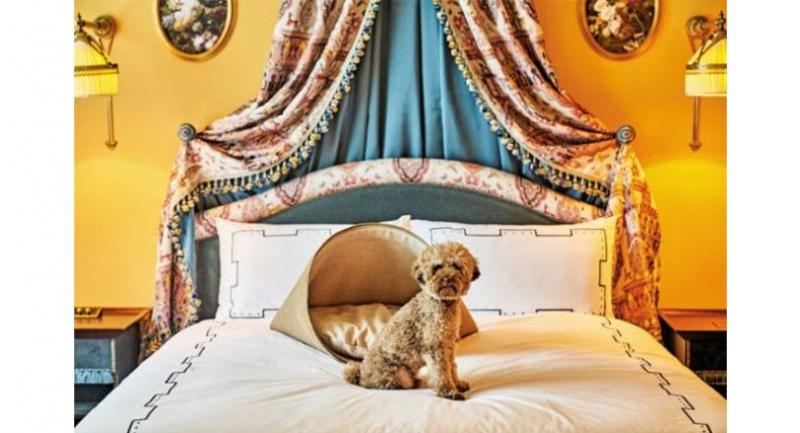
L‘Escape is one of the petfriendly boutique hotels with 14 rooms designated for pet owners. (courtesy of L‘Escape)

And fido came too

World March 09, 2019 01:00

By Im Eunbyel
The Korea Herald
Asia News Network

3,040 Viewed

South Korea’s travel-related industries expand their pet-friendly services

WITH THE idea of travelling with pets becoming the norm rather than the exception, South Korea’s travel-related industries are welcoming pet owners and their pets by launching related services.

The number of service animals on flights has increased significantly in recent years.

According to South Korea’s Ministry of Land and Transportation, in 2017, 41,343 pets were carried on planes, marking a 46.7 percent increase from 28,182 in 2015.

Jeju Air has joined hands with a pet hotel near the Incheon International Airport, providing accommodation services at a lower price.

Passengers of Korean Air can earn various benefits if they fly frequently with pets.

Korean Air offers its SkyPets service for customers who wish to board flights with their pets. Customers with pets earn stamps and depending on the number of collected stamps, they can receive various benefits, including discounts and free giveaways.

Also, more hotels are presenting themselves as pet-friendly, Daemyung Hotel & Resort recently announced plans to run more accommodation services related to pets. It is to launch a pet hotel, too.

L‘Escape is one of the petfriendly boutique hotels with 14 rooms designated for pet owners. (courtesy of L‘Escape)

L‘Escape, a boutique hotel run by Shinsegae, has 14 rooms designated for pet owners. The rooms do not have carpets, in consideration of health issues, and furry guests are allowed access to the hotel’s Chinese restaurant, which has a separate zone for man’s best friend.

Major brand hotels, such as the Four Seasons Hotel and Sheraton Seoul Palace Gangnam Hotel, are also pet-friendly hotels, allowing up to two pets per guest.

Pet-specialised travel service is a booming market. Specialised travel agency Pets Go Travel regularly presents trip deals for pet owners and their pets, providing car service and necessary accessories.

Slow train to history

ศาสตร์เกษตรดินปุ๋ย : ขอบคุณแหล่งข้อมูล : หนังสือพิมพ์ The Nation

http://www.nationmultimedia.com/detail/thailand/30365454

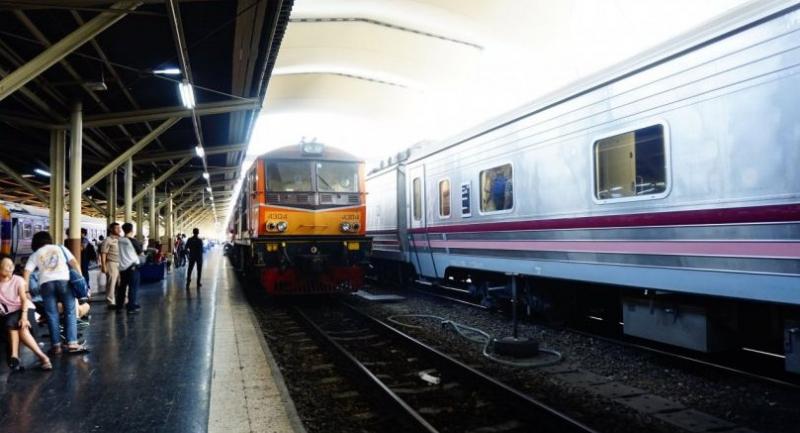
  • The 911 Special Train runs from Bangkok’s Hua Lamphong station to Hua Hin’s Suan Son Padipat Station on weekend, with a stop at Phetchaburi.
    The 911 Special Train runs from Bangkok’s Hua Lamphong station to Hua Hin’s Suan Son Padipat Station on weekend, with a stop at Phetchaburi.

Slow train to history

Thailand March 09, 2019 01:00

By Pattarawadee Saengmanee
The Nation Weekend

3,892 Viewed

A new eco-cultural tour takes day-trippers from Bangkok back in time to the unspoilt town of Phetchaburi

THERE’S SOMETHING very relaxing about travelling on a train. True, it takes a little longer, but anyone wanting to take a day trip from Bangkok to the coastal town of Phetchaburi this summer, will be rewarded by a relatively hassle-free journey with fabulous views of lush fields and a rare chance to observe the local life.

Famous for its unique culinary delights made from jaggery palm sugar, this southern province boasts tranquil pristine beaches, ancient temples, historical sites and old communities dating back to the glorious days of the Ayutthaya period.

The 911 Special Train runs from Bangkok’s Hua Lamphong station to Hua Hin’s Suan Son Padipat Station on weekend, with a stop at Phetchaburi. 

Available every weekend as well as on national holidays, the new eco-cultural tour programme “Chom View Rot Rang, Tiew Tang Rot Leng” (admiring a view from a train, travelling by tuk tuk) has been put together by the Tourism Authority of Thailand, the State Railway of Thailand and local residents and is part of the Amazing Thai-Teh campaign. The first 1,000 visitors can take advantage of a free tuk tuk service with knowledgeable driver guides to explore the provincial town.

Arriving at Hua Lamphong station early on a Saturday morning, I board the 911 Special Train for the three-hour journey on the Bangkok-Suan Son Pradipat route. The 911 is scheduled to depart at 6.30am and at first it seems that will run on time. But just a few minutes later, the 100 or passengers of whom I am one are told to disembark and watch helplessly as our train is towed away, apparently with a technical problem. We are left high and dry for the next hour, with no update on when or even if we will be leaving.

Wat Phra Pathom Chedi is a popular stopover for travellers. 

Our train tour eventually gets underway at 7.55am and I find myself relaxing in the air-conditioned second-class coach. It takes almost an hour and half to reach Nakhon Pathom station, where we are invited to disembark again, though this time to explore.

Located a short distance from the station, I walk through the morning market, where local vendors are offering street food and sweet delights. At the end of the street is Wat Phra Pathom Chedi, home to Thailand’s largest Lanka-style bell-shaped chedi built in 1853 to enshrine the Buddha’s relic.

Back at the station, the conductor rings the bell to indicate the train will soon be leaving. The vendors are unfazed though, continuing to serve snacks to the hungry tourists until the very last minute. An hour later, we pull into Phetchaburi station where more than 10 tuk tuks are waiting to take us on a sightseeing tour.

The magnificent European architecture of Phra Ramrajnivet Palace

A five-minute drive from the Phetchaburi station is Phra Ramrajnivet Palace, built in 1910 as the summer retreat for King Rama V.

Inspired by Kaiser Wilhelm’s castle in Germany, this luxury two-storey mansion originally named Wang Ban Puen is considered one of the masterpieces of German architect Karl Siegfried Dohring. It boasts a magnificent European design with high-ceilinged rooms and floors covered with Italian marble.

Occupying 349 rai, the construction was completed in 1916 in the reign of King Rama VI and in 1918 it opened to welcome royal guests. The ground floor has the Throne Hall and a dining room with yellow glazed tile walls overlooking the garden. German-style wrought iron embraces the doors and windows, which offer a view of a classic sculpture of Poseidon and the sea beyond.

Covered with green glazed tiles, a beautiful double spiral staircase takes visitors to the second floor, which is home to the queen’s chamber, a spacious study room and veranda where the royal family would appear to the public. The highlight is the King’s chamber with its oil paintings and an elegant bathroom with a vintage tub and water heater.

Wat Mahathat Worawihan has been recognised for its ancient murals and splendid stucco works. 

Not far from the summer palace is Wat Mahathat Worawihan, famous for splendid stucco works that showcase Phetchaburi’s first-class craftsmanship. Built in the Dvaravati period, this ancient temple houses the towering five-tiered, corn-cob shaped stupa in a mixture of traditional Thai and Khmer styles.

Based on Mahayana Buddhism beliefs, this stupa is constructed to resemble Mount Meru – the centre of the Buddhist universe – and contains relics of the Lord Buddha brought to Siam from India. The main hall boasts murals created by such Phetchaburi masters as Kru Infahsaeng depicting the way of life in bygone days.

Thailand’s past political conflicts are remembered elsewhere in the temple. A stucco sculpture of MR Kukrit Pramoj, who served as a prime minister between 1975 and 1976, and holding the base of the sacred Ayutthaya-style Luang Poh U-thong Buddha on his shoulders, stands proudly in the small hall. The sermon hall, meanwhile, has elaborate pediments adorned with stucco works that portray university students fighting with armed soldiers on October 14, 1973 and May 17, 1992.

Shophouses on the banks of Phetchaburi River are adorned with street art. 

Standing on the banks of Phetchaburi River, the old market has long been a popular dining and shopping venue for local residents and tourists. Colourful street art covers the walls of the shophouses lining the narrow alleys, illustrating everything from daily life to a litter of cute kittens and a map that shows places to eat and visit.

The old market offers a variety of local delicacies and desserts prepared to traditional recipes.

I find refuge from the summer heat in Mae Orn, a 60-year-old restaurant offering khao chae. Said to be the best in town, it serves the parboiled rice immersed in ice-cold jasmine-scented water with shrimp paste balls and glazed Chinese turnips. Next door is Cheng Yi Seng, famous for khanom pia, the Chinese pastry filled with mashed taro, gourd and salted egg yolk.

Wat Yai Suwannaram is home to a beautiful red teak pavilion.

After lunch, we climb back into the tuk tuks and head to Wat Yai Suwannaram. Built in the late Ayutthaya period, its main hall boasts 300-year-old murals portraying the Jakata tales. Another highlight is a red teak pavilion that was once part of the Grand Palace in the Ayutthaya Kingdom. It’s furnished with refined woodwork and home to an ancient gold throne that was used to enshrine part of the ashes of the late King Bhumibol Adulyadej in the royal cremation ceremony.

Wat Phra Phut Saiyat enshrines a 400-year-old reclining Buddha. 

The last stop is Wat Phra Phut Saiyat located to the southeast of Khao Wang. Left abandoned for several decades, it was restored on the orders of King Rama IV and a main hall was built to shelter a 43-metre-high statue of the holy 400-year-old reclining Buddha.

The day trip is almost over at 5, I board another train 912 to return home to Bangkok hoping that we won’t be delayed and that my window seat will offer me the chance to watch a beautiful sunset.

IF YOU GO

Tickets are Bt120 for a third-class seat and Bt240 for second-class. Make a reservation by calling 1690 (the State Railway of Thailand).

Find out more by calling Tourism Authority of Thailand, Phetchaburi Office at (032) 471 005-6.