Karachi: What’s in a picture?

ศาสตร์เกษตรดินปุ๋ย : ขอบคุณแหล่งข้อมูล : หนังสือพิมพ์ The Nation

http://www.nationmultimedia.com/travel/Karachi-Whats-in-a-picture-30291756.html

A special report by Dawn, a member of the Asia News Network.
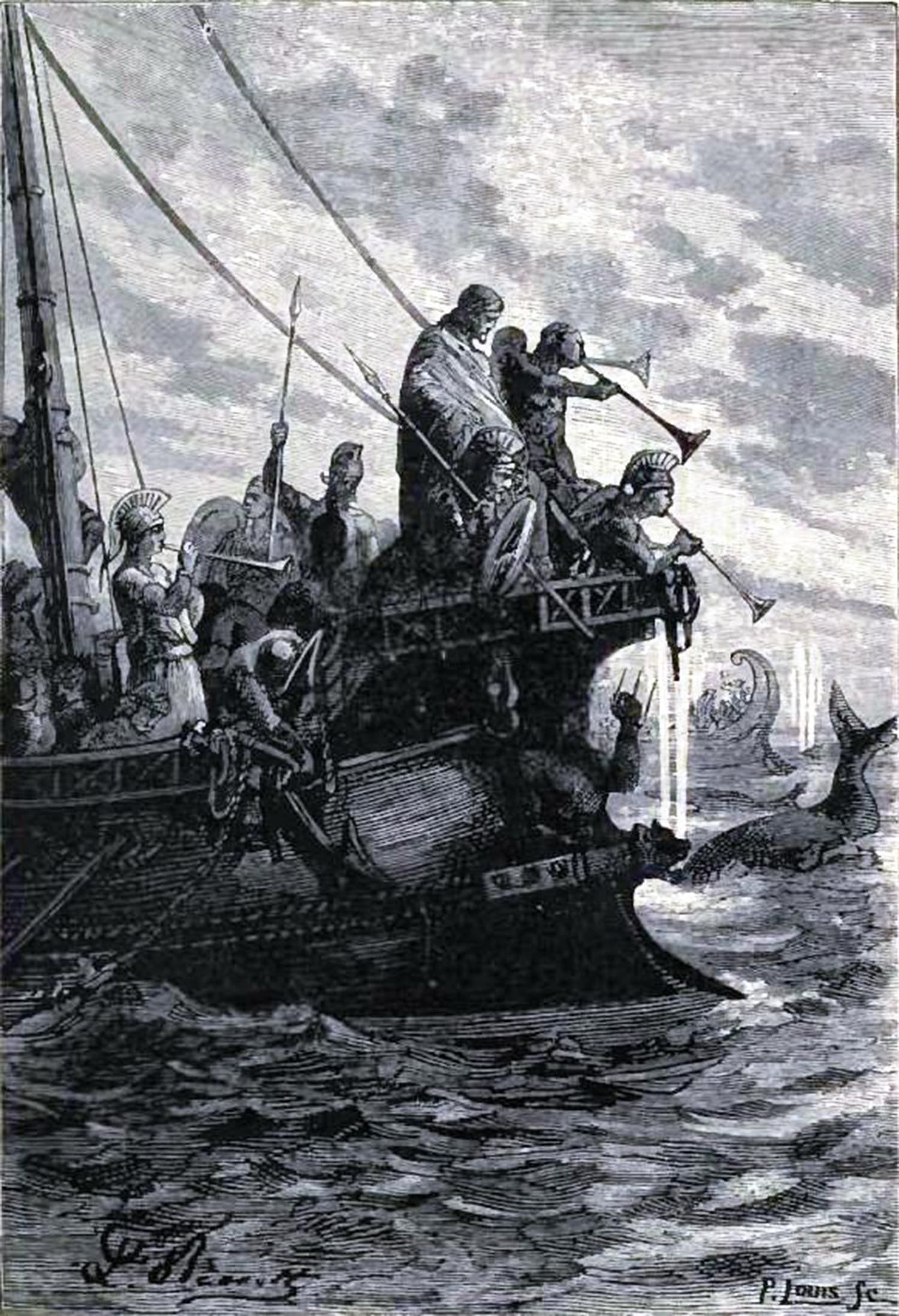
A 19th-century sketch of Greek commander, Nearchus, leading his fleet across River Indus in the present-day Sindh province of Pakistan.

//

Nearchus was a commander in ancient Greek king, Alexander’s army which had invaded India. In 325 BC, Nearchus exited India with his section of the army by sailing over the Indus and exiting from Balochistan.

He entered Balochistan by first reaching the mouth of Indus which emptied the river’s waters in the Arabian Sea. Historians believe this was where the coastal Manora area is in Karachi today.

A great storm from raging and Nearchus found a fishing village here led by a matriarch. He named the place Morontobara (Greek for Woman’s Harbour).

Source: The Voyage of Nearchus from the Indus to the Euphrates: William Vincent(Nabu Press, 2011).
Karachi in the Mirror of History: M Usman Damohi (Al-Abbas Publications, 2011).

An 1839 sketch of Karachi drawn by a British traveller on the eve of Britain’s conquest of the city.

At the time, Karachi was just an insignificant dot on world maps. It was a small fishing town ruled by the Sindhi-Baloch dynasty (the Talpurs). It had a fort made of dry mud and an underdeveloped harbour. The town had no paved roads and no sanitation or garbage-collecting system.

It had a population of about 20,000 people who were mostly involved in the fish trade. Crime was high, and disease was rampant. The bulk of the population was made up of Sindhi, Balochi and Gujarati-speaking Hindus and Muslims.

Source:
Gazetteer of the Province of Sind. B Volume 1 Karachi District 1919.
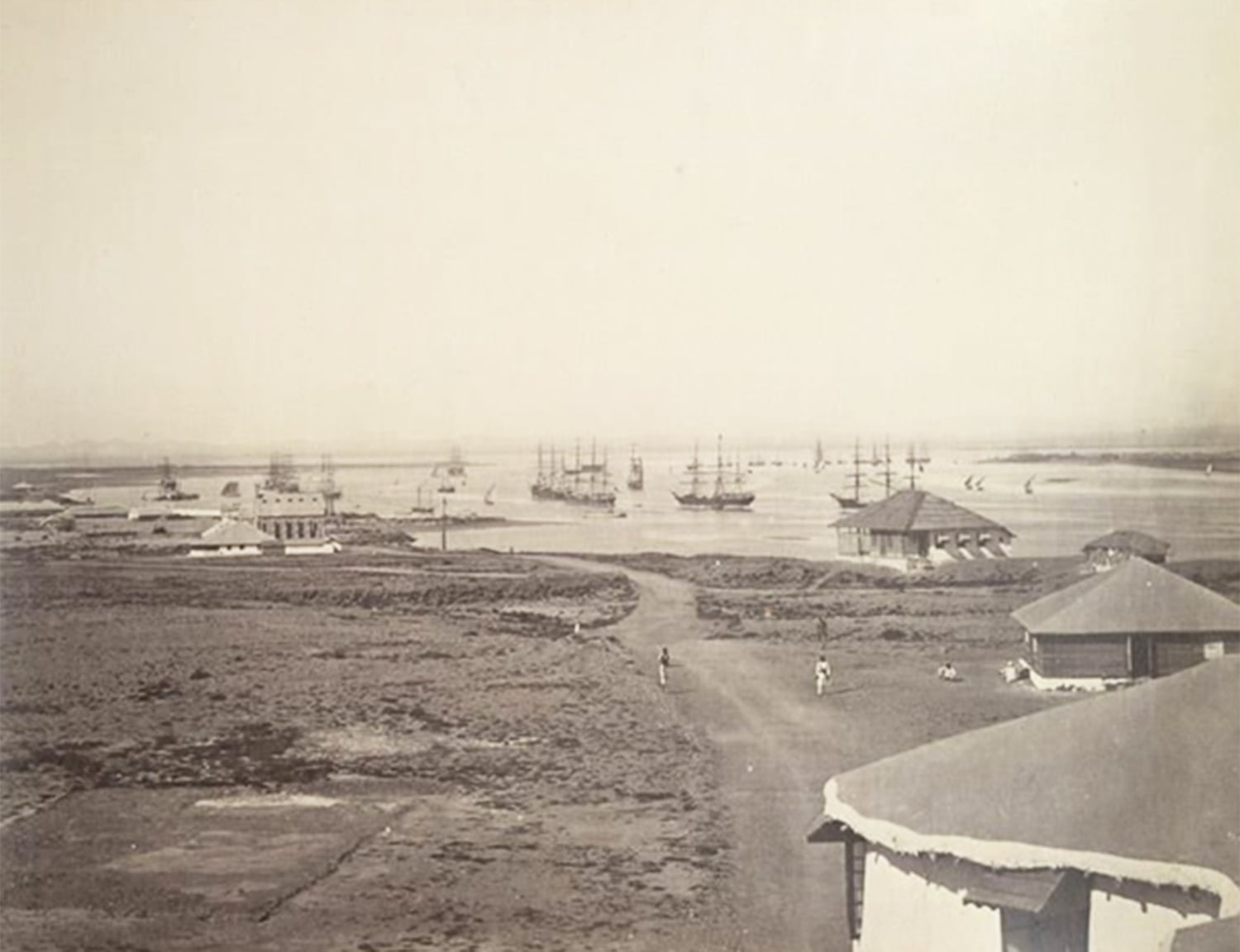
An 1860 photograph of British ships entering Karachi waters (Arabian Sea). By now the city had been made Sindh’s capital and absorbed into British India.
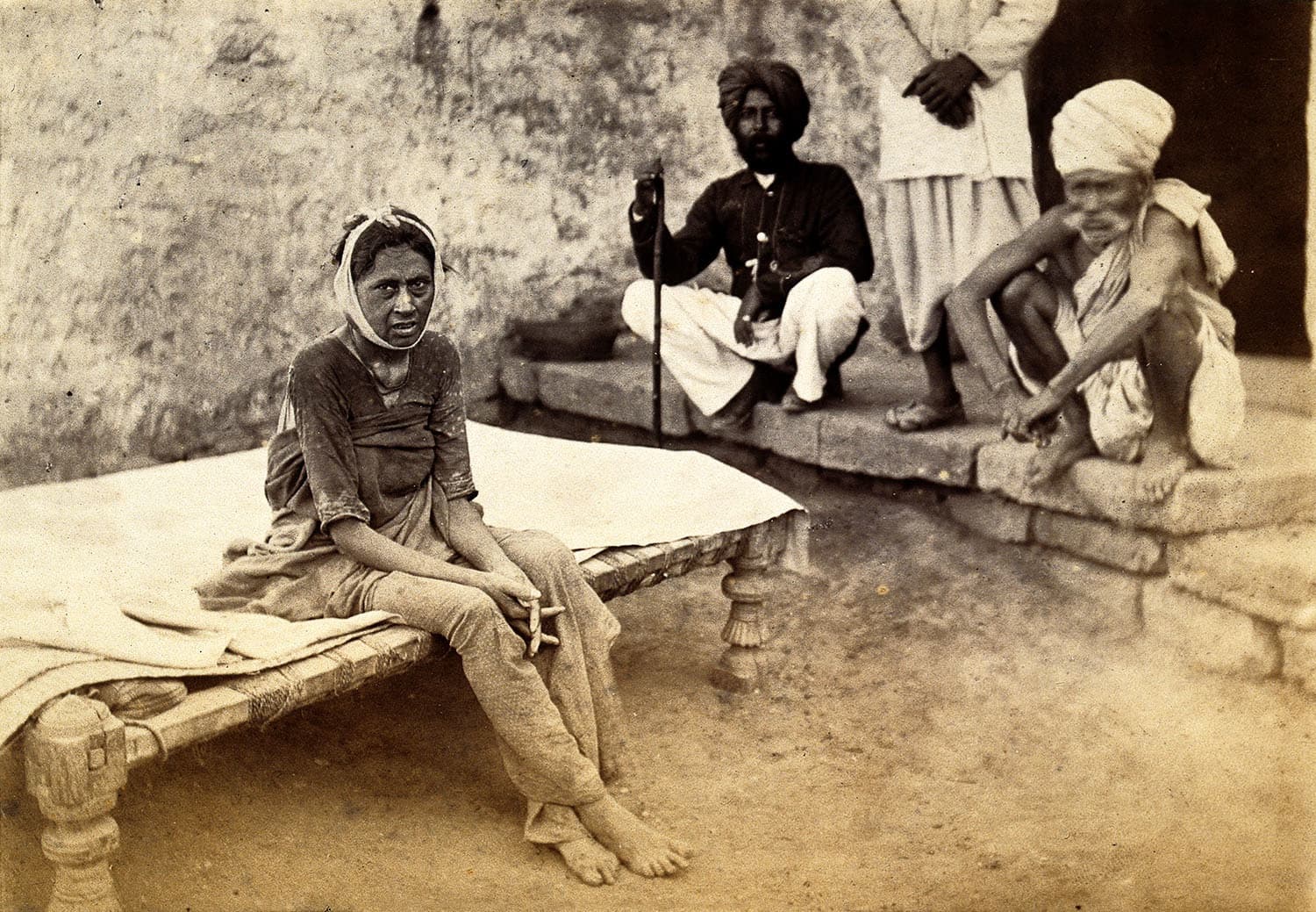
A woman suffering from the fatal bubonic plague awaits treatment in 1890, Karachi.

The city’s worsening sanitation conditions fed the infected rats which arrived on ships from elsewhere in India. Hundreds of people perished from the plague. The British began work on providing the city with an effective sanitation and sewerage system.

Source:
Gazetteer of the Province of Sindh. B Volume 1 Karachi District 1919.

A 1919 photograph of Karachi’s Saddar area.

By the mid-1900s, Karachi had grown into an impressive trading post. The British developed Karachi’s harbour and it became one of the busiest in India. The British also built a robust infrastructure (roads, bridges, hospitals, parks, railways, etc.); and introduced modern policing and city governing systems.

The crime rate saw a sharp decline; and the city’s economy boomed. Fifty-one per cent of the city’s population was Hindu; 40 per cent was Muslim; and there were also large Christian and Zoroastrian communities.

There was a Jew community too, apart from thousands of British officers, doctors, engineers and administrators and their families residing here. It was during this period that Karachi became known as ‘the Paris of Asia’.

Source:
Gazetteer of the Province of Sind. B Volume 1 Karachi District 1919.

Statue of the British Queen being unveiled at Karachi’s Frere Hall/Park during a ceremony.

The statue was shipped all the way from London. The ceremony was attended by British and local officials of the city government, British military personnel, Karachi’s wealthy Hindu, Muslim and Zoroastrian dignitaries and the general public.

A few years later, a statue of King Edward, too, was placed here. Both the statues remained in place when Karachi became a part of Pakistan in 1947. However, the statues were removed in 1956 when Pakistan’s first constitution declared the country a republic.
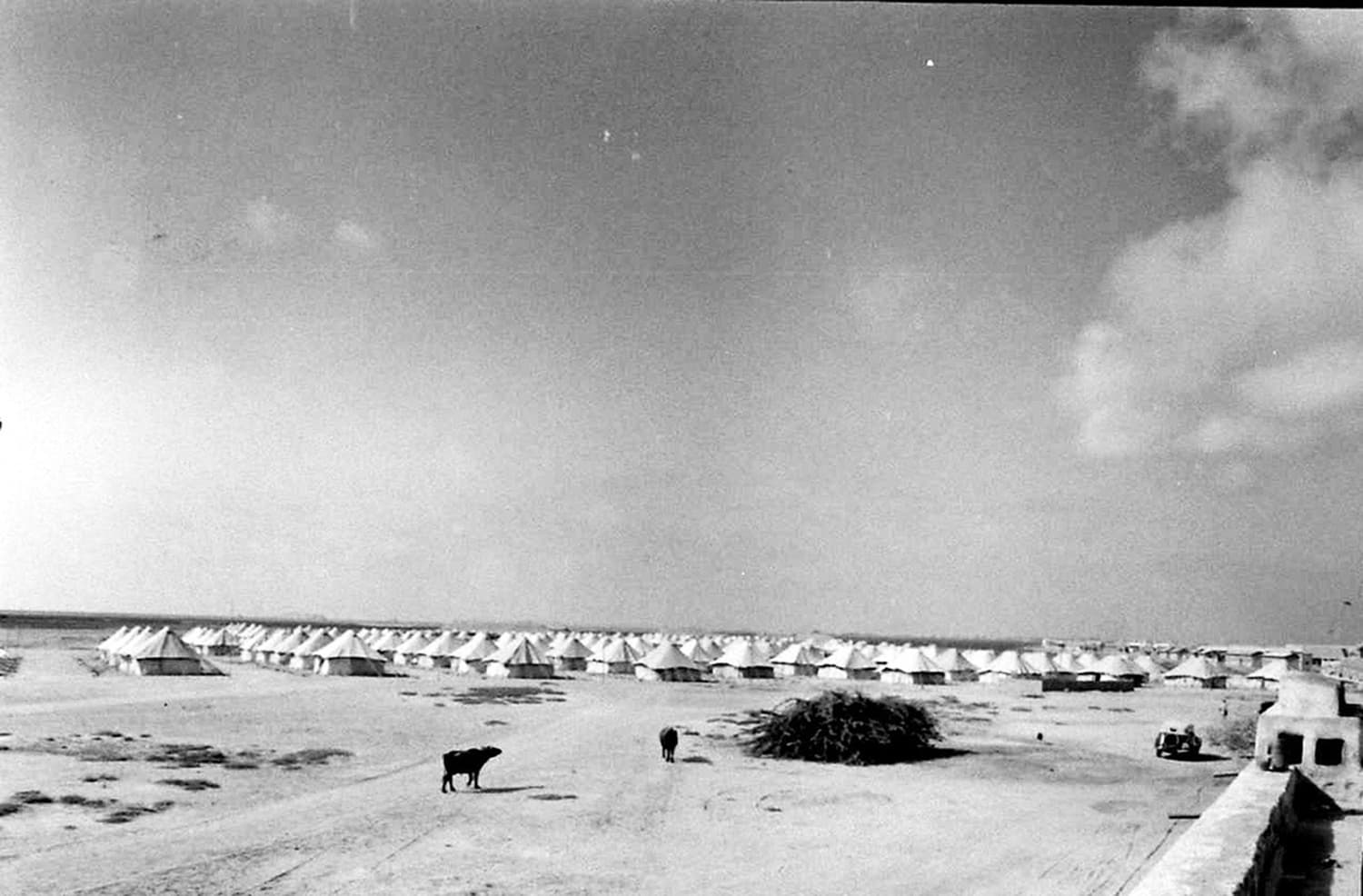
Karachi, 1948: An open area dotted by hundreds of temporary camps, housing government officials who ran matters of the country and the city from inside these dusty tents.

Karachi became the capital of Pakistan in August 1947. It witnessed a huge influx of Muslim refugees arriving from various Indian cities and towns. Karachi did not have the resources to accommodate such an influx. Many of its buildings were packed to capacity. Many civil servants, police personnel and ministers of the new country shifted to these tents from where (for almost a year and a half) they navigated the fate of Pakistan and its capital city.

Source:
Pakistan’s Capital (A feature in LIFE Magazine’s June, 1948 issue).

A 1951 photograph of a busy commercial area of Karachi.

The city began to recover from the early demographic tremors caused by the dramatic influx of refugees when Karachi became the capital of Pakistan.

Another reason for the recovery was the sudden boom that the city’s economy enjoyed when Pakistan became a leading exporter of jute, cotton and other agricultural goods to the US troops stationed in Korea during the Korean War. The bulk of the goods were exported through cargo ships leaving from the city’s harbour.
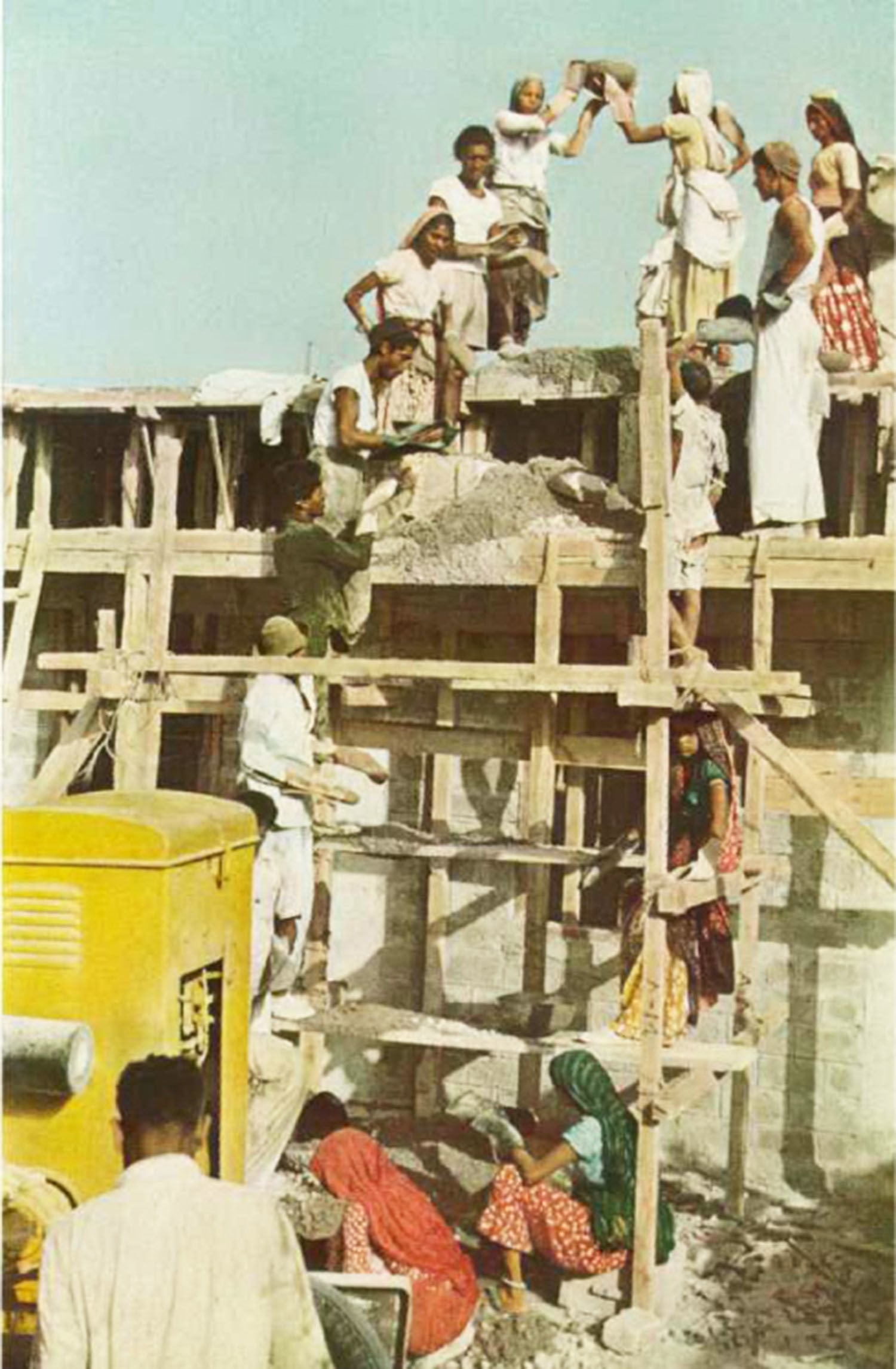
Men and women workers laying bricks during the construction of a building in 1952.

The brief economic boom that the city enjoyed (see previous picture and text), facilitated the government to erect some much needed buildings to house the growing number of government officials and refugees (Urdu-speaking Mohajirs).

In the early 1950s, a bulk of the city’s labour force was made up of the working-class sections of the refugees. By the late 1950s, much of the force comprised Pakhtun migrants arriving from the NWFP province (present-day Khyber Pakhtunkhwa).
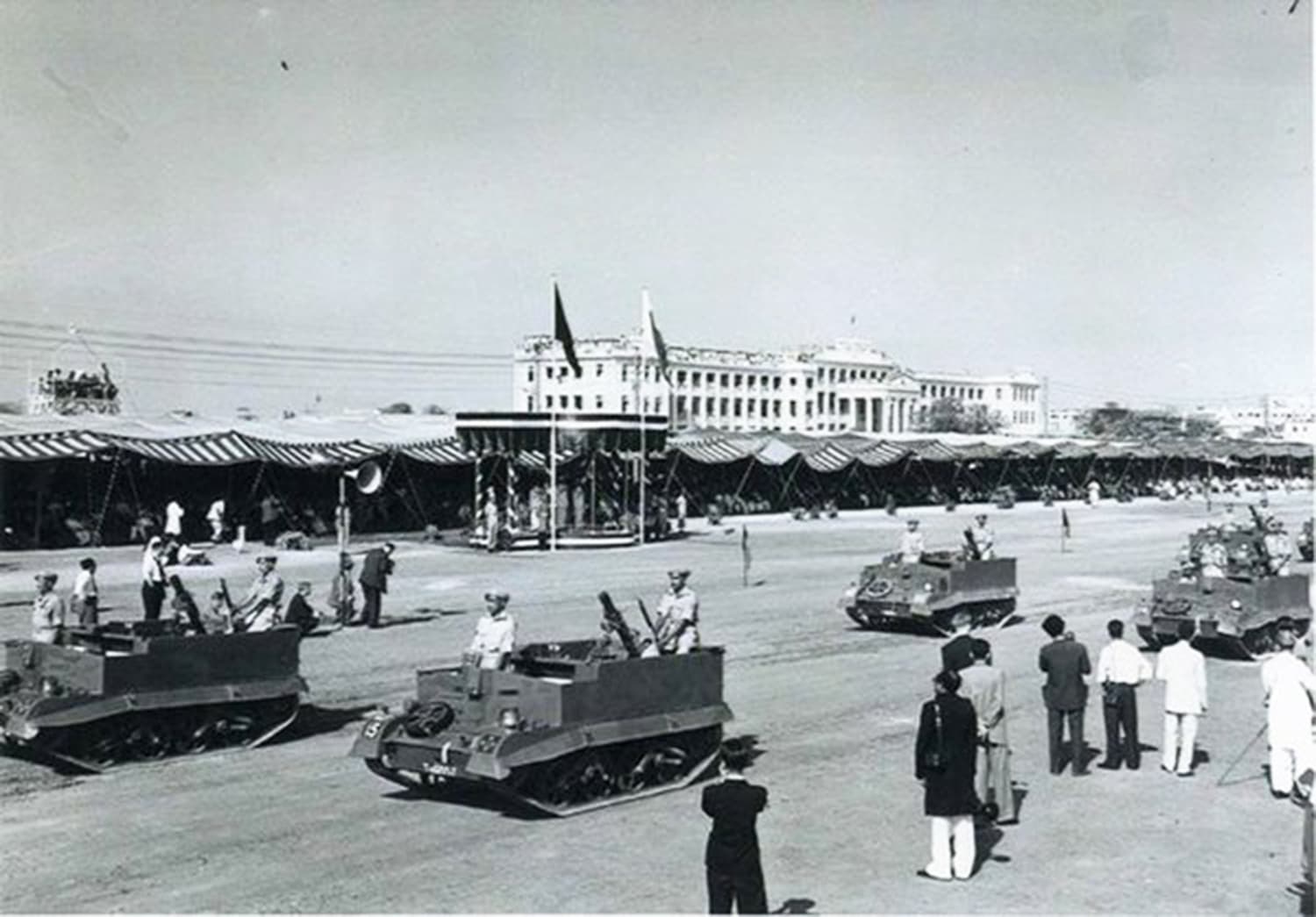
Pakistan’s first Republic Day parade. In 1956, Pakistan became a republic. The occasion was marked by a parade held on March 23, 1956 in Pakistan’s then-capital, Karachi.

Pakistan’s constituent assembly in Karachi passing the country’s first constitution in 1956.

The constitution declared the country a republic and promised Pakistan’s first election based on adult franchise. Assembly members were all indirectly elected, and consisted of legislators from the centre-right Muslim League, the centrist Republican Party and the left-leaning Awami League.

The assembly also consisted a few members from the left-wing Azad Pakistan Party. An alliance of centre-left outfits called the United Front had the second largest number of members in the assembly after Muslim League. The assembly did not have any member to form a religious party, even though the small Nizam-e-Islam Party (based in East Pakistan) was part of the United Front.

1957: Mohajir street actors re-enact scenes of violence during the partition of India and which forced many of them to migrate to Karachi.

Most such plays were staged on the streets of the refugee camps which were still existing till the late 1950s. Crime, exploitation and a sense of alienation were ripe in the camps. They were emphatically depicted by famous Urdu novelist Shaukat Siddique in his 1956 novel, Khuda Ki Basti (God’s Abode).

1958: American tourists enjoying a sunny day at one of the many beaches of Karachi. ‘Huts’ had begun to come up at these beaches to accommodate the increasing number of visitors to these beaches.

According to a 1957 newspaper article in America’s Washington Post, Karachi’s beaches were some of the ‘cleanest beaches in Asia’. Tiny working-class settlements (gohts) near these beaches began to expand.

The settlements were largely populated by Sindhi and Baloch fishermen and their families. They slowly began to venture into other areas of business as well, such as selling beer, soft-drinks and snacks to passing visitors, become caretakers of the huts, and invest in buying horses and camels to provide joy rides to bathers.
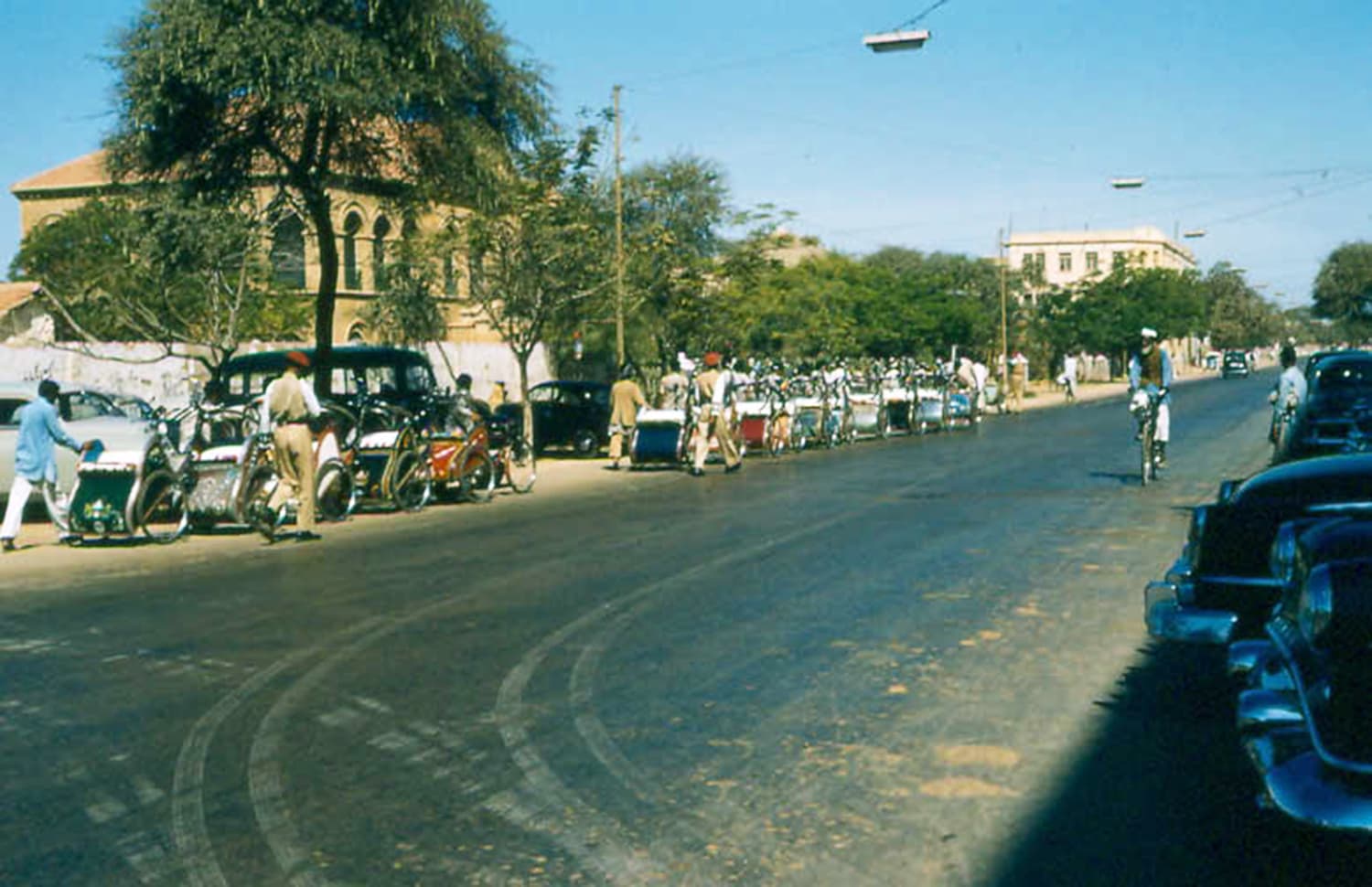
Military police personnel in Karachi checking licenses of car-owners in 1958.

Pakistan military chief, Field Marshal Ayub Khan, had come to power through a military coup. He ordered a crackdown against corruption and crime in Karachi which had grown ever since the city’s economy had begun to struggle from the mid-1950s onward.

Pakistan’s first leading female industrialist, Razia Ghulam Ali, giving instructions to an employee at her factory in Karachi. The Ayub regime had made Karachi the focus of its rapid industrialisation project.

Karachi’s Burns Road area in 1961. The area, first developed as a ‘posh’ locality by the British, had become a middle-class neighbourhood in the 1960s, largely populated by Mohajirs.

Restaurants and eateries offering spicy North Indian dishes had begun to come up here and by the 1970s, the area would become a famous ‘food street’ — but highly populated and congested. By the 1980s, though it remained famous for its eateries, it was mostly populated by lower-middle-class segments of Karachi.


Amazing scenery of Tomur Grand Canyon in Xinjiang

ศาสตร์เกษตรดินปุ๋ย : ขอบคุณแหล่งข้อมูล : หนังสือพิมพ์ The Nation

http://www.nationmultimedia.com/travel/Amazing-scenery-of-Tomur-Grand-Canyon-in-Xinjiang-30291753.html

These photos taken by Xinhua on July 22, 2016 show scenery of the Tomur Grand Canyon in Wensu county of Aksu prefecture, Northwest China’s Xinjiang Uygur autonomous region.

Tomur Grand Canyon, which has various landforms, has been listed as China’s National Geological Park.


In true tradition

ศาสตร์เกษตรดินปุ๋ย : ขอบคุณแหล่งข้อมูล : หนังสือพิมพ์ The Nation

http://www.nationmultimedia.com/travel/In-true-tradition-30291507.html

AROUND THAILAND

The pillow case workshop, on the other hand, features the Nan royal handicraft “Hong Chao Khamfong” on which a statement is embroidered on a traditional pillow

The pillow case workshop, on the other hand, features the Nan royal handicraft “Hong Chao Khamfong” on which a statement is embroidered on a traditional pillow

In the old days, people cut pieces of paper to make a decorative flag for special religious events.

In true tradition

The Creative Tourism Office in the northern province of Nan invites visitors to experience local craftsmanship and the community spirit through two workshops – traditional flag making and pillowcase embroidery. The tradition of “tung ka king” shows off Lanna’s paper cutting. In the old days, people cut pieces of paper to make a decorative flag for special religious events. The pillow case workshop, on the other hand, features the Nan royal handicraft “Hong Chao Khamfong” on which a statement is embroidered on a traditional pillow. For the paper cutting, call the temple at (081) 882 3188. For the pillowcase embroidery, call (054) 710 537 or (087) 305 9660.

And the winners are …

Contemporary Thai restaurant, Jahn at Conrad Koh Samui has been named the Global Winner in three award categories; Overall Winner, Thai Cuisine and Ambience/Romantic Atmosphere, beating 166 restaurants from around the world at the 1st World Luxury Restaurant Awards 2016. Conrad Koh Samui‘s general manager, Stefano Ruzza, left, attended the red carpet gala dinner and award presentation ceremony, receiving the prestigious awards from Marna Laurens, centre, and Linda Cooper, right, executive managers of the World Luxury Spa and Restaurant Awards 2016 held in Pontresina, Switzerland.

Big bites for meat eaters

Inspired by New York’s famed Meatpacking District, Movenpick Siam Hotel Pattaya‘s new T55 New York Grill Room is set to become a signature restaurant for food lovers on the northern shores of the Gulf of Siam. With a chic, post-modern design, T55 New York Grill Room taps into the Big Apple’s hipster vibe. The menu delights even the most serious meat connoisseurs with an array of signature dishes including a succulent Tomahawk steak and the Meatpacking Burger which boasts 250 grams of beef topped with crispy bacon, avocado, beetroot and home-made truffle mayonnaise.

Flying high with Nok Air

Nok Air, one of Thailand’s low-cost carriers, recently took delivery of its seventh brand new Q400 NextGen from Bombardier. Made in Canada, this turboprop aircraft is designed to land and take off at destinations with short runways. The aircraft, which has 86 seats, is now in service on Nok Air’s domestic routes including Lampang and Loei. The airline fleet currently includes seven Q400 NextGens, 21 Boeing 737-800s, and two ATR 72-500s.

Luxury that speaks for itself

ศาสตร์เกษตรดินปุ๋ย : ขอบคุณแหล่งข้อมูล : หนังสือพิมพ์ The Nation

http://www.nationmultimedia.com/travel/Luxury-that-speaks-for-itself-30291508.html

CHECK IN

Hilton Singapore King Deluxe Room

Hilton Singapore King Deluxe Room

Whole Sea Bass Roasted on Olive Wood

Whole Sea Bass Roasted on Olive Wood

Hilton Singapore Lobby

Hilton Singapore Lobby

Opus Bar, Hilon Singapore

Opus Bar, Hilon Singapore

With excellent restaurants, four executive floors and two levels of boutiques, Hilton Singapore will delight both the business and leisure traveller

Located in Orchard Road, Singapore’s premier shopping district, Hilton Singapore is not only a hotel but a shopping destination in itself. The hotel boasts two floors of luxury boutiques, allowing hurried and harried executives to pick up gifts to take home without even leaving the building.

A three-minute walk from Orchard MRT station, just 20 minutes from Changi Airport and 10 minutes drive from the Central Business District, Hilton Singapore is a fine choice for both the business and leisure traveller.

As my private taxi comes to a complete stop, the concierge opens the door, takes my luggage and leads me into the lobby. Worried that I’m going to be late for a lunch meeting, I tell the receptionist I’ll probably have to check-in after lunch. She clicks her mouse and tells me that as an Executive Floor guest, I don’t have to worry about queuing up for check-in.

“My colleague will guide you to the restaurant so you’ll be on time for your appointment. She just needs your passport and your signature for check-in,” she explains.

//

As we make our time to the award-winning Italian restaurant il Cielo on the 24th floor of the hotel, the officer tells me that the Executive Floors are on levels 19 to 22 and that guests enjoy such benefits private check-in, complimentary in-room Wi-Fi, complimentary breakfast, snacks during the afternoon and an evening cocktail at the Executive Lounge on the 22nd floor.

I find my group at the restaurant, hand my passport to the officer and in less than five minutes, she’s back with passport and my keycard.

Having eaten a snack for breakfast on the plane, being served authentic Italian food made with natural, organic produce is like going to food heaven. The cosy atmosphere of the restaurant and a few glasses of wine relieve travel tension and there is plenty of laughter.

An early morning flight makes for a sleepy afternoon and when lunch is over I walk back to my room on the 19th floor to freshen up and laze around before my next meeting in the late afternoon.

Open since 1970, Hilton Singapore underwent a contemporary makeover in 2007. All guestrooms were refurbished with light-hued sycamore furnishings to add a more welcoming and relaxing ambience. My room is compact but cleverly decorated with modern furnishings to make it look light and cosy. For a single guest, the room is a perfect size with everything within easy reach but I suspect a couple might find it crowded.

The comfortable king bed takes almost all the space in the room while a single-seat sofa at the corner next to the floor-to-ceiling windows is a nice spot to sit back and enjoy the city view or one of the channels on the 40-inch HDTV. A working desk with the Herman Miller ergonomic chair is pleasant space to work on any project.

The Nespresso machine on the counter beckons but I decide to pass, not least because I’m still pleasantly full. My aching muscles are pleading for exercise so I call the front desk asking for information about the Fitness Centre. But after learning that the centre is open for 24 hours, my lazy alter ego mutters that there’ll be plenty of time to work out in the evening so I decide to freshen up before my afternoon nap. The marble bathroom is small but well designed with a walk-in rain shower equipped with Peter Thomas Roth bathroom amenities.

After my nap, I head to the Executive Lounge on the 22nd floor to enjoy a cup of tea before joining my friends for dinner at Opus Bar & Grill. The keycard elevator makes access easy for Executive Floor guests and I’m soon heading to Opus for a delicious dinner of grilled sustainable seafood and prime cuts; dry aged in-house for 14 to 36 days in customised Himalayan salt tile cabinets.

My vegetarian grill and side dish go very well with the wine and the waiters, who are very attentive, suggest a perfect wine for the food.

The dim lighting and cosy ambience in Opus morph overnight into a bright and airy atmosphere as partitions are removed and space made for the international buffet breakfast.

As I sip my last glass of wine, I hear my lazy self whisper “exercise can wait”.

AT A GLANCE

High point: Prime location with helpful and friendly staff.

Low point: None

Pay for it: Visit the hotel’s website for the best deals.

Find it: 581 Orchard Road, Singapore 238883

Call it: (+65) 67 372 233

Browse it: http://www3.hilton.com/en/hotels/singapore/hilton-singapore-SINHITW/index.html


History carved in stone

ศาสตร์เกษตรดินปุ๋ย : ขอบคุณแหล่งข้อมูล : หนังสือพิมพ์ The Nation

http://www.nationmultimedia.com/travel/History-carved-in-stone-30291509.html

HERITAGE

Preah Vihear Temple is perched on a sheer cliff in northern Cambodia.

Preah Vihear Temple is perched on a sheer cliff in northern Cambodia.

Si Satchanalai, Sukhothai province, was built in 13th century to serve the crown prince of the Sukhothai Kingdom. NATION/THANIS SUDTO

Si Satchanalai, Sukhothai province, was built in 13th century to serve the crown prince of the Sukhothai Kingdom. NATION/THANIS SUDTO

St Patrick Cathedral in Mawlamyine, Myanmar. NATION/Phoowadon Duangmee

St Patrick Cathedral in Mawlamyine, Myanmar. NATION/Phoowadon Duangmee

The sleepy town of Mawlamyine was once a bustling teak port in colonial days. Nation/Phoowadon Duangmee

The sleepy town of Mawlamyine was once a bustling teak port in colonial days. Nation/Phoowadon Duangmee

Baskets of flowers are on sale to visitors at Vat Phou, Laos.

Baskets of flowers are on sale to visitors at Vat Phou, Laos.

We take a look at the little-known archaeological marvels of Southeast Asia

Done Angkor Wat in Cambodia, Luang Prabang in Northern Laos, Bagan in Myanmar but still thirsting after archaeological marvels, preferably without the crowds?

Southeast Asia has a rich history. Dig deep and you’ll find many more historical landmarks and cultural sights beyond the iconic and touristy sites where you can wander among the ruins without rubbing shoulders with other visitors.

Here are the seven best Asean cultural heritage sites to check out.

MAWLAMYINE, MYANMAR

//

George Orwell came here around 1930s and lived in the town for several years before writing his memoir “Shooting an Elephant”. Rudyard Kipling spent only three nights before leaving the small town to write a poem about his impressions. Prince Sukkasem of Chiang Mai came here too, to attend St Patrick’s School during the Colonial days before falling |in love with a young cheroot vendor. Mawlamyine – known as Ma La Maeng to Thais and Moulmein to everyone else – is rich in history. Once a capital city of British Burma from 1826 to 1852, the sleepy town is a combination of beauty and melancholy. It’s the best place to retrace colonial times, having been frozen in a time capsule by decades of military rule. The sleepy town has changed little since its colonial days. It has a ridge of stupa-capped hills on one side, the sea on the other and a centre filled with mosques and crumbling colonial-era buildings. St Patrick’s School still stands and is worth visiting before you follow Prince Sukkasem to Kyaikthanlan Paya, Mawlamyine’s tallest and most visible pagoda and the place where he is said to have met “Ma Mia” his cheroot girl.

VAT PHOU, LAOS

Nestled at the base of mount Phu Kao in Champasak Province, Wat Phou requires a climb of more than 300 steps to reach the temple of Shiva and take in the breathtaking view. The stone temple is a rare example of an ancient Hindu temple in Laos. It was built in the fifth century by the Champa Kingdom, which ruled the south bank of the Mekong River. Most of the remnants, including the stone-carved scenes and broken statuary of the gods, date back to the 11th century and the Khmer Empire centred on Angkor in present-day Cambodia. Like most ancient Khmer temples, this complex takes the form of a rectangle, with a long strip of paved path sweeping west-east through the site up to the inner sanctum. The pediment at the front has a fine carving of Vishnu on a garuda, while the South lintel shows Lord Krishna tearing his uncle, Kamsa, in two. Unesco designated the monument a World Heritage Site, and academics consider it the finest medieval Khmer complex in Laos.

SI SATCHANALAI, THAILAND

A visit to Sukhothai wouldn’t be complete without travelling to the historical site of the ancient Si Satchanalai City, which is about 50 kilometres away. The old city was founded in 1250 as the second centre of Sukhothai Kingdom and served as the residence of the crown prince in the 13th and 14th centuries The city was rectangular in shape and home to temples, pagodas and Buddha images. The best way to explore the ruined city is by bike. The main attractions are Wat Phra Si Mahathat, Wat Chang Lom and Wat Chedi Jet Taew, all of which showcase the authentic Sukhothai architectural style.

MRAUK U, MYANMAR

Tucked away in Myanmar’s West, Mrauk U (pronounced “mraw-oo”) is like Bagan without the tourists. The old capital of Rakhine state, it draws visitors and culture buffs for its “forest” of pagodas. It’s a magical place, especially in the winter when the valley is covered with a thick layer of mist. You will enjoy watching the pagodas appear as the mist dissolves in the old town. Unlike Bagan, the pagodas here are made from stone not brick. Mrauk U’s temples are spread across still-inhabited villages, rice fields, valley and hillrock, making it a way more green and liveable area than dry and dusty Bagan. Most importantly, you will probably have the historical site to yourself since less than 5,000 foreigners make it to Mrauk U.

PREAH VIHEAR TEMPLE, CAMBODIA

Like Angkor Wat, Preah Vihear was designed to represent Mt Meru and is dedicated to the Hindu deity Shiva. It took four Cambodian kings, from Yasovarman I in the ninth century to Suryavarman II in the twelfth, to complete the 800-metre-long Hindu complex. The ruin, along with five cruciform pavilions, sits atop a 525-metre cliff, promising pilgrims and visitors alike an amazing view of Cambodia’s northern plain. Like Angkor Wat, Preah Vihear is listed as a Unesco World Heritage site.

MY SON, VIETNAM

The Angkorian and Cham in Central Vietnam were rivals, as the tales on the wall of Bayon suggest. While the Angkorian’s capital is popular with the tourists, My Son, the cultural centre of the Cham, is little known outside the archaeological circle. Actually, My Son was once the most important education and religious centres of the kingdom of Champa and was rediscovered in the late 19th century by the French. The temples are in bad shape with only a few structures still standing. My Son, however, is worth a day trip from Hoi An. As you stroll around the ruins of Cham, you might try to figure out the “Game of Thrones” over Tonle Sap Lake. The Angkorian and Cham people had many things in common including faith, architecture and arts. They should have been friends not foes.

PRAMBANAN TEMPLE, INDONESIA

Borobudur might ring a bell – but a trip to Central Java isn’t complete without a visit to Prambanan. This Hindu temple is jaw-dropping and mystical – an epic made of stone. Founded in the tenth century, Prambanan is the largest Hindu temple compound dedicated to the Trimurti – Shiva, Vishnu and Brahma. The temples are decorated with reliefs illustrating the Indonesian version of the Ramayana epic, which are masterpieces of stone carvings. These are surrounded by hundreds of shrines that have been arranged in three parts showing the amazingly high level of stone building technology and architecture in the eighth-century Java. With more than 500 temples, Prambanan Temple Compound is full of architectural and cultural treasures.


10 snow mountains you should visit in summer

ศาสตร์เกษตรดินปุ๋ย : ขอบคุณแหล่งข้อมูล : หนังสือพิมพ์ The Nation

http://www.nationmultimedia.com/travel/10-snow-mountains-you-should-visit-in-summer-30291279.html

China Daily has compiled a list of 10 snow mountains that you should visit

No. 1 Jade Dragon Snow Mountain

Entertainers perform in front of the Jade Dragon Snow Mountain, also known as the Yulong Snow Mountain, in Yulong Naxi autonomous county in Southwest China’s Yunnan province. The mountain has 13 peaks, stretching 35 kilometers from north to south. Shanzidou, the main peak, is 5,596 meters above sea level. [Photo/IC]

No. 2 Nyingchi Snow Mountain

There is a landscape of lakes and snow mountains in winter in Nyingchi city in Southwest China’s Tibet autonomous region. From primitive forests to seas of flowers and mountains stretching across the landscape, Nyingchi is by every means a perfect place to explore. [Photo/IC]

No. 3 Bayi Glacier

The stars shine in this view of Bayi glacier in the Qilian Mountains in Northwest China’s Qinghai province. [Photo/IC]

No. 4 Daocheng Yading Mountains

Located in Garze county in Southwest China’s Sichuan province, Daocheng Yading, reputed as the “Soul of Shangri-la”, boasts crystal clear lakes, snow-capped mountains and grasslands, swaying trees and fabulous hot springs. [Photo/IC]

No .5 Mainri Snow Mountain

Known as “Prince Snow Mountain”, Mainri Snow Mountain in Yunnan province is one of the world’s most sacred mountains. It has long been famous for Kawagebo Peak, which is 6,740 meters above sea level. Thirteen lesser peaks, each more than 6,000 meters above sea level, surround it. [Photo/IC]

No. 6 Tanggula Mountains

As a mountain range in the central part of the Tibetan Plateau, theTanggula Mountains are in the Nagqu prefecture of the Tibet autonomous region. The elevations of the main ridge average more than 5,000 meters. The Yangtze River also originates in this mountain range. [Photo/IC]

No. 7 Four Maiden’s Mountain

The Four Maiden’s Mountain scenic area is an unspoiled wilderness park located in Sichuan province. Four Maiden’s Mountain is famed for its steep and imposing ridges with amazing scenery throughout the four seasons. [Photo/IC]

No. 8 Ranwu Lake

A view of Ranwu Lake scenery beside China’s National Highway 318 in Baxoi county of Qamdo prefecture in Southwest China’s Tibet autonomous region. [Photo/IC]

No. 9 Tianshan Mountains

Tianshan Mountains, also called Celestial Mountains or Heavenly Mountains, is a large system of mountain ranges situated in Northwest China’s Xinjiang Uygur autonomous region. It is the furthest mountain system from the sea, with widespread drought regions. As one of the Seven Mountain Systems in the world, Tianshan Mountains stretch through four countries (China, Kazakhstan, Kyrgyzstan and Uzbekistan) with a length of 2,500 kilometers from east to west. [Photo/IC]

No. 10 Midui Glacier

Midui Glacier, located in Yupu town of the Tibet autonomous region, is the lowest altitude above sea level in the world. It was ranked by China National Geography as one of the top six most beautiful glaciers in China. The glacier passes through four distinct regions: snow-capped mountains, forests, lakes and villages and temples. [Photo/IC]

Scenery of cole flower field at Inner Mongolia

ศาสตร์เกษตรดินปุ๋ย : ขอบคุณแหล่งข้อมูล : หนังสือพิมพ์ The Nation

http://www.nationmultimedia.com/travel/Scenery-of-cole-flower-field-at-Inner-Mongolia-30291252.html

Photo taken on July 20, 2016 shows a cole flower field at Urad Middle Banner, Bayannur, North China's Inner Mongolia autonomous region.[Photo/Xinhua]

Photo taken on July 20, 2016 shows a cole flower field at Urad Middle Banner, Bayannur, North China’s Inner Mongolia autonomous region.[Photo/Xinhua]

Photo taken on July 20, 2016 shows a cole flower field at Urad Middle Banner, Bayannur, North China's Inner Mongolia autonomous region.[Photo/Xinhua]

Photo taken on July 20, 2016 shows a cole flower field at Urad Middle Banner, Bayannur, North China’s Inner Mongolia autonomous region.[Photo/Xinhua]

Photo taken on July 20, 2016 shows a cole flower field at Urad Middle Banner, Bayannur, North China's Inner Mongolia autonomous region.[Photo/Xinhua]

Photo taken on July 20, 2016 shows a cole flower field at Urad Middle Banner, Bayannur, North China’s Inner Mongolia autonomous region.[Photo/Xinhua]

Tourists take photos in a cole flower field at Urad Middle Banner, Bayannur, North China's Inner Mongolia autonomous region.[Photo/Xinhua]

Tourists take photos in a cole flower field at Urad Middle Banner, Bayannur, North China’s Inner Mongolia autonomous region.[Photo/Xinhua]

Photo taken on July 20, 2016 shows a cole flower field at Urad Middle Banner, Bayannur, North China's Inner Mongolia autonomous region.[Photo/Xinhua]

Photo taken on July 20, 2016 shows a cole flower field at Urad Middle Banner, Bayannur, North China’s Inner Mongolia autonomous region.[Photo/Xinhua]

A cole flower field at Urad Middle Banner, Bayannur, North China’s Inner Mongolia autonomous region has become a tourist destination.

Alot of tourists flock the flower field to take photos.


The best way to fly

ศาสตร์เกษตรดินปุ๋ย : ขอบคุณแหล่งข้อมูล : หนังสือพิมพ์ The Nation

http://www.nationmultimedia.com/travel/The-best-way-to-fly-30290986.html

AVIATION

Emirates, says Skytrax 2016, is the World’s Best Airline.

Emirates, says Skytrax 2016, is the World’s Best Airline.

AirAsia fly an A320 into Farnborough Airshow for the Skytrax awards with the aircraft’s livery already showing “8-Time World’s Best Low Cost Airline” Award.

AirAsia fly an A320 into Farnborough Airshow for the Skytrax awards with the aircraft’s livery already showing “8-Time World’s Best Low Cost Airline” Award.

The World’s Best Cabin Staff from Garuda Indonesia entertain the audience with a traditional dance at the Skytrax Awards to celebrate their success.

The World’s Best Cabin Staff from Garuda Indonesia entertain the audience with a traditional dance at the Skytrax Awards to celebrate their success.

The President of Thai Airways (middle) shows off Skytrax Awards for World's Most Improved Airline and Best Airline Lounge Spa Facility.

The President of Thai Airways (middle) shows off Skytrax Awards for World’s Most Improved Airline and Best Airline Lounge Spa Facility.

Asian airlines once again dominate the categories in the 2016 edition of the Skytrax airline awards

The Asian aviation industry scored another major success last week, outperforming its European and North American counterparts at the Skytrax World Airline Awards 2016.

The world’s best airline for this year is Emirates, according to the prestigious awards.

From ANA All Nippon Airways in the Far East to Qatar Airways in the Middle East, seven airlines from Asia dominated the Top Ten Airlines list for 2016, leaving the remaining three places for Turkish Airlines, Qantas Airways and Lufthansa.

The prestigious awards were presented at the Farnborough International Airshow in the UK on July 12, rewarding industry members for their performance in such categories as “best cabin”, “best seats”, “best lounges” and “best regional airlines”.

//

The World Airline Awards are the primary benchmarking tools for passenger satisfaction levels throughout the world, according to Skytrax. This year’s awards were based on a total of 19.2 million completed surveys covering 280 airlines, by customers hailing from more than 104 countries.

Thai Airways International, which has been out of the Top 10 since 2012, has made something of a comeback, rising from No 19 to No 13. It was also named the World’s Most Improved Airline, which reflects how hard the company has worked to get its services back on track.

“These awards are a testament to the hard work and dedication of everyone at Thai Airways International. They have devoted great attention to detail in providing service to passengers and showed their determination to better the airline to ensure improved customer satisfaction,” said THAI’s president Charamporn Jotikasthira.

The airline’s premium Lounge Spa facility in Bangkok was also honoured with an award for Best Airline Lounge Spa Facility.

Thailand’s flag carrier also looked competitive in the areas of World’s Best Cabin Staff (No 4), World’s Best Airport Services (No 4) and World’s Best Inflight Entertainment (No 6).

Bangkok Airways, a premium regional airline in Thailand, was named as the World’s Best Regional Airline for the second time. The carrier was also declared Best Regional Airline in Asia.

“As a Thai national carrier, we are extremely delighted and proud to have received the awards which truly reflect a higher level of service and safety standards in Thai aviation”, said Puttipong Prasarttong-Osoth, president of Bangkok Airways.

“And as a carrier, these achievements have fully manifested our continuous commitment to strive for excellence in airline services.”

Asiana Airlines Economy Class cabin achieved a clean sweep in winning the awards for World’s Best Economy Class, Best Economy Class seat and Best Economy Class catering. This was the second successive year the airline had secured the award for best overall Economy Class.

Indonesian flag carrier Garuda Indonesia achieved its most significant success securing the top prize of World’s Best Cabin Staff for the third straight year.

However, on the World’s Top 100 Airlines chart, Garuda Indonesia dropped from No 8 in last year’s survey to No 11.

And when it comes to the World’s Best Low Cost Airline, AirAsia continued to make it a one-horse race. So confident was it of earning the award that AirAsia flew its Airbus A320 at the Farnborough Airshow with “8-Time World’s Best Low Cost Airline” painted on its fuselage ahead of the announcement.

The airline’s confidence wasn’t misplaced, as AirAsia did indeed win World’s Best Low Cost Airline for the eighth consecutive year.

Star Alliance was named the World’s Best Airline Alliance, and also secured the Best Airline Alliance Lounge award for the second successive year for its Los Angeles Airport facility.

“I am accepting this award on behalf of the more than 430,000 employees who deliver our customer promise to more than 640 million passengers each year,” said Mark Schwab, Star Alliance’s chief executive.

“Regaining this accolade shows that investing in technology, which facilitates the delivery of our Alliance customer benefits, is paying off and that travellers are noticing a difference.”

TOP TEN AIRLINES OF 2016

1 Emirates

2 Qatar Airways

3 Singapore Airlines

4 Cathay Pacific

5 ANA All Nippon Airways

6 Etihad Airways

7 Turkish Airlines

8 EVA Air

9 Qantas Airways

10 Lufthansa


Wonders of the wild

ศาสตร์เกษตรดินปุ๋ย : ขอบคุณแหล่งข้อมูล : หนังสือพิมพ์ The Nation

http://www.nationmultimedia.com/travel/Wonders-of-the-wild-30290985.html

GETAWAYS

The scenic Mekong River seen from Pha Taem National Park in Ubon Ratchathani, Northeast Thailand.

The scenic Mekong River seen from Pha Taem National Park in Ubon Ratchathani, Northeast Thailand.

Take advantage of the green season by travelling around Northeast Thailand or chilling at the beach

Enjoy the sensational food and the simple lifestyles of Thailand’s Northeast with a 10-day trip that meanders from Khon Kaen to Ubon Ratchathani. Organised by Isan Explorer (www.IsanExplorer.com), the journey takes you into the heart of the Northeastern region, climbing cliffside walkways at Wat Phu Tok, paying respect at Phra That Phranom Pagoda, watching the scenic mountain range that forms the backdrop to the mighty Mekong River, visiting prehistoric sites of ancient rock paintings, and admiring stunning views at Pha Taem National Park. Prices vary according to size of group and the luxury level of the accommodation. A single visitor opting for deluxe hotels will pay Bt97,150, while a group of eight pays Bt18,850 each.

Beach or mountain – or both? Escape Sansiri Hotel Collection celebrates two anniversaries with special deals on its properties in Pak Chong, Nakhon Ratchasima, and Hua Hin. A deluxe room, with breakfast for two people, costs Bt2,500 per night when booking directly at http://www.Escape-Hotel.com. The resort in Hua Hin is not beachside, but the beach itself is only a short walk from the hotel, and its design follows Hua Hin’s colonial style trademark. The hotel in Pak Chong boasts a modern design and great views of the countryside. The promotion is good through the end of this month.

Enjoy a short break in Bangkok with The Okura Prestige Bangkok’s special deal that’s on offer until September 30. The Sweet Afternoons package, covering two sharing accommodation in an elegant, Japanese-style room starts at Bt6,250 per night. Guests also enjoy a choice of breakfast – either international buffet at Up & Above restaurant or an authentic Japanese collation at Yamazato, plus cocktail and snacks, personalised concierge and express check in and out. The hotel is in the heart of Bangkok’s business and leisure centre and just a short walk from Phloenchit BTS Skytrain station. Call (02) 687 9000 or visit http://www.OkuraBangkok.com.

Save up 30 per cent on accommodation and spa treatments in Hua Hin when booking into the Amari Hua Hin. This beachside resort marks its anniversary with a “Happy 4th Birthday” promotion under which the room rate starts at just Bt2,170 per night for two sharing. Booking is available for two days only from 11pm on July 31 through 10.59pm on August 2, and is good for stays between August 1 and November 30. Guests can only book online, using the code AHHFBY4, at http://www.Amari.com/huahin. The beach resort is about two hours south of Bangkok.

The Silver Palm Hotel on Rama IX Road introduces its Staycation package covering accommodation for three nights, airport transfers, transport to Hua Mark Airport Rail Link station and Internet connectivity, plus breakfast for two people for two days and one set lunch and dinner for two. The package costs Bt5,200 for two sharing and is available through October. This modern hotel is located in Bangkok’s Eastern suburbs and is an easy commute to the downtown area via the Airport Rail Link line. Rooms come with a living area, dining space and small kitchen making the hotel an ideal choice for anyone wanting to spend less but stay longer.

The best 24-hour eateries in Jakarta

ศาสตร์เกษตรดินปุ๋ย : ขอบคุณแหล่งข้อมูล : หนังสือพิมพ์ The Nation

http://www.nationmultimedia.com/travel/The-best-24-hour-eateries-in-Jakarta-30290904.html

Jakarta is home to many 24-hour restaurant options to cater to late-night diners. (instagram.com/localediner)

Jakarta is home to many 24-hour restaurant options to cater to late-night diners. (instagram.com/localediner)

Jakarta never sleeps. Even in the middle of the night, the capital city’s traffic is still crazy sometimes, mostly because of the many choices of nighttime activities.

If you are not into clubs, late night cuisine is something interesting to try when in Jakarta and these 24-hour places are a good start.

Waha Kitchen
https://www.instagram.com/p/BGegmX7yBy6/

Kosenda Hotel in Central Jakarta is known for its creativity on basically every feature you need in a hotel: a coffee shop (127 Café), a rooftop lounge (the Awan Lounge) and a homey restaurant. The latter, named Waha Kitchen, boasts a modern and young concept yet serves great Indonesian food like pempek cuka merah (fish cakes) and chicken laksa.

RoCA Restaurant
https://www.instagram.com/p/BDE9-U_MxtA/

Besides its attractive and artistic design, Artotel in the Thamrin area is also known for its rooftop bar called BART. Those who don’t feel like drinking can go downstairs to enjoy great food choices by RoCA. Open 24 hours, RoCA’s brunch menu is impeccable and it’s made even better as it also serves great coffee.

Aneka Bubur 786
https://www.instagram.com/p/BG9c98JCh37/

Featuring a combination of Chinese and Pakistani cuisine such as fu yung hai (omelet) and lamb korma, Aneka Bubur 786 indeed has a lot of great things to offer. If you’re craving something lighter, you can order various types of bubur (porridge) as well.

Locale 24

Offering fresh food and drinks, Locale 24 boasts a unique experience of eating in an actual American-tyle diner. This place arguably completes Pantai Indah Kapuk’s status as the center of cuisine and nightlife in Jakarta.

Dim Sum Inc

ast but not last is the popular Dim Sum Inc. Over time, this place has become an urban legend for people who love to stay up late enjoying the fun nightlife in Jakarta. It doesn’t hurt that Dim Sum Inc’s premises are strategically located in the Kuningan and Kemang areas.
There’s always room for local foods, even in the middle of the night. One of the best places to eat when you’re hungry but it’s too late to go to a restaurant is RM Ampera 2 Tak, which provides many different dishes including gorengan (deep fried snacks) and vegetables served in traditional ways.