เช่นทีม Kaboom นักเรียนโรงเรียนองค์การบริหารส่วนจังหวัดสุราษฎร์ธานี 3 (บ้านนา) ซึ่งรับถ้วยรางวัลพระราชทานรางวัลชมเชยลำดับที่ 1 ระดับประเทศ จากทูลกระหม่อมหญิงอุบลรัตนราชกัญญา สิริวัฒนาพรรณวดี องค์ประธาน โครงการ ทู บี นัมเบอร์วัน TO BE NUMBER ONE TEEN DANCERCISE THAILAND CHAMPIONCHIP 2020
King Power Mahanakhon offers thrilling views of the capital
Sep 01. 2020
By The Nation
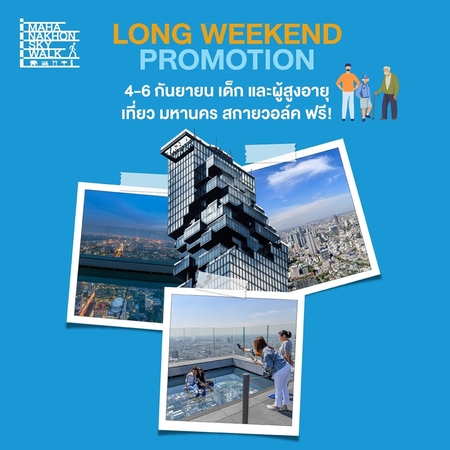
In a move to mark the upcoming long weekend, King Power Mahanakhon is granting free access to its famous Mahanakhon Skywalk to adults above the age of 60 and youngsters below 18 with every purchase of a Bt880 ticket.
The skywalk, located in Bangkok’s iconic pixelated building, features a thrilling all glass observation deck offering a 360-degree view of the capital from 78 floors up. Visitors can also stop off at “The Peak”, which is 314 metres above ground.
This offer runs from September 4 to 7 and the skywalk is open daily from 10am to midnight.
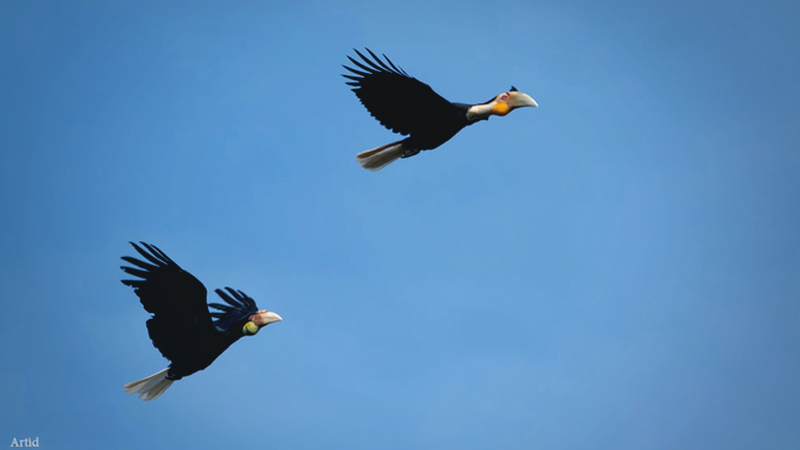
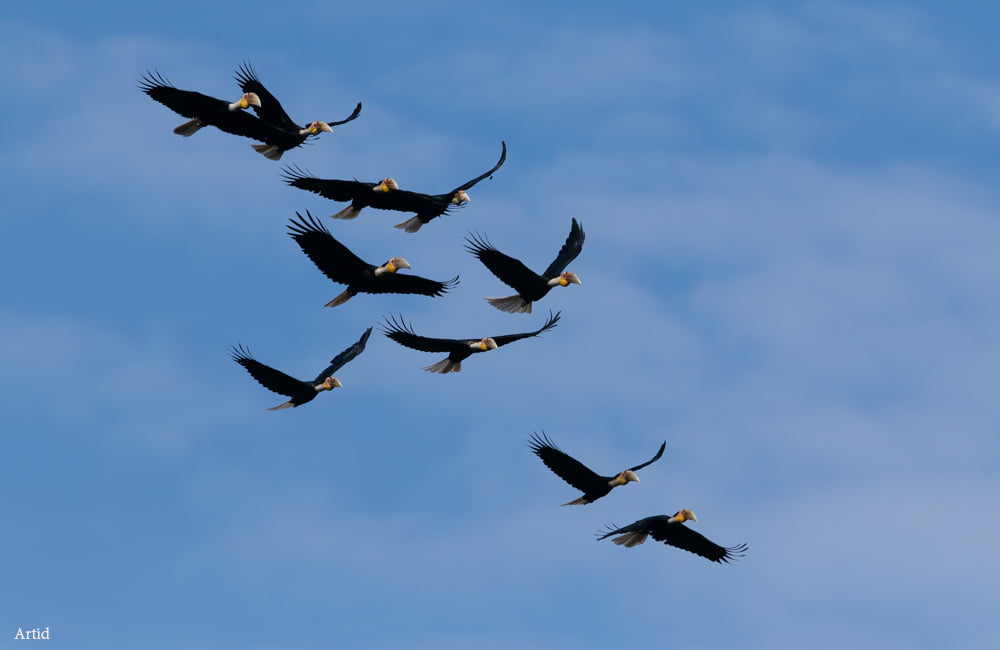
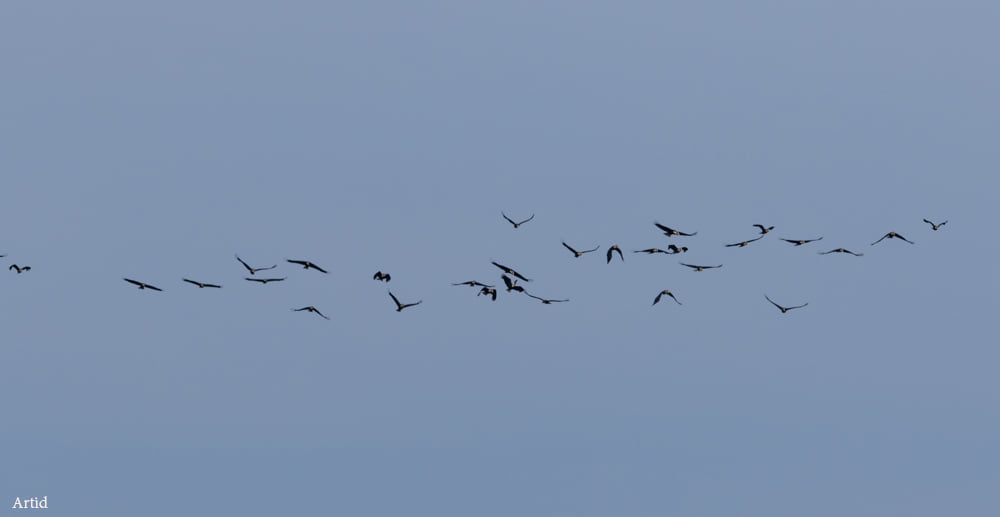
Nearly 30 wreathed hornbills fearlessly spread their wings over Mae Wong National Park, a sight rarely seen in over a decade.
Nearly 900 square kilometres of verdant jungles, rich in flora and fauna, make up the Mae Wong National Park. The park lies adjacent to the Khlong Lan National Park and the Huai Kha Khaeng Wildlife Sanctuary in Uthai Thani province.
It is home to elephants, tigers, and birds like the hornbill and kingfisher have staked their claim to the park’s lands.
The highlight is the Phu Sawan Viewpoint located approximately 300 metres uphill to see the impressive sunrise and sunset. It is one of the important bird-watching spots in Thailand and also a habitat for a wide variety of birds.
During this period, there are many kinds of birds flying by. The bird species that are outstanding and are of great interest to bird watchers are rufous-necked hornbill and wreathed hornbill, plus 300 other species of birds.
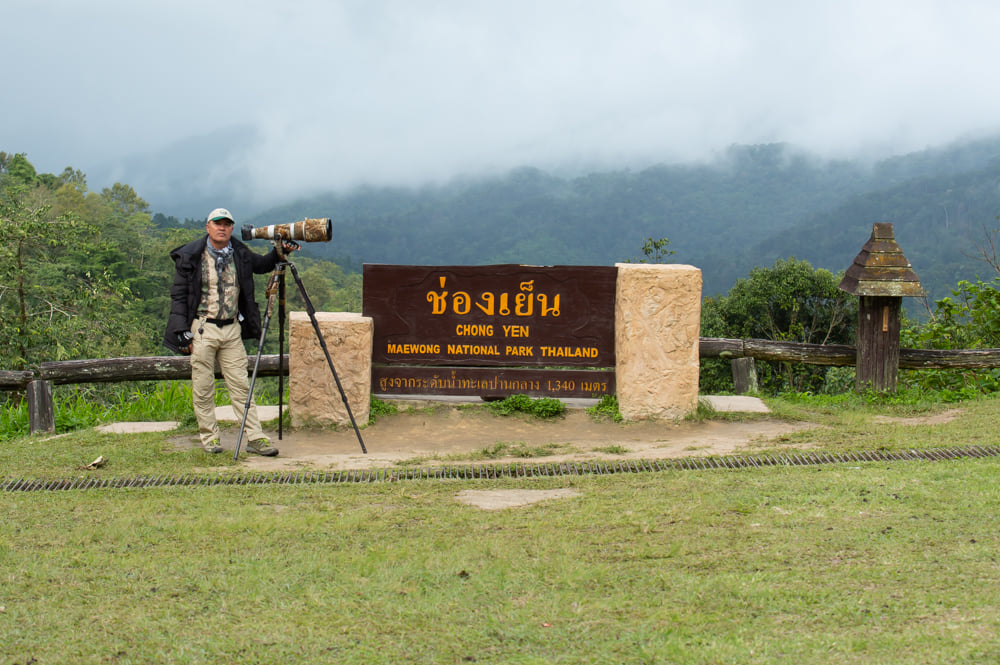
Artid Nima, a Nakhon Sawan-based photographer, who took a picture of a hornbill, at 8.45am at the Chong Yen Campground, said on Sunday that the weather at Khun Nam Yen Forest and Chong Yen Campground in Mae Wong National Park was refreshing. He said he was lucky to be ready to take a close-up picture of a group of 30 wreathed hornbills, seen there for the first time in a decade.
Jungle paradise in Khao Lak takes concrete steps to preserve nature
ThailandAug 28. 2020The signature giraffe-shaped Banyan tree in front of the beach at Khaolak Merlin Resort. /Photo by Jintana Panyaarvudh
By Jintana Panyaarvudh
Special to The Nation
Takua Pa, Phang Nga
Twenty years ago, when the second-generation of the Chirayus family wanted to build a resort on Phang Nga’s Khao Lak beach, they decided to go with the concept of sustainability to preserve the environment – and the result was well beyond expectation.
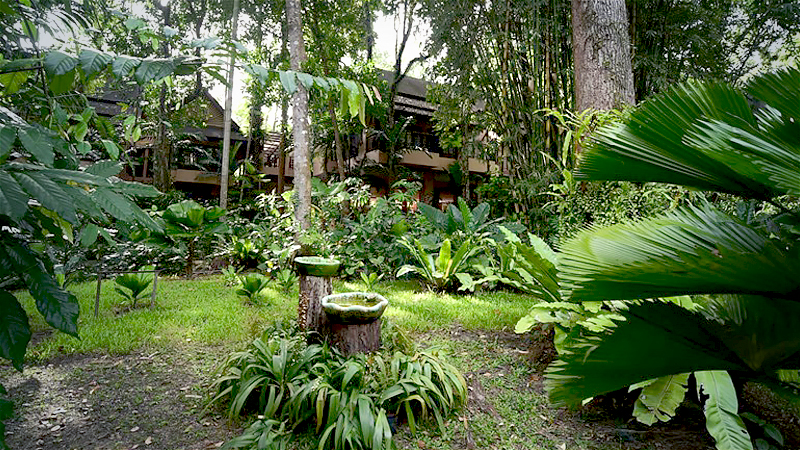
Following the belief that a resort and forest can live together, the Khaolak Merlin Resort was built along environment-friendly practices from the very beginning. Each and every old, original tree on the grounds was carefully preserved, including the more than 50-year-old Takian, resin, golden teak and Siamese Rosewood trees.
An endangered slow loris is spotted hiding on an old tree at night at Khaolak Merlin Resort. /Photo by Parinya Chawsamun
The makers of the resort worked on recreating a tropical ecosystem by digging canals and freshwater springs, as well as planting rare, endangered plants in the garden such as wild jungle orchids.
They also built a wastewater treatment and cleansing system using purely organic filtration methods. Treated water is used to water the garden and fill the resort’s streams – a practice that helps it save around 3 million litres of water per month and reduces the impact on environment.
An aerial view of Khaolak Merlin Resort, which is nestled in a jungle. /Photo by Parinya Chawsamun
Unlike other resorts, where more rooms are built to serve more guests, Khaolak Merlin has followed the 50-50 principle – half of the 30-rai property is given to humans and half is devoted to nature. An aerial view makes it look as if the resort has a jungle growing around it, and every step on its grounds feels as if one is walking through a rainforest.
Chanon Wongsatayanont, left, and Nancy Lynne Gibson. /Photo by Parinya Chawsamun
“Sustainability is the key goal of our resort. We believe in giving a better world to future generations by being mindful of the impact we have on the environment and local communities,” said Chanon Wongsatayanont, director of Merlin Phuket Group.
Bowls of water are left in the forest for birds to bathe. /Photo by Parinya Chawsamun
“We have built this resort as a jungle paradise, where the rainforest meets the sea. Preserving nature has had a good result. Our regular guests, mostly Europeans, return to stay here every year [thanks to untouched nature]. They are also very excited about the wildlife here,” he added.
The resort has also joined forces with Love Wildlife, a non-profit conservation foundation, to help promote wildlife conservation and has also kicked-off a number of new eco-inspired projects within the hotel and its surrounding landscape, including signs around the resort to help guests identify the wildlife they spot.
The foundation surveyed the property and found more than 50 animal species, including birds, lizards, frogs, butterflies, flying squirrels to name a few, and over 40 plant species. Just recently, at least two slow lorises were spotted hiding on the resort’s ancient trees.
Up close and personal
These discoveries have further expanded cooperation between the resort and Love Wildlife. Now they will jointly work on surveying, tracking and observing the behaviour of slow loris in the area, so they can do more to preserve this endangered species.
Slow lorises are a group of several species of nocturnal strepsirrhine primates that make up the genus Nycticebus, found in Southeast Asia and bordering areas. The species is listed as endangered on the 2020 International Union for Conservation of Nature Red List. The two greatest threats to slow lorises are deforestation and the wildlife trade.
Since there is little new information about the animal, this will be a great opportunity for the foundation to join hands with Khaolak Merlin to study their behaviour so we can know their conservation status, said Nancy Lynne Gibson, president and founder of Love Wildlife Foundation.
She said the aim of the study is to find out what kind of fruit the slow loris eats, what kind of trees they prefer to live on and in what environment, so more attention can be paid to these trees, more trees of the fruit they like can be planted and the area further improved to cover the needs of local wildlife.
“We don’t know yet what happens to the environment or ecosystem when the animal goes extinct,” said Gibson, who was lucky enough to spot two slow lorises when she was exploring the area recently.
“I also want to raise awareness that it’s important to preserve endangered animals and not raise them as pets,” said Gibson, who has been interested in slow loris since she was child.
Under the partnership, the foundation will train hotel staff to monitor the animals and collect information.
Chanon said the habitat for slow lorises has reduced as more forested areas in Khao Lak are cleared. “But if we know their behaviour, we can adjust the environment in our resort, making it as close to their habitats as possible,” he added.
In order to learn how to preserve old trees on its grounds, resort is partnering with Big Trees Project, an environment advocacy group that promotes awareness and activities that help preserve public green spaces in the capital and beyond. The group will train the hotel’s staff on now to keep the trees healthy so they can continue providing homes for local wildlife.
Chanon said he hopes both partnerships will help the hotel gather pertinent information and know-how.
“We live with nature and biodiversity, but don’t know how and when it will be destroyed,” he added.
As the Covid-19 situation in Thailand is improving, the Tourism Authority of Thailand (TAT) has launched a promotional campaign in association with local entrepreneurs to boost tourism and economy in Surat Thani province.
“The Once in a life time @ Khao Sok, Surat Thani” promotion will offer Bt600 room discount for the first 300 rooms reserved at participating hotels around Khao Sok National Park and Rajjaprabha Dam, also known as the Cheow Lan Dam, which is dubbed ‘Thailand’s Guilin’ by Thai and foreign tourists,” Nantawan Siripokapat, TAT director of the Surat Thani offices, said.
Meanwhile, Suphakarn Yodchun, director of TAT Koh Samui, Koh Tao and Koh Pha-Ngan office, said that the office will launch a campaign “Unlocked Samui” that would offer up to 70 per cent discounts on hotels and facilities on the island.
“The campaign, which will run until October 31, is joined by hotels, car rental providers and guided tour boats on the island to attract tourists to explore the beauty of Koh Samui, which normally welcomes around 400,000 visitors per year,” she added.
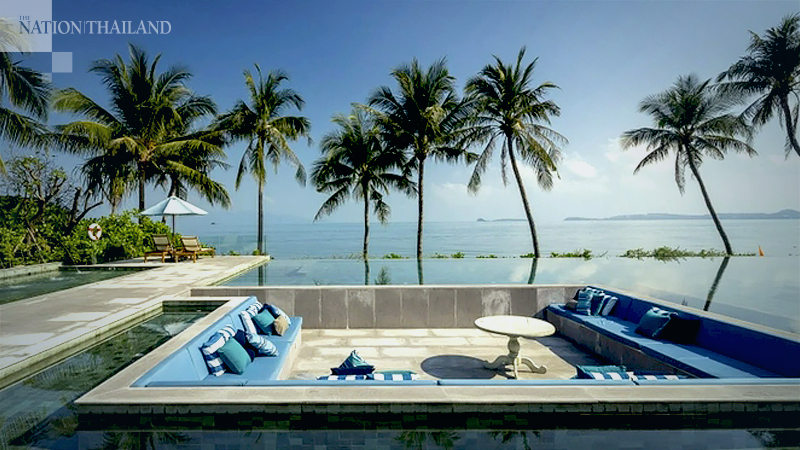
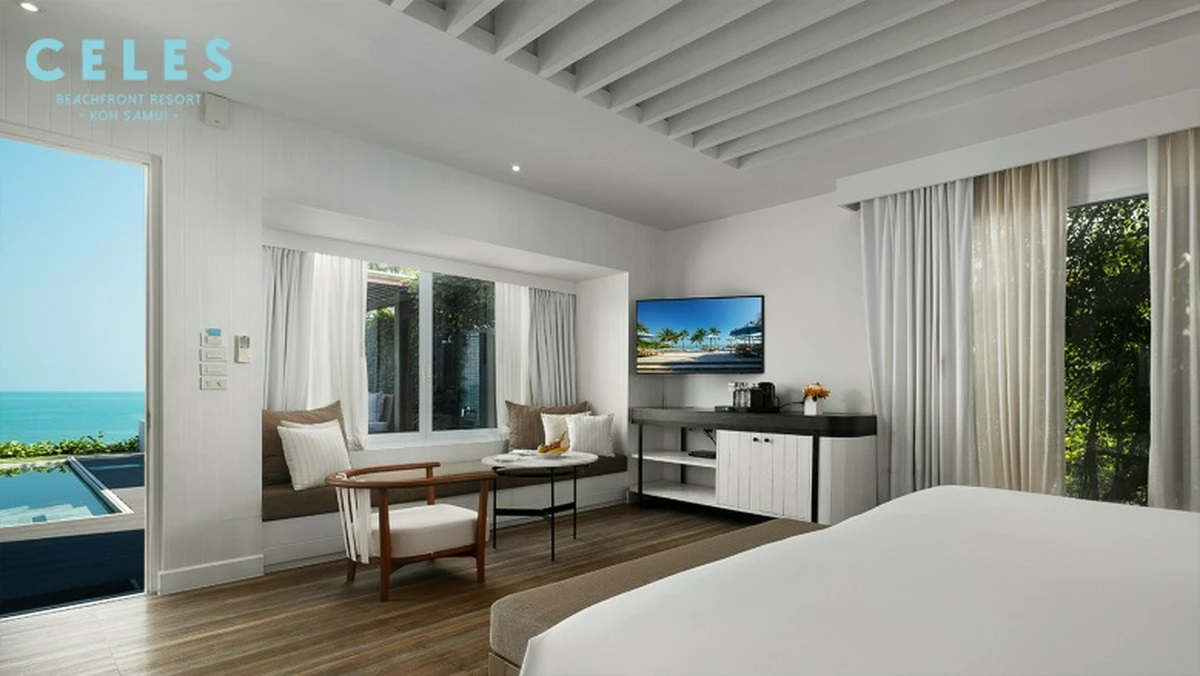
Meanwhile, Omphan Nanthapanich, general manager at Celes Beachfront Resort and Samui Palm Beach, a five-star hotel on Koh Samui featuring 200 metres of private beach front, has said that the hotel is offering discounts under the government’s “Rao Tiew Duay Kan” (We Travel Together) campaign with rooms starting at Bt1,788 per night, while the pool villa package (three days, two nights) starts at only Bt12,000. Reservation must be made before August 31. For more info, visit https://www.celesresorts.com
For further information about promotions in Surat Thani, contact TAT Surat Thani office on tel: 0 7728 8817-8.
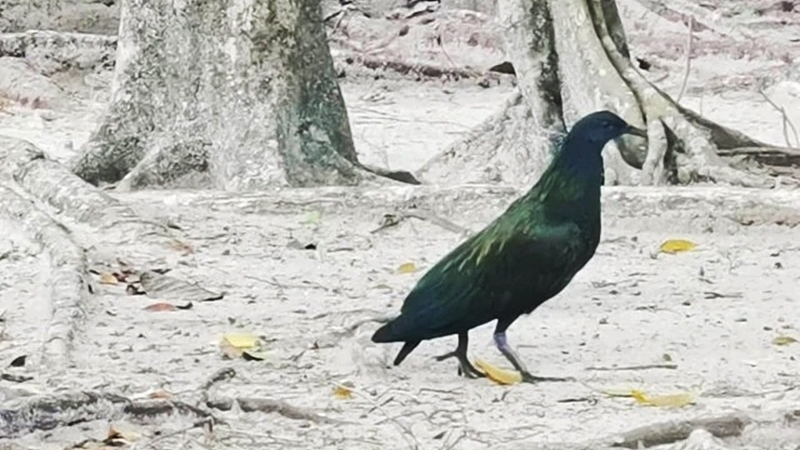
More than 40 rare Nicobar pigeons have been spotted in Koh Rok in Mu Koh Lanta National Park after the park was closed during the Covid-19 pandemic.
On Thursday (August 13), the park’s officials recorded a video of Nicobar pigeons searching for food in the forest near the park office, exciting all officials who had rarely seen the birds in such a big group.
Park chief Weerasak Srisatjang said that it was the first year that Nicobar pigeons had gathered in such a large group. Earlier they came in flocks of around 10.
Their arrival signals the abundance of ecosystems in Koh Rok Island since the closure in the beginning of the year which will continue until October, he said.
Nicobar pigeons are 40-41 centimetres long with a small head, green, yellow and grey body and white tail. The bird has signature feathers on its neck.
This species of bird lives in the region of Andaman Sea and Indo-Pacific such as Nicobar Island and Andaman Island. They normally mate between April and June.

 5 กรกฎาคม 2563 – 09:43 น.


 28 พฤษภาคม 2563 – 15:25 น.

 11 เมษายน 2563 – 07:00 น.


 11 เมษายน 2563 – 02:00 น.


 9 มีนาคม 2563 – 00:00 น.
 The signature giraffe-shaped Banyan tree in front of the beach at Khaolak Merlin Resort. /Photo by Jintana Panyaarvudh