Nikkei Asia รายงานว่า สตีเฟน บ็องเซล (Stephane Bancel) ซีอีโอของบริษัท Moderna (โมเดอร์นา) ให้สัมภาษณ์ทางโทรศัพท์ว่า บริษัทกำลังพิจารณาผลิตวัคซีนต้าน Covid-19 ในญี่ปุ่น “เรากำลังเจรจากับหลายประเทศในเอเชีย รวมทั้งญี่ปุ่น”
ข่าวนี้มีขึ้นไม่นานหลังจากกระทรวงสาธารณสุขญี่ปุ่นอนุมัติการผลิตและจำหน่ายวัคซีนที่พัฒนาโดย Moderna และ AstraZenea (แอสตราเซเนกา) อย่างเป็นทางการเมื่อวันศุกร์ (21 พ.ค.)
บ็องเซลเผยว่า การหารือนี้ยังอยู่ในขั้นเริ่มต้น แต่ Moderna อยู่ระหว่างเจรจากับบริษัทหลายแห่งในญี่ปุ่น และกล่าวอีกว่า Moderna สนใจขยายธุรกิจและการผลิตในเอเชีย โดย Moderna สนใจญี่ปุ่นเพราะเป็นประเทศที่แรงงานมีคุณภาพสูงและมีประสิทธิภาพในการวิจัย
สำหรับการผลิตในญี่ปุ่น เป็นไปได้ที่ Moderna อาจขอสัญญาการผลิตหรือให้ใบอนุญาตกับบริษัทในญี่ปุ่น
ญี่ปุ่นเริ่มนำเข้าวัคซีนต้าน Covid-19 ของ Moderna ที่ผลิตในยุโรปแล้ว และคาดว่าจะนำมาใช้ในศูนย์ฉีดวัคซีนขนาดใหญ่ที่กรุงโตเกียวและเมืองโอซากา โดยดำเนินการโดยกองกำลังป้องกันตนเองซึ่งจะเปิดในสัปดาห์หน้า รวมทั้งใช้ในศูนย์ฉีดวัคซีนตามจังหวัดและเมืองต่างๆ
Morocco sends tons of humanitarian aid to Palestinian territories and Gaza
Morocco on Friday delivered emergency humanitarian aid to the Palestinians in Gaza through the Rafah border crossing with Egypt.
The humanitarian aid was handed over by Morocco’s ambassador to Egypt, Ahmed Tazi, to the representative of the Palestinian Ministry of Health, Fathi Abou Warda.
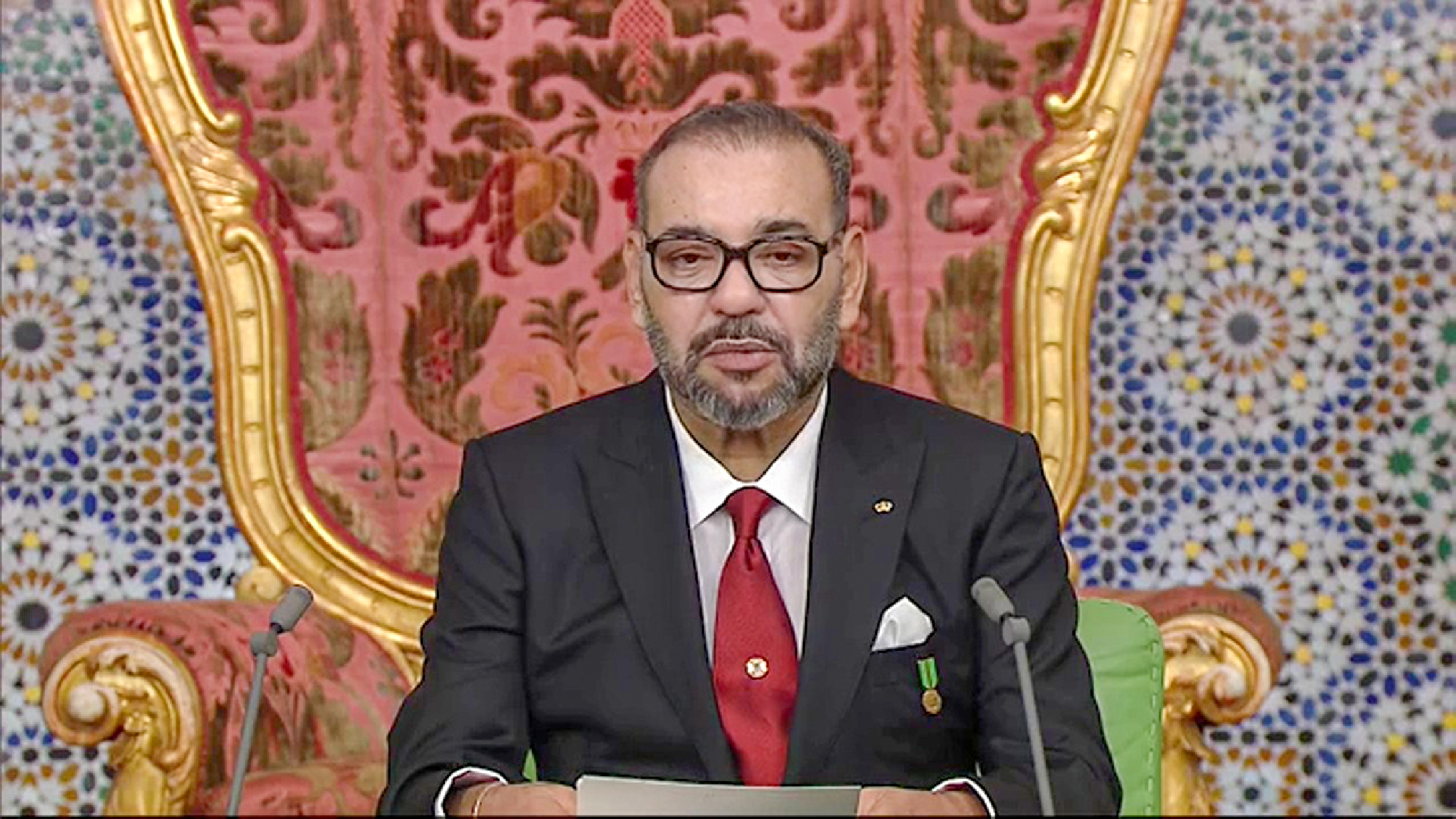
The Palestinian official expressed his gratitude to King Mohammed VI of Morocco for his continuous support to the Palestinian cause and his defence of the Palestinians’ legitimate right to establish an independent state, according to a Moroccan government handout.
The official also conveyed the greetings and gratitude of the Palestinian Authority to the king and Morocco for this initiative that would help alleviate the suffering of the Palestinian people.
Gaza came under severe air attack from Israel in retaliation for rocket attacks. The two sides have accepted a ceasefire.
On Tuesday, two Moroccan Royal Armed Forces aircraft carried 20 tons of the aid and landed at Cairo East Air Base Airport in Egypt.
Last Sunday, two military aircraft carrying humanitarian aid consisting of basic foodstuffs, medicines for emergency care and blankets had landed in Amman, Jordan. The aid was transported to the Palestinian territories by trucks across the border bridge between Jordan and the West Bank.
The 40 tons of humanitarian aid comprised basic foodstuffs (30 tons), emergency medicines and blankets (10 tons).
Morocco had denounced in the strongest terms the violence perpetrated in the occupied Palestinian territories.
Morocco backs a two-state solution, through the creation of a Palestinian State within the borders of June 4, 1967, with East Al-Quds, or East Jerusalem, as its capital.
Biden says he wont allow Justice Dept. to seize journalists phone, email records
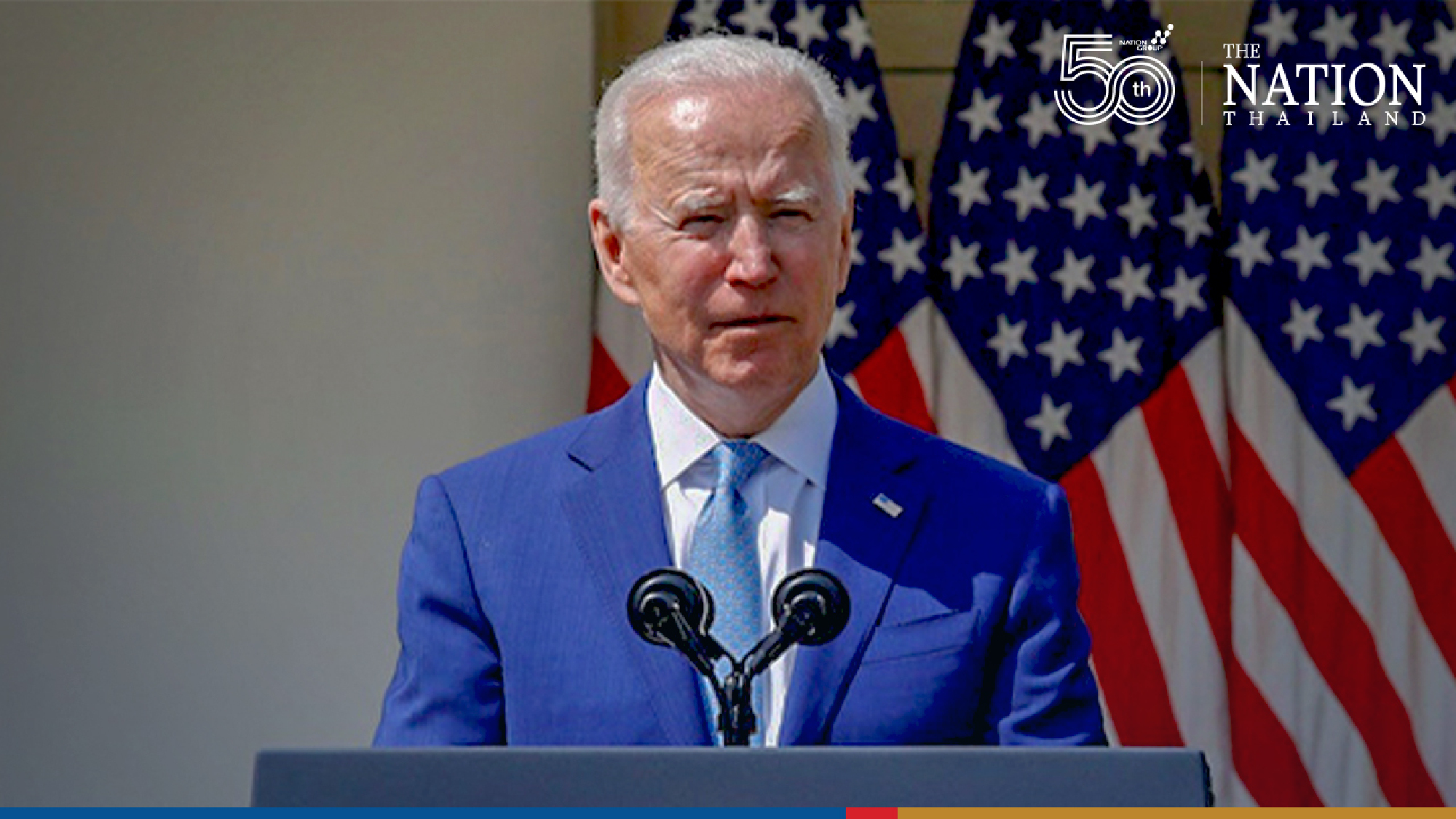
WASHINGTON – President Joe Biden on Friday declared that he would not allow his Justice Department to seize journalists phone or email records, calling the practice “simply wrong.”
At the White House, a reporter asked Biden about federal law enforcement taking such records and whether the president would “prevent your Justice Department from doing that.” Biden joked with the reporter, then grew serious, saying: “Absolutely, positively it’s wrong. It’s simply, simply wrong.”
“So you won’t let your Justice Department do that?” the reported asked.
“I will not let that happen,” the president responded.
Biden’s declaration follows recent disclosures that during the Trump administration, the Justice Department secretly sought the records of four journalists, three for their work at The Washington Post and one for her reporting at CNN.
Media organizations and free-press advocates decried the moves, asking whether the Justice Department had followed its own policies and noting that such tactics have a chilling effect on journalists’ ability to uncover essential information about the government. Two Democratic lawmakers – Sen. Ron Wyden of Oregon and Rep. Jamie B. Raskin of Maryland – wrote to Attorney General Merrick Garland urging him to stop using the tactic. But until the president’s assertion Friday, his administration had not renounced the practice.
Biden’s statement would seem to block the Justice Department from sifting through reporters’ records in leak investigations and other cases, at least while he is in office. That could curtail federal law enforcement’s ability to pursue those who reveal classified information, although under existing policy, prosecutors were supposed to pursue all other means before trying to sweep up any reporter’s communications.
“That statement basically ends the chances of any media subpoenas in this administration,” said Matthew Miller, who was a spokesman for Eric H. Holder, President Barack Obama’s attorney general.
Bruce Brown, executive director of the Reporters Committee for Freedom of the Press, said that he is seeking more details on the Justice Department’s recently revealed seizures and that he is in talks with government officials to reconstitute a group of journalists and Justice Department personnel first formed in the Holder years to discuss the impact of the department’s policies. The group, he said, has not met since 2018.
Brown hailed Biden’s comments, saying they set the groundwork for a productive discussion about the policy.
“Hearing him say, ‘This is wrong,’ and hearing him say, ‘This is not going to happen again,’ that’s just what we’re wanting to hear,” Brown said.
But some former Justice Department officials cautioned that a unilateral ban on going after reporter records was unwise. “It’s appropriate for there to be a significant hurdle for the Justice Department to seek records of journalists in leak investigations – but establishing a blanket prohibition would be detrimental to legitimate national security interests,” said David Laufman, a former Justice Department national security official who previously oversaw leak cases. “What the department needs is a policy that strikes the right balance between protecting First Amendment interests while enabling law enforcement to determine who’s responsible for the unauthorized disclosure of classified information.”
A Justice Department spokesman declined to comment on Biden’s declaration. It was unclear whether the president’s remark – which appeared to be off the cuff – would be accompanied by any policy update or formal guidance to federal prosecutors.
In a briefing Friday before Biden spoke, White House press secretary Jen Psaki had notably declined to renounce the Justice Department’s practice of secretly seeking journalists’ phone and email records to identify sources in leak investigations, even as she sought to distance the Biden administration from the recently revealed instances of the Trump administration’s doing so.
Asked what the Biden administration’s view was on the Justice Department’s having secretly obtained journalists’ records, Psaki noted that the moves occurred before Biden was in office but did not answer whether she thought the tactic was appropriate.
“The Justice Department conveyed yesterday that they intend to meet with reporters to hear their concerns about recent notices, and they certainly intend to use the Holder model as their model, not the model of the last several years,” Psaki said during the briefing. “But really, these decisions would be up to the Justice Department.”
Pressed later by a reporter who noted that Holder’s Justice Department had also secretly sought reporter phone records – though it later instituted policies narrowing the circumstances in which that could be done – Psaki again deflected.
“We’re not going to follow the Barr model, and I would point you to our Department of Justice as to how they will approach that issue,” she said, referring to William P. Barr, who served as attorney general under President Donald Trump.
In a brief phone call after Friday’s White House news briefing, Barr asserted, “All I’ll say is, I followed the Holder model.” He declined to answer more-specific questions.
Anthony Coley, a Justice Department spokesman, also declined to answer specific questions about the recently revealed gathering of journalists’ records, including whether the moves were appropriate and whether the department would continue the practice.
The Post was notified earlier this month that the department had, during the Trump administration, secretly obtained phone records of Post journalists and tried to obtain their email records. The effort appears to have been centered on reporting about the Trump administration and Russia’s interference in the 2016 election. Then, on Thursday, CNN revealed that its Pentagon correspondent was told her phone and email records had been secretly swept up by the department.
After the revelation that Post reporters’ records were collected, Marc Raimondi, a Justice Department spokesman, seemed to suggest the department’s policies had been followed.
“While rare, the Department follows the established procedures within its media guidelines policy when seeking legal process to obtain telephone toll records and non-content email records from media members as part of a criminal investigation into unauthorized disclosure of classified information,” he said in a statement at the time.
But after the more recent revelation about the gathering of CNN Pentagon correspondent Barbara Starr’s records, Coley, the Justice Department’s top spokesman, said only that the move occurred in 2020 and vowed, “Department leadership will soon meet with reporters to hear their concerns about recent notices and further convey Attorney General Garland’s staunch support of and commitment to a free and independent press.”
Holder faced significant controversy over collecting the phone records of journalists working for the Associated Press and Fox News. In 2013, he issued guidelines for how such records should be obtained. The guidelines called for prosecutors to notify and negotiate with reporters before obtaining their records but said an exception could be made if the attorney general determined that such discussions would pose a substantial threat to an investigation. Obama had called on Holder to review the Justice Department’s guidelines on such matters.
Miller, the former Holder spokesman, said he thought reporter subpoenas during the Biden administration were “unlikely anyway after the experience in the Obama administration and the rules Holder put in place.” But Biden’s assertion, he said, “drives a stake through it, barring something truly unexpected.”
Miller conceded that the Holder policy was “not perfect,” because the exception could be exploited to allow a willing attorney general to search reporters’ records. But he said the department was unlikely to want to abandon entirely the practice of issuing subpoenas to journalists, because nefarious actors, such as foreign intelligence agents, might pose as journalists to dodge law enforcement.
“You have to either ban media subpoenas outright – which I think is unwise, and most people at the department think is unwise – or you have to have some kind of an exception,” Miller said. “And the problem with having some exception is an attorney general who doesn’t want to follow the spirit of these rules can always find an exception.”
Published : May 22, 2021
By : The Washington Post · Matt Zapotosky, Anne Gearan
Louisiana police release video from violent arrest of Black man who died amid outcry over leaked footage
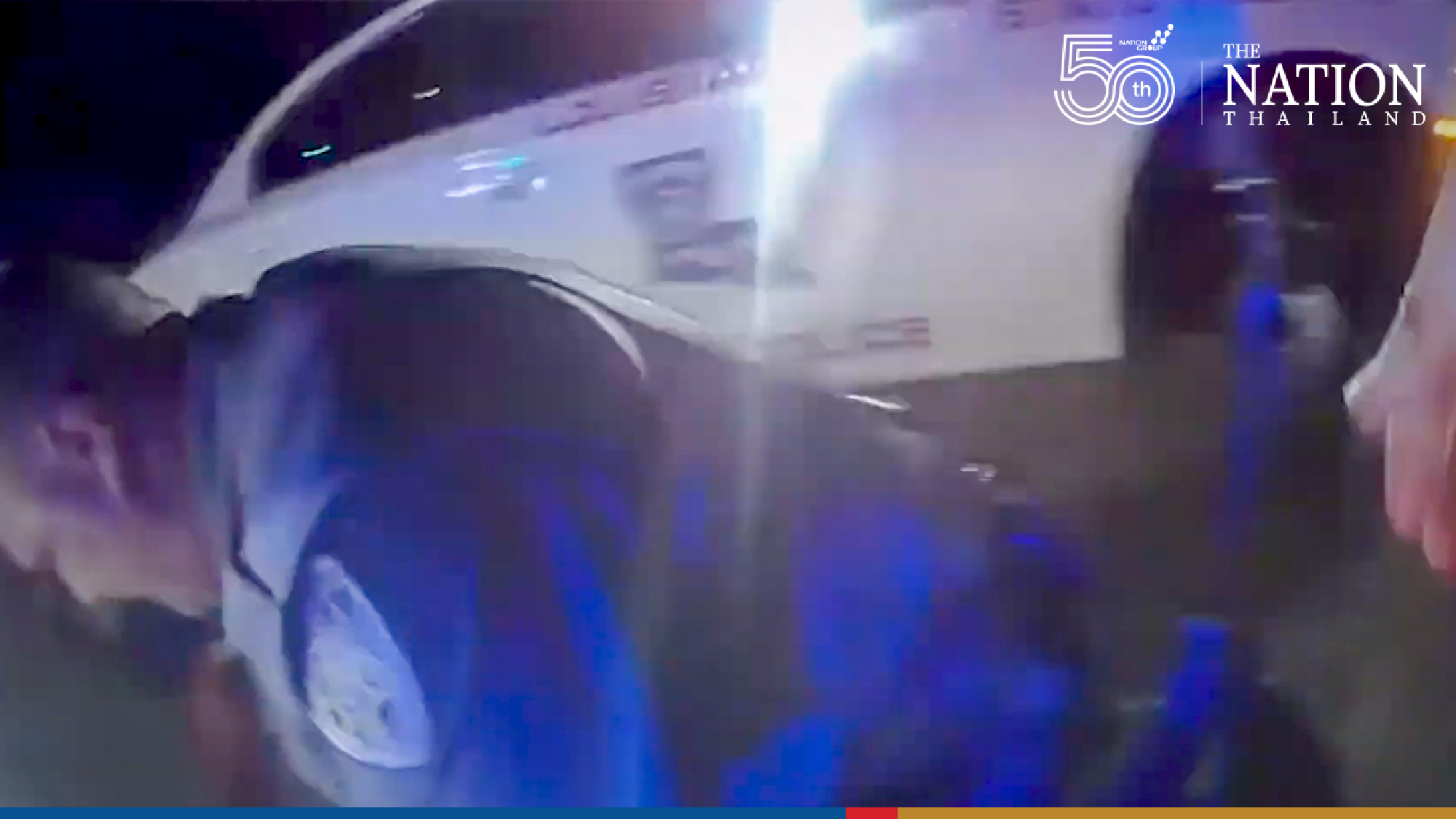
Louisiana State Police on Friday released body-camera videos from the arrest of Ronald Greene, a Black man whose death in custody triggered fresh outrage this week after leaked footage showed Greene pleading with troopers who stunned him, dragged him and left him shackled facedown.
State Police Superintendent Col. Lamar Davis also said he had replaced the leader of a troop dogged by allegations of abuse and made other changes to his command staff. Video of Greene’s May 2019 arrest obtained by the Associated Press – withheld for two years by authorities amid allegations of a coverup – added to mounting scrutiny of Troop F, which saw four of its members charged this year after an excessive force investigation.
“I assure you that we are making significant change,” Davis said at a news conference Friday evening. “We have made significant change, and we will continue to make significant change throughout our agency.”
The footage newly uploaded to YouTube represents all of the state police’s video from the incident, officials said. It includes body-camera as well as some in-car camera footage from four state troopers: Kory York, John Clary, Dakota DeMoss and Chris Hollingsworth, who died last fall. Lawyers for Greene’s family have also called for the arrest of officer Floyd McElroy, as the Justice Department investigates.
“We have been in close contact with FBI and we expect federal indictments to happen soon,” Lee Merritt, an attorney for Greene’s family, said in a Friday night statement to The Washington Post. “The Greene family has waited long enough for justice.”
The partial video released this week by the AP showed Greene wailing and saying “I’m sorry!” as troopers violently arrest him, deploying what the AP identified as a stun gun after appearing to raise his hands inside his car. Troopers later punch Greene in the face, drag him briefly by his shackled ankles and leave him to moan alone while handcuffed for more than nine minutes, the AP reported.
“I’m scared! I’m scared! . . . I’m scared!” the 49-year-old yelled while bent over in the front seat. “I’m your brother. I’m scared!”
Medics soon found Greene unresponsive, according to his family’s wrongful death lawsuit, and he was pronounced dead minutes after arriving at a hospital.
Davis said that state police had intended to make the videos public at the proper time; police previously said that unauthorized release compromised a “fair and impartial outcome.”
Davis said he hopes the community can start a “healing process” but declined Friday to comment to reporters on troopers’ conduct while state and federal authorities investigate. He said he could not speak to whether Greene should be alive today.
Asked about the AP’s reporting that state police withheld basic records related to Greene’s arrest from the medical examiner – including police reports and emergency medical information – Davis said he could not discuss the matter.
“I really don’t know why or when,” Davis said. “I would have to look at that.”
A long-hidden autopsy attributed Greene’s death to “cocaine induced agitated delirium complicated by motor vehicle collision, physical struggle, inflicted head injury and restraint,” according to the AP.
Lawyers for the troopers involved in the arrest have previously either declined to comment or not responded to The Post. State police said they intend to fire DeMoss, who is on leave and faces charges in the alleged beating of another Black driver.
Louisiana Democratic Gov. John Bel Edwards said Friday that he supported the release of all the footage in state police’s possession and found the video, which he watched last year, to be “disturbing.”
Troopers filmed with Greene appear to be White, and the AP describes them as White.
Greene was driving his silver Toyota along a highway in Monroe, La., about midnight on May 10, 2019, according to his family’s lawsuit. The body-cam video shows trooper DeMoss chasing Greene down a highway at more than 115 mph, the AP reported.
“We got to do something,” DeMoss said over his radio, according to the AP, just before police caught with Greene. “He’s going to kill somebody.”
DeMoss has said he tried to stop Greene after observing an unspecified “traffic violation,” the lawsuit from Greene’s family states. It says Greene eventually swerved and crashed into a wooded area but did not hit a tree and was able to leave the car on his own.
Video obtained by the AP shows Greene putting at least one hand up inside his car as troopers approach and shout with expletives, “Let me see your . . . hands!” Greene recoils and pleads with police as they shock him while he is still inside the car.
Troopers get Greene on the ground and struggle with him, with one man saying Greene is grabbing him, the AP reported. But they use force even when Greene is apparently restrained and compliant.
One video obtained by the AP shows an officer berating Greene for trying to change positions as he lay on his stomach, restrained.
“Don’t you turn over! Lay on your belly! Lay on your belly!” a trooper yells, briefly dragging Greene by his shackled ankles and then kneeling on the man’s back.
“You better lay on your . . . belly like I told you to!” he orders. “You understand?”
“Yes, sir!” Greene cries. “OK, OK, sir!”
When Greene is shackled and cuffed, police leave him unattended, bloody and still facing the ground, according to the AP.
One of the troopers, Hollingsworth, admitted to beating Greene in a profanity-laced recording obtained by the AP.
“Choked him and everything else trying to get him under control,” Hollingsworth said, the news agency reported. He described a prolonged struggle with Greene, who he said “was spitting blood everywhere and all of a sudden . . . just went limp.”
The lawsuit filed by Greene’s family says police initially told loved ones Greene died in a car crash; in fact, the lawsuit alleges, excessive force left Greene “beaten, bloodied, and in cardiac arrest.”
Police pointed Friday to local news articles from the day Greene died that said he became “combative” with officers and was handcuffed after a struggle, according to authorities.
DeMoss got a “letter of counseling” and a “letter of reprimand,” according to the state police. He was found to have violated rules on “courtesy” and body-worn or car cameras, officials said.
York was found to have violated rules on body-worn cameras and treatment of people in custody and got a 50-hour suspension. He has “returned to active duty pending the outcome of the review by federal and state authorities,” state police said.
Hollingsworth was set to be fired last fall, but died in a single-vehicle crash shortly after learning his intended punishment, the AP reported.
The criminal investigations division in Monroe reviewed the incident and submitted materials in August of 2019 to prosecutors in Lincoln Parish, according to a timeline released Friday by state police. In February 2020, police said, they provided a case file to the Justice Department. Then, more than a year after Greene’s death, an administrative investigation into troopers’ use of force began.
Critics have cast Greene’s death as part of systemic issues in the Louisiana State Police and their treatment of people of color. Court filings recently drew new attention to DeMoss and other troopers’ roles in the alleged beating of 29-year-old Antonio Harris.
Alanah Odoms, executive director of the ACLU of Louisiana, told The Post this week that she wants the Justice Department to investigate the Louisiana State Police and Troop F.
Odoms said of the body camera footage: “It provides to the public – in the same way that the George Floyd video did – the necessary kind of tangible and frankly gruesome and infuriating kind of proof of what our community members have known inherently and anecdotally for too long.”
Davis defended the Louisiana State Police as a whole on Friday, echoing other police leaders’ references to “bad apples.”
“While we may have a few bad actors, it’s our job and it’s my job to hold them accountable,” Davis said.
Expert on Canadian English who defined gotchies, jambuster
Katherine Barber, a lexicographer who served as founding editor in chief of the Canadian Oxford Dictionary, a tome that codified a long-neglected argot with definitive entries on such linguistic gems as “gotchies” (slang for underpants) and “jambuster” (a jelly doughnut), died April 24 at a hospice center in Toronto. She was 61.
The cause was brain cancer, said her brother Peter Barber.
Known in Canada as the “Word Lady,” Barber devoted the better part of her professional life to collecting and cataloguing the manifold words and idioms that make Canadian English different from the language as it is spoken in England and the United States.
Her work may not have entailed much glamour, or glamor, as she slogged her way from “eh to zed,” as a reporter for the Globe and Mail once joked. But she found abundant pleasure in awakening her countrymen and women to the marvels of their language, the words they said and heard every day without ever realizing that those expressions were uniquely theirs.
“People often ask me, why do we need a Canadian dictionary? Isn’t an American one good enough?” Barber said. “It’s as if Canadians don’t realize how distinctive their language is. People use words like ‘seat sale’ but don’t know that other people don’t use them.” (A “seat sale” refers to a markdown in price, especially of airline tickets.)
A polyglot, Barber spoke fluent French and German and was conversational in Italian. She had trained in translation and lexicography – the practice of compiling dictionaries – when Oxford University Press hired her in 1991 to oversee the publication of a new reference guide to Canadian English.
The Canadian Oxford Dictionary was not the first dictionary of its kind; the Gage Canadian Dictionary, among other guides to Canadianisms, preceded it. But when the Canadian Oxford was released in 1998, after more than six years of toil by Barber and the team of lexicographers she oversaw, it was hailed as a “monument.”
“It immediately outshone its second-rate schoolhouse predecessors and became a universal professional standard in this country,” a reporter for the National Post of Canada wrote in an obituary about Barber, describing her as “our appropriately reserved and gentle answer to blustering Samuel Johnson or officious Noah Webster.”
To assemble the dictionary, Barber and her colleagues studied thousands of texts from high literature to bodice-rippers, periodicals, and even advertisements and restaurant menus in search of distinctly Canadian words and phrases. In the end, they identified more than 2,000.
These expressions included “Molson muscle” (beer belly), “bangbelly” (a dessert typical of Newfoundland), “spinarama” (defined as an “evasive” hockey move “consisting of an abrupt 360-degree turn”) and “bunny hug” (a hooded sweatshirt).
Foreigners visiting Canada could rely on the Canadian Oxford to tell them that a “parkade” is a parking garage. They might turn to the “B” section of the alphabet to learn, with relief, that a sign advertising a “bachelor for rent” refers not to a male escort but rather a studio apartment.
Canadians have at least 17 words to describe ice and so many regional terms for doughnut – besides jambuster, Burlington bun and bismarck – that Barber kidded her dictionary should perhaps have been titled “The Oxford Companion to Canadian Doughnuts.”
By the time she had completed her task, she was possessed, a reporter for the Ottawa Citizen once wrote, of a “vocabulary the size of Saskatchewan.” It grew even larger by 2004, when a second edition of the dictionary, also overseen by Barber, was released.
In an interview with TVO, an educational television network in Ontario, Barber remarked that a good lexicographer must be a generalist able to “pop from nuclear physics to ballet to basketball.” It was perhaps ironic that she became a lexicographer, she observed, because she was a “terribly untidy person.” But, she added, “I love imposing order on the language.”
Katherine Patricia Mary Barber was born on Sept. 8, 1959, in Ely, a city in Cambridgeshire, England. Her father, a member of the Royal Air Force, and her mother, who met him during travels in Britain, were Canadian.
Barber was in grade school when her father retired from the military and the family returned to Canada, settling in Winnipeg, the capital of Manitoba.
Her love of language could be traced to both parents, her brother said. Their mother was a high school English teacher, their father an avid reader. In her girlhood, Katherine Barber recalled, she was enthralled not by Nancy Drew mysteries but rather by Fowler’s guide to modern English usage.
She received a bachelor’s degree in French literature from the University of Winnipeg and, later, a master’s degree in French letters from the University of Ottawa. She worked on a bilingual Canadian dictionary before joining Oxford University Press to write entries for the Oxford English Dictionary.
Oxford University Press reportedly invested $2 million in the first edition of its Canadian dictionary. But in 2008, Barber and her staff were laid off when the publishing house shuttered the Canadian dictionary division in Toronto, citing “changing market conditions.”
Barber, whose other passion in life was ballet, later operated a travel company that arranged trips to Europe around ballet performances. She wrote two books of her own, “Six Words You Never Knew Had Something to Do With Pigs: And Other Fascinating Facts About the Language From Canada’s Word Lady” and “Only in Canada, You Say: A Treasury of Canadian Language.”
Survivors include two brothers and a sister.
Barber once remarked that her purpose in life was “to convince people that there is more to Canadian English than ‘eh.’ ” But even “eh” received a complete treatment in the Canadian Oxford.
It is an interjection “inviting assent,” “expressing inquiry or surprise,” “asking for something to be repeated or explained” or “ascertaining the comprehension, continued interest, agreement, etc., of the person or persons addressed.” The last listing is “the only usage of eh that can be categorized as peculiarly Canadian,” according to the definition, “all other uses being common amongst speakers in other Commonwealth countries and to a lesser extent in the United States.”

 Moderna กับ Johnson&Johnson ร่วมบริจาคด้วยรวม 300,000 โดส
 พายุฝนที่กระหน่ำอินเดียทำให้ร่างผู้เสียชีวิตจาก Covid-19 ที่ฝังไว้ถูกชะจนโผล่ขึ้นมา

 ซีอีโอโมเดอร์นากำลังเจรจากับหุ้นส่วนเล็งผลิตวัคซีนต้าน Covid-19 ในญี่ปุ่นเพราะมีศักยภาพ
 อนามัยโลกคอนเฟิร์มวัคซีนที่ WHO อนมัติแล้วป้องกันเชื้อกลายพันธุ์ได้ทุกสายพันธุ์รวมทั้งสายพันธุ์จากอินเดีย
 แอนติบอดีในคนที่ติด Covid-19 สายพันธุ์ธรรมดาจะลดลงเรื่อยๆ หลังสู้กับเชื้อกลายพันธุ์
 ทางการอินเดียหวั่นเสียภาพลักษณ์ขอบริษัทโซเชียลมีเดียลบเนื้อหาที่มีคำว่า “สายพันธุ์อินเดีย” ออก