Workers who quit rather than risk covid on the job now hope Biden can help them collect unemployment. #SootinClaimon.Com

#SootinClaimon.Com : ขอบคุณแหล่งข้อมูล : หนังสือพิมพ์ The Nation.

Workers who quit rather than risk covid on the job now hope Biden can help them collect unemployment.

InternationalFeb 09. 2021Jonathan Burlingame stands outside his home in Canton, Mass. MUST CREDIT: Photo for The Washington Post by Olivia FalcignoJonathan Burlingame stands outside his home in Canton, Mass. MUST CREDIT: Photo for The Washington Post by Olivia Falcigno

By The Washington Post · Eli Rosenberg, Hannah Knowles

Jonathan Burlingame had seen enough in mid-July.

The machines at the factory he worked at in South Boston were not wiped down enough, he said. Gloves and masks were in short supply, except for the workers who, like himself, took it upon themselves to bring their own. And he heard that some workers were testing positive, even though management hadn’t said a word.

With his parents moving in with him in a matter of weeks – his father, 75, a two-time cancer survivor and mother, 71, both fleeing rising coronavirus cases in Florida – Burlingame quit, deciding that he couldn’t continue to go into a workplace he no longer believed was safe. Burlingame’s employer did not respond to a request for comment.

Burlingame was denied unemployment insurance by the commonwealth of Massachusetts, falling into the gaps between state and federal laws that only give limited protection to people who choose to quit work for safety reasons. He has been living without any income since July.

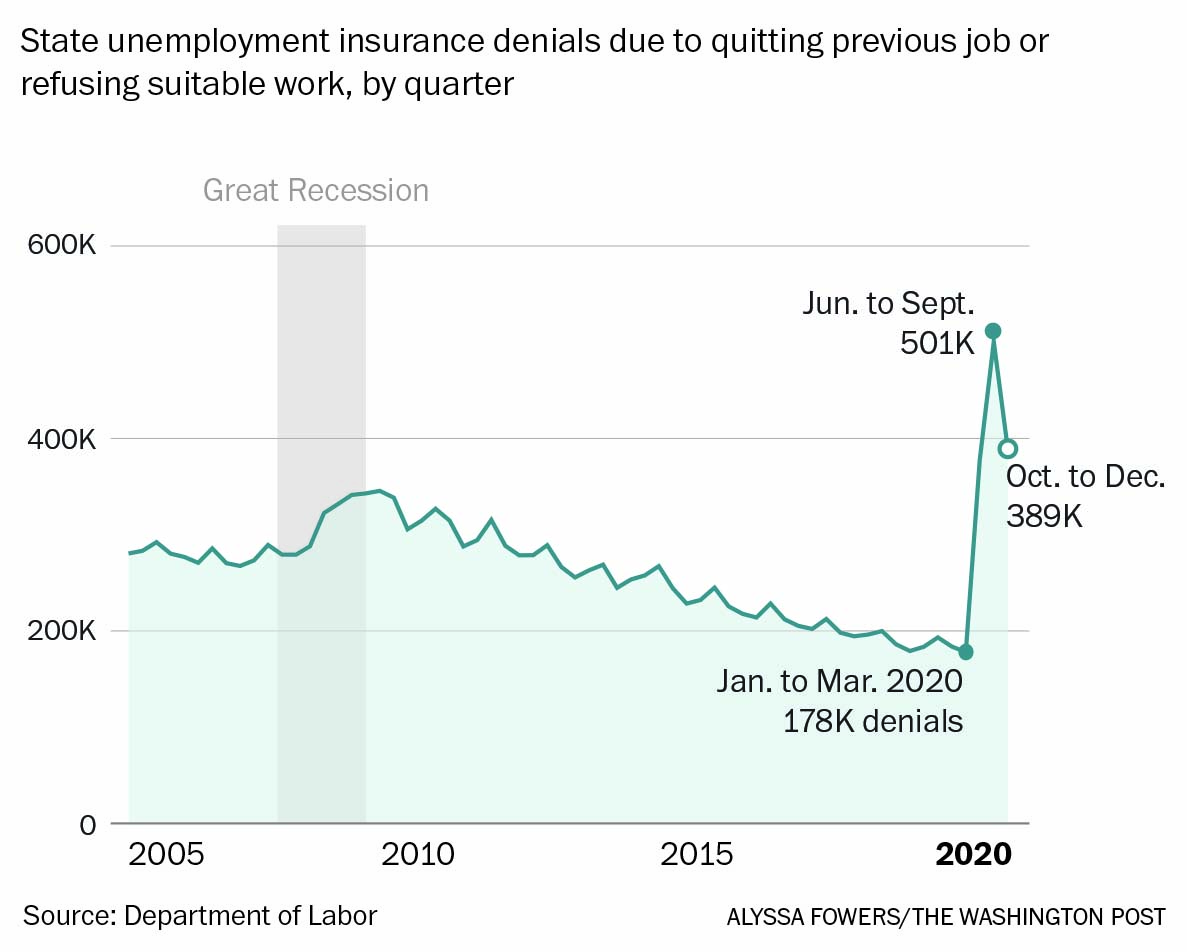
Burlingame is one ofmore than 1.5 million people who quit their jobs voluntarily because of the pandemic last year and filed for unemployment insurance, according to data from the Department of Labor, more than twice the amount over the same period in 2019. Some 80 percent have had their claims denied. A separate group of 75,000 have applied for unemployment insurance after being laid off anddeclining to return to work; 49 percent of that group had their claims denied.

The statistics speak to an unfortunate legacy of the pandemic: many workers have been forced to choose between a paycheck and their or their family’s health.

“My dad beat cancer twice,” Burlingame said. “I’m not going to bring something home to him and let him have two big wins beating cancer and then have this kind of thing shut him down because someone wanted their profit margin to be high.”
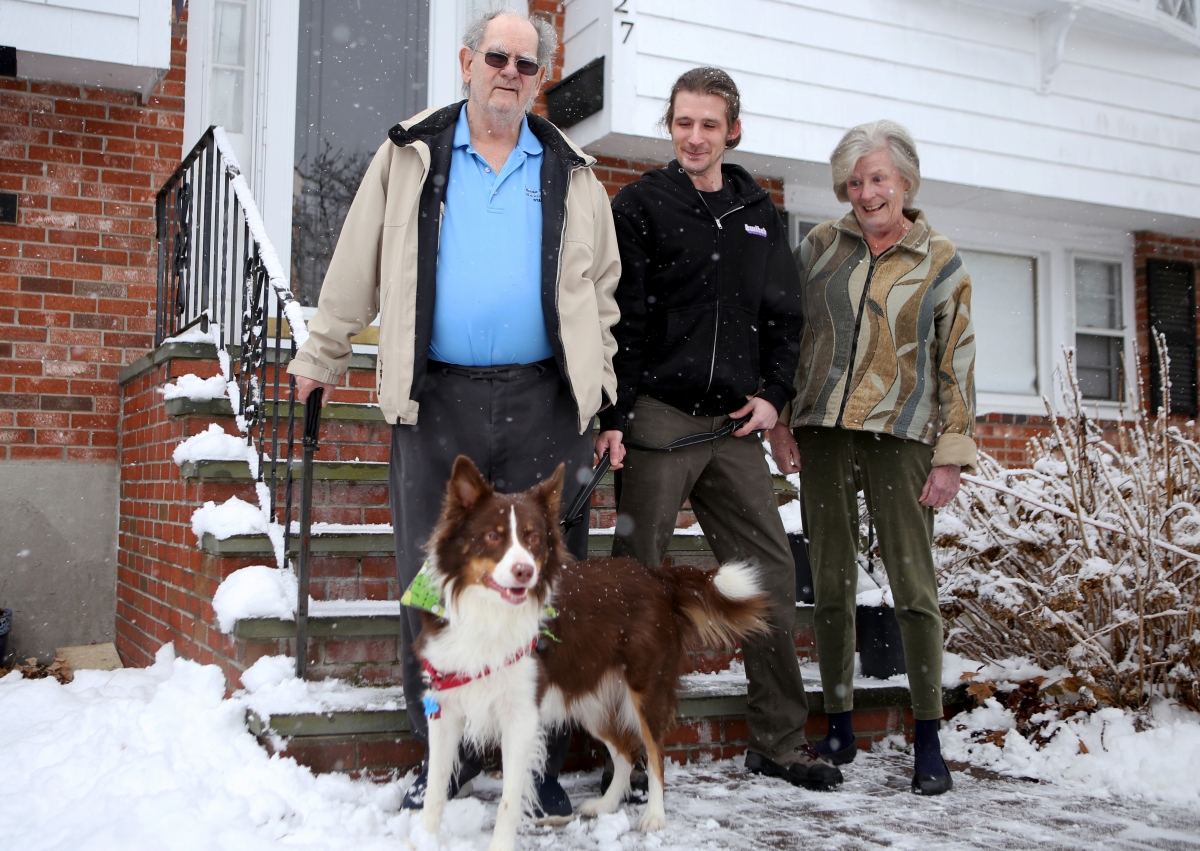
From left, Richard, Jonathan, and Christine Burlingame stand with their dog, Blaze, outside of Jonathan's home in Canton, Mass. MUST CREDIT: Photo for The Washington Post by Olivia Falcigno

From left, Richard, Jonathan, and Christine Burlingame stand with their dog, Blaze, outside of Jonathan’s home in Canton, Mass. MUST CREDIT: Photo for The Washington Post by Olivia Falcigno

Complicating matters, a jobless claim gets treated differently under disparate state unemployment systems, pointingto the challenges facing the Biden administration, which seeks to cut down on the number of workers who have been denied unemployment assistance because they were concerned about the safety risks of going to work.

A new executive action issued by President Biden in January directs the Department of Labor to clarify federal rules so that workers who refuse to go to unsafe workplaces will be more likely to be granted unemployment insurance. A White House official said the Department of Labor’s guidance will clarify what qualifies as an unsafe workplace.

“You could be denied unemployment insurance because you’re offered a job and you didn’t take it. It’s wrong,” Biden said, announcing the executive action last month. “No one should have to choose between their livelihoods and their own health or the health of their loved ones in the middle of a deadly pandemic.”

The Washington Post interviewed more than a dozen people who said they quit their jobs, or declined to return to their jobs after the reopenings last year because of fears about coronavirus infections. Another handful of workers said that they continued attending jobs they believed were unsafe, because they did not think they would be granted unemployment insurance.

Nawal Abbas, 52, a Sudanese immigrant with blood cancer told The Post she worked for months at a Walmart in Iowa City during the pandemic, unaware that her health condition could qualify her for unemployment.

“If I stop how I’m going to survive?” she said in Arabic, with translation from an advocate at the Center for Worker Justice of Eastern Iowa, which has helped Abbas with her rent. “And if I work, I might die, too.”

All spoke of the impossible decision they faced.

Many spoke of months of back-and-forth calls with unemployment administrators, watching bank accounts dwindle as they struggled to get by without a paycheck or aid. And many said they had high hopes that the executive order could result in them receiving some support at long last.

“I was absolutely elated,” said Troy Williamson, 29, who hasn’t received any unemployment aid since he quit his job at a day-care center in Toledo over the summer, worried about his high-risk girlfriend and concerned about a lack of proper safety precautions at his workplace. “This is something that really needs to happen. Not just for myself – there are so many people who need this help.”

But experts caution that the executive order’s influence could depend on how the Biden administration defines “unsafe workplaces,” as well as the complicated dynamics between federal and state unemployment law and administration.

Workers who quit their jobs voluntarily may still have trouble getting unemployment benefits, experts say. The new order appearsto help only those who are already unemployed, turn down return-to-work offers or other employment offers because the workplacesare unsafe.

To qualify for unemployment benefits, workers who quit their jobs for safety reasons face a higher threshold than those who turn down work: Typically they have to show that not only was there a significant health risk in the workplace, but also that they first sought to remedy their concerns by bringing them to their employers’ attention, according to George Wentworth, an unemployment expert at the National Employment Law Project.

That hasn’t always worked out for workers like Williamson, who said he raised safety concerns with administrators and managers repeatedly after the day-care center reopened before quitting – and communicated that in his unemployment claim. He also complained to the county health department. The day-care center did not immediately respond to a request for comment.

These provisions are complicated by other factors as well: the unprecedented volume of jobless claims that have swamped underfunded state unemployment agencies, and the way that unemployment benefits became politicized, like many other issues raised by the pandemic.

Many Republican-led states pressured people to go back to work during the reopening push last spring, warning that those who turned down suitable work would be penalized, amid concerns workers would take advantage of historically generous unemployment benefits available at the time. Oklahoma, Ohio, Tennessee and Iowa even set up specific channels for businesses to report employees who turned down work.

Businesses have been in a difficult position when it comes to unemployment insurance during the pandemic, said Kevin Kuhlman, a vice president at the National Federation of Independent Business.

“They had either had employees decline the job offer or had to offer higher salaries for employees to return,” he said. “Our overall concern is just, you know, inserting more friction between the small-business owners and small-business employees.”
The Labor Department under President Donald Trump signaled support for restrictions,writing in guidance last spring that “barring unusual circumstances, a request that a furloughed employee return to his or her job very likely constitutes an offer of suitable employment that the employee must accept.”

Experts said that a more worker-friendly interpretation of federal unemployment laws could push some state unemployment agencies to side more frequently with workers who turn down employment that poses a significant risk to them.

“The fact that the Department of Labor hasn’t pushed back when governors or other officials make statements that are running roughshod over a thoughtful reasoned application of the law to the facts has been problematic,” Wentworth said. “When governors start basically acting on behalf of businesses that aren’t complying with necessary protocols and saying you’re going to lose your job if you don’t go back to unsafe work, they’ve overstepped.”

For their part, workers told The Post of the challenging decision they faced early on in the pandemic, with most having little awareness of the technicalities of their state’s unemployment insurance laws.

James Burrus, 54, who worked as a poker dealer at a casino in Maryland before the pandemic, said he did not even file for unemployment insurance after declining to return to work during the reopening in late June, fearing for the safety of himself and his asthmatic 13-year-old daughter. He said he was not able to get clear information from the state about whether he was eligible. He did not want to be accused of fraud and potentially be told he owed the government money.

Ashley Vacek, 23, who lives outside of Houston, said she was denied unemployment by Texas after quitting her secretary job at a veterinary clinic in December.

She said nearly half of the couple dozen workers at the clinic came down with covid-19, the disease caused by the coronavirus. After taking herself to get tested for at least the fourth time, Vacek said, she decided to quit, wanting to protect herself and family members, like her fiance’s father and her pregnant sister.

On her unemployment benefitsapplication, she detailed what she said were basic safety lapses at the clinic, describing clients not wearing masks and a lack of sanitizing procedures, she said.

Her claim was denied within days, she said. Her pregnant sister, who is due next week, was also denied unemployment after quitting a job for similar reasons, she said.

“I feel like I shouldn’t have had to be put in the position – where you either choose to be healthy or choose to keep making money,” Vacek said.

Other workers spoke about the real costs of the pressure they felt to continue working.

Harry Wilson, an 83-year-old from Denver, Iowa, left his part-time job at supermarket chain Hy-Vee last March over health concerns. Wilson’s age, heart disease and COPD made him high-risk for the coronavirus and therefore “unable to work,” according to a health provider’s note later submitted to a judge. He received unemployment insurance through April.

Later,the state told him he never should have gotten the money and ordered him to pay back $4,835.

Wilson spent months appealing the decision and finally reapplying for Pandemic Unemployment Assistance, which covers workers told to stay home by a doctor because they are highly vulnerable to covid-19, according to guidance from the Department of Labor.

But state employment officials and a judge said he did not qualify. Iowa Workforce Development, the state’s employment agency, did not respond to questions about their policies and specific workers.

By then it was late October. Wilson was supporting a daughter with cancer, he said, and still under orders to pay back thousands of dollarsin benefits.

He decided it was time to go back to work.

Within a couple weeks of his return, Wilson said, the telltale symptoms showed up: coughing, achy bones, a headache. Wilson tested positive for the coronavirus. Soon his 82-year-old wife came down with it as well, a bout so severe she needed to be hospitalized and put on oxygen. Wilson feared for her life, but she recovered.

Wilson is back at work now. Hy-Vee confirmed he works for the chain but did not comment further. Wilson’s jobless benefits from last March through December were finally granted on Dec. 21, after his story was covered by the Des Moines Register.

“I was kind of disgusted with them for taking so long,” Wilson said.

Biden’s executive action could help workers like Wilson get jobless benefits more quickly. But states will still have significant authority over the process, said Matthew Bodie, an expert in employment law at Saint Louis University School of Law, noting how broadly worded Biden’s executive order is.

The order itself says that government agencies should “promptly identify actions they can take within existing authorities” to address the economic crisis caused by the virus. An accompanying fact sheet is more specific, saying Biden wants the Department of Labor to “consider clarifying that workers who refuse unsafe working conditions can still receive unemployment insurance.”

“I don’t know how much that’s going to change things on the ground, though, because I think the red states will still be kind of tougher and the blue states will still be more open-ended,” Bodie said.

Still, many unemployed workers say they have high hopes the Biden administration will make it easier for workers trying to keep themselves or their families safe to receive jobless benefits.

“It’s been one thing after another that just brings you down and gives you less and less hope every time,” Burlingame said. “And this was the first thing where someone finally said, ‘Hey, you’re not replaceable. You matter to us, and we’re going to try to do something to help you out.’ “

With AstraZeneca rollout suspended, South Africa scrambles for a vaccine plan – a ‘preview’ of new fight against variants #SootinClaimon.Com

#SootinClaimon.Com : ขอบคุณแหล่งข้อมูล : หนังสือพิมพ์ The Nation.

With AstraZeneca rollout suspended, South Africa scrambles for a vaccine plan – a ‘preview’ of new fight against variants

InternationalFeb 09. 2021

By The Washington Post · Max Bearak, William Booth, Lesley Wroughton

When a plane loaded with 1 million doses of vaccines produced by AstraZeneca landed in South Africa on Feb. 1, a hopeful country watched with rapt attention.

Exactly a week later came the blow: A study, however limited and not yet peer-reviewed, said the vaccine provided only “minimal protection” against contracting mild to moderate infections of a new coronavirus variant that is widespread in South Africa, where it was first detected. The variant has since been found in at least 30 countries.

The news was a blow not only to South Africans but to billions of people whose governments are relying on the vaccine developed at Oxford University and made by AstraZeneca. If further studies confirm the finding about the effectiveness of the vaccine, dozens of countries around the world may need to adjust their vaccine rollout plans. South Africa, however, has the unwelcome role of going first.

For now, its government has suspended the use of the AstraZeneca vaccine and is trying to expedite its procurement of Johnson & Johnson, Pfizer and Moderna vaccines – though only the efficacy of the Johnson & Johnson vaccine has been studied in South Africa during the new variant’s predominance. In a much larger study than the AstraZeneca vaccine study, it was also found to be less effective against the variant but prevented severe cases and death almost totally. South Africa expects its first delivery in mid-February and hopes to use it to vaccinate a first phase of health workers, but it is still negotiating the size of the first batch.

South Africa has also ordered 20 million doses of the Pfizer vaccine, the country’s health minister told the Sunday Times newspaper on Jan. 29, but delivery dates had not been set.

“It’s a preview of what other places in the world will see. We are learning that vaccine rollouts will require continuous recalibration,” said Shabir Madhi, a professor of vaccinology at South Africa’s University of the Witwatersrand and chief investigator of the trial. “It can’t be a generic approach.”

The suspension announced by the South African government Sunday night was partially explained as a timesaving measure while researchers get better data on the AstraZeneca vaccine – particularly how effective it is at preventing severe cases. The study, produced by researchers from the universities of Witwatersrand and Oxford, involved only 2,000 participants, half of whom got the vaccine while the other half got a placebo, and its median age was 31, meaning little could be gleaned about the vaccine’s efficacy against severe cases of the new variant or about how well it protects the elderly, who are the mostly to be hospitalized or die.

People should not conclude “that this vaccine doesn’t work at all,” said Soumya Swaminathan, the World Health Organization’s chief scientist, of AstraZeneca at a news conference Monday. “What we’ve seen is data from a small study. It’s indicative. It is telling us we need to collect more data, we need to study it more.”

At the same briefing, Seth Berkley, a top official administering the WHO-led effort to ensure vaccine supply to low-income countries, said the new research would not stop it from distributing more than 300 million doses of the AstraZeneca vaccine in a first round of deliveries beginning later this month.

On Sunday, however, South Africa’s health minister, Zweli Mkhize, said that more recalibration of the country’s response would be inevitable.

“Our scientists must get together and quickly figure out what approach we’re going to use,” he said. A spokesman for President Cyril Ramaphosa did not respond to requests for comment.

The new variant, known as B.1.351, drove a monster second wavein South Africa that subsided only after another round of lockdowns and other restrictions. More than 90% of new cases since December have been of the new variant, and studies showed tens of thousands of excess deaths during that period that experts said were largely attributable to it.

Thousands of variants are in circulation, but only a few such as B.1.351 have been treated as “variants of concern” because they are more transmissible, more lethal or are suspected of being able to dodge the antibodies produced by vaccination. Two others, first detected in Britain and Brazil, have also risen to that level and spread to dozens of countries.

Madhi said that the proliferation of such variants would almost certainly continue, underscoring the need to spread vaccine studies around the world to better understand how they stand up to different variants.

“Without a study in South Africa, the entire world would’ve been oblivious to this,” he said. “I think what we’re now going to experience globally, especially in places with slow rollout, or with a huge amount of virus circulating like in the United States, is how continued mutations make new variants less susceptible to vaccines.”

Vaccine developers say they are creating “libraries” of tweaked vaccines that they could quickly test against emerging variants. They say that new and improved versions of their vaccines could be tested and released within the year, if necessary.

Sarah Gilbert, one of the lead developers of the Oxford-AstraZeneca vaccine, said her laboratory and others are already working on ways to adjust their existing vaccines to meet the challenge of new variants.

“This year we expect to show that the new generation of the vaccine is able to generate antibodies that recognize the new variant,” she told the BBC. “And then it will be very much like working on flu vaccines. People will be familiar with the idea that we have to have new components in the flu vaccine every year to keep up with the main flu strains that are circulating, and there are regulatory procedures that established for that.”

Britain is also relying heavily on the AstraZeneca vaccine and doesn’t expect doses of the Moderna vaccine until spring. Speaking to reporters Monday morning at a manufacturing facility for coronavirus tests, Prime Minister Boris Johnson said he was still “very confident” in the vaccine. British health regulators have approved vaccines by Pfizer, Moderna and AstraZeneca, which all show efficacy against the variant that was first identified in the U.K.

“I think it’s important for people to bear in mind that all of them, we think, are effective in delivering a high degree of protection against serious illness and death, which is the most important thing. We also think, in particular in the case of the Oxford-AstraZeneca vaccine, that there’s good evidence it’s stopping transmission as well,” he said citing preliminary and still unconfirmed data.

Researchers in South Africa cautioned, however, that while data from the AstraZeneca trial in South Africa was limited, especially on its ability to prevent severe cases, the emergence of new, more concerning variants was almost assured.

“I would not be surprised if in a few weeks a relatively large percentage of the variant from Britain show nastier mutations similar to B.1.351 that result in reduced efficacy of vaccines,” said Tulio de Oliveira, the director of the KwaZulu-Natal Research Innovation and Sequencing Platform, or KRISP, a scientific organization that has played a key role in identifying and studying new variants.

DNA sequencing by KRISP has found that B.1.351 is likely already dominant in many countries bordering or close to South Africa including Mozambique, Botswana and Zambia.

As South Africa scrambles to come up with a new inoculation plan, officials have begun to warn of a potentially severe third wave as soon as June, when the country heads into winter. At the news briefing on Sunday, they stressed that sustained research was the only way to know how to respond.

“Science has to dictate what we do,” said Barry Schoub, chairman of the Ministerial Advisory Committee on coronavirus vaccines. “If we want to get the most effective bang for our buck, then we’ve got to use scientific information.”

Stocks post longest rally since August; oil gains #SootinClaimon.Com

#SootinClaimon.Com : ขอบคุณแหล่งข้อมูล : หนังสือพิมพ์ The Nation.

Stocks post longest rally since August; oil gains

InternationalFeb 09. 2021

By Syndication Washington Post, Bloomberg · Adam Haigh, Anchalee Worrachate

Rising prospects for a robust federal spending package, coupled with a slowdown in virus infection rates, sent U.S. stocks higher for the sixth straight session.

The S&P 500 Index rose 0.4% to an all-time high, spurred by fresh signs the Biden administration is committed to passing a sizable aid bill to address unemployment. An increase in vaccination numbers boosted optimism that the economy will take off later this year. Treasurys started the day lower, but reversed on speculation recent declines had gone too far with the latest economic data showing some weakness.

Commodities prices pointed to renewed optimism in the global economic recovery. Brent oil advanced above $60 a barrel for the first time in more than a year, while copper climbed for a second day and iron ore prices rebounded. Bitcoin jumped to a record after Tesla Inc. bought $1.5 billion of the cryptocurrency.

“As people feel safer, investors can expect the economy to experience a rebound that should contribute to revenue and earnings growth as the economy reflates,” John Stoltzfus, chief investment strategist at Oppenheimer, wrote to clients.

In Europe, Italian equities outperformed as Mario Draghi set about forming a new national government. Dialog Semiconductor Plc shares jumped after the company agreed to be acquired by Renesas Electronics Corp. In Japan, the Topix index ended Monday at the highest since 1991 amid reports the government may lift its state of emergency early for some areas.

Investors are taking comfort from the continued rollout of vaccines and data suggesting a declining trend in infections in countries like the U.S. A Citigroup Inc. gauge of global risk aversion dropped to its lowest since the pandemic first roiled markets last year. Weaker-than-forecast U.S. jobs data Friday reinforced economic risks as the pandemic lingers, but also highlighted the case for further stimulus.

“The vaccine rollout programs certainly suggest that the reflation trade has legs but central banks seem to want to ensure that expectations are kept in check,” Jane Foley, head of foreign exchange strategy at Rabobank, said on Bloomberg TV. “This suggests a choppy ride.”

President Joe Biden is pushing for a mammoth $1.9 trillion economic relief measure. Some commentators, such as former Treasury Secretary Larry Summers, have raised questions about the size of the package and risks such as much faster inflation.

These are the main moves in markets:

Stocks

The S&P 500 Index increased 0.7% as of 4 p.m. EST.

The Stoxx Europe 600 Index gained 0.3%.

The MSCI Asia Pacific Index rose 0.9%.

The MSCI Emerging Market Index climbed 0.3%.

Currencies

The Bloomberg Dollar Spot Index fell 0.1%.

The euro was little changed at $1.2051.

The onshore yuan strengthened 0.3% to 6.4486 per dollar.

The Japanese yen weakened 0.2% to 105.21 per dollar.

Bonds

The yield on 10-year Treasurys rose one basis point to 1.17%.

The yield on two-year Treasurys climbed less than one basis point to 0.11%.

The 30-year rate fell one basis point to 1.96%.

Germany’s 10-year yield was little changed at -0.45%.

Britain’s 10-year yield fell one basis point to 0.47%.

Japan’s 10-year yield rose one basis point to 0.071%.

Commodities

West Texas Intermediate crude gained 2% to $58 a barrel.

Brent crude gained 2.1% to $60.60 a barrel.

Gold futures strengthened 1% to $1,831.98 an ounce.

5 Twitter tips to make the internet safer #SootinClaimon.Com

#SootinClaimon.Com : ขอบคุณแหล่งข้อมูล : หนังสือพิมพ์ The Nation.

5 Twitter tips to make the internet safer

InternationalFeb 09. 2021

By THE NATION

To mark Safer Internet Day on February 9, Twitter has offered five steps to enjoy a safer experience:1. Activate two-factor authentication:

For the most secure experience on Twitter, turn on Login Verification and Password Reset Verifications. After you enable this feature, you will need your password, along with a secondary login method – a code, a login confirmation via an app, or a physical security key. This can be enabled in the Security section of your account settings.

  1. Protect your Tweets:

By default all of your Tweets are public but you can choose to protect your Tweets in settings. Be mindful of sharing personal information such as details about your home or family. If you’re Tweeting pictures with children, consider putting an emoji over their face.

  1. Advanced Filter Setting:

Advanced filter settings allow you to disable notifications from certain types of accounts that you’d like to avoid. In addition, if your account receives a lot of sudden attention, we may insert a notification in your Notifications tab inviting you to adjust these filters to give you more control over what you see.

  1. Location Sharing

Think before you post information that could reveal your location. Information that could identify your home, office address or where your children go to school should be avoided.

  1. How to report content

It can be distressing to receive unsolicited Tweets that are unkind or abusive – report it to Twitter (you can report Tweets, accounts, Lists and Direct Messages). That way, you are also doing a favour for the Twitter community at large.

Hashtags #SaferInternetDay and #SID2021 are encouraging conversations in 18 languages around a safer internet. Users can check out updates at @TwitterSafety.

หรือว่าดีลวัคซีนจะมีแค่ตัวเลขลอยๆ ความเป็นจริงลุ้นเอาอีกที #SootinClaimon.Com

#SootinClaimon.Com : ขอบคุณแหล่งข้อมูล : หนังสือพิมพ์โพสต์ทูเดย์

https://www.posttoday.com/world/644843

วันที่ 08 ก.พ. 2564 เวลา 21:03 น.หรือว่าดีลวัคซีนจะมีแค่ตัวเลขลอยๆ ความเป็นจริงลุ้นเอาอีกทีแม้ว่าหลายประเทศจะทำข้อตกลงในการจัดซื้อวัคซีนต้านโควิด-19 ไปแล้วไม่ว่าจะเป็นการติดต่อกับผู้ผลิตโดยตรงหรือผ่านการเข้าร่วมโครงการระหว่างประเทศแต่ก็ต้องเผชิญกับปัญหาได้รับวัคซีนไม่ตรงตามที่ดีลไว้

1. เนื่องจากวัคซีนต้านโรคโควิด-19 กำลังเป็นที่ต้องการของทั่วโลก ส่งผลให้ขณะนี้วัคซีนกำลังขาดตลาดและหลายประเทศไม่ได้รับวัคซีนอย่างที่เคยทำข้อตกลงไว้ในตอนแรก

2. แม้กระทั่งประเทศที่เข้าร่วมโครงการโคแวกซ์ (COVAX) ซึ่งเป็นโครงการจัดสรรวัคซีนให้แก่ประเทศผู้เข้าร่วมโครงการกว่า 150 ประเทศทั่วโลกให้ได้รับวัคซีนอย่างเป็นธรรมก็ยังประสบปัญหานี้ โดยหลักการของโคแวกซ์คือประเทศที่ร่ำรวยต้องช่วยบริจาคเงินค่าวัคซีนให้กับประเทศยากจนที่ไม่มีกำลังซื้อ เพื่อกระจายวัคซีนให้กับกลุ่มเสี่ยงในแต่ละประเทศอย่างเท่าเทียมและเป็นธรรม

3. แต่ในทางปฏิบัติแล้วประเทศที่ร่ำรวยรวมถึงประเทศที่มีรายได้ปานกลางที่พอมีกำลังซื้อก็หันไปดีลกับบริษัทผู้ผลิตวัคซีนเพื่อให้ได้วัคซีนในราคาและระยะเวลาที่ต่อรองได้ไม่เหมือนกันโคแวกซ์ซึ่งมีเงื่อนไขเยอะกว่า ทำให้วัคซีนที่จะตกลงมาถึงโครงการโคแวกซ์นั้นค่อนข้างน้อย โดย Nature วารสารทางวิทยาศาสตร์จากสหรัฐได้ระบุว่าบางประเทศที่มีรายได้ยากจนอาจต้องรอถึงปี 2022 เป็นอย่างน้อยจึงจะได้รับวัคซีน

4. ไม่เพียงแต่การดีลนอกโครงการโคแวกซ์จะส่งผลให้วัคซีนเหลือเข้าสู่โครงการน้อยเท่านั้น แต่แม้กระทั่งประเทศที่เข้าร่วมโครงการเองยังไม่ปฏิบัติตามข้อตกลง อาทิ แคนาดา ซึ่งเป็นสมาชิกโครงการโคแวกซ์ก็ได้ละเมิดข้อตกลงของโครงการ

5. โดยแคนาดาซึ่งสั่งซื้อวัคซีนมากถึง 414 ล้านโดสซึ่งมากกว่าจำนวนที่ประชากรทั้งหมดต้องการถึงห้าเท่า และล่าสุดได้ตกลงที่จะรับวัคซีนเกือบ 1.9 ล้านโดสจากโคแวกซ์ภายในสิ้นเดือนมิถุนายน สร้างความไม่พอใจให้กับประเทศสมาชิกเนื่องจากจะส่งผลเสียต่อประเทศที่ยากจนกว่า

6. เช่นเดียวกับเยอรมนีที่ทำการดีลวัคซีน 30 ล้านโดสจากบริษัทผู้ผลิตวัคซีนนอกกลไกร่วมของสหภาพยุโรป ซึ่งสร้างความไม่พอใจให้แก่ประเทศในสหภาพยุโรปเป็นอย่างยิ่ง จนท้ายที่สุดคณะกรรมาธิการยุโรปก็ได้เรียกร้องให้เยอรมนีส่งมอบวัคซีนหลังจากที่คำสั่งซื้อร่วมของสหภาพยุโรปเสร็จสิ้นแล้วเท่านั้น

7. สหภาพยุโรปได้กว้านซื้อและกักตุนวัคซีนโดยสั่งซื้อวัคซีนจำนวนทั้งสิ้นเกือบ 2,300 ล้านโดสจากบริษัทผู้ผลิต 6 ราย ขณะที่มีจำนวนประชากรเพียง 450 ล้านคน

8. ไนจีเรียซึ่งประกาศเมื่อเดือนมกราคมที่ผ่านมาว่าจะได้รับวัคซีนจากไฟเซอร์จำนวน 100,000 โดสภายในเดือนกุมภาพันธ์ ก็ถูกเลื่อนออกไป โดยองค์การอนามัยโลก (WHO) ระบุว่ามีเพียง 4 ประเทศเท่านั้นจากทั้งหมด 13 ประเทศในแอฟริกาที่จะได้รับวัคซีนผ่านโครงการโคแวกซ์ในครั้งนี้

9. เตโวโดรส อัดฮาโนม ผู้อำนวยการองค์การอนามัยโลกเผยเมื่อเดือนมกราคมว่า “ขณะนี้มีการฉีดวัคซีนมากกว่า 39 ล้านโดสในประเทศที่มีรายได้สูงอย่างน้อย 49 ประเทศ ขณะที่ประเทศยากจนประเทศหนึ่งได้รับวัคซีนเพียง 25 โดส” ซึ่งไม่ใช่การเขียนผิด เพราะมันคือ 25 โดสจริงๆ ไม่ใช่ 25 ล้านโดส 

10. นอกจากนี้ยังมีอีกหลายประเทศที่ประสบปัญหาได้รับวัคซีนไม่ตรงกับข้อตกลง อาทิ หลายรัฐในสวิตเซอร์แลนด์ ต้องเลื่อนการฉีดวัคซีนให้กับประชาชนออกไป อย่างรัฐโว (Canton of Vaud) เลื่อนไปถึง 6 สัปดาห์เนื่องจากความล่าช้าในการจัดส่งวัคซีน รวมถึงสหภาพยุโรปก็ประสบปัญหาได้รับวัคซีนจากแอสตราเซเนกาล่าช้าเช่นกัน

11. ทั้งนี้ การได้รับวัคซีนล่าช้าหรือไม่ตรงตามข้อตกลงอาจไม่เกี่ยวกับการเข้าร่วมหรือไม่เข้าร่วมโครงการโคแวกซ์ แต่เป็นเพราะประเทศร่ำรวยที่มีกำลังในการซื้อและการต่อรองมากได้ทำการกักตุนวัคซีนไปแล้ว และการเข้าร่วมโครงการโคแวกซ์อาจไม่ใช่ทางออกสำหรับประเทศไทย

Photo by ALAIN JOCARD / AFP

แอปของคนเดินดิน Kuaishou คู่แข่ง TikTok ที่เปิดตัวหุ้นพุ่งแรงสุด 161% #SootinClaimon.Com

#SootinClaimon.Com : ขอบคุณแหล่งข้อมูล : หนังสือพิมพ์โพสต์ทูเดย์

https://www.posttoday.com/world/644824

วันที่ 08 ก.พ. 2564 เวลา 19:28 น.แอปของคนเดินดิน Kuaishou คู่แข่ง TikTok ที่เปิดตัวหุ้นพุ่งแรงสุด 161%ทำความรู้จักกับ Kuaishou ที่กำลังสยายปีจากแดนมังกรครอบคลุมอาณาจักรแอปทั่วโลกที่คู่แข่งอย่าง TikTok ปักหมุดที่แข็งแกร่งเอาไว้

แอพลิเคชั่นวิดีโอแชร์ริ่งขนาดสั้นที่ครองตลาดจีนมีอยู่ 2 เจ้าคือ Douyin (โต่วอิน) ซึ่งเป็นเวอร์ชั่นที่ใช้กันภายในประเทศจีน เวอร์ชั่นภายนอกจีนที่เรารู้จักกันดีคือ TikTok ทั้งสองแอพสองเวอร์ชั่นเป็นผลผลิตของ ByteDance

อีกเจ้าหนึ่งซึ่งไม่ค่อยรู้จักันนอกตลาดจีนคือ Kuaishou (ไคว่โส่ว) ของบริษัท Beijing Kuaishou Technology ซึ่งตอนนี้เริ่มที่จะใช้กันมากขึ้นนอกประเทศจีนและเพิ่มจะเปิดขายหุ้นครั้งแรกในตลาดหุ้นฮ่องกงเมื่อสัปดาห์ที่แล้ว ปรากฎว่า IPO ของ Kuaishou พุ่งขึ้นมาถึง 161% เป็นการเปิดขายหุ้นครั้งแรกที่แรงที่สุดนับตั้งแต่ปี 2019 มูลค่า 159,000 แสนล้านเหรียญสหรัฐ คิดเป็นเงินฮ่องกงถึง 1 ล้านล้านเหรียญฮ่องกง

เรียกได้ว่า Kuaishou มาช่วยสร้างความคึกคักให้กับสายเทคในตลาดหุ้นฮ่องกงก็ว่าได้ เพราะปลายปีที่แล้วตลาดฮ่องกงเตรียมที่จะเปิดแชมเปญฉลองการเปิดขายหุ้นครั้งแรกของ Ant Group ของแจ็ค หม่า แต่ IPO ของบริษัทนี้ถูกรัฐบาลจีนเบรคไปเสียก่อน แล้วตามมาด้วยการเล่นงาน Ant Group และ Alibaba อย่างหนักหน่วงจนบริษัทสายเทคในจีนร้อนๆ หนาวๆ ไปตามๆ กัน

คู่แข่งของ Kuaishou ไม่ใช่ใครนั่นคือบริษัท ByteDance เล็งที่จะระดมทุนให้มากกว่าที่ 180,000 ล้านเหรียญสหรัฐ สะท้อนถึงความทะเยอทะยานและความหวังในอนาคตที่สดใสแม้ว่า TikTok จะถูกโจมตีอย่างหนักจากสหรัฐและบางประเทศที่มองว่าแอพนี้เป็นภัยต่อความมั่นคง

Kuaishou มีเส้นทางที่ต่างจาก TikTok/Douyin แอปวิดีโออายุ 9 ปีแอปนี้เคยเป็นที่รู้จักในเรื่องความนิยมใช้กันในหมู่ชาวจีนในชนบทที่มักจะอัพคลิปที่แปลกใหม่และแสดงความสามารถส่วนตัวที่น่าตื่นตา แต่ก็ยังจำกัดอยู่ในหมู่คนต่างจังหวัดเป็นส่วนมาก

แต่ตอนนี้ Kuaishouได้กลายเป็นหนึ่งในกลุ่มบริษัทสตาร์ทอัพรุ่นใหญ่เทียบชั้นบริษัทอย่าง Meituan (เหม่ยถวน) ยักษ์ใหญ่ด้านการจัดส่งอาหารและ Didi Chuxing (ตี๋ตี๋ ชูสิง) ซึ่งเป็นผู้นำในบริการรถโดยสารส่วนบุคคลที่เติบโตขึ้นในช่วงหลายปีหลังจากปล่อยให้ Alibaba และ Tencent ครองความเป็นเจ้าธุรกิจสายเทคแบบครบวงจรมานาน

ความแรงของ Kuaishou เริ่มที่จะเทียบชั้นกับ TikTok ภาพลัษณ์ความเป็น “แอปบ้านๆ” หรือที่บางสื่อเรียกว่าแอปเพื่อคนสามัญ (app for ordinary people) เริ่มแทนที่ด้วยความเป็นแอปอินเตอร์ที่เคยได้รับความนิยถึงขั้นติดแอปที่มีผู้ดาวน์โหลดมากที่สุดใน 8 ประเทศผ่านทาง Google Play กับ Apple App Store ประเทศที่แอปนี้ได้รับความนิยมอย่างมากและเป็นตลาดที่มีศักยภาพสูงคืออินเดียซึ่งเรียกมันว่า Kwai

Kuaishou เจออุปสรรคเข้าอย่างจังเมื่อเดือนมิถุนายนปี 2020 รัฐบาลอินเดียได้สั่งห้าม Kwai พร้อมกับแอปอื่นๆ ของจีนอีก 58 แอปโดยอ้าง “ปัญหาข้อมูลและความเป็นส่วนตัว” ส่วนหนึ่งอาจเป็นเพราะความตึงเครียดบริเวณพรมแดนระหว่างอินเดียและจีน รวมถึงกระแสคว่ำบาตรจีนทางการเมืองที่รุนแรงมากขึ้นในอินเดียเนื่องจากจีนและอินเดียแข่งขันแสดงอิทธิพลกันมากขึ้นในช่วงไม่กี่ปีที่ผ่านมา

แต่การเปิดขายหุ้นครั้งแรกของ Kuaishou พิสูจน์แล้วว่ามรสุมทางการเมืองทำอะไรแอปสัญชาติจีนไม่ได้เลย และการที่มันโพสิชั่นตัวเองเป็นแอปของคนสามัญทำให้ฐานการตลาดกว้างมาก บวกกับความที่มันไม่ใช่แค่แอปที่อัพคลิปกันสนุกๆ แต่ยังสามารถสร้างรายได้ด้วย

ในสุนทรพจน์เมื่อปีที่แล้วรองประธานบริษัท Yu Jingzhong กล่าวว่า 70% ทราฟฟิกการใช้งานของ Kuaishou ถูกจัดสรรให้กับ “คนธรรมดาสามัญ” Yu กล่าวว่าในช่วง 9 เดือนแรกของปี 2019 ผู้คนมากกว่า 19 ล้านคนมีรายได้ผ่าน Kuaishou ซึ่งส่วนใหญ่มาจากมณฑลที่ยากจนข้นแค้นของจีน

หมายความว่ามันทั้งกวาดฐานการตลาดที่กว้างใหญ่ในพื้นที่ตอนในของจีนที่มีผู้คนหลายร้อยล้านคน และยังกระตุ้นการหมุนเวียนของความมั่งคั่งด้วยการสร้างรายได้ให้คนในชนบทพร้อมๆ กับสร้างรายได้ให้กับบริษัทไปพร้อมๆ กัน

สำนักข่าว AFP รายงานว่า Kuaishou เกิดขึ้นเมื่อประมาณทศวรรษที่แล้วเมื่อนักลงทุน Fisher Zhang ได้พบกับ Cheng Yixiao ผู้ก่อตั้งบริษัทซึ่งเป็นอดีตวิศวกรซอฟต์แวร์และนักพัฒนาซอฟต์แวร์ที่บริษัท Hewlett-Packard

ในเวลานั้น Kuaishou เป็นเพียงเครื่องมือสำหรับสร้างและแบ่งปัน GIF ภาพเคลื่อนไหวสั้นๆ ต่อมา Zhang ได้เงินลงทุน 2 ล้านหยวน (309,000 ดอลลาร์) และบริษัทก็ถือกำเนิดขึ้น

พวกเขาตั้งเป้าหมายที่จะเปลี่ยนเครื่องมือสร้าง GIF ของ Cheng ให้เป็นแพลตฟอร์มที่เป็นชุมชนของผู้ใช้งาน

Su Hua ซึ่งเป็นหุ้นส่วนคนที่สามซึ่งเป็นอดีตวิศวกรของ Google China และ Baidu เขามาเข้าร่วมในไม่ช้าและวางอัลกอริทึมเพื่อแนะนำเนื้อหาให้กับผู้ใช้และกิจกรรมของแอปก็พุ่งสูงขึ้นหลังจากนั้น

ปัจจุบัน Cheng ดำรงตำแหน่งประธานเจ้าหน้าที่ฝ่ายผลิตภัณฑ์ Su Hua เป็น ซีอีโอและ Zhang เป็นประธานของบริษัท ซึ่งรายงานรายรับ 40,700 ล้านหยวน (6,300 ล้านเหรียญสหรัฐ) ในช่วงไตรมาสที่ 3 ของปี 2020

เมื่อแอป Kuaishou เติบโตขึ้นก็มีวิธีสร้างรายได้จากเนื้อหาเช่นกัน โดยเพจของผู้ใช้บางรายมีร้านค้าในแอปที่ผู้ใช้สามารถซื้อได้ทุกอย่างตั้งแต่ผลิตภัณฑ์เพื่อความงามไปจนถึงส่วนผสมในการทำอาหารโดย Kuaishou จะได้รับส่วนแบ่งจากการนี้ด้วย

แต่รายได้ส่วนใหญ่ของบริษัทมาจากการไลฟ์สตรีมซึ่งผู้ชมสามารถซื้อของขวัญเสมือนจริงให้กับสตรีมเมอร์ในระหว่างการไลฟ์ซึ่งคิดเป็น 62% ของรายได้ทั้งหมดในช่วง 9 เดือนแรกของปี 2020 ซึ่งบริษัทได้เปอร์เซนต์จากการนี้เช่นกัน

อย่างไรก็ตามรูปแบบธุรกิจของแพลตฟอร์มของ Kuaishou แตกต่างจาก TikTok และแอปอื่นๆ เนื่องจากไม่ได้ขึ้นอยู่กับการโฆษณาโดยตรงแต่เป็นการให้ทิป ซึ่งการให้ทิปจากผู้ชมและผู้สร้างคอนเทนต์ด้วยกันเองทำให้เกิด “เป็นระบบการชำระเงินแบบเพียร์ทูเพียร์”

แต่ระบบของ Kuaishou กำลังเป็นประเด็นล่อแหลมในประเทศจีน ซึ่งหันมาเพ่งเล็งบริษัทสายเทคมากขึ้นว่ามีการไลฟ์สตรีมมิ่งที่เหมาะสมหรือไม่และมีพฤติกรรมผูกขาดตลาดหรือไม่ ซึ่ง Alibaba เป็นรายแรกที่โดนเล่นงาน

Photo by STR / AFP

ลาวได้รับวัคซีนจากจีนแล้ว 300,000 โดส #SootinClaimon.Com

#SootinClaimon.Com : ขอบคุณแหล่งข้อมูล : หนังสือพิมพ์โพสต์ทูเดย์

https://www.posttoday.com/world/644840

วันที่ 08 ก.พ. 2564 เวลา 18:12 น.ลาวได้รับวัคซีนจากจีนแล้ว 300,000 โดสวัคซีนชุดนี้เป็นของ Sinopharm ยักษ์ใหญ่ด้านเวชภัณฑ์ของจีน ซึ่งเพิ่งจะส่งให้กับกัมพูชาเพียงหนึ่งวันก่อนหน้าที่จะส่งให้ สปป. ลาว

สื่อในประเทศลาวและประเทศจีนได้รายงานเมื่อวันจันทร์ว่าประเทศลาวได้รับวัคซีนป้องกันไวรัสโควิด -19 จำนวน 300,000 โดสที่ผลิตโดยบริษัท Sinopharm ยักษ์ใหญ่ด้านเวชภัณฑ์ของจีน

ประเทศลาวได้เริ่มฉีดวัคซีนให้กับบุคลากรทางการแพทย์แนวหน้า 600 คนแล้วหนังสือพิมพ์ Laotian Times ซึ่งเป็นภาษาอังกฤษรายงานเพิ่มเติมว่าก่อนหน้านี้ประเทศลาวได้รับวัคซีน 2,000 โดสจากจีนและยังได้รับวัคซีน Sputnik V ของรัสเซียด้วย

“วัคซีนเหล่านี้จะถูกจัดหาให้กับบุคลากรทางการแพทย์และผู้ปฏิบัติงานที่มีความเสี่ยงในระดับแนวหน้าในลาว” บุนคง สีหะวงรัฐมนตรีว่าการกระทรวงสาธารณสุขกล่าวกับ Laotian Times

สื่อของรัฐบาลจีนคือ China Radio International ยังรายงานด้วยข้อมูลด้วยกันว่าลาวได้รับวัคซีน 300,000 โดส

การจัดส่งให้ลาวมีขึ้นหลังจากจีนส่งวัคซีนส่ง Sinopharm ให้กัมพูชา 600,000 โดสก่อนหน้าที่จะส่งให้ประเทศลาวเพียงวันเดียว

ด้วยประชากรเพียงเจ็ดล้านคน ลาวมีรายงานผู้ติดโรคโควิด-19 เพียง 45 รายและไม่มีผู้เสียชีวิต

เมื่อปีที่แล้วองค์กรระหว่างประเทศยกย่องการตอบสนองในช่วงต้นของลาวและเครือข่ายทั่วประเทศลาวที่สามารถควบคุมการระบาดของโคโรนาไวรัสหลังจากที่ประเทศลาวประกาศว่าปลอดไวรัสในเดือนมิถุนายน

สำหรับวัคซีนที่ผลิตโดยบริษัท Sinopharm มีชื่อว่า BBIBP-CorV จากการการทดลองระยะที่ 3 พบว่า BBIBP-CorV มีประสิทธิภาพ 86% ในการต่อต้านการติดเชื้อโควิด-19 และได้รับการอนุมัติให้ใช้ในการฉุกเฉินในประเทศบาห์เรนและสหรัฐอาหรับเอมิเรตส์

ภาพประกอบข่าว – คนงานขนส่งวัคซีนโควิด -19 ของ Sinopharm  จากเครื่องบินทหารจีนที่สนามบินนานาชาติพนมเปญ ในกรุงพนมเปญเมื่อวันที่ 7 กุมภาพันธ์ 2564 (ภาพโดย TANG CHHIN Sothy / AFP)

ทหาร-ตำรวจเมียนมาขู่ผู้ประท้วง ไม่สลายเจอใช้กำลัง #SootinClaimon.Com

#SootinClaimon.Com : ขอบคุณแหล่งข้อมูล : หนังสือพิมพ์โพสต์ทูเดย์

https://www.posttoday.com/world/644836

วันที่ 08 ก.พ. 2564 เวลา 17:04 น.ทหาร-ตำรวจเมียนมาขู่ผู้ประท้วง ไม่สลายเจอใช้กำลังสัญญาณของการกวาดล้างอย่างรุนแรงเริ่มชัดขึ้นมาแล้ว หลังจากที่กองทัพเมียนมาประกาศคำเตือนผ่านสถานีโทรทัศน์ของรัฐและต่อมาตำรวจเตือนให้ผู้ประท้วงสลายการชุมนุม

สำนักข่าว AFP รายงานว่ากองทัพของเมียนมาได้ออกคำเตือนที่แข็งกร้าวต่อการประท้วงของประชาชนที่ออกมาต่อต้านการทำรัฐประหารกันอย่างคึกคักทั่วประเทศ โดยมีการรวมตัวกันโดยมีคนหลายแสนคนบนท้องถนนเรียกร้องให้ปล่อยตัวอองซานซูจีที่ถูกจับตัวไปนานกว่า 1 สัปดาห์แล้ว

จนถึงขณะนี้รัฐบาลทหารยังละเว้นจากการใช้กำลังรุนแรงในการปราบปรามการประท้วงที่ลุกลามไปทั่วประเทศ แต่แรงกดดันเริ่มเพิ่มมากขึ้นจนตำรวจปราบจลาจลต้องฉีดน้ำเพื่อพยายามสลายการชุมนุมหลายพันคนบนทางหลวงในกรุงเนปยีดอ

เมื่อเผชิญกับคลื่นการต่อต้านที่รุนแรงขึ้นเรื่อยๆ ทั่วประเทศ ผู้ประกาศข่าวของรัฐประจำสถานีโทรทัศน์ MRTV เตือนว่าการต่อต้านการยึดอำนาจทางทหารนั้นผิดกฎหมายและส่งสัญญาณว่าอาจมีการปราบปราม

“ต้องดำเนินการตามกฎหมายโดยมีขั้นตอนที่มีประสิทธิผลต่อความผิดที่รบกวน ป้องกัน และทำลายเสถียรภาพของรัฐ (รวมถึง) ความปลอดภัยสาธารณะและหลักนิติธรรม” ผู้ประกาศข่าวอ่านคำแถลงที่คาดว่าร่างโดยคณะรัฐประหาร

ขณะที่สำนักข่าว Reuters รายงานว่าตำรวจในกรุงเนปยีดอเตือนผู้ชุมนุมให้สลายตัวมิฉะนั้นจะใช้กำลังเข้าสลาย

สำนักข่าว 7Day TV ของเมียนมารายงานว่ามีการจัดวางกำลังตำรวจเป็นแนวกั้น 3 ชั้นเพื่อรับมือกับผู้ชุมนุมในกรุงเนปยีดอ

นอกจากนี้ 7Day TV ยังรายงานด้วยว่า กองทัพเมียนมามีแถลงการณ์ครั้งแรกถึงประชาชนที่ระบุว่า “คำร้องขอถึงประชาชน” มีการกล่าวถึงการกระทำที่ผิดกฎหมาย เช่น การคุกคามผู้อื่นโดยกลุ่มต่างๆ ในนามของประชาธิปไตยและสิทธิมนุษยชน ซึ่งจะมีการใช้มาตรการเพื่อป้องกันการทำลายเสถียรภาพของประเทศ

อย่างไรก็ตามไม่มีการระบุอย่างชัดเจนในประกาศว่าใครที่กองทัพมองว่าเป็นกลุ่มที่ก่อภัยคุกคามประกาศดังกล่าว

แถลงการณ์ยังขอให้ประชาชนที่ต้องการความเป็นธรรม เสรีภาพ ความเสมอภาค สันติภาพ และความปลอดภัย ไม่เพียงแต่ปฏิเสธการกระทำที่ผิดกฎหมาย แต่ให้ช่วยกันปราบปรามการกระทำนี้ด้วยกันเพื่อประโยชน์ของประเทศและประชาชน

Photo by STR / AFP

แอสตราเซเนกาเอาอยู่ไหม? เมื่อแอฟริกาใต้ระงับใช้ #SootinClaimon.Com

#SootinClaimon.Com : ขอบคุณแหล่งข้อมูล : หนังสือพิมพ์โพสต์ทูเดย์

https://www.posttoday.com/world/644822

วันที่ 08 ก.พ. 2564 เวลา 15:58 น.แอสตราเซเนกาเอาอยู่ไหม? เมื่อแอฟริกาใต้ระงับใช้แอฟริกาใต้ระงับวัคซีน ‘แอสตราเซเนกา’ ชั่วคราวพร้อมหันไปใช้ยี่ห้ออื่น ด้านสหราชอาณาจักรยังคงเชื่อมั่น

หลังจากที่ดร. ซเวลี เอ็มคิเซ รัฐมนตรีว่าการกระทรวงสาธารณสุขของแอฟริกาใต้ประกาศว่าจะระงับการใช้วัคซีนต้านโรคโควิด-19 จากอ็อกซ์ฟอร์ด/แอสตราเซเนกา (Oxford/AstraZeneca) ชั่วคราวหลังพบว่าวัคซีนดังกล่าวมีประสิทธิภาพลดลงอย่างมากในการต้านไวรัสโคโรนาชนิดกลายพันธุ์ในแอฟริกาใต้ (B.1.351 หรือ 501Y.V2) เมื่อเทียบกับประสิทธิภาพในการต้านไวรัสสายพันธุ์ก่อนหน้า

โดยผลการทดลองที่จัดทำโดยมหาวิทยาลัยวิทวอเทอร์สแรนด์ซึ่งมีผู้เข้าร่วมเพียง 2,000 คนอายุเฉลี่ย 31 ปี พบว่าวัคซีนจากแอสตราเซเนกาสามารถต้านไวรัสสายพันธุ์ B.1.351 ได้เพียง 22% จากที่ก่อนหน้านี้ แอสตราเซเนกาเปิดเผยประสิทธิภาพในการป้องกันโรคถึง 75%

ทั้งนี้ ดร. เอ็มคิเซระบุว่าจะหันไปใช้วัคซีนที่พัฒนาโดยไฟเซอร์/ไบโอเอ็นเทค (Pfizer/BioNTech) และจอห์นสันแอนด์จอห์นสัน (Johnson and Johnson) แทน

อย่างไรก็ตามเอ็ดเวิร์ด อาร์การ์ รัฐมนตรีสาธารณสุขของสหราชอาณาจักรยังคงเชื่อมั่นในวัคซีนดังกล่าวโดยเผยว่า “ยังไม่มีหลักฐานว่าวัคซีนดังกล่าวไม่มีประสิทธิภาพในการป้องกันไม่ให้มีผู้ป่วยเพิ่มขึ้นในโรงพยาบาล ผู้ป่วยขั้นร้ายแรง และผู้เสียชีวิต ซึ่งท้ายที่สุดแล้วนี่ก็คือสิ่งที่เรากำลังมองหาจากวัคซีนในปัจจุบัน”

อาร์การ์ ยังระบุว่าไวรัสสายพันธุ์ใหม่ B.1.351 แพร่ระบาดอยู่ในสหราชอาณาจักรไม่มากนัก โดยสายพันธุ์ที่ชาวอังกฤษกังวลคือสายพันธุ์อังกฤษซึ่งวัคซีนดังกล่าวก็มีประสิทธิภาพในการต้านทานสูง

ด้านแอสตราเซเนกาแถลงว่าการทดลองดังกล่าวมีผู้เข้าร่วมน้อยเกินไปและเป็นเพียงผลการทดลองในกลุ่มผู้ที่มีอาการไม่รุนแรงเท่านั้น แต่ยังไม่ทราบประสิทธิภาพในผู้ป่วยโรคโควิด-19 ขั้นรุนแรง

พร้อมระบุว่ากำลังทำงานร่วมกับกระทรวงสาธารณสุขของแอฟริกาใต้อย่างใกล้ชิดเพื่อหาแนวทางที่ดีที่สุดในการต้านไวรัสชนิดกลายพันธุ์ และจะเริ่มนำวัคซีนแจกจ่ายให้แก่ชาวแอฟริกาใต้หากพิสูจน์แล้วว่าวัคซีนมีประสิทธิภาพเพียงพอ

อย่างไรก็ตามทางแอสตราเซเนกายังคงเชื่อมั่นว่าวัคซีนสามารถต้านไวรัสโคโรนาสายพันธุ์ใหม่ B.1.351 ได้โดยเฉพาะอย่างยิ่งหากเว้นช่วงการฉีดวัคซีนเข็มแรกกับเข็มที่สอง 8 ถึง 12 สัปดาห์

ตามแถลงการณ์ก่อนหน้านี้แอสตราเซเนกาเผยว่ากำลังเร่งทำงานร่วมกับมหาวิทยาลัยอ็อกซ์ฟอร์ดเพื่อปรับและพัฒนาวัคซีนให้เข้ากับไวรัสสายพันธุ์ B.1.351 และหากจำเป็นก็พร้อมที่จะแจกจ่ายในช่วงฤดูใบไม้ร่วงที่จะถึงนี้

อนึ่ง ผลการทดลองดังกล่าวถือเป็นสัญญาณที่อันตรายเนื่องจากไวรัสโคโรนาสายพันธุ์ B.1.351 ได้แพร่ระบาดไปอย่างน้อย 32 ประเทศรวมถึงสหรัฐอเมริกา

ส่งผลให้หลายฝ่ายแสดงความกังวลต่อประสิทธิภาพของวัคซีนจากแอสตราเซเนกา โดยคณะกรรมการวัคซีนอิสระขององค์การอนามัยโลกมีกำหนดหารือเกี่ยวกับวัควีนดังกล่าวรวมถึงแนวทางในการพัฒนาวัคซีนในอนาคตในวันที่ 8 กุมภาพันธ์

Photo by Nikolay DOYCHINOV / AFP

ไบเดนไม่ตามรอยทรัมป์ ย้ำสัมพันธ์จีนแข่งขันแต่ไม่ขัดแย้ง #SootinClaimon.Com

#SootinClaimon.Com : ขอบคุณแหล่งข้อมูล : หนังสือพิมพ์โพสต์ทูเดย์

https://www.posttoday.com/world/644790

วันที่ 08 ก.พ. 2564 เวลา 13:11 น.ไบเดนไม่ตามรอยทรัมป์ ย้ำสัมพันธ์จีนแข่งขันแต่ไม่ขัดแย้งโจ ไบเดน เผยความสัมพันธ์ระหว่างสหรัฐและจีนจะเป็นไปในรูปแบบแข่งขันอย่างดุเดือดไม่ใช่ความขัดแย้ง

เมื่อวันที่ 7 ก.พ. ที่ผ่านมาประธานาธิบดีโจ ไบเดน ของสหรัฐให้สัมภาษณ์ต่อสถานีโทรทัศน์ซีบีเอสว่าความสัมพันธ์ระหว่างสหรัฐและจีนจะเป็นไปในรูปแบบ “การแข่งขันอย่างดุเดือด” มากกว่า “ความขัดแย้ง” พร้อมเผยว่าเขายังไม่มีโอกาสได้พูดคุยกับประธานาธิบดีสี จิ้นผิง ของจีนนับตั้งแต่ที่ดำรงตำแหน่งผู้นำสหรัฐ

ไบเดนยังกล่าวว่าเขารู้จักสี จิ้นผิง ค่อนข้างดีหลังจากที่ได้ดำรงตำแหน่งรองประธานาธิบดีของอดีตประธานาธิบดีบารัค โอบามานานถึง 8 ปี โดยระบุว่าสี จิ้นผิงเป็นคนเด็ดขาดและไม่มีความเป็นประชาธิปไตยอยู่ในตัว

“ผมพูดมาตลอดว่าเราไม่จำเป็นต้องมีความขัดแย้งกันแต่จะมีการแข่งขันอย่างดุเดือด ผมจะไม่ทำแบบที่โดนัลด์ ทรัมป์ทำ เราจะมุ่งเน้นไปที่การปฏิบัติตามกฎสากล” ไบเดนกล่าว

ทั้งนี้ ไบเดนได้พูดคุยกับผู้นำหลายคนทั่วโลกนับตั้งแต่เข้ารับตำแหน่งผู้นำเมื่อวันที่ 20 มกราคม รวมถึงประธานาธิบดีวลาดีเมียร์ ปูติน ของรัสเซีย

อย่างไรก็ตาม เมื่อวันศุกร์ที่ผ่านมาแอนโทนี บลินเคน รัฐมนตรีว่าการกระทรวงการต่างประเทศสหรัฐ ได้พูดคุยกับหยาง เจียฉือ ผู้อำนวยการสำนักงานคณะกรรมการการต่างประเทศของจีนแล้ว ซึ่งเป็นการพูดคุยกันครั้งแรกระหว่างเจ้าหน้าที่ระดับสูงของสหรัฐและจีนหลังไบเดนเข้ารับตำแหน่ง

โดยบลินเคนย้ำว่าสหรัฐจะยืนหยัดเพื่อสิทธิมนุษยชนและประชาธิปไตย ขณะที่หยางก็ได้เรียกร้องให้สหรัฐเคารพอธิปไตยของประเทศจีน

Photo by SAUL LOEB / AFP