India farmers clash with police, swarm Delhi as protests mount
InternationalJan 27. 2021Farmers at a rally near Singhu border on the outskirts of New Delh on Jan. 26, 2021. Bloomberg photo by Anindito Mukherjee
By Syndication Washington Post, Bloomberg · Archana Chaudhary, Santosh Kumar
Thousands of Indian farmers on Tuesday escalated protests to revoke controversial agricultural laws, clashing with police and storming key landmarks in New Delhi to pressure Prime Minister Narendra Modi.
The farmers, who have camped at various border points around the capital for two months, had permission to demonstrate after the completion of an annual military parade to mark Republic Day, a major public holiday in India. But many gathered early in the day and broke through barricades on the outskirts of the city, prompting police to deploy tear gas in some areas.
Television footage showed thousands of protesters clashing with police in central Delhi before reaching the iconic Red Fort, where Indian prime ministers typically address the nation on the country’s independence day in August. It remained unclear if the farmers, many of whom gathered peacefully, would camp out in the middle of Delhi or return to locations outside the city where they had been staying.
“We are talking to the farmers — we are convincing them to go back,” said Depender Pathak, special commissioner of police. “We have faith in farmers. This is an unprecedented situation.”
A farmer ascends a flagpole at the Red Fort during a protest in New Delhi on Jan. 26, 2021. Bloomberg photo by Anindito Mukherjee
India’s federal home ministry suspended mobile internet services in some parts of the city where the protests were most tense. Several metro stations were also shut down.
Farmer leaders called on protesters to stay peaceful, warning that any violence could hurt their cause.
“For the last two months, the entire country and the world has been saying that the peaceful nature of these farmers protests is their strength,” said Yogendra Yadav, leader of Sanyukta Kisan Morcha, an umbrella organization of several dozen farm groups leading the protests. “If this peace breaks down, our strength will take a hit.”
Farmers travel along the Inner Ring Road in New Delhi in January 2021. Bloomberg photo by Anindito Mukherjee
Leaders of the protests have rejected Modi’s offers to temporarily shelve the three laws passed in September that overhauled the way farm goods are sold in the country of more than 1.3 billion people, almost half of whom depend on agriculture for their livelihood. The government has defended the legislation, saying they would eliminate middlemen in state-run wholesale markets, increase earnings for farmers and make India more self-reliant.
The farmers have continued to call on the government to repeal the legislation, which they say will hurt their incomes and leave them vulnerable to big corporations. While Modi’s Bharatiya Janata Party has a lock on parliament and doesn’t need to call a national vote until 2024, the protests risk hurting his appeal in state elections and could halt momentum for other reforms.
Although the demonstrations have hurt the government, the scenes on Tuesday of unruly farmers may undermine their cause, according to Asim Ali, a New Delhi-based researcher at the Center for Policy Research.
“This was always the danger, and it seems that it has gone out of hand,” Ali said. “This is possibly what the ruling party would have liked to see.”
Prime Minister Narendra Modi was attending Republic celebrations during the Jan. 26, 2021, protest. Bloomberg photo by T. Narayan
The tractor rallies marked the first time the protesting farmers have marched into the capital. They are mostly from the neighboring states of Punjab, Haryana, Uttarakhand and Uttar Pradesh. But they have also found support in other Indian cities, including financial centers Mumbai and Bangalore, where protest marches have also taken place.
“More than a 100,000 people with tractors have gathered here and we expect more to join us,” said Manjit Rai, 57, a farm leader coordinating entry at one of the half-dozen entry points into the capital. “People are enthusiastic about the celebrations and we are determined that we will peacefully continue to make our case.”
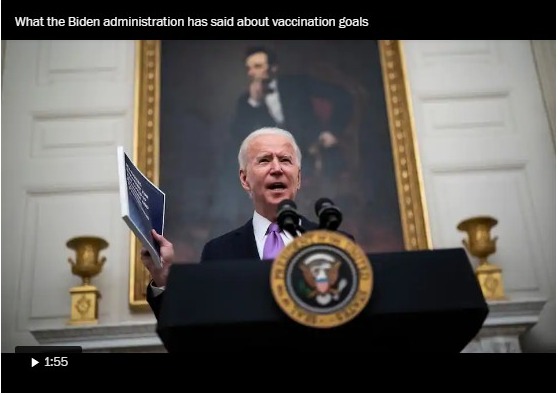
Biden administration seeks to buy 200 million more vaccine doses, to be delivered through the summer
InternationalJan 27. 2021White House coordinator of covid-19 response Jeff Zients waits before President Joe Biden arrives to speak about the coronavirus pandemic on Thursday, Jan. 21, 2021. MUST CREDIT: Washington Post photo by Jabin Botsford
By The Washington Post · Isaac Stanley-Becker, Laurie McGinley, Christopher Rowland
WASHINGTON – The Biden administration said Tuesday it was on the cusp of securing an additional 200 million doses of the two coronavirus vaccines authorized for emergency use in the United States.
The purchases would increase available supply by 50%, bringing the total to 600 million doses by this summer.
Because both products – one developed by Pfizer and German company BioNTech and the other by Moderna – are two-dose regimens, that would be enough to fully vaccinate 300 million people. An estimated 260 million people in the United States are currently considered eligible to receive a coronavirus vaccine, though Pfizer and Moderna have initiated trials for children as young as 12, the results of which could expand the pool.
The deals promised by President Joe Biden would not immediately speed up vaccinations. But they would greatly boost his chances of returning the nation to some semblance of normalcy by late summer or the fall.
The president said Monday he expects the general public to gain access to shots by the spring – as he seemed to elevate his administration’s goal from 1 million vaccinations a day to 1.5 million – though aides said that was aspirational. And Biden drew back Tuesday to his earlier ambition of administering 100 million shots in his first 100 days, insisting it would be a good start.
Biden, in remarks Tuesday evening, said he expected the additional doses to be delivered through the summer.
“This is an aggregate plan that doesn’t leave anything on the table or anything to chance, as we’ve seen happen in the past year,” the president said.
He added, in a further effort to distinguish his approach from that of his predecessor, “This is a wartime effort.”
The companies were more cautious in public statements, though people knowledgeable about the negotiations said formal deals were imminent because the government was using options built into existing contracts to receive the additional doses. Those people, like several others, spoke on the condition of anonymity to describe internal matters.
Moderna spokesman Ray Jordan declined to comment. Pfizer spokeswoman Amy Rose said the company “has engaged in regular communications with the Biden administration and we stand at the ready to start negotiations should the White House choose to execute their option for additional doses.”
Each company has already agreed to deliver 200 million doses to the federal government by the end of June. Pfizer has said it can deliver 120 million of those doses by the end of March, at a price of $19.50 per dose, while Moderna has pledged 100 million by then, with each dose sold for $15.
Manufacturing has steadily ramped up, in pace with those targets. As a result, federal allocations to states and other jurisdictions will increase by about 16% next week, easing shortages that have intensified nationwide without immediately alleviating supply problems.
Jeff Zients, coordinator of the White House’s coronavirus response, informed governors of the increase on a call Tuesday afternoon, according to two people who participated and spoke on the condition of anonymity to describe the conversation.
The weekly allocation is forecast to go from about 8.6 million doses to about 10 million. The vaccines are distributed on a population basis among 64 jurisdictions, including 50 states, eight territories and six major cities.
Senior administration officials said the increased supply will come mostly from releasing more doses of Moderna’s vaccine. The stepped-up allocations will remain for three weeks, these officials said, as the Department of Health and Human Services provides estimates on that time scale going forward.
The increased allocations and the promise of better forecasts came as welcome news to state and local officials, who have implored the federal government for estimates of available supply so they can plan and set expectations for the public.
Such projections were not possible in December, according to current and former federal officials, because of uncertainty about manufacturing and instability in the supply chain. The government has gained greater understanding of production schedules, especially after directing suppliers to fulfill Pfizer’s needs under the Defense Production Act.
Moderna this month raised its global target for the year from 500 million doses to 600 million. Pfizer and BioNTech recently raised their target from 1.3 billion doses to 2 billion.
But precise manufacturing schedules remain difficult to predict, and Zients could not answer questions on Tuesday’s call with governors about exact production levels and when he expected significant scale-up, according to one state official who participated. The official said the administration promised more details “sooner rather than later.”
Meanwhile, vaccine shortages are having stark consequences throughout the country. Appointments have been canceled en masse as health officers and medical providers confront a sharply limited supply of doses, which are being targeted at medical workers, older people, some front-line workers and other highly vulnerable people. The patchwork of rules about eligibility has deepened confusion about access to the shots.
New information is around the corner about a third vaccine, though its efficacy is not publicly known. Health officials are awaiting data from a trial by Johnson & Johnson, which will probably arrive in the next week.
That data may also suggest how a vaccine performs against one of the virus variants spreading alarm globally, because some of the trial was conducted in South Africa, where a more transmissible variant has been identified. The federal government has already paid $1 billion for the first 100 million doses of Johnson & Johnson’s vaccine, which, if it proves effective, would be a boon because it is a single dose.
The effort to buy additional Pfizer and Moderna doses vaccines represents a shift in strategy, as the Biden administration doubles down on two highly effective products authorized by federal regulators. The Trump administration worked to spread its risks over many vaccine candidates.
Once the Pfizer and Moderna vaccines late last year showed such high efficacy – about 95% – some government experts argued the administration should quickly acquire as much of those vaccines as possible, even if the United States ended up with more vaccine than needed.
That argument has gained currency with the Biden administration, according to people familiar with the government’s thinking, partly because of the emergence of variants that appear to be more transmissible and possibly more lethal than the original coronavirus.
Early data shows that the two vaccines may be effective against the British variant of the virus that already is causing infections in the United States. And scientists believe they may possibly be effective against other variants, including ones identified in Brazil and South Africa. The South African variant has not appeared in the United States, but the Brazilian one was recently found in a case in Minnesota.
In addition, the Pfizer and Moderna vaccines, which use a platform known as mRNA to elicit a potent immune response, are the easiest type of vaccine to change to counter threatening new variants.
Biden and his top aides have stressed that vaccine supply is only one aspect of the challenges involved in executing the immunization campaign. The administration is seeking additional resources for state and local health departments and has vowed greater federal coordination of the efforts, including plans to augment the public health workforce and set up mass vaccination sites.
The administration has also pledged to increase transparency for state and local officials overseeing ground-level planning and for members of the public waiting to be vaccinated.
Biden administration officials are also seeking to have more data related to vaccination efforts posted on the website of the Centers for Disease Control and Prevention, according to a federal health official. Ideally, that would include data about manufacturing, supply and allocation to the states. Information about production and supply is not currently publicly available.
The vaccine rollout has been marked by a lack of transparency about stockpiles, short-term rollout schedules and contradictory statements from government officials. Companies producing vaccines have issued broad statements about vaccine goals, based on quarterly projections.
In Pfizer’s case, production estimates were recently accelerated by the Food and Drug Administration’s recognition of a sixth dose in each vial, which previously had been considered to be “over fill” beyond the initial five-dose capacity. The change resulted in an instant 20% increase in Pfizer’s quota.
The companies said they have been giving more detailed information about vaccine availability to the government, which then relays the information about weekly shipment expectations to state officials.
But the lack of accurate and consistent information has been a major complaint at the state level, as the initial shipments of vaccine have not matched the volume of vaccines local systems are demanding.
The Biden administration appeared to put pressure over the weekend on Pfizer and Moderna to improve the flow of information about vaccine manufacturing and supply. Appearing on “Fox News Sunday,” Biden’s director of the Centers for Disease Control and Prevention, Rochelle Walensky, said, “I can’t tell you how much vaccine we have, and if I can’t tell it to you then I can’t tell it to the governors and I can’t tell it to the state health officials.”
Asked to respond to Walensky’s concerns this week, Moderna and Pfizer said they have been reporting on a daily and weekly basis the amount of vaccine that will be ready.
“We have and are continuing to work closely with the U.S. government on our production, release and shipping schedules – to ensure Americans receive their first and second doses of the vaccine on time,” Pfizer said in a statement this week. “We have provided them with a specific schedule, and we foresee no issues in delivering on the commitments we have made.”
Jordan, Moderna’s spokesman, said the U.S. government is in charge of relaying fine-grained information to states. “The U.S. Government is our customer, and they are free to communicate as they wish,” he said.
A former Trump administration official, who spoke on the condition of anonymity to address sensitive matters, said Moderna has been more forthcoming about its vaccine production than Pfizer.
“With Moderna, we always had a pretty clear sense of what was further ahead, and any potential issues, a better ability to accurately predict what was coming,” the official said. “With Pfizer, we didn’t have as much insight. It was a byproduct of their unwillingness to work as collaboratively with Warp Speed as other companies.”
Pfizer did not respond to a request to address the criticism.
Along with other vaccine manufacturers, Pfizer last summer signed an advanced purchase contract with the Trump administration. But the company did not accept research and development money or backing for clinical trials from the government.
Pfizer also opted to distribute its vaccine to states on its own, rather than permit its vaccine to be shipped by national wholesaler McKesson, the government’s designated distributor for vaccine and supplies. Its shipments are nonetheless following the federal government’s allocation guidance.
Much of Pfizer’s supply is obligated to other countries. But the pharmaceutical giant has recently delayed or reduced shipments to Canada and Europe as it retools a factory in Belgium, frustrating foreign governments.
InternationalJan 27. 2021President Biden speaks his week at the White House. MUST CREDIT: Washington Post photo by Jabin Botsford
By The Washington Post · Cleve R. Wootson Jr., Tracy Jan
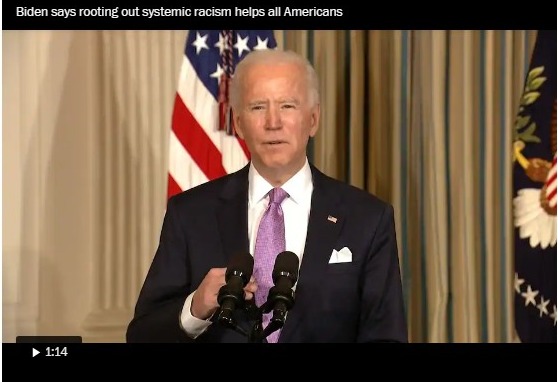
WASHINGTON – President Biden signed four executive actions Tuesday aimed at increasing racial equity across the nation, a move the administration said was a big early step in his efforts to dismantle systemic racism, though civil rights groups made it clear they will press for more-sweeping change in the months ahead.
The measures seek to strengthen anti-discrimination housing policies that were weakened under President Donald Trump, nix new Justice Department contracts with private prisons, increase the sovereignty of Native American tribes and combat violence and xenophobia against Asian Americans and Pacific islanders, a week after the departure of a president who blamed the Chinese for the coronavirus pandemic.
Biden said the actions were part of an effort to infuse a focus on equity into everything the federal government does.
“We’re in a battle for the soul of this nation, and the truth is our soul will be troubled as long as systemic racism is allowed to exist,” Biden said. “I’m not promising that we can end it tomorrow, but I promise you that we’re going to make strides to end systemic racism, and every branch of the White House and the federal government will be part of that.”
The actions reflected the extent to which Biden’s ascent to the presidency was wrapped up with the nation’s racial struggles. He kicked off his campaign with a rejection of Trump’s approach to race, was propelled to the nomination largely by Black voters and – as racial justice protests erupted across the country – aligned his campaign increasingly with their cause.
Activists are making it clear that they expect more from Biden than a diverse administration and rhetoric about justice. Tuesday marked his first major effort to respond, to mixed reviews from civil rights groups.
In a memo, the administration pledged to work with Congress on legislation that increases funding for minority-owned small businesses, invests in historically Black colleges and universities, and triples funding for Title I schools serving a high proportion of low-income children.
Some activists cautioned that tackling system racism is complex and will not be resolved by government edicts.
Melanie Campbell, who leads the Black Women’s Roundtable, a group of Black female activists, said that she was buoyed that Biden took decisive steps on equity – especially related to housing discrimination – less than a week into his term but that more work needs to be done.
“We plan to engage this administration and to engage Congress,” Campbell said. “Black people didn’t just help the Biden-Harris ticket win for our health. I’m not waiting on announcements, I’m engaging. Maybe we’ll give them a week or two to settle in, but we are not sitting around waiting.”
Biden spoke Tuesday in unusually blunt terms, decrying white supremacy and systemic racism, and saying the nation must change its entire approach to racial equity. “It’s time to act because that’s what faith and morality call us to do,” he said. “It’s what the core values of this nation call us to do.”
The moment carried echoes of Lyndon Johnson, who assumed the presidency amid another period of racial turmoil, said Ravi Perry, chairman of the political science department at Howard University.
The 1963 March on Washington and other civil rights protests led to the 1964 Civil Rights Act and laid the groundwork for the 1965 Voting Rights Act and the 1968 Fair Housing Act, Perry said. Johnson spoke out on the need to eradicate racism, delivered a commencement address at Howard University and famously declared that “We shall overcome” to a joint session of Congress.
But the landmark civil rights laws were passed because “a president decided to make racial justice a substantive legislative domestic priority – not just soaring rhetoric,” Perry said. “LBJ set the tone, not just in speeches but working behind the scenes to create legislation.”
The question, he said, is whether Biden’s rhetoric is followed by similar advances.
“I think people are certainly hoping that by spring we will begin to see some of these executive orders turn into legislative policy,” Perry said, “and if it doesn’t happen, then Democrats are going to have a lot of young people to answer to in the midterms of 2022.”
Throughout the presidential race, Biden cast his campaign as a rejection of Trump’s racial attitudes, and on Tuesday he targeted several high-profile moves by his predecessor. He said he was reversing a Trump order that banned government agencies from offering racial-sensitivity training, for example, and would rescind the report of a “1776 Commission” that Trump depicted as an antidote to political correctness.
Biden also took implicit aim at Trump’s habit of calling the coronavirus the “China virus.” One of the new president’s orders denounced anti-Asian bias and encouraged federal agencies combating the pandemic to make education part of their response.
Civil rights groups, while welcoming the actions, said they are far from enough.
Changing the police and criminal justice system are among the most urgent goals for many of these groups, as are fighting voter suppression. Beyond that, many activists say they want Biden to put resources toward reducing disparities in educational and economic opportunities.
Biden mentioned many of those aims in his remarks Tuesday in the White House State Dining Room, but he cautioned that dismantling systemic racism was a herculean undertaking. “It’s not going to be overnight,” he said. “We’re not going to eliminate everything.”
Black Americans trail Whites on every economic measure, including wealth, income, employment and homeownership. The disparities have existed for decades, even when comparing workers with similar education levels. The gaps, many economists say, stem in large part from government-sanctioned policies that continue to discriminate against Black people in lending, education, criminal justice and housing.
Fair-housing advocates characterized Biden’s early step as the minimum necessary to fight systemic racial disparities. Lisa Rice, president and chief executive of the National Fair Housing Alliance, said civil rights groups have laid out a detailed timeline for the actions they expect the administration to take to “make the executive orders come to fruition.”
“You can tell me all day long you want to advance racial equality, but if I don’t see you doing substantive things like encouraging lending institutions to develop special-purpose credit programs, then I begin to wonder if this wasn’t just all talk,” Rice said. “Changing the policies is one thing. Now you’ve got to implement them.”
During his inaugural address, Biden said one of his administration’s goals would be to dismantle systemic racism. He has long said a first step on that path is a Cabinet that “looks like America.”
Biden picked Sen. Kamala Harris, D-Calif., to be vice president, the first Black and Asian American woman to win a nationally elected office – though it remains to be seen whether Harris will play a large role in Biden’s efforts on racial equity.
Biden has also nominated several African Americans to key Cabinet posts. Biden’s defense secretary, Lloyd Austin, was sworn in Monday. Susan Rice, whom Biden has chosen to lead the Domestic Policy Council, has been focused on ensuring that efforts toward equity are integrated into the administration’s broader policies.
And Biden has nominated Rep. Marcia Fudge, D-Ohio, the former chair of the Congressional Black Caucus, to lead the Department of Housing and Urban Development. Homeownership has long been an important way for Americans to build wealth; 46% of Black families owned homes compared with 75% of White families in 2020, a gap that has widened since 1976.
Yet strides in this area may not come without conflict. Biden has been criticized by some Republicans who say the focus on equity in his inaugural address suggested that his political opponents are racist.
“If you read his speech and listen to it carefully, much of it is thinly veiled innuendo calling us white supremacists, calling us racists, calling us every name in the book, calling us people who don’t tell the truth,” said Sen. Rand Paul, R-Ky.
And policies designed to increase housing equity that were scaled back by the Trump administration remain an object of criticism by some Republicans.
Under Tuesday’s actions, for example, HUD is expected to reinstate a 2013 rule that codified a decades-old legal standard known as “disparate impact.”
That rule was aimed at barring the housing industry from enacting policies such as requiring tenants to undergo a criminal-background check and using artificial intelligence to predict creditworthiness that, while seemingly race-neutral, have an adverse effect on Black and Latino Americans.
Civil rights attorneys say that applying the disparate-impact standard has helped reduce inequality. But some conservatives argue that this approach unfairly ties the hands of businesses, and the Trump administration changed the rule, saying it would free up firms to “innovate and take risks without the fear they will be second-guessed through statistics down the line.”
The Trump administration had also repealed regulations requiring communities to identify and address barriers to racial integration or risk losing federal funds. It argued that the regulations were too burdensome for communities and sucked up too many federal resources.
Then-HUD Secretary Ben Carson criticized the Obama-era rule for forcing communities to find “anything that looks like discrimination,” rather than responding to actual problems. And on Tuesday, Biden said he is pushing HUD to reinstate those regulations.
Biden faces an unusually turbulent landscape early in his presidency, and he often frames the country’s racial reckoning as one of several crises facing the country – along with the pandemic, the economic collapse and climate change.
Some critics on the right have suggested his emphasis on racial justice amounts to a show of favoritism, and Tuesday the president argued that advancing racial equality is not a gift to one part of the population. “When one of us is lifted up, we’re all lifted up,” Biden said. “And the corollary is true – when any one of us is held down, we’re all held back.”
Nearly all GOP senators vote against impeachment trial for Trump, signaling likely acquittal
InternationalJan 27. 2021Sen. Rand Paul, R-Ky., speaks to reporters as he makes leaves the Senate on Tuesday, Jan. 26, 2021. MUST CREDIT: Washington Post photo by Salwan Georges
By The Washington Post · Mike DeBonis, Seung Min Kim
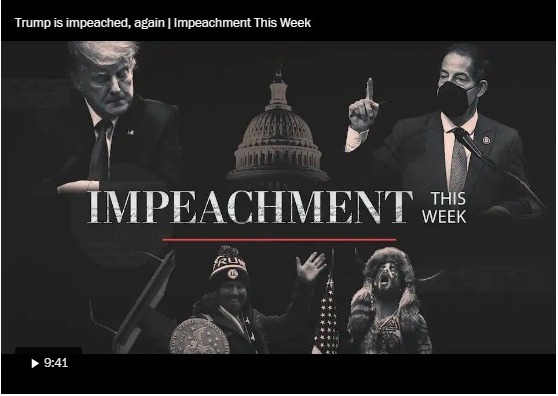
WASHINGTON – All but five Republican senators backed former president Donald Trump on Tuesday in a key test vote ahead of his impeachment trial, signaling that the proceedings are likely to end with Trump’s acquittal on the charge that he incited the Jan. 6 Capitol riot.
The vote also demonstrated the continued sway Trump holds over GOP officeholders, even after his exit from the White House under a historic cloud caused by his refusal to concede the November election and his unprecedented efforts to challenge the result.
Trump’s trial is not scheduled to begin until Feb. 9, but senators were sworn in for the proceedings Tuesday, and they immediately voted on an objection raised by Sen. Rand Paul, R-Ky., questioning the constitutional basis for the impeachment and removal of a former president.
“Impeachment is for removal from office, and the accused here has already left office,” he argued, adding that the trial would “drag our great country down into the gutter of rancor and vitriol, the likes of which has never been seen in our nation’s history.”
But Democrats argue that Trump must be held accountable for the riot, which saw the Capitol overrun and claimed the lives of one police officer and four rioters. Paul’s argument, they said, suggests that presidents can act with impunity late in their terms.
Senate Majority Leader Charles Schumer, D-N.Y., said Tuesday that the Republican argument is “flat-out wrong by every frame of analysis – constitutional context, historical practice, precedent and basic common sense.”
The final vote was 55 to 45 to kill Paul’s objection, with GOP Sens. Susan Collins of Maine, Lisa Murkowski of Alaska, Mitt Romney of Utah, Ben Sasse of Nebraska and Patrick Toomey of Pennsylvania joining all 50 Democrats.
The largely partisan vote indicated that, nearly three weeks after the Capitol attack, much of the GOP anger over Trump’s actions immediately before and during the siege has faded. Notably, Senate Minority Leader Mitch McConnell, R-Ky. – who previously said Trump had “provoked” the Capitol mob – voted to back Paul and Trump, who has reached out to senators directly and through intermediaries to marshal support for his defense.
Convicting Trump would require support from 67 members of the 100-member body. The Democratic-led House has already impeached Trump a historic second time. If convicted in the Senate, the former president could be barred from holding future office with a subsequent majority vote.
Paul had sought to muster at least 34 votes in support of his objection to signal that there were enough senators with constitutional misgivings to secure an acquittal. After the vote, Paul declared that “the impeachment trial is dead on arrival.”
Sen. Lindsey Graham, R-S.C., who has been advising Trump on his defense, said Tuesday that he considered 45 votes to be “a floor, not a ceiling” for an acquittal vote.
“He just needs to keep doing what he’s doing, and the trial will be over in a couple of weeks,” he told reporters.
A few senators who voted with Paul disputed that Tuesday’s vote was a foolproof indication of the trial’s outcome. Sen. Rob Portman, R-Ohio, for instance, told reporters he wanted to hear further debate on the constitutionality question but had not yet decided whether to convict Trump.
But several other Republicans, including Collins, drew the conclusion that a Trump acquittal was now fait accompli. “I think it’s pretty obvious from the vote today that it is extraordinarily unlikely that the president will be convicted,” she said. “Just do the math.”
Before the vote, Republican senators met for a private lunch where they heard from Jonathan Turley, a George Washington University law professor who has argued that a former president cannot be tried for impeachment.
Exiting the lunch, Turley said that he had presented a nuanced argument – that the benefits of condemning a now-departed president were “outweighed by the cost” of setting the precedent that Congress could retrospectively impeach and remove former presidents, creating a new political weapon.
The theory has gained traction among Republicans as a way to side with Trump while sidestepping the question of whether he “incited” the violence at the Capitol – the allegation that is at the heart of the impeachment effort.
Sen. Ron Johnson, R-Wis., said he hoped that Tuesday’s vote would prompt Democrats to reassess if it was even worth having a trial.
“I hope my colleagues… look at it from the standpoint, is it wise to do this?” he said. “I would hope we would end this now. It’s just not wise. It’s not healing. It’s divisive.”
Democrats and many legal scholars have balked at the argument that a former president – or any former official – cannot be convicted of impeachment.
“The theory that the Senate can’t try former officials would amount to a constitutional get-out-of-jail-free card for any president who commits an impeachable offense,” Schumer said.
“It makes no sense whatsoever that a president – or any official – could commit a heinous crime against our country and then defeat Congress’ impeachment powers by simply resigning, so as to avoid accountability and a vote to disqualify them from future office.”
Schumer and other have raised the precedent sent in 1876, when Secretary of War William Belknap resigned a matter of moments before the House was set to vote on his impeachment on corruption charges. The House impeached Belknap anyway, and the Senate proceeded with a trial in which Belknap was acquitted.
McConnell did not speak before Tuesday’s vote or release any statement squaring his vote with his previous statements critical of Trump’s behavior. In the immediate aftermath of the Capitol attack and the House impeachment, McConnell communicated to his GOP colleagues that he was open to supporting a conviction.
Sen. John Thune, R-S.D., the majority whip, said Tuesday’s vote indicated that many Republicans consider the trial to be on “a very shaky foundation” but have not necessarily ruled out a vote to convict.
“I, as a juror, am going to wait until the trial commences and hear the arguments on both sides,” he said. “And I think that’s where the leader is.”
The former president’s aides also have started putting GOP senators on notice about the impending trial vote asserting that Trump will continue to be in a force within the Republican Party. Sen. Kevin Cramer, R-N.D., said Brian Jack, a political aide to Trump, called him over the weekend to stress that Trump had no interest in starting a third party and that his political activity post-presidency would be with the GOP.
“I would say it wasn’t out of the blue,” Cramer said of the call, first reported by Politico. “I think it was strategic.”
Among the other key Republicans who aired constitutional concerns Tuesday was Sen. Charles Grassley, R-Iowa, a former chairman of the Senate Judiciary Committee and the longest-serving GOP senator. He raised qualms about the fact that Chief Justice John Roberts Jr., who is constitutionally mandated to preside over the impeachment trial of a sitting president, has opted not to appear at Trump’s second trial.
“That would send a pretty clear signal to me what Roberts thinks of the whole thing,” Grassley said. Roberts, through a Supreme Court spokeswoman, has declined to comment.
Rather than Roberts, presiding over the trial will be Sen. Patrick Leahy, D-Vt. – the Senate president pro tempore and longest-serving senator. While Leahy pledged Monday to act fairly in the role, the image of a Democrat presiding over the trial of a GOP former president led several Republicans to cry foul.
“Brazenly appointing a pro-impeachment Democrat to preside over the trial is not fair or impartial and hardly encourages any kind of unity in our country,” Paul said Tuesday. “No, unity is the opposite of this travesty we are about to witness.”
A few Republicans, however, said they believed that the trial of a former president is in fact constitutional. Sen. Lisa Murkowski, R-Alaska, told reporters Tuesday that, in her view, “impeachment is not solely about removing a president, it is also a matter of political consequence.”
Despite the broad constitutional concerns among Republicans, it appeared Democrats had little intention of canceling or curtailing the trial.
Some, including Sen. Richard Blumenthal, D-Conn., said the vote Tuesday suggested that House impeachment managers needed to make an even more detailed case against Trump – calling witnesses and presenting evidence attesting to the depravity of his behavior leading up to and during the events of Jan. 6.
Blumenthal said he believed that the trial would rekindle the anger many Republicans felt in the immediate aftermath of the Capitol assault: “They were in a different frame of mind than today when they were voting on the motion to dismiss,” he said. “And I want to bring back the feelings of revulsion and terror that were caused on that day.”
Other Democrats suggested that Republicans were simply trying to avoid contending with the political consequences of rendering a judgment on Trump’s conduct.
“They don’t want to argue the merits,” said Sen. Gary Peters, D-Mich. “We have a president who incited a violent attack on the United States Capitol, and on our very democracy, so it’s absolutely critical that we call that out and make sure that future presidents understand that this is completely unacceptable behavior and will never be tolerated by the American people.”
Schumer on Tuesday said Trump’s behavior – which included spreading baseless theories about the November election being stolen, pressuring state officials to change vote tallies, encouraging supporters to rally in Washington as Congress certified the electoral college on Jan. 6, and then calling that day for ralliers to march to the Capitol – amounted to “the most despicable thing any president has ever done.”
Yellen takes charge at Treasury with economic rebound weakening
InternationalJan 27. 2021Former Federal Reserve chair Janet Yellen speaks during the American Economic Association and Allied Social Science Association Annual Meeting in Atlanta on Jan. 4, 2019. MUST CREDIT: Bloomberg photo by Elijah Nouvelage
By Syndication Washington Post, Bloomberg · Saleha Mohsin, Christopher Condon, Erik Wasson
Janet Yellen won confirmation to become U.S. treasury secretary, building out President Joe Biden’s team as the administration struggles to win bipartisan support for a $1.9 trillion covid-19 relief plan for shoring up a weakening economic recovery.
The first woman to serve in the post, Yellen will take charge of a department with responsibilities spanning tax policy and government spending to financial stability, economic sanctions and foreign-exchange policy. She’ll also oversee ties with the Federal Reserve, which she previously chaired. She was confirmed by the Senate 84-15 Monday evening.
Yellen already saw the uphill fight the administration faces in its stimulus campaign last week, with Republicans on the Senate Finance Committee rejecting her arguments that historically low interest rates offer an opportunity for expansive deficit spending. White House economic adviser Brian Deese similarly ran into challenges from a bipartisan group of lawmakers Sunday, who asked for the basis for such a large package so soon after December’s $900 billion bill.
Sen. Joe Manchin, D-W.Va., told reporters Monday that lawmakers had received more details on the justification for the $1.9 trillion, and the bipartisan group is evaluating the information. Biden said at a press briefing Monday said he was open to negotiating, though “reluctant to cherry pick and take out one or two items here.”
A group of 16 senators, along with leaders of a group of House centrists, have engaged with the White House on the aid bill. Sen. Jeanne Shaheen, D-N.H., said Monday it would take “a lot of negotiating” to get a bipartisan deal.
Yellen is relatively new to a political sales role, after having mainly defended and explained Fed actions during her previous career. She brings a wealth of economic knowledge to the administration’s case, however.
The 74-year-old was also the first woman to head the U.S. central bank, which she left in early 2018 after overseeing a winding back of monetary stimulus after the last recession and its slow recovery.
“The symbolism and sense of technical expertise and decades of Washington experience that Janet Yellen brings will bring immediate credibility” to Biden’s economic agenda, said Tim Adams, who served as a Treasury undersecretary during the George W. Bush administration and now heads the Institute of International Finance, a banking group. “Yellen will be a key anchor of the economic team.”
Yellen has been a trailblazer throughout her career: She was the only woman out of 24 students in 1971 to earn a doctorate in economics from Yale University. She later taught economics at Harvard, and worked for more than 16 years at the Fed, including a stint as president of the Federal Reserve Bank of San Francisco during the financial crisis.
Brooklyn, N.Y.-born Yellen follows Jimmy Carter appointee G. William Miller, who also served as treasury secretary after being Fed chair. She’ll be the first to have had both those jobs and head of the White House Council of Economic Advisers, a role she had in the Clinton administration.
She had an early look at the challenges of the new job in her confirmation hearing at the Senate Finance panel last week. Her argument that it’s critical to “act big” now with emergency deficit spending to avoid long-term “scarring” in the economy was rejected by Republican lawmakers voicing concerns about rising debt.
“Right now, short term, I feel that we can afford what it takes to get the economy back on its feet, to get us through the pandemic,” Yellen told the committee. She highlighted the opportunity presented by historically low interest rates, and flagged that debt-servicing payments as a share of the economy are lower today than before the 2008 financial crisis.
Next steps on covid-19 relief are unclear. Biden on Monday didn’t rule out pursuing a Democrat-only route for passage, using an expedited process called reconciliation.
Under reconciliation, the House and Senate would need to first draft a budget resolution for fiscal 2021. House Budget Committee Chair John Yarmuth said his panel is preparing his chamber’s version to be on the House floor next week.
Biden left it to House Speaker Nancy Pelosi, D-Calif., and Senate Majority Leader Charles Schumer, D-N.Y., to make the call on reconciliation.
“I don’t expect we’ll know whether we have an agreement, or to what extent the entire package will be able to pass or not pass, until we get right down to the very end of this process, which will be probably in a couple weeks,” Biden said.

 โจ ไบเดน ต่อสายตรงถึงวลาดิเมียร์ ปูติน ครั้งแรกหลังเข้ารับตำแหน่งประธานาธิบดีพร้อมเจรจาหารือซ่อมแซมความสัมพันธ์
 อียูระส่ำหลังผู้ผลิตวัคซีนส่งของช้า ขู่จำกัดการส่งออกวัคซีนไปยังประเทศที่ไม่ใช่สมาชิก
 นายแพทย์ชาวอิตาลีตัดสินใจปลิดชีพผู้ป่วยหลังโรงพยาบาลประสบปัญหาขาดแคลนเตียง
 แคเทอรีน ไทคือใคร? และสำคัญอย่างไรต่อชะตากรรมโลกที่ต้องเจอกับสงครามการค้าต่อไป
 ย้อนไทม์ไลน์สำคัญเกิดอะไรขึ้นกับกูเกิล-ออสเตรเลีย และจะส่งผลอย่างไรต่อโลก
 Farmers at a rally near Singhu border on the outskirts of New Delh on Jan. 26, 2021. Bloomberg photo by Anindito Mukherjee


 White House coordinator of covid-19 response Jeff Zients waits before President Joe Biden arrives to speak about the coronavirus pandemic on Thursday, Jan. 21, 2021. MUST CREDIT: Washington Post photo by Jabin Botsford
 President Biden speaks his week at the White House. MUST CREDIT: Washington Post photo by Jabin Botsford
 Sen. Rand Paul, R-Ky., speaks to reporters as he makes leaves the Senate on Tuesday, Jan. 26, 2021. MUST CREDIT: Washington Post photo by Salwan Georges
 Former Federal Reserve chair Janet Yellen speaks during the American Economic Association and Allied Social Science Association Annual Meeting in Atlanta on Jan. 4, 2019. MUST CREDIT: Bloomberg photo by Elijah Nouvelage

