Biden pledges to defeat extremism and culture of lies as he confronts Trump’s legacy #SootinClaimon.Com

#SootinClaimon.Com : ขอบคุณแหล่งข้อมูล : หนังสือพิมพ์ The Nation.

Biden pledges to defeat extremism and culture of lies as he confronts Trump’s legacy

InternationalJan 21. 2021President Joe Biden, Vice President Kamala Harris, and Maj. Gen Omar Jones, commanding general, Joint Task Force participate in a wreath-laying ceremony at the Tomb of the Unknowns on Wednesday, Jan. 20, 2021, in Arlington National Cemetery in Arlington, Va. MUST CREDIT: Washington Post photo by Katherine FreyPresident Joe Biden, Vice President Kamala Harris, and Maj. Gen Omar Jones, commanding general, Joint Task Force participate in a wreath-laying ceremony at the Tomb of the Unknowns on Wednesday, Jan. 20, 2021, in Arlington National Cemetery in Arlington, Va. MUST CREDIT: Washington Post photo by Katherine Frey

By The Washington Post · Dan Balz · NATIONAL, POLITICS 

The inauguration of President Joe Biden marked the traditional transfer of power that has taken place every four years through two centuries of the nation’s history. This year the day was far more than that, a moment both somber and hopeful in a country reeling from a pandemic and economic distress in a capital city locked down by threats of violence from far-right extremists.

For Biden, Wednesday’s ceremonies represented the fulfillment of decades of personal ambition to serve as president. But if it was a day for him to celebrate that achievement, it was also a day to reckon with what the four years of Donald Trump’s presidency have done to the country and the monumental task of repair and restoration that is now the new president’s responsibility.

Biden ran for president with a pledge to rebuild a sense of normalcy after the chaos and divisiveness of the Trump presidency. But the shocking attack on the Capitol on Jan. 6 underscored that a return to normalcy will require presidential resolve in the face of white supremacist threats to democracy as much as or more than customary calls for unity and bipartisan cooperation that long have been central to Biden’s makeup.

The 46th president did not shrink from the duality of what he called this moment of “crisis and challenge,” the urgency of confronting immediate problems that threaten people’s health and welfare as well as the deeper, embedded problems of racial injustice and domestic terrorism by those who fear a changing America. 

One measure of how much the attacks of two weeks ago could affect Biden’s presidency was the degree to which he confronted those threats directly and repeatedly. “Here we stand,” Biden said, “just days after a riotous mob thought they could use violence to silence the will of the people, to stop the work of our democracy, to drive us from this sacred ground. It did not happen. It will never happen, not today, not tomorrow, not ever. Not ever.”

Rarely has a nation needed the renewal that is promised with every inauguration. The absence of the president, who became the first in more than a century not to attend his successor’s swearing-in, along with the tableau and pageantry on a socially distanced West Front of the Capitol, signaled an eagerness on the part of many, though not all, to move past the Trump years.

As expected, unity was Biden’s principal theme. But there was nothing soft-edged about the meaning of his words. Instead the appeals for America to come together came with a rhetorical determination to confront the existential threats that rose up under Trump. Kate Masur, a historian and professor at Northwestern University, emailed during the speech that she was hearing echoes of Abraham Lincoln’s inaugural address in 1861, a time when seven states already had seceded from the union and the nation was heading toward bloody war. 

That Lincoln speech is often remembered for his appeals for unity, for his summoning up of America’s “better angels,” his invocation of the “mystic chords of memory” and his plea that the passions of the day not “break our bonds of affection.” Much of the speech, however, was a condemnation of the secessionist movement and a steely promise to defend the Constitution and preserve the union.

“In some ways the combined force of right-wing authoritarian and white supremacist tendencies in the United States, plus the media climate and disinformation and people’s suffering and resentments, combine to form a more existential threat than we’ve seen in a very long time,” Masur said.

America is not at a point today that it was when Lincoln spoke weeks before the Civil War began, but the “uncivil war” that Biden described is a reminder that what exists today goes beyond familiar talk of political polarization or legislative gridlock to what could be the biggest long-term challenge of Biden’s presidency – a country in which a minority of the people reject many truths, hold to Trump’s words and, in the extreme, are prepared to fight. 

No president in modern times, perhaps ever, has inherited the collective set of problems that greeted Biden as he took the oath of office on a clear and cold day, and in a few words he captured all that afflicts the country: “anger, resentment and hatred, extremism, lawlessness, violence, disease, joblessness and hopelessness.”

In his inaugural address, Biden sought to follow the example of Franklin D. Roosevelt, who in 1933 during the depths of the Great Depression, said, “This nation asks for action, and action now.” Biden said, “We will press forward with speed and urgency, for we have much to do in this winter of peril and significant possibilities. Much to repair. Much to restore. Much to heal. Much to build. And much to gain. Few people in our nation’s history have been more challenged or found a time more challenging or difficult than the time we’re in now.”

Emblematic of that promise to move swiftly were the 17 executive orders awaiting Biden’s signature after his swearing-in, with more to come in days ahead. More difficult than signing those orders will be showing that he has a strategy to slow the spread of the coronavirus and to produce and deliver vaccinations to enough people quickly enough to return the country to something resembling life before the virus arrived a year ago. How effective the American people judge that response to be will go far in coloring broader perceptions of Biden’s leadership.

The new president also has outlined the $1.9 trillion package to deal with the coronavirus and provide economic assistance to struggling Americans, businesses and state and local governments, to be followed next month by a sizable economic recovery package. On these legislative priorities, he faces a stern test: Can he persuade Republicans to support the package – and how much is he prepared to compromise to win that support – or will he decide to stand his ground and turn to the budgetary process known as reconciliation to push it through with a simple majority vote of his own party?

In addition, there are his commitments to an ambitious strategy to combat climate change and the promise to redraw the nation’s immigration system, including a path to citizenship for those here without documentation. And mindful of who helped to make him president, and the swearing-in of Kamala Harris as the first female, Black and South Asian vice president, he also noted that cries of racial justice “400 years in the making . . . will be deferred no more.”

As he noted Wednesday, almost any of these individual challenges would consume a new administration. He does not have the luxury of ignoring any of them.

The desire for national renewal and rejuvenation also comes with demands for accountability – for those rioters who stormed the Capitol and for a president who, as Senate Republican leader Mitch McConnell of Kentucky said, provoked the mob by feeding it lies. Trump’s impeachment trial will hover over the early days of Biden’s presidency, and while he will not be an active participant, it too will color attitudes of Americans about the state of the nation.

On the day the Capitol was overrun, Biden said the attack and the efforts to undermine the results of the election meant that work of the coming four years must be the restoration of democracy. Presidential historian Robert Dallek, noting the significance of the moment Biden assumed the presidency, said, “What helps him a lot is the villainy of Donald Trump and that Trump has fallen into a ditch. There is nothing like having a failed predecessor to give you a running start.”

Timothy Snyder, a historian and Yale University professor, said that until the country is freed from the fear of mob rule in all its forms, whether from violence or intimidation or threats of either, the freedoms that all Americans take as part of the country’s basic values will not exist. 

Snyder called this a moment of possible restructuring over which Biden will preside.

“That’s the only upside of Trump being president and a failed coup,” he said. “It opens a window to do things that are more far-reaching. That window’s going to be open, it’s going to be open for a little while.” 

Biden said Wednesday’s ceremonies symbolized not the triumph of a candidate but of the cause of democracy. But if democracy met the stress test between November and Inauguration Day, the system remains under duress. Biden’s task, and that of the nation he seeks to unify, is to assure that the forces that threatened democracy are confronted and defeated. 
Fact-checking Trump’s farewell address #SootinClaimon.Com

#SootinClaimon.Com : ขอบคุณแหล่งข้อมูล : หนังสือพิมพ์ The Nation.

Fact-checking Trump’s farewell address

InternationalJan 20. 2021

By The Washington Post · Glenn Kessler, Salvador Rizzo

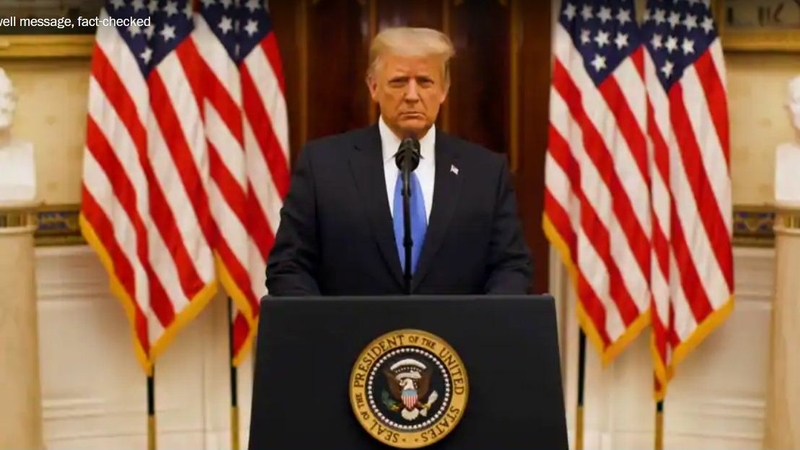
President Donald Trump’s farewell address was essentially a mini version of one of his campaign rallies – minus the cheers and applause. Since his campaign rallies were a rich source of false or misleading claims, the president brought out some of his favorite golden oldies, many of which are on The Washington Post’s list of Bottomless Pinocchios. Here’s quick guide to what was wrong or exaggerated.

“We also built the greatest economy in the history of the world. . . . Powered by these policies, we built the greatest economy in the history of the world.”

This is Trump’s favorite false claim, so there should be no surprise he said it twice. (In The Post’s database of Trump’s claims, we only count a falsehood once per venue.)

By just about any key measure in the modern era, Presidents Dwight Eisenhower, Lyndon Johnson and Bill Clinton presided over stronger economic growth than Trump.

The gross domestic product grew at an annual rate of 2.3% in 2019, slipping from 2.9% in 2018 and 2.4% in 2017. But in 1997, 1998 and 1999, GDP grew 4.5%, 4.5% and 4.7%, respectively. Yet even that period paled in comparison with the postwar boom in the 1950s and in the 1960s. Growth between 1962 and 1966 ranged from 4.4% to 6.6%. In 1950 and 1951, it was 8.7% and 8%, respectively.

Meanwhile, the unemployment rate reached a low of 3.5% under Trump, but it dipped as low as 2.5% in 1953. (After the coronavirus pandemic tanked the economy, Trump jacked up his claim even more, falsely saying it had been the greatest economy in the history of the world.)

This marks the 493rd time that Trump used a variation of this line, meaning he said it on average every other day.

– – –

“All Americans were horrified by the assault on our Capitol. Political violence is an attack on everything we cherish as Americans. It can never be tolerated.”

This statement is not especially credible in light of the president’s actions on Jan. 6. “Trump at first hesitated to tell his supporters to stand down when they stormed the Capitol,” The Post reported. “He was captivated by the spectacle playing out on live television and entranced by the notion that the rioters were fighting for him, people with knowledge of the events said.” Trump resisted advice from aides to call for an end to the violence. When he finally issued a video that afternoon telling the rioters to “go home,” he also declared his support for them by saying, “We love you.” Then, for several days, Trump refused to lower Americans flags in honor of two U.S. Capitol police officers who died after the violent riot by his supporters. He finally relented after enormous public pressure.

– – –

“Our agenda was not about right or left. It wasn’t about Republican or Democrat, but about the good of a nation.”

This is a line that actually never appeared in Trump’s campaign speeches. Instead, he constantly attacked Democrats as a force of evil, so it’s doubtful he really believes this.

“Remember this it’s all Democrat run cities, radical left Democrats, Democrats,” he said at Oct. 31 rally. “You look at what’s going on all Democrat run cities. Republicans have no problems, our cities are doing great.” At a Jan. 4 rally, Trump declared that Democrats will “turn our entire country into one giant sanctuary for criminal aliens, setting loose tens of thousands of dangerous offenders and putting MS-13 gang members straight into your children’s schools.” On Nov. 4, Trump said: “Joe Biden is a globalist who spent 47 years outsourcing your jobs, opening your borders, and sacrificing American blood and treasure on ridiculous, endless foreign wars. Most of you have never even heard of some of these countries. . . . A vote for Biden is a vote to give control of government over to the globalist, Communist, Socialist, the wealthy, liberal, hypocrites who want to silence, censor, cancel, and punish you.”

– – –

“We passed the largest package of tax cuts and reforms in American history.”

This is Trump’s second favorite falsehood, and this marks the 295th time he said it.

Even before Trump’s tax cut was crafted, he promised it would be the biggest in U.S. history – bigger than Ronald Reagan’s 1981 tax cut. Reagan’s tax cut amounted to 2.9% of the gross domestic product, and none of the proposals under consideration came close to that level. Yet Trump persisted in this fiction even when the tax cut was eventually crafted to be the equivalent of 0.9% of GDP, making it the eighth largest tax cut in 100 years.

– – –

“We slashed more job-killing regulations than any administration had ever done before.”

Trump may have grounds to brag about his efforts to peel back regulations, but his claim of the most or biggest regulation cuts cannot be easily verified and appears to be false. There is no reliable metric on which to judge this claim – or to compare him to previous presidents. Many experts say the most significant regulatory changes in U.S. history were the deregulation of airline, rail and trucking industries during the Carter administration, which are estimated to provide consumers with $70 billion in annual benefits.

A detailed November 2020 report by the Penn Program on Regulation concluded that “without exception, each major claim we have uncovered by the President or other White House official about regulation turns out to be exaggerated, misleading, or downright untrue.” The report said that the Trump administration had not reduced the overall number of pages from the regulatory code book, and that it will have completed far more regulatory actions than deregulatory ones once the full data is examined.

– – –

“We imposed historic and monumental tariffs on China. . . . Billions and billions of dollars were pouring into the U.S.”

Trump regularly brags that the United States reaps billions of dollars from tariffs he has imposed on other countries, such as China. But tariffs – essentially a tax – are generally paid by importers, such as U.S. companies, who in turn pass on most or all of the costs to consumers or producers who may use Chinese materials in their products. So, ultimately, Americans are footing the bill for Trump’s tariffs, not the Chinese. The president is fooling himself if he thinks otherwise.

The China tariff revenue has been greatly reduced by payments – totaling $28 billion – the government has made to farmers who lost business because China stopped buying U.S. soybeans, hogs, cotton and other products in response. Through Jan. 13, 2020, the Trump tariffs have garnered about $75 billion on products from China, according to Customs and Border Protection.

– – –

“We also unlocked our energy resources and became the world’s No. 1 producer of oil and natural gas, by far.”

Trump takes too much credit. The energy boom he’s referring to began during the Obama administration.

The United States has led the world in natural gas production since 2009. Crude oil production has been increasing rapidly since 2010, reaching record levels in August 2018, according to U.S. Energy Information Administration data. In September 2018, the United States passed Russia and Saudi Arabia to become the largest crude oil producer. It is expected to hold that position, according to predictions from the International Energy Agency.

– – –

“We passed nearly $4 trillion in economic relief, saved or supported over 50 million jobs and slashed the unemployment rate in half.”

“Fifty million” is a dubious number cooked up by the Trump administration.

In fact, officials told Reuters that the number referred to the total number of workers employed by businesses that were approved for loans under the Paycheck Protection Program.

“The PPP likely did not save 51 million jobs, or anywhere close to it,” Reuters concluded after interviews with economists and an analysis of the program’s data. “Half a dozen economists put the number of jobs saved by the initiative at only a fraction of 51 million – ranging between 1 million and 14 million.”

The Post found dubious numbers in the data. For instance, Fire Protection Systems, a sprinkler system installer in Kent, Wash., retained more than 500 jobs using its PPP funds. But the company says it has 20 employees.

– – –

“[I] stood up to Big Pharma in so many ways, but especially in our effort to get ‘favored nations’ clauses added, which will give us the lowest prescription drug prices anywhere in the world.”

In a move widely regarded as a political play seven weeks before the election, Trump announced that he had signed an executive order to lower Medicare drug prices through what is known as the “most favored nation policy.”

The mostly toothless order has not been implemented and faces legal roadblocks. It would require pharmaceutical companies to accept much lower payments – an aggressive move that the industry is fighting vociferously.

Trump did not need to issue any executive orders for his administration to start experimenting with new Medicare payments, but he clearly wanted to be able to claim that he was doing something on drug prices before the Nov. 3 election.

After the election, Trump announced that the Department of Health and Human Services had issued an “interim final rule,” meaning the administration skipped the normal rulemaking process, which requires weeks to collect public comments.

That could make it difficult for the Biden administration to defend the policy in court if the pharmaceutical industry sues over the rule. In late December, a federal judge issued a nationwide injunction that prevented the Centers for Medicare and Medicaid Services, or CMS, from carrying out the “most favored nations” rule as scheduled on Jan. 1.

The judge wrote in her temporary order that the CMS had not followed required procedures for notice and comment before imposing such sweeping changes.

– – –

“We passed VA Choice.”

False. The Veterans Access, Choice and Accountability Act was signed by President Barack Obama in 2014, in the wake of the Phoenix VA scandal. The law allows veterans to seek private medical care, with costs covered, when VA wait times exceed a certain period. One of the lead authors was Sen. John McCain, R-Ariz.

This is one of Trump’s most insidious falsehoods. Not only did he take more and more credit for the 2014 law as his term progressed but in public remarks he would often erase the roles that Obama and McCain played. (“McCain didn’t get the job done for our great vets and the VA, and they knew it,” he said in 2019.)

Trump signed the Mission Act in 2018, an update and expansion of the Choice program.

– – –

“We appointed nearly 300 federal judges to interpret our Constitution as written for years.”

Trump nominated and the Senate confirmed 226 federal judges, “well below the totals of recent two-term presidents, including Obama (320), George W. Bush (322) and Bill Clinton (367),” according to the Pew Research Center.

– – –

“The American people pleaded with Washington to finally secure the nation’s borders. I am pleased to say we answered that plea and achieved the most secure border in U.S. history.”

Unauthorized migration “had been generally declining” from 2000 to 2017, according to a report by the nonpartisan Congressional Research Service. Then it spiked in the latter half of Trump’s term, despite years of draconian measures to stop migrants from entering the United States.

The number of people detained at the U.S.-Mexico border by immigration officials began to increase again in 2019 and 2020.

– – –

“This includes historic agreements with Mexico, Guatemala, Honduras and El Salvador, along with more than 450 miles of powerful, new wall.”

The regional asylum agreements Trump negotiated with these four countries have encountered significant roadblocks in U.S. courts. The Trump administration wanted a system in which asylum applicants no longer were released into the United States while they awaited immigration hearings, but instead remained in Mexico or Guatemala.

Trump’s new asylum rules were set to take effect last week, but they were blocked by a federal judge in San Francisco.

At the close of 2020, the Trump administration had built nearly 40 miles of bollard-style fencing where none existed on the border – a small fraction of the 450 miles Trump claimed. The administration also had built 344 miles of fencing to replace run-down barriers that already existed.

– – –

“The world respects us again. Please don’t lose that respect.”

Surveys show that in many developed countries, favorable opinions of the United States tanked under Trump, especially regarding the country’s management of the coronavirus pandemic.

“For instance, just 41% in the United Kingdom express a favorable opinion of the U.S., the lowest percentage registered in any Pew Research Center survey there,” according to Pew. “In France, only 31% see the U.S. positively, matching the grim ratings from March 2003, at the height of U.S.-France tensions over the Iraq War. Germans give the U.S. particularly low marks on the survey: 26% rate the U.S. favorably, similar to the 25% in the same March 2003 poll.”

– – –

“NATO countries are now paying hundreds of billions of dollars more than when I arrived just a few years ago. It was very unfair. We were paying the cost for the world. Now the world is helping us.”

During the 2016 presidential election, Trump consistently inflated the U.S. contribution to the North Atlantic Treaty Organization. Once he became president, his inaccuracy has persisted, but with a twist. Nearly 150 times, he has claimed that “hundreds of billions” of dollars have come into NATO because of his complaints. In this speech, he even suggests this money might be coming to the United States.

Instead, NATO members have increased defense spending as a share of their economies – a process that was started before Trump announced presidential his candidacy. In terms of direct funding of NATO, the United States paid the largest share – about 22%. Germany is second, with about 15%, though Trump sought an agreement to make the payments equal.

Trump sometimes suggests NATO members “owe” money to the United States or are “delinquent,” but that is not the case. NATO members are required to meet a guideline of spending at least 2% of their gross domestic product on defense by 2024. He also claims that NATO spending was at a low point when he came into office, but that’s not true. It had fallen after the end of the Cold War but had started rising sharply after 2014, after Russia seized Crimea from Ukraine.

NATO estimates that European NATO and Canada will add $130 billion in cumulative defense spending through 2020, in 2015 dollars, as an increase over 2016 spending. NATO also estimates the cumulative figure will rise to $400 billion through 2024.

– – –

“Perhaps most importantly of all, with nearly $3 trillion, we fully rebuilt the American military, all made in the USA.”

This is false. Trump is adding up four fiscal years of military funding, but the money is not all spent, only a portion of it is destined for new equipment and the equipment is not all built. The actual amount spent on military equipment since he became president is much less, about 20% of the total. The rest was spent on personnel, operations and maintenance, research and development, and more. Trump’s spending on military equipment is not particularly new or unusual.

– – –

“The Abraham Accords opened the doors to a future of peace and harmony, not violence and bloodshed.”

Trump’s reference to “violence and bloodshed” is misleading. Unlike Jordan and Egypt, the Arab and North African nations extending diplomatic recognition to Israel during his presidency have never been at war with the Jewish state. The source of much of the violence remains the conflict between Israel and the Palestinians – an issue that Trump largely ignored. Helping win diplomatic recognition for Israel from Arab states is a noteworthy achievement.

Trump sometimes adds that the deals came with “no cost.” In reality, the Trump administration made a number of deals to coax Middle Eastern and North African leaders into recognizing Israel, such as weapons sales and upending U.S. policy toward the Western Sahara region claimed by Morocco.

– – –

“I am especially proud to be the first president in decades who has started no new wars.”

Trump appears to be referring to Jimmy Carter as the last president with no new wars, but this is highly debatable. It depends on whether one counts Obama’s intervention in Syria as a “new war” or an extension of the conflict in Iraq started under President George W. Bush. (The Islamic State terror group emerged in the aftermath of that war.) Obama did not deploy any troops to Libya when NATO began a campaign in Libya aimed at saving civilians in Benghazi threatened by Libyan government forces. Meanwhile, Trump ramped up commitments in Iraq and Syria initially to fight ISIS (while also launching air strikes on Syria for chemical weapons), added troops in Afghanistan, and escalated hostilities with Iran, including the killing of Iranian General Qasem Soleimani. Trump said that strike was carried out in accordance with the a resolution in 2001.

Biden’s Pentagon nominee vows to take on extremism in military #SootinClaimon.Com

#SootinClaimon.Com : ขอบคุณแหล่งข้อมูล : หนังสือพิมพ์ The Nation.

Biden’s Pentagon nominee vows to take on extremism in military

InternationalJan 20. 2021

By The Washington Post · Missy Ryan, Paul Sonne

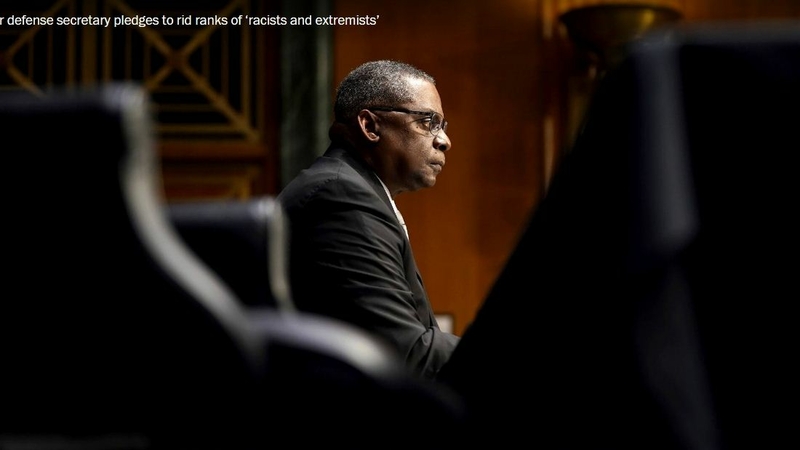
WASHINGTON – Retired Gen. Lloyd Austin vowed Tuesday to eradicate extremism in the ranks if confirmed as the next defense secretary as the Pentagon struggles to address a growing internal threat in the wake of this month’s riot at the U.S. Capitol.

https://www.washingtonpost.com/video/c/embed/9fdcf0be-b3a2-4bba-a9cc-40f8150e69b1?ptvads=block&playthrough=false

“We can never take our hands off the wheel on this,” Austin, who would become the country’s first African American Pentagon chief, told lawmakers who were considering his nomination by President-elect Joe Biden. “This has no place in the military of the United States of America.”

Austin, who before his 2016 retirement served as head of U.S. Central Command and previously commander of U.S. troops in Iraq, made reference to a consequential episode earlier in his career when, as a young officer in the 82nd Airborne Division, a network of skinhead soldiers was uncovered after the killing of an African American couple near the division’s base.

Nearly two dozen soldiers were later found to have links to neo-Nazi or extremist groups. A distressing realization, Austin said, was that military leaders had not picked up on signs about the threat. “We just didn’t know what to look for,” he said.

Austin’s reference to the 25-year-old incident signifies the urgency of the military’s challenge today in identifying and addressing anti-government and racist currents, among the numerous challenges he will face if he becomes Biden’s Pentagon chief.

The former general, who since his retirement has stayed out of the political fray, would face a host of other obstacles, including accelerating the effort to effectively compete against China, winding down insurgent wars and repairing defense alliances strained by hostility from President Donald Trump. He would have to grapple with a flattened defense budget and improve morale among a Pentagon workforce buffeted by leadership upheaval.

Before any of that could occur, Austin would need to surmount an additional hurdle in the form of attaining a congressional waiver to a requirement that defense secretaries be out of the military for at least seven years.

After Trump’s election in 2016, lawmakers voted to approve a waiver for Jim Mattis, another former commander who had been retired for less than seven years, as defense secretary – the second time such an exception had been granted. But some Democrats voiced discomfort with the move, fretting that it would undermine the U.S. tradition of civilian control of the military.

“I know that being a member of the president’s Cabinet – a political appointee – requires a different perspective and unique duties from a career in uniform,” Austin said.

While several senators, including Tom Cotton, R-Ark., Elizabeth Warren, D-Mass., and Tammy Duckworth, D-Ill., have said they would oppose granting Austin the waiver, which must also pass the House of Representatives, Austin is expected to receive the dispensation and be confirmed.

Because a final confirmation vote is not expected until Friday at the earliest, David Norquist, currently deputy defense secretary, will serve as acting Pentagon chief until Austin is in place, according to a transition official who spoke on the condition of anonymity to discuss internal plans.

How effectively Austin can transform into a political being after a long career in uniform remains to be seen. Trump’s two confirmed defense secretaries, Mattis and Mark Esper, regularly sought to steer the military away from political fighting but were sometimes criticized for appearing as if they remained in uniform themselves, citing the apolitical position of the military and “best military advice” despite their inherently political role.

Austin emphasized that he would surround himself by career civilians rather than former military officers, in contrast to Mattis, who filled many of the top-level civilian positions across the Pentagon with former uniformed officers.

Austin, 67, the son of a postal worker and a homemaker from Thomasville, Ga., comes under a renewed congressional spotlight after a career in which he repeatedly broke racial barriers at the department, including serving as the first Black officer to command an infantry division in combat, lead Central Command and serve as vice chief of staff of the Army.

“There is kind of a sad commentary here, and that is: It shouldn’t have taken us this long to get here. There should have been someone who preceded me,” Austin said in a video released by the Biden campaign in which he discussed pioneering African American troops, including the Tuskegee Airmen and the Montford Point Marines. “My goal is not to be the last.”

Austin spoke as the current Pentagon leaders promise to take on what they acknowledge is a serious problem with support for white nationalism and anti-government movements in the military community. The issue has come under renewed scrutiny after the Jan. 6 attempted Capitol insurrection, in which a pro-Trump mob including a number of current and former members of the military stormed Congress as lawmakers gathered to certify Biden’s electoral win.

On Tuesday, officials said a dozen members of the massive National Guard force assembled to help secure Biden’s inauguration had been removed from the assignment, at least several of whom were believed to have sympathies for anti-government groups.

Austin said that the military should more effectively screen recruits for extremist ties and that it can also ensure that leaders across the department are attuned to what their subordinates are doing, reading and thinking to ensure that everyone is embracing the values of the U.S. military.

“I also think we need to do a better job of, once we have people on board, that we are paying attention to them, that we are creating the right kind of environment for them to live in and that they are embracing the values that we think are important in the military and the values that are important for this country,” he said.

Austin probably will face ongoing scrutiny over his ties to the defense industry, including his position as a member of the board of directors of weapons manufacturer Raytheon, whose bombs have been linked to Saudi airstrikes on civilian sites in Yemen.

Warren pressed Austin on his membership on the boards of Raytheon and United Technologies after he retired from the military. Austin agreed to extend his recusal on matters involving Raytheon for four years and said he would not serve on any defense contractor boards or become a lobbyist after leaving the Pentagon for a second time.

“Quite frankly, I’ll be too old to sit on the board of a defense contractor after my service. I have no intent to be a lobbyist as well,” he said.

Warren thanked Austin for being willing to operate under more constraints than are required by law. “Going above and beyond what federal law requires, as you are doing here, sends a powerful message that you are working on behalf of the American people and no one else,” Warren said.

Before retiring, Austin kept a lower public profile than other senior officers, declining to invite reporters to join his tours of the Middle East, as other Central Command leaders have done. That decision reduced public visibility into the activities of American troops operating in the region. In response to questions on the matter, Austin promised to conduct regular briefings and TV interviews and to be open to the media as defense secretary.

Biden presides over memorial for 400,000 Americans who have died of covid-19 #SootinClaimon.Com

#SootinClaimon.Com : ขอบคุณแหล่งข้อมูล : หนังสือพิมพ์ The Nation.

Biden presides over memorial for 400,000 Americans who have died of covid-19

InternationalJan 20. 2021

By The Washington Post · Matt Viser, Annie Linskey

WASHINGTON – President-elect Joe Biden opened his inaugural commemorations Tuesday evening by honoring the 400,000 Americans who have died because of the coronavirus pandemic, marking the final hours before his swearing-in with a somber reminder of the struggles facing the nation he will lead Wednesday.

https://www.washingtonpost.com/video/c/embed/16b4ed5d-736d-4573-addd-cb8ce8e5a84b?ptvads=block&playthrough=false

Biden, returning to Washington for the first time since winning the election, presided over the first national mourning event amid the pandemic, and it set the tone for an inauguration that will be marked with more solemnity than jubilation.

Lanterns surrounding the Reflecting Pool next to the Lincoln Memorial shone to represent the dead, and buildings across the nation lit in a united effort to honor those lost. As the sun set with vibrant tangerine hues over a largely desolate, security-conscious downtown District of Columbia, Biden explicitly called on Americans to remember the victims and implicitly signaled the swift changes he would try to bring to the presidency.

Four years after President Donald Trump entered office talking about “American carnage” and insisting that “I alone can fix it,” Biden sought to project an optimism rooted in the possibilities of a country united and working together.

“Between sundown and dusk, let us shine the lights in the darkness,” Biden said in brief remarks that left the images to speak louder than his words. “To heal, we must remember. It’s hard sometimes to remember, but that’s how we heal. It’s important to do that as a nation. That’s why we’re here today.”

Earlier, a Michigan nurse, Lori Marie Key, sang “Amazing Grace,” and after Biden spoke, gospel singer Yolanda Adams performed “Hallelujah.”

As she did, Biden; his wife, Jill Biden; Vice President-elect Kamala Harris; and her husband, Doug Emhoff, turned to gaze across the darkened pool. In a space that is usually crowded with people for a pre-inaugural concert, the dominant image instead was one of a void framed by light.

The ceremony was meant as a demarcation between Biden’s presidency and the tenure of Trump, who has mostly ignored the swiftly rising coronavirus caseloads and death toll for months, after insisting during the campaign that the virus would soon disappear.

Biden and Harris have cited tackling the virus – by persuading more Americans to use preventive measures and by vaccinating millions vulnerable to it – and the parallel economic collapse as their top priorities when their administration takes power Wednesday.

Inauguration planners also organized other iconic buildings – including the Empire State Building in New York and the Space Needle in Seattle – to light up Tuesday night, and invited cities and towns across the country to join in the national moment of tribute.

“For many months, we have grieved by ourselves,” Harris said Tuesday night. “Tonight, we grieve and begin healing together.”

Biden’s appearance at the Reflecting Pool came hours after he offered an emotional farewell to his home state, weeping openly several times as he spoke in front of a bank of Delaware flags before boarding a flight to Washington for his swearing-in as president at noon Wednesday.

“I know these are dark times. But there’s always light,” Biden said from the Major Joseph R. “Beau” Biden III National Guard/Reserve Center at New Castle Airport, a venue named for his son, who died of brain cancer in 2015.

“You’ve been there for us in the good and the bad and never walked away,” Biden said, after calling out to several friends in the audience. “And I am proud, proud, proud, proud to be a son of Delaware.”

As Biden spoke, tears rolled down his face and he fought for control several times.

Paraphrasing an adage from Irish writer James Joyce, Biden said: “Excuse the emotion. But when I die, Delaware will be written on my heart.”

Biden said his only regret was that his eldest son, who had been the state’s attorney general and was looking toward a run for governor before his death, was not the one leaving for Washington to be sworn in as president. Biden’s two surviving children and six of his grandchildren accompanied him to Washington.

The emotion of the Reflecting Pool commemoration and Biden’s raw goodbye to Delaware matched the tumultuous moment in the country’s history as he prepares to take over as president.

More than 20,000 National Guard troops are billeted in the nation’s capital to keep peace during the inauguration. And less than two hours after he spoke, the nation passed the 400,000 mark in covid-19 deaths, as the coronavirus continues to spread across the nation amid a struggling effort to vaccinate the most vulnerable.

As a result, the events leading to the inauguration have been subdued rather than celebratory and festive.

Even before the riot by Trump supporters at the U.S. Capitol two weeks ago, many events associated with a transfer of power had been scaled back because of the virus.

On Inauguration Day, formal balls will be replaced with online events. The National Mall, where inaugural observers would have stood, was devoid of people, instead turned into an artistic canvas filled with hundreds of lights and tens of thousands of flags.

Additional security precautions, including scrapping a train ride Biden planned from Wilmington, Del., to Washington, were made in the days since a deadly mob stormed the Capitol directly after remarks at a rally by Trump.

After the memorial service on Tuesday night, Biden and his family went to Blair House, the official presidential guesthouse across the street from the White House. The White House had extended an invitation for Biden to use the property, but Biden’s aides over the past week had declined to say whether he would stay at the home, as every president-elect has done since Jimmy Carter.

Biden, who will be the nation’s second Catholic president after John F. Kennedy, is planning to attend Mass at St. Matthew’s Cathedral on Wednesday morning. He will be joined by a bipartisan group of congressional leaders.

For the first time in recent memory, the incoming and outgoing presidents are not expected to meet on Inauguration Day. Trump plans to depart the White House for Florida in the morning and will be the first outgoing president to boycott his successor’s inauguration since Andrew Johnson declined to attend President Ulysses S. Grant’s swearing-in in 1869.

Vice President Mike Pence, however, said Tuesday that he would attend Biden’s inauguration rather than Trump’s farewell ceremony at Joint Base Andrews in Maryland.

Biden’s speech on Wednesday is expected to run 20 to 30 minutes and will be “built around the theme of unity” and offer “a forward-looking vision for his presidency while addressing the moment we are living in as a country,” according to an aide who spoke on the condition of anonymity to discuss private planning.

The inauguration will close the most tumultuous transition in modern history, one that was marked by weeks of false accusations by Trump and other Republicans about the election results, which culminated two weeks ago with a pro-Trump mob storming the steps where Biden will take the oath of office.

Biden is planning an immediate burst of executive actions designed to undo a slew of measures carried out by Trump over the past four years. He is planning to immediately reenter the Paris climate accords and repeal the ban on U.S. entry for citizens of some majority-Muslim countries.

Biden is expected to sign an order extending nationwide restrictions on evictions and foreclosures and implement a mask-wearing mandate on federal property.

Biden’s team has circulated a top-line list of tentative executive orders that lawmakers should expect to be rolled out over each of the next seven days – an early look at policies and messages the new White House expects to press ahead on in its opening days.

They include directives in key areas in which Biden had promised action, including fighting the coronavirus, providing economic relief, requiring the federal government to procure American goods, forging racial equality, combating climate change, improving access to health care, overhauling the immigration system and restoring the country’s leadership abroad.

The list of Biden’s pending executive orders, confirmed by two people who have seen it and who spoke on the condition of anonymity because they were not authorized to discuss it publicly, gives a broad overview of what the incoming administration plans to do on its own – without Congress, if necessary – to address the immediate priorities.

The president-elect plans to issue administrative actions relating to the coronavirus on Thursday and economic relief on Friday. A “Buy American” action is slated for Monday, and an order addressing issues of racial equity is anticipated for Tuesday.

Biden plans to announce actions on climate change on Jan. 27, health care on Jan. 28, immigration on Jan. 29, and on Feb. 1, he is expected to take action on international affairs and national security.

Biden also plans to file on Wednesday a sweeping immigration bill, which includes an eight-year pathway to citizenship for immigrants without legal status and an expansion of refugee admissions. At the same time, he plans to press aggressively for a $1.9 trillion coronavirus relief package.

Biden’s final few days as a private citizen included a mix of family time and homages to his past and to the crises faced by the country.

The president-elect, Jill Biden and other family members packed canned goods and rice into boxes on Monday at Philabundance, Philadelphia’s largest hunger-relief program. It was part of a national day of service that kicked the inaugural festivities into high gear, and aides said more than 150 boxes of food were packaged.

On Sunday, his granddaughter Naomi posted a photo of Joe Biden with one of his dogs – an empty box and a framed photo propped on the floor in the background, nodding to the packing going on around them.

“This is kind of emotional for me,” Biden said in Delaware on Tuesday afternoon, addressing a small audience that included longtime friends and allies. “You’ve been with me my whole career – and through the good times and the bad.”

Biden recalled how his parents moved to the state from Pennsylvania under economic duress. He recounted standing on a train platform 12 years earlier, awaiting President-elect Barack Obama and speaking to his sons about the changes that had prompted the nation to elect the first Black president.

And now, he said, he was headed to Washington to meet up with Harris, who will be the first female, first Black and first Asian American vice president.

“I said, ‘Don’t tell me things can’t change. They can. And they do,’ ” Biden said. “That’s America. That’s Delaware. A place of hope and light and limitless possibilities.”

ส่องพิธีสาบานตนไบเดน แปลกสุดในประวัติศาสตร์ #SootinClaimon.Com

#SootinClaimon.Com : ขอบคุณแหล่งข้อมูล : หนังสือพิมพ์โพสต์ทูเดย์

https://www.posttoday.com/world/643229

วันที่ 20 ม.ค. 2564 เวลา 19:00 น.ส่องพิธีสาบานตนไบเดน แปลกสุดในประวัติศาสตร์ใกล้เข้ามาทุกทีสำหรับพิธีสาบานตนเข้ารับตำแหน่งประธานาธิบดีของไบเดน มาดูกันว่าจะเกิดอะไรขึ้นบ้างในพิธีนี้และแตกต่างจากปีก่อนๆ อย่างไร?

1. การพิธีสาบานตนเข้ารับตำแหน่งเป็นประธานาธิบดีคนที่ 46 ของโจ ไบเดน มีกำหนดการณ์เริ่มต้นในเวลาเที่ยงวัน ของวันที่ 20 มกราคม ตามเวลาท้องถิ่น ณ อาคารรัฐสภา กรุงวอชิงตัน ดี.ซี.

2. นอกจากไบเดนว่าที่ประธานาธิบดีซึ่งเป็นตัวเอกของงานนี้แล้ว ยังมีกมลา แฮร์ริส ที่จะเข้ารับตำแหน่งรองประธานาธิบดีอย่างเป็นทางการในพิธีนี้ด้วย ซึ่งความพิเศษของแฮร์ริสคือเธอเป็นรองประธานาธิบดีหญิงคนแรก เป็นชาวแอฟริกัน-อเมริกัน และเอเชียน-อเมริกันคนแรกในตำแหน่งนี้

3. คณะกรรมการร่วมในพิธีประจำปีนี้ประกอบด้วย รอย บลันท์ วุฒิสมาชิกจากพรรครีพับลิกันทำหน้าที่เป็นประธานในพิธี พร้อมด้วยมิทช์ แมคคอนเนลล์ ผู้นำเสียงข้างมาก และเควิน แมคคาร์ธี ผู้นำเสียงข้างน้อยจากพรรครีพับลิกัน ด้านพรรคเดโมแครตประกอบด้วย แนนซี เพโลซี ประธานสภาผู้แทนราษฎร พร้อมด้วยสเตนี โฮเยอร์ และเอมี โคลบูชาร์ ซึ่งคณะกรรมการเหล่านี้อยู่ภายใต้การดูแลของคณะกรรมาธิการด้านกฎระเบียบและการบริหารของวุฒิสภา

4. คณะกรรมการได้กำหนดธีมงานครั้งนี้ในชื่อว่า “ประชาธิปไตยที่มั่นคงของพวกเรา : สร้างความเป็นปึกแผ่นที่สมบูรณ์แบบยิ่งขึ้น” (Our Determined Democracy: Forging a More Perfect Union) เพื่อเน้นย้ำถึงจุดเด่นของการปกครองและประชาธิปไตยของอเมริกัน รวมถึงการถ่ายโอนอำนาจอย่างสันติ

5. เมื่อเปรียบเทียบกับพิธีในปีก่อนๆ ที่ผ่านมาคาดว่าในปีนี้จะใช้งบประมาณน้อยลงเนื่องจากมีการลดจำนวนผู้เข้าร่วมงาน ซึ่งโดยปกติแล้วพิธีสาบานตนจะใช้งบประมาณราว 100 ล้านเหรียญสหรัฐ แต่ในเดือนกันยายนทีผ่านมาได้คาดการณ์งบประมาณไว้อย่างน้อย 44.9 ล้านเหรียญสหรัฐ อย่างไรก็ตามเหตุจลาจลเมื่อต้นเดือนที่ผ่านมาส่งผลให้ต้องใช้งบประมาณในการรักษาความปลอดภัยเพิ่มขึ้นอย่างมีนัยสำคัญ

6. โดยปกติแล้วพื้นที่ด้านนอกบริเวณอาคารรัฐสภาซึ่งเรียกว่าเนชันแนลมอลล์ จะเปิดให้ประชาชนทั่วไปเข้าร่วมรับชมพิธีสาบานตนของประธานาธิบดีคนใหม่ได้ แต่ในปีนี้เนื่องด้วยสถาการณ์การแพร่ระบาดของโควิด-19 รวมถึงข้อกังวลด้านความปลอดภัยหลังเกิดเหตุจลาจลเมื่อต้นเดือน พื้นที่ตรงนั้นจึงปิดไม่อนุญาตให้ประชาชนทั่วไปเข้าร่วม

7. ในคืนวันที่ 19 มกราคม ไบเดนและจิล ภรรยาของเขาจะพักที่แบลร์เฮาส์ ซึ่งเป็นบ้านพักของของประธานาธิบดีหรือแขกคนพิเศษของสหรัฐ โดยตามธรรมเนียมแล้วในช่วงเช้าของวันที่จะเข้ารับตำแหน่ง ว่าที่ประธานาธิบดีจะต้องพบกับประธานาธิบดีคนก่อนหน้าหลังจากเข้าร่วมพิธีมิสซาที่โบสถ์ แต่ในปีนี้โดนัลด์ ทรัมป์ ไม่ได้เข้าร่วมพิธีด้วย

8. อย่างไรก็ตามไบเดนได้ส่งคำเชิญไปยังผู้นำสภาคองเกรส 4 คนจากทั้ง 2 พรรค ได้แก่ มิทช์ แมคคอนแนล และเควิน แมคคาร์ธี จากพรรครีพับลิกัน แนนซี เพโลซี และชัค ชูเมอร์ จากพรรคเดโมแครต

9. เมื่อเสร็จสิ้นงานในโบสถ์ก็จะเดินทางมายังอาคารรัฐสภาเพื่อเริ่มพิธีสาบานตน โดยในปีก่อนๆ สมาชิกสภาคองเกรสจะได้รับบัตรเข้าร่วมงานจำนวน 200,000 ใบ เพื่อแจกจ่ายให้กับประชาชนผู้มีสิทธิเลือกตั้งเข้าร่วมงาน แต่ในปีนี้สมาชิกสภาแต่ละคนจะได้รับบัตรเพียง 1 ใบ โดยจะมีประชาชนเพียง 3,000 คนเท่านั้นที่ได้รับอนุญาตให้เข้าไปในพื้นที่รอบนอกอาคาร และอีก 1,000 คนที่ได้เข้าชมในงาน

10. คณะกรรมการตัดสินใจกำจัดการเข้าร่วมงานโดยปรึกษากับผู้เชี่ยวชาญด้านสาธารณสุข ส่งผลให้พิธีในปีนี้เป็นครั้งที่ “เล็กที่สุด” นับตั้งแต่พิธีสาบานตนของแฟรงกลิน ดี. โรสเวลต์ ในปี 1945 ที่มีผู้ชมเพียงพันคนเนื่องจากปัญหาสุขภาพและสงครามโลก

11. แม้ทรัมป์จะไม่ได้มาร่วมในพิธีแต่ไมก์ เพนซ์ รองประธานาธิบดีของเขาจะมาร่วมงาน รวมถึงอดีตประธานาธิบดีบิล คลินตัน, จอร์จ ดับเบิลยู บุช และบารัค โอบามาด้วย ขณะที่อดีตประธานาธิบดีจิมมี คาร์เตอร์ และอดีตสุภาพสตรีหมายเลขหนึ่งโรซาลินน์ คาร์เตอร์ ไม่สามารถเดินทางมาร่วมงานได้

12. รอย บลันท์ จะทำหน้าที่เป็นพิธีกรในงาน ขณะที่แอนเดรีย ฮอลล์ จะเป็นผู้นำในการปฏิญาณตน อีกทั้งยังมีเลดี้ กาก้า, เจนนิเฟอร์ โลเปซ และการ์ธ บรูกส์ เหล่าศิลปินชื่อดังมาร่วมแสดงในพิธีด้วย รวมถึงวงดนตรีของกองทัพสหรัฐก็จะร่วมบรรเลงเพลงเปิดงานด้วยเช่นกัน ก่อนที่ไบเดนและแฮร์ริสจะเริ่มสาบานตน

Photo by Angela Weiss / AFP

เปิดวังปูติน ใหญ่กว่าประเทศโมนาโก 39 เท่า #SootinClaimon.Com

#SootinClaimon.Com : ขอบคุณแหล่งข้อมูล : หนังสือพิมพ์โพสต์ทูเดย์

https://www.posttoday.com/world/643209

วันที่ 20 ม.ค. 2564 เวลา 17:00 น.เปิดวังปูติน ใหญ่กว่าประเทศโมนาโก 39 เท่าเปิดวังสุดหรูมูลค่ากว่า 4 หมื่นล้านที่ลือว่าเป็นของประธานาธิบดีวลาดิเมียร์ ปูติน

มูลนิธิต่อต้านการทุจริตของอะเลกเซย์ นาวัลนืย (Alexei Navalny) นักการเมืองฝ่ายค้านของรัสเซียรายงานข่าวเชิงสอบสวนเกี่ยวกับคฤหาสน์หลังใหญ่แห่งหนึ่งเมื่อวันที่ 19 มกราคม ซึ่งคาดว่าว่าเป็นของประธานาธิบดีวลาดิมีร์ ปูติน หลังจากที่นาวัลนีเพิ่งจะถูกจับกุมตัวเมื่อเดินทางกลับไปยังรัสเซีย ภายหลังจากที่เขาถูกวางยาพิษและต้องไปรักษาตัวที่เยอรมนีและคาดว่าถูกทำร้ายโดยคำสั่งของปูติน 

จากการสอบสวนพบว่าพระราชวังสุดหรูบนอ่าวกิลเลนไซค์ มีมูลค่าอย่างน้อย 1 แสนล้านรูเบิล หรือกว่า 4 หมื่นล้านบาท ถูกสร้างขึ้นในช่วงปี 2005-2010

ตามรายงานระบุว่าวังดัวกล่าวมีพื้นที่ 17,691 ตารางเมตร ภายในมีการประดับตกแต่งอย่างหรูหรา พร้อมสิ่งอำนวยความสะดวกครบครัน อาทิ โฮมเธียร์เตอร์ ล็อบบี้พร้อมบาร์ คาสิโน ห้องโถงพร้อมเครื่องสล็อต สระว่ายน้ำ อาคารที่อยู่อาศัยหลายแห่ง รวมถึงโบสถ์ และอุโมงค์ลับ

จากการตรวจสอบพบว่าวังแห่งนี้มีขนาดใหญ่กว่าประเทศโมนาโกถึง 39 เท่า และถูกสร้างขึ้นเพื่อให้ไม่สามารถเข้าใกล้ได้ทั้งทางบก ทางทะเล หรือทางอากาศ พนักงานหลายพันคนยังไม่ได้รับอนุญาตให้พกโทรศัพท์มือถือที่มีกล้องถ่ายรูป และรถทุกคันที่มาถึงบริเวณนั้นจะถูกตรวจสอบที่จุดตรวจหลายจุด

รายงานยังกล่าวอีกว่า “นี่คือสถานที่ที่ได้รับการรักษาความปลอดภัยเข้มงวดมากที่สุดในรัสเซีย เปรียบเสมือนเป็นรัฐหนึ่ง และนี่ยังเป็นความลับสุดยอดที่สุดของปูติน ซึ่งได้รับการคุ้มครองโดยผู้คนหลายร้อยถึงหลายพันคน ตั้งแต่ยาม คนสวน และช่างก่อสร้าง ไปจนถึงบุคคลที่ร่ำรวยและมีชื่อเสียงที่สุดในรัสเซีย”

วังแห่งนี้เป็นที่รู้จักกันมานานในชื่อ “พระราชวังของปูติน” แม้ว่าผู้นำรัสเซียจะออกมาปฏิเสธว่าไม่ได้มีความเกี่ยวข้องใดๆ และได้กลายเป็นสัญลักษณ์ของการคอร์รัปชั่นที่ใหญ่ที่สุดในสายตาของฝ่ายค้านในรัสเซีย

การสืบสวนระบุว่าตอนนี้วังดังกล่าวเป็นของบริษัท Binom และได้รับการจัดการโดยบุคคลที่อ้างว่ามีความเกี่ยวข้องกับมิคาอิล เชโลมอฟ หลานชายของปูติน และตามการสืบสวนกล่าวหาว่าเจ้าของที่แท้จริงของวังแห่งนี้ก็คือปูติน

ขณะที่ ดิมิทรี เพสคอฟ (Dmitry Peskov) โฆษกรัฐบาลรัสเซียออกมาปฏิเสธข้อกล่าวหาและยืนยันว่าปูตินไม่ใช่เจ้าของวังดังกล่าว พร้อมกล่าวว่านี่เป็นบันทึกเก่าและทางรัฐบาลได้เคยอธิบายไว้แล้วเมื่อหลายปีก่อนว่าปูตินไม่ได้เป็นเจ้าของวังใดๆ ในกิลเลนไซค์

ภาพโดย palace.navalny.com

นักวิทย์จีนพบวิธีชะลอความแก่ ยืดอายุขัยด้วยยีนบำบัด #SootinClaimon.Com

#SootinClaimon.Com : ขอบคุณแหล่งข้อมูล : หนังสือพิมพ์โพสต์ทูเดย์

https://www.posttoday.com/world/643183

วันที่ 20 ม.ค. 2564 เวลา 15:00 น.นักวิทย์จีนพบวิธีชะลอความแก่ ยืดอายุขัยด้วยยีนบำบัดนักวิทยาศาสตร์ในปักกิ่งได้พัฒนาการรักษาด้วยยีนบำบัดซึ่งช่วยยืดอายุของหนูทดลองได้

รอยเตอร์สเผยนักวิทยาศาสตร์ในปักกิ่งได้พัฒนาการรักษาด้วยยีนบำบัด (gene therapy) แบบใหม่ซึ่งอาจช่วยชะลอวัยได้ โดยผลการทดลองในหนูทดลองพบว่าสามารถยืดอายุของหนูเหล่านั้นได้

รายละเอียดวิธีการรักษาด้วยยีนบำบัดดังกล่าวถูกตีพิมพ์ลงบนวารสาร Science Translational Medicine เมื่อต้นเดือนที่ผ่านมา โดยระบุว่าเป็นกระบวนการที่เกี่ยวข้องกับการยับยั้งยีนที่เรียกว่า “kat7” ซึ่งนักวิทยาศาสตร์พบว่าเป็นตัวการสำคัญของความเสื่อมหรือความชราของเซลล์ (cellular ageing)

โดยหัวหน้าโครงการนี้คือศาสตราจารย์ ชี จิง อายุ 40 ปี เป็นผู้เชี่ยวชาญด้าน เวชศาสตร์ชะลอวัยและการฟื้นฟูสุขภาพ จากสถาบันสัตววิทยาแห่งสถาบันบัณฑิตวิทยาศาสตร์จีน (Chinese Academy of Sciences: CAS)

ศาสตราจารย์ชีเผยว่าการบำบัดครั้งนี้ใช้เทคนิคเฉพาะและผลลัพธ์ที่ได้ก็เป็นครั้งแรกของโลก โดยผลการทดลองในหนูทดลองแสดงให้เห็นว่าลักษณะโดยรวมและความแข็งแรงของหนูทดลองดีขึ้น และที่สำคัญคือพวกมันมีอายุยืนขึ้นประมาณ 25% หลังจาก 6-8 เดือนที่ทำการบำบัดยีน

ทีมนักชีววิทยาจาก CAS ใช้วิธีที่เรียกว่า CRISPR/Cas9 เพื่อคัดกรองยีนจำนวนมากที่เป็นตัวขับเคลื่อนของความชราของเซลล์ ซึ่งพบว่าประมาณ 100 จากทั้งหมด 10,000 ยีนรวมถึง kat7 มีประสิทธิภาพในการทำให้เกิดความชราของเซลล์อย่างยิ่ง

โดยชีอธิบายว่าทีมได้ทำการทดสอบการทำงานของยีนในเซลล์ประเภทต่างๆ ในเซลล์ต้นกำเนิด (stem cell) ของมนุษย์ และโปรเจนิเตอร์เซลล์ (mesenchymal progenitor cells) ในเซลล์ตับของมนุษย์และหนูซึ่งไม่พบความผิดปกติใดๆ และยังไม่พบผลข้างเคียงที่เกิดขึ้นกับหนูทดลอง

แต่ยังจำเป็นต้องทดสอบกับเซลล์ประเภทอื่นๆ ของมนุษย์ รวมทั้งอวัยวะอื่นๆ ของหนู นอกจากนี้ยังหวังว่าจะสามารถทดลองกับสัตว์เลี้ยงลูกด้วยนมชิดอื่นๆ ก่อนที่จะเริ่มใช้การบำบัดด้วยยีนวิธีนี้เพื่อชะลอวัยของมนุษย์

อย่างไรก็ตาม การรักษาด้วยยีนบำบัดวิธีนี้ต้องใช้เวลาอีกนานกว่าที่จะพร้อมทดลองในมนุษย์ แต่ทีมนักวิทยาศาสตร์ตั้งความหวังว่าจะสามารถค้นพบวิธีการชะลอวัยของมนุษย์ได้ในอนาคต

Photo by FETHI BELAID / AFP

สหรัฐถอด 12 เจ้าหน้าที่ทีมคุ้มกันพิธีสาบานตนหวั่นเกลือเป็นหนอน #SootinClaimon.Com

#SootinClaimon.Com : ขอบคุณแหล่งข้อมูล : หนังสือพิมพ์โพสต์ทูเดย์

https://www.posttoday.com/world/643175

วันที่ 20 ม.ค. 2564 เวลา 13:30 น.สหรัฐถอด 12 เจ้าหน้าที่ทีมคุ้มกันพิธีสาบานตนหวั่นเกลือเป็นหนอนสหรัฐสั่งถอดเจ้าหน้าที่กองกำลังพิทักษ์มาตุภูมิ 12 นายจากทีมคุ้มกันพิธีสาบานตนหลังพบมีพฤติกรรมไม่เหมาะสม

แดเนียล ฮอคันสัน ผู้อำนวยการกองกำลังพิทักษ์มาตุภูมิ เผยว่า กองกำลังพิทักษ์มาตุภูมิถอดเจ้าหน้าที่ 12 นายออกจากทีมคุ้มกันพิธีสาบานตนรับตำแหน่งประธานาธิบดีของ โจ ไบเดน หลังตรวจสอบประวัติพบว่ามีพฤติกรรมไม่เหมาะสม

เจ้าหน้าที่ 2 นายในจำนวนนี้ถูกถอดเนื่องจากโพสต์ข้อความข่มขู่นักการเมืองในโลกออนไลน์ โดยคนหนึ่งนั้นโพสต์สนับสนุนประธานาธิบดี โดนัลด์ ทรัมป์ รวมทั้งแสดงความคิดเห็นในเชิงคุกคามอื่นๆ

ส่วนเจ้าหน้าที่อีก 10 นายที่เหลือมีพฤติกรรมไม่เหมาะสมระหว่างการตรวจสอบเจ้าหน้าที่ที่เข้ามาปฏิบัติหน้าที่เกี่ยวข้องกับพิธีสาบานตน อาทิ มีประวัติอาชญากร ใช้ความรุนแรงในครอบครัว

ก่อนหน้านี้ สำนักข่าวเอพีรายงานว่า เจ้าหน้าที่ทั้ง 12 นายถูกถอดเนื่องจากพบว่ามีความเกี่ยวข้องกัลกลุ่มขวาจัด หรือเคยโพสต์ข้อความแสดงความคิดเห็นแบบสุดโต่งในโลกออนไลน์

การถอดเจ้าหน้าที่กองกำลังพิทักษ์มาตุภูมิครั้งนี้เกิดขึ้นในช่วงเวลาที่กระทรวงกลาโหมสหรัฐเดินหน้าตรวจสอบหาเจ้าหน้าที่ที่มีแนวคิดขวาจัดหรือชาตินิยมผิวขาว รวมทั้งการหาตัวเจ้าหน้าที่ที่มีส่วนร่วมในการบุกอาคารรัฐสภาเมื่อวันที่ 6 ม.ค.

ทั้งนี้ ทางการสหรัฐสั่งตรวจสอบประวัติและความพร้อมของร่างกาย ไปจนถึงรอยสักทหารทุกนาย รวมทั้งกองกำลังพิทักษ์มาตุภูมิที่จะปฏิบัติหน้าที่ในวันสาบานตน เพื่อป้องกัน “ภัยคุกคามจากคนใน” เนื่องจากกลุ่มผู้สนับสนุนทรัมป์ข่มขู่ว่าจะป่วนพิธีสาบานตนของไบเดน

Photo by ANDREW CABALLERO-REYNOLDS / AFP

แจ็ค หม่าโผล่แล้ว ปรากฏตัวครั้งแรกหลังเจอวิกฤต #SootinClaimon.Com

#SootinClaimon.Com : ขอบคุณแหล่งข้อมูล : หนังสือพิมพ์โพสต์ทูเดย์

https://www.posttoday.com/world/643176

วันที่ 20 ม.ค. 2564 เวลา 12:13 น.แจ็ค หม่าโผล่แล้ว ปรากฏตัวครั้งแรกหลังเจอวิกฤตหลังจากเก็บตัวเงียบมานานเกือบ 3 เดือนในที่สุดหม่าก็เผยตัวต่อสาธารณชนในที่สุด

แจ็ค หม่าผู้ก่อตั้ง Alibaba Group ปรากฏตัวครั้งแรกต่อสาธารณะตั้งแต่เดือนตุลาคม ได้มีการเผยแพร่คลิปของเขาระหว่างพบกับครูในชนบท 100 คนในประเทศจีนผ่านการประชุมทางวิดีโอเมื่อวันพุธที่ผ่านมา

สื่อที่เปิดเผยเรื่องนี้แหงแรกคือ Tianmu News ซึ่งเป็นพอร์ทัลข่าวภายใต้ Zhejiang Online ซึ่งเป็นเว็บไซต์ข่าวที่ได้รับการสนับสนุนจากรัฐบาล

การเผยตัวครั้งนี้นับเป็นการปัดข่าวการหายตัวของเขาที่สร้างความกังขาให้ชาวโลกมาระยะหนึ่งแล้ว หลังจากที่บริษัท Ant Group ของเขาถูกรัฐบาลสกัดไม่ให้เปิดขายหุ้นครั้งแรกหลังจากที่เขากล่าวท้าทายระบบควบคุมการเงิน และต่อจากกรณี Ant Group ถูกสกัดแล้ว Alibaba Group ยังถูกสอบสวนการกระทำอันเป็นการผูกขาดตลาดด้วย

ในคลิป แจ็ค หม่า บอกกับบรรดาคุณครูว่า “โปรดรอให้การระบาดสิ้นสุดลงแล้วเราค่อยพบกัน!” หลังจากมีรายงานข่าวนี้แล้วมูลนิธิสวัสดิการสาธารณะของแจ็ค หม่าได้ยืนยันข่าวนี้โดยเผยว่าเป็นกิจกรรมตามปกติที่แจ็ค หม่าจะมอบรางวัลให้กับครูชนบท แต่ครั้งนี้เปลี่ยนเป็นการมอบรางวัลออนไลน์เป็นครั้งแรก

ทรัมป์ขู่ส่งท้าย ‘นี่เพิ่งเริ่มต้น’ ก่อนอำลาทำเนียบขาว #SootinClaimon.Com

#SootinClaimon.Com : ขอบคุณแหล่งข้อมูล : หนังสือพิมพ์โพสต์ทูเดย์

https://www.posttoday.com/world/643161

วันที่ 20 ม.ค. 2564 เวลา 12:05 น.ทรัมป์ขู่ส่งท้าย 'นี่เพิ่งเริ่มต้น' ก่อนอำลาทำเนียบขาวโดนัลด์ ทรัมป์ แถลงอำลาตำแหน่งประธานาธิบดี เตรียมส่งไม้ต่อให้โจ ไบเดน พร้อมทิ้งท้าย ‘นี่เพิ่งเริ่มต้น’

บีบีซีรายงานว่าประธานาธิบดีโดนัลด์ ทรัมป์ แถลงอำลาตำหน่งผ่านคลิปวิดีโอซึ่งเผยแพร่โดยรัฐบาลก่อนที่จะต้องส่งมอบตำแหน่งประธานาธิบดีให้กับโจ ไบเดน ซึ่งมีกำหนดเข้าพิธีสาบานตนในวันที่ 20 มกราคม

อย่างไรก็ตามทรัมป์ยังคงไม่เห็นด้วยกับผลการเลือกตั้งเมื่อเดือนพฤศจิกายนที่ผ่านมาซึ่งพ่ายแพ้ให้แก่ไบเดน โดยกล่าวว่าการเคลื่อนไหวของเขาในฐานะประธานาธิบดีสหรัฐ “เพิ่งเริ่มต้น” เท่านั้น

ในขณะเดียวกันก็ได้ขอให้ชาวอเมริกันร่วมกันอวยพรให้รัฐบาลชุดใหม่โชคดีและประสบความสำเร็จในการบริหารประเทศต่อไป โดยไม่ได้มีการเอ่ยชื่อไบเดนแต่อย่างใด

ตามคำแถลงการณ์ของทรัมป์ยังได้กล่าวว่าฝ่ายบริหารของตนได้สร้างเศรษฐกิจที่ยิ่งใหญ่ที่สุดในประวัติศาสตร์โลก พร้อมกล่าวถึงสิ่งที่ตนและฝ่ายบริหารได้ทำมาตลอดระยะเวลา 4 ปี ที่ดำรงตำแหน่ง อาทิ การต่อกรกับจีน ข้อตกลงสันติภาพในตะวันออกกลาง และเขายังเป็นประธานาธิบดีคนแรกในรอบหลายสิบปีที่ไม่ได้เริ่มต้นสงครามครั้งใหม่

“ผมได้ต่อสู้อย่างยากลำบาก เป็นการต่อสู้ที่ยากที่สุด และนั่นคือสิ่งที่พวกคุณได้เลือกให้ผมเข้ามาทำ”

“เป้าหมายของเราไม่เกี่ยวกับฝ่ายขวาหรือซ้าย พรรครีพับลิกันหรือเดโมแครต แต่เป็นเรื่องของผลประโยชน์ของชาติและนั่นหมายถึงคนทั้งประเทศ” ทรัมป์กล่าว

พร้อมกล่าวถึงเหตุจลาจลบริเวณรัฐสภาเมื่อวันที่ 6 มกราคมที่ผ่านมาว่าความรุนแรงทางการเมืองได้ทำลายทุกสิ่งที่ชาวอเมริกันรัก และเป็นสิ่งที่ไม่สามารถทนได้

ทรัมป์เองก็ถูกฟ้องในข้อหายุยงให้เกิดการจลาจล และจะถูกพิจารณาคดีในวุฒิสภาหลังพ้นจากตำแหน่ง ซึ่งหากถูกตัดสินว่ามีความผิด ทรัมป์อาจถูกตัดสิทธิ์ในการลงเล่นการเมืองในอนาคต

ทั้งนี้ ทรัมป์พ้นจากตำแหน่งด้วยคะแนนความนิยมเพียง 34% ซึ่งเป็นตัวเลขที่ต่ำที่สุดในประวัติศาสตร์ประธานาธิบดีสหรัฐ

AFP PHOTO / Don EMMERT