Two Thai movies named among best 25 Asian films of 2022
FRIDAY, DECEMBER 30, 2022
Stephanie Adair
Two Thai films have been named among the best 25 Asian Films of 2022 by asianmoviepulse.com. Sitting at No 15 is “Leio” directed by Chalit Kraileadmongkol and Chitpol Ruanggun.
The film tells the story of Kao (Golf Pichaya Nitipaisankul), a fading pop star who returns to his hometown and joins a contest to drill for groundwater with a winning prize of 1 million baht.
He teams up with Jane (Natthacha De Souza) and cousin Yo (Supachai Suwannaorn) to explore cave tunnels, unaware they hide a mysterious and terrifying beast.
The film earned mixed reviews from Thai viewers but in October, Screen Daily reported that “Leio” will be remade by British production company SC Films International.
Sitting at No 9 is “Fast and Feel Love” directed by Nawapol Thamrongrattanarit, whose career spans indie films such as “Mary is Happy” to top-selling mainstream features like “Heart Attack” that filled cinemas with people of all ages.
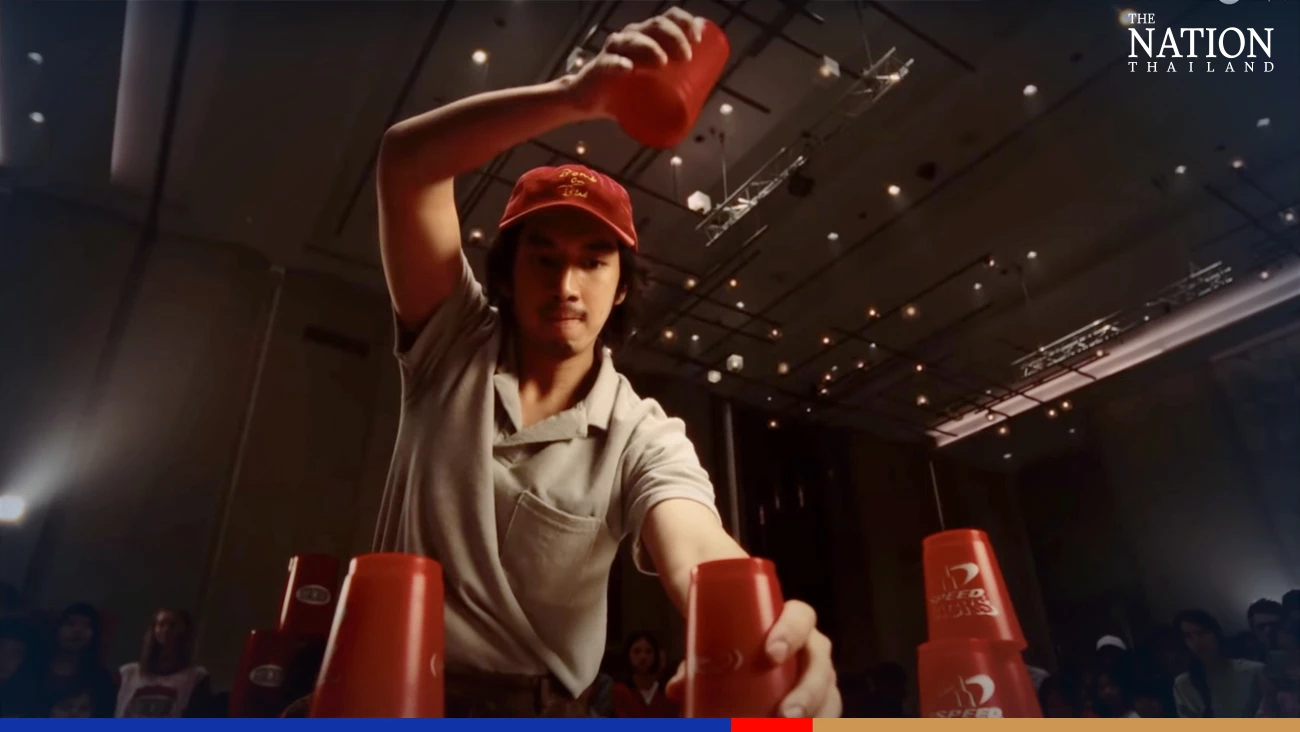
This late coming-of-age film centres on Kao (Nat Kitcharit) a sport-stacking world champion who is dumped by his long-time girlfriend, Jay (Urassaya Sperbund), and is forced to learn life skills to care for himself.
The film explores childhood dreams and the reality of adulthood as Kao and Jay give up what they love to move on and grow as people.
Many people consider bonsai to be an art form only for experts. However, there is a palm-sized type that grows up to 20 centimetres tall and is much easier to care for due to its small size.
Called shohin-bonsai, or mini-bonsai, the plants still convey the delicate, powerful presence of bonsai that is so widely admired. Having a mini-bonsai is an easy way to enrich one’s home.
“There are no fixed rules for bonsai,” said Sachiko Uchida, a bonsai artist who runs the Reijuen bonsai garden in Yokohama’s Naka Ward. “There are many small and lovely mini-bonsai plants. I hope people will enjoy them freely.”
Hailing from Kanagawa Prefecture, Uchida was born in 1975. After training in shohin-bonsai at a bonsai garden in the prefecture, she opened up her own place, Reijuen, in 2021.
She also sells bonsai and holds workshops, including teaching at Yomiuri Culture, which provides cultural and educational courses.
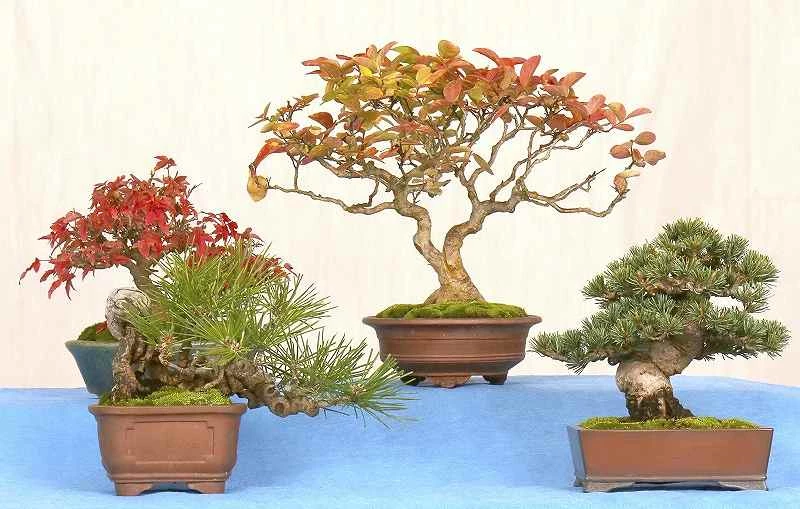
Mini-bonsai are broadly classified into two categories: the shohaku type comprising trees such as pines and cedars, and the zoki miscellaneous type comprising other plants.
The shohaku type is regarded as a typical bonsai. People admire their intriguing appearances while thinking about their respective histories, such as how the bent branches and withered spots came about.
Uchida has a black pine that she curved at its base when it was young, and she has bent it further over the years. You can sense the life force of the tree as you gaze at it.
The zoki miscellaneous type comprises plants that are a pleasure to look at because they, for example, bear fruit and bloom, or their leaves change colour in autumn.
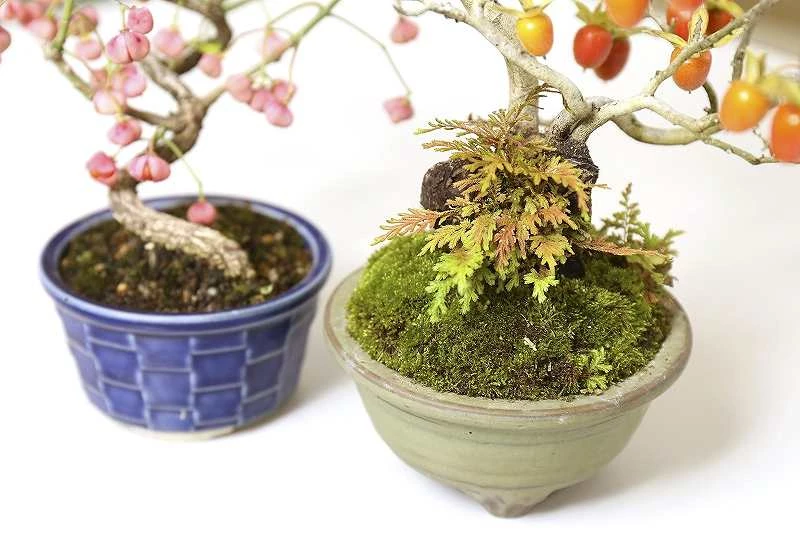
Royagaki (diamond-leaf persimmon) is an ornamental persimmon tree. Its orange-coloured berries are as small as a thumbnail. They grow in clusters and are quite cute.
“Zoki trees change in appearance throughout the year,” Uchida said. “Via [a living thing] in a small pot, you feel the passage of time.”
Bonsai differ from ordinary plants because they are pruned and trained to have a beautiful shape from early in their development, altering their natural growth. Other notable points include the moss that grows at the base of the plant and the pot it is set in.
Mini-bonsai are sold at bonsai gardens and other places, starting at about ¥2,000 ( THB 521 ) .
They are usually grown outdoors under the same conditions as in nature.
“The small plants can be placed on a balcony that gets sunshine, and you don’t have to think too hard about how to grow them,” Uchida said.
Trimming bonsai with tweezers when needles and leaves become discoloured builds attachment to the plant.
“If you have any questions, ask the bonsai garden where you purchased the plant.” Uchida said. “I want people to have fun with bonsai.”
Greening made easy
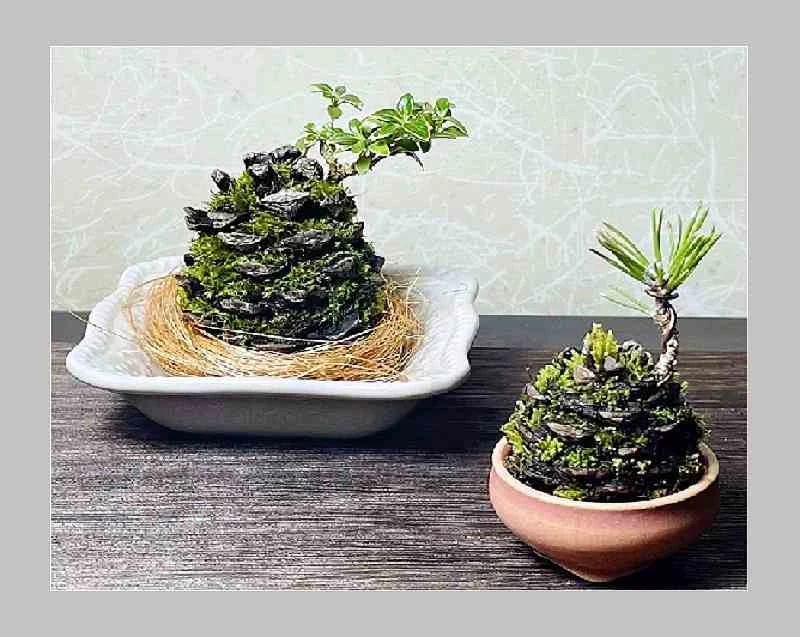
An easier way to bring nature into your living space than having a small bonsai is to create a koke bokkuri, a pine cone with moss growing between its scales.
To make a koke bokkuri, first wash and thoroughly dry a pine cone. Fill the space between the scales with clay-like soil called keto-tsuchi, and then attach moss clumps one by one to the soil using tweezers. Placing a small seedling with the moss makes for a cute arrangement.
Koke bokkuri are attracting attention recently as enthusiasts post images of their creations on social media. “As it doesn’t have much space for holding soil, the plant tends to weaken. If that happens, put the pine cone in a pot, and it will revive,” Uchida said.
Ashes are circle of life in Thai artist Korakrit Arunanondchai’s paintings
THURSDAY, DECEMBER 29, 2022
Fire and ash have been at the centre of Thai artist Korakrit Arunanondchai’s art practice for the past 10 years. The artist’s solo exhibition at Kukje Gallery in Seoul is a place where visitors can contemplate death and life.
The gallery’s K3 space appears to be a completely different space from the rest of the gallery – the floor is made from compressed ash mixed with earth and paint, making visitors feel as if they were standing on volcanic rock. Prayer text is sculpted into the floor, which the artist said is like subtitles to the show.
“(A prayer) is almost like the promise that may never be fully fulfilled, but then until it’s fulfilled, it’s also not broken,” Arunanondchai said at the press preview on Dec. 15. “So, it’s something that’s in this state where it’s neither-nor, and that’s the kind of feeling I have towards spirituality or even art itself.”
The prayer includes: “We create this world through unanswered prayers/ There is a splendour beyond the upheaval/ A nostalgia for unity/ In the landscape of mourning/ Give yourself to the air, to what you cannot hold.”
While the artist has displayed video work at the show since 2014, his inaugural show at the gallery focuses on paintings from his two series — “History Paintings” and “Void (Sky Painting).”
“History Paintings” use bleached denim as the primary material. On the denim, Arunanondchai builds layers of paint and photographs, which are remnants of a fire. He sets paintings on fire and photographs them as they burn away. The remaining fragments of the paintings and their resultant ashes are reassembled with photographic documentation.
“I started to work with bleached denim, partly due to the idea of its relationship to Western globalism, specifically America. I heard the saying that the first minute you paint on canvas you enter a Western history, and I am always aware that being a contemporary artist, everywhere in the world, we, as a non-Westerner, engage in something that is other than us, and then it becomes us,” he said.
Korakrit Arunanondchai (Kukje Gallery)
“(Denim) also feels like the texture of the Earth or something that you look from far away, almost as you are in the plane looking on the texture of the Earth itself,” he added.
“Who Will Testify to the Time when the World Was Ablaze?” by Korakrit Arunanondchai (Courtesy of the artist, Kukje Gallery)
The artist’s first solo exhibition in Seoul, “Songs for Dying and Songs for Living,” took place at Art Sonje Center in October. His video installation “Songs” was shown at the 13th Gwangju Biennale in May.
“Image, Symbol, Prayer” runs through Jan. 29 at Kukje Gallery.
Serbian performance artist to address Bangkok gathering on Jan 25
WEDNESDAY, DECEMBER 28, 2022
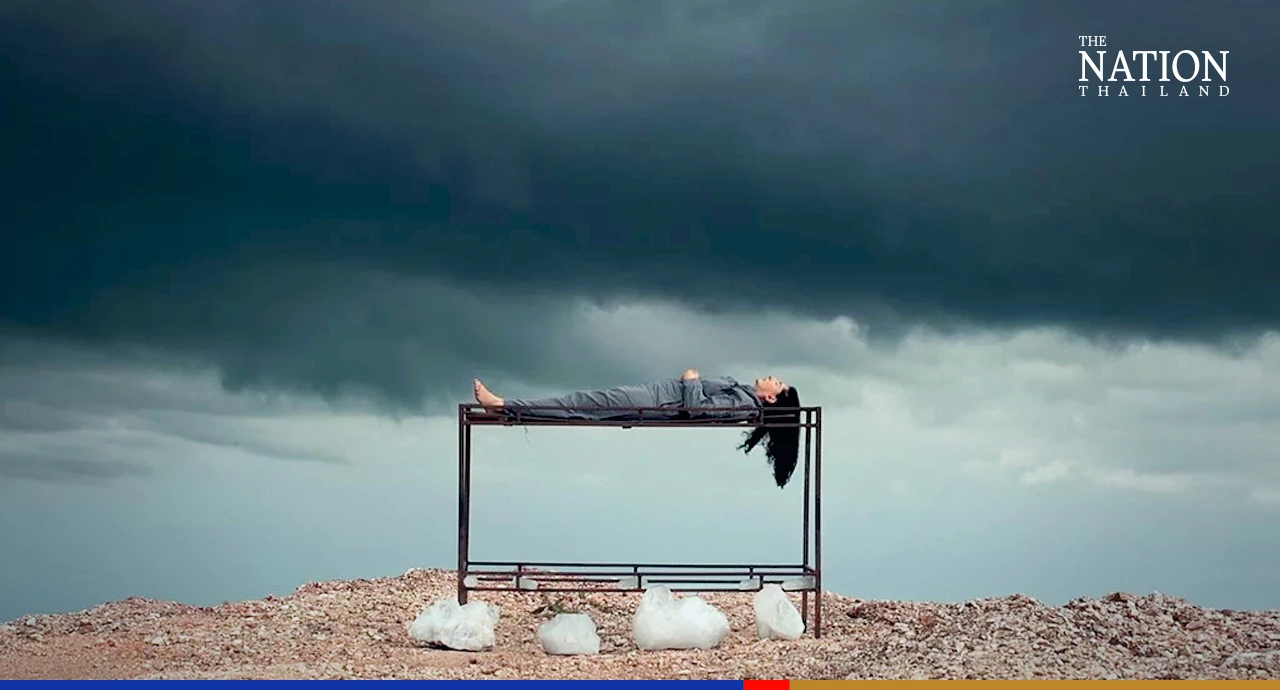
Serbian conceptual and performance artist Marina Abramović is scheduled to participate in a special talk at Queen Sirikit National Convention Centre (QSNCC) in Bangkok on January 25 next year.
The special talk on “History of Long Durational Work and Marina Abramović Institute (MAI)” is a part of Bangkok Art Biennale 2022 (BAB 2022), an international contemporary art festival, which is held every two years.
The festival, which showcases more than 200 contemporary artworks from 73 artists worldwide, kicked off on October 22 this year and will end on February 23, 2023.
The festival is being held at 11 venues across Bangkok, namely Wat Pho, Wat Arun, Wat Prayun, Bangkok Art and Culture Centre, QSNCC, Museum Siam, Central World, Samyan Mitrtown, The Park, The Prelude One Bangkok and JWD Art Space.
During the press interview, Abramović said artists nowadays must be able to create hope among people as the world is facing various turmoils, such as war, pandemic and natural disasters.
She said her special talk will gather everything that people need to know about performance art via photos and videos, as well as explanations about the connection between performance art and media.
“In addition, I will explain the history of performance art, which is not only in terms of visual art, but also music, opera and theatre,” she said.
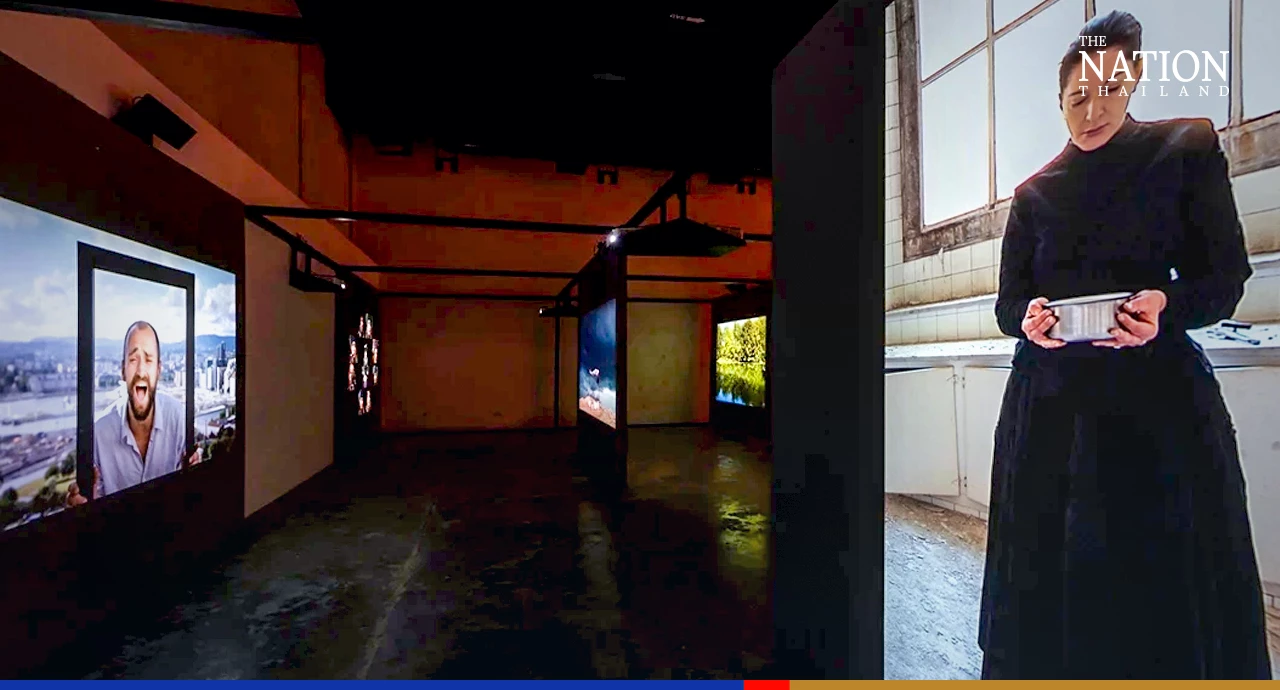
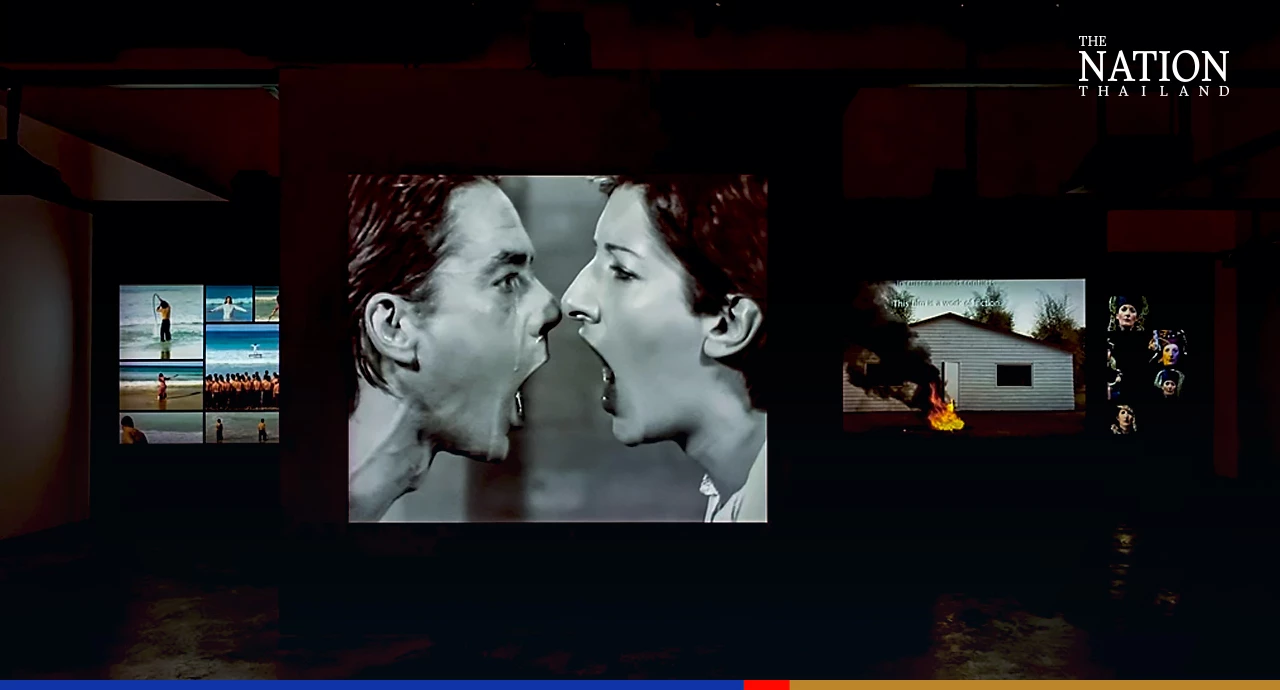
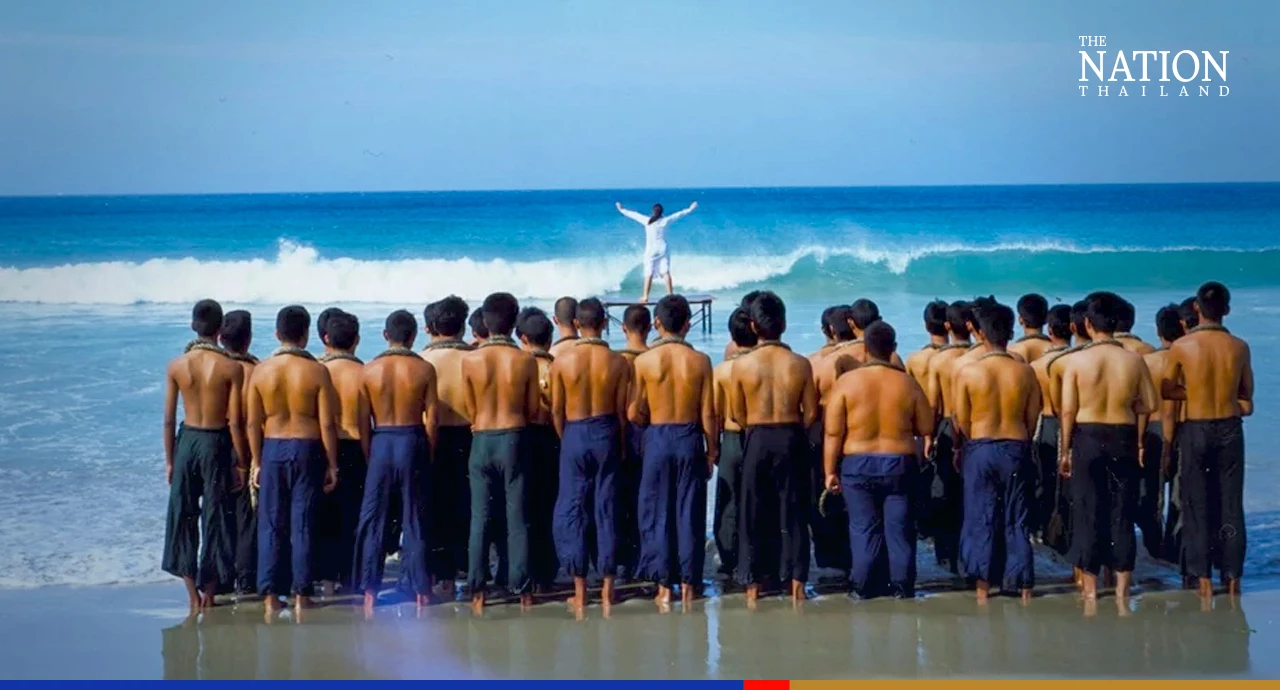
She said her works are in line with BAB 2022’s concept “Chaos: Calm”. Her works, such as Sea Punishing, 8 Lessons on Emptiness, City of Angels and Boat Emptying, are being showcased at QSNCC.
She added that Bangkok is a perfect example of chaos and calm.
“In Bangkok, people have to face noise, air pollution, traffic jams and crowds on the roads,” she said, “Meanwhile, people can find temples where people pray and meditate for peace.”
Museum offers promotion for tickets to Banksy exhibit
SUNDAY, DECEMBER 25, 2022
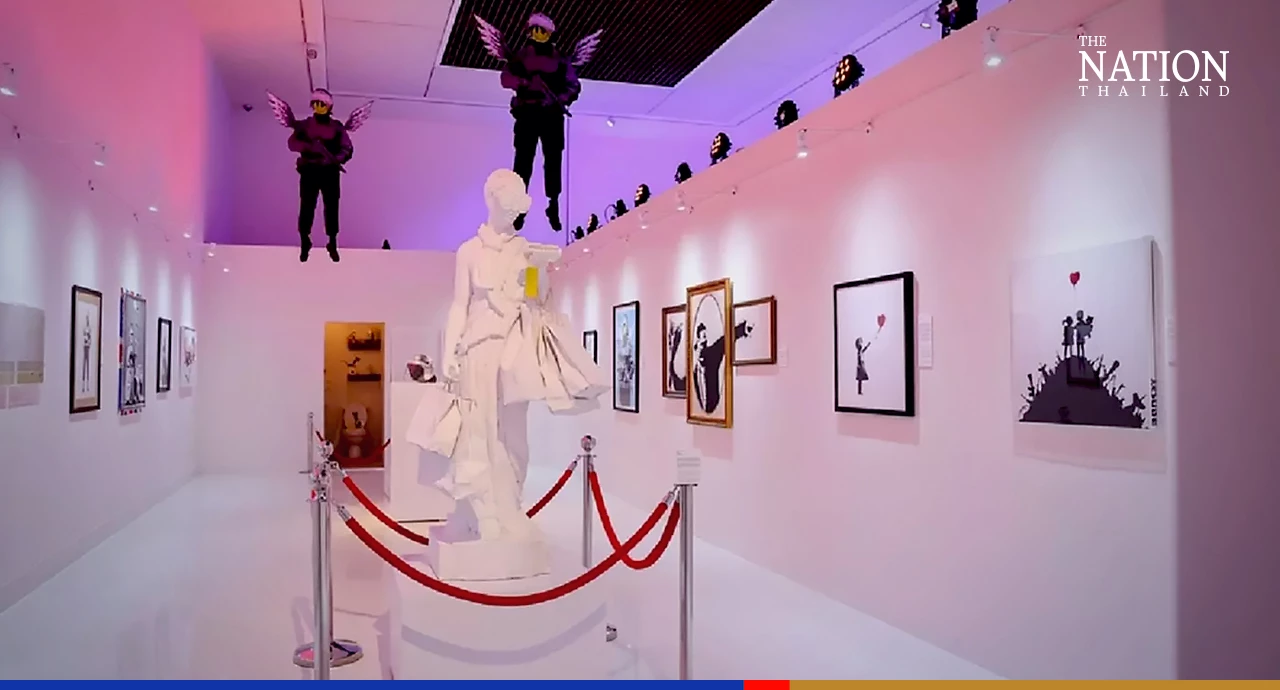
The Museum of Contemporary Art in Bangkok is offering one free ticket for every four bought for an exhibition of street artist Banksy’s art until January 8.
The exhibition – The Art of Banksy: “Without Limits” – opened at the end of October at the museum, its first time in Southeast Asia, and runs till February 12.
Banksy is “probably the most famous yet the most mysterious graffiti artist this world has seen”, the organiser said. “From Bristol to Barcelona, Sydney to San Francisco, one thing that everyone agrees on is that his popularity cannot be denied.”
In 2010, Time magazine placed the British artist on its list of the world’s 100 most influential people.
The exhibition, which is custom-built to fit the venue, comprises more than 150 of the artist’s works, including certified originals, prints, photos, lithographs, sculptures, murals, and video installations.
The exhibition spans three halls with a total space of 700 square metres.
Profits from the exhibition will be donated to the M.V. Louise Michel, a humanitarian agency that helps refugees in the Mediterranean.
Keo Sinan, a former musician, has kept 401 vinyl records which date from the 1940’s to 1975 safe for more than 50 years. For more than 20 years, he has dreamt of opening a museum in his hometown in Kampong Thom province, to display the music of the Kingdom’s “Golden era” for the next generation.
Sinan was born in 1944 in Svay village of Baray commune and district, Kampong Thom province. He currently lives in Boeung Samreth village of the same commune. In his long life, he has been blessed with six children and 20 grandchildren.
He spoke to The Post at a November 30 launch party for the Khmer edition of the graphic novel The Golden Voice Queen, which tells the tale of famed singer Ros Serey Sothea.
“Today I have 401 records of songs from the 60s and 70s, with about 900 songs. Most of the songs are by Sin Sisamuth, Ros Serey Sothea, Pen Ron, Keo Sokha (Keo Montha’s young sister), Nov Narin and a few other singers,” he said.
He used money from working at the Cambodia Cement Chakrey Ting Factory in Kampot province to buy records. While working there, he became close friends with musician Nop Neum, the younger brother of the actor Nop Nem.
He later began learning how to play the saxophone and trumpet and learned to play the drums in 1963.
“When I met Neum, he taught me to play the saxophone, trumpet and drums. Realising that I was gradually becoming a musician, I started to buy songs to listen to and rehearse. I bought my first record in 1964 and my last in 1975, the year the Khmer Rouge regime came to power,” he said.
“I remember that between 1972 and 1975. I used to ride a bicycle from Kampong Thom to buy records in Phnom Penh,” he added, saying that he formed his own band called the “Kasekor (Peasant) Band” between 1969-70.
What is astonishing is the tale of how he preserved his collection during the dark years of the Khmer Rouge rule, where much of the Kingdom’s intellectual and artistic resources were deliberately targeted for destruction by the hated regime.
Sinan not only survived, but he was able to store the records safely. The oldest of them is now 58 years old.
He explained how he hid the 401 records in the sewer beneath the home of a family who were killed by the Khmer Rouge in Kampong Thma district, Kampong Thom province, where he was transported to by the regime.
He said that when he realised that the space would be large enough for his collection, he hid them securely. It was not until 1982 that he recovered them to play for his own entertainment. In 2008, he finally shared all of his precious musical memories.
“During the Khmer Rouge era, what kept me alive was that I was skilled at agriculture and could grow crops. Anyone who could grow vegetables was useful to the organisation. I was not detained or singled out like so many other artists were,” he added.
“Because of my skill in growing vegetables, I was able to save my life during the Khmer Rouge era and even save my record collection. Because I was farming, I had access to pesticides and was able to use some of them to protect my records from insects,” he continued.
Although he has kept his records safe since 1982, the secret of his collection was only revealed to the public in 2008.
“In 2008, I met Khuth Sokhoeun, who is a writer and lover of traditional music. He took photos of my records and wrote articles about them. The articles became famous around the Kingdom and even overseas. Both local and foreign journalists have come to interview me, although I must admit there has been a slight decrease,” said Sinan.
“In 2009, my records were copyrighted by a company and displayed to the public as photo albums at the Chenla Theatre. In 2014, they appeared at an art exhibition at the Koh Pich Theatre which was organised by the Sin Sisamuth Association. Sin Chanchhaya, the oldest son of Samuth, was the association’s president at the time. In 2016, they were brought to the National Museum of South Korea and exhibited there,” he added.
Many investors and even companies offered him thousands of dollars for his collection, but he always refused to sell. Even now, people have made standing offers to buy individual records from him for several thousand, but he refuses.
He did mention that journalists who wish to interview him usually offer some sort of gift of gratitude to him, and this helps him meet his monthly expenses.
“There was a time when a company in the United States wanted to buy the 401 records for $400,000. I refused to sell because I wanted to preserve and conserve my own heritage, which I worked so hard to save. Today, my records are still valuable. Many record companies and production houses would pay from $2,000 to $2,500 to use them as the basis of re-mastered releases of rare songs,” he said.
“Even though many people offered me large sums of money, I refuse to sell. I think that all of the risks I took to save them might become meaningless if I let them go,” he added.
“I am old and do not want to be rich. I want to keep what I have saved so that later generations will know what we were creating back in the 60s and 70s. I would really like to set up a small museum in my hometown so I could show my collection to the public when they pass through Kampong Thom,” he continued.
Sinan is planning to take a selection of records to Battambang in early 2023 to share with younger fans.
“I think I will prepare a show at the end of February or in early March next year. I will select no more than 50 records. I am getting older, and it is getting harder to travel so far from home,” he said.
Japanese survey: 26% of municipalities have no bookstores
MONDAY, DECEMBER 12, 2022
Of the 1,741 municipalities in Japan, 456, or 26.2%, have no bookstore at all, according to a survey by the Japan Publishing Industry Foundation for Culture (JPIC).
When one includes municipalities that only have one bookstore, the number rises to 790, or more than 40% of all municipalities. With book sales continuing to fare poorly, bookstores have been disappearing from streets across the country, a serious situation that could rob people of places to interact with books.
The survey was conducted by gathering September data from the Tokyo-based Japan Publishing Organization for Information Infrastructure Development (JPO), which comprises publishers, publication wholesalers and bookstore industry associations. Rural areas in particular stood out for their lack of bookstores, with 56.1% of municipalities having no bookstores in Okinawa Prefecture, 51.9% in Nagano Prefecture and 51.3% in Nara Prefecture. In Hokkaido, 70.9% of municipalities have one or no bookstores.
A number of bookstores have closed down in recent years due to sluggish sales of physical books and magazines and the rise of online bookstores, among other reasons. According to the JPO, there were 16,722 bookstores across the nation in 2011, including those specializing in textbooks and providing other services to schools, government agencies and companies, while the number declined nearly 30% to 11,952 in 2021. The number of small- and medium-size bookstores appears to have suffered a particularly steep decline.
“Most bookstores will disappear in the next 10 years if the current situation continues,” said Toshitaka Kondo, chairman of JPIC. “In other countries, central governments take measures to protect bookstores from the perspective of cultural protection. In order to make that common in Japan as well, we must get the public to support such measures.”
To address the situation, a parliamentary group working to revitalize brick-and-mortar bookstores and protect Japanese culture, which counts some 150 lawmakers with the ruling Liberal Democratic Party among its ranks, held a general meeting on Nov. 8 and compiled an interim report on the protection of bookstores.
The report proposes improvements to logistics such as reducing purchase returns and stock shortages and launching a government-subsidized model project to distribute books with IC tags attached, which is expected to help prevent shoplifting. The report also calls for restricting effective discounts, such as free shipping services by online bookstores, and creating rules for public libraries about excessive purchases of the same book and the timing of when new books are lent out. The final report will be compiled in the spring of 2023.
In Chiang Rai, new art exhibit shows life is all about light
FRIDAY, DECEMBER 09, 2022
A new exhibit at the Mae Fah Luang Art and Cultural Park in Chiang Rai focuses on the restorative power of light, while aiming to raise the northern city’s profile.
The exhibit of installation art – “Light of Life” – showcases 20 pieces from six artists. It is organised by the Mae Fah Luang Foundation and the Tourism Authority of Thailand, which is trying to promote tourism beyond major cities and develop Chiang Rai as a destination for art tourists.
The exhibit also marks the debut of light-focused installation art at the art and cultural park operated by the Mae Fah Luang Foundation.
Artist Pol Huiprasert said that the lights in the exhibit cast off a range of temperatures, adding: “From the temperature of light bulbs to the sunlight’s temperature, the warmth of light creates human life and helps us move forward.”
Mom Luang Panadda Diskul, CEO of the Mae Fah Luang Foundation, said Chiang Rai has extensive natural and cultural heritage. The exhibit aims to help people see the city and its surroundings in a new light, the CEO added.
The exhibition is open to the public from 4pm to 10pm, Tuesdays till Sundays until January 29. For more information visit the Mae Fah Luang Art and Cultural Park’s Facebook page (www.facebook.com/maefahluangartandculturalpark) or call 053-716 -6057.
B-Floor Theatre’s new work questions who, or what, actually determines what’s good or bad in this country
As the audience walked into Bangkok Art and Culture Centre’s (BACC) 4th floor Studio for Dujdao “Dao” Vadhanapakorn’s new work “Paranoid – Schizoid”—the first work in B-Floor Theatre’s “Cloud State” as part of BACC’s 11th annual edition of Performative Art Project (PAP), we saw Dao and her B-Floor colleague and Teerawat “Ka-ge” Mulvilai walk around a circular stage filled with flour which, for Thai audiences or those who follow Thai politics, has political connotation.
Photo: Tanyathorn Khunapinya and Chatchada Piphatnangkool
Their voices were soft and she spoke through a wireless microphone and only he could hear her through his headphones.
Settling into our seats on one of the three audience stands set up around the performance area, my partner noted, “Ja (Jarunun Phantachat, B-Floor’s co-artistic director) looks comfortable lying there.” “Where is she?” I asked.
After my partner pointed to one area of the stage where Ja was almost totally covered by flour except for her head as if to remind me that it’s time to see my optometrist, I said, “Oh, I thought that’s a stage prop,” and asked “Where’s Golf (Ornanong Thaisriwong, another performer)?” as I was looking for her.
Dao then moved to stand behind a microphone stand where she asked, or ordered, Ka-ge, on the opposite side, to write down on the floor what he considered good and bad—for example, working hard for the former, and traffic jam for the latter.
Thanks to the live videocast projected onto two partition panels, we saw what he wrote. It’s noteworthy that these, like many parts of this performance, changed from one evening to another.
Later, Golf was carried in by Ka-ge and her all white costume and elegant postures made her look like an angel, if not a goddess. Her headdress was filled with so many black ping-pong balls that Ka-ge often sought the audience’s help to put back those that spilled over. My partner was given one but she might think of taking it home as a souvenir for our son.
Realizing our beagle wouldn’t enjoy it and wanting to get “experiential” with this work, I took it from her, walked to the stage and put it back into Golf’s headdress. On the way back to my seat, Ka-ge stopped me at every step and as I stood still he drew lines around my feet. After I was back in my seat, he wrote “OK”.
Subsequently, with Dao leading this game, or exercise, through microphones either publicly or privately through Ka-ge, the trio continued exploring, and questioning, the notions of the good and the bad in different ways, with spoken words and physical movements.
Both titles “Paranoid – Schizoid” and “Cloud State” are fitting and this work walks the talk indeed. Although it might not hit us hard as Ka-ge’s works, it made us think on after the curtain call. It’s been almost three years that we’ve all been affected by the global, plus many more years that we’ve been in the political turmoil and many political cases remain in the jurisdiction process.
Given the recent constitutional court’s decision on how to count the eight-year premiership, we don’t really know what else to expect. Just like when Ka-ge said “PM 2.5”, we cannot see, hear and think clearly as we cannot breathe heathy air. Just like that the audience couldn’t hear all Dao’s commands, we’re wondering what, or who, really determines what’s good or bad in this democratic country.
Notwithstanding the socially and politically relevant content and the treat of seeing four veteran B-Floor members sharing the stage, theatregoers who have followed Dujdao’s stage works for many years may feel that “Paranoid – Schizoid” is like old wine in a new bottle, with Dujdao’s all-too-familiar role of an onstage director/on-site psychiatrist. I suddenly thought of works by theatre masters like Peter Brook and Tadashi Suzuki. A major difference is that they started getting into their autopilot cruising mode when they’re in their 60s; Dujdao’s still in her 40s.
“Paranoid – Schizoid” runs daily until Sunday (December 11), 7pm. Next weekend (December 15 to 18), B-Floor’s “Cloud State” and BACC’s PAP#11 close with “It’s Just a Fiction (Not Mentioning Anything)”, a politically changed physical theatre work by newly graduated students from Thammasat University’s Faculty of Fine Arts. They noted, “Since our freshman year, we always wanted our senior project to be a devised physical theatre performance.”
Having taking classes with Crescent Moon Theatre’s Sineenadh Keitprapai, another Silpathorn Award laureate, as well as Ka-ge, their graduation project earlier this year was so well received that B-Floor invited them to join this Cloud State.
This is also the first student’s work to be part of PAP. Tickets for the former are Bt 750 and the latter Bt 600—buy both and save some bucks—available now at https://www.facebook.com/BFloor.Theatre.Group
This weekend and next (December 9-11 and 16-18), another Silpathorn Award laureate Pichet Klunchun invites us to “Take a Walk” with him at Thonburi Park.
This solo performance is described as “time management of the present in order to develop status and stability for the future”, promises to “relax your mind, put you in good shape, build muscles as well as strengthen bones, intestines, lungs and heart and is “recommended for all ages and genders.”
Precocious 11-year-old Trang girl makes waves online with her paintings
WEDNESDAY, DECEMBER 07, 2022
An 11-year-old student in Kantang district of Trang province has earned more than 200,000 baht over the past two years by selling her watercolour paintings via her Facebook page.
Pornpawee “Organ” Uttasuradee, a Prathom-6 student at Wat Trangkhaphum Phuttawat Municipal School, has been studying watercolour painting from the time she was five years old.
When Pornpawee was nine, her mother decided to open a Facebook page “N’August N’Organ” and put her watercolour paintings on sale, at 10,000 baht apiece, as she was impressed with her daughter’s talent.
Pornpawee’s paintings caught the attention of many foreigners. She was able to sell two to three paintings per month, generating 20,000 to 30,000 baht in income.
Most watercolour paintings being sold on her Facebook page depict natural scenery, such as rice fields, mountains and the sea.
Following her success in selling her works, Pornpawee has been invited to teach watercolour painting to other students at her school.
Pornpawee said she started learning watercolour painting when she was five. She added that she has a lot of paintings right now.
“I decided to continue studying watercolour painting as my teacher praised my talent,” she said.
Meanwhile, Pannarai Wongaree, a Prathom-3 student at Wat Trangkhaphum Phuttawat Municipal School, said he was proud that Pornpawee was his teacher.
He said he got a lot of knowledge after learning how to draw a cat on a tree branch from her, adding that he will show his painting to his grandparents.




 Korakrit Arunanondchai (Kukje Gallery)
 “Who Will Testify to the Time when the World Was Ablaze?” by Korakrit Arunanondchai (Courtesy of the artist, Kukje Gallery)





 SootinClaimon.Com