Blades of perfect glory

ศาสตร์เกษตรดินปุ๋ย : ขอบคุณแหล่งข้อมูล : หนังสือพิมพ์ The Nation

http://www.nationmultimedia.com/lifestyle/30372531

Blades of perfect glory

Jul 08. 2019
Swan Lake

Swan Lake
By The Nation

109 Viewed

The UK-based Imperial Ice Stars are once again set to delight audiences as they bring two works with full theatrical settings to Bangkok’s 21st International Festival of Dance & Music over four nights.

They’ll perform “Swan Lake on Ice” from September 26 and 27 and follow up with “Cinderella on Ice” on September 28 and 29.

Both these productions are massive, requiring shipping in container loads of equipment and sets. Turning a theatre stage into a temporary ice stage is no easy task either with organisers noting that 14 tonnes of ice are required.

The Imperial Ice Stars was founded in 2003 by James Cundall, one of the leading producers of live entertainment in Asia and Australia, and Tony Mercer, who is regarded as the world’s foremost creator of contemporary theatre on ice.

The shows are known for their magnificent sets, opulent costumes created by Russia’s leading designers, spectacular lighting and stunning special effects, including flying, acrobatics, magic, projection, snow, fire and rain, as and when the story demands.

Tchaikovsky’s music highlights the new choreography of this “Swan Lake on Ice”.

“Inspired by Tchaikovsky’s original score and his intentions for the story, I wanted to create a more realistic interpretation. I wanted to achieve a performance of the story that left no unanswered questions. Too often productions of Swan Lake have storyboard moments that follow no logical pattern and are allowed to stay that way because that’s how it was always done or because the fairy tale bears no resemblance to real life. I just felt that I wanted to present a storyline that had a logical and real pattern throughout the show, but which would retain its fairy tale magic,” Mercer explains.

Mercer adds that his research into the background of Tchaikovsky’s Swan Lake revealed what the composer originally set out to achieve and the reasons for the various adaptations. Tchaikovsky had originally written Odette and Odile as two separate roles, but then under instruction he merged them to be performed by one dancer.

“I have reverted to Tchaikovsky’s original aim and Odette and Odile are played by different performers. In doing so, I wanted to make the Prince responsible for his own actions in betraying his promise to Odette, the promise that would release her from the curse of her swan- like existence and allow her to return to human form,” adds the artistic director.

The costumes for “Swan Lake on Ice”, influenced mainly by the Romanov period in Russian history, reflect the period during which Tchaikovsky composed the music. Both they and the costumes for “Cinderella” have been designed by Albina Gabueva, one of Russia’s top theatrical costume designers, whose 30-year career has seen her work on more than 100 opera and ballet productions at the Moscow Stanislavsky Theatre.

“Every costume is an individual design in this production, in both style and colour. Each costume has involved a lot of hand-made, detailed work, including a special technique for the costumes’ trimming. All the costumes were made by the costume cutters for the Bolshoi Ballet,” says Gabueva.

Cinderella

Cinderella

The other show “Cinderella on Ice” benefits from the same treatment: dramatic interpretation, beautiful sets and dazzling costumes.

“I love the Prokofiev score, but found that ice dance didn’t sit so well with the music. Its rhythms were perfectly suited to ballet as opposed to the flow that blades require. The use of Prokofiev’s music for our production did cause me some concern,” he says.

And then Tim Duncan stepped in with a score specifically written for ice dance.

“Our telling of Cinderella holds a central theme of time and I had a desire for this to be represented in a fairly powerful and contemporary musical style. Tim’s writing of these musical themes became pivotal to the story and, as you will see when you watch the production, give the performance a new theatrical edge,” says Mercer, adding that the choreography includes some unique skating moves and marks out the ‘Imperials’ as an innovative company.

The performances take place at the Thailand Cultural Centre. Tickets costing from Bt1,200 to Bt3,000 are now on sale atwww.ThaiTicketMajor.com. For more information, visitwww.BangkokFestivals.com.

Supporting the Festival are Bangkok Bank (PCL), Bangkok Marriott Marquis Queen’s Park, BMW Thailand, B.Grimm Group, Indorama Ventures, Major Cineplex Group, Nation Group, PTT (PCL), PTT Global Chemical PCL, Singha Corporation, Thai Union Group, Thai Airways International, Tourism Authority of Thailand and Ministry of Culture.

Singapore’s youth arts festival promotes Chinese culture and language

ศาสตร์เกษตรดินปุ๋ย : ขอบคุณแหล่งข้อมูล : หนังสือพิมพ์ The Nation

http://www.nationmultimedia.com/lifestyle/30372425

Singapore’s youth arts festival promotes Chinese culture and language

Jul 06. 2019

Photo by DESMOND WEE, The Straits Times A performance by China National Theatre for Children during the Singapore-Youth Arts Festival 2019 opening ceremony on Friday.

Photo by DESMOND WEE, The Straits Times A performance by China National Theatre for Children during the Singapore-Youth Arts Festival 2019 opening ceremony on Friday.
By The Straits Times Asia News Network Singapore
.
1,375 Viewed
.
From now till August 11, Singaporeans will be able to enjoy free Chinese cultural programmes such as role-playing workshops and nursery rhyme composition and performance competitions.

These programmes are part of the Singapore-China Youth Arts Festival, now into its fourth year.

The festival is meant to provide opportunities for youths and their families to immerse themselves in Chinese culture and the Chinese language through their engagement in these programmes.

At the opening ceremony on Friday at the China Cultural Centre, performances were given by the China National Theatre for Children and the Singapore Hokkien Huay Kuan Arts and Cultural Troupe, which was started 33 years ago to promote Chinese language and culture among the young in Singapore.

Some of the troupe’s members have been with them since they were children.

Koh Poh Koon, Singapore’s Senior Minister of State for Trade and Industry, was the guest of honour at the event.

The Children Outreach arm of the China National Theatre for Children will also be visiting three local primary schools, where they will be performing and holding interactive sessions with students.

Speaking in Mandarin, Koh touched on the theatre’s local outreach.

He said: “I believe that these activities will provide a platform for Chinese and Singaporean children to learn from each other and forge friendships, strengthening the cultural ties between Singapore and China in the performing arts.”

The festival is co-organised by the Singapore Press Holdings Chinese Media Group and the Singapore China Cultural Centre.

Rolex sets time on a ‘Perpetual Planet’

ศาสตร์เกษตรดินปุ๋ย : ขอบคุณแหล่งข้อมูล : หนังสือพิมพ์ The Nation

http://www.nationmultimedia.com/lifestyle/30372370

Rolex sets time on a ‘Perpetual Planet’

Jul 05. 2019
Mount Everest

Mount Everest
By Compiled by Kupluthai Pungkanon The Nation

1,125 Viewed

For nearly a century, Swiss watchmaker Rolex has supported the pioneering explorers as they push the boundaries of human endeavour.

Since the 1930s, Rolex Oyster Perpetual watches have accompanied individuals to the highest mountains and to the ocean depths, serving as precise, reliable tools. In turn, these groundbreaking expeditions proved to be the perfect “living laboratory” for the brand to test and develop its timepieces. But the world has changed. As the 21st century unfolds, exploration for pure discovery has given way to exploration as a means to preserve the natural world. Rolex continues the legacy, supporting the explorers of today on their new mission: to make the planet perpetual.

                                               Mount Everest

And so this year, the luxury watch brand is launching the Perpetual Planet campaign to consolidate its ongoing support of research on environmental issues and climate change.

It adopts a three-pronged approach, embracing an enhanced partnership with the National Geographic Society to study the impacts of climate change, as well as with Sylvia Earle’s Mission Blue initiative to safeguard the oceans through a network of marine protected “Hope Spots”. It also encompasses the Rolex Awards for Enterprise that recognise individuals with projects that advance knowledge and protect human well-being and the environment.

Rolex’s history with National Geographic goes back more than 60 years. The Society has supported bold people and transformative ideas for more than 130 years, making valuable contributions to exploration, science and conservation. Articles about these ventures appeared in its eponymous magazine, National Geographic. In 1954, one of those articles described Sir Edmund Hillary and Tenzing Norgay’s history-making ascent of the world’s highest peak, Mount Everest. Rolex was also involved in this epic adventure, having supplied the expedition with watches.

This shared spirit of discovery drew Rolex and National Geographic together over the years as they continued to support pioneers exploring new realms. Both organizations have, for example, been involved in two separate expeditions to the Mariana Trench, the deepest part of the oceans, located in the Pacific.

James Cameron’s deepsea challenger submersible on a test dive in Papua New Guinea

The first was in 1960 when the bathyscaphe Trieste, piloted by Jacques Piccard and Don Walsh, carried an experimental Rolex Oyster watch, the Deep Sea Special, fixed to its exterior as it descended to a record depth of 10,916 metres. It returned to the surface in perfect working order.

Fifty-two years later, in 2012, filmmaker and Rolex testimonee James Cameron completed his solo dive aboard the Deepsea Challenger, which carried an experimental diver’s watch, the Rolex Deepsea Challenge, on its robotic manipulator arm. The watch, waterproof to 12,000 metres (39,370 feet), resisted more than 12 tonnes of pressure on its crystal, kept perfect time and emerged from the water unscathed.

Perpetual Planet aims to harness world-renowned scientific expertise and cutting-edge technology to reveal new insights about the impacts of climate change on the systems that are vital to life on Earth: mountains as the world’s water towers, rainforests as the planet’s lungs, and the ocean as its cooling system.

The first expedition supported by this partnership was to Mount Everest and ran from April through to the end of last month. The Everest expedition team, led by National Geographic and Tribhuvan University, aimed to understand better the effects of climate change on the glaciers of the Hindu Kush-Himalaya that provide critical water resources to 1 billion people downstream. This information, coupled with additional data sets on water supply and demand in the region, will form the basis of a new index to track the health of the Himalayan water system and inform decisions to help protect it.

Of the venture, the president and CEO of the National Geographic Society, Tracy R Wolstencroft, said: “Together with our partners at Rolex, we will harness the power of science, exploration and storytelling to reveal critical insights about our changing world, advance understanding and scale up solutions toward achieving a planet in balance.”

Arnaud Boetsch, director of communication and image at Rolex, added: “This project goes to the heart of the commitment Rolex has made to a Perpetual Planet and to future generations, by supporting individuals and organisations in their efforts to preserve the natural world and the systems that sustain life. It is essential to base solutions on reliable data. The insights from these expeditions will be invaluable to informing decisions on how the world can best tackle the planet’s most pressing environmental challenges.”

Joseph Cook, 2016 Rolex Awards Laureate, researches how microorganisms in the ice sheet afect climate 

2016 Rolex Awards Laureate Sonam Wangchuk is helpingHimalayan farmers overcome water shortages by tapping meltwaters to build artifical glacie

Bella Whittaker’s ‘babes’ set to land in Bangkok

ศาสตร์เกษตรดินปุ๋ย : ขอบคุณแหล่งข้อมูล : หนังสือพิมพ์ The Nation

http://www.nationmultimedia.com/lifestyle/30372259

Bella Whittaker’s ‘babes’ set to land in Bangkok

Jul 04. 2019
By The Nation

367 Viewed

Australian artist Bella Whittaker is bringing her series of illustration known as ‘babe’ featuring female figures to represent the diversity, yet a sense of individuality to Bangkok art scene.

Taking place from July 11 to September 16 at River City Bangkok, the exhibition titled “Bangkok Babe” aims to focus on individuality and a sense of being unique through the use of varied ethnicities from all over the globe, vibrant colour palettes and pattern on clothing.

The artist aims to represent unity within these pieces by having each individual babe in the same position or pose. This not only creates a cohesive body of work but reflects a sense of strength to allow the characteristics and personality of each individual babe radiate out.

Whittaker has began creating her ’babe’ endeavour since 2016 while she was a second year student in visual communication. She now sells original pieces, prints and merchandise globally. She prints her own merchandise by hand from her studio in Adelaide, Australia and has also collaborated with other creatives in different fields to produce work for Babes including writers, tattoo artists, mags and photographers.

She is constantly inspired to develop and grow the Babes brand as she does herself and is very much looking forward to international exhibitions this year.

“Bangkok Babe” will be on display at Room 236 on the second floor of River City Bangkok, next to Si Phraya pier. Boat transfer is available from BTS

Taksin Bridge.

It is free of charge and is open daily from 10 to 10. Call (02) 237 0077-8 or visit http://www.RiverCityBangkok.com.

Cambodia: now and then

ศาสตร์เกษตรดินปุ๋ย : ขอบคุณแหล่งข้อมูล : หนังสือพิมพ์ The Nation

http://www.nationthailand.com/lifestyle/30372046

Cambodia: now and then

Jul 01. 2019
Svay Sareth’s “Yell

Svay Sareth’s “Yell
By THE NATION

Cambodian artist Svay Sareth, who picked up the Overall Best Emerging Artist prize at the 2016 Prudential Eye Award for Contemporary Art in Singapore, is holding his first solo exhibition, “The Breath of Change”, at Richard Koh Fine Art in Singapore from tomorrow (July 5) to July 20. He will also talk with Andrea Fam, assistant curator of Singapore Art Museum, on Saturday (July 6) at 3 pm.

In “The Breath of Change”, Svay interweaves memories and personal history with encounters of present-day Cambodia and its entanglement with foreign interest. The exhibition is anchored on the artist’s personal narratives and connotations of the water lily and sunflower plants, which both serve as entry points for reflection of Cambodia’s precarious position as a country undergoing healing and experiencing vulnerability to foreign altruism.


Svay Sareth’s “Yell & Silent”


“Yell and Silent” (2018) is an installation comprising approximately 180 soft-sculpture water lilies surrounding a central andromorphic form enwrapped in camouflage-print cotton. The work, which will dominate the majority of the exhibition space, is autobiographical in nature as it recalls a formative childhood memory of the artist. At its core, the work deals with the fundamental quandary of freedom and its cost. Freedom, and its myriad of historical interpretations, have all come at great cost and for Svay, it was an exchange of his mother’s love. In this work, the water lily is a symbol of this exchange. The work invites viewers to re-consider their understanding of freedom and its value to personal growth and betterment.


Svay Sareth’s “Beyond Sunflower”


“Beyond Sunflower” (2018) is a single-channel video of Svay performance piece at Angkor City. In the performance video, viewers are confronted with the protagonist donned in a sunflower mask, playing the Tro (traditional Khmer stringed instrument) in a seemingly forcible fashion and producing an unmelodic high-pitch screeching sound. The Sunflower and its treatment is suggested as a metaphorical representation of an unwelcomed foreign entanglement in Cambodia.

Singapore audiences might recall Svay’s performance video entitled “Mon Boulet” (2011) in the 2015 group exhibition, “After Utopia”, at the Singaporean Art Museum. It captured the attention of visitors due to its display of sheer tenacity and endurance by the artist. “Beyond Sunflower” is however not durational, but its urgency as a social-political piece highlights Cambodia’s voice of resistance against modern colonialism – expressions of power which are materialized by trade flows.

Svay lives and works in Siem Reap, Cambodia. He works in sculpture, installation and durational performance using materials and processes associated with war – metals, uniforms, camouflage and actions requiring great endurance. While his critical and cathartic practice is rooted in an autobiography of war and resistance, he refuses both historical and voyeurism on violence. Rather, his works traverse both present and historical moments, drawing on processes of survival and adventure, and ideas of power and futility.

Svay, whose work was part of the 2013 Singapore Biennale, participated in the 2018 Biennale of Sydney at the Museum of Contemporary Art Australia. His works are collected by various museums including the National Gallery of Victoria, MAIIAM Contemporary Art Museum, and Singapore Art Museum.

Find out more about the artist and his exhibition by visiting http://www.RKFineArt.com.

Art that’s not for sleeping

ศาสตร์เกษตรดินปุ๋ย : ขอบคุณแหล่งข้อมูล : หนังสือพิมพ์ The Nation

http://www.nationthailand.com/lifestyle/30372041

Art that’s not for sleeping

Jul 01. 2019
By THE NATION

The sixth edition of Hotel Art Fair, which brought together galleries, local and international artists and collectors under the roof of W Bangkok, has been declared a massive success by both art lovers and artists.

“A piece of art is more than an item to generate a pleasant ambience. It is a thought-provoking medium for people to engage in conversations and cultivate their own perceptions of the world. To buy art is to express gratitude to the artists for using their creativity to generate a piece that reflects their thoughts of the world,” noted Yoichi Nakamuta from Clear Gallery Tokyo, one of this year’s participating galleries.


“There has never been a more perfect time to break boundaries. In times of increasing division between beliefs, political parties and factions in our society, we need to build more bridges instead of walls. Art is a universal language and has the power to communicate ideas that may otherwise be unfamiliar or difficult to empathise with. In my work, besides moving beyond the 2D/static medium, I use interactivity to explore the concept of polar opposites and the coexistence between the two: black, white, and all the grey areas in between,” commented Purin Phanichphant, a digital artist  who showcased his playful, interactive art that blurs the line between viewers and the digital world.


Celebrity guest curators Nithi Sthapitanonda, the founder and owner of A49 architecture firm, demonstrated his signature pen and ink drawings to Thai architects and students, while Pranitan Phornprapha, brought his passion for art and music to life in an installation that reflected the spirit of Wonderfruit, the festival he founded in 2014.


Spectrum, a collaboration project by the Autistic Thai and Na Kittikoon Foundation, showcased extraordinary artworks created by autistic children.


More than 30 leading galleries and independent artists took part in this year’s event including Richard Koh Projects, Artemis Art, L+/Lucie Chang Fine Arts, The Drawing Room Project, Korea Tomorrow, Clear Gallery Tokyo, AA Gallery, Core Design Gallery and B-Gallery as well as local ones such as Number 1 Gallery, Joyman Gallery, S.A.C. Gallery, La Lanta Fine Art, and Gallery Seescape.


The fair was organised on the theme of “Breaking Boundaries” – a reference to art’s ability to seek and to express human emotions by defying expectations and continuously evolving.


“Breaking Boundaries means blending and blurring the line. That’s especially the case when it comes to art, design and creativity. Labels are beginning to carry less and less significance when it comes to the work people are producing. Everything is now integrated. That means one must step out of his/her comfort zone, forget the old ways of labelling things, and start exploring new territory,” said Vorathit Kruavanichkit, creative director of organiser Farmgroup.


“We think that the rest of the world needs to recognise Asia as an art destination,” added Phathaiwat Changtrakul, art curator of Farmgroup.

A partner to the arts

ศาสตร์เกษตรดินปุ๋ย : ขอบคุณแหล่งข้อมูล : หนังสือพิมพ์ The Nation

http://www.nationthailand.com/lifestyle/30371935

A partner to the arts

Jun 28. 2019
It was an important day in November 1988 when we were able to report that the Art Institute of Chicago had agreed to return a looted temple structure known as the Narai stone lintel.

It was an important day in November 1988 when we were able to report that the Art Institute of Chicago had agreed to return a looted temple structure known as the Narai stone lintel.
By Phatarawadee Phataranawik The Nation

The Nation has recognised from day one the importance of culture in society

Since arriving on newsstands in 1971, The Nation has documented countless art and culture stories both in Thailand and around the world. It has made readers witness to the rise and fall of cultural movements and analysed the changes they effect in society.

Early on it was mainly a matter of covering social and charitable gatherings among the Bangkok diplomatic corps and the expatriate community – in the popular “Society” column – and, in a separate “Women” column, giving space to what was then still disparagingly referred to as “the fairer sex”.

Amid harrowing political uncertainty, as in the bleak Octobers of 1973 and 1976 and the black Mays of 1992 and 2010, Nation reporters and cameramen were on the frontlines, but at the same time paid heed to the rumblings of art activism.

More recently the newspaper has devoted much room to artists and musicians who regard it as their duty to comment on ideological repression in the wake of the 2014 coup and the lingering taint of military control in politics. We hear and share their warnings, watchful for reactions from the generals and the social elite.

The Nation has also closely monitored the struggle to curb illegal trafficking in venerable Thai artefacts. It was an important day in November 1988 when we were able to report that the Art Institute of Chicago had agreed to return a looted temple structure known as the Narai stone lintel.

In 2014 the United States government returned more than 500 prehistoric relics from the Ban Chiang settlement in the Northeast after they were discovered at the Bowers Museum in California. Hundreds more priceless cultural items are likely to be returned from other US museums.

The Nation’s feature section – in successive order known as “Focus”, “Life”, “Sunday Leisure” and “XP Nation” – kept readers connected to influential world figures such as Vietnamese Zen master Thich Nhat Hanh. In these pages too was the Burmese democracy icon Aung San Suu Kyi, before she became Myanmar’s de facto (and to many, disappointing) leader.

The Nation’s reporting on cultural movements has always been a natural extension of its engagement with the arts scene. In the 1990s, then-editor Pana Janviroj arranged for the paper’s parent media company to co-organise a film festival, art and photo exhibitions and cultural seminars.

In 1998 the newspaper teamed up with independent movie director Brian Bennett, a resident of Thailand, to launch the Bangkok Film Festival, soon renamed the Bangkok Inter-national Film Festival and ultimately the World Film Festival of Bangkok.

In every incarnation it championed both independent titles and established box-office hits, both made in Thailand and from overseas.

Roman Polanski was among the winners of the festival’s lifetime achievement award, as were Thai movie legend Dokdin Kanyamarn and French grand dame Agnes Varda, both since deceased.

Over the course of a decade promoting the cinema industry, the newspaper assisted in salvaging historic Thai classics from the ravages of time and worked with foreign film institutes to finance emerging moviemakers.

As contemporary art evolved in Thailand in the late 1990s, the paper stayed abreast of developments. In October 1999 The Nation was involved with the world-touring art exhibition “Cities on the Move”, which examined the cultural impacts of East Asia’s rapid urban growth.

The show actually made use of the newspaper as an experimental new means of reach a wider public. For the first time, The Nation became an art medium.

In July 2004 the paper joined with About Studio/About Cafe in helping conceptual artists create pieces for the exhibition “Here+Now”.

With China DailyThe Nation co-hosted “Thailand through the Dragon’s Brush”, an exhibition in Bangkok in 2015 in which Chinese painters led by Cai Zhixin created works inspired by Thai scenes they witnessed while touring cultural heritage sites and other landmarks.

Life in little pieces

ศาสตร์เกษตรดินปุ๋ย : ขอบคุณแหล่งข้อมูล : หนังสือพิมพ์ The Nation

http://www.nationmultimedia.com/detail/art/30371846

Life in little pieces

Art June 27, 2019 16:17

By THE NATION

2,311 Viewed

A conceptual artist based in Rotterdam, Rabin Huissen brings his latest collection of works to Bangkok for the exhibition “Fragments”, opening at Rebel Art Space Residency tomorrow evening (June 28) at 5pm.

Huissen’s work is very precise in defining its own parameters and also in terms of material and composition  where each part of the work is designed and made by himself. Yet, they are also very physical and organic, mapping inner feelings and revealing physical reactions through an echo of abstractions. His work is based on the idea that facts per se are not interesting, they only gain meaning when mediated by humans and with the interference of external conditions.

The time-based prints are evidence of an intimate experience, reflecting on a personal encounter based on travelling out of daily life, undressed from social roles or masks. At the same time this event was occurring, at that precise point in time, something else was happening to someone else and the work moderates and connects this simultaneity. By preserving the energy of the moment in that object, the artist’s history links to that of other people’s. In this sense, his body is used as a tool for a correspondence on a meta level, which embodies the wish for completeness and the aspiration for wholeness.

Admission is free. The gallery is an easy walk from BTS Phra Kanong exit 1.

For more information, please call (081) 666 8383 or email: rebelartspace@gmail.com.

Afghanistan: then and now

ศาสตร์เกษตรดินปุ๋ย : ขอบคุณแหล่งข้อมูล : หนังสือพิมพ์ The Nation

http://www.nationmultimedia.com/detail/art/30371698

Afghanistan: then and now

Art June 27, 2019 16:10

By THE NATION

2,921 Viewed

Richard Koh Fine Art brings the works of Indonesia-based Afghan artist Amin Taasha to Kuala Lumpur for his first solo exhibition. Titled “Time-lapse” and showing through July 13, it presents recent watercolour, mixed-media and sculpture pieces.

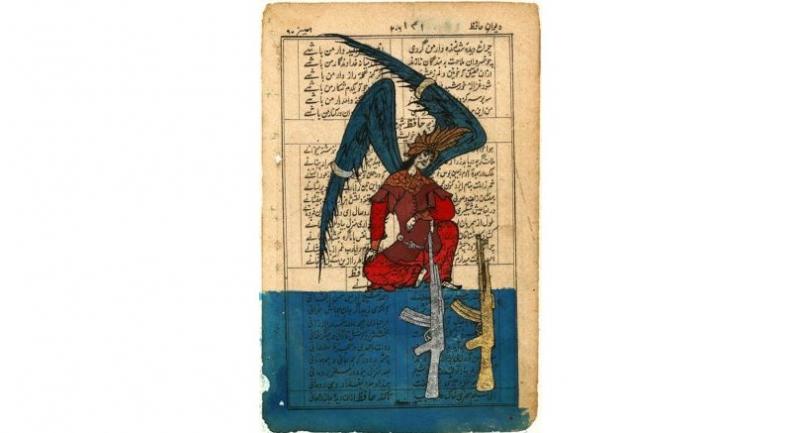
Born in the Bimiyan province in Afghanistan, Taasha’s practice draws upon a wealth of traditional Central Asian artistic sensibilities that are steeped in elements of Greek and Buddhist art, merged into a distinctive classical style known as Greco-Buddhist. Taasha commonly infuses his pictorial plane with ancient Persian script, Buddhist iconography and figures referencing 7th – 11th century Afghan miniature paintings, executed within the stylistic range of Chinese calligraphy ink traditions and Zen abstraction.

His forms are loaded with symbolic metaphors, reminding viewers about the inescapable fate of the past, which it is always with us in our memories, the physical landscape and environment that endures.

“Each painting is individual and tells its own story. The horses are a symbol of mobility  of refugees who want better lives, but then bombs drop from the sky and machine guns shoot at them from the ground. The crows flying over the horses and carrying the Buddha’s head away – they are my interpretation of the clever people who have education and money but use it to destroy their own culture and history. The more clever they get, the more corrupt they become,” says Taasha.

Viewers are immersed into a “timevortex”, winding back centuries of Afghanistan culture and history. The paintings represent a romanticisation of the Khusan Kingdom and the triumph of miniature paintings, abridging them with the complexities of modern day Afghanistan.

Taasha appropriates the miniatures as artistic language to indicate parallels in social conditions of the past to Afghanistan’s current precarious position as a country seen through the eyes of Western media. The works are considered the artist’s personal understanding of the world’s relentless preoccupation with the country: historically, of its strategic significance as a crossroad for trade and presently, its scrutiny after the post AmericanAfghan war.

Taasha tarted painting in 2007 at the painting department of Marefat High School and in 2010, he continued his studies in painting at Kabul Fine Arts Institute. He first exhibited his paintings in 2008 and has participated in several exhibitions across the globe including Italy, Germany, France, US, Canada and Indonesia.

He spent three years painting in realism style and replicating nature. In 2009, he took part in contemporary arts workshops led by the renowned international artist, Khadim Ali, and through studying in art school, he began creating and mostly working with the contemporary style that combined both abstraction and miniature approaches.

For further information about the exhibition, email info@rkfineart.com.

Flashes of fury in Khon Kaen

ศาสตร์เกษตรดินปุ๋ย : ขอบคุณแหล่งข้อมูล : หนังสือพิมพ์ The Nation

http://www.nationmultimedia.com/detail/art/30371812

  • Junta foe Thanathorn Juangroongruangkit and art critic Thanom Chapakdee lay a commemorative plate inscribed with the words “Aesthetics of Resistance” at the launch of the Manifesto by Maielie gallery in Khon Kaen on Monday. Photo courtesy of Ekkalak
    Junta foe Thanathorn Juangroongruangkit and art critic Thanom Chapakdee lay a commemorative plate inscribed with the words “Aesthetics of Resistance” at the launch of the Manifesto by Maielie gallery in Khon Kaen on Monday. Photo courtesy of Ekkalak

Flashes of fury in Khon Kaen

politics June 27, 2019 09:20

By Phatarawadee Phataranawik
The Nation
Khon Kaen

10,379 Viewed

Artists lead the political activism charge in the Northeast, pressing to revive democracy

The plate also bearing the gallery’s name has been sealed in a “time capsule”. Photo courtesy of Ekkalak Napthuesuk

Art activists in Khon Kaen on Monday – the 87th anniversary of the Siamese Revolution – launched a campaign for amendments to the junta-sponsored Constitution, vowing to make the highest law in the land more democratic for the benefit of the country and the people.

Art critic Thanom Chapakdee led a group in unveiling a “manifesto” of sorts – the Manifesto by Maielie gallery in the city centre. (Maielie combines the Thai word for “new” with the Isaan term for “really”.) The day was deliberately chosen to coincide with the anniversary of the establishment of a constitutional monarchy in Thailand on June 24, 1932.

The political film “Forget Me Not” by Chulayarmnon Siriphol is screened. Photo courtesy of Ekkalak Napthuesuk

Political activity was banned during the five years following the 2014 coup, a period of repression during which socio-political activism seems to have been fermenting out of sight. Now political interest and activism have re-emerged in a fever. Visual artists and musicians are ready to campaign in earnest for a return to full democracy.

Thanom, 61, said the new art gallery where he serves as director is actually more of a “cultural exchange centre”.

“Artists, activists and other local people can share their ideas, however provocative,” he said. “The people of Khon Kaen have always had a rebellious spirit and we want to see more of it.”

Video is shared from last year’s Khonkaen Manifesto art festival, while books on art, history and political science are offered for sale. Nation/Phatarawadee Phataranawik

The revival of passions was first glimpsed in the art festival Khonkaen Manifesto held last year, for which an abandoned building on Mitraphab Highway became a creative space for dozen of artists pursuing socio-political themes. The festival opened on October 6, 2018, the 42nd anniversary of the Thammasat University massacre in Bangkok.

Eric Bunnag Booth and his stepfather, French art collector Jean Michel Beurdeley, have enjoyed success with their Maiiam Contemporary Art Museum in Chiang Mai and now want to spread their wings into the Northeast.

The renovated former caf้ will be displaying provocative art when it offiฌcially opens next February.

They were involved in converting a two-storey former cafe into Manifesto by Maielie, which will officially open next February. It will display art as well as serving as an archive of art activism in Isaan.

Also involved is the Isaan Record, a local magazine co-founded by German journalist-anthropologist Fabian Dramoune.

Politically, Khon Kaen – known as “the capital of the Northeast” – has been a hotbed of activism, especially in recent decades. It was the primary base of the red-shirt movement that backed the Shinawatra clan, first through the Thai Rak Thai Party, ultimately Pheu Thai.

But Pheu Thai lost considerable ground in the Northeast in the March 24 election to the Phalang Pracharat Party, which backs the military junta that felled Yingluck Shinawatra. And meanwhile the anti-coup Future Forward Party is keen to make further inroads into Isaan.

Guests at the opening listen to Thanathorn’s remarks. Photo courtesy of Nibhon Khankaew

“The junta that ruled after 2014 ignored the arts and culture scene that is so central to the people,” Future Forward leader Thanathorn Juangroongruangkit said at the gallery opening. “It’s a great idea for this gallery to reflect art and culture that give voice to the local people.”

Guests at the opening got to see the politically toned film “Forget Me Not” by Chulayarmnon Siriphol, hear Isaan folk songs and greet a surprise guest – young activist Jatupat “Pai Dao Din” Boonpattararaksa, newly released from prison after being jailed for lese majeste.

Thanom, centre, enjoys a little “mor lam” alongside young activist Jatupat “Pai Dao Din” Boonpattararaksa, right. Photo courtesy of Ekkalak Napthuesuk

Eight-seven years ago, the Siamese Revolution led by the People’s Party spurred the Kingdom’s historic transition from absolute to constitutional monarchy. In response to the bloodless coup, King Rama VII agreed to a codified constitution.

“Within just 15 years, through to 1947,” architecture scholar Chatri Prakitnontakan told The Nation on a separate occasion, “the People’s Party introduced many significant policies. It uprooted the longstanding dogmas and norms with the aspiration to develop and modernise the country in different aspects, which were also manifested in art, design and architecture.”

The People’s Party promoted “the Six Principles”, he noted. These were aimed at ensuring citizens political, judicial and economic independence, national security, equality, liberty and education.

The People’s Party also decreed that every province should have a Democracy Monument like the one in Bangkok. The one in Khon Kaen was among the first completed and today is again a gathering point for political demonstrations.

But Khon Kaen also has a statue of Field Marshal Sarit Thanarat, the dictator who ruled Thailand during the 1960s. It’s there because of the progress Sarit brought to the Northeast – new roads, electricity, and the like – as part his strategy to counter popular support for a communist insurgency. He is still esteemed locally as a great patron.

Art critic Thanom senses that now there is “too much” progress. The benefits that citizens might have derived from a national development plan are being blocked by mega-projects thrust on them in a spate of unbridled economic expansion.

Whether the money comes from the state or foreign investors, he says, the logic of endless modernisation always comes at the cost of a marginalised community.

This, he says, is the predicament for Khon Kaen people, drowning under ceaseless waves of what’s called “progress”.

“What we want to do is echo the turbulent past and express a local identity,” Thanom says. He expects much of the art to be shown at the gallery to be politically forthright, with clear references to the military regime and limitations on free expression.

The assembled artists formally placed a clear-plastic plate inside a commemorative “time capsule” jar along with other illustrative items. The plate is engraved with the name of the gallery and the words “Aesthetics of Resistance”.

It’s meant to recall the metal plaque that was embedded in concrete in the Royal Plaza in Bangkok to commemorate the 1932 revolution. That plate was removed in April 2017 under circumstances the junta neither disclosed nor publicly investigated, and replaced with another praising the monarchy.

In November 2014, six months after the coup, a monument in Buri Ram commemorating the first constitution was removed, ostensibly because it was blocking traffic. It was destroyed, but eventually a replica replaced it.

The Constitution Defence Monu- ment in Laksi, Bangkok, disappeared last December. It was “very important” in terms of modern Thai history, Chatri said.

“It commemorated the government’s victory over a pro-monarchist rebellion 80 years ago.” Prince Bowordet led that failed revolt in 1933, seeking to restore absolute monarchy.

“Stay tuned,” Thanom told the guests. “Let’s meet again on Constitution Day, December 10, with special art events calling for our democracy to be returned to us.”

Jim Thompson team led by Eric Bunnag Booth, third left, and Gridthiya Gaweewong, four left, back up the Manifesto by Maiilie. Photo courtesy of Ekkalak Napthuesuk