Will we get to eat any thong yip?

ศาสตร์เกษตรดินปุ๋ย : ขอบคุณแหล่งข้อมูล : หนังสือพิมพ์ The Nation

http://www.nationmultimedia.com/detail/art/30365458

Three generations of women gather at Grandma's house for some great food, a heartfelt discussion and interesting revelations. (Photos/ NUNi Productions)
Three generations of women gather at Grandma’s house for some great food, a heartfelt discussion and interesting revelations. (Photos/ NUNi Productions)

Will we get to eat any thong yip?

Art March 11, 2019 01:00

By Pawit Mahasarinand
Special to The Nation

A new comedy delights both Thai and expat audiences

MANY of us who have lived overseas will have heard of, if not visited or participated in, the so-called “Thai Festival” or “Thai Evening”, a series of cultural events organised by Thai embassies in cooperation with Tourism Authority of Thailand’s overseas offices, Thai businesses in respective cities, Thai students organizations, and so on. What we almost always expect at these do’s are classical Thai dance and music performances and a Thai food cooking demonstration. My stomach says I should never have any problem with the latter.

Three generations of women gather at Grandma’s house for some great food, a heartfelt discussion and interesting revelations. (Photos/ NUNi Productions)


For the former, I recall talking to an Indonesian dancer who was hired to watch a DVD of classical Thai dance and then perform at a Thai festival, as it was cheaper than flying in a Thai dancer from Bangkok!

Thanks to an initiative by the Portuguese ambassador to Thailand Francisco Vaz Patto, a contemporary Thai play “My Mother’s Kitchen” will also be presented at the Thai Festival in Lisbon this June, in addition to the other usual programmes of course.

Written by seasoned playwright Jaturachai Srichanwanpen, the thoroughly delightful 70-minute comedy is in Thai and English, with English and Portuguese surtitles. It’s set in a kitchen and dining room and features three Thai women of three different generations, two of whom are in a romantic relationship with foreign men. The 25-year-old O (Nualpanod “Nat” Khianpukdee) brings her boyfriend Andre (IATC Award-winning British expat James Laver) to her 75-year-old grandmother Mon’s (veteran actress and scriptwriter Nalinee Sitasuwan) to surprise her, despite her 45-year-old mother Da’s (Parida Wongrabieb) disapproval. The comedic twist starts when, using Mon’s secret recipe hand-written in her notebook, Andre tries to make the Portuguese-inspired Thai dessert thong yip, only to get the recipe covered in egg yolk. And the fun continues until the end when another foreigner Carlos (Kevin Colleary) shows up with a rose.

Photos/ NUNi Productions


“Mother’s Kitchen” premiered last year in the Portuguese residence’s kitchen and was restaged two weeks ago at Siam Pic-Ganesha Centre of Performing Arts, where set and lighting designer Paphavee Limkul managed to recreate the scene of the kitchen. With the audience surrounding the acting area on all four sides, it made for a very intimate and warm setting.

Credit is also due to IATC Award winning director Pattarasuda Anuman Rajadhon, who set the right pace and tone to the play, although she clearly needed more time to better hone the different acting styles of her cast members. In such a small studio theatre, some were less natural than others.

Part of the celebration of the 500 years of relations between Portugal and Thailand, “My Mother’s Kitchen” is a good representation of contemporary Thai theatre as it focuses more on the people, as any good play should, than attempting to bluntly promote cultural exchange.

Photos/ NUNi Productions


The play, in Thai, English and Portuguese, was also published and available at the door and this made it great for both drama and Portuguese language classes.

Kitchen on Tour

“My Mother’s Kitchen” can next be seen at Maiiam Contempory Art Museum in Chiang Mai from June 14 to 16, then at the Portuguese capital from June 28 to 30.

Find out more at Facebook.com/NUNiProductions

Rediscovering Singapore

ศาสตร์เกษตรดินปุ๋ย : ขอบคุณแหล่งข้อมูล : หนังสือพิมพ์ The Nation

http://www.nationmultimedia.com/detail/art/30365457

Across Singapore’s centre, Find Your Place in History light projections will tell lesser-known stories of forgotten places, communities and individuals who have made a difference in Singapore’s rich history.

Rediscovering Singapore

Art March 11, 2019 01:00

By The Nation

The City State celebrates its less known heritage through an annual festival

THE SINGAPORE Heritage Festival (SHF) returns for its 16th year from Friday to April 7, with a special Singapore Bicentennial edition that will uncover hidden stories of this island’s history.

From Kampong Gelam and the all new Armenian Street Park, to Bedok, Telok Blangah and Kranji, festival-goers are invited to rediscover shared memories and experience places and stories anew, through a specially curated line-up of programmes, exhibitions and activities.

Festival-goers can take part in Discovering Singapore’s Best Kept Secrets guided trails to visit historical buildings such as the old Changi Hospital.

“2019 is a special year for Singapore. As we commemorate our bicentennial, it is natural that as the heritage festival of Singapore, we tell the stories that have collectively brought us to where we are today.

“Our exhibitions and programmes, including our first ever island-wide bus stop exhibition, show that heritage is all around us if you know where to look. We have continued to partner with organisations, communities and fellow Singaporeans to uncover these lesser-known tales, and to re-discover places and stories and make the connections between our people and spaces,” says programmes director, Jervais Choo.

 Across Singapore’s centre, Find Your Place in History light projections will tell lesser-known stories of forgotten places, communities and individuals who have made a difference in Singapore’s rich history.

SHF 2019 also expands its reach with its first ever island-wide exhibition, “Ride and Discover”, that re-imagines more than 100 bus stop across four routes as exhibition spaces, to examine the heritage of locations that might easily be missed on the daily commutes. Festival-goers can also embark on an immersive bus theatrical show, “Buses and Roads: A Bus Theatre Experience”, which will journey from the National Museum of Singapore to the Malay Heritage Centre and back. Passengers will be able to relive Singapore in the 1970s through the funny, entertaining and memorable interactions of a motley cast of characters.

Across the city centre, seven Find Your Place in History light projections also tell lesser-known stories of forgotten places, communities and individuals who have made a difference in Singapore’s rich history.

 A fictional dramatisation “BlackandWhite Voyage” at Temenggong House will examine the history of Singapore as a trading port.

SHF 2019 kicks off its first weekend this Friday at Kampong Gelam and the new Armenian Street Park, with specially commissioned urban art installations by local artists dotting these historic precincts. Festival-goers can immerse themselves in the cultural performances at Rentak Budaya – a full-day cultural festival at the Malay Heritage Centre, and experience authentic Peranakan hospitality at the Peranakan Museum’s Armenian Street Party, its final event before closing for redevelopment on April 1.

A cultural festival at the Malay Heritage Centre reflects the city state’s cultural diversity.

The food culture takes centre stage during the weekend of March 22 to 24 with Makan Dreaming, a theatrical performance in the heart of the Bedok Hawker Centre inspired by the stories and lives of hawkers, guided food tours, and a privately curated Peranakan dining experience by local food writer and founder of Fat Fuku, Annette Tan. Festival-goers can also find out more about Singapore’s nomination of Hawker Culture to Unesco’s Representative List of the Intangible Cultural Heritage of Humanity, and pledge their support for the bid. Sharing the festival stage at Bedok is Balik Kampung, by Nam Hwa Opera and Nam Hwa Teochew Music Ensemble, |who will showcase the charms of Teochew opera.

During the third weekend from March 29 to 31, dive into Singapore’s maritime history at Telok Blangah, including a first guided tour of the Danish Seamen’s Church in Singapore, that will shed light on how the Danish community took root in Singapore, their contributions to the maritime heritage, and the history of its building, known as The Golden Bell Mansion.

Festival-goers can meet an eclectic cast of characters at Temenggong House at “A Black-and-White Voyage” – a fictional dramatisation of life in the historic building in the 1920s, which examines the history of Singapore as a trading port and its influence on the Telok Blangah area, through the lives of the house’s servants.

On the last weekend from April 6 to 7, experience rural bliss the Singapore way at the Kranji countryside and Sungei Buloh. Learn more about Singapore’s agricultural produce and its farm heritage by interacting with Singapore’s own farmers at Kranji. The farming community has put together Foodpass – a stamp-based, hop-on hop-off programme that festival-goers can use to explore the farms in and around the Kranji countryside, and get to know them better through hands-on activities and tasting sessions.

For the full listing of events on SHF 2019, visit http://www.HeritageFestival.sg.

Will we get to eat any thong yip?

ศาสตร์เกษตรดินปุ๋ย : ขอบคุณแหล่งข้อมูล : หนังสือพิมพ์ The Nation

http://www.nationmultimedia.com/detail/art/30365458

Three generations of women gather at Grandma's house for some great food, a heartfelt discussion and interesting revelations. (Photos/ NUNi Productions)
Three generations of women gather at Grandma’s house for some great food, a heartfelt discussion and interesting revelations. (Photos/ NUNi Productions)

Will we get to eat any thong yip?

Art March 11, 2019 01:00

By Pawit Mahasarinand
Special to The Nation

A new comedy delights both Thai and expat audiences

MANY of us who have lived overseas will have heard of, if not visited or participated in, the so-called “Thai Festival” or “Thai Evening”, a series of cultural events organised by Thai embassies in cooperation with Tourism Authority of Thailand’s overseas offices, Thai businesses in respective cities, Thai students organizations, and so on. What we almost always expect at these do’s are classical Thai dance and music performances and a Thai food cooking demonstration. My stomach says I should never have any problem with the latter.

Three generations of women gather at Grandma’s house for some great food, a heartfelt discussion and interesting revelations. (Photos/ NUNi Productions)


For the former, I recall talking to an Indonesian dancer who was hired to watch a DVD of classical Thai dance and then perform at a Thai festival, as it was cheaper than flying in a Thai dancer from Bangkok!

Thanks to an initiative by the Portuguese ambassador to Thailand Francisco Vaz Patto, a contemporary Thai play “My Mother’s Kitchen” will also be presented at the Thai Festival in Lisbon this June, in addition to the other usual programmes of course.

Written by seasoned playwright Jaturachai Srichanwanpen, the thoroughly delightful 70-minute comedy is in Thai and English, with English and Portuguese surtitles. It’s set in a kitchen and dining room and features three Thai women of three different generations, two of whom are in a romantic relationship with foreign men. The 25-year-old O (Nualpanod “Nat” Khianpukdee) brings her boyfriend Andre (IATC Award-winning British expat James Laver) to her 75-year-old grandmother Mon’s (veteran actress and scriptwriter Nalinee Sitasuwan) to surprise her, despite her 45-year-old mother Da’s (Parida Wongrabieb) disapproval. The comedic twist starts when, using Mon’s secret recipe hand-written in her notebook, Andre tries to make the Portuguese-inspired Thai dessert thong yip, only to get the recipe covered in egg yolk. And the fun continues until the end when another foreigner Carlos (Kevin Colleary) shows up with a rose.

Photos/ NUNi Productions


“Mother’s Kitchen” premiered last year in the Portuguese residence’s kitchen and was restaged two weeks ago at Siam Pic-Ganesha Centre of Performing Arts, where set and lighting designer Paphavee Limkul managed to recreate the scene of the kitchen. With the audience surrounding the acting area on all four sides, it made for a very intimate and warm setting.

Credit is also due to IATC Award winning director Pattarasuda Anuman Rajadhon, who set the right pace and tone to the play, although she clearly needed more time to better hone the different acting styles of her cast members. In such a small studio theatre, some were less natural than others.

Part of the celebration of the 500 years of relations between Portugal and Thailand, “My Mother’s Kitchen” is a good representation of contemporary Thai theatre as it focuses more on the people, as any good play should, than attempting to bluntly promote cultural exchange.

Photos/ NUNi Productions


The play, in Thai, English and Portuguese, was also published and available at the door and this made it great for both drama and Portuguese language classes.

Kitchen on Tour

“My Mother’s Kitchen” can next be seen at Maiiam Contempory Art Museum in Chiang Mai from June 14 to 16, then at the Portuguese capital from June 28 to 30.

Find out more at Facebook.com/NUNiProductions

Exploring Asia’s diverse cultural heritage

ศาสตร์เกษตรดินปุ๋ย : ขอบคุณแหล่งข้อมูล : หนังสือพิมพ์ The Nation

http://www.nationmultimedia.com/detail/art/30365345

Exploring Asia’s diverse cultural heritage

Art March 08, 2019 01:00

By THE NATION

Singapore’s Asian Civilisations Museum (ACM) will embark on a Season of Chinese Art from June 2019 to mid-2020 with three exhibitions being held in collaboration with leading Chinese institutions and artists.

This is part of the museum’s commitment to examine the diverse cultural heritage of Asia, interconnections within Asia, and Asian connections with the rest of the world.

“Chinese history boasts an incredible richness, and its international influence continues to permeate today’s pop culture, fashion, and everyday life. By bringing together exquisite masterpieces from Singapore’s National Collection and collections from China’s leading museums and a wellknown couturiere, we hope our visitors will engage with Chinese heritage and traditions, and reflect on China’s long and illustrious art history. We also hope Chinese visitors will seize the opportunity to visit us in Singapore, to experience, firsthand, the historic and contemporary fascination with Chinese art and heritage in Southeast Asia,” says Kennie Ting, director of ACM.
 

The first show is “Guo Pei: Chinese Art and Couture” to be held from June 15 to September15. Known perhaps most famously for the now-iconic yellow cape American celebrity Rihanna wore to the Metropolitan Museum of Art’s Costume Institute Gala in 2015, Guo Pei is China’s preeminent couturiere, recognised for the depth of craftsmanship, Chinese historical references, and beauty in her fantastical works.

Conceived in collaboration with Guo Pei, the exhibition will display 29 of her most iconic embroidered masterworks in dialogue with 20 Chinese art masterpieces from ACM’s collection. The juxtapositions will invite visitors to consider how contemporary Chinese fashion has roots in traditional Chinese art and aesthetics. Exploring Guo Pei’s impact on everyday lives beyond the runway, many of her intricate Chinese bridal gowns – including two directly inspired by artworks in the Singapore National Collection – will also be displayed for the first time.
Later this year, a special exhibition will showcase the collection of Southeast Asia’s renowned Chinese art collector, the late Dr Tan Tsze Chor. On show from November to February 2020, the exhibition will feature paintings by important modern Chinese masters like Ren Bonian, Qi Baishi, and Xu Beihong. It will explore how Chinese art and culture was appreciated by overseas networks of Chinese artists, collectors, and philanthropists in the 1950s through 1980s.

The Season of Chinese Art will also bring masterpieces of Ming-dynasty art to Singapore. The collaboration with Shanghai Museum will see highlights from the Tang Shipwreck collection at ACM travel to Shanghai in a firstever special exhibition in China. Containing a remarkable cargo of more than 50,000 ceramics as well as luxurious objects of gold and silver, the Tang Shipwreck collection is proof that longdistance maritime trade routes existed as early as the 9th century.

For more information, visit http://www.Acm.org.sg.

The boy from the Northeast

ศาสตร์เกษตรดินปุ๋ย : ขอบคุณแหล่งข้อมูล : หนังสือพิมพ์ The Nation

http://www.nationmultimedia.com/detail/art/30365071

Padung Jumpan presents his first solo performance. /Photo courtesy of Nattapol Meechart 
Padung Jumpan presents his first solo performance. /Photo courtesy of Nattapol Meechart

The boy from the Northeast

Art March 04, 2019 01:00

By Pawit Mahasarinand
Special to The Nation

2,085 Viewed

A solo dance by a khon-trained dancer shows promise for the future

PICHET KLUNCHUN Dance Company is becoming more prolific and taking more risks this year, as opposed to last year when they restaged many of their works in the repertoire. Barely two months into 2019 and they’ve already staged three new experimental works: “The Intangibles of Emptiness” and “Overloaded” by the whole company, and solo work “The Boy Next Door” (in Northeastern Thai dialect “Phu Bao Thai Ban”) which ended its two-weekend run last night.

Padung Jumpan presents his first solo performance. /Photo courtesy of Nattapol Meechart 

 Waiting for curtain time in the foyer, audience members watched a brief introductory video narrating the background of PadungJumpan, who was trained as a monkey (ling) character in khon before joining this company. Footage of him conducting a khon ling workshop was also shown. Before long, very loud and upbeat mor lam music spilled out from the theatre and we walked in to see a young member of the company dancing freely with high energy to the music. Black curtains were half drawn revealing part of the backdrop of a Buddha image painting. We soon realised the music was actually from a modified motorcycle with sound equipment and special lighting. Soon after Padung appeared from upstage, he closed the curtains.

Photo courtesy of Nattapol Meechart 

Throughout the 45-minute performance, Padung showed us his new choreography, which seamlessly and joyfully blends his khon ling training with other styles of dance from many traditions. It served as a reminder that when an artist is set free, as opposed to being confined by rules set up by traditions or arts disciplines, he can have much fun, and so do we, the audience. After all, Thailand means the land of the free, does it not?

Photo courtesy of Nattapol Meechart 

“The Boy Next Door” is also a sincere contemporary dance work and the combination, or juxtaposition, of its physical movement and music reveals that this is the kind of music, and tradition, the artist grew up with and still enjoys listening to. The fact that he was later trained in a court tradition of khon doesn’t mean he’s either been centralised or forgotten his Northeastern roots. In the true spirit of a solo performance, Padung also spent time during his show rearranging various lighting sources and controlling all lighting and music cues by himself. That was, unfortunately, a slight drawback in this first solo work. A dramaturg or a director could have solved this problem.

After the performance, Pichet himself appeared onstage and explained that this year the company is interested in creating performances by marginalised groups of people, and an in-progress work is about Burmese migrants.

Photo courtesy of Nattapol Meechart 

Noting that audience numbers were much lower than expected for this company member’s work, he said that they’re considering extending the run of “The Boy Next Door”.

“We have our own theatre anyway. And whenever anyone wants to watch this, even if it’s only a few people, we’ll put it on again.” He also reiterated that his idea of running a dance company is to develop dancers and choreographers so that they are able to develop their own work, in addition to the company’s, and thus one day they can leave the company.

But the alarmingly low number of audience members that Saturday night also raises the question of whether we, the audience, always expect to watch Pichet’s performance, either solo or with someone else, each and every time we visit Chang Theatre.

The Man from Taiwan

The much-anticipated duet between Pichet and Taiwanese dancer Chen Wu-Kang titled “Behalf”, which premiered last year at Cloud Gate Theatre in Taipei and featuring lighting design by Dumb Type member Takayuki “Kinsei” Fujimoto, will be at Chang Theatre, in Thung Khru, Thonburi, on March 29 and 30.

Visit Facebook.com/ChangTheatre for more details.

Lost in the treasures

ศาสตร์เกษตรดินปุ๋ย : ขอบคุณแหล่งข้อมูล : หนังสือพิมพ์ The Nation

http://www.nationmultimedia.com/detail/art/30365070

  • The Apollo Fountain in front of Chimei Museum /Photo courtesy of Chimei Museum Foundation
    The Apollo Fountain in front of Chimei Museum /Photo courtesy of Chimei Museum Foundation

Lost in the treasures

Art March 04, 2019 01:00

By Jintana Panyaarvudh
The Nation
Tainan, Taiwan

3,901 Viewed

A philanthropist in Taiwan honours the sanctuary of his childhood by setting up a free private museum

GROWING up during wartime in a poor family with 10 siblings and a father who had been out of work for 17 years, Shi Wen-Long’s only escape from the daily grind was a tiny museum near his house in Taiwan’s southern province of Tainan.

He was able to spend time there because admission was free.

So grateful was he to the owners of that sanctuary that Shi dreamt of one day making enough money to build a “museum for all” just like the one in which he spent so much of his childhood.

The 91-year-old Taiwanese billionaire, who made his fortune by founding and building up the petrochemical company Chi Mei Group, one of Asia’s largest plastics businesses, made his dream come true.

The Apollo Fountain in front of Chimei Museum /Photo courtesy of Chimei Museum Foundation

“My museum serves only one purpose – to exist for the public,” writes the billionaire who was ranked no 23 among Forbes’ Taiwan’s 50 Richest People last year, on the museum’s website.

First established and housed in the administration building of the Chi Mei Corporation back in 1992, the museum was relocated to the Tainan Metropolitan Park in 2014, and reopened in 2015.

From the outside, the structure, which houses the country’s largest privately owned collection of treasures, resembles a European museum. It sits inside a wonderful garden filled with sculptures and replicas.

“If you look out of the door from here [the main hall] you will see the Apollo Fountain that imitates the one in Versailles Palace’s garden,” says Sheryl Lai, as she guides us around the museum.

Items on display include Western paintings created between the 13th to 20th century. /Photo courtesy of Chimei Museum Foundation

The collection at Chimei Museum is made up of about 4,000 items, mainly Western arts, musical instruments, weaponry and natural history, representing about one-third of the entire Chimei collection.

“A lot of people in Taiwan ask us why we collect mostly Western artworks instead of Chinese or Taiwanese,” says Patricia Liao, deputy director of Chimei Museum Foundation.

“The reason is because the founder said that for poor people like him, it would be very difficult to travel to United States, United Kingdom, Italy or France to see all these different works.”

The works reflect the founder’s various personal interests, she adds.

On the first floor, one room is dedicated to an exhibition of animal taxidermy and fossils and mirrors Shi’s hobby of fishing.

Photo courtesy of Chimei Museum Foundation


In this exhibition, diverse and dynamic life forms are presented with the evolutionary progress after several significant extinction events and environmental changes that took place on Earth. History is another favourite, so a second room on the same floor exhibits arms and armour divided up into European and non-European sections to better display the crafting techniques, adornment style and cultural characteristics of these weapons.

The Arms and Armour room displays weaponry from all over the world. /Photo courtesy of Chimei Museum Foundation

“The most advanced technology in any era is usually a weapon and by studying that weapon you can understand history and how human technology, our civilisation, and our values developed,” Liao explains.

Exhibition rooms on the second floor reflect the billionaire’s fondness for the arts and music.

Shi loves to paint and has amassed a huge collection of paintings, Liao explains.

Shi Wenlong is passionate about playing the violin./Photo courtesy of Chimei Museum Foundation

Part of his collection, ranging from the 13th to the 20th century, is displayed at the Fine Arts room on this floor. The paintings are displayed in chronological order, allowing visitors to follow the path of Western art development. A violin-lover and amateur concert violinist, Shi owns one of the world’s largest collections of instruments in the violin family and is the proud owner of more than 1,370 of them.

He has built one of the biggest and most comprehensive violin collections in the world at Chimei Museum.

The walkin orchestra in the violin exhibition room is designed for visitors to enjoy listening to various instruments during artists’ performance./ Photo courtesy of Chimei Museum Foundation

Among them are the world’s oldest playable cello crafted by the founder of the Cremona tradition of luthiers, Andrea Amati circa 1566, “Carlo IX”, a violin made by Antonio Stradivari in 1709, the “Viotti-Marie Hall” as well as The Ole Bull’s violin, crafted by Giuseppe Guarneri del Gesu in 1744.

While these precious instruments are not on display in the Violin Exhibit room, visitors can admire selected masterpieces from the Chimei collection of various family lines and regions in a special showcase.

The display area travels thorough time and space to represent the earliest instruments of the violin family, displaying those that best depict the origins of violin making in various countries and the amazing craftsmanship of the master luthiers who made the greatest impact. A highly appreciated area in this exhibition is an immersive walk-in orchestra performance where visitors can sit or walk around and enjoy listening to music played by artists on screens while the real musical instruments used in the performance are on display beside.

Sculpture Hall /Photo courtesy of Chimei Museum Foundation

In another philanthropic gesture, the museum also lends the instruments free of charge for one year or more to young talents, students and musicians who may need one for studying or performing.

“Sometimes talented musicians may not grow up in a rich family. In these cases, either the family suffers because they are trying to bring out the talent of the child or the child’s talent has to be |sacrificed because the family cannot afford [the violin],” Liao explains.

The museum currently has more than 220 violins on loan to students and violinists who need to pay for a premium of insurance fee.

The museum has indeed fulfilled its founder’s mission as well as his stated philosophy – “Good works of art are not to be kept just for oneself to enjoy, but to be shared with the public.

“And a good collection should not reflect just the collector’s personal tastes, but tailor to common tastes and have enough variety for everyone to find something to enjoy and appreciate.”

Something for Everyone

Chimei Museum is at 66, Sec 2, Wenhua Rd., Rende Dist, Tainan City, Taiwan.

It’s open from Thursday to Tuesday from 9.30am to 5.30pm.

Admission is free for residents of Tainan and TWD 200 (Bt200) for everyone else.

Headache coming on for all

ศาสตร์เกษตรดินปุ๋ย : ขอบคุณแหล่งข้อมูล : หนังสือพิมพ์ The Nation

http://www.nationmultimedia.com/detail/art/30365052

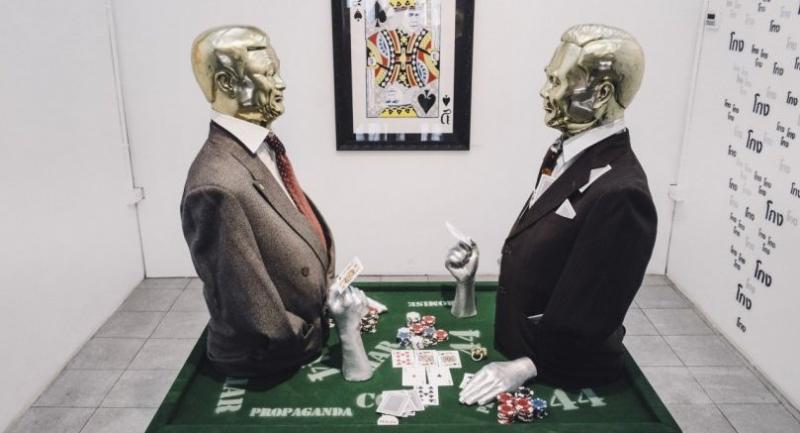
  •  Prayut Chan-o-cha looks like he’s got an unbeatable hand in his poker showdown against Thaksin Shinawatra. They’re the stars of an art exhibition by Headache Stencil, whose real name is best left unmentioned.  Photo courtesy of WTF Gallery
    Prayut Chan-o-cha looks like he’s got an unbeatable hand in his poker showdown against Thaksin Shinawatra. They’re the stars of an art exhibition by Headache Stencil, whose real name is best left unmentioned. Photo courtesy of WTF Gallery

Headache coming on for all

big read March 02, 2019 01:00

By Phatarawadee Phataranawik
The Nation Weekend

9,777 Viewed

Thailand’s answer to Banksy cheekily skewers all combatants in the coming election

The last thing voters expect to witness in the lead-up to this month’s election is a face-to-face confrontation between Prayut Cha-o-cha and Thaksin Shinawatra, but you can actually see it right now.

And they’re playing a fierce hand of poker.

It’s just fantasy, of course, an imaginative installation that provocative street-artist Headache Stencil has included in his exhibition “Thailand Casino” currently on view at Bangkok’s WTF Gallery.

Headache (Mr Stencil?) told The Nation Weekend that he sees the coming election as being akin to “a dirty game in a casino”.

“I’m recording political history coming up to the election and showing the structures of control under the junta government,” he said.

The artist is not known for subtlety. He depicts Thaksin, the self-exiled former premier who still wields influence in Thai politics, holding a straight flush. But his nemesis Prayut, the coup leader and incumbent premier hoping to continue in the role as a civilian, holds a royal straight flush and his pockets are bulging with extra cards.

As if the message weren’t clear enough, Headache spells it out for you, adding the word “cheat” to the wall behind Prayut. Behind Thaksin is a calendar with February 8 marked on it, emphasis added by an enormous lightning bolt. That was the day the Thaksin-affiliated Thai Raksa Chart Party put Princess Uboratana’s name forward as its prime ministerial candidate.

It was indeed a bolt of lightning, but it fizzled later the same day when His Majesty the King put a stop to any member of the Royal Family venturing into politics.

Thaksin and Prayut are rendered as half-length sculptures perched on a card table of green baize. Other figures with starring roles in the election are depicted in pop-art paintings and, in the case of Thanathorn Juangroongruangkit of the anti-junta Future Forward Party, in a Banksy-style stencil-print.

Chatchart Sitthiphan of Pheu Thai and Army chief General Apirat Kongsompong are wearing boxing gloves, each looking for the knockout. Newin Chidchob of Bhumjaithai is puffing on marijuana as per his party’s endorsement of legalising cannabis for medicinal purposes.

Keeping an eye on the “dirty game” is Seripisut Temiyavet, leader of the Seri Ruam Thai Party, who happens to be a police general.

Army chief Apirat got involved when Pheu Thai, Future Forward and Seri Ruam Thai candidates started suggesting the military and its budget both needed to lose weight. He tried to silence the criticism by playing the ultra-patriotic, anticommunist 1975 song “Nak Paendin” (“Worthless”) often and loud.

The tune barked its epithets from 160 Army radio stations several times every day before even the ruling junta found it excessive. The lyrics describe anyone who challenges royal or military status quo as a “burden to the country” and an “enemy of the nation” in need of elimination.

It gave Headache Stencil a headache.

“The Army chief should remain neutral,” he said. “Politicians have the right to propose policies and the general has no business interfering. His action poisoned the atmosphere ahead of an election that will bring democracy back to the Kingdom again.”

This is the artist who tore a strip off Deputy Prime Minister Prawit Wongsuwan over his mysterious collection of expensive wristwatches with a head-spinning piece of wall art featuring Prawit’s portrait on an alarm clock, intended as sort of a wake-up call to citizens.

Headache came in for some official harassment and his stencilled statement was quickly scrubbed away.

He made his dangerous debut last year with a show called “Welcome to the Dark Side” at Voice Space, located in the Voice TV compound on Vibhavadhi Rangsit Road. It took caustic aim at the 2014 coup and military rule.

Prawit, co-leader of the coup, doesn’t escape notice in the current WTF exhibition. He’s a piggy bank now, etched with the words “Military Fund”, in case anyone wants to donate towards the purchase of tanks and submarines.

A painting titled “250:1” alludes to the 250 junta-appointed senators whose duty in the next government will be to make sure the Army gets whatever it wants.

“They will vote alongside the elected MPs to choose the next prime minister after the March 24 election,” Headache noted. “Critics expect them to naturally throw their support behind General Prayut.”

The more politics heats up, Headache said, the more paint he expects to spray on walls.

That should keep him busy throughout the campaign – the exhibition ends on Election Day – but probably beyond that too.

“Unlike doing graffiti out on the street where the junta can remove my art, here in the gallery I have more freedom of expression to record the dark side of Thai politics.”

From wilderness to gated community

ศาสตร์เกษตรดินปุ๋ย : ขอบคุณแหล่งข้อมูล : หนังสือพิมพ์ The Nation

http://www.nationmultimedia.com/detail/art/30364900

From wilderness to gated community

Art February 27, 2019 01:00

By THE NATION

2,346 Viewed

Thai-British photographer and filmmaker Shane Bunnag will hold his latest photo exhibition entitled “Ruam Mitr Village” at Galerie Oasis during March 16-21 at Oasis gallery.

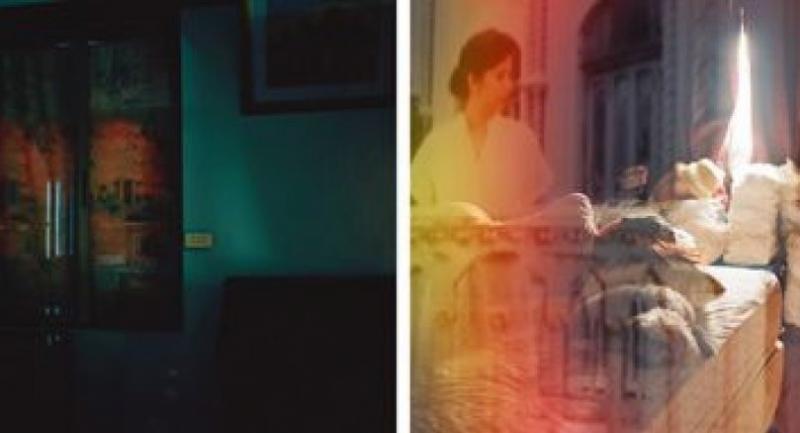
“Ruam Mitr – meaning ‘medley – is the name of a gated community, a fragile proposition that’s nowhere but in the viewer’s mind, composed of images assembled from times and places on the far edges of Bangkok. Built in the swamp of the great delta, a century ago it was the domain of wild life and small communities of outcasts joined by muddy canals, but is now cut through with expressways, golf courses, manicured gardens and palatial houses: order ever on the brink of ruin. This suburb is a movie set filled with props for dramas enacted against the encroaching waters and patchwork wilderness. When the stories cease, the swamp will return,” says Shane.

“Ruam Mitr Village” is Shane’s attempt to understand the centrifugal forces that have propelled Thai society to turn paddy fields and swamps on Bangkok’s outskirts into ironic emblems of impossible dreams.

Scenes from old Thai films are superimposed onto present day images of faux Louis XIV million dollar mansions that teeter between grandiose luxury and abandoned ruin. Each of these composite images is paired with a photograph of the suburban wasteland to create a disturbing yet poignant diptych. In this contentious space between melodrama, illusion and swamp, the real morphs into the fictional and vice versa until we can no longer distinguish between truth and delusion.

Better known as a filmmaker including for the Greek language feature “All for Nothing” (2006), “Ruam Mitr Village” is his third solo photographic exhibition.

For more information, please http://www.CinemaOasis.com/en/gallery/ruammitrvillageshanebunnag/.

Ceramic dialogue

ศาสตร์เกษตรดินปุ๋ย : ขอบคุณแหล่งข้อมูล : หนังสือพิมพ์ The Nation

http://www.nationmultimedia.com/detail/art/30364857

Ceramic dialogue

Art February 27, 2019 01:00

By THE NATION

Bangkok Art and Culture Centre is exhibiting “Din Clay Ton Berlin Ratchaburi Dialo”, a selection of artistic works by German porcelain designer Stefanie Hering and Thai photographer Wasinburee Supanichvoraparch in an extensive installation at a studio on the fourth floor of GoetheInstitut from March 7 to 30.

The cultural dialogue encompasses Hering’s own series of her hand-constructed porcelain vases and vessels, specially created for the showcase; the works are up to two metres in height, which is an absolute novelty in ceramic manufacturing.

This series of art works, developed over the course of months and as spectacular as it is conscientious, could be realised only in the ceramic workshop of Wasinburee in Ratchaburi. Here, Hering found unique and still preserved manufacturing techniques for the implementation of her oversized objects.

Wasinburee captured the artistic manufacturing processes onsite in Thailand and also filmed in Hering’s German workshop, where the first sketches came into being and the final touches were put to the porcelain editions.

It is this film and photographic documentation that initially opens the eloquent dialogue between the two cultures to the viewers in all its sequences and invites them to examine their unique characteristics as well as the surprising similarities.

Find out more at http://en.bacc.or.th/.

Learning and the arts

ศาสตร์เกษตรดินปุ๋ย : ขอบคุณแหล่งข้อมูล : หนังสือพิมพ์ The Nation

http://www.nationmultimedia.com/detail/art/30364786

Learning and the arts

Art February 26, 2019 12:05

By The Nation

Tian Tian Xiang Shang is a Chinese proverb that literally translates “looking up, every day” and was once a common sight at the front gate of every primary school in China during the 1950s to instil a spirit of self-reflection and self-improvement amongst the students.

Reflecting on the proverb and to show his concern at the lack of critical discourse within educational and cultural institutions, Danny Yung, the co-artistic director and founding member of Zuni Icosahedron, created a series of conceptual comics in the1970s that personified the proverb into a little boy (Tian Tian) who is constantly curious and asking an unending barrage of questions about everything and anything. Over the past 40 years, Yung has been actively involved in multifarious fields of the arts, including theatre, cartoon, film, video, visual and installation art projects that have toured more than 30 cities.

The exhibition “Tian Tian Xiang Shang: Arts is Learning, Learning is Arts” at Bangkok Art and Culture Centre from Friday (March 1) to April 12 will showcase some 200 Tian Tian figurines created by artists of various disciplines from Hong Kong, Singapore, Japan and Canada, Thai artists, designers and creative people from various fields have recently added almost 100 creations.

Co-organised by BACC and Zuni Icosahedron and supported by the Hong Kong Economic and Trade Office (Bangkok), the exhibition’s local participants include Patravadi Mejudhon, Dow Wasiksiri, Pratarn Teeratada, Pichet Klunchun, Twitee Vajrabhaya Teparkum, Nakrob Moonmanas, Netiwit Chotiphatphaisal and representatives from many political parties. Those visiting this exhibition are invited to create their own Tian Tian figurine.

Find out more at http://www.Bacc.or.th.