The baht opened at 33.00 to the US dollar on Wednesday, strengthening from Tuesday’s closing rate of 33.05.
The Thai currency is likely to move between 32.90 and 33.10 during the day, Krungthai Bank market strategist Poon Panichpibool predicted.
Poon said the baht is volatile and likely to swing sideways. However, it might weaken before a key US Federal Reserve meeting as investors are in a risk-off state, causing the dollar to strengthen.
Poon said the baht will not weaken much because the market is volatile and supporting the gold price. Gold sales might cause the baht to strengthen.
The key support level for the Thai currency will be between 32.80 and 32.90 – a level that importers are waiting for so they can purchase dollars. Meanwhile, the baht’s key resistance level will be from 33.10 to 33.20 – a level eyed by exporters so they can offload their dollars, he added.
The Stock Exchange of Thailand (SET) Index is expected to fluctuate between 1,630 and 1,650 points on Wednesday amid rising oil prices in response to tension between the US and Russia over Ukraine, Krungsri Securities said.
It said the index gained positive sentiment from mass buy-ups of value stocks by foreign investors.
“However, investors should beware of mass sell-offs that could follow the US Federal Reserve’s decision on the interest rate,” Krungsri Securities said.
It recommends investors purchase shares of the following companies as an investment strategy:
• BBL, KBank, KTB and BLA, which will benefit from news of a US interest rate hike.
• PTTEP, Top, PTTGC, IVL and SPRC, which will gain from the rising price of oil and the gross refining margin.
• AOT, Mint, Centel, ERW and AAV, which will benefit from the relaunch of the Test & Go scheme and the fourth phase of the “Rao Tiew Duay Kan” (We Travel Together) travel subsidy.
The SET Index closed at 1,639.09 on Tuesday, down 1.45 points or 0.09 per cent. Transactions totalled 84.77 billion baht with an index high of 1,641.68 and a low of 1,624.29.
Amid rising public pressure for e-cigarettes to be legalised, the Department of Disease Control on Tuesday issued a nine-point handout on why Thailand must maintain the ban on their import and sale. Thai authorities must consider the full impact of legalising the sale of e-cigarettes, whatever their health impacts compared with regular cigarettes, said Department chief Dr Opas Karnkawinpong.
The International Union Against Tuberculosis and Lung Disease recommends that low- and middle-income countries such as Thailand ban the sale of e-cigarettes, arguing these countries lack the ability and resources to regulate them properly.
Policies on e-cigs vary across the world, with many health authorities choosing regulation rather than bans. They claim that e-cigarettes can help people quit or cut down tobacco smoking that causes millions of lung cancer deaths each year.
The Department of Disease Control’s nine reasons for maintaining the ban are as follows:
1. Electronic cigarette manufacturers target children and youths.
2. E-cigarettes are a source of regular smoking among children and youth.
3. E-cigs are dangerous and harm your health.
4. Nicotine is addictive and more dangerous than commonly thought.
5. E-cigarettes do not help you quit smoking.
6. E-cigarettes do more harm than good to society.
7. Legalising e-cigarettes would leave Thailand’s tobacco controls lagging.
8. Banning the sale of e-cigs is an important measure to protect children from exploitation.
9. Everyone should stick to a “safety first” policy, as Thai people’s lives are too valuable to risk.
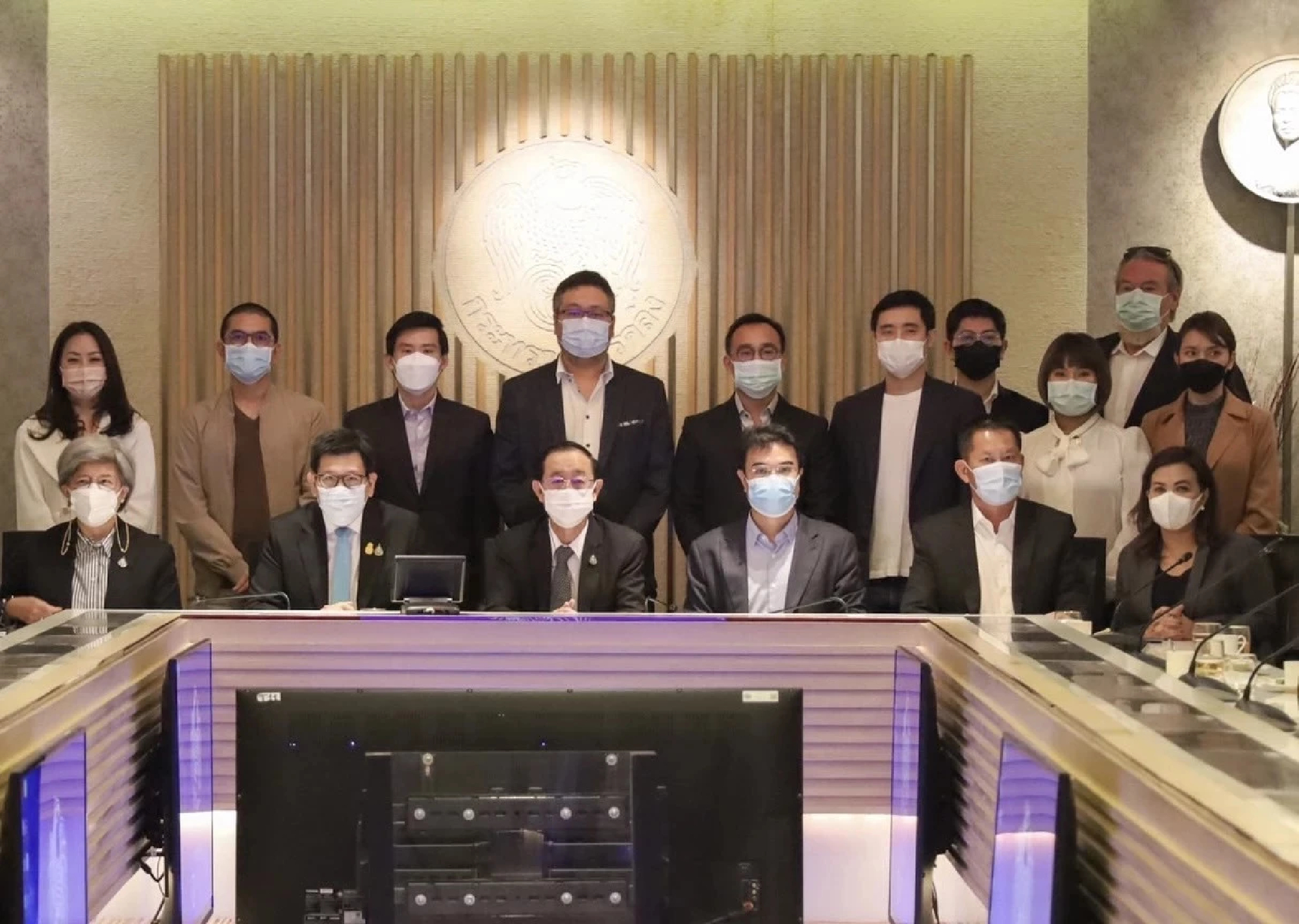
The Thai Digital Asset Association has submitted an offer to the Minister of Finance on ways to support and promote opportunities in the new financial industry and has suggested exemption from income tax on cryptocurrency trading for at least 3-5 years, Prinn Panitchpakdi, honorary adviser to the association, revealed.
When the digital asset business is strong, the government will be able to collect more corporate tax and value-added tax [VAT] from trading fees, and it may be possible to collect more than the tax on individual investors.
At the same time, there is also the issue of interpreting “NFTs” as a type of digital asset because there is every kind of tax involved, he said. For example, if it were defined as a commodity, there would be a 7 per cent VAT.
“I believe in the idea of ‘free tax, free crypto’, so exemption or postponement of crypto tax for five years or even using it as a deduction will be an opportunity for the digital assets business to grow,” Prinn said. This market is not yet mature enough for taxation. Investors may move away because the industry is global and investors can easily choose to trade with foreign exchanges, he warned.
The association said it supports the government’s adoption of blockchain to scrutinise the state budget, which would help reduce corruption. Blockchain systems also could be used for fundraising to enable startups and SMEs to be more flexible to raise funds from those who have excess capital, both Thai and foreign investors.
The Fisheries and Customs departments on Tuesday joined hands to ban imports tainted by illegal, unreported and unregulated fishing (IUU) – a problem threatening Thailand’s US$6-billion (Bt198 billion) seafood export industry.
The departments signed a memorandum of understanding (MOU) aimed at boosting confidence among international trading partners about the seafood traceability system in Thailand.
Under the MoU, if the Department of Fisheries blocks importation of products due to IUU concerns, it will notify the Customs Department and importer/exporter of the reasons for its action.
Meanwhile if the Customs Department detects seafood being imported, exported or transported without a licence, it will notify the Department of Fisheries so it can take action.
Seafood shipments seized under the MoU will either be destroyed or distributed free of charge by the Customs Department to the poor or disadvantaged.
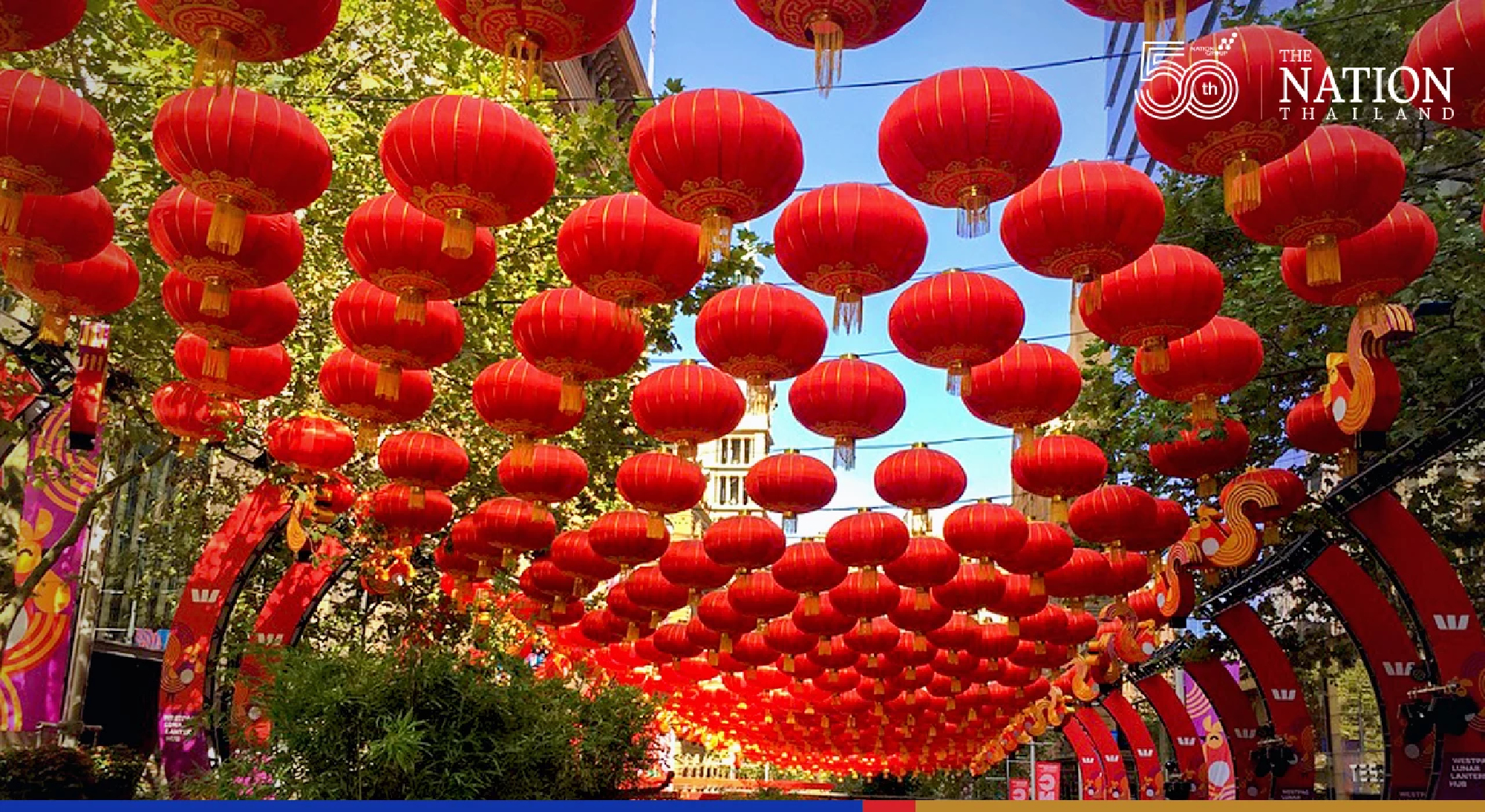
Thai-Chinese communities will still hold traditional Chinese New Year practices despite the new normal and rising prices, a recent survey conducted by the Kasikorn Research Centre shows.
However, people will be more careful with their money and may reduce the amount they put in the customary “ang pao” or red envelopes.
The centre expects Chinese communities in Bangkok to spend 11.79 billion baht during festivities this year – a conservative estimate based on the amount spent last year.
Rising costs and concerns over Omicron cases are the main reasons affecting the purchasing power of Bangkok residents.
According to the survey, 71 per cent of Bangkokians believe rising prices will affect the amount they spend on offerings, especially food offerings. Spending, however, is expected to remain high as the government is trying to maintain the price of some products and offering shopping subsidies.
However, the surge in demand may push the prices up, especially the price of meat, which is expected to rise by 15 to 30 per cent, and fruits and vegetables that may rise by 5 to 10 per cent compared to last year.
Though the Lunar New Year celebrations will continue unabated in Bangkok, there may be some changes. The survey shows that ethnic Chinese communities in Bangkok will spend as much as they did last year or adjust their spending as follows:
Offerings: Making offerings during Chinese New Year is traditional and cannot be avoided. However, people earning less than 45,000 baht per month are expected to reduce their spending, while those earning more may up their spending. The centre expects 6 billion baht to be spent on offerings, up 7.1 per cent from last year.
Making merit, travelling or dining outside: People are expected to spend more on making merit and travelling despite rising fuel prices. This is because the Covid-19 situation is improving and prevention measures are being eased. However, they are expected to spend carefully. The centre estimates spending on these activities will rise by 2.8 per cent to 3.05 billion baht this year.
Ang Pao or red envelopes: The amount put in the red envelopes will drop 14.8 per cent to 2.74 billion baht as the Covid-19 crisis continues affecting people’s purchasing power.
Meanwhile, the centre has advised the business sector to come up with new promotions, like online sales or free delivery, to boost spending.
It said that normally Chinese New Year offerings are bought separately from different shops. However, if these very same products are offered in one platform online, they will be bought together due to speed and convenience – factors treasured by the younger generation.
The centre also advised stores to start providing customers with a tax invoice so they can get tax redemptions under the “Shop Dee Mee Kuen” subsidy scheme.
The centre pointed out that with consumer behaviour changing under the new normal, it is time that stores and retailers began adjusting their marketing strategy to survive.
The Finance Ministry confirmed on Monday that it will not cut fuel tax, pointing out that this would be the government’s last measure in maintaining fuel prices.
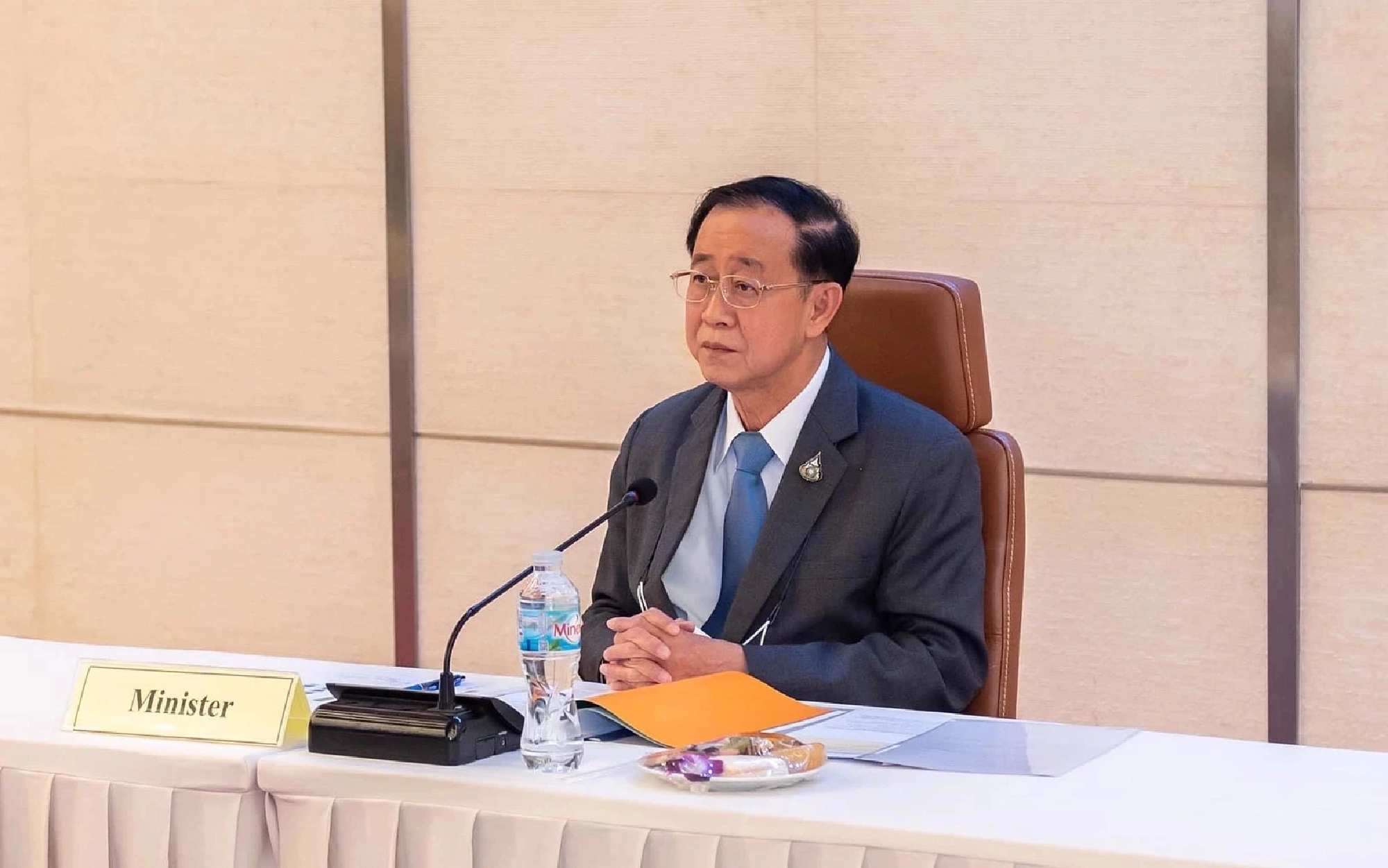
Finance Minister Arkhom Termpittayapaisith said the ministry will monitor the global price of oil, especially the Dubai price, to see if it rises to a point where it is unbearable.
“The government cut fuel tax when the global prices hit US$100 per barrel,” he said.
He expects the price of oil to drop after winter as the US will start using up its oil stocks once the price of oil rises.
He added that Middle East countries were planning to boost the production of oil last week, but failed to do so due to technical issues.
“The government will use the Oil Fund’s mechanisms to maintain the price of fuel in the country,” he said.
He also confirmed that the Oil Fund has plenty of liquidity as it has 10 billion baht in circulation and the government has loaned it another 20 billion baht to maintain fuel prices.
Arkhom added that the National EV Policy Committee is currently considering measures like cutting EV import and excise tax to promote the use of electric vehicles in the country.
“However, the benefits will come with conditions, such as EV manufacturers must set up production facilities in Thailand,” he said. “Meanwhile, the government will take care of automakers in the country during the transition as well.”
Arkhom also confirmed that the ministry will continue collecting tax from cryptocurrency transactions.
“The Revenue Department must clarify details on taxing cryptocurrency transactions as the trading volume was high last year,” he said.
“The department is planning to collect tax from stock trading as well.”
The Stock Exchange of Thailand (SET) Index is expected to fall to the support level of 1,630 points on Tuesday due to tension between the US and Russia over Ukraine, Krungsri Securities said.
It added that investors will possibly delay their investment as they await the US Federal Reserve’s decision on the direction the economy, inflation and the interest rate will take. The Fed Reserve is set to meet on Tuesday and Wednesday.
However, mass buy-ups of company shares whose business turnover is expected to grow and those that have gained positive sentiment will help shore up the index, Krungsri Securities said.
It recommends the purchase of the following as an investment strategy:
• AOT, MINT, CENTEL, ERW and AAV will benefit from the government’s move to relaunch the Test & Go scheme and the fourth phase of the “Rao Tiew Duay Kan” (We Travel Together) travel subsidy.
• BBL, TTB, KBANK, KTB and BLA will benefit from news of the US interest rate hike.
• EA, GPSC, AMATA, WHA, AH and STANLY will benefit from the government’s electric vehicle promotion policy.
The SET Index closed at 1,640.54 on Monday, down 12.19 points or 0.74 per cent. Transactions totalled 76.90 billion baht with an index high of 1,654.99 and a low of 1,639.14.
The baht opened at 33 to the US dollar on Tuesday, weakening from Monday’s closing of 32.975. The Thai currency is likely to move between 32.90 and 33.10 to the greenback during the day, Krungthai Bank market strategist Poon Panichpibool predicted.
He said that the baht is likely to swing sideways despite being supported by the easing of measures and the reopening of the country under the “Test and Go” scheme.
Poon added that though the baht was supported by the sale of gold, the market is in a risk-off state so it caused the dollar to strengthen while investors may sell more Thai stocks.
The key support level for the Thai currency will be between 32.80 and 32.90 – a level that importers are waiting for so they can purchase dollars. Meanwhile, the baht’s key resistance level will be from 33.10 to 33.20 – a level eyed by exporters so they can offload their dollars, he added.
The Cabinet has approved the implementation of measures costing 44 billion baht to maintain domestic consumption in 2022, Finance Minister Arkhom Termpittayapaisith revealed on Monday.
The money would be spent on three projects — State welfare card, special budget for those seeking urgent help, and Khon La Khrueng (Let’s Go Halves).
Arkham said these three projects would help maintain purchasing power by adding 79 billion baht to the economy in 2022, boosting 2022 gross domestic product by 0.21 per cent.
He explained that the Khon La Khrueng co-payment subsidy scheme was cut back in phase 4 to 1,200 baht per person due to data from the third phase. He said 1.6 million people had been granted rights but they had not been making full use of it, while those who had availed of the subsidy scheme were found to be spending on average 158 baht per person per day. As a result, a credit limit of more than 11 billion baht was returned to the state at the end of the phase.
Under phase 3 of Khon La Khrueng, the government paid for half of food, drinks and purchases of general goods up to 300 baht per person per day, capped at 3,000 baht per person.
It has been found that the economic indices have begun to recover sequentially, Arkham said, adding, people were starting to come out to buy more products. Businesses have resumed and workers have been called back to work. Therefore, in phase four, the limit has been reduced to 1,200 baht per person per month, valid for three months.
“The reduction in the provision for the project was not due to a lack of government funds,” he clarified, adding, when the economy starts to recover it has to reduce the use of top-up measures.
“Now, there’s still about 100 billion dollars left in the Loan Act, which is enough to take care of the economy. But we have to save because there are other projects that are pending approval and we have to reserve money for other cases as well,” he said.