Export industry making most of FTA, GSP pacts, says trade dept
The ongoing Covid-19 pandemic has not affected Thailand’s free trade agreements (FTAs) or the Generalised System of Preferences (GSP), the Department of Foreign Trade (DFT) said on Thursday.
In the first seven months of this year, deals under the pacts had risen by 36.23 per cent compared to the same period last year, while the industries using the privileges most were agriculture and food, DFT said.
Keerati Rushchano, DFT director-general, said the total value of deals made by Thai exporters under the FTA and GSP pacts between January and July this year stood at US$46.4 billion, up 36.23 per cent from the same period last year.
Between January and July, Thailand has increased its use of trade incentives under various FTA and GSP frameworks in a bid to boost exports. Besides, several markets have started recovering in the wake of the Covid-19 fallout. For instance, export to India has risen by 4.91 per cent, while Thailand’s shipments to Asean and Japan has expanded by 3.89 per cent.
Products benefiting the most from these pacts are industrial goods, food and beverage, as well as agricultural products such as processed coconut, seasonings, water/non-alcoholic beverages, processed food, canned pineapples, fish, rice and aromatics used in the food industry.
The price of gold crashed by THB250 in morning trade on Friday.
AGold Traders Association report at 9.25am said the buying price of a gold bar was THB27,550 per baht weight and selling price THB27,650, while gold ornaments cost THB27,060.60 and THB28,150, respectively.
At close on Thursday, the buying price of a gold bar was THB27,800 per baht weight and selling price THB29,000, while gold ornaments cost THB27,303.16 and THB28,400, respectively.
The Stock Exchange of Thailand (SET) Index fell by 0.46 points, or 0.03 per cent, to 1,631.24 on Friday morning.
The volume of total transactions was THB10.37 billion with an index high of 1,635.04 and a low of 1,630.97 in opening trade.
The 10 stocks with the highest trade value were KCE, PTT, HANA, KBANK, BANPU, SCGP, SIRI, DELTA, PTTGC and TU.
The SET Index closed at 1,631.70 on Thursday, up 3.66 points or 0.22 per cent. Transactions totalled THB79.59 billion with an index high of 1,636.01 and a low of 1,628.57.
The baht opened at 33.12 to the US dollar on Friday, weakening from Thursday’s closing rate of 33.04, the weakest in almost a month.
The Thai currency is likely to move between 33.05 and 33.25 during the day, Krungthai Bank market strategist Poon Panichpibool predicted.
Poon said the baht is still pressured more than strengthening in the short term. Foreign investors might sell more Thai bonds amid concerns that bond issues in the future might be more than expected.
Some investors have stopped speculating that the baht will strengthen, due to worries of a new Covid-19 wave. Foreign investors would sell Thai stocks if the situation clearly worsened.
Meanwhile, the US market is not in a mood for risk. The market is also worried that volatility will increase on Friday, which is the day when both future and options of stock shares and indexes are due. There might be a big change in asset possession, he added.
Chevron CEO warns of high energy prices and supply crunches
The world is facing high energy prices for the foreseeable future as oil and natural gas producers resist the urge to drill again, according to Chevron Corp.s top executive.
“There are things that are interfering with market signals right now that we haven’t seen before. Eventually things work out, but eventually can be a long time,” Chief Executive Officer Mike Wirth said Wednesday in an interview at Bloomberg News headquarters in New York. He expects strong prices for gas, liquefied natural gas and oil, at least “for a while,” without specifying a time frame.
Even though oil and gas prices have surged this year as the world recovers from the covid-19 pandemic, major producers have been reluctant to invest their cash in new projects, a shift in behavior from previous upswings. That’s leading to concerns of shortages. Already, Europe is facing its worst natural gas crunch in decades, with prices rising to record levels even before winter when demand is typically at its strongest.
One reason executives are wary to plow investment dollars into new supply is shareholders haven’t shown they’re in their corner. They want cash returned to them immediately rather than seeing it re-invested in new developments. Although soaring commodities markets are “signaling we could invest more,” equity prices are sending boardrooms a different sign, Wirth said.
“There are two signals I’m looking for and I’m only seeing one of them” right now, he said. “We could afford to invest more. The equity market is not sending a signal that says they think we ought to be doing that.”
Some investors are unwilling to back new projects after oil and gas companies wasted billions of dollars on low-return operations over the past decade. Others are watching signs of climate change and trying to gauge whether companies are making changes fast enough. The risks are real: Royal Dutch Shell was ordered to reduce carbon emissions by 45% by 2030 by a Dutch court earlier this year, and Exxon Mobil Corp. was forced to backtrack on an aggressive expansion plan amid covid-19 and shareholder unrest.
ADVERTISEMENT
“You’ve got some real new dynamics, whether it’s government policy, efforts to constrain capital into the industry, to make it harder for the industry to access capital markets,” Wirth said. “That in the short term could create some risk for the global economy.”
Chevron, the second-largest Western oil major, is unlikely to buck the trend and chase new production, despite having the strongest financial position among its peers. It slashed its capital spending by almost a third last year and, unusually, pledged to maintain it at low levels right the way through 2025. An announcement earlier this week to boost spending on energy transition technologies reverses just a portion of those cuts.
When new projects do come to the table, their future emissions are “a big part of our decision-making process,” Wirth said. Chevron has pledged to reduce its emissions intensity progressively over the coming decades, suggesting that higher-carbon operations such as oil sands may find it harder to receive the green light.
There may be some relief for oil prices, at least in the short term. OPEC’s ability to bring previously curtailed barrels back to the market will help stabilize prices over the coming months. But with production severely constrained outside of the cartel, medium-term pricing may stay strong, Wirth said. Shale producers, which have kept a lid on prices for much of the last decade with floods of oil, are now focused much more on harvesting profits rather than drilling new wells.
“Looking out for a few years if the global economy continues to grow and recover post covid, is there sufficient reinvestment in the energy that runs the world today?” Wirth said. “Or are we turning so quickly to the energy that runs tomorrow that we created an issue in the short term?”
U.S. stocks swung between gains and losses ahead of tomorrows expiration of options and futures, a quarterly event that usually brings increased volume and volatility. Treasury yields rose and the dollar strengthened.
The S&P 500 fluctuated on either side of unchanged after the index posted its biggest gain since August on Wednesday. The equity market benchmark is down about 1% so far this month amid concern about a broader pullback in the wake of a string of record gains. The Nasdaq Composite turned positive for a second day after halting a five-session slide.
“After seven months of gains, equity markets have been choppier midway through September,” said Keith Lerner, chief market strategist at Truist Advisory Services. “This is actually quite normal from a historical seasonal standpoint, though the ongoing carousel of concerns continues.”
Markets began fluctuating as investors weighed the impact of mixed economic data on the Federal Reserve’s plans to taper stimulus. Fed policymakers meet next week.
Retail sales unexpectedly increase in August, suggesting that demand for goods remains strong. A separate report showed weekly jobless claims increased.
“It remains to be seen if this will reverse the slight downward trend we’ve seen in the market these past few weeks,” said Mike Loewengart, managing director of investment strategy at E*Trade Financial.
Meanwhile, casino stocks with operations in Macao extended drops amid the government’s tightening grip on the gambling hub. Travel and leisure companies led gains in Europe’s Stoxx 600 Index as Ryanair Holdings Plc lifted its growth target.
ADVERTISEMENT
Investors continue to assess the outlook for economic reopening amid the delta virus strain outbreak and rising costs fueled by higher commodity prices and pandemic-related supply snarls. The United Nations said the global economy is expected to undergo its fastest recovery in almost five decades this year, but warned about deepening inequities between advanced and developing nations.
“Investors are really trying to weigh the tug-of-war of concerns between how soon will the Fed taper,” said Art Hogan, chief strategist at National Securities.
While global economic expansion remains above trend, it’s past peak levels and a “deceleration” phase of the market cycle has begun, characterized in part by slowing earnings growth, T.Rowe Price said in its global asset allocation report.
Shares fell in Asia, where the debt crisis at China Evergrande Group and Beijing’s latest push to rein in private industries hurt sentiment. Technology stocks slid as China slowed approvals for video games to enforce stricter criteria for content.
Some of the main moves in markets:
Stocks
The S&P 500 fell 0.2% as of 4:08 p.m. EDT
The Nasdaq 100 was little changed
The Dow Jones industrial average fell 0.2%
The MSCI World index fell 0.2%
Currencies
The Bloomberg Dollar Spot Index rose 0.4%
The euro fell 0.4% to $1.1767
The British pound fell 0.3% to $1.3795
The Japanese yen fell 0.3% to 109.70 per dollar
Bonds
The yield on 10-year Treasurys advanced four basis points to 1.33%
Germany’s 10-year yield was little changed at -0.30%
Britain’s 10-year yield advanced four basis points to 0.82%
British among hardest hit as living costs rise during pandemic
Central bankers worldwide are weighing the probability of higher inflation. Consumers around the world say they are already feeling the pinch.
About 40% of respondents said their living costs have increased since the onset of the pandemic, according to a YouGov survey of 18,983 people conducted in 17 countries. That proportion was closer to half in the U.K. and U.S., compared to just a fifth of Danes and Swedes.
The survey, carried out between Aug. 17 and Aug. 28, underlines the challenges facing policymakers, who must decide whether to act on signs prices are heading higher after years of stability. That’s leading some investors to anticipate an increase in interest rates.
In the U.K., inflation surged more than expected to the strongest pace in more than nine years with consumer prices jumping 3.2% in August from a year ago, the most since March 2012, the Office for National Statistics said on Wednesday. Labor and material shortages may lead to more persistent inflation, with a surge in energy costs due to hit in coming months.
The YouGov survey, whose results were made available to Bloomberg, also examined attitudes to the banking industry. Banks closing branches to save costs can take heart: most customers worldwide prefer their mobile apps anyway.
From East Asia to Latin America, apps are the most popular choice to access banking services, according to the survey. The only outliers were Germany and Denmark, where more customers said websites were their favorite way to bank.
ADVERTISEMENT
Lenders around the world have been shuttering branches since the financial crisis — a trend that saves on running costs but risks widening the wealth gap in some areas. In the U.K., some analysts have said about a third of retail branches could be closed after the covid-19 pandemic pushed more customers to try virtual services.
Many customers still want to visit branches, though. About a quarter of customers in the U.S. said in-person services were their preferred method of banking, compared to 16% in the U.K. and 8% in Denmark, according to the poll.
Telephone banking also has some fans left in Hong Kong, where 13% said it was their favorite method, and the UAE, where 11% prefer to call up.
The rise of online banking doesn’t mean consumers are comfortable with it, with 55% of respondents saying they are very worried or fairly worried about banks’ ability to protect their personal information from cyber criminals. About 51% were worried about the threat cybercriminals posed to their money.
Some of that comes from bitter experience, with 16% of those surveyed saying they had been a victim of some kind of bank account fraud, more than any other type of online scam, according to the survey.
Banks still have plenty of work to do to win the hearts and minds of their customers in most markets, particularly Western Europe. Less than a quarter of respondents held a favorable view of the industry, a proportion that fell to about tenth in the U.K., Germany and Spain.
Industry leaders unpack the future of travel, meeting and events at Marriott Internationals first major hybrid event across asia pacific
Marriott International together with industry leaders discussed future trends at its first hybrid event in Asia Pacific
With grounds for optimism over travel rebound, Marriott International together with industry leaders discussed future trends at its first hybrid event in Asia Pacific – “Be There with Marriott International – The Path Forward for Travel and Events”. The event, attended in early September by more than 1,100 in-person and virtual travel industry professionals across Asia Pacific, featured a lively panel discussion on the emerging trends and demands in meetings and events, changing business travel policies, luxury travel, and consumer behavior in a post-pandemic era. These key trends emerged:
Customer experience is still key
Cleanliness remains the top priority for many consumers, and expectations around safety and hygiene have increased dramatically as part of the customer experience. Social distancing, facemasks and hand sanitizers are expected essentials. Marriott International offers event organizers tips on setting up events in the new normal through the company’s ‘Connect with Confidence’ commitment.
In-person human interaction more powerful than ever
ADVERTISEMENT
There has been a rapid adoption of technology and digitalization across the MICE industry. Although virtual events were the norm at the peak of the pandemic, 47% of respondents surveyed post-event said that more than half of their events next year will be offline. Hybrid events, which combine live interactions and the convenience of going digital, are expected to become the de facto meeting format.
Planning events in the ‘new normal’ has taught Industry leaders to keep testing, thinking, assessing and learning, so they can be nimble and change what is not working. MICE industry leaders must recognize the importance and power of face-to-face meetings complemented by hybrid technology in bringing out the human experience and connection.
Ramesh Daryanani, Vice President, Global Sales, Marriott International Asia Pacific says, “We need to strike a balance between technology, reach and engagement. When hosting hybrid events, the platform is not the most important—instead, the desired outcome and the value that human connection brings is. Marriott’s hybrid solutions will continue to evolve, but there is no doubt that nothing replaces the power of face-to-face meetings.”
As borders reopen, customers will seek events that are more intimate; and the networking that comes with these events will also be prioritized given many lost connections over the pandemic.
Wellness is the new luxury
The pandemic gave travelers an opportunity to think about rebooting travel for the better. Wellness travel, associated with the pursuit of enhancing personal well-being, is driving demand for weekend anti-stress getaways, hidden all-inclusive resort stays, spiritual retreats and off-the-beaten-track emerging destinations.
According to a survey conducted by Marriott International, 3 in 4 travelers surveyed indicated the desire to travel to relieve stress. There is a higher demand for slow travel, where people are slowing down and visiting just one place, taking their time to get familiar with the destination and its surroundings and culture, rather than a fleeting visit. Industry leaders should adapt to these rising trends and curate experiences that cater to changing market demands. Marriott Bonvoy’s Westin and JW Marriott are two brands that feature programs that allow guests to maintain their wellness practices while on the road. The recently launched pilot of Good Travel with Marriott Bonvoy is another example of a program where guests have the opportunity to connect with local communities to create a lasting positive impact.
In partnership with technology partner, NowEvents, the hybrid event took place in Renaissance Hong Kong Harbour View Hotel, The Ritz-Carlton, Millenia Singapore and JW Marriott Gold Coast Resort & Spa. The in-person events saw the use of technology where panelists appeared to be in the same room even though in different locations. Moderated by Karen Bolinger, Strategic Business Consultant, PCMA Asia Pacific, the panelists included:
· Andy Winchester (HK) – APAC Travel Manager, Bloomberg;
· Anna Patterson (SG) – Vice President & Managing Director, George P Johnson Singapore;
· Charlotte Harris (HK) – Managing Director, Charlotte Travel Hong Kong;
· Kenji Soh (SG) – Executive Director, Head of Asia Pacific Travel, Goldman Sachs;
· Oscar Cerezales (SG), Chief Strategy Officer, MCI Group
For more information and resources related to Marriott International’s enhanced meeting and event offerings, and view the live stream of the event, visit www.marriottbonvoyevents.com
Saha Group lays the foundation stone of KingBridge Tower
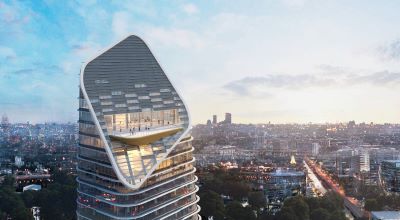
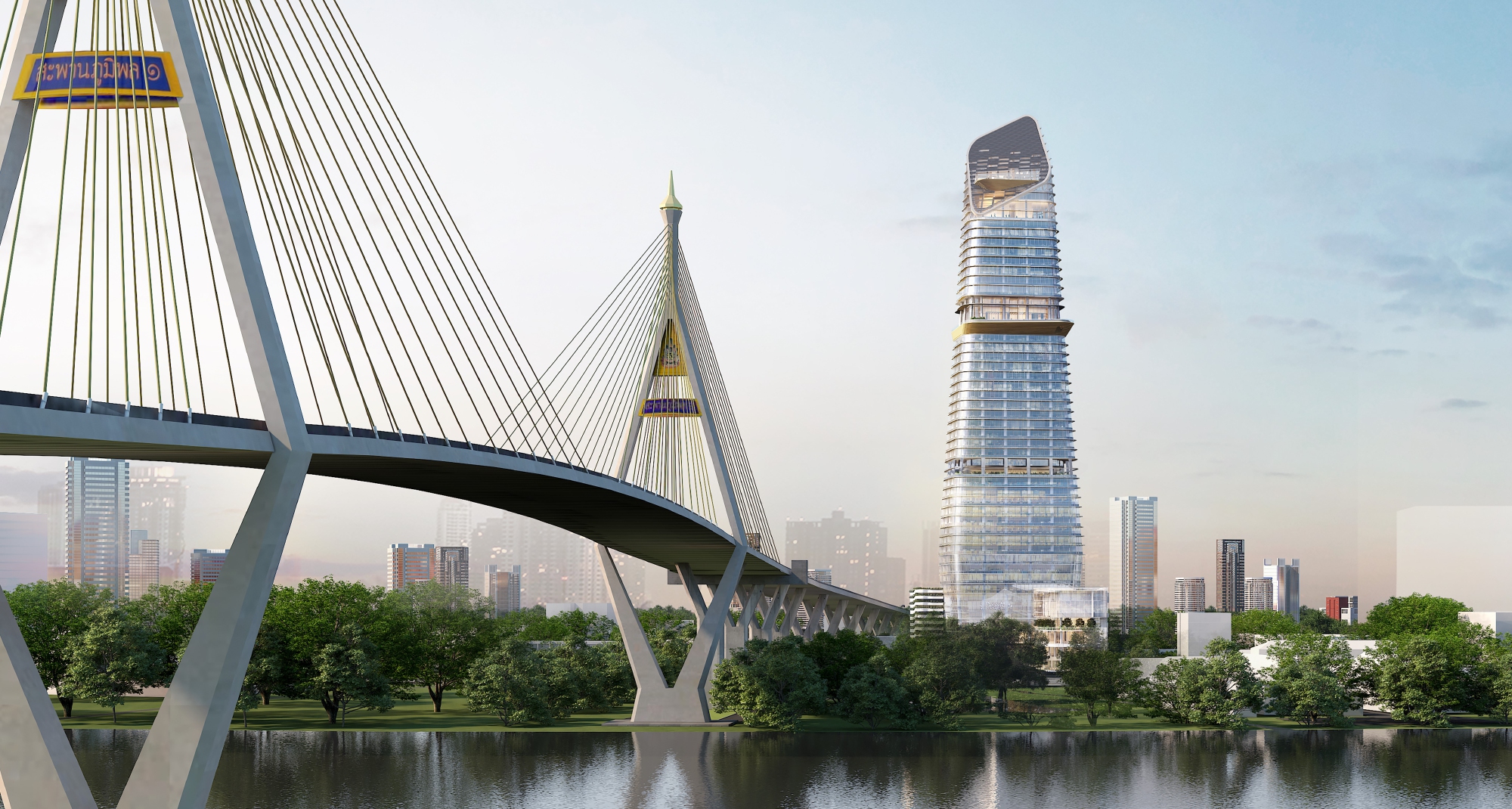
The KingBridge Tower will be a user-friendly smart building with a total area of over 85,000 square meters on a land plot of over six rai that focuses on quality of life of users and the integration of the state-of-the-art technology and innovation with green space and environmentally-friendly with emphasizing on Circular Economy
Saha Capital Tower Co., Ltd., a company within Saha Group, has performed a ceremony to lay the foundation stone for the construction of KingBridge Tower, a new iconic commercial office building on Rama III Road under the concept ‘The Spirit of Synergy’ that will focus on quality of life and blend state-of-the-art smart technology and innovation with green space.
The ceremony was presided over by Boonsithi Chokwatana, Chairman of Saha Group, accompanied by Vichai Kulsomphob, President and CEO of Saha Pathana Inter-Holding Plc., and other executives.
Upon completion, KingBridge Tower will become the tallest office building in Thailand, consisting of office spaces, co-working spaces, meeting rooms, healthy canteen, vertical garden, running tracks and rooftop restaurant. The smart building is designed by Architects 49 Limited and constructed by Thai Obayashi Corporation Limited. Construction has begun and is expected to be completed in 2024.
Saha Group lays the foundation stone of KingBridge Tower
ADVERTISEMENT
Mr. Vichai Kulsomphob, President and CEO of Saha Pathana Inter-Holding Plc., and Managing Director of Saha Capital Tower Co., Ltd., said “Saha Capital Tower, as one of the companies under Saha Group, is committed to operating a business that is responsible to the society, people and environment. The KingBridge Tower is designed with the concept ‘The Spirit of Synergy’ as we believe synergy from working and spending time together can yield positive results, which, in turn, will stimulate growth of our businesses, organization and the overall society.”
“This concept is present in all design elements of the KingBridge Tower to ensure that everyone and every business in this building will be able to join forces to create something that is greater than the sum of its parts. The design of building’s facade, for example, has incorporated an environmentally-friendly solar cell technology without sacrificing the aesthetics. Quality of life is enhanced by the ‘Lush Co-working Space’ that combines working area with green space. As a result, the building will not only support the modern way of working but also wellness of its users,” said Mr. Vichai.
“Mott MacDonald has been selected to participate in the design of the KingBridge Tower. Mott MacDonald is a global engineering consultancy which was responsible for structural design of many world-renowned projects such as Bhumibol Bridge, London Heathrow Airport, and Silicon Valley BART Extension. With such a world-class company playing a key role in design, the KingBridge Tower is poised to be a spectacular riverside landmark of Rama III Road.” he said.
Saha Group lays the foundation stone of KingBridge Tower
The KingBridge Tower will be a user-friendly smart building with a total area of over 85,000 square meters on a land plot of over six rai that focuses on quality of life of users and the integration of the state-of-the-art technology and innovation with green space and environmentally-friendly with emphasizing on Circular Economy, with plans to be certified with top global building standards such as LEED Gold and 3-Star Fitwel.
The building will provide convenience and safety in a relaxing environment with the application of an IoT system in office and common spaces, an AI-based facial recognition system, EV charging stations, co-working spaces, meeting rooms, healthy canteen, vertical garden, running tracks and rooftop restaurant. Parts of the building can also be turned into an event space if needed.
Design and construction of the project is carried out in cooperation with professional partners with specific expertise, including Architects 49 Limited, Thai Obayashi Corporation Limited, Stonehenge Inter Plc., SCG, and JLL. Construction has begun and is expected to be completed in 2024.
People, Planet, Profit: Recycling Solutions with Digitalization
The recycling of plastics has remained at low levels for many years, and expanding this activity is key to move toward the circular economy.
Sustainable development is both a major challenge and focus worldwide. Addressing the triple bottom line of People-Plant-Profit to meet community and employee needs; reduce environmental impact; yet also deliver company profits, is a fragile balance. Consumers and businesses alike are rethinking current behaviors to specifically address sustainability.
The production and use of plastics are important considerations in sustainability programs, and awareness has grown during the ongoing COVID-19 pandemic. In fact, all sustainability topics have drawn a lot more focus during this time. There is a greater awareness of risk across businesses, and a growing concern about the environment including plastic waste reduction. At the same time, we have seen greater use of single-use plastics to secure food and health during the pandemic.
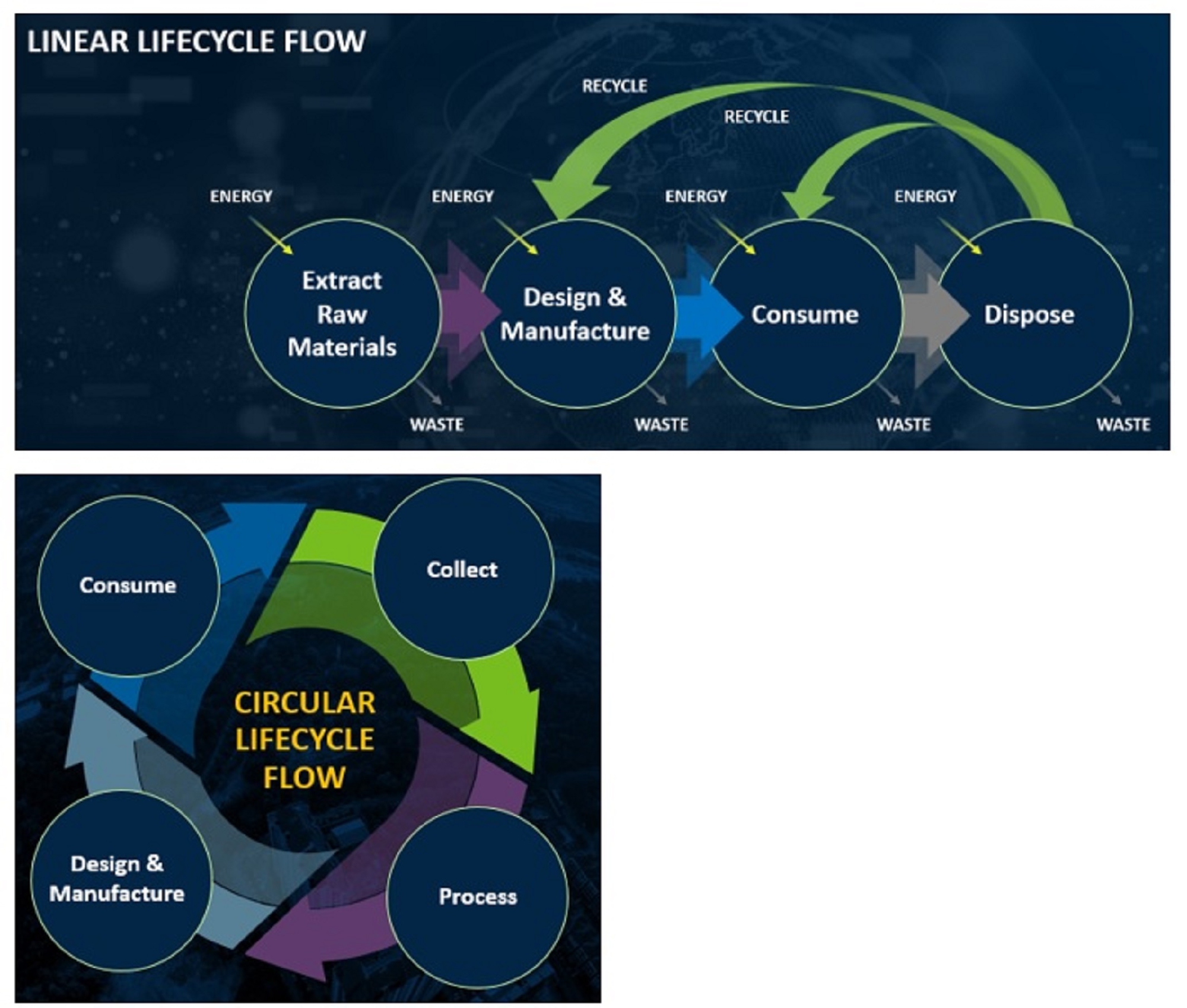
The recycling of plastics has remained at low levels for many years, and expanding this activity is key to move toward the circular economy. This demanding concept is based upon principles that manufacturing processes move from the current linear lifecycle to integrate waste and by-products and eliminate emissions, while overall reducing impact on the natural environment.
People, Planet, Profit: Recycling Solutions with Digitalization
ADVERTISEMENT
According to the Ellen MacArthur Foundation, only about 14% of plastic packaging is collected for recycling globally and as much as one-third of the volume ends up in the environment. In a recent CERAWeek Conversation, IHS Markit vice president Anthony Palmer estimated that more than 400,000 metrics tons of plastic waste are expected to leak into the environment by 2050.
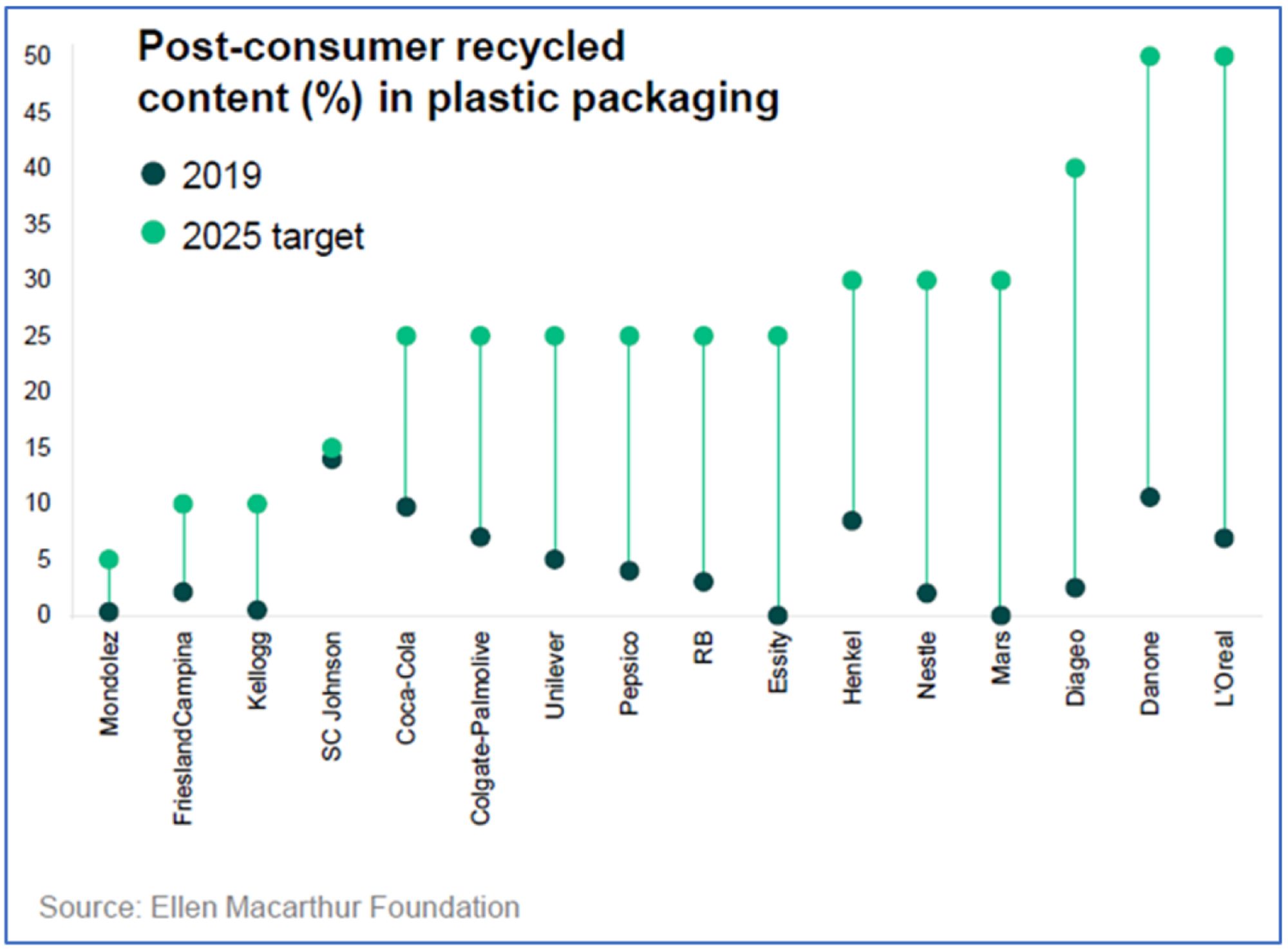
Consumer companies have ambitious targets to integrate recycled plastic into their final products and packaging, they are challenged to scale recycling and collection processes to address the very large and dispersed volumes.
People, Planet, Profit: Recycling Solutions with Digitalization
The good news is that many companies across the plastic value chain are actively working and collaborating to resolve plastic waste issues. And digital capabilities are helping to solve some of the largest challenges in recycling activities.
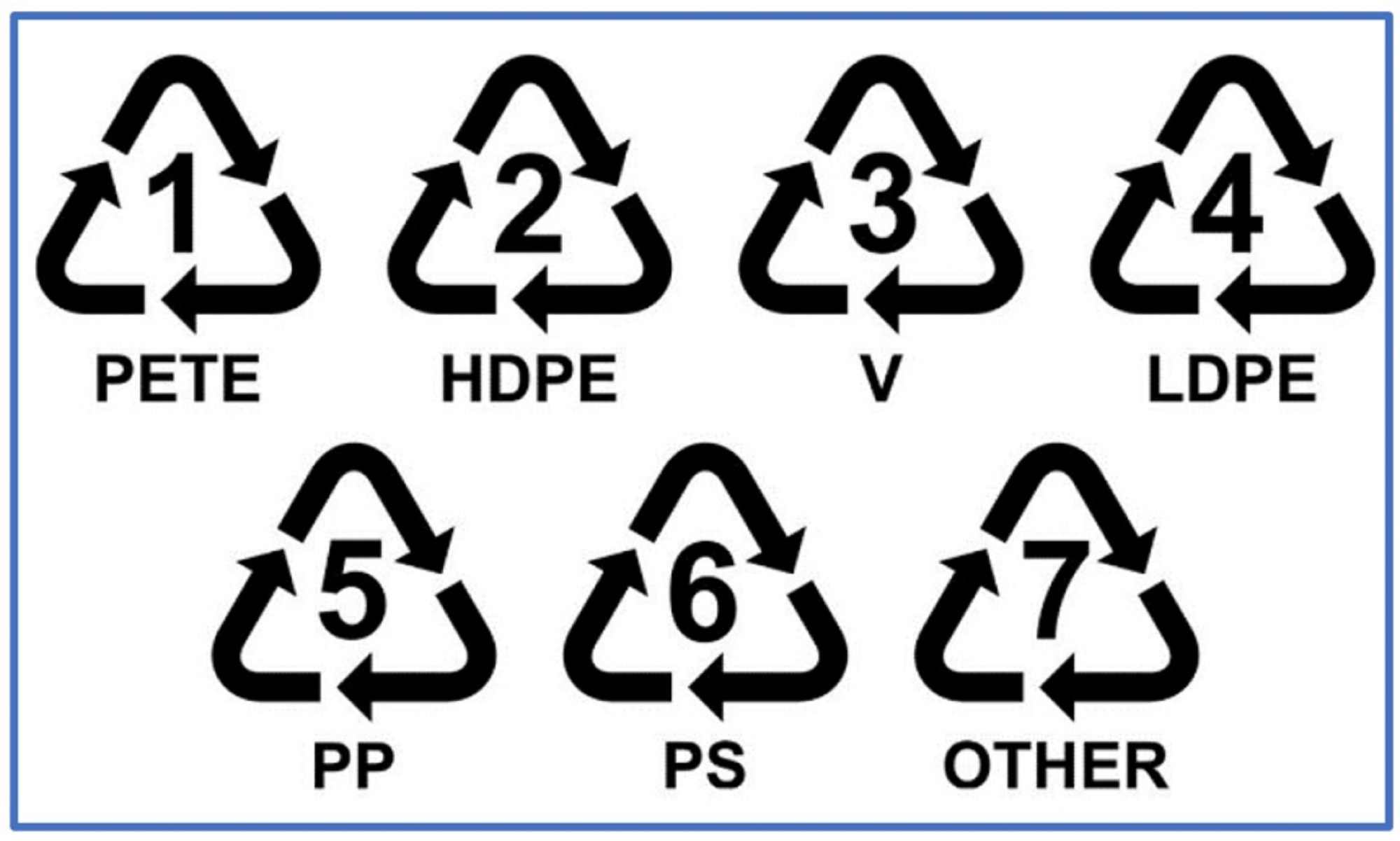
For mechanical recycling processes, when the plastic is melted to create a new plastic article, it can be difficult to re-integrate the material back into value chain. The variety of plastic types typically identified by the recycling symbols #1 – #6 (as shown in figure 3) often demands different solutions requiring labor-intensive sorting. Many packages are composed of a mix of plastics used, typically marked #7, that can require unique approaches.
People, Planet, Profit: Recycling Solutions with Digitalization
Japanese company FP Corporation had complex business and sustainability challenges in its packaging and logistics operations. It successfully applied digital supply chain solutions to optimize its complex production and distribution processes for both profitability and sustainability targets.
Working with partner Time Commerce, the company generates a detailed scheduling plan that integrates its demand plans and warehouse capacity with key cost components for production, inventory and transportation. The plan includes the retrieval of spent containers from consumer locations and the material re-use at production sites, primarily made from polystyrene (PS #6) and polyethylene terephthalate (PET or PETE #1). The company estimates that it reduced landfill waste by 443,000 metric tons and cut carbon emissions by 160,000 metric tons in FY2019, continuing the improvement seen in the previous year.
Digital technologies are also helping to develop and improve new recycling capabilities often referred to as “advanced recycling”. This advanced approach differs from mechanical recycling in that it takes the polymer apart to make the starting monomer or feedstock, or another intermediate that can be used as a feedstock. Advanced recycling provides the opportunity to manage large volumes of plastic waste, and convert it to usable materials. As processes improve, it can also provide more flexibility in the types and variability of plastics that can be recycled.
Pyrolysis is the primary process for advanced recycling of polyethylene (HDPE #2 and LLDPE #4) and polypropylene (#5). Several global companies are working on pyrolysis processes with a focus on digital simulation solutions, such as AspenTech’s Aspen Plus. These solutions model the complex reactions that occur in polymer decomposition so conditions can be optimized for cost and emissions. Pyrolysis can be a helpful first step in a local recycling plan as the liquid product formed is much easier to transport than large volumes of plastic waste.
A recent research study that used Aspen Plus to model the pyrolysis of waste tires highlighted that the simulation model can “serve as a robust tool to respond to market conditions that dictate fuel demand and prices while at the same time identifying optimum process conditions (e.g., temperature) driven by process economics.” Operators can optimize based on local market demand, such as gasoline, diesel and other hydrocarbons. (1)
Digital technology can also aid the next step in the recycling process as the resultant pyrolysis oil is integrated back into operations as a feedstock into steam crackers for olefins production. Scheduling solutions, such as Aspen PIMS, help companies assess unit capability for alternate feed and provide guidance on optimal conditions for processing. As operational experience develops, process analytics can help operators target reliability and maintenance activities, such as furnace decoking, to ensure energy efficiency remains high while balancing operational demands.
The value of plastics in their applications, including increased quality and durability is another focus area across the plastics value chain. Some consumer companies are moving toward more durable packaging that can be re-used while and plastic producers are moving to upgrade the quality of their products, make them easier to recycle, and overall reduce waste in current production.
Simulation of polymer properties and processes accelerates this new product development so producers can deliver new products to the market faster and at lower cost. Dow, for example, was able to speed time to market and reduce batch cycle time for polymer production using dynamic simulation to adjust process conditions. SCG Chemical saved more than $300,000 USD by eliminating plant trials for new HDPE grades.
Plastic value is also tied to production quality, and eliminating the low value material that is often produced in high volume processes. Digital solutions help to optimize current polymer operations to minimize low quality production and reduce energy use. Scheduling solutions can be applied to polymer unit operations to optimize the production schedule and conditions to ensure minimal waste material is produced between high quality products.
Major effort is needed worldwide to resolve plastic waste challenges and make progress toward important sustainability goals. Companies can best target and accelerate their efforts in polymer recycling, optimization and redesign by using digitalization capabilities.
________________________________________
Reference:
(1) “Pyrolysis of waste tires: A modeling and parameter estimation study using Aspen Plus®.” Hamza Y. Ismail, Ali Abbas, Fouad Azizi and Joseph Zeaiter. Waste Management, Vol 60. February 2017.
Circular Economy requires the integration of process to eliminate waste and emissions








 Saha Group lays the foundation stone of KingBridge Tower
 Saha Group lays the foundation stone of KingBridge Tower
 People, Planet, Profit: Recycling Solutions with Digitalization
 People, Planet, Profit: Recycling Solutions with Digitalization
 People, Planet, Profit: Recycling Solutions with Digitalization
