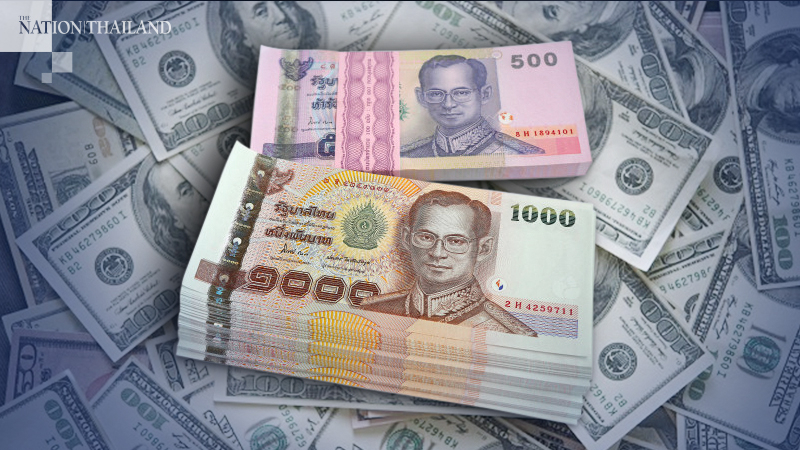
The baht opened at 30.19 to the US dollar on Tuesday, strengthening from 30.23 at close on Monday.
The Thai currency is likely to move between 30.10 and 30.30, said Jitipol Puksamatanan, senior director of the chief investment office at SCB Securities.
On Monday night, the financial markets were in a risk-on state, and recovered from news of a Covid-19 vaccine. The S&P 500 and Stoxx 600 indices both rose by 1.2 per cent.
The WTI crude oil price increased by 3.1 per cent, while the price of gold fell by 0.1 per cent. However, the news of a Covid-19 vaccine did not prompt investors to sell their safe haven asset as much as in the past.
In the US and Germany, the Ten-Year Treasury yield stayed at 0.90 per cent and –0.55 per cent, respectively.
The dollar weakened 0.2 per cent, compared to other main currencies. The euro and the franc did not weaken, since the European Central Bank signalled that it would issue more stimulus packages next month.
In Thailand, speculators have reduced the baht they held due to the Bank of Thailand measures amid the strengthening baht, Jitipol said.
In the next phase, he forecast that foreign investors would watch the outcome of the Monetary Policy Committee meeting on Wednesday, before deciding on returning to Thailand.
A new Public Health Ministry regulation allows the sale and possession of category II narcotics under the Narcotic Act BE 2522 (1979).
An announcement to the effect was published in the Royal Gazette website on Monday.
Category II comprises 102 ordinary narcotics, such as morphine, cocaine, codeine, medicinal opium, and fresh opium.
Under the ministerial regulation, the permit to sell category II narcotics will be granted to applicants for the following purposes:
▪︎ Medical treatment or disease prevention in patients or animals;
▪︎ Medical or scientific analysis or study;
▪︎ For the benefit of the government.
The permit to possess category II narcotics will be granted to applicants for the following purposes:
▪︎ Manufacturing of category III narcotics, which are in the form of medicinal formula and contain narcotics of category II as ingredients in accordance with the rules prescribed by the minister, such as cough medicine, diarrhoea medicine;
▪︎ Used as an example for educational purposes;
▪︎ Medical or scientific analysis or study;
▪︎ For the benefit of the government;
▪︎ For providing first aid or in case of emergency in public transport ships or aeroplanes operating on international routes that are registered in the Kingdom.
This regulation will be effective 240 days after the date of announcement in the Royal Gazette.
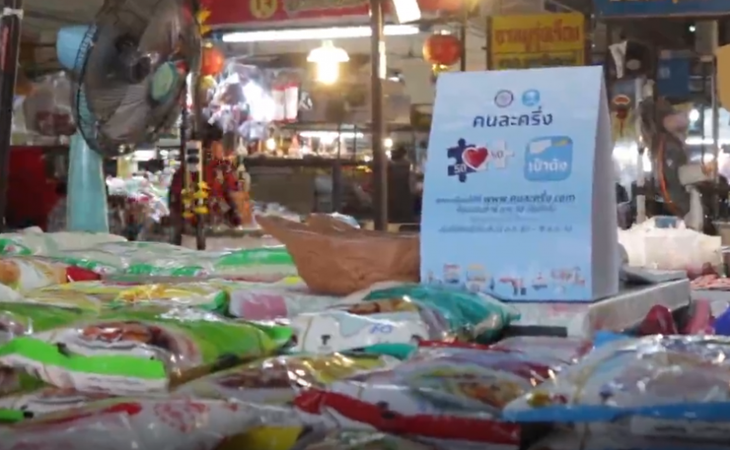
The Commerce Ministry has warned merchants participating in the government’s shopping subsidy scheme to clearly display product/service prices and refrain from price hikes, or they could face jail or be fined under the law.
Responding to consumer complaints that some merchants in Khon Kaen province, who had joined the government’s “Khon La Khrueng” (Let’s Go Halves) campaign, had unfairly increased their prices to earn higher subsidy, Chaiyajet Jan-Aksorn, chief of Khon Kaen Commerce Office, said that he had told officials to survey the markets and make sure that all merchants follow the rules. They must display the price clearly so that customers can make appropriate choices, he said.
The scheme, which runs from October 23 to December 31, offers about 10 million citizens discounts of up to Bt150 per day on purchases at participating stores, capped at Bt3,000 throughout the period. The government through Krungthai Bank will subsidise the discount amount to registered merchants via the Thung Ngern application.
“Merchants who fail to display their prices will face up to a Bt10,000 fine under the Price of Goods and Services Act BE 2542,” he said.
“Those who unfairly increase their prices could face up to seven years in prison, or Bt140,000 fine, or both.
“Merchants who joined the Ministry’s Blue Flag Shop campaign and broke the law would have their Blue Flag status revoked on top of punishment stipulated by the laws,” he added.
“If you want to report unfair price hiking, you can do so at yiur local police station, provincial commerce office, or contact the Department of Internal Trade’s hotline 1569,” he said.
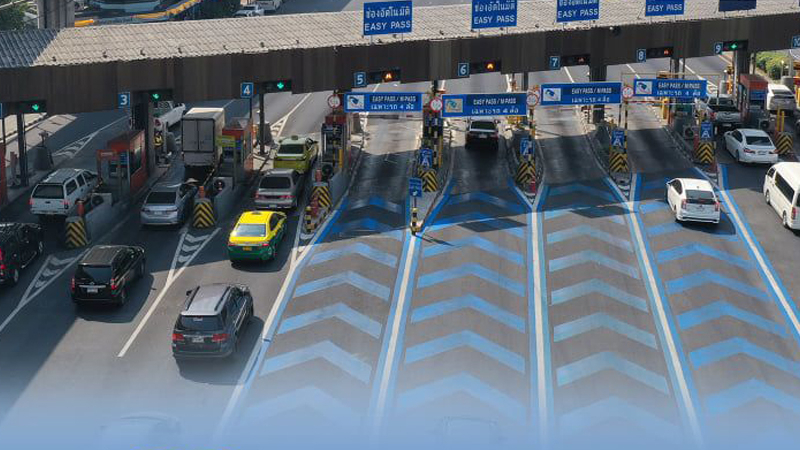
The Royal Gazette website on Monday (November 16) published a Transport Ministery regulation that exempts toll fee for motorway routes 7 and 9 during long weekends in November and December to facilitate increased use by motorists.
The regulation, signed by Transport Minister Saksayam Chidchob, stipulates that the two motorway routes will be free for use from 12.01am on November 18 until midnight of November 23, and from 12.01am of December 9 until midnight of December 14.
The government had earlier announced November 19-20 and December 11 to be special holidays to promote domestic tourism and boost the economy. This will form long weekends from November 17-20 and December 10-13.
Motorway route 7, also known as Bangkok-Ban Chang Motorway, runs from Bangkok to Chonburi, Pattaya and Map Ta Phut, while motorway route 9, also known as Bangkok Outer Ring Road, connects Bangkok to Nonthaburi, Pathum Thani, Samut Prakarn and Ayutthaya provinces.
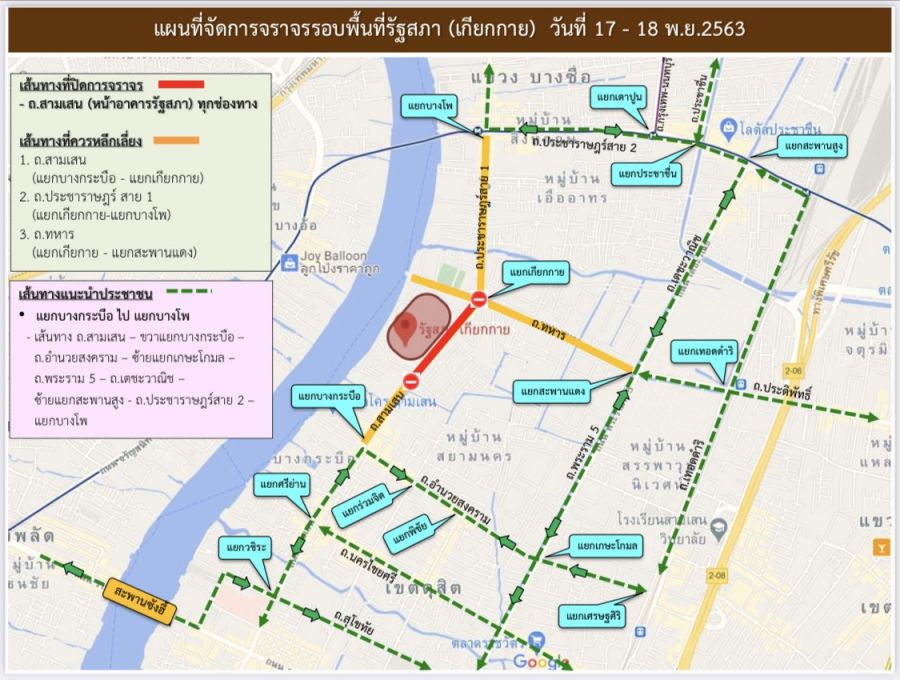
The Metropolitan Police Bureau (MPB) on Tuesday asked motorists and pedestrians to avoid using certain routes which might be closed or have heavy congestion due to planned pro-democracy protests around Parliament on Samsen Road in Bangkok’s Dusit district.
“The area around Parliament is normally jampacked, especially during rush hour, and the protest will only worsen things,” Pol Maj-General Jirasan Kaewsangeak, deputy chief of the MPB, said.
“Please avoid these routes from 6am on Tuesday until the rallies end.”
The routes are:
– Samsen Road in front of Parliament;
– Samsen Road from Bang Kra Beu to Kiak Kai intersections
– Pracharat Sai 1 Road from Kiak Kai to Bang Pho intersection;
– Thahan Road from Kiak Kai to Saphan Daeng intersection.
The MPB has advised motorists who wish to travel from Bang Kra Beu to Bang Pho intersection to use Amnuay Songkram Road, which leads to Rama V Road, Techa Wanich Road, Pracharat Sai 2 Road, and then the Bang Pho intersection.
Jirasan added that traffic police would be stationed in the area to ensure traffic flow and ease impact on the public.
For further route information or roadside assistance, call hotline 1197, visit http://www.trafficpolice.go.th/ or download mobile application “M-Help Me”.
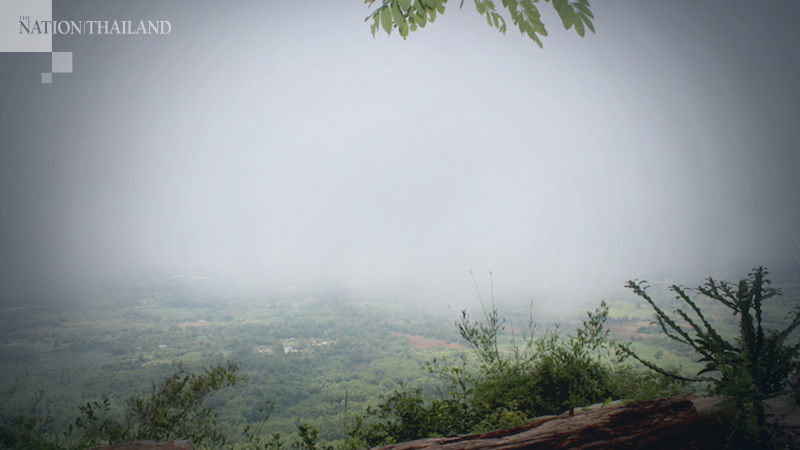
The Thailand Meteorological Department forecast on Tuesday that the weak high-pressure system covering upper Thailand would raise temperatures in the areas. But the weather will remain cool with fog in the morning, while mountaintops will still be cold.
The weak northeast monsoon over the Gulf of Thailand and the South will ease rains in the South with isolated thundershowers in some areas.
The weather forecast for the next 24 hours:
Bangkok and surrounding areas: Cool weather with light fog in the morning; minimum temperature 23-25 degrees Celsius, maximum 33-35°C.
North: Cool weather with fog in the morning; minimum temperature 18-23°C, maximum 31-34°C.
Northeast: Cool weather with light fog in the morning; minimum temperature 20-22°C, maximum 31-32°C.
Central: Cool weather with light fog in the morning; minimum temperature 22-24°C, maximum 33-34°C.
East: Cool weather with light fog in the morning; minimum temperature 23-24°C, maximum 33-34°C; waves a metre high and 1-2 metres offshore.
South (east coast): Mostly cloudy with thundershowers in 40 per cent of the areas; minimum temperature 22-25°C, maximum 32-33°C; waves a metre high and 1-2 metres during thundershowers.
South (west coast): Partly cloudy with thundershowers in 30 per cent of the areas; minimum temperature 23-26°C, maximum 33-34°C; waves a metre high and 1-2 metres during thundershowers.
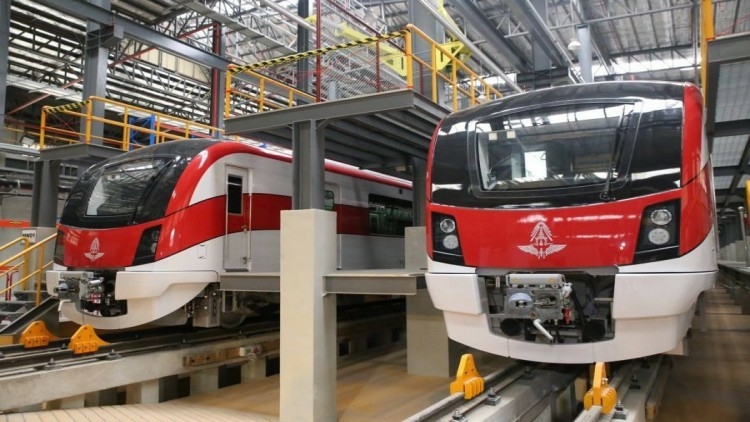
The Bangkok Red Line from Bang Sue to Rangsit (North) and Bang Sue to Taling Chan (West) will open in March next year with free rides for a three-month trial period, said Transport Minister Saksayam Chibchob on Monday.
He added that the Bang Sue Grand Station will open for use before March.
Saksayam announced the new Red Line schedule after meeting on Monday with the Japan International Cooperation Organisation (JICA), which has invested about Bt87.4 billion in the project. In August, Saksayam said construction of the Bang Sue-Rangsit Red Line was at least Bt10.3 billion overbudget and required more money from the government.
“We received a progress report on the Red Line which says commercial service is scheduled to start in November 2021. Regarding the budget exceeding the specified framework, we have assured JICA that we will discuss [the matter] with the Finance Ministry, said the transport minister, adding that the budget snag would not affect rail operations.
He said tests on the Red Line were currently underway ahead of the scheduled trial opening for free rides from March to May. The full service will launch in November 2021.
The baht has been strengthening since last week despite the ongoing political conflict, the finance minister said, adding that speculation may be key to this.
The baht closed at Bt30.23 to the greenback on Monday, weakening slightly after opening at Bt30.16 in the morning session.
Finance Minister Arkhom Termpittayapaisith said in the afternoon that he has discussed the issue with the central bank, which is eyeing measures to deal with the situation.
He added that the currency rate was in line with the Stock Exchange of Thailand index, which has been affected positively by Joe Biden’s win in the US. The stock market has also been supported by foreign capital flow in Thailand and the rest of Asia.
Arkhom said currency speculation is also a topic of concern. “We need to take several steps to tackle this,” he added.
The minister also cited the National Economic and Social Development Council (NESDC)’s announcement that it expects the economy to grow by between 3.5 and 4.5 per cent next year, driven by rising domestic demands, recovery of the world economy, trade, government spending and economic stimulus.
He said the gross domestic product (GDP) had contracted by 6.4 per cent, though people’s spending in the third quarter of this year has risen by 6.3 per cent compared to the second quarter. Also, he said, public investment has risen by 18.5 per cent in the previous quarter.
“My ministry will do its best to stimulate people’s spending,” he added.
Prime Minister Prayut Chan-o-cha has remained aloof to anti-establishment protesters’ plan to gather outside Parliament on Tuesday to follow the proceedings as lawmakers vote on charter amendments.
When asked on Monday about protesters from both sides of the political divide showing up to listen to the decision on charter rewrite, he said he will not be responsible for what happens because security personnel will be on hand to deal with the crowds.
He also said violators of law will be prosecuted as per normal and that he has given no orders on the subject.
As for the Constitutional Court’s pending verdict about him occupying Army quarters after retirement, Prayut said he was not concerned because he has never broken the law. He added that he will let the judiciary do its job and accept the verdict, which is expected on December 2.
Mob Fest: An uprising of joy and anger with a serious political message
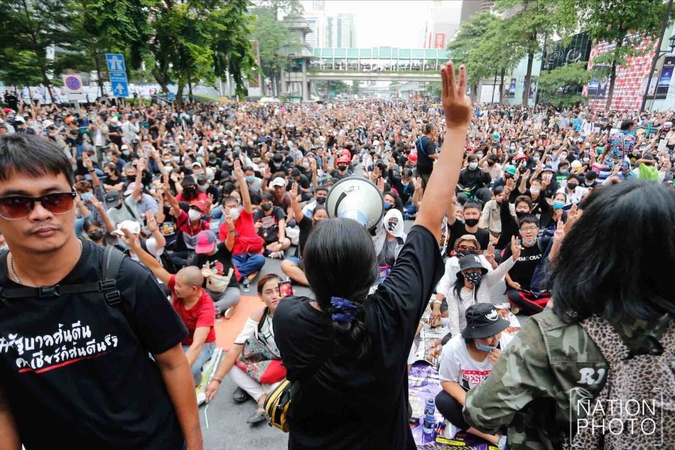
NationalNov 16. 2020Thousands attend ‘Mob Fest’ at Democracy Monument in Bangkok on Saturday.
By Wichit Chaitrong The Nation
In contrast to the national security chief’s statement that pro-democracy protests are weakening, thousands of anti-government protesters turned up for “Mob Fest” on Saturday.
On display were all the many colourful strategies that protesters have created to draw people to demonstrate against the government.
A tour of Mob Fest at Bangkok’s Democracy Monument on Saturday revealed a festival atmosphere with three main stages for political speeches and live music.
Scattered around were smaller attractions that added to the party mood. A DJ pumped out rhythms for a group of dancers. Another group showed off their synchronised moves as pop music blared. Others gathered round to watch and dance to Isaan folk music.
Headlining the festival on the main stage was Rap Against Dictatorship’s latest track, “Reform”, a blistering attack on the Thai establishment. The hip-hop outfit’s 2018 protest anthem “My Country’s Got” grabbed global headlines and nearly 100 million views on YouTube.
Elsewhere, playful satire helped balance the anger and noise.
Dressed all in white, a male performer sat frozen like a statue. Booths invited demonstrators to create poems and artworks inspired by the protesters’ three core demands – to change the government, rewrite the Constitution and reform the monarchy.
In true music-festival style, stalls sold T-shirts, hats and other souvenirs, while hundreds of food carts served up drinks, noodles, sweets and snacks.
The “party”, held in defiance of the emergency decree banning gatherings, stretched out on the road either side of Democracy Monument.
A more serious note was struck by a booth campaigning to legalise sex work. Another promoted decriminalising marijuana use. At a third booth, guys were campaigning to lift restrictions on alcohol production, which is currently dominated by a few large firms. A small group also gathered to debate broader issues of national reform.
But the most-talked about incident at Mob Fest occurred in the afternoon when Their Majesties the King and Queen passed by in a motorcade on the other side of the road. Protesters turned their backs, sang the national anthem and raised three-finger salutes. Clips of the scene were shared widely on social media.
When night fell, protest leader Parit “Penguin” Chiwarak, out on bail, took to the stage to deliver a speech calling for monarchy reform. He also recounted the several days he spent in prison waiting for bail release.
Representatives of a young monks group also appeared on stage, defying last week’s decree from the Sangha Supreme Council banning them from joining political events.
Young monks have been calling for greater accountability and transparency in the monkhood. They also expressed support for the youth-led democracy movement.
Playful protests featuring street art, performances and other creative activities have become a popular cultural attraction in Bangkok over the past few weeks.
The events offer a joyful release for anger and tension but also pack a serious political message through debate and speeches. Taking centre stage are the youth-led democracy protesters’ three core demands for reform of Thailand’s post-coup establishment. But now climbing aboard this bandwagon are a variety of oppressed and marginalised groups, taking the chance to voice their own grievances and demands.



 Thousands attend ‘Mob Fest’ at Democracy Monument in Bangkok on Saturday.

