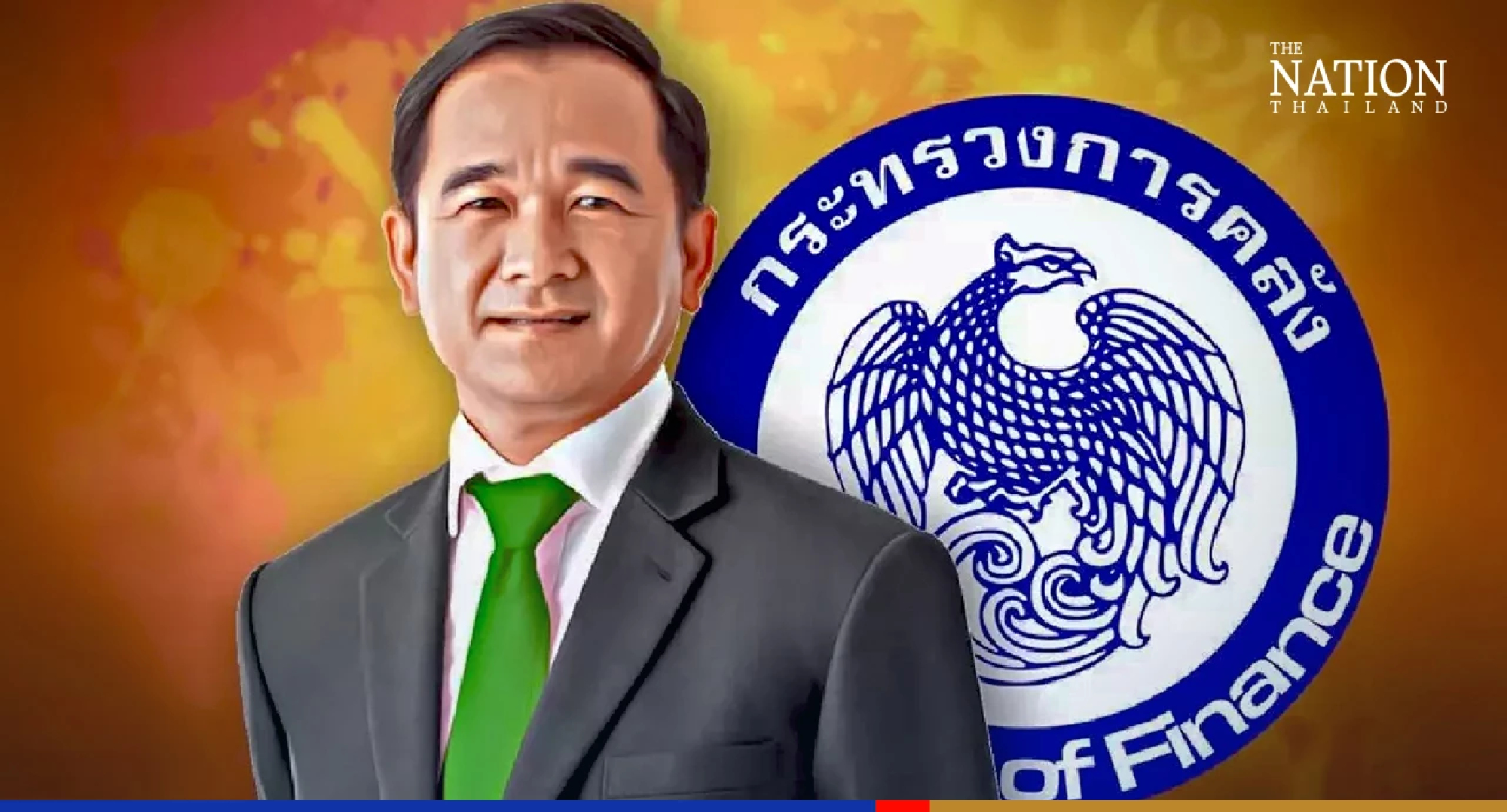
The Finance Ministry has said it is ready to guarantee a loan of up to 150 billion baht to boost the Oil Fuel Fund’s liquidity.
As of August 14, the fund had accumulated a deficit of 177.4 billion baht – 76.52 billion baht deficit in oil subsidy and 40.88 billion baht deficit in LPG gas subsidy.
The fund has been accumulating a monthly deficit of 20 billion baht from March to June owing to the ongoing Russia-Ukraine war.
Krisada Chinavicharana, the Finance Ministry’s permanent secretary, said providing this guarantee will not create a burden on the ministry as the Oil Fund will be responsible for repaying its debts.
“The fund has many ways of managing its finances, so its debt-repayment potential is not worrisome,” he said, adding that the ministry has guaranteed a loan for the fund before.
He added that Thailand will have at least 550 billion baht in cash reserves at the end of fiscal 2022 on September 30.
In the first 10 months of fiscal 2022 (October 2021-July 2022), the government generated 2.03 trillion baht in revenue, up 5.8 per cent compared to the 2021 fiscal year.
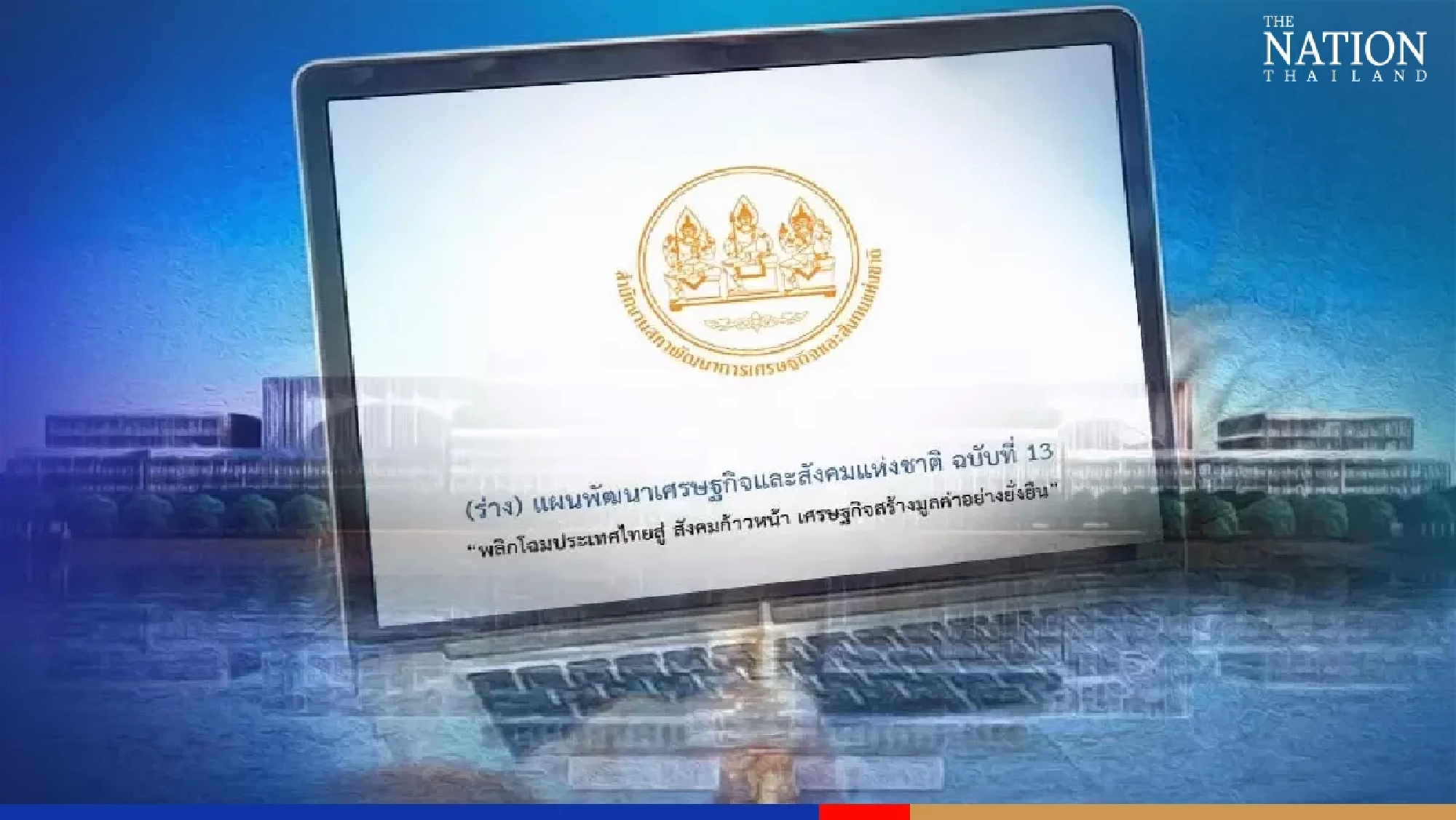
The Parliament has given the go-ahead to the 13th National Economic and Social Development Plan (2023-2027), which aims to make Thailand stable, prosperous and sustainable.
Danucha Pichayanan, secretary-general of the National Economic and Social Development Council (NESDC), said on Monday that the plan will be submitted to His Majesty the King for review before it is announced on October 1.
He added that NESDC has included the sufficiency economy philosophy, UN Sustainable Development Goals and bio-circular-green economy in the plan.
“The plan focuses on five aspects, including innovation-based production structure, personnel development, sustainable production and consumption, as well as boosting the country’s potential in dealing with risks and changes,” he said.
He explained that the plan’s key performance indicators include:
• Boosting per capita income to US$9,300 or 300,000 baht compared to $7,097 or 227,000 baht in 2021.
• Boosting the human development index to 0.7209 compared to 0.6501 in 2020
• Reducing the income gap between the rich and poor to less than five times compared to 5.66 times in 2019.
• Reducing greenhouse gas emissions by at least 20 per cent compared to 16 per cent in 2018.
Danucha said NESDC had set up development targets to ensure the plan can go smoothly, covering production and service, economic and social equality, and natural resource sustainability.
He added that the council will launch an online campaign on September 23 to build public awareness about the plan.
“The aim is to help Thailand have an advanced society and sustainable economy, which is a future everyone wants to see,” he said.
Thailand is accelerating plans to become carbon neutral and achieve the net-zero emission target by 2050 and 2065 respectively, bringing its deadline forward from 2065 and 2090.
Natural Resources and Environment Minister Varawut Silpa-archa announced this new plan at the ESG Declaration event held in Bangkok on Monday by the Bank of Thailand and the Thai Bankers’ Association.
The event was titled “ESG: Powering a Climate Resilient Economy and Path to Net Zero”.
“In November last year, we announced these goals at the 26th United Nations Climate Change Conference, or COP26, in Glasgow, Scotland,” Varawut said. “Before COP26 kicked off, several ambassadors from the European Union met me to discuss the possibility of moving up Thailand’s deadline for becoming carbon neutral and net-zero.
“These countries proposed that if Thailand moves up the timeline, they would provide financial support as well as technology and knowledge necessary to achieve the new targets.”
Varawut said the government has adjusted its plans in line with the adjusted timeline. The first step will be to shift the target of reducing greenhouse gas emissions from 30 per cent to 40 per cent within 2030.
“This 10 per cent increase will require cooperation from all parties, as well as financial and technological aid from international communities,” he pointed out. “I am glad that the Bank of Thailand and the Thai Bankers’ Association will take part in this effort by reducing energy usage in business operations and transport, the two sectors that are responsible for most greenhouse gas emissions,” he said.
Varawut also urged the business sector to adopt the government’s BCG (bio, circular and green economy) model as a framework for business development that focuses on sustainability and efficient use of resources.
Businesses are also urged to adhere to ESG (environmental, social and governance) principles as a guideline to ensure that the organisation is making responsible investment and expansion plans.
“Investments should be made with environmental and social impacts in mind, not just a focus on profits alone. Sustainable growth does not create a burden on the environment and surrounding communities,” he said.
Varawut added that other measures to reduce greenhouse gas emissions that have been implemented so far include the promotion of electric vehicles, implementation of CCUS (carbon capture, utilisation and storage) technology across several industries, producing renewable energy from community and industrial waste, reducing methane emissions from the agricultural sector, using zoning system and increasing green spaces in both urban and rural areas.
“I have always believed in the potential of Thai people, and that if we work together, we can achieve these goals and overcome any crisis. Most importantly, I believe that tackling climate issues is no longer optional, it’s the only way to ensure our survival,” Varawut said.
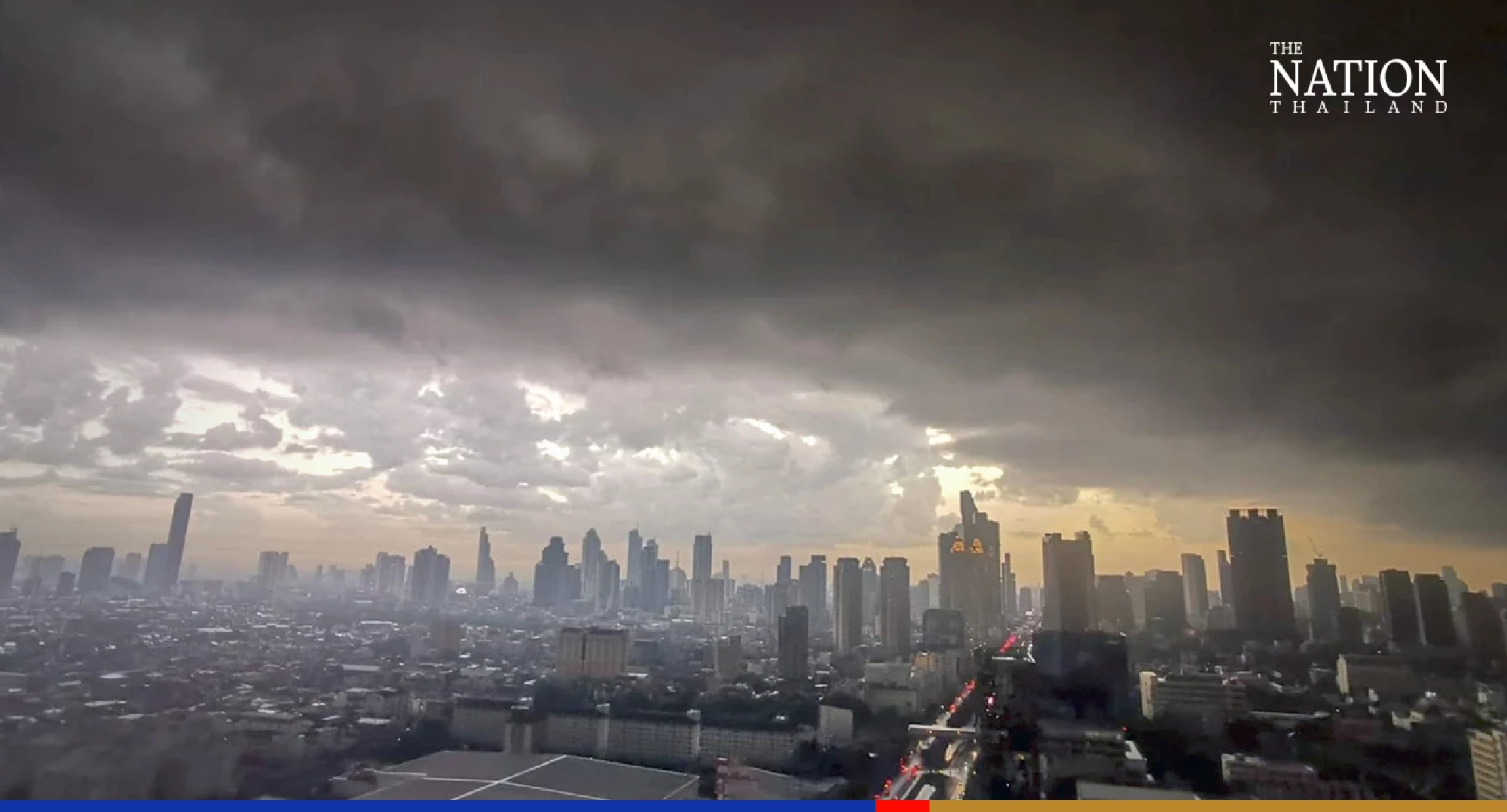
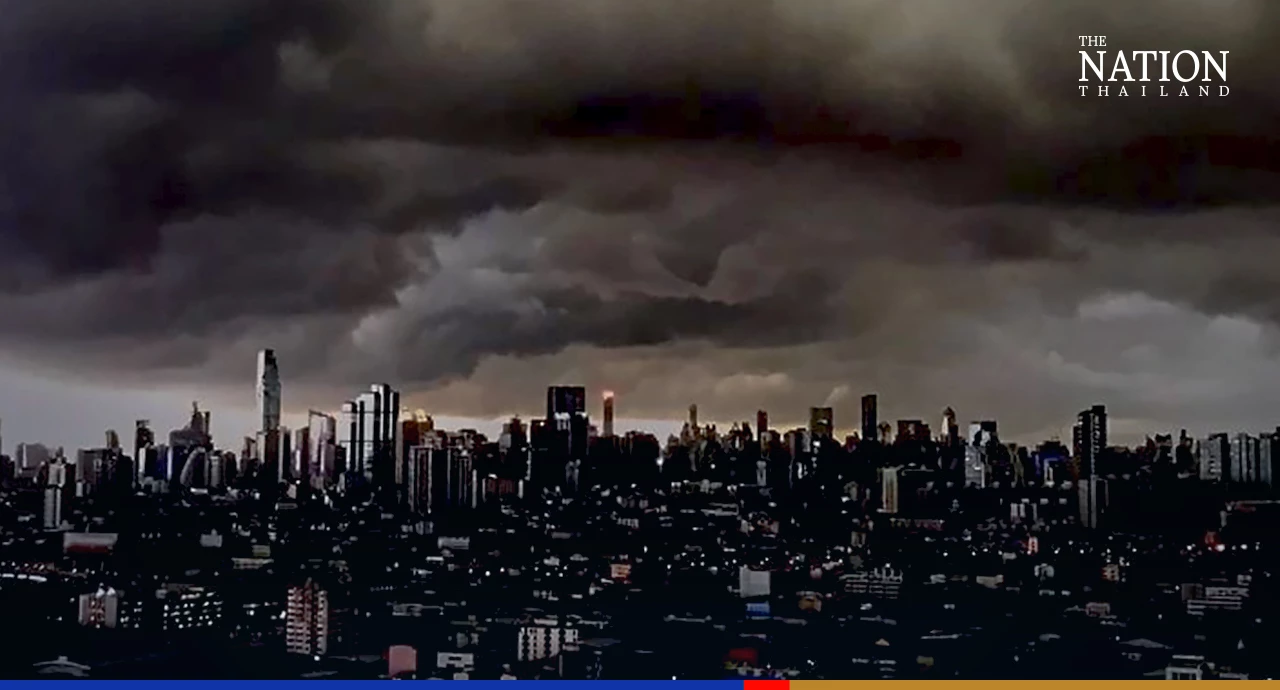
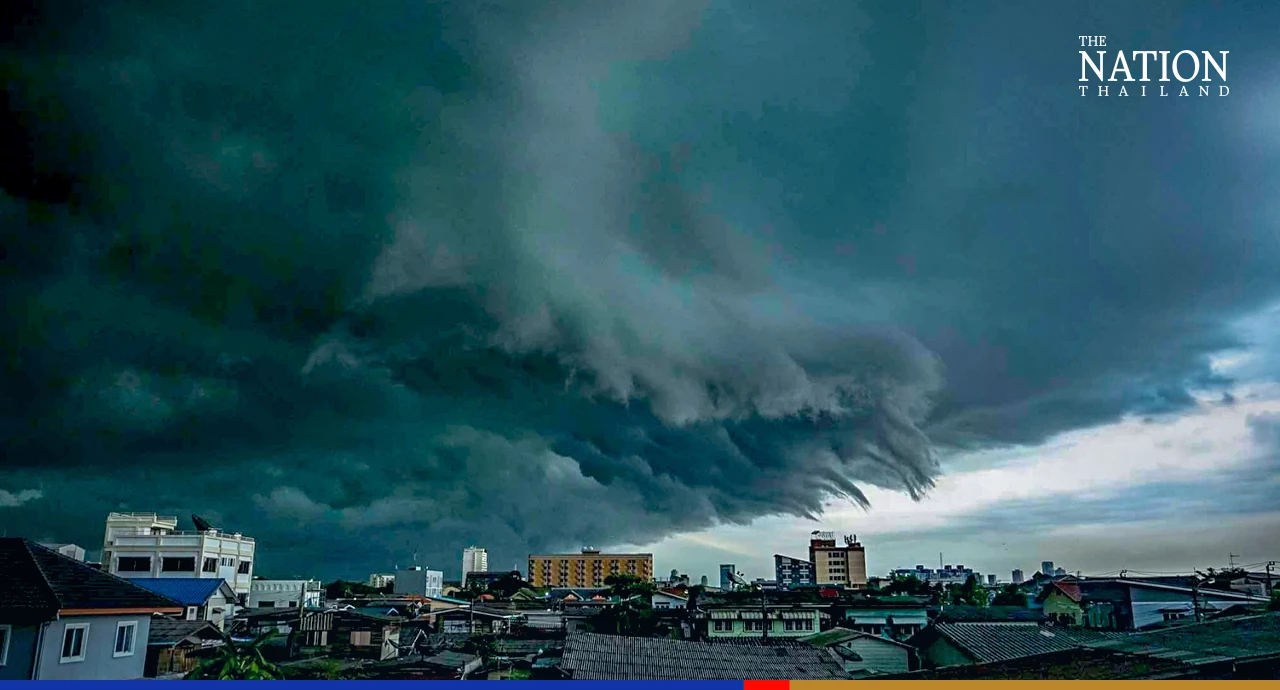
The black clouds blocking the sun on the eastern side of Greater Bangkok on Monday were cumulonimbus clouds or dense vertical clouds formed from condensation in the lower troposphere.
In a Facebook post on Monday evening, the Thai Meteorological Department said: “When cumulonimbus clouds move quickly, they could generate arcus clouds, or a low, horizontal cloud formation expanding from rain clouds and can be seen from several kilometres away.
“The rain clouds on Monday morning formed above Chachoengsao and moved east to cover the Greater Bangkok area. Their thickness blocked most of the light from the sun. The clouds were so thick and dark that the sky looked like it was night,” the post read.
Marine biologist Thon Thamrongnawasawat put this cloud phenomenon to global warming.
“With oceans getting warmer, more vapour is being released into the air, which is forming thick clouds that hold a huge amount of water,” he said in a Facebook post. “These clouds are thicker than usual and could bring heavy downpours. Luckily, strong winds blew most of them away and we were left with light rain on Monday.
“This is just the start of the age of ‘extreme weather’ caused by decades of greenhouse gas emissions,” he said. “This year we have already seen it happen in Pakistan, where heavy rains for eight weeks have caused major floods that have killed more than 1,000 and displaced over 33 million.”
Thon, who is an assistant dean at Kasetsart University’s Faculty of Fisheries, called on people to do their part in reducing global warming.
“The storm is drawing closer. We all know what to do, so we should do it as much as we can. Compared to what is coming, this little inconvenience is nothing we can’t handle,” he said.
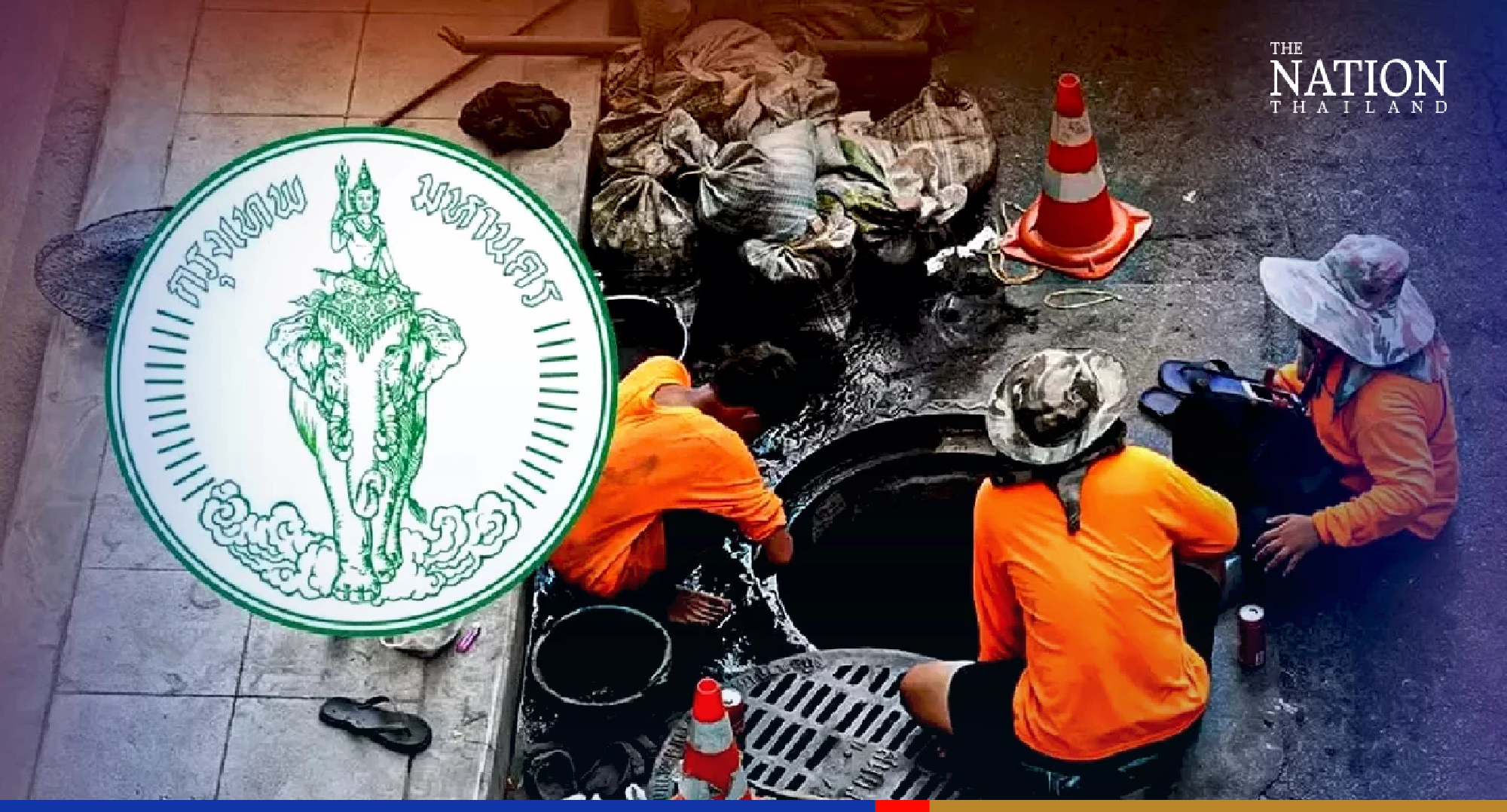
Anybody dumping oil into Bangkok sewers will be slapped with a fine of up to 10,000 baht, Bangkok Governor Chadchart Sittipunt warned on Monday.
He was responding to photos shared on social media of a restaurant worker pouring leftover cooking oil into a manhole. Chadchart said initial investigation revealed that the restaurant was in Chatuchak district and officials have been deployed to find the offender and hit them with appropriate punishment.
“Article 33 of the 1992 Act on the Maintenance of the Cleanliness and Orderliness of the Country prohibits the dumping of garbage, wastewater or similar things onto public roads or sewers. Violators will be fined a maximum of 10,000 baht,” said Chadchart. “Furthermore, those who alert officials of the violation will be rewarded half of the fine.”
Chadchart said evidence of such violation can be delivered to city officials at the district office or via the Traffy Fondue application.
The governor also said that he met with district chiefs and representatives of hawkers to discuss zones for hawkers to sell their products. The following areas in three districts have been marked out for hawkers so far:
• Ratchathewi: Hua Chang bridge, Soi Rang Nam, Soi Senarak
• Bangkok Noi: Soi Saeng Suksa
• Dusit: Soi Sangkhalok (Vajira Hospital)
Chadchart said more areas will be considered to ensure hawkers have places to do their business while the city’s orderliness is maintained.
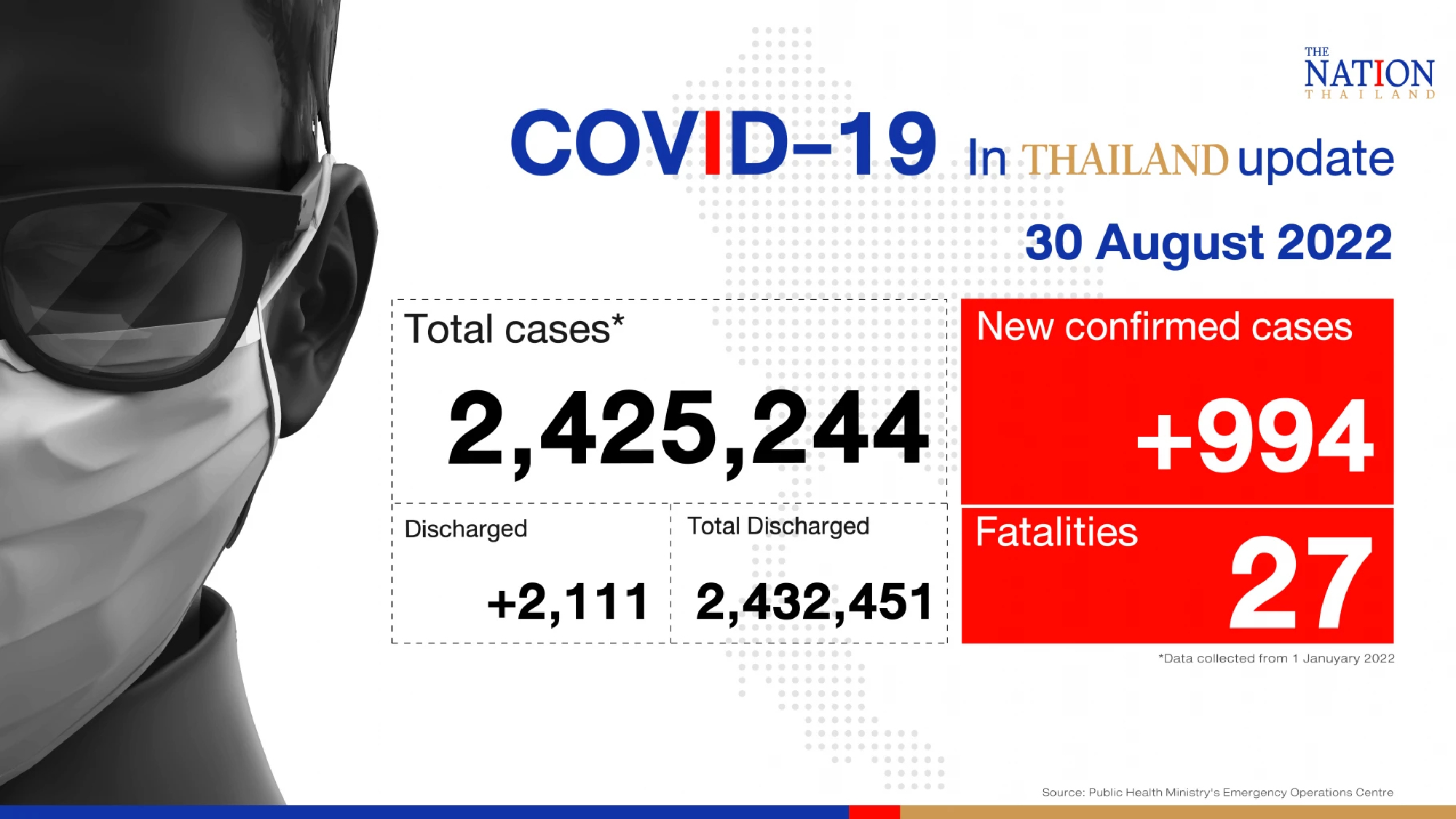
The Public Health Ministry reported on Tuesday (August 30) that over the past 24 hours, 994 Covid-19 patients have been admitted to hospitals, one of whom has arrived in Thailand from abroad.
The death toll has risen by 27, while 2,111 patients have recovered and discharged from hospitals.
The number of cumulative cases in the country since January 1, 2022, stands at 2,425,244 with 10,577 deaths.
The country’s total caseload from Covid-19 stands at 4,648,679 – 4,600,945 of whom have recovered, 15,459 are still in hospitals and 32,275 have died.
Separately, another 1,414 people were given their first Covid-19 shot in the last 24 hours, 1,772 their second shot and 9,321 a booster, bringing the total number of Covid-19 vaccine doses administered nationwide to 142,698,628.
According to Worldometer, confirmed cases globally had risen to 606.68 million on Tuesday, 582.49 million of whom have recovered, 17.7 million are active cases (43,302 in severe condition) and 6.49 million have died (up by 1,279).
Thailand ranks 29th in the global list of most cases, which is topped by the US with 96.09 million, followed by India with 44.42 million, France with 34.48 million, Brazil with 34.4 million and Germany with 32.1 million.
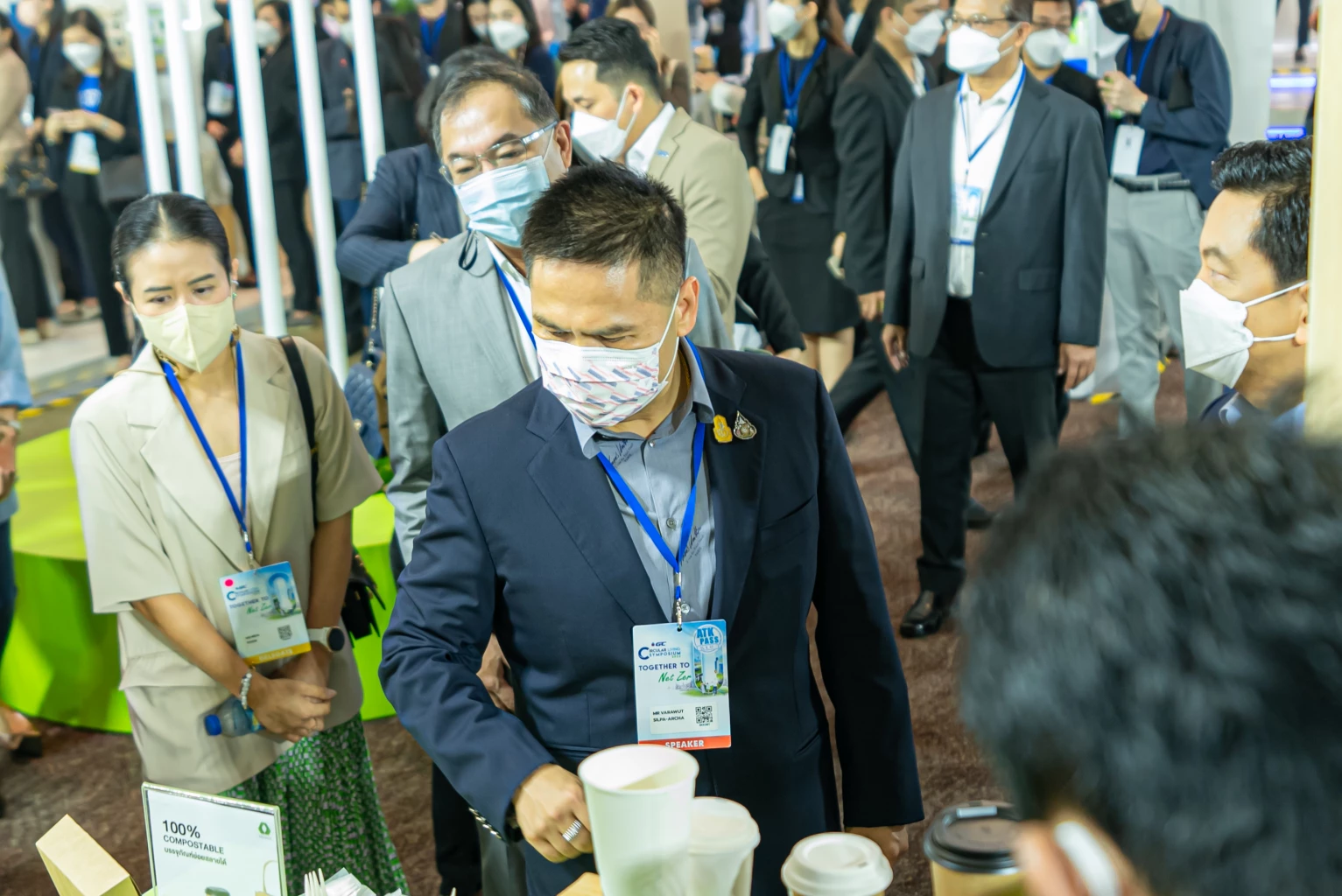
Natural Resources and Environment Minister Varawut Silpa-archa recently presided over the opening ceremony of “GC Circular Living Symposium 2022: Together to Net Zero”, an event organised by PTT Global Chemical Plc and partners to promote the exchange of ideas and innovations under the concept of bio-circular-green (BCG) economy with an aim to reduce greenhouse gas emissions and achieve net zero carbon target.
In his opening speech, Varawut thanked organisers for their commitment to achieving the net zero target, in line with Thailand’s goals that the government has announced in the 26th United Nations Climate Change Conference, also known as COP26, and the Sustainable Development Goals under the Paris Agreement on Climate Change.
“Thailand has always been among the first countries affected by the impact of climate change, including floods, droughts, and storm surges that have cost the country over trillion baht in damage. It is therefore everyone’s responsibility to work together to achieve the net zero target,” he said.
Varawut added that Thailand aims to become carbon neutral in 2050 and achieve net zero carbon emissions in 2065. To achieve these goals, the government has increased the country’s greenhouse gas reduction target from 30 per cent to 40 per cent within 2030, mainly by cutting down the use of chemicals and energy that generate carbon.
“Thailand will also focus on using the bio-circular-green (BCG) economy model to ensure sustainable development of the country,” said Varawut. “The Ministry of Natural Resources and Environment did not just make empty promises. We have been taking action following the policies that we have laid out. We demonstrated this commitment in the Thailand Climate Action Conference (TCAC) earlier this month, and will present our achievements in the COP27 meeting scheduled in November.”
The minister also urged all parties to work together to solve the climate change issues, as the moment to design elaborate policies has already passed and now it is time to act. “To bring about changes in carbon and greenhouse gases emission, the first step is to start at oneself. I have always believed in the potential of Thai people, and that if we work together, we can achieve the goals and overcome any crisis,” he said.
Thailand has launched a new soft-power master plan modeled on Korean pop culture’s global success.
The government’s Creative Economy Agency (CEA), which unveiled the plan on Monday, said its focus would widen from the domestic market to adapting Thai cultural identity for export to the globe.
This would be achieved by boosting the creative economy – people, businesses and locations – under three strategies, CEA executive director Chakrit Pichyangkul told a Bangkok press conference.
He said the strategies are: to empower cultural assets and creative cities; to build creative business competitiveness; and to enter the global market.
Chakrit explained that CEA was established with a mission to promote 15 fields of the creative economy as the engine of a balanced and sustainable economy.
The creative economy, which accounted for 7.5 per cent of Thai GDP and an estimated 900,000 jobs in 2020, is growing at 1.2 per cent per year, he added.
Meanwhile, the Thailand Development Research Institute (TDRI) estimates Thai economic growth will more than double from 2025-2030 if businesses can fully leverage the creative economy.
The CEA said it is also connecting small operators with big business to encourage exchange of ideas and innovation that leads to investment.
Chakrit also unveiled two projects the CEA will launch in fiscal year 2023.
The first is a Content Lab to address the lack of Thai producers and screenwriters. The Content Lab will nurture budding talent with help from experienced experts while also matching their proposals with investors.
Meanwhile the Metaverse Ecosystem Lab will connect universities’ knowledge of virtual systems and software with industry’s wealth of equipment and resources to develop a domestic metaverse ecosystem. The CEA aims to develop a skilled metaverse workforce by building a sandbox for students and SME operators to test ideas with equipment.
Chakrit said his agency will also focus on the content industry as a way of selling Thai identity to the world via films, series, music and other media. He said this had been done before but in an unfocused way, so the CEA will focus on promoting specific Thai identities.
South Korea’s K-pop is a role model but Thai culture was different, so its many strengths would be promoted differently, he said.
He also pledged support for the gaming, animation, and e-sports industries, saying Thailand had to take advantage of technological disruption.
He cited the advent of digital photography, which led to job losses but also a whole new industry.
Therefore, the CEA will help build on existing Thai technology talent to build a skilled workforce to attract investment from overseas, he said.
Meanwhile, cooperation from public and private agencies was needed to help connect small operators with industries. He added that a “successful connection” would light up Thai identity on the global stage.
True Corporation (True) on Monday warned people to beware of fake interactive voice response (IVR) phone calls on Monday.
The announcement came after criminals made IVR phone calls to deceive people, saying that their phone numbers were about to be deactivated.
True said that the company would not be contacting customers individually on the issue via IVR system.
True said that the IVR system would be used only to notify customers on their outstanding balance and payment due date for their mobile service.
According to a Bank of Thailand (BOT) report in May, call-centre gangs made some 6.4 million phone calls in 2021, up 270 per cent compared to 2020.
Meanwhile, a Suan Dusit Poll survey in February found that 21 per cent of 1,221 respondents had faced call-centre scams, while 32.9 per cent of them said their acquitances had faced these scams.
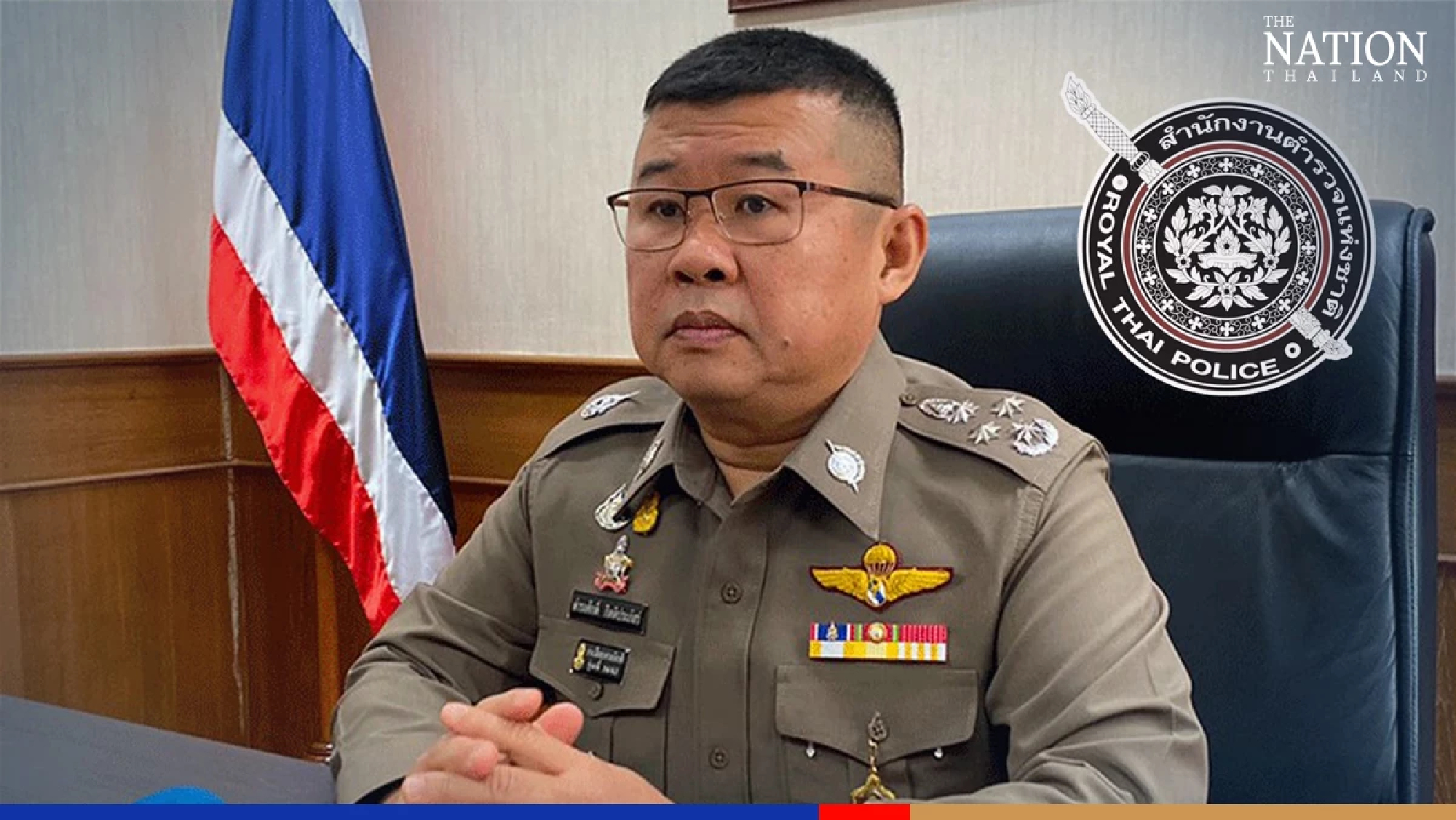
The Police Commission on Monday appointed Pol Gen Damrongsak Kittiprapas – who also heads the Police Cyber Taskforce (PCT) – as Thailand’s new national police chief.
Damrongsak was appointed by unanimous vote during a commission meeting chaired by acting Prime Minister Gen Prawit Wongsuwan at Royal Thai Police headquarters in Bangkok. He will replace Pol Gen Suwat Jangyodsuk, who retires as chief commissioner at the end of next month.
Nicknamed “Big Den”, Damrongsak will serve for one year before reaching the mandatory retirement age of 60 in September 2023.
Born on September 3, 1963, Damrongsak attended Bodindecha (Sing Singhaseni) School before joining Class 38 at the Royal Police Cadet School and Class 22 of the Armed Forces Academies Preparatory School.
He received a master’s degree in public administration from the City University in the United States before training with the US Federal Bureau of Investigation (FBI). He also took a course in crowd control at the Tacoma Police Department in Washington State.
A former commander of the Traffic Police Division, Damrongsak played a key role in developing the online traffic-ticket database to ensure motorists honour their traffic fines.
Damrongsak also pushed for stronger penalties against repeat traffic offenders, including drunk drivers.
As head of the PCT, he oversaw development of www.thaipoliceonline.com, where the public can file complaints about cybercrime.