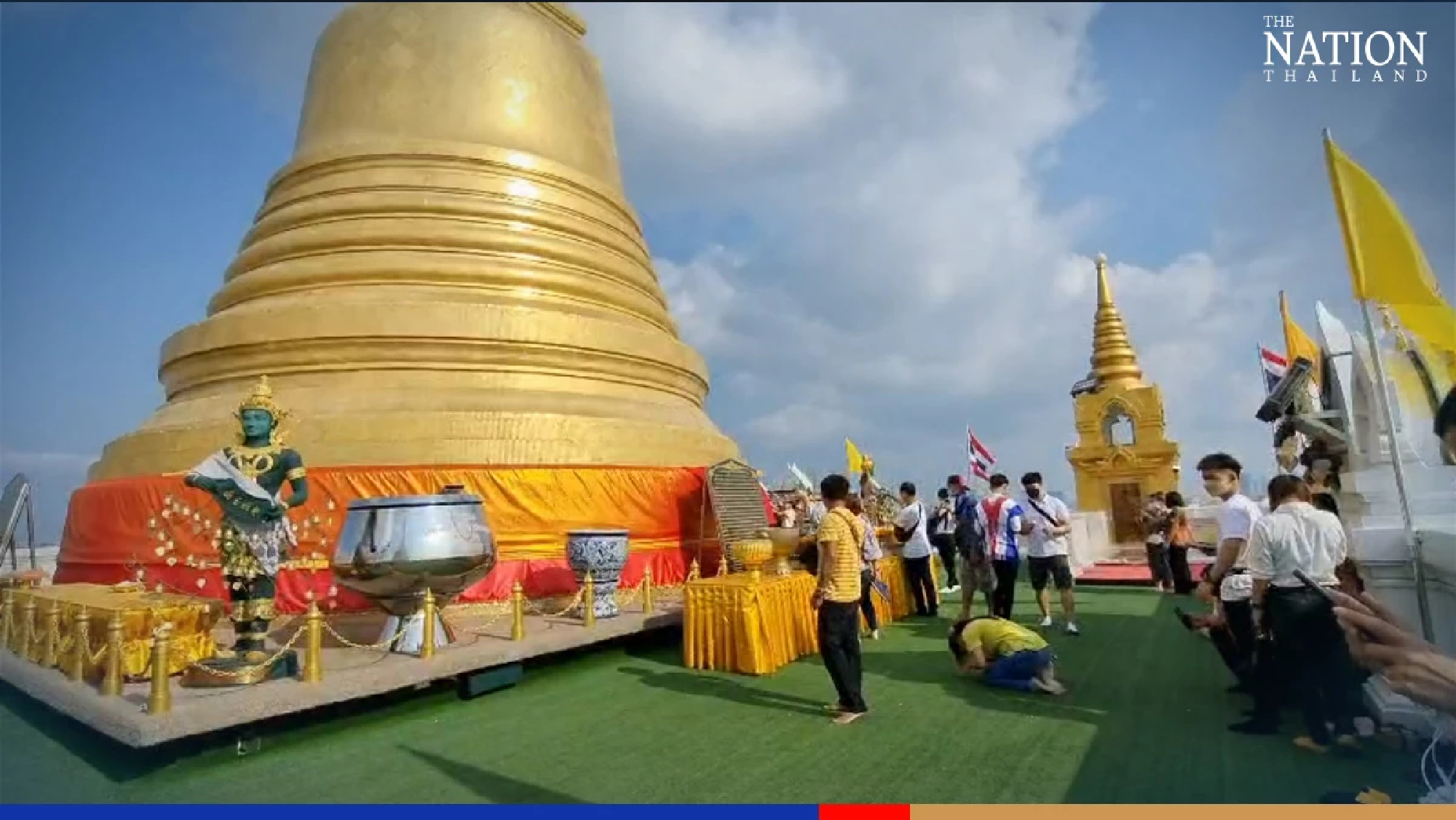
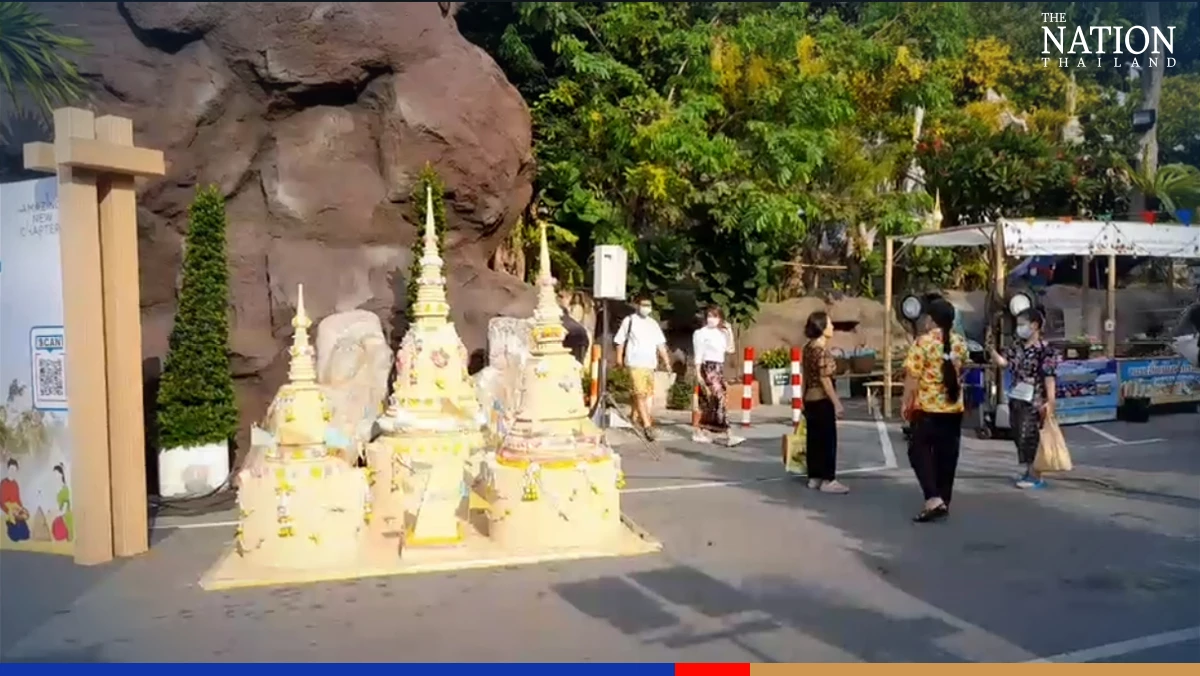
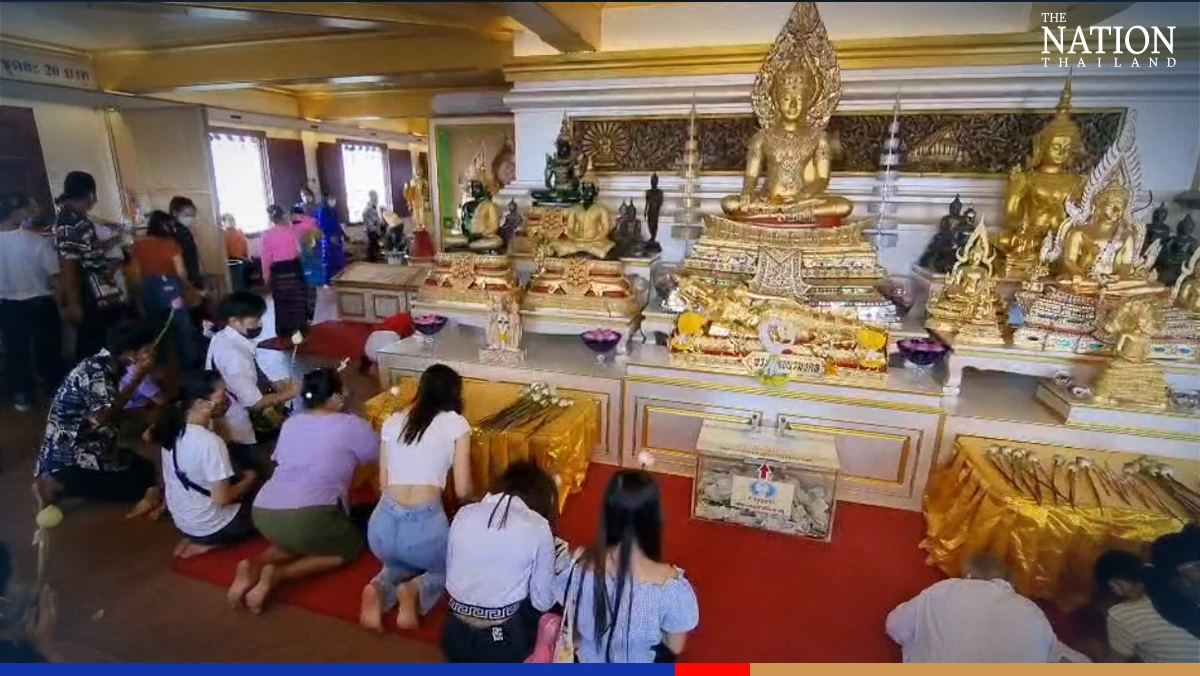
Many Thais and foreigners flocked to Wat Saket in Bangkok’s Pom Prap Sattru Phai district on Wednesday morning to make merit for Songkran.
Most came to pour water on Buddha statues and pay respect to Śarīra, a Buddha relic, on the Golden Mountain for prosperity and to carry on the Thai tradition.
Some of them wore traditional or colourful outfits to mark the Thai New Year Day.
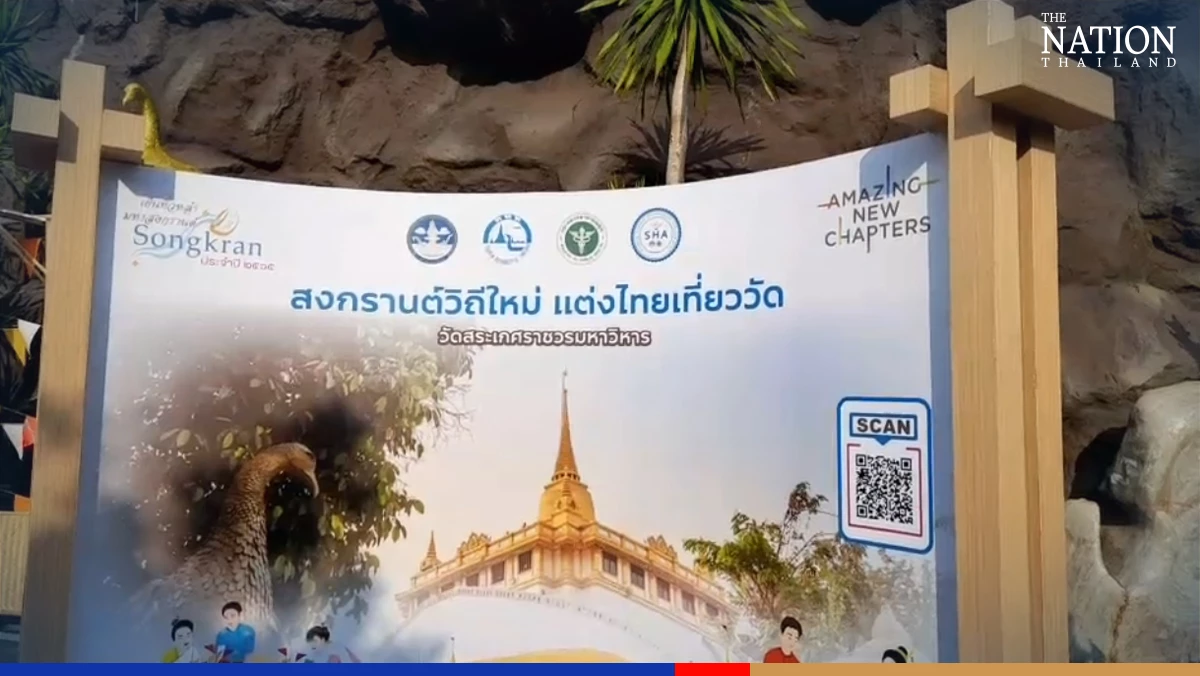
With cooperation from the Tourism Authority of Thailand, a number of traditional festivities have been organised at the temple, such as a Khon mask dance, Thai-style antiphon singing and a Thai puppet show, as well as demonstrations of authentic Thai dessert making and fruit carving.
Activities to offer alms to monks, make merit for ancestors and chant Buddhist prayers are scheduled for the last day of Songkran on Friday.
Meanwhile, the temple has implemented measures to contain the spread of Covid-19, such as setting up screening checkpoints and ensuring that visitors wear face masks and keep a social distance from others.
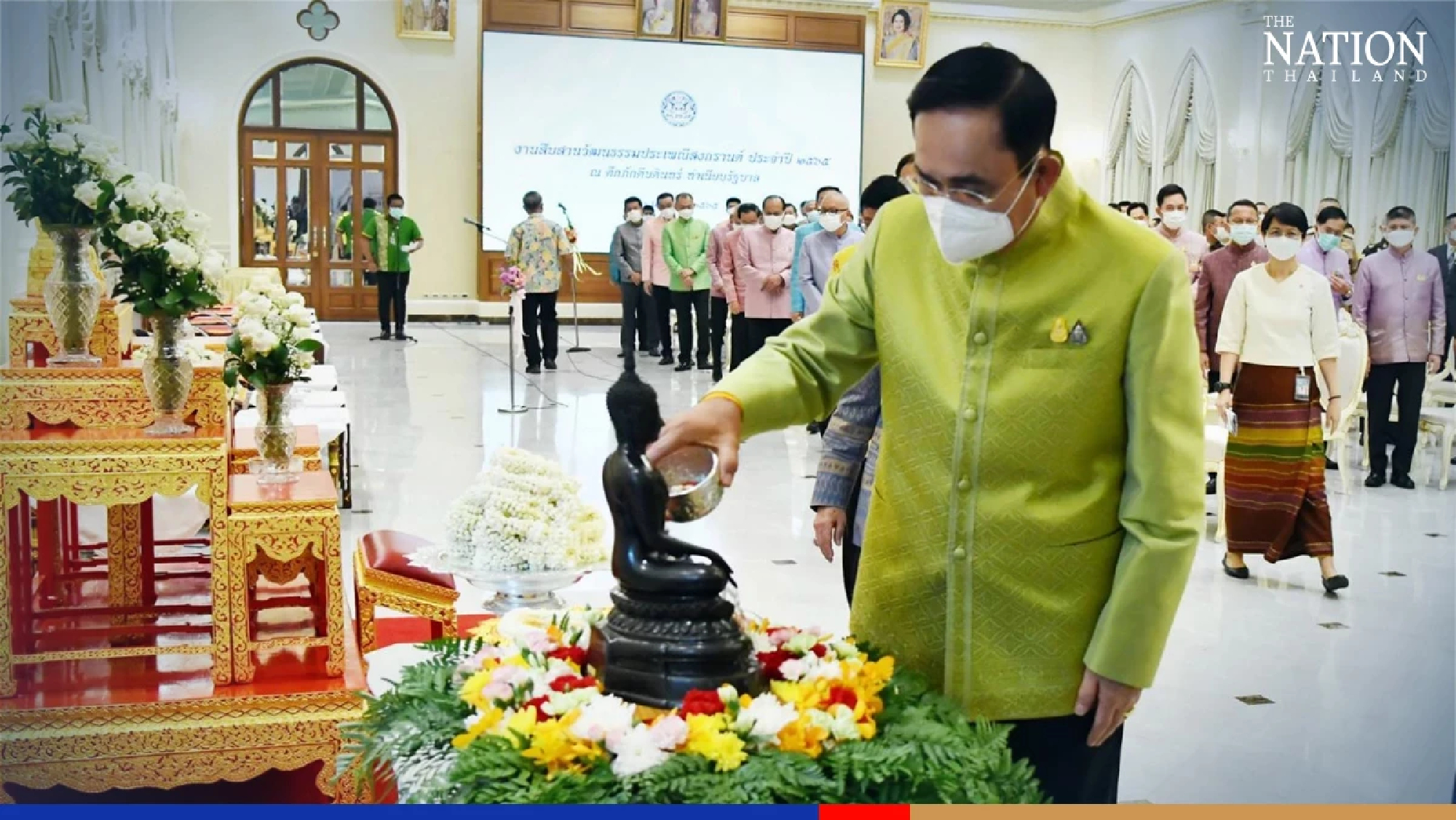
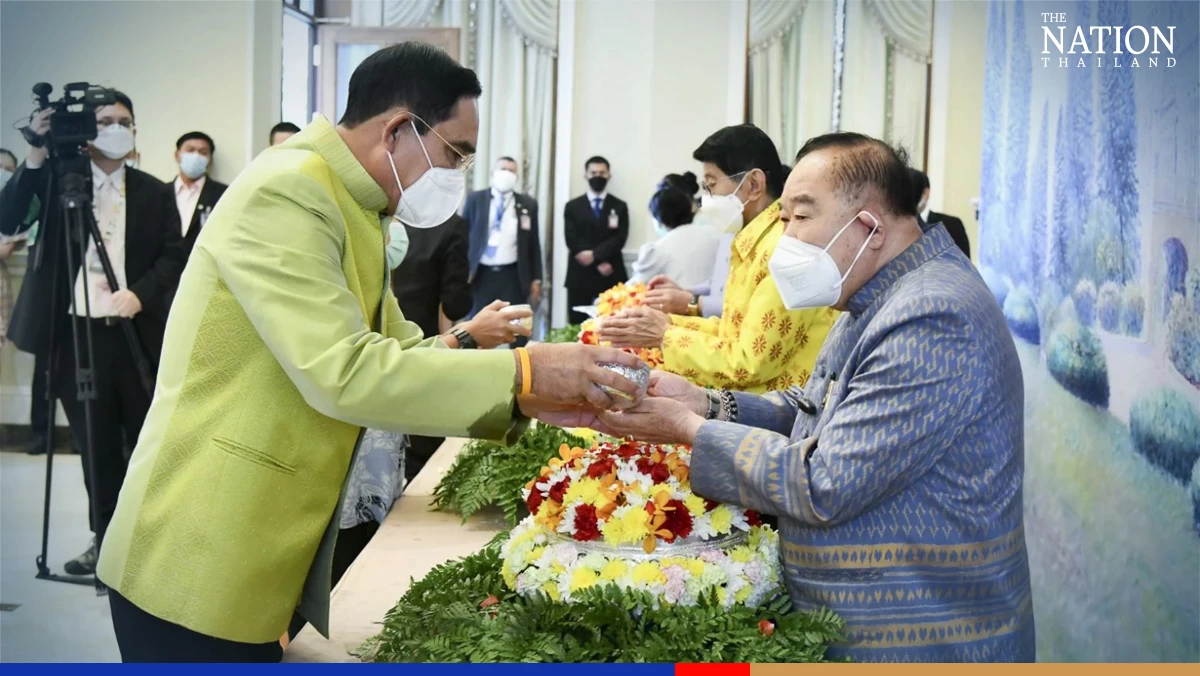
Prime Minister Prayut Chan-o-cha on Wednesday wished that all Thais would be filled with love and harmony during National Elderly Day and Family Day.
Thailand marks Elderly Day and Family Day every April 13 and 14, respectively, during Songkran.
Prayut noted that these two days reflect the role of the elderly as a main pillar to strengthen family relationships.
“This proves humility, which is a part of Thai tradition,” government spokesman Thanakorn Wangboonkongchana said, citing Prayut’s remarks.
The premier also asked Thai families to take care of members’ health and strictly adhere to Public Health Ministry recommendations so they can live happily amid the Covid-19 crisis.
Several embassies in Thailand, including the US, China, Sweden and Australia, posted video clips on their Facebook pages to mark the Songkran festival.
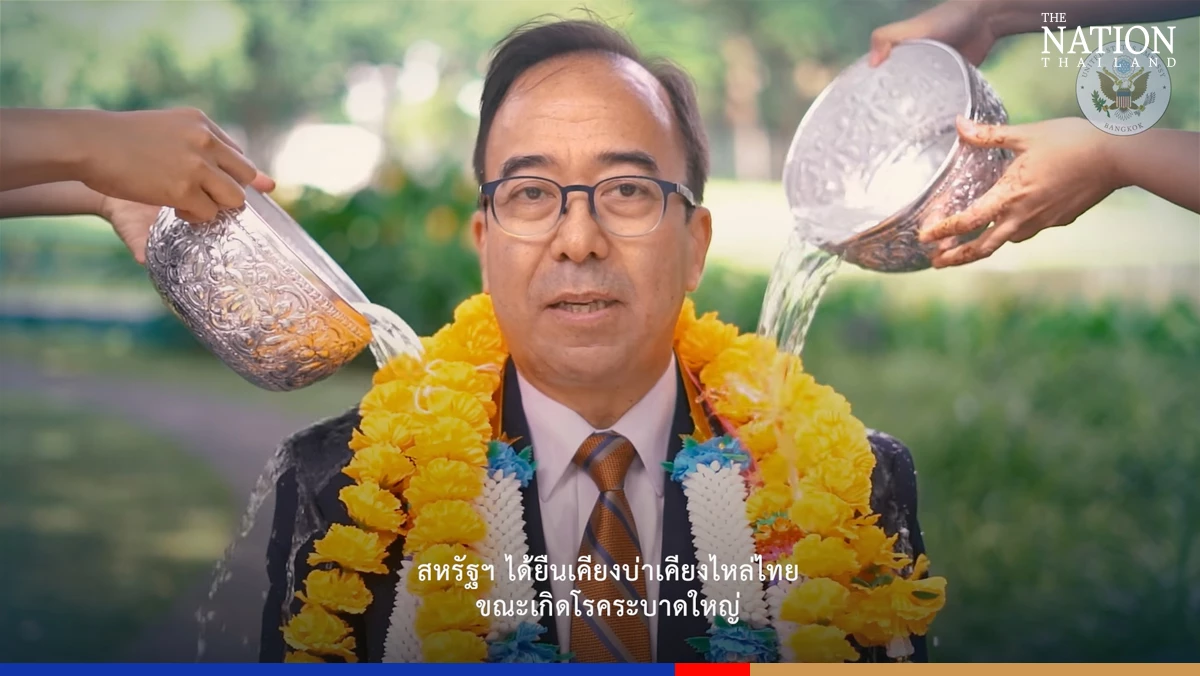
The US Embassy posted a video clip on April 8, with Charge d’Affaires Michael Heath saying that amid the conflict among countries and adaptation to a new normal, Songkran is still an opportunity for people to show their gratitude, love and good wishes.
He said the US and Thailand have cooperated on various issues for more than 200 years in areas such as trade, security, health and education, as friends, partners and allies. He vowed to make Asean secure, safe and sustainable.
“We, the US Embassy, wish all Thais a happy Songkran,” he said.
Michael Heath
During the speech, officials placed garlands around Heath’s neck, pouring water on his body before splashing him with a bucket of water at the end.
The Chinese Embassy posted a video clip on Monday showing Ambassador Han Zhiqiang and officials taking part in traditional activities, such as pouring water, handing out garlands and even performing a Thai dance.
Han wished that all Thais would be rich in happiness during Songkran and prosper.
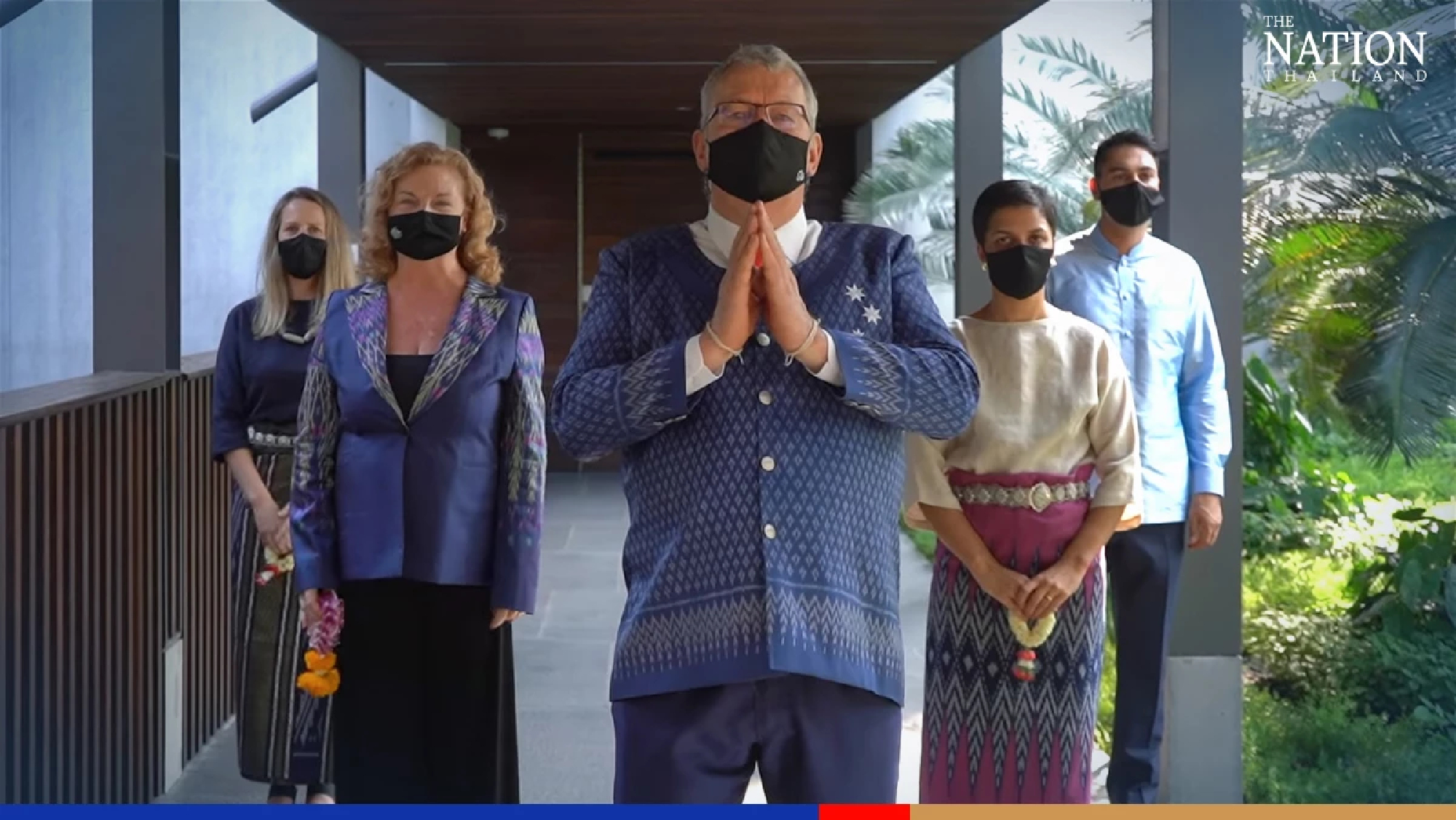
Meanwhile, a video clip by the Australian Embassy showed Ambassador Allan McKinnon and officials armed with water guns, looking like secret agents.
They then immediately changed into Thai-style outfits and performed various traditional activities.
McKinnon said this year is an important occasion for Thais and Australians as it is the 70th anniversary marking significant engagement and cooperation between Thailand and Australia.
He noted that the two nations had cooperated on various issues, such as politics, economy, society and culture.
The ambassador wished Thais a happy, healthy Songkran.
Jon Åström Gröndahl
The Embassy of Sweden also posted a video clip on Wednesday. Swedish Ambassador Jon Åström Gröndahl wished everyone an enjoyable Songkran with their loved ones. But he asked Thais to strictly observe Covid-19 health and safety measures.
He emphasised that Thais should be concerned about road safety as about 20,000 people lose their lives due to road accidents each year, similar to the number of Covid-19 deaths since the start of the pandemic.
“Please follow traffic rules: fasten your seatbelt, wear a helmet and refrain from drinking and driving,” he advised.
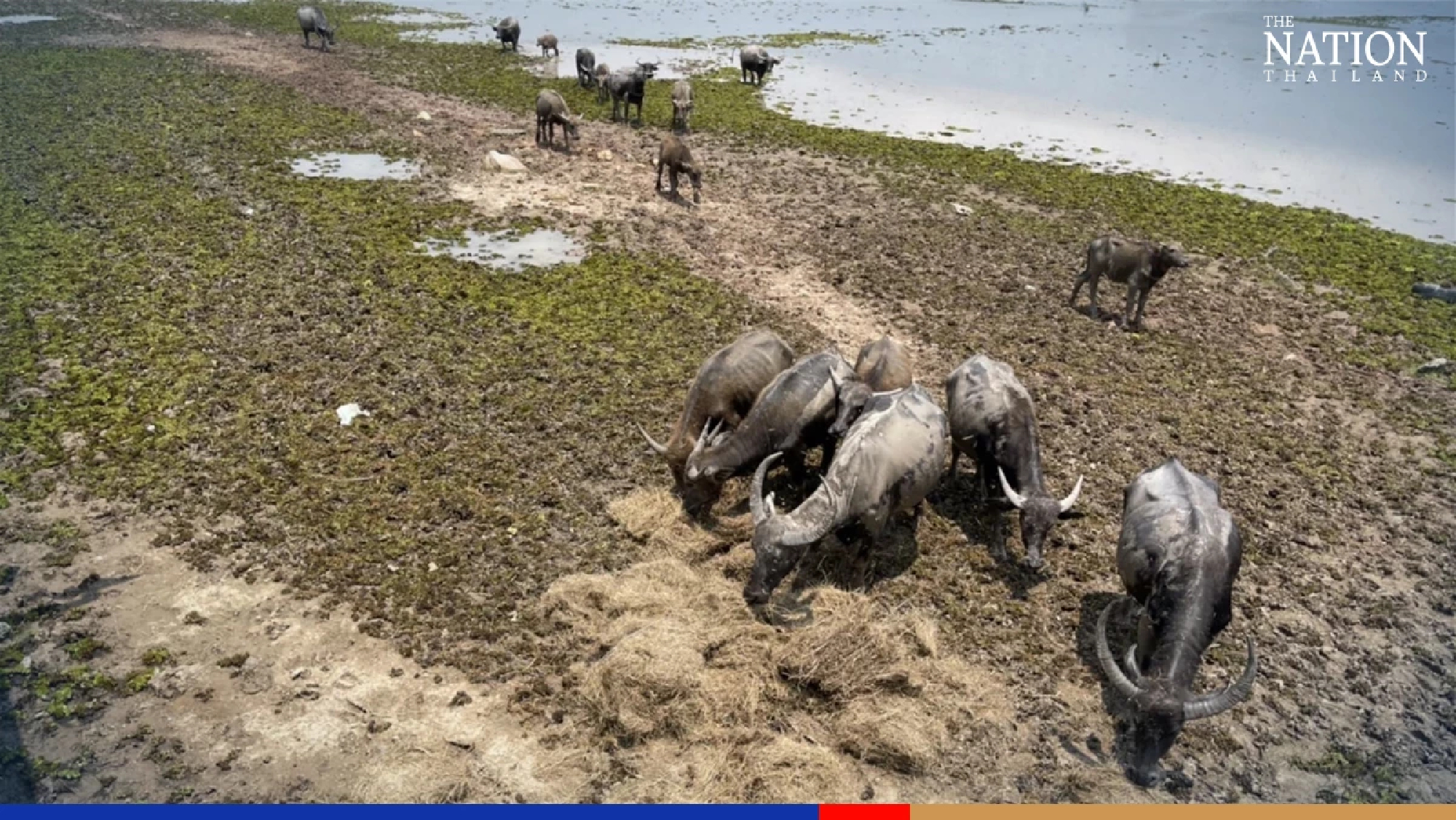
Agriculture and Cooperatives Minister Chalermchai Sreeon ordered the Department of Livestock Development to work with the Veterinary Research and Development Centre to help farmers in Phatthalung’s Thalay Noi subdistrict look after their buffalo suffering from food shortage.
“The minister is concerned about the farmers and their buffalo after news outlets published pictures of several carcasses of buffalo floating on the lake in the Thalay Noi no-hunting area earlier this month,” department director-general Sorawit Thaneeto said on Tuesday.
After an investigation, the department found that about 300 farmers are herding more than 4,000 buffalos in the no-hunting zone, which spans about 280,000 rai.
The area is normally flooded from October to November each year and after the water subsides the land is abundant in grass and small weeds, making it an excellent food source for cattle.
“However, this year the flood has yet to go down since October 2021, which has resulted in buffalos having no food and dying of famine, especially the newborns. In the past six months we have recorded 89 young deaths and two adult deaths,” he said.
To tackle the problem, the ministry has provided 12,000kg of hay that it received from His Majesty the King to farmers in Thalay Noi subdistrict, and has also sent in veterinarians to treat sick buffalos and check the health of herds to make sure they carry no communicable diseases.
Since the campaign started in March, farmers have brought in at least 17 sick buffalos for treatment, with the team of vets being able to save seven.
The vets have also provided more than 100 sets of laxatives and supplementary food to farmers, who suspect that their herds might have parasites.
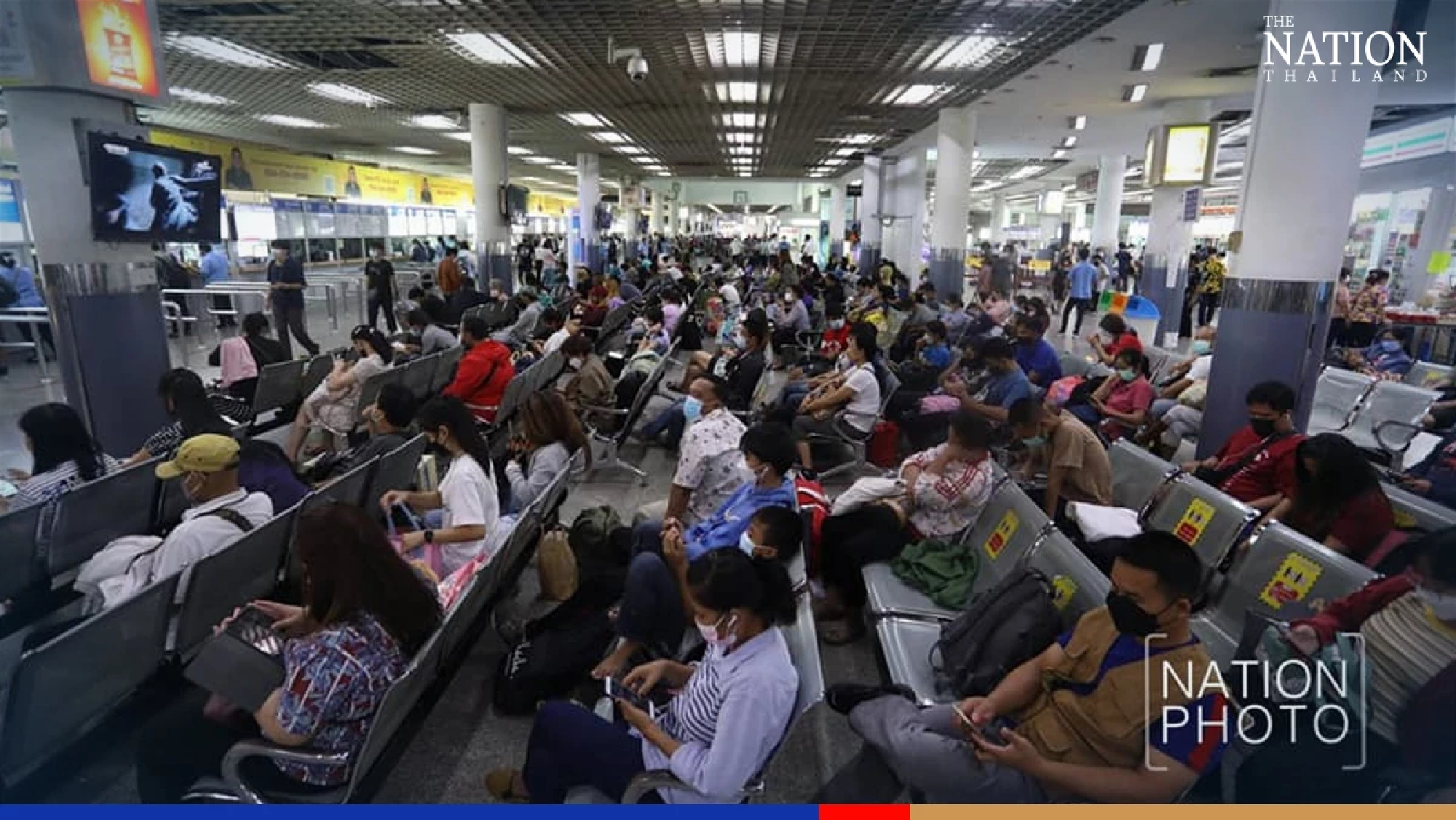
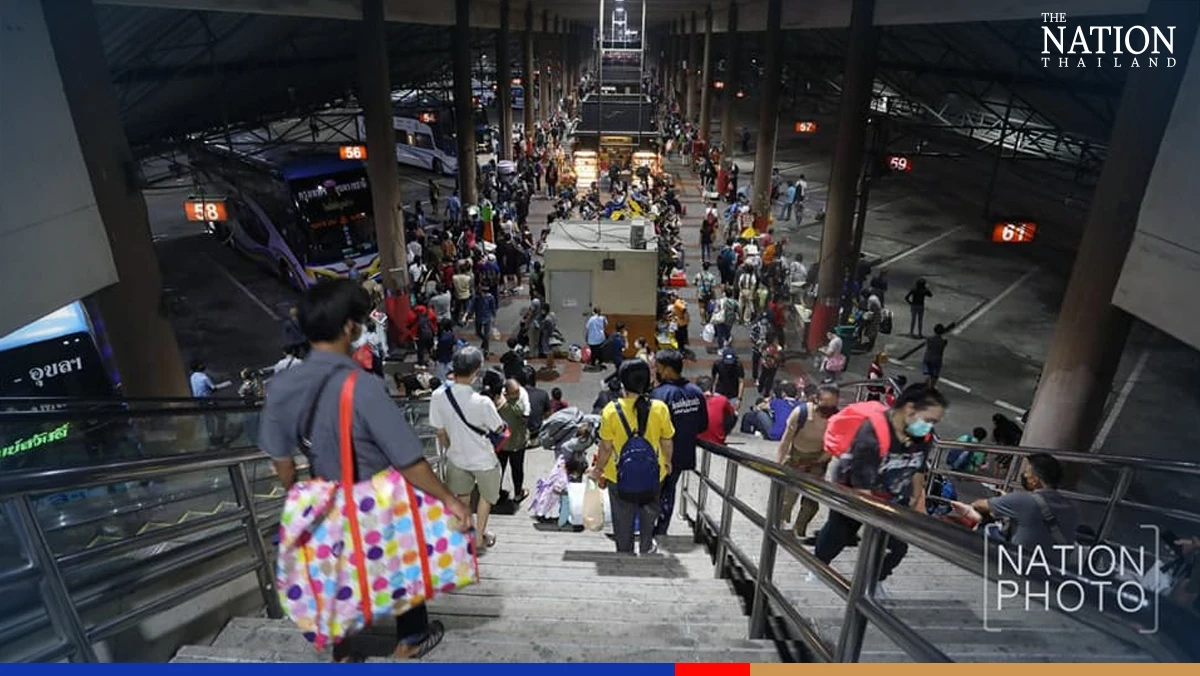
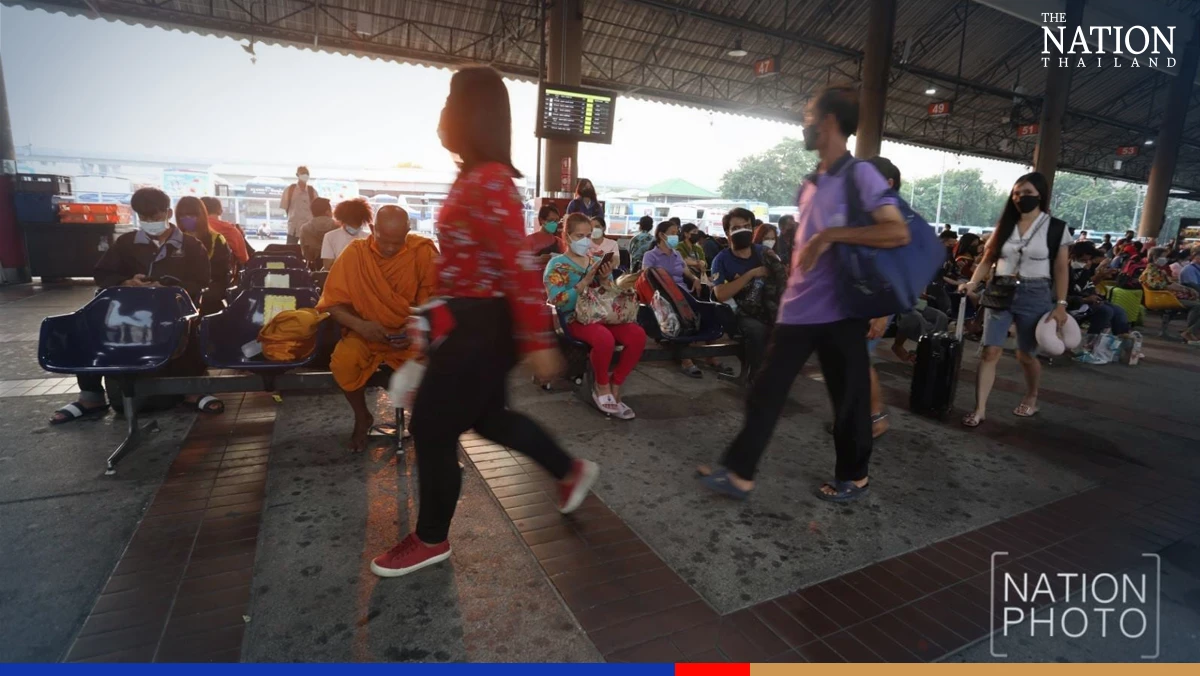
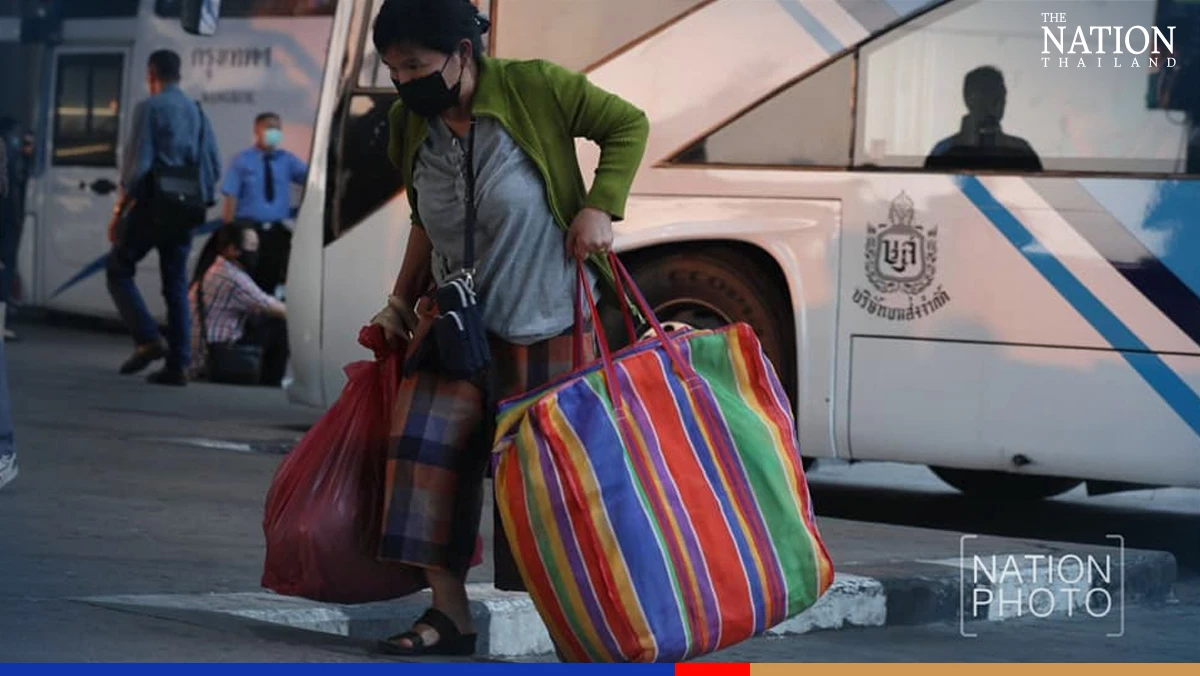
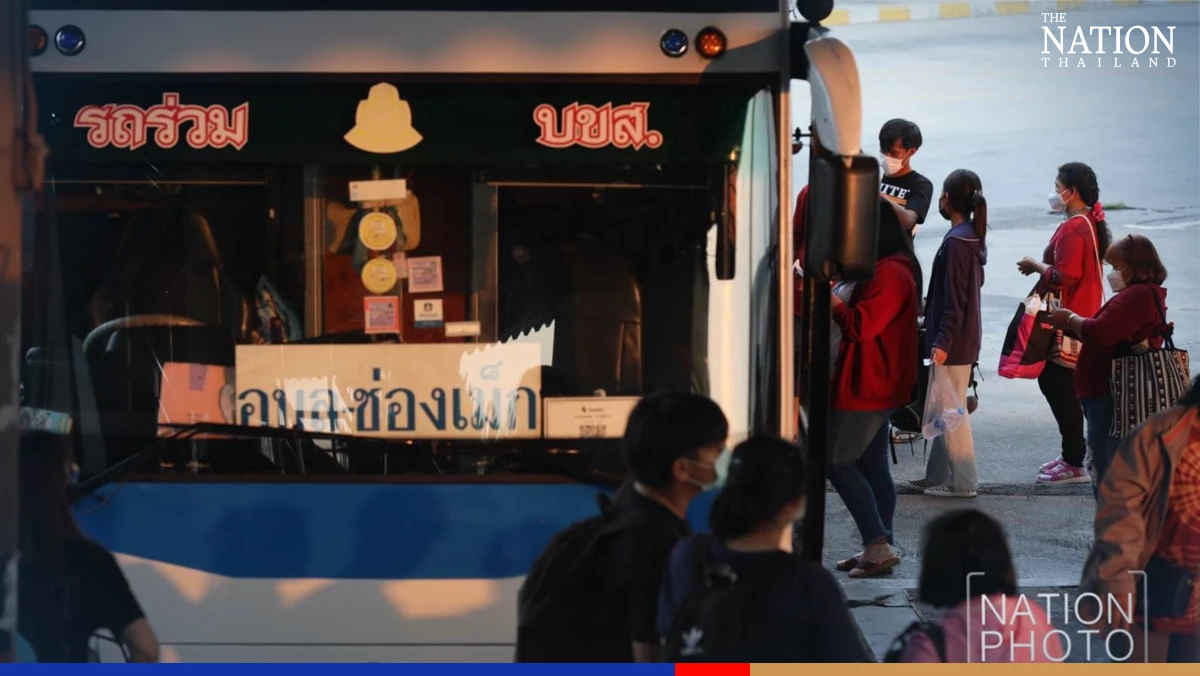
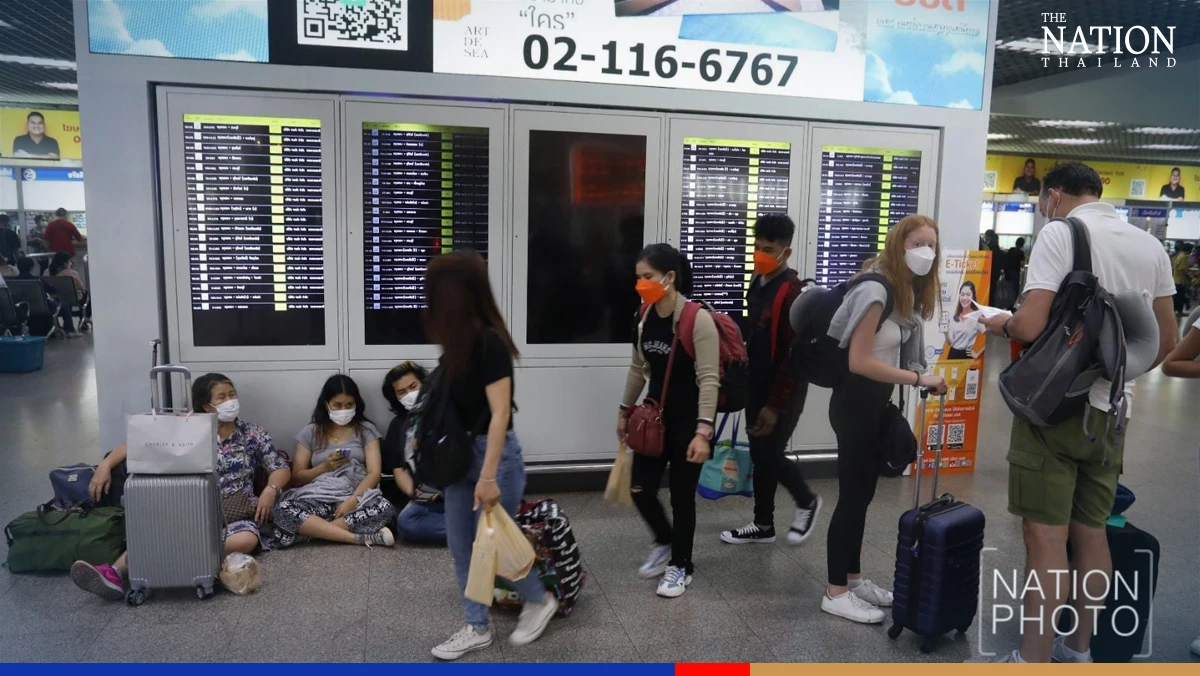
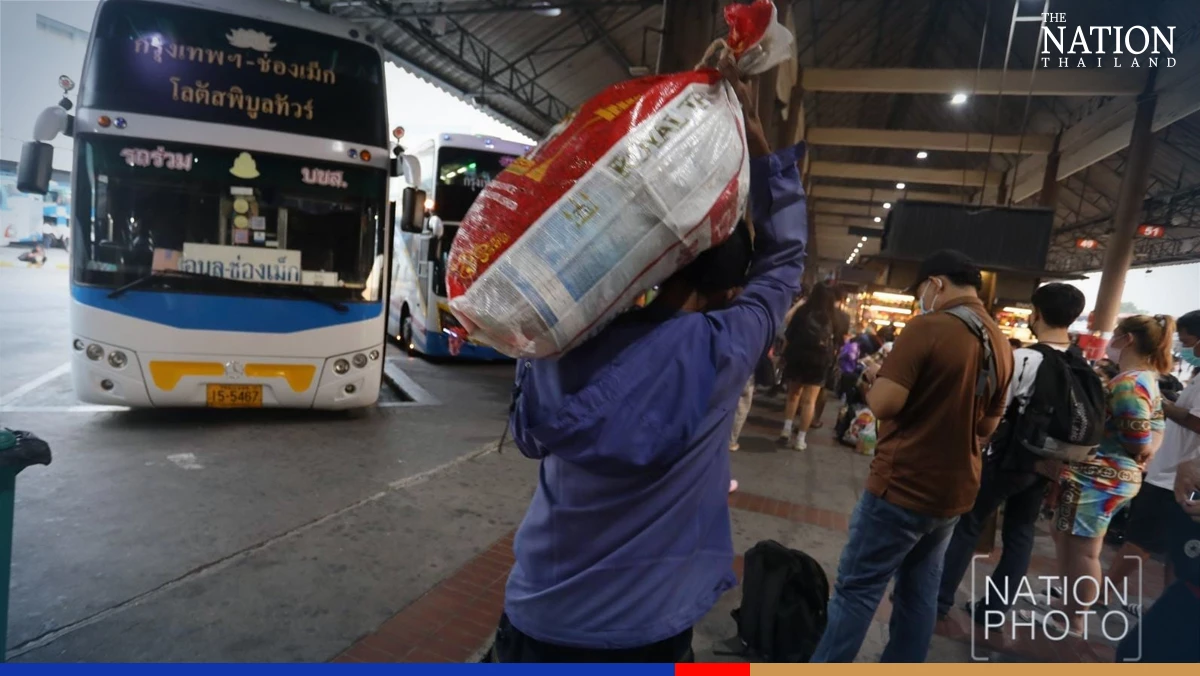
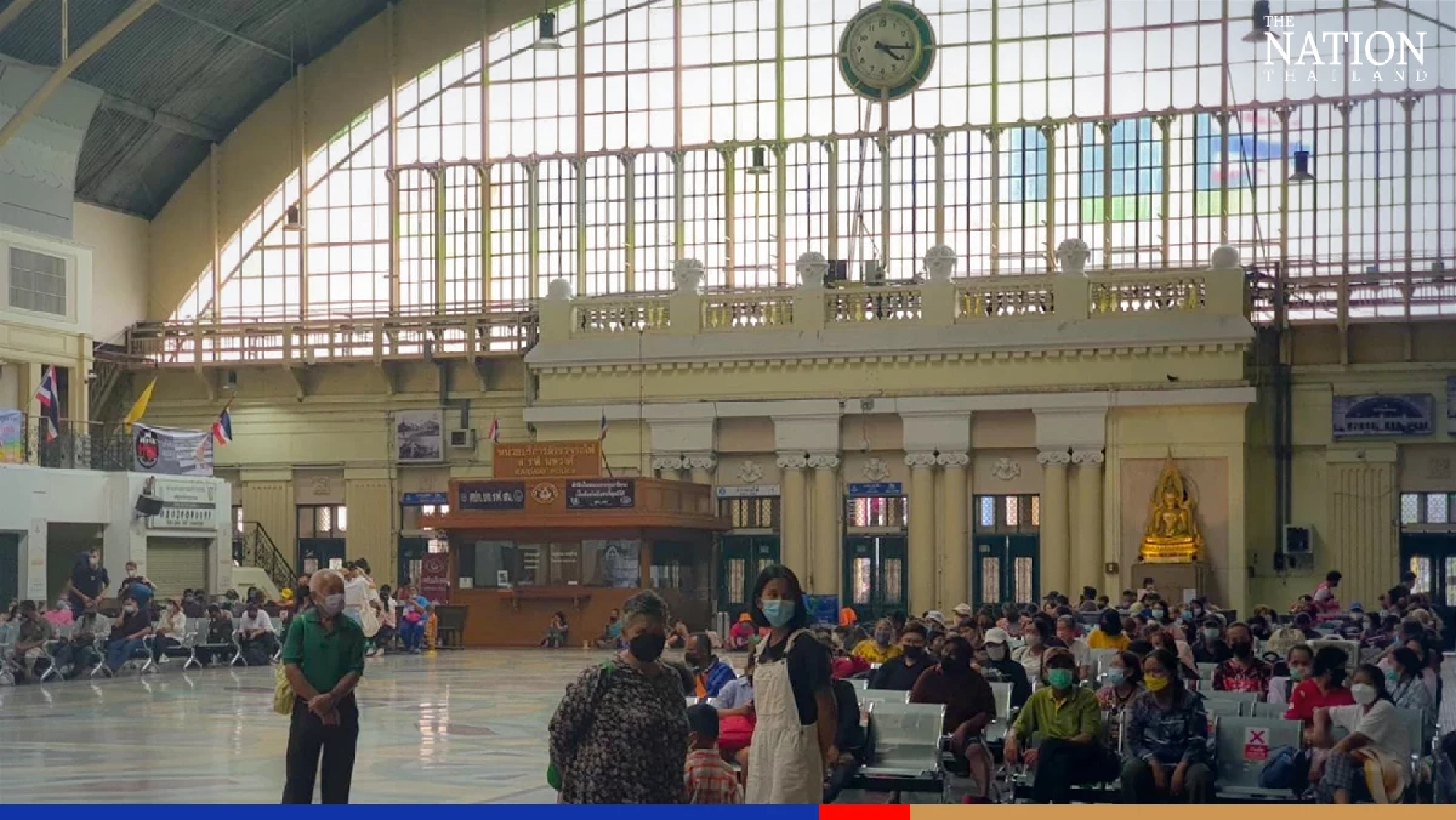
Thousands of passengers were seen waiting for buses at Bangkok Bus Terminal in Chatuchak district on Tuesday, hoping to get home in time for Thailand’s biggest holidays of the year.
This year the Centre for Covid-19 Situation Administration has allowed interprovincial travel and some cultural activities during Songkran under the strict Covid Free Setting standard. Face-powder daubing and foam parties are not allowed anywhere during the festival.
To prevent Covid-19 from spreading further, the Public Health Ministry had advised travellers to avoid visiting crowded venues for at least a week before using public transport during Songkran, and to take an ATK test within 72 hours of travel.
At family get togethers, people have been advised to maintain the social distancing practice and avoid hugging or kissing family members, especially those in risk groups like elders, infants and those with chronic health problems.
After returning from Songkran holidays, travellers have been instructed to remain in home isolation to monitor their symptoms for 5-7 days, and take an ATK test before going back to work.
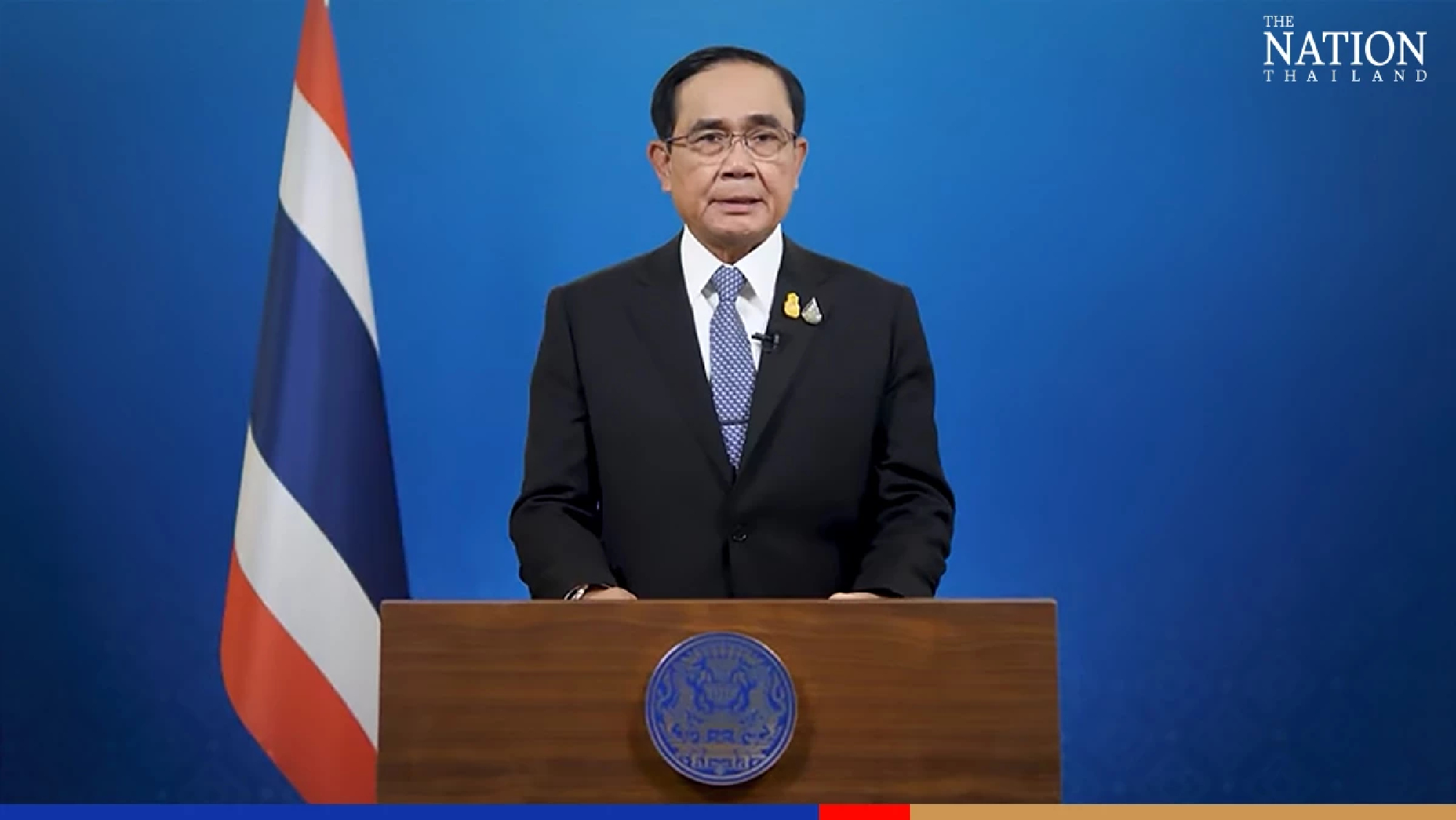
Prime Minister General Prayut Chan-o-cha on Tuesday told the International Strategic Dialogue on Noncommunicable Diseases (NCDs) and Sustainable Development Goals (SDGs) that Thailand has taken concrete action to achieve SDG 3.4 on “reducing by one third premature mortality from NCDs” and SDG 3.8 on “achieving universal health coverage” by 2030.
The event was co-hosted by the World Health Organisation, together with Ghana and Norway. The dialogue was held physically in Accra, Ghana, as well as virtually on Tuesday. Prayut gave his speech at 7.27pm (Thailand time), or 12.27 hours local time, said government spokesman Thanakorn Wangboonkongchana on Tuesday.
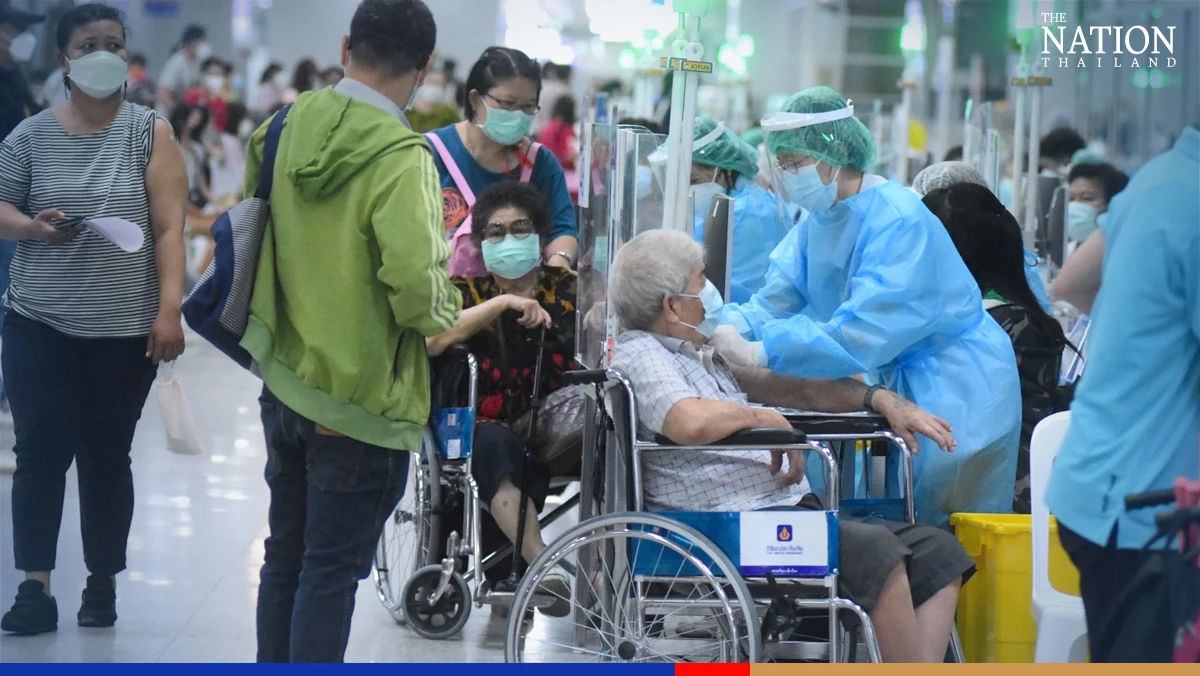
“PM Prayut told the meeting that in 2021 Thailand successfully expanded its universal healthcare coverage [UHC] to cover 99.6 per cent of the population, which is the highest among Southeast Asian nations,” said Thanakorn.
In his speech, Prayut said: “The government has realised that tackling NCDs still remains one of Thailand’s key challenges, and therefore declared prevention and control of NCDs as its national agenda. All relevant stakeholders are encouraged to take part in developing national strategies and action plans on NCDs. Its progress reports must be submitted to the Cabinet for monitoring and review. This also helps mobilise resources to invest in health promotion as a part NCD prevention.”
Prayut also said the Covid-19 pandemic had posed limitations in and challenges to the delivery and provision of NCD-related services.
“I believe we need to integrate prevention and treatment of NCDs into the public health emergency plan at national, regional and global levels for better preparedness and response to future public health crises,” he advised.
“Furthermore, a comprehensive and inclusive UHC system contributes significantly to better management and greater access to health services including NCDs. Thailand stands ready to share our experiences and enhance collaboration with other countries in this area,” said Prayut.
“Thailand wishes to reaffirm our commitment to the Political Declaration of the 3rd High-Level Meeting of the UNGA on the Prevention and Control of NCDs as we continue to move towards the achievement of SDG 3.4 and other health-related goals for good health and well-being of our people,” he added.
The Rail Transport Department reported that 656,325 people travelled by rail on Monday, the day Thais started heading back to their hometowns for the April 13-15 Songkran holiday.
Most – 613,517 – were commuters of electric trains in Bangkok and surrounding provinces, while the remaining 42,808 used interprovincial State Railway of Thailand trains.
The BTS Green and Gold lines recorded the most passengers, at 377,538, followed by the MRT Blue Line – 172,987 – and the Airport Rail Link – 31,657. As for interprovincial routes, Southern trains witnessed the most passengers, at 13,216 people, followed by the Northeastern route – 11,375 – and the Northern route – 9,364.
The department expected Tuesday to see the most passengers using rail transport, and has prepared for increasing commuters by adding extra trains on the following routes: Bangkok-Chiang Mai, Bangkok-Ubon Ratchathani, Ubon Ratchathani-Bangkok and Bangkok-Sila At (Uttaradit).
The department also reported one rail accident on Monday, which resulted in minor damage to the normal train running from Bangkok to Phitsanulok, with no injuries.
On Tuesday, however, the Bangkok-Ubon Ratchathani express train hit a motorcycle at an intersection with no barriers before Ayutthaya station at around 11am, resulting in the deaths of the motorcycle driver and the pillion rider.
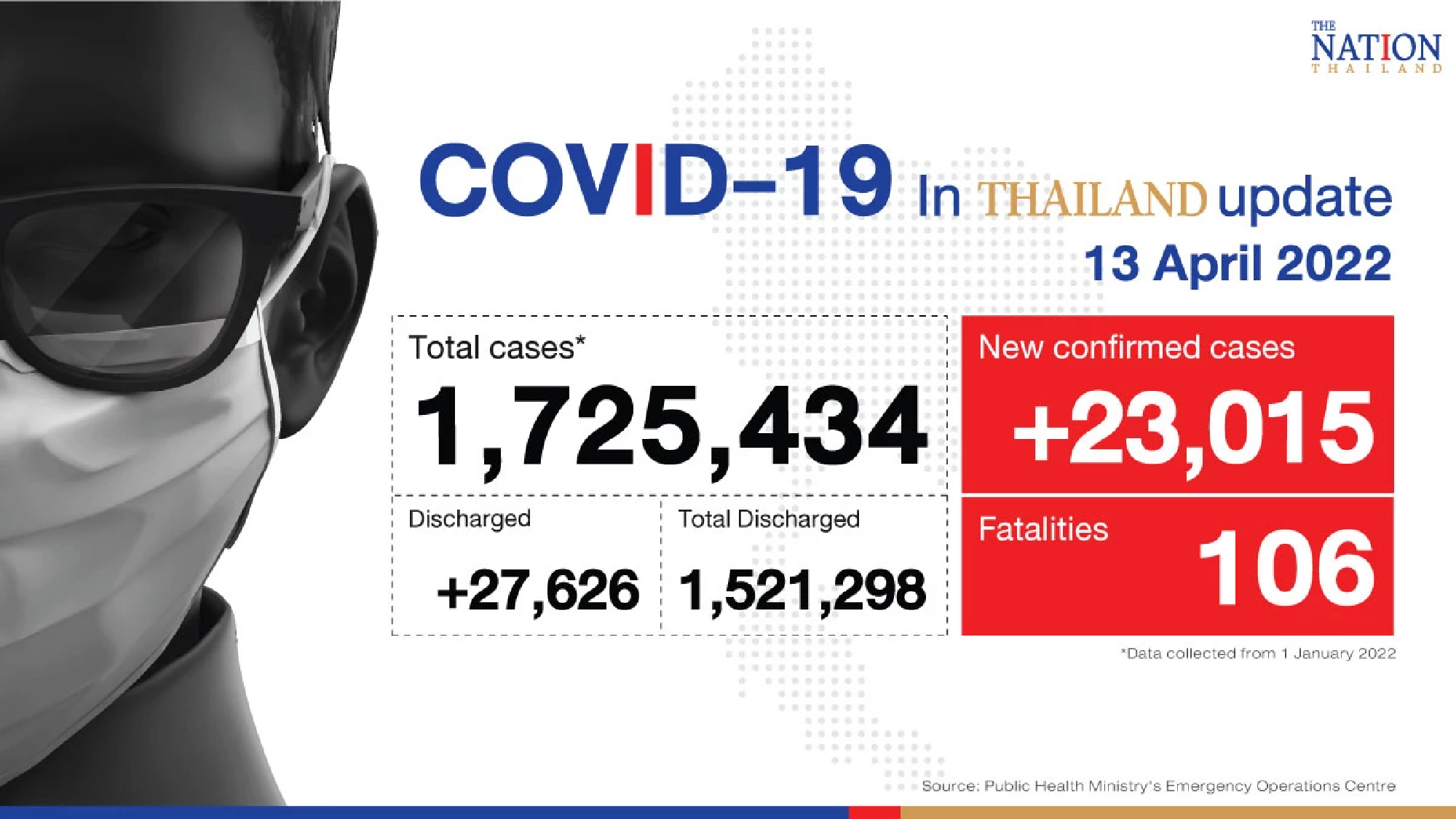
Ministry of Public Health reported on Wednesday (April 13) morning that in the past 24 hours there are 23,015 new patients who tested positive for Covid-19, 95 of whom have arrived in Thailand from abroad.
Death toll increased by 106, while 27,626 patients were cured and allowed to leave hospitals.
Cumulative cases in the country since January 1, 2022 are at 1,725,434.
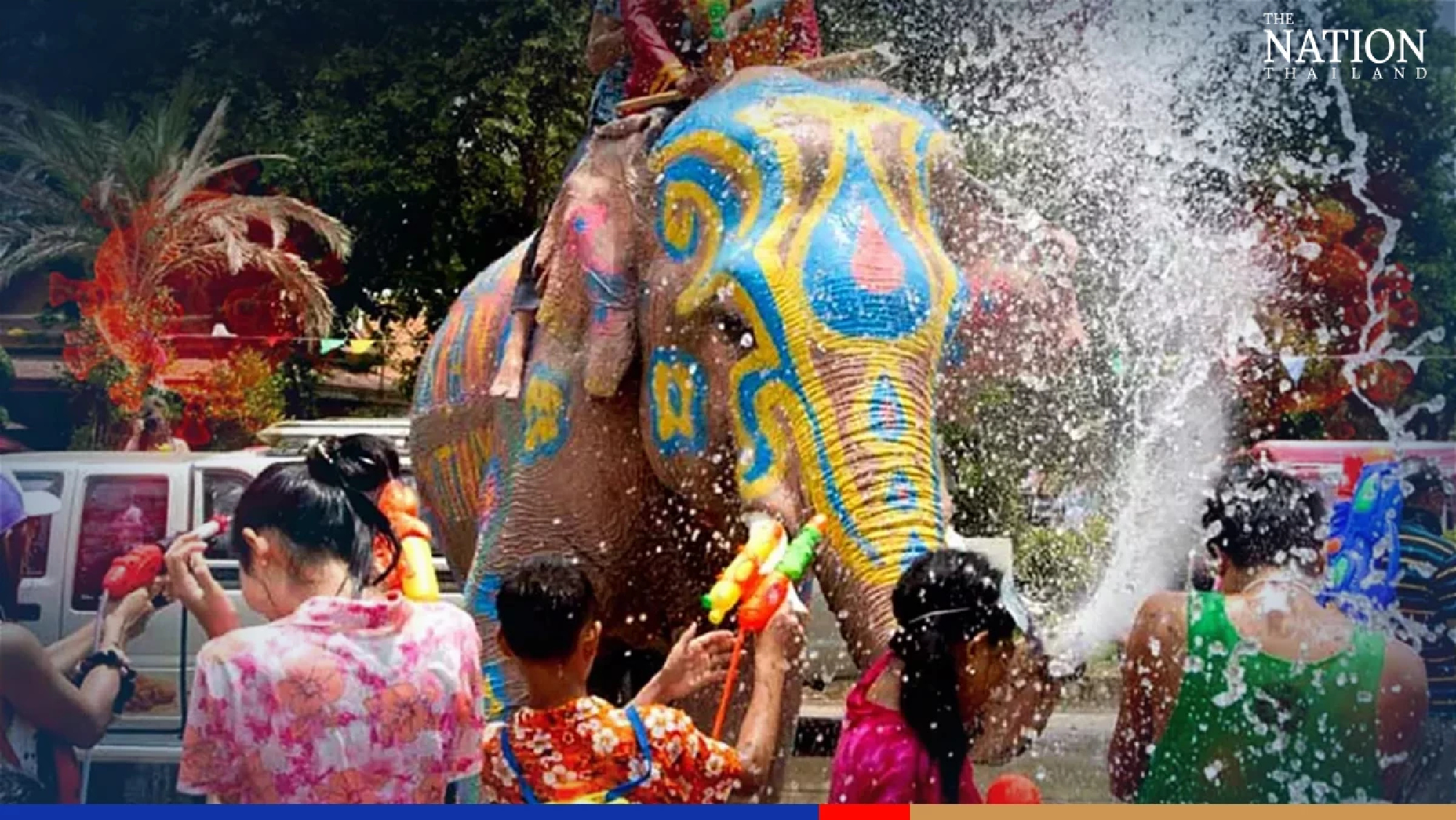
Meta is inviting Thais to celebrate Songkran by splashing water virtually through its two platforms – Facebook and Instagram.
Prae Dumrongmongcolgul, country director of Facebook Thailand, said people can use the augmented reality water-splashing effect on their Reels and Stories. The effect, showing water being splashed over photos and video clips, is called Songkran Together.
Prae said photos and videos can be shared on both Facebook and Instagram under the hashtag #SongkranTogether.
The effect was created with support from popular artists, including IWANNABANGKOK and Bangkok Naughty Boo group.
Prae said the aim is to encourage Thais to celebrate Songkran with their families and friends from a safe distance.
He said some 3.2 million Thai social-media users have created over 6.1 million posts related to Songkran over the past month. Most of these posts refer to food, shopping and travel during the holiday period.
Most Thais are worried about the new Covid-19 strain, an opinion poll conducted by the Department of Health revealed on Tuesday.
Dr Suwanchai Wttanayingcharoenchai, the department’s director-general, said more than 75 per cent of the population is worried about the new variant because they are uncertain about its severity and contagiousness, as well as its impact on work and earnings.
The highly transmissible Omicron variant has split into two sub-lineages, BA.1 and BA.2, and more are being gradually uncovered.
He said even though many people have already received their Covid jabs, the vaccine does not provide protection from the virus. Also, he said, sometimes antigen test kits also give fake negative results.
The doctor added that he expects the number of Covid-19 infections to rise as high as 100,000 cases daily after the Songkran break.
“Hence, every sector should make an effort to contain the virus and focus on reducing the number of deaths to no more than 200 to 250 people per day. They should also help the public health system to provide treatment to patients who develop severe symptoms,” he said.
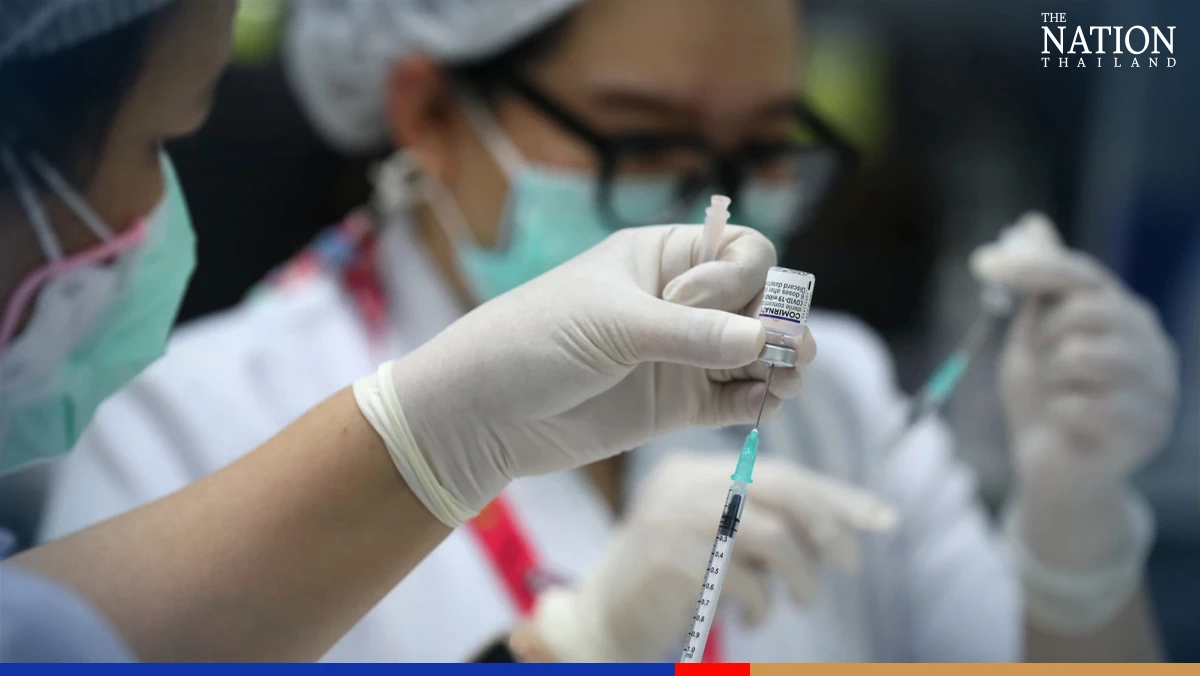
He also advised people to receive at least three jabs as well as strictly adhere to prevention measures including wearing two facemasks (cloth and surgical) and cleaning their homes or venues frequently.
 Michael Heath
 Jon Åström Gröndahl