A security guard wanted on suspicion of raping a resident at a luxury Bangkok condominium surrendered to police on Thursday.
Montree Yai-Kratok, 41, gave himself in to Sa Kaew police at 3.30pm after going hungry while on the run, according to officers.
The suspect has been detained after a 36-year-old woman accused him of forcibly entering her Bang Khae apartment on Tuesday night before handcuffing and raping her.
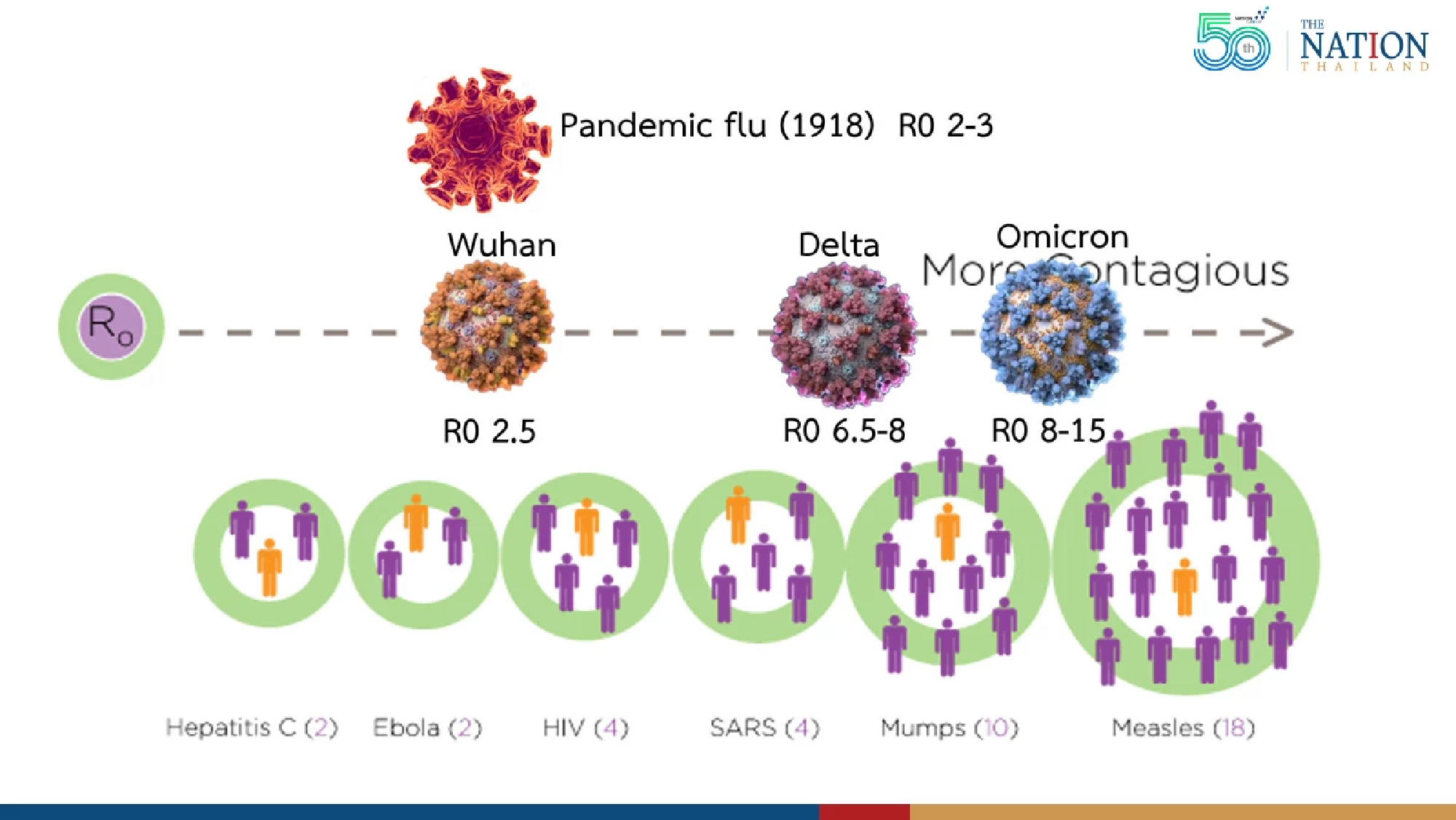
The Covid-19 Omicron variant is now the second-most contagious known disease in the world behind only measles, according to Ramathibodi Hospital’s Centre for Medical Genomics.
In a Facebook post on Wednesday, the centre said the rate at which a disease can be transmitted from one person to another can be calculated using the R-naught value, or R0.
Currently the virus for measles has the highest average R-naught value in the world at around 15-18, while the Omicron variant has a R0 value of 8-15, putting it in second place.
The centre explained that R-naught 8-15 means a patient with Omicron is likely to spread it to 8-15 other people who have never been exposed to it or been vaccinated against it.
The third most contagious disease in the world in mumps, with a R0 value of 10.
The Delta variant is in fourth place with a R0 value of 6.5-8, while the first Covid-19 variant – found in Wuhan, China – has a R-naught value of 2.5.
The Spanish flu in 1918 has a R0 value of only 2-3.
“However, Omicron’s R-naught 8-15 rating is an estimated value and is unlikely to find such an instance in Thailand, where around 70 per cent of the population is vaccinated, while some others have already been exposed to it by nature,” the medical centre wrote.
“This means the chance that Omicron will spread through the entire population of Thailand in a short time is very low.”
The centre urged everyone to get vaccinated as soon as they can, as this would greatly help reduce the chance of developing severe symptoms and hospitalisation. It will also reduce the spread of the virus and possibly any future mutation.
“The World Health Organisation has said it expects the Covid-19 pandemic to end in 2022, provided that every country in the world vaccinates at least 70 per cent of its population,” the centre pointed out.
The Tourism and Sports Ministry will ask the Centre for Covid-19 Situation Administration (CCSA) on Friday to extend the Phuket Sandbox programme.
The extension will cover most main islands:
Koh Samui, Koh Pha-ngan, Koh Tao (Surat Thani)
Koh Lan (Chonburi)
Koh Samet (Rayong)
Koh Chang, Koh Kud (Trat)
Koh Yao Noi, Koh Yao Yai (Phang-nga)
Koh Phi Phi (Krabi).
Department of Disease Control director-general Opas Karnkawinpong said tourists arriving in Thailand need to undergo:
10-day quarantine for both vaccinated and unvaccinated.
First RT-PCR test on arrival for those fully vaccinated and allowed to enter under the sandbox programme. If the result is negative, they can spend 7 days in Phuket. They then need a second RT-PCR test. If this, too, is negative, they can travel outside Phuket.
If any provinces are interested in implementing the sandbox programme, they must prepare local people, hotels and laboratories for the purpose and handle effective communication among Thais and foreigners.
Conditions to enter under the sandbox scheme:
Foreign tourists must have insurance with coverage of no less than US$50,000
Visitors must register for the Thailand Pass before arrival and use the MorChana application once they enter the kingdom.
They must show a negative RT-PCR test result taken not longer than 72 hours before travelling, except for children under six years old who travel with adults that show proof they have tested negative.
Visitors must furnish proof/documentation of a SHA+ or ASQ booking during their seven-day stay under the sandbox.
For visitors who had registered to enter Phuket from December 22 and were granted permission to arrive from December 24, they will be required to show the following documents:
Invoice of a hotel/hospitel booking for at least 7 days and a negative RT-PCR test. The hotels or hospitels must be listed by authorities.
A second RT-PCR test after the fifth or sixth day of arrival or if a visitor shows symptoms of a respiratory infection.
The Covid-19 infection rate in Phuket
From December 1 to 31, there were 290,617 arrivals, with 1,300 infected – an infection rate of 0.45 per cent.
From January 1 to 4, there were 32,627 arrivals, with 605 infected, showing a 1.85 per cent rise in infections.
The Public Health Ministry raised the Covid-19 alert level to 4 on Thursday as daily infections surged.
Ministry permanent secretary Dr Kiattiphum Wongrajit said venues at risk of infection would be closed, while people would have to refrain from travelling and gathering in order to contain the spread of the virus.
He explained that the number of Covid-19 infections had risen as people visited poor air-ventilated restaurants, held parties and religious events and travelled, triggering the virus surge.
“Hence, we ask people who have travelled to other provinces to monitor their health for at least 14 days. It would be great if they can work from home,” Kiattiphum advised.
“During the first week, people should take Covid-19 tests using antigen test kits to help the ministry on disease control.”
He added that provincial agencies should enforce the laws to ensure that restaurants and other venues strictly operate under safety regulations and in a Covid-19 free setting.
The Public Health Ministry reported on Thursday morning that in the past 24 hours there were 5,775 new patients, 77 of whom have been found in prisons, while the death toll increased by 11.
Some 2,673 patients have been cured and allowed to leave hospital.
The number of new Covid-19 infections has been on the rise after the New Year break, but the death toll has not significantly increased, in line with current scientific data showing the Omicron variant is not as severe as Delta despite being more transmissible, Public Health Minister Anutin Charnvirakul said on Wednesday.
The past 24 hours have seen 5,775 new patients, while 11 people have died, the Public Health Ministry reported on Thursday morning.
“The ministry will remain vigilant over the Omicron situation,” Anutin vowed.
“The Department of Disease Control is considering bringing back some preventive measures and postponing the easing of certain restrictions,” he said.
Anutin said that before the New Year holidays, the government allowed pubs and bars to reopen as restaurants so they could serve customers during the holidays, but these establishments ended up operating the same way as they used to [such as not implementing the social distancing measure and not strictly abiding by the rule on the number of hours allowed for serving alcohol].
“These bars/restaurants could be the source of new cluster cases, and the government has ordered responsible agencies to monitor and regulate them closely,” he said.
Anutin also said Thailand had recorded the highest infections of around 28,000 patients per day in 2021, which was a hard time for Thais.
“However, the current situation is much better, as about 70 per cent of Thais have been vaccinated, while around 8 million to 9 million people have already received booster shots,” he said, adding: “I believe the Covid-19 situation this year will be significantly improved than the previous year.”
Ministry of Public Health reported on Thursday (January 6) morning that in the past 24 hours there are 5,775 new patients who tested positive for Covid-19, 77 of whom have been found in prisons.
Death toll increased by 11, while 2,673 patients were cured and allowed to leave hospitals.
The country’s total caseload from Covid-19 stands at 2,245,250 – 2,185,502 of whom have recovered, 37,968 are still in hospitals and 21,780 have died.
According to Worldometer, confirmed cases globally had risen to 298.29 million on Thursday, 256.82 million of whom have recovered, 35.99 million are active cases (91,988 in severe condition) and 5.48 million have died (up by 7,214).
Thailand ranks 25th in the global list of most cases, which is topped by the US with 58.81 million, followed by India with 35.11 million, Brazil with 22.35 million, the UK with 13.84 million and France with 10.92 million.
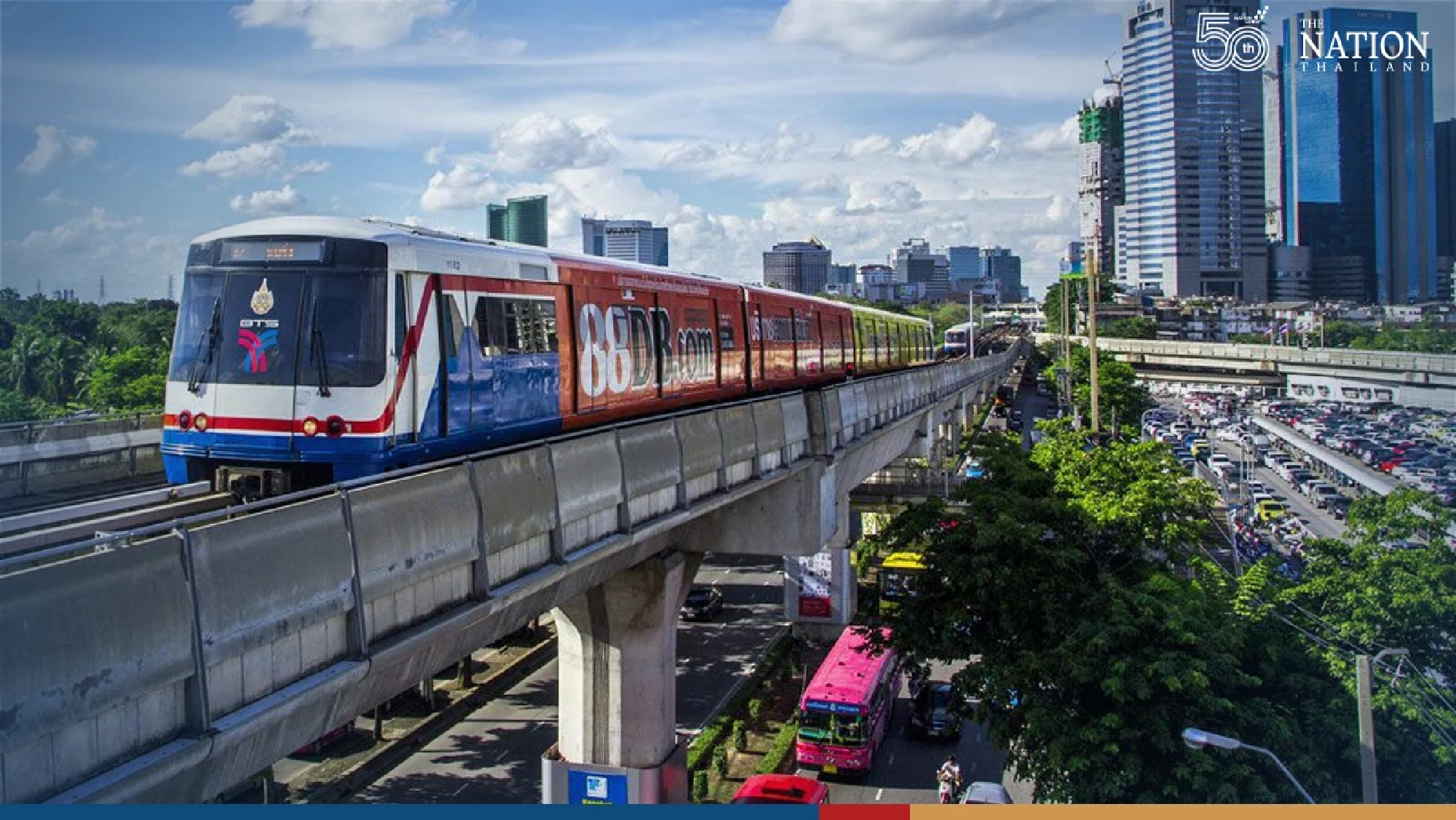
Children aged not over 14 years and under 140 cm. height can ride BTS and MRT trains for free on January 8, which is National Children’s Day.
Thailand’s Children Day falls on the second Saturday of January.
“Eligible children can contact officials at ticket booths of any MRT station to get a free ride coupon, which is usable throughout service hours of MRT Blue Line and Purple Line,” said MRT train operator Mass Rapid Transit Authority of Thailand (MRTA).
Meanwhile, Bangkok Mass Transit System (BTS) said it will offer free rides to children under 14 years old and 140 cm. who travel with their parents and get on and off the train at the same stations from 6am to midnight of January 8.
Eligible children can get a free ticket at any BTS station. The ticket is applicable at all stations of BTS Sukhumvit, Silom and Gold lines, as well as for BRT bus that connects with the Silom Line.
Both train operators also urged commuters to strictly follow Covid-19 preventive measures, including wearing facemask at all times and use alcohol hand sanitizer provided at all stations.
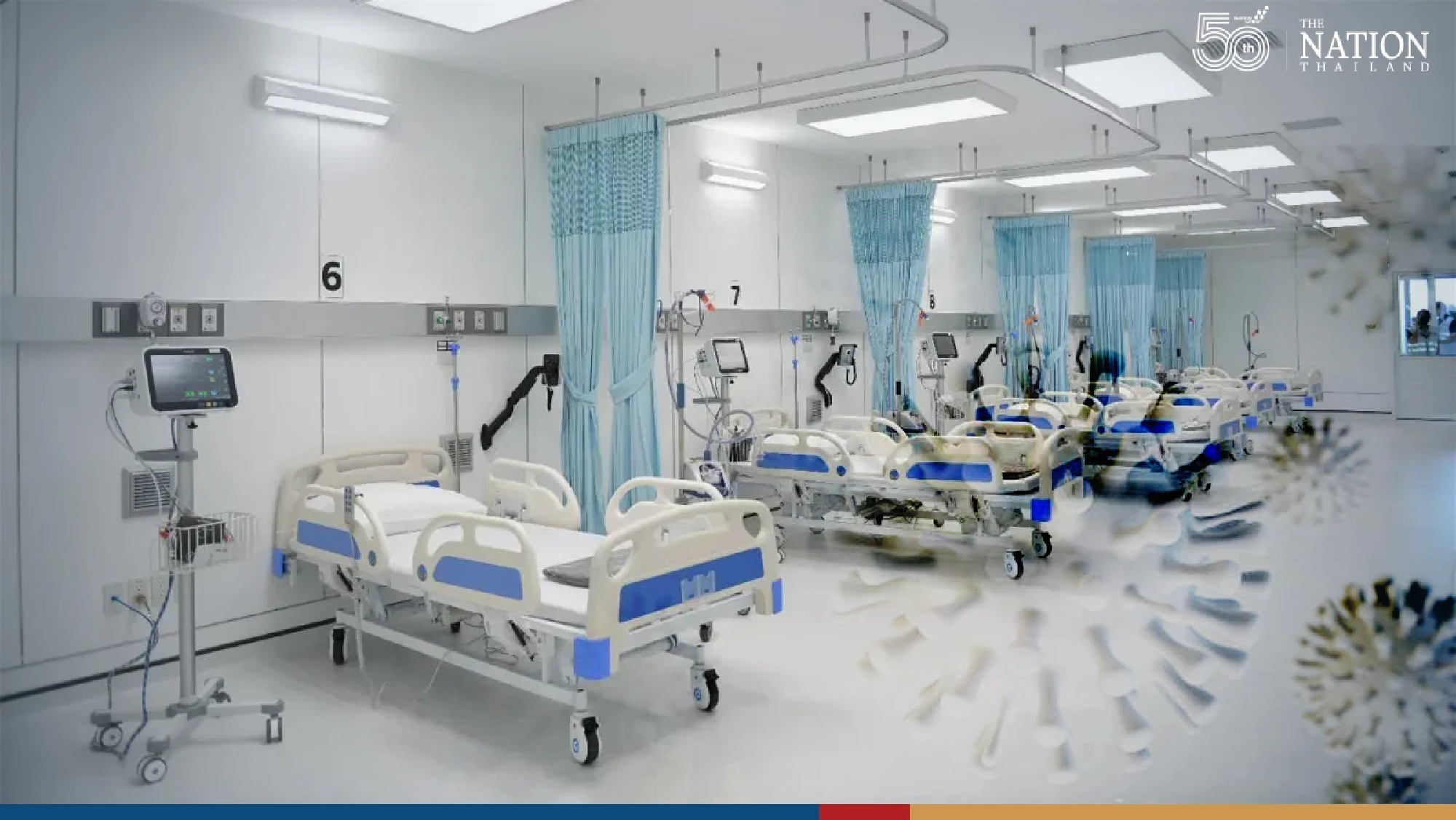
Thailand’s health system has the capacity to treat up to 50,000 Covid-19 patients per day, which is higher than the Department of Disease Control (DDC) estimation of 30,000 daily infections in the worst-case scenario due to the highly transmissible Omicron variant, Department of Medical Services chief Dr Somsak Ankasil said on Wednesday.
The DDC earlier estimated that Covid-19 cases would surge between 10,000 and 30,000 infections per day after the New Year holidays as people who had visited their hometowns return to big cities to resume working.
The Public Health Ministry reported on Thursday morning that in the past 24 hours there were 5,775 new Covid-19 patients, while 11 have died.
“Public health facilities in Bangkok and surrounding provinces, where we expect a surge in Omicron cases, can treat up to 8,000 Covid-19 patients per day,” he said.
“Bangkok has up to 11,000 beds available for patients with severe symptoms, 6,000 beds for level 2 patients, and 5,000 beds for level 3 patients.”
Somsak also said the Department of Medical Services had ordered public health offices in each province to prepare home and community isolation systems for patients with no symptoms, which will be the largest group among Omicron infections.
“From the statistics of Omicron cases in Thailand, 48 per cent are asymptomatic, while 41 per cent have mild symptoms,” Somsak pointed out. “These patients can be treated at isolation centres and will not require hospital beds,” he said.
“If you perform a self-test with an antigen test kit [ATK] and the result turns up positive for Covid-19, contact National Health Security Office hotline 1330. Officials will evaluate your symptoms before sending you for suitable treatment,” Somsak said, adding: “If you, however, display severe Covid-19 symptoms, contact hotline 1669 for emergency service.”
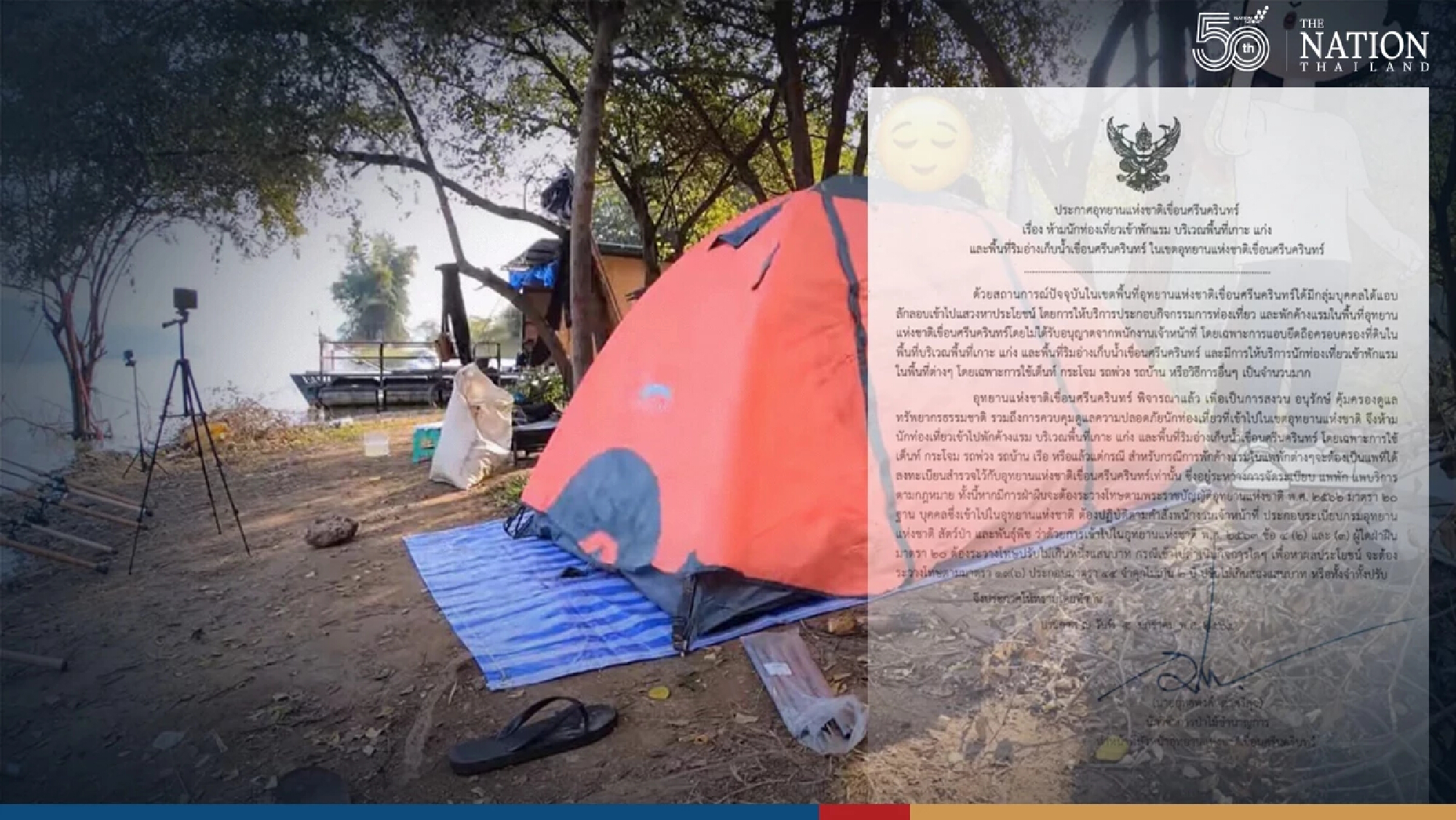
Unauthorised camping on the islands, islets and areas around the banks of Kanchanaburi’s Khuean Srinagarindra reservoir is strictly prohibited, the Khuean Srinagarindra National Park warned on its Facebook page on Wednesday.
“There have been reports of people camping around the reservoir without permission from the national park,” the announcement said.
“Most of them use portable tents, while some use recreational vehicles and even boats to spend the night at the park. Such actions are against the National Park Act and is punishable with a fine of up to THB100,000.
“In case of trespassing in a national park for personal gain, the punishment could be up to a THB200,000 fine or two years imprisonment, or both,” the announcement said.
The park added that it is considering allowing raft resort services on the reservoir. But these operators must register with the park office and pass safety and environmental standards. The plan however is still in the drafting process.
To report unauthorised camping or trespassing, contact tel 034 -540316 or 092-482-1564.
The Thailand Meteorological Department said on Thursday (January 6) that the moderate high-pressure system covers upper Thailand. Cool to cold weather is forecast in the North and the Northeast, while the Central and the East regions will experience a cool morning.
Mountaintops in the North and the Northeast are cold to very cold with temperature ranging from 6 to 15 °C.
The Department also mentioned that the weak northeast monsoon prevails across the Gulf of Thailand and the South and will bring isolated rains to the lower South.
The weather forecast for the next 24 hours is as follows:
North: Cool to cold weather with fog in the morning; temperature lows of 15-19 degrees and highs of 30-34 degrees Celsius. Temperature on hilltops is likely to drop to 6-15 degrees Celsius.
Northeast: Cool to cold weather with light fog in the morning; temperature lows of 15-19 degrees and highs of 31-33 degrees Celsius. Temperature on hilltops is likely to drop to 10-15 degrees Celsius.
Central: Cool weather with light fog in the morning; temperature lows of 20-22 degrees, highs of 33-34 degrees Celsius.
East: Cool weather in the morning; temperature lows of 21-24 degrees, highs of 33-34 degrees Celsius; waves less than a meter high and 1-2 meters high offshore.
South (east coast): Thundershowers in 20 per cent of the areas; temperature lows of 22-25 degrees, highs of 31-32 degrees Celsius; waves a meter high and 1-2 meters high during thundershowers.
South (west coast): Thundershowers in 10 per cent of the areas; temperature lows of 23-25 degrees, highs of 32-33 degrees Celsius; waves a meter high and over a meter high offshore.
Bangkok and surrounding areas: Partly cloudy with light fog in the morning; temperature lows of 22-24 degrees, highs of 33-35 degrees Celsius.