Thailand logs 39 deaths, 3,886 new confirmed cases
Thailand recorded 3,886 Covid-19 cases, including 1,230 inmates and 49 returnees, and 39 deaths on Thursday.
Bangkok again leads the list with 955 infections, followed by 380 in Phetchaburi, 336 in Nonthaburi, 232 in Samut Prakan, and 92 in Trang.
Meanwhile, 3,626 patients have recovered and been discharged in the last 24 hours.
As of Thursday, the number of confirmed cases in Thailand had risen to 169,348. So far, 118,204 have recovered and been discharged, 49,998 patients are still in hospitals and 1,146 have died.
Separately, 146,917 people were given their first Covid-19 shot in the last 24 hours, while 58,721 people were given their second shot, bringing the total number of Covid-19 vaccines administered in Thailand to 3,959,356.
According to Worldometer, as of 10am on Thursday, the number of confirmed cases globally had risen to 172.42 million (up by 489,890), 155.05 million of whom have recovered, 13.67 million are active cases ( 89,935 in severe condition) and 3.70 million have died (up by 10,952).
Thailand ranks 81 on the global list of most cases, which is topped by the US with 34.15 million, followed by India 28.44 million, Brazil 16.72 million, France 5.68 million and Turkey 5.26 million.
FAO calls for action against food loss, waste in Asia-Pacific
Food loss and waste is a major issue in the Asia-Pacific region and coordinated, strategic actions are needed to address the impact it is having on climate change, food security and the region’s overall economy, 18 Food and Agriculture Organisation (FAO) member countries concluded during a two-day series of virtual discussions.
According to the FAO’s most recent estimates (2019), the amount of food either lost or wasted range from 5-6 per cent in Australia and New Zealand and 20-21 per cent in Central and South Asia. Globally, food losses and food waste represent nearly a quarter of all blue water used in agricultural production and approximately US$940 billion (Bt29.2 trillion) in economic losses.
“The Asia-Pacific region continues to lose and waste too much food,” said Anthony Bennett, FAO senior food systems officer at the regional office for Asia and the Pacific. “Government and non-state actors, working together, must deliver on Sustainable Development Goal 12, which aims to halve global food waste at the retail and consumer levels, and reduce food losses along production and supply chains, including post-harvest losses by 2030.”
Covid-19 has contributed to regional food losses, but solutions are becoming clearer.
The pandemic has highlighted existing gaps in food systems that lead to food loss and waste, such as unreliable infrastructure for storage and transportation, and access to electricity. The region also faces challenges in terms of logistics for local producer-to-consumer markets and scaling-up of networks for recovery and redistribution of safe and nutritious food for human consumption.
Food losses and food waste from all food systems lead to an increase in greenhouse gasses and also impact heavily on smallholders who rely on their produce for both their livelihoods and their families’ food security.
However, food security can be improved through reduction of food loss, particularly on small farms in low-income countries, the FAO meeting felt.
These reductions can help farmers improve their own diets due to increased food availability and gain higher incomes when selling part of their produce.
China’s clean your plate campaign
Indeed some Asia-Pacific FAO members have taken numerous steps to scale up measures to counter food loss and waste at the retail and consumer level – among them being China.
“Measures for food loss and waste reduction are being implemented in China,” said Zhang Chengzhi, deputy director-general of the Department of Storage Safety and Science, National Food and Strategic Reserves Administration, China. “Public education activities such as ‘The Clean Your Plate Campaign’ are working very well to activate anti-food-waste behaviour. Food business operators are adapting their models to encourage consumers’ change of attitude toward food consumption with the support of technology,” he said.
“Lower food loss from production to wholesale, and less food waste from retail to households, mean more income for consumers to spend on other purchases and more profit for involved businesses. It’s a win-win strategy that should involve all society,” Zhang added.
The FAO’s Asia-Pacific Food Loss and Waste Strategy
based on a thorough literature review and appraisal of other regional approaches, new data and analysis on food loss and waste in Thailand, China and Nepal has five key pillars:
> Raise awareness and enable state and non-state collaborations and partnerships on food loss and waste prevention and reduction.
> Identify and address food loss and waste critical points along supply chains and at the consumer level.
> Enable investments for food loss and waste prevention and reduction.
> Monitor and facilitate national and regional progress towards SDG 12.3.1.
> Support Asia-Pacific member countries towards coherent governance frameworks integrating or directly addressing food loss and waste prevention and reduction.
Participants in the regional consultation agreed that it is essential to improve measurement of food loss and waste, as well as data comparability, quality, and availability. Improved data supports prevention and reduction of human nutrition losses and impacts on climate change.
The FAO’s Asia-Pacific office has also developed a road map for the implementation of its strategy to counter food loss and waste, based upon the direction of its members.
It says it will also continue to work with regional organisations, such as Asean, in developing, sharing, and applying better knowledge and practices on prevention and reduction of food loss and waste on the production and distribution side as well as by consumers.
Pfizer says it is discussing vaccine purchases only with govt agencies
Pfizer (Thailand) emphasised on Wednesday that it is commencing negotiations only with government agencies on procuring Covid-19 vaccines.
The announcement came on the heels of news that a private company would import 20 million doses of the Pfizer-BioNTech vaccine into Thailand.
Pfizer said it is currently discussing with the Department of Disease Control to ensure that its vaccine is available to all Thai nationals.
“Pfizer would like to emphasise that the company is commencing negotiations only with government agencies on procuring Covid-19 vaccines because this is the best way to ensure the vaccine is distributed to all people in each country,” the announcement read.
“Also, we would like to confirm that Pfizer has not appointed any private organisation or agency as yet to be the importer of the company’s vaccine.”
The statement added that no private firm has been allowed so far to distribute the Pfizer vaccine.
The Department of Disease Control (DDC) announced on June 1 that Thais who have been vaccinated against Covid-19 can apply for a vaccine passport that will allow them to travel overseas.
“The DDC will issue a certificate to people who have received vaccines that are registered under Thailand’s Drug Law or are certified by the World Health Organisation,” said DDC director-general Dr Opas Karnkawinpong.
“The document must carry the signature of the Department of Disease Control’s director-general or a chosen nominee, as well as the stamp of the agency. One vaccine passport will certify only one individual,” he said.
The following documents are required if you want to apply for a vaccine passport:
1. A valid passport that will not expire in the next six months, along with a photo copy.
2. Identification card, along with a photo copy.
3. Certificate of vaccination against Covid-19 issued by the DDC, along with a copy.
4. An application fee of THB50 per passport.
In case a proxy applies for the vaccine passport for another person, the proxy must also present a letter of authorisation and their identification card, along with a copy.
The DDC will issue a vaccine passport via these four channels:
– Bamrasnaradura Infectious Diseases Institute, Nonthaburi. Tel: 0-2951-1170-9 extn 3430
– Urban Institute for Disease Prevention and Control, Bangkok. Tel: 0-2521-1668
– International Communicable Disease Control Port, Suvarnabhumi Airport, Samut Prakan. Email: porthealth_bbk@ddc.mail.go.th
– General Communicable Disease Division, Department of Disease Control head office, Nonthaburi. Tel: 0-2590-3232, 0-2590-3234-5 or email: travelhealth@ddc.mail.go.th.
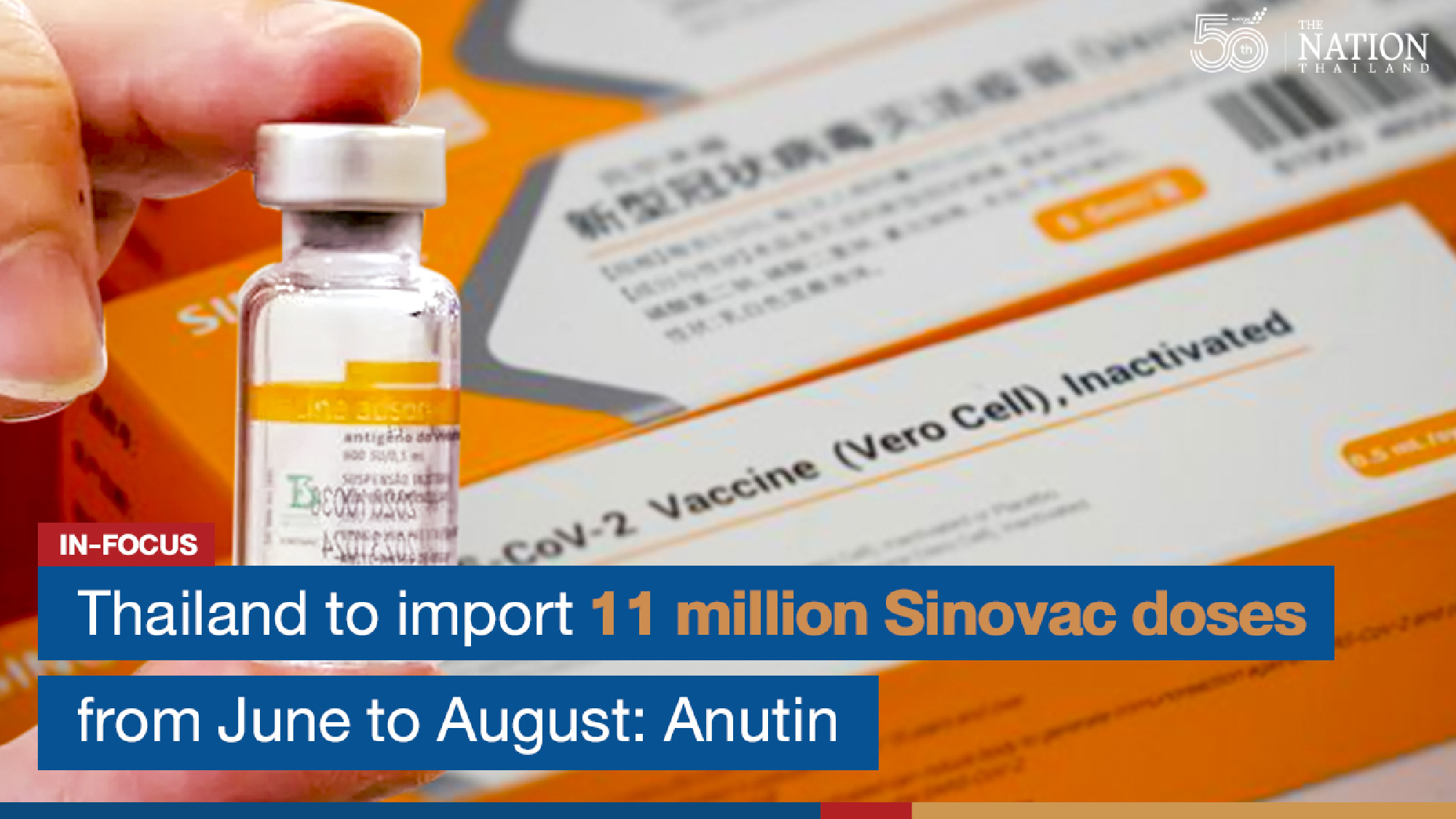
Thailand to import 11 million Sinovac doses from June to August: Anutin
The Government Pharmaceutical Organisation (GPO) will import 11 million Sinovac doses from June to complement the government’s plan of procuring at least 100 million vaccine doses for Thai citizens, Public Health Minister Anutin Charnvirakul said on Wednesday.
“So far we have received 6 million doses of the Sinovac vaccine, 5.5 million of which were through purchase and 500,000 of which were donated by the Chinese government,” he said.
“Sinovac will complement the main vaccine that will be used in Thailand, AstraZeneca, to fulfill the goal of obtaining at least 100 million doses,” Anutin said.
“From June to August, a total of 11 million doses of Sinovac will arrive – at the rate of 2.5 million to 3 million doses per month. In June alone we expect to receive 2.5 million doses, 500,000 of which will arrive on Saturday, one million at the middle of the month and another million at the end of the month,” he explained.
The World Health Organisation approved Sinovac on June 1 for emergency use. Vaccines from Pfizer and partner BioNTech, AstraZeneca, Johnson & Johnson and Moderna have also been cleared by WHO for emergency use.
“The WHO recommended that Sinovac be used for people aged 18 and older in a two-dose schedule with a spacing of two to four weeks between shots,” Anutin said.
“Although it has an efficacy rate of 51 per cent reported from clinical trials, Sinovac offers nearly 100 per cent protection against symptomatic infection and hospitalisation,” the minister said.
“An advantage of the Sinovac vaccine is that it can be kept at 28 degrees Celsius and is therefore easier to manage. More than 400 million doses of Sinovac have been administered globally with no reports of death linked to the vaccine,” he added.
US provides Thailand with $30m Covid assistance, reaffirms commitment in helping kingdom battle virus
United States Deputy Secretary of State Wendy R Sherman reiterated the US’s commitment to the people of Thailand in the fight against Covid-19, which includes $30 million in Covid-related assistance to the kingdom, a US Embassy press release said on Wednesday.
Sherman visited Thailand on June 1 and 2 for “strategic discussions” with Prime Minister Prayut Chan-o-cha, Deputy Prime Minister and Foreign Minister Don Pramudwinai and representatives from international organisations.
The two countries agreed on the importance of continuing to work together to combat the pandemic.
Sherman reaffirmed the deep importance the United States places on bilateral economic, security, and cultural ties between the two nations, which span more than two centuries, and highlighted decades of health cooperation, the statement said.
The visit, which came on the heels of the US-Thai Strategic Dialogue and the deputy secretary’s meetings at the Asean Secretariat, “was an opportunity for both sides to exchange views on defeating the Covid-19 pandemic, deepening security cooperation, increasing trade and investment, and expanding people-to-people ties”.
The two sides agreed on the importance of the US-Thai friendship in addressing economic and security challenges in the region, including the crisis in Myanmar, Mekong regional issues, and the pandemic.
“In addition, they had a mutually respectful and positive discussion on the value of democracy, human rights and fundamental freedoms, including the freedom of expression,” the press statement said.
Both sides highlighted the importance of cooperation in regional forums, including Apec, Asean, and the Mekong-US Partnership.
Sherman was also able to meet with representatives of international and non-governmental organisations to discuss humanitarian assistance for those displaced by the violence in Myanmar.
As she did at meetings with the Asean Secretariat in Jakarta, the deputy secretary affirmed the United States’ call for an end to violence and an immediate return to democracy for the people of Myanmar at each of her meetings in Bangkok.
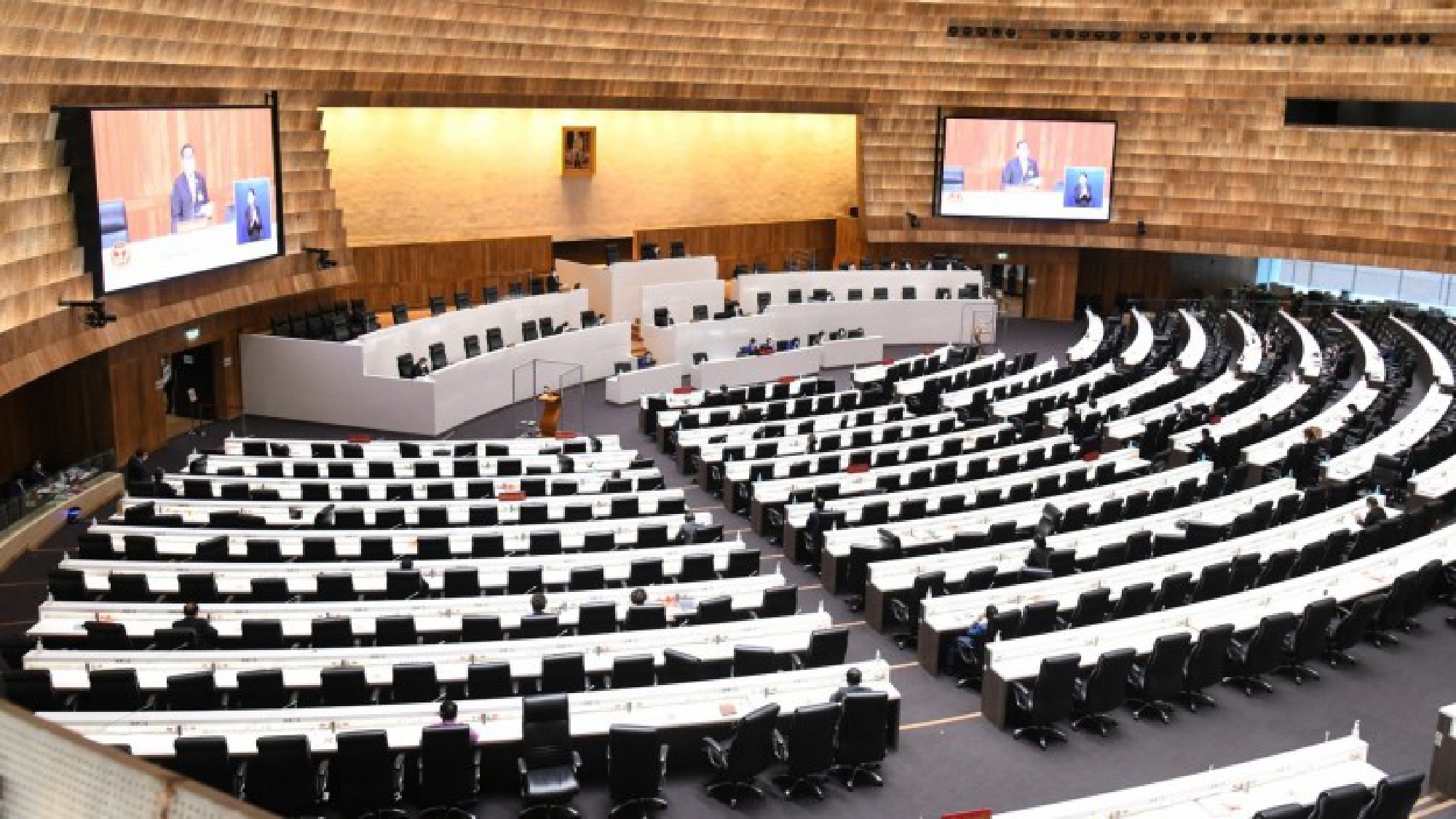
The draft fiscal 2022 budget bill was approved in principle by the House of Representatives in a vote on Wednesday night.
Of the 472 members of Parliament present in the House, 269 MPs voted in favour, 201 against and two abstained.
The House will now appoint 72 committees to consider the budget bill and propose an amendment within 30 days. The committees will hold their first meeting on June 4 at 10am.
The fiscal 2022 budget bill is proposed to be THB3.1 trillion, and its allocations will include:
Central budget: 571.04 billion
Prime Minister’s Office: 34.01 billion
Defence Ministry: 203.28 billion
Finance Ministry: 273.94 billion
Foreign Ministry: 7.61 billion
Tourism and Sports Ministry: 5.16 billion
Social Development and Human Security Ministry: 24.66 billion
Higher Education, Science, Research and Innovation Ministry: 124.18 billion
Agriculture and Cooperatives Ministry: 110.12 billion
Transport Ministry: 175.85 billion
Digital Economy and Society Ministry: 6.97 billion
Natural Resources and Environment Ministry: 28.32 billion
Hot day forecast for most of Thailand, isolated light rains in some areas
Most of the country will experience hot weather on Thursday while some areas will see isolated rains as the weak southwest monsoon prevails over the Andaman Sea, the Gulf of Thailand and other regions across the nation, the Meteorological Department said.
It added that tropical storm Choi-wan over the west coast of the central Philippines is expected to move northwest to the upper South China Sea and will have no effect on Thailand.
Here’s the weather forecast for the next 24 hours:
Bangkok and surrounding areas: Hot day with isolated light rains; temperature lows of 27-29 degrees, highs of 34-39 degrees Celsius.
North: Hot day with thundershowers in 10 per cent of the area; temperature lows of 25-28 degrees and highs of 36-39 degrees Celsius.
Northeast: Hot day with isolated light rains; temperature lows of 25-28 degrees and highs of 37-39 degrees Celsius.
Central: Hot day with isolated light rains; temperature lows of 24-28 degrees, highs of 36-39 degrees Celsius.
East: Hot day with thundershowers in 10 per cent of the area; temperature lows of 26-28 degrees, highs of 34-38 degrees Celsius; waves a metre high and 1-2 metres during thundershowers.
South (east coast): Mostly cloudy with thundershowers in 30 per cent of the area; temperature lows of 24-27 degrees, highs of 34-36 degrees Celsius; waves a metre high and 1-2 metres during thundershowers.
South (west coast): Mostly cloudy with thundershowers in 30 per cent of the area; temperature lows of 23-26 degrees, highs of 33-35 degrees Celsius; waves a metre high and 1-2 metres during thundershowers.
Free ‘vaccination buses’ to Bangkok jab hub from Monday
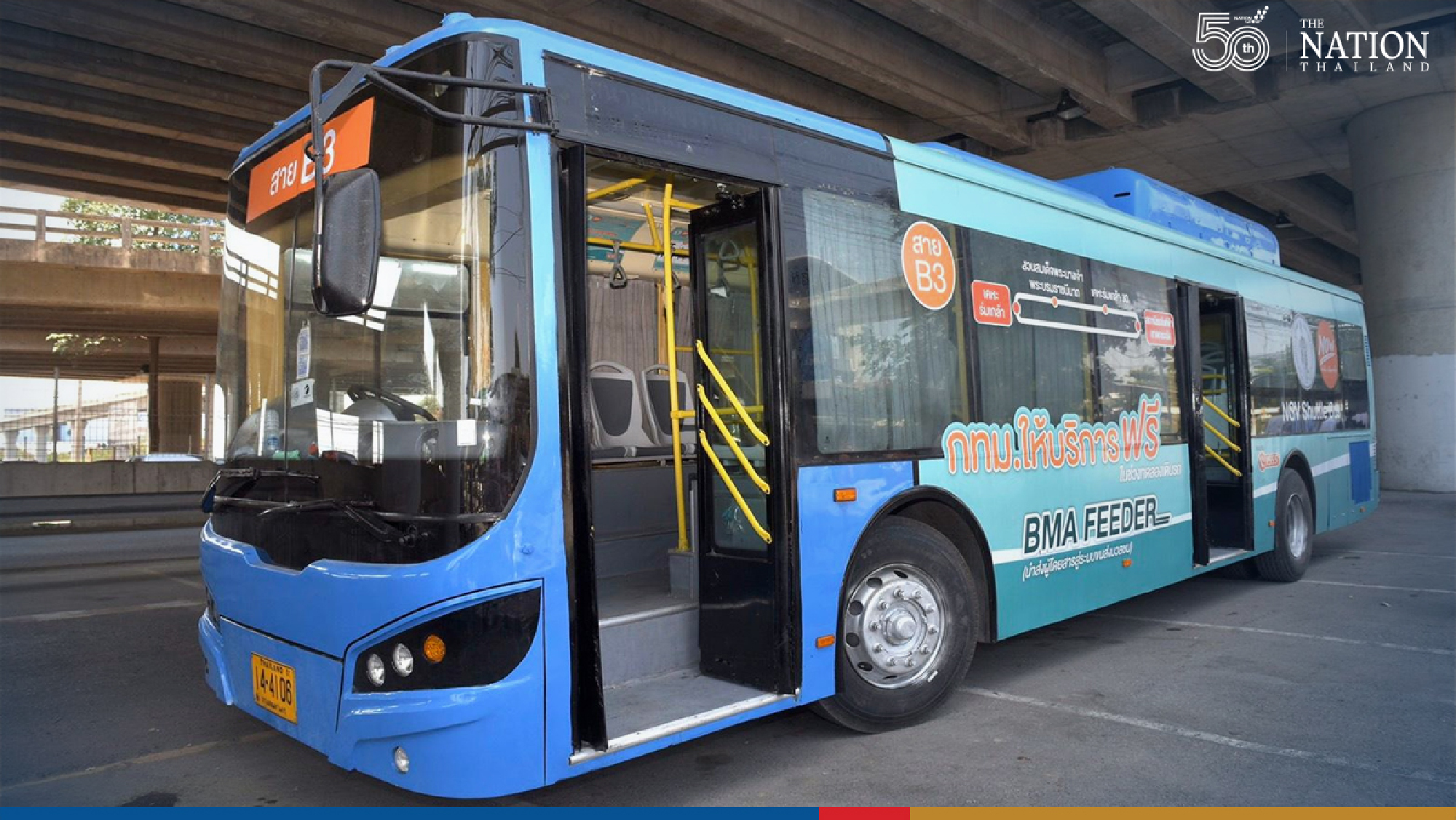
A free air-conditioned shuttle bus service will ferry Bangkok residents to the city’s main Covid-19 vaccination point at Bang Sue Grand Station from Monday (June 7).
The Bangkok Mass Transit Authority (BMTA) will operate three free bus routes to the station as mass vaccination kicks off next week. The free buses will be available from 8am to 8pm for people who have pre-booked their jabs.
The three services are as follows.
1. Victory Monument-Bang Sue Grand Station every 5-10 minutes.
2. Bang Pho ferry stop-Bang Sue Grand Station every 10 minutes (also stopping at MRT Tao Poon Station).
3. Central Ladprao-Bang Sue Grand Station every 5-10 minutes (also stopping at BTS Mo Chit Station and Bangkok Bus Terminal in Chatuchak).
Digital map shows location of vaccination points in and around Bangkok
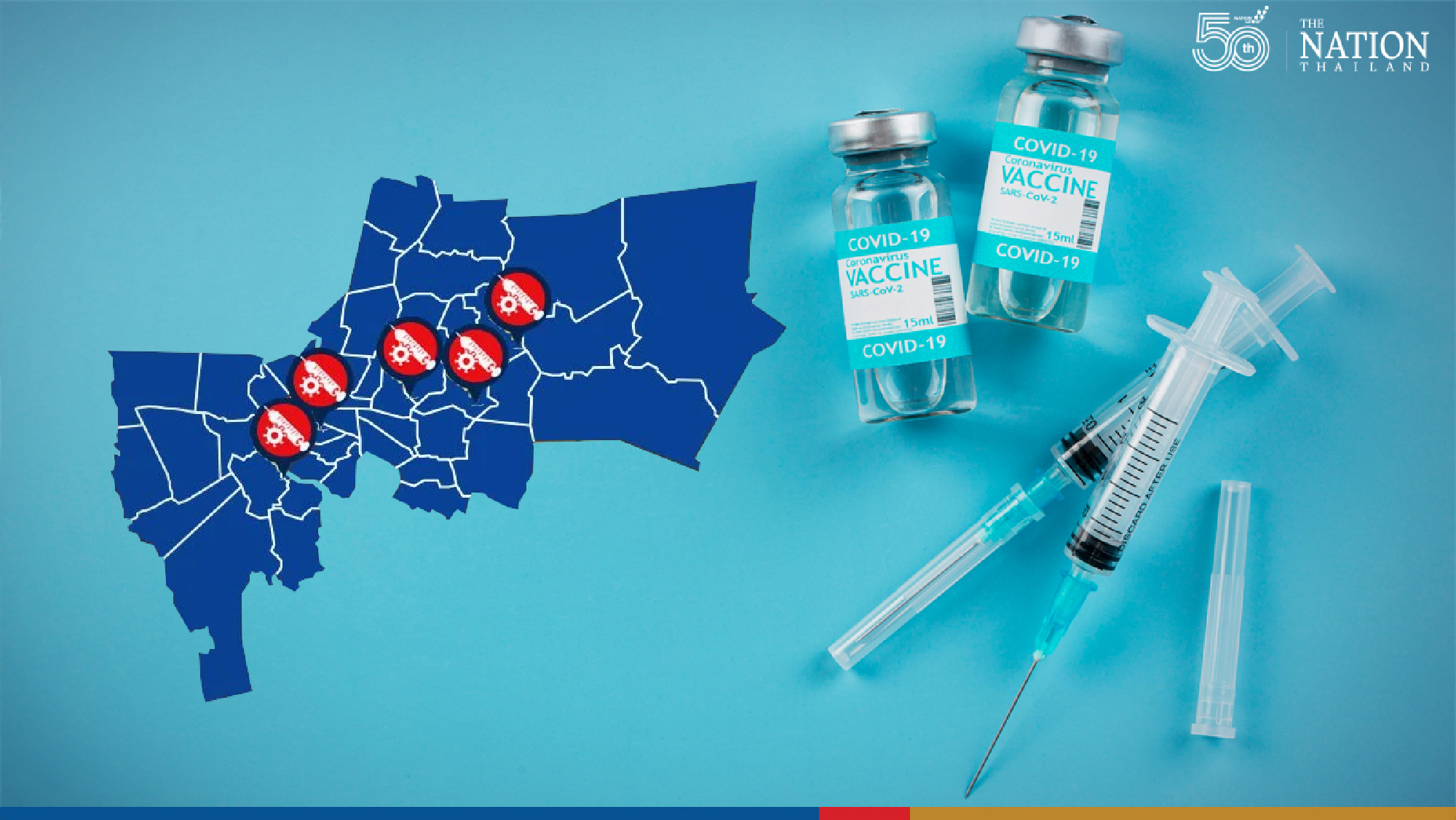
Bangkok residents can now check the location of their nearest Covid-19 vaccination point via a digital map.
GPS mapping firm GlobeTech has developed the NOSTRA Map application (https://map.nostramap.com/NostraMap/…) to pinpoint the location of dozens of jab points at hospitals and other facilities across the capital and surrounding areas.
Utilising Public Health Ministry data, the map also enables to check information such as congestion levels at vaccination points before they travel, so they can avoid queues.
GlobeTech general manager Wichai Saenghiranwattana said the NOSTRA Map is part of efforts to maximise the efficiency of the vaccine rollout, getting as many people vaccinated in the fastest possible time.
Users can check the location of jab points by clicking “data layer” on the left side of the map. The points are shown as red pins in the shape of a syringe. The map includes route details for users.
The NOSTRA Map app also provides the locations of the Covid-19 testing labs and alternative state quarantine (ASQ) accommodation.