The State Railway of Thailand (SRT) governor is the latest senior Thai official confirmed to have contracted Covid-19.
Nirut Maneephan is currently receiving medical treatment after testing positive for the virus on Thursday.
Nirut took the Covid-19 test on Wednesday after realising he was at risk of infection.
The SRT governor’s timeline is expected to be revealed soon.
Also infected by the third wave of Covid-19 sweeping across the country are Transport Minister Saksayam Chidchob and government public relations chief Lt-General Sansern Kaewkamnerd. Members of the Cabinet are currently self-isolating.
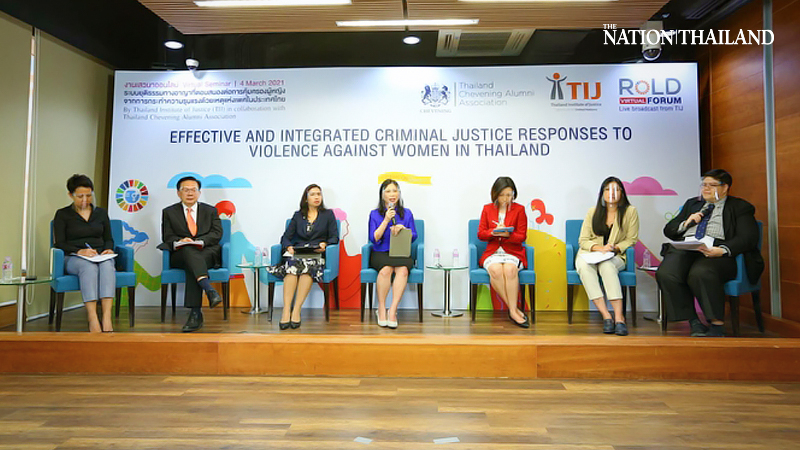
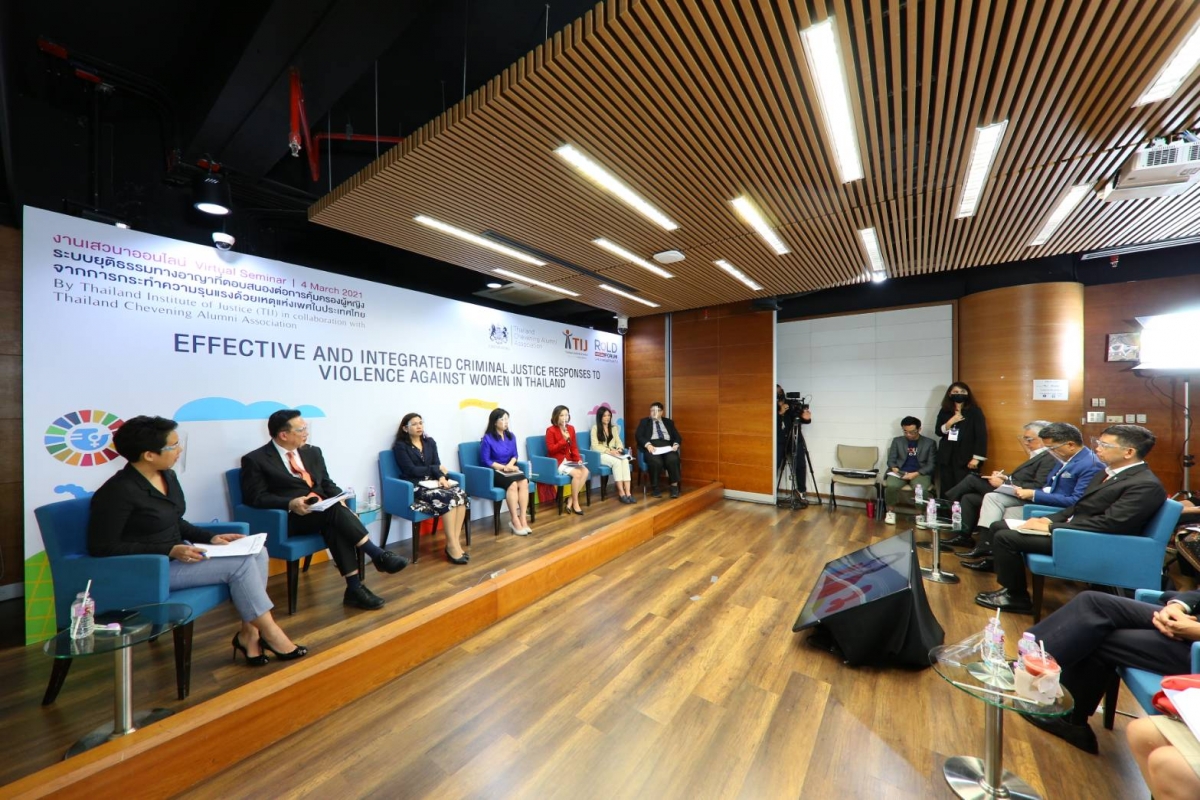
Thailand Institute of Justice (TIJ), together with Thailand Chevening Alumni Association and Rule of Law and Development Programme (RoLD 2020), organized a RoLD Virtual Forum via Facebook page entitled “Effective and Integrated Criminal Justice Responses to Violence against Women in Thailand,” where legal, public health and human rights experts and academics exchanged their views on current situation and sought solutions for gender-based violence against women in Thailand.
The forum started with an opening remark by Dr. Phiset Sa-ardyen, TIJ director,who said the justice works related to gender-based violence against women is challenging because of its link with structural obstacles related to culture and law which impede access to justice. He said TIJ’s role has been focused on pushing this issue forward through constant knowledge sharing, researches, and academic activities. He hoped that this forum would provide a clearer answer on how to solve the problem by using international approaches while taking into account Thailand’s specific context.
“Violence against women is a tough and challenging problem. TIJ has been trying to build our body of knowledge on this topic through collaboration with international experts. United Nations has always placed importance on violence against women. There are relevant standards and international benchmarks, which have been constantly updated via periodical meetings, to be used for developing a prototype strategy in solving violence against women. Solving this problem may need to take everything into account: both international approaches, especially on respect of human rights, and specific contexts, especially in social dimension. I hope that, what we would learn today will give us a better understanding on this problem,” said Dr. Phiset.
During the discussion on “Effective and Integrated Criminal Justice Responses to Violence against Women in Thailand,” Asst. Prof Dr. Pareena Sriwanich, dean of Faculty of Law, Chulalongkorn University, said the society’s perceptions of women as being physically fragile and dependent on men has led to women being at risk of sexual harassment. She pointed out flaws in traditional justice process that have heavily affected the sexually harassed women by making them feel being double harassed as it requires them to prove their disagreement to such offence.
“Once entering the justice process, Miss A, the sexually harassed victim,was required to prove herself that she didn’t agree to the harassment. She were asked to show proofs and video clips to several people. At the prosecutor level, prosecutors asked her the same questions. At the court level, same questions were asked again. Then, lawyers cross-examined her saying: ‘Didn’t you agree to it that day.’ So, how can we be certain that the mediation process beautifully stipulated in the law are understood by the practitioners?There are still many other points here. Can Miss A request that snapshots of the video clip be brought down from the internet? And who could she go to? Can it be a police station? And, if not, she may have to go to Ministry of Digital Economy and Society where she must go there herself. But, then, who will be taking care of her?” said Asst. Prof Dr. Pareena.
Ms. Bussayapa Srisompong, human rights lawyer, domestic violence researcher and founder of S-Hero, a group that has been campaigning for an end to violence against women, spoke about the myths of gender that have impeded women from seeking help in justice system and from being treated fairly.
“What hinders women’s access to justice is not only their level of legal knowledge, because they sometimes understand well the structure and know the challenges of the law. Rather, it is the voices of society and community that always impose social stigma on victims,as well as the voices of family that discourage or deter women’s courage in suing offenders. Those voices keep telling women not to sue the offenders, to be pity for them, to not destroying their future. And there are also friends who ask: ‘What did you do to him? What did you do so you were treated like that?’” said Ms. Bussayapa.
The panellists discussed victim assistance by means of survivor-centred approach – a public health-based approach that focuses on treating mental wounds of the victims of violence – which might prevent them from being double harassed by the justice process. It will also allow for options and genuine empowerment of the victims through existing stipulations in Thai laws that let the damaged persons pursue the lawsuit themselves. And, as most victims have limited budget and knowledge, building on the Centre for Protection of the Damaged Persons should provide some support to these vulnerable groups.
“Thailand is one of the countries that allow the damaged persons to pursue the lawsuit themselves. But this right has been only rarely exercised because the damaged persons have little budget to hire a lawyer and collect evidences and witnesses themselves. Using this means may increase the damaged persons’ rights and power so they can pursue the lawsuit themselves, especially in the case that all evidences are with them,” said Ms. Bussayapa.
This forum was also participated by honourable guests and experts in different fields, including Dr. Kanate Wangpaichitr, Thailand Chevening Alumni Association president; Mr. Sitthisak Wanachakit, presiding judge of the Supreme Court; Mrs. Santhanee Dissayabutr, Ayutthaya Public Prosecutor for Juvenile and Family Litigation and director and secretary-general of Nitivajra Institute; Ms. Kornwilai Theppankulngam, UN Women’s analyst for Ending Violence against Women programme and Safety and Justice programme; Dr. Panjai Woharndee, Division of Forensic Science director, Ministry of Justice’s Central Institute of Forensic Science; Mrs. Worapat Saengkaew, psychologist and head of Pathum Thani Hospital’s One Stop Crisis Centre (OSCC), Ministry of Public Health. The forum was moderated by Second Lieutenant Paramate Boonyanan, Ministry of Justice legal officer, and Ms. Chonlathit Chuenura, director of TIJ’s Office of the Bangkok Rules and Treatment of Offenders.
NationalApr 08. 2021Interior Minister Anupong Paochinda
By THE NATION
There is no need for a nationwide lockdown to tackle the latest outbreak of Covid-19, Interior Minister Anupong Paochinda said on Thursday.
He also urged people planning to travel back to their hometowns during Songkran to follow Covid-19 preventive measures and stay safe on the road.
“Prime Minister Gen Prayut Chan-o-cha has allowed governors and communicable disease committees in each province to use measures depending on the situation in their areas, which I personally think is the most suitable approach,” Anupong said.
“The outbreak situation may vary from province to province, so each governor should be able to issue measures suitable for their community while creating minimal impact to the people and the local economy.”
Announced earlier on Thursday, PM Prayut’s latest order grants provincial governors the power to issue 14-day shutdown orders for entertainment venues or restaurants where Covid-19 infection is found.
“If every citizen continues to properly protect themselves, the outbreak will soon be contained and a nationwide lockdown or strict measures that could hurt the economy will not be necessary,” added Anupong.
He also addressed the impact of the new Bangkok outbreak on the government’s plan to reopen Phuket to foreign tourists on July 1. Anupong said the Cabinet and Centre for Covid-19 Situation Administration (CCSA) would soon discuss the issue based on the current situation.
The Phuket sandbox scheme would allow foreign tourists who have proof of inoculation and test negative for Covid-19 to visit the holiday island without undergoing quarantine. Similar schemes are planned for destinations such as Pattaya, Chiang Mai, Krabi, Phang Nga and Surat Thani.
The Covid-19 outbreak linked to Bangkok entertainment venues rose to 504 cases across the country on Wednesday, as the government prepared to close pubs and bars in 41 provinces to deal with the situation.
On Thursday, the Centre for Covid-19 Situation Administration (CCSA) said cases from the Bangkok Thong Lor cluster have been found in 20 provinces between March 22 and April 7.
The provinces affected are Bangkok (356 cases), Chonburi (31), Samut Prakan (28), Sa Kaew (20), Suphanburi (18), Nonthaburi (16), Nakhon Pathom (8), Pathum Thani (6), Prachuap Khiri Khan (6), Chiang Mai (2), Khon Kaen (2), Chumphon (2), Samut Sakhon (2), Loei (1), Kanchanaburi (1), Tak (1), Ayutthaya (1), Phuket (1), Lopburi (1) and Lampang (1).
The highly contagious British strain of the virus has been identified as the cause of the outbreak.
CCSA spokesperson Taweesin Visanuyothin added that the Public Health Ministry planned to close at-risk entertainment venues in 41 provinces for at least two weeks to deal with the new outbreak.
The idea will be proposed to Prime Minister Prayut Chan-o-cha in his capacity as chief of the CCSA.
Taweesin said the government did not want to implement overly severe measures across the whole country.
He also asked companies to consider adopting a work-from-home policy for staff. He added that people were free to travel between provinces. However, experts and authorities have discouraged people from travelling over Songkran if they can avoid it.
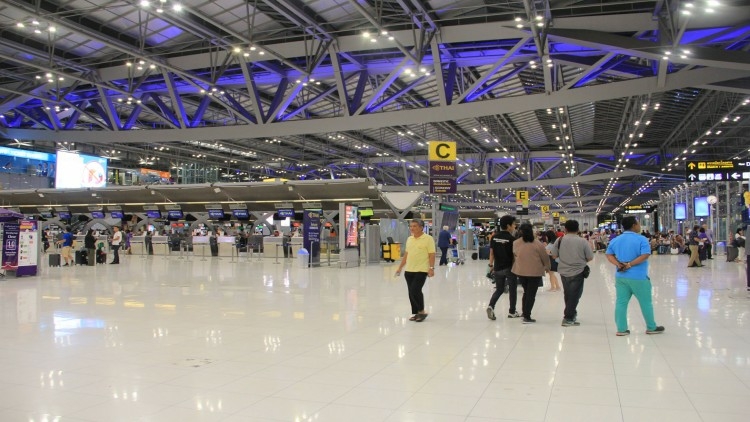
The number of passengers at Thailand’s six main airports dropped by about 20 million or 94.82 per cent to 2.14 million in the first two months of 2021 from a year earlier, Airports of Thailand (AOT) reported on Thursday.
“Total passengers at Suvarnabhumi, Don Mueang, Chiang Mai, Hat Yai, Phuket and Mae Fah Luang-Chiang Rai airports in January and February amounted to 2,414,209 people, with 2,289,739 are domestic passengers and 124,470 international passengers,” said AOT. Passenger volume dropped 92.65 in January and 99.2 per cent in February, year on year.
Don Mueang recorded the most passengers at 894,145, followed by Suvarnabhumi at 728,215, Chiang Mai at 264,675, Phuket at 208,708, Hat Yai at 197,518 and Chiang Rai at 120,681.
A total of 34,739 flights landed at the six airports in January and February, dropping 91.21 per cent year on year. Of these, 24,389 flights were domestic and 10,350 international. Suvarnabhumi saw the most flights at 17,038, followed by Don Mueang at 9,744, Chiang Mai at 2,765, Phuket at 2,298, Hat Yai at 1,792, and Chiang Rai at 1,102 flights.
AOT said the Covid-19 pandemic has severely affected the airline industry worldwide.
The Public Health Ministry plans to close entertainment venues in 41 provinces, namely those with confirmed Covid-19 cases and those at risk, for at least two weeks to deal with the new outbreak.
The idea will be proposed to Prime Minister Prayut Chan-o-cha in his capacity as chief of the Centre for Covid-19 Situation Administration (CCSA).
The 41 provinces in question are Bangkok, Pathum Thani, Nonthaburi, Nakhon Pathom, Samut Prakan, Samut Songkhram, Samut Sakhon, Ayutthaya, Saraburi, Lopburi, Nakhon Nayok, Chonburi, Rayong, Chachoengsao, Sa Kaew, Chanthaburi, Prachinburi, Saraburi, Suphanburi, Kanchanaburi, Phetchaburi, Ranong, Chumphon, Nakhon Si Thammarat, Prachuap Khiri Khan, Surat Thani, Songkhla, Yala, Narathiwat, Nakhon Ratchasima, Khon Kaen, Chaiyaphum, Udon Thani, Buriram, Tak, Loei, Chiang Mai, Lampang, Chiang Rai, Phuket and Phetchabun.
The government is not monopolising the purchase of Covid-19 vaccines and is not blocking the private sector from importing them, government deputy spokesperson Traisuree Taisaranakul said on Thursday.
In a bid to clarify “inaccurate” information that is confusing the public, she said the demand for vaccines is far higher than the production capacity.
“According to the Higher Education, Science, Research and Innovation Ministry, as of April 5, countries had placed orders for up to 9.6 billion doses, and only 658 million doses have been administered so far,” she said.
“Apart from AstraZeneca and Sinovac, the government is also trying to procure vaccines from other manufacturers to meet the demand.”
She said many countries have approved specific Covid-19 vaccines for emergency use, while many manufacturers have offered to sell directly to government agencies.
“The government is willing to allow private sectors to import vaccines, and the Food and Drug Administration [FDA] is ready to issue a licence for private companies to import them,” she said.
She added that the FDA has, so far, approved the AstraZeneca, Sinovac and Johnson & Johnson vaccines.
“India’s Bharat Biotech has submitted its application to the FDA, while Moderna from the US, China’s Sinopharm and Russia’s Sputnik V are being reviewed by the FDA,” she added.
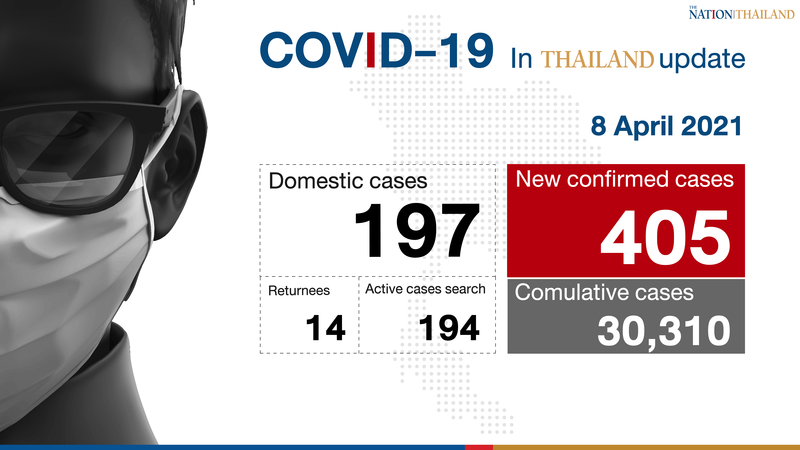
The Centre for Covid-19 Situation Administration (CCSA) on Thursday reported 405 new cases, including 14 brought in from overseas.
Of the remaining 391 infections, 197 had been contracted locally and 194 found via proactive testing.
The 14 arrivals, both Thai and foreign nationals, included six from the United Arab Emirates, two from Bangladesh, and one each from India, Malaysia, Switzerland, France, the UK and Turkey.
Meanwhile, 32 patients have recovered and been discharged.
As of Thursday, the number of confirmed cases in Thailand had risen to 30,310. Of these, 27,133 had been contracted locally, including 16,690 who were found via proactive testing, while 3,177 were returnees.
So far, 28,101 have recovered and been discharged, 2,114 patients are being treated, and 95 have died (35 in the second outbreak).
According to Worldometer, as of 10am on Thursday, the number of confirmed cases globally had risen to 133.68 million (up by 651,878), 107.80 million of whom have recovered, 22.98 million are active cases (100,924 in severe condition) and 2.90 million have died (up by 12,969).
Thailand ranks 113th on the global list of most cases, which is topped by the US with 31.63 million, followed by Brazil 13.19 million, India 12.92 million, France 4.84 million and Russia 4.60 million.
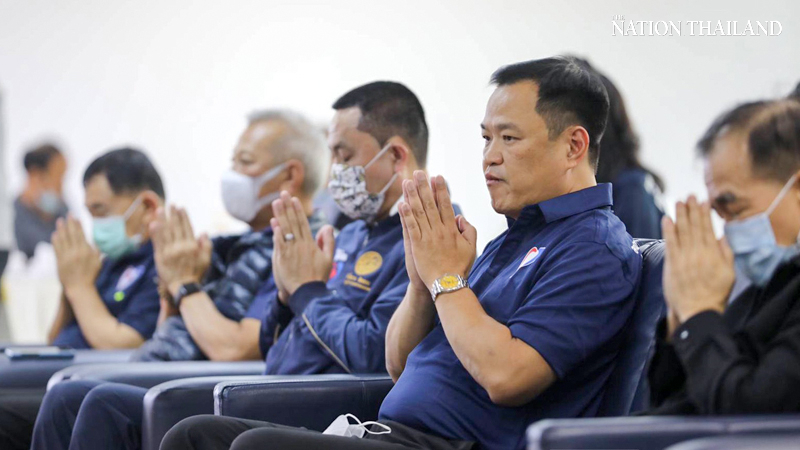
Public Health Minister Anutin Charnvirakul wore a face mask “almost all the time” when participating in a merit-making event by his Bhumjaithai Party, said Anutin’s secretary Watcharapong Kuwijitsuwan in response to a controversial photo which showed the minister without a mask on Tuesday.
Anutin was pictured without his face mask while sitting next to Transport Minister Saksayam Chidchob on Tuesday – a day before Saksayam tested positive for Covid-19.
In response to the alarming photo, Watcharapong told the press that Anutin wore the mask “almost all the time he was at the event, except to eat or drink, or when it was hard to breathe”.
Watcharapong added that Auntin took his face mask off for only a short period. And the minister tried not to remove his face mask when he was seated near others without any masks.
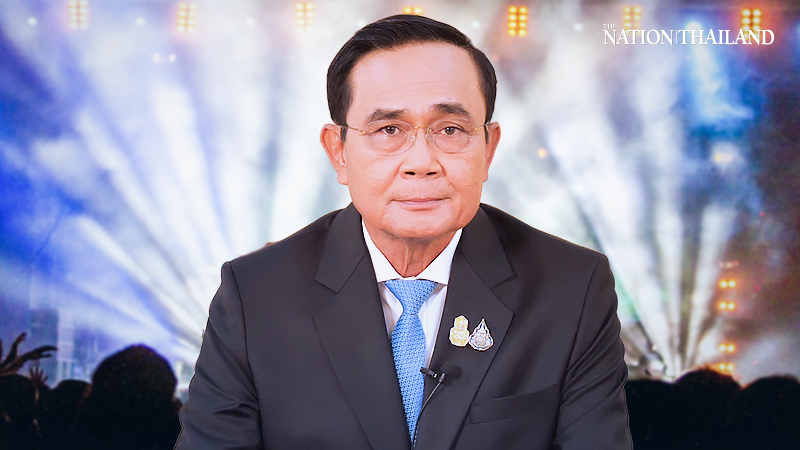
Prime Minister Prayut Chan-o-cha has ordered an immediate 14-day shutdown of entertainment venues or restaurants where a Covid-19 infection is found, government spokesman Anucha Burapachaisri confirmed on Thursday.
“The measure has been effective since April 5 in a bid to prevent Covid-19 from spreading further after a new outbreak linked to entertainment venues such as pubs, bars and karaoke parlours,” he said.
“If an infection is found at any of these businesses, it will be shut down for at least two weeks. In case infections are found across many businesses in the same area, they will all be shut for at least 14 days,” he clarified.
Anucha said restaurants were still allowed to open, but they have to employ strict Covid-19 preventive measures. “If any infection is found at any restaurant, it will be ordered shut for at least two weeks as well,” he said.
“The prime minister also granted the communicable disease committee in each province the power to consider shutting down any business for at least two weeks if it is related to an outbreak in their province,” Anucha said.
“In case of an emergency situation, the provincial governor could issue a temporary shutdown order on public places such as markets, meeting halls, theatres and schools, provided that such an order is approved by the provincial communicable disease committee,” added Anucha.

 Nirut Maneephan

 Interior Minister Anupong Paochinda


 Traisuree Taisaranakul