NationalFeb 21. 2021Photo credit: Department of National Parks, Wildlife and Plant Conservation
By The Nation
Officials at Phanom Dong Rak Wildlife Sanctuary in Si Sa Ket province have rescued two foxes that were caught in a trap on Saturday.
Photo credit: Department of National Parks, Wildlife and Plant Conservation
The sanctuary chief, Bancha Prasertsri, said he went to the scene after the officials informed him about two foxes being trapped in the forest near Ban Non Charoen-Phu Makhuea Road.
Photo credit: Department of National Parks, Wildlife and Plant ConservationPhoto credit: Department of National Parks, Wildlife and Plant Conservation
An eight-year-old female fox that was slightly injured was released while the severely injured eight-year-old male fox is being provided medical treatment.
Photo credit: Department of National Parks, Wildlife and Plant Conservation
The first phase of redeveloping the Benjakitti Park will be completed by June 2021 to be open for Mother’s Day, deputy government spokesperson Traisuree Taisaranakul said.
The overall construction plan is expected to be completed by February 2022.
The first eight months in phase one are focused on completing the garden by June 2021 to honour the Queen Mother on her birthday on August 12, 2021.
Renovation work on the sports building and a museum will be completed in February 2022.
Benjakitti Forest Park Project (phase 2-3), a park spread over 259 rai, is being built to fulfil the royal wishes of the late HM King Bhumibol Adulyadej The Great and Her Majesty Queen Sirikit the Queen Mother of “planting a forest in the hearts of people” by creating an urban forest.
The park aims to become a place of learning that creates a bond and appreciation of the value of forest, water, natural resources and care of natural resources and the environment in a sustainable way.
This part of the project will have the most forested area (216 rai). Large trees will be planted including shrubs, ground cover, and various types of water plants. Work is going on to create an amphitheatre, sky walkway, jogging lanes, bicycle path and walkways surrounding the project by providing suitable facilities that blend into the urban park.
In addition, the original buildings (warehouse, museum and pavilion) are being renovated to be fully functional and meet the purpose of the project.
According to WHO, at least 9 square metres (m2) of green space per individual should be provided in urban areas. Bangkok has managed a marginal increase in green area — from 6.43 m2 of green space per person in 2017 to 6.7 m2 in 2018.
A medical officer at Banglamung Hospital has been found to be infected with Covid-19, Chon Buri Provincial Public Health Office reported on Sunday.
The infected officer was responsible for taking care of Covid-19 patients transferred from state quarantine facilities. The officer is currently receiving medical treatment.
“Eleven medical personnel who were in contact with the officer have been instructed to undergo 14 days of quarantine at a local quarantine facility,” the office said.
The office said the medical personnel have tested negative, but they will undergo another Covid-19 test during quarantine.
“Two people who were not in contact with the medical officer also tested negative, but we plan to conduct tests on three other people who were not in contact with the officer,” the office said, adding that they will continue the investigation.
A new subsidy scheme, “Mor33 Rao Rak Kan” (Section33 We Love Each Other), which opened for online registration on Sunday, became the most popular trend on Twitter in the morning.
The scheme offers Bt4,000 via the Pao Tang application from March 15 to 21. The subsidies will cost the government Bt37.1 billion and will be overseen by the Labour Ministry to help people cope with the economic impact of Covid-19.
The subsidy can be availed of by Thai nationals who do not hold a state welfare card, have not joined the Rao Chana (We Win) scheme and have less than Bt500,000 in savings.
The government expected 9.27 million people to be eligible to receive subsidies under the scheme.
Pharceutucal giant Pfizer Inc and BioNTech SE on Saturday said they had submitted new data to the US Food and Drug Administration (FDA) demonstrating the stability of their Covid-19 vaccine when stored at minus 25 degrees Celsius to minus 15°C (-13°F to 5°F), temperatures more commonly found in pharmaceutical freezers and refrigerators.
The data have been submitted to the FDA to support a proposed update to the US Emergency Use Authorisation (EUA) Prescribing Information, which would allow for vaccine vials to be stored at these temperatures for a total of two weeks as an alternative or complement to storage in an ultra-low temperature freezer.
The FDA submission includes stability data generated on batches manufactured over the past nine months of Covid-19 vaccine development, from the batches that supplied the earliest clinical trials through the commercial scale batches currently in production. These data also will be submitted to global regulatory agencies within the next few weeks.
“We have been continuously performing stability studies to support the production of the vaccine at commercial scale, with the goal of making the vaccine as accessible as possible for healthcare providers and people across the US and around the world,” said Albert Bourla, chairman and chief executive officer, Pfizer.
“We appreciate our ongoing collaboration with the FDA and CDC as we work to ensure our vaccine can be shipped and stored under increasingly flexible conditions. If approved, this new storage option would offer pharmacies and vaccination centres greater flexibility in how they manage their vaccine supply.
“Our top priority was to quickly develop a safe and effective vaccine and make it available to the most vulnerable people in the world in order to save lives. At the same time, we have continuously collected data that could enable storage at around -20°C.”
“The data submitted may facilitate the handling of our vaccine in pharmacies and provide vaccination centres an even greater flexibility,” said Ugur Sahin, CEO and co-founder of BioNTech.
“We will continue to leverage our expertise to develop potential new formulations that could make our vaccine even easier to transport and use.”
Currently, the labels for the Pfizer-BioNTech Covid-19 vaccine, including the EUA label in the US, state that the vaccine must be stored in an ultra-cold freezer at temperatures between -80ºC and -60ºC (-112ºF to 76ºF).
It can remain stored at these temperatures for up to six months. The vaccines are shipped in a specially-designed thermal container that can be used as temporary storage for a total of up to 30 days by refilling with dry ice every five days. Before mixing with a saline diluent, the vaccine may also be refrigerated for up to five days at standard refrigerator temperature, between 2⁰C and 8⁰C (36⁰F and 46⁰F).
If approved, the option to store at -25°C to -15°C (-13°F to 5°F) for two weeks would be in addition to this five-day option to store at standard refrigerator temperature. The vaccine is administered at room temperature by medical staff.
As additional stability data are obtained, Pfizer and BioNTech anticipate the shelf life and/or expiration date could be extended, and alternate short-term temperature storage may be considered.
The vaccine, which is based on BioNTech proprietary mRNA technology, was developed by both BioNTech and Pfizer. BioNTech is the marketing authorisation holder in the European Union, and the holder of emergency use authorisations or equivalent in the United States, United Kingdom, Canada and other countries in advance of a planned application for full marketing authorisations in these countries.
The Pfizer-BioNTech Covid-19 vaccine is authorised for use under an EUA for active immunisation to prevent Covid-19 caused by severe acute respiratory syndrome coronavirus 2 (Sars-CoV-2) in individuals 16 years of age and older.
The Pfizer-BioNTech Covid-19 vaccine has not been approved or licensed by the US FDA, but has been authorised for emergency use by FDA under an EUA to prevent Covid-19 for use in individuals 16 years of age and older.
The moderate high-pressure system from China covering upper Thailand is weakening. Cool to cold weather is likely in the Northeast, the Thailand Meteorological Department forecast on Sunday.
The North, the Central and the East, including Bangkok and its vicinity, are likely to experience cool weather in the morning. People in upper Thailand should take care of their health due to the variable weather, the department said.
A moderate northeast monsoon continues over the Gulf of Thailand and the South. Wind waves in the lower Gulf are likely to rise about two metres high hence all ships in the lower Gulf should proceed with caution, the department said.
Tropical storm “Dujuan” over the Pacific Ocean is expected to make landfall over the Philippines on February 21-22 and downgrade after that. The storm will have no significant impact on Thailand, the department said.
The 24-hour weather forecast for different regions:
North: cool morning; minimum temperature 17-20 degrees Celsius, maximum 30-34°C; cold to very cold on mountaintops with minimum temperature 6-15°C; southeasterly winds 10-20 km/hr.
Northeast: Cool to cold morning; minimum temperature 14-19°C, maximum 30-33°C; cold on the mountaintop with minimum temperature 8-12°C; northeasterly winds 10-30 km/hr.
Central: Cool morning; minimum temperature 18-22°C, maximum 31-34°C; easterly winds 10-25 km/hr.
East: Cool morning; minimum temperature 18-22°C, maximum 32-34°C; easterly winds 15-35 km/hr; waves about a metre high and 1-2 metres offshore.
South (east coast): Partly cloudy with isolated light rains; minimum temperature 20-25°C, maximum 30-33°C.
From Surat Thani northward: Easterly winds 15-35 km/hr; waves 1-2 metres high.
From Nakhon Si Thammarat southward: Easterly winds 20-35 km/hr; waves about two metres high.
South (west coast): Partly cloudy; Minimum temperature 21-25°C, maximum 33-36°C; easterly winds 15-35 km/hr; waves 1- 2 metres high and about two metres offshore.
Bangkok and its vicinity: Cool morning; minimum temperature 21-22°C, maximum 32-34°C; easterly winds 10-25 km/hr.
A 32-year-old man has been arrested for allegedly possessing and selling carcasses of protected animals at his house in Phatthalung province.
The Phaya Suea National Park and Wildlife Protection Unit on Friday arrested Sitthichai (last name withheld) in Rommuang subdistrict.
Photo: Facebook @prhotnews02
The officials reportedly recovered 31 carcasses of protected animals, including great argus, purple swamphen, serow, hornbill, Asian golden cat, leopard, clouded leopard, tiger, Asian black bear, honey bear, and Javan pangolin. Officials also found several parts and carcasses of non-protected animals, such as deer, elephant, crocodile, and turtle.
Officials revealed that they had tracked the suspect down after arresting one of the hunters in Ratchaburi province on January 20, who allegedly supplied animal carcasses to Sitthichai to sell them via online channel.
Photo: Facebook @prhotnews02
Sitthichai was charged with possessing and selling carcasses of protected animals under Wild Animals Conservation and Protection Act BE 2562, which carries a maximum punishment of 15 years’ jail time or Bt1.5 million fine, or both.
Thai Airways International (THAI) Plc is planning to buy 20 to 30 planes in 2025 to strengthen its fleet and replace sold/decommissioned planes.
The company expected the airline industry to recover from the fallout of Covid-19 by 2025, a news source revealed.
“The plan to buy new planes would be submitted to the Central Bankruptcy Court on March 2 along with THAI’s business rehabilitation plan, subject to approval by its creditors,” added the source.
In November last year, THAI decided to sell 34 passenger planes, including Boeing 747s and 777-300s, to survive the financial crisis. The airline listed the airplanes on its website www.thaiaircrafttrading.com.
The source estimated the cost of 30 planes could be up to Bt100 billion.
Currently THAI’s fleet comprises 42 planes: one A300-600, three A340-500s, six A340-600s, two A380-800s, two 737-400s, ten 747-400s, six 777-200s, six 777-200ERs, and six 777-300s.
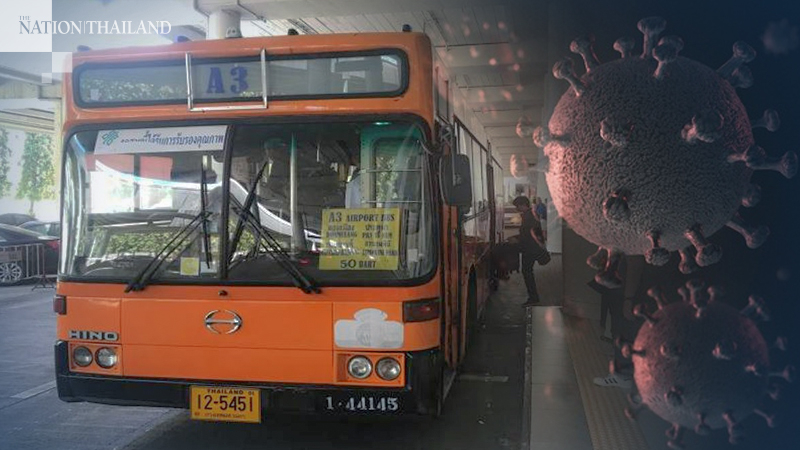
The conductor of an A3 bus, who worked on February 11 and 18, has tested positive for Covid-19, the Bangkok Mass Transit Authority (BMTA) posted on its Facebook on Friday.
The conductor lives in Krisada 1 village in Muang district of Pathum Thani province. The patient is currently being treated at Thammasat University Hospital.
The conductor had also worked on bus No. 95 and No. 510 in the past days.
The BMTA said it had sterlised the buses the conductor had worked on. Also, it had told other staff working on the same buses to undergo medical check-up.
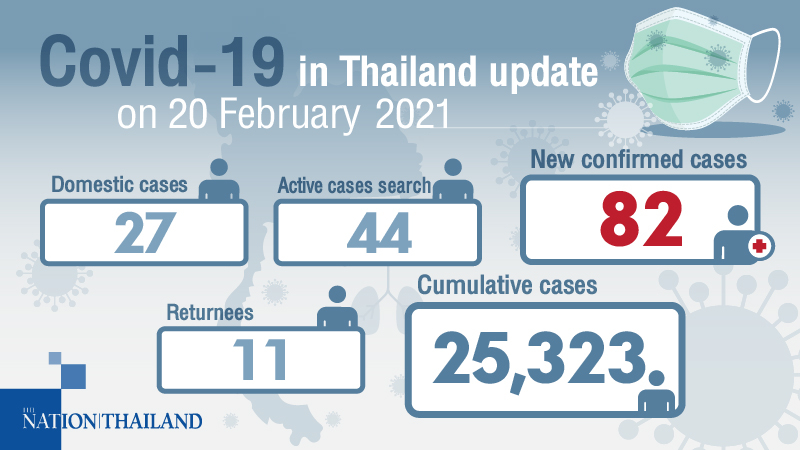
The Centre for Covid-19 Situation Administration on Saturday reported 82 new cases.
Thirty-five were found in Samut Sakhon province – 19 in hospitals and 16 from proactive search.
Twelve overseas travellers tested positive, nine of them foreigners. Two Thais had returned from the UAE and one from Bahrain. Two Americans, two Russians and a German, an Indian, a Nigerian and a French national had arrived from their home countries and a Ugandan had arrived from Kenya.
Meanwhile, 59 patients have recovered and been discharged.
As of Saturday, the number of confirmed cases in Thailand had risen to 25,323. Of these, 22,633 had been contracted locally, including 14,355 who were found via proactive testing, while 2,690 were returnees. So far, 24,129 have recovered and been discharged, 1,111 patients are still in hospital, while 83 people have died.
According to Worldometer, as of 10am on Saturday, the number of confirmed cases globally had risen to 111.23 million (up by 403,036), 86.14 million have recovered, 22.63 million are active cases (94,899 in severe condition) and 2.46 million have died (up by 10,971).
Thailand ranks 114th on the global list of most cases, which is topped by the US with 28.6 million, followed by India 10.97 million, Brazil 10.08 million, Russia 4.13 million and the United Kingdom 4.09 million.

 Photo credit: Department of National Parks, Wildlife and Plant Conservation


 Photo credit: Department of National Parks, Wildlife and Plant Conservation

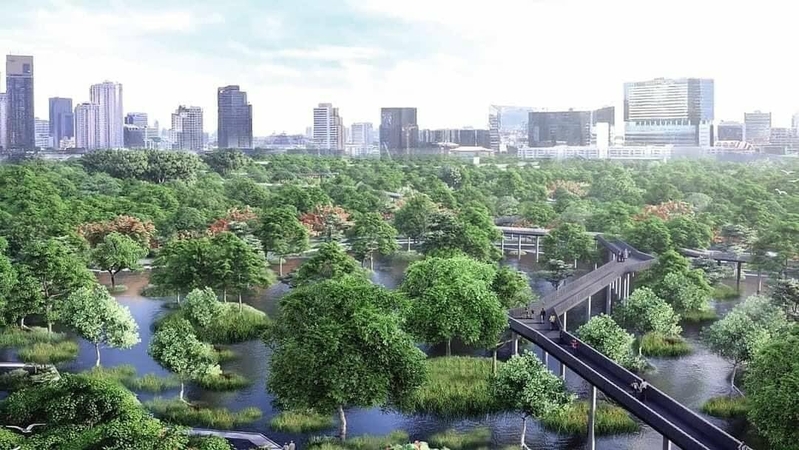


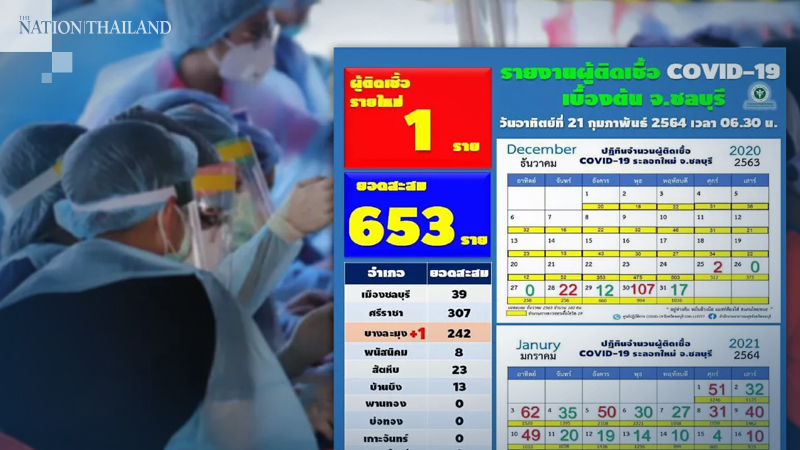

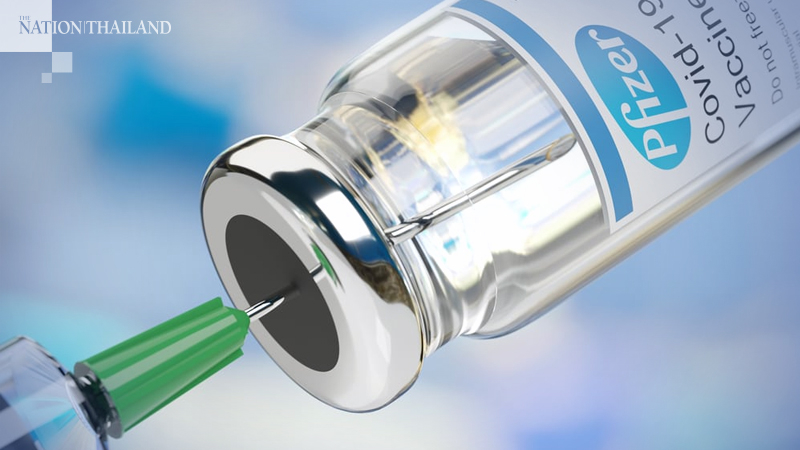

 Photo: Facebook @prhotnews02