Four gambling websites were shut by police, while 34 website administrators were arrested on Thursday.
Police announced the operation at the Central Investigation Bureau in Nonthaburi province. They added that the operation was in line with the National Police chief’s policy to tackle all kinds of gambling in the country.
The four shut websites were: VR898, Hattrick 988, Hattrick 888 and betway88. The money circulated in their system was over Bt1 billion.
Their server computers were located in Pong Nam Ron district of Chanthaburi province near the border with Cambodia.
The website operation was run in containers converted into offices. Police arrested 34 website admins – 17 males and 17 females – and confiscated 69 computers and 101 cellphones.
The officials also found financial and customer information in the computers.
However, the latest raid was not related to the raid on Apirak “Sia Po” Chatanon’s gambling network on the same day in Bangkok, police said.
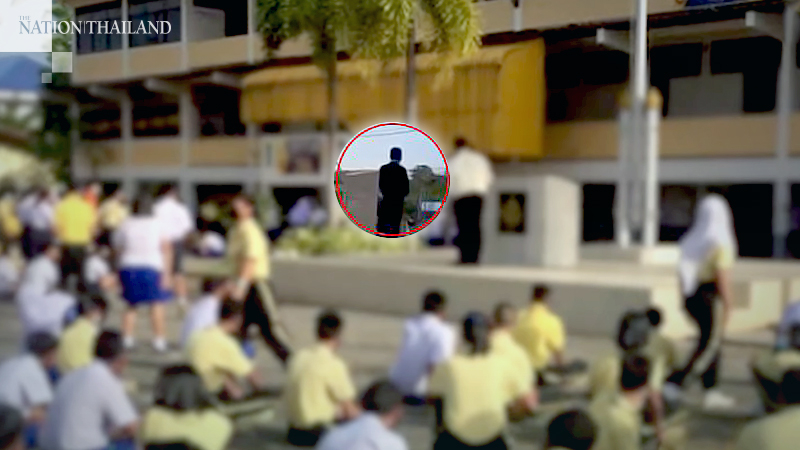
A school principal in Songkhla province pulled out a gun during morning assembly to protest against accusations that he was sexually involved with a student.
Initially, Thepha School’s principal, Sayan Chaleepol, 60, said farewell to everyone and apologised, before pulling out a gun and threatening the students and staff present.
One of the teachers managed to take the gun from Sayan, and all classes were immediately cancelled. The school will open again on Monday.
The principal, meanwhile, has been ordered to report to the Secondary Educational Service Area Office 16 in Songkhla.
A Grade 9 student’s mother has filed a police report accusing Sayan of having sexual relations with her daughter.
The parent told the press that the affair started at the beginning of this year and that her daughter had visited the principal at his home.
She said she had met Sayan earlier this week and demanded he quit and leave the area. However, the principal denied the accusation, so she had no choice but to take the issue to the police.
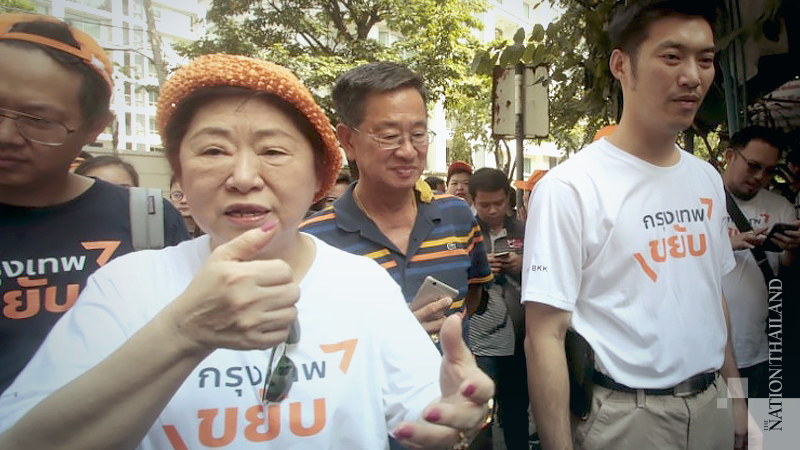
The Royal Forest Department on Thursday filed a police complaint at Natural Resources and Environmental Crime Division against Progressive Movement leader Thanathorn Juangroongruangkit, his mother Somporn and his sister Chanaphan for allegedly encroaching on national forest land in Ratchaburi province.
“The department had started investigating the lands owned by Somporn in Ratchaburi’s Jombeung district since December last year,” department director-general Adisorn Noochdumrong said. “We found that the three owned more than 2,100 rai [496 hectares] of forest land based on 60 title deeds, which had been illegally issued by officials of Jombeung district office.”
According to Adisorn, Somporn held 53 title deeds of 1,940-3-93 rai of land, while Chanaphan held 5 title deeds of 132-0-22 rai of land, while Thanathorn held two title deeds of 81-3-67 rai of land. Combined, the lands owned by the three are 2,154-3-82 rai, which are now being used for eucalyptus plantation.
“The title deeds had been issued in 1978, but the land in these areas had been announced as national forest land since 1969,” said Adisorn.
The department filed criminal and civil charges, demanding compensation of Bt147.06 million from the three members of the Juangroongruangkit family, as well as from five officials — Waniphop Thamwiset, Ruam Chalitkomut, Phairoj Rattanawisalnon, Kosol Laksitanon, and Chaleomwong Sappasiri — of the Jombeung district office who are allegedly involved in the survey and issuance of title deeds, he said.
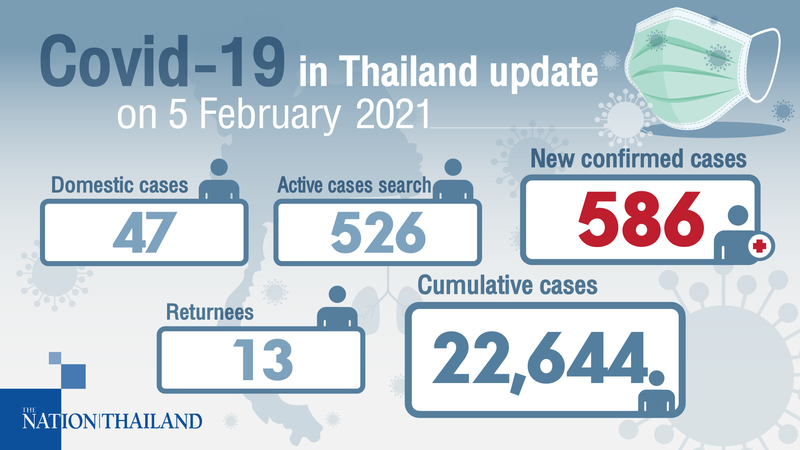
The Centre for Covid-19 Situation Administration (CCSA) on Friday reported 586 new cases, 13 of whom are Thai returnees in quarantine facilities.
Of the remaining 573, 47 had been exposed to the virus while visiting high-risk areas. Samut Sakhon again leads the list with 26 cases, followed by 18 in Bangkok and three in Tak.
The rest of the cases were found via proactive testing, with the highest number – 522 – found in Samut Sakhon, three in Phetchaburi and one in Sa Kaew. The Sa Kaew case is a Cambodian prisoner who had to be tested three times before the infection was confirmed.
The 13 Thais returnees came from the United States, Italy, Tanzania, South Africa, Rwanda, Egypt, Germany, the United Kingdom and Myanmar.
Meanwhile, 533 patients have recovered and been discharged.
As of Friday, the number of confirmed cases in Thailand had risen to 22,644. Of these, 20,126 had been contracted locally, including 12,824 who were found via proactive testing, while 2,518 were returnees. So far, 15,331 have recovered and been discharged, 7,234 patients are still in hospital (2,272 in hospitals and 4,962 in field hospitals) and the death toll remains at 79.
According to Worldometer, as of 10am, the number of confirmed cases globally had risen to 105.4 million (up by 504,938), 77.25 million have recovered, 25.85 million are active cases (105,747 in severe condition) and 2.29 million have died (up by 14,287).
Thailand ranks 115th on the global list of most cases, which is topped by the US with 27.26 million cases, followed by India 10.8 million, Brazil 9.39 million, Russia 3.92 million and the United Kingdom 3.89 million.
CCSA spokesperson Dr Apisamai Srirangsan said an intensive hunt for infected people over the past 10 days has made the daily numbers high for a week. She explained that a new measure has been applied to seven large factories called “seal and bubble”.
Under this measure, workers will be provided with food and facilities to live in the factory full time for 24 days.
She also said these people should be applauded because they are sacrificing their comfort to ensure the health security of everybody else.
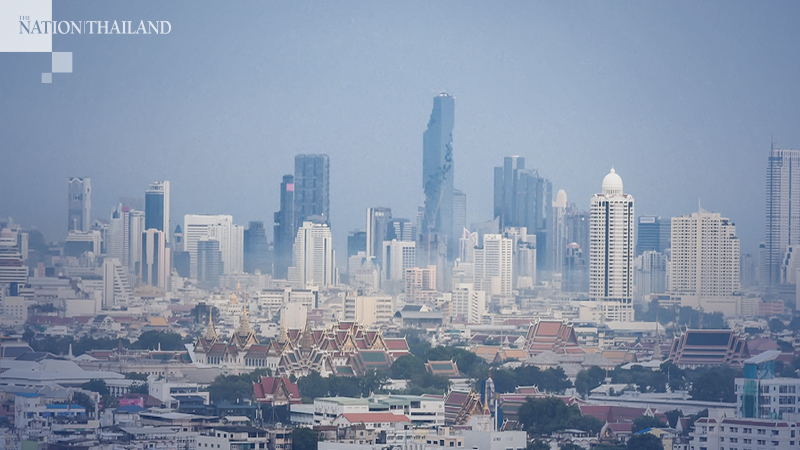
Air pollution in 19 provinces hit unsafe levels on Friday morning, the Pollution Control Department reported.
Thailand’s standard for safe levels of PM2.5 (particles less than 2.5 micrometres in diameter) is 50μg/m3 or below.
The 19 provinces are: Bangkok, Pathum Thani, Nonthaburi, Nakhon Pathom, Samut Sakhon, Samut Prakan, Chiang Rai, Chiang Mai, Lampang, Phitsanulok, Tak, Ayutthaya, Kanchanaburi, Prachin Buri, Sa Kaeo, Chachoengsao, Ratchaburi, Rayong and Trat.
PM2.5 readings as of Friday morning:
North: 28 to 79 μg/m3.
Northeast: 16 to 38 μg/m3.
Central region and West: 34 to 66 μg/m3.
East: 37 to 59 μg/m3.
South: 10 to 25 μg/m3.
Bangkok and its vicinity: 43 to 78 μg/m3.
People in areas where PM2.5 pollution is bad, especially the elderly, children, and patients with respiratory diseases, have been advised to monitor their health and reduce time spent on outdoor activities.
The PM2.5 situation can be followed on Air4Thai.com and bangkokairquality.com websites, or via Air4Thai and AirBKK smartphone applications.
The Geo-Informatics and Space Technology Development Agency said on Thursday that the Suomi NPP satellite had found 1,035 hotspots in Thailand’s North, Central, Northeast and East, especially in forest conservation and agricultural areas.
The agency suspected that it was due to fuel management and farm clearing, adding that hotspots were found also in Cambodia and Myanmar.
The Stock Exchange of Thailand (SET) Index rose by 9.24 points, or 0.62 per cent, to 1,492.22 in the morning session on Friday.
The SET index is expected to rebound between 1,490 and 1,495 points on hopes of rollout of US economic stimulus measures and the rise in oil price, a Krungsri Securities analyst said.
“However, outflow of foreign funds would plunge the SET,” he predicted.
He recommended that investors buy:
▪︎ PTTGC, TOP, IVL, EPG, VNT, CBG, ROJNA, TVO, STGT, HTC, CPF, RCL, PSL, SYNEX, COM7, XO, WICE, JMT, JMART, SINGER, MTC, SAWAD and KCE, whose fourth-quarter results in 2020 were expected to improve.
▪︎ ADVANC, INTUCH, AP, SIRI and WHAUP, which pay high dividends.
The SET Index closed at 1,482.98 on Thursday, up 1.23 points, or 0.08 per cent. Total transactions amounted to Bt77 billion, thanks to mass buy-ups of energy and bank shares.
The baht opened at 30.09 to the US dollar on Friday, weakening from Thursday’s close of 30.05.
The Thai currency is likely to move between 30 and 30.15 on Saturday, Krungthai market strategist Poon Panichpibool said.
He forecast that the market is waiting for the US employment report, before deciding to free the baht from their hands.
He added that “reflation trades” status of the dollar would be reduced if the US economic information to be announced in the near future is better than investors expected. In that case, the dollar would strengthen and the baht would weaken slightly.
Poon added that exporters aimed to sell the dollar when it is around Bt30.05 to Bt30.15.
In case the market is not in a complete “risk off”, when Thai assets are sold and foreign fund flows out of Thailand, the baht will weaken to a maximum of 30.15 to the US dollar.
The market strategist said that overall the market was ready for risk, due to investors’ hopes of a US economic recovery. The Rusell 2000 index increased by almost 2 per cent.
The US Ten-Year Treasury yield stayed at 1.14 per cent, due to some people playing safe amid the rise of stock markets. The dollar strengthened compared to other main currencies, and the dollar index moved near 91.5 points.
In the EU, the Stoxx 50 index rose by 0.9 per cent, supported by the growth of the FTSE index in Italy. The euro weakened to $1.197, while the pound strengthened to $1.367.
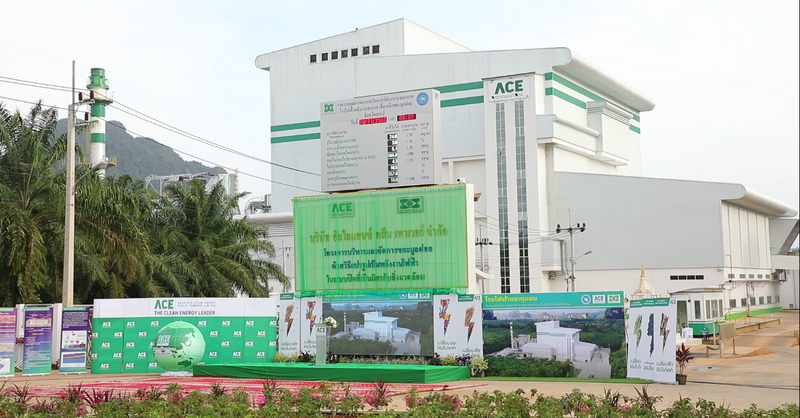
SET-listed Absolute Clean Energy (ACE) says its zero-waste incineration plant has launched operations in Krabi, aiming to rid the southern province of more than 800,000 tonnes of garbage.Thailand generated 27.4 billion tonnes of waste in 2017, or around 75,046 tonnes a day, according to official statistics.Under the “Krabi Goes Green” concept, the new incinerator will eat into Krabi’s landfills while also tackling the growing volume of garbage generated by residents and tourists in the holiday province.
Jiratha Songmetta, Chairman of ACE Executive CommitteeThe Krabi plant follows the first ACE incinerator in Khon Kaen and claims to generate zero waste-water and air pollution.No waste-sorting is necessary since the high-temperature incinerator burns paper, plastic, food waste and even metal.
The plant runs round the clock and processes up to 450 tonnes of waste per day, generating 6 megawatts of electricity per year. About 4MW of that will be sold under contract to the Provincial Electricity Authority.Krabi city mayor Keeratisak Phukaoluan said the plant handles around 200 tonnes of daily waste, while the rest comes from municipal landfills.
He said the incinerator should burn through 800,000 tonnes of dumped waste within 10 years, leaving the landfills to be renovated as parks.ACE will manage the plant under a 25-year contract that can be extended, he added.
The price of gold slumped by Bt250 per baht weight in the morning trade on Friday, the Gold Traders Association reported.
As of 9.26am, the buying price of a gold bar was Bt25,550 per baht weight and selling price Bt25,650 while gold ornaments cost Bt25,089.80 and Bt26,150, respectively.
On Thursday’s close, the buying price of a gold bar was Bt25,800 per baht weight and selling price Bt25,900 while gold ornaments cost Bt25,332.36 and Bt26,400, respectively.
Yingyong Yodbua-ngam, a famous Thai folk singer and actor, on Thursday was given a suspended prison sentence of one year and fined Bt25,000 by Nonthaburi provincial court for exaggerating the medical efficacy of Chong Cao (cordyceps sinensis), a traditional Chinese remedy for the kidneys.
Yongyong went on television on December 21, 2020 and advertised the medical quality of a food supplement made from Chong Cao, saying that it could cure joint and knee pain in elderly people. The advertisement has led to complaints being filed against him and the advertising company, Nine Perfect Media Ltd, for exaggerating product quality and advertising the quality of food or drug without permission from the Food and Drug Administration.
The defendants pleaded guilty to the charges, which carries a sentence of two years’ imprisonment and Bt50,000 fine. Their confession led to the court halving their jail term to one year under suspension and imposing a fine of Bt25,000.
Earlier in January, the National Broadcasting and Telecommunications Commission had announced that it was tying up with the Food and Drug Administration to target those who have been falsely advertising food supplements on media channels, especially the cordyceps sinensis, which have been publicised as a cure-all, especially for kidney disease.






 Yingyong (File Photo)

