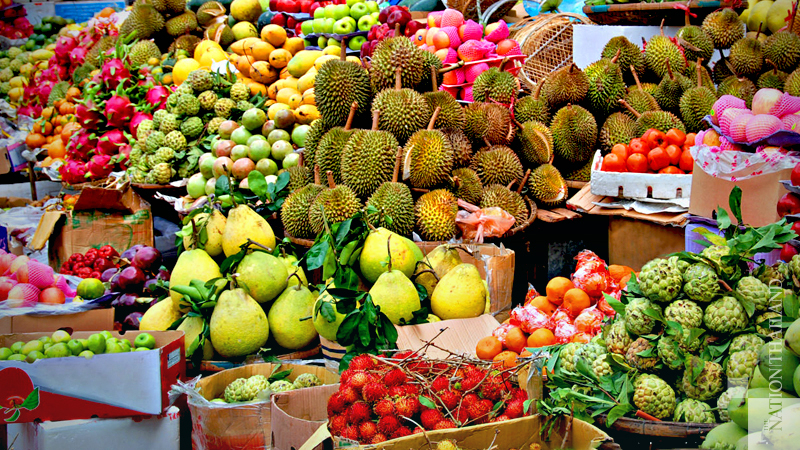
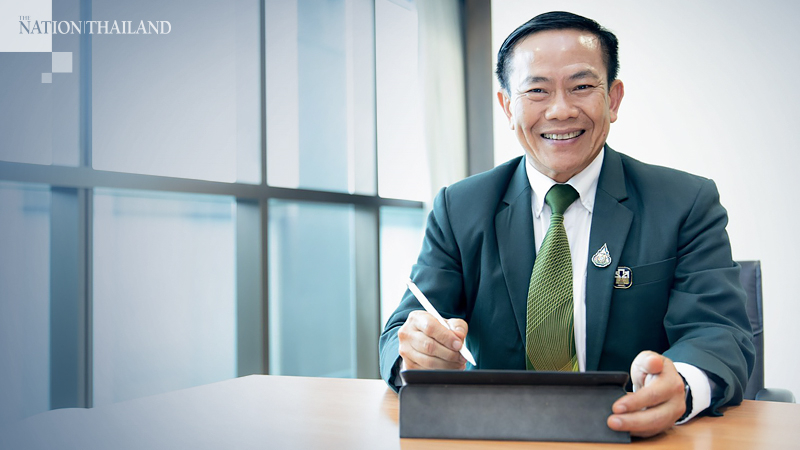
In a teleconference with Thailand’s fruit board, Alongkorn Polabutr, adviser to the agriculture and cooperatives minister, confirmed plans for expanding both local and international markets for the country’s fruit industry.
The fruit board has earmarked Bt492 million for increasing sales channels for fruit growers as well as launching promotion campaigns. It is also planning link up with the Chinese rail link via Laos as well as link up with markets in South Korea, Russia, Central Asia, the Middle East and Europe.
The traceability system will also be improved to ensure consumers’ confidence.
Thailand’s fruit sector has been badly affected in the fallout of Covid-19, while the Office of Agricultural Economics has predicted that the fruit harvest this year will rise by 24 per cent.
The meeting also agreed to include another 160 farming households in the 2020 Farmers’ Remedy Project, bringing the number of households covered up to 202,173.
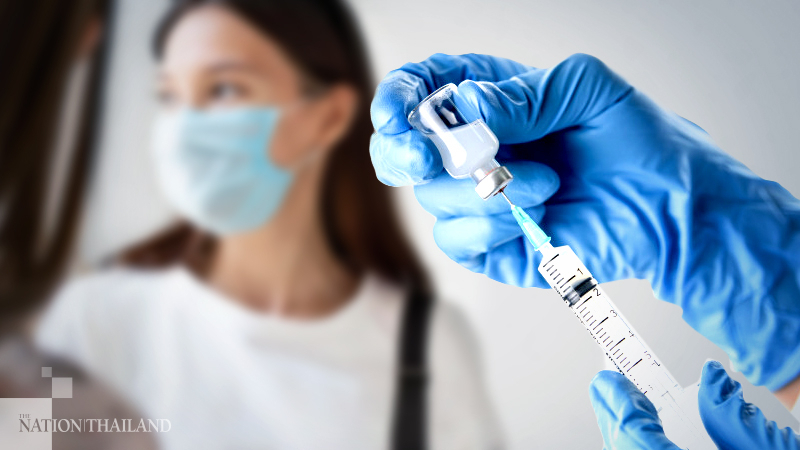
The Foreign Ministry issued a statement on Thursday saying the government has attached the highest priority to the safety and quality of Covid-19 vaccines being procured.
The statement also said that all vaccines will first be approved by the Thai Food and Drug Administration before the population is administered shots.
The statement, released by the ministry’s permanent secretary Thani Thongphakdi, said Thailand has negotiated with all potential manufacturers and is not relying on any single candidate. However, it said, deals have only been confirmed with manufacturers that can accept Thailand’s terms and conditions.
Meanwhile, the statement said, AstraZeneca reviewed many companies in Thailand and decided that Siam Bioscience has the potential to manufacture viral vector vaccines. It also meets the requirement of producing at least 200 million doses per year.
Thailand’s arrangement with AstraZeneca to produce vaccines for local use as well for distribution to other countries in Southeast Asia is based on a “no profit, no loss” principle, the statement said.
Meanwhile, the Cabinet has approved Bt1 billion for the National Vaccine Institute to research and develop vaccines in Thailand. This budget will be divided among other manufacturers, like Baiya Phytofarm and Chulalongkorn University, who have the potential to develop a Covid-19 vaccine.
The statement also said the National Science and Technology Development Agency is working on developing a Covid-19 vaccine with Siam Bioscience.
As of Tuesday, Thailand has ordered 61 million doses of the vaccine from AstraZeneca and 2 million doses from China’s Sinovac. The director of the National Vaccine Institute has said the 63 million vaccines should be enough to cover the most vulnerable groups in Thailand.
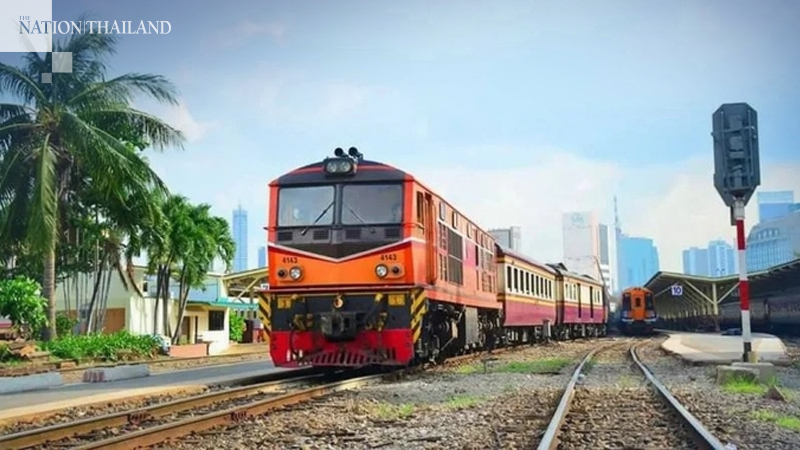
The State Railway of Thailand (SRT) is launching more train services to meet higher demand in February.
SRT governor Nirut Maneephan said the move was in line with the easing of Covid-19 containment measures by the Centre for Covid-19 Situation Administration.
He added that the SRT had adjusted terminal stations on some train routes.
Northern line: Service starts on February 1
No. 207/208 Bangkok-Nakhon Sawan-Bangkok (changed to Ayutthaya-Nakhon Sawan-Ayutthaya)
No. 303 Bangkok-Lopburi (changed to Ayutthaya-Lopburi)
No. 318 Lopburi-Bangkok (changed to Ayutthaya-Bangkok)
No. 401/402 Lopburi-Phitsanulok-Lopburi
No. 339 Bangkok-Kaeng Khoi (changed to Bangkok-Ayutthaya)
No. 210 Ban Takhli-Bangkok (changed to Lopburi-Ayutthaya)
Northeastern line: Service began on January 28
No. 419/420 Nakhon Ratchasima-Ubon Ratchathani-Lam Chi
No. 489/490 Surat Thani-Khiri Rat Nikhom-Surat Thani
Eastern line: Service starts on February 1
No. 277/278 Bangkok-Kabinburi-Bangkok
No. 279/280 Bangkok-Ban Khlong Luk Border-Bangkok (changed to Bangkok-Aranyaprathet-Bangkok)
Nirut said the SRT had implemented measures to prevent the spread of Covid-19, such as setting up Covid-19 screening and hand sanitising checkpoints, while passengers are required to wear mask and check-in via ThaiChana smartphone app.
For more information, contact SRT call centre: 1690, or visit @pr.railway Facebook page.
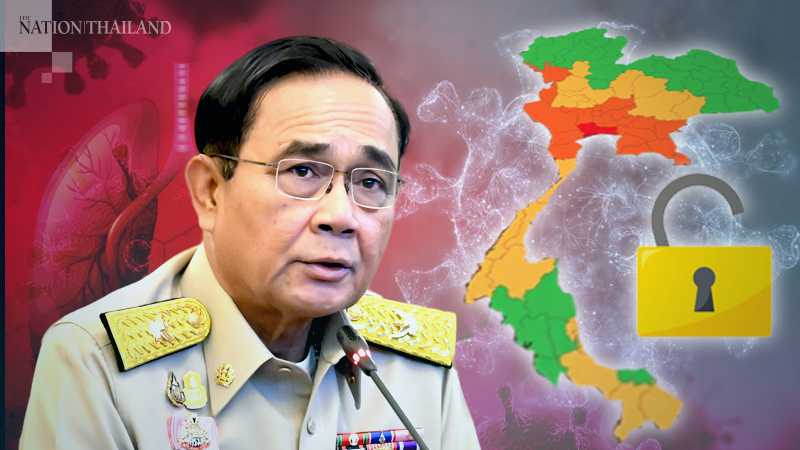
The Centre for Covid-19 Situation Administration (CCSA) approved new criteria and colour coding for provinces as the situation has improved in some areas, spokesman Dr Taweesin Visanuyothin said on Friday.
The new measures will go into effect from February 1. Though no lockdowns or curfews have been mentioned, gambling dens, casinos, and stadiums remain closed nationwide.
Maximum control (Maroon)
Samut Sakhon
The following locations will remain closed:
– Pubs, bars, karaoke and all entertainment venues
– Boxing training camps, indoor gyms and fitness centres
– Amulet shops
– Spa, massage outlets and similar establishments
– Schools, educational institutions and tutorial schools
– Amusement parks, playgrounds
– Gaming arcades
– Internet cafes
– Exhibitions, meeting halls and other gathering venues
– Bus terminals
The following locations can continue operating under strict preventive measures:
– Flea markets (social distancing measures must be in place and customers limited).
– Restaurants can operate until 9pm but are not allowed to serve alcohol.
– Malls and department stores can open until 9pm.
– Child and elderly care centres can only open for permanent residents.
– Hotels and temporary accommodations must use a tracking system to check on the number of people entering and exiting.
High control (Red)
Bangkok, Pathum Thani, Samut Prakan, Nonthaburi
– Pubs, bars, karaoke and all entertainment venues remain closed for in-house service, but takeaways are allowed.
– Restaurants can serve until 11pm but no alcoholic drinks are allowed (people can take alcoholic drinks home).
– Schools, educational institutes and tutorials can open provided classes are kept small.
– Seminars, banquets or catered events can be held with no more than 100 participants. No alcohol or dancing is allowed at these events.
– Department stores, malls and supermarkets can open, but no activities or promotions that bring many people together are allowed.
– Convention halls or exhibitions can open provided all preventive measures are followed.
– Migrant workers must limit their movements, use the MorChana tracking app and seek permission from health officers for inter-provincial travel.
– Massage shop and spa can open but customers limited
– Gyms, fitness centres, boxing camps can open and hold matches but without an audience.
Medium control (Orange)
Kanchanaburi, Chanthaburi, Chachoengsao, Chonburi, Chai Nat, Trat, Tak, Nakhon Nayok, Nakhon Pathom, Prachinburi, Phetchaburi, Rayong, Ratchaburi, Lopburi, Samut Songkhram, Sa Kaew, Saraburi, Suphanburi, Ayutthaya and Ang Thong
– Pubs, bars, karaoke and entertainment venues can operate provided customer numbers are limited. Alcohol can be served until 11pm and live music allowed provided nobody dances.
– Restaurants can open under social-distancing practices until 11pm.
– Seminars, banquets and catered events can be held with no more than 300 participants. No alcohol or dancing is allowed at these events.
– School, education institute, or tutorial school can open but classes must be kept small.
– Department stores, malls and supermarkets can open as normal, provided no promotions bringing together people are held.
– Conventions or exhibitions allowed provided all preventive measures are in place.
– Gyms, fitness centres and boxing training camps can hold competitions with a limited audience.
High surveillance (Yellow)
Kamphaeng Phet, Chaiyaphum, Chumphon, Nakhon Ratchasima, Nakhon Sawan, Narathiwat, Buri Ram, Prachuap Khiri Khan, Phang Nga, Phetchabun, Yala, Ranong, Songkhla, Sukhothai, Surat Thani and Uthai Thani.
– Pubs, bars, karaoke and other entertainment venues can open and serve alcohol until midnight. Customers must be limited.
– Restaurants can open under social-distancing practice until midnight.
– Department stores, malls and supermarkets can open as per normal but no activities bringing people together allowed.
– People travelling from high-risk areas will be screened.
– Massage parlours, massage outlets and spas can open as per normal.
– Gyms, fitness centres and boxing training camps can open and competitions can be held with a limited audience.
The rest of the provinces have been marked green, or under surveillance, can allow entertainment venues, including pubs, bars and karaoke, to open providing operators follow preventive measures. These provinces are also required to screen people entering the province.
Dr Taweesin said that though the virus situation in many provinces is improving, people still need to maintain good hygiene practices, at least until the virus becomes a regular disease that health authorities can handle.
Several agricultural products will see rise in prices in February due to the improving Covid-19 situation and increased domestic demand during the Chinese New Year festival, according to the Research and Innovation Development Centre at the Bank for Agriculture and Agricultural Cooperatives (BAAC).
BAAC assistant manager Somkiat Kimaoha said on Friday: “Among the products that will see rising prices are unmilled jasmine rice at Bt12,104-Bt12,276 per tonne, a 3.09 to 4.55 per cent increase over January, while unmilled sticky rice will be at Bt11,073 to Bt11,721 per tonne, a 3.95 to 10.04 per cent increase,” he said. “Corn for animal feed will see a slight increase in price by 0.5 to 1 per cent to Bt8.15 to Bt8.19 per kg, as the export of cattle products is slowly recovering, while the price of sheet rubber will increase by 0.94 to 1.5 per cent to Bt53.85 to Bt54.15 per kg due to increasing demand in the glove manufacturing industry amid the Covid-19 situation which is still serious in many countries.”
The BAAC also estimated that tapioca price would rise by 0.5 to 2.97 per cent to Bt2.03 to Bt2.08 per kg, while oil palm price will rise by 0.57 to 2.72 per cent to Bt6.8 to Bt6.95 per kg following the easing of lockdown measures in many provinces that is expected to drive up demand for biodiesel in the transport sector.
“The Chinese New Year festival [starting February 12] will also drive up the prices of pork by 1.95 to 2.8 per cent to Bt76.39 to 77.03 kg,” he added
“Some products, however, will see decrease in price next month, such as white leg shrimp [Litopenaeus vannamei], which could go down to Bt132.15 to 136.15 per kg, falling 4.79 to 7.59 per cent from January due to decrease in demand for seafood during the Covid-19 outbreak, and the fact that people prefer buying chicken and pork during the Chinese New Year than shrimp,” added Somkiat.
Thailand may have to postpone the launch of its Covid-19 vaccination programme due to issues with transportation and restrictions on export in the European Union.
The government had earlier scheduled February 14 as the first day of vaccination.
Deputy Prime Minister and Minister of Public Health Anutin Charnvirakul, who attended the National Vaccine Committee meeting on Thursday, stated that they had discussed the management of 50,000 doses of Covid-19 AstraZeneca vaccine. He said that it was not clear when the vaccine would arrive in Thailand, but it may affect the scheduled launch on February 14. However, he expected the vaccine to arrive in Thailand in February despite uncertainty over transportation and the EU restrictions on export of vaccines.
The first batch of AstraZeneca vaccine for Thailand is being made in Italy. If the European Commission decided to block the export, the vaccine may arrive by June since the contract with AstraZeneca stated that the vaccines would be completely delivered by June, Anutin said.
“Thailand has requested an amendment to the contract to deliver the first lot of 50,000 doses, and then another 100,000 doses”, Anutin emphasised.
Nakorn Premsri, director of the National Vaccine Institute (NVI), said the institute has coordinated with Thai Health Promotion Foundation (ThaiHealth) to prepare data about AstraZeneca’s vaccine, in particular, providing information on side-effects that may occur, preparation and post-injection, for public and target groups to receive correct information before making a decision.
Sopon Mekthon, chairman of the Covid-19 Immunisation Administration Subcommittee, said the board had added obese people among the first groups to be considered for vaccination as well as various chronic disease groups due to the same risk. However, it depends on the patient’s willingness.
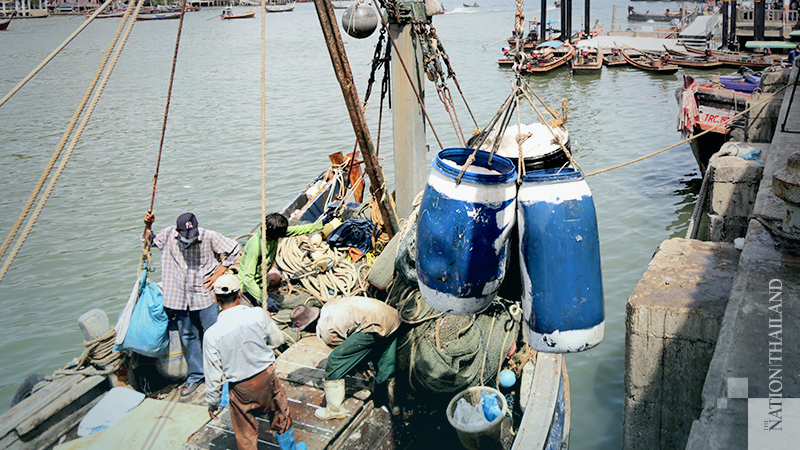
Myanmar migrant workers unload fishing boats and sort out the catches at the jetty in Ranong province on Friday.
Since most migrant workers in the province are employed by the fishing industry, they are one of the key engines driving the provincial economy.
Hence, with cooperation between government agencies and Ranong residents, migrant workers are still allowed to work, even though the rising number of cases in Myanmar is triggering fear among Thais.
However, officials are monitoring migrant workers closely to ensure Ranong does not suffer the same fate as Samut Sakhon, which is overwhelmed by Covid-19 cases.
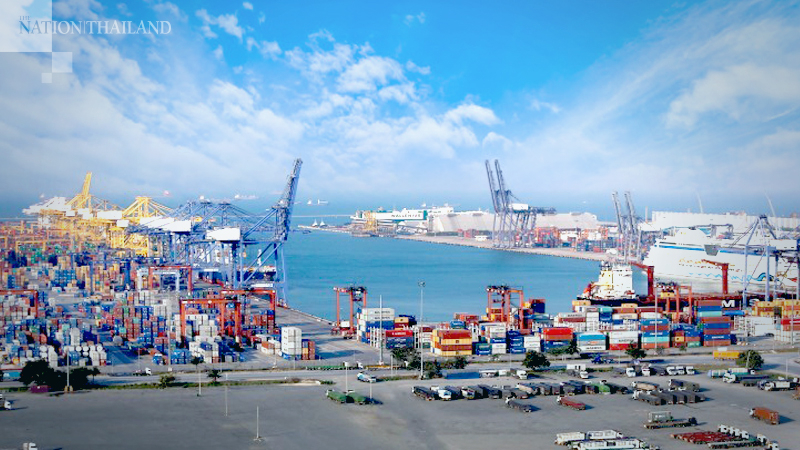
The Port Authority of Thailand (PAT) is readying the bidding process for the dredging project at Laem Chabang Port in Chonburi province to increase traffic flow and ensure the safety of ships docking at the port, PAT director-general Vice Admiral Kamolsak Promprayoon said.
“The project will cover the dredging of two ship basins and a fairway, which will remove excessive soil and maintain the level of above-ground water within the safety standard,” he said. “Furthermore, it will ensure that large container ships can dock with no problem and hopefully will attract more ships to use the port to its fullest capacity.”
Kamolsak added that currently Basin 1 has excessive soil at 401,921 cubic metres above safety standard, while Basin 2 is 568,139 cubic metres above the standard, and the fairway is 828,380 cubic metres above the standard.
PAT expected the project to be completed within 360 days.
The project is a part of Phase 3 development of Laem Chabang Port, which aims to increase the port’s capacity from 11 million TEU (twenty foot equivalent unit) containers per year to 18 million containers per year. Phase 3 also includes the construction of the new F port, scheduled to start in October 2022 and open for use in 2024, and the opening of the E port in 2030.
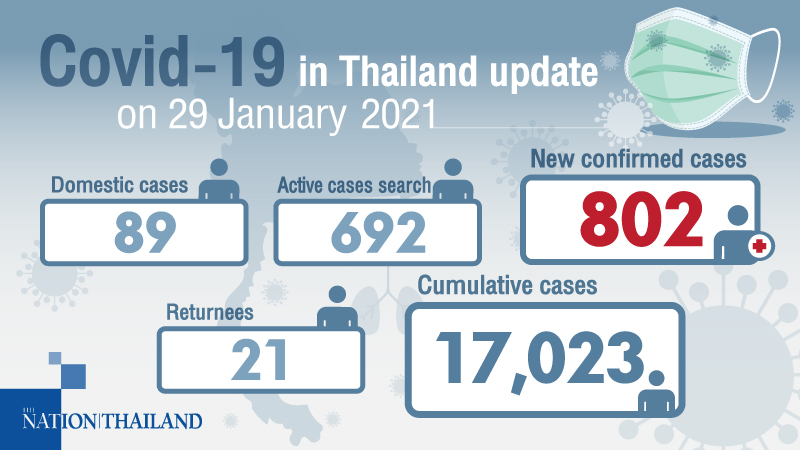
The Centre for Covid-19 Situation Administration (CCSA) reported 802 new cases on Friday, including 21 returnees.
Of the new cases, 89 had been exposed to the virus while visiting high-risk areas. Of these, 79 infections are in Samut Sakhon, seven in Bangkok, two in Ayutthaya and one in Ang Thong.
Meanwhile, proactive testing has led to the discovery of 692 cases, of which 686 are in Samut Sakhon, three in Bangkok, and one each in Nonthaburi, Sa Kaew and Rayong.
Dr Taweesin Visanuyoth, spokesperson for the CCSA, said 12,786 or 70 per cent of the total infections since the virus hit Thailand in March last year have occurred in the new wave.
Meanwhile, of the 21 returnees, 19 arrived from different countries, while two sneaked across the Malaysian and Myanmar borders and been arrested.
Of the 19 legal arrivals, three came from the US, two each from India, Germany, the Netherlands and Saudi Arabia, and one each from Bahrain, Indonesia, Ethiopia, Sweden, Switzerland, South Africa, United Kingdom and Austria.
As of Friday, the number of confirmed cases in Thailand has risen to 17,023, 14,585 of which had been contracted locally. So far, 7,664 cases have been uncovered through proactive testing, while 2,438 are returnees. A total of 11,396 people have recovered and been discharged from hospital, while 5,551 are still in hospital and the death toll stands at 76.
According to the Worldometer, as of 10am, the number of confirmed cases globally had risen to 102 million (up by 60,212), of whom 73.86 million have recovered, 25.96 million are active cases (109,712 in severe condition) and 2.2 million have died (up by 16,388).
Thailand ranks 119th on the global list of most cases. The topping the list is the US with 26.34 million cases, followed by India 10.72 million, Brazil 9.06 million, Russia 3.79 million and the United Kingdom 3.74 million.
Dr Taweesin said CCSA has approved new criteria for the relaxation of controls for some businesses and will only keep Samut Sakhon under maximum control.
Some control measures will still be in place in Bangkok and other provinces with a high number of infections. Under these measures, bars, pubs and entertainment venues will remain closed, restaurants will have to close by 11pm and cannot serve alcohol, while schools will be allowed to partially open depending on the situation.
Chonburi shuts down hotels, tourist sites to facilitate govt aid for employees
NationalJan 29. 2021File photo of tourists visiting Chonburi
By THE NATION
The Chonburi communicable disease committee on Thursday ordered the closure of all hotels and similar businesses as well as all public and private tourist attractions in the province until further notice.
“Business venues that still have customers and wish to stay open must notify the district chief within seven days after the order is effective,” the order said.
Owners of hotels and similar businesses must provide financial assistance to their employees after shutting down to dissuade them from leaving the province.
A news source revealed that the order came after the Thai Hotels Association (Eastern Chapter) had proposed to the committee that an order be issued for closure of hotels so that their employees could be entitled to financial aid provided by the government, which has a condition that the businesses must have been ordered shut by the authority in order to be eligible for aid.
Meanwhile, Chonburi Governor Phakthon Thianchai has reportedly sent a letter to the Centre for the Covid-19 Situation Administration to consider relaxing lockdown measures in the province as no new cases had been found in the past seven days (as of Thursday).
Chonburi has reported a total of 735 positive cases of whom eight patients are being treated while 724 have been cured and three persons have died.





 File photo of tourists visiting Chonburi

