The Stock Exchange of Thailand (SET) Index fell by 45.49 points, or 3.07 per cent, to 1,436.89 in the morning session on Monday.
The index fell sharply due to the surge in Covid-19 cases in Thailand, by 576 on Sunday, the highest single-day spike since the outbreak.
The top 10 stocks with the highest trade value in the morning session were KBANK, STGT, PTT, CPALL, AOT, CPF, BANPU, DELTA, BAM and IVL.
An analyst at Kasikorn Securities expected the SET this week to move between 1,465 and 1,500, advising investors to follow the Monetary Policy Committee meeting, Thai exports in November, the Covid-19 situation, the US-China conflict and Brexit negotiations.
The SET Index closed at 1,482.38 on Friday, down 1.51 points or 0.1 per cent. Total transactions amounted to Bt117.09 billion with an index high of 1,489.78 and a low of 1,475.01.
The price of gold surged by Bt300 per baht weight in morning trade on Monday after rising by Bt50 per baht weight at close on Saturday, the Gold Traders Association reported.
As of 9.26am, the buying price of a gold bar was Bt26,800 per baht weight and selling price Bt26,900 while gold ornaments were priced at Bt26,317.76 and Bt27,400, respectively.
At close on Saturday, the buying price of a gold bar was Bt26,500 per baht weight and selling price Bt26,600 while gold ornaments were Bt26,029.72 and Bt27,100, respectively. The price jumped by Bt350 per baht weight last week.
Spot gold price moved to US$1,898 (Bt56,966) per ounce in the morning, while Comex (Commodity Exchange) gold price to be delivered in February next year dropped by $1.5 to $1,888.9 per ounce on Friday due to the dollar’s appreciation and mass sell-offs of the precious metal after the price hit the highest level in six weeks on Thursday.
Hong Kong gold price rose by HK$90 to $17,460 (Bt67,578) per tael, the Chinese Gold and Silver Exchange Society reported.
The Fiscal Policy Office (FPO) believes Brexit is unlikely to have much impact on the Thai economy, as the value of trade, investment and tourism between the two countries is not high.
Pisit Puapan, FPO director of Macroeconomic Policy Bureau, said that last year the UK was ranked the 20th major export destination for Thai goods and services, accounting for only 1.6 per cent of Thailand’s total export. UK was the 12th largest investor in Thailand last year.
However, he added that Thailand should rush to hold trade talks with UK to foster trade ties after Brexit and seek ways to provide more convenience to traders between the two countries.
Thailand should also hold talks for a free trade agreement with the UK, he added.
The Federation of Thai Industries chairman, Suphant Mongkolsuthree, backed Pisit’s suggestion to initiate FTA talks with the UK and resume free-trade talks with the European Union (EU).
The Department of Trade Negotiations recently released a complete study on the pros and cons of Thailand resuming free-trade talks with the EU for Commerce Minister Jurin Laksanawisit to consider.
The Institute of Future Studies for Development has completed the study, which shows that if Thailand and 27 EU members, excluding UK, cancel all import tariffs, then in the long run Thailand’s gross domestic product will be boosted by 1.28 per cent and be worth Bt205 billion per year.
President of the association, Charoen Laothamatas, said it would be the first time that Thai exports would be lower than that of Vietnam, which is expected to export a total of 6 million tonnes.
Thai rice export has faced many obstacles, including higher price when compared to competitors.
The situation has been aggravated by the strengtening baht, he added.
Honorary president Chookiat Ophaswongse added that the value of the estimated 5.7 million tonnes of rice export this year would be Bt115 billion, down 12 per cent year on year.
Another reason for the low export is the shortage of containers for transporting rice, he added.
The Electricity Generating Authority of Thailand (Egat) is in talks with AI and Robotics Ventures Co Ltd (ARV), a subsidiary of PTT Exploration and Production Pcl (PTTEP), to jointly explore a business opportunity in the future, Egat governor Boonyanit Wongrukmit said.
He added that one possible collaboration could be in the use of drones to inspect the conditions of Egat’s vast power transmission lines, which will help it reduce the cost of inspection.
He said that while Egat has demand to use such drone technology, ARV has the knowledge and technology, which will enhance Egat’s efficiency in the transmission line inspection. Both organisations can also team up to provide this service to other state-run electricity authorities.
ARV provides cutting-edge artificial intelligence and robotics solutions for businesses across industries. The application of ARV services and developing technologies ranges across air, sea and land.
In July this year, ARV formed a partnership with Thai Advance Innovation Co Ltd (Thai AI), a subsidiary of Thaicom Plc, on the development of drone technology with focus on agriculture drone to enable advanced smart farming solutions.
Financial experts believe investment outlook is bright for the first half of next year although recent rallies in many markets might make equities look expensive.
Siriporn Suwannagarn, managing director and financial advisory head of banking at Private Banking Group, expressed confidence that the availability of a Covid-19 vaccine, coupled with huge liquidity and new government stimulus packages would make the global economy grow faster next year.
“In the past month, the success in developing a vaccine would be a very good game changer for next year, as the vaccine would help us reopen the economy on a broad-based basis,” she told the Nation.
Many countries in the second half of this year have started to reopen their economies after they shutdown most businesses in the first half due to the coronavirus outbreak.
For the second half, they could not fully reopen all economic sectors, as services sector businesses such as air travel and tourism are still faced with limitations because of the persisting virus threat.
Lately some countries including Thailand have resumed lockdown restrictions in some cities due to a new round of infections.
Some countries such as the United Kingdom and the United States have started mass vaccination, making people hopeful that the spread of the virus would be contained.
“In terms of economic growth, we could see a short-term spike in growth for the first half of next year, and probably a little bit of a slowdown in the second half,” Siriporn said.
She expected the huge liquidity injected by central banks globally would remain next year due to no risk of inflation.
The US Federal Reserve is expected to keep its policy rates low and the US government led by president-elect Joe Biden will continue to support the economy via large fiscal spending, she predicted.
Expecting a bright outlook for next year investors have been very active in stock markets, pushing the index of many markets back to pre-virus levels.
Asked about equities looking expensive now, Siriporn said that investors have to look at specific sectors and stocks, not just look at broad-based valuation (price to earnings of the S&P or of the SET).
Anticipating more economic stimulus packages by the new US government, the US dollar is on a weakening trend. Siriporn suggested that investors also turn their focus to non-US equities, such as Asian stocks and China’s stocks in particular and some European assets.
For fixed income products, investors should look at corporate bonds and high yield bonds, as the government bond yield is too low, she said.
She, however, warned that despite the availability of a vaccine, there are still many challenges and markets are subject to volatility, so investors are recommended to diversify their portfolios.
Meanwhile, KBank Private Banking (KPB) head Jirawat Supornpaibul said that his clients were very lucky as most of them are richer from investments in 2020 which is a challenging year for investment.
“Those who take more risks have more returns, but those who take less risk, might not get better returns,” he said, in summing up the performance of KBank Private Banking doing investment management for wealthy clients this year.
This year, the US, China and Japan markets performed very well while Europe and Thailand did not, he said.
He forecast that equities, especially Asian stocks, would be the focus of investor communities in the first half of next year. His view is shared by many fund managers.
JP Morgan is overweight on Indonesia, South Korea and Thailand, according to CNBC channel.
Jirawat, however, warned that risks were still there and investors have to balance equities with other assets. He suggested that investors also hold onto gold.
Jirawat’s 10 tips to investors for the first half of next year are:
1. Stay invested in global equities
2. Don’t miss Asian equities
3. Capture recovery with cyclical and small/mid-cap
4. Maintain portfolio balance
5. Enhance returns through emerging market high yields
6. Hold onto gold, for now
7. Complement returns through private
assets and hedge funds
8. Position for weakness in the US dollar
9. Strengthen in emerging
currencies
10. Sustainability
In terms of sustainability, Jirawat suggested that investors look at companies which take care of environment issues, and ignore businesses that pollute the world.
Thai experts are worried that Britain’s impending withdrawal from the European Union (EU) could hit Thailand’s trade and investment in the country.
Krungthai Compass research centre’s senior director Phacharaphot Nuntramas said if Britain exits the EU without a deal on January 1, the pound is expected to weaken by about 10 per cent to 1.20 against the US dollar.
This would cause importers and exporters to delay trade in British products, he said.
“However, we believe that Britain and the EU can reach a deal to maintain trade privileges or else extend the negotiation period for up to three months,” he added, citing the far greater urgency of the Covid-19 crisis.
CIMB Thai Bank head of research Amonthep Chawla said the unclear direction of Brexit negotiations had triggered fears of higher product prices and inflation as the pound sterling had weakened sharply.
He also expects to see Brexit negotiations extended for another three months due to the Covid-19 outbreak, adding that the talks would not lead to a global financial crisis.
“However, Thailand should seek to sign a free trade agreement [FTA] with Britain to boost exports,” he said.
Siwat Luangsomboon, deputy managing director of Kasikorn Research, said Britain would face difficulties whether or not the outcome was a no-deal Brexit, as more than half of the country’s exports are to European countries.
Brexit would have no affect on Thailand since 2 per cent of Thai exports go to Britain, he said, adding that Thailand should still sign an FTA with Britain to boost exports.
“Whether or not we see a no-deal Brexit, the result will not impact financial markets because they have already priced in the outcome,” he said.
By The Washington Post · Mike DeBonis, Jeff Stein, Rachel Siegel · NATIONAL, POLITICS, CONGRESS
Senior lawmakers resolved a major standoff late Saturday night, clearing the way for Congress to pass a nearly $1 trillion economic relief package, after Democratic leaders and Sen. Patrick Toomey, R-Pa., struck a compromise over his proposal to rein in the lending powers of the Federal Reserve.
Toomey had created a major impasse last week by demanding new limits on the central bank’s emergency lending authority. His proposal, supported by Republican leadership, threatened the delicate negotiations over the relief package. But after hours of frenzied negotiations and meetings in the Capitol, a compromise between Toomey and Senate Minority Leader Chuck Schumer, D-N.Y., was brokered around 9:30 p.m., aides in both parties said.
The revised language bars the Federal Reserve from creating precise copies of the lending programs created through the $2 trillion Cares Act passed by Congress. It affirmatively shuts down as of Jan. 1 those programs, which were seeded with a $500 billion appropriation by Congress in March. As congressional negotiators have discussed for weeks, the $429 billion in unspent funds will be redirected to other programs in the new $900 billion bill.
Toomey made his original proposal to make sure that the emergency Federal Reserve facilities created by Congress would shut down at the end of the year. Democrats worried that Toomey’s initial proposal went too far in restricting the central bank’s ability to use its long-standing emergency lending authority to respond to future economic calamities.
Republicans believe the new language will still prevent the Fed from pursuing vast new lending programs on its own without permission – and new appropriations – from Congress. At the same time, it gives the incoming administration of President-elect Joe Biden the clear authority to pursue new tools in conjunction with the central bank to confront threats to the economic recovery from the pandemic.
The compromise language was described by three congressional aides familiar with its drafting who were not authorized to comment publicly.
Leaving his office just before midnight Saturday, Schumer declared a deal “very close” and predicted a resolution on Sunday.
“If things continue on this path and nothing gets in the way, we’ll be able to vote tomorrow,” he said.
However, at 12:18 a.m. on Sunday, President Donald Trump tweeted that Congress needs to give “more money in direct payments.” The Washington Post reported last week that White House aides talked Trump out of issuing a public statement demanding stimulus checks as big as $2,000, telling the president such a move could derail negotiations on the broader relief package. His tweet early Sunday signals that the president may not have given up on his demand.
The breakthrough with Toomey came after two days of scrambling that sent tremors across Capitol Hill, as lawmakers realized that a deal badly desired by both sides could fall through at the last minute.
The intensifying dispute had threatened to stymie talks over the relief package that would provide hundreds of billions in emergency aid to the unemployed and small businesses; funding for vaccine distribution and health-care facilities; and another round of stimulus checks to millions of Americans.
The need for such a package has only grown as the virus rampages across the nation and several emergency programs protecting tens of millions of Americans are set to expire in days.
The holidays, looming Senate runoff elections in Georgia and the prospect of a partial government shutdown on Monday are adding to the pressure for negotiators to complete a deal this weekend.
House Speaker Nancy Pelosi, D-Calif., earlier on Saturday called the dispute over Toomey’s proposal “the big thing” holding up an agreement.
Congressional leaders had given themselves until midnight Sunday to close out talks. Trump on Friday night signed a two-day spending bill to keep the government open until midnight Sunday. If no deal is reach on the stimulus package, lawmakers would have to pass another temporary measure before Monday. Otherwise, parts of the federal government would shut down.
The compromise between Toomey and Democratic leaders came together over the course of six frantic hours Saturday afternoon. As senators headed to the floor for a nomination vote shortly before 3 p.m., the dispute was threatening to turn into a partisan inferno.
Toomey had been arguing that the Fed’s programs, initially funded with a $500 billion congressional appropriation under the March relief bill, were of marginal utility earlier in the pandemic and no longer necessary.
Democrats had countered that the Toomey proposal represented an unusual political intervention into the independence of the Fed, limiting emergency lending powers it has possessed since 1932.
“It’s no surprise that Republicans are drawing a line in the sand over their ability to sabotage the economy, and tie the Biden administration’s hands,” Sen. Ron Wyden of Oregon, the ranking Democrat on the finance committee, said in a statement.
As debate intensified on Capitol HIll, former Federal Reserve chair Ben Bernanke weighed in on the dispute in an unusual public statement on Saturday, saying that the central bank’s emergency lending authorities should be at minimum as robust as they were before passage of the Cares Act in March. Bernanke said it was “vital” that the central bank’s ability to “respond promptly to damaging disruptions in credit markets not be circumscribed.” The Fed did not release a public statement Saturday on the matter.
In the late afternoon on the Senate floor, lawmakers met to directly work out the dispute after days of sputtering staff-level talks. Toomey and Sen. Mark Warner, D-Va. – both senior members of the Senate Banking Committee – sat facing each other, flanked by nearly a dozen other senators. After about 10 minutes of sometimes animated discussion, Toomey and several other senators retreated to Schumer’s office.
After a half-hour meeting, Toomey emerged cautiously predicting a deal was possible. After a second meeting with Schumer later in the evening, the two senators traded draft legislation and finally agreed shortly before 9:30 pm, tentatively ending the standoff.
Earlier in the evening Schumer had indicated in a call with Democratic senators that Toomey said he was willing to modify his proposal to reach a compromise and that talks would continue into the night, according to two people on the call spoke on the condition of anonymity. While Schumer said the Senate could vote as soon as Sunday on a final deal, others were cautious that the bill could be written and passed by Congress that quickly.
Lawmakers still have to resolve other issues. Those include eligibility for small-business relief; how to structure unemployment aid; and the criteria for sending out a $600-per-person stimulus check. Pelosi told House Democrats during a call on Saturday that lawmakers remained divided over the amount of money necessary for food assistance, according to a person who spoke on the condition of anonymity to share the speaker’s private remarks.
Many aides close to talks had expressed optimism that these issues could be addressed fairly quickly with the dispute over the Fed resolved. Sen. John Thune of South Dakota, the No. 2 ranking Republican, said earlier Saturday that the “probably more likely scenario” is that negotiations continue into Monday.
“But I think we’re in the homestretch; we’re on the glide path,” Thune said. “I think we’re going to get this done and help out the American people.”
Senate Majority Leader Mitch McConnell, R-Ky., has said lawmakers will not leave Washington for the holidays until a deal is done.
After the compromise was reached between Toomey and Schumer, McConnell’s office released a statement.
“Now that Democrats have agreed to a version of Sen. Toomey’s important language, we can begin closing out the rest of the package to deliver much-needed relief to families, workers, and businesses,” said Doug Andres, spokesman for McConnell.
Likely to run many hundreds of pages, the package is not only expected to carry a nearly $1 trillion virus relief deal but also $1.4 trillion in year-long appropriations for federal agencies; the extension of tens of billions of dollars in expiring tax breaks; a bipartisan energy bill; a long-delayed bipartisan solution to surprise medical billing; and dozens of other potential add-ons that lobbyists and congressional aides are hoping to include in this last legislative vehicle of the year.
Lawmakers will almost certainly be asked to vote on a broad piece of legislation with only hours to review it.
Failure to quickly contain Covid-19 could hit economy hard, ex-dean warns
EconDec 20. 2020Thai authorities place a razor wire fence around Mahachai Market where a largest cluster of Covid-19 infections originated in Samut Sakhon province.
By The Nation
Many businesses and workers may go bankrupt if a new wave of virus infection cannot be contained quickly, an economist has warned.
The second wave of Covid-19 outbreak has so far been limited to some areas, but it is quickly spreading, Anusorn Tamajai, former dean at Rangsit University’s Faculty of Economics, warned. He suggested that the government compensate businesses and workers affected by lockdown restrictions put in place in Samut Sakhon province, west of Bangkok.
The new wave of infections poses challenges for both businesses and the government as they have limited financial resources to deal with it, he said.
New cases of infections in Thailand shot up to 689 on Sunday in six provinces, the highest number of cases on a single-day since the outbreak early this year.
The largest cluster originated from Samut Sakhon where nearly 700 people have tested positive for the virus over the weekend, and most of them are Myanmar nationals who work as labourers in Samut Sakhon in related fishing industries.
The provincial governor has ordered lockdown restrictions for 14 days, from December 19 to January 3.
Anusorn said the government should undertake aggressive testing in key provinces which share a border with Myanmar, or have large numbers of foreign workers, such as Samut Sakhon, Samut Songkram, Samut Prakan, Nakhon Pathom, Ratchaburi, Ranong, Tak, Chiang Mai and Chian Rai. The government also has to ensure adequate medical supplies, he said. People have to wear masks, and public buses on risk routes have to be disinfected.
He said the government has to limit activities for New Year celebrations. He warned that if the government cannot contain the spread of the virus, it would damage the economy much more than when Thailand put the whole country in lockdown in March. Cases of infections may rise 4 to 5 times and it may take twice as long to contain the spread, he said.
He predicted that the Stock Exchange of Thailand Index would plunge sharply next week to below 1,438. The surge of virus cases will also limit the appreciation of the baht which had jumped to a seven-year high on Friday against the US dollar. The US move to place Thailand on a monitoring list of currency manipulators had strengthened the baht.
Gold and commodity prices are expected to rise.
Regarding the impact of the severe floods in the South, he said it would reduce the production of rubber sheets and palm oil by 0.8 to 1 million tonnes, accounting for 0.05 per cent of gross domestic product.
The losses from the floods would not exceed Bt7 billion, he said.
The impact of floods is much smaller than the impact of the coronavirus outbreak, he said.
The Thai government has eased lockdown restrictions since May, allowing many businesses to reopen. However, the country is still effectively closed to foreign tourists.
Margaret Sullivan is The Washington Post’s media columnist.
By The Washington Post · Margaret Sullivan · OPINION, MEDIA, OP-ED
You would think that Adam Ganucheau would be feeling upbeat about the state of local journalism.
After all, Mississippi Today, the nonprofit, all-digital news organization where he is editor in chief, had a triumphant year. Its investigation exposed the state’s system of modern-day debtors’ prisons, where inmates contending with court-ordered fines are forced into low-wage, sometimes dangerous jobs to pay them off, with the state Department of Corrections taking “room and board” fees off the top of their paltry paychecks. The revelations brought a state auditors’ review – and a national award.
It was a model of how journalism can work at this moment: The local reporters collaborated with the Marshall Project, a national nonprofit that covers criminal justice; and the work was republished across the state, including in the Clarion Ledger newspaper.
But when I asked Ganucheau to assess local journalism nationally, he was blunt – and far from positive. “It feels overwhelmingly bleak,” he said.
The 28-year-old journalist elaborated. “I’ve lost a lot of sleep thinking about what Mississippi’s elected officials are getting away with,” he said, “because of how impossible things have become in the shrinking legacy newsrooms across this state.”
With its 14-member newsroom, Mississippi Today is by far the largest in the state, he said. Only 20 years ago, a typical regional newspaper boasted a newsroom staff of at least 100; larger ones, as in Cleveland and Detroit, had 300 journalists or more.
I share his worry.
When I put out a call on Twitter last week, asking for examples of outstanding local journalism of the past year, I was flooded with worthy suggestions of how local journalists held public officials to account, uncovered wrongdoing, stood up for the voiceless.
The Boston Globe investigated how police cover up the crimes of their brethren. The Austin American-Statesman and KVUE dug into the death of Javier Ambler while being arrested by police; and the staff of the Louisville Courier-Journal never let up on the infamous death of Breonna Taylor.
Phil Williams of WTVF, the CBS affiliate in Nashville, uncovered how Tennessee Gov. Bill Lee’s administration has been on an $80 million, no-bid “spending spree” for coronavirus supplies, with some contracts going to politically connected companies.
This watchdog journalism was especially impressive given the troubles of the local-news business. And within the industry itself, there were some hopeful signs: Virginia-based Axios bought a small local news start-up, The Charlotte Agenda, where revenue has soared; there are plans to expand the model into other cities. In Tennessee, the digital Daily Memphian came on strong, competing with Memphis’s 179-year-old Commercial Appealnewspaper: “about as close as a major American city has gotten to a digital news site that can go toe-to-toe with the local daily newspaper,” Harvard’s Nieman Lab wrote. And collaborations such as Spotlight PA and States Newsroom shored up statehouse coverage.
Despite those flickers of good news – and others, like the emergence of the Tiny News Collective that helps people start community news sites – journalism remains in a state of emergency. Increasingly under the control of corporate chains backed by private-equity firm, far too many American newsrooms are hemorrhaging staff.
Fifty-five news outlets have closed for good since the pandemic began – and that’s on top of more than 2,000 newspapers that have folded since 2004. Thousands of local journalists have been fired or furloughed.
“A crisis within a crisis,” as Gabby Miller of the Tow Center for Digital Journalism put it, describing an industry that had already been hit hard by structural change – the precipitous loss of advertising revenue to behemoths like Facebook and Google – before getting walloped by the economic downturn.
Traditional newspapers bore the brunt because their business still depends somewhat on print advertising. And, against the odds, they’re still doing some of the best work.
I spent a lot of this past year fielding questions about the troubled state of local news. My book, “Ghosting the News: Local Journalism and the Crisis of American Democracy,” was published last summer, and because of the pandemic, my real-life book tour was canceled. That had one advantage: I found myself talking, via Zoom, to more far-flung audiences, in “places” from New York City’s Strand Books to Rappahannock County, Va., to Sioux Falls, S.D.
Wherever they were, people pressed me on the same point: OK, you’ve laid out the problem. Now, what’s the solution?
I was forced to give an answer that they found as unsatisfactory as I did: There is no obvious, single fix; there are only pieces of the puzzle that need to be found and fit together – as quickly as possible. Subscribing to your city’s newspaper or supporting your local news website is a necessity, but it’s not enough.
Smart people are working on bigger answers. An initiative from the City University of New York’s journalism school helped bring $10 million in advertising revenue from city agencies to local news outlets. If replicated around the country, the project “could be a game-changer,” Sarah Bartlett, the school’s dean, told me.
The American Journalism Project, the Knight Foundation, the Texas Tribune: All are focused on solutions. And a sweeping antitrust suit against Google could bring relief, if successful, because “the duopoly” – Facebook and Google – have sucked up so much digital advertising revenue.
But all of this takes time. None of it is certain. And meanwhile, the cutbacks and closures keep coming.
Almost miraculously, essential local journalism keeps coming, too. But for how long?
…
Margaret Sullivan is The Washington Post’s media columnist. Previously, she was the New York Times public editor, and the chief editor of the Buffalo News, her hometown paper.




 Egat governor Boonyanit Wongrukmit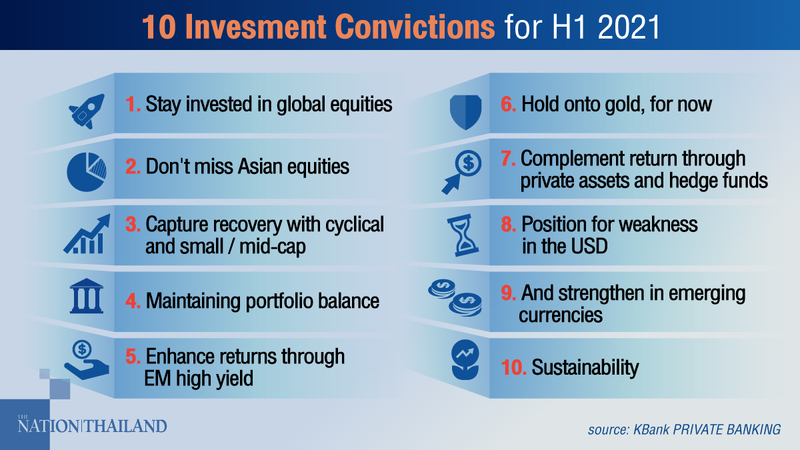


 Thai authorities place a razor wire fence around Mahachai Market where a largest cluster of Covid-19 infections originated in Samut Sakhon province.