The quest to replicate Tesla’s success keeps EV mania alive #SootinClaimon.Com

#SootinClaimon.Com : ขอบคุณแหล่งข้อมูล : หนังสือพิมพ์ The Nation.

The quest to replicate Tesla’s success keeps EV mania alive (nationthailand.com)

The quest to replicate Tesla’s success keeps EV mania alive

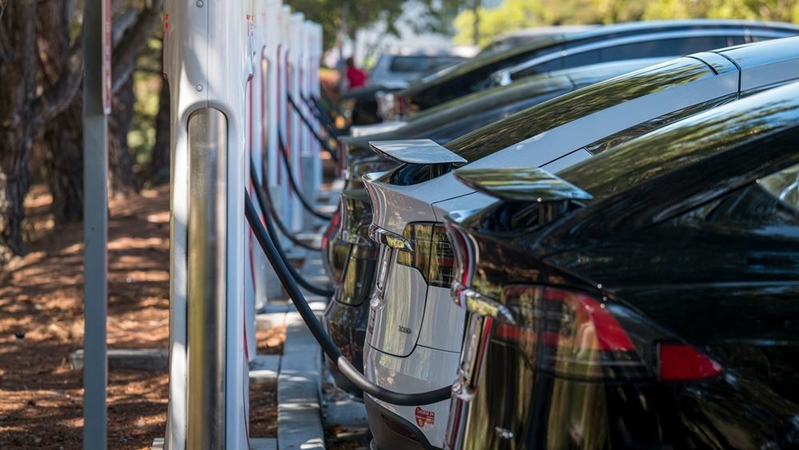
Dec 20. 2020Tesla vehicles charge at a charging station in San Mateo, Calif., on Sept. 22, 2020. MUST CREDIT: Bloomberg photo by David Paul Morris.Tesla vehicles charge at a charging station in San Mateo, Calif., on Sept. 22, 2020. MUST CREDIT: Bloomberg photo by David Paul Morris. 

By Syndication Washington Post, Bloomberg · Craig Trudell · BUSINESS, TECHNOLOGY, US-GLOBAL-MARKETS 

Tesla has thrilled some investors and jarred others by soaring to a valuation of as much as $649 billion, more than what the world’s seven largest carmakers were collectively worth at the beginning of this year. The company is now comfortably in a category by itself, defying even Chief Executive Officer Elon Musk’s warnings. “I

actually said the stock is too high a long time ago,” Musk said at the start of December. “But they didn’t listen to me.”

For startups aiming to mimic Musk’s success and for traditional carmakers struggling to disrupt themselves, most lingering doubts about future demand for electric vehicles have dissipated. Thanks in large part to the Tesla phenomenon, a consensus has emerged that they are undeniably the future.

“What you’ve had is a greater realization of the inevitability” of EVs, said Michael Pye, an investment manager at Baillie Gifford, which oversees about $370 billion and is one of the biggest shareholders of both Tesla and China-based EV maker Nio. Ten years from now, “it’s likely we’ll look back on this as the electric decade.”

Tesla alone has not brought the world to this point. A mix of stricter regulations against internal-combustion cars, increased support for plug-in vehicle purchases, improvements in technology and benefits of scale have led more consumers to embrace electrics. Still, two big questions remain: Can any other startup meaningfully replicate Tesla’s success? And will the EV market grow quickly enough to support both incumbents and startups?

The dramatic rise and fall of Nikola over just a few months was this year’s cautionary tale. The company founded by entrepreneur Trevor Milton set out to transform the trucking industry by replacing the diesels in big rigs with batteries and fuel cells. It also said it would build a hydrogen-station network and charge customers upfront for refueling.

In June, Nikola went public by merging with a special purpose acquisition company, or SPAC, led by a former vice chairman of General Motors. Optimism that the infusion of cash would help the startup begin to produce trucks briefly sent its valuation soaring past Ford’s. The stock collapsed by September after a short seller claimed Nikola had deceived investors about its technology; the company has denied this. Regulators opened investigations, and Milton left the company.

Nikola’s breakdown hasn’t deterred other SPACs. The so-called blank-check firms have raised $70 billion in 2020 – a fivefold increase from 2019 – and at least 15 EV companies have been taken public or have listings pending. Those that already made their debut include Lordstown Motors, which has said it will begin producing its Endurance electric pickup in September 2021, and Fisker, whose Ocean SUV is planned for 2022.

“I have had very credible people, with very large sums of money, DM me on Twitter to see if we’d be interested in working with their SPAC,” said Gene Berdichevsky, CEO of Sila Nanotechnologies, a California-based battery company, and ex-Tesla engineer. The blank-check company board member who messaged him reached out in early October, after Nikola’s implosion.

Tesla shares started their meteoric rise in late 2019, when Musk proved he could not only dominate the nascent EV market but also make a small amount of money in the process. The company got on a roll by accelerating production of Model 3 sedans in China and Model Y crossovers in California and has now recorded five consecutive quarterly profits.

Companies getting in on the coinciding EV stock-buying bonanza include XPeng, the Guangzhou-based company co-founded by He Xiaopeng, the billionaire behind one of China’s most popular mobile browsers. Within three months after its U.S. listing in August, the stock almost quintupled.

“We have been talking about our goals of penetration and growth for the past five years,” said Brian Gu, the vice chairman and president of XPeng. “Yet we hadn’t seen the real explosion until this year. There’s an increased confidence in the industry’s long-term growth.”

Even so, XPeng won’t appear high up on global sales charts anytime soon. Bloomberg Intelligence analysts estimate the company will deliver about 25,000 P7 sedans and G3 SUVs this year. Its market cap still managed to reach $53 billion last month, a valuation Ford hasn’t seen in several years. Entering December, investors were awarding the company about $1.7 million of market cap per vehicle it’s expected to sell this year. If the same multiple were applied to Volkswagen, the German giant would be worth about $15.5 trillion. Instead, it’s being valued at about $10,000 per vehicle.

VW wasn’t alone in watching its valuation take a hit from the biggest disruption to auto-industry output since World War II. Vehicle sales in some markets were almost completely wiped out for the month of April. By June, the industry had taken on $72 billion of new debt to cope.

But amid all the carnage, EVs outperformed. It hasn’t mattered that the price of oil crashed and remains depressed. China stepped in with a series of measures that supported plug-in car purchases, while Germany and France started offering subsidies to help boost automakers out of their slump.

“If historically low oil prices, a major economic downturn, a plunge in auto sales and all these other factors didn’t derail the growth, it gets harder to see what does,” said Colin McKerracher, head of advanced transport for BloombergNEF. “The trajectory is getting clearer and clearer, and all these factors that might have derailed things are sort of bouncing off and not landing a blow.”

The current quarter may well be the first ever in which automakers sell 1 million fully electric and plug-in hybrid vehicles worldwide. It took the industry until 2015 to get its first million on the road. The global fleet is now about to cross the 10 million mark. “Each order of magnitude, a different number of people become aware that this shift is happening,” McKerracher said. “EVs have become part of the general consciousness instead of the consciousness of a small number of people who care about them.”

Conventional carmakers are benefiting somewhat from the bump in EV demand, too, but only a handful have seen their shares rise meaningfully this year. Companies including GM and Daimler are getting credit for undergoing metamorphoses, though they have spent more than a century basing manufacturing, labor and retailing practices on the internal-combustion engine.

GM’s stock got a boost when it told investors in November that it would spend $27 billion introducing 30 battery-powered models by 2025, increasing its budget by more than a third. But it’s going through an awkward process of buying out some Cadillac dealers that aren’t on board with the shift.

Daimler, which envisions more than half of its global sales being electrified by the end of the decade, will have to overcome labor-union opposition to shrinking its variations of combustion engines by 70%. Workers protested last month after the leader of a powertrain plant Daimler is retooling for EVs left the company for Tesla.

Musk may have ambitions to dominate Daimler’s home market of Germany and the rest of Europe, but the growth that has the region rivaling China for the first time this year has been driven by incumbents. In the U.S., GM and Ford have electric pickups in the works and have successfully defended that segment – far and away their most lucrative – from Toyota and others.

“I would not underestimate traditional OEMs in this area,” said Christina Woon, a Singapore-based investment manager at Aberdeen Standard Investments, which manages about $563 billion in global assets, including Toyota shares. “Having an existing business that’s profitable and that has cash flows that you can use to invest in a new or emerging business – that does help to balance out that risk.”

No automotive CEO has been as supportive and openly admiring of Musk and Tesla as VW’s Herbert Diess. He joined the company just before its 2015 diesel-emissions scandal and has remained consistent in his message about and moves toward electrification. During a two-hour briefing last month on the massive spending VW has planned for the next half-decade, Tesla’s name came up 31 times.

“We think it’s a very important competitor” because Musk is “really pulling the industry,” Diess said in an interview last month. “Coming from a software background, he has capabilities which we still have to build up. He’s a reference for us.”

But VW unintentionally echoed a troubling time for Tesla when launching a crucial new electric model this year. When software issues plagued the launch of the German carmaker’s ID.3, it hired a contractor to fix thousands of the electric hatchbacks in a tent, then rushed them to sale before some features were ready. The episode was reminiscent of when Tesla erected a structure in its parking lot two years ago during its struggle to get Model 3 sedans out the factory door.

As rough as the ID.3 launch was, Diess is starting to see some payoff. The car outsold all other EVs across Europe in November. Analysts at Evercore ISI predict that VW and Tesla will form a global EV duopoly for the foreseeable future. Baillie Gifford’s Pye credits VW for grasping where the industry is headed. In his view, too many of its peers still don’t.

“If you’re about to be run over by a 40-ton semi, don’t lie down in the middle of the road and smile,” Pye said. Even for those who “have got the gist of that,” like VW, “whether they’re able to act on it or not within the required time frame is more challenging.”
The quest to replicate Tesla’s success keeps EV mania alive #SootinClaimon.Com

#SootinClaimon.Com : ขอบคุณแหล่งข้อมูล : หนังสือพิมพ์ The Nation.

The quest to replicate Tesla’s success keeps EV mania alive (nationthailand.com)

The quest to replicate Tesla’s success keeps EV mania alive

Dec 21. 2020

By Syndication Washington Post, Bloomberg · Craig Trudell

Tesla has thrilled some investors and jarred others by soaring to a valuation of as much as $649 billion, more than what the world’s seven largest carmakers were collectively worth at the beginning of this year. The company is now comfortably in a category by itself, defying even Chief Executive Officer Elon Musk’s warnings.

“I actually said the stock is too high a long time ago,” Musk said at the start of December. “But they didn’t listen to me.”

For startups aiming to mimic Musk’s success and for traditional carmakers struggling to disrupt themselves, most lingering doubts about future demand for electric vehicles have dissipated. Thanks in large part to the Tesla phenomenon, a consensus has emerged that they are undeniably the future.

“What you’ve had is a greater realization of the inevitability” of EVs, said Michael Pye, an investment manager at Baillie Gifford, which oversees about $370 billion and is one of the biggest shareholders of both Tesla and China-based EV maker Nio. Ten years from now, “it’s likely we’ll look back on this as the electric decade.”

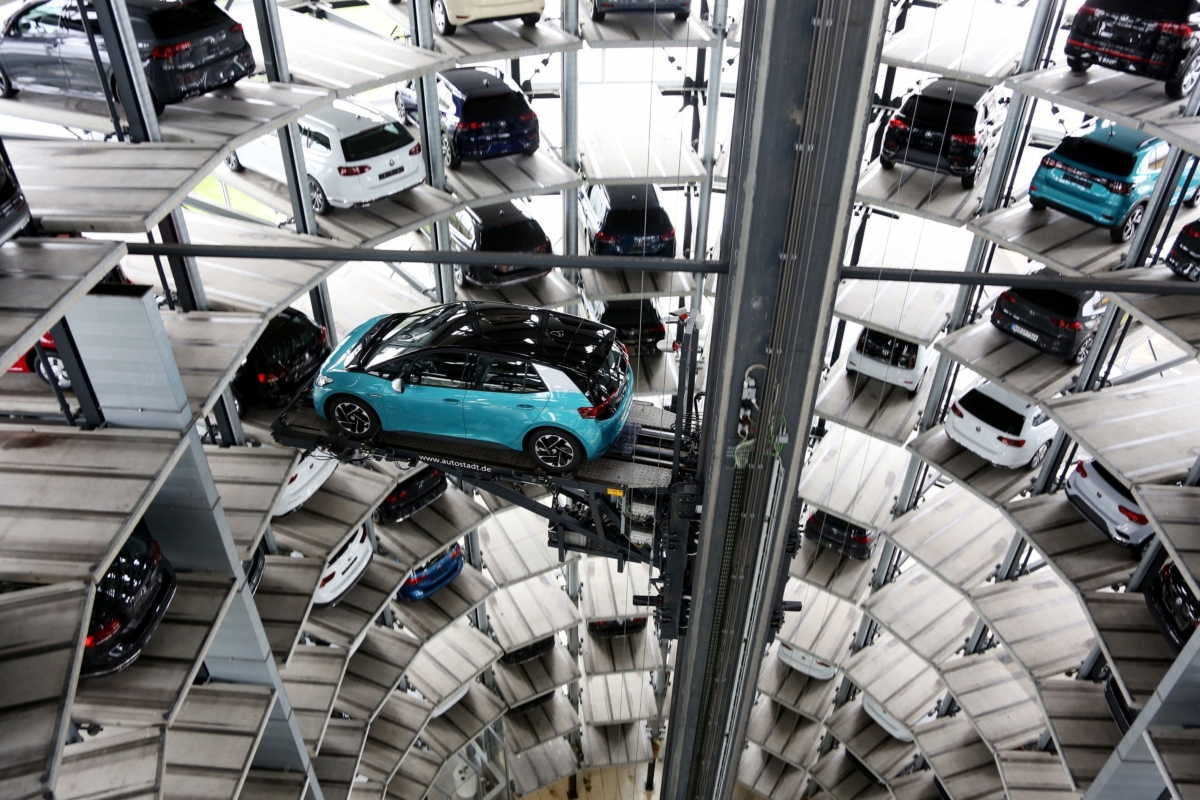
A new Volkswagen AG (VW) ID.3 electric automobile inside one of the automaker's Autostadt delivery towers at the VW headquarters in Wolfsburg, Germany, on Oct. 26, 2020. MUST CREDIT: Bloomberg photo by Liesa Johannssen-Koppitz.

A new Volkswagen AG (VW) ID.3 electric automobile inside one of the automaker’s Autostadt delivery towers at the VW headquarters in Wolfsburg, Germany, on Oct. 26, 2020. MUST CREDIT: Bloomberg photo by Liesa Johannssen-Koppitz.

Tesla alone has not brought the world to this point. A mix of stricter regulations against internal-combustion cars, increased support for plug-in vehicle purchases, improvements in technology and benefits of scale have led more consumers to embrace electrics. Still, two big questions remain: Can any other startup meaningfully replicate Tesla’s success? And will the EV market grow quickly enough to support both incumbents and startups?

The dramatic rise and fall of Nikola over just a few months was this year’s cautionary tale. The company founded by entrepreneur Trevor Milton set out to transform the trucking industry by replacing the diesels in big rigs with batteries and fuel cells. It also said it would build a hydrogen-station network and charge customers upfront for refueling.

In June, Nikola went public by merging with a special purpose acquisition company, or SPAC, led by a former vice chairman of General Motors. Optimism that the infusion of cash would help the startup begin to produce trucks briefly sent its valuation soaring past Ford’s. The stock collapsed by September after a short seller claimed Nikola had deceived investors about its technology; the company has denied this. Regulators opened investigations, and Milton left the company.

Nikola’s breakdown hasn’t deterred other SPACs. The so-called blank-check firms have raised $70 billion in 2020 – a fivefold increase from 2019 – and at least 15 EV companies have been taken public or have listings pending. Those that already made their debut include Lordstown Motors, which has said it will begin producing its Endurance electric pickup in September 2021, and Fisker, whose Ocean SUV is planned for 2022.

“I have had very credible people, with very large sums of money, DM me on Twitter to see if we’d be interested in working with their SPAC,” said Gene Berdichevsky, CEO of Sila Nanotechnologies, a California-based battery company, and ex-Tesla engineer. The blank-check company board member who messaged him reached out in early October, after Nikola’s implosion.

Tesla shares started their meteoric rise in late 2019, when Musk proved he could not only dominate the nascent EV market but also make a small amount of money in the process. The company got on a roll by accelerating production of Model 3 sedans in China and Model Y crossovers in California and has now recorded five consecutive quarterly profits.

Companies getting in on the coinciding EV stock-buying bonanza include XPeng, the Guangzhou-based company co-founded by He Xiaopeng, the billionaire behind one of China’s most popular mobile browsers. Within three months after its U.S. listing in August, the stock almost quintupled.

“We have been talking about our goals of penetration and growth for the past five years,” said Brian Gu, the vice chairman and president of XPeng. “Yet we hadn’t seen the real explosion until this year. There’s an increased confidence in the industry’s long-term growth.”

Even so, XPeng won’t appear high up on global sales charts anytime soon. Bloomberg Intelligence analysts estimate the company will deliver about 25,000 P7 sedans and G3 SUVs this year. Its market cap still managed to reach $53 billion last month, a valuation Ford hasn’t seen in several years. Entering December, investors were awarding the company about $1.7 million of market cap per vehicle it’s expected to sell this year. If the same multiple were applied to Volkswagen, the German giant would be worth about $15.5 trillion. Instead, it’s being valued at about $10,000 per vehicle.

VW wasn’t alone in watching its valuation take a hit from the biggest disruption to auto-industry output since World War II. Vehicle sales in some markets were almost completely wiped out for the month of April. By June, the industry had taken on $72 billion of new debt to cope.

But amid all the carnage, EVs outperformed. It hasn’t mattered that the price of oil crashed and remains depressed. China stepped in with a series of measures that supported plug-in car purchases, while Germany and France started offering subsidies to help boost automakers out of their slump.

“If historically low oil prices, a major economic downturn, a plunge in auto sales and all these other factors didn’t derail the growth, it gets harder to see what does,” said Colin McKerracher, head of advanced transport for BloombergNEF. “The trajectory is getting clearer and clearer, and all these factors that might have derailed things are sort of bouncing off and not landing a blow.”

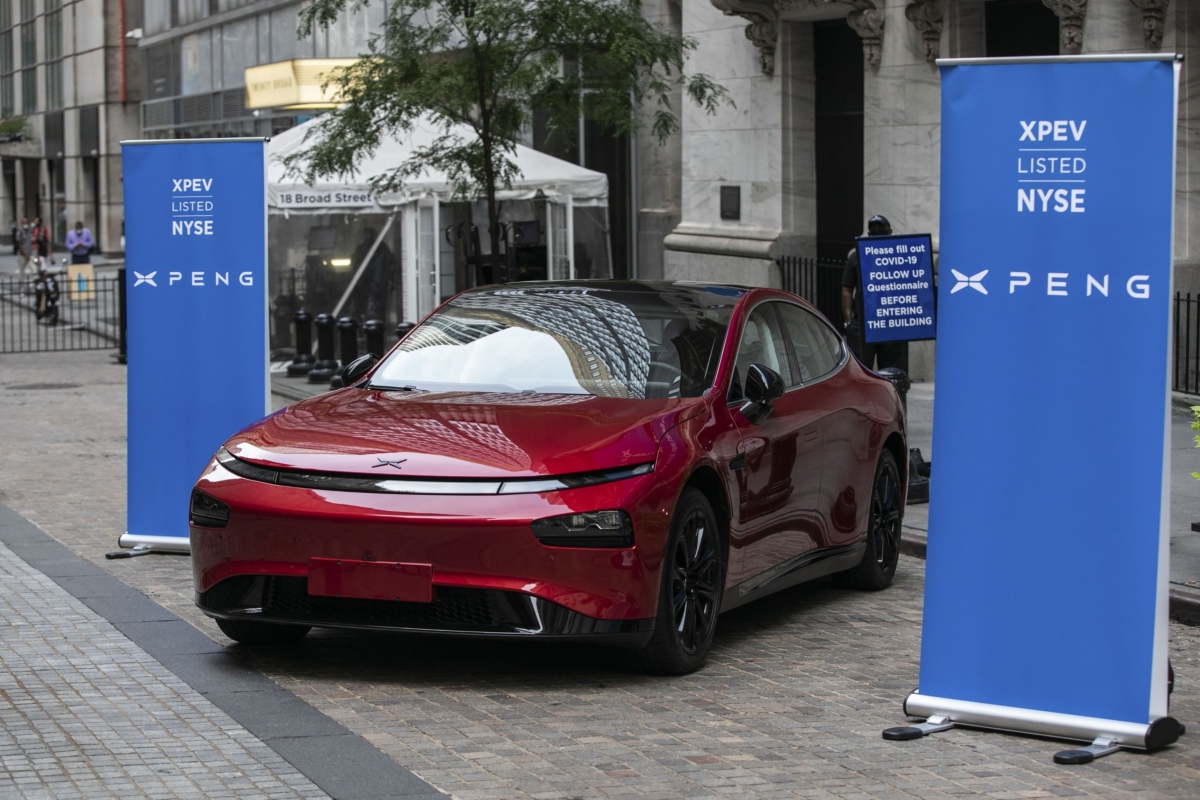
The Xpeng P7 electric vehicle is displayed outside the New York Stock Exchange in New York on Aug. 27, 2020. MUST CREDIT: Bloomberg photo by Jeenah Moon.

The Xpeng P7 electric vehicle is displayed outside the New York Stock Exchange in New York on Aug. 27, 2020. MUST CREDIT: Bloomberg photo by Jeenah Moon.

The current quarter may well be the first ever in which automakers sell 1 million fully electric and plug-in hybrid vehicles worldwide. It took the industry until 2015 to get its first million on the road. The global fleet is now about to cross the 10 million mark. “Each order of magnitude, a different number of people become aware that this shift is happening,” McKerracher said. “EVs have become part of the general consciousness instead of the consciousness of a small number of people who care about them.”

Conventional carmakers are benefiting somewhat from the bump in EV demand, too, but only a handful have seen their shares rise meaningfully this year. Companies including GM and Daimler are getting credit for undergoing metamorphoses, though they have spent more than a century basing manufacturing, labor and retailing practices on the internal-combustion engine.

GM’s stock got a boost when it told investors in November that it would spend $27 billion introducing 30 battery-powered models by 2025, increasing its budget by more than a third. But it’s going through an awkward process of buying out some Cadillac dealers that aren’t on board with the shift.

Daimler, which envisions more than half of its global sales being electrified by the end of the decade, will have to overcome labor-union opposition to shrinking its variations of combustion engines by 70%. Workers protested last month after the leader of a powertrain plant Daimler is retooling for EVs left the company for Tesla.

Musk may have ambitions to dominate Daimler’s home market of Germany and the rest of Europe, but the growth that has the region rivaling China for the first time this year has been driven by incumbents. In the U.S., GM and Ford have electric pickups in the works and have successfully defended that segment – far and away their most lucrative – from Toyota and others.

“I would not underestimate traditional OEMs in this area,” said Christina Woon, a Singapore-based investment manager at Aberdeen Standard Investments, which manages about $563 billion in global assets, including Toyota shares. “Having an existing business that’s profitable and that has cash flows that you can use to invest in a new or emerging business – that does help to balance out that risk.”

No automotive CEO has been as supportive and openly admiring of Musk and Tesla as VW’s Herbert Diess. He joined the company just before its 2015 diesel-emissions scandal and has remained consistent in his message about and moves toward electrification. During a two-hour briefing last month on the massive spending VW has planned for the next half-decade, Tesla’s name came up 31 times.

“We think it’s a very important competitor” because Musk is “really pulling the industry,” Diess said in an interview last month. “Coming from a software background, he has capabilities which we still have to build up. He’s a reference for us.”

But VW unintentionally echoed a troubling time for Tesla when launching a crucial new electric model this year. When software issues plagued the launch of the German carmaker’s ID.3, it hired a contractor to fix thousands of the electric hatchbacks in a tent, then rushed them to sale before some features were ready. The episode was reminiscent of when Tesla erected a structure in its parking lot two years ago during its struggle to get Model 3 sedans out the factory door.

As rough as the ID.3 launch was, Diess is starting to see some payoff. The car outsold all other EVs across Europe in November. Analysts at Evercore ISI predict that VW and Tesla will form a global EV duopoly for the foreseeable future. Baillie Gifford’s Pye credits VW for grasping where the industry is headed. In his view, too many of its peers still don’t.

“If you’re about to be run over by a 40-ton semi, don’t lie down in the middle of the road and smile,” Pye said. Even for those who “have got the gist of that,” like VW, “whether they’re able to act on it or not within the required time frame is more challenging.”
Rules issued on security review of foreign investment #SootinClaimon.Com

#SootinClaimon.Com : ขอบคุณแหล่งข้อมูล : หนังสือพิมพ์ The Nation.

Rules issued on security review of foreign investment (nationthailand.com)

Rules issued on security review of foreign investment

Dec 21. 2020

By China Daily, ZHONG NAN and LIU ZHIHUA

The newly released rules on China’s security review of foreign investment will effectively restrain national security risks while actively promoting and protecting foreign investment, analysts said on Sunday.

They made the remark after the National Development and Reform Commission and the Ministry of Commerce jointly specified provisions concerning the security review mechanism on foreign investment on Saturday.

Under the new measure, the scope of foreign investment that will be subject to security review includes the military industry and other national defense and security fields, locations near military facilities and military industrial facilities, as well as major agricultural products, energy and certain fields that have importance in national security.

Approved by the State Council, China’s Cabinet, the 23-clause rules aim to support the country’s higher-level opening-up and facilitate the new growth paradigm, said a statement released by the NDRC and the ministry. The rules will take effect 30 days after their release.

Ma Yu, a senior researcher at the Beijing-based Chinese Academy of International Trade and Economic Cooperation, said it is fairly common for countries to carry out security reviews on foreign investment that affects or may affect national security.

From the perspective of global competition, the legal environment is a vital element in supporting both economic growth and the earning strength of multinational corporations, said Huang Jin, a researcher at the Chinese Academy of Social Sciences’ Institute of International Law.

A well-developed legal system will not only boost sales for global companies, but also create an even bigger market, he said at an economic forum on Saturday.

As China’s continuously improving business environment has provided global companies a fair and open market, an efficient supply chain and a competitive talent pool, foreign direct investment in China increased by 6.3 percent year-on-year to 899.38 billion yuan ($137.6 billion) between January and November of this year, according to the Ministry of Commerce.

While China continues to attract foreign investment in high-end manufacturing, modern services and environmental protection sectors, and creates a law-based business environment, the US Commerce Department announced on Friday that it had added 59 Chinese companies to a trade blacklist, in the name of “protecting US national security”.

Because of this move, US firms will have to obtain a license to do business with companies on the list.

The Ministry of Commerce responded to the US move by calling it “another example of the US abusing its power to suppress Chinese companies”.

China will continue to take necessary measures to safeguard the legitimate rights and interests of its companies, according to the ministry.

The new restrictions imposed on the Chinese companies have already caused controversy in the US, because China and the US have a wide range of cooperation on science, technology and trade, and enlarging the blacklist also severely damages the interests of US companies and universities, said Tu Xinquan, a professor and dean of the China Institute for WTO Studies at the University of International Business and Economics in Beijing.

Zhang Yongjun, a researcher at the Beijing-based China Center for International Economic Exchanges, said that even though more Chinese companies have been added to the blacklist, their commercial operations will not be affected as they have already built a global presence and the US market only accounts for part of their overseas operations.

Utmost caution urged after Covid outbreak in Thailand #SootinClaimon.Com

#SootinClaimon.Com : ขอบคุณแหล่งข้อมูล : หนังสือพิมพ์ The Nation.

Utmost caution urged after Covid outbreak in Thailand (nationthailand.com)

Utmost caution urged after Covid outbreak in Thailand

Dec 21. 2020Cambodian Minister of Health Mam Bun Heng has urgently advised residents near the border to exercise heightened caution and quarantine all people crossing the border for 14 days following the Covid-19 outbreak in Thailand’s Samut Sakhon province. Photo Credit: Hong MeneaCambodian Minister of Health Mam Bun Heng has urgently advised residents near the border to exercise heightened caution and quarantine all people crossing the border for 14 days following the Covid-19 outbreak in Thailand’s Samut Sakhon province. Photo Credit: Hong Menea 

By The Phnom Penh Post, Mom Kunthear

Following the Covid-19 outbreak in Thailand’s Samut Sakhon province, Cambodian Minister of Health Mam Bun Heng has urgently advised residents near the border to exercise heightened caution and quarantine all people crossing the border for 14 days.

Bun Heng relayed notification on December 20 that Thai health authorities issued an alert advising regional counterparts of detection of a Covid-19 outbreak in Samut Sakhon that had spread to Bangkok. Over 500 people, mostly Burmese migrant workers, tested positive in a single day, and the Thai government has put the province under lockdown from December 20 to January 3.

“The [Thai] ministry released this emergency guidance because Samut Sakhon province is only 300km from Cambodia. Koh Kong, Pursat, Battambang, Banteay Meanchey and Oddar Meanchey provinces have border crossings with Thailand. The guidance was released to try to prevent infection from entering Cambodia by means of the movements of individuals who are positive for Covid-19,” Bun Heng said.

He called on people on both sides of the border to be diligent in monitoring inbound international passengers. Authorities must examine travellers’ health seriously, especially checking temperatures and ensuring that health forms were filled in correctly, he insisted.

Bun Heng added that a mandatory quarantine of 14 days applies to all people arriving to the country. Their testing would be handled by the Institut Pasteur du Cambodge, the National Institute of Public Health or the provincial Hospital of Siem Reap.

“Sub-national level authorities must steadfastly monitor the quarantine of arriving passengers to Cambodia in order to prevent people escaping undetected from quarantine facilities. Community members should provide information to local authorities regarding new arrivals,” he said.

Prime Minister Hun Sen delivered cash to seven provinces near the Cambodia-Thailand border earmarked for poor people during quarantine. Battambang, Banteay Meanchey, Pailin, Preah Vihear, Oddar Meanchey, Pursat and Koh Kong provinces each received 50 million riel ($12,500).

Health ministry spokeswoman York Sambath said Hun Sen had instructed the authorities of these provinces to strengthen enforcement of quarantine procedures for Cambodian workers returning from Thailand to prevent spread of the infection.

On December 19, Bun Heng issued revised health measures, including a strict, 14-day quarantine for diplomats and international officials holding diplomatic visas. They will be required to obtain a certificate indicating a negative Covid-19 test within 72 hours of departure from their country of origin. Upon arrival, they must have samples taken for testing by Cambodian doctors.

He stressed that foreign representatives and UN organisations in Cambodia need to ensure compliance by those who have obtained Cambodian diplomatic visas. In the event that an in-bound passenger tests positive for Covid-19, the person will be sent to a hospital managed by the ministry.

“Diplomats must be kept in a complete, 14-day quarantine at embassy residences or related facilities. In the case that diplomats do not stay at embassy facilities, they must complete a 14-day quarantine at the Himawari Hotel under supervision of their embassy or organisation officials. They must cover all expenses themselves,” Bun Heng said.

Also on December 18, South Korea delivered new aid to Cambodia’s health ministry via four agencies. In a press release, the Korea International Cooperation Agency (KOICA) said that the aid included 20 hazmat suits for conducting Covid-19 testing, 12 stretchers, two mobile X-ray machines, four disinfectant machines, 23,000 test kits, two RT PCR testing machines and 300 pieces of protective gear.

On December 20, the health ministry announced that 30 of 41 people who tested positive for Covid-19 in connection with the November 28 community transmission had recovered. Seventeen more patients continue to undergo treatment.

Businesses brace for near shutdown #SootinClaimon.Com

#SootinClaimon.Com : ขอบคุณแหล่งข้อมูล : หนังสือพิมพ์ The Nation.

Businesses brace for near shutdown (nationthailand.com)

Businesses brace for near shutdown

Dec 21. 2020The image shows the street of Myeongdong, one of Seoul's most visited tourist spots, on Dec. 8. (Yonhap)The image shows the street of Myeongdong, one of Seoul’s most visited tourist spots, on Dec. 8. (Yonhap) 

By The Korea Herald, Song Su-hyun

Retailers to suffer the most; exporters likely to be spared from restrictions

As South Korea’s daily coronavirus tally rose to a new record on Sunday, local businesses are bracing for a possible upgrade in the country’s social distancing rules to the toughest level yet – a partial shutdown.

While Level 3 of the government-set five-tier social distancing scheme is expected to decimate conventional retail industries, export-driven sectors such as mobile phones and semiconductor chips are less likely to be massively affected, experts and industry insiders said.

The government and health authorities are taking a cautious approach, given the weight of a decision, but when an upgrade is deemed inevitable, there will be no hesitation, said Prime Minister Chung Sye-kyun.

“When we move to Level 3, over 200 million business outlets and facilities will have to close or limit their operations,” he said Friday.

Not included in that 200 million would be factories of Samsung Electronics, Hyundai Motor and other major conglomerates that buttress the country’s economy, and biotech companies developing COVID-19 treatments, diagnostic kits or vaccines.

These companies are currently operating their production facilities as usual and are expecting no immediate impact from the country’s distancing rule changes, if any.

Company officials contacted by The Korea Herald said they were not letting their guards down by strictly limiting travel and meetings.

Samsung Electronics, the world’s largest memory chip provider and the biggest exporter shoring up the Korean economy, sees no problem in running its chip fabrication lines under its own guidelines to prevent the virus from getting into its production facilities.

“A minimal workforce is allowed to work to keep the lines operate as usual, while employees in the back office and research centers are advised to not hold any business meetings within the workplace and refrain from traveling and having personal gatherings,” a Samsung official said.

Despite the unrelenting pandemic over the past 11 months, Korea’s electronics industry saw its overseas sales steadily grow.

According to data by the Ministry of Trade, Industry and Energy, total semiconductor exports rose 3.5 percent to $89.7 billion from January to November compared to the same period last year.

Chip exports accounted for 19.4 percent of the country’s total exports. If the trend continues, chip exports are estimated to claim over 20 percent of the export-driven Korean economy by the end of the year.

When asked if Level 3 social distancing would hamper the exports, an official from a leading local diagnostics firm told The Korea Herald that, “There has been no noticeable link between social distancing and exports so far.”

“Work from home has not been required, and we have only seen an increase in manufacturing and exporting this year,” she said.

“However, should the government raise the distancing measures to Level 3, the regulations will become stricter, for which we are internally preparing guidelines to minimize disturbance in work,” added the official.

Pharmaceutical exports rose to a record high in Korea in 2020 on the back of increased global demand for Korean coronavirus prevention tools. As of October, the country marked over $10 billion in yearly exports of pharmaceuticals and medical devices, for the first time.

COVID-19 diagnostic kits towed the figure, according to Korea Customs Service.

Korea Pharmaceutical Traders Association seconded the opinion, saying that if Level 3 distancing affects pharmaceutical exports, it would apply differently per product.

However, overall, domestic distancing would not affect overseas sales of Korean drugs, he said.

The situation is starkly different for domestic market-oriented businesses.

Stores that sell daily necessities such as groceries, glasses and medicine would be exempt from Level 3 measures, but businesses considered not essential will have to close completely or partially. Department stores, electronics stores, duty-free stores and clothing and cosmetics sections inside discount chains could be those facing such limitations.

In a regular briefing Friday, the Ministry of Health and Welfare’s spokesperson Son Young-rae hinted that measures could regulate even supermarkets from being crowded.

“It is under review to allow the sale of daily necessity corners inside convenience stores and supermarkets, but the number of customers allowed inside will be limited,” said Son, adding that the same will apply to large discount store chains.

Such measures will limit the operation of 50,000 stores nationwide and 25,000 stores in the Seoul metropolitan area alone.

CRCC units win rail contract in Thailand #SootinClaimon.Com

#SootinClaimon.Com : ขอบคุณแหล่งข้อมูล : หนังสือพิมพ์ The Nation.

CRCC units win rail contract in Thailand (nationthailand.com)

CRCC units win rail contract in Thailand

Dec 21. 2020China Railway employees pave a road in Batang county, Sichuan province, in July. [Photo provided to China Daily]China Railway employees pave a road in Batang county, Sichuan province, in July. [Photo provided to China Daily] 
By China Daily, ZHONG NAN

Two subsidiaries of China Railway Construction Corp, the State-owned rail construction contractor, have won a $415 million contract to build civil engineering projects for the China-Thailand high-speed railway, the Beijing-headquartered group said in a statement.

Under the deal, the group’s two contractors-China Railway 11 Bureau Group Co Ltd and China Railway 23 Bureau Group Co Ltd-will build construction projects spanning 39.79 kilometers, including railway beds, bridges and railway stations for the first phase of the 250-km-long line linking the Thai capital Bangkok and the northeastern province of Nakhon Ratchasima.

An additional line connects Nakhon Ratchasima to the Thai border at Nong Khai province. A railway bridge linking Nong Khai province with the Laotian capital Vientiane will connect Thai railways with the Laos network. The planned length for this railroad, with a designated speed of 250 km per hour, is 900 kilometers.

Experts said it is one of the major connectivity projects between China and Thailand under the Belt and Road Initiative.

Upon completion, the railroad will be Thailand’s first high-speed railway running across the country and connecting with Laos’ Vientiane until it reaches China’s Kunming, Yunnan province, said Feng Hao, a researcher at the Institute of Comprehensive Transportation of the National Development and Reform Commission.

The railroad is part of the involved countries’ plan for a network of links across Southeast Asia, that had its start in a memorandum of understanding on railway cooperation signed by the Chinese and Thai governments in 2014.

Under the agreement, China will provide expertise and supervision, while Thailand will provide equipment and materials. At the request of Thailand, China will also use a number of Thai engineers and architects to help transfer expertise in maintenance, operation and management of the high-speed railroad, according to information released by the Chinese embassy in Bangkok.

CRCC said this is a significant breakthrough for the group’s branches to jointly develop the overseas market. It has not only successfully extended the company’s business in Thailand, but also enhanced cooperation and mutual trust with local partners and created a solid foundation for the company’s future expansion in Thailand.

Apart from creating growth opportunities such as trade in goods and services, cross-border investment and tourism, the project is also vital for boosting connectivity between China and the Association of Southeast Asian Nations through the China-Laos railway and other economic corridors in the region to better connect with other ASEAN economies such as Malaysia and Singapore, according to the CRCC statement.

In addition to supporting growth arising from the future implementation of the Regional Comprehensive Economic Partnership agreement, the China-Thailand high-speed railway project will be a showcase for effective alignment between the BRI and Thailand’s infrastructure development plans, said Zhang Jianping, director-general of the Beijing-based China Center for Regional Economic Cooperation.

Serving Thailand’s northeastern regions and covering major cities, the railway network will be a powerful engine for economic development and better standards of living in the region, he said.

Chiyawan Chongvatana, commercial minister of the Thai Embassy in China, said the RCEP will not only reinforce the cooperation of regional and global value chains, but also enrich participants’ ability to attract foreign direct investment amid the global fight against the COVID-19 pandemic.

Market access and other traditional business areas aside, the RCEP agreement also includes a number of new components, such as intellectual property protection and collaboration, e-commerce and small and medium-sized enterprises, indicating the agreement is a modern and high-quality agreement, and it also promotes transparency and predictability of trade, she said.

Together with better developed infrastructure facilities, the Thai diplomat said the RCEP will help the region gain more economic and trade advantages.

Future of export hinges on continuity of EU duty benefit PRI study says #SootinClaimon.Com

#SootinClaimon.Com : ขอบคุณแหล่งข้อมูล : หนังสือพิมพ์ The Nation.

Future of export hinges on continuity of EU duty benefit PRI study says (nationthailand.com)

Future of export hinges on continuity of EU duty benefit PRI study says

Dec 21. 2020

By The Daily Star

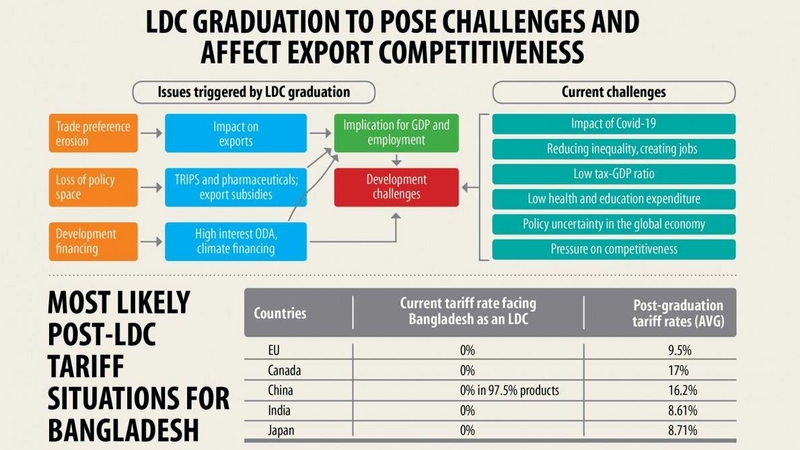
The future of Bangladesh’s exports heavily depends on the continuation of duty-free privileges to the European Union, the country’s largest export bloc, following the 2024 status graduation, according to findings of a study released yesterday.

If the EU extends the duty privileges, then other developed countries will follow suit, said MA Razzaque, research director of Policy Research Institute (PRI).

As a least developed country (LDC), Bangladesh currently enjoys duty-free access to the EU under the latter’s Everything But Arms (EBA) initiative, with around 61 per cent of its yearly exports destined for the region.

Of these exports, garments account for about 64 per cent, or $24 billion.

So far, only the EU has assured that it would continue providing the zero-duty benefit until 2027 to allow Bangladesh a period for preparations following its status graduation from an LDC to a developing one.

If the privilege is not extended, then local exports will face 9.5 per cent to 10 per cent duty on shipments to the EU, which may pose a challenge in staying competitive in the EU markets, Razzaque said.

Therefore, Bangladesh needs such an extension to go beyond 2027 even though its economy has been severely affected in the Covid-19 fallouts, he added.

The EU is set to review the existing Generalised System of Preferences (GSP) facility in 2023.

So Bangladesh needs to engage in dialogues with the EU to secure duty-free privileges for the new era past the graduation, said the PRI research director.

Razzaque made these comments while presenting a keynote paper at a virtual discussion on “getting ready for LDC graduation”, organised by Economic Reporters Forum (ERF) in collaboration with the Research and Policy Integration for Development (RAPID) and Asia Foundation.

Bangladesh should engage in lobbying with the EU so that it extends the EBA initiative by more than just a few years so that the country’s exports to the largest trade block continue without facing any interruption, he said.

Bangladesh could also lobby for the duty privileges to be removed in phases, Razzaque added.

For instance, the EU could add a 2 per cent duty in the first phase, 3 per cent in the next and so on so that Bangladesh could enjoy a smooth graduation.

Apart from the EU, Bangladesh should also hold intense negotiations with other developed countries like Australia, Canada, Japan, China, India and other GSP-providing countries.

Here, Bangladesh could engage in lobbying with India so that article 12 of South Asian Free Trade Area (Safta) is followed in case of the country’s graduation.

As per article 12, India has committed to continue its duty privileges for the Maldives even after its graduation to a developing country.

However, signing the proposed comprehensive economic partnership agreement (CEPA) with India will not be a wise decision at this moment, Razzaque said.

Similarly, Bangladesh could launch negotiations with China for the continuation of its duty-free facility for 97 per cent of goods of Bangladeshi origin even after the graduation.

“Also, signing a free trade agreement (FTA) with China could bring cheers for Bangladesh in the post LDC period as China itself is a very big consumer market for Bangladeshi products,” he said.

Once, the duty privilege to Chinese markets is withdrawn, local exporters will have to face a 17 per cent duty on exports to Chinese markets.

However, Razzaque also said it would not be wise to rush into signing FTAs or preferential trade agreements (PTA) under pressure.

“LDC graduation presents a lot of challenges but also has a lot of opportunities for the country and we have to find those opportunities,” he added.

Although signing an FTA entails 90 per cent product coverage under the agreement, Bangladesh would still have to make duty free arrangements with partnering countries.

So, if possible, the country needs to be a partner with any of the mega trade deals, such as Regional Comprehensive Economic Partnership (RCEP).

There is a possibility of signing another mega trade deal like the now defunct Trans-Pacific Partnership (TPP) in the near future.

Last year, Bangladesh gave around $600 million in direct export subsidies. Paying such subsidies on exports after the country’s graduation would be difficult. Besides, World Trade Organization (WTO) has some restrictions regarding such a decision.

So, Bangladesh should find a mechanism that allows the country to continue giving such subsidies even after the graduation, Razzaque said.

Currently, of the total revenue generated by the country each year, 30 per cent comes from import duty, as the country is highly dependent on such taxes given that it has very few FTAs or PTAs.

Bangladesh needs to manage the revenue through other measures as the country is getting ready to sign FTAs and PTAs with a few of its trading partners, according to Razzaque.

Overall, Bangladesh needs to save 10 per cent of its costs for offsetting the losses of the LDC graduation. It is possible by improving productivity, weakening the local currency against the dollar, improving the ease of doing business and technologies and logistics, he said.

Some 14 per cent of the country’s exports might be affected due to the LDC graduation, he added.

Razzaque suggested taking advantage of certain opportunities to offset the losses, such as availing funds from the LDC Fund and the Technology Bank for the LDCs and extending the Trade-Related Aspects of Intellectual Property Rights (TRIPs) up to January 2033.

Commerce Secretary Md Jafar Uddin said $7 billion worth of the country’s trade would be affected by the graduation.

However, Bangladesh has the opportunity to export $10 billion worth of halal goods if an accreditation board was formed.

“So, some $3 billion additional trade would also take place if Bangladesh begins exporting halal foods and we also have many other sectors from where we could gain a lot after graduation,” he said.

“That’s why Bangladesh should not be worried about LDC graduation,” Uddin added.

Currently, Bangladesh has been negotiating with 11 countries to either sign FTAs or PTAs.

“We need to continue negotiations with the EU to retain our trade privileges as long as possible as it is our biggest export destination,” said Planning Minister MA Mannan.

Similarly, negotiations with the UK should also be started as this is also a very important export destination, he added.

Mohammad Sirazul Islam, executive chairman of Bangladesh Investment Development Authority, urged for minimising the gap between tax and GDP as the existing 9 per cent ratio was too low even in the context of the country’s South Asian peers.

M Abu Eusuf, a professor of the department of development studies at the University of Dhaka; Kazi Faisal Bin Siraj, country representative of Asia Foundation; Sharmeen Rinvy, president of the ERF, and M Rashidul Islam, the ERF general secretary, also spoke at the event. 

How are HCM City locals celebrating the holiday this year? #SootinClaimon.Com

#SootinClaimon.Com : ขอบคุณแหล่งข้อมูล : หนังสือพิมพ์ The Nation.

How are HCM City locals celebrating the holiday this year? (nationthailand.com)

How are HCM City locals celebrating the holiday this year?

Dec 21. 2020Hop on - hop off bus service has been very much embraced by the public this year. — VNS Photo An PhươngHop on – hop off bus service has been very much embraced by the public this year. — VNS Photo An Phương 
By Vietnam News, An Phương

Restriction on social contacts might have changed how HCM City locals are approaching this year’s festive season, but the “holiday spirit” has remained about the same.

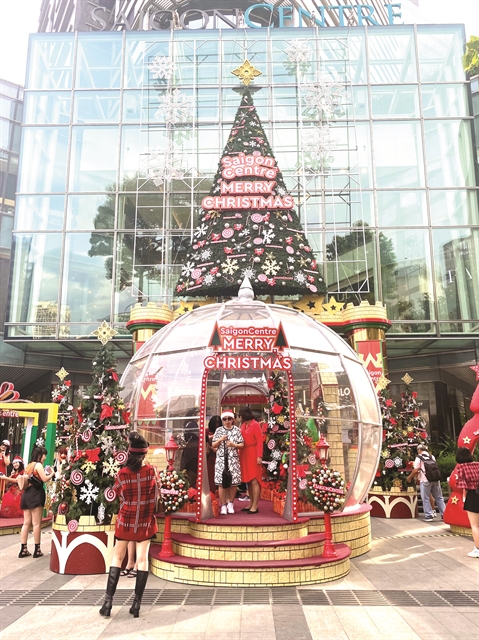
Dazzling decorations can be seen at every corner in the city centre, especially at shopping malls, shops and cafes. Since safety is being prioritised, locals are advised to always carry face masks and hand sanitisers. 

The COVID-19 pandemic has changed many locals’ shopping preferences. — VNS Photo An Phương

The COVID-19 pandemic has changed many locals’ shopping preferences. — VNS Photo An Phương

Holiday photos 

Taking photos outside holiday setups at department stores and cafe shops has long been a “tradition” among many locals especially young people in HCM City.

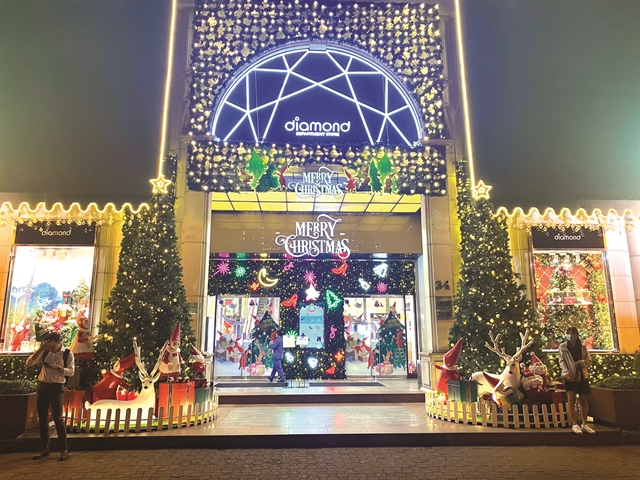
“Diamond Plaza on Lê Duẩn Street and Takashimaya on Lê Lợi Street, without a doubt, have the best displays this year,” Như Phan, 24, told Việt Nam News, adding that she recently took her friends and parents to take photos for social media content.

“The number of locals visiting these places has decreased compared to years ago. I don’t exactly enjoy this atmosphere, but I’m glad to be able to take photos without fear of being pushed by other people. Not to mention, since HCM City is relatively hot, it’s cooling and convenient to take photos and shop for presents at the malls during the weekends,” she said.

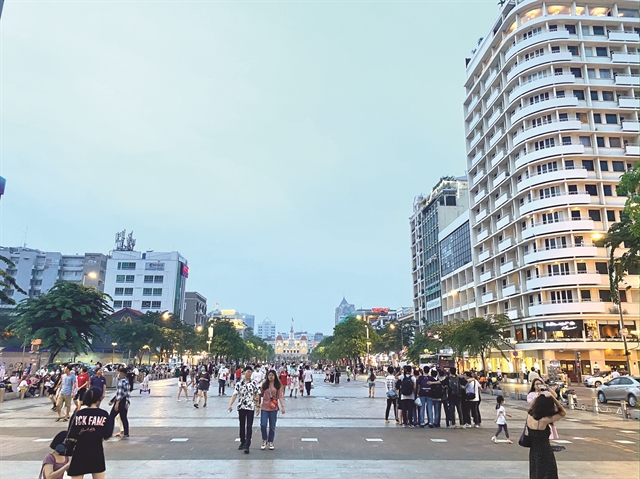
Nguyễn Huệ Pedestrian Street, an affordable entertainment venue, attracts many visitors during the holiday season. — VNS Photo An Phương

Nguyễn Huệ Pedestrian Street, an affordable entertainment venue, attracts many visitors during the holiday season. — VNS Photo An Phương

The COVID-19 pandemic has affected business at these malls and many brands have been constantly offering promotions at shocking prices.

A shop owner at Takashimaya said the drop in the number of mall visitors, together with locals’ saving habits during the pandemic, had encouraged brands to think of new ways to clear their stock.

“The 11.11, Black Friday and 12.12 events were perfect occasions to host deep sales without affecting the brand’s image,” he said, adding that he felt lucky to run his business in HCM City where the pandemic has been controlled effectively.

The number of visitors to shopping malls has fallen this year because of the pandemic. — VNS Photo An Phương

The number of visitors to shopping malls has fallen this year because of the pandemic. — VNS Photo An Phương

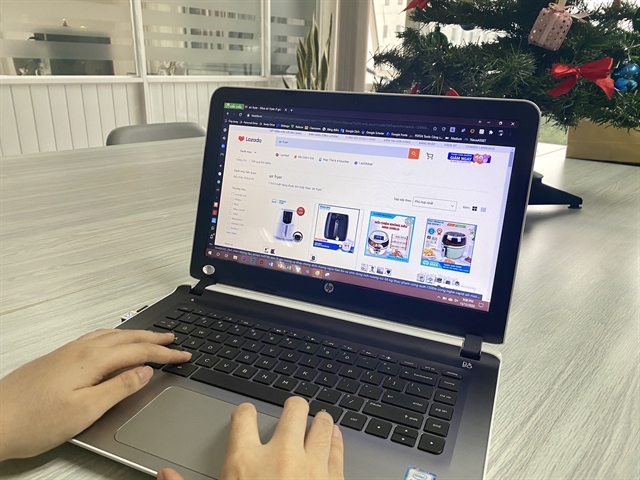
In addition to clothing, popular items sold during the holiday season include home accessories and kitchen tools, particularly air fryers, coffee making machines and cold pressed juicers.

These purchases shed some light on how life changed after the lockdown this year. With a significant amount of time by themselves and their family, many locals have started to take better care of their eating habits and lifestyle in general.

Indoor gatherings

Since shopping malls and cafes are going to be very busy later this month, many young locals plan to celebrate the holiday at home.

“Dining in has its own charm, especially when it is not entirely safe heading out to crowded spots at the moment,” said Ngọc Ánh, 27, adding that her closest friends have agreed to bring their own dishes over along with some wine, card games and board games.

“Or we can easily order food from popular restaurants and have it delivered to us. Orders should be made in advance so those restaurants can save us a slot on the big day,” she said.

The Diamond Plaza retail complex on Lê Duẩn Street in District 1 in HCM City has one of the prettiest holiday displays this year. — VNS Photo An Phương

The Diamond Plaza retail complex on Lê Duẩn Street in District 1 in HCM City has one of the prettiest holiday displays this year. — VNS Photo An Phương

Similar to Ánh, many young working adults have been getting used to staying in since the first outbreak of COVID-19 earlier this year.

“The setting for the indoor gathering will indeed be very intimate and memorable. We have also prepared some gifts for a Secret Santa session after dinner. We hope everyone is going to have a great time,” Duy Anh, 28, said.

Watching Netflix or holding Animal Crossing parties where groups of friends gather for a movie marathon or virtual games are also very “in” this season, he added.

Affordable outings

Locals have been constantly advised to ensure social distancing, wear face masks and carry hand sanitisers in public places.

On one of the busiest streets at night, Nguyễn Huệ Pedestrian Street in District 1, people can hear instructions from loudspeakers installed along the street to follow epidemic prevention guidelines.

Later this month, the Quang Trung Pedestrian Street in District 10 will open, and is expected to attract a lot of visitors.

“The latest pedestrian street reminds me of night markets in Thailand. The layout of the street is very neat, especially the food hall area,” said Thảo Tâm, 25, who was able to experience the market during its trial phase.

“Different from Nguyễn Huệ Street, the new pedestrian street offers a variety of experiences such as dining, shopping and entertainment,” Tâm added.

Due to the impact of COVID-19, many locals nowadays prefer affordable entertainment or just wandering around casual places such as pedestrian or book streets.

“I’m not celebrating Christmas and New Year this year, as I want to make up for several months of lockdown and concentrate on work. That being said, the festive atmosphere is in the air, so it is encouraging me to do something to celebrate it. A pedestrian street has now become an easy option for those like me!” Anh Khánh, 28, said.

He also said he would try out the hop on-hop off bus service that has been very much embraced by the public this year. A 45-minute bus tour, passing by multiple attractions in the HCM City centre, costs VNĐ150,000 per person.

“HCM City is very beautiful this time around, so it is best to have a general look,” Khánh said. – VNS

Reform linked borrowing permissions are facilitating Ease of Doing Business reforms #SootinClaimon.Com

#SootinClaimon.Com : ขอบคุณแหล่งข้อมูล : หนังสือพิมพ์ The Nation.

Reform linked borrowing permissions are facilitating Ease of Doing Business reforms (nationthailand.com)

Reform linked borrowing permissions are facilitating Ease of Doing Business reforms

Dec 21. 2020

By The Statesman

Linking the grant of additional borrowing permissions by the Government of India to the States to reforms in various citizen-centric sectors has motivated the States to undertake reforms to promote Ease of Doing Business.

5 States have so far completed the stipulated reforms in the Ease of Doing Business. These States have been granted permission to mobilize additional financial resources to the tune of Rs 16,728 crore through open market borrowings.

These states are Andhra Pradesh, Karnataka, Madhya Pradesh, Tamil Nadu and Telangana.

State-wise amount of additional borrowing permissions granted is as under:

State                     Amount (Rs in crore)

Andhra Pradesh             2,525

Karnataka                      4,509

Madhya Pradesh            2,373

Tamil Nadu                    4,813

Telangana                      2,508

The Ease of Doing Business is an important indicator of the investment-friendly business climate in the country. Improvements in the ease of doing business will enable faster future growth of the state economy. Therefore, the government of India had in May 2020, decided to link grant of additional borrowing permissions to States who undertake the reforms to facilitate ease of doing business.

The reforms stipulated in this category are:

(i) Completion of first assessment of ‘District Level Business Reform Action Plan’

(ii) Elimination of the requirements of renewal of registration certificates/approvals/licences obtained by businesses for various activities at least under the following Acts: –

  • The Shops & Establishment Act
  • The Contracts Labour (Regulation and Abolition) Act, 1970
  • The Factories Act, 1948
  • The Legal Metrology Act
  • The Inter State Migrant Workmen (RE&CS) Act, 1979
  • Drug Manufacturing/ Selling/ Storage License
  • Trade License issued by the Municipal Corporations.

(iii)    Implementation of computerized central random inspection system under the Acts wherein allocation of inspectors is done centrally, the same inspector is not assigned to the same unit in subsequent years, prior inspection notice is provided to the business owner, and inspection report is uploaded within 48 hours of inspection. This includes the inspection under:

  1. The Equal Remuneration Act, 1976
  2. The Minimum Wages Act, 1948
  3. The Shops and Establishments Act
  4. The Payment of Bonus Act, 1965
  5. The Payment of Wages Act, 1936
  6. The Payment of Gratuity Act, 1972
  7. The Contract Labour (Regulation and Abolition) Act, 1970
  8. The Factories Act, 1948
  9. The Boilers Act, 1923
  10. The Water (Prevention and Control of Pollution) Act, 1974
  11. The Air (Prevention and Control of Pollution) Act, 1981
  12. The Legal Metrology Act, 2009 and Rules

In view of the resource requirement to meet the challenges posed by the COVID-19 pandemic, the Government of India had on 17th May 2020 enhanced the borrowing limit of the States by 2 percent of their GSDP.

Half of this special dispensation was linked to undertaking citizen-centric reforms by the States. The four citizen-centric areas for reforms identified were (a) Implementation of One Nation One Ration Card System, (b) Ease of doing business reform, (c) Urban Local body/ utility reforms and (d) Power Sector reforms.

So far 10 States have implemented the One Nation One Ration Card System, 5 States have done Ease of Doing Business reforms, and 2 States have done local body reforms.

Besides additional borrowing permissions, the States completing three out of the four reforms are entitled to get additional financial assistance under the “Scheme for Financial Assistance to States for Capital Expenditure”. Under the Scheme, an amount of Rs.2,000 crore is earmarked for this purpose.

To facilitate more States to undertake the reforms and avail additional borrowings, The Department of Expenditure, Ministry of Finance had recently extended the deadline for the States to complete citizen-centric reforms in various sectors.

Now, if the recommendation from the nodal Ministry concerned regarding the implementation of the reform is received by 15th February 2021, the State will be eligible for reform linked benefits.

Thai, Indonesian central banks expand rupiah-baht settlement framework #SootinClaimon.Com

#SootinClaimon.Com : ขอบคุณแหล่งข้อมูล : หนังสือพิมพ์ The Nation.

Thai, Indonesian central banks expand rupiah-baht settlement framework (nationthailand.com)

Thai, Indonesian central banks expand rupiah-baht settlement framework

EconDec 21. 2020

By The Nation

The Bank of Thailand and Bank Indonesia on Monday announced the expansion of the rupiah-baht settlement framework.

The framework was first launched on December 11, 2017 under a memorandum of understanding signed by the two central banks on December 23. The expansion is a part of continuous efforts to promote wider use of local currencies to facilitate and enhance trade and direct investment between Indonesia and Thailand, the banks said.

The framework was expanded to include direct investment as an eligible underlying transaction in addition to trade, and to further relax relevant foreign exchange rules and regulations, for example, through more flexible documentation requirements, they said.

In this connection, Bank Indonesia and the BOT have appointed additional qualified commercial banks in both countries to support the operationalisation of the expanded rupiah-baht settlement framework. In general, the appointed banks are resilient and healthy, experienced in facilitating trade or capable of providing various financial services, and have strong business relationships with banks in the counterparty country, they said.

The appointed banks are:

Additional appointed banks in Thailand:

– CIMB Thai Bank Pcl

– TMB Bank Pcl

– Standard Chartered Bank (Thai) Pcl

– The Hongkong and Shanghai Banking Corporation Limited Bangkok Branch

– Sumitomo Mitsui Banking Corporation Bangkok branch

– Mizuho Bank Limited Bangkok branch

Existing appointed banks:

– Bangkok Bank Pcl

– Bank of Ayudhya Pcl 

– Kasikornbank Pcl 

– Krungthai Bank Pcl 

– Siam Commercial Bank Pcl

Additional appointed banks in Indonesia

– PT Bank BTPN, Tbk

– PT Bank CIMB Niaga, Tbk

– PT Bank Danamon Indonesia, Tbk

– PT Bank Maybank Indonesia, Tbk

– PT Bank Mizuho Indonesia

– PT Bank Permata, Tbk

– PT Bank HSBC Indonesia

– MUFG Bank, Ltd, Jakarta branch 

• Existing appointed banks

– PT Bank Rakyat Indonesia (Persero), Tbk 

– PT Bank Mandiri (Persero), Tbk 

– PT Bank Central Asia, Tbk 

– PT Bank Negara Indonesia (Persero), Tbk

The expanded baht-rupiah settlement framework will be effective from December 21.