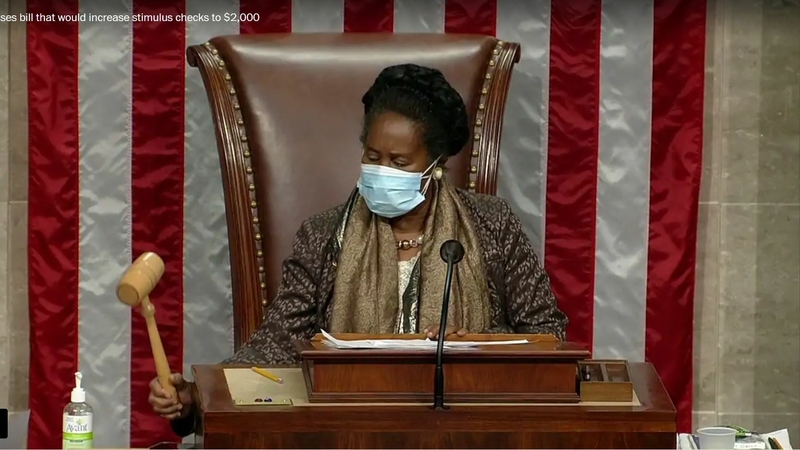
WASHINGTON – The House on Monday voted to beef up stimulus checks set to go to American households in the coming weeks from $600 to $2,000. The chamber acted swiftly after President Donald Trump demanded the larger payments in the past week, but passage of the measure is uncertain because Senate Republicans have not unified behind the idea.
On Sunday, Trump signed into law a $900 billion emergency relief package that included $600 checks. His advisers had advocated for these payments, but Trump later called the check size “measly” and demanded that it be increased. After he signed the law, he pledged to continue pushing for the larger payments, something many Democrats also support.
Forty four Republicans joined the majority of Democrats on Monday in passing the bill on a 275-134 vote. It needed a two-thirds vote to pass, so it was narrowly successful. The measure’s fate is much less certain in the Senate, which is controlled by Republicans.
Approving stimulus checks of $2,000 would cost $464 billion, the Joint Committee on Taxation said Monday. This would be in addition to the $900 billion package Trump signed into law on Sunday. Congressional Republicans had sought to keep the total cost under $1 trillion, but that was before Trump began a push in the past week to make the stimulus payments larger.
The support is growing because the economy is weakening and the pandemic has led to rising numbers of people seeking unemployment benefits and turning to food banks for help.
Since Trump first demanded the larger checks on Tuesday, House Speaker Nancy Pelosi, D-Calif., and other Democrats have tried to push the idea into law. They have ignored his other complaints about the new spending law, however, particularly his calls for reductions in foreign aid and environmental programs.
“It’s not exactly what we would put on the floor if Republicans were in control,” said Rep. Tom Reed, R-N.Y., who supported the larger checks. “But I think it recognizes the fact that, [Pelosi is] the speaker and as a Democratic speaker, they’re going to have an input as to what that package is going to look like in regards to the terms and conditions of the direct checks. I’m willing to take half a loaf, and I think the president recognizes that.”
Monday’s vote took place after House Republican leaders blocked an attempt last week to pass the larger checks by unanimous consent in the House. The measure now goes to the Senate, where it is unclear whether Majority Leader Mitch McConnell, R-Ky., will move to consider it in the closing days of the current Congress. It is clear that some Senate Republicans support larger checks. The idea has been championed by Sen. Josh Hawley of Missouri, and Sen. Marco Rubio of Florida said he supported larger payments.
“I am concerned about the debt, but working families have been hurt badly by the pandemic,” Rubio wrote on Twitter on Monday. “This is why I supported $600 direct payments to working families & if given the chance will vote to increase the amount.”
In a statement Sunday, Trump said the Senate would “start the process for a vote that increases checks to $2,000, repeals [liability protections for tech companies], and starts an investigation into voter fraud.”
McConnell has not signaled precisely what he will do with the measure once it is sent over from the House. A McConnell spokesman declined to comment Monday.
Senate Minority Leader Chuck Schumer, D-N.Y., said Sunday that he would attempt to pass the bill in the Senate himself as soon as Tuesday morning, but any senator could block the measure from proceeding. McConnell could seek to package the larger checks with other Trump demands, but that probably would generate Democratic objections and prevent a vote before the new Congress is seated on Jan. 3.
In March, Congress passed the Cares Act, a $2 trillion measure that included a round of $1,200 stimulus checks for more than 100 million Americans. The program had mixed results, according to several studies. Many people used to money to pay rent or buy groceries. But others saved the money or used it to pay down debt.
Congress has designed the stimulus checks so most people would qualify for them, but not everyone. Americans with income up to $75,000 would qualify for the full amount, but people who earn more than that would receive less or nothing.
Trump got Christmas plea on aid from Georgia senator worried about chances in runoff, sources say
InternationalDec 29. 2020Sen. David Perdue, R-Ga., speaks during in Augusta, Georgia, on Dec. 10, 2020. MUST CREDIT: Bloomberg photo by Elijah Nouvelage
By Syndication Washington Post, Bloomberg · Nancy Cook
Sen. David Perdue, R-Ga., lobbied Donald Trump last week to sign the pandemic relief bill he’d criticized, concerned that the president’s delay would harm his and Sen. Kelly Loeffler’s prospects in the Jan. 5 runoff elections, according to people familiar with the matter.
In a Christmas-Day phone call to Trump, Perdue argued that the bill was vital for unemployment benefits, coronavirus-vaccine distribution and a moratorium on evictions. Perdue also contacted White House allies including National Economic Council director Larry Kudlow and the president’s daughter, Ivanka Trump, to try to pressure the president, the people said.
Perdue and Sen. Lindsey Graham, R-S.C., who visited Trump at his Mar-a-Lago resort in Florida over Christmas, also argued in favor of Trump sending Congress a list of spending items in the bill to eliminate, known as rescissions, after he signed it. Lawmakers are expected to ignore the request.
The people familiar with the matter asked not to be identified because the conversations were private. A spokesman for Perdue’s campaign declined to comment.
Trump grudgingly signed the $2.3 trillion bill late Sunday, a delay that caused a one-week lapse in unemployment benefits for millions of American workers. He has demanded that Congress increase direct payments to Americans to $2,000 each, from $600, and pass legislation eliminating or limiting a liability shield for social media companies that have censored or fact-checked some of Trump’s election-related tweets.
Control of the Senate — and Republican hopes of obstructing President-elect Joe Biden’s agenda next year — rests on the outcome of the two Georgia runoff elections. It isn’t clear whether Loeffler also personally lobbied Trump to sign the stimulus.
A White House spokesperson didn’t immediately respond to requests for comment.
Perdue’s opponent, Democrat Jon Ossoff, has tried to hang Trump’s delay in signing the relief bill around the Republican senator’s neck. Over the weekend, his campaign asked Atlanta TV stations to pull a Perdue ad claiming the senator “delivered” the $908 billion relief package because Trump hadn’t signed it, according to the Atlanta Journal-Constitution.
Ossoff’s campaign noted that Perdue has repeatedly said he opposes direct payments to Americans as part of stimulus measures, as well as expanded unemployment benefits, at one point calling it “an incentive not to come back to work.”
“David Perdue hasn’t spent a single second making a public case for his constituents to get direct relief, but when it comes to a Hail Mary to save his collapsing campaign, he’s willing to call the president directly to save himself. Those are his priorities,” an Ossoff spokeswoman, Miryam Lipper, said in a statement.
Perdue hasn’t said whether he would support raising payments under the new relief bill to $2,000, as Trump has demanded. Ossoff has promised to support the $2,000 payments.
Covid surge sidelines health workers when they’re needed most
InternationalDec 29. 2020A nurse wearing personal protective equipment administers medication to a patient inside the covid-19 ward at PeaceHealth Southwest Medical Center in Vancouver, Wash., on April 30, 2020. MUST CREDIT: Bloomberg photo by Nathan Howard
By Syndication Washington Post, Bloomberg · John Tozzi
Covid-19 hospitalizations in the U.S. reached new highs this week, testing the nation’s health-care workforce as the virus sidelines medical workers.
More than 118,000 people — roughly equivalent to the population of Lansing, Mich. — have been in hospitals with covid on average over the past seven days. That’s a record, according to data from the covid Tracking Project.
While record covid admissions strain emergency rooms and intensive care units, the crisis squeezes smaller clinics, too. Uncontrolled infections mean more patients coming in, even as staff exposed to the virus must stay home.
Four of the six nurses who work at Klamath Health Partnership, a nonprofit clinic in Klamath Falls, Oregon, were out last week after exposure to covid. About 16 of the clinic’s patients were hospitalized, double the typical number, so the clinic’s doctors spent twice as much time making rounds at the hospital.
Because so many people are out, the clinic’s chief operations officer, Amanda Blodgett, has been wearing scrubs and swabbing patients coming in for coronavirus tests. She estimates that roughly 20% of the 135-member staff were sick or quarantining the week before Christmas, everyone from clinicians to front-desk workers to call-center employees.
“I haven’t been doing very many COO things,” Blodgett said. “I do that stuff at home at night.”
Blodgett has an MBA and isn’t a medical provider. She went through the same training the clinic gives to medical assistants so she could backstop front-line workers when cases started to mount. “Swabbing a patient is incredibly stressful,” she said. She canceled plans to take time off during the holidays and expects to be filling in until it’s safe for quarantined staff to return.
Klamath Health Partnership is a federally qualified health center, designated by the government to care for people in underserved areas. It typically sees 12,000 patients a year in a county of about 68,000. Many are migrant or seasonal farmworkers.
The county has recorded more than 1,700 cases, a tally that’s roughly doubled since the last week of November.
The expanding epidemic has strained all aspects of the clinic’s operations. Klamath Health Partnership contracted with an assisted-living facility to conduct weekly tests of residents and staff as required by the state. With case rates up, they now have to test twice a week. “That takes staff out of my clinic,” said Blodgett, who’s collected the swabs herself.
To relieve the local hospital this fall, Klamath Health Partnership also turned part of its space into a “transition” clinic. Patients from the emergency room who weren’t sick enough to be admitted to the hospital could be taken there to get oxygen and IV drugs.
“Our goal was to help them turn rooms faster,” Blodgett said.
She closed it in December because she didn’t have enough workers to keep it open.
While the U.S. has been dealing with widespread covid cases since March, the crisis has escalated in the past month. The U.S. has almost 19 million cumulative cases to date. December alone has accounted for more than 5 million, according to covid Tracking Project data.
That means roughly three out of every 10 cases has been recorded this month. In California, which added more than 900,000 cases so far in December, the proportion is higher: 43% of all the state’s covid cases so far have been recorded this month.
Nationally, the tally of new positive cases declined in recent days, though it’s not clear how much is due to the Christmas holiday slowing testing and data reporting. The U.S. reported an average daily increase of almost 180,000 cases over the last week, compared with 213,000 a week ago.
Even if cases decline, hospital admissions and deaths lag new diagnoses, and will likely keep climbing for weeks. Holiday travel and gatherings this week could ignite new chains of transmission, driving cases, hospital admissions and deaths higher next month.
In Klamath, some of Blodgett’s staff is expected back this week, but she’s worried about what might happen after Christmas and New Year’s.
The clinic asked state officials for help finding staff, she said, and was told to contact other clinics and hospitals.
“My organization is the backup plan to our hospital,” she said. “Sometimes the folks in the metropolitan areas forget that in rural Oregon, in rural America, we don’t have backup plans.”
More than 333,000 U.S. residents have died of the pandemic, according to Johns Hopkins University.
covid cases increased 7.1% over the past seven days, according to the covid Tracking Project. The West is bearing the heaviest burden, with the Tracking Project reporting 41% of the nation’s cases over the past seven days.
Isolated residents and an overwhelmed hospital: Covid-19 hits Western Maryland
InternationalDec 29. 2020When the pandemic finally hit the farthest-flung Maryland county this fall, Garrett Regional Medical Center ran out of ICU beds, had to abandon its testing operation and saw 10 percent of its staff infected or in quarantine. MUST CREDIT: Washington Post photo by Erin Cox
By The Washington Post · Erin Cox
OAKLAND, Md. – Mark Boucot learned the rural hospital he runs would be left out of the initial vaccine distribution a few days before covid-19 killed his first staff member.
It seemed hope would be slow to reach the Garrett County mountains, just like everything else.
The pandemic initially skirted this eastern edge of Appalachia, but arrived with a vengeance in November. Case rates soared to four times the state average. The small emergency room at Garrett Regional Medical Center, where Boucot is president, was hammered. Coronavirus patients consumed nearly half the hospital’s beds and all of its four-bay intensive care unit.
Isolated in the farthest stretch of Western Maryland, residents did what they could to prepare for the virus, even when the pandemic seemed impossibly far away. But their community was overwhelmed when it materialized. The region’s treasured independent streak didn’t help matters. Locals have been reluctant to distance themselves from family members, slow to admit they are weakened with infection, and – in seven out of 10 cases – unwilling to get a vaccine.
All spring, summer and into the fall, Garrett County saw the pandemic on national news but not at home. It welcomed tourists escaping virus-laden cities and spent federal aid on infrastructure and economic relief rather than testing sites or an intensive campaign to warn skeptics about the coronavirus.
But as Christmas approached and the first shipments of vaccine rolled into bigger towns and cities across the country, the small hospital in Oakland was in distress. Ten people had died in 10 days, doubling the death toll in a county of 29,000. The positivity rate was 17.75%, the state’s highest.
Ten percent of the hospital staff was out with the virus or quarantined, and the hospital was deploying third- and fourth-year nursing students from a nearby community college to help.
“I feel like we’re a bunch of rusty tools in the garage that no one cares about,” said Jeffrey Bernstein, a semiretired emergency room physician whose part-time schedule ballooned in December to more than 40 hours a week.
The hospital had provided coronavirus testing for the county since March, when the pandemic began. Now Boucot decided he no longer had the staff to both treat the sick and detect the infected.
The county had to create a new testing method, and settled on a new state-run site that operates two days a week on an isolated stretch near the airport, staffed by school nurses whose classroom buildings had been shut down a few weeks earlier.
“We had people laying around the lab testing area waiting,” Boucot said. “We’re overrun at this point. We can’t keep up with it.”
Jessica Carey, a school nurse, swabs an asymptomatic child at Garrett County’s public testing site. Carey will be among the first to get the vaccine so she can compose a blog to help persuade a reluctant community to get vaccinated. MUST CREDIT: Washington Post photo by Erin Cox
Garrett’s economy relies on agriculture, small business and tourism that draws Washington- and Baltimore-area residents to its wooded back country, state parks with waterfalls, ski resorts and Deep Creek Lake. The pandemic brought more people than ever to rent houses and buy vacation homes; county officials say 2020 set a record for both hotel taxes and real estate sales.
But some locals resented the stay-at-home orders and mask mandates, given the more-lax rules in neighboring counties in Pennsylvania and West Virginia. Television news here comes from those states, and residents missed forceful warnings about the virus from Maryland Gov. Larry Hogan (R) and others closer to Washington. Telework requirements and closed schools also caused greater hardship in Garrett than elsewhere, since fewer than 40 percent of households have reliable broadband.
While public health workers waited anxiously for the pandemic to hit, many others relied on Facebook and social media for virus-related information, plus their own observations that the county – with fewer than three dozen cases in four months – didn’t seem to have a covid-19 problem at all.
“It was something we saw on TV happening in other places,” said Becky Aiken, who manages the nurses for the public school system.
Garrett County Health Officer Bob Stephens said some visitors to businesses located along Interstate 68 acted “really nasty” when told to wear masks or leave. A few got physical; many were outraged.
“We have a lot of people who don’t believe covid is a serious thing,” Stephens said.
When cases started to rise in October, locals wanted to blame the tourists, even though Stephens insisted there was no evidence that they were responsible.
“Every time I talk to the health officer, every time, I ask him . . . Is there any data to show that the virus is being spread via the vacation industry in Garrett County?” Edwards said. “And every time I ask that, the answer is ‘no.’ “
Stephens said outbreaks started in two nursing homes, where 150 people got sick in two weeks, and spread from there. It seems probable that the Autumn Glory festival in mid-October followed by Halloween fueled the spike, but it’s hard to tell, he added: “We went into this downward spiral because we couldn’t keep up with the contact tracing.”
By the end of November, the number of confirmed cases had more than tripled in just 18 days, to 755, helping to drive a statewide surge in virus cases that is disproportionately concentrated in three western counties.
The number of confirmed cases in Garrett probably understates the prevalence of the virus, officials said, given the stigma a positive test result holds in the community and the reluctance of people – in a county with one of the lowest median incomes in Maryland – to quarantine.
“Less people want to identify themselves as covid-positive, so they tend to avoid getting testing,” Boucot said. “There’s a little bit of an independent streak: ‘That’s private, that’s my business.’ And besides, if you’re out of work for two weeks, that’s it. You have no income.”
Public officials sounded alarms and encouraged people to avoid Thanksgiving dinners, but the conventional wisdom is that those warnings went unheeded. Family and social gatherings are now the primary infection sources in Garrett.
“A lot of people out here are more conservative-leaning and they’re not interested in the government telling people not to have family gatherings,” said longtime state Sen. George C. Edwards, R, whose son, Paul Clayton Edwards, R, chairs the Garrett County Board of Commissioners. “They say – well, I can’t tell you what they say, since it’s not printable.”
The annual Christmas display at Garrett Regional Medical Center greets patients and staff in the lobby. MUST CREDIT: Washington Post photo by Erin Cox
Jeff Hinebaugh, director of emergency services at the hospital and a 35-year employee, was among those who fell ill. His symptoms stayed mild – no worse than a common cold – but he was nonetheless sidelined from the busy emergency room, left fretting at home about his depleted team.
“At what point is my staff going to crumble?” Hinebaugh said. “How in the world are we going to take care of our staff? How do we deal with the stress?”
Day after day, the emergency room was filled with familiar faces. Neighbors. Parents of friends. The dad from the soccer field. A co-worker.
“The last few months have been horrible,” Hinebaugh said. “When you’ve been here as long as I have, I know a lot of these people personally. They’re looking at my eyes. . . . They’re wanting to know, ‘Am I going to make it?’ And I don’t have an answer.”
The hospital, part of a two-hospital system run by Boucot and affiliated with West Virginia University, has 55 beds, 20 of which are reserved for maternity and short-term rehabilitation. In mid-December, 15 beds had covid patients. Every day, Chief Operating Officer Kendra Thayer scanned upcoming outpatient appointments and surgeries, looking for relief valves. Who was getting a knee surgery that could wait? Who could be treated at home with virtual specialists?
“We’re not going to put off someone who needs cancer treatment,” she said.
Several times each day, she visited the intensive care unit to see if anyone had improved enough to be transferred to a normal bed. Garrett Regional doesn’t have a pulmonologist or other specialists on-site; doctors rely on remote experts at West Virginia University Medicine. An iPad and speaker attached to a pole is wheeled into ICU bays so faraway doctors can to assess breathing and collaborate on treatment plans.
“It’s the things we don’t always do in a rural hospital, but we can with their assistance,” Thayer said of the virtual specialists. “Even when we lose someone, they say there’s nothing we could have done differently.”
It’s at least an hour by ambulance to someplace with specialized in-person care. Thayer doesn’t want members of the community to assume they’ll be transferred away if they’re sick; she worries it might deter people from seeking care.
“If we can keep them here, that’s really for the best,” she said.
It was in the tiny, quiet intensive care unit that Debra Wilt, a 30-year human resources employee at the hospital who loved to dance, died early in the morning of Dec. 12. Wilt, 59, was the first hospital staffer to die, and the third covid death in the ICU that week.
“Everybody knew and loved her,” Boucot said.
He directed his grieving employees to lower the state flag to half-staff in her honor. Not long before that, he’d told them to find time to assemble the usual Christmas decorations at the hospital entrance.Santa towered over the lobby, lights wrapped the concrete posts by the receiving bay, and garland draped the gift shop, where visitors were no longer allowed.
“It was important for us to demonstrate normalcy for the staff and the community,” Boucot said.
Jeff Hinebaugh, director of emergency services, inside of one of two negative pressure rooms for covid-19 patients at Garrett Regional Medical Center. MUST CREDIT: Washington Post photo by Erin Cox
Part of the reason Garrett was among the last places in Maryland with a state-financed testing site is that no one asked for help until cases spiked.
“It’s a cultural thing,” Stephens, the health officer, said. “We’re in Appalachia. We’ll take care of our own.”
When it came to vaccines, however, Garrett officials were hoping to be first, only to learn the logistics of distributing the Pfizer-BioNTech drugs meant the small county would be left out.
“It seems counterintuitive,” said Edwards, the county commissioner. “It would seem that the area of the state that has the highest positivity and highest case rate would be first in line.”
But the vaccine was packaged in 975-dose batches that must be kept at subarctic temperatures until used. The hospital has only 250 front-line workers, so they had to wait for the Moderna vaccine, which came in smaller shipments and would not arrive for more than a week.
Once vaccines become available to the general public, Stephens and Boucot know they will have another battle. A health department survey conducted this fall suggested as few as three in 10 people would be willing to get vaccinated.
“We have trouble convincing people to get the regular flu vaccine, which is tried and tested,” Boucot said.
The job of persuading them will fall to people like Jessica Carey, an elementary school nurse who spends two days a week at the coronavirus testing site about 25 minutes from the hospital, past the one-runway airport and inside the shell of a building constructed for an economic development project that never arrived.
She and the other school nurses developed a plan with county health workers that involves Carey videotaping herself getting the shot and launching a blog diary about her experience over the following weeks.
“It’ll be a video walk-through of the entire process,” Carey said. “We’ll educate people, because there’s a lot of misinformation out there. We’ll have a Q& A, and talk about the side effects we’re having.”
The county health department, meanwhile, will ask all the primary-care doctors in the county to make a list of patients they think should get the vaccine first, then work on registering them to getting them to the testing and vaccination site.
“They know their patients, and we don’t,” Stephens said. “We have to rely on our partnerships, because none of the agencies can do it on their own.”
Georgia Senate races near finish with Trump a central player
InternationalDec 29. 2020President Donald Trump speaks during a rally in Valdosta, Ga., on Dec. 5. MUST CREDIT: Bloomberg photo by Elijah Nouvelage
By Syndication Washington Post, Bloomberg · Billy House, Eric Martin
The two Georgia runoffs that will decide control of the U.S. Senate begin their final stretch, with President Donald Trump again putting himself in the middle of the campaign.
Trump ignited controversy last week by holding up pandemic relief and government funding. Although he signed the legislation Sunday night, a week after it cleared Congress, his late action will end up delaying the stimulus payments he criticized as too low and cutting a week’s worth of expanded benefits for the jobless.
The outgoing president is also headed back to Georgia, where has has lashed out at the governor and other Republicans officials. He will appear with the two incumbent Republican senators, David Perdue and Kelly Loeffler, on the eve of their Jan. 5 runoffs.
Both GOP incumbents had been promoting their votes for the bill with more limited aid. Trump’s complaints about the $600 stimulus payments echo those of Democrats, who had pushed for higher amounts during negotiations, undermining his own party and adding to a sense of crisis in Washington.
At an event outside the Impact United Methodist Church in East Point, Ga., on Sunday, Democratic candidate Raphael Warnock told the crowd to pay attention to “the kind of dysfunction in our government” as seen in the turmoil over the aid and spending bill.
The unusual dual runoff in Georgia pits Warnock against Loeffler and Perdue against Democrat Jon Ossoff after none of the candidates managed more than 50% of the vote in November.
Public polling shows both races essentially dead heats, and the outcome likely will depend on which party can best energize it’s voters. Roughly 2 million people have cast early ballots, according to state data compiled by the nonpartisan Georgia Votes website.
In November Perdue finished less than 2 percentage points ahead of Ossoff. Warnock got about a third of the vote in the 20-candidate scrum for the other seat. The Republican vote in that race was divided primarily between Loeffler and Representative Doug Collins, who together accounted for about 46% of the vote.
GOP supporters gather for a rally on Dec. 10, 2020, for Vice President Mike Pence and Sen. David Perdue in Augusta, Ga. MUST CREDIT: Washington Post photo by Melina Mara
President-elect Joe Biden narrowly won the state by 12,670 votes out of almost 5 million cast. He and Trump both have campaigned in the state ahead of the runoff.
Interest in both parties is high. Ossoff and Warnock each took in more than $100 million in campaign contributions over the last two months, a record-breaking amount. Perdue raised $68.1 million and Loeffler raised $64 million.
The Senate is currently divided 52-48 in favor of Republicans. Democrats would need to win both Georgia seats to gain nominal control, with incoming Vice President Kamala Harris providing a tie-breaking vote. Investors are bracing for a potential increase in stock market volatility as a result of the contests. If Democrats snatch back the majority it would help Biden’s legislative agenda get through Congress.
As the candidates stumped over the weekend, they kept a wary eye on Trump, who spent the holiday golfing at his Florida club.
Warnock and Ossoff on Sunday urged supporters to bear down in the last nine days of the campaign, and do everything they can to get the vote out.
At the event in East Point, Warnock called the election a “turning point.”
“This is one of the moments when the people have got to straighten out what the government has gotten wrong,” he said. “Don’t be like those people who shout in church, but don’t listen to what the preacher says.”
During a campaign appearance Sunday with supporters in Columbus, Loeffler described herself and Perdue as business people and “political outsiders just like Donald Trump.” Afterward she skipped without explanation a planned session to answer questions from reporters.
Loeffler and Perdue have tied their fortunes closely to Trump, who continues to have a tight grip on Republican voters. After the president signed the relief and funding bill, they put out a joint statement lauding the president and criticizing Democrats as “hellbent on a socialist agenda.”
“Thanks to President Trump’s leadership, COVID relief is again on its way to the millions of Georgia families and businesses who need it most,” they said.
Trump has also created a rift among Georgia Republicans that could reverberate in the runoff. He’s harshly criticized Governor Brian Kemp and Secretary of State Brad Raffensperger while making unfounded claims of fraud in the November election. Loeffler and Perdue have called on Raffensperger to resign.
Veteran Republican pollster Frank Luntz said his data show that Warner has caught up to Loeffler and Ossoff moved ahead of Perdue over the past week or 10 days. Trump’s recent actions had caused the shift, he said, and are depressing Republican turnout.
“They had a four-point generic ballot advantage. That is gone, because the president — it’s amazing,” Luntz said Sunday on ABC’s “This Week” program. “We know it’s affecting turnout already. We can see on the ground.”
By Syndication Washington Post, Bloomberg · Raymond Colitt, Chiara Albanese, James Regan
Germany is pushing to ramp up production of coronavirus vaccines as Europe faces pressure to close the gap with Britain and the U.S. in a bid to end to the pandemic.
With inoculations gradually getting started across the region, authorities are concerned the slow pace of the rollout could force longer lockdowns and cause more economic damage for months to come. Across Europe, more than 400,000 people have died of the virus, which has infected 16.2 million and continues to spread.
“We’re working intensely on having additional production here in Germany soon,” Jens Spahn, the country’s health minister, said Monday on ZDF television, adding that more capacity could be available at a facility in Marburg as soon as February. “That would increase the amount considerably.”
Less than a week after the European Union cleared a shot developed by Pfizer Inc. and BioNTech SE, the sense of urgency has grown amid concerns about a faster-spreading strain that emerged in the U.K. and has been found in Spain and elsewhere in Europe.
Like other European countries, Italy started its vaccination campaign on Sunday, administering a shot to health workers. The country is now seeking to speed up the process of inoculating the bulk of the population, which will take months, Health Minister Roberto Speranza said in an interview with La Stampa.
Italy plans to rely on a production hub in Pomezia, near Rome, where a part of the viral element of the AstraZeneca Plc’s shot is produced. A military airport near the capital will distribute the vaccine across the country.
While inoculations offer a way out of the pandemic, bottlenecks have disrupted distribution. In Spain, vaccines were held up by a logistic problem in Belgium and will be delayed until Tuesday.
To speed up the rollout, a debate has emerged about breaking BioNTech’s license or sharing it with other manufacturers. Spahn dismissed the proposal in favor of boosting existing capacity, saying more suppliers wouldn’t speed things up because production is complicated and requires preparation.
In addition to supply issues, authorities face the difficult task of convincing people that the shots are safe and effective. A poll in France published in Le Journal du Dimanche on Sunday showed that only 44% of those surveyed planned to receive the vaccine, with just 13% certain to.
“As of today we have no idea if these vaccines protect against transmission,” Dominique Le Guludec, president of France’s HAS health authority, told FranceInter radio. “The only certainty we have today regarding these vaccines is that they prevent symptomatic forms and severe forms. So they will stop the health system becoming saturated.”
After approving the first vaccine weeks after the U.S. and the U.K., the EU made a show of marking “Delivery Day” on Sunday, when doses of the vaccine were distributed.
But the fanfare doesn’t make up for the bloc’s supply gap. It may have enough vaccine for two-thirds of its population in the middle of September, three months behind the U.S., according to London-based research firm Airfinity Ltd.
As result, officials are pleading with pandemic-weary residents to stick to distancing and hygiene measures with most having to wait months for an inoculation.
“It’s important to see that not everyone will get their chance in these first days,” Spahn said, adding on Twitter that it could be midyear for widespread availability if other vaccines get approved.
Drugmakers from AstraZeneca Plc and GlaxoSmithKline Plc to BeiGene Ltd. agreed to cut prices on some of their newest drugs in China by an average of 51% to be covered by the country’s national insurance fund.
A total of 119 new therapies — treating ailments from pulmonary diseases and diabetes to cancers and lupus — were added for coverage by the state-run medical safety net after drawn-out negotiations, the National Healthcare Security Administration said in a notice posted on its website Monday.
The average price cut is 10 percentage points less than last year, a relief to both domestic and foreign drugmakers that have seen their profits eroded by Beijing’s push to drive down health-care costs. Companies are eager to get their treatments on the list even at steep discounts to gain access to the world’s second-biggest market for pharmaceuticals.
Patients in China will only need to pay for a small fraction of the cost of these drugs out of their own pocket as the lion’s share of the bill will be footed by China’s $373 billion (2.44 trillion yuan) national medical insurance fund, which covers more than 95% of the country’s 1.4 billion people. The list of medicines covered by the fund has been updated annually with new entries since 2017, when Beijing accelerated its campaign to bring new drugs to its growing middle class as quickly and cheaply as possible.
In total, Chinese patients can now draw on state insurance to pay for 2,800 medicines. Beijing also managed to slash prices more than 40% on average for 14 drugs whose annual sales exceed 1 billion yuan each. The new version of the drug-reimbursement list will be effective from March 1.
The drugs that made it on the latest list include AstraZeneca’s cancer therapy Zoladex. Brukinsa, the first cancer drug from China to ever receive U.S. Food and Drug Administration approval, developed by Beijing-based BeiGene, was also added.
Glaxo drugs Benlysta and Volibris, which treat lupus and high blood pressure in the lungs, respectively, made the list. Other top-of-the-line therapies from multinationals were a diabetes drug from Novo Nordisk S/A, a medicine for chronic obstructive pulmonary disease developed by Astra, and an ulcerative colitis therapy by Takeda Pharmaceutical Co.
The latest inclusions feature popular immune cancer therapies known as PD-1 inhibitors, cancer treatments that use the body’s immune system to fight tumors — a priority for Beijing given that China has around 4 million new cancer patients annually. Included are treatments developed by local companies BeiGene, Jiangsu Hengrui Medicine Co. and Shanghai Junshi Biosciences Co.
The list also highlights treatments for covid-19 such as the antivirals ribavirin and arbidol, although China has largely contained coronavirus flare-ups after the outbreak a year ago in Wuhan that sparked the pandemic.
It is unclear how deep a cut each company consented for individual therapies. The National Healthcare Security Administration in the past has reached agreements with some drugmakers to withhold the details of the price cuts. Those missing from the new list include Merck & Co. and Bristol-Myers Squibb Co.’s best-selling cancer therapies Keytruda and Opdivo.
For foreign drugmakers, the competition in China has brought significant sacrifices. New drugs are often brought to the market at prices lower than they are sold in the West, but still face competition from a growing legion of Chinese biotech firms developing similar medicines that can be sold more cheaply.
The process can be painful for local companies as well. Chinese drugmaker Simcere Pharmaceutical Group said it had agreed to slash the price of its newly approved stroke therapy by almost 70% to get it on the reimbursement list, figuring expanded access would fuel sales. Green Valley Pharmaceuticals, based in Shanghai, said it had participated in the price negotiations for its Alzheimer’s disease drug but didn’t obtain reimbursement status.
Global pharmaceutical companies’ older drugs that have gone off-patent are also facing price cuts. In a separate national campaign in which China’s public hospitals bulk-buy generic medications, prices have been driven down by as much as 90%.
Brexit deal hands a mix of relief, unwanted change to business
InternationalDec 29. 2020Automobiles manufactured by Vauxhall Motors in the factory parking lot in England’s Ellesmere Port on Feb. 5, 2018. Brexit had made Vauxhall, owned by France’s PSA Group, postpone further investment in its plant in Ellesmere Port. MUST CREDIT: Bloomberg photo by Matthew Lloyd
By Syndication Washington Post, Bloomberg · Joe Mayes, Siddharth Philip, Deirdre Hipwell
Britain and European Union may have signed a trade deal, but British businesses still face a raft of difficult changes.
More than four years in the making, the Brexit agreement avoids the worst-case scenario of new tariffs and quotas after Dec. 31. That’s a welcome relief, and gives companies greater scope to focus on containing the damage from the coronavirus pandemic.
The divorce will still create significant disruption for a range of industries. Mutual recognition of standards, which would have allowed firms to make products in the U.K. and market them in the EU without any extra certification process, isn’t part of the deal. Likewise, workers in Britain’s services industry — which makes up 80% of its economy — face new costs and bureaucracy as their professional qualifications will no longer be automatically recognized in the EU.
The deal also requires extra customs paperwork and checks at the EU border. The queues of trucks that formed around Dover, Britain’s busiest port, after France blocked incoming traffic has given Britons a taste of the disorder that could be in store.
While a deal is better than no deal, “there are more issues there which will only emerge over time because I think we’ve underestimated the interconnectedness of the European economies,” Ulrich Hoppe, director general of the German-British Chamber of Industry & Commerce, said in an interview with Bloomberg TV.
With the full text of the agreement being published only days before it comes into force, a chorus of business voices has pleaded for a grace period to comply with the changes.
Here is a look at what a Brexit deal means for a variety of industries.
Automotive
U.K. auto manufacturers generated about $107 billion (79 billion pounds) in sales last year and employed about 180,000 people. Carmakers now must decide whether to move forward with investment in new models and production capacity that had been put on hold for years.
Vauxhall, owned by France’s PSA Group, had been holding out for more clarity on Brexit before deciding whether to approve further investment in its plant in Ellesmere Port. For others, the delays to the deal have already taken a toll — Nissan Motor Co. has decided against producing an electric model in northern England.
The deal is good news because it mostly avoids tariffs and gives electric-car makers sufficient time to phase in the new requirements, raising the chance that PSA will further invest in Vauxhall, said David Bailey, a business economics professor at Birmingham Business School.
Here are the key requirements for rules of origin, which determine what percentage of the value of a car’s components need to be sourced locally to qualify for tariff-free trade:
– Parts made in the U.K. as well as the EU count as local content.
– Gasoline and diesel cars need to be made with at least 55% local content to avoid tariffs – 5 percentage points more than what automakers and the U.K. wanted.
– Electric vehicles and hybrids will need 40% local content, 10 percentage points more than what the U.K. had asked for.
– Until 2023, batteries can have as much as 70% overseas content, and EVs and hybrids can have as much as 60% foreign content.
– From 2024 to 2026 – when European battery production is expected to be much more advanced – batteries can have 50% overseas content and EVs and hybrids 55% content.
The terms for electric and hybrid cars are more lenient because the region is still in the early stages of localizing battery production. However, the 40% local content requirement for EVs and hybrids may be difficult to meet for companies that source parts mainly in Asia, Bailey said.
Manufacturing
Producers are responsible for about 10% of U.K. gross domestic product, and have been spared the threat of new tariffs. But they face a raft of paperwork and new standards regulations which could create substantial pressure across the country on its first day outside the single market and customs union.
On standards, there is no mutual recognition of conformity assessments in the deal, meaning manufacturers will have to get their products approved separately by regulators in both markets. They may also have to run two separate production processes if U.K. and EU specifications differ, adding costs.
And at the border, the prospect of trucks turning up without the correct post-Brexit forms raises worries about serious traffic snarls. For example, as many as 10,000 trucks per day carrying everything from German car parts to Spanish lettuces, as well as U.K. exports to Europe, pass through Dover. This key port on the southeast coast has warned of 17-mile (27-kilometer) lines of vehicles on both sides of the English Channel if its average customs clearing is slowed by just two minutes.
Disruption is a nightmare for manufacturers because their years of investment into digitizing their operations have left them reliant on just-in-time supply chains. This helps them avoid the expense of stockpiles, but means that any delays in shipments spell trouble for the entire production process and the whole industry.
Retail
The thorny issue of tariffs had been British retailers’ biggest concern as higher import costs in a low-margin sector would have had to be passed on to consumers during a recession. This was particularly important for supermarket chains such as Tesco Plc and J Sainsbury Plc as the U.K. produces only about half the food it consumes, and the vast majority of imported food comes from the EU.
British wine merchants will be relieved that wine traveling between the U.K. and EU will require only simplified paperwork. In a no-deal scenario wines from the EU would have required expensive laboratory tests and other documentation, adding costs.
However, retailers still face a raft of new non-tariff barriers stemming from costs and staffing needed to manage extra customs paperwork which, in time, could filter down to the prices paid by shoppers at checkouts. Any upheaval could aggravate the impact the pandemic has had on consumer spending. The timing may mean additional pain – January is normally a dire month for retailers given that consumers usually pull back spending after their surge of shopping for Christmas.
Drugs
The pharmaceutical industry has long called for a mutual recognition agreement to protect the sector from unnecessary duplication and cost. The deal has achieved this at least in part, with inspections of drug manufacturing facilities to be valid in both regions.
However, the text doesn’t mention another industry request – mutual recognition of batch testing. This suggests U.K. safety tests on medicines may need to be conducted again before they can be sold in the EU, which would add time and cost burdens.
The pharmaceutical sector, like others, will also have to get to grips with customs and border checks. Coronavirus has given the issue extra weight and highlighted the need for the smooth passage of drugs and vaccines — about 45 million packs of medicines move from the U.K. to the EU every month, with 37 million going the other way.
The U.K. and EU have agreed to a one-year phase-in period for implementing regulation in Northern Ireland to give companies time to prepare to adjust packaging and distribution routes.
Aerospace
This heavily regulated industry contributes $27 billion (20 billion pounds) a year to the U.K. economy, and has long dealt with standards where the slightest change in a design or machine used to make an aircraft component can spark a safety reassessment. The Brexit agreement includes an accord on safety that maps out an approach based on mutual recognition and cooperation. This is essential as some parts crisscross the English Channel multiple times during the process of building a plane. Companies like Rolls-Royce Holdings Plc know that any major break with the status quo risks substantial disruption.
After year-end, the U.K. will oversee its own aircraft safety regime. That means handing the responsibility to the Civil Aviation Authority for the first time in decades. There’s a question of whether it will be able to take on so much work quickly enough to avoid disruption.
Airlines
Both sides agreed to explore a liberalization of rules that limit the operations of airlines outside of the territory where their ownership is based. Before the split, U.K. shareholders counted toward EU ownership requirements, but now they don’t. This threatens the rights of airlines like IAG SA and easyJet PLC to operate within the bloc.
IAG, the owner of British Airways, Iberia and Vueling, is incorporated in Spain but has significant U.K., U.S. and Qatari ownership. EasyJet has had difficulty keeping its EU share of ownership above the required 50% threshold. Both have said they’ll address their shareholder structure, but under the current setup their status as EU-controlled could be tested. Future changes to the rules could help insulate them from challenges. The U.K. and EU have agreed to consider making changes to the rules within 12 months.
Trucking
Hauliers face new restrictions when moving goods between the U.K. and the EU. Previously, U.K. drivers could do unlimited trips between EU countries, and as many as three deliveries within a single country in the bloc. An extra delivery within a country is known as a “cabotage” trip.
Now, British operators can only do two extra journeys when they move goods to the EU, and can only make one cabotage trip.
The restrictions are a major blow to the U.K. concert industry, which has relied on being able to move instruments and sound equipment on multiple trips between European countries without having to return to Britain.
Chemicals
This is the U.K.’s biggest manufacturing export sector, with annual turnover of about $42.5 billion (31.5 billion pounds). While the deal document contains signals that cooperation will continue, Britain’s access to a full spectrum of chemicals may still be at risk.
Chemical makers have yet to be told how aligned the U.K.’s new stand-alone regulatory framework will be with Europe’s Registration, Evaluation and Authorization of Chemicals regime, considered the gold standard for the safety and control of more than 22,000 substances and fluids that are key in industries from aerospace to electronics. Based on a “one substance, one registration” principle, it’s taken companies years of investment to put together all the dossiers containing data on the properties and hazards of each chemical required by REACH.
The Brexit agreement includes a commitment to cooperate on sharing this data. However, the lack of a firm arrangement means companies may yet face having to repeat the time- and money-consuming process of repeating all that paperwork to operate in both markets.
If ensuing talks fail to achieve regulatory alignment, the industry could face a 1 billion-pound bill to repeat all the safety documentation, according to Neil Hollis, BASF SE’s regulatory affairs manager.
Services
Services make up 80% of the U.K. economy and comprise a breadth of activities including IT, law, accountancy, insurance, consulting and architecture.
The EU is Britain’s largest export market for services, so the lack of automatic recognition for professional qualifications is a setback. It means firms will have to jump through extra bureaucratic hoops to have the right to provide services in an EU member state.
Short-term business travel between the U.K. and EU will continue unimpeded, but U.K. business visitors will only be able to travel to the EU for 90 days in any 180-day period.
Data
Movement of data generates $235 billion (174 billion pounds) of value in the U.K., according to the Confederation of British Industry, but the legal framework for this activity was in doubt because Britain is about to exit the EU’s data protection regime. The Brexit deal provides an interim solution that protects current data flows until a separate legal agreement is reached.
The temporary accord saves thousands of businesses from having to find alternative certifications before Jan. 1 to continue transfers, and postpones the risk of fines for violating the bloc’s strict privacy laws. This is a relief for any business which transfers data across the frontier from big tech platforms to airlines to banks.
EU officials said a so-called data adequacy decision, which would certify that U.K. data protection standards are comparable to the bloc’s, could be made in early 2021. Until then, the bridge offered by the Brexit deal leaves the existing rules place for as many as six months after Dec. 31.
Agriculture
British farmers welcomed the deal on tariffs, which will help products from barley to lamb remain competitive in the EU, the destination for more than 60% of the nation’s agricultural exports.
Still, even with the deal, there will be trade friction and the National Farmers Union called on the government to ensure cargoes of perishable foods aren’t left “languishing in queues at the border” in the new year. The British Meat Processors Association has also lamented that fresh-meat shipments won’t be prioritized in lines at the border, which may require traders to switch to trading lower-value frozen supply instead.
Fishing
A totemic sector for the campaign to leave the EU, despite its tiny contribution to U.K. GDP, the fishing industry is not happy with the agreement struck with the bloc and accused Prime Minister Boris Johnson of selling out coastal communities to get a deal.
Under the agreement, 25% of EU rights to catch fish in U.K. waters will be transferred to British boats over 5 1/2 years, much less than London’s demand for an 80% cut. After the phasing-in period, there will be annual negotiations over allocations, with each side able to use tariffs in retaliation if they disagree. The U.K. says they should be proportionate and limited to fish.
“Throughout the fishing industry there is a profound sense of disillusionment, betrayal, and fury that after all the rhetoric, promises and assurances, the Government caved-in on fish,” the National Federation of Fishermen’s Organisations said in a statement. “Some of the bellwether stocks tell the story most vividly, After a further five years adjustment period, the U.K.’s share of Channel cod will have increased from 9.3% to 10.2%.”
David Henig, U.K. director of the European Centre for the International Political Economy think tank, said the industry had lost out in the trade-off in the final days of the talks.
“In the end for the U.K. it seems the fear of losing car manufacturing, coupled with fear of border chaos, were a higher priority than fish or the level playing field,” he wrote in a blog post on Sunday. “This meant that the U.K. settled on other issues such as fish without any reward.”
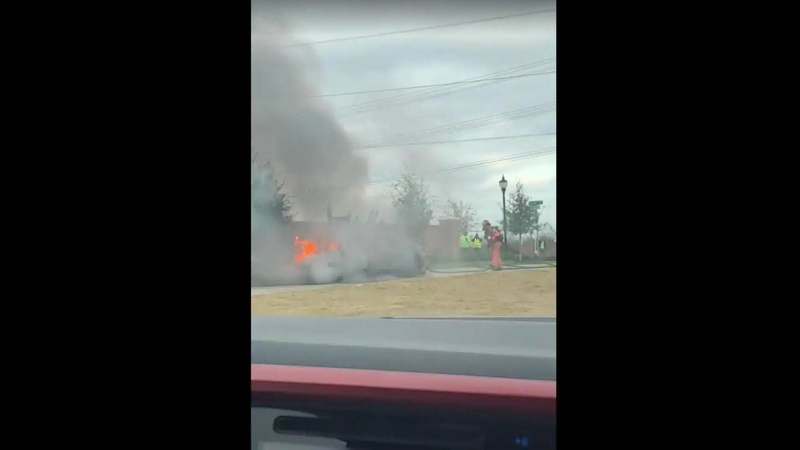
Seconds after Usmaan Ahmad heard metallic bangs in his Tesla Model S last month and pulled off a suburban Dallas thoroughfare, flames started shooting out of his five-year-old car.
The sound was like “if you were to drop an axle of a normal car” on the ground, Ahmad, 41, said. Only the car was intact, he recalled. Suddenly, as he stood on the side of the road, the car ignited in flames, concentrated around the front passenger-side wheel. “This was shooting out like a flamethrower,” recalled Ahmad, who works in strategy and business development for a health-care system.
The combustion of Ahmad’s car is one of a growing number of fire incidents involving older Tesla Model S and X vehicles that experts say are related to the battery, raising questions about the safety and durability of electric vehicles as they age. The National Highway Traffic Safety Administration (NHTSA) is evaluating the fire of Ahmad’s vehicle in Frisco, Tex., and has contacted Tesla over the matter, NHTSA spokesman Sean Rushton said this month. The agency opened an investigation last year into alleged battery defects that could cause fires in older Tesla sedans and SUVs.
Tesla did not respond to requests for comment sent to multiple representatives.
A lawsuit and defect petition that spurred the NHTSA probe allege Tesla manipulated its battery software in older model cars to reduce the risk of fire, lowering the range and lengthening charging times as it sought to address an undisclosed defect. The attorney filing suit on behalf of Tesla owners last year cited an “alarming number of car fires” that appeared to be spontaneous. Since the agency agreed to look into the issue last year, little more has been disclosed about the status of the probe.
Tesla has argued its cars are 10 times less likely to catch fire than gasoline vehicles, citing data from the National Fire Protection Association and U.S. Federal Highway Administration on the number of incidents by mileage traveled for its fleet of electric cars vs. other vehicles. Tesla said in 2018 that its vehicles had five fires per billion miles traveled, vs. 55 fires per billion miles traveled in the United States.
Other electric vehicle models have faced federal scrutiny and voluntary recalls over fire risks. Last month, NHTSA announced General Motors was recalling more than 50,000 Chevrolet Bolt electric cars in the United States over the potential for fire in its high-voltage battery pack, after the agency confirmed there were five known fires involving the vehicle, resulting in two injuries. NHTSA advised owners to park their cars outside until the problem is repaired.
General Motors spokesman Daniel Flores said dealers were updating the cars’ battery software to limit their charge capacity to 90 percent while the company addressed the issue. The batteries, he said, “may pose a risk of fire when charged to full, or very close to full, capacity,” and the company is “working around-the-clock to identify the root cause.”
Audi recalled its e-tron SUV last year shortly after its U.S. launch following the discovery of a potential fire risk, which the company said was a wiring harness issue. Audi spokesman Mark Dahncke said that Audi recorded no fires globally and that the recall was done out of an abundance of caution.
And federal regulators investigated General Motors for battery fire risks in its plug-in hybrid Chevrolet Volt in 2011, a problem GM agreed to address.
There were 189,500 highway vehicle fires in the United States in 2019, according to the National Fire Protection Association, encompassing passenger and other types of road-going vehicles. Experts say electric cars catch fire at a similar rate to gas cars, if not less often. But the duration and intensity of the fires, fueled by chemicals and the extreme heat buildup in lithium-ion battery systems, can make the fires in electric cars harder to put out.
“Battery fires can take up to 24 hours to extinguish,” Tesla says in an emergency response guide for the Model S on its website. “Consider allowing the battery to burn while protecting exposures.”
As a report prepared for NHTSA suggests, electric vehicle fires can result from a chain reaction of events where, for example, a defect causes overheating in a single cell. Through that vector, the heat can ignite highly flammable materials surrounding the source and spread to the rest of the battery, eventually spiraling out of control as temperature and pressure rise unabated, a process known as “thermal runaway.” But the issue may not be inherent to batteries, but rather the fact that the current crop of electric vehicles are relatively new to market and uniform safety standards have yet to be adopted, research has said.
An October 2017 Battelle report prepared for NHTSA on the safety of lithium-ion batteries for electric and plug-in hybrid cars “suggests that the technology and industry has not matured sufficiently to have established comprehensive safety codes and standards that mitigate risks.”
Tesla has come under particular scrutiny over concerns its computerized cars made emergency responses and investigations more difficult, with features such as retracting door handles that proved an impediment to first responders, for example, and proprietary systems with critical incident information that have required Tesla’s cooperation to decode.
The NHTSA defect petition that led to the probe cited alleged “high-voltage battery fires that are not related to collision or impact damage to the battery pack.” It focused on Model S and X vehicles from model years 2012 through 2019 and homed in on their battery management systems, including thermal management and charging control, NHTSA said.
One of the most gruesome incidents involving the Model S was the case of driver Omar Awan, who was trapped in a burning car in South Florida in 2019 after the car’s electronic door handles failed to retract following a fiery crash, his family said. The man’s family blamed that design feature in a wrongful-death lawsuit, saying his death was caused by the design features rather than the crash itself.
The battery reignited at least three times in the impound lot, according to the South Florida Sun-Sentinel.
Another fatal wreck in South Florida, in 2018, led the family of a teenage victim to sue Tesla, alleging the battery pack was defective. The firm representing that family alleged there were at least a dozen cases of Model S batteries igniting after a collision or while parked.
In 2019, Tesla said it sent investigators to the site of a Model S explosion in a Shanghai car park after video showed smoke billowing from the parked car before a fiery blast.
And a Tesla Model S burst into flames while sitting in traffic on a Los Angeles street in 2018, with fire shooting similarly from the wheel well. Tesla called it an “extraordinarily unusual occurrence.”
The Frisco incident bore resemblances to many of the previous cases, although Ahmad had been driving the Tesla Model S 85D shortly before it ignited. Ahmad said his battery was at around a 60 percent charge, he said, and he was cruising lightly on the way home from Home Depot.
Firefighters showed up within minutes after Robert Watson, 41, of Frisco witnessed black smoke and called 911. One of Watson’s sons started recording the fire, which was growing in intensity.
“It looked like the back of a jet engine with the afterburner on coming out of that front passenger wheel,” recalled Watson, who works for a technology company. The firefighters had the blaze under control in about 10 minutes, witnesses recalled.
But there was another issue. As he stood on the side of the road, Ahmad said, a firefighter asked how to get inside the cabin as they worked to douse the flames.
Ahmad thought to try the key fob but knew it might be futile. The Model S uses retractable door handles that are electronically controlled, popping out when they detect a nearby fob.
The firefighter “looked at me and he said, ‘You’re lucky you got out when you did, because you could have gotten stuck in there,'” Ahmad said. It raised similar concerns to the Florida crash involving Awan.
Keith Gall, battalion chief of administrative services for the Frisco Fire Department, told The Washington Post the fire involving Ahmad’s Tesla was deemed “unintentional,” though he did not elaborate. The car was destroyed, Ahmad said, and is sitting in an insurance lot. Now he is awaiting answers on the potential cause, though he said Tesla had not initially proved eager to investigate the fire.
“I am assuming the battery exploded and caused the fire, but would like to request Tesla please look into this,” he wrote Nov. 25 to a Tesla service center representative, who later responded they were glad he was safe and would look into the matter.
Since then, Tesla has repeatedly cited insurance hurdles. Once Ahmad files a claim, the parties will agree to jointly inspect the car, one Tesla representative told him.
“Until this is done, there is no time frame,” the Tesla rep told him in an email shared with The Post. A month after Ahmad’s email to Tesla, the company and his insurance agency agreed to jointly inspect the car, Ahmad said.
Ahmad said he wants to determine the root cause of the problem so this doesn’t happen to someone else.
Ahmad fears for others who have the same model vehicle and even for his parents, whom he convinced to get a Tesla Model X SUV.
“I don’t want anybody else to experience something this scary,” he said.
By Syndication Washington Post, Bloomberg · Iain Rogers
German officials ruled out a rapid lifting of the nation’s coronavirus restrictions as the country’s death toll from the disease ticked above 30,000.
Interior Minister Horst Seehofer told Bild am Sonntag newspaper that Germany “must not risk everything we have achieved with quick easing, otherwise it will start all over again.”
“If the lockdown does not have a sufficient effect, the measures must be tightened,” he said, adding that a “third wave” must be avoided “at all costs.”
German cases and deaths have been on the rise since October, prompting Chancellor Angela Merkel’s government to impose a harder shutdown — with schools and nonessential stores shuttered — until at least Jan. 10. Germany joined European Union partners in starting vaccinations on Sunday, but officials have said it will take months for the program to have a tangible impact on the spread of the disease.
“I expect that we will have to extend the measures,” Manuela Schwesig, the state premier of Mecklenburg-Western Pomerania, said in reference to the nationwide lockdown. “We are not through this yet,” she said in an interview with Bild newspaper.
Germany has recorded several hundred coronavirus-related deaths each day in the past few weeks. The number of fatalities rose by another 351 in the 24 hours through Monday morning, according to data from Johns Hopkins University, after having crossed the 30,000 mark for the first time on Sunday. Total cases exceed 1.65 million.
Seehofer, a member of the Bavarian sister party to Merkel’s CDU, accused some senior colleagues of failing to recognize the seriousness of the pandemic. Merkel pushed for tighter restrictions to be introduced earlier, but faced resistance among the heads of Germany’s 16 states.
The virus curbs from October onward were “inadequate” and some top officials, including regional leaders, “simply underestimated the gravity of the situation,” Seehofer told Bild.
“You can only get the spread of a highly infectious and potentially deadly virus under control with rigorous countermeasures,” he said, adding that Germany still lacks “satisfactory solutions” for schools and public transport.

 Sen. David Perdue, R-Ga., speaks during in Augusta, Georgia, on Dec. 10, 2020. MUST CREDIT: Bloomberg photo by Elijah Nouvelage
 A nurse wearing personal protective equipment administers medication to a patient inside the covid-19 ward at PeaceHealth Southwest Medical Center in Vancouver, Wash., on April 30, 2020. MUST CREDIT: Bloomberg photo by Nathan Howard
 When the pandemic finally hit the farthest-flung Maryland county this fall, Garrett Regional Medical Center ran out of ICU beds, had to abandon its testing operation and saw 10 percent of its staff infected or in quarantine. MUST CREDIT: Washington Post photo by Erin Cox


 President Donald Trump speaks during a rally in Valdosta, Ga., on Dec. 5. MUST CREDIT: Bloomberg photo by Elijah Nouvelage

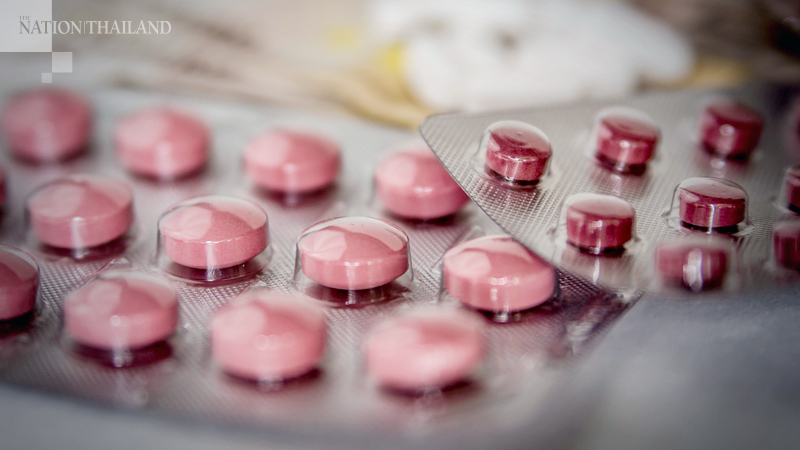
 Automobiles manufactured by Vauxhall Motors in the factory parking lot in England’s Ellesmere Port on Feb. 5, 2018. Brexit had made Vauxhall, owned by France’s PSA Group, postpone further investment in its plant in Ellesmere Port. MUST CREDIT: Bloomberg photo by Matthew Lloyd