The Transport Ministry will focus on implementing seven new mega-projects next year, including the “southern land bridge” linking the Gulf of Thailand and Andaman Sea, minister Saksayam Chidchob said as he outlined the ministry’s plan for 2021 on Monday.
The Office of Transport and Traffic Policy and Planning has drawn up the terms of reference to hire a private firm to study the feasibility of the project and come up with a suitable design.
Another mega-project is Phase 2 of the double railway track being built by the State Railway of Thailand (SRT).
Saksayam said he has given SRT the job of studying the project, which will be developed on a public-private partnership. Given that the state agency has a huge debt and limited budget, getting the private sector to jointly develop the project is one of the options to help the project take off.
He said work on the double track Denchai-Chiang Rai-Chiang Khong and Ban Pai-Nakon Phanom railway will start next year.
Economic recovery accelerated in November, says Finance Ministry
EconDec 29. 2020Pisit Puapan, left, executive director of the macroeconomic policy bureau at the Fiscal Policy Office (FPO), and Wuttiong Jittungsakul, fiscal policy adviser, report on the state of the economy in November on Monday.
By The Nation
Economic indicators for November suggest Thailand’s recovery from Covid-19 is gathering pace, Wuttipong Jittungsakul, fiscal policy adviser to the Fiscal Policy Office, said on Monday.
Collection of VAT, an indicator of private consumption, rose 2.5 per cent from the previous month while contracting 6.5 per cent year on year (YoY) – a big improvement on the 9.4 per cent contraction in October.
Auto sales in November increased 8.7 per cent from October and contracted 7.2 per cent year on year, significantly improving from the 25.9 per cent YoY contraction in October, he said.
As for private spending, commercial vehicle sales rose 8.2 per cent year on year, for a third consecutive month in growth. However, the growth rate decelerated from 10.4 per cent and 13.5 per cent in October and September respectively.
Imports of capital goods expanded 6.2 per cent month on month, but contracted 3.2 per cent YoY, compared with 17 per cent yearly contraction in October.
Cement sales grew 10.8 per cent from the month before but contracted 1.5 per cent YoY – better than the 9.1 per cent contraction in October.
Government spending, which is a key driver of the economy, increased 100.6 per cent year on year to Bt363.8 billion.
Consumer confidence also grew in November, with the spending sentiment index up 52.4 to reach its highest level in nine months after the second consecutive monthly increase.
Farmers’ real income rose 13.6 per cent, boosting their purchasing power. Covid relief packages have driven rising consumer sentiment and farmer’s income, said Wuttipong.
Meanwhile, Pisit Puapan, executive director of the macroeconomic policy bureau, said most on Thailand’s regional economies also expanded in November on the month before.
The economic situation in the Northeast, Central Region, Greater Bangkok, East and South improved from October. However, economic conditions in the West and North stayed flat in November compared with October.
Energy plan for 2021 targets more than Bt127bn in private investment
EconDec 28. 2020Energy Minister Supattanapong Punmeechaow, centre, outlines policies for 2021.
By The Nation
The Energy Ministry on Monday outlined its 2021 mission to strengthen Thailand’s energy sector.
Minister Supattanapong Punmeechaow said the ministry would ask the Cabinet to approve a national energy plan that sets clear directions for private investment.
The ministry will also set a clear policy to reduce the electricity reserve, as well as further liberalising the natural gas and power sectors.
It will also promote more investment in electric vehicles and prepare a new bidding round for petroleum exploration concessions.
The ministry will stimulate sales of B10 diesel and set E20 gasohol as base-grade fuel.
The plan will also hasten establishment of community power plants with capacity totalling 150 megawatts.
The minister added that energy policies next year are expected to generate investment of Bt127.932 billion.
China’s biggest internet companies got that way with at least tacit support from the government. Now two events have raised doubts about where those giants stand: the last-minute suspension of a stock offering by billionaire Jack Ma’s sprawling Ant Group Co. due to regulatory pressure; and the introduction of a draft antitrust policy seemingly designed to rein in the most powerful, including Alibaba Group Holding Ltd. (Ant’s major backer) and Tencent Holdings Ltd., operator of the WeChat super-app.
In the final days of 2020, regulators fired their opening salvos — opening an investigation into alleged monopolistic conduct at Alibaba and ordering Ant to refocus on its roots as a digital-payments provider. All that has left investors worried about what’s next for China’s Big Tech players and if the unusual freedom enjoyed by entrepreneurs like Ma might be coming to an end.
1. What happened?
Years of loose regulatory oversight in China helped Ant become a fintech giant, with businesses spanning payments, banking, wealth management and insurance. But just ahead of what was to be a $35 billion mega-listing in Shanghai and Hong Kong, Chinese authorities slapped new rules on the consumer-lending industry, in which Ant is the biggest player. That led to an indefinite suspension of Ant’s Nov. 5 initial public offering. The following week regulators proposed new rules intended to curb monopolistic practices across its internet landscape, spooking investors and wiping $290 billion off the value of market leaders including Tencent and Alibaba over two days.
2. Why the assault now?
We don’t know exactly. As is almost always the case, the country’s leaders have said little about their intentions, apart from protecting consumers and maintaining financial stability by mitigating risks. Some analysts and investors say they think regulators are merely reasserting their oversight power, not looking for drastic changes. Others think they may have grown frustrated with the swagger of tech billionaires and want to teach them a lesson by breaking up their companies — even if it means short-term pain for the economy and markets. What is known is that at a conference in October, Ma blasted China’s financial system as outdated and complained that regulators were shortsighted. He was summoned to Beijing for a rare joint meeting with the country’s top financial officials. The new regulations soon followed. The Wall Street Journal reported Nov. 12 that Chinese President Xi Jinping was furious at Ma’s speech and personally made the decision to halt the IPO.
3. Why is Jack Ma getting singled out?
The charismatic impresario behind two of the country’s largest corporations, Ant and Alibaba, is arguably the one person most closely identified with the meteoric rise of China’s internet sector. Long a regular face on the global conference circuit, the flamboyant billionaire has all but vanished from public view since Ant’s IPO got derailed. As of early December, he was advised by the government to stay in the country, a person familiar with the matter has said.
4. Is this a big change for China?
The government has played an important role in developing the tech sector, aided by a massive consumer market. In manufacturing, it intervened directly many times to reach the point where much of the world’s technology is made in China, even if it’s not always by Chinese companies. The central metropolis Zhengzhou, dubbed by locals as iPhone City, wouldn’t have become Apple Inc.’s biggest production base without government incentives. While less active in software and services, China facilitated their development by effectively creating its own version of the internet that’s blocked off from the rest of the world by what’s known as the Great Firewall. In the absence of Facebook Inc. or Twitter Inc., Tencent’s WeChat and Sina Corp.’s Weibo have flourished as social networks. Once Alphabet Inc.’s Google pulled out, Baidu Inc. extended its dominance of desktop search.
5. And the internet?
Early movers Alibaba and Tencent grew massively and came to dominate the entire ecosystem. Together with Ant they had a combined market capitalization of nearly $2 trillion in early November — easily surpassing state-owned behemoths like Bank of China Ltd. as the country’s most valuable companies. Their networks of investments encompass the vast majority of Chinese start-ups in arenas from artificial intelligence (SenseTime, Megvii) to fresh veggies (Meicai) and digital finance (Ant Group). Their patronage helped groom a new generation including food and travel giant Meituan and Didi Chuxing — China’s Uber. Rare are those that prosper outside their aura, the largest being TikTok owner ByteDance Ltd.
6. What are the legal issues?
China’s antitrust watchdog is seeking feedback on 22 pages of vaguely worded edicts that would establish a framework for curbing potentially anti-competitive behavior such as forced exclusivity deals, algorithm-based prices favoring new users or below-cost pricing to eliminate competitors. In that sense it echoes concerns raised by regulators worldwide who are investigating whether Facebook, Google and other internet giants are leveraging their dominance to squash competition, or abusing user data. Consumers in China in recent years also have protested against the gradual erosion of their privacy via technology from facial recognition to big data analysis.
7. What’s this about VIEs?
Embedded in the rules is a reference to the need for official approval for mergers and acquisitions involving Variable Interest Entities. The VIE model has been used by Alibaba and others to sell shares overseas, because Chinese law restricts foreign investment in internet companies (along with banking, mining and private education). The exotic corporate structure — pioneered by Sina and its investment bankers during a 2000 IPO — magically turns a Chinese company into a foreign one with shares that overseas investors can buy. But it has never been formally endorsed by Beijing, leaving investors perennially nervous about their bets unwinding overnight.
8. Has this happened before?
Yes, to an extent. China has a tradition of cracking down in fits and starts, or making examples out of high-profile companies. Tencent, for instance, became a target of a campaign to combat gaming addiction among children in 2018. While its shares took a hit, they eventually recovered to hit new highs. Alibaba has done the same after running afoul of authorities on everything from unfairly squeezing merchants to turning a blind eye to fakes. But the present scrutiny is shaping up to become one of the largest concerted actions against private enterprise in decades.
9. Is the internet being singled out?
China’s private sector has maintained a delicate relationship with the Communist Party for decades, and has only recently been recognized as central to the nation’s future (Ma was confirmed as a Communist Party member in 2018). While Xi’s government has been steadily tightening its grip on the world’s second-largest economy, it had taken a relatively hands-off approach toward the internet, e-commerce and digital-finance spheres. That could be changing as Big Tech amasses evermore influence and power through the data and loyal patronage of hundreds of millions of consumers.
10. Will Ant – or anyone else – get broken up?
Beijing told Ant to overhaul its suite of services — which include consumer loans, wealth management and insurance. It stopped short of calling for splitting the company but the language left that option open. The central bank stressed it was important Ant “understand the necessity of overhauling its business” and told it to come up with a plan and timetable as soon as possible. Authorities also berated Ant for what they said was subpar corporate governance and disdain toward regulatory requirements. As for other companies, Beijing is expected to tread cautiously, looking to rein in their growing clout without undermining some of the nation’s biggest corporate success stories. It’s unclear when or whether Beijing will wring concessions from Alibaba in its antitrust investigation, or what they could be.
By Syndication Washington Post, Bloomberg · John Tozzi, Linus Chua
Novavax Inc. will start the final-stage trial of its coronavirus vaccine with 30,000 people in the U.S. and Mexico, opening another avenue for shots to fight the pandemic, the National Institute of Allergy and Infectious Diseases said.
The trial, to be completed across 115 locations, is the latest large-scale effort in the U.S. to evaluate vaccines to protect against the virus that’s killed more than 330,000 Americans. The company is also studying the vaccine in a large trial in the U.K. that’s completed dosing. Initial results from that trial should be released early next year, Chief Executive Officer Stan Erck said Monday in an interview on Bloomberg Television.
Erck said the trials underway will show whether the Novavax vaccine is similarly effective to shots already authorized in the U.S. that have demonstrated greater than 90% protection from illness.
“We don’t know until we know,” Erck said. Based on earlier studies of the immune response prompted by the Novavax shot, “we expect similar results,” he added.
If successful, Novavax’s shot would expand an arsenal that includes vaccines from Pfizer Inc. and Moderna Inc. that were authorized for emergency use this month. Other vaccines from Johnson & Johnson and AstraZeneca Plc are also in large-scale trials.
Novavax’s experimental NVX-CoV2373 vaccine uses a different mechanism than the Pfizer and Moderna shots, which rely on messenger RNA, a technology being used in vaccines for the first time. The Novavax shot is made from a “stabilized” form of the coronavirus spike protein incapable of causing infection. It also contains an adjuvant, a substance designed to enhance the immune system response.
Erck also said he thought the Novavax shot would likely prove effective against a new variant of the SARS CoV-2 virus spreading in the U.K. and elsewhere that is suspected of being more easily transmitted.
The company has been working to build manufacturing capacity across the globe, with commercial-scale factories worldwide ready to produce millions of doses, Erck said.
The U.S. trial of Novavax’s vaccine will be conducted with Operation Warp Speed, the federal government’s effort to accelerate vaccine development.
“The launch of this study — the fifth investigational coronavirus vaccine candidate to be tested in a phase 3 trial in the United States — demonstrates our resolve to end the pandemic through development of multiple safe and effective vaccines,” Anthony Fauci, director of the National Institute of Allergy and Infectious Diseases, said in a statement.
Once a billionaire factory, Korea’s beauty industry turns ugly
InternationalDec 29. 2020A customer tries an eyeliner at an Amorepacific store in Seoul, South Korea, on Sept. 12, 2018. The pandemic has made cosmetics less central to women’s daily routines, ending the wealth created by the rapid rise in popularity of Korean beauty products. MUST CREDIT: Bloomberg photo by SeongJoon Cho
By Syndication Washington Post, Bloomberg · Yoojung Lee
Three years ago, Suh Kyung-Bae was the second richest person in South Korea. Today he’s barely Top 10, a stark reversal in a K-beauty boom known for minting billionaires, not breaking them.
Suh’s $3.6 billion fortune — down from roughly $8 billion in 2017 — is largely comprised of shares in his family’s cosmetics conglomerate, Amorepacific Group, which have fallen more than 40% from a mid-January high. The parent of brands like Innisfree, Laniege and Sulwhasoo, Amorepacific was struggling even before covid-19, and the pandemic has ushered in a slew of lifestyle changes that have made cosmetics less central to women’s daily routines.
That’s brought a halt to the wealth created by the rapid rise in popularity of Korean beauty products and the dealmaking frenzy that followed. From 2010 to 2014, foreign companies spent at least $215 million to acquire cosmetics firms there, according to a September report by Samjong KPMG. In the five years that followed, the country became the world’s fourth-largest exporter of beauty products, and the deal volume ballooned to $5 billion, not including transactions for undisclosed sums.
Estee Lauder Cos. made Have & Be Co., widely known for its Dr. Jart+ line, its first acquisition of an Asian beauty brand in November 2019. That deal, worth $1.1 billion, turned founder ChinWook Lee into a billionaire. Goldman Sachs Group Inc. bought a minority stake in GP Club Co., best known for face masks, making founder Kim Jung-woong one of the country’s richest people. Unilever Plc, L’Oreal SA and other multinational companies also got stakes in Korean cosmetics firms, creating massive windfalls for their founders.
But the pandemic has taken a double hit on K-beauty. Social distancing and remote work have lessened demand for makeup and led to store closures. Beauty retail sales in the U.S., the No. 3 market for Korean exports, will be down more than 7% in 2020, according to market research firm Mintel.
For Korea, coronavirus travel restrictions have also cut off the flow of big-spending Chinese tourists and individual merchants who buy tax-free goods in bulk and sell them back home. Meanwhile, China’s customers have more access to global brands and are increasingly interested in products made locally.
“Now it’s naive to think that cosmetic products with made-in-Korea tags would simply win over Chinese customers,” said Lina Oh, a Seoul-based analyst at Ebest Investment & Securities Co.
Neither Have & Be nor GP Club have released financial information for 2020; GP Club’s plan for an initial public offering in 2019 hasn’t been rescheduled.
A store employee applies a foundation in a Laneige sore in Singapore on Sept. 12, 2017. The pandemic has taken a double hit on K-beauty, with social distancing and remote work lessening demand for makeup, and travel restrictions cutting off big-spending Chinese tourists. MUST CREDIT: Bloomberg photo by Nicky Loh
For Amorepacific, consolidated revenue for the first nine months of the year fell 23% to $3.4 billion (3.7 trillion won) from the same period in 2019, according to a company filing. For the first time in its history, the group announced last month a plan to offer voluntary retirement targeting employees who have worked for more than 15 years. The company declined to comment on its plans or on Suh’s personal fortune.
At the same time, the pandemic has accelerated the shift to online in the beauty industry. Amorepacific’s revenue for the segment has seen substantial growth, pushing it to prioritize that part of the business. Cosmetics giant L’Oreal, whose sales dropped 12% in the first half of 2020, launched 300 digital services this year, including live beauty tutorials.
Amorepacific plans to reduce the number of Innisfree stores in China but anticipates that overall, digital sales will make up half its business there next year, according to Yuanta Securities Korea. In the domestic market, the company sees the share of online revenue growing to 30% from 20%.
“Spending on cosmetics was already down before covid,” said Hye-mi Kim, an analyst at Cape Investment & Securities Co. in Seoul. “covid made it even less necessary. Only must-have items like skin care products or those for facial problems are doing okay.”
Meanwhile, South Korea has new billionaires rising, like Seo Jung-jin, founder of pharmaceutical firm Celltrion Inc., which is developing a covid-19 antibody treatment. Seo’s wealth has almost tripled this year to $14.6 billion, making him the country’s new second-richest man.
InternationalDec 29. 2020Heavy machinery operates at the Fimiston Open Pit mine, operated by Kalgoorlie Consolidated Gold Mines Ltd. in Kalgoorlie-Boulder, Western Australia, Australia, on Aug. 8, 2018. MUST CREDIT: Bloomberg photo by Carla Gottgens
By Syndication Washington Post, Bloomberg · Aoyon Ashraf
The good times for gold miners are expected to continue next year, especially for those that are able to tighten spending and increase returns to investors.
The rally in gold prices has helped miners expand their margins and generate record levels of free cash flow, allowing many to pass on profits to shareholders already, Scotiabank analyst Tanya Jakusconek said.
“With miners’ balance sheets in great shape, we believe investors will benefit from much higher dividends over the coming years,” Jakusconek wrote in a note to clients. Kinross Gold Corp., for example, offers “particularly compelling value,” as long as it continues to demonstrate sustainable cash flow over the coming quarters.
With the outbreak of the coronavirus, the price of gold hit a record in 2020 after demand for safe-haven assets surged against a backdrop of “lower-for-longer” interest rates, trillions of dollars in stimulus spending and a weaker U.S. dollar.
With none of those factors expected to change anytime soon, Credit Suisse analyst Fahad Tariq said he expects next year to be another “banner year for gold” with prices heading to an average of $2,100 per ounce.
The “key differentiator” among mining stocks will be those with strict spending habits, Tariq said. If miners keep on a path of returning capital to shareholders, and continue to generate significant free cash flow, their valuation multiples should expand, he said.
Spot gold prices are down from an all-time high in August after the rollout of coronavirus vaccines reduced demand for havens, but they remain up about 24% for the year. While the FTSE World Index of equities is on track to return 13% in 2020, the NYSE Arca Gold Miners Index has climbed 23%.
The sell-off in the second half of the year likely facilitated a “shakeout of weaker names” that had participated in the first-half rally, Delbrook Capital founder and portfolio manager Matthew Zabloski wrote in a letter to investors. But now he expects a “big rebound” in precious metal prices, which could again lift the sector. He sees interest rates remaining low as swelling liabilities around the globe make rapidly increasing rates “intolerable,” he said.
Top picks by Credit Suisse’s Tariq include Newmont Corp., Barrick Gold Corp., Agnico Eagle Mines Ltd., Yamana Gold Inc. and Endeavour Mining Corp.
“The economy remains fragile and the post-pandemic recovery will be gradual at best,” Tariq said. “We think any near-term pullback in gold prices due to Covid vaccine approvals and rollout is a good entry point.”
By Syndication Washington Post, Bloomberg · Davide Scigliuzzo
It was a year like no other in credit.
Markets plunged at the onset of the pandemic, sending entire sectors teetering toward oblivion. Once solid companies were suddenly paying double-digit yields in a mad scramble for liquidity, while venerable household names could be scooped up for pennies on the dollar.
Then, just as quickly, the Federal Reserve’s unprecedented efforts to support corporate-debt markets set off a surge in prices that turned risky bets into winning wagers virtually overnight. A flurry of trading activity ensued, generating billions of dollars in additional Wall Street revenue and boosting bonuses.
Amid the banner year, a few select wagers have stood out among the rest. From travel and tech to Tupperware, here are some of the top credit trades in a year that has had no shortage of memorable deals.
Airbnb
Silver Lake and Sixth Street Partners more than doubled their money on a $1 billion lifeline they threw Airbnb Inc. in April. The second-lien loan they underwrote for the company came with warrants, which delivered outsized returns once the company completed its initial public offering. In just eight months, the two firms are sitting on paper gains well over 100%.
Less adventurous investors who preferred to stick to more senior debt were still able to take part in the rally. Airbnb’s first-lien loan, also syndicated in April, has returned about 17% over the span.
Fresh Market
Before businesses were ordered shut across the U.S. in March, Fresh Market Inc. was struggling under the weight of $1 billion in debt it had accumulated after its takeover by Apollo Global Management Inc. in 2016. Its bonds were already trading at roughly half of their face value.
But as homebound consumers began stocking up on groceries en masse, the company experienced a 25% increase in revenue in the second quarter. The company’s 9.75% notes due 2023, which dropped to as low as 39 cents on the dollar at the end of March, have since recovered to 103. That’s a total return of more than 175% for investors who timed it right.
Tupperware
A boom in home cooking and an aggressive cost-cutting plan pushed by new Chief Executive Officer Miguel Fernandez gave Tupperware Brands Corp. a much-needed boost in 2020, pulling the company back from the brink.
Tupperware’s shares have soared more than 300% this year, but its debt has also been a boon for investors. The company’s $600 million of 4.75% bonds due 2021 traded as low as 30.125 cents in May after it announced plans to buy back only some of the notes at deeply discounted prices.
Investors who scooped up the securities on the cheap and held out were handed a windfall in December, when Tupperware obtained a new loan from Angelo Gordon & Co. and JPMorgan Chase & Co., and called the remaining bonds at around par, for a total return of over 230%.
Cruise Lines
As the pandemic took hold, few industries were in more desperate need of capital than cruise lines. Not only had travel across the globe ground to a halt, but vessels had emerged as a key hot spot for contagion, casting doubts as to when sailing would be allowed to resume.
Carnival Corp. was the first to raise capital in the bond market, offering $4 billion of three-year bonds secured by ships and intellectual property with a coupon of 11.5%, one of the highest ever by an investment-grade company. The debt, which was issued at 99 cents, has returned around 25%.
Secured bonds that lower-rated Norwegian Cruise Line Holdings Ltd. and Royal Caribbean Cruises Ltd. offered in May have returned around 29% and 27% respectively.
Golden Nugget
Houston billionaire Tilman Fertitta was among the first to tap debt markets when credit began flowing again in April. But Golden Nugget, the umbrella company for much of his restaurant and casino empire, had to offer investors one of the highest yields ever seen in the U.S. leveraged loan market to get a deal done.
The loan was issued at 96 cents and pays annual interest of 12 percentage points over Libor. Two months later, half of it was repaid at a dizzying premium of 116 cents via proceeds from the sale of Golden Nugget’s online betting business to a blank-check company. The remaining outstanding amount has returned over 30%.
By Syndication Washington Post, Bloomberg · Laura Millan Lombrana, Charlie Devereux
Spain became the fourth European country to record more than 50,000 coronavirus deaths as nations across the region start to roll out a vaccine.
Fatalities from the disease rose to 50,122 on Monday, according to Health Ministry figures. Some 408 people have died of the virus in the past week. Cases diagnosed over the last 24 hours amounted to 2,822, bringing the total to 1.88 million.
Spain is one of the countries in Europe to be hit hardest by the pandemic, forcing the government to impose a state of emergency in March. When it emerged from a strict national lockdown three months later, management of the pandemic was placed in the hands of regional governments.
While some regions ordered restrictions on movement and curfews as cases increase again, Spain hasn’t reimposed a strict lockdown like those seen in the U.K. and France in recent weeks.
The number of people dying from the virus has been slowing since November, according to Fernando Simon, the head of Spain’s medical emergency response center. However, data gathered over the holiday period can have gaps in reporting, he said at a news conference.
“We had a death rate of 1% to 1.5% in the past few weeks and in the last few days we’ve seen a rate of 0.8%, which is a good indicator that we’re making a significant effort to guarantee detection” of the virus, Simon said.
The infection rate is higher than desired, but recent data suggests that the number of cases is stabilizing, as are hospitalizations, Simon said.
Still, authorities are telling Spaniards to avoid travel between regions and gatherings of more than 10 people over the holiday season. Spain’s economy is lagging behind major euro-area peers, with a contraction of 12% expected this year. Debt is mounting and unemployment is expected to remain around 20% for at least the next two years.
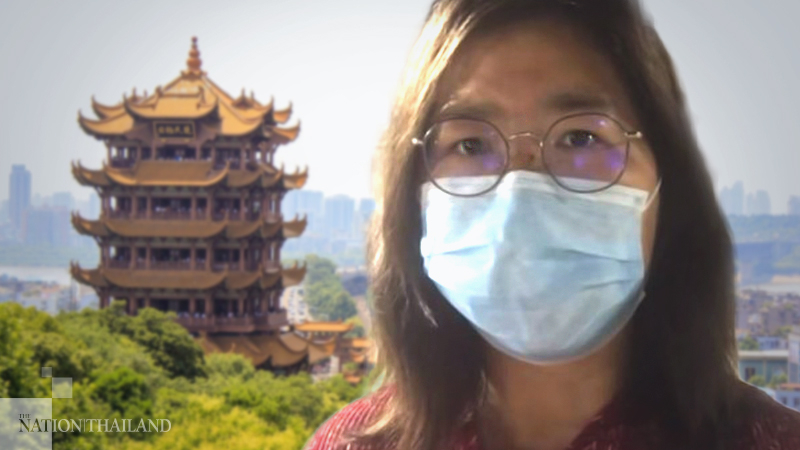
TAIPEI, Taiwan – A citizen journalist who documented the desperation of residents in Wuhan at the height of China’s coronavirus outbreak was sentenced to four years in prison on Monday in a case that underlined Beijing’s extreme sensitivity to criticism of its pandemic response.
In a closed-door trial that lasted less than three hours, authorities in Shanghai handed down the sentence to Zhang Zhan, 37, for “picking quarrels and provoking trouble,” a charge often used against dissidents.
Zhang, a former lawyer turned activist, traveled to Wuhan in February, where she filmed from overwhelmed hospitals, neighborhoods and community centers, providing a rare window into the locked-down city. Her critical reports accusing the government of suppressing the voices of regular citizens and failing to inform residents of the reality of the situation contrasted with rosy state media coverage, one of the few sources of information. Zhang was detained in May.
Chinese authorities often hold sensitive trials involving human rights activists during the holiday season when much of the rest of the world is distracted. The proceedings, usually announced with little notice, are almost always held in secret. In another such case, 10 of the so-called “Hong Kong 12” protesters caught at sea while trying to flee the crackdown in their city were put on trial in the Chinese city of Shenzhen on Monday.
During Zhang’s proceedings on Monday, which rights advocates deemed little more than a show trial, the activist was given a chance to speak.
“The government should not censor the speech of its citizens,” she said, according to her lawyer, Zhang Keke.
Human rights groups and friends of Zhang are especially worried about her health in custody. On hunger strike since June, she has been force-fed via a tube and placed under restraints. She has pledged to continue her hunger strike, according to her lawyer, despite pleas from family and friends. Advocates say she has been treated more harshly because of her refusal to cooperate or admit guilt.
Zhang is one of several citizen journalists detained for reporting on Wuhan, but the first to be sentenced to prison. Her verdict comes ahead of a mission to China led by the World Health Organization to investigate the origins of the virus, a politically fraught topic as the Trump administration and other critics say Beijing should bear responsibility for the pandemic that has now claimed more than 1.7 million lives.
“It shows that we will never know the truth about the pandemic,” said Leo Lan, a research and advocacy consultant at Chinese Human Rights Defenders. “Zhang Zhan’s heavy sentence will have a deterrent effect of silencing others who witnessed what happened in Wuhan earlier this year.”
Outside the Shanghai Pudong New District People’s Court where Zhang was tried, police pushed reporters and supporters away from the building, detaining at least nine people. On social media, activists posted pictures of Zhang and signs that read: “Zhang Zhan not guilty,” calling on the international community to pay attention to her case.
“The handling of Wuhan is very sensitive. Many people in China are still very angry at the initial coverup and downplaying,” said Yaqiu Wang, China researcher at Human Rights Watch.
Separately, a notice released on Monday from the People’s Court of Yantian district in Shenzhen said a hearing for the Hong Kong residents had taken place that afternoon. The court said it would choose a future date for announcing its ruling.
The group of 12 was caught in Chinese waters in August as they tried to escape to Taiwan by speedboat after the introduction of a draconian national security law in their city. Eight of the group have been accused of illegally crossing China’s border, while two have been accused of organizing the border violation. Two minors in the group will be tried in a separate hearing.
Barricades surrounded the courthouse in Shenzhen on Monday, where foreign diplomats from the United States, Britain, Australia, Canada, Portugal and other countries were blocked from entering.
Ahead of the trial, the U.S. Embassy in China called for the detainees’ release. “Their so-called ‘crime’ was to flee tyranny. Communist China will stop at nothing to prevent its people from seeking freedom elsewhere,” the embassy said in a statement.
Human rights campaigners and lawyers have warned that the detained Hong Kongers, between the ages of 16 and 33, held incommunicado in Shenzhen for the past four months, are at risk of torture and almost certain conviction in China’s politicized justice system.
The detainees’ relatives called the hearing a “de facto secret trial.” While the notice from the Shenzhen court said lawmakers, journalists and relatives attended the trial, family members said they were denied access. Foreign reporters were also barred and told the courtroom was full.
“The unfair court proceedings [are] evidence of an obvious, draconian political persecution,” the families said in a statement Monday. “The families of the 12 have been in great agony throughout their detention. They are now only asking for the safety of their children and their earliest return to Hong Kong.”
Campaigners in Hong Kong accused the Chinese court of delaying sentencing to keep the 12 in custody for longer. At a news conference, some family members called for immediate sentencing so that they would be able travel to China to see their detained relatives.
“I want to see my son as soon as possible,” said the mother of Wong Wai-yin, one of the defendants, who did not disclose her name. “I only want to see him.”

 Saksayam Chidchob
 Pisit Puapan, left, executive director of the macroeconomic policy bureau at the Fiscal Policy Office (FPO), and Wuttiong Jittungsakul, fiscal policy adviser, report on the state of the economy in November on Monday.
 Energy Minister Supattanapong Punmeechaow, centre, outlines policies for 2021.

 A customer tries an eyeliner at an Amorepacific store in Seoul, South Korea, on Sept. 12, 2018. The pandemic has made cosmetics less central to women’s daily routines, ending the wealth created by the rapid rise in popularity of Korean beauty products. MUST CREDIT: Bloomberg photo by SeongJoon Cho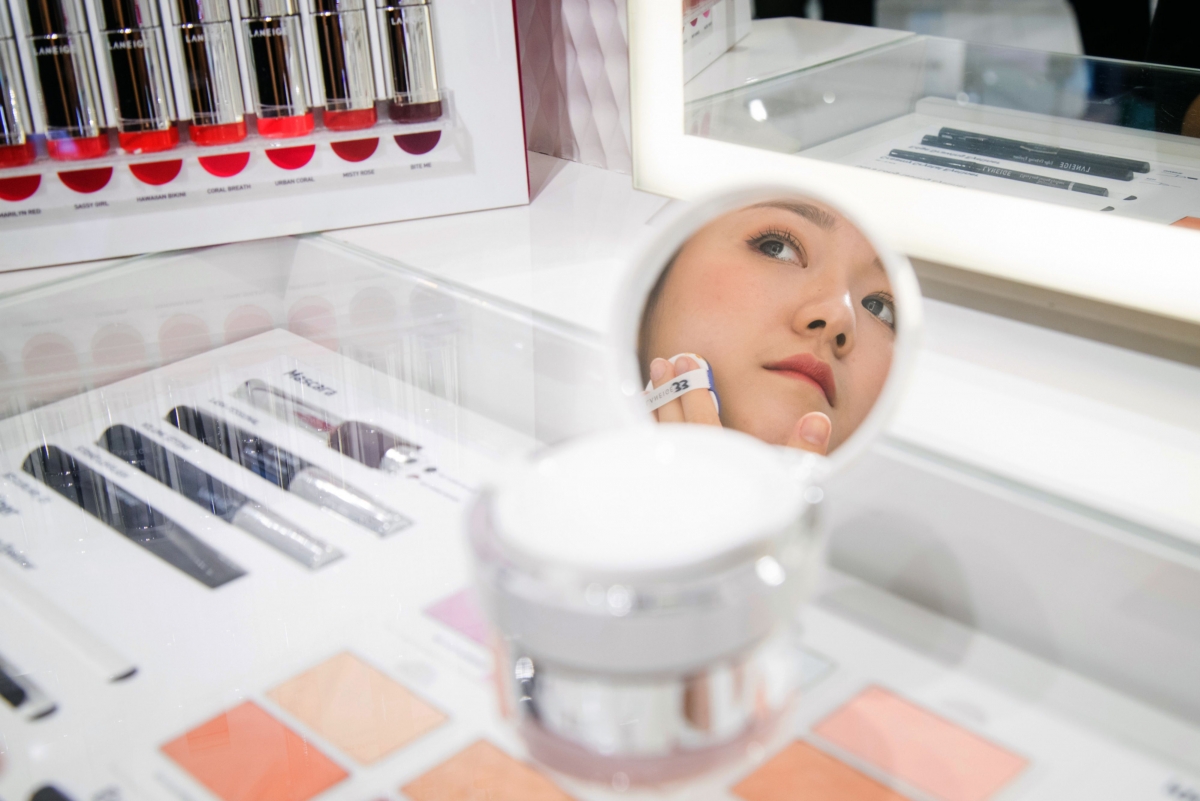
 Heavy machinery operates at the Fimiston Open Pit mine, operated by Kalgoorlie Consolidated Gold Mines Ltd. in Kalgoorlie-Boulder, Western Australia, Australia, on Aug. 8, 2018. MUST CREDIT: Bloomberg photo by Carla Gottgens