PH firms transitioning to hybrid work setups in 2022

#SootinClaimon.Com : ขอบคุณแหล่งข้อมูล : หนังสือพิมพ์ The Nation.

https://www.nationthailand.com/international/40009661


MANILA, Philippines — Two years into the pandemic, Nicholas Mapa, an economist at Dutch bank ING, is raring to go out again  — work in his office some days but work from home on other days — and meet friends once in a while.
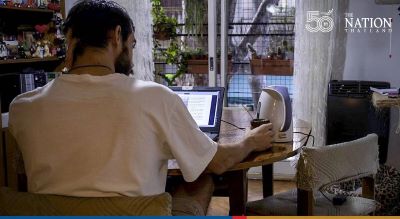
“I’m ready to go. It’s been too long,” Mapa says, adding, however, that he will do so only if the COVID-19 virus remains under control.

Even before the COVID-19 pandemic struck, ING had been pilot-testing a hybrid work arrangement, whereby employees were allowed to work in the office four days a week and work remotely once a week.

“So when the pandemic hit, we were actually pretty much set up for this—to do work from home. I think now that everybody has experienced it, they’re likely to say ‘kaya naman pala e’ (it’s doable),” he says. “It does help companies save on cost to some extent. I think it also helps increase enthusiasm, because you’re not very often boxed in your offices.”

The decline in daily new cases has encouraged the government to ease mobility restrictions and as quarantine protocols are further relaxed, ING is planning to institutionalize a hybrid workplace model, giving its employees the option to work either in the office or at home.

Such a hybrid model works for Mapa. “It’s still different working from here or working in the office. But we will be given that option to mix,” he says at an online economic briefing conducted from his home, as he has done so multiple times for clients and the media since the pandemic reached the Philippines in March 2020.

“I prefer [the] hybrid setup—getting the chance to go out and see some friends again, but also staying safe, and then trying to prevent the spread of the virus,” he says. “ I think other companies pick up on that as well.”

Many businesses that have enabled work-from-home (WFH) arrangements during this pandemic are likewise preparing to shift to hybrid work arrangements, especially for the segments in their business that can operate remotely. Even the business process outsourcing (BPO) companies have been allowed to have 90 percent of their staff under WFH arrangements and still retain their fiscal incentives during this pandemic, although it remains to be seen how long they will be allowed by the government to keep this arrangement.

There are those who do not have such options, like health-care workers, police authorities as well as staff of groceries, factories, utilities, hotels, and bank branches who need to be in the field. They are the front-liners during this pandemic.

This is why some CEOs choose to come to the office, even if they have the ability to manage their organizations remotely.

Even at the height of the pandemic, Bank of the Philippine Islands CEO Teodoro Limcaoco chose to go to the office every day. He would even pay branches surprise visits.

“When we ask our front-liners—tellers, branch people to come every day, how can I not come every day?” he quips.

Back to on-site work

During its third quarter Metro Manila property market briefing, which had mostly property developers, analysts and businessmen in the audience, property consulting firm Colliers reports that with increased confidence in the COVID-19 vaccines, employers are expecting more of their employees on-site by 2022. (See chart.)About 34 percent of the respondents of Colliers’ third quarter survey expect at least half of their workforce to return to their offices starting 2022. “This signifies that occupiers are still considering a hybrid working model including a mix of work-from-home and on-site operations,” Colliers says in a Nov. 29 research note.

Meanwhile, 31 percent of the respondents expect their employees to fully work on-site in 2022.

“In our view, any rebound in office leasing will be supported by the successful COVID inoculation which should allow more employees to report back to their offices. Despite the implementation of work-from-home arrangements, some firms, including outsourcing companies, continue to look for office space across the country. We see these leasing queries materializing over the next 12 months and resulting in greater office space takeup,” Colliers opines.

More than 70 percent of Colliers’ respondents say that 81 to 100 percent of their employees have already been vaccinated against COVID-19.

Colliers recommends that office occupiers finalize their split-operations plans and prepare for employees to return to the office.

WFH not for everyone

Newly listed real estate investment trust Filinvest REIT Corp. (FILRT) expects a growing number of IT and BPO firms resuming on-site operations as COVID-19 cases decline and many Filipinos get vaccinated.

“While WFH is an option, it is not for everyone, especially for multinational BPO companies,” says Maricel Brion-Lirio, president of FILRT, which is the leading office space provider in Alabang, with a market share of close to 50 percent.

Brion-Lirio says FILRT’s tenants, including those that belong to the top 10 BPO companies in the world, prefer the office setup due to concerns about potential security data breaches, poor internet connectivity, and low productivity due to numerous distractions when employees are in a WFH mode.

“A majority of the multinational locators said prolonged lack of face-to-face interaction, social isolation and reduced camaraderie among employees pose a threat to mental health,” she adds.

Property consulting firm KMC Savills estimates that 98,000 square meters (sqm) of office space have been taken up in the third quarter, bringing to 325,000 sqm the office takeup year-to-date. Excluding lease preterminations, net market absorption stands at just 147,000 sqm — but this marks a turnaround from the net negative absorption of 164,000 sqm in 2020.

BPO firms account for most of the new leases while expanding e-commerce firms add to the demand. Philippine Economic Zone Authority (Peza)-accredited buildings capture 71 percent of demand.

“Despite Peza allowing work-from-home for accredited companies—until, of course, a policy review after the first quarter of 2022—this did not stop some IT-BPM (IT-business process management) companies to secure Peza spaces. This is potentially due to the nature of the services and the contracts they have with certain customers. They may also be preparing for [greater] capacity should Peza regulations change after the first quarter of next year,” says KMC Savills chief operating officer Rosario Carbonell.

She sees office demand further picking up in the coming quarters from IT-BPM and other growing industries.

“We applaud Peza for staying true to its commitments to support the IT-BPO industry and extending its incentives for you know work from home and ensuring that there won’t be a halt in generating jobs for Filipinos. But I would be curious to see what changes would take place after the first quarter of 2022 that could potentially impact office space takeup should any of the policies change,” she says.

Unlike in the prepandemic period, Carbonell says it may be quite tricky now to estimate office absorption just based on headcount and revenue growth target of the BPO industry due to the dynamic work arrangements that are already incorporated in the industry’s business model.

Up for policy review

In mid-October, the Cabinet-level Fiscal Incentives Review Board (FIRB) denied Peza’s request to exempt its registered IT-BPM enterprises from the rules on WFH arrangements. Enterprises exceeding the 90-percent threshold cannot enjoy income tax incentives during the months of their noncompliance with the FIRB resolution.

Peza director general Charito Plaza previously appealed to the FIRB to let the investment promotion agency to implement its previous policy that allowed WFH arrangements for all employees, with the limitation that only 90 percent of the enterprise’s revenues may be granted tax incentives. This was rejected by the FIRB.

“The idea of opening the economy is allowing the people to go out and spend money in the restaurants and other businesses in the area. This [proposal] won’t achieve the goal of opening the economy,” says Finance Secretary and FIRB chair Carlos Dominguez III.

Dominguez says the activities registered with Peza are supposed to be conducted within the economic zones.

Finance Assistant Secretary and FIRB Secretariat Head Juvy Danofrata adds that the 90-percent WFH arrangement is only a temporary measure for exceptional circumstances approved by the FIRB, as authorized by the implementing rules and regulations of the Corporate Recovery and Tax Incentives for Enterprises Act.

“The Peza rule that 90 percent of total revenue from the registered activity is entitled to incentives— revenue, rather than workforce, as basis for the 90 percent—has no reasonable connection to COVID-19 prevention and mitigation,” Danofrata stresses.

Any future adjustment, if not unwinding of this temporary flexibility granted to BPOs, will have a big impact on how Metro Manila’s workplace will shape up in the coming year. After all, BPOs account for 8 million sqms or 53 percent of the total office space in the Philippines today of 15 million sqms, based on estimates from Leechiu Property Consultants (LPC).

Asked whether BPOs will still likely be allowed by the government to keep most of their staff under WFH arrangements, LPC president David Leechiu says it’s difficult to say.

“The population would need [COVID-19 vaccine] boosters by then, plus the mutations of the virus make it difficult to plan. However, the companies are keen to move back to office, some faster than others, but with clear intent to be 100 percent back in office,” he says.

Those outside the BPO sector have more flexibility to choose whether to summon back all their employees to the offices or stick to some form of hybrid arrangements.

“If WFH becomes permanent, it will hurt the property sector. Demand for offices, lease rates and capital values will fall,” says Abacus Securities head of research Raymond Neil Franco, adding there will be knock-on effects for residential condominiums and commercial asset as well.

“That being said, there are also reasons to back WFH. Employees are happier, renting may increase. It will help reduce traffic congestion and lower fixed/operating costs. Eventually, I think a compromise will be reached with maybe 50 percent of employees returning to offices on rotating basis.”

Published : December 06, 2021

By : Philippine Daily Inquirer

Pulau Bidong seabed in Terengganu houses 11 Asean mini landmarks

#SootinClaimon.Com : ขอบคุณแหล่งข้อมูล : หนังสือพิมพ์ The Nation.

https://www.nationthailand.com/international/40009660


The Pulau Bidong seabed is now home to 11 landmarks representing Asean countries and has the potential to become Terengganu’s latest tourist attraction.

Tourism, Arts and Culture Minister Datuk Seri Nancy Shukri said that besides being a popular diving spot among scuba divers, Pulau Bidong also has other hidden treasures.

The First Asean Underwater Mini Landmark is funded by the Asean Cultural Fund with an allocation of nearly RM300,000.

“It is being run with the cooperation of Universiti Malaysia Terengganu and the National Heritage Department under the Tourism, Arts and Culture Ministry banner,” Nancy said after the landmark’s launching ceremony in Pulau Bidong recently.

State Tourism, Culture and Digital Technology Committee chairman, Ariffin Deraman was also present at the launch.

The monuments featured are the Kuala Lumpur Petronas Twin Towers, Haji Omar Ali Saifuddien Mosque (Brunei), Jose Rizal Monument (the Philippines), Cambodia Independence Monument (Cambodia) and Patuxai Monument (Laos).

There is also a specially constructed monument, named the Asean Symbol of Unity Monument, signifying the togetherness of Asean countries.

The other monuments include the Merlion (Singapore), Wat Arun Ratchawararam Ratcha-woramahawihan (Thailand), Indonesia National Monument, Tran Quoc Pagoda (Vietnam) and Shwedagon Pagoda (Myanmar). These are all all submerged 15m on the Pulau Bidong seabed.

Meanwhile, Ariffin said he hopes the project will help boost the tourism sector in Terengganu.

He said that hopefully, the seabed monuments would trigger interest among tourists, especially scuba divers from Asean nations who are always on the look out for new, unique diving locations to explore.

“We must, however, exercise control and limit the number of tourists there to preserve the national treasure, and the natural beauty of Pulau Bidong.

“Presently, tourists can only carry out day-trip diving activities – they are not allowed to spend the night there,” he said. – Bernama

Related stories:

Malaysians ‘cautious’ of crowds but keen to visit tourist hotspots KL and Penang

Pandemic pushes tourism sector in Malaysia to ‘reset’ travel

7 most haunted forests Malaysian hikers should beware of

What can Malaysians see, do and eat in Kelantan and Terengganu?

Published : December 06, 2021

By : The Star

China to help set up jab factory

#SootinClaimon.Com : ขอบคุณแหล่งข้อมูล : หนังสือพิมพ์ The Nation.

https://www.nationthailand.com/international/40009659


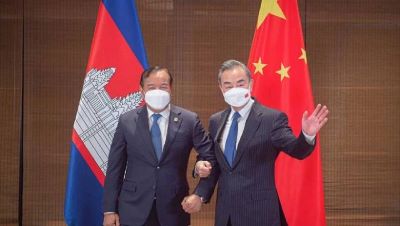
China pledged to provide more vaccine assistance to Cambodia and to establish a production facility in the Kingdom as the Covid-19 situation remains uncertain with the emergence of new variants and no clear end in sight.

The offer was made during a visit by Minister of Foreign Affairs and International Cooperation Prak Sokhonn to Hangzhou – the capital city of China’s Zhejiang province – on December 3-5 for talks with Chinese state councillor and foreign minister Wang Yi.

“Wang Yi said the current pandemic situation remains in flux and therefore China is willing to support Cambodia’s consolidation of its pandemic prevention and control resources by continuing to provide vaccines assistance in accordance with the needs of the Cambodian population and by helping the Kingdom establish a vaccine production factory,” China’s foreign ministry said in a press statement.

Cambodia’s foreign ministry said Sokhonn expressed the Kingdom’s appreciation for China’s development assistance, which has significantly contributed to socio-economic development in the country and especially for the provision of medical supplies and vaccines that have been instrumental in Cambodia being able to bring the pandemic under control.

“[Wang] reaffirmed China’s strong commitment to continue to provide assistance to Cambodia in the fight against Covid-19, including supporting the establishment of a Covid-19 vaccine manufacturing facility in Cambodia,” it said.

The bilateral meeting also touched on strengthening economic and tourism recovery, infrastructure development and energy resources, among other topics.

On economic cooperation, Wang said China and Cambodia should utilise the bilateral free trade agreement (FTA) and the regional comprehensive economic partnership agreement (RCEP) – which will take effect on January 1 – as opportunities to rapidly achieve economic recovery for the two countries and region after the pandemic.

“China is willing to steadily advance cooperation on major projects such as building expressways and airports as well as a demonstration zone for high-quality development of joint-venture production capacity.

“China will promote cooperation in the digital economy and … implement more livelihood enhancing projects, expand Cambodian agricultural exports to China and find ways to further benefit the Cambodian people,” said China’s foreign ministry.

It said Wang regarded China and Cambodia as “hardcore friends, comprehensive strategic partners and members of a community with a shared destiny”.

Wang added that China and Cambodia should unite more closely than ever before so as to safeguard the legitimate rights and interests of the two countries and promote regional peace, stability and development.

“It is necessary for us to strengthen strategic communications, deepen strategic coordination, jointly implement the consensus reached by the leaders of the two countries and promote China-Cambodia and China-ASEAN relations to achieve greater development,” Wang was quoted as saying in the press statement.

Sokhonn said Cambodia and China have successfully advanced “Belt and Road” infrastructure projects and that economic and trade cooperation have maintained a strong development momentum.

He noted that China has become Cambodia’s largest trading partner, investor and source of tourists.

“At the bilateral meeting, we reaffirmed our commitment to building resilience against Covid-19, strengthening the economy by enabling the recovery of the tourism sector and boosting infrastructure development as well as energy and technical cooperation, among others. Cambodia deeply values China’s invaluable support and lasting friendship,” Sokhonn said in a Facebook post on December 5.

Regarding the Mekong-Lancang Cooperation (MLC) framework, the two foreign ministers agreed to expedite the implementation of the MLC Five-Year Plan of Action.

Sokhonn also thanked China for approving the financing for a total of 67 Cambodian projects under the MLC framework with $26 million in funding.

Published : December 06, 2021

By : The Phnom Penh Post

Korea puts reopening plans into reverse as cases soar, omicron spreads

#SootinClaimon.Com : ขอบคุณแหล่งข้อมูล : หนังสือพิมพ์ The Nation.

https://www.nationthailand.com/international/40009658


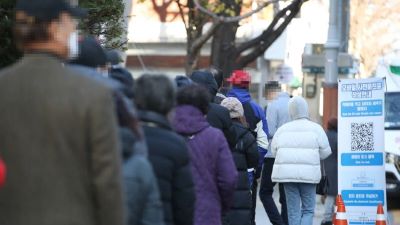
South Korea moved to tighten limits on gatherings again and expanded the use of mandatory vaccine passes, as new COVID-19 cases in Korea have hovered around the 5,000 mark for several days.

According to health authorities, 5,128 new cases were tallied as of midnight Saturday, pushing the cumulative total to over 473,034. Although the latest figure was down 224 from the previous day, it is the highest the country has recorded for a Saturday, when figures typically drop due to the smaller number of tests carried out over the weekend.

The number of patients in serious or critical condition also remains high, at 744.

The number of COVID-19 patients confirmed to have the new omicron variant has risen to 12, with three more individuals confirmed Saturday.

Of the 12, four appear to have contracted the variant abroad, and eight were infected locally through direct or indirect contact with the four who arrived in Korea from Nigeria on Nov. 24.

The four initial cases are a husband and wife living in Incheon with connections to a church in the city and two women in their 50s based in Goyang, Gyeonggi Province.

According to authorities, the Incheon residents spread the variant to their teenage son and an acquaintance. The acquaintance then spread the virus to his wife, mother-in-law and another acquaintance. The authorities believe that the latest three confirmed with the omicron variant contracted the virus from the Incheon couple’s acquaintance.

Authorities are currently monitoring 1,088 individuals who came into contact with confirmed omicron patients in Incheon, of whom 522 have been categorized as having come into close contact with the confirmed patients.

With record daily figures, the country is set to go into toughened social distancing measures for four weeks from Monday, putting on hold plans for a phased return to normal.

From Monday, private gatherings will be limited to six people in Seoul and the surrounding regions and to eight in other parts of the country.

The limit on private gatherings will be enforced regardless of vaccination status, and only one unvaccinated person will be allowed in such gatherings. Unvaccinated people will only be allowed to use restaurants and cafes alone, or with fully vaccinated individuals within the limited numbers.

Vaccine passes will also be required at a wider range of facilities, including cafes and restaurants, private academies, cinemas and theaters, cybercafes, indoor sports venues, museums and galleries.

The government plans to gradually expand the application of vaccine passes starting next year, and include those aged 12-18 from February. 

By Jo He-rim (herim@heraldcorp.com)

Published : December 06, 2021

By : The Korea Herald

Creator of Netflix series Squid Game is The Straits Times Asian of the Year

#SootinClaimon.Com : ขอบคุณแหล่งข้อมูล : หนังสือพิมพ์ The Nation.

https://www.nationthailand.com/international/40009657


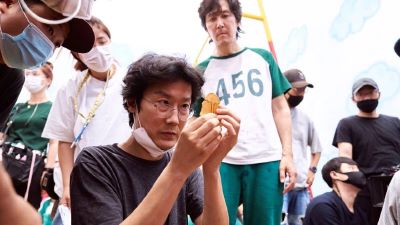
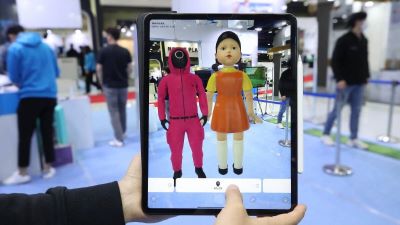
SINGAPORE – A 50-year-old South Korean film-maker, who captured the worlds imagination with a dystopian survival drama that throws up uncomfortable questions about contemporary society, has been named The Straits Times Asian of the Year.

Every year, the editors of The Straits Times pick a person, a group or an institution that in their judgment has significantly impacted Asia in the year past. Mr Hwang Dong-hyuk, the creator of Squid Game, was chosen this year for an expression of creativity that, while fictional and not without flaws, holds up a useful mirror to society.

The Netflix series created by Mr Hwang has emerged as more than a mere television show, said the citation to the award.

The drama involves a group of people, caught in dire personal circumstances, who contest in a series of win-or-die games for 45.6 billion won (S$52.9 million) cash prize.

“As social commentary, it has sparked soul searching about capitalism, inequality and how societies treat the less fortunate. As a commercial enterprise, it makes a compelling case to Hollywood for the viability of non-English content… Above all, as a vehicle of soft power, it has taken South Korea’s global cultural influence – already high – to the next level,” said the citation.

Mr Hwang, educated at Seoul National University and at the University of Southern California, won notice with his graduation thesis film Miracle Mile, which picked up several awards. With Squid Game, he found commercial success.

Mr Warren Fernandez, editor-in-chief of SPH Media’s English, Malay and Tamil Media Group and editor of The Straits Times, said: “This year’s choice for The Straits Times Asian of the Year award might seem an unusual, even surprising, one to some. But in an unreal time when many were confined to home amid the pandemic and sought release through streaming content, a troubling and thought-provoking series got the world talking about deep issues of inequality and inhumanity in some societies.

“The global reach the show attained so quickly spoke not only of the influence of the new media platforms, but also of the impact that ideas, creativity and cultural soft power can have, across borders, even in a world shut up at home. Like it or loathe it, Hwang’s creation struck a global chord and resonated with many, because it made us reflect on what happens when societies lose their humanity.”

Ms Bhagyashree Garekar, foreign editor of The Straits Times, said of this year’s awardee: “In Hwang, we honour a brilliant Asian artist’s honest reaction to the times we live in. Squid Game reveals to stunning effect the desperation and alienation that fester in the fraying edges of society, and even our own psyches. The award validates the unprecedented resonance Hwang’s creation has had with millions across the world, the next step would be to address the frailties the show has exposed.”

The Straits Times Asian of the Year award, now in its 10th year, has become an important part of the Asian calendar since 2012.

The inaugural award went to then Myanmar President Thein Sein, followed by a joint award for Chinese President Xi Jinping and then Japanese Prime Minister Shinzo Abe in 2013, before the award went to Indian Prime Minister Narendra Modi in 2014.

In 2015, the award was given posthumously to Mr Lee Kuan Yew, Singapore’s founding prime minister. In 2016, seven Asian pioneers working at the intersection of technology and commerce were honoured as The Disruptors – the first time the award went to a group.

Mr Xi was Asian of the Year in 2017, and editors picked The First Responders, a bunch of people of courage and commitment who stepped up in the moment of greatest need during natural disasters, as Asians of the Year 2018.

In the following year, the award went to Indonesian President Joko Widodo, the steward of South-east Asia’s biggest nation and economy, for the dexterity and nous he showed in navigating the tricky cross-currents of domestic politics and international affairs.

Last year, the award captured the trajectory of response to the Covid-19 pandemic, recognising a group of six researchers, scientists and businessmen at the forefront of developing and producing vaccines against the virus.

Past winners of The Straits Times Asian of the Year

2012: Myanmar President Thein Sein

2013: Chinese President Xi Jinping and Japanese Prime Minister Shinzo Abe

2014: Indian Prime Minister Narendra Modi

2015: Singapore’s founding prime minister Lee Kuan Yew (awarded posthumously)

2016: “The Disruptors”: Grab co-founders Anthony Tan and Tan Hooi Ling, Flipkart co-founders Binny Bansal and Sachin Bansal, Gojek founder and chief executive Nadiem Makarim, Tencent Holdings founder Pony Ma and Razer co-founder Tan Min-Liang

2017: Chinese President Xi Jinping

2018: “The First Responders”: Singaporean paraglider Ng Kok Choong (awarded posthumously), Indian Navy helicopter pilots P. Rajkumar and Vijay Varma, Indonesia’s national disaster management agency spokesman Sutopo Purwo Nugroho, Singapore’s Mercy Relief, and Jakarta-based Asean Coordinating Centre for Humanitarian Assistance on Disaster Management

2019: Indonesian President Joko Widodo

2020: Six researchers, scientists and businessmen who helped find ways to contain the Covid-19 pandemic:

• Chinese researcher Zhang Yongzhen, who led the team that mapped and published online the first complete genome of Sars-CoV-2, the virus that sparked the pandemic;

• Three scientists – China’s Major-General Chen Wei, Japan’s Dr Ryuichi Morishita and Singapore’s Professor Ooi Eng Eong – who were among those at the forefront of developing vaccines against the virus; and

• Two businessmen – South Korea’s Mr Seo Jung-jin and India’s Mr Adar Poonawalla – whose companies enabled the making and dispensing of the vaccines and other Covid-19 treatments to the world

Published : December 06, 2021

By : The Straits Times

HK to launch cross-border health code system on Dec 10

#SootinClaimon.Com : ขอบคุณแหล่งข้อมูล : หนังสือพิมพ์ The Nation.

https://www.nationthailand.com/international/40009636


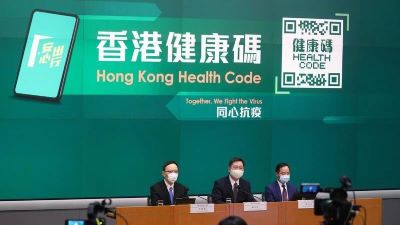
HONG KONG – Hong Kong will launch its cross-border health code system at 9 am on Dec 10, as the city takes a major step toward quarantine-free cross-border travel with the Chinese mainland and Macao, Secretary for Innovation and Technology Alfred Sit Wing-hang announced on Thursday.

While introducing the health code system at a media briefing, Sit said travelers must provide their real names and residential addresses during the registration process and upload their visit histories of the past 21 days via the LeaveHomeSafe contact-tracing app.

After Friday, residents will be able to apply for a code via http://www.healthcode.gov.hk. The LeaveHomeSafe app will also be updated to connect with the health code system.

Sit added that the local health code system will later be connected to related systems of the mainland and Macao. Experts are still working on the issue.

Unlike the app used on the mainland, the Hong Kong app will not track a user’s movement, the government said. Only Hong Kong residents who plan to cross the border are required to use the app.

“We will launch the app next week for the public to test and trial and facilitate the gradual reopening of the border,” Sit said.

As with the mainland’s system, Hong Kong’s health codes will be shown in red, yellow and green, indicating high, medium, and low risk of users. Only the green-colored code will be accepted when crossing the border.

Sit said Hong Kong has entered the final stage of resuming quarantine-free travel with the mainland. But the application sequence of the health code is not related to the allocation of quotas after the border reopens.

To help the public better use the health code system, the government will deploy groups of officers in public places such as housing estates and MTR stations to offer assistance.

Published : December 05, 2021

By : China Daily

Religious ceremony marks railway inauguration

#SootinClaimon.Com : ขอบคุณแหล่งข้อมูล : หนังสือพิมพ์ The Nation.

https://www.nationthailand.com/international/40009635


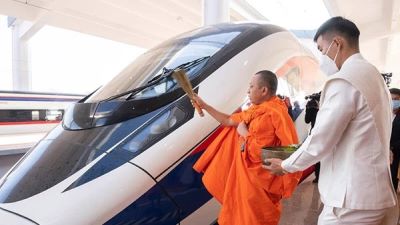
A traditional ritual to mark the grand opening of the Laos-China railway, which takes place this afternoon, was organised on December 2 at the newly-built train station in Vientiane.

The highlight of the event was a Paritta (auspicious) chant by 19 monks, led by the Acting President of the Buddhist Fellowship Organisation of the Lao PDR, the Most Venerable Maha Bounma Simmavong.

The words of the chant call for misfortune to be dispelled and for good luck, success and happiness to be bestowed on the operation of the station, trains and operators, as well as all those attending the ceremony.

The ritual was one of many special activities organised as part of the grand opening of the Laos-China railway.

The presence of monks and the chosen time of the ceremony were regarded as auspicious for the start of railway operations.

The ceremony is thought to ensure smooth running of the railway for both operators and customers, along with wealth and success in all associated endeavours.

Attending the event were Prime Minister Phankham Viphavanh, senior officials, members of various bodies associated with the railway, and Buddhists.

Before the start of the chanting, the Prime Minister lit two large candles in homage to the Buddhist Triple Gem and struck a huge gong nine times to mark the beginning of the ceremony. This was followed by prayers and pledges to follow the five Buddhist precepts.

Vice President of the Lao Buddhist Fellowship Organisation, the Most Venerable Maha Veth Masenay, preached a sermon and then congratulated the committee responsible for organising the ritual, saying it was the correct move to ensure the auspicious operation of the railway.

He also represented the nationwide monk body in congratulating the government on its successful role in the construction of the railway.

“The railway was the biggest gift the government has given to the Lao people, which was particularly noteworthy on National Day”, he said. He expressed confidence that the railway would deliver many benefits both to the nation and its citizens.

At the conclusion of the ceremony, the Prime Minister led officials in giving food and offerings to the monks. Participants received blessings from monks while two sprinkled holy water on the heads of officials to bring them protection.

Religious rituals of this nature are a part of the Lao way of life and have been practised since ancient times, being passed down from generation to generation.

People nationwide regularly organise such rituals and take part in auspicious ceremonies as part of celebrations and festivals, and consider them to be fine traditions that preserve cultural identity.

Published : December 05, 2021

By : Vientiane Times

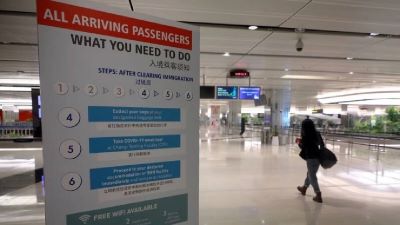
Singapore detects first 2 imported Covid-19 cases who test preliminarily positive for Omicron

#SootinClaimon.Com : ขอบคุณแหล่งข้อมูล : หนังสือพิมพ์ The Nation.

https://www.nationthailand.com/international/40009634


SINGAPORE – Two imported Covid-19 cases have preliminarily tested positive for the Omicron variant on Thursday (Dec 2), the Ministry of Health (MOH) said.

Both cases were isolated upon arrival in Singapore on Wednesday, and had no interaction with anyone in the community.

“There is currently no evidence of any community transmission from these cases,” said MOH in a statement on Thursday.

The ministry added that both cases are currently recovering in isolation wards at the National Centre for Infectious Diseases. They are fully vaccinated, and have mild symptoms of cough and scratchy throat.

Both cases arrived from Johannesburg on board Singapore Airlines flight SQ479 on Wednesday.

The first case is a 44-year-old Singapore permanent resident who was travelling from Mozambique and transited in Johannesburg.

He had tested negative for Covid-19 in his pre-departure test in Mozambique on Nov 29.

The second case is a 41-year-old Singaporean woman who travelled from South Africa. 

She had tested negative for Covid-19 in her pre-departure test in Johannesburg on Nov 29.

“They had undergone a polymerase chain reaction (PCR) test upon arrival in Singapore and were immediately conveyed to a stay-home notice (SHN) dedicated facility to be isolated while awaiting their test results,” said MOH.

Their PCR test results revealed the presence of S-gene Target Failure, which may be associated with the Omicron variant, the ministry added.

MOH said the National Public Health Laboratory is conducting whole genome sequencing to confirm if the two cases had indeed contracted the Omicron variant.

The remaining 19 passengers on the same flight have tested negative for Covid-19, said MOH, adding that contact tracing is ongoing.

All 19 were quarantined at designated facilities upon arrival and did a PCR test.

They will have to do another PCR test when their 10-day SHN is over.

Other close contacts will also be placed on 10-day quarantine and undergo PCR tests at the start and end of their quarantine, said MOH.

“All patients suspected or confirmed to be infected with the Omicron variant will be sent to NCID for isolation and clinical management. Home recovery will not apply,” the ministry added.

Published : December 05, 2021

By : The Straits Times

Korea to foster 89,000 more software talents by 2025

#SootinClaimon.Com : ขอบคุณแหล่งข้อมูล : หนังสือพิมพ์ The Nation.

https://www.nationthailand.com/international/40009633


South Korea will foster 89,000 more people specialized in software technology by 2025 to cope with a shortage of digital talent in the future, the Ministry of Science and ICT said Thursday.

Unveiling the government’s plan to support younger generations in times of digital transformation, the ministry said a total of 413,000 software professionals will be supplied over the next five years. The government’s original plan was to raise 324,000 software talents, but the expected demand was estimated at 353,000.

The ministry explained that digital transformation is accelerating across all sectors, causing more demand for ICT talents while there is a growing number of young people desiring digital education.

The ministry vowed to provide more learning opportunities for the youth starting next year. The government plans to run mentorship programs for 1,000 people, provide more internship chances for about 4,000 people both in and out of the country and organize 24 digital competition events that will award prize money of 12.7 billion won ($10.8 million) in total.

The government will offer incentives to companies that hire young interns and provide educational program on AI and software to enlisted soldiers starting next year, according to the ministry.

Any students interested in learning about information and communication technology will be given the chance to take online lectures taught at universities designated as “software-centered schools” by the government. There will also be interpretation services for foreign ICT classes.

For software engineers and developers already working in the field, the government will offer cloud resources, meeting spaces and financial aid for conducting promotional activities and holding conferences.

The ministry added that the government will set up a “metaverse academy” and offer consultations and legal support regarding the protection of intellectual property.

The ministry plans to open a new page on the government’s digital new deal website to provide detailed information and policies regarding the government’s support measures to nurture young digital talents in the first half of next year.

In order to find out the needs of ICT hopefuls and industry workers, the government held 15 meetings with 119 young adults including software developers and startup heads.

Despite the shifts in the global supply chains and COVID-19 crisis, the country’s ICT industry has continued to grow as the amount of ICT exports kept increasing for 17 consecutive months since June last year.

According to the ministry, the amount of the ICT industry’s total output increased about 10 percent over the last five years. The number of companies that supply data went up almost threefold in the past two years while the number of AI companies grew by 450 percent in the same period.

Published : December 05, 2021

By : The Korea Herald

Full-cycle production of Sputnik V vaccine to be set up in Việt Nam

#SootinClaimon.Com : ขอบคุณแหล่งข้อมูล : หนังสือพิมพ์ The Nation.

https://www.nationthailand.com/international/40009632


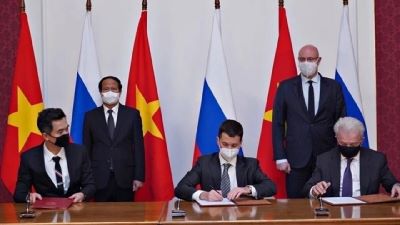
MOSCOW — Vietnamese pharmaceutical company VABIOTECH and Sovico Group signed a cooperation agreement with Russian Direct Investment Fund (RDIF) on the supply and production of the Sputnik V COVID-19 vaccine in Việt Nam in Moscow on Wednesday as part of President Nguyễn Xuân Phúcs visit to the country.

The deal also covers the expansion of Sputnik V vaccine supply sources in Việt Nam as well as nearby countries and territories, and the collaboration in technology transfer and quality checks.

T&T Group of Việt Nam signed a memorandum of understanding with the RDIF and Binnopharm Group, one of Russia’s leading pharmaceutical firms, on the transfer of production technology and the formation of a research centre and a facility with full cycle production capacity of Sputnik V COVID-19 vaccine along with the one-shot Sputnik Light vaccine in Việt Nam.

Accordingly, the RDIF will transfer necessary vaccine production technologies and give comprehensive support to selected Vietnamese partners to ensure that the Vietnamese-produced vaccine meets the standards of Russian-made vaccines.

In Việt Nam, Sputnik V vaccine was licensed by the Ministry of Health on March 23, 2021 for emergency use. RDIF is actively working with Việt Nam’s regulatory authorities to register Sputnik Light in the country.

On July 21, VABIOTECH announced that it successfully manufactured the vaccine in Việt Nam after a test batch using materials sent from Russia was approved. — VNS

Published : December 05, 2021

By : Vietnam News